- Researchers team up across AI, robotics, biotech, space and other fields
- NST selects, honors 8 outstanding research achievements
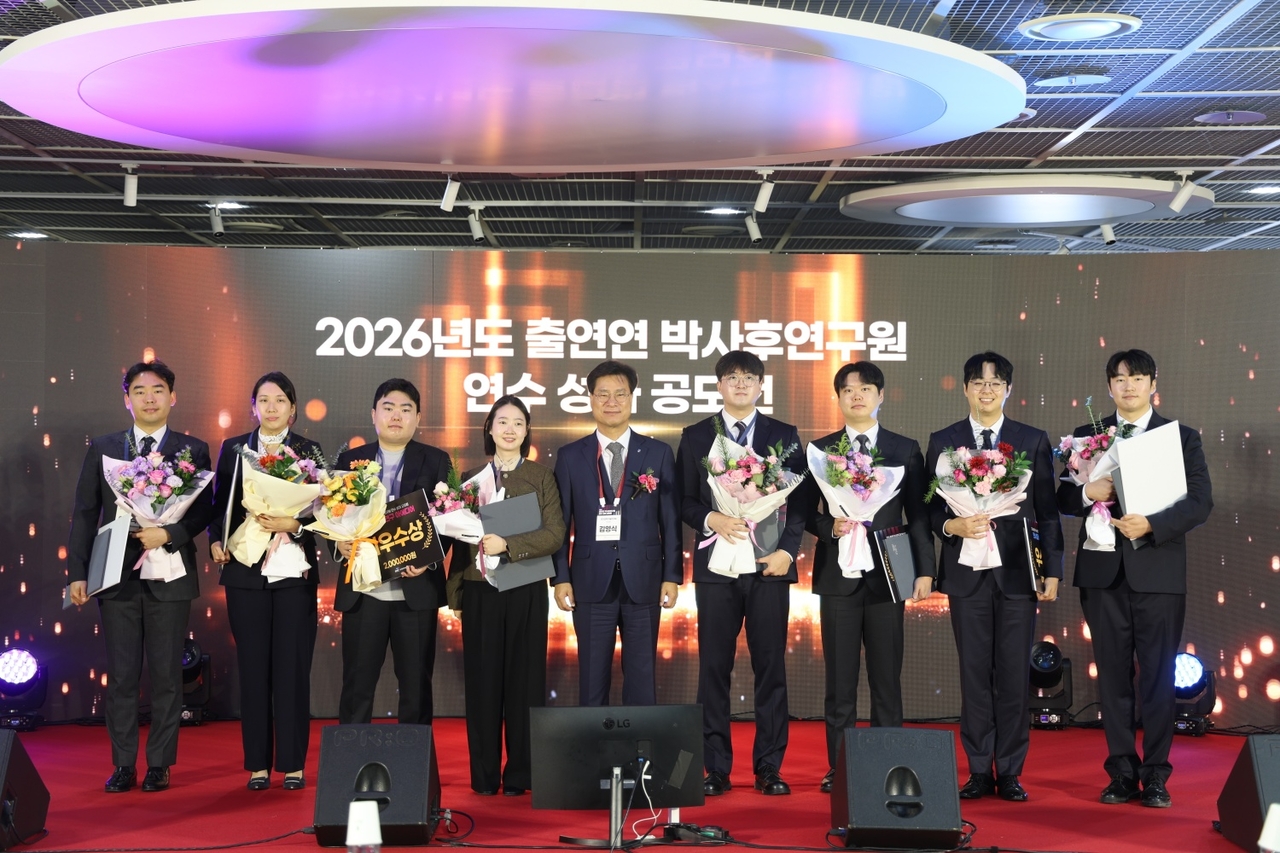
More than 120 early-career researchers from government-funded science and technology institutes gathered to explore ways to pursue cross-disciplinary research in cutting-edge fields including AI, biotech, robotics and space.
The National Research Council of Science and Technology (NST) said Thursday it held the 2026 Government-Funded Research Institute Postdoctoral Researcher Training Achievement Exchange on Wednesday at the national research complex in Sejong.
The event was designed to share outstanding research results among postdoctoral researchers at government-funded institutes and to expand their collaborative networks. Held annually since 2023, this year's gathering drew more than 120 participants, including postdoctoral researchers and their supervising mentors.
This year's program went beyond research presentations, significantly expanding interactive sessions in which participants worked together to generate ideas for collaboration.
The event recognized eight outstanding achievements across two categories — creative and challenging research ideas, and exemplary training outcomes — with NST chairman's awards presented to each winner. Grand prize recipients in each category received 3 million won ($2,230), second-place winners received 2 million won and third-place winners received 1 million won.
A talk concert featuring five senior researchers from government-funded institutes was also held, giving early-career scientists a forum to share and seek solutions to real-world concerns — including career paths after postdoctoral positions, securing research funding and changing jobs.
Choi Jin-seok, an emeritus professor of philosophy at Sogang University, delivered a lecture titled "Who Is a Creative Researcher?" outlining the perspectives and attitudes researchers need to think and work creatively.
The centerpiece of the event was a "convergence idea challenge" designed to bridge different research disciplines.
Participants were divided into five groups — advanced biotech, advanced robotics and mobility, innovative future materials, AI, and space, aviation and marine — and worked together to develop joint research ideas. Each group drew on its members' expertise to propose new research possibilities, with the strongest ideas selected for recognition.
NST said it plans to use the exchange to broaden the collaborative foundation among early-career researchers at government-funded institutes and to promote cross-disciplinary research that breaks down barriers between fields.
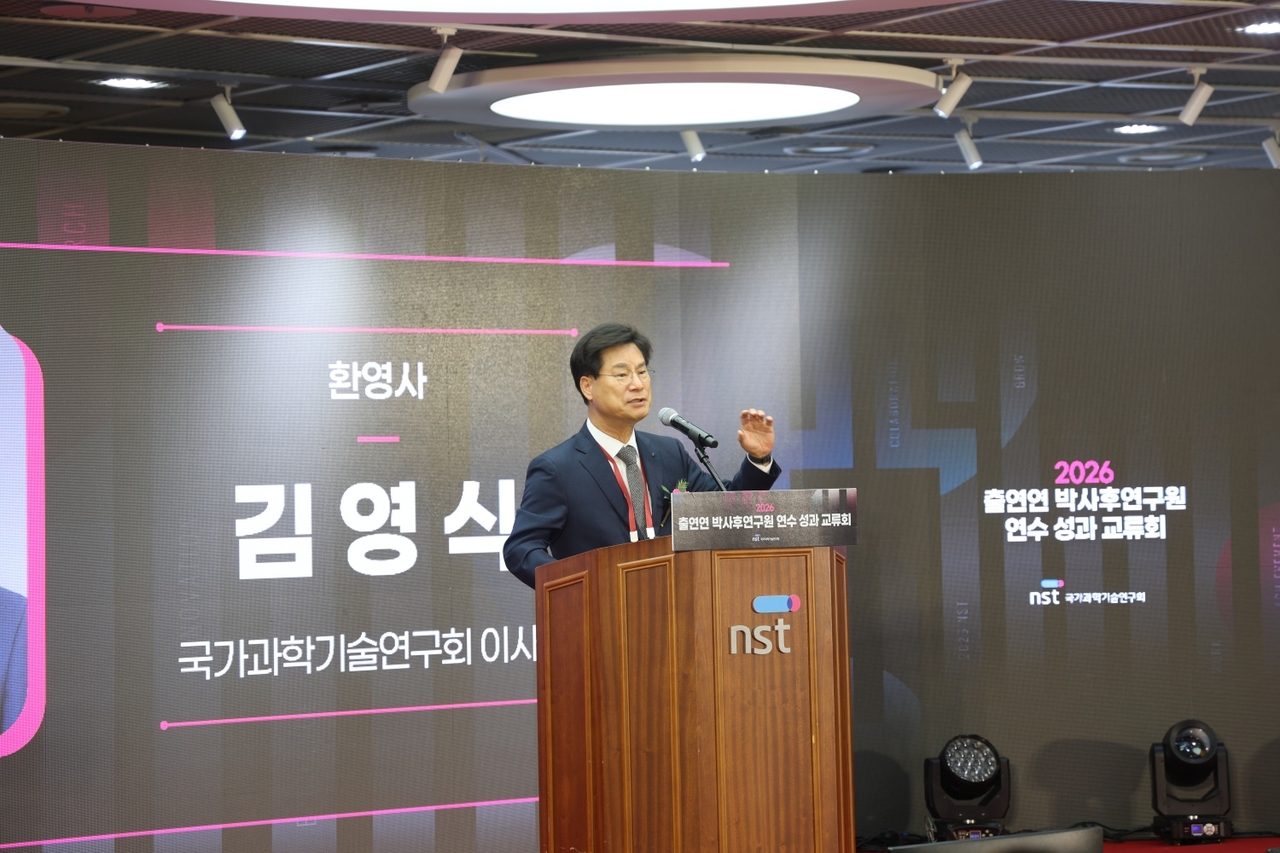
"I hope this exchange gives postdoctoral researchers at government-funded institutes the opportunity to share their work and collaborate beyond their own fields," NST Chairman Kim Young-sik said. "We will actively support them as they grow into the next generation of scientists and technologists who will lead the future."
nbgkoo@heraldcorp.com