Inside the finals of 'Kakao AI Dot Sail 2nd Cohort'
Kakao affiliates post 18 challenges; 12 teams take the stage
Winners receive 75 million won prize, investment review and PoC opportunities
"South Korea is often called a manufacturing powerhouse. But deploying autonomous-driving robots on industrial sites is still far from easy." — Kim Sung-min, CEO of Millitrack
On Tuesday morning at Kakao's AI Campus in Yongin, Gyeonggi Province, investor-relations pitches by young entrepreneurs from South Korea's four leading science and technology institutes were in full swing. Presenters took the stage with visible nerves and introduced the AI technologies they had built themselves. Each team had exactly eight minutes to prove their edge, and the tension in the room was palpable.
That day, Millitrack, a startup founded by KAIST alumni, presented an autonomous-driving technology designed to keep robots moving even in industrial environments thick with fog or dust.
"Conventional autonomous-driving robots rely on visual sensors such as cameras and lidar, so they struggle to determine their position when visibility is poor," said Kim Sung-min, CEO of Millitrack. "Millitrack attaches a separate tracking device to the robot and uses markers installed in the workspace to overcome that limitation."
Kim added that existing autonomous-driving robots can be used as-is, with the company's module kicking in only in sections where positioning is difficult. The team has completed technology verification with more than 30 domestic companies, including Posco.
Judges drawn from business units across Kakao's affiliates then weighed in. Kim Jong-su, head of the business planning team at Kakao Mobility, said he was impressed that Millitrack had already carried out multiple proof-of-concept tests. "Kakao Mobility provides robot services in relatively orderly environments such as hotels," he said, "so we place high value on the fact that Millitrack has validated its technology even in specialized settings with heavy dust."
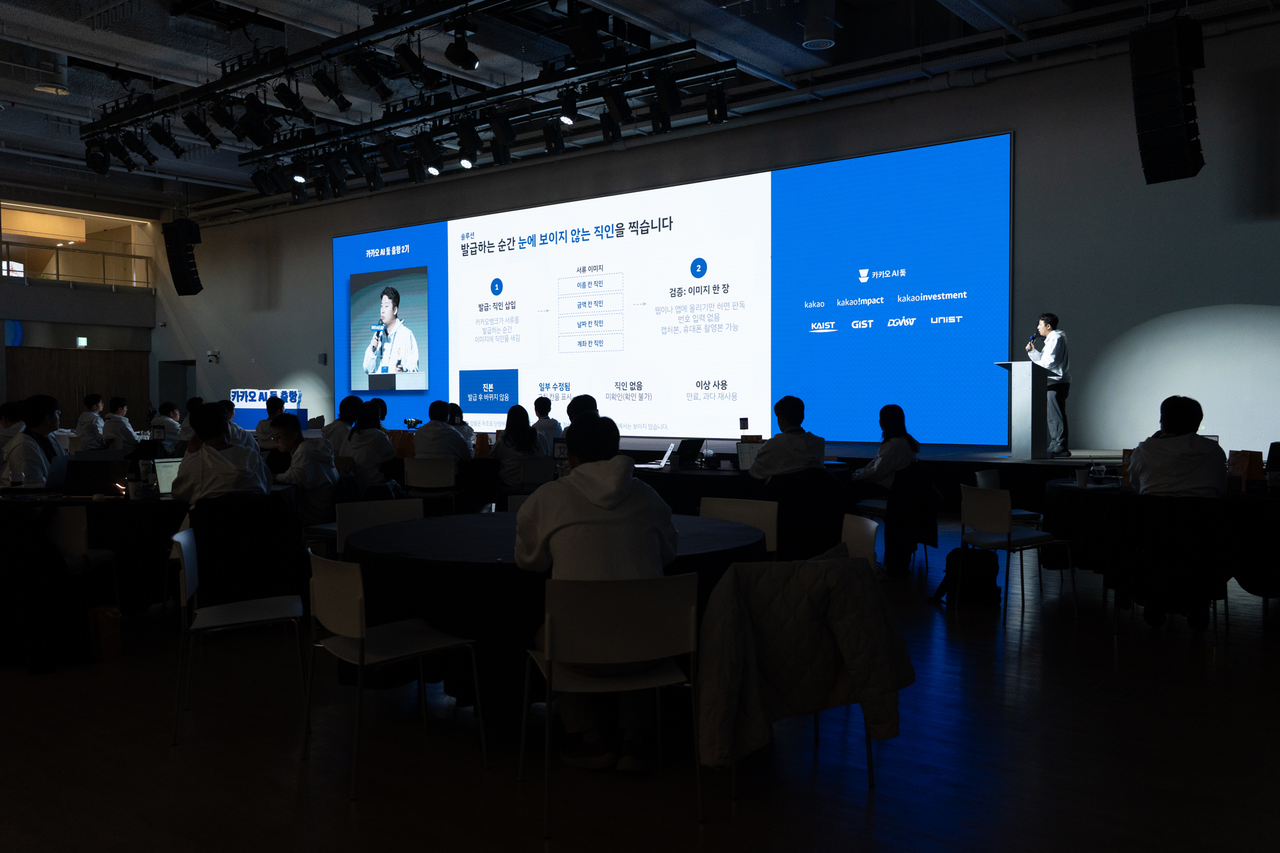
The finals of "Kakao AI Dot Sail 2nd Cohort," a startup competition co-hosted by Kakao Investment and Kakao AI Dot, brought together promising AI ventures from KAIST, the Gwangju Institute of Science and Technology (GIST), the Daegu Gyeongbuk Institute of Science and Technology (DGIST) and Ulsan National Institute of Science and Technology (UNIST). The program identifies standout AI technologies from those four institutes and connects them to real commercial opportunities. Startups, project teams without a registered entity and individual pre-launch founders are all eligible.
Unlike typical startup competitions, Kakao AI Dot Sail asks Kakao affiliates to put forward actual problems they want solved. This edition saw five affiliates — Kakao, Kakao Bank, Kakao Mobility, Kakao Entertainment and Kakao Pay — post a combined 18 technology challenges. Winning teams receive a total prize of 75 million won ($55,800), along with an investment review by Kakao Investment and the chance to explore proof-of-concept projects with affiliates.
In his welcoming remarks, Kim Do-young, CEO of Kakao Investment, said the role of investment firms like his is critical in turning founders' work into tangible results. "Most of the investment capital and companies needed to bring research to market are currently concentrated in Seoul or the greater metropolitan area," he said. "We intend to connect the outstanding technologies coming out of regional science and technology institutes to real business opportunities."
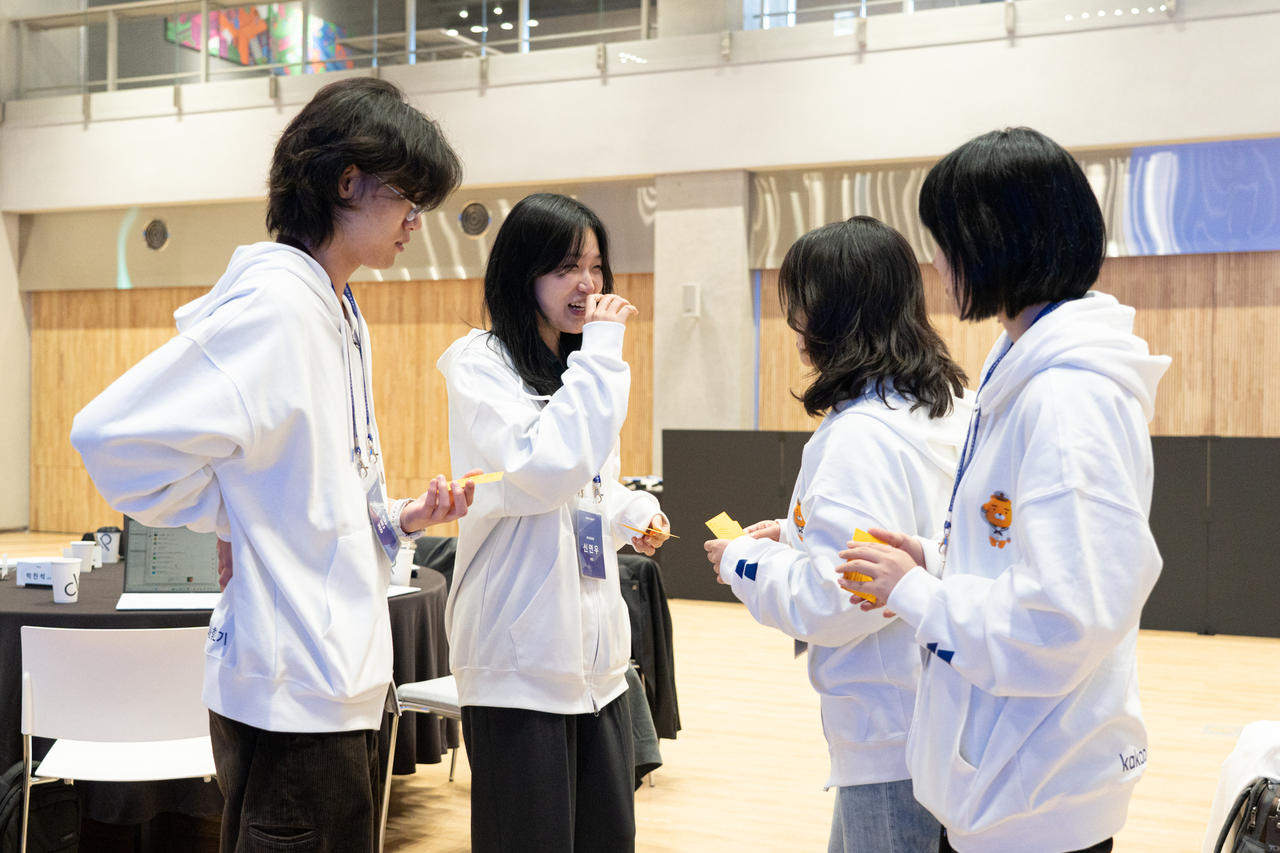
Twelve startup teams in total took the finals stage that day, including Millitrack — all having cleared earlier rounds of joint affiliate screening and an investment review by Kakao Investment. Among them, Reverde, another KAIST-founded team, proposed an AI technology that remembers future spending plans mentioned in KakaoTalk conversations. F-22 showcased a technology that embeds an invisible digital seal in documents to detect forgeries.
Kakao AI Dot Sail has grown on the back of real investment and commercial results. In the first cohort, Blackbox, a UNIST startup that uses AI to adapt webtoon intellectual property into video content, received investment from Kakao Investment and went on to complete a paid proof-of-concept project with Kakao Entertainment. Another KAIST-founded team, Anybridge AI, subsequently attracted outside investment and was valued at around 20 billion won.
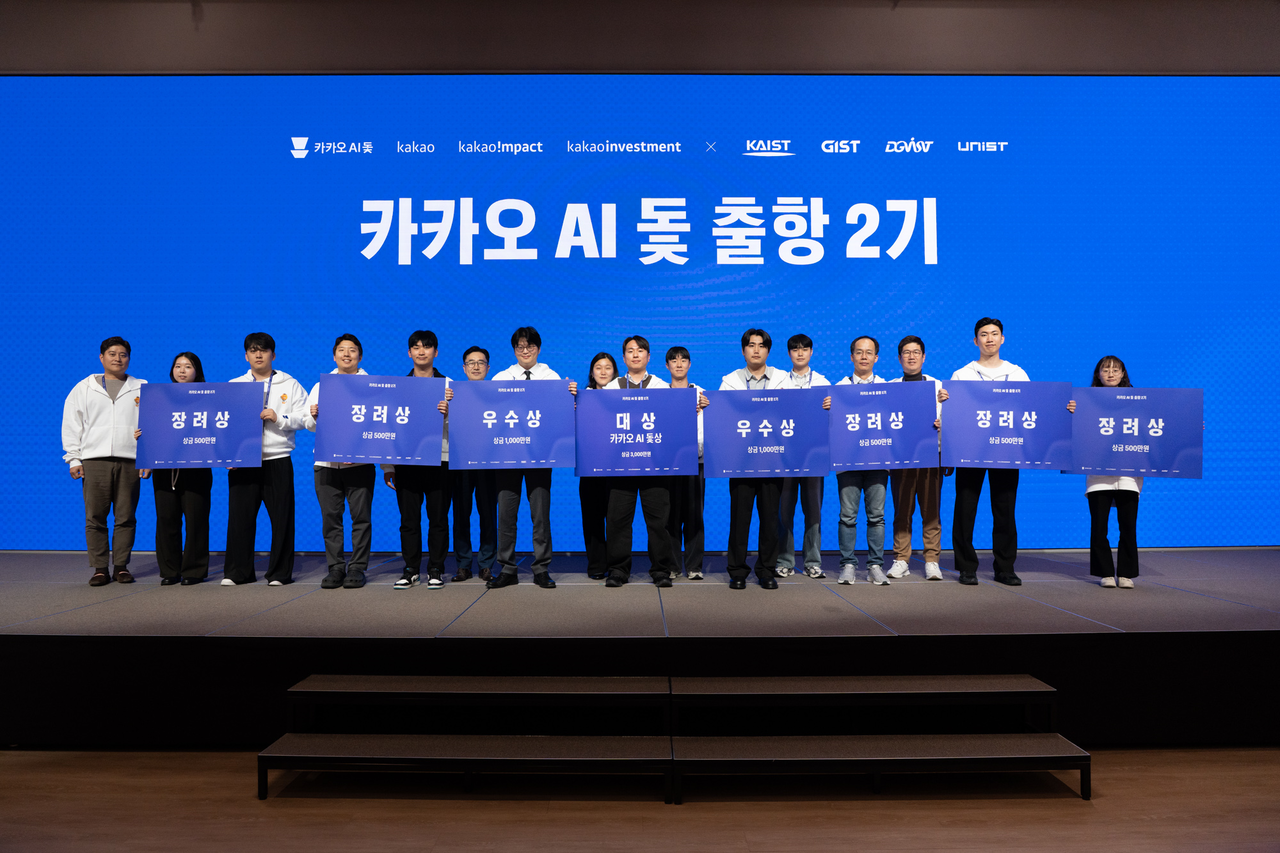
The second cohort drew 122 applicants — roughly 85 percent more than the 66 teams that applied for the first cohort in January. The grand prize went to Rocon, a UNIST startup. Millitrack of KAIST and Space AI of GIST took the excellence awards.
chami@heraldcorp.com