Compact camera system automatically diagnoses rail wear location and condition
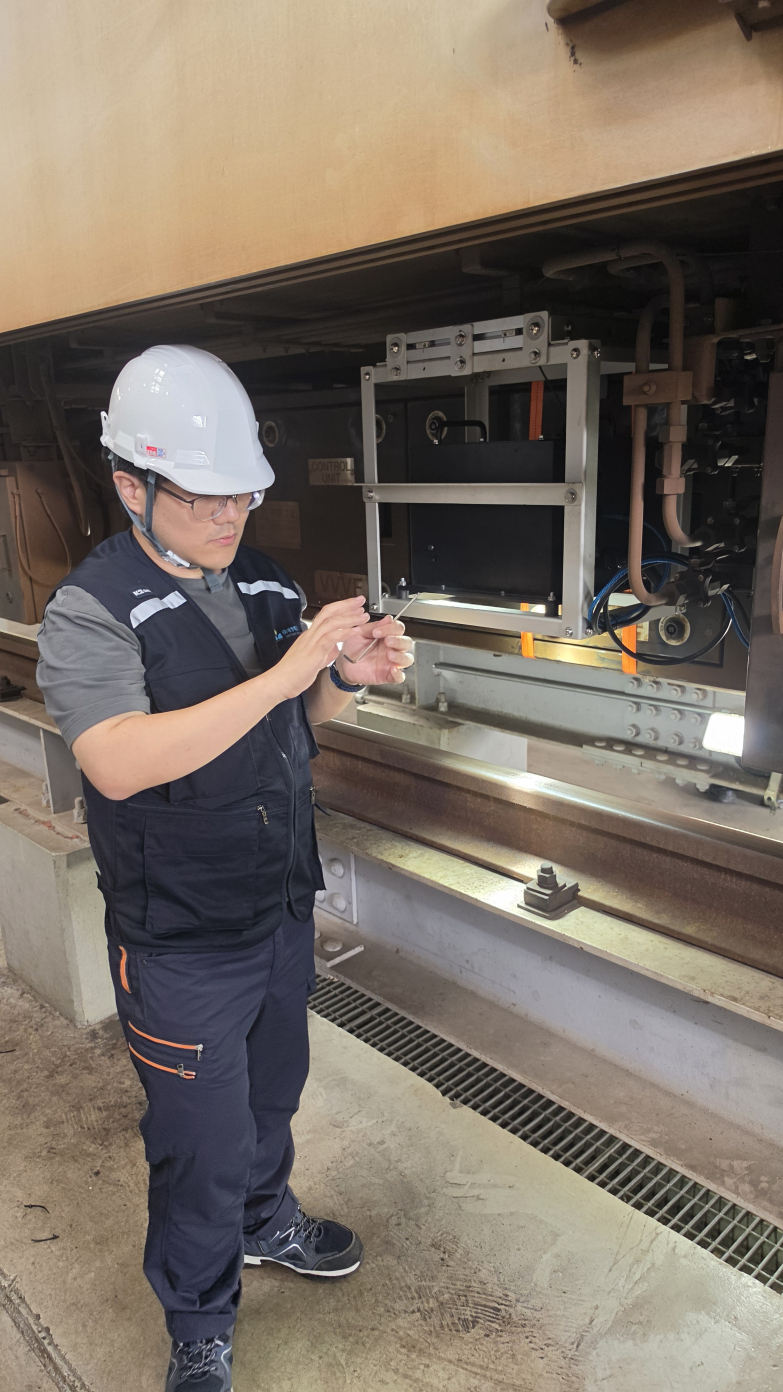
South Korean researchers have developed technology that can automatically detect rail wear conditions from a moving subway train.
The Korea Railroad Research Institute announced Monday it had developed a vehicle-mounted rail image inspection device and diagnostic system capable of high-speed imaging and automatic analysis of rail surface wear during normal urban rail operations.
One of the leading causes of noise and vibration on urban rail lines is corrugation — a phenomenon in which repeated train passages create evenly spaced ridges and grooves on the rail surface. The irregularities amplify the impact between wheels and rails, degrading ride quality and generating noise complaints, particularly in sections near residential areas or along sharp curves.
Until now, assessing rail wear required expensive dedicated inspection vehicles or precision measurement equipment. The high cost of operating such equipment, combined with the prevalence of tight curves and steep gradients on urban rail lines, made repeated inspections difficult.
The institute's device uses an ultra-high-speed line-scan camera to capture continuous, high-resolution images of the entire rail head while the train is in motion. A single pass is enough for the system to automatically analyze whether wear is present, pinpoint its location, and measure the wavelength — the interval at which corrugation repeats.
Workers can also view the analysis results alongside the actual rail surface images, allowing them to assess damage conditions intuitively and decide whether maintenance is needed.
The device comes in two configurations depending on the operating environment: an integrated PC unit and a separate PC unit. The separate configuration consists of two components weighing approximately 8 kilograms and 5 kilograms respectively, making it easy to install on existing rolling stock or maintenance vehicles.
The technology was also validated in the field. The institute conducted tests at actual operating speeds across the entire Incheon Urban Railway Line 2 network in partnership with Incheon Transit Corporation and Saeyoung Technology.
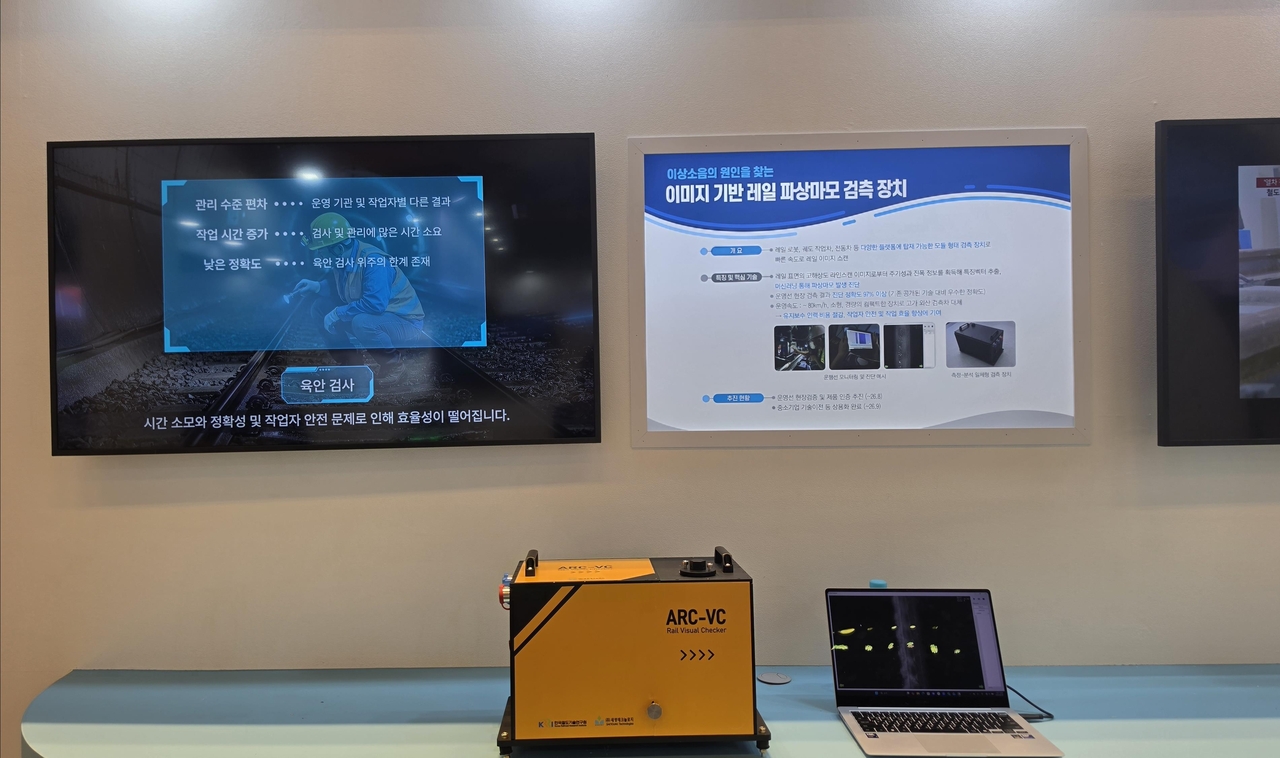
As a result, the system captured stable, high-resolution rail surface imagery even at 80 kilometers per hour — the maximum operating speed for urban rail lines. Corrugation detection performance reached an F1 score of 97 percent or higher, a composite metric used to evaluate detection accuracy.
The technology marks a significant departure from conventional periodic inspection methods by enabling continuous, repeated checks using revenue service vehicles. Accumulating rail images of the same section over time allows the system to track how wear develops and progresses, helping operators determine the optimal timing for maintenance.
The institute plans to integrate AI image analysis to advance the system into a comprehensive diagnostic platform covering not only corrugation but also rail surface cracks, damage and grinding conditions.
"We can now easily identify both the location and wavelength of rail corrugation," said Hong Ji-young, a senior researcher at the institute. "We plan to develop this further into an intelligent rail condition management system that can predict how wear develops and supports maintenance decision-making."
Institute President Sagong Myung said the technology "expands railway infrastructure management — which has centered on expensive dedicated inspection equipment — into a compact, lightweight and continuous monitoring approach," adding that the institute would "contribute to creating a quieter and safer rail environment through noise reduction and improved maintenance efficiency on urban rail lines."
nbgkoo@heraldcorp.com