- UNIST, KITECH develop high-performance catalyst without precious metals
- Chromium tunes electron state; durability confirmed over 100 hours
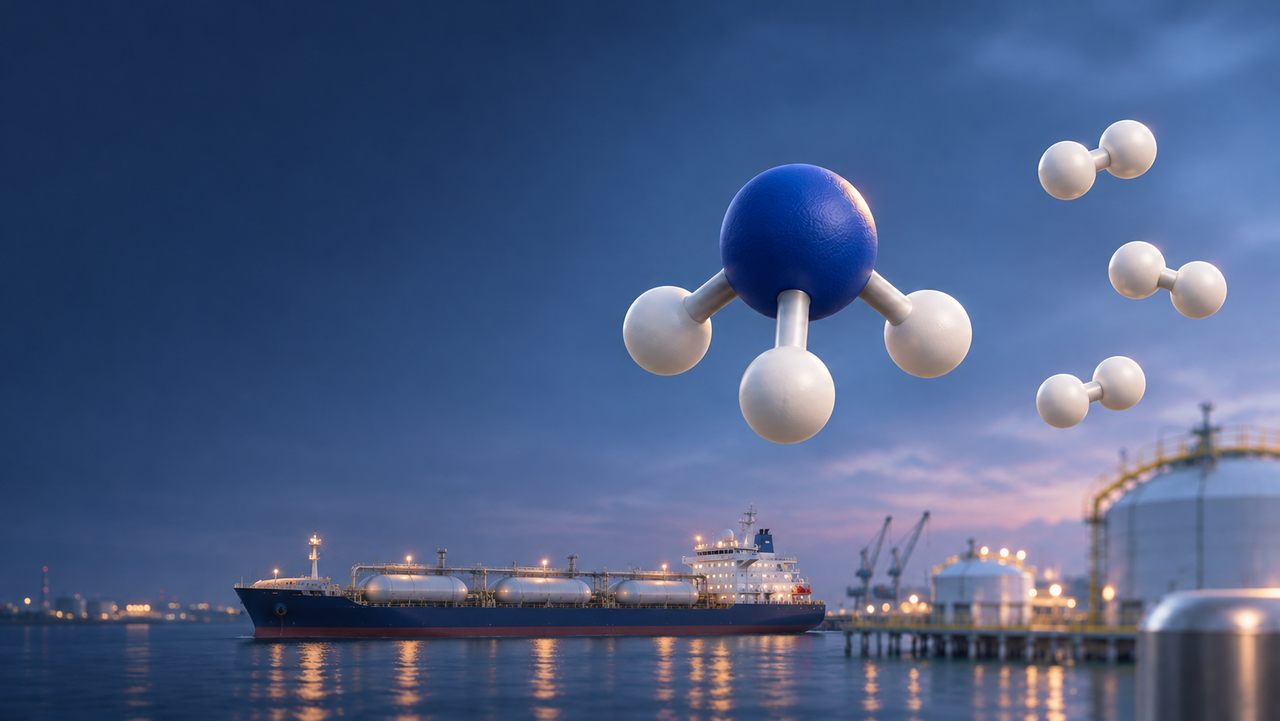
Researchers have developed a catalyst technology that efficiently extracts hydrogen from ammonia without relying on expensive precious metals. The key advance is using low-cost nickel to push ammonia decomposition rates above 95 percent. The technology is expected to help lower the cost of long-distance hydrogen transport and storage.
Ulsan National Institute of Science and Technology (UNIST) announced Monday that a research team led by Professor Cho Seung-ho of the Department of Materials Science and Engineering had jointly developed a high-performance nickel-based ammonia decomposition catalyst to replace ruthenium — a precious metal — in collaboration with Kim Hong-dae of the Korea Institute of Industrial Technology (KITECH) and Professor Kim Min-gyu of Yeungnam University.
Ammonia has drawn attention as a next-generation hydrogen carrier because it is easier to liquefy than hydrogen and can make use of existing transport and storage infrastructure. The concept involves converting hydrogen into ammonia for shipment, then decomposing it back into hydrogen at the point of use. However, efficient ammonia decomposition has long required costly precious-metal catalysts, a barrier to commercialization.
The research team overcame that limitation by combining chromium and aluminum with inexpensive nickel. The resulting catalyst decomposed 95.5 percent of ammonia at 550 degrees Celsius — a dramatic improvement over a nickel-only catalyst, which achieved less than 10 percent decomposition under the same conditions.
The catalyst also demonstrated strong durability, maintaining its ammonia decomposition performance through 100 hours of testing at 525 degrees Celsius. Electron microscopy analysis after the reaction confirmed that the evenly dispersed structure of nickel particles remained intact.

The performance gain centers on chromium's ability to donate electrons. When chromium transfers electrons to nickel, it accelerates the breaking of bonds between nitrogen and hydrogen in ammonia. At the same time, it helps nitrogen generated during the reaction detach readily from the catalyst surface, allowing subsequent reactions to proceed smoothly.
Aluminum, meanwhile, suppresses the tendency of nickel particles to aggregate at high temperatures. The team applied a layered double hydroxide (LDH) synthesis method to blend nickel, chromium and aluminum uniformly at the atomic level, boosting both the activity and stability of the catalyst.
The team used X-ray and electron microscopy analysis to confirm electron transfer from chromium to nickel, and combined computational modeling with experiments to identify the mechanism behind the catalyst's improved performance.
"We enhanced ammonia decomposition performance by evenly dispersing nickel particles while also controlling their electronic state," the research team said. "This approach can reduce the use of precious metals to lower hydrogen production costs, and could also be applied to improve the performance of other energy and environmental catalysts."
The findings were published in the international journal Advanced Science on Oct. 7.
nbgkoo@heraldcorp.com