Protein analysis of bone powder identifies fossil as Denisovan, first confirmed in Siberia in 2010
Earlier case for 'new species' based on brain size challenged
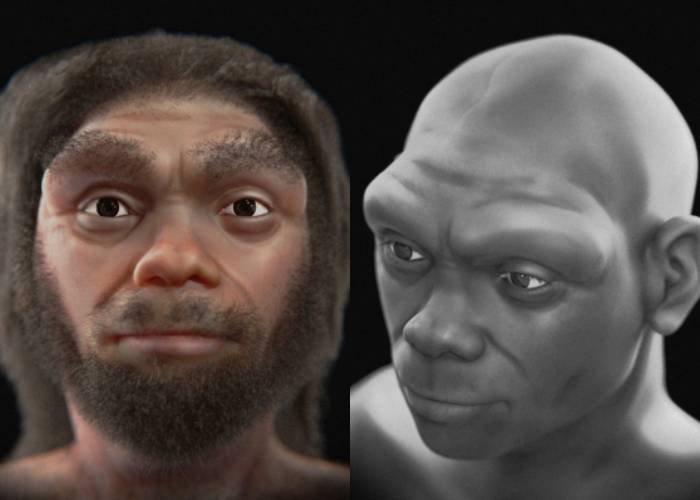
Fossil findings help sketch Denisovan appearance for first time
When an ancient human fossil surfaces, researchers ask two questions: does it belong to a known species, or does it warrant an entirely new name? When the bone structure does not match any existing species closely enough, a new classification is sometimes proposed.
A skull excavated in the 1970s from Xujiayao in China's Hebei Province and dated to roughly 200,000 years ago is unusually thick and low, with an estimated cranial capacity of 1,700 milliliters. That figure is considerably larger than the 1,120 to 1,420 milliliters recorded for other East Asian fossils from the same period.
In 2024, those characteristics prompted researchers to propose a new human species called Homo yuluensis, with the Xujiayao fossil designated as the type specimen.
Researchers had long disagreed over whether the fossil belonged to the Neanderthal lineage or represented an early modern human, and the placeholder term "archaic Homo" was used to defer the question. Bone morphology alone left the classification open to either interpretation.
A research team led by Fu Chaomei and Xing Song of the Institute of Vertebrate Paleontology and Paleoanthropology at the Chinese Academy of Sciences published findings in Nature showing that protein extracted from the Xujiayao fossil identifies it not as a new species but as a Denisovan — an already-known extinct human lineage.
Denisovans were first identified in 2010 through DNA recovered from a finger-bone fragment found in a cave in the Altai Mountains of Siberia. Evidence of interbreeding with modern humans survives in the genomes of present-day East Asians, yet almost no skull or facial bones had been found, leaving the Denisovans' physical appearance largely unknown.
18 proteins recovered from the fossil
The Xujiayao fossils were excavated in the Nihewan Basin between 1976 and 1979. The collection comprises 20 pieces in total — skull fragments, jawbone pieces and teeth — and uranium-series dating combined with electron spin resonance places them at roughly 200,000 to 140,000 years ago.
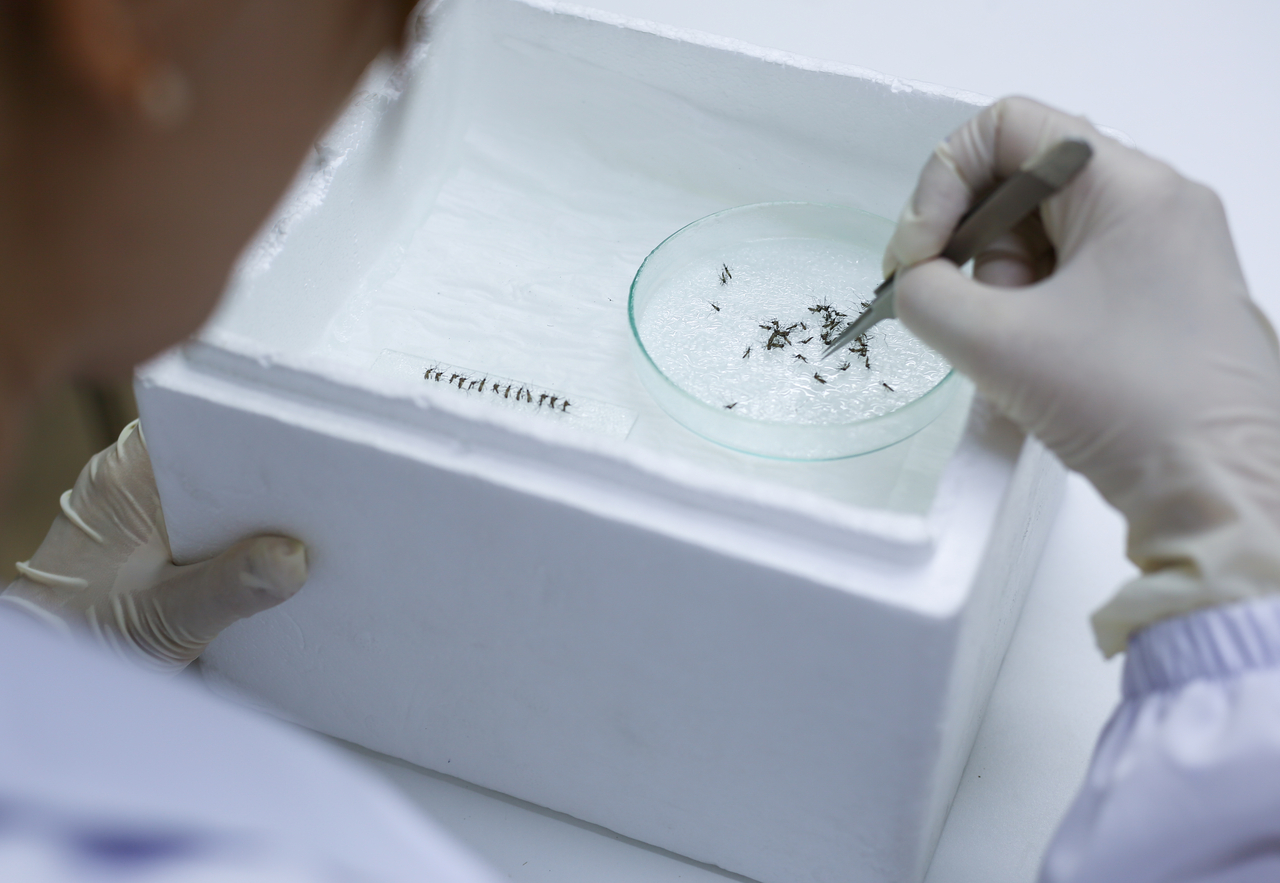
The research team drilled small holes into already-damaged areas of one right skull fragment and one right lower-jaw fragment to collect bone powder without causing additional harm to the specimens.
Tens of thousands of protein fragments were detected in the powder. The challenge was distinguishing proteins originally present in the fossil from contaminants introduced after excavation.
The team exploited the fact that certain amino acids degrade gradually over time: a high degree of degradation signals an ancient protein, while little change indicates recent contamination. Eighteen proteins that passed this screening were used in the analysis.
The decisive clue lay at position 996 of a collagen protein. At that site, Denisovans carry the amino acid lysine, while Neanderthals and modern humans carry arginine.
Every individual previously confirmed as Denisovan through protein or DNA analysis has carried lysine at that position. Both Xujiayao specimens returned the same result: 57 protein fragments from the skull piece and 61 from the jaw piece all read lysine at that site.
The degradation rates of those fragments ranged from 69 to 100 percent, confirming they were not late-arriving contaminants.
The team also constructed a phylogenetic tree by linking 2,074 protein positions. The Xujiayao fossil clustered with the Siberian Denisovan and the Xiahe, Penghu and Harbin individuals, with a probability exceeding 99 percent.
On that basis, the team classified the Xujiayao fossil as belonging to a "late Middle Pleistocene East Asian Denisovan population."
Brain size alone was not enough to define a new species
The earlier argument for classifying the Xujiayao fossil as a new human species rested primarily on its large brain. The research team concluded that the difference in brain size is not sufficient to distinguish species.
Modern human cranial capacity ranges from 1,090 to 1,880 milliliters, meaning both the 1,700-milliliter Xujiayao figure and the 1,120-to-1,420-milliliter range of contemporaneous East Asian fossils fall within that span. The Neanderthal range of 1,065 to 1,740 milliliters largely overlaps as well.
A reexamination of bone morphology pointed in the same direction. The Xujiayao skull is thick — measuring 7.7 millimeters near the crown — and low and wide, traits that resemble those of the older species Homo erectus.
The team noted that the same combination of features appears in fossils from Harbin, Jinniushan, Dali and Hualongdong, and concluded that all of them belong to the Denisovan lineage. The Harbin skull was confirmed as Denisovan through protein and DNA analysis in 2025.
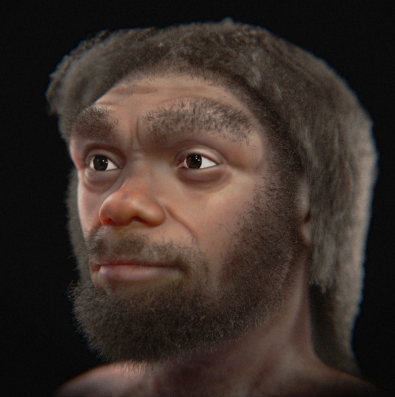
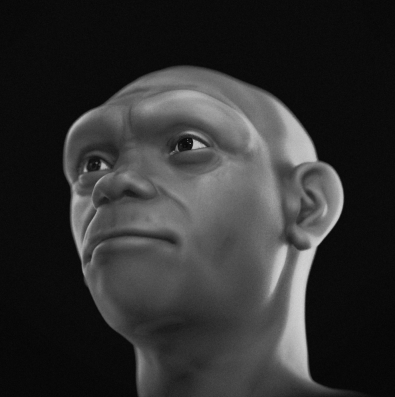
Combined with fossils that preserve facial bones, the team said the findings allow a near-complete picture of the Denisovan head to be drawn. According to the researchers, Denisovans had a low, receding forehead, thick and curved brow ridges, flat cheekbones, a wide nasal aperture and a jaw that did not protrude significantly.
Professor Fu Chaomei told Xinhua that the research now makes it possible to "recognize, compare and classify" Denisovans by their physical form.
The team acknowledged that proteins carry less information than DNA, which prevented them from resolving finer relationships within the Denisovan lineage.
Reference
DOI: 10.1038/s41586-026-11132-z
Xing, S., Wu, Z., Shao, Q. et al. The proteome of Middle Pleistocene Xujiayao and common Denisovan morphology. Nature (2026).
dbsdn1110@heraldcorp.com