
- HOME
- FINANCE

Power bank catches fire during fast charge — smoke detector response could mean the difference between life and death
Korea Fire Insurance Association holds fire recreation experiment at risk management seminar Smoke detector triggered within about 10 seconds of power bank fire Heat detectors mandatory, but smoke detectors still not required About three minutes into fast-charging a power bank on a bed in a roughly 6.6-square-meter bedroom, gray smoke began to rise. Within about 10 seconds, a smoke detector mounted on the ceiling sounded an alarm and announced that a fire had broken out. As acrid toxic fumes filled the room, sparks flew and flames spread instantly throughout the bedroom. At the same time, the heat detector activated and an evacuation announcement began to play. The Korea Fire Insurance Association held a "Risk Management Technology Seminar" Tuesday at its affiliated fire prevention testing institute in Yeoju, Gyeonggi Province. The event featured a power bank fire recreation and a comparison experiment on the response times of heat and smoke detectors. The experiment was designed to demonstrate why smoke detectors — which can identify a fire before it fully ignites — must be installed. In fires where smoke spreads first, an early alarm is essential to give residents enough time to recognize the danger and begin evacuating. Fires that start from power banks typically follow the pattern seen in Tuesday's experiment: smoke appears first, and flames erupt and spread only after some time has passed. For residents to have a "golden time" to detect a fire and evacuate, a smoke detector must catch the smoke before a heat detector registers the heat from the flames. There have been cases where delayed fire alarms led to greater tragedy. In July, a fire broke out at a villa in Galhyeon-dong, Eunpyeong-gu, Seoul, killing two elementary school siblings. In June and July last year, back-to-back fires at apartments in Busanjin-gu and Gijang-gun, Busan, claimed the lives of four children. When the government announced measures to prevent a recurrence of the Busan fires, it said the absence of fire alarms, sprinklers and other safety devices in the affected units had made early evacuation and firefighting difficult. Kim Seong-je, a senior researcher at the fire investigation center of the fire prevention testing institute who led Tuesday's experiment, said, "The earlier the alarm sounds, the sooner evacuation can begin." Kim added that while heat detectors are currently required by law, many residential facilities remain in a blind spot for fire risk because smoke detectors are not installed. "Smoke detectors need to be installed in more residential facilities," Kim said. Beyond power banks, overcharging other battery-powered devices commonly used in daily life — such as robot vacuum cleaners — can also significantly increase the risk of fire. Kim advised that batteries should be charged with a standard charger rather than a fast charger whenever possible, used before reaching a full 100 percent charge, and charged only when the user is home. Meanwhile, the Korea Fire Insurance Association runs a safety culture campaign and a project to help vulnerable households enroll in residential fire insurance. An association official said the organization's goal is to get households in all 18 cities and provinces enrolled in fire safety insurance and to bring universal welfare equality to accident coverage, adding that awareness of the need for such insurance must spread more widely. South Jeolla Province and Gwangju have revised their ordinances to begin supporting vulnerable households in obtaining residential fire insurance from early next year, and South Chungcheong Province also plans to provide enrollment support next year.
Jeong Ho-won Nov. 17, 2026
-
AI hacking tactics keep evolving, but security audit standards for financial firms stay the same
Second-half audit criteria identical to first half AI security checks left to individual firms' discretion Experts call for verified penetration testing and vulnerability follow-up Even as AI-based cyberattacks on the financial sector grow more sophisticated, the Korea Financial Security Institute has kept its website security audit standards for financial firms unchanged. Experts say the inspection framework needs to be strengthened to verify actual attack feasibility, as AI-assisted hacking and complex multi-vulnerability intrusion attacks become increasingly advanced. Financial firms currently undergoing the institute's second-half website vulnerability assessments — which run from late last month through the end of this month — are being evaluated under the same criteria and methods used in the first half of the year, according to industry sources. A security official at one financial firm said the ongoing second-half audit uses "the same evaluation method and inspection criteria as the first-half audit." The institute has continued carrying out its regular security inspection work for financial firms even after suffering its own hacking incident on Nov. 9. Under current electronic financial supervision regulations, financial firms are required to conduct vulnerability analyses and assessments of their public-facing websites at least twice a year. They may use the common evaluation criteria developed by the institute and have the work carried out by the institute itself, a private cybersecurity firm, or an in-house dedicated team. The institute has maintained its existing inspection criteria and methods despite a string of hacking incidents in the financial sector and its own breach. Earlier this year, in February, it announced plans to strengthen audits by expanding the evaluation criteria from 789 items across 14 categories to 869 items across 15 categories, adding new cloud-related items. Those measures, however, were put in place before the recent wave of breaches, and no additional changes to the criteria have been made in response to the incidents. The central question is whether existing audits are sufficient to keep pace with rapidly evolving hacking techniques. The current evaluation criteria do include items covering user authentication, access control and blocking of automated requests. But as complex multi-vulnerability intrusion attacks grow more sophisticated, verification that reproduces actual attack sequences — rather than checking individual items in isolation — is becoming increasingly important. Another limitation is that audit effectiveness can vary depending on the individual examiner's skill level. AI-assisted security checks, in particular, are conducted separately by financial firms at their own discretion. A Korea Financial Security Institute official said financial firms "refer to the existing evaluation criteria but may also conduct additional checks using AI or separately commission a cybersecurity firm." Whether and to what extent firms supplement regular audits with verification reflecting the latest attack methods is ultimately left to each firm's judgment. Experts say the effectiveness of the existing security inspection framework needs to be improved given the recent spate of hacking incidents in the financial sector. Hwang Seok-jin, a professor at Dongguk University's Graduate School of International Information Security, said "questions can be raised about the lack of systemic change even after the Korea Financial Security Institute itself suffered a breach." Hwang added that "it is necessary to incorporate into the inspection framework the changing security environment — including AI-based attacks — and the vulnerabilities exposed in actual incidents." Hwang also stressed that "it is not enough to simply conduct annual audits — it is important to verify actual penetration feasibility and then confirm whether identified vulnerabilities have been remediated." Hwang called for a shift toward an effectiveness-centered framework that includes penetration testing simulating multi-vulnerability intrusions and the sharing of vulnerabilities discovered at one financial firm with others in the sector. A Korea Financial Security Institute official said the institute must first determine through its investigation "whether the vulnerability exploited in this incident falls under existing evaluation criteria or represents a new type." The official added that "it is difficult to immediately revise the evaluation criteria when the cause of the incident has not yet been confirmed," and that any improvements based on the investigation's findings "can only be reflected in next year's evaluation criteria," given that the second-half audit is already underway.
Nov. 17, 2026
-

Hana Bank launches 'JYP EDM' savings account with up to 6% interest rate
Limited to 20,000 accounts through year-end Hana Bank, JYP to raise up to 30 million won for charity Hana Bank has launched the "JYP EDM Nanum" savings account offering an annual interest rate of up to 6 percent, with JYP artist merchandise available as prizes. The bank said Tuesday it introduced the "JYP EDM Nanum" savings account in partnership with JYP Entertainment. The product allows customers to deposit freely between 10,000 won ($7) and 200,000 won per month, and will be available in a limited run of 20,000 accounts through the end of the year. The base interest rate is 2.0 percent per year. Customers can earn preferential rates on top of that — 1.5 percentage points for registering a charitable donation transfer, and 2.0 percentage points for first-time deposit or savings customers within the past year — for a maximum annual rate of 6.0 percent. Hana Bank will set aside 1,000 won per account opened as a donation, and will add 1 million won for every 10,000 YouTube views of a promotional video produced with JYP, up to a maximum of 10 million won, bringing the total potential donation fund to 30 million won. The funds raised will go to Angels Haven, a social welfare foundation, to support the treatment and healthy development of children with disabilities. To mark the launch, the bank will give all customers who open an account before year-end a choice of either a dedicated coupon for Phanz Shop, a merchandise retailer, or a coffee coupon. The bank will also hold a raffle for prizes including signed albums by JYP artists and tickets to a Park Jin-young concert. "We will continue to provide customers with differentiated financial experiences through a variety of partnership services, and to spread the values of sharing and mutual growth through finance," a Hana Bank official said. Meanwhile, Hana Bank recently introduced a same-day ETF trading service as part of efforts to boost its retirement pension business.
Nov. 17, 2026
-
Upbit, Bithumb see combined crypto holdings shrink by W332.6b amid market slump
Crypto market weakness drags down asset valuations Upbit, Bithumb customer deposits also fall more than 30% The value of virtual assets held by South Korea's two largest cryptocurrency exchanges, Upbit and Bithumb, fell this year. As of the end of the third quarter, Dunamu — the operator of Upbit — reported an 11.4 percent decline from the end of last year, while Bithumb posted a 26.7 percent drop. Analysts attribute the decline largely to a broader market slump, with Bitcoin, the leading cryptocurrency, falling roughly 20 percent in a single month. According to regulatory filings with the Financial Supervisory Service on Tuesday, Dunamu's book value of self-held virtual assets stood at 1.9983 trillion won ($1.5 billion) at the end of the third quarter, down 258.1 billion won from 2.2564 trillion won at the end of last year. Bithumb's holdings fell 74.5 billion won over the same period, from 279.3 billion won to 204.8 billion won. Combined, the two companies' book value shrank by 332.6 billion won, from 2.54 trillion won to 2.20 trillion won. Holdings varied by asset. Dunamu held 16,585 Bitcoin, 12,721 Ether and about 10.9 million Tether tokens. Compared with the end of last year, its Bitcoin holdings fell by 58 and Tether by about 1.4 million, while Ether increased by 1,443. Bithumb held 286 Bitcoin, 4,238 Ether, about 53.2 million Tether, about 3.14 million XRP and 54,656 Solana. Compared with the end of last year, Bitcoin, Ether, XRP and Solana all declined, while Tether increased. The drop in valuations is largely attributed to weakness across the virtual asset market. As of 10:49 a.m. Tuesday, Bitcoin was trading on Upbit at 88.34 million won, down 0.21 percent from the previous day. The token has fallen 11.85 percent over the past week, 19.79 percent over the past month and 31 percent since the start of the year. Customer-deposited virtual assets held at the exchanges have also declined in value. Dunamu's book value of member-entrusted virtual assets fell 10.9 percent, from 62.23 trillion won at the end of last year to 55.46 trillion won at the end of the third quarter. Bithumb saw a 13.1 percent decrease, from 17.9 trillion won to 15.56 trillion won. However, the number of major coins entrusted by customers increased. Dunamu customers held 175,473 Bitcoin — up 13,259 from the end of last year — and about 2.27 million Ether, up 337,609. Bithumb also saw customer-entrusted Bitcoin rise by 1,447 to 46,788, and Ether climb by 84,015 to 620,089. Despite the increase in coin quantities, the overall assessed value declined. Won-denominated customer deposits also fell more than 30 percent at both exchanges. Dunamu's member deposits stood at 3.97 trillion won at the end of the third quarter, down 31.9 percent from the end of last year, while Bithumb's dropped 31.8 percent to 1.39 trillion won. Combined deposits fell by 2.51 trillion won, from 7.87 trillion won to 5.36 trillion won.
Nov. 17, 2026
-
Kyobo Life leads life insurance industry with 6 exclusive-use rights in past year
From genetic testing to CPR and stroke intensive care, insurer expands coverage across diagnosis, emergency and acute treatment Kyobo Life announced Tuesday it had secured six exclusive-use rights over the past year — the most of any life insurer in the industry. The results reflect the company's effort to incorporate into its products the coverage customers need both at enrollment and throughout treatment, spanning composite underwriting that reduces premium burdens for people with pre-existing conditions, genetic testing, CPR and stroke intensive care unit hospitalization. According to the Korea Life Insurance Association, Kyobo Life received six newly granted exclusive-use rights between November 2025 and October 2026, the highest count among life insurers. Exclusive-use rights grant an insurer a monopoly on selling a particular insurance product or rider recognized for its originality and utility; other insurers are barred from selling similar products or riders during the designated period. Most recently, in October, a rider covering national health insurance-reimbursed stroke intensive care unit hospitalization under the Kyobo My Plan Health Insurance II (non-dividend) product received a six-month exclusive-use right. The rider was the first in the industry to separately cover reimbursed stroke intensive care unit stays, filling a coverage gap between general wards and intensive care units. Its development drew on 11 months of work by a dedicated team and consultations with medical experts. In July, a composite underwriting rider under the Kyobo K-Customized Health Insurance (non-dividend, composite underwriting type) product received a six-month exclusive-use right. The structure — the first of its kind in the industry — allows customers to apply for coverage eligible for standard underwriting through the standard process, while coverage that is difficult to obtain through standard underwriting due to medical history can be applied for through simplified underwriting. This reduces unnecessary premium surcharges and lets customers select the coverage they need. In February, two riders under the Kyobo My Plan Health Insurance (non-dividend) product — one covering reimbursed CPR and another covering reimbursed defibrillation and electrical cardioversion — each received six-month exclusive-use rights. The riders extend coverage into emergency treatment, protecting against acute cardiac arrest caused not only by disease but also by traffic accidents, falls and other causes. The Kyobo My Plan Health Insurance II (non-dividend) product was subsequently relaunched in September with significantly enhanced coverage and riders. Kyobo Life also strengthened coverage at the diagnostic stage. In February, a rider for specific uterine disease coverage under the Kyobo Double-Up Women's Health Insurance (non-dividend) product received a six-month exclusive-use right, expanding coverage to include reimbursed ultrasound examinations required to diagnose certain uterine conditions. Last November, a rider covering genetic testing for hereditary women's cancers under the same product received a three-month exclusive-use right — the first in the industry to cover the cost of genetic testing and next-generation sequencing panel tests for the diagnosis and treatment of hereditary women's cancers. Kyobo Life works through a dedicated team, drawing on medical expert consultations and statistical analysis, to reflect actual diagnostic and treatment practices as well as customers' enrollment circumstances in its products. The approach embodies the company's management philosophy of taking responsibility for customers' coverage from enrollment and policy maintenance through to claims payment. "As the medical environment and treatment methods change rapidly, the coverage customers need is also evolving," a Kyobo Life official said. "We will continue to introduce products that carefully reflect the difficulties customers face during the treatment process."
Nov. 17, 2026
-
IBK to channel W75b in venture capital to non-metropolitan firms
50 billion won fund to back regional startups, including university spinoffs 25 billion won committed to growth funds across three regional clusters The Industrial Bank of Korea said Tuesday it will commit a total of 75 billion won ($56.2 million) in venture capital to support startups and small businesses outside the greater Seoul area, establishing a new 50 billion won mother fund and contributing 25 billion won to government-backed regional growth funds. IBK Financial Group will set up the 50 billion won IBK Regional Innovation Mother Fund to back promising local companies as well as university spinoffs. The fund also follows up on a memorandum of understanding the bank signed with the Ministry of Education and key national universities in July. IBK Asset Management will oversee the fund. The bank plans to announce a call for sub-fund contributions Friday, with fund manager selection to be completed next month. Investment will be divided into two tracks — regional investment and university startups — targeting early-stage companies outside the metropolitan area, small and medium-sized enterprises in regional strategic industries, and university-based ventures. Separately, the bank will contribute a combined 25 billion won to regional growth funds operating across three clusters: Daegu and North Gyeongsang Province; South Jeolla Province and Gwangju; and Daejeon. The initiative is designed to channel investment into companies with growth potential while strengthening the competitiveness of each region's key industries. "We will expand the supply of venture capital so that promising companies outside the metropolitan area can receive the investment they need at the right time," a bank official said. "Through the IBK Regional Innovation Mother Fund, we will connect regional innovation capacity with investment capital and help spread productive finance beyond the capital region." Meanwhile, the bank recently launched a new retail product called "Monthly Interest Savings Account," a small and medium enterprise financial bond that pays interest every month. The product is open to individual customers, who can choose a term of one, two or three years.
Nov. 17, 2026
-

K bank launches year-end events for small business owners, offering calendars and vacation support
2027 calendar package giveaway K bank announced Tuesday it will hold a series of year-end events for individual business owners, offering a new-year calendar and perks tied to loan inquiries. The "Boss's Business Luck Calendar" event runs through Dec. 31. Among participating customers, those who rank in the top 1,000 by accumulated stamps will receive a 2027 calendar package. The package includes a desk calendar and a mini calendar — both made from recycled newspaper — along with fortune cookies containing words of encouragement. Customers earn one stamp each time a friend accesses the event page through a shared link. Accessing the page through a link received from someone else also earns stamps, up to 10 per day. Cumulative stamp counts and rankings can be checked in real time on the event page, with winners announced and deliveries made in January. Customers who look up the "Boss's Real Estate Secured Loan" will receive coffee coupons. Those who check the loan on the K bank app and apply through the event page will each receive two coupons. By requiring only a loan inquiry and event registration — not an actual loan disbursement — K bank has lowered the barrier to participation. Both events are open to holders of K bank's Boss Account. The account is available to individual business owners aged 17 or older who hold a business registration certificate. Last month, K bank expanded the collateral eligible for its Boss's Real Estate Secured Loan beyond apartments to include officetels, multi-family housing and commercial real estate. The bank also broadened the eligible use of funds to cover facility costs in addition to operating capital. A "Boss's Paid Vacation Campaign" supporting business owners' rest is also underway. The campaign offers up to 3 million won ($2,250) to cover paid vacation expenses and store renovation costs, and anyone — not just existing K bank customers — can apply by submitting their story. Applications are accepted through Sunday. "We designed these events to bring a small moment of joy at year's end to business owners who have been running nonstop, and to cheer them on as they start the new year," a K bank official said. "We will continue to offer financial services and benefits that provide real, practical help."
Nov. 17, 2026
-
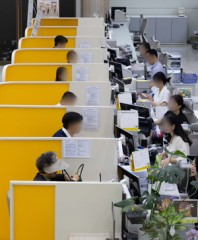
Long-term fixed-rate mortgages with no rate changes for 10 years to debut early next year
FSC and banks begin working-level talks on long-term fixed-rate home loans New product seen as tool to improve household debt quality by shielding borrowers from rate hikes Covered bond incentives and other bold measures expected to win over lenders Banks' resistance may soften as variable rates climb above fixed-rate levels A long-term fixed-rate mortgage that locks in an interest rate for at least 10 years is set to hit the market as early as next year. Financial authorities plan to finalize an incentive package with banks by year-end to encourage lenders to offer the product — and their task may be getting easier, as variable rates have recently begun to exceed fixed rates in some cases, weakening the banking sector's main argument against the new loan type. The Financial Services Commission held a working-level meeting with bank officials last week to discuss the launch of long-term fixed-rate home loans, according to financial industry sources. At the meeting, the FSC asked banks to offer mortgages benchmarked to bank bonds with maturities of at least 10 years. The FSC is targeting an early next year launch and plans to resume talks once the National Assembly's budget deliberations wrap up. "There was a request that the fixed-rate period be at least 10 years, while allowing each bank to tailor the specifics to its own circumstances," a commercial bank official said. Currently, fixed-rate mortgages at most banks reset every five years, as they are benchmarked to five-year bank bonds. The long-term fixed-rate product the FSC has in mind would use 10-year bank bonds as the benchmark, extending the rate-lock period to a full decade. Promoting long-term fixed-rate mortgages has long been a priority for the FSC. South Korea's household debt stood at 90.5 percent of GDP at the end of 2024, and any rise in interest rates would significantly increase the repayment burden on borrowers. The FSC believes that giving borrowers the option to lock in a rate and avoid interest rate risk would meaningfully improve the quality of the country's household debt. President Lee Jae-myung also flagged the risk at a press briefing in October, warning that borrowers who took out fixed-rate mortgages could face repayments 2.5 times higher than their original interest costs if their rates were converted to variable terms. The FSC aims to finalize an incentive plan with banks by year-end to promote the product. Banks have long been reluctant, arguing that long-term fixed-rate loans carry higher rates than five-year fixed products — dampening borrower demand — while saddling lenders with greater funding management risk. Currently, only Shinhan Bank and Industrial Bank of Korea offer such products. The most likely incentive under consideration is an additional improvement to the covered bond activation measures the FSC announced in 2024. When a bank issues covered bonds backed by long-term fixed-rate mortgages, Korea Housing Finance Corp. provides a payment guarantee to lower the bank's funding costs. Under the earlier plan, the FSC agreed to give additional credit to covered bond balances when calculating banks' won-denominated loan-to-deposit ratios; the new package is expected to raise that credit further. The FSC also created a re-securitization program allowing Korea Housing Finance Corp. to purchase covered bonds issued by banks, and further improvements to that program are also expected. As of now, the corporation has yet to complete a single covered bond re-securitization transaction. Given the FSC's strong push for long-term fixed-rate mortgages, the talks could yield unusually generous incentives capable of moving the banking sector. "Ultimately, the discussion will center less on what the authorities are willing to give and more on what the banks want to receive," one financial authority official said. The case for banks to resist has also weakened as long-term rates have fallen. According to the Korea Financial Investment Association, the spread between five-year and 10-year bank bond yields stood at 0.236 percentage points on Monday — narrower than the peak of 0.407 percentage points recorded on May 18. Demand for fixed-rate products is also recovering. Data from the Bank of Korea's economic statistics system show that fixed-rate mortgages accounted for 75.6 percent of newly extended bank home loans in January, fell to 31.9 percent in July, and rebounded to 34.2 percent by September. The trend is expected to continue. The new COFIX — the benchmark for variable-rate mortgages — has been rising sharply as year-end approaches, driven by intensifying competition among banks for deposits. According to the Korea Federation of Banks, the new-business COFIX for October came in at 3.62 percent, up 0.19 percentage points from the previous month — the highest level since February 2024 and a gain of 0.44 percentage points over just two months. As a result, two of the four major banks — KB, Hana, Woori and NH — that offer new COFIX-linked mortgages now have variable rates exceeding their fixed-rate equivalents, as of Tuesday. "Even if the product sees limited use during the current rate-hike cycle, expanding borrowers' options in preparation for the next period of rising rates is meaningful in itself," one financial industry official said.
Nov. 17, 2026
-

Seller financing, tenant loans bypass mortgage rules as shadow lending spreads
Private financing schemes emerge outside banking system Loan caps, debt service ratio rules don't apply Financial authorities say peer-to-peer deals hard to police Scale of market unknown even as it grows Balloon effect threatens effectiveness of lending curbs Even as the government tightens mortgage lending to curb money flowing into the real estate market, new channels for bypassing those restrictions are opening up outside the banking system. Seller financing — where a seller lends the buyer part of the purchase price — has been joined by private financial arrangements that exploit jeonse deposits. The problem, analysts say, is that financial regulators have no direct way to police such transactions and cannot even measure how large the market has become. The concern is that a balloon effect is taking hold, with home-purchase funds finding their way into the market through unregulated routes, potentially undermining the government's goal of stabilizing real estate prices. Financial industry sources said Tuesday that consulting firms have recently appeared in the apartment subscription market in Seoul's Gangnam area, matching cash-rich investors with lottery winners who lack the funds to complete their purchases. Under one such arrangement, an investor pays a 3 billion won ($2.25 million) jeonse deposit on a unit with a market-rate jeonse value of 2 billion won, charges 20 percent annual interest on the 1 billion won excess, and secures the right to buy the property at a pre-agreed price in the future. The structure differs from seller financing, in which the seller directly lends part of the purchase price to the buyer, but both arrangements share a defining feature: home-purchase funds are raised without going through a financial institution. Neither is subject to banking-sector lending regulations such as mortgage loan caps or the debt service ratio. Transactions that use jeonse deposits in this way could also distort the broader rental market. If an above-market deposit is recorded as an actual transaction price, other landlords and brokers may treat it as a benchmark for surrounding jeonse rates — a so-called anchoring effect. "In Korea right now, one or two transactions can set the market price, and no one outside the parties involved can see what is really going on," said Ko Jong-wan, head of the Korea Asset Management Research Institute. "An abnormally high jeonse deposit can be taken as a new benchmark by other landlords and brokers, and that can pull prices up across the board." Private lending between individuals is not a new phenomenon, but analysts say the incentive to use such arrangements has grown sharply as mortgage loan limits have been tightened and it has become harder to secure home-purchase financing through conventional lenders. "Even if bank lending is restricted when expectations of rising home prices are high, the demand for financing does not simply disappear," Ko said. "If anything, workarounds can multiply rapidly." The concern is that lending restrictions designed to keep money out of the real estate market may instead push that demand beyond the reach of regulators. Doubts about the effectiveness of real estate policy are surfacing within the banking sector as well. "In a structure where home-purchase loans from financial institutions are strictly limited but private financing is permitted, the government's intended effect of suppressing real estate demand could be weakened," one banking industry official said. A similar controversy arose earlier over Samsung Electronics' in-house loans for home purchases, which also fell outside the scope of financial-sector household lending regulations. Despite those concerns, financial authorities say they have no clear means of stopping such workarounds. While loans from financial institutions are subject to caps, debt service ratio requirements and other rules, peer-to-peer monetary transactions fall outside the regulatory perimeter. "Transactions in which an individual — not a financial institution — directly lends money are not subject to financial-sector lending regulations," a Financial Services Commission official said. "If interest is paid at a legally permissible rate, there is no way to block every private transaction." The position is that a transaction cannot be restricted solely because the funds are used to buy a home, as long as it complies with legal interest-rate limits and other relevant rules. Legal experts, however, note that unlike one-off private loans, arrangements involving repeated lending for profit could raise questions about registration requirements under the Moneylenders Act. The Financial Supervisory Service acknowledges the limits of its regulatory reach but maintains that some side effects must be accepted as the price of reining in household debt growth. "Given that the government cannot afford to leave household debt unchecked, lending regulations have been tightened at a pan-government level, and the emergence of private financing arrangements is something that needs to be considered as part of that policy process," an FSS official said. A more fundamental problem is that the scale of such workaround financing is nearly impossible to verify. The Bank of Korea's household credit statistics do not capture peer-to-peer loans that bypass financial institutions. While the source of funds in individual transactions can be checked through real estate acquisition financing plans, there is no way to separately track seller financing or jeonse-based private financial arrangements, or to monitor outstanding balances and delinquency rates on an ongoing basis. As a result, analysts warn, it is difficult to gauge the extent of the balloon effect from lending restrictions — and even if private debt accumulates, early warning signs of potential default risk may go undetected. "The growth of shadow lending is a matter of trust," said Ko Joon-seok, a professor at Yonsei University's Sangnam School of Management. "The more financial transactions expand outside the regulated system, the larger the gaps in the financial authorities' management of household debt." Ko added that the situation could also weigh on foreign investors' confidence in South Korea's financial markets.
Nov. 17, 2026
-

Most wealthy Koreans in their 30s and 40s hold majority of assets in financial products
Hanwha Life report: 38.4% of those planning wealth transfers prefer financial investment products Financial education cited as key transfer method; 41.6% want to pass assets to minor children Wealthy Koreans in their 30s and 40s hold more than half of their assets in financial products — and when it comes to what they want to leave behind for their children, they favor financial investment products over real estate, a new report shows. The findings suggest that this generation is planning wealth transfers early, with an eye toward passing on not just assets but financial knowledge as well. According to Hanwha Life Insurance's "Journey of Wealth 2026: Wealth Transfer Edition," released Tuesday, financial assets accounted for 57.4 percent of total holdings among respondents. The survey, conducted between May and June this year, targeted individuals in their 30s and 40s with at least 1 billion won ($749,000) in financial assets. A total of 790 people participated in an online survey, while 15 took part in in-depth interviews. Domestic shares topped the list of asset classes respondents had increased their exposure to over the past year, cited by 60.9 percent on a combined first- and second-choice basis, followed by overseas shares at 45.7 percent. The preference for financial assets was equally pronounced when respondents were asked what they wanted to pass on. Among the 708 respondents who said wealth transfer planning was necessary, 38.4 percent chose financial investment products as their preferred asset to transfer — nearly twice the share who chose real estate, at 20.3 percent. Cash and cash equivalents came in at 24.7 percent. Respondents also said they want to transfer assets to their children earlier than they themselves received them. Among those who had received an inheritance or gift, 76.3 percent said they first received assets in their 20s or 30s, while 11.0 percent said they received assets before the age of 20. By contrast, 41.6 percent of respondents with children said they want to transfer assets while their children are still minors, between the ages of 0 and 18. Households with children showed a strong inclination to pass on financial know-how alongside assets. The most commonly considered transfer method — in a multiple-response question — was making early gifts within the gift tax deduction limit, cited by 57.5 percent. Strengthening children's financial education came second at 53.7 percent, followed by using insurance to prepare funds for inheritance taxes at 26.7 percent. The in-depth interviews highlighted cases where parents had begun gifting early to give their children hands-on investment experience. One respondent in their 40s said: "I made a gift in my child's name and used the money to buy shares. Every now and then I show them how the investment is doing — 'Look, it's grown this much' — and the child says, 'Let's sell.' Then I explain, 'If we sell now, what would we do with the money for the next investment?'" Wealth transfer plans varied by household type. Among married couples without children, 42.0 percent said they planned to use their assets for themselves through annuitization and similar means, the most common response. Gifting to nieces, nephews or other relatives and using testamentary trusts were the next most cited options. Among single or unmarried respondents, using assets during their lifetime, drafting a will, and gifting to relatives each drew responses in a similar range of 27.7 to 29.8 percent. Lee Jong-ho, head of marketing at Hanwha Life Insurance, said wealthy people in their 30s and 40s were already thinking about what to pass on, when and how, even while they were still in the thick of building their wealth. "The preferred method of wealth transfer differed depending on family structure, such as whether they had children," Lee said. Hanwha Life Insurance offers a comprehensive asset management service covering the full cycle of accumulating, managing and transferring wealth. Its WM centers provide consultations tailored to each customer's financial situation and goals, with specialists in tax, law and other fields. The company also operates a dedicated inheritance research institute, which holds seminars for high-net-worth customers on topics including financial assets, virtual assets, real estate and art investment, and publishes a monthly "Wealth Guide" covering investment, tax and retirement information. The full report is available on the Hanwha Life Insurance blog "Life & Talk."
Nov. 17, 2026
-

KB Kookmin Bank releases video on An Jung-geun's final journey in Lushun
Bank marks Patriotic Martyrs Day by honoring independence fighter's spirit KB Kookmin Bank has released a video documenting independence activist An Jung-geun's final journey to mark Patriotic Martyrs Day. Kookmin Bank announced Tuesday that it had released the Lushun installment of "An Jung-geun, the Path of That Day," part of its "Daehan Is Alive" campaign commemorating the independence movement. Following the Harbin installment released in October, the new video covers An's imprisonment, trial and death. The video features Seo Gyeong-deok, a Korea promotion specialist and professor at Sungshin Women's University, and broadcaster Seo Gyeong-seok. The two visit the Lushun Prison where An was held, the Kwantung Governorate court where he argued the legitimacy of his act, and the execution site where he died. The video extends the story of An's life beyond the Harbin assassination by tracing his path in the months that followed. The video also introduces An's unfinished manuscript "A Treatise on Peace in East Asia," written during his imprisonment, and his final words. It highlights his conviction that Korea must achieve independence and that lasting peace must take hold across East Asia. The video is available on Kookmin Bank's YouTube channel with Korean and English subtitles. Meanwhile, Kookmin Bank has run the "Daehan Is Alive" campaign since 2020 to raise awareness of the lives and achievements of independence fighters. "We hope this serves as an opportunity to reflect on An Jung-geun's unwavering will for independence and his commitment to peace," a Kookmin Bank official said. "We will continue to bring attention to the history we must remember and to illuminate the lives and spirit of independence heroes."
Nov. 17, 2026
-
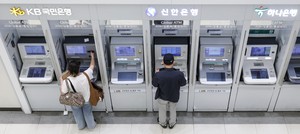
ATMs at 4 major banks down 1,268 units in under 2 years
Branch count also falls by 37; critics warn of hardship for elderly, rural customers The four major commercial banks have lost more than 1,200 automated teller machines and other cash-dispensing devices over the past year and nine months, while the number of bank branches has also continued to shrink. According to third-quarter reports filed Tuesday by the four banks — KB Kookmin Bank, Shinhan Bank, Hana Bank and Woori Bank — their combined automated devices, including CD machines, ATMs and utility payment kiosks, stood at 16,634 units as of the end of September. That marks a decline of 1,268 units, or 7.1 percent, from 17,902 at the end of 2024. Shinhan Bank recorded the steepest drop among the four, falling 577 units, or 11.6 percent, from 4,991 at end-2024 to 4,414 by end-September this year. Woori Bank shed 414 units, or 9.8 percent, going from 4,222 to 3,808 over the same period, while KB Kookmin Bank declined 254 units, or 4.9 percent, from 5,169 to 4,915. Hana Bank posted the smallest reduction, losing 23 units, or 0.7 percent, to finish at 3,497 from 3,520. The four banks' combined device count had already fallen by 869 units in 2024, and the decline has continued this year with a further reduction of 399 units. Branch numbers are also on a downward trend. Data published by the Korea Federation of Banks show the four banks operated a combined 2,665 branches and sub-offices as of end-September, down 37 from the second quarter. Some observers have raised concerns that the simultaneous reduction in both branches and ATMs is compounding difficulties for elderly customers and residents in rural areas, who tend to rely more heavily on cash.
Nov. 17, 2026
-

Gangnam home prices falling — but a rebound like 2018 remains possible, BOK warns
BOK: rebound in prime areas cannot be ruled out In 2018, outer-district gains preceded a Gangnam surge Gangnam down this year while outlying areas rise 3%-plus Rate hike gains momentum ahead of Nov. 26 policy meeting Apartment prices in Seoul's Gangnam area have been falling for more than two months, yet the Bank of Korea is keeping in mind the possibility that rising prices in outlying districts could once again push up values in prime areas — just as they did in 2017 and 2018. Data from that period show that while the Gangnam area fell for 14 consecutive weeks, prices in the northeastern and northwestern districts climbed steadily — and Gangnam subsequently rebounded by an even wider margin. Should signs of a similar recovery emerge in Seoul's core neighborhoods, the Bank of Korea's tightening stance would gain further weight. BOK: if outer-area gains persist, prime districts could follow According to the Bank of Korea, at last month's 20th Monetary Policy Board meeting, one board member noted that past housing-price cycles typically followed a pattern in which prices first turned weak in prime areas before the broader market corrected. The member added, however, that there had also been cases — as in 2017 and 2018 — where prices in outlying areas kept rising even as prime-area prices adjusted, only for prime-area prices to rebound again. A Bank of Korea official said that given housing supply conditions and improvements in household income, "the possibility that prime-area housing prices could rise again as they did in the past cannot be ruled out if the upward trend in outlying areas continues." The official added, however, that "uncertainty is high depending on how housing supply progresses and how the tax reform bill is debated in the National Assembly." An analysis of the Korea Real Estate Board's weekly apartment sale price index for 2017 and 2018 shows that the pattern in question played out between April and October 2018. After the enforcement of a heavier capital gains tax on multi-home owners in April of that year, apartment prices in the southeastern zone — which includes Gangnam-gu, Seocho-gu, Songpa-gu and Gangdong-gu — fell for 14 consecutive weeks from the second week of April through the second week of July, declining a cumulative 0.65%. Over the same period, the northwestern zone — covering Mapo-gu, Seodaemun-gu and Eunpyeong-gu — rose 1.75%, while the northeastern zone, which includes Seongbuk-gu, Gangbuk-gu and Nowon-gu, gained 0.96%. Seoul-wide apartment prices rose 0.74% during that stretch. The northeastern zone's momentum strengthened over time: its average weekly gain rose roughly threefold, from 0.04% in the first four weeks of the southeastern zone's decline to 0.12% in the final four weeks. As surrounding areas rose, the southeastern zone gradually came under upward pressure as well. It turned positive in the third week of July, rising 0.01%, and went on to climb for 14 consecutive weeks through the third week of October, surging 3.4%. The pattern is widely interpreted as reflecting a shift in demand toward prime areas such as Gangnam as buyers upgraded from outlying districts where prices had already risen. Seoul-wide apartment prices rose 3.1% in that subsequent phase, driven largely by the southeastern zone's gains. Southeastern zone down 11 straight weeks; northeastern and northwestern zones rise — echoing 2018 A similar divergence has emerged this year, with prices falling in prime areas such as Gangnam in the second half while outlying districts continue to rise. Southeastern-zone apartment prices fell for 11 consecutive weeks from the last week of August through the second week of November, declining a cumulative 2.1%. Over the same period, the northeastern zone rose 3.25% and the northwestern zone gained 2.74%. Seoul-wide apartment prices have now risen for 92 consecutive weeks. Seongdong-gu and Gangdong-gu have recently turned negative, and Dongjak-gu has gone flat, suggesting that areas adjacent to the Gangnam core are also beginning to face downward pressure. Even so, prices in outlying areas — particularly those along the so-called semiconductor belt, where major chipmakers including Samsung Electronics and SK hynix have concentrated their production facilities — are rising sharply. Apartment prices in Yongin and Suwon jumped 3.38% and 5.02%, respectively, over the same period, while Hwaseong rose 3.4%. Compared with 2018, the pace of gains in Seoul's non-prime districts is gradually slowing, but key Gyeonggi Province cities are posting even higher rates of increase, raising the prospect that prime areas such as Gangnam could eventually be pulled upward as well. Adding to that pressure, semiconductor-sector bonuses and other performance pay set to flow from next year could stoke demand for home purchases. A report the Bank of Korea released in August found that in Icheon, Gyeonggi Province, income gains from SK hynix bonus payments translated disproportionately into housing-related spending. Experts generally see little chance of a sharp move — up or down — in prime areas for the time being. Lee Eun-hyung, a research fellow at the Korea Construction Policy Research Institute, said it is difficult to read a few weeks of declines in Gangnam as an inflection point toward a sustained downturn. "Some listings are coming to market at lower prices in high-value areas to get ahead of the tax reform, which is set to raise property holding taxes and take effect next year," Lee said, adding that the trend in outlying areas suggests prices will not fall further for now. Ham Young-jin, head of the real estate research lab at Woori Bank, said a shortage of new apartment supply in Seoul next year would support a floor under prices through the rental market. "Demand in Gangnam will be concentrated in distressed listings, but interest rates, price fatigue, government regulation and tax reform will all be significant hurdles," Ham said. If Gangnam prices show signs of rebounding as they did in 2018, the Bank of Korea's tightening stance is expected to harden further. Bank of Korea Governor Shin Hyun-song has maintained that monetary policy alone has limits in curbing home prices, but he has emphasized the stabilizing effect of rate hikes on real estate. After raising the benchmark interest rate twice in consecutive meetings in August, Shin told reporters at a press briefing that the preemptive rate increases would "help at least somewhat in easing the steep rise in housing prices." The Bank of Korea holds its final monetary policy meeting of the year on Nov. 26, when it will set the benchmark interest rate. Markets widely expect a 0.25 percentage point increase, which would bring the rate to 3.25%.
Nov. 17, 2026
-
Kyobo Life's in-force CSM tops W7tr for first time
Cumulative insurance profit holds steady year-on-year Cumulative net profit falls 20% as investment income shrinks Kyobo Life's in-force contractual service margin (CSM) — a key indicator of future profitability — reached 7.06 trillion won ($5.29 billion) as of the end of September, surpassing the 7 trillion won mark for the first time since the insurer adopted the IFRS 17 accounting standard in 2023. New business CSM for the third quarter came in at 421.3 billion won, up 5.8% from the same period last year, driven by stronger sales of protection products such as national health insurance and a reduction in loss-making contracts. Cumulative insurance profit for the first three quarters stood at 407 billion won, roughly in line with the 410.3 billion won recorded a year earlier. Third-quarter insurance profit on a consolidated basis rose 10.8% year-on-year to 185.1 billion won. Cumulative net profit for the period on a consolidated basis, however, fell 19.9% year-on-year to 708.2 billion won through the third quarter. The decline was steeper on a standalone basis, with cumulative net profit dropping 49.1% to 431.4 billion won. For the third quarter alone, the company posted a standalone net loss of 47.2 billion won. The drag came from the investment segment. Rising market interest rates pushed up insurance finance costs, compounding the effect of heightened volatility in equity markets and interest rates. As a result, cumulative consolidated investment profit for the first three quarters fell 11.8% year-on-year to 898.1 billion won.
Nov. 17, 2026
-
E-finance sector posts record first-half sales; unsettled, unredeemed balances top W15tr
H1 sales reach 6.3 trillion won, led by PG sector growth 24 firms fall short of soundness standards; FSS tightens oversight Growth in South Korea's electronic financial services market — driven by simple payment platforms and similar services — pushed first-half sales to a record high, up 14.5 percent from a year earlier. However, the combined balance of unsettled merchant payments owed by payment gateway operators and unredeemed prepaid funds held by users also grew, reaching 15 trillion won ($11.2 billion) in total. Twenty-four firms failed to meet the financial authorities' management guidance standards. The Financial Supervisory Service released its "First-Half 2026 Earnings Report for Electronic Financial Service Providers" Tuesday, showing that sector sales reached 6.3 trillion won in the first half of this year, up 800 billion won, or 14.5 percent, from 5.5 trillion won in the same period last year. The payment gateway, or PG, segment led the expansion, with sales climbing 17.1 percent from 4.1 trillion won to 4.8 trillion won. Sales from the issuance and management of prepaid electronic payment instruments held steady at 1.1 trillion won, unchanged from a year earlier. Gross profit rose 17.6 percent year-on-year to 2 trillion won. The balances of unsettled payments and prepaid funds managed by electronic financial firms also increased. As of the end of June, the unsettled balance that PG operators owed to merchants and other parties stood at 9.7 trillion won, up 500 billion won from the end of last year. The unredeemed balance — covering prepaid funds and similar amounts not yet spent by consumers — rose 100 billion won over the same period to 5.3 trillion won. Combined, the two balances totaled 15 trillion won, a 4.2 percent increase from the end of last year. The FSS noted that the figures include normally scheduled settlement amounts and unused prepaid balances, and do not represent delayed or overdue payments. Twenty-four firms failed to meet soundness standards as of the end of June, down five from the end of last year. Of those, 14 were in a state of capital impairment and nine fell short of liquidity ratio requirements. Most of the non-compliant firms were small and mid-sized electronic financial service providers, accounting for just 0.5 percent of the total unsettled balance. Their share of the unredeemed balance was 8.1 percent, and all of those funds are managed separately through external trusts and similar arrangements. Following an amendment to the Electronic Financial Transactions Act last December, the financial authorities called for 12 firms that had failed to meet management guidance standards to increase their capital, among other measures. The FSS said it plans to pursue administrative actions — including business suspension or registration cancellation — against firms that do not comply. Starting Dec. 17, a new disclosure regime will also take effect, requiring electronic financial service providers to make public their financial status and the state of external management of PG settlement funds. Meanwhile, the FSS discussed measures to strengthen user protections for long-dormant prepaid balances at a Financial Consumer Protection Advisory Committee meeting held Thursday. The regulator plans to extend to other prepaid service providers the notification and refund practices already in place at three major tech firms — Naver, Kakao and Toss Pay — and to shorten the user notification cycle from once a year to once every three months.
Nov. 17, 2026
-

The 'goalpost rate' mystery: How a government policy invited collusion — and who really pays
In 1976, American social psychologist Donald T. Campbell made an unsettling discovery about government policy evaluation. His inquiry began with a deceptively simple question. "If you measure performance with a number and reward people based on that number, how will they behave?" The answer was telling. At first, people worked to improve actual performance. Over time, they shifted focus from the underlying goal to gaming the metric itself. Eventually, some took actions that directly undermined the original purpose — all in the name of making the number look better. Campbell concluded that the more a quantitative indicator is used in social decision-making, the more it comes under pressure to be corrupted and the more likely it is to distort the very social process it was meant to measure. This is known as Campbell's Law. A year earlier, in 1975, British economist Charles Goodhart reached a similar conclusion. When a central bank adopts a measure such as the money supply as a policy target, financial institutions change their behavior in ways that break down the existing relationship between that indicator and the broader economy. Goodhart's Law is commonly summarized as follows. "When a measure becomes a target, it ceases to be a good measure." How the 'goalpost rate' was born — and why it rewarded collusion over competition On June 11, 2009, the Ministry of Economy and Finance unveiled a plan to encourage financial firms to participate more actively in government bond auctions. The official then in charge of the government bond desk was Kim Jung-kwan, now the minister of trade, industry and resources. The bid-to-cover ratio for government bonds had fallen from 246 percent in 2002 to just 126 percent in the first four months of 2009. A low bid-to-cover ratio risks pushing up issuance rates and increasing the government's interest burden. The solution was what became known as the "goalpost rate" system. Under the scheme, primary dealers that failed to win bonds at auction could still have their bids counted toward their performance record, provided they had submitted bids within 3 basis points — 0.03 percentage points — above the highest accepted rate. Like kicking a ball through the goalposts without scoring a direct hit, firms could earn credit for bids that fell just outside the winning range. For example, if the highest accepted rate on a bond auction was 3.50 percent per annum, a financial firm that bid above 3.50 percent but no higher than 3.53 percent would receive partial performance credit even without winning any bonds. Primary dealers accumulate performance scores based on their underwriting records, and higher ratings unlock greater benefits. The most valuable of these is the non-competitive purchase option, which allows a dealer to buy additional bonds at the highest accepted auction rate for up to three business days after the auction closes — within limits set by the volume actually underwritten and the dealer's rating. If bond prices rise in the interim, the option creates an opportunity for profit. A goalpost-range bid alone does not automatically generate a non-competitive purchase option; actual winning bids are also required. But having unsuccessful bids counted toward the performance record can help a dealer achieve a more favorable rating and unlock greater incentives. In effect, bonds a firm never actually bought could translate into future economic benefits. The key, then, was finding the goalpost — identifying where the final accepted rate would land. Knowing what rates rivals planned to submit was a clear advantage. The structure created conditions in which securing the non-competitive purchase option could become a more important objective than winning bonds outright. Lucrative non-competitive options expanded further during COVID-19 The government's design appeared to work — at least on paper. The bid-to-cover ratio surged. From September 2009 through March 2010, the average ratio for five-year government bonds reached 223 percent, nearly double the 118 percent recorded in the same period a year earlier. Even then, some observers raised concerns that bids submitted purely to earn performance credit were artificially inflating the ratio. When the COVID-19 pandemic hit, the government expanded the non-competitive purchase option limits from April 2020 to facilitate bond issuance. It extended the expansion temporarily in 2022 and kept the enlarged limits in place through the end of 2023. With the incentive structure around the goalpost rate and non-competitive options already in place, the value of those options grew even larger. On Wednesday, the Fair Trade Commission announced it would impose a combined fine of 1.63 trillion won ($1.22 billion) on 15 banks and securities firms for colluding in government bond auctions — the largest penalty ever levied in a single case by the commission. The commission found that in 150 of the 345 government bond auctions held between January 2020 and June 2023, competing firms had exchanged rate information or reached agreements. In 145 of those cases, it said, there was evidence of specific agreements on bid rates or volumes. Employees at financial firms exchanged rates by phone and messenger as late as one to two minutes before auction deadlines. In some instances, a rate was agreed upon in as little as five seconds. Firms even passed on contact information for rivals and instructions on how to exchange information when staff changed roles. Estimating a competitor's likely rate is one thing; agreeing to coordinate rates is another entirely. If financial firms exploited a structural loophole for their own economic gain and went further by colluding, they cannot escape accountability. At the same time, the government that created the distorted goalpost rate system — and with it the incentive to collude — does not appear entirely free of responsibility either. A record fine that raises more questions than it answers — and a windfall for law firms The Fair Trade Commission does not emerge from this episode looking entirely beyond reproach, even after handing down the largest fine in its history. The commission emphasized "artificial increases in accepted bond rates" and "losses to public finances," yet offered little detailed explanation of the extent of the harm or the specific basis for calculating the fine. That leaves the appropriateness of the 1.63 trillion won penalty open to question. The commission calculated the relevant sales figure at around 54 trillion won, using the total value of government bond contracts awarded. It then applied a base rate of 4.5 percent and reduced the result by 30 percent to account for the special characteristics of the bond market and the uncertainty surrounding illicit gains. Financial firms argue that treating the full value of bonds underwritten as equivalent to revenue or profit is unjustified. Underwriting 1 trillion won in bonds does not mean earning 1 trillion won. Actual profit depends on the price at which bonds are sold, funding costs, the holding period, hedging transactions and other factors. The economic benefit derived specifically from the goalpost rate mechanism also warrants separate calculation, they say. In a 2012 case involving collusion in small-denomination bonds, the commission used operating profit from bond trading margins as the basis for its fine. In a case decided in January this year involving loan-to-value ratio collusion among four major banks, it used related interest income. This case is different in that a special provision for calculating contract values in bid-rigging cases was applied. Even so, the commission owes a clear explanation of why using the full value of bonds underwritten as the calculation base is appropriate here. The commission said it conducted a quantitative analysis of public finance losses attributable to the collusion during the review process, and that investigators had produced estimates of the rate impact. The full commission ultimately concluded, however, that those figures could not be determined with sufficient precision. Imposing a fine does not require pinning down the exact profit from collusion or the precise loss to public finances — deterrence is as much a purpose of penalties as recovering illicit gains. Even so, a fine of record-breaking scale demands a credible explanation of what facts underpinned the calculation and how uncertainty was factored in. Courts have previously ruled in bid-rigging cases that while using contract value as the basis for a fine is permissible, a final penalty disproportionate to the severity of the violation may run afoul of the principle of proportionality. The sanctioned firms are expected to pursue litigation. Major law firms will be involved, and former Fair Trade Commission officials now in private practice stand to benefit substantially. If success fees are tied to the size of any reduction in the fine, the initial penalty figure directly affects what law firms stand to earn. The less transparent the fine calculation and the scarcer the information, the more firms may feel compelled to spend on legal challenges. One has to wonder: if the revolving door between the commission and private law firms did not exist, why would so many former commission officials head there? Meritz Securities — which hired a former bond chief — escapes criminal referral The criteria the commission used to decide which firms to refer for criminal prosecution also warrant a clearer explanation. Meritz Securities was fined 64.56 billion won in the case but was not among the firms referred to the Serious Crimes Investigation Agency. Korea Development Bank and Korea Investment Securities, which received smaller fines, were referred. Samsung Securities and Shinhan Securities are understood to have received leniency reductions for self-reporting, and Daishin Securities for cooperating with the investigation, though the commission has not officially confirmed the leniency status or reduction levels for individual firms. The reason Meritz Securities was not referred for prosecution has not been explained. The commission said only that it weighed the degree of involvement, the duration of participation and cooperation with the investigation. The size of a fine and a decision to refer for criminal prosecution need not be strictly proportional. But if that is the case, the commission should explain what distinguished Meritz Securities from the firms that were referred. The question sharpens given that in August this year, Meritz Financial Group hired Kwak Sang-hyun, a former head of the government bond division at the Ministry of Economy and Finance, as a managing director. Kwak took charge of the bond division after the collusion covered by the commission's findings had already begun, and oversaw government bond policy during the period when the commission's investigation was under way. There is no evidence of any connection between that hire and the decision to exclude Meritz Securities from criminal referral. But when the fairness of a sanction is open to question, the commission would do more to dispel suspicion by explaining its reasoning in detail than by staying silent. The K-Bond messenger is not the problem — the conduct is Some have tried to shift blame for the episode onto the over-the-counter bond market's reliance on messenger platforms. K-Bond, the messaging platform used in over-the-counter bond trading, was built and is operated by the Korea Financial Investment Association, a self-regulatory body. Conversations on the platform are logged. Overseas markets similarly rely on phone calls and platforms such as Bloomberg and Reuters for trading communication. The Korea Financial Investment Association launched a predecessor platform called Prebond in 2010, shortly after the goalpost rate system was introduced, and rebuilt it as K-Bond in 2017. The association's messenger is not a simple chat application — it is market infrastructure designed to provide real-time bid and transaction data and to support trade negotiations among market participants. The problem is not the messenger but what it was used for. Conflating a tool that facilitates trading with the act of coordinating auction bids among competitors is a category error. Bid-to-cover ratio rose after goalpost rate benefits were trimmed The period of collusion the commission identified runs from January 2020 to June 2023. That raises an obvious question: was there truly no similar conduct in the decade from 2009 to 2019? Concerns about the system inflating bid-to-cover ratios were raised as early as 2010, pointing to a structural problem that predated the commission's findings. It is not obvious that collusion can be ruled out before 2020. After the commission's investigation began in June 2023, the government announced reforms that gave greater weight to actual underwriting performance. From 2024, it normalized the non-competitive purchase option limits that had been expanded during the pandemic and raised the bonus points awarded for actual underwriting from three to nine. The average bid-to-cover ratio consequently rose from 271 percent in 2023 to 321 percent in 2024. It eased to 267 percent in 2025 but remained well above the levels seen in 2009. Even after trimming some benefits and rewarding actual underwriting more heavily, demand at government bond auctions did not weaken. Yanying and Zigong Yanying, the chief minister of the state of Qi during the Spring and Autumn period, traveled to the state of Chu as an envoy. The king of Chu, seeking to mock him, had a man from Qi who had been caught stealing brought before them and asked: "Are people from Qi naturally inclined to steal?" Yanying replied: "A tangerine grown south of the Huai River is a tangerine. Grown north of it, it becomes a bitter orange. A man who did not steal when he lived in Qi steals when he comes to Chu. Is it not the soil of Chu that turns men into thieves?" This is the story of the tangerine and the bitter orange, recorded in the Yanzi Chunqiu. The Lüshi Chunqiu offers an equally instructive tale about Zigong, a disciple of Confucius. At the time, the state of Lu had a policy of reimbursing anyone who ransomed a fellow citizen from slavery in a foreign land. Zigong, who was wealthy, ransomed a man from Lu but declined to accept the reimbursement. Confucius rebuked him: "From now on, the people of Lu will no longer ransom their countrymen." Declining the payment might seem admirable in the moment. But if people less wealthy than Zigong felt ashamed to accept reimbursement, fewer would bother to ransom enslaved compatriots at all. Confucius was not asking whether it was right or wrong to accept payment for a good deed. He was asking how that payment — or its absence — would shape the behavior of others going forward. The warnings that Campbell and Goodhart issued were already understood by Eastern sages more than two millennia earlier.
Nov. 17, 2026
-

Lotte Card's Q3 net profit plunges 43% amid partial business suspension
Operating expenses rise 15.6%; operating profit falls 47.5% Cumulative net profit down 5.4% on surcharge impact Lower credit-loss provisions lift cumulative operating profit 1% Lotte Card's net profit for the period plunged more than 40 percent in the third quarter compared with the same period last year, after the company was hit with a partial business suspension of one and a half months over a personal data breach. Costs grew faster than revenue, squeezing profitability. Lower credit-loss provisions, however, helped cumulative operating profit edge up slightly through the third quarter. According to a quarterly report Lotte Card filed Monday, its consolidated net profit for the period in the third quarter came to 38 billion won ($28.5 million), down 43.2 percent from 66.9 billion won in the same period last year. Operating profit fell 47.5 percent over the same period, from 84.6 billion won to 44.4 billion won. Operating revenue rose 7.1 percent to 671.1 billion won, but operating expenses climbed 15.6 percent to 626.7 billion won, sharply eroding earnings. The results reflect the period during which Lotte Card was under a partial business suspension stemming from the data breach. The Financial Services Commission imposed a one-and-a-half-month partial suspension of certain operations and a fine of 5 billion won on the company over the personal data leak that occurred last year. As a result, some business activities were halted from Aug. 1 through Sept. 15. The sanctions also weighed on cumulative earnings. Cumulative consolidated net profit through the third quarter came to 102.6 billion won, down 5.4 percent from 108.4 billion won in the same period last year. The decline reflected a surcharge of 9.62 billion won imposed by the Personal Information Protection Commission, recorded as a non-operating loss. Cumulative non-operating expenses rose from 1.9 billion won last year to 12 billion won this year. Cumulative operating profit held up thanks to cost reductions. Cumulative consolidated operating profit through the third quarter reached 140.1 billion won, up 1 percent from the same period last year, as gains secured in the first half offset the weaker third-quarter performance. Cumulative credit-loss provisions fell 17.5 percent, from 614.6 billion won to 506.8 billion won, supporting overall profitability. "We maintained our core earnings power by improving the asset portfolio with a focus on prime customers, and through sustained risk management, lower credit-loss provisions and broader cost efficiency," a Lotte Card official said. Overseas subsidiaries included in the consolidated results also contributed to earnings growth. Lotte Finance Vietnam's cumulative net profit through the third quarter rose 15.4 percent to 7.6 billion won, from 6.6 billion won in the same period last year. The subsidiary also laid the groundwork for expanding from consumer finance into corporate finance, including leasing, after converting to a comprehensive financial company in August. Asset quality management remains a challenge for the earnings recovery. Despite the decline in credit-loss provisions, the delinquency ratio stood at 2.59 percent as of the end of September, up 0.37 percentage points from the end of last year. The substandard-and-below loan ratio improved, however, falling from 2.15 percent to 2.05 percent over the same period. Lotte Card said it plans to focus on expanding its customer base and restoring profitability following the resumption of full operations. "We plan to expand our offline sales network and introduce new products and lifestyle-oriented co-branded cards," a company official said. "We will restore our earnings base and improve our business fundamentals through asset quality management, diversification of funding sources and cost efficiency."
Nov. 16, 2026
-

'Hold through a 50% loss, buy more in the red': Are young Korean investors brave or reckless?
Toss Insights report on domestic retail investor behavior 42.2% hold losing stocks; 24.4% average down 41.7% of loss-hit holders rode it out vs. 26.5% who cut losses Riskier behavior more pronounced among younger investors Kim Seong-bae, 28, invested in a 2x leveraged ETF earlier this year and watched losses mount to 50% — yet refused to sell. Having once seen a 30% loss reverse into a 50% gain, Kim held on. This time was different. Within a week the losses deepened further, and Kim ultimately lost the entire investment. "I thought if I held on it would come back," Kim said. "I figured it was just another downturn, but I had no idea a much bigger one was coming." Hong, 32, has been buying more shares even as losses pile up. Hong has continued purchasing Nvidia stock even after its share price fell further amid a controversy over former CEO Jensen Huang's personal conduct. "I think there's still more room to grow in the AI era," Hong said. "I plan to keep buying until I run out of money." According to a report on domestic retail investor behavior and trends published Thursday by Toss Insights, the financial research arm of fintech firm Toss, two in three retail investors hold on to losing stocks rather than selling, or buy more on the way down. The survey was conducted by Hanyang University professor Lee Jeong-hwan and Gyeongin National University of Education professor Jo Jin-hyeong from July 11 to Aug. 21, covering 1,000 retail investors in their 20s through 50s with experience trading domestic or overseas stocks. Among respondents, 42.2% said they continue to hold losing positions without selling, while 24.4% said they average down — buying more shares as the price falls — bringing the combined total to 66.6%. By contrast, only 23.9% said they cut losses according to a predetermined rule. The researchers attributed this pattern to the "disposition effect" — a tendency to defer selling in hopes of a recovery rather than locking in a loss. In fact, 18.3% of respondents reported average losses of more than 30% on their current holdings, and 8.4% said they were sitting on losses of 50% or more. Investors who held on or averaged down fared worse than those who applied disciplined stop-losses. Among those who experienced losses in domestic stocks over the past year, 41.7% were in the hold-and-wait group and 32.3% were in the averaging-down group. The disciplined stop-loss group posted the lowest loss rate, at 26.5%. Younger investors stood out for shorter track records and a cluster of behaviors that heighten the risk of loss. Respondents in their 20s averaged 2.13 out of four identified risk behaviors — investing for less than three years, holding stocks for under six months, concentrating in a small number of positions, and neglecting losing stocks — compared with 1.50 to 1.61 for other age groups. Only 9.0% of investors in their 20s and 30s had 10 or more years of investing experience, far below the 32.9% recorded among those in their 40s and 50s. Appetite for high-risk assets was also stronger among younger investors. Some 35.9% of those in their 20s and 30s held virtual assets or derivatives, compared with 25.6% of those in their 40s and 50s. Younger investors were also more than three times as likely to have bought a stock after seeing it go viral online — 4.4% versus 1.4% for older age groups. Heo Jun-yeong, a professor of economics at Sogang University, said younger investors tend to consume large amounts of financial information and can develop an outsized confidence in their ability to profit. "But the amount of information you take in is not proportional to your actual investment returns," he said. He added that even if the AI industry continues to grow, that does not guarantee gains in related stocks. "Growth expectations may already be priced in," he said. Heo also flagged the relatively limited financial cushion of young investors as a risk factor. "Volatility in AI and semiconductor stocks is likely to persist," Heo said. "Even if share prices rise over the long term, they can swing up and down along the way — and young investors with less capital can end up taking much bigger hits." Heo also suggested that the difficulty of building wealth through wages alone may be driving young people's heavy reliance on investing. "This should not be viewed purely as a financial education problem," Heo said. "We need to look at the broader economic structure and job market — whether young people can achieve financial independence without having to depend on stock investment."
Nov. 16, 2026
-
Dunamu posts first-ever quarterly operating loss in Q3
Trading slump, weak investor sentiment weigh on earnings Dunamu, the operator of virtual asset exchange Upbit, swung to an operating loss in the third quarter of this year. In a quarterly report filed Monday, Dunamu said its consolidated operating revenue came in at 151.7 billion won ($114 million) in the third quarter, down 60.7 percent from 385.9 billion won in the same period a year earlier. The more than 60 percent year-on-year drop in sales came as digital asset trading contracted and investor sentiment weakened. It marks the company's first quarterly loss since Upbit launched in 2017. The operating loss stood at 3.5 billion won, while the net loss for the period reached 18.6 billion won — both representing a swing to the red compared with the same quarter last year. A contraction in global digital asset trading, subdued investor sentiment and rising operating costs were the main factors behind the earnings deterioration. Dunamu operates the digital asset exchange Upbit and the investment information platform Jungkwonplus. The company has been expanding its business through services such as Upbit Staking, coin accumulation and coin lending, as well as Upbit Custody, an institutional custody service targeting corporations and financial institutions.
Nov. 16, 2026
-

BC Card posts W141.2b in net profit through Q3, up 4.2% on year
Operating profit rises 13% to 129.8 billion won Proprietary card, financial services drive profitability gains Standalone Q3 net profit falls 13.8% on year BC Card's cumulative net profit for the period through the third quarter rose 4.2% from a year earlier, as growth in its proprietary card and financial services businesses offset a decline in its core card payment processing revenue, pushing operating profit to a double-digit gain. According to a quarterly report BC Card filed Monday, the company's consolidated cumulative net profit for the period through the third quarter reached 141.2 billion won ($106 million), up 4.2% from the same period last year. Operating profit climbed 13% to 129.8 billion won, while operating revenue edged up 0.3% to 2.71 trillion won. Results for the third quarter alone were weaker. Net profit for the period from July through September came in at 35.1 billion won, down 13.8% from a year earlier. Operating profit for the same period fell 6.7% to 30.8 billion won, and operating revenue declined 1.6% to 903.8 billion won. Growth in the proprietary card and financial services segments drove the improvement in cumulative operating profit. Cumulative revenue from card acquisition operations through the third quarter fell 3% year on year to 2.02 trillion won. Fee revenue from proprietary cards surged 21.3% to 48.8 billion won, and interest income rose 16.9% to 100.5 billion won. The results reflect BC Card's strategy of diversifying its revenue base by expanding its proprietary card and lending businesses on top of its existing card payment processing operations. The company has been broadening the customer base for its Baro Card — its own-issued credit card — while also growing its loan portfolio. As of the end of September, the outstanding balance of loan receivables stood at 2.13 trillion won on a book-value basis, up 25% from the end of last year. Despite the strong operating profit growth, the improvement in net profit was limited. Last year, a reduction in expected compensation payable to K bank investors generated a valuation gain of 27.2 billion won, but this year the actual compensation exceeded earlier estimates, resulting in a valuation loss of about 4.6 billion won. "Operating profit improved thanks to the expansion of financial services," a BC Card official said. "However, net profit rose only slightly from a year earlier, as valuation gains and losses on derivative liabilities related to K bank were reflected as one-time non-operating items." BC Card members can purchase a full-day adult ticket to Seoul Land through the end of November at 21,900 won — more than 30,000 won below the regular price — and can also use a Lotte World full-day ticket at half price. BC Card is running discount promotions at major theme parks including Seoul Land, Lotte World and Everland through Nov. 30. The discounts apply to personal credit and debit cards issued by BC Card member institutions: Woori Card, Hana Card, NH NongHyup Card, Industrial Bank of Korea, KB Kookmin Card, iM Bank, Busan Bank, Kyongnam Bank, Shinhan Card, Sh Suhyup Bank, Gwangju Bank and BC Baro Card. Seoul Land offers the steepest discount — a full-day adult ticket regularly priced at 52,000 won is available at 21,900 won, a 58% reduction.
Nov. 16, 2026
MOST READ
- 1Malaysia's BE International brings 1,500-strong incentive tour to Korea, bypassing Turkey
- 2AI singer tops Melon chart for first time with 'Did You Become the Adult You Dreamed Of?'
- 3Jensen Huang's daughter took the photo of him embracing his alleged mistress
- 4Man beat live-in girlfriend 514 times over 3 hours, killing her; forensic expert says footage was too disturbing to watch
- 5Madison Huang acted as de facto chief of staff at Nvidia, shouted at vice president: report
- 6Burger King unveils 'Chocolate Whopper' with brownie patty, chocolate pickles
-
WORLD

US warns of punishment for anyone enabling Iran's Strait of Hormuz toll scheme
-
INDUSTRY
Toyota union puts productivity first; Hyundai Motor union demands bigger share of profits
-
FINANCE

National Growth Fund to invest $531M in FuriosaAI, which rebuffed Meta's $800M takeover bid
-
INDUSTRY

Korea Shipowners' Association holds amateur baduk tournament for Maritime Day