
- HOME
- FINANCE
-
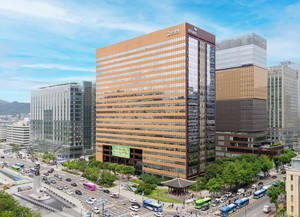
Kyobo Life to absorb online insurer LifePlanet, merger to close in April
Both boards approved merger plan Tuesday 100% subsidiary qualifies as small-scale merger IFRS17, K-ICS regulatory changes cited as backdrop 'LifePlanet Division' to be created to preserve brand Kyobo Life said Tuesday it will absorb its online life insurance subsidiary Kyobo LifePlanet Life Insurance, known as LifePlanet, through a merger. Kyobo Life held a board meeting Tuesday and approved a resolution to absorb LifePlanet's existing business operations and staff. LifePlanet's board passed the same merger resolution that day. Because LifePlanet is a wholly owned subsidiary of Kyobo Life, the transaction qualifies as a small-scale merger under Korean law, allowing board approval to substitute for a shareholder vote. Kyobo Life plans to complete the merger in April next year after filing for regulatory approval with financial authorities. After the merger, LifePlanet customers will be able to continue managing their insurance policies and services through the existing app and website without interruption. System integration will proceed in stages. Kyobo Life plans to establish an in-house independent unit tentatively called the LifePlanet Division and will continue using the LifePlanet brand. The intent is to apply the digital capabilities LifePlanet has built up — spanning product development, marketing, customer management and sales channels — across Kyobo Life's broader insurance operations. Kyobo Life said that as the spread of AI and other new technologies increases the burden of technology and infrastructure investment on insurers, consolidating capabilities within the group would be more capital-efficient than keeping LifePlanet as a separate legal entity. The merger was also driven by changes in the regulatory environment, including the introduction of the new accounting standard IFRS17 and the Korean Insurance Capital Standard, known as K-ICS. Under tightened capital adequacy rules, the company said, a standalone digital insurer cannot easily sustain growth. Short-term, small-value and savings-type insurance products — the mainstay of digital life insurers — are insufficient to secure an adequate contractual service margin or maintain a stable K-ICS ratio, Kyobo Life said. Founded in 2013, LifePlanet was South Korea's first exclusively online life insurer. As of the end of June, it had roughly 230,000 customers and total assets of 527.3 billion won ($392 million). Insurance revenue for the first half of this year came to 9.1 billion won, and its K-ICS ratio stood at 162.97 percent. "After the regulatory environment for the insurance industry changed, the board held multiple discussions to find the best way to protect customers, and ultimately decided on an absorption merger," a Kyobo Life official said. "We will work to ensure that existing customers' policies and services remain stable throughout the integration process, maximizing the benefits of customer protection." Meanwhile, LifePlanet has posted a net loss every year since its founding in 2013 — 13 consecutive years of losses. Its net loss last year was 20.1 billion won, and its accumulated deficit stands at around 220 billion won. Kyobo Life has injected 337 billion won through six rounds of paid-in capital increases, including a record 125 billion won increase in March 2024.
Sept. 15, 2026
-

Investment fraud via illegal stock-tip chatrooms hits W181.7b in Q1, with 70% of victims middle-aged or older
Herald Business year-long series: 'The face of a fraud republic' Q1 losses already half of last year's full-year total Fraudsters lure victims with promises of 'exclusive information' Romance scams and new-style phishing crimes also on the rise Rep. Seo Il-jun calls on financial authorities to tighten oversight A, a former sales manager at an investment advisory firm, drew on his industry experience to team up with four friends and launch an illegal stock-tip chatroom on Telegram. He rented office space in a building in Bucheon, Gyeonggi Province, and assembled computers, dozens of burner phones and data on roughly 3,000 investors. He also reached an agreement with B, the operation's money-laundering chief, on how to divide the proceeds. Under A's direction, group members approached unsuspecting investors on Telegram with a pitch: buy shares in Company C at about 10,000 won below the IPO price, and the shares would be allocated once the money was wired to a designated account. The scheme netted A and his associates about 500 million won ($372,000). A court sentenced A in January to seven years in prison on charges of violating the Special Act on Prevention of Damage from Telecommunications-Based Financial Fraud and Refund of Damage. As interest in stock investing has surged — the Kospi more than doubled in a single year — fraudsters have increasingly exploited that enthusiasm through investment-fraud phishing schemes. Losses from such scams in just the first quarter of this year have already reached nearly half of the total recorded for all of last year. Particularly alarming is that seven out of 10 victims are middle-aged or older. Data submitted to the office of Rep. Seo Il-jun of the People Power Party, a member of the National Assembly's Political Affairs Committee, by the Financial Supervisory Service show that investment-fraud phishing losses reached 181.7 billion won across 6,769 cases through the end of the first quarter of this year. Total voice phishing losses in the first quarter came to 226 billion won across 9,788 cases, meaning investment-fraud phishing accounted for 80 percent of all losses. Investment-fraud phishing refers to schemes like A's — operators set up illegal stock-tip chatrooms and lure victims with claims of exclusive market intelligence, then pocket the money. Both the number of cases and total losses are rising sharply compared with last year, a trend analysts attribute to fraudsters exploiting the surge in public interest in stocks since the start of the year. For all of last year, investment-fraud losses totaled 391.6 billion won across 11,468 cases. In just one quarter, losses have already reached 46 percent of that full-year figure. Older adults have become the primary targets. People in their 50s and above accounted for 75.2 percent of all cases — 2,243 involving victims in their 50s, 2,230 in their 60s and 619 aged 70 or older. Measured by losses, 80.6 percent of the total was concentrated among victims aged 50 and above. By financial sector, banks recorded 2,900 cases, securities firms and other financial investment companies 2,129 cases, and mutual finance institutions 1,676 cases. Loan-impersonation and identity-impersonation fraud, meanwhile, appear to be on a downward trend. Loan-impersonation fraud — in which criminals lure financially struggling borrowers with promises of low-interest or high-limit loans before stealing their money — is sometimes called "recession-type phishing" because it targets people in financial distress. Cases of this type peaked at 7,375 in 2024, after rising from 1,781 in 2022 and 3,615 in 2023, before edging down to 7,202 in 2025. In the first quarter of this year, 1,123 cases were recorded, suggesting the pace of growth has slowed considerably. Messenger and institutional impersonation fraud fell from 17,786 cases in 2023 to 11,416 in 2024, then climbed back to 14,571 in 2025. The first quarter of this year recorded 1,896 cases, also indicating a slowdown in growth. Criminal methods are growing increasingly sophisticated, however, demanding heightened vigilance. Institutional impersonation schemes and romance scams have been particularly prevalent recently. In February, a man surnamed Ahn, who led a romance scam team within a Thai criminal organization called "Rung Ger Company" with roots in Cambodia, was sentenced to 14 years in prison. He was found to have defrauded more than 700 victims of 15 billion won. To minimize losses from investment fraud, romance scams and other emerging phishing crimes, financial authorities have been enforcing a "temporary account suspension guideline" since June. Under the existing Telecommunications Fraud Damage Refund Act, financial institutions can immediately freeze accounts suspected of involvement in voice phishing. Investment chatroom fraud and romance scams were difficult to classify as voice phishing — and therefore hard to act on — because they involve an ostensible exchange of goods or services. In response, financial authorities drew up a guideline that interprets the Telecommunications Fraud Damage Refund Act and the Act on Reporting and Using Specified Financial Transaction Information broadly, enabling financial institutions to take faster action to limit fraud losses. Regardless of the type of fraud — new-style phishing, voice phishing or otherwise — accounts suspected of involvement in criminal activity can be suspended for three days. If police confirm the crime constitutes a new-style phishing offense, a formal transaction freeze is then imposed. Authorities have also recently built an AI platform to rapidly share voice-phishing-related information across the financial, telecommunications and law enforcement sectors, creating an information-sharing framework that can be used to freeze accounts, block communications and apprehend suspects. "As new financial scams targeting the elderly grow ever more sophisticated, financial authorities must rigorously verify that the temporary account suspension guideline is working effectively on the ground," Rep. Seo said.
Sept. 15, 2026
-
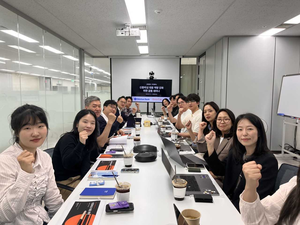
Shinhan Bank, Digital X hold joint seminar to strengthen financial fraud prevention
Shinhan Bank shares anti-phishing expertise with exchange AML, FDS collaboration to bolster financial fraud response Shinhan Bank held a joint seminar with Digital X, Mirae Asset's virtual asset investment platform, on Tuesday at its headquarters in Jung-gu, Seoul, aimed at strengthening capabilities to counter new forms of phishing fraud. The seminar was organized ahead of the implementation of a new anti-phishing regime announced by the Financial Services Commission and the Financial Supervisory Service in June. The two companies shared response strategies for the regulatory changes and discussed ways to deepen cooperation on financial fraud prevention. This was the second such seminar the two companies have held together, following one in 2023. Digital X currently operates under a real-name account partnership with Shinhan Bank, a contract it renewed for one year last December. Topics covered at the seminar included Shinhan Bank's anti-phishing framework and notable case studies, major phishing patterns seen at virtual asset businesses and how to address them, and collaborative approaches to detecting financial fraud and preventing losses. The new anti-phishing regime was introduced to address emerging forms of financial crime — including investment fraud and fraud exploiting virtual assets — that were difficult to tackle under the existing Special Act on Refund of Damages from Telecommunications-Based Financial Fraud alone. Digital X's anti-money laundering (AML) unit and fraud detection system (FDS) operations team both participated in the seminar. The two companies said close coordination between AML teams, which trace criminal fund flows, and FDS teams, which flag suspicious transactions in real time, is essential to keeping pace with increasingly sophisticated financial fraud. Digital X is building out its response framework — including revising internal procedures and systems — ahead of the regime's Oct. 1 launch. The company plans to further develop its AML and FDS capabilities while expanding cooperation with financial institutions and relevant authorities to strengthen user protection.
Sept. 15, 2026
-
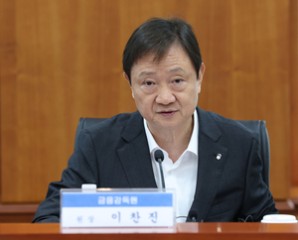
FSS chief calls for greater transparency in financial holding subsidiaries' CEO succession
Vague eligibility criteria, lax candidate pool management flagged as problems Financial Supervisory Service Director General Lee Chan-jin said the CEO succession process at financial holding subsidiaries must be made more transparent and fair, ahead of a round of executive appointments expected by year's end. Speaking at an executive meeting Tuesday, Lee said succession procedures are underway for a large number of financial holding subsidiary CEOs, including bank presidents, but that the processes put in place by subsidiary CEO candidate recommendation committees at many holding companies fall short. He added that the role of subsidiary executive candidate recommendation committees is also limited in some cases. Lee cited specific shortcomings, including overly vague CEO eligibility criteria and the absence of a minimum vetting period when narrowing down candidates. He said standing candidate pools are managed in a perfunctory manner and that the process of shortlisting and evaluating candidates lacks sufficient transparency. On the role of subsidiary executive candidate recommendation committees, Lee said only some holding companies follow corporate governance best practices — such as sharing the status of standing candidate pools for subsidiary CEOs or granting recommendation authority to bank-level committees. "There is a need to further strengthen transparency and fairness across the entire CEO succession process — from candidate pool selection and evaluation to the management of related records," Lee said. The FSS's corporate governance advancement TF, which has been operating since January, has also discussed measures to prevent CEO appointments from being made in a closed manner based on factional ties or personal relationships. Lee urged financial companies to operate transparent and fair succession procedures in ways that contribute to enhancing shareholder value. The FSS plans to step up monitoring of whether CEO succession processes are conducted according to transparent and fair standards. Meanwhile, financial sector governance reform proposals pursued by financial authorities have made little headway in the National Assembly. The proposals were referred to the legislation subcommittee of the Assembly's Political Affairs Committee last month but have not been placed on the subcommittee's agenda, with disagreements persisting over issues such as how to limit financial holding company chairmen to three consecutive terms.
Sept. 15, 2026
-

BOK's lone dissenter on rate hike: 'Need to watch demand-driven inflation more closely'
Board member Hwang Geon-il cast sole dissenting vote for freeze Inflation expected to ease from fourth quarter Won's appreciation reduces pressure for restrictive policy Demand-side price trend needs more time to assess When the Bank of Korea's Monetary Policy Board raised the benchmark interest rate by 25 basis points to 3 percent on Aug. 27 — a consecutive hike — the sole dissenting voice belonged to board member Hwang Geon-il, who argued the central bank should wait to confirm whether demand-driven inflation was truly entrenched before acting. Minutes of the 16th Monetary Policy Board meeting of 2026, released by the BOK on Tuesday, show that six of the seven board members voted to raise the benchmark interest rate to 3 percent, while Hwang called for holding it at the existing level of 2.75 percent. The minutes record that Hwang "clearly expressed his opposition to raising the benchmark interest rate by 0.25 percentage point." Hwang's first argument for a freeze was that inflation would gradually ease starting in the fourth quarter. "Prices will remain elevated above the target for now, but are expected to gradually slow from the fourth quarter," he said. He also pointed to a shift in exchange rate conditions. "The significant appreciation of the won has eased the burden of needing a restrictive monetary policy to counter a high exchange rate," Hwang said. The won-dollar rate had quickly fallen back to the late 1,300 won range, he noted, weakening the case for a rate hike to defend the currency. Hwang added that "amid the recent trend of the exchange rate stabilizing downward, there is a need to further confirm and examine whether the demand-driven rise in prices is structural." He argued it was not too late to respond after determining whether demand-led inflation was temporary or persistent. He also cited external uncertainties, including whether tensions in the Middle East would ease and the possibility that the semiconductor cycle had peaked. The six members who voted for the hike, by contrast, emphasized the need for a preemptive response to inflation. One member said: "As demand pressures accumulate, core inflation is likely to continue rising above the mid-2 percent range for some time, and headline figures have also exceeded the 2 percent target for a considerable period. Despite the start of a rate-hike cycle, liquidity in the broader market still shows a high rate of growth." The member added it was "desirable to raise the benchmark interest rate to preemptively address inflationary pressures, in order to contain the spread of price increases and prevent inflation expectations from becoming entrenched." Another member said that "by implementing a preemptive policy response to price stability during a period of relatively favorable financial conditions and solid growth, we can ultimately mitigate the negative impact on growth." The board said it would "carefully monitor underlying inflation trends, the trajectory of economic improvement, and household debt conditions in determining the timing and scale of any additional rate increases," leaving the door open to further hikes. At the same time, members said it was necessary to "determine the timing of rate increases while assessing the impact on various economic actors, so as not to impose an unbearable burden on those who have yet to fully feel the benefits of economic improvement."
Sept. 15, 2026
-
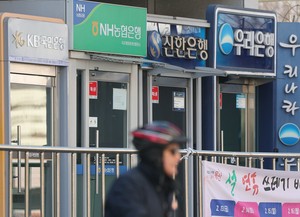
COFIX ends 4-month rise, variable mortgage rates set to pause
August new-loan COFIX held steady at 3.18% Outstanding and new-outstanding rates up 0.05 and 0.06 percentage points Banks to apply updated rate to variable mortgages from Wednesday The COFIX (Cost of Funds Index), the benchmark for variable-rate housing loans at South Korean banks, ended a four-month streak of increases, signaling that climbing variable mortgage rates may be in for a pause. According to the Korea Federation of Banks on Tuesday, the August COFIX based on new loan amounts held steady at 3.18%, unchanged from the previous month. The new-loan COFIX had risen from 2.81% in March to 2.89% in April, then continued climbing to 2.90% in May, 3.05% in June and 3.18% in July — four consecutive months of increases. The outstanding-balance COFIX rose 0.05 percentage points, from 3.00% in July to 3.05%, while the new-outstanding-balance COFIX climbed 0.06 percentage points to 2.71%. COFIX is the weighted average interest rate on funds raised by eight domestic banks — NongHyup, Shinhan, Woori, SC First, Hana, IBK, Kookmin and Citibank Korea. It reflects changes in the rates on deposit products, including savings accounts and bank bonds, that banks actually handle. When banks' funding costs rise, COFIX moves up as well, which can push variable-rate mortgage rates higher in turn. The new-loan COFIX captures only funds raised in the given month, so it responds to market rate movements relatively quickly. The outstanding-balance and new-outstanding-balance measures, by contrast, incorporate existing funding and therefore reflect market shifts more gradually. As a general rule, fixed-rate loans — whose rates do not fluctuate — tend to be more advantageous than variable-rate mortgages during periods of rising interest rates. Commercial banks plan to apply the newly published COFIX rate to their variable-rate mortgage products starting Wednesday.
Sept. 15, 2026
-
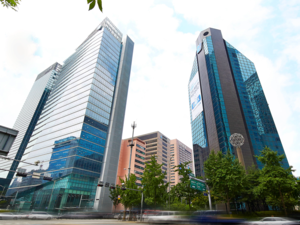
IBK eases mortgage, jeonse loan restrictions as household lending rules loosen
MCI, MCG guarantee suspensions remain in place Industrial Bank of Korea has lifted some of its loan restrictions after the government eased household lending volume regulations following its Aug. 13 policy measures. The bank resumed accepting mortgage and jeonse loan applications through loan brokers Tuesday, according to the financial industry. Loans processed through brokers will be subject to monthly caps going forward. The bank also resumed offering variable-rate mortgages and refinancing services that allow borrowers to transfer loans from other banks to Industrial Bank of Korea. "We have eased some of the restrictions that had been in place," a bank official said, adding that the only household lending restriction still in effect is the suspension of MCI (mortgage credit insurance) and MCG (mortgage credit guarantee) coverage for home-backed loans. Industrial Bank of Korea had previously restricted certain mortgage and jeonse loan products to manage overall household lending volume. With the government's Aug. 13 measures loosening those requirements, the bank partially lifted the restrictions Tuesday.
Sept. 15, 2026
-
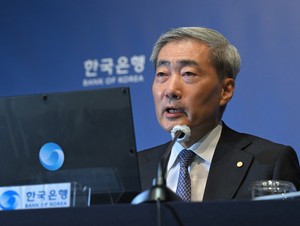
Shin Hyun-song: Redesigning regional economies key to unlocking AI productivity
BOK governor opens regional economy symposium Complementary innovation in infrastructure, institutions needed Physical AI may ease concentration in Greater Seoul Bank of Korea Governor Shin Hyun-song said Tuesday that AI holds the potential to fundamentally transform the foundations of productivity over the long term, just as the steam engine, electricity and the internet once did. Shin made the remarks in an opening address at the BOK Regional Economy Symposium held Tuesday afternoon at Lotte City Hotel in Daejeon, where he described AI as a general-purpose technology rapidly spreading beyond specific industries to permeate the entire economy. Citing the dynamo — the first industrial electric generator — Shin said that when factories switched from steam to electric power in the late 19th century, people expected a swift productivity surge, but the gains were slow to materialize because factory layouts were still designed around steam-era systems. "The productivity benefits only emerged in full once factories were fundamentally redesigned around electricity," he said. Shin invoked economist Paul David's argument that the economic effects of a new general-purpose technology appear not when the technology is adopted, but when production systems are reorganized around it. "Today's AI is no different," he said, stressing that translating AI adoption into productivity gains requires "complementary innovation" in technology infrastructure, organizational structures and institutional frameworks. Beyond installing new software and building data centers, he said, workers must develop new capabilities, companies must change how they operate, and AI infrastructure must be linked to local industries and markets. "Ultimately, whether AI becomes a new growth engine for regional economies depends less on how quickly the technology is adopted and more on how regional economies are redesigned to maximize productivity through AI," Shin said. The Regional Economy Symposium has been held since 2023 as a forum for business, academic and government representatives to discuss regional economic issues and explore policy responses. At the same event, Jeon Min-su, head of the BOK's regional economy research team, presented findings on AI's potential to widen labor market disparities across regions, under the theme "AI and Regional Labor Markets: Risks of Widening Interregional Gaps and New Opportunities." The BOK's analysis of regional AI exposure — a measure of how readily AI can be applied to local jobs — found that Seoul ranked highest for generative AI, followed by Sejong, Gyeonggi Province and Incheon. The pattern was similar for agentic AI, with Seoul leading, followed by Sejong, Gyeonggi Province and Daejeon. Physical AI exposure, by contrast, was highest outside the greater metropolitan area, led by North Gyeongsang Province, South Jeolla Province, North Chungcheong Province and Ulsan. Jeon attributed the pattern to the concentration of knowledge-service industries in the greater metropolitan area, which supports large numbers of office, sales, managerial and professional jobs with high exposure to generative and agentic AI. Non-metropolitan regions, where manufacturing and agriculture, forestry and fisheries account for a larger share of the economy, have more equipment-operation, manual labor and service jobs with high physical AI exposure, he said. Jeon then divided the regional labor market implications of AI's spread into two categories: risks and opportunities. On the risk side, he said AI development could reinforce the agglomeration economies of knowledge services and semiconductor manufacturing already concentrated in the greater metropolitan area. He also warned that if physical AI advances accelerate, employment in non-metropolitan regions could decline, particularly in manufacturing, accommodation, food service and transportation. On the opportunity side, Jeon said advances in human-AI collaboration models and physical AI could ease the concentration of talent and research and development in the greater metropolitan area. AI could also deliver larger productivity gains in non-metropolitan service industries that face human capital shortages, easing supply constraints and spurring growth in local service consumption, he said. He added that if AI's spread generates relatively high-quality jobs in non-metropolitan areas, it could slow the outflow of young people from those regions. Jeon recommended that policymakers actively pursue stronger AI education systems to promote service-sector specialization in regional economies, support for innovation-driven growth, development of service specializations linked to key manufacturing industries to help regional manufacturers shift toward knowledge services, cultivation of startups, and focused investment to transform regional hub universities into AI centers.
Sept. 15, 2026
-

Victims paid, expected refunds — then lost everything, with no card company recourse
FSS to tighten fraud-detection standards for card companies Stronger protections for seniors 70 and older, crackdown on illegal merchants A woman in her 70s, identified only as A, received a call from a man posing as a financial company employee, who told her that unless she canceled an illegal card transaction from years ago, her credit would be damaged and she could lose access to her card. The scammer told her she could resolve the matter by making a payment of the same amount through a "guarantee insurance" company, which would later be refunded. She entered her card details and paid 3.23 million won ($2,400). The actual recipient turned out to be an illegal merchant, not any insurance company. A woman in her 20s, identified as B, found what appeared to be a side job through an employment website — ordering and paying for goods on behalf of others, with the cost and a commission to be returned afterward. Early payments came back as promised, so she made more card purchases and even took out loans. The refunds then stopped. Her total losses reached 63 million won, and because she had made the card payments and taken the loans herself, the card company declined to compensate her. The Financial Supervisory Service said Tuesday it would strengthen efforts to prevent and remedy card payment losses caused by voice phishing. As scammers increasingly trick victims into paying directly by card for gift certificates and other easily liquidated goods — rather than simply wiring money — the FSS plans to upgrade card companies' fraud-detection systems and protective measures for elderly customers. The FSS announced Tuesday it would pursue regulatory improvements to prevent voice phishing losses involving card payments. The first step is to strengthen the fraud-detection standards that card companies operate jointly. While the existing system focused on catching unauthorized transactions by third parties — such as those resulting from hacking — the upgraded criteria will also flag transactions where cardholders themselves were deceived into making payments, incorporating factors such as spending patterns and merchant characteristics. The FSS also plans to strengthen protections for cardholders aged 70 and older. When a fraud alert is triggered during a purchase of gift certificates or other easily liquidated goods, card companies would conduct an in-depth consultation to verify the cardholder's intent and assess the risk of financial fraud before approving the transaction. Voice phishing cases involving victims 70 and older rose from 777 in 2023 to 1,047 in 2024 and 1,493 last year. The FSS will also intensify its investigation of complaints involving illegal merchants. When card fraud or fictitious sales are suspected, investigators will more closely examine whether goods were actually delivered and how payments were processed, to determine whether illegal merchants exploited the payment system. The FSS urged the public to be wary of several common scam patterns: demands to make a new payment on the pretext of canceling an illegal card transaction, proxy payment schemes disguised as high-paying side jobs, gift certificate purchases framed as fees for low-interest loans, and money requests from strangers met through random chat apps. When a victim makes a card payment personally, it is treated as a transaction that passed normal identity verification, making it difficult for the card company to provide compensation. Meanwhile, the FSS said it would begin recognizing financial institutions and employees that excel at preventing voice phishing losses, starting this year, to encourage the broader financial sector to step up its response. Based on results through the end of October, the FSS plans to select one institution and about five employees for commendation in December, and will share outstanding cases across the financial industry.
Sept. 15, 2026
-
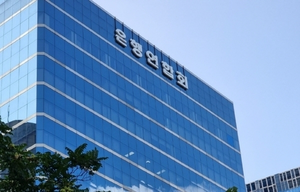
Korea Federation of Banks to offer tailored consulting for 300 small business owners
Support covers 5 areas: management, design, legal, technology and digital transformation At least 60% of participants to be regional or youth entrepreneurs The Korea Federation of Banks will offer one-on-one business consulting to small business owners with annual sales of 100 million won ($74,300) or less. The federation announced Tuesday it is launching the "Banking Sector Small Business Consulting Support Project," which will provide 300 small business owners with a total of 1,300 tailored consulting sessions. The program focuses on supporting regional and youth entrepreneurs. At least 60 percent of participants will be drawn from areas outside Greater Seoul and major metropolitan cities, or from regions without bank consulting centers. The federation also plans to ensure at least 60 percent of participants are young entrepreneurs born in 1988 or later. Consulting will begin with a diagnosis of each business's operating conditions, after which participants are matched with specialists in the relevant fields. The program covers five areas: management, brand and design, legal affairs, technology and digital transformation. Consultants will analyze sales and cost structures to suggest adjustments to product mix and pricing, and will review workflow, staffing and equipment use to help improve operational efficiency. Support will also cover improving signage, logos and packaging design, refining online marketing strategies, and drafting promotional copy and product descriptions using AI. Legal consultations covering lease and business contracts, as well as trademark issues, will also be available. Ten participating businesses identified as most urgently in need of operational improvements will receive additional support of around 6 million won ($4,460) per business. Following an on-site assessment, the program will help upgrade signage, interior environments and product displays, or introduce digital equipment, with follow-up inspections of installation and construction work. All participants will receive a report containing their consulting results and business reference materials. Those who consent may also receive follow-up support coordinated with their primary bank. The federation plans to use the consulting results to strengthen individual banks' small business support efforts, and will pursue consultant training sessions, a results showcase and a compilation of best practices. In the first half of this year, the federation provided 800 small business owners with 2,100 startup and business-closure consulting sessions. "Since every small business has a different industry and operating environment, it is important to work together to find solutions tailored to each business," federation Chairman Cho Yong-byung said. "We hope this program will help small businesses run by regional and young entrepreneurs grow on a stable footing and breathe new vitality into local commercial districts as a whole." Meanwhile, data from Korea Credit Data showed that average sales per small business in the second quarter of this year rose 4.53 percent from a year earlier, but average expenditures climbed at a faster pace of 5.83 percent. Over the same period, the average profit margin fell 0.92 percentage points to 25.2 percent, while overdue loans held by sole proprietors totaled 15.2 trillion won ($11.3 billion).
Sept. 15, 2026
-
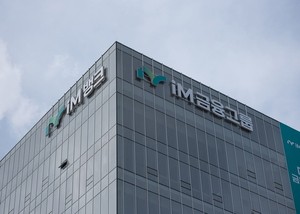
iM Financial Group earns top AAA rating in MSCI ESG assessment
iM Financial Group said Tuesday it received AAA, the highest rating, in Morgan Stanley Capital International's (MSCI) ESG assessment, marking recognition of its ESG management competitiveness and sustainability in global investment markets. The MSCI ESG assessment evaluates approximately 8,500 listed companies worldwide each year on their ESG management standards and risk-response capabilities across environmental, social and governance categories, assigning one of seven ratings ranging from AAA to CCC. iM Financial Group received high marks across its overall ESG management in the assessment, covering ESG risk evaluation and management systems, information security, digital channel innovation in financial services, financial education for vulnerable groups and corporate ethics. Particularly noted were the group's efforts to strengthen its ESG risk management framework — including climate risk analysis and data security — and its pursuit of digital transformation and community co-prosperity as core management strategies. The group is also expanding financial support for sustainable growth. iM Financial Group operates K-Taxonomy-linked support loans and special guarantee programs for small business owners, while offering corporate customers free ESG self-assessment tools and greenhouse gas calculator services. iM Financial Group Chairman Hwang Byung-woo said the result "proves iM's ESG management capabilities meet global standards," adding that the group would continue to treat ESG as a core value running through all aspects of its management while "creating positive change for society and the environment."
Sept. 15, 2026
-

Export-Import Bank of Korea signs MOU with Uzbekistan on strategic industries
Deal signed on sidelines of first Korea-Central Asia summit Bank chief vows best efforts for tangible financial support The Export-Import Bank of Korea signed an MOU with Uzbekistan's Ministry of Investment, Industry and Trade on Monday to jointly identify strategic industries for cooperation, the bank announced Tuesday. Under the agreement, the bank will work to identify mutually beneficial projects between the two countries and explore financial support options for them. The six sectors covered are Uzbekistan's national strategic industries: critical minerals, AI and digital technology, advanced infrastructure, dedicated industrial complexes for Korean companies, and pharmaceuticals and biotech. Export-Import Bank President Hwang Ki-yeon and Uzbekistan Investment, Industry and Trade Minister Laziz Kudratov signed the MOU on the sidelines of a Korea-Uzbekistan summit held as part of the first Korea-Central Asia Summit, with President Lee Jae Myung and Uzbekistan President Shavkat Mirziyoyev present. The bank said it plans to significantly expand its strategic economic partnerships with Central Asian countries, including Uzbekistan, and support Korean companies seeking to enter those markets through a range of measures. "We will do our best to further accelerate economic cooperation between the two countries and translate it into tangible financial support outcomes," Hwang said. The bank recently signed a separate MOU with the African Development Bank on sustainable growth and expanded financial cooperation in Africa.
Sept. 15, 2026
-
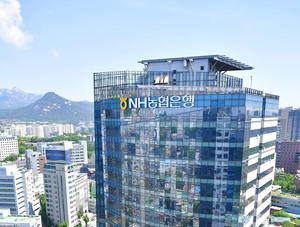
NH NongHyup Bank expands retirement pension investment options with government bonds, ETFs
Retail government bonds introduced; ETF lineup grows to 58 products NH NongHyup Bank is expanding investment options for retirement pension subscribers by strengthening its lineup of retail government bonds, ETFs and expert portfolio services. The bank announced Tuesday it has revamped its retirement pension management support framework, introducing retail government bonds for pension accounts and broadening its ETF product range. This month it launched retirement pension-dedicated retail government bonds, aiming to give subscribers an additional long-term investment option between principal-guaranteed and performance-based products. The bank is also expanding its ETF offerings. After launching 22 retirement pension ETFs in July, it plans to add 36 more products in October. The additions will include ETFs from Timefolio Asset Management and broaden the investment scope to cover domestic and overseas shares, bonds, and industry and thematic sectors. NH NongHyup Bank is also expanding its expert portfolio service, which selects products suited to each customer's investment profile based on market analysis and research. The bank said its aggressive-type expert portfolio posted a return of 40.11 percent in the first half of this year. The bank said it ranked first in returns among the five major commercial banks for non-principal-guaranteed retirement pension products for three consecutive quarters, based on disclosures on the Financial Supervisory Service's integrated pension portal. "Retirement pensions are an important asset that underpins customers' stable retirement, so systematic management support that balances safety and profitability is essential," said Park Hyeon-dong, executive vice president of NH NongHyup Bank's investment products division. "We will continue to expand our diverse product lineup and professional portfolio services tailored to each customer's investment goals and risk profile, and do our utmost to improve the actual returns on their retirement pensions." Meanwhile, Shinhan Bank and Hana Bank also began selling 10-year and 20-year retail government bonds through DC and IRP accounts this month. Three banks now offer retirement pension-type retail government bonds: Shinhan Bank, Hana Bank and NH NongHyup Bank.
Sept. 15, 2026
-

KB Kookmin Bank integrates guarantee application and loan disbursement in 'Bojeung Dream' app
BaaS applied to Korea Credit Guarantee Federation app — entire process goes contactless Guarantee fee support of 50%, up to 300,000 won, available through Oct. 30 KB Kookmin Bank has partnered with the Korea Federation of Credit Guarantee Foundations to launch a one-stop, fully contactless guarantee-backed loan service for small business owners and sole proprietors. The service links KB Kookmin Bank's banking-as-a-service platform to "Bojeung Dream," the Korea Federation of Credit Guarantee Foundations' integrated app. Customers can complete the entire process — from submitting a guarantee application and uploading documents to receiving loan disbursement — without visiting a bank branch. To mark the launch, KB Kookmin Bank is running a promotional event through Oct. 30. Customers who obtain a guarantee certificate through the Bojeung Dream app, execute a loan with KB Kookmin Bank, and then enter the event via KB Star Business Banking will receive 50 percent of their guarantee fee reimbursed, up to 300,000 won ($223). KB Kookmin Bank has been steadily expanding contactless financial services for small businesses. The bank previously launched a contactless proxy loan service with the Small Enterprise and Market Service, and in June it integrated the Gyeonggi Credit Guarantee Foundation's mobile preferential guarantee program into its banking app, allowing customers to apply for loans without installing a separate app. "We hope this service makes it easier for small business owners and sole proprietors to access the financial support they need," a KB Kookmin Bank official said. "We will continue to expand inclusive finance services that customers can genuinely feel the benefit of." Meanwhile, data from Korea Credit Data showed that average sales per small business establishment rose 4.53 percent in the second quarter of this year compared with the same period a year earlier, but average expenditures climbed 5.83 percent. Over the same period, the average profit margin fell 0.92 percentage points to 25.2 percent, while overdue loans held by sole proprietors totaled 15.2 trillion won ($11.3 billion).
Sept. 15, 2026
-
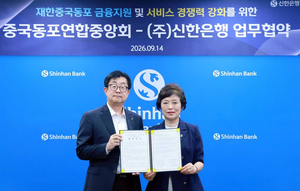
Shinhan Bank expands financial services for ethnic Koreans from China
Shinhan SOL Global, web-based services to be linked Joint marketing, broader cooperation on the table Shinhan Bank announced Tuesday it will expand tailored financial services for ethnic Koreans from China living in the country, in partnership with the Korean Chinese Federation. The bank aims to broaden its inclusive finance framework to cover everything from initial settlement to everyday banking for foreign customers. Shinhan Bank signed an MOU with the Korean Chinese Federation on Monday at its headquarters in Jung-gu, Seoul, to improve financial access for ethnic Koreans from China residing in the country. The signing was attended by Lee Seung-mok, head of Shinhan Bank's customer solutions group, and Kim Mi-jeong, chairwoman of the Korean Chinese Federation. The agreement combines Shinhan Bank's foreigner-focused financial infrastructure with the Korean Chinese Federation's nationwide network to make banking more accessible for ethnic Koreans from China living in the country. Under the MOU, the two organizations will pursue three areas of cooperation: linking the foreigner-exclusive mobile banking app Shinhan SOL Global and web-based financial services, holding online and offline events and joint marketing campaigns targeting ethnic Koreans from China, and carrying out collaborative projects to improve the convenience of financial services. The Korean Chinese Federation is a nationwide umbrella organization that works to advance the rights and interests of ethnic Koreans from China and promote community harmony. It has hosted the Korean Chinese Folk Culture Festival since 2014, sustaining civilian cultural exchange between Korea and China. "We pursued this agreement so that ethnic Koreans from China living here can use financial services more easily and conveniently," a Shinhan Bank official said. "We will enhance financial convenience for foreign customers by connecting everyday services closely tied to their lives — including salary transfers and overseas remittances — beyond just account opening." Meanwhile, Shinhan Bank operates foreigner-focused branches in Ansan, Gimhae and Doksan-dong. In the first half of this year, it expanded dedicated foreigner service windows at its Ansan foreigner-focused branch. The bank also runs Sunday branches for foreign customers at its Busan Finance Center, Daegu Seongseo branch, Yeonsu-dong branch, Gwangsan Finance Center, Suwon Station branch and Dongdaemun branch.
Sept. 15, 2026
-

Hyundai Card launches artist special plate with Maurizio Cattelan
Designed as ID cards for a fictional nation Issuance fees range from 10,000 to 30,000 won Hyundai Card announced Tuesday it is releasing a new credit card design, "Hyundai Card Maurizio Cattelan," created in collaboration with Italian contemporary artist Maurizio Cattelan. It is the second artist special plate following the "Hyundai Card Tom Sachs," which debuted in July last year. Cattelan is known for works such as a banana taped to a gallery wall. The new card comes in two designs — a resident registration card and a driver's license for a fictional nation called the "Republic of Hyundai Card." The designs incorporate a coat of arms for the imaginary state featuring the Hyundai Card logo, along with a hologram pattern bearing a banana motif. Cardholders can choose between their own photo or an AI artist character called "CATT" for the profile image. "A painting stays in one place and waits for you, but a credit card goes everywhere with you," Cattelan said. "It pays for dinner, vacations, hotel rooms, things you need and things you don't. It probably lives a busier life than most works of art. I liked that mobility." The card is not a standalone credit product but a special plate that can be added to an existing card, allowing the holder to carry both at once. Eligible applicants include holders of "Hyundai Originals" cards — such as Hyundai Card M and Hyundai Card Boutique — as well as "Alphabet Card" members; new members may also apply when signing up for those products. Issuance fees are 10,000 won ($7) for the AI character plate and 30,000 won for the personal photo plate, with a limited-edition special package available for an additional 50,000 won. The plate cannot be used as an actual form of identification, and issuance fees are charged separately from the annual fee.
Sept. 15, 2026
-

Fubon Hyundai Life marks 8th anniversary with employee-led giving campaign
Flea market, blood donation drive among participatory charity events Employees engage in community outreach and ESG initiatives Fubon Hyundai Life announced Monday that it will hold a series of events, including community outreach activities, to mark its eighth anniversary. The insurer holds employee participation programs every year around its Sept. 15 founding anniversary, focusing on support for underprivileged communities. This year's lineup includes a blood donation drive, a flea market where employees donate personal items for sale, and a pop-up store called "Fubokkku Store" selling merchandise featuring the company's mascot characters Puni, Boni and Kkumi. All proceeds from both the flea market and the store will be donated in full to projects supporting marginalized groups. "Every year on our founding anniversary, we hold meaningful volunteer activities and in-house events that all employees can take part in together," a company official said. "We will continue to practice a culture of giving based on voluntary employee participation and pursue ESG management alongside our local communities." Meanwhile, Fubon Hyundai Life posted a net profit of 158.6 billion won ($118 million) in the first half of this year, swinging to a profit from a net loss of 80.3 billion won in the same period last year.
Sept. 15, 2026
-

Kakao Pay's Seongsu-dong 'small-business department store' draws 400,000 visitors in 1,000 days
A visit to Kakao Pay's 'Orae Orae Hamkke Gage' co-prosperity campaign 100 small-business brands on display and for sale Two-week pop-up extended to two months; no commission fees for participating brands "Hearing the story behind each product makes it feel like visiting an exhibition, not just shopping." Yeonmujang-gil in Seongsu-dong, Seoul — a street that has drawn young crowds for years and more recently foreign tourists — is now home to Kakao Pay's small-business co-prosperity campaign, "Orae Orae Hamkke Gage" (Long-lasting Together Store). Running from Sept. 1 through Oct. 31, the two-month pop-up brings together 100 small-business brands under one roof. Step inside and it is the stories, not the products, that catch the eye first. Uyu Gotgan, run by a young dairy farmer carrying on a 34-year-old family operation at Hoengseong Daegwang Ranch, showcases local dairy goods, while the fragrances of Raizel — a perfume brand created by a small-business perfumer — fill the exhibition space. The 100 brands, all making sustainable products regardless of sales volume, are grouped into five themes: brands with long-standing traditions, brands that express sensibility and personal taste, everyday lifestyle brands, eco-friendly brands committed to the planet, and local brands from across the country. The layout itself resembles an exhibition. Visitors begin in a space that traces the journey Kakao Pay and small businesses have taken together, then move through six zones — an "atelier" featuring displays inspired by each brand's raw materials, a sales area, a tasting space and a rest area. A stamp tour guides visitors through each brand's story before they choose what to buy. "Orae Orae Hamkke Gage" is Kakao Pay's flagship co-prosperity campaign, designed to discover small-business brands with growth potential and help them open new sales channels while strengthening their business capabilities. It was officially launched in June 2023, following the establishment of a co-prosperity fund with Kakao Together in November 2022, and has been operated in partnership with the Work Together Foundation. In the more than 1,000 days since its launch, the campaign has connected 264 brands with more than 400,000 customers. The Seongsu-dong store marks the first time the pop-up format — previously run for about two weeks at a time — has been extended to two months. The event goes beyond selling goods, adding an exhibition component designed to move customers through brand storytelling. "Most co-prosperity programs offer one-off, single-day support," an organizer said. "As Kakao Pay accumulated experience, we came to understand that what small businesses truly need is not simply a boost in sales but the ability to build their brand — and as a result, we were able to expand into this kind of space." Participating brands join both the offline pop-up and Kakao Pay's online store with no commission fees and receive sales support from professional merchandise directors. They also receive financial education focused on accounting and taxation, branding education led by outside experts, and a six-week marketing education course. A satisfaction survey of 60 participating brands in 2025 found that 98.2 percent rated the education support positively, 96.7 percent were satisfied with expanded sales channels, and 94.2 percent were satisfied with expanded promotional exposure. "Under our ESG vision of 'beneficial flow, flexible finance,' we are carrying out co-prosperity activities so that anyone — regardless of the digital divide — can enjoy digital financial services and achieve sustainable growth together," a Kakao Pay official said.
Sept. 15, 2026
-

Shinhan Financial offers free no-show fraud insurance to 150,000 food delivery merchants
FSC, Financial Supervisory Service and Korean National Police Agency join campaign Shinhan Financial Group said Tuesday it is joining forces with financial regulators and the Korean National Police Agency to combat "no-show fraud" targeting small business owners, and will provide free insurance covering losses of up to 3 million won ($2,230) to some 150,000 merchants on the public food delivery platform Ddaenggyeoyo. The group launched a month-long joint campaign Monday with the Financial Services Commission, the Financial Supervisory Service and the Korean National Police Agency to prevent no-show fraud and promote sound transaction practices. The campaign was launched in response to a string of no-show fraud cases in which scammers impersonate public institutions or companies to place large orders from small businesses before disappearing without payment. Shinhan Financial plans to conduct education and promotional activities through its online and offline channels in cooperation with financial regulators and the police agency. As part of the initiative, Shinhan EZ Non-life Insurance has launched what it calls the country's first "no-show fraud victim support compensation insurance." Shinhan Bank will provide the policy free of charge to approximately 150,000 merchants registered on the Ddaenggyeoyo delivery platform, extending the group's shared-growth finance efforts to reduce fraud losses among small business owners. Merchants who consent to enrollment will be covered for one year from their registration date. If a no-show fraud incident occurs, they can receive a victim support payment of up to 3 million won, subject to police investigation results. Shinhan Financial will also inform small business owners about common no-show fraud schemes, real-case examples, prevention tips and steps to take if they fall victim. Separately, the group will run a public awareness campaign aimed at platform users — including individuals, public institutions and corporate clients — to discourage problematic practices such as proxy purchases and demands for advance payments. Promotional videos, posters and informational materials will be distributed through branches of group affiliates — including the bank, card, securities, life insurance, Jeju Bank and savings bank units — as well as through the Super SOL app and SNS channels. "We will work to prevent no-show fraud damage to small business owners and help spread a culture of sound transactions," a Shinhan Financial official said. "We will cooperate with financial authorities and related agencies to create an environment where small business owners can conduct business with confidence."
Sept. 15, 2026
-

Auto insurance swings to first half-year loss in 6 years despite premium hike
Financial Supervisory Service releases first-half 2026 auto insurance earnings data Loss ratio rises to 84.9%, expense ratio to 17.0% Accident count falls 4.5% but treatment and repair costs climb All four major insurers post underwriting losses South Korea's auto insurance sector swung to an underwriting loss of 184.8 billion won ($137 million) in the first half of this year, its first half-year deficit in six years, as rising medical and repair costs outpaced a premium increase introduced at the start of the year. According to the Financial Supervisory Service's preliminary first-half 2026 auto insurance earnings report released Tuesday, total auto insurance sales — measured by gross written premiums — reached 10.64 trillion won, up 426.9 billion won, or 4.2 percent, from 10.21 trillion won in the same period last year. The increase reflected a 0.8 percent rise in the number of insured vehicles to about 25.96 million, as well as a 1.3 percent premium hike that non-life insurers implemented earlier this year. Despite the revenue growth, profitability deteriorated sharply. Total auto insurance profit — combining underwriting and investment results — fell 144 billion won, or 37.7 percent, to 238 billion won from 382 billion won a year earlier. Investment income rose 71 billion won, or 20.2 percent, to 422.8 billion won, but the core underwriting business posted a loss of 184.8 billion won. That marked a swing of 215 billion won from a 30.2 billion won underwriting profit in the first half of last year, and the first half-year underwriting loss since 2020. The swing to a loss was driven by simultaneous deterioration in both the loss ratio and the expense ratio. The loss ratio rose 1.6 percentage points year-on-year to 84.9 percent, while the expense ratio climbed 0.6 percentage points to 17.0 percent. Their combined ratio jumped 2.2 percentage points to 101.9 percent, breaching the breakeven threshold of 100 percent. The loss ratio has climbed steadily in recent years — from 77.1 percent in 2022 to 78.0 percent in 2023, 80.2 percent in 2024 and 83.3 percent in 2025. Notably, the number of accidents fell while total claims costs rose. Auto accident claims in the first half came to about 1.745 million cases, down about 82,000, or 4.5 percent, from about 1.827 million a year earlier. Even so, incurred losses grew by 218.2 billion won, or 2.8 percent — far outpacing the 72.3 billion won, or 0.8 percent, increase in earned premiums. Both personal injury compensation, including hospital treatment costs, and property damage compensation, including repair labor charges, increased, pushing up the average payout per accident. Earnings deteriorated across all company sizes. The four major insurers — Samsung Fire, DB Insurance, KB Insurance and Hyundai Marine & Fire Insurance — collectively posted an underwriting loss of 51.7 billion won in the first half, reversing a 129.2 billion won profit in the same period last year. All four were in the red: Samsung Fire lost 200 million won, Hyundai Marine & Fire Insurance lost 16.4 billion won, KB Insurance lost 26.2 billion won and DB Insurance lost 8.9 billion won. Mid-sized insurers recorded a combined loss of 76.1 billion won, while online-only specialists — AXA and Hana — posted a combined loss of 57 billion won. Loss ratios were 84.5 percent for large insurers, 86.3 percent for mid-sized firms and 90.8 percent for online-only players, rising as company size decreased. The four major insurers held a combined market share of 84.8 percent, down 0.2 percentage points, preserving the sector's oligopolistic structure. After Hanwha General Insurance absorbed Carrot General Insurance last October, mid-sized insurers' share rose 1.6 percentage points to 11.0 percent, while online-only specialists' share fell 1.4 percentage points to 4.2 percent. Hanwha General Insurance's gross written premiums surged 289.2 billion won year-on-year to 635.8 billion won. By sales channel, face-to-face sales accounted for 45.1 percent, online (CM) for 38.3 percent, telephone (TM) for 15.6 percent and platform (PM) for 1.0 percent; the share of face-to-face sales slipped 1.3 percentage points while online and platform channels continued to expand. The Financial Supervisory Service said it would monitor whether new measures for minor-injury claimants — which took effect Thursday — translate into an improvement in the loss ratio. "We plan to work jointly with relevant agencies to ensure that well-intentioned consumers do not face inconvenience as the minor-injury measures take effect, and to supervise the process so that any improvement in the loss ratio achieved through system reform can ultimately lead to lower auto insurance premiums for all citizens," the FSS said.
Sept. 15, 2026
MOST READ
- 1KAIST develops high-performance bio-based adhesive using E. coli instead of petroleum
- 2Daimler Truck unveils next-generation transport solutions at IAA 2026
- 3Samsung Biologics union's show of force backfires at the bargaining table
- 4Trump pushes back on AI slowdown calls, vows to 'keep it that way'
- 5APR says hair-loss treatment research published in international journal
- 6Beyond 125 years of alliance, South Korea and Belgium forge ties in biotech and advanced industry
-
WORLD

US warns of punishment for anyone enabling Iran's Strait of Hormuz toll scheme
-
INDUSTRY
Toyota union puts productivity first; Hyundai Motor union demands bigger share of profits
-
FINANCE
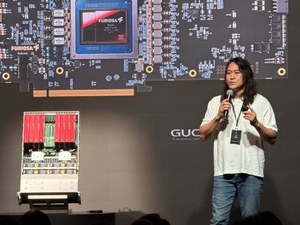
National Growth Fund to invest $531M in FuriosaAI, which rebuffed Meta's $800M takeover bid
-
INDUSTRY

Korea Shipowners' Association holds amateur baduk tournament for Maritime Day