
- HOME
- FINANCE
-
FSC to select up to 15 firms for second round of network-separation deregulation
Second round of network-separation deregulation opens Eligible pool expands to 75 firms as entry bar lowered South Korea's financial regulator is accepting applications for a second round of temporary network-separation deregulation, allowing financial firms to use AI for security purposes. The pool of eligible applicants has grown from 49 to 75, opening the door to smaller financial companies and electronic financial service providers. The Financial Services Commission plans to select up to 15 firms after a review and grant them a one-year temporary exemption from network-separation rules starting in October. The FSC announced the second-round emergency deregulation plan Thursday after holding the fifth meeting of its "Frontier AI Response Task Force," chaired by Digital Financial Policy Director Yu Yeong-jun, with participation from the Financial Supervisory Service and the Korea Financial Security Institute. The measure temporarily exempts participating firms from rules requiring the separation of internal corporate networks from the public internet, allowing them to deploy frontier AI and security software-as-a-service tools to detect and remediate security vulnerabilities. The eligible pool was expanded based on operational experience from the first round of testing, which began in June. The application threshold for financial companies has been significantly lowered. In the first round, only firms with total assets of at least 10 trillion won ($7.3 billion) and a full-time workforce of at least 1,000 were eligible; the second round relaxes those requirements to 2 trillion won in total assets and 300 or more full-time employees. However, only companies whose chief information security officer does not concurrently hold other IT responsibilities — a condition intended to ensure accountability and independence in information security — may apply. Fifty-nine financial companies meet this requirement. Separate criteria apply to electronic financial service providers: annual electronic financial transaction volume must exceed 2 trillion won, and revenue from electronic financial services must account for more than 10 percent of total sales. The restriction on CISO dual roles applies equally. Sixteen electronic financial service providers qualify, bringing the total pool of eligible applicants to 75 when combined with the financial companies. The number of firms participating in testing will also increase, from 10 in the first round to a maximum of 15. Interested companies may apply through Sept. 14, and a private technical advisory panel will assess their security capabilities and AI proficiency. The FSC plans to finalize selections around Oct. 7 and issue one-year temporary no-action letters to the chosen firms. Selected companies must first put in place alternative security controls to replace network separation, after which they may use frontier AI and security SaaS tools to identify and address system vulnerabilities. Participants must submit to the government findings on the characteristics of AI-based security threats observed during testing, the risks posed if such AI were used for offensive purposes, and recommended defensive measures. Financial regulators plan to incorporate these findings into future AI guidelines and sector-wide security frameworks. The first round of testing also confirmed AI's ability to scan for vulnerabilities. Frontier AI was able to analyze source code running into the tens of millions of lines within a matter of hours and showed particular strength in broadly detecting known vulnerabilities, according to the FSC. However, regulators assessed that the vulnerabilities identified are unlikely to lead directly to security breaches, given that financial firms already operate multiple layers of protection including intrusion prevention and detection systems. The FSC said it would move quickly to determine the schedule and scale of a third round of testing, and would also consider conducting additional emergency deregulation measures or making the exemption permanent depending on further demand. The regulator added that it is in discussions with relevant agencies on a plan to fully lift network-separation restrictions for financial firms that meet a certain level of AI and security capability — not limited to specific purposes such as security. "At a time when AI-driven intrusion threats are increasingly becoming a reality, it is important to give a broader range of financial companies and electronic financial service providers the opportunity to conduct AI security testing so they can be well prepared against such threats," Digital Financial Policy Director Yu said. "We will immediately share the accumulated findings on AI security threat characteristics and response methods with the entire financial sector, so that even firms not participating in the tests are fully equipped to handle security threats." Meanwhile, the FSC selected 10 financial firms in June as participants in the first round of network-separation deregulation for AI and SaaS use for security purposes. The group included Shinhan, Hana and Woori Bank, Kakao Bank, KB Securities, NH Investment Securities, Samsung Fire and Hanwha Life Insurance, each of which received a one-year temporary no-action letter.
Sept. 3, 2026
-
Monthly repayments on W450m loan to jump from 3.04 million to W3.3m as bond yields surge
5-year bank bond yield nears 4.5% again after one month Bank bond issuance this year up 30% from a year earlier Top fixed mortgage rate at major banks could hit 8% by year-end Global investors are dumping government bonds amid mounting inflation fears, and analysts warn the sell-off could push up lending rates at South Korean banks. As the sell-off drives market rates higher, bank bond yields — which move in tandem — are also rising. With banks needing to issue more bonds than usual this year, upward pressure on rates has intensified. The Bank of Korea has signaled further benchmark interest rate hikes, and some analysts now expect fixed mortgage rates at major banks to exceed 8 percent before year-end, raising concerns about the growing burden on ordinary borrowers and financially vulnerable households. According to the Korea Financial Investment Association's bond information center, the yield on five-year bank bonds — the benchmark for fixed-rate home loans — stood at 4.498 percent per annum as of Wednesday. The rate had peaked at 4.531 percent on July 24 before easing throughout August, but has since climbed back toward the 4.5 percent mark. The five-year bank bond yield fell from 3.705 percent at end-2023 to 3.089 percent the following year, then rebounded to 3.499 percent at end-2025. After armed conflict broke out between the United States and Iran in the Middle East in March, it soared to 4.051 percent by end-March and 4.241 percent by end-June. The recent surge in bank bond yields is largely attributed to rising government bond yields in the United States and other major economies. Analysts say inflation fears have grown on the back of higher oil prices following a renewed outbreak of armed conflict between the US and Iran, while fiscal pressures — including US national debt surpassing $40 trillion — have prompted large institutional investors to sell government bonds broadly. Since bond prices and yields move in opposite directions, increased supply and heavier selling push yields higher. The yield on the 10-year US Treasury note climbed as high as 4.812 percent during trading on Tuesday (local time), its highest level since November 2023. In the wake of that move, the yield on South Korea's three-year government bond rose to 3.930 percent on Wednesday, up 0.052 percentage points from 3.878 percent the previous day. With the Middle East conflict showing no signs of abating and major technology companies aggressively tapping bond markets for funding, yields are expected to keep climbing. The domestic financial market is also feeling the strain. The upper end of fixed-rate mortgage rates at the five major banks — KB, Shinhan, Hana, Woori and NH — stood at 7.17 percent per annum as of Wednesday, having dipped from 7.50 percent at end-July to 7.16 percent on Aug. 20 before ticking back up. As bank bond yields rise, domestic lending rates are expected to resume their upward march. On top of global bond yield pressure, a surge in bank bond issuance compared with last year is also expected to push rates higher. According to the Korea Financial Investment Association's bond information center, the volume of bank bonds maturing from September through year-end totals 89.09 trillion won ($65.1 billion), up 31 percent from 68 trillion won in the same period last year. Banks typically refinance maturing bonds by issuing new ones. With additional funding demand for productive finance initiatives also in the mix, the overall supply of bank bonds in the market is expected to exceed normal levels. Banking industry officials say these factors could push fixed mortgage rates to 8 percent per annum by year-end. With the Bank of Korea keeping the door open to further benchmark interest rate increases, rates could exceed 8 percent next year as well. At the current upper-end fixed mortgage rate of 7.17 percent per annum, a borrower taking out 450 million won ($327,000) on a 30-year equal principal-and-interest repayment plan would pay 3.04 million won per month. If the rate rises to 8 percent, monthly payments would increase to 3.3 million won, and to 3.47 million won at 8.5 percent. Borrowers on variable-rate loans will also face higher interest costs. The COFIX — the benchmark for variable-rate loans that measures banks' monthly funding costs — will reflect the rise in bank bond yields. Borrowers at non-bank financial institutions are also bracing for higher interest costs. According to the Korea Financial Investment Association, the yield on three-year bonds issued by credit card and capital companies — a key funding cost indicator for specialized credit finance firms — stood at 4.501 percent per annum on Wednesday, up 0.15 percentage points from 4.351 percent at end-July. Unlike banks, these firms have no deposit-taking function, meaning they pass the full increase in their bond yields directly to borrowers through higher lending rates.
Sept. 3, 2026
-

Shinhan Financial to return up to W3m to youth borrowers who repay on time
First payments due Oct. 12 Up to 300,000 won per quarter Shinhan Financial Group launched a program Thursday to refund a portion of loan repayments to young customers who have been paying back their debt on time. Shinhan Financial will begin accepting applications for the "asset-building support fund" through the Shinhan Microfinance Foundation starting Friday. It marks the first time a financial institution in South Korea has offered a cash-back scheme for young borrowers who repay consistently. The program draws on 20 billion won of the 100 billion won ($73 million) that Shinhan Financial contributed to the Microfinance Foundation in March. The foundation provides policy-backed microloans at low interest rates to people with limited access to mainstream banking. The initiative aims to encourage young borrowers to keep up with repayments while helping them build financial independence. Shinhan Financial expects about 10,000 people to benefit over roughly eight years, until the funds are exhausted. The first payments will be made on Oct. 12. Eligible applicants are customers who took out a "Youth Future Bridge" or "Youth Operating Fund" loan from the Shinhan Microfinance Foundation on or after April 1 this year and have been repaying without any overdue payments. The foundation will check for delinquencies at the end of each quarter and pay up to 300,000 won per disbursement, for a maximum of 10 payments totaling 3 million won. Payments are due on the 10th of the month following each quarter's close, with disbursement pushed to the next business day if that date falls on a holiday. The current application round covers customers selected from among 568 young borrowers who took out loans between April and June this year. Applicants can apply through the "Asset-Building Support Fund Application" page on the Shinhan Microfinance Foundation's website. After a verification process, the funds will be deposited into the registered account. The Shinhan Microfinance Foundation will operate a dedicated call center for the asset-building support fund on a temporary basis through March 31, 2027. Starting Sept. 30, borrowers will also be able to check the status of their payments through the "Asset Building Support — My Page" menu on the foundation's website. "Many young people who borrow through the Shinhan Microfinance Foundation struggle to meet the requirements of mainstream banks," said Shinhan Financial Group Chairman Jin Ok-dong. "We want to reward those who work hard to pay back their loans by returning the fruits of their efforts, so they can build their own assets."
Sept. 3, 2026
-
FSS to expand dedicated PF project staff fivefold to accelerate Greater Seoul housing supply
All 325 delayed sites to be audited, sorted into 4 categories Each priority site to have one FSS and one lender contact The Financial Supervisory Service will expand its dedicated staff overseeing residential project financing sites in the Greater Seoul area from five to 25 — a fivefold increase. Each priority site will be assigned one FSS contact and one lender contact, with financing, guarantees and permits coordinated according to the project's progress. The FSS held a meeting with financial industry representatives Thursday to share the close-monitoring plan for residential PF sites, framed around accelerating housing supply. FSS Governor Lee Chan-jin had directed senior officials at a management meeting Wednesday to concentrate financial support on ensuring early housing supply in Seoul and the Greater Seoul area, and to place special oversight on projects scheduled for delivery by 2027 to prevent delays. As part of that effort, the FSS will form a 25-member Housing Supply Promotion Financial Support Team. The real estate PF assessment and management unit will take overall charge of the work previously handled by five staff, and the cooperative framework will be extended to include the inspection bureaus overseeing lead lenders. Financial institutions will also be required to designate a site-level contact, bringing the total to two dedicated managers per priority site — one from the FSS and one from the lender. Lenders will monitor each site for difficulties and report any warning signs to the FSS immediately. The FSS will also conduct a full audit of the causes of delay at each site. It plans to classify sites into four categories based on progress: on track, supply acceleration needed, normalization support needed, and sale-induced resolution. Sites where delays stem from temporary issues will be designated for supply acceleration, while those showing signs of distress will be placed under normalization support. Sites with no viable path to recovery other than a sale will be steered toward resuming the project through divestiture. Support tools will also be tailored to each site's circumstances. Sites requiring financing will be connected to syndicated loans, PF development anchor real estate investment trusts and the Korea Asset Management Corporation fund, while those needing PF guarantees will be referred to the Korea Housing and Urban Guarantee Corporation and the Korea Housing Finance Corporation. Sites with demand for public rental housing purchases will be linked to the Korea Land and Housing Corporation, and those facing non-financial hurdles such as permits will be handled through consultations with the Ministry of Land, Infrastructure and Transport and other related ministries. Even sites already progressing normally will be eligible for additional support if it can bring forward their ground-breaking or completion dates. The close-monitoring program covers 325 residential PF sites in Greater Seoul's regulated zones where ground-breaking or completion is expected by 2027, representing about 180,000 units. These were selected from a total of 601 sites — 502 in Greater Seoul's regulated zones where financial institutions participate as lead lenders, and 99 held by financial institutions' proprietary funds — accounting for about 330,000 units in all. The figure of 325 sites is a preliminary count as of late last month and may change following the full audit.
Sept. 3, 2026
-
Saemaul Geumgo's 'Baby Steps' savings account tops 22,000 subscribers
Total enrollment in low-birth-rate social contribution financial products reaches 150,000 The Korea Federation of Saemaul Geumgo said Thursday that more than 22,000 people have signed up for its "MG Heuimang Nanum Georeumma Savings Account," a social contribution financial product launched to help address the country's low birth rate. The one-year savings account, commonly known as the "Baby Steps" account, offers an interest rate of up to 12 percent per year for children born in 2026. The base rate is a fixed monthly rate of 4 percent, with deposits capped at 300,000 won ($219) per month. Preferential rates range from 6 to 8 percent per year on top of the base. First children qualify for an annual rate of 10 percent, second children 11 percent, and third or subsequent children 12 percent. Newborns in areas designated as population-decline zones receive the maximum 12 percent rate regardless of birth order. The product launched in April with a cap of 50,000 accounts. About 22,000 accounts have been opened so far, consuming roughly 44 percent of the total allotment. Saemaul Geumgo has released a new social contribution savings product each year since 2023 to combat the low birth rate. The "Kangaroo Savings" account attracted 35,039 subscribers in 2023, the "Dragon Savings" account drew 49,563 in 2024, and the "Baby Snake Savings" account enrolled 49,803 in 2025. Including this year's Baby Steps account subscribers, cumulative enrollment across all four products has reached approximately 156,000. "We introduce a new product every year to provide real financial benefits to families with newborns and to contribute to overcoming the low birth rate," a federation official said. "We will continue to expand our support projects and social contribution activities in step with local communities."
Sept. 3, 2026
-
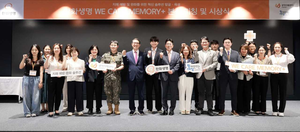
Hanwha Life seeks ideas for early dementia care solutions
92 teams nationwide entered contest; 15 selected 41% of entries based on AI, digital care services 170 million won in grants to support field deployment Hanwha Life has launched an initiative to identify care solutions for people with mild cognitive impairment and early-onset dementia, as well as their families. The insurer held the final pitching and awards ceremony for its Hanwha Life WE CARE MEMORY+ accelerating contest Wednesday at the 63 Building in Yeouido, Seoul, selecting 15 winning teams. Held for the first time this year, the contest was designed to uncover solutions that help prevent dementia and ease its symptoms, broadening the scope of support from prevention through to social participation for patients. A total of 92 teams entered across five categories — digital and AI, work and social experience, community, and programs. Of all entries, 38 proposed solutions using digital or AI technology, accounting for about 41 percent of the total. The grand prize in the idea track went to team "Chinguhaja," which proposed an AI solution that analyzes everyday phone conversations to track changes in cognitive status. The system uses AI to process voice, language and conversational patterns collected during calls, establishing a personal cognitive baseline for each user and continuously monitoring changes over time. In the implementation track, the Dobong-gu Dementia Care Center's "Green Memory, Connected Through Roles" project drew attention. Built around a green memory cafe and a smart farm, the initiative helps people with early-onset dementia take on roles suited to their strengths and preferences — including crop cultivation, production and education. Hanwha Life will provide a total of 170 million won ($124,000) in project grants to help the winning solutions take root in care settings. The company plans to expand support incrementally based on first-year results, covering the period from this September through April next year. Im Seok-hyeon, head of planning at Hanwha Life, said the contest showcased "creative attempts to address the everyday difficulties faced by dementia patients and their families through technology and solidarity." He added that the company would spare no effort to ensure the solutions deliver real, practical help in the field.
Sept. 3, 2026
-
Bithumb launches Plus Club with 13% annual Bitcoin rewards for 13th anniversary
First 50,000 new, dormant customers eligible Benefits worth up to 5 million won per year Bithumb will officially launch its "Plus Club" on Friday, offering Bitcoin rewards equivalent to 13 percent per year to mark the cryptocurrency exchange's 13th anniversary. The Plus Club is a free rewards program open to new Bithumb members and existing users with no trading activity this year. Enrolled members earn Bitcoin daily at an annualized rate of 13 percent, calculated on their average daily asset holdings. Benefits are capped at 14,000 won ($10) per day, 420,000 won per month and 5 million won per year. The program is limited to the first 50,000 applicants on a first-come, first-served basis. To qualify for rewards, members must meet a monthly trading volume of at least 50 million won on the won market. Rewards are calculated based on assets newly added after enrollment, and payouts are made in a lump sum on the fifth business day of the following month. Bithumb began accepting pre-registrations on Aug. 28 and is billing the program as the first event in its 13th-anniversary series. A similar promotion for its 12th anniversary — featuring annual rewards of 10 percent — drew more than 60 billion won in deposits before closing. Bithumb has raised the benefit rate to 13 percent for this edition. "The Plus Club is a program we prepared to give back to our customers on our 13th anniversary," a Bithumb official said. "We will continue to strengthen customer-centered services and user benefits." Meanwhile, Bitcoin has been trading in a narrow range around $77,000, with further downside appearing limited. As of 8:26 a.m. Thursday, the cryptocurrency was down 0.31 percent over the previous 24 hours at $77,189.
Sept. 3, 2026
-
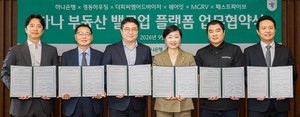
Hana Bank launches real estate value-up platform to match customers with specialists
Partners include Kyungdong Housing, MGRV and Fast Five Hana Bank is launching the "Hana Real Estate Value-Up Platform," designed to improve the utilization and asset value of commercial and aging properties. Under the model, the bank analyzes a customer's real estate holdings and connects them with specialist firms covering development, remodeling, leasing and space operations. The bank signed strategic MOUs with five real estate companies at its Euljiro headquarters in Seoul on Wednesday to operate the platform, it announced Thursday. The platform positions Hana Bank as the control tower for real estate asset management. The bank diagnoses the condition and intended use of each property before linking customers with suitable external specialists — extending its support beyond conventional buy-and-sell advisory to cover actual development and operational stages. Partners include Kyungdong Housing, a building remodeling and value-up contractor, and The PCM Advisor, a real estate development and project management firm. MGRV, which operates the co-living brand Mangrove, pop-up store and commercial idle-space solutions provider Shareit, and shared-office platform Fast Five have also joined as partners. Hana Bank plans to connect customers with the appropriate firms at each stage — planning, design, construction, leasing and space operations — based on the characteristics and intended use of their properties. The initiative is intended to give customers with no prior development or remodeling experience a direct channel to relevant businesses through the bank. The bank plans to expand its partner network and areas of cooperation going forward, diversifying its real estate asset management services. "This value-up platform goes beyond simple buy-and-sell advisory to offer a higher level of asset management service — one that addresses customers' questions about how to make the most of their real estate and delivers practical solutions," said Lee Eun-jeong, head of Hana Bank's wealth management division. "Starting with these five partners, we will continue to identify and bring in specialist firms across a wide range of fields to meet our customers' increasingly diverse and complex needs." Meanwhile, Hana Bank recently introduced a dedicated consulting service for corporate CEOs and executives, offering advice on retirement pension plans, tax planning and savings strategies, real estate investment, inheritance and gifting, and business succession.
Sept. 3, 2026
-
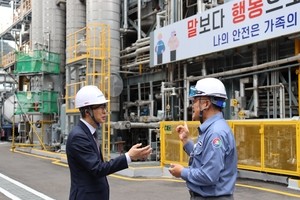
Exim Bank chief visits Honam semiconductor firms, pledges support for AI ecosystem
Visits to Amkor Technology Korea, Jaewon Industrial to review investment plans Bank to provide 20 trillion won in financing for AI value chain over 5 years, with focus on non-metropolitan ecosystem The Export-Import Bank of Korea is stepping up financial support to cultivate the semiconductor ecosystem in the Honam region. Bank President Hwang Ki-yeon visited semiconductor-related companies in Gwangju and Yeosu to review their capital investment plans and financing needs. The bank said Thursday that Hwang visited Amkor Technology Korea, a Gwangju-based semiconductor packaging and testing specialist, and Jaewon Industrial, a semiconductor chemical materials company in Yeosu. The visits were a follow-up field trip under the bank's "AX Special Program," launched earlier this year. Through the program, the bank plans to provide 20 trillion won ($14.6 billion) in financing across the AI value chain over the next five years, while offering preferential interest rates and other support to small and midsize enterprises that supply AI-sector conglomerates or expand overseas alongside them. During the visits, Hwang expressed the bank's commitment to strengthening the global competitiveness of small and midsize enterprises tied to the AI industry and to nurturing an AI industrial ecosystem outside the Greater Seoul area. Amkor Technology Korea, headquartered in Gwangju, specializes in outsourced semiconductor assembly and test, or OSAT, services for system semiconductors. The Amkor group holds the second-largest position in the global OSAT market, behind Taiwan's ASE. "Rising demand for AI semiconductor packaging and testing has led us to consider additional capital investment, including the construction of new factories," said Amkor Technology Korea CEO Lee Jin-an. "We hope the Export-Import Bank will serve as a key partner in supporting the growth of the semiconductor ecosystem." "We will strengthen tailored financial support to ensure the semiconductor ecosystem develops the global competitiveness it needs," Hwang said. Hwang then traveled to Yeosu to visit Jaewon Industrial, which produces advanced chemical materials — including high-purity solvents used in EUV semiconductor processes and conductive dispersions for secondary batteries — and counts Samsung Electronics, SK hynix and Samsung SDI among its customers. "Large-scale preemptive investment is essential in advanced strategic industries such as semiconductors and secondary batteries," said Jaewon Industrial CEO Shim Seong-won. "We hope the Export-Import Bank will serve as a strategic financial partner in fostering the semiconductor ecosystem." Hwang responded by pledging that the bank would "actively support preemptive investment to strengthen the competitiveness of the semiconductor ecosystem." Meanwhile, the bank is also working to establish a private equity and venture capital fund totaling 1.2 trillion won, to which it plans to contribute 300 billion won, to support the development of AI and other advanced strategic industries.
Sept. 3, 2026
-
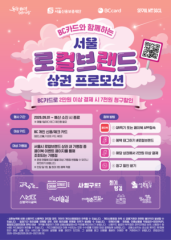
BC Card to boost local commerce across 10 Seoul districts
Promotion to run at major commercial districts throughout Seoul BC Card announced Thursday it will run a discount promotion tied to the Seoul Metropolitan Government's local brand commercial district program, aimed at revitalizing neighborhood commerce and boosting sales for small business owners. The Seoul local brand commercial district program identifies competitive commercial areas across Seoul and supports their independent growth. BC Card has partnered with the Seoul Metropolitan Government and the Seoul Credit Guarantee Foundation since 2023, using its MyTag marketing tool to help stimulate local economies. MyTag is a personalized discount service offered through Paybooc, BC Card's lifestyle finance platform. Customers can receive discounts by tagging the relevant benefit and paying with a personal credit or debit card issued by any of BC Card's member institutions — Woori Card, Hana Card, NH NongHyup Card, Industrial Bank of Korea, KB Kookmin Card, iM Bank, Busan Bank, Kyongnam Bank, Shinhan Card, Sh Suhyup Bank, Gwangju Bank, and BC Baro Card. The promotion expands to 10 participating commercial districts, up two from the previous year, covering most of Seoul's major commercial areas. The districts are Sharosu-gil (Gwanak-gu), Chemi Street Gangnam Station (Seocho-gu), 4·19-ro (Gangbuk-gu), Hoegiran-gil (Dongdaemun-gu), Seongbuk-dong-gil (Seongbuk-gu), Sangbong Meokja Alley (Jungnang-gu), Magok Art Street (Gangseo-gu), Konkuk Cheongjun Itgil (Gwangjin-gu), Noryangjin Mannaro (Dongjak-gu), and Gwanghui Road (Jung-gu), spanning 3,000 affiliated merchants in total. BC Card customers can tag the local brand commercial district discount benefit on Paybooc and receive a 7,000-won billing discount per district when spending 20,000 won ($15) or more at participating merchants within each area. The promotion runs through Dec. 20. Customers who use the discount at all 10 districts can receive a total of 21,000 won in savings, with the discount available once per day and up to three times per month per district. The promotion may end early if the budget is exhausted. "The goal of this promotion is to provide real spending benefits to customers who visit local commercial districts and to give small business owners an opportunity to grow their sales," said Kim Ho-jeong, executive director at BC Card. "We will continue to expand collaborative projects that benefit local economies by leveraging BC Card's payment infrastructure and diverse marketing capabilities."
Sept. 3, 2026
-
Financial sector paid W1.5tr over 4.5 years as bad debt mounts in policy lending programs
Last year's contributions hit record 439.6 billion won, up 91.5% in 3 years Subrogation rate for lowest-credit borrowers reaches 33.7%, with banks covering half Contribution rates also raised amid calls to tackle bad debt first As bad debt in government-backed lending programs for low-income borrowers grows, the financial burden on the institutions that fund them is mounting rapidly. Financial companies paid nearly 1.5 trillion won ($1.09 billion) into policy lending programs over the past four and a half years, with last year's contributions nearly double the 2022 level. According to data submitted to People Power Party lawmaker Park Sung-hoon of the National Assembly's Political Affairs Committee by the Korea Inclusive Finance Agency, financial companies paid a combined 1.48 trillion won in contributions to the low-income lending fund from 2022 through June this year. The burden on the financial sector grew particularly steep last year. Annual contributions rose from 229.6 billion won in 2022 to 274.1 billion won in 2023 and 302.8 billion won in 2024, then jumped to 439.6 billion won last year — a 91.5 percent increase in three years and the highest on record. Contributions in just the first half of this year have already reached 239.3 billion won. The surge reflects both an expansion in policy lending supply and a rise in default risk. The combined disbursement of programs including Haetsal Loan Bank, Workers' Haetsal Loan, Haetsal Loan 15 and the special guarantee for the lowest-credit borrowers grew 24.2 percent, from 5.16 trillion won in 2022 to 6.41 trillion won last year. That increase is far outpaced by the 91.5 percent rise in financial sector contributions over the same period. Default rates on guaranteed products are also significant. As of the end of June, the subrogation rate — the share of loans repaid by the guarantee agency on behalf of borrowers — stood at 33.7 percent for the lowest-credit borrower special guarantee program. The rate was 29.0 percent for Haetsal Loan 15, 22.9 percent for Haetsal Loan Card and 18.7 percent for Haetsal Loan Bank. When subrogation rates rise, the amounts that guarantee agencies must repay to financial companies on behalf of borrowers increase. Because a portion of contributions is assessed on a differentiated basis reflecting subrogation performance, the structure means that as defaults grow, so does the financial sector's burden. On top of rising default rates, contribution rates themselves were raised this year. A revision to enforcement regulations took effect in April, lifting the common contribution rate applied to outstanding household loan balances from 0.06 percent to 0.1 percent for banks, and from 0.03 percent to 0.045 percent for non-bank institutions. Banks bear roughly half the total burden. From 2022 through the first half of this year, banks paid 709.9 billion won in contributions, accounting for 48.0 percent of the total. Mutual finance cooperatives contributed 380.7 billion won, savings banks 211 billion won, insurers 100 billion won and specialized credit finance companies 83.9 billion won. Bank contributions rose gradually from 107.8 billion won in 2022 to 129.1 billion won in 2024, then jumped 67.5 percent to 216.2 billion won last year. Banks paid another 138.4 billion won in just the first half of this year. Among individual banks, KB Kookmin Bank led cumulative contributions at 115.1 billion won, followed by Shinhan Bank at 95.8 billion won, NH NongHyup Bank at 84.9 billion won, Jeonbuk Bank at 75.1 billion won, Hana Bank at 74.5 billion won and Woori Bank at 64.4 billion won. Internet-only banks also saw a sharp rise in contributions. On a cumulative basis, Kakao Bank paid 38.3 billion won, Toss Bank 23.4 billion won and K bank 13.9 billion won. Kakao Bank's annual contribution more than tripled from 4.1 billion won in 2022 to 13.2 billion won last year, while Toss Bank's surged more than twelvefold from 800 million won to 9.7 billion won over the same period. "There can be no disagreement about the need to strengthen the financial safety net for low-income and vulnerable groups," Park said. "But we need to ask whether it is a sustainable solution to keep collecting more money from financial companies every time bad debt grows." He added that rising costs for financial companies could ultimately be passed on to consumers, and urged the government to strengthen bad-debt management in policy lending programs rather than relying solely on expanding contributions. Meanwhile, the National Assembly is discussing plans to consolidate contributions from financial companies and the government into a statutory fund called the Low-Income Financial Stability Fund, and to extend the period during which financial companies are required to contribute. The current contribution rules are set to expire on Oct. 8, but bills have been introduced to extend the deadline to 2031 or to remove the expiration date entirely. Lawmakers are also considering raising the legal guarantee multiplier cap from 15 times to 20 times to expand the capacity of policy lending programs.
Sept. 3, 2026
-

South Korea's foreign reserves hit $442.28b in August, marking record monthly gain
Reserves rose $14.33 billion from end of previous month Surge driven by increase in foreign currency deposits at financial institutions Bank of Korea to stop disclosing global reserve rankings South Korea's foreign exchange reserves surged by the largest margin on record last month, driven by a rise in foreign currency deposits at financial institutions. According to the Bank of Korea on Thursday, the country's foreign reserves stood at $442.28 billion at the end of August, up $14.33 billion from the end of the previous month ($427.95 billion). The figure was the highest since May 2022 ($447.71 billion), a span of roughly three years and three months. The monthly increase was the largest since the central bank began tracking the data. The reserves have now risen for three consecutive months since June. "Foreign currency deposits at financial institutions increased significantly, and this was compounded by investment returns and a rise in the dollar-converted value of non-dollar foreign currency assets," the Bank of Korea said. By asset type, deposits — a cash-equivalent asset — rose $7.17 billion to $30.3 billion from $23.13 billion the previous month. Securities, including US government bonds, agency bonds and corporate bonds, also increased $7.07 billion to $30.3 billion over the same period. Special drawing rights, the IMF's reserve asset, rose $60 million to $15.77 billion, while the IMF reserve position increased $30 million to $4.34 billion. Gold holdings were unchanged at $4.79 billion. Meanwhile, the Bank of Korea said it will no longer publish South Korea's global ranking in foreign reserve holdings, a figure it had previously released alongside the monthly reserve data. "We determined that comparing reserve levels by ranking has limited informational value," a Bank of Korea official said. "A change in ranking does not reflect a change in external soundness, yet there was potential for such misunderstanding. Taking all of that into consideration, we concluded it was better to leave that information out."
Sept. 3, 2026
-

Money flows back to banks as top 5 lenders' fixed deposits top W1,000tr
Money move accelerates from stocks to banks Fixed deposit balances grow 55.8 trillion won in two months Further rate hikes expected to sustain the trend As forecasts grow that the stock market's prolonged range-bound trading will continue, money is flowing back into bank fixed deposits in a reverse money move. Securities deposit balances — funds parked in brokerage accounts awaiting investment — are shrinking rapidly, while fixed deposit balances at banks have surpassed 1,000 trillion won ($730 billion) for the first time in history. Banks are scrambling to win back retail investors who had left, rolling out a string of special-rate deposit and savings products. According to financial industry data released Wednesday, fixed deposit balances at the five major banks — KB, Shinhan Bank, Hana, Woori Bank and NH — stood at 1,005.23 trillion won at the end of August. It marks the first time the combined fixed deposit balance at the five lenders has crossed the 1,000 trillion won threshold. The combined balance had fallen from 950.7 trillion won at the end of September last year to 937.46 trillion won at the end of March, before jumping to 949.4 trillion won at the end of June and 991.44 trillion won on Aug. 6. That represents a gain of 55.83 trillion won in roughly two months. The prolonged correction in the stock market is widely cited as the main driver of the sharp rise in fixed deposits. Share prices surged in the first half of this year following the launch of the Lee Jae Myung administration, a period during which bank fixed deposit balances fell sharply. As inflation concerns emerged in July and pushed share prices lower, funds that had left the banks began returning. According to the Korea Financial Investment Association, investor deposit balances — money sitting in brokerage accounts — jumped from 87.83 trillion won at the end of last year to 121.63 trillion won in June, before plunging to 99.7 trillion won at the end of August. "It appears that not only individuals but also companies are actively placing settlement funds — money that cannot afford losses — into fixed deposits as a risk-free product," a commercial bank official said. "Deposit balances are expected to keep rising." Markets expect the preference for safe assets to persist at least through year-end. The Bank of Korea has left open the possibility of raising its benchmark interest rate, and the US Federal Reserve is also widely expected to raise rates soon to curb inflation. Rate hikes typically exert downward pressure on equity markets. Lingering skepticism toward AI-related stocks, which had led the earlier rally, is seen as another factor reinforcing the flight to safety. For banks, the surge in fixed deposits is a welcome development. Rising market interest rates have pushed up yields on bank bonds, a key funding instrument. But under the government's inclusive finance policy, banks have found it difficult to fully pass higher funding costs on to lending rates, making it more advantageous to secure funds through fixed deposits, which carry relatively lower costs than bank bonds. The financial authorities have also raised the household loan growth management target from 1.5 percent to 3.0 percent this year, and banks' funding needs are growing amid an expansion of productive finance. Banks are stepping up marketing efforts to attract deposits, including through special-rate products. Shinhan Bank launched "Shinhan Savings 9-dan," offering a maximum annual rate of 9 percent, last month. Woori Bank has offered "Our Wish Savings" at up to 8.29 percent per year, and NH NongHyup Bank has put out its NH NongSimCheonSim savings product at up to 8.15 percent annually. The top fixed deposit rates currently offered by the five major banks range from 3.20 to 3.30 percent per year.
Sept. 2, 2026
-

Internet banks' AI models to join anti-voice-phishing platform next month
Amended telecom fraud law gives ASAP new legal footing Participating firms expand to over 130 'Telecom carriers must take a more active role' "Voice phishing is spreading because a single successful call brings in large sums of money, and the phone is a low-cost, low-risk tool for criminals," said Kim Seong-ung, head of the Financial AI Security Research Institute at the Korea Financial Security Institute. Kim made the remarks in an interview Thursday, explaining why voice phishing shows no sign of abating. The Korea Financial Security Institute is a dedicated financial security body organized as a nonprofit association. Kim oversees operation of ASAP — the Voice Phishing Information Sharing and Analysis AI Platform — which aggregates suspicious account numbers, phone numbers and other data that member financial firms have individually collected, analyzes them using AI, and shares the results back with participating institutions. As the crimes have grown more sophisticated, so has the response. An amended version of the Act on Special Cases Concerning the Prevention of Damage from Telecommunications-Based Financial Fraud and Refund of Damage took effect Aug. 4, with a key provision requiring prepaid service providers to share information. Previously, funds that entered a bank account could be frozen immediately upon a victim's report through a payment suspension order, but once fraudsters moved the money to a simple remittance platform, tracing and blocking it became far more difficult. Under the new rules, a financial institution that receives a fraud report and confirms that funds have been transferred to a prepaid service provider can request a transfer statement from that provider — effectively enabling payment suspension procedures on par with those applied to bank accounts. The legal amendment also gave ASAP a firmer operational foundation. The platform had previously relied on relatively weak legal backing, such as advisory opinions from the Financial Services Commission, to justify its collection, sharing and analysis of information. Because the work involves pooling and analyzing personal data from multiple institutions, the absence of a clear legal basis had been a persistent constraint. "There is no precedent for a law that allows personal data to be used to this extent," Kim said. "It is the result of a broad social consensus built on a clear public-interest purpose and the sheer severity of the problem." Participating firms have also grown, with second-tier financial institutions, securities firms, insurance companies and virtual asset businesses joining the platform, bringing the total to more than 130. Quantifying the results in hard numbers is still premature, however. "The law has been in effect for too short a time to produce comparable statistics — we will need another two or three months," Kim said, adding that the volume of information flowing through the platform has clearly increased and that he expects a corresponding improvement in fraud prevention. A jointly developed AI model is set to be integrated into ASAP in October. The voice-phishing detection model was built by Kakao Bank, K bank and Toss Bank using federated learning — a technique that trains a single model by combining the learning outputs of each institution rather than pooling their transaction data in one place, allowing multiple firms' data to be used without exposing customer information externally. Once the model is deployed, financial firms that lack their own AI systems will be able to query the Korea Financial Security Institute's infrastructure and receive results. "Because the model was trained on transaction data from the three internet banks, other financial firms should treat it as a reference tool," Kim said. "We plan to keep expanding the model going forward." The institute is also looking to broaden the data fed into the system. On top of data from financial firms, police and telecom carriers, it is reviewing plans to incorporate intelligence gathered from online communities where criminals discuss tactics and trade victims' phone numbers. "The new law has removed many of the restrictions," Kim said. Kim reserved his strongest emphasis for the role of telecom carriers. "The very name of the law starts with 'telecommunications,'" he said. "By the time fraud reaches the financial stage, the entire scheme has already played out — and because it is the victim themselves who ultimately transfers the money, it is extremely difficult to stop at that point." Detection and intervention, he argued, must happen earlier, at the telecommunications stage. Kim also identified global cooperation as a challenge. With multilateral bodies bringing together police, financial firms and telecom carriers in various countries to work on prevention, he added that he hopes the international cooperation efforts led by the Korean National Police Agency will become more substantive.
Sept. 2, 2026
-
'Why can't my child get it?' A one-day birthday gap means W22.8m — or nothing
Child Independence Fund allocated 146.5 billion won in next year's budget Sept. 1 cutoff tied to Cabinet approval date Children born Aug. 31 excluded despite one-day difference Low-income families can receive up to 22.8 million won over 19 years Tax benefits under review for pre-cutoff births; National Assembly may adjust terms A new government child savings program will restrict its matching contributions to children born on or after Sept. 1, 2026, creating a stark support gap based solely on birth date. Even families with identical incomes will be treated differently: a child born on Sept. 1 qualifies for government support, while one born the day before — Aug. 31 — does not. For low-income households, the difference in government contributions alone could reach as much as 22.8 million won ($16,600). According to the government's 2027 budget proposal released Wednesday, the Financial Services Commission has allocated 146.5 billion won in new funding to establish the Child Independence Fund, a long-term child savings vehicle. Under the program, parents open a fund in their child's name, and the government contributes alongside them from birth until the child turns 18. The level of government support varies by household income. For families earning at or below 50 percent of the median income, the government contributes 1.2 million won per year even if parents make no contributions of their own. Families earning between 50 and 100 percent of the median income receive up to 1 million won annually from the government when parents contribute 500,000 won a year, while those earning between 100 and 150 percent of the median receive up to 1 million won in matching funds when parents put in 1 million won. Families above 150 percent of the median income receive no government support. The problem lies in the cutoff date. Although the Child Independence Fund is funded through the 2027 budget, the government set the eligibility start date at Sept. 1 of this year — four months before the budget year in which the program's funding actually takes effect. As a result, a child born on Sept. 1 is eligible for government matching contributions, while a child born the day before — Aug. 31 — is not, even if both families have the same income. For low-income households in particular, the gap can exceed 20 million won. A family earning at or below 50 percent of the median income that continuously meets eligibility requirements from birth through age 18 would receive 1.2 million won per year, totaling 22.8 million won in government contributions. Because those contributions are also invested within the fund over the long term, the actual gap in assets at maturity could be even larger once investment returns are factored in. An FSC official said the eligibility date was set to coincide with when the budget proposal is finalized through the Cabinet meeting. "Rather than delaying support further, the intent was to begin helping children being born right now," the official said. The issue of support gaps tied to birth dates has already surfaced in other child-rearing policies. The government had originally planned to replace the existing first-welcome voucher, parental allowance and child benefit with a new child-welcome grant and basic child allowance starting with children born on or after July 1 next year. That decision meant children born just one day apart — on June 30 and July 1 — would receive vastly different levels of support. For a first child raised at home in the greater Seoul area, a child born on July 1 and covered under the new system would receive 12.8 million won more than one born on June 30. As the "birth-date cliff" problem drew public attention, President Lee Jae Myung directed the Cabinet meeting on Tuesday to review retroactively extending eligibility to children born on or after Jan. 1 next year. As concerns mount over the birth-date support gap, the government is exploring ways to extend benefits to children born before the cutoff date under the Child Independence Fund as well. Separately from the matching contributions, the government is considering offering additional tax benefits to those families. The Ministry of Economy and Finance said in a press release that it is "reviewing the possibility of providing additional tax support benefits beyond the government contribution funding reflected in the 2027 budget." The specific form of support — such as a reduced separate tax rate on income or a full tax exemption — and its scope have not yet been determined. Whether children born before Sept. 1 will ultimately be excluded from the government matching contributions has also not been finalized. Because the fund's budget and detailed rules must still go through National Assembly deliberations, there remains a possibility that the eligibility criteria or the cutoff date could be adjusted during that process.
Sept. 2, 2026
-

Foreigners' card spending in Korea hits record high in Q2
Bank of Korea Q2 resident card overseas spending report Non-residents' domestic card use reaches $4.86 billion, up 36.1% quarter-on-quarter Foreigners' card spending in South Korea hit an all-time high in the second quarter, driven by a surge in inbound visitors. Non-residents' domestic card spending totaled $4.86 billion in the second quarter, up 36.1% from the previous quarter's $3.57 billion, according to the Bank of Korea's Q2 resident card overseas spending report released Wednesday. The figure also surpassed the previous record of $3.79 billion set in the second quarter of last year, a 28.2% increase. The number of cards used by non-residents domestically rose 34.3% quarter-on-quarter to 25.02 million, while spending per card edged up 1 percent to $194. The Bank of Korea attributed the growth to stronger tourism demand during Japanese and Chinese holiday periods in the second quarter, which drove a rise in arrivals. The number of cards used by non-residents also set a quarterly record, it added. South Korean residents' overseas card spending — covering both credit and debit cards — fell 4.2% quarter-on-quarter to $5.85 billion, from $6.1 billion in the first quarter. Spending per card also declined 0.9% from the previous quarter to $322 — the first such quarter-on-quarter drop in six quarters. Credit card spending fell 0.6% to $4.08 billion, while debit card spending dropped 11.5% to $1.77 billion. The Bank of Korea said travel-related spending contracted as fewer Korean nationals departed the country, even as overseas direct online shopping purchases increased in the second quarter. The number of Korean nationals who traveled abroad during the period fell 20.4% quarter-on-quarter to about 6.631 million, from 8.331 million in the first quarter. Overseas direct online shopping reached $1.41 billion, up 4.3% over the same period.
Sept. 2, 2026
-

Auto insurers to screen minor-injury patients seeking treatment beyond 8 weeks from Sept. 10
'8-week rule' applies to accidents from Sept. 10 Patients must submit records for review by medical panel Minor-injury claimants to be compensated for actual treatment costs only Person A was involved in a non-contact accident after a vehicle made a sudden stop while cutting in front of them. Diagnosed with muscle tension and a sprain, A went on to receive outpatient treatment 202 times, running up about 13.49 million won ($9,840) in medical bills. Person B suffered a spinal sprain in a side-mirror collision between two vehicles and was classified as a grade-12 injury. After two weeks of hospitalization, B continued outpatient treatment for six months and received 5 million won in medical costs along with a 3 million won settlement. To curb prolonged and excessive treatment by so-called "nailong" patients — fraudulent claimants who feign or exaggerate injuries — auto insurance compensation procedures are being tightened. Starting Thursday, minor-injury patients who sustained sprains or simple bruises in a vehicle accident and wish to continue treatment beyond eight weeks must undergo a medical necessity review by a specialist. Future medical expense payments that have routinely been made to minor-injury claimants will also be restricted as a rule. The Financial Supervisory Service announced Wednesday that a long-term treatment necessity review process for minor auto insurance claimants will take effect Thursday. The measure targets patients classified as grade 12 to 14 under the Enforcement Decree of the Guarantee of Automobile Accident Compensation Act — specifically those with sprains or simple bruises. Seriously injured patients classified as grade 1 to 11, including those with fractures or internal organ damage, are not subject to the review. Minor-injury patients seeking treatment beyond eight weeks must submit a medical certificate and copies of their treatment records to their insurer within seven weeks of the accident date. If they have undergone imaging tests such as X-rays, CT scans or MRI scans, they must also submit the imaging files on disc. The insurer then forwards the documents to the Korea Road Transport Authority under the Ministry of Land, Infrastructure and Transport, where specialist medical reviewers assess the need for continued treatment. Results are communicated within seven days of the review request. The measure goes a step further than a system introduced in 2023 that required minor-injury patients to submit a medical certificate if they sought treatment beyond four weeks after an accident. The new rules add a separate specialist review process for treatment extending beyond eight weeks. The government's push to manage long-term treatment comes against a backdrop of rising medical costs among minor-injury claimants. According to the Ministry of Land, Infrastructure and Transport, the number of minor-injury patients in vehicle accidents fell from about 1.554 million in 2019 to about 1.488 million in 2024, an average annual decline of 0.9 percent — yet treatment costs over the same period rose from 1 trillion won to 1.41 trillion won, an average annual increase of 7 percent. The auto insurance segment's financial performance has also deteriorated. The sector's underwriting loss widened from 9.7 billion won in 2024 to 708 billion won last year and reached 163.7 billion won in the first five months of this year. The Financial Supervisory Service has warned that continued leakage of insurance payouts could lead to premium increases, placing a greater burden on ordinary policyholders. Safeguards have been put in place for patients who genuinely require long-term treatment. Infants, young children and pregnant women are in principle exempt from the review. If a patient submits a request within the seven-week window but the review is delayed, the insurer covers treatment costs incurred until the review is completed. Patients who disagree with the outcome may file an objection with the deduction dispute mediation subcommittee within seven days of receiving the result. The Korea Road Transport Authority has assembled a review panel of about 200 specialists — including doctors of Western and traditional Korean medicine with at least 10 years of experience at general hospitals. The longstanding practice of paying "future medical expenses" without a clear contractual basis is also being reformed. Going forward, such payments will be made only to seriously injured patients classified as grade 1 to 11 for whom a future need for treatment is objectively recognized. Minor-injury patients will no longer receive a separate future medical expense payment; instead, they will be covered for actual treatment costs incurred until their treatment concludes. The long-term treatment necessity review applies to vehicle accidents occurring on or after Thursday. Accidents that occurred before Thursday are not subject to the new rules. The revised standards for future medical expense payments will apply to policies renewed under the updated terms from Thursday, with coverage periods beginning Oct. 25.
Sept. 2, 2026
-

KB Kookmin Bank to provide W15.2tr in financing for small businesses ahead of Chuseok
6.2 trillion won in new loans, 9 trillion won in maturity extensions; up to 1 billion won per company, with preferential rates of up to 1.5 percentage points KB Kookmin Bank will extend 15.2 trillion won ($11.1 billion) in financial support to small and medium-sized enterprises and small business owners facing increased funding needs ahead of the Chuseok holiday. The bank announced Wednesday it will provide a total of 15.2 trillion won — comprising 6.2 trillion won in new loans and 9 trillion won in maturity extensions — to ease the holiday-season financial burden on small businesses. Individual companies may borrow up to 1 billion won within the scope of their funding needs. For loans coming due, borrowers may extend maturities without repaying part of the principal, and the bank will also offer deferrals on installment payments. Preferential interest rates of up to 1.5 percentage points will apply to new loans and maturity extensions, depending on each company's conditions. The measure is designed to ease the temporary cash-flow pressure that small and medium-sized enterprises and small business owners face around the holiday period, when demand for operating funds — including payments for raw materials, goods and employee salaries — spikes. "We put together this support package to ease the financial difficulties of small and medium-sized enterprises and small business owners struggling with cash management during the Chuseok holiday, and to help stabilize their operations," a bank official said. "We will continue to closely monitor financing needs on the ground and provide the necessary support going forward." Meanwhile, KB Kookmin Bank has also been expanding financial support for small and regional manufacturers. Last month, it signed an agreement with the Korea Credit Guarantee Fund to supply 175 billion won in guarantee-backed financing to companies in industrial complexes and regionally based industries.
Sept. 2, 2026
-

Shinhan Bank to offer W15.2tr in financing for small businesses ahead of Chuseok
Shinhan Bank will provide 15.2 trillion won ($11.1 billion) in financial support to small and medium-sized enterprises facing temporary cash shortages ahead of the Chuseok holiday. The measure is designed to ease short-term liquidity pressures on businesses that see heightened demand for funds around the holiday to cover payroll and raw materials payments. The bank said Wednesday it will offer new loans of up to 1 billion won per company to small and medium-sized enterprises through Oct. 16, with interest rates discounted by up to 1.5 percentage points. Loan maturities will be extended without requiring partial principal repayment, and installment payments will be deferred. Shinhan Bank has also been expanding support for financially vulnerable customers. It launched the "Super SOL Mid-Rate Loan" on Aug. 21, offering up to 20 million won to customers in the bottom 50 percent of external credit scores. Starting Aug. 26, the bank also extended by one year a program that caps household loan interest rates above 9.8 percent annually at that level.
Sept. 2, 2026
-

Hana Card offers AI service subscription cashback for new Nara Love Card customers
Full cashback on 9,900-won subscription Hana Card announced Wednesday it will run an "AI Smart Pack 9,900-won cashback event" to help Hana Nara Love Card customers explore a range of AI services and use them for self-improvement and learning. The promotion was designed to help customers try the latest AI technology without financial burden and build skills across areas such as self-development and study, in line with the growing use of generative AI in everyday life. From Monday through Sept. 30, new Hana Nara Love Card holders who subscribe to the "AI Smart Pack (Starter)" at 9,900 won per month through the Hana Pay app will receive a full 9,900-won cashback for the first month of their subscription. The cashback will be credited by the last day of the second month following the subscription month. Full terms and details will be available on the Hana Pay app starting Monday. The AI Smart Pack is an integrated AI service that bundles more than 30 generative AI platforms — including ChatGPT, Claude and Gemini — under a single subscription, allowing customers to access conversational AI, document drafting, information search and image generation without signing up for multiple services separately. Customers can choose between the Starter tier (40,000 medals per month) and the Expert tier (80,000 medals per month). "As generative AI has spread deeply into everyday life — from searching for information and learning to handling documents — we prepared this event so customers can experience a wide range of AI services firsthand," a Hana Card official said. "We hope Hana Nara Love Card customers will feel free to use AI services and make the most of them in ways that suit their own needs." Meanwhile, the Hana Nara Love Card is designed around the areas customers use most during military service and daily life, offering practical benefits through convenience stores, online shopping, dining and other lifestyle-oriented services. Hana Card said it will continue to expand benefits tailored to the daily needs of Hana Nara Love Card customers, reflecting AI and other rapidly shifting digital consumption trends.
Sept. 2, 2026
MOST READ
- 1KAIST develops high-performance bio-based adhesive using E. coli instead of petroleum
- 2Daimler Truck unveils next-generation transport solutions at IAA 2026
- 3Samsung Biologics union's show of force backfires at the bargaining table
- 4Trump pushes back on AI slowdown calls, vows to 'keep it that way'
- 5APR says hair-loss treatment research published in international journal
- 6Beyond 125 years of alliance, South Korea and Belgium forge ties in biotech and advanced industry
-
WORLD

US warns of punishment for anyone enabling Iran's Strait of Hormuz toll scheme
-
INDUSTRY
Toyota union puts productivity first; Hyundai Motor union demands bigger share of profits
-
FINANCE
National Growth Fund to invest $531M in FuriosaAI, which rebuffed Meta's $800M takeover bid
-
INDUSTRY
Korea Shipowners' Association holds amateur baduk tournament for Maritime Day