
- HOME
- FINANCE
-
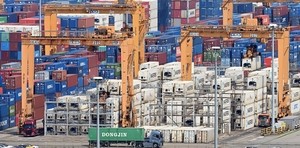
'Won floor may fall below 1,300': ominous outlook for autos, petrochemicals
Monthly average rate falls from 1,528 won to 1,355.8 won Won's strength squeezes exporters' profitability Current account stays robust on chip excess demand Other industries brace for shock as polarization deepens The won-dollar exchange rate has fallen for three consecutive months, and analysts expect the downward trend to continue. Concerns are mounting that the sharp decline will further widen the gap between the semiconductor industry — which faces excess demand worldwide — and other sectors, such as automobiles and petrochemicals, where supply-side competition is fierce. According to financial industry sources Wednesday, the won-dollar rate briefly fell to 1,334.7 won during intraday trading Monday, the lowest level since October 2024. The monthly average rate, based on weekly closing prices, peaked at 1,528 won in June before falling to 1,488.9 won in July and 1,404.4 won in August. It fell further to 1,355.8 won as of Tuesday. Market watchers expect the won's strengthening trend — meaning a falling exchange rate — to continue. Cha Young-hoo, a researcher at Eugene Investment & Securities, said, "Given capital flows, the growth gap and interest rate paths between South Korea and the United States, and the authorities' policy stance, upward pressure on the won is likely to dominate through next year." He forecast that "the won-dollar exchange rate's floor is likely to form below the 1,300 level." A stronger won hurts exports. When the won-dollar rate falls, exporters earn less in won even if they sell goods at the same dollar price. Raising dollar-denominated prices to offset the loss weakens price competitiveness, reducing demand and, ultimately, sales. Still, the current account and export trends remain solid. In July, when the exchange rate's decline gathered pace, the current account posted a surplus of $42.08 billion, the highest on record for that month. As of Saturday, cumulative exports this year reached $709.4 billion, already surpassing last year's annual record of $709.3 billion. The Bank of Korea said, "Recent growth in goods exports has been led by semiconductors, and because it reflects sustained demand driven by AI-related chip investment, the impact of the exchange rate is limited — supply and demand are having a bigger effect." In short, semiconductors — which account for a large share of the current account surplus — are expected to keep driving strong overall export performance, as global demand for chips continues to far outpace supply even as the exchange rate falls. Semiconductors made up 40.6 percent of cumulative exports through August. The problem lies with other industries. Sectors with relatively weak global demand or intense supply-side competition are more exposed to the negative effects of a falling exchange rate. A Bank of Korea official said, "A stronger won affects exporters' earnings through two channels — a direct effect that reduces operating profit when converted into won, and an indirect effect in which higher dollar-denominated prices dampen demand." The official added, "For semiconductors, the indirect effect is limited because of excess demand, but for industries facing fierce global supply competition, the decline in the exchange rate could deal a bigger blow to earnings." Recent data show non-IT sectors are also performing reasonably well. Non-IT customs-cleared exports rose 18.3 percent in July from a year earlier. That is only about 13 percent of the IT sector's 140.6 percent growth, but the Bank of Korea assesses that the improvement is gradually spreading beyond semiconductors to other industries. The concern is what comes next. With the exchange rate continuing to fall, and given the lag before its effects show up in demand, export growth in non-IT sectors could slow significantly. That could deepen the divide between the semiconductor-driven IT sector and other industries. The industries most vulnerable to the won's strength are automobiles and petrochemicals — both sectors with high export shares and fierce global competition. When automakers export domestically produced vehicles priced in dollars, a stronger won lowers per-unit revenue, directly hitting operating profit. Korean automakers compete with Japanese rivals in major overseas markets such as the United States and Europe, and if the won strengthens more than the yen, they risk losing customers on price. The monthly average won-yen rate fell from 950.4 won in June to 921.5 won in July and 885.6 won in August, before dropping further to 864.5 won in September through Tuesday. The petrochemical industry faces a similar situation. Domestic petrochemical companies' exports are estimated to account for 30 to 40 percent of their business. When the won appreciates, the same overseas earnings are worth less when converted into won, hurting results. Unlike semiconductors, petrochemical products currently face a global oversupply — making it difficult for producers to pass exchange rate costs on to prices. A similar case occurred in the Netherlands, where a boom in one industry strengthened the currency and eroded the competitiveness of other sectors. After discovering a natural gas field off its northern coast in 1959, the Netherlands earned tens of billions of dollars a year from gas exports and enjoyed an economic boom. But the resulting surge in the value of its currency weakened the manufacturing sector — apart from petroleum products — ultimately leading to an economic downturn. In a recent report, the Bank of Korea warned, "Over the medium to long term, an excessive concentration of resources such as production factors in the IT sector could lead to the collapse of other key industries' ecosystems and deepening imbalances." It recommended that "policy should be designed with this in mind."
Sept. 9, 2026
-
!['Deposits alone were not enough'... Retirement pension accounts can now buy 20-year government bonds [Money Muni]](https://wimg.heraldcorp.com/news/cms/2026/09/09/news-p.v1.20260904.9c5cb3b9004840509fb1228d4f9d1493_T1.jpg?type=h&h=240)
'Deposits alone were not enough'... Retirement pension accounts can now buy 20-year government bonds [Money Muni]
Retail government bonds open to retirement pension accounts starting Wednesday Shinhan, Hana Bank sell 10-, 20-year bonds — minimum 100,000 won Tax deferral, pension income tax benefits — compound interest lost on early redemption Retirement pension account holders can now invest in retail government bonds starting Wednesday. Bank customers with defined contribution (DC) and individual retirement pension (IRP) accounts can now put their reserves into 10-year and 20-year government bonds. This widens the options for conservative, long-term investors who had mostly relied on time deposits. Banks expect the move to draw in retirement pension customers who favor long-term, stable products. According to industry sources, Shinhan Bank and Hana Bank began selling retail government bonds through DC and IRP accounts starting Wednesday. The initial subscription period runs through Sept. 15, and customers can purchase 10-year and 20-year bonds starting from a minimum of 100,000 won ($75), in increments of 100,000 won. Shinhan Bank built its system so customers can subscribe directly through their existing DC and IRP accounts, without opening a separate account dedicated to retail government bonds. Subscriptions can be made through the bank's mobile app, Shinhan SuperSOL, or at branches. The bank is also running an event to mark the first subscription round. Among customers who are allotted bonds after subscribing, 700 will be selected by lottery to receive mobile coffee coupons. Of those, 400 customers who subscribed at least 100,000 won will receive one coupon each, and 300 customers who subscribed at least 3 million won will receive two coupons each. Hana Bank also began selling 10-year and 20-year retail government bonds through DC and IRP accounts the same day. Retail government bonds are issued on the 20th of every month. In September, subscriptions can be made at branches, and starting in October, customers will also be able to subscribe remotely through the bank's mobile app, Hana One Q. Retail government bonds are savings-type government bonds issued to help individuals build long-term assets. Bondholders who hold them to maturity receive annual compound interest based on the coupon rate plus an additional rate. Using a retirement pension account defers taxation on interest earned until the funds are withdrawn. Account holders who receive their reserves as a pension after age 55 also benefit from the pension income tax rate and other existing tax advantages tied to retirement pensions. However, early redemption forfeits both the additional interest rate and the annual compounding benefit. The new offering follows this month's expansion of eligible accounts for retail government bonds to include retirement pensions. Previously, investors had to open a separate account dedicated to retail government bonds, but as of Wednesday, they can purchase 10-year and 20-year bonds directly through DC and IRP accounts. The initial providers are three banks — Shinhan Bank, Hana Bank and NH NongHyup Bank — and five securities firms: Mirae Asset, Samsung, Korea Investment & Securities, KB and NH Investment & Securities. Banks say the new system allows them to offer retirement pension customers a new long-term, stable investment option beyond time deposits. "IRP customers at banks tend to have a strong preference for long-term, stable products," a commercial bank official said. "Adding government bonds as an option alongside time deposits is a positive step because it broadens customer choice." The official added, "Since banks have had relatively limited retirement pension product lineups compared with securities firms, this should also help fill out our offerings." Banks are expanding their retirement pension product lineups beyond retail government bonds as well. Hana Bank began selling a guaranteed-return performance insurance product dedicated to IRP accounts on Sept. 1. In evaluations of retirement pension operators, it became the first bank to be named an outstanding operator for three consecutive years. Shinhan Bank's retirement pension reserves stood at 58.89 trillion won at the end of the second quarter of this year, ranking first among all retirement pension operators. The bank said it plans to keep strengthening its retirement pension product lineup and expert consulting capabilities, building on the launch of retail government bond sales.
Sept. 9, 2026
-
Regulators to detail relaxed PF equity rules for housing projects this month
Weekly housing supply review meetings launched 12 of 21 tasks from Aug. 13 measures completed Financial authorities will hold weekly meetings to review housing supply as a follow-up to the Aug. 13 real estate measures. Authorities have so far completed 12 tasks, including easing project financing regulations. The Financial Services Commission held a meeting on financial support measures to boost housing supply Wednesday, chaired by Jeon Yo-seop, director general of the Financial Policy Bureau. The meeting reviewed progress on 21 detailed supply-related tasks under the Aug. 13 financial measures. The meeting, held that day, was attended by various financial associations along with the Korea Housing Finance Corporation and the Korea Asset Management Corp. Authorities plan to hold the review meeting once a week to monitor follow-up measures. "What matters is whether the improved regime and measures actually translate into an expansion of housing supply," Jeon said. "The FSC will regularize the review meetings on a weekly basis for now to swiftly carry out the supply tasks, strengthen communication with related institutions and do everything possible to support housing supply from a financial perspective." So far, financial authorities have completed 12 of the 21 supply tasks. The equity capital ratio regulation on project financing for residential projects will be suspended for two years to boost housing supply. Following consultations with the financial and construction industries, detailed plans are expected to be announced as early as September. However, the equity capital ratio regulation for non-residential projects will be introduced as originally planned. Regulators are holding regular working-level meetings with the banking and insurance sectors to restructure syndicated loans and ensure smooth investment execution. Authorities plan to designate officials for each project financing site and operate a close monitoring system. They are compiling sector-by-sector plans to raise about 7.3 trillion won ($5.44 billion) in additional self-funded funds across the financial industry. The securities industry plans to raise an additional 2.1 trillion won in its own fund. The Korea Asset Management Corp.'s project financing normalization fund will also launch soon. The National Assembly is currently reviewing a related budget of 500 billion won. Through the Aug. 13 measures, authorities raised this year's household loan growth target from the previous 1.5 percent to 3.0 percent. Last month, they allocated additional loan quotas to each financial company based on the raised target.
Sept. 9, 2026
-

August household loan growth halves to W2.6tr despite mortgage rise
Mortgage loans jump from W3.6tr to W4.3tr as group lending expands Other loans fall W1.7tr; credit loans down W500b Regulators watch for mortgage growth risk ahead of fall moving season Household loans across all financial sectors grew by 2.6 trillion won ($1.94 billion) last month, less than half the previous month's increase. Mortgage loan growth expanded, but other loans, including credit loans, turned negative. The Financial Services Commission (FSC) and the Financial Supervisory Service said Wednesday that household loans across all financial sectors rose 2.6 trillion won in August from the previous month. That is lower than the 6.4 trillion won increase in July and the 4.8 trillion won increase in August last year. Household loan growth this year rose sharply from 2.9 trillion won in February to 3.5 trillion won each in March and April, then to 9.3 trillion won in May. It then eased to 8.3 trillion won in June, 6.4 trillion won in July and 2.6 trillion won in August. By loan type, mortgage loans and other loans moved in opposite directions. Mortgage loans grew 4.3 trillion won in August, up from 3.6 trillion won the previous month. Bank mortgage loans expanded from 3.5 trillion won to 4 trillion won, while non-bank mortgage loans grew from 100 billion won to 300 billion won. Other loans, however, swung from a 2.8 trillion won increase in July to a 1.7 trillion won decrease in August. Credit loan balances also fell 500 billion won last month, reversing a 2.1 trillion won increase in July. "Mortgage loans rose in August from the previous month due to an increase in housing transactions ahead of the expiration of a suspension on heavier capital gains taxes, along with expanded balance loans tied to a rise in move-in volume in July and August," said Shin Jin-chang, secretary-general of the FSC. "Other loans turned negative for the first time in four months due to voluntary management measures by financial institutions, which reduced the overall growth in household loans." Bank sector household loans rose 3.4 trillion won last month, a smaller increase than the 5.5 trillion won gain in July. Banks' own mortgage loans grew from 2.5 trillion won to 2.9 trillion won, and policy-backed loans expanded from 1 trillion won to 1.1 trillion won. Other loans swung from a 2 trillion won increase to a 600 billion won decrease. Among banks' own mortgage loans, general mortgage loans edged down slightly from 2.1 trillion won to 2 trillion won, while group loans rose from 900 billion won to 1.2 trillion won. "Jeonse" loans, a long-term deposit-based lease arrangement, fell 400 billion won. Household loans at non-bank financial institutions fell 800 billion won, reversing a 900 billion won increase in July. Mutual finance loans dropped 500 billion won, while both insurers and specialized credit finance companies fell 300 billion won each. Savings banks posted a 300 billion won increase, down from 500 billion won growth in July. The FSC said mortgage loan growth could continue amid seasonal demand tied to the fall moving season and the effects of group loans managed separately under the Aug. 13 real estate financial measures. Over the past five years, the average monthly increase in mortgage loans has been 1.9 trillion won, but the average was 2.9 trillion won in September and 2.2 trillion won in October. Financial authorities held a household debt review meeting Wednesday to check on the implementation of follow-up measures under the Aug. 13 real estate financial policy. Among them, measures to rationalize the loan-to-value ratio calculation method for relocation loans, adjust first-time homebuyer requirements, and expand application of future income criteria under the debt service ratio have been in effect since Aug. 31. Shin urged financial institutions to thoroughly prepare their computer systems, train staff and inform customers to prevent inconvenience at branch counters. He also called for special attention to operating loan review committees that consider exceptions such as first-time homebuyer status. Financial authorities plan to continue supporting housing supply, youth residential stability and financing for genuine end users without disruption. They will also maintain each financial institution's compliance with overall household loan volume management targets. In addition, they plan to review the status of fixed-rate mortgage loans, taking into account borrowers' repayment burdens amid rising benchmark and market interest rates. They will also encourage the launch of long-term fixed-rate mortgage products.
Sept. 9, 2026
-

Zero-won phone bills for frequent bank customers: Woori Bank shakes up budget mobile market
Woori launches 'WON Celeb' mobile plans Full discounts for salary transfers, apartment subscriptions Budget mobile subscribers seen topping 100,000 by year-end CEO Jeong Jin-wan's bet to widen customer base Woori Bank, a late entrant to the budget mobile market, has rolled out a plan that lowers phone bills based on customers' banking activity. Customers who keep a salary transfer above a certain amount and sign up for products such as a housing subscription savings account can have their monthly bill discounted in effect to zero. Though a latecomer to the budget mobile business, Woori Bank is betting that an unconventional offer can reshape the market. Banking industry sources said Wednesday that Woori Bank rolled out two types of budget mobile plans called "WON Celeb" on Sept. 1. The plans stand out for cutting phone bills when customers meet certain banking activity thresholds, such as salary transfers or pension payments. Customers who transfer at least 1 million won ($746) in monthly salary or newly open one of the four public pensions receive a 10,000-won discount on their phone bill. Additional discounts apply for setting up automatic bill payment, opening a housing subscription savings account, a Samsung Wallet Money-linked Woori account, or a savings or time deposit account. The "WON Celeb 15GB+" plan carries a monthly base fee of 20,000 won. Combining the bank's own 5,000-won discount with an additional 15,000-won discount for meeting all the banking activity conditions brings the total discount to 20,000 won — effectively making the monthly bill zero. Budget mobile carriers have typically run promotions that offer discounts only for a limited period or require payments through specific means such as credit cards. Woori Bank said it instead tied its discounts to ongoing banking activity to ease the burden of meeting one-off conditions. "By not limiting the benefits to a one-time giveaway, subscribers can see real savings on their phone bills," a Woori Bank official said. "The effect of cutting customers' fixed costs is clear." Woori Bank will give every subscriber to the new plans 30,000 won worth of "Honey Money," a form of credit usable across Woori Financial Group's platforms. Subscribers will also receive a monthly 5,000-won membership coupon for the duration of their contract, along with a data voucher of up to 20 gigabytes. Woori Bank formally entered the budget mobile business in April last year. Despite being a late mover, it has quickly drawn in users by leveraging the bank's platform strength. According to Woori Bank, the number of budget mobile subscriptions rose from 46,000 at the end of last year to 86,000 by the end of August this year — an 87 percent increase in less than a year. The bank expects cumulative subscribers to top 100,000 by the end of this year. Woori Bank aims to make its budget mobile business a key weapon for expanding its customer base. The new "zero-won phone bill" plan marks CEO Jeong Jin-wan's latest bet to boost user numbers across Woori Financial Group. Since Jeong took office, Woori Bank has added 2.5 million subscribers after being selected to operate Samsung Wallet Money. Last year, it also began drawing in Naver Pay users through the "Npay Money Woori Account," launched jointly with Naver Pay. In fact, the number of Woori Bank users has grown by about 1.2 million between the end of 2023 — shortly after Jeong took office — and August this year. Going forward, Woori Bank plans to break its budget mobile plans into categories tailored to salary earners, pension recipients, young professionals and self-employed business owners for targeted marketing. A plan aimed at self-employed customers, set to launch soon, will offer an additional cut to the base fee as a form of small-business support, along with cash back for meeting a certain level of deposit activity. "With budget mobile subscribers nearly doubling in a year, this new plan is our bet on using phone bill benefits to attract new customers and convert them into banking clients," a Woori Bank official said. "We plan to keep growing budget mobile into a core channel for expanding our customer base, through tailored plans for salary earners, pension recipients and other customer segments."
Sept. 9, 2026
-
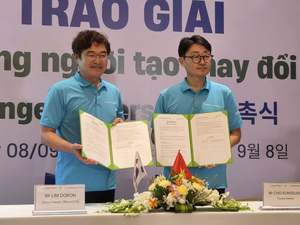
NH Financial Group aids rural self-reliance projects in Vietnam
NH Financial Group launches 'NH Change Makers' program in Vietnam NH Financial Group has launched a global social contribution initiative to help rural residents in Vietnam identify and resolve issues in their own communities. The financial group said Wednesday that it held a launch ceremony and local volunteer activities for the "NH Change Makers" program in Vietnam over two days, from Monday to Tuesday. The event was held in partnership with Good Neighbors, a global nongovernmental organization focused on children's rights. NH Change Makers is a project designed to help residents in rural Vietnamese communities solve social problems on their own. It is a participatory social contribution model in which local residents identify and carry out projects themselves, going beyond one-off support to focus on strengthening the foundation for self-reliance. In response, the group held a launch ceremony Tuesday for a contest-based project to support community-driven solutions to local social issues. This year's contest drew about 40 project ideas, from which three were selected following a review process. The ceremony was attended by Im Do-gon, vice president of NH Financial Group's growth strategy division, and Ji Seong-uk, head of NongHyup Bank's Hanoi Financial Center. Also attending were Moon Seong-geun, head of NH Investment's Vietnam unit, and Cho Eun-seung, head of Good Neighbors Vietnam. Vietnamese government officials, including the chairs of the people's committees in the areas where the selected projects will take place, along with local residents, also took part. Earlier, on Monday, NH Financial Group employees visited Son Thuy commune in Vietnam's Tuyen Quang province, where they delivered donated goods to local residents and children. They also planted trees together with residents to help create a sustainable rural environment. "It is meaningful that NH Financial Group, which grew on the foundation of Korea's agricultural and rural sectors, can contribute to the sustainable development and self-reliance of rural communities in Vietnam," said Im Do-gon, vice president of NH Financial Group. "We will continue to practice inclusive growth and shared value based on a strong partnership with the local government and community." NH Financial Group has designated Vietnam as a key hub for its global business. It is expanding its localization strategy and social contribution activities through channels including NongHyup Bank's Hanoi Financial Center, its Ho Chi Minh City office and NH Investment's Vietnam unit.
Sept. 9, 2026
-

Kakao Group tests digital asset wallet tech to lead stablecoin distribution
Kakao Pay completes digital asset wallet PoC Builds distribution base using payment, banking infrastructure Plans tailored consulting for major domestic firms, financial institutions Kakao Pay has completed a technology verification for an integrated digital asset wallet capable of storing and trading on-chain assets, including stablecoins. Kakao Bank is also conducting its own verification under banking-level security and regulatory requirements. Beyond applying the technology to its own services, Kakao Group plans to pursue wallet-building and consulting projects for outside companies and financial institutions. Kakao Pay said Wednesday that it had completed a proof of concept for building a digital asset wallet. The verification focused on expanding the company's existing wallet system, which has held prepaid balances such as Kakao Pay Money, into an integrated digital asset wallet capable of also holding on-chain assets like stablecoins. Kakao Pay had earlier stressed that its extensive online and offline payment network could give it an edge in the stablecoin distribution market going forward. The company expects its roughly 43 million users and broad payment network to help it secure competitiveness in the future stablecoin distribution market. It said it has built the technology and user interface needed for digital asset transfers, payments and settlement within its existing service environment, completing preparations to expand stablecoin distribution infrastructure. Kakao Bank is separately conducting its own verification of the wallet technology, checking wallet integration, stability and usability under bank-level security and regulatory requirements. Kakao Group plans to verify the wallet technology across both Kakao Pay's payment infrastructure and Kakao Bank's banking infrastructure, laying the groundwork to realize the group's potential distribution use cases. Beyond applying the technology to its own services, Kakao Group is also pursuing a wallet solutions business for outside companies and financial institutions. It plans to provide technology that allows companies to build digital asset wallets tailored to their own systems and regulatory requirements, along with customized consulting that shares the know-how needed during implementation. Kakao Group is currently in talks with major domestic companies and financial institutions that are considering adopting digital assets, including won-denominated stablecoins. "The true value of digital assets such as stablecoins will not be found in their issuance alone, but will be revealed at the distribution stage where the assets are actually used," said Shin Won-keun, chief executive of Kakao Pay and co-head of the group's stablecoin TF. "We will continue to build leadership in infrastructure technology such as wallets and in regulatory know-how, and work with a range of partners to help establish and energize the domestic digital asset ecosystem."
Sept. 9, 2026
-

Shinhan Card develops AI agent for personalized product picks
Selected for ministry's public-private R&D commercialization project Shinhan Card is developing an AI engine that will recommend financial products tailored to individual customers in real time and support their decision-making. The company said Wednesday that it will begin developing the technology after being selected for the "2026 Public-Private Joint Technology Commercialization R&D" project's third round, overseen by the Ministry of SMEs and Startups. The project is aimed at preparing for the era of "agent commerce," in which AI agents search for financial products, compare conditions and make selections on behalf of customers. The goal is to build a next-generation AI infrastructure that systematically reflects complex product terms and related policies and regulations to find the optimal product for each customer. Across the financial industry, the use of generative AI is expanding beyond product recommendations based on spending patterns and asset analysis to supporting specialized financial operations. Shinhan Financial Group has also been widening the scope of its AI agent applications — from customer consultations to product recommendations and internal task support — while investing in related technology. However, current AI-based decision-making systems, which rely on probabilistic judgment, have limitations such as inconsistent answers or the omission of complex conditions. This can lead to distortions, and changes in policy or regulations are not always reflected in time. To address this, Shinhan Card plans to structure the complex conditions embedded in financial products, services, policies and regulations, and to automate the decision-making process. The system will be designed so that when a product or related system changes, only the relevant condition needs to be updated, allowing the change to be reflected in the AI's judgment process in real time. For card products, factors such as the previous month's usage record, merchant categories, and discount or point accumulation limits must be considered. These must also be weighed alongside exception conditions — such as excluded industries or transactions — as well as card type and status. Shinhan Card plans to systematically explore the complex relationships among these conditions and incorporate internal policies, operating standards and financial regulations to recommend products suited to each customer. Shinhan Card will first apply the technology to financial product recommendations before gradually expanding its use to risk management, marketing and customer consultation. The company is developing and testing the technology jointly with AI infrastructure company Connectionary. "We will secure the accuracy and reliability of financial decision-making in an environment where AI judges and acts on its own, strengthening our competitiveness," a Shinhan Card official said. "We will continue to upgrade the customer experience through AI-driven innovation in financial services." -
Sept. 9, 2026
-

Household interest bill to jump W6.5tr if rates rise 0.5%p: BOK data
Low-income households to shoulder extra W700b in interest 1%p hike to add W13tr; 2%p hike to add W26tr Self-employed borrowers face W3.6tr more, mortgage holders W3.7tr more South Korean households would face an extra 6.5 trillion won ($4.84 billion) in annual interest payments if loan rates rose by 0.5 percentage point, according to a new estimate. The projection comes as the Bank of Korea has raised its benchmark interest rate in consecutive months, deepening concerns over potential defaults among vulnerable borrowers. The estimate, based on data the Bank of Korea submitted to the office of Rep. Han Chang-min of the Social Democratic Party, a member of the National Assembly's Political Affairs Committee, was released Wednesday. It showed that a 0.5-percentage-point rise in household loan rates would increase households' combined annual interest burden by 6.5 trillion won. By income bracket, high-income households would pay an additional 4.2 trillion won in interest, middle-income households 1.6 trillion won, and low-income households 700 billion won. The Bank of Korea's analysis was based on outstanding household loan balances as of the end of the first quarter, calculating how the interest burden would shift under different rate-hike scenarios. A separate Bank of Korea analysis found that a 0.5-percentage-point rate increase would add 3.6 trillion won to the annual interest burden of self-employed borrowers and 3.7 trillion won to that of mortgage holders. Self-employed borrowers with multiple loans and other borrowers would see their additional interest costs reach 2.1 trillion won and 3 trillion won, respectively. The household burden grows even more steeply as rates rise further. A 1-percentage-point increase would raise households' total annual interest burden by 13.1 trillion won. High-income households would absorb 8.4 trillion won, middle-income households 3.2 trillion won, and low-income households 1.4 trillion won. A 2-percentage-point rise would push the total additional interest burden to 26.1 trillion won. The Bank of Korea's Monetary Policy Board raised the benchmark interest rate by 0.25 percentage point to 2.75 percent in July. It raised the rate again in August, bringing it to 3 percent in consecutive hikes. The board has also signaled the possibility of further increases ahead. In its Financial Stability Report released in June, the Bank of Korea warned that "a rise in market interest rates could increase financial market volatility and default risks in vulnerable sectors in the short term." It added that "policy authorities must preemptively prepare for related risks to stabilize financial markets while continuing to manage defaults in vulnerable sectors."
Sept. 9, 2026
-
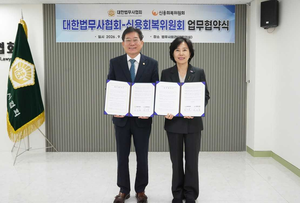
Credit recovery agency, judicial scriveners team up to protect debt-adjustment users
Faster relief for vulnerable debtors and financial fraud victims The Credit Counseling and Recovery Service is teaming up with the Korean Association of Certified Judicial Scriveners on Wednesday. The partnership aims to prevent harm to debt-adjustment users and bolster legal support for vulnerable debtors. The move comes as slowing economic growth and high interest rates drive up demand for debt adjustment. The two organizations aim to narrow information gaps and ease the cost burden on borrowers. The service signed an MOU titled "Building a Cooperative System for Protecting Debt-Adjustment Users and Providing Legal Support to Vulnerable Debtors" with the association at the association's headquarters on Tuesday. Under the agreement, the two organizations will work together to improve legal access for financially vulnerable groups, including at-risk debtors and victims of financial fraud, and to support swift relief for those affected. The partnership aims to prevent consumer harm caused by some law firms' false or exaggerated advertising, excessive fee demands and deliberate delays in handling cases. It is also meant to foster a sound environment for debt-adjustment services. Debt adjustment through the service allows debtors to consult and apply directly, whereas individual rehabilitation and bankruptcy are legal remedies that go through the courts. The two tracks differ in the debts covered, eligibility requirements, costs and legal effects. The two organizations will accordingly provide accurate guidance on the differences between the service's debt-adjustment program and court-based legal remedies such as individual rehabilitation and bankruptcy. This will help debtors choose the option best suited to their income, assets and debt situation. "We will work closely with the Credit Counseling and Recovery Service so that debt-adjustment users do not suffer unnecessary harm and can accurately choose the program that fits their circumstances," said Lee Kang-cheon, president of the Korean Association of Certified Judicial Scriveners. Kim Eun-kyung, who heads both the Credit Counseling and Recovery Service and the Korea Inclusive Finance Agency, said, "We will strengthen protections for debt-adjustment users so that debtors do not bear unnecessary costs from misunderstanding the system," adding, "We will also do our best to close gaps in legal services for vulnerable groups." Anyone exposed to illegal private lending can report the case to the Financial Supervisory Service (1332) for assistance, and those struggling with excessive debt can seek help from the Korea Inclusive Finance Agency (1397) or the Credit Counseling and Recovery Service (1600-5500). Note: Loan contracts carrying an annual interest rate above 60 percent are void as to both principal and interest.
Sept. 9, 2026
-
Cash withdrawals get harder as banks remove 4,600 ATMs in 3.5 years [Money Explainer]
24,711 ATMs left as of June, down 15% from 2022 Ulsan, South Gyeongsang, Jeju see drops of over 20% Internet banking use surges 112% from 2020 Bank branches down 4.9% amid shift to shared ATMs, banking agents The number of automated teller machines operated by banks nationwide has fallen by more than 15 percent over the past three and a half years. Ulsan, South Gyeongsang Province and Jeju posted declines exceeding 20 percent, raising concerns that cash accessibility is deteriorating in regional areas. Rep. Seo Il-jun of the People Power Party, a member of the National Assembly's National Policy Committee, released data from the Financial Supervisory Service on Wednesday. The data showed the number of bank ATMs nationwide stood at 24,711 as of the end of June, down 636, or 2.5 percent, from the end of last year. That marked a decrease of 4,610, or 15.7 percent, from 29,321 at the end of 2022. By region, Ulsan saw the sharpest decline. The number of ATMs there fell to 472, down 129, or 21.5 percent, from the end of 2022. South Gyeongsang Province's count dropped to 1,265, a decrease of 332, or 20.8 percent, while Jeju's fell to 183, down 48, or 20.8 percent. The decline in the Greater Seoul area, including Seoul and Gyeonggi Province, was in the mid-teens percentage range, similar to or slightly below the national average. Sejong saw a relatively smaller drop, down 17 machines, or 9.0 percent, to 171, while Daejeon fell by 104, or 13.0 percent, to 695. The decline varied widely by bank as well. Citibank Korea, which withdrew from its consumer finance business, saw its ATM count fall to 68, down 58, or 46.0 percent, from the end of 2022. Among the five major banks, NH NongHyup Bank posted the steepest decline, down 1,110 machines, or 21.8 percent, followed by Shinhan Bank, down 1,020, or 21.0 percent. Hana Bank, by contrast, saw a decrease of only 44 machines, or 1.3 percent, over the same period. The shrinking ATM and branch networks reflect the broader spread of non-face-to-face financial transactions. According to the Bank of Korea, the daily average number of internet banking transactions last year, including mobile banking, reached 28.29 million, up 112.2 percent from 13.33 million in 2020. As financial transactions shift rapidly toward mobile and online channels, banks continue to streamline their in-person service networks. Bank branches are also shrinking. The number of domestic commercial bank branches fell from 5,657 at the end of 2022 to 5,381 as of the end of June this year. That marked a decrease of 276, or 4.9 percent, according to disclosures from the Korea Federation of Banks. Financial authorities are pushing to expand alternative channels to offset the decline in accessibility caused by shrinking branch and ATM networks. The Financial Services Commission is piloting a banking agent service that allows post offices in areas with low financial accessibility, mainly outside the capital, to handle some banking functions. It is also expanding shared ATMs. "As bank branches shrink and ATMs disappear along with them, financial exclusion is spreading across regions," Seo said. "This is causing significant inconvenience, particularly for elderly residents and rural communities who rely heavily on cash, so financial authorities and banks need to come up with complementary measures, including alternative services for financially vulnerable groups."
Sept. 9, 2026
-
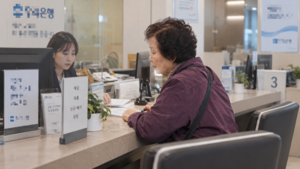
Customers 50 and older hold nearly two-thirds of deposits at major Korean banks
Customers 50 and older make up 47.2% of clients, up 2.2 percentage points in two years Their share of deposit assets stands at 65.9%, approaching two-thirds of the total Banks expand into pensions, retirement planning and inheritance services Customers aged 50 and older are approaching half of the total client base at the five major commercial banks, and their share of deposit assets is nearing two-thirds. As this demographic's influence grows, banks are moving beyond competing for savings and time deposits, expanding into pension management, post-retirement asset planning, inheritance and gift transfers, and long-term care services to attract and retain senior customers. A survey of age-based customer data from KB Kookmin Bank, Shinhan Bank, Hana Bank, Woori Bank and NH NongHyup Bank found that customers aged 50 and older accounted for an average of 47.2 percent of the total client base as of the end of July this year. The figure has risen steadily — from 45.0 percent in July 2024 to 46.0 percent last year — and continued climbing this year, gaining 2.2 percentage points over two years. The concentration is even more pronounced in deposit assets. Among four of the five banks — KB Kookmin Bank, Shinhan Bank, Hana Bank and Woori Bank — customers aged 50 and older held an average of 69.7 percent of deposit assets (measured by each bank's deposit-type assets, excluding loan products) as of July this year. That share rose consistently from 67.1 percent in July 2024 and 68.2 percent in July last year, a gain of 2.6 percentage points over two years. Across all five banks, the figure stood at 65.9 percent as of July this year, meaning senior customers hold roughly two-thirds of total deposit assets. Banks are responding to this shift in their customer base by expanding financial products and services aimed at senior clients. The industry is moving away from competing primarily on savings and time deposits, broadening its scope to include pension management, post-retirement asset allocation, and inheritance and gift planning. KB Kookmin Bank launched the "KB Golden Life Pension Deposit" in July, a time deposit with terms of one to 12 months that offers preferential interest rates to customers receiving pension payments, including the national pension and civil servant pension. The bank also operates a suite of post-retirement asset management services under its "KB Golden Life" brand. Shinhan Bank is leading with its senior-focused brand "Shinhan SOL Mate," offering a time deposit open to individuals and sole proprietors aged 50 and older. At the group level, Shinhan is broadening its senior services beyond finance to include healthcare and lifestyle offerings. Hana Financial Group provides retirement fund analysis, asset portfolio design and asset transfers through testamentary substitute trusts via its "Hana The Next" platform. The group operates dedicated lounges staffed with senior specialist advisers and also offers non-financial services such as health management. Woori Bank is expanding its senior financial product lineup under the "Woori WonderLife" brand. It operates the "Woori WonderLife Pension Account," which provides financial benefits to pension recipients, and has also introduced a dedicated credit loan for wage earners and public pension recipients aged 50 and older. NH NongHyup Financial Group is building out its senior product range through "NH All One Wonderful," a senior-focused brand launched last November. NH NongHyup Bank products under the brand offer preferential interest rates to customers aged 50 and older and to those with pension receipt records, and the lineup also includes testamentary substitute trusts and products covering medical expenses, dementia care and asset succession. "The 50-and-older customer segment is expanding due to aging, and this age group tends to have accumulated relatively more financial assets over their life cycle," a banking industry official said. "As retirement funds, pensions and other post-retirement income flow in around the time of retirement, and as demand grows to manage those assets stably, their share of deposit assets is also increasing."
Sept. 8, 2026
-
Second 'People's Growth Fund' to launch Sept. 30 with W600b target
On sale for 10 business days through Oct. 15 300 billion won reserved for low-income investors in first week First-round investors barred from re-enrolling; income deduction of up to 18 million won The second round of the People's Participation Growth Fund will go on sale Sept. 30, targeting 600 billion won ($447 million) — the same size as the first round. Investors can subscribe through 24 financial institutions, including 10 banks and 14 brokerages. According to the Financial Services Commission, the fund will be sold on a first-come, first-served basis over 10 business days from Sept. 30 through Oct. 15. Sales may close early if the 600 billion won target is reached before the deadline. The 600 billion won raised from the public will be combined with 120 billion won in subordinated government fiscal contributions, bringing the total to 720 billion won to be committed across 10 sub-funds. Three asset managers — Mirae Asset Global Investments, Samsung and KB — will run the public offering funds, which will then distribute the capital among the 10 sub-funds responsible for actual investment. For the large-cap sub-funds, DS Asset Management and Korea Investment Value Asset Management were selected. Brain Asset Management, KB Asset Management, Quad Asset Management and Truston Asset Management will manage the mid-cap sub-funds, while DB Asset Management, NH Hedge Asset Management, Taurus Asset Management and Hana Asset Management will handle the small-cap sub-funds. Each of the two large-cap sub-funds will receive 120 billion won, each of the four mid-cap sub-funds 80 billion won, and each of the four small-cap sub-funds 40 billion won. Regardless of which of the three public offering funds an investor chooses, all will be exposed to the same portfolio of 10 sub-funds and will therefore earn identical returns. The funds will invest in companies in advanced strategic industries — semiconductors, secondary batteries, biotech, AI, defense and robotics — as well as related businesses. Each sub-fund must allocate at least 60 percent of its committed capital to these primary investment targets, with at least 30 percent of that going to unlisted companies and Kosdaq technology-exception-listed firms through new capital injections. The fund will be sold through 10 banks — Kookmin, IBK, NH NongHyup Bank, Shinhan, IM, Woori, Hana, Gyeongnam, Gwangju and Busan Bank — and 14 brokerages, including KB, NH, Daeshin, Meritz, Mirae Asset, Samsung, Shinhan Investment, IM, Yuanta, Hana, Korea Investment, Hanwha Investment, Woori Investment and Kiwoom Securities. Woori Investment Securities and Kiwoom Securities will sell exclusively online. In the first week, half of the total offering — 300 billion won — will be set aside exclusively for low-income investors. The first-round fund reserved only 20 percent of its total for that group, but the allocation was raised after low-income investors accounted for roughly 35 percent of actual first-round sales. The fact that about 61 percent of young subscribers met the low-income threshold was also taken into consideration. Any unsold low-income quota at the end of the first week will be opened to all investors from the second week onward. Online sales will also be capped in the first week: banks may sell up to 40 percent of their allotment online, and brokerages up to 60 percent. The restrictions will be lifted from the second week. The measure is intended to ensure that customers visiting branches in person have a fair chance to subscribe. Customers who actually invested in the first People's Participation Growth Fund are not eligible to subscribe to this second offering. Those who opened a dedicated account during the first round but did not make an actual investment may still participate. To receive tax benefits, investors must use a dedicated People's Participation Growth Fund account. Depending on the amount invested, an income deduction of up to 18 million won is available, and dividend income will be subject to a separate flat tax of 9.9 percent for up to five years from the date of investment. However, anyone who was subject to comprehensive financial income taxation at least once between 2023 and 2025 will be barred from opening a dedicated account. The annual subscription limit for the dedicated account is 100 million won, with a maximum of 200 million won over five years. For a standard account without tax benefits, the annual limit is 30 million won. The fund is a closed-end product with a five-year maturity, meaning mid-term redemptions are not permitted. Once listed on an exchange after launch, units may be traded, but liquidity may be low and prices could fall below net asset value. Investors who transfer their holdings within three years of purchase will have the tax benefits — income deductions and the preferential separate taxation on dividend income — clawed back. The subscription process has also been streamlined. During the first round, applicants had to obtain and submit an income verification certificate themselves through the National Tax Service's Hometax portal or the Government24 platform. For the second round, financial institutions will be able to verify income directly through public MyData services with the applicant's consent. Meanwhile, the first People's Participation Growth Fund went on sale May 22 and sold out its entire 600 billion won quota by the morning of May 29, one week later. A total of 30,258 investors subscribed. The 10 sub-fund managers for the first round were DS Asset Management, Mirae Asset Global Investments, Life Asset Management, Midas Asset Management, Timefolio Asset Management, Korea Investment Value Asset Management, The J Asset Management, Susung Asset Management, Orion Asset Management and KB Asset Management. Of those, three — DS Asset Management, Korea Investment Value Asset Management and KB Asset Management — have been reselected to manage sub-funds in the second round.
Sept. 8, 2026
-

Bank of Korea sees per-capita income crossing $40,000 threshold this year, two years ahead of schedule
BOK now sees per-capita GNI topping $40,000 this year Forecast pulled forward nearly a year from earlier 2028 projection Semiconductor-driven gross operating surplus hits highest since 2010 Stabilizing exchange rate adds further support to outlook Surging global demand for semiconductors, driven by the worldwide boom in AI investment, is the key force behind the Bank of Korea's upgraded forecast that per-capita gross national income will surpass $40,000 this year — a milestone it had previously expected only by 2028. Exports of semiconductors and other advanced-industry products led the rise in nominal GNI through the second quarter, and the central bank expects that momentum to carry into the second half of the year. Kim Hwa-yong, head of the BOK's national income division, said Monday at a press briefing on real GDP growth that "if the current rate of nominal GNI growth is maintained and exchange-rate stability continues, the probability that per-capita GNI will exceed $40,000 this year has become very high." Real GNI in the second quarter rose 3.1 percent from the previous quarter and 15.6 percent from a year earlier. Nominal GNI climbed 8.8 percent quarter-on-quarter and 26.4 percent year-on-year. The sharp rise in nominal GNI is notable, but analysts say it is unusual for the BOK to use such definitive language — "very high probability" — with six months still remaining in the year. Strong semiconductor exports underpin the forecast. According to the BOK, net exports — exports minus imports — contributed 0.3 percentage point to second-quarter growth, with semiconductor shipments playing an outsized role. "Despite the war in the Middle East, expanded global AI investment drove up exports of semiconductors and related machinery and equipment, allowing net exports to continue making a positive contribution even from an already-high base," Kim said. The BOK expects the trend to persist, citing rising US investment in AI. "For now, demand may continue to outpace supply," Kim said. "If US interest rates rise, prices could fall, but volumes themselves are increasing, so the results should still look strong." That backdrop pushed the second-quarter gross operating surplus — a measure of corporate earnings — up 18.5 percent from the previous quarter and 48.2 percent from a year earlier, the highest growth since the BOK began publishing GDP statistics in 2010. The surge was driven largely by a sharp increase in operating profit across manufacturing, led by semiconductors. Higher gross operating surplus feeds through to household income in the form of performance bonuses and dividends, and also boosts government revenue through corporate and dividend taxes. A stabilizing exchange rate is adding further support to the outlook. The won strengthened to the 1,330-won range against the dollar on Monday for the first time in one year and 11 months, after elevated levels earlier in the year began easing in August. A stronger won raises the dollar value of per-capita GNI. Kim had flagged the same conditions at a national income briefing in June, saying that "whether the $40,000 threshold is reached will depend on future corporate earnings and the direction of the won-dollar exchange rate." As recently as March, the BOK had projected that per-capita GNI would not reach $40,000 until 2028. By June it was hinting the milestone could come sooner, and Monday's announcement pulled the timeline forward by nearly a year. Deputy Prime Minister and Finance Minister Koo Yun-cheol said at a task force meeting on consumer prices in July that "the probability of achieving annual growth of 3 percent and per-capita GNI of $40,000 this year has become very high." The BOK also said its full-year growth forecast of 3.4 percent is increasingly within reach. "Arithmetically, if the quarter-on-quarter growth rate averages around 0.2 to 0.3 percent in the second half, the annual target should be achievable," Kim said.
Sept. 8, 2026
-

Nominal GDP surge fuels bets on October rate hike
Nominal GDP grows at fastest pace in nearly 47 years, driven by semiconductor prices Corporate profit gains seen filtering through to households, government BOK chief flags nominal GDP as key policy indicator September inflation data, due early next month, also in focus Third consecutive hike still a heavy lift despite strong readings Nominal GDP — a key indicator Bank of Korea Governor Shin Hyun-song has flagged for the October policy decision — posted its fastest year-on-year growth rate in nearly 47 years, sharpening the focus on where the benchmark interest rate is headed next. Shin delivered a back-to-back rate hike last month but signaled he would take time to assess the impact, yet the major indicators continue to point toward further tightening. With the next meeting roughly a month and a half away, the Monetary Policy Board faces a deepening dilemma. Second-quarter nominal GDP grew 9.2 percent from the previous quarter, the Bank of Korea said Tuesday. That was a slight moderation from the first quarter's 10.5 percent — the largest quarter-on-quarter gain since the first quarter of 1976 — but on a year-on-year basis, nominal GDP surged 26.4 percent, the biggest annual increase since the third quarter of 1979 (27.7 percent), a span of 46 years and nine months, or 187 quarters. Nominal GDP measures output at current prices, stripping out the effect of inflation captured in real GDP. Compensation of employees rose 1.9 percent, led by manufacturing, while gross operating surplus jumped 18.5 percent, driven by manufacturing and the finance and insurance sectors. Gross operating surplus posted its largest gain since the data series began. Net production and import taxes fell 6.2 percent — also a record low — as government subsidies expanded. Real GDP, which adjusts for price changes, grew just 3.7 percent over the same year-on-year period, meaning nominal GDP expanded at more than seven times the pace of real GDP. The widening gap reflects a rapid improvement in the terms of trade driven by a sharp rise in semiconductor prices, which have pushed up export revenues and, in turn, lifted nominal GDP significantly. Kim Hwa-yong, head of the BOK's national income division, told a briefing on second-quarter national income estimates Tuesday morning that the acceleration in nominal GDP growth resulted from real GDP maintaining a high growth rate while the GDP deflator surged from 12.9 percent in the first quarter to 21.9 percent in the second. The GDP deflator is a broad price index covering all goods and services produced in the economy, reflecting the current price level through the gap between nominal and real GDP. The domestic demand deflator rose 3.6 percent in the second quarter, while the export deflator soared 56.6 percent, underscoring the outsized role of export prices in driving the overall deflator higher. "Notably, this quarter saw not only a sharp increase in operating profit in the semiconductor manufacturing sector, but also a gradual broadening of earnings improvement to other industries," Kim said. He added that the rise in gross operating surplus driven by strong corporate earnings would feed through to household income via performance bonuses and dividends, while higher corporate income tax, wage income tax and dividend tax receipts would boost government revenues — ultimately supporting domestic demand with a lag. Governor Shin has also been emphasizing nominal GDP in recent remarks, arguing that real GDP alone cannot capture income levels or purchasing power, and that nominal GDP more accurately reflects the current trajectory of Korea's economic growth. The strong nominal GDP reading has added weight to expectations of another rate hike in October. At last month's post-decision press conference, Shin said the board would look at August and September inflation data before the October meeting, calling price indicators critical, and added that the second-quarter GDP estimate — particularly the nominal GDP figures due in early September — would also be a key input. August consumer prices also came in elevated. Consumer prices rose 3.1 percent year on year last month, according to Statistics Korea. Inflation had run at 3.1 percent in May and 3.2 percent in June before easing to 2.8 percent in July, only to rebound above 3 percent in August. Core inflation — which excludes food and energy — climbed 3.4 percent from a year earlier, the highest reading since May 2023 (3.8 percent), a gap of three years and three months. The next key variable will be September inflation, due for release in early October. August's reading was significantly boosted by a base effect tied to the billing discounts SK Telecom offered customers as compensation for last year's hacking incident, so September inflation is expected to ease somewhat as that effect fades. Even stripping out the mobile-billing base effect — estimated at 0.58 percentage point — August inflation remained high, suggesting price pressures could stay elevated. Lee Ji-ho, a BOK deputy governor, said at a price-monitoring meeting on Wednesday that September consumer inflation would come in below August as the base effect dissipates, but that underlying price pressures centered on core items would persist. Some observers argue that even if September inflation stays high, a third consecutive rate hike would be a difficult call. Shin himself acknowledged that last month's back-to-back increase was unconventional, and he indicated the board would assess the cumulative effects of the consecutive hikes before acting again. Even if the key indicators meet the threshold, the board may opt to pause for one meeting. Doubts also remain over whether semiconductor-driven income gains are broad enough to lift overall domestic demand. "Because we raised rates consecutively this time, we need to assess the effects," Shin said at last month's press conference, signaling a period of watchful waiting.
Sept. 8, 2026
-

Shinhan Bank launches retirement pension subscriptions for individual investor bonds
DC, IRP accounts eligible for 10-, 20-year bonds from Wednesday Shinhan Bank said Tuesday it will begin selling 10-year and 20-year individual investor government bonds through defined contribution and individual retirement pension accounts starting Wednesday, allowing retirement pension holders to purchase the bonds directly through their existing accounts. Customers with DC or IRP accounts at Shinhan Bank can subscribe through the Shinhan Super SOL app or at a branch without opening a separate dedicated account. The first subscription window runs from Wednesday through Sept. 15, with a minimum investment of 100,000 won ($74) in increments of 100,000 won. Individual investor government bonds are issued by the government to support long-term asset accumulation for individuals. Investors who hold the bonds to maturity receive the face rate plus a bonus rate, compounded annually. Investing through a retirement pension account also unlocks tax benefits — returns are tax-deferred during the accumulation phase and taxed as pension income upon withdrawal. However, early redemption forfeits both the bonus rate and the compound interest benefit, so investors should review the terms before subscribing. To mark the launch, Shinhan Bank will hold a promotional event for DC and IRP customers during the first subscription period. A total of 700 customers allotted bonds through the subscription will be selected by lottery to receive mobile coffee coupons — 400 customers who subscribe 100,000 won or more will receive one coupon each, while 300 customers who subscribe 3 million won or more will receive two coupons each. Shinhan Bank's retirement pension reserves stood at 58.89 trillion won as of the end of the second quarter this year, ranking first among all retirement pension providers in the country. "Retirement pensions are about more than accumulating savings — what matters is how assets are managed over the long term leading up to retirement," a Shinhan Bank official said. "Through the sale of individual investor government bonds, we aim to broaden customers' long-term asset management options and offer products and services tailored to their retirement timelines and financial plans."
Sept. 8, 2026
-

Financial regulators to launch 'one unit, one firm' military financial education program this year
Firms begin drafting education and partnership plans Securities industry to step up anti-leveraged-investing education Banks to expand fraud prevention and credit management programs South Korea's financial authorities are pushing ahead with a "one unit, one firm" program that pairs each military unit with a single financial company to deliver tailored financial education to service members. The initiative comes amid growing concern that young soldiers are leaving the military already burdened with debt, having borrowed heavily during their service to invest in stocks and cryptocurrencies or to fund online gambling habits. Financial industry sources said Tuesday that the Financial Supervisory Service, the Korea Federation of Banks and the Korea Financial Investment Association have recently asked banks and securities firms to draw up company-level plans to launch the program before the end of the year. The scheme is modeled on the FSS's existing "one company, one school" financial education initiative and would extend it to military bases, establishing a regular education partnership between financial firms and individual units. Financial companies are currently reviewing whether to participate, what educational formats to use and which units to target. "Some financial firms already run financial education or support programs for specific military units, so the program will likely combine expanding those existing efforts with forging new partnerships," said an official in charge of social contribution activities at one financial firm. Educational content will be tailored to each sector's area of expertise. The financial investment industry will focus on the dangers of leveraged investing and excessive use of margin, as well as asset allocation and investment-linked financial planning. Banks are expected to center their programs on preventing voice phishing and other financial fraud, managing credit scores and loans, and building savings. To support the rollout, a joint workshop organized by financial industry associations will be held for fiscal officers at units under the direct command of the Ministry of National Defense. Around 150 unit fiscal officers are scheduled to attend a two-day, one-night workshop on Oct. 20 at Hana Global Campus, a training facility operated by Hana Financial Group in Cheongna, Incheon. The aim is for the officers to absorb the material and then pass it on to soldiers when they return to their units. The push for the program reflects concern over a growing number of soldiers in their 20s — with little or no credit history — who borrow money to invest in stocks and cryptocurrencies, only to leave the military weighed down by mounting debt. Soldiers' pay has risen sharply in recent years, giving them more money to invest, while the military's decision to allow smartphone use on base and the spread of non-face-to-face lending have made it easier to take on debt and invest more aggressively. Online advertisements for loan products targeting soldiers — marketed under names such as "loyalty loan" and "sergeant loan" — openly promote annual interest rates of up to 20 percent, near the legal maximum. Yet financial education inside military bases has struggled to keep pace with soldiers' changing investment and money-management behavior. Because bases are scattered across the country, units have tended to rely on education provided by the banks that handle their government accounts or military welfare cards, or by the Korea Armed Forces Mutual Aid Association. Even that education often veers into product promotion or fails to stay current, leaving programs stuck at a basic level — covering concepts such as the Rule of 72, which estimates how long it takes for an investment to double. "The problem has now spread beyond enlisted soldiers to junior officers and non-commissioned officers caught up in online gambling and debt-fueled investing," a military official said. "We need to go beyond simply stressing the importance of saving and teach practical financial skills — things like loan interest rates, credit scores and debt restructuring." More than half of all loans from consumer finance companies to military personnel went to active-duty enlisted soldiers. According to the FSS, the 30 largest consumer lending firms had a combined 44.4 billion won ($33.1 million) in outstanding loans to military personnel as of the end of last year. By rank, active-duty enlisted soldiers accounted for the largest share at 24.2 billion won, or 54.5 percent of the total, followed by career military personnel including officers and non-commissioned officers at 15.8 billion won, or 35.7 percent. The number of service members seeking debt restructuring is also rising. According to the Credit Counseling and Recovery Service, the total amount of debt restructuring by military personnel nearly doubled in four years, climbing from 5.6 billion won in 2021 to 10.2 billion won last year. In response, the authorities approved a plan to strengthen on-site financial education for service members at a deliberation meeting on Aug. 31. Those who have suffered losses from illegal private lending may report their case to the Financial Supervisory Service (☎1332) for assistance. Those struggling with excessive debt may seek help from the Korea Inclusive Finance Agency (☎1397) or the Credit Counseling and Recovery Service (☎1600-5500). Loan contracts with an annual interest rate exceeding 60 percent are void in both principal and interest.
Sept. 8, 2026
-
Samsung Life patents real-time insurance eligibility system, hitting 100 registered patents
System taps Korea Credit Information Services data to deliver instant underwriting results Automatically suggests alternatives when coverage is denied, cutting repeated design work Samsung Life has received a patent for a system that checks a customer's insurance eligibility before enrollment and automatically suggests alternative products when coverage is not possible. The registration brings the company's cumulative patent count to 100. Samsung Life announced Tuesday that it has completed patent registration for an "expected underwriting result system" capable of verifying a customer's insurance eligibility in real time. The system is designed to let customers confirm which products they qualify for before the formal underwriting review begins. When a customer consents to the use of their data, the system retrieves information from Korea Credit Information Services through an encrypted channel and cross-references it against Samsung Life's internal underwriting criteria to calculate eligibility in real time. Under the previous process, customers could only learn whether they qualified after completing a policy design and submitting information required for underwriting, such as their medical history. If the review resulted in a denial, agents had to start over and design a different product. To streamline that process, Samsung Life developed a system that lets agents check the expected underwriting outcome for products on sale in advance, filing the patent application in 2022. The system also includes a feature that presents customers likely to be denied with alternative products or coverage conditions they may qualify for. This reduces the need for customers and agents to redesign a policy from the outset and helps them find eligible products more quickly. "The core of this patent is the innovation of the underwriting process so that customers can quickly determine their eligibility and receive recommendations for the best products," a Samsung Life official said. "We will continue working to improve customer convenience at every stage, from policy design to claims payment." Meanwhile, Samsung Life secured four exclusive-use rights in the life insurance industry in the January–July period this year, the most of any company in the sector. Exclusive-use rights, often called the "product patent" of the insurance industry, are a system that grants an insurer the exclusive right to sell an innovative new product for a set period.
Sept. 8, 2026
-

Woori Bank chief vows 'virtuous cycle' of inclusive finance to boost local economies
Woori Bank, Korea Inclusive Finance Agency hold inaugural 'Injeong-gaje' plaque ceremony Jung Jin-wan pledges to fulfill finance's social responsibility Woori Bank President Jung Jin-wan has pledged to build "a virtuous cycle of inclusive finance that revitalizes the local economy" by providing practical support to help small business owners achieve self-reliance and growth. Jung made the remarks Monday at a plaque ceremony for the "Injeong-gaje" program held at Yeonhwa Siktak, a restaurant in Mapo-gu, Seoul. "We will continue a wide range of support activities for small business owners and fulfill finance's social responsibility," he said. Injeong-gaje is an inclusive finance initiative run jointly by Woori Bank and the Korea Inclusive Finance Agency to identify small business owners with the drive and potential to grow, and to support their stable operation and development. The name carries a dual meaning: a store that earns recognition from its customers, and a place where warm human connections are made. A total of 18 small business owners were selected for the program by the three participating organizations from among users of the Woori Miso Finance Foundation and members of the Good Influence Store association who showed a strong commitment to contributing to their communities. Selected participants will receive an official certification plaque and store stickers, along with promotional funding to strengthen their online marketing presence and support through social media and press outreach, all aimed at boosting their competitiveness. The inaugural ceremony was held at Yeonhwa Siktak, a small eatery with about 10 tables that has built a reputation among local residents for its wholehearted food and service. The program is carried out in partnership with the Korea Inclusive Finance Agency and the Good Influence Store association. Jung, Korea Inclusive Finance Agency President Kim Eun-gyeong and Good Influence Store Chairperson Kim Seong-ryeong attended the ceremony and held a luncheon with the restaurant owner to share views on the difficulties small business owners face on the ground and the support measures they need. Meanwhile, Woori Financial Savings Bank, a subsidiary of Woori Financial Group, recently signed an MOU with Toss and agreed to launch a new loan product aimed at improving small business owners' access to credit.
Sept. 8, 2026
-

Small businesses see sales rise 4.5% but costs climb faster, squeezing profits
Q2 sales up 4.53% but expenses rose 5.83% Sole proprietor overdue loans reach 15.2 trillion won for second consecutive quarter of growth Non-bank delinquency share at 17.5%, more than double bank sector rate Small business revenues grew from a year earlier, but expenses rose even faster, steadily eroding actual profits, according to a new analysis. Overdue loans held by sole proprietors also increased for a second consecutive quarter. According to Korea Credit Data's "Q2 2026 Small Business Trend Report" released Tuesday, average sales per business reached 47.11 million won ($34,800) in the second quarter, up 4.53 percent from the same period last year. Average expenses, however, rose 5.83 percent to 35.22 million won, outpacing the sales gain. Average profit — sales minus expenses — came to 11.89 million won, just 0.85 percent higher than a year earlier. The profit margin fell to 25.2 percent, down 0.92 percentage points from the same quarter last year. That followed a 1.09-percentage-point year-on-year decline in the first quarter, marking two consecutive quarters of margin contraction. "Compared with the same quarter a year ago, sales increased, but expenses grew faster, pushing the profit margin down for two straight quarters," said Kang Ye-won, head of data at Korea Credit Data. "The trend of neighborhood small businesses failing to turn a profit is becoming entrenched." Regional disparities were also pronounced. Of the country's 16 cities and provinces, eight recorded year-on-year declines in second-quarter profit margins. Jeju posted the steepest drop at 2.13 percentage points, followed by Sejong at minus 1.57 percentage points, Ulsan at minus 1.24 percentage points, South Gyeongsang Province at minus 1.23 percentage points and Seoul at minus 0.77 percentage points. South Chungcheong Province, by contrast, improved by 2.38 percentage points, with North Chungcheong Province up 1.78 percentage points and Incheon up 1.63 percentage points. The widest regional swing reached 4.51 percentage points. By sector, fast food sales rose 13.4 percent from the previous quarter, with tteokbokki and snack restaurants up 12.1 percent and cafes up 10.8 percent. In services, professional, scientific and technology services grew 24.0 percent, while accommodation and travel services rose 22.5 percent. Accommodation and travel services were down 4.7 percent compared with the same period last year, however. Loan burdens also persisted. The total outstanding loan balance for domestic sole proprietors reached 735.8 trillion won in the second quarter, up 0.5 percent from the previous quarter. Bank-sector loans accounted for 433.6 trillion won and non-bank loans for 302.2 trillion won. Non-bank lending grew 1.1 percent quarter on quarter, well above the 0.1 percent increase in the bank sector. Overdue loan balances rose 4.3 percent to 15.2 trillion won from 14.6 trillion won the previous quarter. After a brief decline in the fourth quarter of last year, overdue balances jumped 12.6 percent in the first quarter of this year and continued rising in the second quarter. Of the total, 2.7 trillion won was in the bank sector and 12.5 trillion won in the non-bank sector. Delinquency as a share of outstanding loans was relatively high at savings banks, at 5.7 percent, and mutual finance institutions, at 3.5 percent. Of the 3.625 million businesses holding sole-proprietor loans, 509,000 — or 14.0 percent — had already closed. The closure rate among businesses with non-bank loans stood at 17.5 percent, more than double the 7.8 percent rate for those with bank loans. "With profit margins falling year on year in eight of 16 cities and provinces, and overdue balances rising for two consecutive quarters, we cannot afford to miss the golden window to quickly revive neighborhood commercial districts," Kang said. Foreign card spending at small businesses surged overall but showed signs of concentration in a small number of stores. Nationwide, foreign card sales grew nearly tenfold over the past three years, while Busan and Jeju saw increases of 16.9 times and 22.1 times, respectively. Over the past year, foreign card sales grew 60.4 percent in Busan and 54.4 percent in Jeju. In Busan, however, the top 1 percent of stores accounted for 52.9 percent of all foreign card sales, while in Jeju the figure reached 42.2 percent. Average monthly foreign card sales per business came to 459,000 won in Jeju and 301,000 won in Busan. Meanwhile, guarantee defaults among small businesses and small and medium-sized enterprises are also growing. From 2024 through July of this year, guarantee accident amounts across 17 regional credit guarantee foundations nationwide reached around 6 trillion won, with 1.14 trillion won in subrogation payments made so far this year alone. The average subrogation payment per incident rose to 16.5 million won, up from 15.6 million won last year.
Sept. 8, 2026
MOST READ
- 1KAIST develops high-performance bio-based adhesive using E. coli instead of petroleum
- 2Daimler Truck unveils next-generation transport solutions at IAA 2026
- 3Samsung Biologics union's show of force backfires at the bargaining table
- 4Trump pushes back on AI slowdown calls, vows to 'keep it that way'
- 5APR says hair-loss treatment research published in international journal
- 6Beyond 125 years of alliance, South Korea and Belgium forge ties in biotech and advanced industry
-
WORLD

US warns of punishment for anyone enabling Iran's Strait of Hormuz toll scheme
-
INDUSTRY
Toyota union puts productivity first; Hyundai Motor union demands bigger share of profits
-
FINANCE

National Growth Fund to invest $531M in FuriosaAI, which rebuffed Meta's $800M takeover bid
-
INDUSTRY

Korea Shipowners' Association holds amateur baduk tournament for Maritime Day