
- HOME
- FINANCE
-
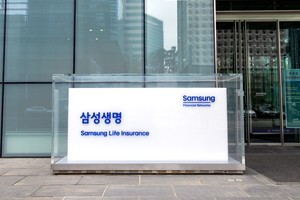
Samsung Life holds 2nd annual Financial Consumer Day
Nine employees and consultants named 'Consumer Protection Heroes' Insurer releases industry-first 'Voice of the Customer' white paper 'Consumer Protection Week' to run from Friday Samsung Life Insurance announced Thursday that it held its second annual in-house Financial Consumer Day under the slogan "A promise to protect customers, a future built on trust." Samsung Life established the internal observance in September last year to promote a consumer-centered work culture among its employees and consultants. This year's event drew about 200 participants — including employees, consultants and customer panelists — who shared consumer protection case studies and reviewed the results of initiatives shaped by customer feedback. At the event, nine employees and consultants who led consumer protection efforts were named "Consumer Protection Heroes." The recognition is intended to highlight contributions to protecting customer rights, supporting vulnerable groups and preventing financial harm, with the aim of spreading a consumer-first management culture across the organization. Among those honored was Lee Mi-ja, a consultant at the Gwangmu First Branch of the Seomyeon regional division, who was recognized for accompanying a customer through the entire course of cancer treatment. She had first connected with the customer by raising awareness of the importance of protection assets when the customer saw little need for insurance, and continued to provide support after the diagnosis. "Helping a customer overcome an unexpected hardship made me reflect once again on the role and value of insurance," Lee said. The event also highlighted the work of the company's internal advisory body, the Consumer Rights Protection Committee. Samsung Life has operated the committee since 2018, drawing on outside experts from academia, the legal profession and the medical field to review major consumer rights issues and support customer-oriented decision-making. A total of 198 agenda items have been submitted to the committee to date, of which 118 were ultimately accepted. This year, nine out of 10 items were accepted. The exhibition area at the venue featured the debut of a "Voice of the Customer" white paper — the first of its kind in the insurance industry. The comprehensive report documents Samsung Life's consumer protection efforts and key achievements based on customer feedback, covering its consumer protection framework, an analysis of voice-of-customer categories along with examples of system and service improvements, and major consumer protection activities. The full report is available on the Samsung Life website under the "Financial Consumer Protection Best Practices" section. Samsung Life will launch a follow-up "Consumer Protection Week" campaign starting Friday. From Saturday through Sunday, the company will operate a voice-phishing prevention booth at the Seoripul Music Festival in Seocho-gu in partnership with the Seocho Police Station, offering consultations, help installing security apps and a phishing audio simulation program. The company also plans to hold financial fraud prevention education sessions for senior citizens in partnership with local welfare centers, as well as on-site consumer protection education for general agencies that have signed MOUs with the insurer. "Consumer protection is the starting point of all our work and decision-making," a Samsung Life official said. "We will consistently repay our customers' trust by listening carefully to their voices and translating them into meaningful changes in our systems and services." The results are reflected in the company's metrics. Samsung Life's misselling rate for its exclusive consultant channel stood at 0.05% last year, while the general agency channel came in at 0.04% — both significantly lower than two years earlier, when the rates were 0.12% and 0.15%, respectively. The number of complaints per 100,000 policies in force also fell, from 9.3 in 2023 to 8.9 last year.
Sept. 17, 2026
-
Toss Ads measures public-ad awareness for first time, finds 10.5-point lift in e-cigarette risk understanding
Toss Ads handled targeting, placement and post-campaign survey for anti-smoking drive First application of awareness measurement to a public-interest ad campaign Exposed group showed 10.5-percentage-point higher understanding of e-cigarette risks Campaign awareness also 8.5 percentage points higher among exposed users Among users exposed to Toss Ads' anti-smoking public-interest campaign, 10.5 percentage points more said the ads helped them understand the risks of e-cigarettes compared with users who were not exposed. Awareness of the anti-smoking campaign itself was also 8.5 percentage points higher among the exposed group. Viva Republica, the operator of fintech platform Toss, announced Thursday that its advertising service Toss Ads had participated in the "Quit E-Cigarettes, Quit Now" campaign run by the Ministry of Health and Welfare and the Korea Health Promotion Institute, yielding those results. It marked the first time Toss Ads had measured changes in user awareness aligned with a public-interest campaign's specific objectives. "Quit E-Cigarettes, Quit Now" is an anti-smoking campaign launched this year targeting e-cigarette users. The campaign produced separate advertisements for teenagers, youth and middle-aged adults, focusing on raising awareness of the addictiveness and health risks of e-cigarettes. For the campaign, Toss Ads handled user targeting, ad placement and a post-campaign awareness survey. It first segmented users most relevant to the campaign's message before serving them the ads, then compared the awareness levels of users who had seen the ads against those who had not. Particularly notable was the choice of survey metrics: rather than the purchase consideration or purchase intent measures typically used in commercial brand advertising, Toss Ads tracked "understanding of e-cigarette risks" and "awareness of the anti-smoking campaign." The aim was to gauge how effectively the public-interest message had resonated with users, going beyond simple ad impressions or click counts. The survey found that 67.2 percent of the exposed group said the ads helped them understand the risks of e-cigarettes — 10.5 percentage points higher than the unexposed group. Awareness of the Ministry of Health and Welfare's e-cigarette cessation campaign stood at 49.1 percent among the exposed group, compared with 40.6 percent among the unexposed group, a gap of 8.5 percentage points. However, the survey did not separately account for whether respondents had also seen the ads through media other than Toss. "Because every public-interest campaign has a different message and goal, it is important to tailor both the ad placement and the analysis to each campaign's specific purpose," a Toss official said. "We plan to continue using data and technology to provide advertising solutions suited to a wide range of government and public institution campaigns."
Sept. 17, 2026
-

General insurance association launches National Assembly forum on insurance fraud
Co-organized with Korea Institute of Criminology and Justice FSC Vice Chairman Kwon Dae-young calls for legislation to enable inter-agency information sharing A research forum bringing together the National Assembly, government agencies, investigative authorities, research institutions and the insurance industry has been launched to combat increasingly sophisticated and organized insurance fraud. The forum plans to identify improvements to laws and systems through expert seminars and academic research, and to translate its findings into legislation. The General Insurance Association of Korea said Thursday it held the inaugural ceremony and a seminar for the "National Assembly Insurance Crime Prevention Research Forum" at the National Assembly Members' Office Building on Wednesday. Democratic Party of Korea lawmaker So Byeong-hun and People Power Party lawmaker Jeong Jeom-sik serve as co-chairs, with the General Insurance Association of Korea and the Korea Institute of Criminology and Justice as co-organizers. The event was attended by both co-chairs, lawmakers from several standing committees, General Insurance Association of Korea Chairman Lee Byeong-rae, Korea Institute of Criminology and Justice President Jeong Ung-seok, Financial Services Commission Vice Chairman Kwon Dae-young, and officials from the Financial Supervisory Service, the Korean National Police Agency and the insurance industry. The forum aims to develop policy, improve laws and systems, and build a cooperative framework among relevant agencies in the area of insurance fraud. It plans to identify measures to strengthen prevention policies and detection and investigation systems through expert seminars and academic research, and to link those findings to National Assembly legislation. The seminar featured two research presentations on the theme of "Innovations in the Insurance Fraud Response System." Jeong Yeong-jin, a professor at Inha University, examined the need for information linkage between public and private insurance systems and proposed ways to build an effective information-sharing framework. Lee Bo-mi, a former researcher at the Korea Institute of Criminology and Justice, outlined the need for cooperation among relevant agencies in combating insurance fraud and presented proposals for dividing roles and establishing a joint response system. "Eradicating insurance fraud means easing the financial burden on law-abiding citizens and protecting public trust in the insurance system and our society's safety net," So said. "I will ensure the National Assembly plays an active role so that the diverse opinions and research findings presented at this forum do not remain mere discussion but lead to actual legislation and policy." Jeong said insurance fraud is "a serious financial crime against people's livelihoods that undermines the foundations of the insurance system and erodes trust in our society." He added that the forum would continuously study the state of insurance crime and emerging criminal patterns, identify systemic limitations raised in the field, and translate them into necessary legislative amendments and policy improvements. FSC Vice Chairman Kwon said insurance fraud "has evolved beyond individual misconduct into organized crime involving colluding medical institutions, repair shops, brokers and solicitors, and is now being exploited through generative AI and deepfakes." He said sharing information on suspected cases among relevant agencies is critical to responding swiftly to AI-enabled insurance fraud, and that legislative measures — including amendments to relevant laws — must accompany those efforts. The FSC launched a task force in June to build an AI-based insurance fraud prevention platform and has been discussing the initiative with relevant agencies to counter crimes exploiting generative AI. According to the Financial Supervisory Service, the total amount of insurance fraud detected last year reached 1.16 trillion won ($855 million), up 6.9 billion won, or 0.6 percent, from the previous year. The number of people caught, however, fell by 3,245, or 3 percent, to 105,743, pointing to a trend toward larger amounts per case. General Insurance Association of Korea Chairman Lee said that because individual institutions face inherent limits in tackling insurance crime on their own, the National Assembly, government, investigative authorities, research institutions and the insurance industry must work closely together to build a systematic, cross-ministry response framework. He added that the association, as the forum's secretariat, would actively contribute to establishing an insurance crime response system. Korea Institute of Criminology and Justice President Jeong said that as insurance fraud grows more sophisticated and organized, it is undermining the foundations of the insurance system and shifting the damage onto the majority of honest policyholders. He said the two institutions had built on an MOU signed in January to carry out joint research and other collaborative work, and pledged to continue drawing on the institute's expertise in criminal justice and legal policy to propose effective policy alternatives for reforming the insurance fraud response system and improving relevant laws and regulations.
Sept. 17, 2026
-
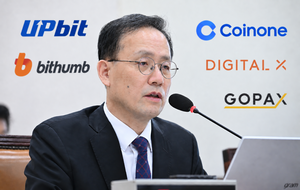
Virtual asset tax debate reignites as deferral petition clears 50,000 signatures
NTS to release virtual asset tax guidelines next month Key disputes include scope of 'other income,' loss carryover rules Deferral petition tops 50,000 signatures, reigniting Assembly debate First filing deadline falls one month before general election Youth investors who lost money in crypto downturn may resist tax The National Tax Service is preparing to release detailed virtual asset tax guidelines next month, targeting a January implementation, even as a second public petition demanding a two-year deferral has cleared the legal threshold of 50,000 signatures. The government is holding firm on its plan to proceed with taxation as scheduled, but resistance from investors and the political opposition is mounting. Industry insiders and lawmakers say the ruling party could once again pull out a deferral card if the controversy deepens — drawing comparisons to the financial investment income tax, which was repeatedly delayed before ultimately being scrapped. The government reaffirmed its position Thursday, saying it will classify income earned from transferring or lending virtual assets starting Jan. 1 as "other income" subject to taxation. Gains exceeding the basic deduction of 2.5 million won ($1,850) per year will be taxed at a combined rate of 22 percent — 20 percent in other income tax plus a 2 percent local income tax surcharge. To support the rollout, the NTS is preparing to publish its official tax guidelines around October, laying out the tax authority's position on key industry disputes, including the scope of taxable "other income" and whether loss carryovers will be permitted. Also drawing attention is how much of the tax workload the agency's new "virtual asset integrated analysis system" — built at a cost of about 3 billion won — will actually be able to handle. The NTS issued a request for proposals for the integrated system in February to build a platform capable of analyzing virtual asset transactions across exchanges. According to the proposal documents released at the time, the agency planned to complete system development, unit testing and performance trials by October, then begin a pilot operation and user training from November. The system is designed to link transaction records between exchanges and personal wallets with overseas financial account filings and on-chain data, enabling the NTS to analyze transactions by taxpayer and calculate acquisition costs. It will also directly collect raw data from the Ethereum and Tron blockchains to track stablecoin transactions, including USDT and USDC. The industry, however, warns that errors could arise in calculating acquisition costs because custody deposits and withdrawals, as well as staking deposits and releases — which do not constitute acquisitions or transfers — still appear on transaction statements as inflows or transfers. Industry groups say the tax infrastructure must be fully in order before enforcement begins. The NTS has also been running on-chain nodes capable of directly collecting and analyzing blockchain transaction data for major virtual assets for several months, sources said. While this gives the agency a foundation for tracking asset movements through personal wallets and decentralized finance protocols, it remains unclear whether it can accurately identify the actual owners of wallets, the nature of each transaction, or original acquisition costs. Observers note a persistent gap between the principle of taxing DeFi activity and the agency's actual enforcement capacity. The government believes the market impact of implementing the tax will be limited. Lee Hyeong-il, nominee for deputy prime minister and minister of economy and finance, said at his confirmation hearing Tuesday that "quite a bit of time has already been pushed back," adding that "the shock of starting now will likely be smaller than expected." Lee said a review of the data showed that 85 percent of investors hold virtual assets worth less than 5 million won. "If it is difficult to verify the acquisition cost and find a separate price, up to 50 percent of earnings can be recognized as necessary expenses," he said. "Given that the basic deduction is 2.5 million won, most of these investors will either be exempt or face a negligible tax burden." Despite the government's firm stance, a different mood is emerging in political and market circles. A public petition calling for a two-year additional deferral of the January virtual asset tax crossed the legally required threshold of 50,000 signatures on Monday — reaching 51,988 as of Tuesday — reigniting the deferral debate with roughly 100 days to go before implementation. Under the public petition system, any petition that gathers 50,000 or more signatures within 30 days of being posted is referred to the relevant standing committee for review, though the committee's decision carries no legal binding force. Still, analysts say the Assembly could move toward a full debate on the issue, given that the opposition has already introduced a deferral bill and this marks the second time such a petition has been referred to a standing committee. That dynamic has fueled speculation that the ruling party, mindful of public sentiment and approval ratings heading into year-end, could again opt for a deferral. Particularly notable is that the first filing and payment deadline for income earned next year falls in May 2028 — just one month before a scheduled general election — raising the prospect that the tax issue could once again be driven by political calculations. "With the financial investment income tax, there was broad agreement on the need to tax, yet the debate over deferral and abolition dragged on because of political pressure from public sentiment and the approaching election," a ruling party official said. "Looking at the current atmosphere around virtual asset taxation, it feels like a repeat of that story." Industry and political observers alike point to the sentiment of younger investors in their 20s and 30s — the core of the virtual asset investor base — as a key variable in determining whether the tax goes ahead. "A significant number of investors in their 20s to 40s have taken losses in the recent market downturn, and some have likely moved into stocks or leveraged products — or even taken on additional loans — to recoup those losses," one industry official said. "Pushing ahead with taxation under these circumstances risks fueling tax resistance and weighing on youth sentiment and approval ratings." The petition itself argues that the tax should be deferred for two more years until the tax infrastructure is properly in place, noting that "with youth voters emerging as a critical political issue, and given that 50 percent of virtual asset investors are in their 30s or younger, virtual asset taxation runs clearly counter to the policy direction of the current government and political establishment." Industry groups are also calling for the tax to be introduced in tandem with the implementation of the Digital Asset Basic Act — the second phase of crypto legislation. The argument is that forcing income from a wide variety of virtual asset types into the existing "other income" framework makes it difficult to properly capture the acquisition and transaction structures of individual assets, or the ways in which gains are realized. Proponents say the virtual asset ecosystem and asset categories should first be clearly defined in law, with a separate tax framework then designed to match. There are also concerns that premature implementation could trigger a flight of investors away from domestic exchanges. "Overseas exchanges offer products that are difficult to provide domestically, such as tokenized stocks, ETF-type products and leveraged instruments," one industry official said. "Once money flows out, there is a real possibility it will not come back to the domestic market." Meanwhile, the NTS has adopted a low-profile approach as public attention around the virtual asset tax intensifies. The agency had originally planned to formally launch an advisory committee with an official appointment ceremony, but scrapped those plans and is now gathering expert opinions on an individual basis, sources said.
Sept. 17, 2026
-
![The rule Coupang Inc and Tesla proved: 'Companies that set the standard define the market' [Crypto Insight]](https://wimg.heraldcorp.com/news/cms/2026/09/16/news-p.v1.20260916.3b410590ee1a4692a288fd157f41ba71_T1.jpg?type=h&h=240)
The rule Coupang Inc and Tesla proved: 'Companies that set the standard define the market' [Crypto Insight]
Lee Sung-hoon, CEO of Bitplanet The Herald Business launches Crypto Insight, a column featuring expert perspectives on digital asset policy, technology and markets. It offers in-depth analysis of digital asset trends, global developments and the push toward regulatory mainstreaming — serving as a compass for understanding complex market structures and gauging the future value of digital assets. The standards and direction of emerging industries have long been shaped by pioneering companies that proved their models in the field first. In new industries, regulations and standards are rarely designed from perfect theory at the outset — they are more often built by looking to success models already validated in the market. Coupang Inc's "Rocket Delivery" service, launched in 2014, transformed consumer habits and triggered explosive demand for last-mile logistics, laying the groundwork for the 2021 enactment of the Lifestyle Logistics Service Industry Development Act alongside the broader rise of e-commerce. In the financial sector, the launch of K bank and Kakao Bank in 2017 brought mobile banking to the mainstream, leading to the passage of the Internet-Only Bank Act in 2018. Tesla's charging standard — the North American Charging Standard, or NACS — was adopted by major automakers one after another before being formalized as SAE J3400 by SAE International. These cases show how innovative models that take root in the market first can upend existing practices and become critical milestones in shaping subsequent regulations and technical standards. The digital asset segment of South Korea's capital markets is in urgent need of similarly firm standards. The minimum market capitalization threshold for maintaining a Kosdaq listing was raised to 20 billion won ($14.8 million) in July, with a further increase to 30 billion won set for July next year — leaving companies little more than a year to strengthen their fundamentals. Companies that rely solely on holding virtual assets without a core business remain inherently vulnerable to market volatility. Compounding the uncertainty, real-name account access for investment and financial purposes by listed companies and professional investment firms has been slow to materialize, and the absence of clear disclosure standards continues to cloud the market. To foster a healthy ecosystem, this writer proposes that market participants examine at least four criteria in practice. The first is the share of "substantive business assets" that underpin a company's core operations. The second is the proportion of operating cash flow used to fund virtual asset purchases and management. The third is the core-business cash-generation capacity to cover financing costs and fixed expenses regardless of virtual asset price swings. The fourth is a disclosure framework that transparently reports acquisition costs, custodians, asset storage arrangements and on-chain verification systems. These criteria are gaining traction in global capital markets as well. MSCI's August 2026 proposal reviewing index eligibility for "non-operating companies" leads with a "core screen" that checks the share of operating assets, then comprehensively evaluates operating cash flow, cost execution and dependence on external capital. Global capital markets, too, have begun treating a company's core operating base and cash-generation capacity — not mere asset holdings — as the central yardstick. Bitplanet's own direction aligns with this thinking. The sustainability of a digital asset treasury rests not on the size of a bitcoin holding itself, but on the real-business foundation supporting it. Bitplanet maintains its operating base through its existing systems integration business and has recently completed the acquisition of 1,204 mining units, with full-scale operation imminent. Mining serves as a starting point for building the high-performance infrastructure capabilities — dense power procurement, liquid cooling and the like — needed for demanding workloads. On that foundation, Bitplanet plans to expand into AI data centers as well as AI energy infrastructure. The government and the National Assembly are also continuing to advance productive finance and second-phase virtual asset legislation as key policy priorities. Regulations are not conjured from a blank slate — they are refined on the basis of concrete cases proven in the field. As more companies demonstrate their strength through infrastructure capabilities rooted in core operations and transparent disclosure, meaningful success stories will accumulate for markets and regulators to draw on, accelerating South Korea's capital market transition toward productive finance.
Sept. 17, 2026
-
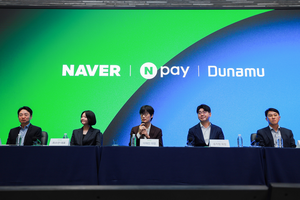
US crypto bill stalls, Korea law delayed — what it means for Naver-Dunamu merger
Daishin Securities maintains Naver target price at 320,000 won Won-denominated stablecoin timeline also a concern Market analysts say the planned merger between Naver Financial and Dunamu could face growing headwinds as the US CLARITY Act stalls in the Senate and domestic discussions on a foundational digital asset law in South Korea continue to drag. In a report released Wednesday, Jung Hae-chang, a researcher at Daishin Securities, said the delay in US legislation "weakens the reference points available for key domestic debates — such as regulations on issuers and exchange shareholding — while also reducing external pressure to accelerate lawmaking in order to close global regulatory arbitrage gaps." The US Senate held a cloture vote on the CLARITY Act on Tuesday (local time), but the motion failed 49-50, falling well short of the 60 votes needed to advance the bill. The outcome has significantly deepened uncertainty around the legislation's prospects. Jung said it would be difficult to rule out further delays to the Naver Financial-Dunamu merger schedule if South Korea's digital asset framework law takes longer to enact. The two companies have set Dec. 31 as their planned share-exchange date. The digital asset framework law could serve as the institutional basis for financial regulators' decisions, Jung said, given that the merger still requires approval from the Korea Fair Trade Commission as well as major-shareholder-related approvals and filings with financial authorities. Naver Financial also stated in a July disclosure that the share exchange and transaction with Dunamu could be affected by the progress of legislation. A slower pace of domestic regulatory reform could also push back the timeline for Naver's stablecoin business launch. "If the structure for issuing a won-denominated stablecoin or running a payment business is not finalized, uncertainty will inevitably be reflected in the monetization timeline as well," Jung said. Sluggish trading volume in the digital asset market was also flagged as a risk factor. "The possibility that Dunamu's market valuation could fall below the level assessed at the time the deal was struck is another source of concern," Jung said. However, Jung noted that while the rollout of digital asset regulations at home and abroad is being delayed, the overall direction toward institutionalizing stablecoins and digital assets has not changed. "The current share price level of Naver does not appear to meaningfully reflect expectations for the activation of the stablecoin business or the business combination with Dunamu," he said. Jung maintained a "buy" rating on Naver and a target price of 320,000 won ($236) on Wednesday.
Sept. 16, 2026
-

Woori Card delivers holiday care packages to 100 elderly households in Jongno-gu
Support for vulnerable elderly residents in Changsin 2-dong Holiday packages filled with food and daily necessities Continued community giving since 2018 partnership Seasonal outreach at family month, holidays and year-end Woori Card delivered holiday food and daily necessities to 100 vulnerable elderly households in Changsin 2-dong, Jongno-gu, Seoul, ahead of the chuseok holiday. The company held a "happiness package" delivery ceremony Tuesday at the Changsin 2-dong Community Center, where it has maintained a "one company, one neighborhood" partnership. Woori Card Executive Vice President Lee In-bok and Changsin 2-dong Community Center Director Oh Yeon-hee attended the event, the company announced Wednesday. Each package contained easy-to-prepare food items — including pre-cooked rice, ramyun, instant soup sets and kimchi stir-fry — along with daily necessities such as toothbrushes and lotion. The "one company, one neighborhood" initiative is a community welfare project run by Jongno-gu. Under the program, local businesses and organizations partner with neighborhood community centers to support low-income residents through living expense subsidies, food and daily necessities, and employee volunteer activities tailored to each neighborhood's needs. Since forming its partnership with Changsin 2-dong in December 2018, Woori Card has continued outreach activities for vulnerable residents in the area during key periods including Family Month, major holidays and year-end. "We hope this brings a small measure of warmth to the local elderly residents during the holiday season," a Woori Card official said. "We will continue to look out for those in need in our community and carry out activities that provide meaningful, practical support."
Sept. 16, 2026
-

Korbit name retired as DigitalX completes rebrand under Mirae Asset
App icon, brand identity and official domain also updated Brand integration finalized after Mirae Asset acquisition DigitalX announced Wednesday that it has rebranded its exchange service from "Korbit" to "DigitalX," overhauling its domain and other service elements across the board. The company is updating its official website address along with its app icon and brand identity. Customer asset holdings, transaction histories, and deposit, withdrawal and trading functions remain unchanged, it said. The company completed its corporate registration name change from "Korbit Co." to "DigitalX Co." in August. On Thursday, it had announced plans to update the service name, app name and icon design. DigitalX said it will send official notices to users in connection with the service name change. At around 11:06 a.m. Wednesday, push notifications went out to Korbit users stating that the service name had changed effective that day and directing them to check official announcements for details about DigitalX, described as "Mirae Asset's digital asset investment platform." DigitalX also urged users to be on guard against phishing attempts timed to coincide with the service name and domain change, asking them to verify information only through official channels. "This overhaul is not simply a name change — it is the beginning of a new leap forward that we will take together with Mirae Asset Group," DigitalX Chief Executive Oh Se-jin said. "Built on the principle of protecting customer assets that we have upheld as Korea's first cryptocurrency exchange, we will continue to roll out products and services that deliver real value to our users."
Sept. 16, 2026
-
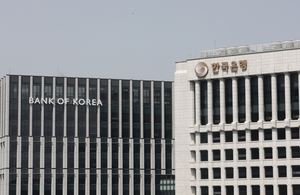
Bank of Korea to shift $1b from overseas stocks to bonds in portfolio overhaul
Foreign asset management portfolio restructured Principal entrusted to domestic managers grew 32-fold in 13 years, from $100m to $3.21b The Bank of Korea plans to shift around $1 billion of overseas equity assets — currently entrusted to domestic asset managers — into bonds, as part of a broader push to raise the qualitative capabilities of South Korean fund managers. The central bank announced Wednesday that it would restructure its foreign asset outsourcing portfolio for domestic managers along these lines. The Bank of Korea first delegated Chinese equity management to domestic asset managers in 2012, then expanded the scope to developed-market equities in 2019 and US aggregate bonds in 2022. The principal entrusted to domestic managers grew roughly 32-fold over 13 years, from $100 million in 2012 to $3.21 billion in 2025. The bank said domestic managers had largely achieved the initial policy goal of building a "quantitative foundation" — establishing overseas investment infrastructure and accumulating global management experience — and that it would now focus on advancing their practical investment capabilities. The bank noted that overseas equity funds currently outsourced to domestic managers effectively track benchmarks in a passive manner, limiting the depth of investment expertise those managers can develop. Going forward, the Bank of Korea plans to reduce the share of developed-market equity funds entrusted to domestic managers and expand support for bond funds. Under the restructuring, around $1 billion of developed-market equity assets managed by three domestic firms will be moved into bonds. The exact amounts will be finalized through consultations with the firms involved. However, the change involves adjusting the allocation between domestic and foreign managers within the bank's overall foreign asset management framework. The total equity and bond weightings will remain unchanged. Jo Seok-bang, head of the Bank of Korea's Foreign Reserve Management Department, said the move would transfer some of the global equities held by domestic asset managers into global aggregate bond funds. "The conversion will take place overseas between foreign currency assets — it will not be exchanged into Korean won and repatriated," he said. The bank also plans to replace its US aggregate bond strategy with a "Global Aggregate" strategy that significantly broadens the range of investable countries and currencies. Using standard benchmarks as a reference, the US aggregate bond strategy covers roughly 10,000 securities in one country, while the global aggregate strategy spans about 30,000 securities across approximately 28 countries. Managing bonds across multiple countries and diverse currency zones simultaneously makes the global aggregate strategy considerably more demanding than the US aggregate approach, the bank said. "Managers will need to actively account for differences in macroeconomic conditions and monetary policy across countries, which we expect will drive qualitative growth among domestic asset managers," Jo said. The bank also said management fees paid to domestic managers would more than double under the new arrangement. The Bank of Korea said it plans to actively encourage domestic managers to expand their active management capabilities so they can compete on equal footing with global firms and, over the medium to long term, emerge as global players in their own right. "Once this initiative stabilizes, I believe domestic asset managers will be able to establish themselves as global players," Jo said. "If further steps are needed down the road, we plan to continue working to strengthen the capabilities of domestic financial institutions through additional measures."
Sept. 16, 2026
-

Deposit W18m, earn up to 2.16 million more: Youth Future Savings Account opens second round
Second enrollment window runs Oct. 7–16 Second chance for those who missed Youth Leap Account switch Premium matching rate to rise next year Retroactive application planned for existing subscribers Applications for the second enrollment round of the Youth Future Savings Account open Oct. 7. Those who missed the chance to switch from the Youth Leap Account during the first round will also get another opportunity to make the transfer. The Financial Services Commission and the Korea Inclusive Finance Agency announced Wednesday that the second enrollment window will run from Oct. 7 to Oct. 16. After applications close, income and eligibility reviews will be conducted from Oct. 19 to Nov. 13, and those who pass will be able to open accounts from Nov. 16 to Nov. 27. The Youth Future Savings Account lets subscribers deposit between 1,000 won and 500,000 won ($369) per month over three years, with the government adding a matching contribution and exempting interest income from tax. The government matches 6 percent of deposits under the standard tier and 12 percent under the premium tier. A subscriber who deposits 18 million won can accumulate up to 2.16 million won in government contributions and interest. Eligibility is open to those between the ages of 19 and 34. For this round, applicants must have been born between Nov. 17, 1991, and Nov. 27, 2007, based on the account opening period. Those who completed military service may exclude up to six years of service from the age calculation. Income requirements remain the same as in the first round. Eligible applicants include salaried workers earning up to 75 million won annually or self-employed individuals with annual revenue of up to 300 million won, provided their household income does not exceed 200 percent of the median. Income verification will be based on 2025 tax data confirmed by the National Tax Service. New employees at qualifying small and medium-sized enterprises and eligible self-employed individuals may apply under the premium tier. On the first two days of the application period, an odd-even system based on birth year will apply. Those born in odd-numbered years may apply on Oct. 7, and those born in even-numbered years on Oct. 8. From Oct. 12 through Oct. 16, applications will be accepted regardless of birth year. Participating institutions include IBK Industrial Bank of Korea, Nonghyup, Shinhan, Woori, Hana, KB Kookmin, iM Bank, Busan Bank, Gyeongnam Bank, Gwangju Bank, Jeonbuk Bank, Suhyup Bank, Kakao Bank and Korea Post. A key feature of this second round is that Youth Leap Account holders will have one more chance to switch. The two products cannot be held simultaneously, and enrollment in the Youth Future Savings Account is not permitted after the Youth Leap Account matures. However, subscribers who make a special early termination of their Youth Leap Account specifically to join the Youth Future Savings Account will retain the government contributions and tax-exempt interest benefits on their existing deposits. The FSC said it created this second opportunity in response to continued requests from young people who missed the transfer window during the first round. A survey of 1,245 Youth Leap Account holders conducted last month found that 667 respondents, or 54 percent, said they wanted to switch. Those wishing to transfer should apply for the Youth Future Savings Account, complete the eligibility review, receive confirmation of approval and open an account, then apply for a special early termination of their Youth Leap Account. Detailed procedures will be communicated separately to eligible applicants. The application review process will also be strengthened. For premium-tier applicants employed at small and medium-sized enterprises, verification will be enhanced by cross-checking self-reported employment status against data from Korea Ratings Data, known as KoDATA. Preliminary review results will be shared with applicants before a final decision is made, and those whose application type does not match the outcome will be given a chance to provide an explanation. Server capacity and call center staffing will also be expanded to handle increased traffic. Meanwhile, the government is pursuing plans to expand eligibility for the Youth Future Savings Account and raise the premium-tier government matching rate starting next year. If the relevant budget bill passes the National Assembly, the revised criteria will take effect from the third enrollment round, and existing subscribers will receive retroactive payments at the higher premium matching rate. The inaugural enrollment period, which ran from June 22 to July 3, drew 2.343 million applicants. Of those, 1.547 million passed the eligibility review and 1.385 million ultimately opened accounts, meaning roughly 59 percent of applicants successfully enrolled.
Sept. 16, 2026
-
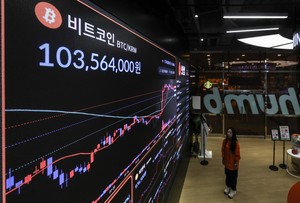
Bitcoin slides after US crypto regulation bill fails in Senate
The CLARITY Act, a key piece of legislation aimed at establishing a comprehensive regulatory framework for virtual assets in the United States, failed a procedural vote Tuesday (local time) that would have sent it to a full Senate floor vote. The defeat of the long-pursued bill sent Bitcoin and Ethereum tumbling. A display board at the Bithumb Lounge Gangnam branch in Seocho-gu, Seoul, showed Bitcoin's market price Wednesday morning.
Sept. 16, 2026
-

Bitcoin tumbles after CLARITY Act fails Senate procedural vote
The CLARITY Act, a key piece of legislation aimed at establishing a comprehensive regulatory framework for virtual assets in the United States, failed a procedural vote needed to advance to a full Senate floor vote on Tuesday (local time). The bill had been pursued as a cornerstone effort to set broad rules for the virtual asset market. Its defeat sent Bitcoin and Ethereum prices tumbling. Bitcoin market prices were visible on an electronic board at the Bithumb Lounge Gangnam branch in Seocho-gu, Seoul, on Wednesday morning.
Sept. 16, 2026
-
Annual insurance fraud detections top W1tr as FSS, HIRA target hospitals
MOU to prevent fraudulent claims at medical institutions Claims data on indemnity and auto insurance to be shared Joint response to red flags including excessive treatment Suspected fraudulent hospitals to be referred for investigation The Financial Supervisory Service and the Health Insurance Review and Assessment Service have joined forces to combat insurance fraud and fraudulent medical billing involving indemnity and auto insurance. The two agencies plan to link their respective claims and review data to catch insurance and medical crimes that have until now fallen through the cracks. The FSS said Wednesday that FSS Governor Lee Chan-jin and HIRA President Hong Seung-kwon signed a memorandum of understanding on preventing fraudulent billing at medical institutions and eradicating insurance fraud at the FSS headquarters in Yeouido, Seoul. Ten officials from both agencies attended the signing ceremony, including FSS Deputy Governor Park Ji-sun, who oversees consumer affairs and insurance, and HIRA Standing Director of Review and Assessment Kim Ae-ryeon. According to the FSS's insurance fraud detection figures, the total amount detected last year reached 1.16 trillion won ($860 million), with 105,743 people caught — up 6.9 billion won (0.6 percent) in amount but down 3,245 people (3.0 percent) in headcount from the previous year. The diverging trends — rising amounts, falling numbers — point to a pattern of larger individual fraud cases, with the average amount per case growing. The MOU comes as persistent insurance fraud involving indemnity and auto insurance, along with fraudulent billing by medical institutions, has heightened concerns about financial leakage from both public and private insurance programs. The FSS determined it needed to build a close cooperation framework with HIRA, which promotes appropriate medical care through national health insurance reviews. The MOU covers three main areas: strengthening information sharing to detect insurance and medical crimes, building a sustained cooperation framework to prevent financial leakage from public and private insurance programs, and promoting the exchange of expertise to enhance institutional capabilities. Under the agreement, the two agencies will share suspected cases of fraudulent billing under national health insurance and auto insurance, as well as potential insurance fraud cases. They plan to analyze and review claims data to identify signs of fraud and swiftly detect medical institutions submitting improper claims. The agencies will also use claims and payment data from indemnity and auto insurance to jointly respond to red flags such as excessive treatment. They discussed strengthening monitoring of hospitals and clinics that violate standards governing auto insurance medical fees, and creating conditions to secure stable funding for review operations. Alongside this, the two agencies agreed to exchange expertise and personnel in areas including insurance fraud, auto insurance review, and fraudulent benefit claims, and to share jointly produced online and offline public awareness materials on insurance and medical crime prevention. "We will maximize synergies between our agencies by actively sharing information with HIRA, which works to promote appropriate medical care, and jointly responding to red flags such as excessive non-covered treatment under indemnity insurance," FSS Governor Lee said. "For medical institutions suspected of fraudulent auto insurance billing, we will closely examine the possibility of insurance fraud and, when grounds are found, promptly refer them for investigation to make an example of them." HIRA President Hong said the MOU was "a very meaningful first step toward jointly confronting illegal activity that threatens the soundness of public and private insurance and building a healthcare and financial environment that the public can trust." He added that the two agencies would share information on insurance fraud and fraudulent billing more closely and build a strong cooperation framework to prevent financial leakage from public and private insurance programs. The two agencies plan to operate a working-level consultative body to implement the MOU and monitor progress. The FSS said it expects the partnership to "build a tight detection network for insurance and medical crimes by linking and analyzing data held by both agencies, minimizing financial leakage from indemnity and auto insurance."
Sept. 16, 2026
-

Kakao Bank launches pre-sale balance loan of up to W1b
Loan conditions available up to 8 weeks before move-in Up to 1 billion won, 40-year term — full early repayment fee waiver Kakao Bank announced Wednesday it will launch a pre-sale balance loan product designed for buyers preparing to move into newly built apartments. A pre-sale balance loan is a mortgage taken out at the time of move-in to repay an existing interim construction loan and cover the remaining purchase balance. While such loans have traditionally required in-person consultations and branch visits, Kakao Bank has made the entire process — from checking loan limits and interest rates to submitting and finalizing an application — available on mobile. Prospective borrowers can check their estimated loan limit and interest rate roughly two months before the move-in period begins, about two weeks earlier than is typical for balance loans. Kakao Bank said this gives buyers more time to plan their finances or compare products before moving in. The loan is available to buyers who have signed general-sale contracts for newly built apartments designated by Kakao Bank. Eligible complexes can be found on the product detail page within the Kakao Bank app. The bank plans to gradually extend eligibility to members of redevelopment and remodeling associations. The loan ceiling is 1 billion won ($739,000), subject to loan-to-value ratio and debt service ratio regulations. The maximum term is 40 years, and borrowers may choose between equal principal repayment and equal principal-and-interest repayment. Early repayment fees are waived in full. About a month before the move-in period begins, the bank will review whether to lower the interest rate based on market conditions at that time. Kakao Bank said it has put procedures in place to apply any rate reduction retroactively to customers who have already finalized their loan agreements. Registration procedures will be handled in partnership with a law firm experienced in group registrations covering more than 60,000 households. An affiliated credit information company will visit customers to collect required documents — including the pre-sale contract — and forward them to the law firm, which will then handle acquisition tax filings and title registration. Kakao Bank said the launch marks its push to extend non-face-to-face mortgage services into the group lending market. The move is expected to intensify competition among internet-only banks in the apartment group loan segment, which has long been dominated by major commercial banks. "A pre-sale balance loan places a heavy burden on customers because multiple procedures must be completed within a short window tied to the move-in schedule," a Kakao Bank official said. "We will continue to refine our products and services so that customers can access the residential financial services they need more easily and conveniently."
Sept. 16, 2026
-

Credit unions donate $50,000 for Nepal flood relief
Funds to support disaster recovery and displaced residents The Korea Federation of Community Credit Cooperatives announced Wednesday that it has donated $50,000 in emergency relief funds to support recovery efforts and aid displaced residents in Nepal following the country's record-breaking floods. The donation will be channeled through the Credit Cooperative Social Contribution Foundation to the Association of Asian Confederation of Credit Unions secretariat and used for disaster recovery and support for affected communities. According to the Nepal Federation of Savings and Credit Cooperative Unions, 35 local credit unions sustained damage in the floods, and members in some areas have been unable to access normal financial services. The federation previously donated $100,000 following Nepal's 2015 earthquake and provided relief supplies and volunteer assistance. The latest contribution marks the first emergency aid to Nepal in 11 years since that earthquake response, underscoring the long-standing partnership and solidarity between South Korean and Nepali credit unions. The federation has consistently provided humanitarian assistance whenever major disasters have struck abroad. It donated $20,000 for Sri Lanka flood recovery in 2017, $100,000 for Australia's bushfire recovery in 2020, and $50,000 that same year for flood relief in Vietnam and the Philippines — all part of what the organization describes as its commitment to global inclusive finance. "We extend our deepest condolences to the people of Nepal and local credit union members who are suffering from this sudden disaster," federation Chairman Ko Young-chul said. "Grounded in the spirit of cooperative solidarity and mutual aid, we will do our part to help residents in the affected areas restore their daily lives as quickly as possible." The floods, which struck Nepal's Himalayan mountain region on Aug. 26, have killed 1,395 people and left 5,130 missing.
Sept. 16, 2026
-
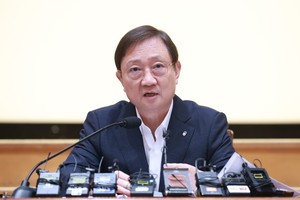
FSS chief flags CEO succession gaps, leaving financial firms seeking clearer standards
54 subsidiary CEOs at top 5 financial groups face year-end term expirations Succession processes underway, but firms call for clearer guidelines FSS chief to meet financial holding company heads Sept. 23 Tensions are rising across the financial industry after Financial Supervisory Service Director General Lee Chan-jin publicly criticized the CEO succession procedures at financial holding company subsidiaries, with year-end personnel decisions approaching. While financial firms broadly agree that transparency and fairness in succession processes need to improve, they say clearer standards are needed on exactly what must be fixed and to what degree. According to industry sources Wednesday, the terms of 54 CEOs at subsidiaries of the country's five major financial groups — including the heads of KB Kookmin, Shinhan, Hana, Woori and NH NongHyup Bank — are set to expire at year's end. The breakdown is 10 from KB Financial Group, 12 from Shinhan Financial Group, 13 from Hana Financial Group, 12 from Woori Financial Group and seven from NH NongHyup Financial Group. The Financial Supervisory Service recommended in its 2023 best-practice guidelines on bank governance that financial holding companies and banks begin management succession procedures at least three months before a sitting CEO's term expires. Financial holding companies and banks have since revised their succession procedures and internal regulations accordingly. With so many CEOs facing year-end term expirations, the selection process at each financial group is expected to begin in earnest this month. Against that backdrop, Lee raised the issue at an FSS executive meeting Tuesday, saying the CEO succession procedures at financial holding company subsidiaries were inadequate. He said the procedures drawn up by the subsidiary CEO candidate recommendation committees at many holding companies fell short, and that the role of subsidiary executive candidate recommendation committees was also limited. Lee cited as problems cases where CEO qualification requirements were stated too vaguely, or where no minimum verification period was set for each stage of the candidate-screening process. He also said some institutions managed their standing candidate pools only as a formality, and that the process of narrowing and vetting candidates lacked transparency. His message was that transparency and fairness must be strengthened across the entire succession process — from candidate selection and verification to evaluation and record-keeping. The reaction within the financial industry has been one of bewilderment, with firms saying it is unclear not just what the criticism means in principle but which specific procedures need to be improved and how. "He said qualification requirements are too abstract and verification procedures are inadequate, but it is hard for financial firms to judge exactly which parts fall short and by how much," one industry official said. "Without specific standards or inspection findings, it is difficult to know where to start, and there is genuine confusion internally." Another official said, "The personnel decisions for bank heads and subsidiary CEOs will be affected in some way, but the specific direction is hard to read — we will have to wait and see what standards the authorities put forward." A corporate governance reform plan that financial authorities have been discussing since early this year also remains unfinalized in both content and timing. Options under consideration include raising the approval threshold for chairman candidate recommendation committees or tightening shareholder meeting requirements, rather than directly capping financial holding company chairmen to three consecutive terms — but the FSC says neither the specifics nor a release schedule have been set. As a result, voices within the industry are growing louder that year-end selection procedures will move forward before the direction of any new regime is clear, making it difficult to gauge what standards regulators will ultimately require. There are also considerable concerns that a broad CEO turnover could disrupt the continuity of medium- and long-term business plans. Since most major projects at financial firms unfold over several years, a change in leadership could shift business priorities and strategic direction. "Executives do not decide everything at a company, but when a CEO changes, the management direction and business plans can shift as well," one industry official said. "There is a real possibility that continuity in medium- and long-term plans could be affected." Amid these concerns, Lee is scheduled to hold a breakfast meeting with the heads of major financial holding companies on Sept. 23, where he is expected to address subsidiary CEO succession procedures and other pending governance issues.
Sept. 16, 2026
-

Woori Financial to hold 'Momocon' charity concert, cheer on Asian Games team
Event set for Saturday at Seoul Land in Gwacheon Artists including Jannabi to perform alongside theme park rides 'Team Korea Fan Park' booth to support athletes at Aichi-Nagoya Asian Games Woori Financial Group announced Wednesday it will hold its "2026 Woori Momocon" — a charity concert whose name roughly translates as "the more we gather, the greater the good" — as part of its corporate social responsibility efforts. The event is scheduled for Saturday at Seoul Land in Gwacheon, Gyeonggi Province, combining live performances with access to the theme park's rides and attractions. Attendees can enjoy performances by QWER, Kim Jae-hwan, Yoon Machi, Cheeze, Melomance, Jinusean, Jannabi and YB in the open-air setting of the theme park on a crisp autumn day, while also making use of Seoul Land's rides and facilities. Saturday also marks the opening day of the 2026 Aichi-Nagoya Asian Games. Woori Financial, an official sponsor of the Korean Sport & Olympic Committee, said it will set up a "Team Korea Fan Park" cheering zone at the venue to rally support for South Korea's athletes alongside concertgoers. Visitors can take part in activities including a shooting experience, writing messages of encouragement and getting Team Korea tattoo stickers, with the collective show of support to be passed on to the South Korean delegation. Eight non-governmental organizations, including World Vision, will also be present throughout the venue, running stages and programs aimed at spreading positive influence. In addition, a pop-up store for Goodwill Store — Woori Financial's flagship social contribution project supporting the independence of people with developmental disabilities, operated in partnership with the Miral Welfare Foundation — will be open at the event. Park Jun-tae, head of brand strategy at Woori Financial Group, said this year's Momocon was designed so that visitors could experience both fun and giving at the same time in the new setting of a theme park. "As the event grows with each edition, thanks to the interest and support of our audience, we will gather that growing positive energy and deliver it to those who need it most," he said. As part of its social contribution efforts, Woori Bank last month designated Yeonhwa Siktak, a restaurant in Mapo-gu, Seoul, as a partner establishment and has been supporting it with marketing assistance and other services.
Sept. 16, 2026
-
Bank of Korea seen tightening further as Fed rate hike looms
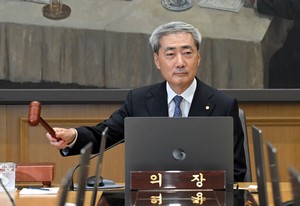
US FOMC to announce rate decision early Thursday (Korea time) Odds of hike at 92.4%, up 59.3 percentage points in a month BOK tightening stance to solidify; timing of next move is key High-rate burden on vulnerable households a growing concern The US Federal Reserve appears increasingly likely to raise its benchmark interest rate for the first time in roughly three years, driven by surging oil prices and stronger-than-expected employment and inflation data. Officials at the Bank of Korea are also leaning toward a rate hike, a development that would further entrench the central bank's tightening stance at home. The Fed's FOMC is scheduled to announce its rate decision early Thursday, Korea time. Markets are pricing in a high probability of an increase. The FOMC cut rates by 25 basis points in December 2025 — from 3.75–4 percent to 3.5–3.75 percent — and then held rates steady five consecutive times through July. The last time the FOMC raised rates was in July 2023, when it lifted them to 5.25–5.5 percent. A hike this week would mark the first increase in about three years. According to the CME Group's FedWatch tool, the probability of a 25-basis-point hike at this week's FOMC meeting stood at 92.4 percent as of Tuesday (local time) — up 33 percentage points from a week earlier (59.4 percent) and up 59.3 percentage points from a month ago (33.1 percent). A string of robust macroeconomic data has bolstered the case for tightening. Renewed tensions between the United States and Iran have pushed international crude prices above $100 a barrel, adding upward pressure on inflation. Futures prices for both Brent crude and West Texas Intermediate have recently crossed $100 per barrel again. Nonfarm payrolls released Sept. 4 showed 162,000 jobs added in August — the largest monthly gain in five months and more than three times the consensus forecast of 53,000. The August producer price index rose 0.4 percent month-on-month, widening its pace of increase. The August consumer price index climbed 3.4 percent year-on-year and 0.4 percent month-on-month. Core CPI, which strips out volatile items, rose 0.3 percent from the prior month, exceeding the expert forecast of 0.2 percent. Inside the Bank of Korea, officials are increasingly convinced a Fed hike is coming. "If the Fed holds rates this time, the monetary policy burden will only grow heavier toward year-end," one BOK official said, adding that a rate increase appears likely. A second official said the Fed would raise rates at this FOMC meeting, but noted that Fed Chair Kevin Warsh's accompanying message would matter more than the hike itself. A Fed rate increase would reinforce the BOK's own tightening posture. At its meeting last July, the BOK's Monetary Policy Board raised the benchmark interest rate for the first time in about three and a half years, formally signaling the start of a rate-hike cycle. With oil prices climbing again, a widening gap between US and Korean interest rates could add upward pressure on the won-dollar exchange rate. A higher US benchmark rate tends to strengthen the dollar and weaken the won. The BOK's recent consecutive rate hikes have already narrowed the Korea-US rate differential — measured at the upper bound — from 1.25 percentage points to 0.75 percentage points. The monthly average won-dollar exchange rate, based on weekly closing prices, peaked at 1,528 won in June before falling to 1,488.9 won in July and 1,404.4 won in August. The rate continued to ease in September, dropping to 1,351.2 won through Tuesday. On a daily basis, however, the rate has risen for four consecutive trading sessions, from 1,336.1 won on Sept. 9 to 1,359.4 won on Tuesday. The BOK's tightening trajectory could steepen further. A simultaneous rise in oil prices and the exchange rate feeds directly into import prices, which in turn push up consumer prices with a lag. Whether the BOK will raise rates for a third consecutive time at its monetary policy meeting scheduled for Oct. 22 remains uncertain. Key indicators including inflation and growth have stayed elevated since last month's hike, but having already broken with convention by raising rates in back-to-back meetings, the board may need time to assess the cumulative effect. Governor Shin said at last month's post-meeting briefing, "Because we raised rates consecutively this time, we need to examine the effects." Minutes of the BOK's 16th Monetary Policy Board meeting of 2026, released Tuesday, also reflected a cautious tone on the timing of any further increase. One board member who voted for last month's hike said the BOK "should keep the door open to additional rate increases, taking into account inflationary pressures and financial stability risks that could persist beyond next year, while deciding on the timing of any hike carefully so as not to impose an unbearable burden on economic actors who have yet to feel the full benefits of economic improvement." Another member said consecutive rate hikes appeared to be "within the range that most economic actors can bear," but stressed the need to "carefully monitor the growing burden on some vulnerable groups and the latent risks that entails."
Sept. 16, 2026
-
Korea Life Insurance Association signs MOU with criminal justice research institute
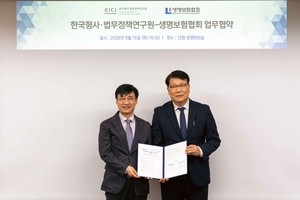
Regular policy working council to be established The Korea Life Insurance Association signed an MOU with the Korea Institute of Criminology and Justice on Wednesday to pursue joint research and policy development in the life insurance sector. The agreement aims to help both organizations respond effectively to changes in the legal and policy environment surrounding the life insurance industry and to promote academic research and policy development in related fields. The Korea Institute of Criminology and Justice is a state-funded research institute under the Economic, Humanistic and Social Research Council, which reports to the prime minister. The two organizations plan to expand academic exchanges and cooperate closely to advance their respective fields, drawing on each institution's expertise and research capabilities. In particular, the two organizations plan to establish a regular policy working council to identify shared issues, survey legislative practices in other countries and build a forum for developing effective policy proposals. Korea Life Insurance Association Chairman Kim Cheol-ju said at the signing ceremony, "I hope we can think through the many challenges facing the life insurance industry together, and that both institutions will maintain a continuous and close partnership so that our research outcomes feed into policy and drive progress in the system, creating strong synergy."
Sept. 16, 2026
-
US Senate fails to advance Clarity Act on digital assets
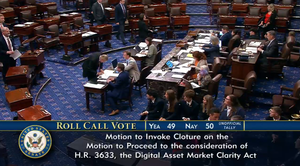
Cloture vote falls short at 49-50; legislation likely pushed to next Congress SEC, CFTC set to take lead on crypto regulation for now The Clarity Act, a sweeping US digital asset market structure bill, failed to clear the procedural threshold needed to advance to full Senate debate. Republicans had offered a revised version incorporating Democratic demands on government ethics rules, but the two parties could not reach a bipartisan agreement, sharply reducing the chances of the bill passing before the end of the year. The Senate voted Tuesday (local time) on cloture for the Clarity Act but fell short, with 49 votes in favor and 50 against. The vote was not a final passage vote — cloture is a procedural step that determines whether the Senate can end debate and proceed with consideration of a bill. With supporters failing to secure even a simple majority, prospects for reviving the legislation in the current session before the midterm elections appear slim. The Clarity Act would define the jurisdictional boundaries between the SEC and the Commodity Futures Trading Commission, establish registration requirements for digital asset businesses, and set anti-money laundering rules. The US had already enacted the GENIUS Act last year to regulate stablecoin issuance and was seeking to use the Clarity Act to overhaul regulation of the broader digital asset market. The 635-page final amendment that Republican Sen. Cynthia Lummis released Tuesday (local time) would bar public officials from directly issuing or endorsing digital assets for compensation and prohibit them from holding stakes above a certain threshold in related businesses. President Donald Trump was also said to have voluntarily agreed to the tightened ethics restrictions. The amendment also expanded enforcement powers for state attorneys general, allowing them to seek injunctions against the US attorney general over ethics violations and to file suit directly against brokers such as exchanges that violate listing prohibitions. Democrats, however, maintained that the revisions still fell short of addressing conflicts of interest surrounding Trump and his family's digital asset ventures. Democratic Sen. Elizabeth Warren criticized the Republican compromise as "a fig leaf that does nothing to stop President Trump from pocketing another $1.4 billion in crypto profits." She took particular issue with the enforcement structure of the ethics provisions and the potential for exceptions related to Trump family ventures such as World Liberty Financial. With the vote's failure, US digital asset regulation is expected to advance for now through regulators — primarily the SEC and the CFTC — rather than through Congress. The SEC recently released a proposed framework for registration exemptions covering token issuances by digital asset projects, while the CFTC has also begun developing market structure rules using its existing authority. Industry observers warn that regulatory rules alone cannot provide the long-term certainty the market needs, since a change in administration can easily shift regulatory direction, underscoring the need for clear statutory frameworks. With Congress effectively entering campaign mode in October ahead of the November midterm elections, the legislative debate is increasingly likely to carry over to the next Congress convening next year.
Sept. 16, 2026
MOST READ
- 1KAIST develops high-performance bio-based adhesive using E. coli instead of petroleum
- 2Daimler Truck unveils next-generation transport solutions at IAA 2026
- 3Samsung Biologics union's show of force backfires at the bargaining table
- 4Trump pushes back on AI slowdown calls, vows to 'keep it that way'
- 5APR says hair-loss treatment research published in international journal
- 6Beyond 125 years of alliance, South Korea and Belgium forge ties in biotech and advanced industry
-
WORLD
US warns of punishment for anyone enabling Iran's Strait of Hormuz toll scheme
-
INDUSTRY
Toyota union puts productivity first; Hyundai Motor union demands bigger share of profits
-
FINANCE
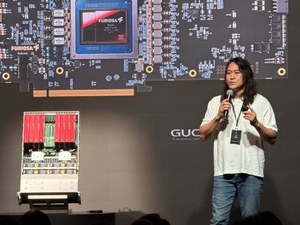
National Growth Fund to invest $531M in FuriosaAI, which rebuffed Meta's $800M takeover bid
-
INDUSTRY

Korea Shipowners' Association holds amateur baduk tournament for Maritime Day