
- HOME
- FINANCE
-

Major banks close in on savings banks as fixed-deposit rates climb to 3.35%
Big 5 banks' rates rise from 3.21% to 3.35% in a month Shinhan, Woori, Hana, NongHyup all raise rates in recent days Savings banks trim average rate from 3.78% to 3.74% Average one-year fixed-deposit rate at the Big 5 banks: 3.35% per annum vs. average one-year fixed-deposit rate at 79 savings banks nationwide: 3.74% per annum The gap between commercial banks and savings banks on fixed-deposit rates has narrowed to less than 0.4 percentage points as major lenders have moved in quick succession to raise their deposit rates over the past several days. With stock market volatility rising and deposit rates growing more attractive, a "reverse money move" — a shift of funds into bank fixed deposits — continues to gain momentum. According to financial industry sources, the simple average of one-year fixed-deposit rates offered by the Big 5 banks — KB Kookmin Bank, Shinhan Bank, Hana Bank, Woori Bank and NH NongHyup Bank — stood at 3.35 percent per annum as of Saturday, up 0.14 percentage points from 3.21 percent on Aug. 10. The increases have come in rapid succession over just the past few days. Shinhan Bank raised the one-year rate on its "Sol Pyeonhan" fixed deposit from 3.20 percent to 3.40 percent per annum on Wednesday. Woori Bank followed on Thursday, lifting its "WON Plus" fixed deposit from 3.20 percent to 3.40 percent, while Hana Bank raised its "Hana's" fixed deposit from 3.20 percent to 3.30 percent the same day. NH NongHyup Bank raised the rate on its "NH All-One e-Deposit" from 3.25 percent to 3.45 percent per annum — a 0.20-percentage-point increase — effective Friday. KB Kookmin Bank, which raised its flagship fixed-deposit rate by 0.30 percentage points from 2.90 percent to 3.20 percent in July, is now reviewing whether to raise it further. Among the Big 5, NH NongHyup Bank now offers the highest one-year rate at 3.45 percent per annum, followed by Shinhan Bank and Woori Bank at 3.40 percent each, Hana Bank at 3.30 percent, and KB Kookmin Bank at 3.20 percent. The increases look even larger when measured from the start of the year. Woori Bank's WON Plus fixed-deposit rate has climbed 0.75 percentage points — from 2.65 percent per annum on Jan. 13 to the current 3.40 percent. Hana Bank's rate rose 0.50 percentage points from 2.80 percent on Jan. 8 to the current 3.30 percent. KB Kookmin Bank raised its flagship fixed-deposit rate by 0.30 percentage points, from 2.90 percent to 3.20 percent, in July. A commercial bank official said the recent string of deposit rate increases reflected "adjustments to deposit rates in response to the benchmark interest rate hike." Savings banks, by contrast, have trimmed their rates slightly over the same period. According to the Korea Federation of Savings Banks' consumer portal, the average one-year fixed-deposit rate across 79 savings banks nationwide stood at 3.74 percent per annum as of Thursday, down 0.04 percentage points from 3.78 percent on Aug. 10. Factoring in NH NongHyup Bank's Friday rate increase, the gap between the Big 5 banks' average one-year fixed-deposit rate and that of savings banks has narrowed by 0.18 percentage points — from 0.57 percentage points a month ago to 0.39 percentage points. Savings banks still offer higher average rates, but commercial banks are closing the distance fast. The rise in commercial bank deposit rates has coincided with a sharp increase in funds flowing into fixed deposits. The combined fixed-deposit balance at the Big 5 banks reached 1,005.23 trillion won ($751 billion) at the end of August, surpassing 1,000 trillion won at a month-end for the first time in history. That marks an increase of 55.83 trillion won in just two months from 949.4 trillion won at the end of June, with 20.29 trillion won of that gain coming in August alone. Over the same period, investor deposit accounts — funds parked on the sidelines of the stock market — fell by around 21.9 trillion won, from 121.63 trillion won at the end of June to 99.7 trillion won at the end of August. Analysts say the reverse money move into safe assets is continuing as rising stock market volatility combines with higher commercial bank deposit rates to push investors toward fixed deposits.
Sept. 12, 2026
-

US rate hike odds rise, won weakens — will Bank of Korea keep tightening?
August PPI, CPI both beat forecasts, boosting rate hike bets Won faces double blow from rate hike outlook and rising oil prices With the Federal Open Market Committee meeting approaching, both US producer and consumer prices came in above market expectations, adding weight to the case for a rate hike. Should the Fed follow through, analysts warn that the move — combined with a recent surge in oil prices — could significantly widen volatility in the won-dollar exchange rate. According to financial industry sources, the Fed will hold its FOMC meeting Tuesday through Wednesday (local time) to decide on its benchmark interest rate. A string of strong employment and inflation readings has steadily built the case for a hike. Nonfarm payrolls for August, released Friday, rose by 162,000 from the previous month — the largest gain in five months and more than three times the consensus estimate of 53,000 compiled by Dow Jones. Then on Thursday, the August producer price index came in 0.4 percent higher than the previous month, widening its pace of increase. Year on year, it rose 5.4 percent, topping the market forecast of 5.3 percent. The August consumer price index, released the following day, rose 3.4 percent from a year earlier and 0.4 percent from the previous month. Core CPI, which strips out volatile items, climbed 2.4 percent year on year and 0.3 percent month on month — the monthly gain exceeding the consensus estimate of 0.2 percent. With employment and inflation data alike coming in hot, market expectations for a rate hike at this FOMC meeting have strengthened considerably. The CME Group's FedWatch tool put the probability of a 25-basis-point hike at 85.8 percent as of Friday — up 13.4 percentage points from 72.4 percent the day before and 37.4 percentage points from 48.4 percent a month ago. If the Fed raises its benchmark interest rate, the gap between US and Korean rates would widen again, putting greater upward pressure on the won-dollar rate. A higher US rate tends to strengthen the dollar and, in turn, weaken the won. Escalating tensions between the US and Iran have also pushed international oil prices sharply higher, adding another upward force on the exchange rate. Futures prices for both Brent crude and West Texas Intermediate have recently broken back above $100 per barrel. Because South Korea imports all of its crude oil, higher prices increase demand for dollar conversion to pay import bills. On top of that, concerns about constraints on economic growth tend to weigh on the won. In short, upward pressure on the exchange rate from rising oil prices was already building — a Fed rate hike would only amplify it further. A series of rate hikes by the Bank of Korea has already narrowed the Korea-US benchmark interest rate gap from 1.25 percentage points to 0.75 percentage points at the upper bound. Meanwhile, a surge in dollar-conversion demand from export companies has kept the won on a strengthening trend in recent weeks. The won-dollar rate briefly touched 1,334.7 won intraday on Monday — its lowest level since October 2024. The monthly average rate (based on weekly closing prices) peaked at 1,528 won in June before falling to 1,488.9 won in July and 1,404.4 won in August. Through Thursday, the September average had slipped further to 1,350.7 won. Recently, however, the rate has edged back up on rising oil prices and rate hike expectations. The won-dollar rate climbed for three consecutive trading sessions from 1,336.1 won on Wednesday, reaching 1,345.9 won on Friday — returning to the 1,340-won range for the first time in three sessions. If oil prices and the exchange rate continue to rise, the Bank of Korea may feel compelled to maintain or even intensify its rate-hiking stance. A simultaneous increase in both oil prices and the exchange rate feeds directly into higher import prices, which then filters through to consumer prices with a lag. The Bank of Korea is scheduled to hold its monetary policy board meeting on Oct. 22 to set its benchmark interest rate. With economic growth and inflation trends still the key variables, whether the central bank opts for another hike will hinge on the direction of US monetary policy, oil prices and the exchange rate.
Sept. 12, 2026
-
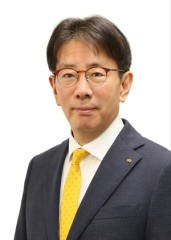
KB Financial picks Lee Jae-geun as next chairman in generational shift
Lee Jae-geun named KB Financial Group's next chairman candidate Born in 1966, five years younger than incumbent Yang Jong-hee Youngest-ever Kookmin Bank chief seen as insider with fast-track record Year-end reshuffle at subsidiaries also in focus KB Financial Group has chosen Lee Jae-geun, 60, head of its global, wealth management and SME division, as its next chairman candidate, passing over incumbent Chairman Yang Jong-hee, 65. The decision defied widespread expectations in the financial industry that Yang would win a second term, with the group opting for a generational shift even as it posted record earnings. KB Financial's chairman candidate recommendation committee met Friday and announced it had nominated Lee for the top post. Committee Chairman Jo Hwa-jun said the group had reached "a point where bold change and a generational shift are needed to strengthen its core competitiveness and secure future growth engines, rather than resting on its current strong performance," adding that Lee was chosen as "the right person to lead that change." Lee was born in 1966, making him five years younger than Yang. Both men are career insiders who have held key positions at KB Kookmin Bank and KB Financial Group, but Lee has long been regarded as a fast-tracker among his peers — he was appointed the industry's youngest-ever bank chief in 2022. Up until the announcement, the financial industry had widely expected Yang to be reappointed. He had been credited with diversifying the group's business portfolio over the past three years, enabling balanced growth across core subsidiaries including its banking, securities and insurance arms. On that foundation, KB Financial's cumulative net profit for the first half of this year approached 3.9 trillion won ($2.91 billion), setting an all-time record. The group also reduced its reliance on banking operations, lifting the non-banking segment's profit contribution to above 40 percent. It expanded inclusive finance initiatives and moved proactively to develop a KB Financial Town in North Jeolla Province's innovation city, lending momentum to balanced regional development. Even so, the committee concluded that new leadership was needed to navigate the restructuring of the financial industry and a full-scale shift in money flows. It described Lee as "a chairman candidate with the capabilities to lead KB Financial's future and sustainable growth." Lee is understood to have been highly regarded for overhauling KB Kookmin Bank's earnings structure during his tenure as its chief, laying the groundwork for the bank to post a record net profit last year and reclaim its position as the country's top lender. "It appears the committee chose change out of concern that complacency with current results could allow rivals to close the gap," a financial industry official said. "This was an outcome the market did not see coming." The appointment is expected to set the tone for year-end executive reshuffles at major KB subsidiaries, including KB Kookmin Bank, with attention focused on whether the push for change and generational renewal will carry through. The timing of the process has also drawn attention, as the candidate recommendation procedure was completed ahead of the Financial Services Commission's planned announcement of governance improvement guidelines for financial holding companies. The committee said it "launched the process early in accordance with a succession plan that had been transparently established in advance," adding that it applied objective verification criteria to enhance the overall credibility and fairness of the succession process. Some in the financial industry have raised the possibility of a link between the appointment and an unscheduled tax audit of KB Kookmin Bank by the Seoul Regional Tax Office that began last month. However, those inside and outside KB Financial maintain that the committee based its decision on the need for future growth and generational change, independent of Yang's management record, and that no outside influence was involved.
Sept. 11, 2026
-

Lee Jae-geun named next KB Financial chairman candidate
Lee Jae-geun, a division head at KB Financial Group, has been selected as the final candidate for the group's next chairman. KB Financial's chairman candidate recommendation committee conducted in-depth interviews Friday with three candidates — former Woori Bank President Kwon Kwang-seok, incumbent Chairman Yang Jong-hee and Division Head Lee — before recommending Lee as the final candidate. Lee is set to be appointed representative director and chairman at an extraordinary shareholder meeting on Nov. 20, pending a review of executive eligibility requirements. The committee said it highly evaluated Lee's broad experience across key functions — including finance, strategy, global operations and wealth management — at both the bank and holding company levels, as well as the groundwork he laid for improved profitability and reclaiming the top-bank position during his tenure as KB Kookmin Bank president. Committee Chairman Cho Hwa-jun said the group had reached "a point where bold change and a generational shift are needed to strengthen its core competitiveness and secure future growth engines," adding that Lee was judged to be the right person for the role.
Sept. 11, 2026
-
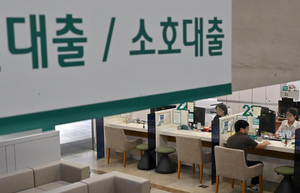
Delinquency rates rise for small businesses, self-employed as interest rates climb
Delinquency ceiling rises from 0.53%, 0.47% to 0.75%, 0.69% respectively Double burden of rising raw material costs and loan rates cited Experts call for preemptive capital buildup as signs of broader distress emerge The number of small businesses and self-employed borrowers falling behind on bank loans has risen sharply in the second half of the year. Analysts attribute the trend to higher borrowing costs stemming from the Bank of Korea's benchmark interest rate hikes this year and a surge in long-term rates that originated in the United States. The rise in corporate loan delinquency rates comes even as nominal GDP hit a 47-year high in the second quarter, prompting some analysts to describe the divergence as evidence of "K-shaped polarization." Experts are also calling on banks — which have been posting record profits — to proactively build up their loss-absorption capacity before asset quality deteriorates further. According to financial industry data released Friday, the small and medium-sized enterprise loan delinquency rates at the four major commercial banks — KB, Shinhan, Hana and Woori — stood between 0.43 percent and 0.83 percent as of the end of July. The range has climbed consistently from 0.39–0.53 percent at the end of last year, to 0.45–0.63 percent at the end of March, and 0.37–0.75 percent at the end of the second quarter. Delinquency rates on loans to self-employed borrowers and other small-office, home-office clients have also trended upward, rising from 0.41–0.47 percent at the end of last year to 0.38–0.60 percent at the end of June and 0.44–0.69 percent at the end of July. Analysts say the growing number of businesses unable to service their debt on time reflects rising market interest rates driven by oil price increases tied to the US-Iran conflict in the Middle East and the resulting inflation concerns. "Based on the trajectory up to now, market rates should have come down this year, but unexpected events have prolonged the high-rate environment," a commercial bank official said. "Businesses are now facing a double burden of rising raw material costs and higher loan rates at the same time." According to the Bank of Korea's financial stability report, the interest coverage ratio of financially vulnerable companies — those with a ratio below 1 — stood at minus 3.8 times in 2023, worsened to minus 4.2 times the following year, and recovered slightly to minus 3.7 times in 2025, remaining in negative territory for an extended period. The interest coverage ratio is calculated by dividing operating profit by interest expenses; a reading below 1 means a company cannot cover even its interest payments from operating profit. The Bank of Korea warned in its report that "the sustained decline in profitability since 2021 has weighed on interest coverage ratios," adding that "if the profitability of small and medium-sized enterprises continues to deteriorate, rising market rates could further increase their debt-servicing burden." Experts say the recent uptick in SME loan delinquency rates is a sign of K-shaped polarization taking hold in the broader economy. Headline figures suggest robust economic growth — nominal GDP rose 9.2 percent quarter-on-quarter in the second quarter and nominal gross national income climbed 8.8 percent — but analysts say the numbers create a misleading picture driven by strong semiconductor exports. "K-shaped polarization is showing up across every sector of the Korean economy," said Shin Yong-sang, a senior research fellow at the Korea Institute of Finance. "The trickle-down effect from semiconductor exports is not feeding through to consumption, leaving other self-employed workers and small businesses in difficulty." A breakdown of non-performing loans at each bank also reveals wide variation by industry. Non-performing loans — debt on which even interest is no longer being repaid, sometimes called "hollow loans" — totaled 3.02 trillion won ($2.26 billion) across the four major banks as of the end of the first quarter, according to data People Power Party lawmaker Kim Sang-hoon obtained from the Financial Supervisory Service. Manufacturing accounted for 26.1 percent of the total, real estate for 23 percent and wholesale and retail trade for 15.7 percent. The delinquency rate on SME loans at banks is likely to climb further. Under the Lee Jae Myung administration, "productive finance" — a policy push to redirect bank lending away from home mortgage loans and toward companies with growth potential — has become a key priority, and outstanding SME loan balances at the four major banks have grown as a result. The combined balance rose from 550.21 trillion won at the end of last year to 563.43 trillion won on Tuesday. "The delinquencies appearing now stem from loans extended before the productive finance push was fully rolled out," a financial industry official said. "With the Bank of Korea leaving open the possibility of further benchmark interest rate hikes, there is room for delinquency rates to rise further."
Sept. 11, 2026
-

E-mart ready-meal line built on card payment data tops 140,000 in sales
Hyundai Card Data Lab and E-mart collaboration bears fruit Spending patterns of traditional-market merchants analyzed A line of ready-meal products developed by Hyundai Card and E-mart using payment data has surpassed 140,000 units in cumulative sales within a year of its launch. Buoyed by the consumer response, the two companies plan to use fourth-quarter payment data to identify new restaurants and release follow-up products. The five products in the "Peacock: Restaurants Verified by Hyundai Card Payment Data" line, launched last September, had sold more than 140,000 units in total through last month, according to financial industry sources Friday. The flagship items are the uni-jjajangmyeon and yurimgi from Chinese restaurant Hongbok. Hongbok opened in Busan in 1958 before relocating to Seoul's Namdaemun Market in the late 1970s, where it became a regular haunt for nearby merchants and office workers. Hyundai Card's Data Lab and E-mart had earlier pursued a project to identify hidden culinary gems using actual payment data rather than online restaurant reviews. Working on the premise that restaurants frequently visited by local market vendors were likely to be genuinely good, the team analyzed the spending patterns of traditional-market merchant cardholders in Hyundai Card payment data from 2023 to 2024, which led them to Hongbok. Hongbok then collaborated with E-mart's product development unit, known as the "Secret Lab," to create the uni-jjajangmyeon and yurimgi ready meals. The lineup also includes the black ramen from Ramura, a Japanese ramen specialist in Seongsu-dong that drew heavy MZ generation foot traffic, as well as chicken-skin gyoza and tare sauce from Yakitori Pano in Cheongdam-dong, a restaurant that ranked high among Hyundai Card premium members for both spending and return-visit rates. The collaboration is regarded as a case study in turning card payment data into tangible product development and sales results. Behind it lies Hyundai Card's long-cultivated data-structuring capabilities. Since declaring itself a "digital company" in 2015, Hyundai Card has invested more than 1 trillion won ($747 million) in IT and AI, of which about 500 billion won went toward data structuring. Building on that foundation, Hyundai Card operates "Domain Cosmos," a collaborative framework that allows its private-label credit card partners to run joint marketing campaigns without directly sharing raw data. To date, the system has supported more than 5,000 collaborative marketing initiatives targeting about 270 million members. E-mart stands out as one of Hyundai Card's longest-running private-label credit card partners. Since launching the E-mart e-Card in 2015 — the first such card in South Korea — the two companies have expanded their collaboration beyond financial products into branding and data science. From last year through the first half of this year, they ran 29 campaigns targeting about 11 million potential customers. By analyzing Hyundai Card members' spending patterns to make personalized product recommendations for E-mart shoppers, the campaigns raised E-mart's average monthly usage rate and spending per customer, the companies said. The two are also running a "home appliance cashback" promotion that refunds up to 300,000 won on purchases of 500,000 won or more in electronics. Earlier collaborations included an E-mart-dedicated booth at Hyundai Card's cultural event "Da Vinci Motel," sponsorship of SSG Landers uniforms, and branding of a skybox at the baseball stadium. The companies have also decided to make the ready-meal development project, originally conceived as a one-off, a regular initiative. "This is a collaboration model that goes beyond payment data analysis to deliver real product development and sales results," a Hyundai Card official said. "We will continue to expand data collaboration with our partners through Domain Cosmos."
Sept. 11, 2026
-
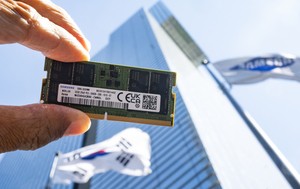
Chip boom's shadow: Soaring semiconductor wages fuel inequality fears
IT wages up 23% while non-IT gains just 6.5% Income gains concentrated in select sectors, high earners Funds flowing into real estate instead of consumption raise housing, debt risks Semiconductors post lowest job-creation and industrial-linkage coefficients South Korea's semiconductor boom has powered the country's economic growth, but the income gains it has generated are increasingly concentrated in IT manufacturing and among high earners — a trend that analysts warn could deepen inequality and create broader economic headwinds. According to the Bank of Korea and the Ministry of Statistics, total wages for workers in IT manufacturing, including semiconductors, rose 23.1 percent over the two years from the first quarter of 2024 through the first quarter of this year. Non-IT manufacturing wages were limited to a 6.5 percent gain over the same period — roughly one-third the IT sector's pace. Construction fared even worse, with wages rising just 2.8 percent, about one-eighth the rate of IT manufacturing. The gap between income groups has also widened. Real earned and business income for upper-income households — the top 40 percent by income, measured among urban households of two or more — grew 5.5 percent over the six years from the first quarter of 2020 through the first quarter of this year. Lower-income households, the bottom 40 percent, saw gains of just 2.6 percent over the same period, roughly half the rate. Given the existing income gap between the two groups, the absolute difference in their earnings has grown considerably wider. With income rising fastest at large export-oriented IT companies led by chipmakers, polarization between sectors and income brackets appears to be intensifying. If performance bonuses and other compensation at major IT firms accelerate further starting next year, that gap could widen still more. Rising semiconductor export prices have also sharply inflated nominal GDP. South Korea's nominal GDP expanded 26.4 percent in the second quarter compared with the same period last year — the largest year-on-year increase in roughly 47 years. The central question going forward is where the sharply higher incomes generated by the semiconductor sector will flow. In its monetary policy report released Thursday, the Bank of Korea warned that "if the favorable conditions in semiconductors and other manufacturing remain concentrated in a handful of leading large companies, and if the improved income conditions of households in those sectors do not translate into broader consumption, the positive spillover effects could be constrained." It added that "if improvements in wage and other income conditions remain confined to the export and large-company sectors, consumption recovery in other parts of the economy could also be limited." If the additional income bypasses domestic consumption, the side effects could outweigh the growth benefits — and real estate is the most prominent risk. The Bank of Korea has flagged concerns that income gains from semiconductor bonuses and similar windfalls could flow into asset accumulation, particularly real estate, rather than spending. Housing prices in areas closely tied to chipmakers surged in the first half of this year, driven in part by expectations of performance bonuses and in-house loan programs at semiconductor companies. Should income gains fail to stimulate domestic demand and instead pour into property, they could become a drag on economic growth. The resulting pressure on home prices and household debt poses an additional threat to financial stability. The limited broader economic impact of the semiconductor industry compounds these concerns. According to the Bank of Korea, the sector's employment-inducement coefficient — the number of jobs created per 1 billion won ($747,000) of production — stood at just two as of 2023, the lowest of any industry tracked. That figure is far below social welfare services (22.4), education (10) and healthcare (8.6), and also trails other manufacturing sectors such as shipbuilding (4.9), automobiles (4.3) and chemical fibers (4.2). The semiconductor industry's ability to spread its prosperity across the broader economy is similarly weak. As of 2023, its backward linkage effect — the degree to which production stimulates upstream suppliers of raw materials and components — stood at 0.79, while its forward linkage effect, which measures how much the industry's output drives growth in downstream industries that use its products, was 0.78. Both figures fall below the all-industry average of 1.0 and are the lowest among major sectors. The Bank of Korea said in its report that "given the expected broad macroeconomic impact of the surge in nominal growth, an effective policy mix is needed — one that mitigates potential negative spillovers across the economy while strengthening growth potential."
Sept. 11, 2026
-
First- and second-generation indemnity insurance holders to be able to switch to fifth generation while keeping main contracts
Standalone design requirement waived; 50% premium discount for 3 years New actuarial assumption report, GA operational risk assessment also introduced Product design regulations will be eased to allow holders of first- and second-generation indemnity insurance policies to switch to fifth-generation coverage while keeping their existing main contracts intact. The Financial Services Commission announced Friday that it has drafted an amendment to the Insurance Business Supervision Regulation incorporating these changes and will accept public comments through Sept. 21. Under current rules, indemnity insurance must in principle be sold as a standalone product. However, given that a large share of existing first- and second-generation policies were taken out as riders attached to other insurance products, the FSC decided to exempt policyholders using the contract-conversion discount regime from the standalone design requirement. As a result, holders will be able to add fifth-generation indemnity coverage as a rider while keeping their existing main contract unchanged. The measure applies to first- and second-generation policyholders who signed up before March 2013 and whose contracts carry no re-enrollment conditions. Those who switch to the fifth generation will receive a 50 percent discount on fifth-generation premiums for three years. Management of actuarial assumptions used to value insurance liabilities will also be tightened. Insurers will be required to submit an annual report to the Financial Supervisory Service alongside their business filings, detailing the basis and methodology for actuarial assumptions such as loss ratios and operating expenses, along with any changes and verification results. If actuarial assumptions are revised during the year, insurers must report the reasons, the substance of the changes, and the financial impact to their risk management committees. Insurers' supervisory responsibility over general agencies (GA) to which they outsource sales will also be factored into management performance evaluations. The FSC plans to assess each insurer's GA operational risk using metrics such as incomplete-sale ratios and contract retention rates, and will apply incentives or penalties to their Korea Insurance Capital Standard (K-ICS) solvency ratios based on the results. The amendment also adds the duration gap — a measure of the difference in interest rate sensitivity between assets and liabilities — to management performance evaluation indicators, and caps insurers' real estate project financing credit exposure at 20 percent of total assets. The amendment is set to take effect Jan. 1 next year in principle. However, the deregulation of indemnity insurance product design rules will apply immediately upon FSC approval, while provisions on actuarial assumption reports will take effect Dec. 31 this year. Fifth-generation indemnity insurance was launched in May. According to the insurance industry, 19,134 contracts had been converted from the first or second generation to the fifth generation through the end of July, accounting for about 70 percent of all generational conversions. Starting in November, the contract-conversion discount program — offering a 50 percent premium reduction for three years — will also be extended to first- and second-generation policyholders who enrolled before March 2013 and hold contracts with no re-enrollment conditions.
Sept. 11, 2026
-
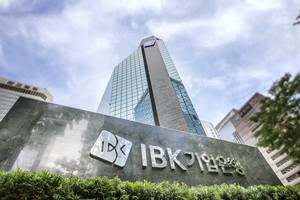
IBK Industrial Bank of Korea opens children's finance experience center at Kidzania
Diversified investment, account and card issuance among finance career activities offered Parents get analysis of children's financial tendencies, customized reports Free admission tickets planned for underprivileged children Industrial Bank of Korea has created a hands-on career experience space where children can learn about financial work and basic economic concepts. The bank opened a children's finance career experience center called the "Digital Finance Center" at Kidzania Seoul on Friday. The opening ceremony was attended by Industrial Bank of Korea President Jang Min-young and Kidzania Korea CEO Ahn Jun-sik, among others. A similar experience center will open at Kidzania Busan on Sept. 21. The Digital Finance Center is designed to let children take on the role of a "financial dealer," allowing them to experience financial work and learn basic economic concepts. The experience space is divided into three zones. In the "career experience zone," visitors become financial dealers and learn the concept of diversified investment, while the "customer experience zone" lets them go through the process of opening a bank account and issuing a card. The "parent experience zone" analyzes a child's financial tendencies and provides a customized financial report. The center is designed so that parents can take part alongside their children. The bank plans to work with public interest foundations to provide free Kidzania admission tickets to children from vulnerable and underprivileged families. "I hope this Digital Finance Center gives children an easy and fun way to understand the role of finance and digital banking," Jang said. "As a policy bank, we will continue to do our best to help the future generation build sound financial habits." Meanwhile, the bank continues to run support programs for children and families raising them. It covers up to 1.5 million won ($1,120) of the personal share of child care service costs for employees of small and medium-sized enterprises and families of small business owners, and it also runs social contribution projects for children and families, including scholarships, medical treatment support and the establishment of workplace daycare centers.
Sept. 11, 2026
-
![Crypto industry says stablecoins should be exempt from asset income tax [Crypto360]](https://wimg.heraldcorp.com/news/cms/2026/09/11/news-p.v1.20260911.8f202ee75da24ac79b53f2406847b320_T1.png?type=h&h=240)
Crypto industry says stablecoins should be exempt from asset income tax [Crypto360]
As tax agency targets October for rules Industry submits opinion on virtual asset taxation Calls for delay until legal framework is settled As the National Tax Service prepares to draft rules on virtual asset taxation by October, the digital asset industry has argued that the current system needs an overhaul. Industry representatives say investment-type assets and stablecoins that may eventually serve as payment instruments should not be lumped together and taxed uniformly as miscellaneous income. Because the legal status of virtual assets and the tax standards for different transaction types have not been sufficiently established, the industry is calling for a review of the taxation timeline once related laws, including the Digital Asset Basic Act, are put in place. According to industry sources Friday, the Digital Asset Exchange Alliance, known as DAXA, has compiled an opinion paper titled "Virtual Asset Industry Opinion on Virtual Asset Income Taxation" that lays out these concerns. The industry pointed out that virtual assets vary in nature — stablecoins, investment-type assets and payment-type assets among them — yet the current system taxes all of them as miscellaneous income without distinction. It suggested that if stablecoins come to be recognized as a means of external payment, exempting them from taxation altogether should be considered. The industry also raised concerns over the inability to carry forward losses. Since virtual asset income is classified as miscellaneous income, an investor who has accumulated losses over a long period must still pay tax on any profit realized in a given year. The industry proposed raising the current basic deduction limit of 2.5 million won ($1,870) per year and introducing a loss carryforward system spanning at least five years. Calculating acquisition cost poses another challenge. Virtual assets transferred from overseas exchanges or personal wallets into domestic exchanges make it difficult for operators to verify the original acquisition time and price. Even after the Crypto-Asset Reporting Framework takes effect, many jurisdictions home to major overseas exchanges will not apply it until 2028, meaning the industry expects a gap of at least a year in information exchange. The industry also noted that under current transaction statements, the acquisition cost is left blank for assets transferred in from outside sources or acquired through inheritance. It added that transactions that do not represent an actual acquisition — such as custody deposits and withdrawals, or staking and unstaking — are also being classified as "transfers or inflows," creating further confusion. Having to respond to multiple regulatory changes within a short span of time was cited as another burden. The industry noted that while operators were given a one-year grace period to comply with the revised Act on Reporting and Using Specified Financial Transaction Information, the tax infrastructure is set to take effect with no such preparation period. It added that the tax system is also linked to data on customer verification, the travel rule, damage compensation and overseas asset transfers, meaning its design will inevitably remain in flux until those preceding systems are firmly established. Meanwhile, the National Tax Service is moving to speed up work on detailed taxation standards with the goal of finalizing its rules by October. The agency recently ran a three-week digital asset training program at its National Tax Officials Training Institute in Jeju, and it is now expanding separate training and research efforts. Officials are refining taxation criteria and tax calculation standards for different transaction types based on input from outside experts. The National Tax Service has established a Digital Asset Management Division under its Individual Taxation Bureau to serve as the control tower for related taxation work.
Sept. 11, 2026
-

AI advances reshape statistical analysis, professor says, urging machine learning fusion
BOK, Korean Statistical Society hold joint forum As the economic environment shifts rapidly in the wake of the Fourth Industrial Revolution, new technologies such as machine learning should be adopted to overcome the limits of traditional statistical methods, a forum heard Friday. Park Min-gyu, a professor at Korea University, made the remarks in a keynote address at the forum, titled "AI, Data and Economic Statistics: A Changing Environment and New Approaches." The forum was held at the Bank of Korea on Friday morning. The Bank of Korea and the Korean Statistical Society jointly hosted the event. Park said, "Since the Fourth Industrial Revolution, the spread of new technologies such as AI, big data and the Internet of Things has been rapidly changing the environment for compiling economic statistics, and this calls for a diversification of methodology that embraces both existing statistical techniques and new analytical methods." He then suggested, "To ensure the accuracy and timeliness of official statistics, traditional statistical techniques such as data integration and calibration should be combined with machine learning technology based on high-frequency data such as card sales and search trends." Machine learning refers to technology that enables computers to learn patterns and rules from data on their own, allowing them to make predictions or judgments about new data. He cited practical applications of machine learning-based transfer learning, such as macroeconomic nowcasting and cross-country growth rate forecasting. "It is important to take a balanced statistical approach that maintains traditional statistical techniques as the basic framework while applying new technologies in a complementary way, and rigorously evaluates their achievements and limitations based on statistical theory," he said. Nowcasting refers to a technique that uses high-frequency data, such as card sales and search trends, to quickly grasp and estimate current economic conditions or indicators. In the second session, Park Se-ho, a professor at Hongik University, reinterpreted the gap between microdata and macro statistics from the perspective of distributional shift. Distributional shift refers to a phenomenon in which the distribution of data deviates from the expected distribution. He also presented a cyclical framework, from detecting distributional shifts to correcting them, to secure the stability of estimates. Song Kyung-woo, a professor at Yonsei University, proposed a direction for building a "self-evolving AI assistant" that flexibly adapts to environmental changes. He also introduced methods to statistically control hallucinations and uncertainty in AI responses. Kim So-jung, a manager on the Bank of Korea's Economic Statistics Research Team, then emphasized the need to diagnose and control "agent bias." Park Jin, a manager on the bank's Distributed National Income Team, diagnosed the causes of the gap between micro- and macro-level data in household distributed income accounts. He also proposed ways to improve their compilation. Bank of Korea Deputy Governor Kwon Min-su said in a welcoming address that day, "With the recent rapid advancement of AI technology and changes in the data environment, the way statistics are produced and analyzed is also undergoing major change. It is becoming increasingly important to utilize new forms of data and extract meaningful information from vast amounts of data in order to capture economic phenomena more quickly. In addition, how to maintain statistical reliability in an environment where the distribution and structure of data are changing has emerged as an important challenge."
Sept. 11, 2026
-
'SOS Lifeline' marks 15 years, with 6 in 10 callers in their teens, 20s
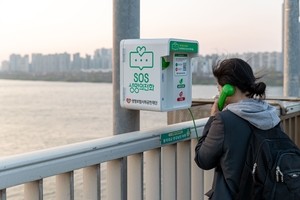
16,000 consultations logged, with 2,515 leading to rescues Since the "SOS Lifeline" — a suicide-prevention hotline installed on Han River bridges — was introduced, a total of 10,606 crisis consultations have been recorded over the past 15 years. Of those, 2,515 led to emergency 119 rescues. Callers in their teens and 20s accounted for more than half of all consultations. The Life Insurance Social Contribution Foundation released these findings on the 15-year performance of the SOS Lifeline and the current state of its suicide-prevention support projects. The announcement came on Friday, marking World Suicide Prevention Day. The SOS Lifeline connects citizens facing a crisis on Han River bridges to a professional counselor when they pick up the receiver. If a crisis is confirmed during the call, the foundation coordinates with the 119 water rescue squad and other agencies to support an on-scene response. First installed on Mapo Bridge and Hannam Bridge in July 2011, the service now operates 75 units across 20 Han River bridges. In the first half of this year, the hotline received 188 consultations, up 19.7 percent from 157 in the same period last year. Cases referred to 119 rescue teams doubled, from 60 to 120. By age, people in their teens and 20s accounted for about 57 percent of callers. Those in their 20s made up the largest group at 3,314 (31 percent), followed by teenagers at 2,757 (26 percent) and those in their 30s at 723 (7 percent). By gender, men accounted for 6,002 callers (56.6 percent), more than women at 3,696 (34.8 percent). By consultation type, interpersonal and adjustment issues were the most common, at 2,555 cases (20 percent). This was followed by career and academic concerns (2,273 cases, 17 percent), general life difficulties (2,040 cases, 16 percent) and family problems (1,740 cases, 13 percent). Nearly half of all calls came between 6 p.m. and midnight, the busiest time slot. "Last year, we improved the communication system of the SOS Lifeline, and this year we built a remote integrated management system to reorganize our operations," an official from the Life Insurance Social Contribution Foundation said. "We are also standardizing the counseling quality evaluation system and running case-based training and regular supervision sessions to strengthen counselors' crisis-response capabilities." The Life Insurance Social Contribution Foundation was established in 2007 through a joint effort by the life insurance industry to provide welfare services to society. It carries out social contribution activities based on a "lifetime security" philosophy spanning from birth to death. If you're thinking about self-harm or suicide, dial the Suicide Prevention Hotline at 109, available 24 hours a day, seven days a week. Please request a translator for English-language services.
Sept. 11, 2026
-

Rep. Min: Digital asset basic law certain to pass this year
Full bill review to begin in November after national audit Enactment could slip to first half of next year, some say The Democratic Party of Korea said it will hold a public hearing on the digital asset basic law this month. It plans to begin full-fledged deliberations on the bill in November, after the National Assembly's national audit. Rep. Min Byung-deok of the Democratic Party spoke Thursday at a seminar titled "Digital Asset Financial Innovation Cases and Response Strategies" at Post Tower in Yeouido, Seoul. He said, "I can say for certain that the basic law will inevitably be enacted within this year." He added, "We will hold a public hearing sometime this month." Min said, "Once the national audit ends, I expect very serious deliberations on the bill to begin around November." He stressed, "Think of November or early January as the point when one stage toward enacting the bill is marked, and a conclusion will be reached before then." Industry observers, however, say the regular National Assembly session's schedule — including the national audit and budget review — could push things back. The bill's enactment, they say, may slip to the first half of next year. Guidelines on digital asset investment for listed companies have also been drawn up, but prospects for their implementation within this year are dimming. That is fueling management uncertainty for virtual asset service providers, or VASPs. An industry official said, "Unlike financial firms that treat digital assets as just one new business line among hundreds of operations, digital assets are the core business for VASP operators." The official added, "If the regulatory regime is delayed, it ultimately becomes a matter of survival." The ruling party will continue discussions on digital assets within the MEGA 10 special committee it launched alongside its new leadership. The Democratic Party had formed the 10-body MEGA 10 committee for party reform last month, following the inauguration of party leader Kim Min-seok. The sixth of the 10 bodies is the AI-driven Financial, Stock Market and Economic Regime Improvement Task Force. Former Rep. Lee Yong-woo, who once served as Kakao Bank's chief executive, heads the task force, while Rep. Park Min-kyu serves as its secretary. Industry watchers expect that if a digital asset subcommittee is created within the task force, it would take over discussions from the Democratic Party's existing digital asset task force.
Sept. 11, 2026
-
Lambda256 to hold recruitment session for blockchain node operations role
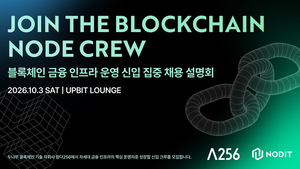
Session set for Oct. 3 at Upbit Lounge Attendees get preference in document screening Lambda256 said Thursday that it will hold an offline recruitment session on Oct. 3 to hire entry-level developers for its node operations team. The session will take place at the Upbit Lounge in Gangnam, Seoul, and is aimed at university students, upcoming graduates and junior developers interested in blockchain infrastructure and node operations. Node operations involves building and running servers that connect directly to blockchain networks. The role has grown in importance as financial institutions increasingly conduct proof-of-concept testing for digital asset services. The session will feature keynote talks and live demonstrations from current employees introducing the day-to-day work and team structure of the node operations role. Lambda256's blockchain node and on-chain data service Nodit operates nodes across more than 50 blockchain networks, processing over 400 million transactions on average per day. Large-scale digital asset services, including Upbit, Coinone and DigitalX, rely on Nodit's infrastructure. Alongside this, Lambda256 operates the anti-money laundering compliance platform CLAIR and the on-chain financial orchestration platform SCOPE. "As financial institutions expand their adoption of digital assets, node operations have come to underpin the stability and continuity of financial services, going beyond simple infrastructure management," said Jung Eui-jung, chief executive officer of Lambda256. "We hope this session gives participants a concrete understanding of the node operations role and the career path it offers." Meanwhile, Lambda256 recently joined the Ethereum Korea Consortium and will take part in the consortium's institutional cooperation activities.
Sept. 10, 2026
-

Shinhan Card, Hana Card join SK Telecom's 'AI for All' consortium
Building an AI ecosystem for everyday life Shinhan Card and Hana Card said Thursday that they will join SK Telecom's consortium as financial partners in South Korea's Ministry of Science and ICT's "AI for All" project, a nationwide initiative to popularize AI. The two card companies plan to accelerate development of next-generation payment infrastructure in which AI agents handle everything from product search to payment on users' behalf. "AI for All" is a state project that supports free access to general-purpose chatbots and AI agents for all citizens, built on domestic foundation models. The Ministry of Science and ICT selected three consortiums — led by SK Telecom, Kakao and KT Corp — as service providers after evaluating their technological capabilities and public benefit. The ministry is developing the service with the aim of launching it to the public in December. The SK Telecom consortium plans to make the service accessible not only through apps and the web but also by phone and text message, improving access for those less familiar with digital technology. It also intends to build a phone-based proxy function connecting users to stores or government offices that lack official APIs. In the consortium, the two card companies will develop "Agent Pay," which combines AI agents with payment systems. Under the service, when a user makes a request in natural language for a desired product or service, the AI searches for and recommends suitable options. It then completes the payment using the user's registered payment method. Previously, even when an AI chatbot recommended a product or service, users had to move to a shopping site or an external payment page to complete the purchase. With Agent Pay, users will be able to search for, select and pay for products without ever leaving the AI agent's chat window. Shinhan Card will focus its capabilities on security and consumer protection issues that could arise as AI makes payments on users' behalf. The company plans to detect attempted fraudulent transactions caused by AI malfunctions or chatbot hacking in real time through its fraud detection system. It will also establish a compensation and dispute-resolution framework for cases of erroneous purchases by agents or system errors. Hana Card will combine its own payment and authentication technology with SK Telecom's telecommunications infrastructure and agent interfaces such as A. The company plans to expand the service's scope to everyday spending, including shopping, travel, leisure and utility payments. It will do this by linking with the consortium's lifestyle service partners in mobility, shopping and reservations. In particular, the companies aim to reduce complicated search and authentication procedures. This will create an environment in which older adults and others who struggle with digital devices can use financial services simply by talking. A Shinhan Card official said, "In the era of agentic commerce, where AI takes part as a payment agent, the role of card companies in safely protecting customers' assets will become even more important. We will work with SK Telecom to establish South Korea's AI payment standard and build a next-generation financial ecosystem that customers can trust." A Hana Card official said, "We are moving into an era of agents where AI understands customers' requests and actually carries out services. We will provide a new experience in which customers can find, select and pay for the services they want."
Sept. 10, 2026
-
FSS weighs bank sanctions as 90% of 42-day ETF trusts carry front-loaded fees
Proving disclosure violations is key as FSS compiles inspection results Without confirmed violations, voluntary compensation lacks legal grounds -- sanctions or reform? The Financial Supervisory Service is examining whether major banks violated their disclosure obligations under the Financial Consumer Protection Act when selling exchange-traded fund trust products. The regulator is looking into whether banks disproportionately applied front-loaded fees, a structure that disadvantages customers. However, proving that banks intentionally steered customers toward the front-loaded fee structure during actual sales will not be easy. Determining how thoroughly banks must explain the advantages and disadvantages of fee structures to customers is equally difficult, deepening the FSS's dilemma over potential sanctions and compensation. According to sources at financial authorities interviewed Thursday, the FSS completed its on-site inspection of ETF trust sales at major banks Friday and is now compiling the results. In the inspection, the FSS focused on whether banks properly explained the front-loaded and back-loaded fee structures to customers when selling ETF trust products. It took particular issue with the fact that products carrying low target returns saw frequent short-term redemptions and reinvestments, yet banks predominantly applied the front-loaded fees that disadvantage customers. The inspection also covered whether banks, in some cases, recommended the front-loaded structure without adequately explaining the existence or advantages of the back-loaded option. The FSS submitted data to the office of People Power Party lawmaker Seo Il-jun showing the average holding period for ETF trusts at six banks was limited to 42 days. The period covered January 2025 to May this year. By contrast, front-loaded fees accounted for 89.7 percent of all fee applications. Unlike the front-loaded structure, which deducts a fixed percentage of the investment amount all at once when a customer signs up, the back-loaded structure charges fees based on the actual holding period. This makes it relatively more favorable for short-term investors. Over the same period, the six banks earned a combined 586.4 billion won ($438 million) in fees from ETF trusts. Based on completed transactions, the fees banks actually collected reached 394.8 billion won. That was 7.2 times more than the 54.5 billion won they would have received had banks applied the most favorable fee structure to customers. Some in the banking sector disagree with the FSS's concerns. "High volatility in the stock market means share prices can also fall sharply, so it is difficult to agree that setting a low target return is itself a problem," an industry official said. "Front-loaded fees are generally the preferred method for customers, since once they are paid, there is no additional amount to pay." With such differing views on fee structures and sales practices, several issues must be examined before determining whether banks violated their disclosure obligations under the Financial Consumer Protection Act. The key questions are whether banks intentionally steered customers toward front-loaded fees to boost fee income. Another is to what extent banks must explain the advantages and disadvantages of fee structures to satisfy their legal disclosure obligations. Sales and explanation practices vary by bank and by customer, and ETF trusts are not subject to a uniform recording requirement during sales. This makes it difficult to verify after the fact how thoroughly back-loaded fees were explained in individual transactions. "Explanation practices differ from bank to bank, so a disclosure violation must be judged comprehensively," an FSS official said. "It is difficult to make a simple determination." Article 19 of the current Financial Consumer Protection Act requires financial firms to explain important matters -- including fees borne by consumers -- when recommending investment products. The explanation must be clear enough for consumers to understand. Article 44 holds financial firms liable for damages if a violation of the disclosure obligation causes harm to consumers. The FSS said it would separate the question of whether the fee structure itself is unreasonable from the question of whether laws were violated. "We will improve any unreasonable elements, and if there was a violation of the law, we will handle it accordingly," an FSS official said. "Nothing has been decided yet." However, the FSS faces no shortage of dilemmas over how to proceed. If a disclosure violation is confirmed, it could lead to sanctions and compensation discussions, increasing the burden on banks. Conversely, if no illegality is confirmed, the outcome is likely to be limited to regulatory improvements. In that case, encouraging banks to voluntarily compensate customers would require a legal and managerial basis for a large-scale refund. The FSS is also being cautious about the possibility of voluntary compensation. "The direction forward can only be determined once the inspection results are out, so this is not yet at the discussion stage," an FSS official said. "Since multiple banks are involved, we need to look at the inspection results comprehensively."
Sept. 10, 2026
-
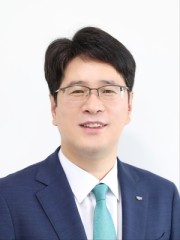
Credit Guarantee Fund names Kim Seung-kwan as new executive director
Internal candidate tapped for post The Credit Guarantee Fund said Thursday that it has appointed Kim Seung-kwan, a standing director, as its new executive director. Kim, born in 1969, graduated from Suncheon High School and Dankook University with a degree in trade, and joined the Credit Guarantee Fund in 1991. He went on to serve as head of the ICT Strategy Department and head of the Management Planning Department, before leading the Busan-South Gyeongsang, Honam and West Seoul business divisions. He has served as standing director of the management planning division since May of last year. Kim's term as executive director runs from Thursday through May 25 of next year. The Credit Guarantee Fund also received a top-institution citation in the Board of Audit and Inspection's "2026 Public Institution Self-Audit Activity Assessment."
Sept. 10, 2026
-

FSS chief vows won-trading infrastructure free of time, location limits for foreigners
Policy briefing draws 22 global banks, asset managers Uncertainty lingers despite Korean market's rapid growth Lee Chan-jin, governor of the Financial Supervisory Service, visited London for the first time since taking office to brief global investors on South Korea's capital market and policy direction. The trip aimed to deepen investors' understanding of the Korean market while boosting its competitiveness by improving market trust, financing conditions for innovative companies and the investment environment for foreign investors. The FSS said Thursday that Lee traveled to London from Sunday to Thursday to attend an overseas investor relations event co-hosted by the FSS, local governments and the financial industry, and to meet with senior officials from the UK's financial regulators. The investor relations event, held Tuesday, drew senior executives from 22 global investment banks and asset managers, including Goldman Sachs, Morgan Stanley, Insight Investment and PIMCO. The event took the form of a small-scale roundtable centered on major global financial firms. It also included a question-and-answer session on the state of the Korean stock market and the long-term investment environment. At the event, Lee said South Korea's stock market had grown rapidly in recent years but noted that uncertainties remain, including market volatility and geopolitical risks. He said the Kospi rose 62 percent from January through the end of August this year. That outpaced Japan's Nikkei, up 32 percent, the US S&P, up 12 percent, and Germany's DAX, up 7 percent. South Korea's stock market also climbed from 13th to within the top seven in global market capitalization rankings. He then stressed the importance of creating a market environment investors can trust with their money. "We will create an environment where investors can confidently invest in Korea's capital market and companies," Lee said. He added that fair market order and investor confidence in companies' efforts to boost shareholder returns must underpin this. Financial regulators plan to step up their response to unfair trading practices, encourage undervalued companies to voluntarily enhance their value, and push forward improvements to corporate governance at financial firms. Lee also outlined measures to expand financing options for innovative companies. The plan includes overhauling Kosdaq's listing and delisting criteria, segmenting the market according to company characteristics, and encouraging major investment banks to supply more venture capital. It also calls for easing capital regulations on financial firms so that funds flow into productive sectors such as advanced technology and industry. To improve market access for foreign investors, the FSS will also pursue a shorter settlement cycle, extended trading hours and the buildout of STO infrastructure. "By building an infrastructure that allows foreigners to trade the won without restrictions on time or place, we will ensure that abundant funds from global investors flow into the Korean market," Lee said. He added that the goal is for "Korea's capital market to leap forward into a premium market and for Korea to become reborn as a global financial hub." Investors in London gave positive reviews to efforts to boost corporate value through revisions to the Commercial Act. They also welcomed steps to improve market access, such as the abolition of the foreign investor registration system. However, some also said that translating these changes into a genuine strengthening of capital market competitiveness would require consistent policy execution. They added that the new systems must also become firmly established. During his stay in London, Lee also discussed key supervisory issues with British financial regulators. With the Financial Conduct Authority, he discussed financial consumer protection and a compensation scheme for voice phishing victims. With the Prudential Regulation Authority, he discussed digital operational risk and supervisory approaches to virtual assets and stablecoins. He also shared plans to strengthen accounting fraud responses and audit oversight with the Financial Reporting Council. Lee has recently called for close monitoring of market risk factors. At a consumer risk response council meeting Friday, he stressed the need to keep close watch on sector-specific risks. He also called for immediate action whenever there are concerns about consumer harm.
Sept. 10, 2026
-
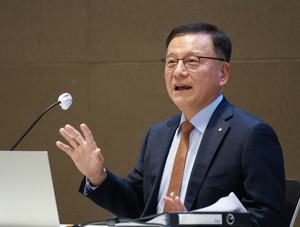
BOK: Renewed Mideast tensions could weigh heavily on prices, rate path unclear
BOK releases 'Monetary and Credit Policy Report' 'Need to decide timing, pace of additional hikes' 'Renewed Mideast tensions to hit prices hard' 'Too early to say what happens with October rate' The Bank of Korea reaffirmed its rate hike stance on Thursday but said the tightening was expected to raise the burden on some vulnerable sectors, calling for a policy response through a mix of macroeconomic measures. Kim Jong-hwa, a monetary policy board member at the BOK, said in a "Monetary and Credit Policy Report" released Thursday that the central bank preemptively raised its benchmark interest rate twice in a row — in July and August — to address price growth and economic expansion that exceeded expectations over the past six months, driven by the Middle East war and a boom in the semiconductor sector, as well as persistent risks to financial stability. Kim oversaw the drafting of the report. On the future direction of monetary policy, Kim said, "As robust growth and price increases above the target level are expected to continue for a considerable period, we need to decide the timing and pace of additional rate hikes while monitoring changes in domestic and external conditions." Kim said the biggest considerations from the standpoint of the real economy are whether the recently renewed military tensions in the Middle East will push cost pressures higher again, and how much and how quickly robust exports centered on the semiconductor sector will spill over into domestic demand and demand-side price pressures. "In terms of financial stability, we need to keep paying attention to risks in the Greater Seoul area's housing market and household debt, as well as the possibility of renewed exchange rate volatility stemming from shifts in the US Federal Reserve's monetary policy stance," he said. Kim added that the effects of the two recent rate hikes need to be closely examined, and went on to say, "In this process, the burden on some vulnerable sectors is expected to grow, so a response through a mix of macroeconomic policies is necessary." Park Jong-woo, deputy governor of the BOK, said at a press briefing Thursday morning that the central bank "will decide the timing and pace of additional benchmark rate hikes while closely monitoring price and growth trends as well as financial stability conditions." Asked about the recent resurgence of tensions from the Middle East war, Park said, "As the risk has grown, it will have a negative effect on the domestic economy." He added, "It is uncertain how long the tension will last, but if it continues, it will have a negative impact on both growth and prices. We expect the impact on prices to be greater than the impact on growth." Asked about the possibility of a further rate hike at the October rate-setting meeting, Park was cautious, saying, "Middle East war risk has emerged as a factor on the price front, but it is uncertain how strong it will be. Since the meeting is in late October, we need to check September price data before then, so it is difficult to say definitively at this point what will happen with rates next." On the future price outlook, Park said, "Some of the accumulated shocks so far are being passed through to core prices, and demand-side price pressures are expected to keep expanding going forward, so we expect inflation to remain elevated, driven mainly by core prices."
Sept. 10, 2026
-
Woori Bank offers 'zero cost' phone bills in September promotion
Customers who sign up for select plans to receive Woori Financial Group's integrated points Woori Bank said Thursday that it will run a chuseok promotion throughout September for its budget mobile service, Woori WON Mobile. Customers who sign up for Woori WON Mobile during September will receive 30,000 won ($22) in Naver Pay credit and a monthly coupon worth 5,000 won. Those who sign up for one of 15 designated plans, including the Double Coupon Plan and the Office Worker Plan, will also receive Woori Financial Group's integrated points, called Kkulmoney, for six months. Combining all the benefits, customers who sign up in September would in effect pay zero won in phone bills, the bank said. The referral benefits are also substantial. When a new subscriber enters a referral code upon signing up, the subscriber receives 10,000 won in Kkulmoney, while the referrer receives 20,000 won in Kkulmoney. Each referrer can register up to 50 friends, meaning a customer could earn up to 1 million won in Kkulmoney through referrals alone. The top three referrers will also receive up to an additional 500,000 won in Kkulmoney. "We designed this chuseok promotion with the intention of giving our customers a holiday gift set," said Yoon Se-ra, deputy manager of Woori Bank's WON Mobile Business Division. Woori Bank launched two new budget mobile plans, called Woori WON Celeb, on Sept. 1. Customers who transfer a salary of 1 million won or more per month receive a 10,000 won discount on their phone bill. The same discount applies to those who newly open one of the four major pension accounts. Additional discounts apply for setting up automatic bill payments or opening a housing subscription savings account, a Samsung Wallet Money-linked Woori account, or a savings or time deposit account.
Sept. 10, 2026
MOST READ
- 1KAIST develops high-performance bio-based adhesive using E. coli instead of petroleum
- 2Daimler Truck unveils next-generation transport solutions at IAA 2026
- 3Samsung Biologics union's show of force backfires at the bargaining table
- 4Trump pushes back on AI slowdown calls, vows to 'keep it that way'
- 5APR says hair-loss treatment research published in international journal
- 6Beyond 125 years of alliance, South Korea and Belgium forge ties in biotech and advanced industry
-
WORLD
US warns of punishment for anyone enabling Iran's Strait of Hormuz toll scheme
-
INDUSTRY
Toyota union puts productivity first; Hyundai Motor union demands bigger share of profits
-
FINANCE
National Growth Fund to invest $531M in FuriosaAI, which rebuffed Meta's $800M takeover bid
-
INDUSTRY

Korea Shipowners' Association holds amateur baduk tournament for Maritime Day