
- HOME
- FINANCE
-
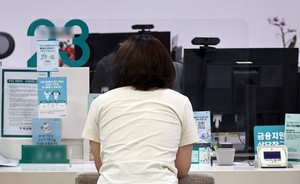
Mortgage delinquencies more than double at Korean banks as rate hikes squeeze borrowers
Overdue balances on home loans rise from 1 trillion won to 2.2 trillion won since end-2022 Non-performing loans at major banks hit highest level since COVID-19 pandemic FSS urges banks to bolster loss-absorption capacity amid rising rate environment Tighter lending regulations and rising interest rates have frozen housing demand, but delinquencies among existing mortgage borrowers are snowballing. While stricter loan requirements have cooled new demand from heavily leveraged buyers, those who already took on debt to purchase homes are being squeezed by mounting interest burdens they can no longer absorb. Data submitted by the Financial Supervisory Service to People Power Party lawmaker Park Sung-hoon of the National Assembly's Political Affairs Committee on Tuesday showed that the outstanding balance of mortgage loans at domestic banks grew 21 percent, from 644.3 trillion won ($475 billion) at the end of 2022 to 779.2 trillion won as of the end of June this year. Delinquent loan balances grew far faster over the same period. Loans overdue by one month or more more than doubled, rising from 1 trillion won to 2.2 trillion won — a pace six times higher than the overall loan balance growth rate. Loans overdue by three months or more climbed from 500 billion won at end-2022 to 900 billion won at end-2023, then to 1.1 trillion won at end-2024 and 1.4 trillion won at the end of last year. The balance remained at a similar level as of the end of June this year. Substandard and below loans — the combined total of substandard, doubtful and estimated-loss classifications — also rose from 800 billion won at end-2022 to 1.7 trillion won as of the end of June this year. As a result, the loan-loss provisions banks are setting aside have ballooned as well. Loan-loss provisions stood at around 300 billion won at end-2022 but tripled to 900 billion won by the end of June this year. Among individual banks, NH NongHyup Bank carried the largest mortgage delinquency balance as of the end of June, at 511.73 billion won. KB Kookmin Bank (368.02 billion won), Woori Bank (341.96 billion won), Hana Bank (302.66 billion won) and Shinhan Bank (216.88 billion won) followed. NH NongHyup Bank's balance reportedly exceeded 500 billion won for the first time this year. Some banks saw their delinquency rates surge. Jeonbuk Bank's mortgage delinquency rate jumped from 0.19 percent at end-2025 to 0.95 percent at the end of June this year — the highest among domestic banks — while its overdue balance swelled from 5.26 billion won to 32.81 billion won. The four major commercial banks — KB, Shinhan, Hana and Woori — all kept their delinquency rates below 0.3 percent, with Shinhan Bank posting the lowest at 0.19 percent. Mortgage loans are generally regarded as among the safest assets in the financial sector, since real estate collateral means banks can ultimately recover principal through foreclosure auctions even when borrowers default. Warning signs now flashing even for this traditionally safe asset class have put financial regulators on high alert. With the Bank of Korea having raised its benchmark interest rate in two consecutive moves and long-term market rates surging as a result, mortgage and other loan delinquency rates are expected to climb further. Financial authorities have been repeatedly urging banks to strengthen their capacity to absorb losses. The balance of non-performing loans — those on which banks can no longer expect interest income — also reached its highest level since the COVID-19 pandemic. The combined non-performing loan balance at the five major banks (KB, Shinhan, Hana, Woori and NH NongHyup) stood at 6.41 trillion won at the end of the second quarter, up 28 percent from end-2025. The ratio of non-performing loans to total loans at these banks reached 0.34 percent at the end of the second quarter, matching the level recorded at the end of the second quarter of 2020 during the COVID-19 pandemic — the highest since then. The five banks' combined non-performing loan balance has grown consistently each year, rising from 2.79 trillion won at end-2022 to 3.51 trillion won at end-2023 and 4.37 trillion won at end-2024. Non-performing loans are defined as loans on which banks do not book interest as income or on which principal and interest repayments are more than three months overdue — assets from which banks can no longer realistically expect interest revenue.
Sept. 8, 2026
-
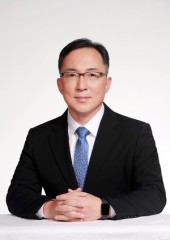
New Insurance Development Institute chief vows to make body a 'pacesetter' for industry
Yoo Jae-hoon takes office as 14th president of Insurance Development Institute Yoo Jae-hoon took office Tuesday as the 14th president of the Insurance Development Institute, the organization said. "The insurance industry stands at a new turning point amid a rapidly changing environment — climate change, natural disasters, international conflicts, supply chain instability and the spread of AI technology," Yoo said. He called on the institute to become a "pacesetter" that proactively charts the future direction of the insurance industry and delivers the data, technology and services it needs before they are demanded. Yoo said his first priority would be pioneering new markets through advanced technology and strengthening AI-based risk assessment capabilities. He stressed the need to research AI and sophisticated risk-assessment models suited to the changing environment in order to manage risk more effectively. Alongside this, he said the institute would analyze market shifts and on-the-ground feedback from a range of stakeholders — including insurance consumers, financial regulators and insurers — to offer reliable and well-reasoned solutions. Yoo also pledged to deepen cooperation with relevant agencies and medical institutions to improve the benefits of Silson24, the institute's digital platform for processing medical insurance reimbursement claims. Looking further ahead, Yoo promised to share the institute's long-accumulated expertise and its integrated statistics management system, K-Insurance, with markets in Southeast Asia and beyond, in support of local business operations by Korean insurers. Meanwhile, the Insurance Development Institute has previously co-developed a mobile driving-habit app with seven non-life insurers to promote safe driving culture and provide consumers with tailored insurance services.
Sept. 8, 2026
-

Altcoins sit dormant on mid-tier exchanges despite zero-fee push
Korbit lists 89 tokens with zero trading volume over 24 hours Coinone sees no trades in over 130 of its roughly 360 listed assets A liquidity crunch is persisting at South Korea's mid-tier virtual asset exchanges, with a significant number of listed tokens going an entire day without a single trade — even as the platforms waive trading fees in a bid to draw activity. As of 7:46 a.m. Tuesday, 89 of the assets listed on Korbit showed a 24-hour trading volume of zero won. The problem was already visible Monday afternoon: as of 2 p.m. that day, roughly 80 of the approximately 190 digital assets listed on Korbit had recorded no trades in the preceding 24 hours. Coinone tells a similar story. As of 2 p.m. Monday, more than 130 of the roughly 360 digital assets listed on the exchange had not changed hands once in the previous 24 hours. Tokens that rarely trade are vulnerable to sharp price swings even on small orders. When the spread between the best bid and ask prices widens and the last traded price goes unchanged for extended periods, the same asset can command meaningfully different prices across exchanges. In fact, some tokens recorded daily trading volumes of only a few thousand to tens of thousands of won, meaning even a single small order was enough to move the price sharply. In conditions of thin liquidity, investors who place orders based on the displayed price can also face significant slippage — the gap between the quoted price and the actual execution price. The divergence in liquidity has produced striking price gaps for the same digital asset across platforms. One asset's 24-hour trading volume reached 428.34 million won ($316,000) on Upbit and 83.13 million won on Bithumb, while the same token saw just 5,000 won in volume on Korbit and no trades at all on Coinone. At the same moment, the asset was quoted at 131 won on Upbit, 129 won on Bithumb, 119 won on Coinone and 105 won on Korbit — a spread of 19.8 percent between the highest and lowest prices across exchanges. Korbit and Coinone have both recently scrapped trading fees across all listed tokens in an effort to stimulate activity, but trading gaps persist, particularly among less popular altcoins. Cutting fee burdens alone has clear limits when it comes to generating the actual buy and sell orders needed to build genuine liquidity, analysts say. "Even with low fees, insufficient liquidity widens the bid-ask spread and causes slippage, meaning traders can end up paying more than they save on commissions," one industry official said. Some in the industry are also calling for a regulatory framework to bring professional liquidity providers and market makers into the market, particularly as corporate virtual asset trading is set to expand. "There is a need to expand corporate trading in stages and to lay the groundwork for professional liquidity providers and market makers to participate under clear standards and a proper supervisory framework," another industry official said.
Sept. 8, 2026
-
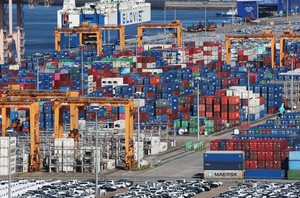
S. Korea's GNI hits all-time high in Q2, up 15.6% on-year — biggest gain in 37 years
Q2 national income (preliminary) figures released Preliminary real GDP growth at 0.6%, unchanged from flash estimate Nominal GDP up 26.4%, largest gain in about 47 years Improved terms of trade, driven largely by the semiconductor sector, pushed South Korea's gross national income to an all-time high of 666.8 trillion won ($492 billion) in the second quarter, the Bank of Korea said Tuesday. The on-year growth rate of 15.6 percent was the largest in 37 and a half years. Real GNI rose to 666.8 trillion won in the second quarter, up 3.1 percent from the previous quarter's 647 trillion won, setting a new record high for the second consecutive quarter, according to preliminary national income statistics the Bank of Korea released Tuesday. The quarter-on-quarter growth rate was about one-third of the previous quarter's 9.2 percent — itself the highest since records began in 1960. Compared with the same period a year earlier, however, GNI expanded 15.6 percent, the fastest pace since the fourth quarter of 1988 (15.7 percent) — a gap of 37 and a half years, or 150 quarters. GNI measures the total income earned by a country's nationals from productive activity, including those living abroad. The Bank of Korea said real net factor income from abroad declined, but real trading gains from improved terms of trade more than offset that, pushing GNI growth above the real GDP growth rate. Real net factor income from abroad is calculated by adding income that nationals earn overseas and subtracting income that foreigners earn domestically. It bridges GDP and GNI, allowing a more accurate picture of residents' actual purchasing power. Breaking down the components, real trading gains improved to 58.5 trillion won in the second quarter from 38.7 trillion won in the first quarter, reflecting better terms of trade. Real net factor income from abroad, however, fell to 7.9 trillion won from 11.6 trillion won the previous quarter. The preliminary estimate for second-quarter real GDP growth was confirmed at 0.6 percent quarter-on-quarter, unchanged from the earlier flash estimate. On a year-on-year basis, the economy grew 3.7 percent. The Bank of Korea said construction investment and intellectual property products investment were each revised up by 0.1 percentage point after incorporating final monthly data not available at the time of the flash estimate, while government consumption was revised down by 0.1 percentage point. The gross savings rate rose 3.9 percentage points from the previous quarter to 45.6 percent, as growth in gross national disposable income (8.9 percent) outpaced final consumption expenditure (1.6 percent). The household net savings rate edged up 0.9 percentage point to 9.7 percent. The domestic investment rate fell 1.1 percentage points from the previous quarter to 24.2 percent, as growth in gross national disposable income (8.9 percent) exceeded total capital formation (4.3 percent). The overseas investment rate rose 5.1 percentage points to 21.4 percent. The GDP deflator rose 21.9 percent from the same period a year earlier. The deflator measures the overall price level by comparing nominal and real GDP, reflecting the degree of inflation in the economy. Nominal GDP grew 9.2 percent quarter-on-quarter in the second quarter — a slowdown from the first quarter's 10.5 percent, which had been the largest quarterly gain since the first quarter of 1976. On a year-on-year basis, however, nominal GDP expanded 26.4 percent, the biggest increase since the third quarter of 1979 (27.7 percent), a gap of 46 years and nine months, or 187 quarters.
Sept. 8, 2026
-
FSS to tailor senior financial education by age group — retirement planning for those in their 50s and 60s, fraud prevention for those in their 70s and 80s
FSS Senior Financial Academy revamps second-half curriculum 50s–60s: pension withdrawals, asset allocation; 70s–80s: internet banking, voice phishing 103 sessions, 2,721 participants since Dec. 2025; applications open Tuesday The Financial Supervisory Service is overhauling its financial education program for older adults, tailoring content by age group. Those in their 50s and 60s will focus on pension withdrawals and post-retirement asset planning, while those in their 70s and 80s will receive targeted instruction on fraud prevention and digital financial tools such as internet banking. The FSS said Tuesday it will run the second-half FSS Senior Financial Academy from Sept. 28 to Dec. 11, targeting senior community centers including welfare centers for the elderly and lifelong learning centers. Applications from institutions will be accepted through the FSS e-Financial Education Center from Tuesday through Sept. 18. The centerpiece of the second-half curriculum is differentiated content by age. The FSS has split its existing senior program into two tracks — one for those in their 50s and 60s, and another for those in their 70s and 80s — to reflect each group's distinct financial needs and level of digital literacy. The track for those in their 50s and 60s centers on managing finances after retirement. Topics include reviewing living and medical expenses, making use of public pensions, strategies for drawing down retirement assets, and asset allocation and risk management. The curriculum also covers fraud prevention — including investment scams and voice phishing — as well as gifting and inheritance. The course runs four sessions of two hours each. The track for those in their 70s and 80s emphasizes protecting retirement assets, responding to financial fraud and navigating digital financial services. It covers the types and prevention of financial scams — including voice phishing, smishing and unlicensed financial solicitation — and provides instruction on using internet banking and self-service kiosks. Participants will also learn how to compare deposit and savings interest rates using Fine, the FSS's financial consumer portal. The course for this age group runs six sessions. The FSS has also adapted its teaching methods for older learners. Text-heavy lecture materials have been supplemented with visual imagery, and a workbook requiring participants to fill in blanks and perform calculations has been introduced to increase hands-on practice. The FSS Senior Financial Academy launched in December 2025. Through June this year, financial specialists visited community sites to deliver a total of 103 sessions, reaching 2,721 participants. The FSS said it incorporated feedback gathered from those sessions in redesigning the program as an age-tailored curriculum starting in the second half. Education is delivered by financial specialists who travel directly to participating institutions. Eligible venues include senior community centers such as welfare centers for the elderly and lifelong learning centers, and a minimum of 10 participants is required to apply. Education coordinators at each institution select their preferred dates and course track when submitting an application. The FSS said it plans to continue expanding financial education for seniors to improve older adults' access to digital financial services and reduce their exposure to financial fraud. Meanwhile, the FSS is also working to strengthen fraud-response capabilities at financial institutions alongside its consumer education efforts. It plans to recognize domestic banks, mutual financial companies and individual employees that have performed well in preventing voice phishing losses, with awards to be presented in December. Institutional candidates will be evaluated on their overall response systems — including dedicated personnel, IT development and prevention programs — while individuals will be assessed on the amount of losses prevented and their contribution to apprehending perpetrators. Voice phishing losses in July this year totaled 33.7 billion won ($24.9 million), down about 73 percent from 124.8 billion won in December 2025.
Sept. 8, 2026
-

NH NongHyup Bank holds voice phishing insurance enrollment event for elderly in Hapcheon-gun
NH NongHyup Bank offers free voice phishing insurance enrollment for elderly customers NH NongHyup Bank said Monday it held a voice phishing compensation insurance enrollment event for elderly customers. The bank ran the event at the Hapcheon-gun Park Golf Course during the qualifying round of the 2nd NongHyup Central Chairman's Cup Farmers Park Golf Tournament, promoting voice phishing compensation insurance and helping elderly attendees sign up on the spot. The event was organized to expand the financial fraud compensation safety net for elderly people, who are particularly vulnerable to voice phishing, and to strengthen consumer financial protection. The bank operated a dedicated promotional booth and a mobile branch at the venue, offering voice phishing prevention guidance and on-site enrollment support to tournament participants and visitors. Voice phishing compensation insurance covers up to 70 percent of losses sustained, with a maximum payout of 10 million won ($7,380), and applies to victims of voice phishing and messenger phishing scams. NH NongHyup Bank launched the enrollment program in earnest in March and surpassed 100,000 cumulative subscribers in July. The bank is continuing its enrollment support drive by linking the initiative to its nationwide branch network and various events. Customers can sign up free of charge by visiting a nearby NH NongHyup Bank branch or through the NH All One Bank mobile app. "We will consistently expand our field-based financial fraud support activities so that elderly customers can manage their financial lives with greater peace of mind," NH NongHyup Bank President Kang Tae-young said. "We will continue to do our utmost to fulfill our social responsibilities as a financial institution and to practice inclusive finance for financially vulnerable groups."
Sept. 7, 2026
-

South Korea's 3 state banks to create W700b global scale-up fund
Korea Development Bank, Industrial Bank of Korea and Export-Import Bank of Korea to each contribute 150 billion won Fund manager selection expected in November Korea Development Bank, Industrial Bank of Korea and Export-Import Bank of Korea announced Monday they will establish a "Policy Finance Institution Global Scale-up Cooperation Fund." The three state banks will each contribute 150 billion won ($111 million), committing a combined 450 billion won toward a total fund size of 700 billion won. The fund is designed to support government policy priorities including innovative growth and productive financing, with the banks combining their respective strengths to channel policy funds more efficiently where they are needed. The initiative is one of seven key joint cooperation projects under the Policy Finance Institution Council, which launched March 27 to expand productive financing and identify collaborative projects among policy finance institutions. The three banks will close their request for proposals on Sept. 30 and, following a joint screening process, select a fund manager in November. The three banks said they will continue to play a leading role in the venture capital market in line with government policy while sustaining cooperation among policy finance institutions to expand innovative growth and productive financing. Separately, Export-Import Bank of Korea plans to contribute an additional 300 billion won to establish a fund focused on AI and other advanced industries.
Sept. 7, 2026
-
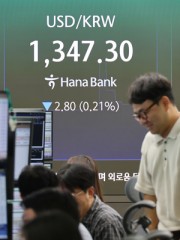
Won strengthens to 1,330s against dollar for first time in nearly 2 years as chipmakers convert earnings
Lowest level since Oct. 4, 2024 The won-dollar exchange rate fell to the 1,330s for the first time in nearly one year and 11 months. The won traded at 1,338.5 per dollar in the Seoul foreign exchange market Monday morning around 9:30 a.m., down 11.9 won from the previous session's closing rate. The last time the won-dollar rate was in the 1,330s was Oct. 4, 2024, when it stood at 1,331.3. Compared with the recent peak of 1,559.2 won on July 1, the currency has strengthened by more than 220 won in roughly two months. The won advanced even as the dollar strengthened after US employment data beat market expectations. US nonfarm payrolls rose by 162,000 in August, more than triple the consensus forecast of 53,000, according to data released Friday (local time). The stronger-than-expected figures revived expectations of a US interest rate hike this month, pushing the dollar higher. The dollar index, which measures the greenback against six major currencies, rose 0.105 to 99.098. Demand from chipmakers converting dollar revenues into won is seen as the main driver of the won's strength. Analysts say the exchange rate could fall further if import payment demand does not recover meaningfully. "The won is maintaining an unstoppable strengthening trend," Park Sang-hyeon, a researcher at iM Securities, said. "Alongside dollar weakness, a domestic supply-side surplus of dollars is underpinning the strong won."
Sept. 7, 2026
-

NH NongHyup Bank chief sends handwritten Chuseok letter to staff
Handwritten letter part of 'Ethics Empathy Campaign' Bank chief broadens reach with New York field visit in August NH NongHyup Bank President Kang Tae-young sent a handwritten letter to employees expressing his gratitude ahead of the Chuseok holiday. According to financial industry sources Monday, Kang recently wrote to staff: "I am grateful for your efforts, and I hope this handwritten letter conveys my appreciation as we work together to build an even warmer and more trusted NongHyup Bank." Kang wrote the letter as part of the bank's ongoing "Ethics Empathy Mailbox" campaign, becoming its first contributor this year. The campaign is one of NongHyup Bank's signature ethics culture programs, in which employees write handwritten letters of gratitude and encouragement to colleagues and peers. Running since 2017, it is held primarily around major holidays. The bank has set it as an organizational goal for employees to practice ethical management naturally in their daily work, reinforcing basic standards and principles. Kang has been broadening his management reach, including a field trip to New York last month. There, he met with officials from the Federal Reserve Bank of New York and the New York State Department of Financial Services to discuss key issues including internal controls and risk management at the bank's New York branch. He also met with global alternative investment managers to review the viability of major investment assets and discuss the outlook and risk factors going forward. Kang also visited the NongHyup Bank New York branch, where he shared business updates with staff and reviewed on-site operations.
Sept. 7, 2026
-

JB Financial wins Indonesian regulatory approval to acquire KB Bukopin Finance
JB Woori Capital's auto, corporate finance expertise to be integrated into local network Fintech firm Aizen Global's Indonesian unit investment also set to close JB Financial Group has received approval from Indonesian financial regulators to acquire a local credit finance company, as the group moves to extend its Southeast Asian footprint into Indonesia and build new growth engines around locally tailored businesses, including electric two-wheeler financing. JB Financial Group said Monday it had received approval from Indonesia's Financial Services Authority (OJK) to change the major shareholder of local credit finance firm PT KB Bukopin Finance. Earlier, JB Woori Capital signed a share purchase agreement in July last year with PT Bank KB Indonesia Tbk (KBI) — a subsidiary of KB Kookmin Bank — to acquire an 85 percent stake in KB Bukopin Finance for approximately 29 billion won ($21.3 million). The approval completes the key regulatory step required to finalize the acquisition. Founded in 1983, KB Bukopin Finance offers a range of credit finance services including corporate finance and working capital financing. As of the end of last year, it operated a head office in Jakarta and eight branch locations, with a staff of 124. Its total assets at year-end stood at 92.8 billion won, up 78.7 percent from the previous year, while net profit for the period came to 1.5 billion won. JB Financial views the acquisition as a strategic investment to secure a core hub for its Southeast Asian operations, going beyond a simple expansion of its overseas presence. The group sees Indonesia — home to Southeast Asia's largest population and posting annual economic growth of around 5 percent — as a market with strong financial growth potential. Going forward, JB Financial plans to integrate JB Woori Capital's experience in auto and corporate finance, along with its credit assessment and risk management capabilities, into KB Bukopin Finance's existing customer base and branch network in Indonesia, with the aim of improving both profitability and financial soundness. Once the acquisition is complete, JB Financial also intends to finalize its equity investment in the Indonesian unit of AI-based fintech firm Aizen Global and begin full-scale strategic collaboration. JB Woori Capital signed a new share subscription agreement with Aizen Global last year. Aizen Global has been expanding its electric vehicle finance business in Indonesia using mobility data, recently surpassing a cumulative financing record of more than 17,000 vehicles. JB Financial plans to combine the acquired company's local presence with Aizen Global's data and mobility operations capabilities to enter the electric vehicle finance market targeting e-bike riders. The group plans to roll out products tailored to local demand, including loans for purchasing electric two-wheelers, personal credit loans and battery purchase financing. The strategy is to diversify its portfolio by adding individual customer-focused business to its existing fleet finance operations. "This acquisition is an important turning point in building a long-term growth foundation in Indonesia," JB Financial Group Chairman Kim Ki-hong said. "We will create a differentiated business model by combining JB Woori Capital's credit and risk management capabilities with Aizen Global's data-driven mobility expertise on a local financial platform."
Sept. 7, 2026
-
Lotte Card's Vietnam unit becomes first Korean financial firm to convert to general finance company
Vietnam central bank approves conversion to general finance company Expansion into corporate finance, commercial vehicle loans and leasing Unit to be renamed Lotte General Finance Vietnam Lotte Finance Vietnam, the Vietnam subsidiary of Lotte Card, has received approval to convert into a general finance company. The move will allow the unit to diversify its revenue base beyond personal loans and credit cards into corporate finance and leasing. Lotte Card announced Monday that the State Bank of Vietnam approved the conversion of Lotte Finance Vietnam from a consumer finance company to a general finance company on Aug. 28. The unit is the first Korean financial firm operating in Vietnam — and the first consumer finance company in the country — to make such a conversion. Lotte Finance Vietnam was established after Lotte Card entered the Vietnamese market in 2018 by acquiring Techcom Finance, a local consumer finance company. The Financial Services Commission, the Financial Supervisory Service and the Vietnamese Embassy in Seoul all provided support during the approval process by coordinating with Vietnamese authorities. The approval allows Lotte Finance Vietnam to expand its business from individual customers to corporate clients and sole proprietors. The company plans to grow its secured and unsecured lending and commercial vehicle loans targeting high-quality corporate borrowers, and to strengthen financial support for commercial electric vehicles in line with the Vietnamese government's green energy policy. The scope of operations will also broaden. In addition to its existing personal loan and credit card businesses, the company will now be able to enter the leasing market. It plans to move into auto leasing first, then extend financial services to growth industries such as medical devices and construction equipment. To reflect the expanded mandate, the subsidiary will be renamed Lotte General Finance Vietnam, with the new name applied to its offices and branches on a rolling basis. Starting next year, the company will strengthen its corporate review organization to upgrade its risk assessment framework and expand corporate lending, focusing initially on existing partner companies. "This upgrade to a general finance company has laid the groundwork for long-term growth through an expanded business portfolio and a more diversified revenue base," Lotte Card Chief Executive Jeong Sang-ho said. "We expect the Vietnam subsidiary's growth to contribute to enhancing Lotte Card's overall corporate value."
Sept. 7, 2026
-

Samsung Life to build consultant skills with AI digital human customers
'AI role-playing service' set for launch Linked to all product and consulting education Samsung Life announced Monday it will launch an "AI role-playing service" in mid-September that uses artificial intelligence to sharpen the skills of its consultants. The service features an AI digital human that plays the role of a virtual customer, allowing consultants to practice conversations as if they were advising real clients and repeat the training as many times as needed. Consultants select a customer type and consultation scenario, and the AI simulates the range of situations that can arise in actual sales settings. Before each session, the system provides learning materials including relevant scenarios and techniques for handling objections; afterward, it analyzes the conversation and the consultant's responses to deliver personalized feedback and a record of training history. Samsung Life said the service uses a large language model-based conversational engine incorporating specialized insurance knowledge, enabling interactions that closely mirror real consultations. Consultants can repeatedly practice their responses to a wide variety of customer questions and reactions, building situational competence over time. The company plans to integrate the service into product and consulting education for all its consultants. Complementing existing in-person group training, the initiative will allow consultants to practice any consultation scenario on their mobile devices, at any time and place, at their own pace — expanding individual training opportunities and raising the quality of advice delivered to customers. The Financial Services Commission designated the AI role-playing service an innovative financial service in the generative AI category in July. Samsung Life said it will use feedback from early operations to improve the service's stability and completeness, and will gradually expand its educational content to cover a broader range of products, customer types and consultation scenarios. The service was co-developed with Kleon, an AI digital human company. Samsung Life combined Kleon's AI digital human technology with its own in-house training expertise and insurance knowledge, and built a proprietary LLM-based conversational model tailored to insurance consulting. Kleon has maintained a technology partnership with Samsung Life since being named the top life insurance company in the Samsung Financial "C-Lab Outside" program in 2022. Members of the public can try the service before its official launch. Samsung Life will operate a demonstration booth for the AI-based financial consultant role-playing service at the Samsung Financial Networks stand during "Try Everything 2026," a global startup festival held at Dongdaemun Design Plaza on Wednesday and Thursday. "The AI role-playing service is an example of bringing innovative technology to the insurance sales floor through collaboration with an outstanding startup," a Samsung Life official said. "We will continue to expand partnerships with leading companies to raise the quality of service that customers experience." Meanwhile, Samsung Life received the Minister of Science and ICT Award — the top prize in the AI transformation innovation category — at ICT Award Korea 2026 on Aug. 27 for its "AI CX (customer experience) writing system." The company took first place in the AI transformation innovation category in recognition of its work redesigning workflows using AI technology and improving user experience and productivity.
Sept. 7, 2026
-

Hana Financial Group wins gold at International Business Awards for corporate history book
The publication chronicles 55 years of the group's journey, from Korea Investment Finance to the founding of Hana Financial Group Hana Financial Group announced Monday that it won a gold award in the publication category at the 2026 International Business Awards. The winning entry, "Hana Financial Group: A 20-Year History," was produced to mark the group's 20th anniversary and is its first comprehensive institutional history. The book chronicles 55 years of challenges and growth, tracing the group's origins from the founding of Korea Investment Finance in 1971 through the conversion to Hana Bank and the eventual establishment of Hana Financial Group. "This is the first corporate history to bring together the footprints of all our affiliates in one volume," a Hana Financial Group official said. "It captures the history of innovation that defines what it means to be Hana, and we are proud to have preserved the group's growth DNA between two covers." Now in its 23rd year, the International Business Awards (IBA) is an international competition organized by Stevie Awards of the United States that evaluates companies and organizations worldwide on their business activities — including management, growth and communications — over the preceding year. This year, more than 3,800 entries from 82 countries competed for honors. Meanwhile, Hana Financial Group plans to relocate its major affiliates to Cheongna International City in Incheon next month. The group recently signed an agreement with Incheon to provide financial support for shared regional growth.
Sept. 7, 2026
-

Credit recovery chief holds talk session with 34 female employees
Chair shares self-development, leadership experience, recommends books Delivers handwritten letters, pledges 'organizational culture where each person can shine' The Credit Counseling and Recovery Service organized a session for female employees to share experiences on balancing work and family life, self-development and leadership. The agency said Monday that Chair Kim Eun-kyung held an "empathy talk concert" with 34 female employees on Friday. The event gave Kim, who has worked in academia and the financial and public sectors, a forum to share her experiences with staff and communicate across generational and hierarchical lines. Kim spoke with employees on topics including work-life balance, self-development, leadership and workplace attitude. She shared the challenges and experiences she encountered while growing into a female leader and answered employees' questions directly. In a book talk segment called "A Sunbae's Library," she recommended "Be Happy on Your Own" by Buddhist monk Beopjeong and "Only Once in My Life" by Professor Jang Young-hee. She conveyed the message that "rather than giving up either work or life, it is important to set your own approach and standards and carve out your own path with a long-term perspective." At the close of the event, she handed each attending employee a handwritten letter she had personally prepared. The letters encouraged employees to support themselves during difficult times and noted that the obstacles one encounters in life can also serve as stepping stones to the next stage. "Personal growth is the foundation of organizational development, and leaders too grow together by learning from their members," Kim said. "We will build an organizational culture where we share and learn from each other's experiences and where everyone can fully realize their potential." Meanwhile, the Credit Counseling and Recovery Service plans to launch a national debt counseling hotline, 1375, starting in October. The single number will provide guidance on debt counseling, debt adjustment, personal rehabilitation and bankruptcy application support, financial and employment welfare referrals, and assistance for victims of illegal private lending. Advisory notice on illegal private lending and excessive debt Those exposed to illegal private lending damage may report it to the Financial Supervisory Service (☎1332) for assistance. Those struggling with excessive debt may seek help from the Korea Inclusive Finance Agency (☎1397) or the Credit Counseling and Recovery Service (☎1600-5500). ※ Loan contracts with an annual interest rate exceeding 60% are void in both principal and interest.
Sept. 7, 2026
-

Top 20 savings banks triple net profit in H1; OK, Korea Investment account for 66%
Liquidity ratio falls from 165.48% to 129.18%, still above regulatory floor Lending up just 0.3% year-on-year as mid-rate loan exemption draws attention The combined net profit of South Korea's 20 largest savings banks more than tripled in the first half of this year compared with a year earlier, while liquidity ratios that had stayed elevated since the 2022 Legoland crisis fell by more than 36 percentage points, signaling a return to normal. The top 20 savings banks by assets posted a combined net profit for the period of 574.6 billion won ($423 million) in the first half of this year, up 394 billion won — a 218 percent increase — from 180.6 billion won in the same period last year, according to industry data released Monday. The earnings recovery was concentrated among a handful of large players. OK Savings Bank led the group with a net profit of 229.1 billion won, followed by Korea Investment Savings Bank at 153 billion won. Welcome Savings Bank posted 87.3 billion won, SBI Savings Bank 37.6 billion won, and DB Savings Bank 13.8 billion won. OK Savings Bank and Korea Investment Savings Bank together earned 382.1 billion won, accounting for 66.4 percent of the top 20 firms' total net profit. The gap between institutions was stark: the second- and third-ranked banks by profit both outearned SBI Savings Bank, which holds the largest asset base in the sector. With traditional interest income growth constrained by lending regulations, analysts say some of the larger institutions boosted earnings by diversifying into securities management and other non-lending revenue streams. Financial structures also shifted. The average liquidity ratio for the top 20 firms at the end of the second quarter stood at 129.18 percent, down 36.30 percentage points from 165.48 percent a year earlier. The liquidity ratio measures how much in won-denominated liquid assets a savings bank holds relative to liabilities due within three months. Savings banks are required to maintain the ratio above 100 percent; the top 20 averaged 129.18 percent, comfortably above the regulatory floor. Industry officials attribute the decline to a normalization following the 2022 Legoland crisis, when a surge of deposits prompted banks to lock up short-term funds in reserve accounts, pushing liquidity ratios sharply higher. As demand for those precautionary buffers has eased, ratios have settled back toward levels each institution considers appropriate. Among the top five banks by assets, Korea Investment Savings Bank had the highest liquidity ratio at 140.83 percent, followed by OK Savings Bank at 124.63 percent, Welcome Savings Bank at 119.0 percent, SBI Savings Bank at 111.91 percent, and Acuon Savings Bank at 104.14 percent. Korea Investment Savings Bank's ratio fell roughly 100 percentage points from 240.75 percent at the end of June last year. Despite the profit recovery, lending activity at savings banks has yet to show a meaningful rebound. The top 20 firms' outstanding loan balance at the end of June stood at 68.21 trillion won, up just 228.5 billion won from 67.98 trillion won a year earlier — a gain of roughly 0.3 percent. Savings banks face a difficult environment for expanding credit: household lending caps, debt service ratio regulations, and pressure to keep delinquency and other asset-quality indicators in check have all combined to limit their appetite for new loans. Financial regulators have been trying to open more room for lending, particularly through mid-rate loans. Starting last month, incremental growth in private-sector mid-rate loans at savings banks was fully excluded from household lending caps, up from the previous exemption of 80 percent of such loans. The number of savings banks authorized to offer mid-rate lifestyle safety loans — a product introduced in June — also expanded from six to nine. Whether the deregulation will translate directly into loan growth, however, remains to be seen. Many mid- to low-credit borrowers who turn to savings banks have already reached their borrowing limits, and aggressively expanding supply risks pushing delinquency rates and non-performing loan ratios back up. Meanwhile, the savings bank sector as a whole posted a net profit for the period of 765.8 billion won in the first half, with the top 20 firms accounting for about 75 percent of that total. The delinquency rate and substandard-and-below loan ratio at the end of the second quarter stood at 6.3 percent and 8.2 percent, respectively, each down 0.4 percentage points from the previous quarter.
Sept. 7, 2026
-

Chips soar, but wallets stay shut: K-shaped divide deepens as rates hit 3%
August exports jump 68.7%, with semiconductors making up 47.5% of total 'Semiconductor dollars' boost won, easing import-price pressure Bank of Korea raises rates for second straight month, leaves door open to more Hyundai Research Institute warns over-tightening could delay consumption, jobs recovery Semiconductors are flying and the won is strengthening, but household spending remains stubbornly closed. While dollars flowing in from chip exports are driving won appreciation and lifting GDP growth, consumer spending and youth employment are moving in the opposite direction. With the Bank of Korea raising its benchmark interest rate for two consecutive months to rein in inflation and household debt — and leaving the door open to further hikes — warnings are growing that a K-shaped divide between export conglomerates and domestic households could become entrenched. According to a report released Sunday by the Hyundai Research Institute, titled "Time to Watch for the Risk of K-shaped Polarization Becoming Entrenched Due to Policy Over-response," real GDP grew 0.6 percent in the second quarter from the previous quarter. That was slower than the 1.8 percent expansion in the first quarter, but exports rose 1.4 percent and continued to underpin growth. Semiconductors are at the heart of the export boom. August exports jumped 68.7 percent from a year earlier, the report said. Semiconductors' share of total exports soared from 25.9 percent in August last year to about 47.5 percent in August this year — meaning roughly one in every two exported goods is now a chip. The semiconductor boom is also reshaping the foreign exchange market. A steady stream of dollar-to-won conversions by chipmakers repatriating export earnings has supported won strength. Combined with a broader global dollar weakening, the won-dollar rate fell to 1,345.0 won in overnight trading on Friday — its lowest level since October 2024 — before closing the daytime session at 1,350.4 won. Market participants attribute the move to a weaker dollar, improved foreign capital flows and the added supply of "semiconductor dollars." A stronger won lowers the price of imported oil and raw materials, easing inflationary pressure and reducing the case for further rate hikes. At the same time, however, semiconductor-led high growth, lingering price instability, and rising Greater Seoul home prices and household lending are all pushing the Bank of Korea toward continued tightening. The Bank of Korea's Monetary Policy Board raised the benchmark interest rate from 2.50 percent to 2.75 percent in July, then lifted it again to 3.00 percent in August — two consecutive increases. The central bank said it acted because growth momentum was strengthening, led by exports and investment; because inflation was expected to remain above its target for a considerable period; and because it needed to address rising housing prices and household debt in the Greater Seoul area. It said it would continue to assess inflation, economic conditions and financial stability in determining the timing and pace of any additional hikes. The problem is that the warmth generated by exports is not reaching households. The retail sales index fell 2.4 percent in July from the previous month. Growth in durable goods consumption swung from a 10.3 percent gain in June to a 4.1 percent decline in July. Total real income, including government transfers, widened from a 0.4 percent increase in the first quarter to 1.5 percent in the second. But real income growth excluding public transfer payments worsened over the same period, from minus 0.3 percent to minus 1.3 percent — meaning the purchasing power that households generate through their own economic activity has actually weakened. The labor market tells a similar story of divergence. The youth unemployment rate stood at 6.8 percent in July, up 1.3 percentage points from a year earlier. The number of employed young people fell for the 45th consecutive month since November 2022. Even as expansion signals strengthen among large semiconductor exporters, the economic reality felt by small and medium-sized domestic businesses and young workers remains bleak. The Hyundai Research Institute said that if monetary policy responds excessively to inflation and household debt under these conditions, it risks deepening the K-shaped divide. With household debt already elevated, faster rate increases would raise interest burdens, suppress consumption, and — given the lagged effects of tightening — could trigger a credit crunch and a domestic demand slump. The institute recommended pairing monetary policy with targeted microeconomic measures addressing specific drivers of inflation, such as cuts to fuel taxes, rather than relying on rate hikes alone to achieve price stability. It also said fiscal space that has been secured should be directed toward strengthening medium- to long-term growth foundations — including energy, supply chains and logistics — and toward supporting small and medium-sized enterprises and vulnerable groups.
Sept. 6, 2026
-

Dollar deposits hit record high even as won strengthens sharply
Won-dollar rate at 23-month low of 1,345 won Buyers at July peak sitting on 15.9% currency loss Exporters delay conversion, pushing dollar deposits to record Yen deposits at 22-month high as won-yen rate hits 2-year low Investors who bought dollars when the won-dollar exchange rate neared 1,600 won in early July have absorbed steep currency losses in just two months. Purchasing $10,000 at the intraday high of 1,599.2 won per dollar on July 1 would have required 15.99 million won ($11,800), but with the rate now down to 1,345 won, that same holding is worth only 13.45 million won — a paper loss of 2.54 million won, or 15.9 percent, before conversion fees. Yet despite the currency-loss risk that comes with a strengthening won, domestic companies and individuals are buying more dollars, not fewer. Exporters are holding off on converting their dollar earnings in anticipation of a further rate decline, while importers and overseas stock investors are treating the lower exchange rate as an opportunity to accumulate dollars. The result: dollar deposit balances at major banks have grown to an all-time high. The won-dollar rate traded at 1,345.0 won around 10:30 p.m. Friday in the Seoul foreign exchange market, according to financial industry sources. That is the lowest level in about 23 months, since the intraday low of 1,344.6 won recorded on Oct. 8, 2024. Compared with the intraday high of 1,599.2 won on July 1, the rate has tumbled 254.2 won in just over two months — meaning the won value of dollar-denominated assets has shrunk by the same margin for companies and investors holding dollars. Even so, dollar deposit balances are rising quickly. As of Thursday, the combined dollar deposits at the five major commercial banks — KB Kookmin, Shinhan Bank, Hana Bank, Woori and NH NongHyup Bank — totaled $76.98 billion, the largest since the five-bank aggregate data series began in May 2021. Dollar deposits rose $6.91 billion in August alone to reach $76.34 billion, then climbed a further $643 million in just three trading days so far this month. Corporates led the surge. Corporate dollar deposits stood at $63.3 billion as of Thursday, also a record high. They rose $6.08 billion in August alone and have added another $500 million so far this month. Market participants say the rapid fall in the exchange rate has prompted exporters to delay converting their dollar holdings into won, while importers with upcoming payment obligations are buying dollars in tranches. The demand is driven less by speculation on currency gains than by the need to secure funds for trade settlements and to manage exchange-rate risk. "Export proceeds keep flowing in while exporters hold off on converting to won, so dollar deposits are piling up," said Baek Seok-hyeon, an economist at Shinhan Bank. "Importers are also actively buying dollars in installments, taking advantage of the lower exchange rate." A banking industry official said companies are expanding their dollar holdings to secure funds for trade transactions, including imports and exports, adding that the sharp drop in the rate over a short period has also led them to hedge against a potential rebound. Individual dollar deposits also rose to $13.68 billion as of Thursday — the highest in three years and seven months since the $13.85 billion recorded in February 2022. They increased $144 million from the end of August. Demand to convert won into dollars has continued as well. The five major banks' combined won-to-dollar conversions totaled $60 million from the start of September through Thursday. August conversions reached $389 million, the highest since $506 million in January this year. Won-to-dollar conversions fell from $275 million in February to $164 million in June before rebounding to $349 million in July and continuing to climb. Dollar-to-won conversions, by contrast, came to just $111 million in August and $17 million so far this month — roughly one-third the level of won-to-dollar flows. "Individuals started buying dollars as the won-dollar rate tumbled sharply in July and August," said Lee Nak-won, a foreign exchange derivatives specialist at NH NongHyup Bank. "Demand for dollars to invest in US stocks has also been rising alongside that." Bargain-hunting for yen has been equally intense. The five major banks' combined yen deposit balances stood at 1.12 trillion yen ($7.2 billion) as of Thursday, the highest in 22 months since 1.15 trillion yen at the end of October 2024. Yen deposits rose 41.58 billion yen from the end of August, with the increase over just three trading days this month nearly matching the 43.84 billion yen gain recorded for all of August. The won-yen cross rate fell below 900 won per 100 yen for the first time in about one year and eight months on July 23 and has continued to decline. On Wednesday, it dropped to an intraday low of 853.07 won per 100 yen, the weakest in two years and two months. Won-to-yen conversions totaled 6.3 billion yen from Tuesday through Thursday — equivalent to 22 percent of the 28.23 billion yen converted in all of August. Won-to-yen conversions reached 38.86 billion yen in July and 28.23 billion yen in August, up 110 percent and 27.6 percent, respectively, from the same periods last year. Banks attribute the increase to demand from Japan-bound tourists as well as individuals buying yen at what they see as a low price in anticipation of a future rebound. "Yen deposits have a higher share of individual holders than dollar deposits," Baek said. "Underlying the demand is a perception that the yen is currently undervalued and an expectation that it will rise."
Sept. 6, 2026
-

Why crypto exchanges are slashing fees to zero — even at a loss
Small exchanges bleed red even as they waive all fees DigitalX goes free for a year; Coinone fires back two days later Upbit, Bithumb join with partial fee waivers Exchanges desperate to build volume even without revenue Regulatory openings — including corporate crypto investment — seen as essential "For smaller exchanges, given the current structure, it's just a question of whether they hold on four years or five before going under." — industry insider Fee wars among South Korea's digital asset exchanges are nothing new, but the latest round carries a different kind of tension: for smaller players, it has become a fight for survival. The fear driving the moves is that without a bold gambit now, losses will simply pile up until the market forces them out. The strategy is to maximize trading volume and customer base while new, deep-pocketed shareholders provide capital support — and then be ready when deregulation and new business approvals eventually arrive. A fee-cutting battle centered on smaller exchanges is now in full swing, according to the digital asset industry. DigitalX — formerly Korbit, now part of Mirae Asset Group — announced it would waive trading fees on all won-market pairs for one year starting Aug. 24. Coinone fired back just two days later, cutting its trading fee rate to zero percent across all pairs starting Aug. 26. Because fee vouchers can be reissued without limit or eligibility requirements, the arrangement amounts to free trading indefinitely until further notice. The market's top two exchanges, Upbit and Bithumb, have also rolled out partial fee waivers. Upbit ran a zero-fee promotion on select stablecoins listed on its won market, while Bithumb waived open-API trading fees across all won-market pairs. The scope is narrower than the blanket waivers offered by the smaller challengers, but the fee competition is clearly spreading across the industry as all players scramble for customers and volume. With large financial firms now among their investors but regulatory barriers blocking any immediate synergies, fee waivers are essentially the only card smaller exchanges have left to play. Trading volume across the virtual asset market has declined, and a string of industry incidents has shaken public trust, dragging down earnings across the board — but the blow falls hardest on smaller exchanges with weaker customer bases and thinner capital cushions. "The big players can weather a drop in profits," one industry insider said. "But for smaller exchanges that have been in the red for years, a fall in trading value will directly threaten their survival." Dunamu, which operates Upbit, and Bithumb both saw operating profit fall roughly 80 percent in the first half of this year. Coinone and DigitalX, which handle far less volume, have been unable to escape losses for years. The situation is made worse by the fact that smaller exchanges depend on trading fees for nearly all of their revenue. Last year, fee income accounted for 100 percent of Coinone's total operating revenue and 99.99 percent at DigitalX. Even Dunamu derived 96.9 percent of its operating revenue from fees in the first half of this year, and Bithumb earned virtually all of its revenue the same way. Smaller exchanges find themselves in a position where they must secure trading volume — even volume that generates no revenue — before anything else. Corporate investment in virtual assets remains stalled, and regulatory uncertainty continues to block collaboration between financial firms and virtual asset operators. Meanwhile, compliance costs — covering anti-money laundering, know-your-customer requirements, data protection and suspicious-transaction monitoring — must be borne regardless of an exchange's size. Smaller exchanges are effectively shouldering regulatory costs comparable to those of the industry's largest players. There are also concerns that prolonged deterioration in profitability could erode service quality and chill investment in security and transaction-monitoring systems. Calls are growing for regulators to open institutional pathways that allow smaller exchanges to build competitive advantages beyond fee cuts. "One option would be to give smaller exchanges priority access to regulatory sandboxes and testbed programs, so they can pilot new services with financial firms," one industry insider said.
Sept. 6, 2026
-

Son who transferred W7.05m from dead mother's account will be blocked starting Friday
Rapid financial transaction freeze for deceased to launch across all sectors Friday Banks, card companies, brokerages among 4,890 institutions to participate Mobile banking, ATM transactions also subject to immediate block Funeral, medical costs exempt with documentation After his mother died in September 2022, a man identified only as A transferred 7.05 million won ($5,190) from her bank account into his own over about a month. Knowing her account password, he used a mobile banking app and ATMs to move the funds. A claimed his mother had expressed her intention to give him the money while she was alive, but he had no evidence to support that. A court ultimately convicted him of computer fraud and embezzlement and fined him 3 million won. In a separate case, a man identified as B accessed his late brother's bank app using the deceased's smartphone a week after his death. After completing a non-face-to-face identity verification process, B took out a 3 million won loan. The Seoul Eastern District Court convicted him of computer fraud in 2022 and sentenced him to four months in prison, suspended for one year. Under a new system taking effect Friday, such transactions in a deceased person's name will be blocked starting the day after a death is registered. The overhaul replaces an existing system under which financial institutions could take up to two months to confirm a customer's death. The Financial Services Commission, Ministry of Interior and Safety, Financial Supervisory Service and Korea Credit Information Services announced Friday that the system will go fully into operation on Sept. 11. Under the new arrangement, death registration data will be automatically relayed through Korea Credit Information Services to financial institutions — meaning bereaved families will no longer need to separately request a transaction freeze. Under the previous system, some financial institutions received death records from the Ministry of Interior and Safety through Korea Credit Information Services only once a month. Because the legal deadline for registering a death is one month from the date of death, and it could take another month for that information to reach the financial sector, institutions could go up to two months without knowing a customer had died. Coverage was also limited to banks and a handful of other institutions. Under the new system, the Ministry of Interior and Safety will transmit death records to Korea Credit Information Services once a day. Financial institutions will check that data whenever a transaction — in person or online — is initiated, and will immediately block it if the customer is confirmed to have died. The scope of coverage will also expand significantly. All 4,890 financial institutions across the sector — including not only banks but also insurers, credit card companies, brokerages, savings banks and mutual finance cooperatives — will share death records. Blocked transactions will include deposit withdrawals, loan disbursements, credit card payments, share trades, and transactions conducted via mobile banking or ATMs. Deposits into an account held in a deceased person's name will still be permitted, however. Blocking incoming transfers as well would force heirs to go through a separate debt-collection process to recover funds, regulators said. For urgent expenses such as funeral costs or medical bills incurred before death, families can apply for an exemption. By submitting proof of family relationship and supporting cost documentation to their financial institution, they can arrange for the institution to pay the hospital, care facility or funeral home directly. Bereaved families will not be able to withdraw cash from the deceased's account at their own discretion. Families should also be aware that automatic transfers set up in the deceased's name may be interrupted. They are advised to update payment accounts or methods in advance to ensure bills such as utilities and insurance premiums continue to be paid. The deceased's financial assets and liabilities can be checked through the Financial Supervisory Service's heir financial transaction inquiry service or the Ministry of Interior and Safety's one-stop inheritance support service. The government will also tighten internal controls to prevent financial institutions from using death records for any purpose other than blocking transactions. Institutions will be required to maintain electronic logs of how death data is handled and which transactions are blocked, and the Financial Supervisory Service plans to conduct ongoing inspections of data management and internal control practices.
Sept. 6, 2026
-

Woori Bank launches savings account with up to 7.5% rate to cheer Team Korea at Asian Games
Base rate of 3% with bonus rates tied to overall standing, cheering comments Woori Bank has launched "Woori Team Korea Savings 2," a savings account offering an annual interest rate of up to 7.5%, to cheer South Korea's national team competing at the Aichi-Nagoya Asian Games, which open Sept. 19. Woori Financial Group is an official sponsor of the Korean Sport & Olympic Committee and the national team, Team Korea. The new product is the second the group has released to support the national team this year, following one tied to the Milan-Cortina d'Ampezzo Winter Olympics earlier this year. The account uses a collective cheering format in which the bonus rate rises as more customers show their support, aiming to boost interest in the sports the national team competes in. The product is a flexible installment savings account with a 12-month maturity, allowing deposits of up to 300,000 won ($221) per month. The base rate is 3.0 percent per year, and customers who meet bonus conditions can earn up to an additional 4.5 percentage points, bringing the maximum annual rate to 7.5 percent. Under the "Team Korea Cheering Together" bonus, customers who post at least one comment on the cheering board receive an additional 0.2 percentage points per year. The bonus expands in stages each time cumulative comments reach 100,000, 200,000, 300,000 and 400,000, up to a maximum of 1.0 percentage point per year. The bonus rate also varies depending on South Korea's final standing at the Asian Games. A first-place overall finish earns an additional 1.5 percentage points per year, second place earns 1.0 percentage point and third place earns 0.5 percentage point. The product links the bonus rate to both customer enthusiasm and the national team's performance, combining sports sponsorship with financial benefits. Customers who have not held a Woori Bank deposit or savings account in the previous six months, as well as those who had no Woori Bank account as of the last day of the previous year, are each eligible for an additional 1.0 percentage point per year. "We designed this product to cheer alongside our customers for the sweat and moments of challenge our athletes have poured into their sport," a Woori Bank official said. "We hope it becomes an opportunity for more people to take an interest in Team Korea as they compete across a wide range of events under the national flag."
Sept. 6, 2026
MOST READ
- 1KAIST develops high-performance bio-based adhesive using E. coli instead of petroleum
- 2Daimler Truck unveils next-generation transport solutions at IAA 2026
- 3Samsung Biologics union's show of force backfires at the bargaining table
- 4Trump pushes back on AI slowdown calls, vows to 'keep it that way'
- 5APR says hair-loss treatment research published in international journal
- 6Beyond 125 years of alliance, South Korea and Belgium forge ties in biotech and advanced industry
-
WORLD

US warns of punishment for anyone enabling Iran's Strait of Hormuz toll scheme
-
INDUSTRY
Toyota union puts productivity first; Hyundai Motor union demands bigger share of profits
-
FINANCE

National Growth Fund to invest $531M in FuriosaAI, which rebuffed Meta's $800M takeover bid
-
INDUSTRY

Korea Shipowners' Association holds amateur baduk tournament for Maritime Day