
- HOME
- FINANCE
-
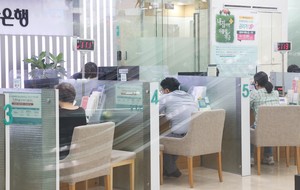
Save 200,000 won in interest or borrow W40m more? A guide to home loans in a rising-rate environment
A guide for borrowers weighing loan options amid rising rates Variable-rate loans cut early interest costs; fixed-rate loans raise borrowing limits New residual-balance COFIX moves slowly in a rising-rate cycle, offering another option Paying off personal credit loans can sharply boost mortgage limits through DSR math Young borrowers should check future-income DSR provisions and use loan comparison platforms The government's Aug. 13 real estate measures expanded banks' overall lending capacity, but most consumers have yet to feel the difference. Because nearly all of the newly freed-up capacity must go toward group loans for pre-sale apartment buyers, banks have been reluctant to ease restrictions on ordinary borrowers. Rising loan interest rates are adding to the pressure. Even so, there are ways to work the system. A careful look at the fine print of loan products can help borrowers squeeze out a higher limit or trim their interest burden. Fixed rate in a rising-rate cycle? Not always the right answer When interest rates are rising, the conventional wisdom is to lock in a fixed-rate (periodic) mortgage so that no matter how high market rates climb, the rate at the time of disbursement stays in place. In the current environment, however, that is not necessarily the right call. The gap between fixed- and variable-rate products has widened considerably. As of Friday, the fixed-rate mortgage range at the five major banks — KB Kookmin, Shinhan, Hana, Woori and NH NongHyup — stood at 4.80 to 7.22 percent per year. Variable rates ranged from 4.28 to 6.46 percent, putting the floor about 0.60 percentage points lower and the ceiling about 0.80 percentage points lower than their fixed-rate counterparts. Given that the Bank of Korea typically moves its benchmark interest rate in 0.25-percentage-point increments, the spread between the two products is not trivial. The difference shows up in monthly payments as well. Using the upper end of each range, a borrower taking out 450 million won on a 30-year equal-principal-and-interest repayment plan would pay 3.06 million won a month on a fixed-rate loan versus 2.83 million won on a variable-rate loan. Although the variable rate resets every six months based on market conditions, in the first six months alone, a borrower can save roughly 200,000 won in interest compared with the fixed-rate option. The widening gap between the two products stems from their different benchmark rates. Fixed-rate products are pegged to the five-year bank bond yield, which reflects market-rate movements in real time. Variable-rate products, by contrast, are tied to the COFIX — a weighted average of the funding costs banks incurred over the previous month. Because it incorporates not only bank bond rates but also time deposits and other funding costs, it is a lagging indicator that moves more slowly than market rates. For borrowers feeling the pinch right now, bankers say choosing a variable-rate loan is worth considering. "The rate rises more slowly than fixed-rate products, and prepayment penalties are waived after three years, so borrowers can always decide then whether to switch to a fixed-rate loan," an official at one commercial bank said. Fixed rate too high, variable rate too uncertain? The new residual-balance COFIX is another option Among variable-rate loans, one product moves particularly slowly when rates rise: loans tied to the new residual-balance COFIX. While the new-issuance COFIX reflects the cost of funds banks raised fresh in the preceding month, the new residual-balance COFIX is calculated from the average funding cost across a bank's entire outstanding balance. Because it absorbs market-rate changes more gradually than the new-issuance COFIX, it can serve as yet another alternative in a rising-rate environment. As of Friday, one commercial bank's new-issuance COFIX-linked loan rate stood at 4.80 to 6.00 percent per year, while its new residual-balance COFIX-linked rate was lower at 4.46 to 5.66 percent. Korea Federation of Banks data show that the new-issuance COFIX rose 0.41 percentage points from January through July this year, whereas the new residual-balance COFIX climbed only 0.17 percentage points over the same period. The flip side of a slower rise is a slower fall. Borrowers should keep in mind that when rates eventually decline, the benefit will also take longer to filter through to a residual-balance COFIX-linked loan. When the limit matters more than the rate, fixed-rate loans have the edge For borrowers who care more about maximizing their loan limit than minimizing their immediate interest cost, a fixed-rate loan can be the better choice. To account for the stability risk of variable-rate loans, the government applies a larger stress buffer — known as the stress debt service ratio — to variable-rate products when calculating the debt service ratio (DSR) borrowing cap. Under the government's third-phase stress DSR rules, fixed-rate (periodic) loans carry an add-on of about 1.2 percentage points to the rate used in the DSR calculation, while variable-rate loans carry an add-on of about 3 percentage points. Borrowers whose DSR exceeds 40 percent cannot obtain a bank loan. A simulation run by one commercial bank found that a borrower earning 80 million won a year could borrow up to 413 million won on a fixed-rate mortgage at 5.5 percent per year after the 1.2-percentage-point stress DSR add-on was applied. The same borrower's maximum limit on a variable-rate loan tied to the new-issuance COFIX came to 374 million won. Although the variable rate of 4.68 percent per year was lower than the fixed rate, the 3-percentage-point stress DSR add-on sharply reduced the borrowing ceiling. On the same salary, the fixed-rate loan offered a limit roughly 40 million won higher than the variable-rate loan. Pay off a personal credit loan and watch your mortgage limit rise — the DSR effect Borrowers who carry a personal credit loan can significantly raise their mortgage limit simply by paying it off. Because personal credit loans have shorter maturities than mortgages, the annual principal-and-interest repayment amount they contribute to the DSR calculation is proportionally large. Take a borrower earning 80 million won a year who holds a 50 million won personal credit loan at 6 percent per year and wants to take out a variable-rate mortgage at 4.5 percent per year. After the 3-percentage-point stress DSR add-on, the maximum mortgage limit works out to 226 million won. If that borrower repays the 50 million won personal credit loan first, the total mortgage limit rises to 381 million won — more than three times the amount repaid. Switching to a fixed-rate loan amplifies the effect further. Choosing a fixed-rate mortgage at 5.5 percent per year, combined with the lower stress DSR add-on, pushes the total limit up to 413 million won. For borrowers planning to take out a mortgage at the same bank where they hold their personal credit loan, there is no need to come up with the cash upfront. The bank disburses the mortgage, uses part of the proceeds to retire the personal credit loan, and pays the borrower the remaining balance. Because this approach can substantially raise the borrowing limit without requiring the borrower to produce cash, demand for consultations on such "repayment-condition special clauses" has been rising among buyers trying to get into the housing market before conditions tighten further. Young borrowers should check future-income DSR provisions Young borrowers should verify whether future-income DSR provisions apply to them. Since July 2021, the government has allowed projected income growth to be factored into the DSR calculation for young workers without homes who take out a mortgage to buy a property. Because both current and projected future income are used to determine the eligible loan amount, whether the provision applies can make a meaningful difference to the borrowing limit. Future income is calculated using Ministry of Employment and Labor statistics. For example, a 30-year-old earning 60 million won a year who takes out a fixed-rate mortgage at 5.5 percent per year with the stress DSR applied can borrow up to 309 million won. Factoring in the future-income figure of 71.05 million won raises the limit to 367 million won — roughly 60 million won more, simply by applying the future-income provision. Although the system has been in place for nearly five years, banks have not been required to proactively inform young borrowers that it exists. The Aug. 13 measures now require lenders to notify borrowers of whether the future-income DSR provision applies to them. Find the right loan at a glance — check comparison platforms regularly Checking loan comparison platforms regularly is another way to track down favorable terms. Since 2019, the government has allowed fintech platforms to operate loan product comparison services as part of its innovative financial services initiative. After a borrower enters personal details, the platform displays loan products from financial institutions matched to that borrower's credit profile. Borrowers can compare offerings from multiple lenders side by side to find the most favorable terms on rate or limit. Platforms also run promotional events — offering interest subsidies or partial cashback on loan disbursements — as part of their marketing. Factoring in these benefits can shave the interest burden further. "In a high-rate environment where finding even a slightly lower rate matters, we help users compare multiple loan products to find the highest limit and lowest rate available," an official at Banksalad, which operates a loan comparison platform, said. "We also offer services that automatically boost credit scores and guide users on raising their borrowing limit through DSR management."
Sept. 6, 2026
-

Hana Financial to sell 120,000 sets of discount eggs at neighborhood stores ahead of Chuseok
Public-private partnership formed ahead of Chuseok Hana Financial to fund project costs, logistics Hana Financial Group will supply discounted eggs to neighborhood supermarkets across the country ahead of the Chuseok holiday, selling two trays — 60 eggs — for 9,990 won ($7) per set under a campaign called "The Good Egg." Hana Financial signed an MOU Friday with the Small Enterprise and Market Service and the Korea Federation of SMEs at its Myeong-dong headquarters in Jung-gu, Seoul, to support price stabilization through the supply of discounted eggs to local stores. The initiative aims to ease the financial burden on consumers hit by high inflation while also drawing more customers into neighborhood supermarkets. Hana Financial Group Chairman Ham Young-joo, Small Enterprise and Market Service President In Tae-yeon and Korea Federation of SMEs Vice Chairman Kwon Hyeok-hwan attended the signing ceremony. The three organizations agreed to build a public-private cooperation framework to revitalize small local businesses struggling under high prices and sluggish consumer spending, and to reduce the cost-of-living burden on consumers. The project directly selects 20 egg farms and minimizes margins from the farm to the distribution stage to lower the retail price. Through this arrangement, about 120,000 sets of eggs will be supplied to more than 4,000 neighborhood supermarkets nationwide. Consumers can purchase a set of 60 eggs — two trays — for 9,990 won starting Friday. Hana Financial will contribute mutual-growth donations to fund the project and cover the costs of egg washing, inspection and sorting, as well as nationwide logistics and transport. The Small Enterprise and Market Service will establish price-labeling and fair-trade operating guidelines and handle public outreach and project management. The Korea Federation of SMEs will secure distribution networks through small and midsize supermarket chains across the country and support product placement and sales. Immediately after the signing ceremony, participants visited a nearby supermarket to inspect the products and sales preparations and hear about challenges on the ground. They also reviewed plans for a stable supply through the nationwide distribution network. "It is meaningful that this project can provide real help to small business owners — the backbone of the local economy — and to consumers," Ham said. "We will continue to carry out support programs that benefit people's livelihoods and steadily practice inclusive finance, fulfilling our social responsibility as a financial institution." Hana Financial launched the "Hana On, Youth On" project with the Small Enterprise and Market Service in June to support the growth of young entrepreneurs and revitalize local commercial districts. The group also operates a range of inclusive finance programs, including initiatives to strengthen the competitiveness of small business owners and provide support for high-efficiency energy equipment and digital transformation devices.
Sept. 6, 2026
-
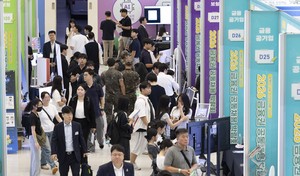
Banks paying W8.5m more than Samsung — but who are they actually hiring?
Banks put 'specialist skills' at center of second-half hiring New hires at big 4 banks down 32% in two years First-half pay hits 71.5 million won — 8.5 million more than Samsung Electronics South Korea's major banks, where average monthly pay exceeds 10 million won ($7,360), are ramping up second-half hiring. A growing number of lenders are opening dedicated recruitment tracks not only for core banking roles such as corporate finance and asset management, but also for specialists in AI, digital technology, cybersecurity, accounting and law — a sign that job-specific expertise is becoming the defining criterion in bank hiring. KB Kookmin Bank, Woori Bank and NH NongHyup Bank have all launched second-half recruitment, seeking candidates with professional licenses and specialized skills in areas including AI, digital and security through separate hiring categories, according to financial industry sources Saturday. KB Kookmin Bank plans to hire roughly 180 people in total — about 160 new recruits and about 20 experienced hires. New recruits will be selected across six tracks: Universal Banker (UB), discharged officers, professional license holders, ICT, specialized high school graduates and ESG co-growth. The professional license track targets certified public accountants. The ICT track is divided into IT and AI/platform development, with candidates assessed on relevant technical competencies. The UB track is split into corporate client finance, customer asset management and regional talent, with at least 25 percent of all UB hires to come from regional talent pools. Woori Bank has added a new "specialist" track for this year's second-half recruitment, on top of its existing corporate banking, retail banking, tech and global categories. The bank will separately recruit holders of professional licenses — including lawyers, certified public accountants and tax accountants — as well as interpretation specialists. Its tech track will also seek candidates with expertise in information security and financial cybersecurity, not just IT development skills. NH NongHyup Bank announced Friday that it would hire roughly 120 Grade-5 entry-level employees. Recruitment is divided into finance and specialist fields, with the specialist category targeting candidates in accounting, security, AI and digital. The bank plans to evaluate applicants primarily on job competency and expertise, then assign them directly to relevant roles. "In the finance track, we will select future core talent to drive sustained growth in our core banking business; in the specialist track, we will hire people with both theoretical expertise and hands-on skills in accounting, security and AI, and deploy them to the field immediately," NH NongHyup Bank President Kang Tae-young said. Hana Bank began open recruitment Thursday for second-half new hires across its general banking, regional talent and discharged-officer tracks, though it did not disclose the total number of positions. Shinhan Bank plans to post its second-half hiring notice later this month, and the specific headcount has yet to be finalized. Even as banks compete for specialists, their overall new-hire numbers continue to shrink. Combined new hires at the four major banks — KB Kookmin, Shinhan, Hana and Woori — fell from about 1,880 in 2023 to about 1,380 in 2024 and roughly 1,280 last year, a drop of about 600 people, or 31.9 percent, over two years. In the first half of this year, the four banks hired about 540 people, down 55, or 9.2 percent, from 595 in the same period last year. Meanwhile, pay for existing bank employees is rising even as hiring volumes shrink. According to the four banks' semiannual reports, average pay per employee in the first half of this year reached 71.5 million won, up 8 million won, or 12.6 percent, from 63.5 million won in the same period last year. Dividing the first-half figure by six gives a simple monthly average of roughly 11.9 million won — 8.5 million won more than the 63 million won Samsung Electronics paid its employees on average in the first half of this year.
Sept. 5, 2026
-

Gold fever: From K-pop star Mimi to central banks, everyone wants bullion
Gold trades above $4,400 per ounce, up more than 20% from a year ago China buys gold for 21st consecutive month; Bank of Korea resumes gold investment after 13 years Gold banking accounts rebound after 7 months; physical gold bar sales also rise "I prefer tangible physical assets over stocks." Mimi, a member of K-pop group Oh My Girl, shared that investment philosophy on a radio program Monday. She said stocks do not feel like her own money until she sells them, which is why she prefers visible assets like gold. She had previously revealed in April on a YouTube entertainment show that she had been gradually accumulating gold — and said that after prices climbed, people around her started telling her she had made a lot of money. The asset Mimi chose is now drawing not only retail investors but also central banks and financial institutions worldwide. A confluence of high interest rates, a widening US fiscal deficit and anxiety over the dollar's value has pushed gold back to the fore as the ultimate safe-haven asset. China has expanded its gold reserves for 21 consecutive months, and the Bank of Korea has resumed gold-related investment for the first time in 13 years. Large sums are also flowing into gold ETFs and bank gold accounts. International gold prices are trading above $4,400 per ounce, according to the financial investment industry. Gold futures on the Comex division of the Chicago Mercantile Exchange settled at $4,429.80 per ounce Friday. Gold prices have recently alternated between sharp rallies and pullbacks. After bottoming out in mid-July, prices surged about 15 percent through Aug. 25, climbing to around $4,600 per ounce. They then retreated to the $4,300 range Tuesday after concerns emerged over rising US Treasury yields and the possibility of a Federal Reserve rate hike, before recovering to hover around the $4,500 level again. The one-month gain has moderated to about 4 percent, but prices remain more than 20 percent above year-ago levels. Even after a sharp correction from the record high set at the start of the year, gold's renewed rebound has focused market attention on the potential for further gains. Gold is regarded as an alternative asset that hedges against volatility in traditional holdings such as stocks, bonds and the dollar, as well as a refuge from inflation. Its trading volume dwarfs that of other commodities, which is why major central banks and institutional investors classify it as a separate asset class within their portfolios. Gold typically loses investment appeal when interest rates rise, since it pays no interest — the recent short-term pullback following higher long-term US Treasury yields reflects exactly that dynamic. Even so, buying has continued, underpinned by concerns about deteriorating US fiscal health and a declining purchasing power of the dollar. A so-called "debasement trade" has spread, in which investors reduce their exposure to nominal assets such as the dollar and government bonds and shift into alternatives like gold and bitcoin. The more concerns grow that America's widening fiscal deficit could erode confidence in the dollar, the more attractive non-dollar assets like gold become. Structural buying by central banks worldwide is considered the single most powerful support for gold prices. The People's Bank of China held 76.08 million ounces of gold at the end of July, up 640,000 ounces — about 20 metric tons — from a month earlier. That monthly increase was the largest since October 2023. China has now expanded its gold reserves for 21 consecutive months. Analysts attribute China's buying to a combination of factors: diversifying foreign exchange reserves, reducing dependence on the dollar and strengthening the international standing of the yuan. Gold still accounts for only about 8 percent of China's reserve assets — relatively low compared with major central banks globally — and markets widely expect China to continue purchasing. The Bank of Korea has also resumed gold-related investment for the first time in 13 years. As of the end of the second quarter, the central bank held 679,765 shares of SPDR Gold Shares, the world's largest gold ETF listed on US exchanges. The holdings were valued at approximately $250.41 million, or about 355 billion won. It is the first confirmed gold-related investment since the Bank of Korea purchased 20 metric tons of physical gold in 2013. However, because gold ETFs are classified as securities within foreign exchange reserves, they are not included in the Bank of Korea's official gold holdings of 104.4 metric tons. The central bank is also pursuing a plan under which domestic gold producers that wish to export can propose the volume and timing, with the Bank of Korea then reviewing its management plan and market conditions before deciding whether to purchase. The central bank gold rush is likely to continue for now. A World Gold Council survey of 76 central banks found that 89 percent of respondents expected global central bank gold holdings to increase over the next year. A record 45 percent said they planned to expand their own institution's gold reserves directly. Annual gold purchases by central banks worldwide have averaged about 1,000 metric tons over the past four years — double the roughly 500-ton annual average of the preceding decade. This year, central banks of emerging economies including Poland, Uzbekistan and Kazakhstan are leading the buying. Retail investor enthusiasm for gold is equally intense. South Korea's largest physical gold ETF, ACE KRX Gold Spot, attracted 693.5 billion won in inflows from the start of the year through Aug. 24. Retail investors accounted for net purchases of 211.6 billion won, with more than 65.5 billion won flowing in from individual investors in August alone. Net retail purchases over the past year have exceeded 1 trillion won. Demand for gold investment through banks is also reviving. The combined gold banking balance at KB Kookmin, Shinhan and Woori Bank stood at 1.78 trillion won as of Aug. 19. The balance had swelled to more than 2 trillion won when gold hit a record high earlier this year, then declined alongside the price correction, but it has turned back to growth for the first time in about seven months as gold prices rebounded. Hana Bank and NH NongHyup Bank do not offer gold banking products. Gold banking works by crediting a won deposit into an account and buying or selling gold at a price that reflects the international gold rate and the won-dollar exchange rate. Because physical gold does not need to be stored and transactions can be made in units as small as 0.01 grams, the product is accessible to small investors. Some banks also offer automatic transfers for periodic purchases, target return and loss-rate alerts, and limit-order repeat-trading services. Despite the word "account" in the name, gold banking differs from ordinary deposits or savings accounts. Principal losses can occur depending on gold prices and exchange rates, and the product is not covered by deposit protection. Trading gains are subject to a 15.4 percent dividend income tax, and investors should also factor in each bank's transaction fees and the spread between buying and selling prices. In short, gold price gains do not translate directly into investment returns. Sales of physical gold bars through banks are also rising. The five major banks sold about 20.1 billion won worth of gold bars from Aug. 1 through Aug. 19. Average daily sales on business days came to 1.83 billion won, up 26.2 percent from 1.45 billion won in July. As gold prices have climbed sharply, demand has concentrated on smaller 10-gram bars, which carry a relatively lower price burden. Gold bars offer the advantage of direct physical ownership, but buyers pay a 10 percent value-added tax on top of the gold price, plus a sales commission. Storage costs and the risk of theft or loss also fall on the investor. The structure means gold prices must rise by a certain margin before the initial costs are recouped. Tax treatment also varies by gold investment product. Gains from bank gold accounts and domestically listed gold ETFs are subject to dividend income tax, whereas direct trading through a securities firm account on the Korea Exchange gold market is exempt from capital gains tax and VAT on in-market trading profits. However, withdrawing gold purchased on the KRX gold market as physical metal does incur a 10 percent VAT and withdrawal fees. Experts say that while high interest rates and a strong dollar may weigh on gold prices in the short term, the medium- to long-term drivers remain intact. UBS forecast that gold will reach $5,000 per ounce in the first half of next year, citing falling US real interest rates, a weaker dollar and steady central bank buying. It estimated that global central bank gold purchases this year will total between 750 and 1,000 metric tons. Investment demand is also spreading to silver and platinum, which are classified alongside gold as precious metals. Silver prices rose more than 12 percent over the past month, while platinum gained about 5 percent over the same period. Silver functions both as a safe-haven asset and an industrial material used in solar panels and electronics, giving it larger price swings than gold. Copper — known as "Dr. Copper" for its role as a barometer of economic conditions — is also hovering near historic highs. Copper prices climbed to $6.83 per pound last month, hitting a record high. That translates to more than $15,000 per metric ton. Prices have pulled back somewhat this month but remain more than 40 percent above year-ago levels. The US government, citing copper as an essential resource for national security and advanced industries, has imposed a 50 percent tariff on semi-finished copper products and similar goods. As demand grows to bring copper into the United States ahead of tariffs and potential additional regulations, Comex warehouse inventories have jumped. Structural supply-side problems are also pushing copper prices higher. Weather disruptions and operational setbacks have hit major copper mines concentrated in South America, and the timeline for normalizing Indonesia's Grasberg mine — which halted production after a landslide last year — has been pushed back. With copper demand surging, driven by AI data centers and power grid investment, supply growth has been unable to keep pace. The TIGER Copper Physical ETF, which tracks the physical copper price, has posted returns of around 40 percent over the past year. Shares of Freeport-McMoRan, the largest US copper producer, have also climbed to a 52-week high of $80.24. Choi Jin-young, a researcher at Daishin Securities, forecast that copper prices will break through $16,000 per metric ton before the end of the year. Analysts caution, however, that gold, silver and copper have all risen sharply in a short period, and investors should be careful about chasing prices higher. Prices can move sharply in either direction depending on US interest rates, the dollar's value and geopolitical developments. Even gold — often called the ultimate safe-haven asset — is not an asset whose price is safe.
Sept. 5, 2026
-

Buying a home delays marriage, and old age brings hardship — the reality of Korea's housing finance
At the 2026 International Housing Finance Conference Homeowning youth 19.2% less likely to marry than non-owners Monthly living costs for elderly single-person households drop from 1.22 million won to 796,000 won Experts call for larger units in multi-child special supply, higher reverse mortgage enrollment Japan cuts mortgage rates by 0.25 percentage point per child "Young people delay marriage to buy a home, and the elderly cut back on living expenses with nothing left but a house." That was the diagnosis offered Friday at the 2026 International Housing Finance Conference, held at the Korea Federation of Banks building in Jung-gu, Seoul. Housing finance experts from South Korea and Japan said the role of housing finance must be redefined — shifting from "finance that helps people buy homes" to "finance that manages risk at life's turning points." The conference, co-hosted by the Korea Housing Finance Corporation (HF) and Japan's Japan Housing Finance Agency (JHF) under the theme "Demographic Change and the Future of Housing Finance," was opened by HF President Kim Kyung-hwan and JHF Executive Director Manabu Takahashi. Financial Services Commission Financial Policy Bureau Director Jeon Yo-seop and Japanese Embassy Economic Minister Kazuyoshi Onishi delivered congratulatory remarks. The two institutions also signed a memorandum of cooperation that day. Cho Man, a professor at Sogang University and the KDI School of Public Policy and Management, delivered the keynote address, warning of a demographic reversal between South Korea and Japan and stressing the growing importance of Korea's reverse mortgage program. "In 2024, the total fertility rate was 1.15 in Japan and 0.75 in South Korea — Korea's decline has been far steeper," he said. "The share of the population aged 65 and older, as well as those 75 and older, is projected to surpass Japan's in Korea by 2045." He added that "given Korea's low pension benefits, the importance of the reverse mortgage program becomes even greater." 'Buying a home cuts marriage odds by 19%' — housing costs stall family formation An analysis by the Korea Research Institute for Human Settlements that quantified the impact of young people's housing choices on marriage and childbirth also drew attention. Park Jin-baek, an associate research fellow at the institute, applied survival analysis to microdata from the 2022 Seoul Residential Survey and found that youth who owned their homes were 19.2% less likely to marry than those who did not. Among those aged 35 and under, the gap widened to 26.2%. By contrast, renters were 23.7% more likely to marry and did so roughly two years earlier than homeowners. "The more young people's housing choices are tied to the condition of 'buying a home first,' the later marriage is delayed," Park said. "Housing costs determine the timing of family formation." When capital is locked up in a home purchase, marriage itself gets pushed back. Differences by rental type were even more pronounced. Among those aged 30 and under, residents of public rental housing were 2.69 times more likely to marry. For childbirth, public rental residents were 3.36 times more likely to have a child — and 4.33 times more likely to have a third child or more — while private rental residents showed a rate of just 0.68 times, actually lower than average, with the gap widening as the number of children increased. Living in public rental housing larger than the average unit size of 61.6 square meters raised the likelihood of having a second child by 5.2 times and a third child or more by 5.87 times. On that basis, Park proposed that housing support for young families should be delivered through public rental housing rather than expanded lending for more expensive homes, and recommended raising the unit-size threshold for the multi-child special supply from 85 square meters to 102 square meters. A string of figures illustrated the reality facing young people. Bang Hee, a senior research fellow at HF, said 86.9% of newlywed couples married less than five years ago carry debt, while only 42.7% own their home. The homeownership rate among young households stands at just 12.2%. "Over the past 35 years, the average age at first marriage has risen, making household formation increasingly dependent on debt and dual incomes," Bang said. "Rather than simply expanding credit supply, the priority should be repayment resilience and protection against income shocks." Park Seong-uk, a senior research fellow at the Korea Institute of Finance, said only 7.3% of all apartments in Seoul are affordable for a median-income household, and that 61.7% of young household heads living independently for the first time rely on parents or relatives for housing funds. "Youth policies must be designed so they do not inadvertently deepen inequality within the younger generation," he said. Elderly have homes but no cash — reverse mortgage enrollment stuck at 2% Older Koreans face the opposite problem. While economic life-cycle theory predicts that people downsize their homes in old age to fund living expenses, Korean elderly households do not follow that pattern. According to the Korea Research Institute for Human Settlements analysis, the living space of single-person elderly households actually grows — from 54.6 square meters for those in their 60s to 63.9 square meters for those aged 80 and older — and the homeownership rate rises from 46.9% to 65.4%. Meanwhile, financial assets shrink from 45 million won ($33,100) to 26.48 million won, and monthly living expenses drop sharply from 1.22 million won to 796,000 won. When hit by an income shock, only 12.4% of elderly households opt to downsize or move to rental housing, while 56.8% choose to cut consumption instead. "They have assets but cannot use them, so their standard of living declines in old age," Park said. "The reverse mortgage program — the key instrument for converting housing assets into liquidity — has stagnated at around 2% of eligible households, or about 150,000 households, and is in effect barely functioning." Professor Cho also noted that 80.7% of assets held by retirement-age households in Korea are tied up in real estate, including their primary residence, compared with 24.7% in the United States, and identified expanding the reverse mortgage program as the top priority for government-sponsored programs. Hwang In-do, head of the monetary and financial research division at the Bank of Korea's Economic Research Institute, presented figures on the macroeconomic impact of expanding the reverse mortgage program. A Bank of Korea issue note found that 35.3% of homeowners aged 55 to 79 said they intended to enroll under the current system, a share that would rise to 41.4% if improvements were made — including targeted outreach, simplified inheritance procedures, and linking payout amounts to changes in home prices. In an optimistic scenario where all households with enrollment intent actually join, GDP was estimated to grow by 0.5 to 0.7 percentage points and the elderly poverty rate to fall by 3 to 5 percentage points, lifting at least 340,000 households out of poverty. Hwang welcomed this year's improvements to the reverse mortgage program — a 3.1% average increase in monthly payouts, a reduction in the upfront guarantee fee from 1.5% to 1.0%, and the launch of an intergenerational reverse mortgage allowing children to inherit the program after a parent's death — but proposed two additional changes. He called for allowing enrollees to choose a home-price-linked payout structure under which monthly payments rise when property values increase, and for extending the deadline for children to repay accumulated reverse mortgage balances when inheriting a home without selling it from the current six months to two years. However, Hwang cautioned that "excessive jeonse deposit guarantees and first-time homebuyer loan support can push up jeonse prices and home prices," and said housing support should follow principles of selectivity and customization. Japan's experiment as an early-aging society — mortgage rates cut 0.25 percentage point per child Japan's presentation offered a preview of what South Korea will soon face. According to Tadayori Nakao, director of the Housing Bureau at Japan's Ministry of Land, Infrastructure, Transport and Tourism, the number of vacant homes in Japan has grown roughly 1.4 times over the past 20 years to about 9 million units, a vacancy rate of 13.8%. Vacant homes with no intended use — neither for rent nor for sale — grew 1.8 times over the same period to about 3.85 million units. Japan has directly linked its response to falling birthrates to housing finance. The JHF's long-term fixed-rate mortgage product, Flat 35, cuts the interest rate by 0.25 percentage point per child for the first five years for households with children under 18 or where at least one spouse is under 40. With three children, the reduction reaches 0.75 percentage point, and combined with other qualifying conditions such as energy-efficient housing, the total reduction can reach up to 1 percentage point. For older borrowers, the JHF has attached insurance to two products to encourage private banks to offer them: Reverse 60, a reverse-mortgage-style loan requiring only interest payments until death, and a residual-value mortgage that lowers monthly repayments by using the home's remaining value as collateral. A panel discussion chaired by Kim Young-do, a senior research fellow at the Korea Institute of Finance, also drew participants from Asian housing finance institutions including Malaysia's Cagamas and the Philippines' National Home Mortgage Finance Corporation, who shared their countries' experiences. Professor Cho said government-sponsored programs in housing finance "should provide services to segments that the private sector cannot adequately serve and continuously expand financial inclusion for marginal borrowers," adding that "sharing international best practices among institutions like HF and JHF will enhance the capacity of each country's housing finance system to improve social welfare."
Sept. 5, 2026
-

Can foreign visitors fix Korea's chronic travel deficit?
The background behind the rapid recent improvement in Korea's chronic travel account deficit July travel deficit hits $342.9 million — a third of last year's figure Deficit ranged from $1.2 billion to $1.8 billion in 2015–2019 Surge in foreign spending at home drives record card payments Korea's tourism export ratio to GDP still trails Japan's Incheon International Airport was packed with outbound travelers in July as the peak summer holiday season got underway, pushing the travel account back into deficit from the previous month. Yet the gap shrank to roughly a third of what it was a year earlier — the smallest July deficit since 2020, when the COVID-19 pandemic effectively shut down international travel. The improvement reflects foreign visitors spending in Korea at a far faster pace than Koreans spending abroad. According to the Bank of Korea, the travel account posted a deficit of $342.9 million in July. The balance had recorded surpluses in May and June before swinging back into the red for the first time in three months, as more Koreans headed overseas during the summer holiday season. The travel account measures the difference between what foreign tourists spend in Korea — travel receipts — and what Korean nationals spend abroad, or travel payments. The wider the gap between outbound Korean spending and inbound foreign spending, the larger the deficit. The Bank of Korea said the return to deficit after three months was driven by a rise in departures, partly due to the summer travel peak and the reinstatement of Constitution Day as a public holiday. The number of departures in July jumped about 20.6 percent from June to about 2.419 million, up from about 2.005 million. Looked at on a July-to-July basis, however, this year's figure marks a clear improvement. Last July's travel deficit stood at $917 million — nearly three times the current shortfall — meaning the gap narrowed by more than 62 percent in a single year. Going further back, the only July in recent memory with a smaller deficit was 2020 ($304 million), when borders were in effect closed due to COVID-19. Excluding that year, the July deficit is the smallest since 2001 ($256.3 million) — a 25-year low. In the 2015–2019 period, the July deficit ranged from $1.2 billion to $1.8 billion. The narrowing this July was driven by a sharp rise in travel receipts. While the amount Koreans spent abroad remained roughly flat compared with last year, the amount foreigners spent in Korea rose 27.3 percent, from $2.1 billion to $2.67 billion. With outflows holding steady and inflows rising, the deficit shrank accordingly. According to the Korea Tourism Organization, about 2.09 million foreign tourists visited Korea in July, up 20.8 percent from about 1.73 million in the same month last year. By country, Chinese visitors were the largest group at 777,000, followed by Japanese at 330,000, Taiwanese at 261,000, Americans at 150,000 and Hong Kong visitors at 76,000. Against this backdrop, card spending by foreign visitors in Korea surged in the second quarter, with non-residents' domestic card use hitting an all-time high. According to Bank of Korea data on residents' overseas card use in the second quarter, non-residents' domestic card spending in Korea reached $4.86 billion in the second quarter of this year, up 36.1 percent from the previous quarter's $3.57 billion. The figure also surpassed the previous record set in the second quarter of last year — $3.79 billion — by 28.2 percent. The number of cards used by non-residents domestically rose 34.3 percent quarter-on-quarter to 25.02 million, while spending per card edged up 1 percent to $194. The Bank of Korea attributed the surge to increased tourist arrivals driven by public holidays in Japan and China during the second quarter, adding that the number of cards used by non-residents in Korea also set a quarterly record. Korean residents' overseas card spending — covering both credit and debit cards — totaled $5.85 billion in the second quarter, down 4.2 percent from $6.1 billion the previous quarter. Spending per card also fell 0.9 percent quarter-on-quarter to $322 — the first such decline in six quarters. Credit card spending fell 0.6 percent to $4.08 billion, while debit card spending dropped 11.5 percent to $1.77 billion. A Bank of Korea official said the sharp rise in foreign arrivals in recent months has helped narrow the travel account deficit compared with the past, adding that "the chronically deficit-prone structure of the travel account is showing signs of improvement." The cumulative travel account deficit for the January–July period this year stood at $2.75 billion — roughly a third of the $7.53 billion recorded in the same period last year and the smallest such deficit since 2009 ($2.18 billion), a 17-year low. To build a structure capable of sustaining a travel account surplus, analysts say Korea must both attract more foreign tourists and maximize the economic impact of their visits. A Bank of Korea report on the growth effects and policy direction of the tourism industry from a service exports perspective found that Korea's tourism export ratio to GDP stood at 1.17 percent last year, 0.29 percentage points below Japan's 1.46 percent. The central bank recommended that to translate the recent rise in foreign arrivals into tangible economic gains, Korea should focus not only on drawing more visitors but also on improving their spending patterns and raising the value-added rate of core tourism industries.
Sept. 5, 2026
-

Financial regulators mount all-out fight to stay in Seoul amid relocation push
1,679 FSS staff sign petition; fear of talent exodus FSC employees voice frustration over prolonged uncertainty Financial workers' union makes relocation fight centerpiece of general strike The Financial Services Commission and the Financial Supervisory Service are mounting an all-out campaign to remain in Seoul. With the government set to finalize the second round of central agency relocations in the fourth quarter, the two regulators plan to press the case for staying in the capital by highlighting risks to Seoul's financial-hub functions, operational efficiency, and policy and supervisory capacity from the loss of specialized staff. The Korea Financial Industry Union has also joined the fight, making the blocking of financial institution relocations a central demand in its general strike. The FSS labor union plans to deliver to the government Friday afternoon a petition signed by 1,679 FSS employees expressing concern over the proposed relocation. Within the FSS, there is deep anxiety that a move out of Seoul would trigger an exodus of specialized staff and weaken supervisory capacity. Many employees are said to have watched the government's briefing on its "Plan for Relocating Administrative and Public Institutions and Reforming Public Institution Functions" live on Thursday. "I don't understand why the relocation needs to be pushed through so forcefully," one FSS employee said. "Many staff will quit immediately — and who will bear responsibility for the resulting breakdown in financial supervision?" It has not been confirmed, however, that the FSC and FSS will remain in Seoul. The government has said the FSC has not been excluded from the list of agencies subject to relocation, and it plans to finalize the list of Greater Seoul public institutions to be moved — including the FSS — within the fourth quarter of this year. Inside the FSC, fatigue and frustration are mounting as the relocation decision drags on toward the fourth quarter. "So we just have to wait until the fourth quarter — nothing has changed," one FSC employee said. "It's still an unsettling situation." Another said: "I have no idea why this has been dragging on for months. My jeonse loan matures this year, and I need a decision as soon as possible so I can figure out what to do next." The backlash is spreading to organized labor in the financial sector. The Korea Financial Industry Union is keeping open the possibility of a joint response and solidarity with the FSC, FSS and other financial regulators against the relocation. The union, which has run a task force to block the relocation since the start of the year, also made stopping the relocation of financial institutions a central demand at its general strike held Friday morning. At a press conference Thursday, the union declared that "relocation of financial institutions without sufficient review and consultation with those directly affected is unacceptable." It argued that scattering financial policy and supervisory bodies across different regions from the firms they oversee would force companies to travel to reach regulators, and compel supervisory agencies to shuttle back and forth to Seoul and other cities for inspections — driving up inefficiency and costs. The union also called on the government to assess the outcomes and living conditions from the first round of public institution relocations before proceeding with a second wave. It noted that inadequate infrastructure — including healthcare and education — has left many relocated employees living alone at their new postings while their families remain in the Greater Seoul area, or commuting back to the capital every weekend. The actual settlement effects of the existing relocation policy, it argued, must be examined before any further moves are made. Meanwhile, the government has said it intends to strengthen Seoul and the broader metropolitan area's economic, cultural and international exchange functions while minimizing the number of public institutions allowed to remain there. It plans to revisit the criteria used to grant exemptions during the first relocation round, weigh each agency's functions and operational linkages, finalize the list of institutions to be moved within the fourth quarter of this year, and begin relocations sequentially from 2027.
Sept. 4, 2026
-

'Bought at $700–$900, won't sell until 2030': Bitcoin reclaims $80,000
Strategy resumes buying after 10-week pause, adds 4,603 bitcoin Bitcoin hits $82,164 intraday as US rate-hike fears ease Cautious voices warn trend reversal not yet confirmed "I won't sell my bitcoin until 2030." Guillaume Patry, a former professional gamer turned broadcaster known as an early bitcoin investor, recently reaffirmed his intention to hold for the long term. Appearing on a broadcast, Patry pushed back against rumors that he is worth "tens of billions of won," but acknowledged, "I have enough to live comfortably if I retired today." Patry is believed to have begun investing in bitcoin around 2017, when the price was between $700 and $900 per coin. He has long maintained on air that "long-term investment is the right answer," stating a principle of holding for at least 10 years. He recently reiterated that he has no plans to sell his bitcoin holdings before 2030, and that he views price dips as opportunities to buy more. Patry is not the only well-known investor returning to the market. Strategy, the world's largest corporate bitcoin holder, broke a 10-week buying pause and spent $369.7 million to acquire 4,603 bitcoin. The average purchase price for the latest tranche was $80,318 per coin. The purchase brings Strategy's total bitcoin holdings to 845,050 coins. Its cumulative acquisition cost stands at approximately $63.73 billion, with an overall average purchase price of $75,412 per coin. With bitcoin recently recovering above $80,000, the current price has once again climbed above Strategy's average cost basis. As bitcoin "holding and buying" strategies regained attention, the price itself broke back above $80,000. According to major international media, bitcoin surged more than 5% on Thursday to top $81,000. During intraday trading, it climbed as high as $82,164 — its highest level in roughly four months since May — before pulling back to around $80,800, though it held above the $80,000 mark. The rebound was particularly sharp given that the price had briefly fallen below $77,000 on Wednesday, representing a recovery of more than $5,000 in a single day. Bitcoin set an all-time high above $126,000 in October last year before entering a prolonged correction. It slid into the $60,000 range in the first half of this year but rebounded 25% in August alone. With three consecutive weeks of gains, the year-to-date decline has narrowed to about 7%, though the price remains roughly 35% below its record high. The easing of tensions over US monetary policy was a key driver of the latest rally. Federal Reserve Governor Christopher Waller said he could support holding interest rates steady at this month's Federal Open Market Committee meeting if inflation continues to slow. After Waller's remarks, market-implied odds of a rate hold rose from about 40% the previous day to roughly 50%. The yield on the 10-year US government bond, which had climbed to 4.818% on Wednesday, pulled back to 4.74%. The combination of falling yields and a weaker dollar drove capital into risk assets such as bitcoin and technology stocks. Institutional investor demand also showed signs of revival. US spot bitcoin ETFs recorded net inflows of $101.15 million on Wednesday, reversing net outflows of $236.5 million the previous trading day. BlackRock's iShares Bitcoin Trust (IBIT) alone attracted $115.46 million in inflows. Bitcoin's rise lifted shares of related companies. On US markets, online investment platform Robinhood jumped 17%, while Coinbase, the largest US virtual asset exchange, surged 10%. Strategy also posted a double-digit percentage gain. Some market observers are calling the end of the "crypto winter" — the prolonged bear market in virtual assets. Noelle Acheson, author of "Crypto Is Macro Now," said recent bitcoin price movements suggest the crypto winter is drawing to a close. David Grider, head of liquid investments at Finality Capital, said that if bond yields drop sharply following a rate hold or the first rate increase, bitcoin and equities could rally together after the FOMC meeting. He added that the trend could extend through late September or early October. Gautam Chhugani, an analyst at Wall Street investment bank Bernstein, said demand for "hard assets" such as bitcoin would remain intact as long as the US Treasury continues policies aimed at suppressing rising bond yields. He set a year-end price target of $150,000 for bitcoin. Cautious voices, however, warn it is too early to declare a full bull market. Nikolai Sondergaard, a senior researcher at Nansen, said bitcoin may have formed a meaningful short-term bottom, but a broader market cycle reversal has not yet been confirmed. Seasonal headwinds also remain. Bitcoin has posted negative returns in September in nine of the past 15 years. Sean Farrell, head of digital asset strategy at Fundstrat, noted that seasonality is a useful reference but not a perfect trading signal, adding that bitcoin has not followed its traditionally weak September pattern over the past three years. Ultimately, analysts say whether bitcoin can consolidate above $80,000 will hinge on the FOMC meeting on Sept. 16 and upcoming US inflation data. If rate-hold expectations hold, further gains toward previous highs are possible — but a resurgence in inflation or oil prices could erase the recent rally.
Sept. 4, 2026
-

FSC, Gangwon Province and Shinhan Bank to launch integrated financial support center
Policy lending, debt relief, employment and welfare counseling under one roof Preferential-rate savings and loan products planned for center users Fourth regional collaboration model after Busan, Gwangju and North Jeolla Province Low-income and vulnerable residents in Gangwon Province will soon be able to access policy lending, debt restructuring, and employment and welfare counseling all in one place, as plans move forward to establish an integrated financial support center in the region. Shinhan Bank also plans to develop preferential-rate savings and loan products for center users. The Financial Services Commission signed an MOU Friday with Gangwon Special Self-Governing Province, the Korea Inclusive Finance Agency, the Credit Counseling and Recovery Service and Shinhan Bank at Shinhan Bank's headquarters to strengthen community-based integrated support in the Gangwon region. FSC Chairman Lee Eok-won, Gangwon Governor Woo Sang-ho, Korea Inclusive Finance Agency President Kim Eun-kyung — who concurrently chairs the Credit Counseling and Recovery Service — and Shinhan Bank President Jeong Sang-hyeok attended the signing ceremony. The centerpiece of the agreement is the establishment of a Gangwon Inclusive Finance Integrated Support Center, where the Korea Inclusive Finance Agency, the Credit Counseling and Recovery Service and private financial institutions will operate under one roof. The center will offer policy lending, debt restructuring, employment and welfare referrals, and private financial counseling in a single visit. Customers who qualify for mainstream financial products will be referred to private financial institutions, while those with low credit scores who cannot access standard products will be directed to policy lending programs — channeling support based on each individual's needs. The partners also plan to develop Gangwon-specific financial products in collaboration with Shinhan Bank, including savings accounts and loans with preferential interest rates for local residents who use the integrated support services, with the aim of helping them build assets and gain access to the formal financial system. Outreach counseling will also be expanded for residents who have difficulty visiting the center in person. Staff will travel to communities to provide inclusive finance, employment and welfare consultations, and counselors from the integrated support centers and community administrative welfare centers will make reciprocal visits to each other's offices to share knowledge about available programs. Gangwon is the fourth region where the FSC has signed a regional integrated support agreement, following Busan, Gwangju and North Jeolla Province. Since 2024, the FSC has operated a system linking financial assistance with employment and welfare services. Through 52 inclusive finance integrated support centers nationwide, cumulative referrals from financial services to employment, welfare and other programs reached approximately 320,000 through June this year. The FSC noted that access to support centers in Gangwon Province is relatively limited given the region's vast area. Seoul operates six centers, while Gangwon — roughly 30 times larger in area — has only four. Although Gangwon's population is about 16 percent of Seoul's, the number of residents receiving integrated support referrals there amounts to only about 10 percent of Seoul's figure. "Balanced development is not a choice or a favor — it is an essential strategy for South Korea's survival and sustained growth," FSC Chairman Lee said. "The FSC will continue working to ensure that all citizens, regardless of where they live, can fully and more attentively benefit from integrated support services." Shinhan Bank President Jeong said he was honored to join the integrated support agreement, which aims to provide more tangible help to low-income and vulnerable residents in Gangwon Province. "We will continue to fulfill our responsibilities as a private financial institution in practicing inclusive finance, so that our customers can enjoy banking that is easier and more accessible," he added. The FSC plans to use the collaboration models operating in Busan, Gwangju, North Jeolla Province and Gangwon as a foundation to expand community-based integrated support to other regions, and to develop additional support measures tailored to the characteristics of each area. Meanwhile, the FSC has allocated 1.08 trillion won ($796 million) for programs to stabilize the livelihoods of low-income households in next year's budget. The agency plans to channel 527.4 billion won into special guarantee programs and youth lending under the Haetsal Loan scheme, and to supply 600 billion won through a revamped loan program — rebranded as the "K-Minseong Jikim Loan" — designed to protect borrowers from illegal private lending.
Sept. 4, 2026
-

Jeonse loans at major banks fall for 12th straight month as borrowers shift to internet banks
Jeonse loan balances at five major banks drop for 12 consecutive months Decline accelerates, with 1.2 trillion won shed in July–August alone As big banks focus on mortgage lending, internet banks absorb guaranteed loan demand Jeonse loan balances at the five major commercial banks have fallen for 12 consecutive months, shrinking by more than 2.6 trillion won ($1.91 billion) since the start of this year. The decline has steepened notably in recent months, and as the big banks have raised the bar on jeonse and monthly-rent loans, some borrowers appear to be migrating to internet banks. While commercial banks have taken a conservative stance on jeonse lending under household credit caps, internet banks — which generally offer lower interest rates — have stepped in to absorb part of that demand. According to financial industry data released Thursday, the combined balance of bank-funded jeonse loans at KB Kookmin Bank, Shinhan Bank, Hana Bank, Woori Bank and NH NongHyup Bank stood at 119.99 trillion won at the end of August — down 2.66 trillion won from 122.65 trillion won at the end of December last year. The balance peaked at 123.73 trillion won at the end of August last year before declining every month for 12 consecutive months. The pace of contraction has picked up sharply over the past two months. Nearly half of this year's total decline — 1.2 trillion won — was concentrated in July and August alone. Month-on-month decline rates of 0.51 percent in July and 0.48 percent in August were three to four times the 0.08–0.15 percent range seen earlier in the year. Internet banks appear to have absorbed some of the displaced demand. The combined jeonse and monthly-rent deposit loan balance at Toss Bank and K bank reached 6.59 trillion won at the end of the second quarter, up 212.2 billion won, or 3.3 percent, from 6.38 trillion won at the end of the first quarter. The two internet banks grew their balances while commercial banks were tightening jeonse lending. However, trends diverged within the internet banking sector. Kakao Bank, which holds the largest jeonse and monthly-rent loan balance among the three internet banks, saw its balance fall by about 500 billion won — from 11 trillion won in the first quarter to 10.5 trillion won in the second. As a result, the combined balance across all three internet banks edged lower overall. The interest rate gap has also been cited as a factor driving the shift in demand. Based on disclosures by the Korea Federation of Banks, the average jeonse loan rate in August was 3.98 percent at Kakao Bank, 4.19 percent at K bank and 4.21 percent at Toss Bank — generally lower than the rates at commercial banks, which ranged from 4.20 percent at KB Kookmin Bank to 4.26 percent at Hana Bank and Woori Bank, 4.42 percent at Shinhan Bank and 4.44 percent at NongHyup Bank. The disclosed rates represent the average rate on jeonse loans backed by Korea Housing Finance Corporation guarantees issued during the month. The broader trend reflects a strategic shift under pressure to manage total household lending volumes. Commercial banks have tilted their portfolios toward mortgage loans over jeonse and monthly-rent lending, while internet banks have capitalized on the spillover by absorbing relatively stable jeonse loan demand — a move that also serves their asset-quality management goals. "Jeonse and monthly-rent loans are somewhat easier to manage from an asset-quality standpoint than ordinary unsecured loans," a banking industry official said. "A bank facing asset-quality improvement targets would likely have crafted a portfolio strategy around picking up the demand flowing out of commercial banks and growing its jeonse loan book."
Sept. 4, 2026
-

South Korea's current account surplus off to record-breaking start in H2, BOK says
BOK briefing on July balance of payments (preliminary) Semiconductor-led expansion continues despite base effect Semiconductors remain key to $450B annual surplus target Exchange rate impact seen as limited vs. chip demand South Korea's current account surplus has kicked off the second half of the year with record-breaking results, extending the momentum from the first half on the back of strong IT exports led by semiconductors. With the recent decline in the won-dollar exchange rate expected to have only a limited impact on the surplus, the Bank of Korea's target of a $450 billion annual current account surplus is increasingly within reach. Yoo Seong-wook, head of the Bank of Korea's financial statistics department, said at a briefing Friday morning on the preliminary balance of payments for July 2026 that exports and the goods trade balance typically dip in July compared with the previous month. "Export companies tend to concentrate shipments in June to manage their first-half performance, and overseas travel surges during the summer holiday season," he said. "Even so, exports — led by semiconductors — exceeded $100 billion for two consecutive months, and dividends from overseas subsidiaries boosted primary income, pushing the surplus to more than three times the level of a year earlier." The latest export growth was again driven by the IT sector, particularly semiconductors. According to the Ministry of Trade, Industry and Energy, semiconductor exports reached $41.01 billion in July, accounting for about 41.5 percent of total exports of $98.89 billion. Fixed-price chip prices continued to rise despite concerns about Apple potentially sourcing Chinese-made memory chips and China's announcement of new AI models, keeping the overall trend solid. Yoo also struck an upbeat note on August's current account, saying the trade balance had improved from July. August exports came in at $98.25 billion — slightly below the all-time records set in June and July ($102 billion and $99 billion, respectively) but still the third-highest on record. The trade surplus widened to $34.7 billion in August, up from $30.4 billion in July. The strong July reading has raised the odds of hitting the Bank of Korea's annual current account surplus target of $450 billion. Last month, the BOK revised its full-year surplus forecast up by $200 billion from its previous estimate of $250 billion to $450 billion. The second-half surplus alone is projected at $259 billion — more than double last year's full-year surplus of $123.1 billion. By simple arithmetic, averaging a monthly surplus of about $43.38 billion over the remaining five months would be enough to reach the $450 billion annual target. "If the monthly current account surplus stays around $43 billion over the next five months, we should hit the projected figure," Yoo said. "The key variable going forward is the semiconductor cycle." He added that South Korea's first-half current account surplus ranked second globally, behind only China. "Last year, China, Germany, Taiwan and others were all ahead of us, but on a first-half basis we have now overtaken Germany, Japan and Taiwan," he said. The Bank of Korea also views the negative impact of the won's strengthening against the dollar — a trend in place since July — as limited. In general, a falling won-dollar rate, meaning a stronger won, weighs on the current account surplus. As the won strengthens, Korean goods become more expensive in dollar terms for overseas buyers even if domestic prices remain unchanged, which tends to reduce exports and narrow the surplus. The won has been on a strengthening trend since July. The won-dollar rate, measured by the weekly closing price, hit a post-global financial crisis high of 1,555.8 won on July 2 — the strongest dollar reading since March 5, 2009 (1,568 won) — before falling steadily, dropping to the 1,360-won range on Monday for the first time in about 13 months. On Thursday, the rate fell further to the 1,350-won range during trading, a level not seen since July 4 last year, when it stood at 1,358.2 won. "A stronger won theoretically puts downward pressure on the current account," Yoo said, "but recent growth in goods exports has been driven by semiconductors and is being shaped by structural demand tied to AI investment, so the exchange rate effect is limited — supply and demand are the bigger drivers." The Bank of Korea also expects the renewed tensions between the United States and Iran to have only a limited effect on the current account. "The Middle East conflict could affect energy prices on the import side, but alternative and indirect import routes have expanded recently, so while there will be some impact, it will be minor compared with the semiconductor sector," Yoo said. "Exports to the Middle East are not large either, so the overall effect should be minimal."
Sept. 4, 2026
-

Korea Inclusive Finance Agency eases eligibility for illegal-lending prevention loans
Credit score requirements waived for basic livelihood recipients, near-poverty households Interest rate capped at 12.5% annually; 4.5% rate available upon full repayment and re-borrowing The Korea Inclusive Finance Agency said Friday it will ease eligibility requirements for its illegal-lending prevention loan program to expand financial access for vulnerable groups currently excluded from formal financial support. The illegal-lending prevention loan is a policy-based microfinance product designed to quickly provide up to 1 million won ($736) to low-income, low-credit borrowers who need emergency funds for living expenses, shielding them from illegal private lenders. The annual interest rate is 12.5%, reduced to 9.9% for socially disadvantaged borrowers such as basic livelihood recipients and single-parent families. Borrowers who repay in full after using the product for at least six months and then re-borrow qualify for a rate of 4.5%. Field workers had long raised concerns that some vulnerable individuals with low incomes but relatively high credit scores were falling through the cracks and being left without access to financial services. In response, the agency revised its eligibility criteria — previously requiring an annual income of 35 million won or less and a credit score in the bottom 20 percent — so that basic livelihood recipients, near-poverty households and earned income tax credit recipients can now apply regardless of their credit score. Applications are also accepted regardless of whether the applicant has overdue debt. The agency expects the change to significantly ease the financial difficulties faced by low-income vulnerable groups who had previously been unable to access the program due to credit score restrictions. "Access to finance is a basic right that should be guaranteed for everyone, which is why we made this change — so that vulnerable people with low incomes are not shut out of inclusive finance simply because of a credit score," agency President Kim Eun-kyung said. "We will continue to listen to voices from the field and make sure no one who needs inclusive financial support falls through the cracks." Advisory notice on preventing harm from illegal private lending and excessive debt: Those exposed to illegal private lending can report to the Financial Supervisory Service (☎1332) for assistance. Those struggling with excessive debt can seek help from the Korea Inclusive Finance Agency (☎1397) or the Credit Counseling and Recovery Service (☎1600-5500). Loan contracts with an annual interest rate exceeding 60% are void in their entirety, including both principal and interest.
Sept. 4, 2026
-

KB Financial Group relaunches KLPGA major as 'Golden Life Championship'
A fresh start as a golf festival for the whole family KB Financial Group announced it will host the KB Financial Golden Life Championship — a Korea Ladies Professional Golf Association Tour major — at Blackstone Golf Club in Icheon, Gyeonggi Province, from Sept. 10 to Sept. 13. The group plans to go beyond a standard tournament, shaping the event into an intergenerational festival that encompasses retirement planning, family activities and community outreach. The tournament, founded in 2006 as the KB Financial Star Championship, relaunches this year under its new name. The total purse is 1.5 billion won ($1.1 million), with the winner's share set at 270 million won. KB Financial said it intends to expand the event into a golf festival where players, spectators and families can all take part, while also strengthening community programs for future generations. This year's field features 120 of the country's top players. Course difficulty has been carefully calibrated to take advantage of Blackstone Golf Club's rugged, hilly terrain, befitting the event's status as one of Korea's four major championships. The third and fourth rounds will feature strategic adjustments to course length to encourage competitive, high-stakes finishes. A new winner's trophy will also be unveiled to mark the relaunch. Artist Song In-wook, who received the KB Star Award at the "ZOOM-IN" emerging artist special exhibition of the 2026 Hwarang Art Festival, created the trophy. Crafted from wood with flowing curves, it is designed to express a shining moment, a new challenge, and the trust and values built over many years. In the gallery plaza, KB Financial will set up the "KB Golden Life Village," a multipurpose cultural space themed around "A Golden Journey Made Together with KB." Eight major affiliates — including KB Kookmin Bank, KB Securities, KB Insurance, KB Kookmin Card and KB Life Insurance — will participate, offering financial and life-care services tailored to each stage of life from retirement preparation through post-retirement. A "Kids Water Zone" will also be available for families with children. The area will feature drone and bubble experiences, water gun play and rest spaces, allowing families to enjoy both the tournament and recreational activities together. Community programs aimed at nurturing the next generation and supporting the local area will also run throughout the event. On the official practice day before the tournament opens, KB Financial-affiliated professionals Jeon In-ji, Bang Shin-sil, Ahn Song-i and Park Ye-ji will hold a coaching session called "Biteum Class" for promising young junior golfers from the region. Charitable giving tied to on-course results will continue as well. At the "KB Star Banking Zone" on the fifth hole, 2 million won will be accumulated each time a tee shot lands in the designated area, building up to a maximum of 100 million won in support funds for youth aging out of the foster care system. At the "KB Golden Life Zone" on the 17th hole, 20 kilograms of Icheon rice will be set aside for each ball that lands in the zone, with up to 3,000 kilograms to be donated to multicultural families. Caddies wearing hats bearing the KB Financial logo will each receive 500,000 won in sponsorship, and players who miss the cut will receive 300,000 won each. "We will carry on the history and tradition of a tournament that has witnessed the birth of new stars over the past 20 years, while relaunching it as an event where both players and spectators are the stars," a KB Financial official said.
Sept. 4, 2026
-
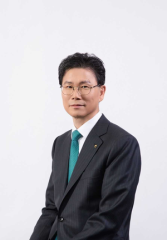
NH NongHyup Bank's corporate lending tops W120tr for first time
Growth rate of 5.65% as of end-July leads five major banks Annual productive finance target reached early in mid-August 471 sectors designated across advanced strategic and regional industries NH Future Growth Corporate Loan surpasses 2 trillion won NH NongHyup Bank's corporate loan balance has surpassed 120 trillion won ($88.3 billion) for the first time since the bank's launch in 2012, driven by its push to expand productive finance. The bank's corporate loan balance stood at 121.001 trillion won as of end-August, up 7.46 trillion won from the start of the year, according to financial industry data released Friday. As of end-July, the balance had risen 6.41 trillion won, or 5.65 percent, from the beginning of the year — the highest growth rate among the five major banks. In terms of absolute increase, it ranked third, behind Hana Bank and KB Kookmin Bank. Behind the growth is a sales strategy centered on productive finance. NH NongHyup Bank designated 269 advanced strategic industries and 202 regionally specialized industries, then launched a dedicated product — the NH Future Growth Corporate Loan — and rolled out intensive marketing around it. The bank also signed a series of financial agreements with promising companies and related institutions. Starting with a partnership with OCI in April to foster future strategic industries, it signed MOUs in June with the Korea Ocean Business Corporation to strengthen the maritime industry's competitiveness and with Korea Aerospace Industries (KAI) to support the K-defense and aerospace sectors. As a result, NH NongHyup Bank reached its annual productive finance target of 12.6 trillion won ahead of schedule on Aug. 14, and the NH Future Growth Corporate Loan balance exceeded 2 trillion won. Going forward, the bank plans to deepen regionally focused productive finance through two new hubs aligned with the government's national balanced-growth policy: a maritime, aviation and defense comprehensive support center in the southeastern region, which opened April 13, and a North Jeolla financial hub in the southwestern region, which opened Tuesday. The bank is also pursuing inclusive finance in parallel to support small business owners and the self-employed who struggle to secure funding. It has made special contributions to 17 regional credit guarantee foundations nationwide to sustain guarantee-backed financial support, while linking specialists at its Seoul headquarters with NH Soho and Corporate Growth Partnership Centers across five regional zones to provide tailored management consulting and market-access assistance. The bank also plans to significantly expand dedicated financial services for business succession to support generational transitions and corporate continuity. "Reaching 120 trillion won in corporate lending is the result of proactively channeling funds to where growth engines are needed, at the right time," a bank official said. "We will continue to strengthen our role in productive finance and inclusive finance as a steadfast partner for our corporate customers."
Sept. 4, 2026
-
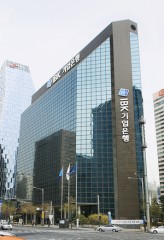
IBK wins reselection as Suwon's city treasury bank
Bank to manage about 3.9 trillion won annually over four years The Industrial Bank of Korea announced Friday it has been reselected as the city treasury bank for Suwon Special City. Under the arrangement, the bank will manage Suwon's city treasury from 2027 through 2030, handling approximately 3.9 trillion won ($2.87 billion) in funds annually over the four-year term. The bank will serve as the sole treasury operator for the city's general accounts, special accounts and funds, handling the collection of tax revenues and the disbursement of expenditures. Earlier, Suwon Special City convened a treasury designation review committee to select its next treasury bank. As a result, Industrial Bank of Korea ranked first and KB Kookmin Bank second. "Suwon Special City has been a partner of Industrial Bank of Korea for more than 60 years," bank President Jang Min-young said. "Drawing on our accumulated treasury management experience and policy finance capabilities as a state-owned bank, we will support Suwon's transformation and the revitalization of its local economy." Suwon Mayor Lee Jae-jun said the bank had contributed to the reliability of the city's fiscal management by operating the city treasury stably over many years. "I look forward to continued practical cooperation linked to key city policies, including improving convenience for residents and supporting small and medium-sized enterprises and small business owners," he said.
Sept. 4, 2026
-
Shinhan Life upgrades fraud detection system to block suspicious transactions in real time
System analyzes entire transaction flow from login to payout request Linked to Shinhan Financial's joint anti-fraud network to share suspect data Shinhan Life has upgraded its fraud detection system, known as FDS, to identify suspicious voice phishing transactions in real time and intervene before any financial damage occurs. The insurer said Friday it has built and launched a new FDS that draws on voice phishing suspect data shared among relevant agencies and affiliates within the financial group to strengthen its fraud prevention capabilities. Development of the system began in March and took about five months. The upgrade expands the detection and blocking functions of the existing system in line with a recently revised law on reimbursing telecommunications fraud victims, which established a framework for financial institutions, telecommunications companies and investigative agencies to share voice phishing suspect information. The new FDS analyzes connection data and transaction records in real time across key stages of a customer's activity — from login through insurance payout requests. When a transaction is flagged as suspicious, the system responds according to the assessed risk level by requiring additional authentication, restricting the transaction, notifying the customer or sending an SMS alert. An integrated monitoring interface and a visual management dashboard allow staff to handle the entire response process on a single screen. The system is also designed to accommodate new voice phishing tactics quickly, allowing detection scenarios to be added or existing thresholds adjusted as new methods emerge. The FDS is connected to Shinhan Financial Group's joint anti-fraud framework. The company said it plans to feed voice phishing suspect data gathered across group affiliates into the FDS, linking information sharing and anomaly detection across subsidiaries. "As voice phishing tactics grow increasingly varied and sophisticated, the ability to detect suspicious transactions quickly and respond in a timely manner is critical," a Shinhan Life official said. "We will continue building an environment where customers can use our insurance services with confidence, knowing their assets are protected by a dedicated FDS and a coordinated group-wide response system." Meanwhile, Shinhan Financial Group has been piloting a "one-stop voice phishing response service" since April 10, with Shinhan Bank, Shinhan Card, Shinhan Investment and Shinhan Life all participating. Under the arrangement, when Shinhan Bank detects a suspicious transaction, it instantly shares the integrated group ID, transaction type, date and time, and risk level with the other affiliates.
Sept. 4, 2026
-
South Korea's current account surplus hits second-highest level on record in July
Goods balance posts second-best figure at $40.43 billion Services deficit widens to $1.97 billion Financial account net assets rise $40.32 billion, second-highest on record South Korea's current account surplus reached its second-highest level on record in July, driven by strong exports in IT products, particularly semiconductors. For July specifically, it was the largest surplus ever recorded for the month. The Bank of Korea said Friday that the current account posted a surplus of $42.08 billion in July, according to its preliminary balance of payments data. While smaller than the record $49.73 billion surplus logged the previous month, it ranked second-highest overall. The surplus has now exceeded $40 billion for two consecutive months. "Both the current account and goods balances exceeded $40 billion for the second straight month, ranking second-highest on record," the Bank of Korea said. "Goods exports continued their strong performance, led by IT products including semiconductors, surpassing $100 billion for the second consecutive month." The goods balance came in at $40.43 billion, also the second-highest on record. Exports totaled $100.45 billion — down from $112.37 billion in June due to a base effect from the concentration of shipments at the end of that quarter, but still the second-highest figure ever and the highest for any July. Imports also narrowed over the same period, falling from $64.48 billion to $60.02 billion. Year-on-year, customs-basis IT exports surged 140.6% in July, led by computer peripherals (up 344.5%) and semiconductors (up 176.3%). Non-IT exports also rose 18.3%, driven by petroleum products (up 35.7%), chemical goods (up 19.1%) and steel products (up 11.3%). On the imports side, capital goods rose 36.7% on a customs basis, led by semiconductor manufacturing equipment (up 60.1%), information and communications devices (up 31.6%) and semiconductors (up 56.7%). Raw materials climbed 29.1%, driven by crude oil (up 54.2%), gas (up 46.8%) and coal (up 36%). Consumer goods fell 3%, led by declines in durable goods (down 6.6%) and direct-purchase imports (down 4.3%), marking the first year-on-year drop in 15 months. The services balance recorded a deficit of $1.97 billion in July, widening from a $1.29 billion deficit the previous month. The Bank of Korea said the deterioration came as the travel balance swung to a deficit, offsetting improvements in communications, computer and information services. The travel balance shifted from a $440 million surplus to a $340 million deficit, as the number of outbound travelers rose during the peak overseas travel season and following the designation of Constitution Day as a temporary public holiday. The primary income balance expanded from a surplus of $3.27 billion to $4.35 billion, driven mainly by the dividend income balance of $3.83 billion. The dividend income surplus widened on higher direct investment dividend receipts, as chipmakers' overseas sales subsidiaries posted stronger operating profit. In the financial account, net assets rose $40.32 billion in July. That was below the record increase of $46.71 billion posted the previous month but was still the second-largest gain on record. By category, the direct investment increase widened from $3.38 billion to $4.13 billion. Residents' overseas investment rose $3.36 billion, while foreign investment in Korea fell $780 million. In portfolio investment, residents' overseas investment jumped $13.57 billion — led by shares — nearly four times the $3.56 billion increase recorded the previous month. Foreign investment in domestic securities also rose $8.17 billion, primarily in shares, reversing a $26.32 billion outflow the prior month. The Bank of Korea attributed the turnaround to an easing of selling pressure on domestically listed shares, along with the issuance of SK hynix American depositary receipts. Elsewhere, financial derivatives rose $5.03 billion. In other investment, assets increased $18.24 billion, mainly through loans, while liabilities fell $9.32 billion, primarily through repayments of borrowings. Reserve assets declined $1.8 billion.
Sept. 4, 2026
-

Why you must file an inheritance tax return even when you owe nothing
Skipping the filing when inheritance deductions cover the full estate can lower your acquisition cost basis, sharply raising capital gains tax when you sell. Single-family homes and villas require particular caution — get an appraisal within six months of the last day of the month in which the deceased died. Housing costs, food, transportation — money seems to drain away just by breathing. But one more expense runs quietly through everyday life without drawing much attention: taxes. Drawing on consultations with tax-saving specialists, this column — "Your Everyday Tax Clinic" — breaks down the tax dilemmas ordinary people face. Lee Se-sang, a man in his 60s, lost his father last September. The estate included a 106-square-meter villa in Seoul valued at around 800 million won ($584,000), bank deposits of 150 million won and insurance proceeds of 50 million won — roughly 1 billion won in total. Because the estate fell within the inheritance deduction ceiling of 1 billion won, Lee reasoned there was no inheritance tax to pay and skipped filing a return. The unexpected tax bill arrived later, when he went to sell the inherited villa. Depending on whether an inheritance tax return had been filed, the capital gains tax liability differed by more than 60 million won. Tax accountant Kim Hye-ri — known online as "National Tax Unni" — explains why neglecting to file an inheritance tax return can lead to a far larger tax bill down the road. Q. If the inheritance deduction ceiling is 1 billion won, don't I simply owe no inheritance tax? A. When both a spouse and children survive the deceased and the estate is worth 1 billion won or less, a lump-sum deduction of 500 million won and a spousal deduction of at least 500 million won apply, leaving no inheritance tax liability. However, a zero tax bill does not mean filing is unnecessary. If the estate includes real estate, whether or not you file can determine how heavy your capital gains tax burden will be years later. If you skip the filing, the National Tax Service may value the inherited real estate using a "supplementary valuation method" — such as the officially assessed standard price — which can come in well below the actual market value at the time of inheritance. Q. What is the "supplementary valuation method"? A. It is the method by which tax law values real estate using officially published prices when the actual transaction price — the market value — cannot be confirmed. For land, the individual publicly notified land price applies; for housing, the individual publicly notified housing price is used. These figures are generally lower than actual market transaction prices. When an inherited property is sold, the acquisition cost for tax purposes is set at the appraised value at the time the inheritance commenced. If no market value was reported at inheritance and the supplementary assessed value — such as the published price — is applied instead, the acquisition cost will be lower when you eventually sell, inflating the capital gain and the resulting capital gains tax. In such cases, obtaining a professional appraisal within six months before or after the date the inheritance commences and filing that appraised figure as the market value is the more tax-efficient approach. Q. You're saying that not filing when inheritance tax is zero can lead to a capital gains tax difference of more than 60 million won? A. Consider a hypothetical in which Lee sells the villa for 800 million won. If no inheritance tax return was filed and the officially assessed price of 300 million won is recognized as the acquisition cost, the capital gain comes to 500 million won. After subtracting the basic capital gains deduction of 2.5 million won, the taxable base is 497.5 million won, and the combined capital gains tax and local income tax liability reaches roughly 104.5 million won. By contrast, if an appraisal had been obtained at the time of inheritance and the property was reported at 600 million won, the acquisition cost would be recognized at 600 million won, reducing the capital gain to 200 million won. The taxable base would be 197.5 million won, and the combined tax burden including local income tax would be approximately 41.8 million won. Selling the same villa at the same price, the tax difference attributable solely to the acquisition cost recognized at inheritance amounts to roughly 62.7 million won. For this reason, it is worth obtaining a professional appraisal and filing at that value for real estate — such as detached houses, villas and land — where market value is difficult to confirm. Even when inheritance tax works out to zero within the deduction ceiling, doing so can bring the acquisition cost basis in line with reality, reducing capital gains tax when the property is eventually sold. Q. Can I simply file the inheritance tax return now, even belatedly? A. The inheritance tax filing deadline is within six months from the last day of the month in which the deceased passed away. If the death occurred last September, the return should have been filed by the end of March this year. If at least one heir is a non-resident living abroad, the deadline is extended to nine months to allow time for overseas communication and document preparation. When preparing the filing, past gift transfers and withdrawal records should also be reviewed. Funds withdrawn from accounts held in the deceased's name — 200 million won or more within one year before death, or 500 million won or more within two years — must be accounted for. If the purpose cannot be clearly established, the funds may be treated as "presumed inherited assets" and included in the taxable estate. In that case, the burden of proving how the money was actually used falls on the bereaved family. Q. How can I check for pre-death gift transfers? A. The government operates a one-stop inheritance inquiry service to prevent heirs from suffering disadvantages due to incomplete knowledge of the deceased's assets and liabilities. Applications can be submitted online through the Government24 portal or in person at a city or district office or a community service center. However, the service is designed only to confirm the balances of assets held in the deceased's name and the financial institutions involved. It does not provide a detailed history of past deposits, withdrawals or cash outflows from those accounts. Heirs must therefore visit each identified financial institution directly to obtain transaction records. It is standard practice to review withdrawal histories for one to two years before the date of death; to check for pre-death gift transfers as well, records going back up to 10 years may be needed. Q. I see a record of 24 million won given as a wedding congratulatory gift to a grandchild in the spring of 2021. At the time, the gift fell within the 50 million won gift tax deduction ceiling applicable to adult grandchildren over a 10-year period, so I assumed no tax was owed and did not file. A. If the 24 million won wedding gift was not reported as a pre-death transfer, it could be flagged as an omitted asset in a future National Tax Service audit, added back into the taxable estate and subject to additional penalties. When calculating inheritance tax, gifts made before the inheritance commences are also added to the estate. Gifts to heirs — a spouse or children — made within 10 years before the inheritance date are included; gifts to non-heirs such as grandchildren, daughters-in-law or sons-in-law made within five years are also included. In Lee's case, the 2021 gift was made to a non-heir, and since the inheritance commenced last September, it falls within the five-year lookback window and may be added to the taxable estate. It is true that the gift may have generated zero gift tax liability at the time because it fell within the deduction ceiling. But owing no gift tax and being excluded from the inheritance tax calculation are two separate matters. Moreover, 24 million won generally exceeds the range of a customary social congratulatory gift and could be characterized as a pre-death transfer. This is also why it is worth examining tax-planning strategies that manage the lookback period for inheritance consolidation. If it appears unlikely that more than 10 years will remain before the inheritance commences, one strategy is to distribute gifts among non-heirs — such as grandchildren, daughters-in-law or sons-in-law — rather than giving a lump sum to children, thereby shortening the lookback period to five years. However, direct gifts to grandchildren should be approached carefully, as they may trigger a generation-skipping surcharge — an additional 30 percent levied on top of the calculated gift tax for transfers that skip a generation. If the recipient is a minor and the gift exceeds 2 billion won, the surcharge rate rises to 40 percent. Gifts to grandchildren therefore warrant a careful comparison between the tax savings from the shorter five-year lookback period and the added burden of the generation-skipping surcharge. Q. Looking at the withdrawal records, I see 80 million won taken out under the name of medical expenses. A. When a large sum is withdrawn from the deceased's account and its use cannot be verified, tax law may treat it as "presumed inherited assets." The rule is intended to prevent people from avoiding inheritance tax by withdrawing or disposing of assets shortly before death. If a lump sum was withdrawn for treatment costs, the family should gather hospital receipts, pharmacy receipts and caregiver contracts to document that the money was genuinely spent on living expenses or medical treatment. Q. If the deceased's debts far exceeded the assets and all heirs renounced the inheritance through the court, does that eliminate any inheritance tax issue entirely? A. Not necessarily. Renouncing an inheritance because of heavy debt does not automatically make inheritance tax concerns disappear. Even after renouncing, heirs may still face inheritance tax liability if they received life insurance proceeds from the deceased or if they received pre-death gifts from the deceased within 10 years before death. Wedding congratulatory gifts, childbirth support payments, startup funds and similar transfers to children are also subject to consolidation if they qualify as gifts under tax law. Gifts made to non-heirs — such as grandchildren, daughters-in-law or sons-in-law — are included if they were made within five years before death. It is therefore not enough to confirm only whether the inheritance was renounced; insurance proceeds received and pre-death gift records must be reviewed as well. [By Yoo Hye-rim / Tax accountant Kim Hye-ri, deputy head of Tax Corporation HKL]
Sept. 3, 2026
-
![Oil surge, bond shock, won wobble: Will the 1,300s hold? [Money Matters]](https://wimg.heraldcorp.com/news/cms/2026/09/03/rcv.YNA.20260903.PYH2026090302830001300_T1.jpg?type=h&h=240)
Oil surge, bond shock, won wobble: Will the 1,300s hold? [Money Matters]
Rising oil prices push up long-term US Treasury yields Strong dollar puts upward pressure on won-dollar rate Corporate dollar conversions help stabilize exchange rate Rate dips to 1,350s intraday for first time in 14 months Authorities on alert as volatility risks grow Foreign exchange authorities are closely watching the won-dollar rate as a sharp rise in oil prices pushes up long-term US Treasury yields. The surge in US bond yields is adding upward pressure to the won-dollar rate, which had been gradually stabilizing at lower levels, raising the prospect of greater exchange rate volatility ahead. A senior official at the foreign exchange authority said Thursday that "if a surge in US long-term interest rates spreads to emerging markets and is accompanied by a rise in the term premium — the additional yield demanded on longer-maturity bonds — and a stronger dollar, negative effects could emerge," adding that authorities "are mindful of the possibility of increased volatility." According to the Wall Street Journal, the yield on the 10-year US Treasury note climbed as high as 4.821 percent intraday on Wednesday (local time), its highest level in about two years and 10 months since Nov. 1, 2023. The 30-year yield has also remained above 5 percent for more than 55 consecutive days, extending its longest such streak since 2006. The primary driver of the recent rise in long-term US Treasury yields has been a renewed surge in global oil prices. Higher oil prices stoke fears of inflation in the United States, raising the likelihood of further interest rate increases. That in turn reduces the investment appeal of Treasuries, pushing their prices down and yields up. Expectations that the US government may issue more bonds to stimulate an economy weakened by higher energy costs are also pulling yields higher. Geopolitical tensions in the Middle East have escalated after the United States and Iran exchanged airstrikes again recently, sending global oil prices higher for three consecutive trading sessions. Brent crude futures for November delivery closed up 1 percent at $95.6 per barrel on the London ICE Futures Exchange on Wednesday (local time). West Texas Intermediate futures for October delivery also settled up 0.9 percent at $91 per barrel on the New York Mercantile Exchange. Both benchmarks hit their highest levels in about a month and a half. Global oil prices had surpassed $100 per barrel immediately after the outbreak of the Iran war in March before gradually retreating to around $60 by May. They have since climbed back into the $90s amid stalled negotiations. Rising US Treasury yields put upward pressure on the won-dollar exchange rate by boosting demand for the dollar as the greenback strengthens. The dollar index — which measures the dollar's average value against six major global currencies — stood at 99.6 on Wednesday, up 0.8 points over eight trading sessions from 98.8 on Aug. 21. If the upward trend in US Treasury yields continues, the won-dollar rate, which has been stabilizing at lower levels in recent weeks, is expected to become more volatile. With strong forces pushing in both directions, uncertainty around the exchange rate is likely to rise. The won-dollar rate had been on a downward stabilizing trend for the past two months. After hitting a weekly closing high of 1,555.8 won on July 2 — the strongest dollar reading since March 5, 2009, during the global financial crisis, when the rate reached 1,568 won — the rate fell steadily, dropping into the 1,360s on Monday for the first time in about 13 months. The won-dollar rate fell further into the 1,350s intraday on Thursday. The last time the rate traded in the 1,350s during a session was July 4 last year, when it touched 1,358.2 won — about one year and two months ago. The decline has been accelerating as South Korea posts record current account surpluses driven largely by semiconductor exports, while exporters have been flooding the spot foreign exchange market with dollars converted into won to meet tax payments and other obligations. Consecutive interest rate hikes by the Bank of Korea's Monetary Policy Board have also supported won strength. The board raised the benchmark interest rate twice in July and August, lifting it by a combined 0.5 percentage points. The interest rate gap between South Korea and the United States — long cited as a key driver of won weakness — has narrowed from 1.25 percentage points to 0.75 percentage points. However, the supply of dollars in the spot market could thin out early this month as SK hynix completes its American depositary receipt fund conversions and companies finish paying their interim corporate tax installments. If oil prices continue to rise in this environment, upward pressure on the won-dollar rate could intensify further. Lee Min-hyuk, an economist at KB Kookmin Bank, said that "with major dollar-supply events such as SK hynix's ADR fund conversions and interim corporate tax payments wrapping up in early September, some bargain buying following the won's sharp short-term appreciation could trigger a partial rebound." He added, however, that "given the massive current account surplus and exporters' remaining capacity to sell dollars, any rebound is likely to be limited."
Sept. 3, 2026
-

Insurance industry's top 1%: 'Golden Fellows' earn salaries rivaling big-company executives
Korea Life Insurance Association holds 10th Golden Fellow certification ceremony Selected from agents certified as outstanding five or more consecutive times 1,000 agents named this year, representing 0.83% of all life insurance agents Policy retention rate reaches 93.6% at the 25th showing The Korea Life Insurance Association held its 10th Golden Fellow certification ceremony Thursday at the Shilla Hotel in Jung-gu, Seoul. The Golden Fellow program was introduced in 2017 to mark the 10th anniversary of the association's outstanding certified agent recognition system. Agents who have received the outstanding certified life insurance agent designation five or more consecutive times are evaluated on criteria including length of service, policy retention rates and incomplete sales practices, with the top performers named Golden Fellows. The designation is considered the highest honor in the life insurance agent profession. A total of 1,000 agents were named Golden Fellows this year — roughly 0.83% of the 120,813 life insurance agents nationwide, making it an exceptionally rare distinction. Even among this year's 11,460 outstanding certified life insurance agents, Golden Fellows account for only about 8.7%, meaning fewer than one in 10 top-rated agents makes the cut. This year's Golden Fellows have worked at their respective life insurance companies for an average of 23.5 years. Their average annual income stands at 270.56 million won ($198,000). The association also said their policy retention rates are high, at 98.4% at the 13th showing and 93.6% at the 25th showing. Korea Life Insurance Association Chairman Kim Cheol-ju said the trust built by insurance agents has driven the growth of the life insurance industry. "As digital technology and AI rapidly transform the way finance works, the value of a skilled insurance agent will only grow greater as the digital era deepens," he said. Rep. Yoo Dong-su, chairman of the National Assembly's Political Affairs Committee and a Democratic Party of Korea lawmaker, said the decade-long continuation of the Golden Fellow program reflects the insurance industry's consistent efforts to earn consumer trust. "We ask that you continue to contribute to building a prosperous and safe society, grounded in trust, expertise and a strong sense of professional ethics," he said. Financial Services Commission Secretary General Shin Jin-chang said the Golden Fellow certification "is a record that proves the depth of trust toward customers," and encouraged the honorees to help consumers make the right choices and receive the coverage they expect.
Sept. 3, 2026
MOST READ
- 1KAIST develops high-performance bio-based adhesive using E. coli instead of petroleum
- 2Daimler Truck unveils next-generation transport solutions at IAA 2026
- 3Samsung Biologics union's show of force backfires at the bargaining table
- 4Trump pushes back on AI slowdown calls, vows to 'keep it that way'
- 5APR says hair-loss treatment research published in international journal
- 6Beyond 125 years of alliance, South Korea and Belgium forge ties in biotech and advanced industry
-
WORLD

US warns of punishment for anyone enabling Iran's Strait of Hormuz toll scheme
-
INDUSTRY
Toyota union puts productivity first; Hyundai Motor union demands bigger share of profits
-
FINANCE

National Growth Fund to invest $531M in FuriosaAI, which rebuffed Meta's $800M takeover bid
-
INDUSTRY

Korea Shipowners' Association holds amateur baduk tournament for Maritime Day