
- HOME
- CONSUMER
-

Coupang, Coupang Eats launch program to boost traditional market deliveries
Coupang Inc and Coupang Eats announced Thursday that they will launch the "Traditional Market Digital Jump-up Together Program," a support initiative designed to strengthen the online delivery competitiveness of traditional markets. The program consists of online sales strategy consulting, industry-academia cooperation, and meal-kit product development, with packaging support and online promotional events to follow. The online sales strategy consulting component is intended to help merchants unfamiliar with online sales adapt to the digital environment. The industry-academia cooperation initiative supports the expansion of online sales, while the meal-kit development program aims to identify and commercialize dishes unique to each traditional market. The program will first be rolled out at Cheongju Yukgeori Market, a leading traditional market in Cheongju, North Chungcheong Province, and one of the country's five major traditional markets. Coupang plans to expand the initiative to traditional markets in other regions, including Geoje, by the first half of next year. Earlier this year, Coupang provided similar support to merchants at Cheongnyangni Market, including online sales strategy consulting, industry-academia cooperation with Kyung Hee University's College of Hotel and Tourism Management, meal-kit product development, and free packaging materials. As a result, Coupang Eats sales for Cheongnyangni Market merchants rose about 40 percent in the first half of this year compared with the same period last year. "Taking into account the unique characteristics of each local market, we will continue supporting traditional market merchants so they can establish a stable presence in online sales channels and sustain long-term growth," said Jang Young-chul, executive director of Coupang's social contribution office.
Sept. 10, 2026
-

Hyundai Department Store launches 'Popup Festa' with 130-plus stores through Sept. 20
Hyundai Department Store said Thursday it will select and operate more than 130 pop-up stores spanning categories such as fashion and beauty as part of a new pop-up event. The department store will run "The Hyundai Popup Festa" from Friday to Sept. 20 at Hyundai Department Store and Hyundai Outlet stores nationwide, centered on eight themes including fashion, beauty and lifestyle. At the Apgujeong flagship store, an event called "What We Wear," themed around K-fashion designers, will run from Friday to Sept. 17. Working with the Korea Fashion Association, the store will showcase products from brands drawing attention in overseas markets, including LIE, I Beg Your Pardon and Den Shoes. The young fashion category will feature unconventional brands unique to each store. At The Hyundai Seoul, a collaborative pop-up will run from Thursday to Wednesday. It brings together Virginia-based streetwear brand Bandi the Pink, global artist collective Stereotypes and Painters, a brand known for infusing fashion with artistic sensibility. The Pangyo store will host a pop-up from Desalt Sauna, tailored to the wellness lifestyle trend, while the Jungdong store will feature Bark, a recovery footwear brand focused on foot health. At the outlets, additional pop-ups include a K-Heritage Goods Collection at the Gimpo store and RYU&MOON, tied to baseball team Hanwha Eagles, at the Daejeon store.
Sept. 10, 2026
-
![Italy's chic imports light up Garosugil: W20m Bianchi, 80th-anniversary Vespa [Report]](https://wimg.heraldcorp.com/news/cms/2026/09/10/news-p.v1.20260910.27311c962b2547489309aab59e986e8b_T1.jpg?type=h&h=240)
Italy's chic imports light up Garosugil: W20m Bianchi, 80th-anniversary Vespa [Report]
CJ Onstyle, ITA join forces for 'Viva Italia' pop-up Premium fashion, beauty, home and food products under one roof Daily sales for 100-plus participating brands surge 288 percent "We will strengthen premium curation and continue global collaboration" "For those who already owned the products, this became a chance to understand the brand — they realized, 'Oh, this was an Italian brand,'" a CJ Onstyle official said. Italy's premium lifestyle brands have gathered in Seoul's Garosugil. This is the scene at the "Viva Italia" pop-up presented by CJ Onstyle together with the Italian Trade Agency (ITA). From Vespa, famous for its classic scooter design, to Ponti, a food brand with 240 years of history, an array of Italian names has come together under one roof. Held under the theme "Italy in Seoul," the event runs both online and offline from Aug. 26 through Sunday. More than 100 brands are taking part, including names introduced by ITA as well as brands CJ Onstyle scouted itself. The offline event at Highstreet Italia in Sinsa-dong, Gangnam-gu, features 31 brands. Visitors can browse different concepts by city as they move through the space — Milan for fashion, beauty and home goods, Rome for travel, and Naples for food and kitchenware. A visit to the pop-up on Wednesday showed a scene reminiscent of a showroom at an overseas department store. At the center of the second floor stood a bicycle from Bianchi, founded in 1885. Known as "the world's oldest bicycle brand," Bianchi's products are priced in the tens of millions of won depending on options. The "Oltre RC 140th Anniversary Limited Edition" on display was priced at 24 million won ($17,900). A Vespa edition marking the scooter brand's 80th anniversary was also on hand — a model CJ Onstyle introduced exclusively in the industry, priced at 6.59 million won. On the third floor, a lamp priced around 4.7 million won, released by Martinelli Luce to mark its 60th anniversary in 2010, was on display. Artemide lighting, which drew attention after being used by celebrities, was also gathered there. Magis's trolleys, known for their bold colors and practical design, were displayed by color. Products from other well-known Italian interior brands such as Flos and Kartell rounded out the floor. The fourth floor was filled with leading Italian food brands, ranging from Borgo delle Tovaglie — known for the "Choi Hwa-jung apron" — to Muraglia. Muraglia offers olive oil in stylishly designed ceramic bottles. Shoppers could check prices by scanning a QR code with their phone, a setup designed so that products encountered offline could be purchased directly through the CJ Onstyle app. Exclusive products from major brands are being introduced through mobile livestreams and other channels. CJ Onstyle conducted a midterm sales tally covering the period from the event's launch through Tuesday. It showed the average daily order value among participating brands rose 288 percent compared with the daily average in the first half of this year. Artemide's sales increased 16.8-fold, and sales of bed brand Doleran grew 23.4-fold. Cutlery brand Neva's order volume jumped 33.8-fold, and moka pot brand Bialetti's surged 114.7-fold. Fifteen of the participating brands secured a permanent presence on CJ Onstyle as a result of the project. "We are strengthening our efforts to curate and present premium global products," a CJ Onstyle official said, adding, "We are pursuing additional projects in collaboration with various countries to introduce their leading local brands."
Sept. 10, 2026
-
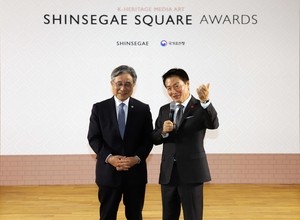
King Sejong's cultural legacy comes to life on Shinsegae Square
Winners of first Shinsegae Square Media Art Awards unveiled Cultural Heritage Administration, Shinsegae select 8 original, 10 template winners Shinsegae Department Store said Thursday that it will unveil media art works reinterpreting Korean cultural heritage, created in partnership with the Cultural Heritage Administration, on the media facade of Shinsegae Square at its flagship store. Shinsegae Department Store and the Cultural Heritage Administration held the first Shinsegae Square Media Art Awards ceremony at Jungmyeongjeon Hall in Deoksugung Palace on Wednesday. Park Ju-hyeong, CEO of Shinsegae Co., and Heo Min, commissioner of the Cultural Heritage Administration, attended the event along with other officials. A total of 168 works were submitted for the awards. Following first-round and final judging, 18 winners were selected — eight in the original category and 10 in the template category. Original works are anamorphic media art pieces running roughly 30 to 90 seconds, while template works are five-second media art pieces. The grand prize in the original category, called Best of Square, went to "The End of Night, the Beginning of Time" by Bokbok Studio. The team was made up of Kwon Seol and Lee Ji-yun. The work draws on the "jagyeongru," a self-striking water clock built at King Sejong's order, to visually reinterpret the king's spirit of innovation. The top prize went to "Sharing Joy With the People" by Choin, led by Choi Su-han. Merit prizes went to "The World King Sejong Opened, the Beginning of Creation" by Dokai, a team made up of Lee Jae-hyo, Baek Bae-seung, Jeong Se-hyun and Lee Sol. Another merit prize went to "The Time of Heaven, Finally Belongs to All" by Yuyurukjin, made up of Shin Yu-jin and Yu Hyun-ju. In the template category, "Gold Seal, Engraving Sejong" by the Seongsu-dong Residents' Association, led by Sun Ha-eun, won the top prize. Merit prizes went to "Waves of Time" by Hayoung, led by Kim Ha-young, and "Looking Up to the Sky, Caring for the People" by Yoon Tae-geon. Another merit prize went to "Measuring the Rain of Heaven, Embracing the People's Hearts" by Jeon Min-ho. Organizers designed the awards to shed new light on the value of Korea's cultural heritage through digital content and make it more accessible to the public. They also respected the creativity and artistic freedom of the participating creators as much as possible. The winning works will be unveiled on the media facade of Shinsegae Square at the flagship store in September. Shinsegae Department Store plans to use the showcase to present Korean cultural heritage alongside K-culture more broadly. It also aims to keep promoting the values of Korean culture, including King Sejong's spirit of innovation, on the global stage. "This was an occasion to combine the value of Korea's cultural heritage with the creativity of our creators and introduce it to the world," said Park Ju-hyeong, CEO of Shinsegae Co. "We will continue to build on Shinsegae Square's unique identity and expand it into a space that offers visitors from home and abroad a variety of attractions through K-heritage, K-pop and media art."
Sept. 10, 2026
-

'I've actually used it': the secret behind hair-loss care's new ad models
Kim Won-hoon, Chae Jung-an, Lee Min-jung spread word of mouth through personal use Shampoo developers step in as models themselves 'Ingredients have leveled off, trust is the differentiator' The shampoo ad, once the exclusive domain of "big-name models," is changing. Celebrities and product developers alike are stepping into the spotlight, as the market comes to favor faces who have actually struggled with hair loss or scalp trouble. Functional hair-loss brands have long marketed themselves on ingredients and technology. The reasoning: when results are hard to see with the naked eye, consumers weigh the ingredient label more heavily than the ad model. Competition centered on raw materials, formulations and clinical data. Consumer interest has not waned. According to CJ Olive Young's tally in June, searches for "hair loss" rose 145 percent, "hair loss shampoo" 152 percent, and "hair loss ampoule" 241 percent. Hair care sales grew more than 70 percent annually on average over the past three years and jumped 200 percent last year from a year earlier. The number of brands carried also grew 50 percent compared with 2022. As the market expands, the grammar of advertising is shifting. With the functional hair care market growing, ingredients alone no longer set brands apart. Companies now first ask whether a prospective model has actually experienced hair loss or scalp problems. It has become more common for brands to build rapport by having a candidate post product-experience reviews on YouTube even before signing a contract. Aekyung Industrial is a case in point. Its hair-loss care brand Blackforet signed comedian Kim Won-hoon as a model in July. Kim has openly discussed his own hair troubles on broadcast and YouTube. On one variety show, when fellow cast members brought up hair transplants, he corrected them, saying, "Not 1,000 grafts — 4,000," a remark that went viral. At a Blackforet pop-up event in Seongsu-dong, Seoul, on Friday, Kim interacted directly with customers. Bytelab's Lilyeve turned to actor Chae Jung-an. Chae had used the brand's Growturn ampoule before becoming its model and had already introduced the product on her personal YouTube channel, "Chae Jung-an TV." "Because she used the product herself for a long time, we felt she could deliver the brand's message effectively," the brand said. LG H&H's Ryeo Rootgen followed a similar path, replacing its model with actor Lee Min-jung in October 2025 after she posted her own product-experience review on YouTube. Developers themselves are also stepping in as models. Take Gravity, a functional hair care brand from Polyphenol Factory, a company founded by KAIST faculty. The brand's packaging features the faces of the researchers behind the product, including Lee Hae-shin, a KAIST chemistry chair professor. In city bus ads, the developers appear wearing work clothes bearing the KAIST logo. The company says the developers put their own names behind the product to signal they are willing to take responsibility for it. Shifting consumer behavior is driving the change. Buyers of functional shampoos read ingredient labels and compare clinical claims — so-called "studying consumers" who try multiple products before settling on one. For them, a model's fame carries little weight; a simple "I've actually used it" carries far more. "As ingredient competition levels the playing field, the point of differentiation is shifting to who vouches for the product," an industry official said. "The core of the recent model-casting strategy — hiring people who have gone through hair loss themselves or tried the product first, whether celebrities or developers — is credibility."
Sept. 10, 2026
-

GS Shop's VU beauty brand: 'The days of selling on price alone are over'
Interview with Park Young-sun and Shin Myung-sup, GS Shop beauty development team MDs Runs 500-member supporter group, reflects feedback from planning stage 210,000 units sold in H1 this year, sales climb after renewal "Looking outdated was what scared me the most." Shin Myung-sup, an MD on GS Shop's beauty development team, said this about VU, the company's in-house beauty brand that just underwent a full renewal after four years. The strategy behind the overhaul goes beyond simply cutting prices for a private brand. It incorporates consumer feedback into product development and aims to remake VU into a brand offering strong product quality at reasonable prices. Park Young-sun and Shin, both MDs on GS Shop's beauty development team, spoke Tuesday at GS Gangseo Tower in Yeongdeungpo-gu, Seoul, where they said they aim to grow VU into a brand worth 10 billion won ($7.46 million) by 2029. VU is an in-house beauty brand GS Shop launched in 2021. The brand originated from a team initially set up to develop private brands across categories including beauty, food and health supplements, but it later narrowed its focus to beauty. Four members of the beauty development team now lead the brand. VU relaunched with a full renewal in May. While maintaining its existing price competitiveness, the brand actively incorporated consumer feedback into product development. The goal was to move beyond mere value pricing and strengthen the competitiveness of the products themselves. The change was not just cosmetic. Where the previous version of VU focused on the straightforward message that its cosmetics deliver visible results, the renewed brand shifted toward communicating directly with consumers by leveraging GS Shop's strength in customer touchpoints. "After four years, the existing design and products inevitably started to feel dated," Shin said. "It was difficult to switch to a completely new brand when we already had an accumulated customer base, reviews and brand image." Shin went on to say, "Since GS Shop is a retail channel that approaches customers in a friendly way, we decided to genuinely listen to what customers had to say." In practice, VU gathers consumer opinions starting from the product-planning stage. It currently runs a roughly 500-member "VU Supporters" group to survey product experiences and areas for improvement. The group includes not only existing VU customers but also GS Shop shoppers who buy basic skincare products but have not purchased VU, to keep the feedback from skewing in one direction. "Response rates are usually low when surveys are sent to an unspecified general audience, but about 80 percent of our supporters respond to our surveys," Park said. "Customers know their opinions are actually reflected in new products, so they speak up actively." The results of this approach include the Yuja Serum and the Tone-Up Sun Cream, flagship products among the new items launched since May. The tone-up sun cream, in particular, was tested by sending samples directly to customers, who evaluated its coverage and longevity. The target audience is clear as well. Product development reflects the skin concerns of customers in their 50s and 60s, GS Shop's core demographic. While beauty products aimed at younger consumers tend to focus on a light, refreshing feel, VU targets customers with higher demand for dryness relief, moisture and anti-aging benefits. Price is another key competitive factor, though the goal is not simply offering the lowest price possible. VU took advantage of the cost savings from being a private brand, cutting marketing expenses and channeling the savings into ingredients instead. Mobile-exclusive products range from 9,900 won to 15,900 won, while broadcast products are priced from 69,000 won to 79,000 won, with an emphasis on ingredients and clinical testing. This "two-track" approach tailors both product character and pricing by channel. The Dissolving Thread Lifting Ampoule, launched in August, took more than a year to develop. That is considerably longer than the three to four months typically needed to plan a standard cosmetic product. The two MDs' contrasting career backgrounds have also become an asset. Shin spent about eight years in cosmetics sales at Kolmar Korea before joining GS Shop as an MD. That experience on the manufacturing side gave him an understanding of technical areas such as raw materials, formulations and new materials, allowing him to offer concrete direction for product development. Park, meanwhile, has worked across both broadcast and mobile channels since joining GS Shop. "In the process of not just making products but also thinking about how to sell them to customers, I try to make the most of my previous experience," Park said. Consumer response has been positive. VU sold a cumulative 210,000 units in the first half of this year. Following the May renewal, seven VU basic skincare products sold exclusively through the GS Shop app surpassed a cumulative 120,000 units within three months of launch. VU currently offers nine products. The lineup will grow by two mobile-exclusive items and one broadcast item by the end of this year, with plans to expand to 14 or 15 products by next year. The ultimate goal is to become "a brand that gives back" — one that returns real benefits and satisfaction to consumers through reasonable pricing, the two MDs said.
Sept. 10, 2026
-
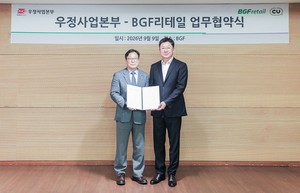
CU to offer post office parcel delivery under new tie-up
Post offices may also host CU stores in unused space BGF Retail, which operates the CU convenience store chain, said Thursday that it has signed a memorandum of understanding with the Korea Post Head Office to expand convenience store parcel delivery services and strengthen cooperation between the two organizations. The agreement covers offering Korea Post parcel delivery through CU stores, opening CU outlets inside post office branches, and running summer heat shelters for postal workers. It also includes providing partnership benefits for employees of both organizations. The two sides also plan to open CU stores in unused space within some 3,300 post office branches nationwide. BGF Retail has been offering its "CU pickup delivery" service through Korea Post's parcel network since May. Under the new agreement, customers will be able to send Korea Post parcels from any of CU's roughly 18,900 stores nationwide. The companies also plan to offer discounted international parcel delivery services. The partnership will also expand welfare and benefits for Korea Post employees. BGF Retail piloted summer heat shelters for postal carriers at its directly operated stores starting in July and plans to expand the program to franchise stores next year. Starting in the third quarter, Korea Post employees will be able to use their welfare points at CU stores, and in the fourth quarter, they will receive in-store discounts through the Pocket CU app after verifying their employee status. "CU and Korea Post, both of which have a presence spread like capillaries across every corner of the country, can create mutual synergy and offer a wide range of services closely tied to everyday life that make things more convenient for customers," said Min Seung-bae, CEO of BGF Retail.
Sept. 10, 2026
-

Hite Jinro to shut down Iksan soju plant after 69 years, shift production to Jeonju
Hite Jinro announced Thursday that it will shut down its soju plant in Ma-dong, Iksan, North Jeolla Province, ending 69 years of operation. The Iksan plant was built in 1957 as the former Bobae Soju factory and will now begin winding down operations. Its production functions will be consolidated into the company's Jeonju plant. The company cited the aging of the Iksan plant's facilities and its operating conditions as reasons for the closure. The plant posted sales of about 42.1 billion won ($31.4 million) last year, accounting for about 1.7 percent of Hite Jinro's total sales. Modernizing the production facility and maintaining its output capacity would require upgrading equipment and expanding ancillary facilities such as material and product storage space, but the site is surrounded by residential areas, limiting room for expansion. The company said the nearby Jeonju plant already has the production facilities and infrastructure needed to absorb the additional output without building new facilities. The Iksan plant will continue operating until Oct. 15. Hite Jinro will transfer production equipment and personnel to the Jeonju plant in stages immediately after the shutdown on Oct. 16.
Sept. 10, 2026
-

Cold snap boosts sales: Musinsa says lightweight padded jacket sales jumped eightfold in August
'26 FW Lightweight Padded Jacket Festival' runs through Sept. 19 Musinsa said it is running the "'26 FW Lightweight Padded Jacket Festival," a promotion featuring new fall-winter lightweight padded jackets, through Sept. 19. The promotion brings together outdoor brands such as The North Face and National Geographic, casual and unisex brands including Nautica, and Musinsa's own labels Musinsa Standard and Musinsa Standard Woman. It also features products sold exclusively through Musinsa. According to Musinsa, transactions in the lightweight padded jacket category rose 718 percent in August compared with the same month last year. Musinsa is offering discount coupons of up to 30 percent, which can be combined with a separate cart discount coupon of up to 10 percent. The company has also prepared "relay time deals," special offers rolled out in 48- and 72-hour windows. "We hope customers can get an early look at new lightweight padded jackets from a variety of brands at attractive prices," a Musinsa representative said.
Sept. 10, 2026
-
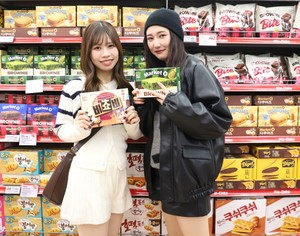
Orion's Bichobi snack heads to Costco stores in Japan, US
Orion said Thursday it will expand overseas sales of its Bichobi snack, entering 37 Costco stores in Japan simultaneously in October and launching sales at Costco in the United States early next year. Bichobi's cumulative sales from January to August this year rose 53 percent from a year earlier. During the same period, the snack's top 10 sales locations were areas popular with foreign tourists, including Seoul Station, Busan's Jagalchi Market, Seokchon Lake in Jamsil, Gimpo and Incheon airports, and Jeju. Orion has been rolling out products with Korean-themed designs and stories, such as the "Korea Edition" and the "National Museum of Korea Edition." In April, the company added a new production line at its Iksan factory, roughly doubling its production capacity. "Starting with Costco in Japan and the United States, we plan to expand Bichobi's overseas sales into more countries and retail channels," an Orion official said.
Sept. 10, 2026
-
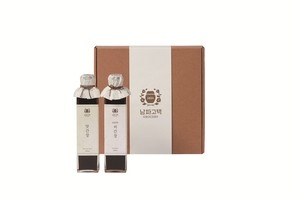
Lotte Department Store rolls out 'Time Premium' Chuseok gifts, from 200-year-old soy sauce to whiskies worth tens of millions of won
'Time Premium' gifts capture the value of time Lotte Department Store said Thursday it is introducing a differentiated gift set line called "Time Premium." In the meat category, 360-hour aged Hanwoo beef stands out. Collaborating with Suksudoga, an aged-meat specialty store that has made the Michelin Guide for six consecutive years, the department store introduced the Suksudoga Aged Sirloin and Tenderloin Set (1 kilogram total, 390,000 won ($291)) and the Suksudoga Aged Sirloin and Strip Loin Set (1 kilogram total, 350,000 won). Products from black pork specialty brand Sukseongdo are also featured. The Sukseongdo Black Pork Set (2.3 kilograms total, 169,000 won) uses pork belly, neck and bone-in sirloin cuts from a native Korean black pig breed restored through 25 years of research by the National Institute of Animal Science, wet-aged for 168 hours. In the liquor category, Lotte Department Store prepared whiskies aged more than 30 years. The Ardbeg The Abyss (40 million won), distilled in 1989, comes in packaging illustrated by comic artist Trad Moore. Limited quantities of the Johnnie Walker 40 Year Old Masters Ruby Reserve (36 million won) and The Macallan 40 Year Old Red Collection (32 million won) are also on offer. There is also the "200-Year Family Soy Sauce Gift" (79,000 won) from hansik brand Nampa Gotaek. The soy sauce has been passed down for 200 years at the head house of the Park Gyeong-jung family in Naju, South Jeolla Province, with each generation topping it up with fresh soy sauce. The department store also prepared doenjang, gochujang and sesame oil gift sets from food masters Gi Sun-do, Seong Myeong-rye and Jo Jeong-suk. Yang Seong-jin, head of Lotte Department Store's fresh food division, said, "Lotte Department Store will strive to find that special touch that can offer customers a new gourmet experience through our holiday gifts."
Sept. 10, 2026
-
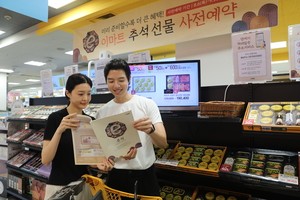
E-mart's Chuseok gift set pre-orders jump 21% to record high
E-mart said its first round of pre-orders for Chuseok gift sets, held from Aug. 6 to Sept. 4, rose 21.2 percent from the same period last year, marking an all-time high. Chuseok gift set sales at Traders and E-mart Everyday, E-mart's affiliated retail chains, also grew 31.6 percent and 11.6 percent, respectively, over the same period. "Demand was concentrated in the first pre-order period, when gift certificate benefits were greatest," an E-mart official said. "Early-bird customers looking to prepare their holiday gifts in advance and reduce costs drove the results, and the last day of the first-round event saw the highest single-day sales of any pre-order period on record." E-mart, Traders and E-mart Everyday are running their pre-order promotion through Wednesday. Customers who pay with a designated event card or accumulate Shinsegae Points can receive discounts of up to 50 percent. The promotion also includes gift certificates based on purchase amount, interest-free installment plans and free delivery. This year, "budget-friendly premium" products proved popular as customers sought to ease price burdens. E-mart expanded its curated sets, which keep fresh food quality intact while diversifying origin, volume and composition and using bulk purchasing to sharpen price competitiveness. Among livestock gift sets, "US LA-style flower galbi" and "Australian LA-style flower galbi," both priced at 90,000 won ($67), ranked first and second in sales. Fruit gift sets featuring apples and pears, and sets of ginseng, deodeok and dried mushrooms, grew 10.3 percent and 42.9 percent, respectively, from a year earlier. The growth was led by budget-friendly items priced in the 30,000 to 50,000 won range and offered at discounts of up to 40 percent. In processed foods, combination sets priced around 30,000 won and featuring canned goods and cooking oil proved popular, with sales surpassing 1.6 million sets. Sales of premium gift sets priced above 200,000 won rose 91 percent. Demand was driven by high-end gifts such as traditional favorites like Korean beef and dried yellow corvina, as well as premium spirits including whiskey and wine.
Sept. 10, 2026
-

Cosmax, L'Oreal to co-develop innovative products reflecting K-beauty trends
Cosmax's development and production capabilities to combine with L'Oreal's beauty science South Korea and France, the world's top two cosmetics markets, will deepen cooperation in research and development, production and marketing. The countries plan to roll out innovative ingredients and products reflecting K-beauty trends. Cosmax, the world's largest cosmetics research, development and manufacturing (ODM) company, announced Wednesday that it signed an MOU with L'Oreal Group, the world's largest beauty company, to this effect. The agreement was reached as part of a summit marking the 140th anniversary of diplomatic relations between South Korea and France. Cosmax has supplied products to L'Oreal on an ODM basis since 2004. The two companies later expanded their partnership beyond a simple contract-manufacturing relationship into research and development. In 2023, they signed an agreement for joint research on skin microbiome ingredients and the development of eco-friendly formulations. The latest agreement centers on combining the two companies' strengths across cosmetics brand marketing, research and development, and manufacturing. The aim is to strengthen economic and cultural ties between South Korea and France. "We will leverage L'Oreal's global beauty science expertise, consumer insight and powerful brand portfolio," Cosmax said. "Combined with our product manufacturing and agile R&D capabilities, this will help us take on the global beauty market and lead next-generation innovation." The two companies will jointly research and develop products for global expansion, building on L'Oreal's beauty science. Alongside this, they plan to pursue the development of innovative cosmetics ingredients and active substances, as well as formulation innovation. In particular, they plan to launch new products that reflect the K-beauty market and consumer trends. The MOU was signed Tuesday (local time) in the presence of Kim Jung-kwan, minister of trade, industry and energy, and Nicolas Forissier, France's minister delegate for foreign trade and French nationals abroad. Choi Kyung, vice chairman and CEO of Cosmax, and Nicolas Hieronimus, CEO of L'Oreal, signed the agreement in person.
Sept. 9, 2026
-

Canned ham sheds its junk food image with low-salt, high-protein makeover
Spam, Richam hold two-horse race as Johnsonville closes in Products diversify to meet health-conscious shoppers Marketing courts young consumers with Pokémon tie-ins Canned ham, once dismissed as a "junk food," is undergoing a transformation. Makers are cutting salt and fat while boosting protein content to appeal to today's health-conscious consumers, and a growing lineup of products made with chicken breast or plant-based ingredients is hitting shelves. According to industry sources Wednesday, the domestic market for canned ham with a high pork content remains a two-horse race. CJ CheilJedang's Spam holds the top spot with annual sales in the 500 billion won ($373 million) range, while Dongwon F&B's Richam chases close behind. According to Nielsen data from last year, Spam commanded about 64 percent of the market and Richam about 18 percent. Competing fiercely for the rest of the market are Lotte Wellfood's Rospam, which raised its pork content to 97 percent, Nongshim's Denmark Tulip Ham, Mokwoochon's Ttuksim and Hansung Enterprise's Gomeat Ham. New brands are also entering the fray. Sajodaerim teamed up with Johnsonville, the top-selling sausage brand in the United States, to launch Johnsonville canned ham last year. It has recently been expanding its product lineup and sales channels. Its Signature line is now sold at Costco and Coupang Inc. New products launched in July — Beda With Cheddar, Mild and Classic — are available at E-mart, Lotte Mart and e-commerce platforms. Canned ham has a long shelf life and can be used in a wide range of dishes, and it is increasingly seen as a cost-effective ingredient amid high inflation. Demand remains consistent not only for everyday cooking but also as a gift for holidays such as Lunar New Year and chuseok. The lineup of low-salt, low-fat products is also growing. Spam offers Spam Mild 25% Light, which cuts sodium content by 25 percent, while Richam — which started out as a low-salt product — has introduced Richam Double Light, which also reduces fat. Richam plans to soon launch a new product, Richam Jeju Garlic, made with the low-sodium ingredient Desalt. Products using chicken breast or plant-based ingredients to boost protein content are also emerging. Harim expanded its lineup in May with four new items under its chicken breast ham brand Cham. The products are designed to contain 20 grams of protein and 2.4 grams of fat per 100 grams. CJ CheilJedang and Ottogi similarly run their own chicken-based lines, Spam Chicken Breast and Chick Ham. Each is designed so that a single can meets 60 percent of the recommended daily protein intake. Dongwon F&B's My Plant Original and CJ CheilJedang's Plantable plant-based canned ham are alternative-meat products made from plant ingredients to cut calories. Marketing efforts are also ramping up ahead of the holiday season. CJ CheilJedang teamed up with the animated franchise Pokémon to launch a new Pokémon Spam gift set. The packaging features three characters — Charmander, Snorlax and Ditto — along with bonus items such as stickers and key rings. "Canned ham is an item with consistently steady demand," an industry official said. "Recently, the image has improved as products have diversified into low-salt, high-protein, chicken breast and alternative-meat options, and companies are also stepping up marketing aimed at younger consumers."
Sept. 9, 2026
-

Bookmarks inside 3,000-won bread sell for up to 29,000 won on resale platforms
Random-draw thrill of 3,000-won bread captures millennials and Gen Z From Dubai Chewy Cookie to Chipotle, South Korea's sold-out food crazes keep coming "Is this bread, or a bookmark lottery?" In an era when people queue up just to buy a loaf of bread, what they are actually after is the small plastic slip tucked inside. The bookmarks bundled with Minumsa bread — launched by GS25 on Aug. 21 — have long since outpaced the price of the bread itself, trading hands for the cost of a full book, and sometimes more. According to industry sources, popular designs among the 20 bookmark varieties are selling on secondhand platforms at a premium. The "Pride and Prejudice" bookmark is the standout example: the Minumsa World Literature Series edition of the novel retails for 13,000 won, yet the bookmark has been listed for as much as 29,000 won — nearly twice the price of the book itself. Bookmarks for "Hamlet" and "The Adventures of Huckleberry Finn" have also fetched double the price of the bread. Two weeks after launch, demand shows no sign of cooling. Shoppers time their visits to coincide with restock deliveries, and entire display trays sell out before staff can set them on the shelves. Store owners are scrambling to secure supply, and some locations have imposed a one-per-customer limit. Cumulative sales reached 710,000 units as of Tuesday. Hwang Jin-ju, an adjunct professor of consumer studies at Inha University, said the purchase is not really about bread. "Consumers appear to be buying bread, but in practice they are acquiring a collectible — the bookmark," she said. "The randomness stimulates dopamine and the urge to collect, and the more a desired item fails to appear, the more it drives additional purchases." Yu Se-hyeon, a worker in her 20s, was at a convenience store by 8 a.m. before heading to work and walked away with a "Conversations with Goethe" bookmark — one that resells for 16,500 won ($12) on secondhand platforms. "Everyone was saying it was hot, so I thought, I want one too," she said. "The fact that the bookmark is random made it even more exciting and desirable." She added that she finds herself frequently buying small items that bring a little happiness amid the daily grind. Several factors are driving the craze. The "random-crack" unboxing trend popular among people in their 20s and 30s — where the contents are unknown until the package is opened — generates anticipation and a dopamine rush. Not knowing which of the 20 bookmark designs will appear turns the unwrapping itself into a game. The 3,000-won price point also lowers the barrier to entry: Pop Mart products, widely regarded as the go-to destination for random-draw collectibles, typically run around 16,000 won. The bookmark designs have also played a role. Rather than reproducing standard World Literature Series covers, GS25 used artwork that proved popular at this year's Seoul International Book Fair. The timing aligned with a broader reading wave among people in their 20s and 30s, fueled in part by Minumsa's own YouTube channel. The trend reflects a culture in which publishers, authors and book design are consumed as content — not just the books themselves. Reading interest among younger Koreans is notably high. The Ministry of Culture, Sports and Tourism's 2025 National Reading Survey found that the overall adult annual reading rate last year fell 4.5 percentage points from 2023 to 38.5 percent, a record low. Among people in their 20s, however, the rate stood at 75.3 percent — roughly double the adult average. Buyers of Minumsa bread have skewed heavily toward women in their 20s and 30s. Women in their 20s accounted for the largest share at 26 percent, followed by women in their 30s at 25 percent. Women in their 40s made up 13 percent, and men in their 20s accounted for 10 percent. Together, women in their 20s and 30s represented 51 percent of all buyers. Resale markups and early-morning store rushes are nothing new in South Korea. Haitai Confectionery's Honey Butter Chip, launched in 2014, set the template: at the height of that craze, listings appeared online selling empty bags, and one post even offered "Honey Butter Chip scent." In March this year, Orion's Chokchokhan Hwang Cheese Chip sold out almost immediately after launch — 380,000 boxes, or about 5.032 million individual bags, shipped within two weeks. Late last year, the Dubai Chewy Cookie took its turn. Word spread rapidly on social media, triggering store rushes across the country, and as the product grew scarce, individual cookies were changing hands on secondhand platforms for well over 20,000 won each. Chipotle, which opened its first South Korean location on Sept. 2, drew lines stretching more than an hour from the moment the doors opened. The frenzy is expected to continue until additional locations open. Hwang said social media authentication posts — in which buyers show off what they obtained — let consumers express their identity while simultaneously giving companies free, user-generated marketing. "The combination of randomness and scarcity is becoming the standard hit recipe for businesses," she said, "but because these crazes are hard to sustain, companies need to think about new ways to drive the next wave of consumption."
Sept. 9, 2026
-
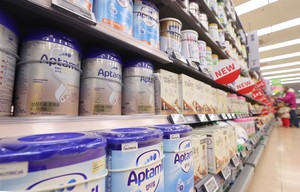
Aptamil price hikes squeeze parents already paying premium for 'Gangnam formula'
Aptamil raises key products by about 5,000 won Milk, stroller brands follow with their own hikes "I was shocked when I saw the price tag. I do not think I can afford it anymore." Aptamil, the premium formula brand known among Korean parents as "Gangnam formula," has raised prices on all its products except specialty formulas since last month. The hike comes as persistently high exchange rates and rising logistics costs push up prices across baby formula and milk products. Nutricia Korea, which distributes Aptamil in South Korea, raised prices on all products except specialty formulas starting Aug. 24, industry sources said Wednesday. The brand's flagship product, Aptamil Pronutra Advance HMO Stage 1 (800 grams), rose from 31,500 won ($23) to 36,500 won, up 5,000 won or 15.9 percent. Aptamil Profutra Duo Advance Stage 1 (800 grams) climbed from 47,500 won to 51,900 won, an increase of 4,400 won or 9.3 percent. Products imported directly from Germany and other European markets for domestic consumption there were not spared either. A can of the German domestic version of Profutra Duo Advance Stage 1 (800 grams) rose from 42,500 won to 46,900 won, up 4,400 won or 10.4 percent, while Aptamil Tabs Stage 1 (21 sticks), a tablet-form solid formula sold for the European domestic market, jumped from 19,900 won to 23,700 won, up 3,800 won or 19.1 percent. "Amid rising cost pressure from continued exchange rate fluctuations, changes in the global logistics environment and international affairs, we have internally absorbed as much of the cost as possible to minimize the burden on customers," Nutricia Korea said. "We had no choice but to adjust our sale prices to maintain stable product supply and consistent quality." Consumers have reacted coldly to the increase. Posts asking about alternative formulas have already appeared on some parenting community sites. "I was surprised that the price jumped by 5,000 won per can," one consumer wrote. "The increase feels excessive, so I am thinking of switching to a domestic formula." Another comment asked for recommendations on products to buy instead of Aptamil. Aptamil gained popularity and earned the nickname "Gangnam formula" after its official launch in South Korea in 2017. Both officially imported products and items purchased directly from German and European retailers are sold in the domestic market. Despite carrying a higher price tag than major domestic formula brands, Aptamil has held the top market share on the back of demand for premium childcare products. Market research firms have found that Aptamil has held that position without interruption since 2022. Formula is not the only baby product getting more expensive. a2 Milk, the premium milk brand under New Origin, raised prices on its main products by about 5.9 percent starting July 1. Yuhan Health Life, the company's domestic importer and distributor, said it raised consumer prices "due to the continued rise in raw milk prices, raw materials, logistics costs and labor costs." Illuma, a premium formula brand from Nestle Korea, saw its price rise from 68,900 won to 71,900 won, an increase of 3,000 won or 4.4 percent, alongside a product renewal. Stroller brand Stokke adjusted prices on some products, including its Tripp Trapp high chair, in February. Bugaboo also raised prices on major product lines including the Butterfly and Dragonfly. The trend appears poised to spread to the domestic formula industry as well. "High exchange rates and rising prices for packaging materials and imported raw materials are also weighing on domestic dairy companies," an industry source said. "As the white milk market shrinks, non-dairy processed products such as powdered formula and soy milk are actually propping up earnings."
Sept. 9, 2026
-
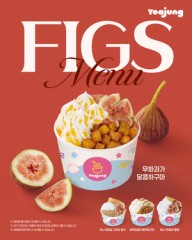
Yoajeong rolls out fall menu with fresh figs, sweet potato and injeolmi
Premium dessert brand Yoajeong said Wednesday that it has launched a new lineup of fall season menu items combining fresh, in-season figs with popular dessert trends. The new menu pairs figs with candied sweet potato cubes and pumpkin injeolmi, a chewy Korean rice cake coated in grain powder. The "Honey Fig All The Way" and "The Classic Greek Yogurt With Honey Fig" items double the amount of figs in Yoajeong's signature offerings and add honeycomb honey. The "Figs Are So Sweet-tato" menu pairs figs with candied sweet potato cubes, while "Crispy Pumpkin Injeolmi Sweet-tato" combines pumpkin injeolmi with the same topping. The candied sweet potato cubes reinterpret a bite-sized version of the candied sweet potato dessert that has gained popularity in Japan, particularly among Korean tourists. As a new product, Yoajeong is also introducing "Yoajeong's Chewy Fluffy Pumpkin Injeolmi," made with glutinous rice from Goseong, Gangwon Province, topped with castella cake crumbs. It can be enjoyed on its own or paired with the brand's yogurt ice cream. "This fall, we wanted to build a new seasonal menu around in-season figs, combining them with our yogurt ice cream and dessert ingredients that have been drawing attention recently," a Yoajeong official said.
Sept. 9, 2026
-

Lotte, E-mart Everyday vie for No. 2 spot behind GS The Fresh
GS The Fresh dominates in sales and store count Lotte Super leads in stores, E-mart Everyday in sales for No. 2 Rivals grow quick commerce, cut directly run stores Homeplus, the 'quick commerce powerhouse,' reenters the race The competition for second place in South Korea's corporate supermarket (SSM) sector is heating up. GS The Fresh holds a commanding lead at the top, while Lotte Super and E-mart Everyday battle for the No. 2 spot. Homeplus Express, which recently changed hands, has also rejoined the fray. According to industry data Wednesday, GS The Fresh maintains an unshakable lead in both sales and store count. The company posted 469.8 billion won ($350 million) in sales and 9.3 billion won in operating profit in the second quarter of this year, up 10.1 percent and 72.2 percent, respectively, from a year earlier. Its cumulative sales for the first half of the year reached 923.2 billion won. The secret to its dominance lies in quick commerce and franchise expansion. Quick commerce accounts for 10 percent of GS The Fresh's total sales. Its store count has grown to 604, of which 500 are franchises — a stark contrast to rivals that rely heavily on directly run stores. "Instead of operating directly run stores, where headquarters bears the costs, we can generate stable, fee-based revenue by expanding franchises," an industry official said. "This applies the franchise know-how accumulated from running convenience stores (GS25) to the SSM business." The battle for second place, however, is more complicated. By store count, Lotte Super, with 311 stores, is ahead of E-mart Everyday, which has 246. But by sales, E-mart Everyday takes the lead. In the second quarter, E-mart Everyday's sales rose 7.2 percent on-year to 389.1 billion won, while Lotte Super's sales grew 1.2 percent to 324.4 billion won over the same period. For the first half combined, E-mart Everyday posted 753.6 billion won in sales, compared with Lotte Super's 641.5 billion won. E-mart Everyday's earnings have been on an upward trend since it began integrated purchasing with affiliates such as E-mart, Traders and E-mart24. Quick commerce is once again the deciding factor. Lotte Super partnered with Coupang Eats to relaunch quick commerce services at about 170 stores nationwide starting Monday — roughly three years and seven months after it suspended the service in 2023 amid profitability concerns following the integration of Lotte Mart and Lotte Super. E-mart Everyday, meanwhile, has been building up quick commerce through its own app and food delivery platforms since 2022. Related sales rose 52.2 percent on-year in the first half of this year. Both companies are also cutting directly run stores while expanding franchises. Lotte Super has reduced its directly run stores from about 340 in 2020 to around 190 currently. E-mart Everyday similarly cut its count from about 200 at the end of last year to around 180 recently. "This is a time to shift toward a model that can generate steady profit in an otherwise sluggish offline retail market," an industry official said. Homeplus Express has also rejoined the competition. The company was the first in the SSM sector to introduce quick commerce, in 2021, growing rapidly in the Greater Seoul area to earn the label "quick commerce powerhouse." It went through a slump during Homeplus' corporate rehabilitation process but resumed full operations after being acquired in May by NS Home Shopping, a Harim Group affiliate, and undergoing reorganization. A Homeplus Express official said, "We will combine NS Home Shopping's product management capabilities to expand differentiated product offerings, and enhance our product competitiveness by aligning with Harim Group's food-focused values."
Sept. 9, 2026
-
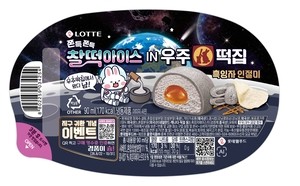
Lotte Wellfood's TV-inspired ice cream sells out, prompts emergency restock
Ice cream recreating menu from tvN show 'Ujutteokjip' wins praise Initial 500,000-unit run sold out in five days; preorders underway Lotte Wellfood said Wednesday that the initial production run of 500,000 units of its new product, "Chaltteok Ice IN Ujutteokjip Black Sesame Injeolmi," developed jointly with the tvN variety show "Ujutteokjip" (Space Tteok House), sold out within five days of its release. A preorder round on the company's official online store, Sweet Mall, also sold out in 18 hours. A limited run of 500 sets of "clicker" merchandise shaped like the ice cream likewise sold out completely. Lotte Wellfood has launched emergency additional production to meet demand and is shipping the product as soon as it comes off the line. A second round of preorders is currently underway. The product was developed around a new menu item called "heugimja toron ice cream" (black sesame ice cream). Cast members devised the recipe while running a shop called Ujutteokjip in Goheung, South Jeolla Province, and eating Lotte Wellfood's existing Chaltteok Ice ice cream. The final product wraps black sesame ice cream infused with injeolmi syrup in a glutinous rice cake. Word of mouth spread quickly on online communities and SNS soon after the launch, with buyers posting reviews such as "It tasted just as good as I hoped after watching the show" and "I had to check several convenience stores before I finally found one." A Lotte Wellfood official said, "The combination of turning a buzzworthy recipe from the show into an everyday dessert and the appeal of the limited-edition merchandise has drawn a response beyond our expectations, both online and offline."
Sept. 9, 2026
-

APR to absorb wholly owned subsidiary APR Factory
Merger without new share issuance aims to boost management efficiency APR announced Wednesday that it will absorb its wholly owned subsidiary APR Factory through a merger. APR Factory, in which APR holds a 100 percent stake, operates three production sites — one in Gasan, Seoul, and two in Pyeongtaek, Gyeonggi Province. The subsidiary has played a pivotal role in APR's value chain, spanning research and development, product planning, production and logistics. The merger will proceed without the issuance of new shares, at a merger ratio of 1-to-0. The merger agreement is dated Sept. 16, with the merger set to take effect Dec. 31. APR's ownership structure will remain unchanged after the merger, which is intended to improve management efficiency. The company said the move will streamline the allocation of human and material resources by absorbing the subsidiary, while cutting costs by consolidating overlapping management infrastructure. Simplifying the decision-making structure is also expected to help APR respond more nimbly to the fast-changing global beauty market. APR Factory's role is expected to grow in importance going forward. Optimizing and upgrading production infrastructure will be key to the success of new businesses — including energy-based devices and skin boosters — as part of APR's efforts to diversify its business portfolio. "This merger is a strategic decision to maximize organizational and operational efficiency and strengthen our core business competitiveness," an APR official said. "We will achieve growth in scale and profitability to enhance shareholder value."
Sept. 9, 2026
MOST READ
- 1KAIST develops high-performance bio-based adhesive using E. coli instead of petroleum
- 2Pope Leo XIV declines French honors and banquet, accepts only private meeting with Macron
- 3Daimler Truck unveils next-generation transport solutions at IAA 2026
- 4What was Rachmaninoff's performance fee? A 1928 price list tells all
- 5Samsung Biologics union's show of force backfires at the bargaining table
- 6APR says hair-loss treatment research published in international journal
-
WORLD

US warns of punishment for anyone enabling Iran's Strait of Hormuz toll scheme
-
INDUSTRY

Toyota union puts productivity first; Hyundai Motor union demands bigger share of profits
-
FINANCE
National Growth Fund to invest $531M in FuriosaAI, which rebuffed Meta's $800M takeover bid
-
INDUSTRY
Korea Shipowners' Association holds amateur baduk tournament for Maritime Day