Weekday morning lines stretch past 300 meters — two-day sales hit 500 million won
Festival debuts 33 premium ramyun dishes; limited-edition noodles sell out fast
Visitors expected to top 400,000 this year as city eyes permanent ramyun hall
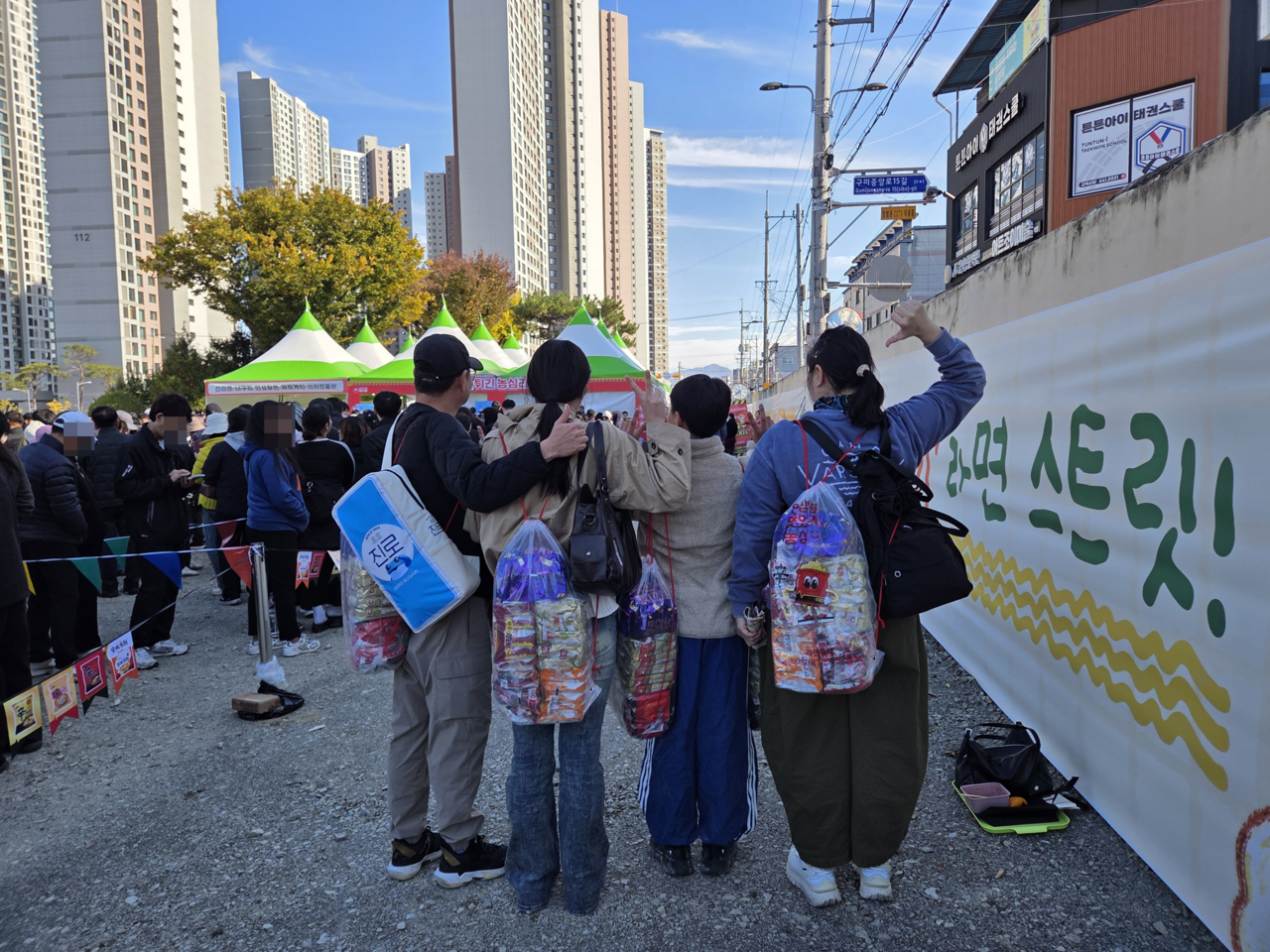
"I got here at 10 in the morning and waited — it took three hours just to buy one."
At around 1 p.m. on Friday, the stretch of Yeokjeon-ro in front of Gumi Station in North Gyeongsang Province was packed. Outside Gotland — the ramyun sales zone at the 2026 Gumi Ramyun Festival — a line snaked more than 300 meters down the street. Visitors had come to buy "freshly fried ramyun" produced that morning at Nongshim's Gumi factory, along with a bundled product called the "ramyun bag" that carries the noodles home in style.
Across the festival grounds, people strolled with transparent bags stuffed full of ramyun. Each bundle contained 25 packs — Shin Ramyun, Anseongtangmyeon, Chapagetti and Neoguri, plus the festival-exclusive "Gumi Ramyun Festival Noodle" — priced at 21,300 won ($16). Purchases were initially capped at four bundles per person, but as crowds swelled organizers cut the limit to two.
Now in its fifth year, the Gumi Ramyun Festival ran Friday through Sunday around Gumi Station. The ramyun bag was again the runaway hit: it cemented its status as the festival's signature item last year, and this year visitors once more queued for hours to get one.
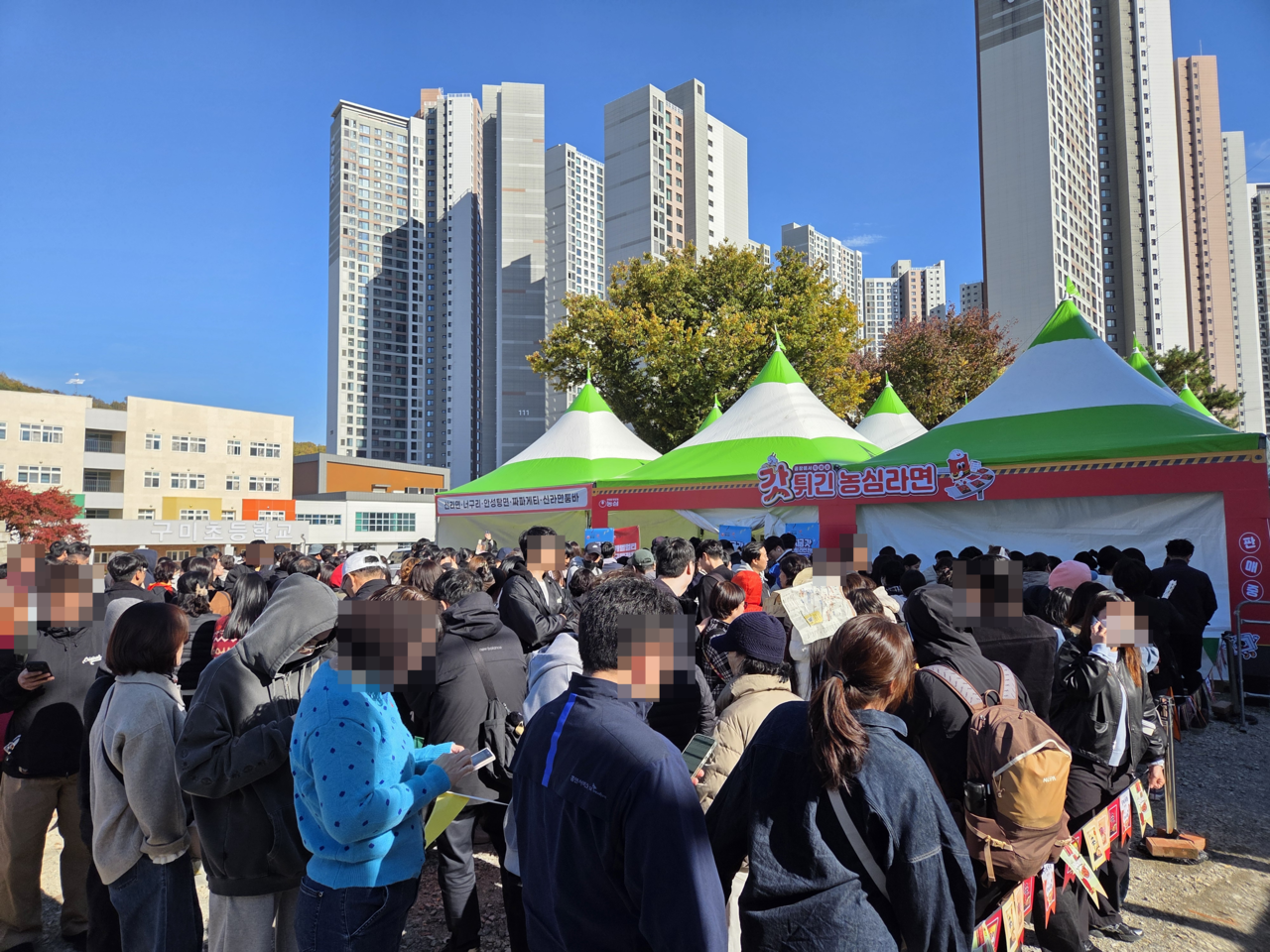
Last year's festival moved roughly 480,000 packs of freshly fried ramyun over three days. This year, sales in just the first two days reached 506 million won — already surpassing last year's total three-day haul of 360 million won.
Among those who waited was a family from Pohang who had driven an hour and a half to get there. Kim Man-su, in his 50s, and Park Mi-gyeong, in her 40s, finally secured their ramyun bag after lining up from 10 a.m. for more than three hours. "We've always been big ramyun fans, so this was our first time coming," they said. "We arrived right at opening time and still had to wait that long."
This year's festival was themed "The World's Longest Ramyun Street," transforming roughly 475 meters of road in front of Gumi Station into a festival ground. Visitors could enjoy freshly produced ramyun straight from Nongshim's Gumi factory, sample creative ramyun dishes, and take part in hands-on noodle-making experiences — all in one place.
The food offerings were a highlight in their own right. Twenty-five "ramyun restaurant" stalls and eight ramyun food trucks together served 33 menu items. For the first time, premium dishes priced above 10,000 won made their debut — among them ramyun made with fresh and fried puffer fish, and another topped with pine mushrooms and hawk's wing mushrooms, dishes rarely encountered outside a specialty restaurant.
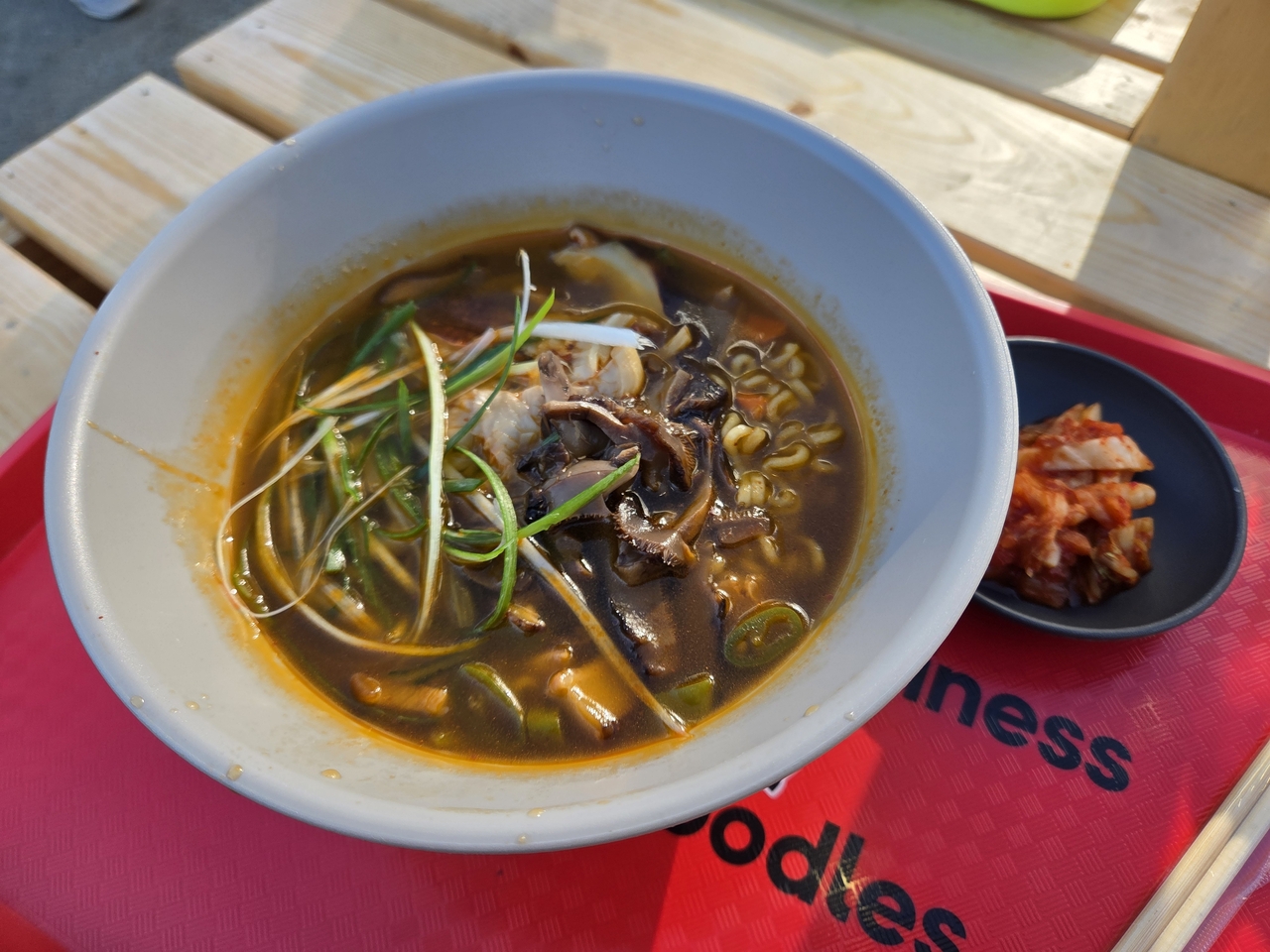
Jang Yeong-geun, 29, who came from Daegu, said he had seen a video of the festival on YouTube and decided to make the trip. "I've already had three bowls," he said, "and I'm still waiting in line for something else." Yun Yeong-min, in their 40s, and Kim Gyeong-mi, in their 30s, who traveled from Ulsan, said they had tried several dishes and enjoyed every one. "Aside from the crowds and the long waits, we're pretty satisfied overall," they said.
A limited-edition ramyun making its festival debut also drew considerable attention. Nongshim developed the "Gumi Ramyun Festival Noodle" using wheat grown in Gumi, with 100 percent of the flour sourced locally. A total of 200,000 packs were produced in a limited run, with some sold through Nongshim's own online store.
Choi Yeong-gap, head of Nongshim's noodle marketing division, said Gumi-grown wheat costs significantly more than standard flour. "As a company that operates a factory in this region and as a leading ramyun maker, we felt it was important to give back to the local community," he said.
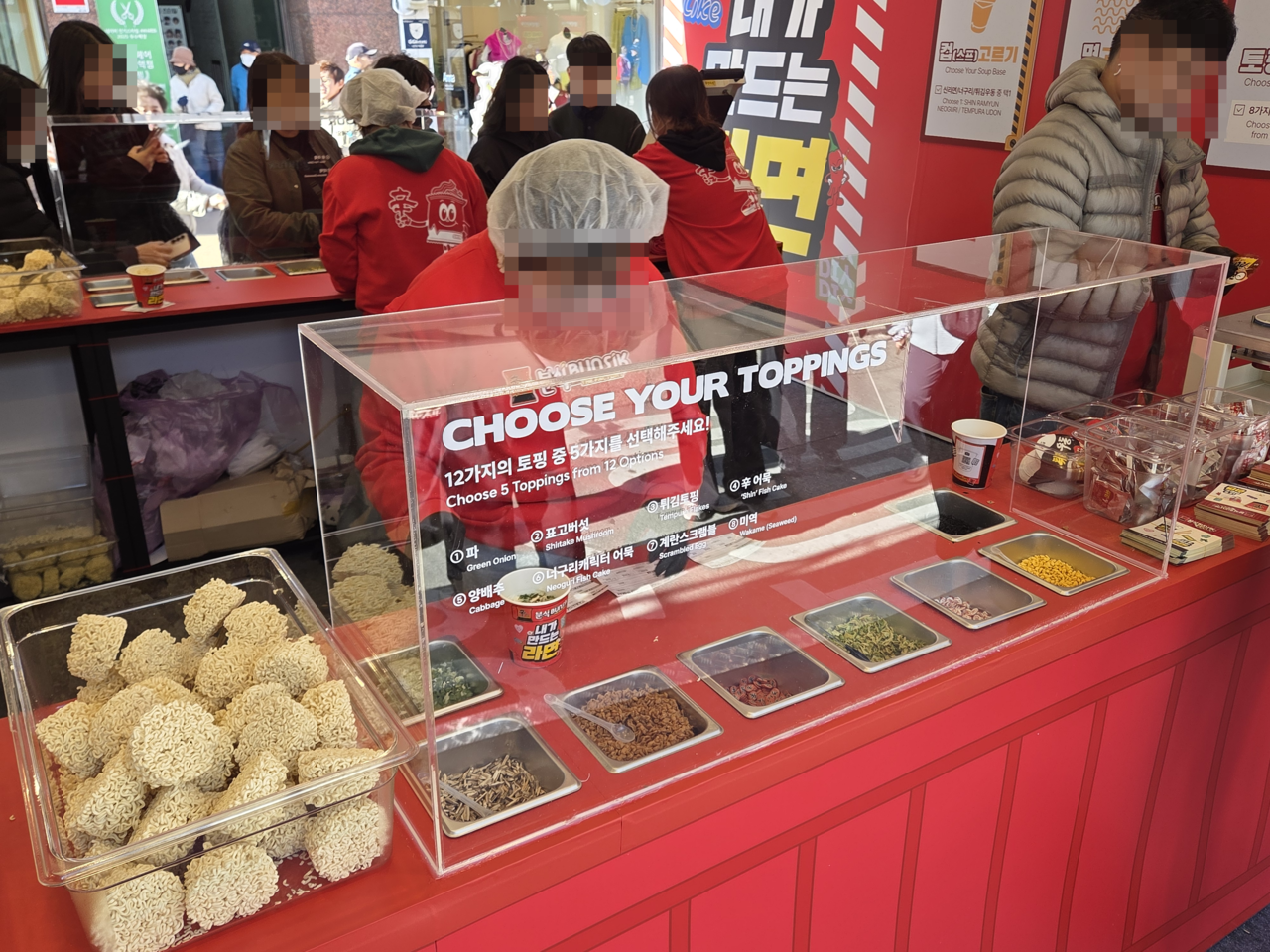
Visitors could also make their own ramyun at a hands-on station called the "Ramyun Workshop," where they combined noodles, broth powder and toppings to create a personalized bowl. A separate Nongshim pop-up store let visitors choose their preferred noodles and ingredients, then decorate the packaging with stickers to complete their custom creation.
Programming for international visitors also expanded this year. The Global Ramyun Challenge drew 1,263 online entrants from 80 countries, with 13 finalists from 13 nations competing in person. Contestants showcased ramyun dishes incorporating ingredients and culinary traditions from their home countries.
Lindsay Catherine, 33, a finalist from Seattle, said Korean ramyun strikes a perfect balance of sweetness, spice and umami. "Among ramyun from all over the world, Korean ramyun suits my palate the best," she said. "I love that I get to try so many different kinds, discover new flavors and learn more about Korean food," she added.
The festival traces its roots to Nongshim's Gumi factory. The plant, which began operations in 1991, is a core production hub for the company and makes Shin Ramyun, among other products. Gumi city launched the ramyun festival together with Nongshim in 2022 as a way to turn the region's manufacturing base into a tourism draw.
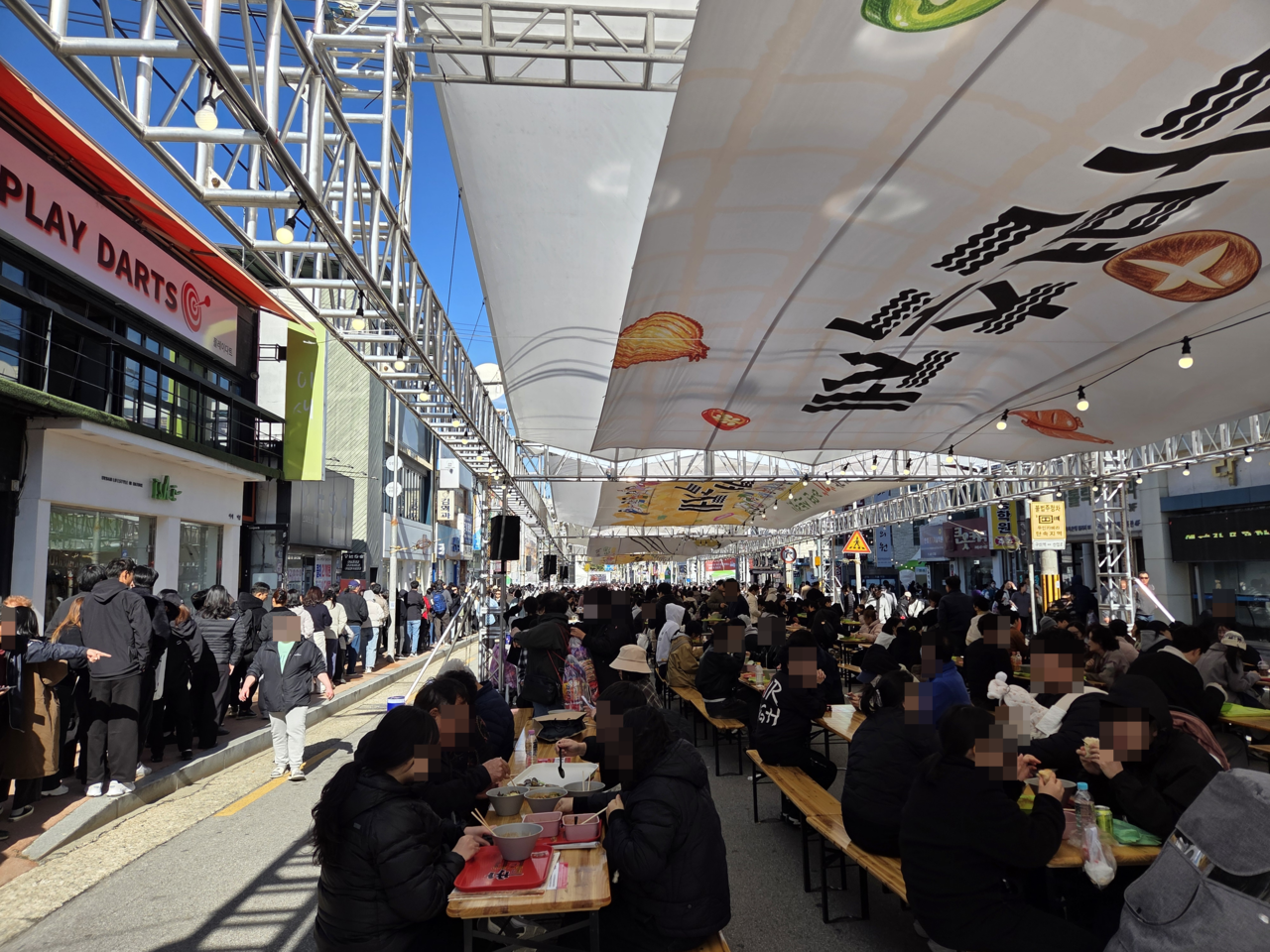
Attendance has grown every year. From 15,000 visitors in the inaugural 2022 edition, the festival drew 170,000 in 2024 and about 350,000 last year. Gumi city expects the figure to exceed 400,000 this year. According to city officials, last year's three-day festival generated about 1 billion won ($745,000) in on-site sales, with an additional roughly 2.86 billion won in revenue recorded at businesses near the venue.
Gumi Mayor Kim Jang-ho said there was pushback from local merchants when the city first proposed closing off downtown streets for the festival. "Merchants worried that blocking the roads would hurt business," he said. "But the whole point of the festival is to breathe life back into the old downtown commercial district and give real, tangible help to local restaurants."
Gumi city plans to build on the festival's momentum and develop it into a year-round tourism resource. About 12 local restaurants currently serve the creative ramyun dishes developed through the festival as permanent menu items, and the city aims to expand that number to 20. Over the longer term, the city is also pursuing plans to build a dedicated "Gumi Ramyun Hall" — a single venue that would bring together noodle-making experiences, an exhibition on the history of ramyun and spaces to sample specialty dishes.
korean@heraldcorp.com