
- HOME
- CONSUMER
-
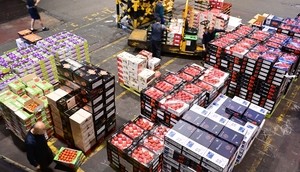
Chuseok table costs rise 5.1% as summer weather drives up vegetable prices
Vegetables up 14.7% from last year; apple prices hold steady The cost of preparing a Chuseok ritual table this year rose about 5 percent from last year, driven by surging vegetable prices after a summer of heat waves and frequent rain. The Seoul Agricultural and Marine Products Corporation surveyed the cost of 34 key Chuseok items for a family of six at 25 outlets — including 16 traditional markets, eight hypermarkets and Garakmal — on Sept. 9, and found that the average cost across the three retail channels rose 5.1 percent from a year earlier. Among the retail channels, Garakmal was the cheapest at 228,000 won ($167), followed by traditional markets at 245,051 won and hypermarkets at 290,711 won. Compared with last year, prices at traditional markets rose 3.5 percent and at Garakmal 5.6 percent, while hypermarkets posted the steepest increase at 6.0 percent. Vegetables led the price surge, rising an average of 14.7 percent from a year earlier. Zucchini jumped 43.8 percent, radish 24.9 percent and bellflower root 23.0 percent. Baby napa cabbage, where supply increased, fell 9.6 percent, and green onions dropped 2.0 percent. Meat and seafood also climbed. Meat prices rose an average of 7.4 percent, with pork up 18.5 percent and beef for soup up 10.5 percent. Seafood gained 6.2 percent, with frozen pollock fillet jumping 20.1 percent and dried pollock 10.8 percent. Croaker, for which the government released stockpiled supplies, fell 6.4 percent. Fruit prices were stable. Apple prices were little changed from last year, while dried persimmons fell 12.0 percent and jujubes 14.5 percent. Prices varied by outlet. Traditional markets were relatively cheaper for wild greens, seafood, beef and chicken than hypermarkets. Hypermarkets offered lower prices on some processed and packaged goods such as songpyeon rice cakes, dasik confections, imitation crab and eggs. Garakmal was comparatively affordable for vegetables, pork and chicken.
Sept. 18, 2026
-
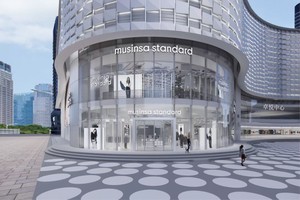
Musinsa to open two stores simultaneously in Shenzhen, targeting southern China
Musinsa Store and Musinsa Standard set to open Oct. 31 Musinsa announced it will open a Musinsa Store and a Musinsa Standard location simultaneously in Shenzhen on Oct. 31, targeting the southern China market. The Korean fashion platform has previously focused its China expansion on eastern cities such as Shanghai and Hangzhou. Shenzhen, the economic and industrial hub of southern China, has a large base of young, high-spending consumers drawn by its advanced technology sector. Musinsa plans to use Shenzhen as a new foothold from which to expand its store network to other major Chinese cities. Both stores will be located at One Avenue, a large mixed-use commercial complex in the Futian central business district — the heart of Shenzhen's prime retail zone. The Musinsa Store will carry around 30 Korean fashion brands, while the Musinsa Standard location will be the brand's fifth outlet in China. Product lineups will be tailored using sales data from existing Chinese stores alongside Shenzhen's local climate and consumer preferences. "We will continue to expand our offline presence in key consumer markets and strengthen our growth foundation in China," a Musinsa official said.
Sept. 18, 2026
-
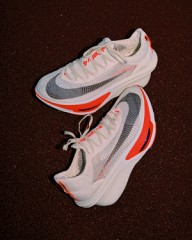
Nike launches Alphafly 4 after 33 months: 'biggest leap' in franchise history
New Alphafly arrives nearly 3 years after its predecessor Weight cut by 10g (5%), energy return boosted by 10% "The Alphafly 4 represents the biggest performance leap in the history of the Alphafly franchise — bigger than the jump from 1 to 2, and bigger than the jump from 2 to 3," said Brett Schoolmeester, Nike's senior vice president of running footwear. Nike announced Thursday that it will release the Alphafly 4, the latest model in its top-tier running shoe franchise, at the end of next month — 2 years and 9 months after the Alphafly 3. The new shoe was developed to deliver peak performance, cutting weight by 5 percent and boosting propulsion by 10 percent compared with its predecessor. The Alphafly line features a carbon plate embedded in the midsole to enhance energy return and propulsion. The shoe gained widespread attention — and helped spark the carbon-plate running shoe craze — when marathon great Eliud Kipchoge wore it during the 2019 INEOS 1:59 Challenge, in which he became the first person in history to run a marathon in under two hours. Nike has typically released a new Alphafly model roughly every two years: the Alphafly 1 in June 2020, the Alphafly 2 in November 2022, and the Alphafly 3 in January 2024. The 2-year-9-month gap before the Alphafly 4 is the longest in the franchise's history, reflecting the extensive development work Nike put into the new model, the company said. The Alphafly 4 retains the same core architecture — Air Zoom units, a carbon fiber Flyplate and ZoomX foam — while refining each component. Nike incorporated feedback from elite athletes and everyday runners, as well as findings from its Nike Sport Research Lab (NSRL). The Air Zoom units are now welded at the seams using radio-frequency vibration, making them 30 percent lighter and softer than the previous generation while also reducing landing noise. The carbon Flyplate features a wider base for improved stability. The upper midsole uses the new ZoomX LT foam, which is 17 percent lighter and delivers 8 percent greater energy return than before. The upper is constructed with Atomknit 2.0, a lightweight, breathable material that provides a secure fit. Emily Farina, a senior biomechanics researcher at the NSRL, said at a Zoom press briefing on Tuesday that the Alphafly 4 delivers 10 percent greater energy return than the Alphafly 3 while weighing 10 grams — or 5 percent — less. Biomechanical testing confirmed improvements in both traction and stability, she said. Schoolmeester said the new shoe was particularly exciting because it achieved the largest performance gain since the Alphafly line was first introduced. "It would be easy to assume that with each successive generation, the rate of improvement slows and it becomes harder to find additional gains — but this time, the performance improvement was actually larger, and the pace of development was faster," he said.
Sept. 17, 2026
-

ABC Mart completes Folder acquisition, sets sights on Musinsa rival
ABC Mart wraps up Folder takeover Q1 sales up 13%, operating profit up 25% Musinsa Kicks closes in fast ABC Mart, South Korea's largest multi-brand shoe retailer, has completed its acquisition of Folder and is moving to unlock synergies from the deal. According to industry sources, ABC Mart recently finished transferring Folder's online and offline stores, inventory and staff. ABC Mart Korea, the domestic operator of the chain, signed an acquisition agreement with E-Land World in January and has since cleared the necessary regulatory steps, including approval from the Korea Fair Trade Commission. Folder is a shoe concept store that E-Land World launched in 2012 and has been generating annual sales of around 100 billion won ($73.1 million). By 2025 sales, it ranked third in the multi-brand shoe retail segment, behind ABC Mart at 660.7 billion won and S-Market at 113.7 billion won. ABC Mart aims to cement its industry lead through the acquisition. The company surpassed 660 billion won in domestic annual sales last year, its highest since entering the Korean market in 2002. Although it trimmed Folder's store count from 35 to 20 before completing the deal, combined sales this year are expected to exceed 700 billion won. ABC Mart kept up its growth momentum in the first quarter. According to a disclosure by its Japanese parent company, sales in the Korean market reached 17.9 billion yen ($115 million) from January through March, up 13.1 percent from the same period a year earlier. Operating profit rose 25.9 percent to 769 million yen. Converted at the average won-yen exchange rate for the first quarter — 932.96 won per 100 yen — that translates to roughly 167 billion won in sales. With the Folder transfer now complete, the full impact of the acquisition is expected to materialize from the third quarter onward. In a June disclosure, ABC Mart's parent said it would combine the know-how and infrastructure of both companies to strengthen partnerships with global brands and expand its business scale over the medium to long term. Competition with fashion platform Musinsa is also looming. Musinsa launched its first multi-brand shoe store, Musinsa Kicks, in January and has since expanded to locations in Hongdae, Seongsu and Starfield Goyang, with a Jeju store also on the way. The company is targeting more than 10 openings by year-end. Transaction volume at the Hongdae and Seongsu stores has more than doubled since their opening days. Musinsa Kicks has secured global sportswear brands as partners and stocks limited-edition sneakers and rare models. Its stores are larger than ABC Mart's and organized by category — running, outdoor and others — setting it apart from the competition. The company also plans to open combined stores that integrate Musinsa Kicks with other platforms such as Musinsa Beauty. "ABC Mart is solidifying its top position through the Folder acquisition, but Musinsa is closing in fast," an industry official said. "Musinsa is rapidly expanding into major commercial districts, drawing on a base of young consumers and foreign customers."
Sept. 17, 2026
-
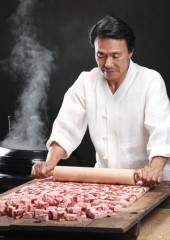
Hojeong Food finds new path on Temu, breaking free from holiday-only sales
Temu's 'discovery commerce' model helps brand build loyal base among shoppers in their 40s and 50s; orders have surged since launch, with Chef Aechan among other success stories For Hojeong Food, a regional food company with a 30-year history, traditional Korean confections known as "hangwa" had long been a seasonal product — bought mainly around the holidays and rarely otherwise. Searching for ways to drive repeat purchases and build everyday demand, the company recently found a new opening on Temu, the global e-commerce platform that has opened its marketplace to Korean sellers. Orders that numbered just five in the company's first month on the platform have since grown consistently to around 400 a month, putting the business on a stable footing. The growth has been driven by strong repeat purchases of a nutrition bar — a reinterpretation of traditional hangwa as a meal-substitute snack, individually packaged for daily consumption. Yoo Su-jin, a director at Hojeong Food, credited Temu's distinctive shopping ecosystem for the results. Conventional online marketplaces are built around "intent-based shopping," where consumers search for specific items they already want — meaning hangwa barely registers outside the holiday season. On Temu, by contrast, the company's products began appearing naturally in the feeds of shoppers browsing for everyday essentials, leading to purchases and, crucially, repeat orders. "On Temu, customers stumble across our products while shopping for everyday items," Yoo said. "When a second order follows, it's not because a special occasion is coming up — it means the product has become part of their daily routine." Hojeong Food is not alone. Other brands have also built loyal customer bases through the platform. Chef Aechan, a brand specializing in banchan and ready-to-eat meals, has recorded a repeat-purchase rate of about 23 percent on Temu. "Temu is a platform that gets consumers to try our products for the first time and then come back for more," said Park Woo-yeon, CEO of Chef Aechan. Beauty brand Rokkiss has similarly observed a pattern in which shoppers discover its cosmetics while browsing the platform and go on to buy them repeatedly. Hojeong Food, which produces more than 150 varieties of traditional food at two factories in Damyang, South Jeolla Province, is one of the largest hangwa manufacturers in the country. When it entered Temu, the company led with a "small-package strategy" aimed squarely at attracting new customers. "The key was lowering the barrier to entry so consumers could try our products without feeling like they were taking a risk," Yoo said. The strategy paid off: the share of small-package products in Hojeong Food's Temu sales now far outpaces that of any other retail channel the company uses. Dedicated support from a Temu account manager also contributed to the momentum. The manager suggested popular search terms in the snack category that suited the nutrition bar, and when the company incorporated them into the product name and ran tests, visibility in Temu's discovery feed jumped sharply, translating directly into more orders. "It wasn't generic advice — it was specific, immediately actionable tips that made a real difference," Yoo said. Now in its first full year on the platform, the nutrition bar has become Hojeong Food's best-seller on Temu. A traditional confection that once depended on a single annual holiday rush is finding its way onto consumers' tables every week as an everyday snack.
Sept. 17, 2026
-
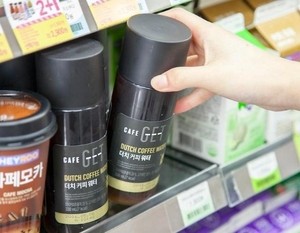
As cafe coffee hits 5,000 won a cup, consumers turn to cold brew at home
Just mix the concentrate with water — cold brew sales surge as home cafe trend grows Kurly cold brew sales up 60%; Momos Coffee transactions jump tenfold "Cafe coffee costs 5,000 won — it just makes more sense to buy the concentrate and mix it yourself at home." Yoon, a worker in her 30s, fills a tumbler with coffee before heading to the office each morning. Her drink of choice is cold brew. "The price of coffee started to feel like a real burden, so I began making it at home," she said. "All you do is pour water into the cold brew concentrate — it couldn't be simpler." Cold brew, which requires no separate brewing process and simply needs to be mixed with water, is drawing growing consumer interest. The trend reflects a broader effort to cut costs as coffee prices have risen consistently. According to the Korean Statistical Information Service (KOSIS) consumer price index, the coffee price index stood at 146.06 (base year 2020 = 100) in August, up 2.0 percent from the same month a year earlier. Cold brew is made by steeping coffee grounds in cold water for an extended period. Products that dilute the extracted concentrate with water or milk have also appeared on the market. Ready-to-drink (RTD) cold brew products require no dilution and can be consumed straight from the bottle. For consumers who already enjoy cold brew, home-use concentrate products offer a way to ease the financial strain. At cafes, cold brew typically costs 500 to 1,000 won more than a regular Americano, owing to the time and effort involved in brewing and storing it. The price difference is stark. A 300-milliliter cold brew concentrate sold by Paul Bassett yields up to 15 cups, working out to roughly 1,300 won per serving. Given that a single cup of cold brew at a cafe runs around 5,000 won, the savings are considerable. Cold brew product sales on Kurly rose 60 percent in August compared with the same period a year earlier, and the number of products available on the platform grew 35 percent over the same period. Transactions for Momos Coffee's key cold brew products jumped more than tenfold during the same stretch. On SSG.com, sales in the Dutch coffee category climbed 45 percent in the second quarter of this year. Beyond cold brew, sales of other easy-to-make coffee drinks for home use are also climbing. Lotte Mart's overall coffee beverage sales rose 25.1 percent from June through Sept. 15 compared with the same period last year, while sales of its private-label coffee drinks surged 52.8 percent. Over the same period, coffee sales at E-mart's No Brand stores grew 9.5 percent, with non-liquid products — including whole beans, tea bags and instant mixes — up 16.9 percent. "As more people want to easily prepare drinks they enjoy at home or in the office, we are seeing growing demand for products that are easy to store and convenient to consume," an industry official said.
Sept. 17, 2026
-
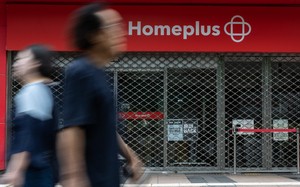
Homeplus launches sale of 67 hypermarket stores amid restructuring
Homeplus, which is undergoing court receivership, has formally launched the sale of its 67 hypermarket stores in accordance with its rehabilitation plan. The company said Thursday it is proceeding with the sale of all 67 hypermarket locations, including its headquarters and online business division. It is also putting up 19 company-owned real estate properties among the 37 stores slated for closure. Homeplus plans to sell the remaining hypermarket operations and online business unit — along with the headquarters and individually owned real estate at closed stores — after completing the earlier sale of Homeplus Express. Samil PwC, the lead sale manager, is set to send investment information packages to potential acquirers this week. Homeplus had previously outlined three core pillars of its rehabilitation plan: improving its financial structure through the sale of 19 company-owned stores among those being closed, strengthening business viability by normalizing operations and cutting fixed costs, and pursuing a merger and acquisition of the remaining business units. The sale of the hypermarket business — including the headquarters and online division — will proceed as a business transfer. Real estate at closed stores will be sold individually. Once sale agreements are signed, Homeplus must draft a revised rehabilitation plan incorporating the proceeds and submit it to the court. The company said the timeline for creditor repayments could be moved up from the original schedule as a result. "We are channeling all available funds into product procurement and working to normalize operations at the 67 core stores that have reopened," Homeplus said, adding that it has achieved tangible results by cutting roughly 500 billion won ($365 million) in fixed costs — primarily rent and labor — through the receivership process. The company added that "ultimately, for Homeplus to successfully complete its rehabilitation, it is essential not only to improve the financial structure through store sales, but also to complete the sale of the hypermarket business, including the headquarters and online division."
Sept. 17, 2026
-

Hite Jinro's Terra beer earns 5th consecutive NON-GMO certification, a first for domestic brews
Hite Jinro announced Thursday that its flagship beer brand Terra has received NON-GMO certification from the Non-GMO Project for five consecutive years, making it the first domestic beer to earn the distinction. The NON-GMO certification system verifies that a product uses ingredients grown and harvested from seeds that have not been genetically modified. Certification requires verification of raw materials and the supply chain, and certified products must undergo annual renewal assessments. Terra has verified that all its raw materials and secondary ingredients are free from genetic modification. However, under Ministry of Food and Drug Safety regulations, ingredients eligible for NON-GMO labeling in South Korea are limited to soybeans, corn, sugar beets, canola, cotton and alfalfa. Among Terra's raw materials, corn starch falls under this category.
Sept. 17, 2026
-
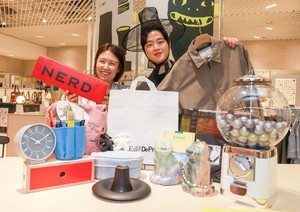
Hyundai Department Store hosts K-local pop-up at The Hyundai Seoul
Hyundai Department Store is running the "Edit Dept, Neo Local" pop-up store on the first below-ground floor of The Hyundai Seoul through Sept. 30, showcasing locally rooted brands from across the country. More than 20 brands are taking part, spanning fashion, beauty, living and food. Among them are artist So Dong-ho's "Seoul Street Chairs," a reinterpretation of street seating found around Seoul; Kiim Studio, which draws on traditional quilting techniques from Daegu; and Gotae, which reimagines the curved lines of the traditional Korean "gat" hat as tableware. The pop-up also features a documentary with interviews of writers and illustrators who contributed to regional magazines in Daegu, Busan, Cheongju and other cities since 2022, alongside video content documenting Park Chan-yong's collaborations with local artisans to develop products. The AI shopping assistant "heydi" offers audio guides in Korean and English on each brand's story through a digital passport.
Sept. 17, 2026
-

Coupang brings free health screenings to Hwacheon-gun community
Coupang Inc said it ran its mobile health screening program, "Coupang Ondongnae Care," a community outreach health service, at the gymnasium of the Second Hana Center in Hwacheon-gun, Gangwon Province, on Wednesday. The Second Hana Center, Hwacheon-gun and the Korean Central Medical Volunteer Association co-hosted the event. The Second Hana Center supports North Korean defectors who have settled in the local community, as well as area residents. The event was organized ahead of the center's planned opening to the broader community, with the aim of expanding exchanges between defectors and local residents. About 600 people took part — roughly 550 local residents, including about 200 children and teenagers, and about 50 North Korean defectors. A team of 40 medical professionals affiliated with the Korean Central Medical Volunteer Association — including physicians, traditional Korean medicine doctors, dentists and pharmacists — provided services ranging from general medical care, such as blood tests and intravenous drips, to dental and traditional medicine consultations. A mobile portrait studio was also on hand, offering commemorative photos as gifts to attendees. The opening ceremony was attended by Jang Young-chul, executive vice president of Coupang Inc's corporate social responsibility division; Kim Nam-jung, vice minister of the Ministry of Unification; Kim Young-il, director of the Second Hana Center; Kim Se-hun, Hwacheon-gun county chief; Jo Ung-hee, speaker of the Hwacheon County Council; Park Dae-hyun, a Gangwon Province lawmaker; Song Jong-seop, director of the Gangwon Northern Hana Center; and Lee Eun-woo, president of the Korean Central Medical Volunteer Association. National Assembly member Han Ki-ho delivered congratulatory remarks via video message. "The purpose of Ondongnae Care is to go directly to areas with limited access to medical services and provide residents with the healthcare they need," a Coupang Inc corporate social responsibility official said. "We will continue to work closely with local communities and carry out social contribution activities that make a real difference in the everyday health of residents."
Sept. 17, 2026
-

Shinsegae Duty Free launches 'Shinmyeonseil' mega-sale ahead of golden holiday stretch
Shinsegae Duty Free announced Thursday the launch of a new regular mega-sale event called "Shinmyeonseil," which it plans to hold four times a year timed to peak holiday travel periods. The inaugural event runs from Thursday through Oct. 11, both online and at its brick-and-mortar store. The sale offers expanded discounts on popular products ahead of the golden holiday stretch spanning Chuseok, National Foundation Day and Hangul Day. On its online mall, 277 brands and more than 3,800 products will be discounted by up to 70 percent. Cosmetics and fragrances account for 173 brands and more than 2,200 products, with discounts of up to 60 percent — participating labels include YSL Beauty, Lancôme, Kiehl's and Prada fragrances. More than 160 exclusive brand and event products have also been lined up. At the Myeong-dong store, 290 products from 85 brands — including Sulwhasoo, The History of Whoo, Anua and Biotherm — will be discounted by up to 40 percent. The online and in-store lineups have been deliberately kept separate. A special "Captain Ttager PICK" event, featuring Glenfiddich, Balvenie and other selections curated by travel influencer Captain Ttager, will also run alongside the sale. The event is divided into two phases: the first runs through Sept. 30 and the second from Oct. 1 through Oct. 11, with featured products and offers changing between phases. "We plan to hold this regularly around major holidays and national breaks, and build it into the signature shopping event of Shinsegae Duty Free," a company official said.
Sept. 17, 2026
-
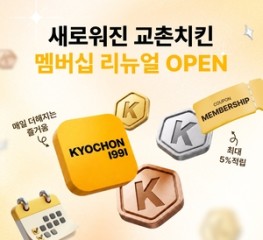
Kyochon Chicken app overhauls membership system, more than doubles reward rates
Reward rates more than double across tiers; standing benefits introduced Kyochon Food & Beverage is overhauling the membership system on its Kyochon Chicken app, raising reward rates and introducing new standing benefits. The company announced Thursday that it is renaming its three membership tiers to Single (for new customers), Combo and Signature. Reward rates will more than double across all tiers, rising from 0.5%, 1% and 2% to 1%, 3% and 5%. Under the new system, a Signature-tier customer spending 30,000 won ($22) will earn 1,500 points — more than double the previous 600. Accumulated points can be used like cash or spent at a newly introduced "coupon store." At the coupon store, members can use points to purchase discounted coupons for menu items of their choice. The revamp also introduces an "attendance check" benefit that grows rewards with each visit. New members will receive a free wedge potato coupon immediately upon signing up. "We focused on making the benefits more tangible the more frequently customers use the app," a company official said, describing the overhaul as a strategy to build customer loyalty following an app redesign in July that enhanced convenience features.
Sept. 17, 2026
-

Amorepacific pays W64.9b to suppliers early ahead of Chuseok
Payment made up to 10 days ahead of schedule Amorepacific Group announced Thursday that it has made early payments to its suppliers ahead of the Chuseok holiday. The payments cover about 600 suppliers that provide raw materials, packaging and products to nine Amorepacific Group affiliates. The group began disbursing 64.9 billion won ($47.4 million) in trade payments Thursday — funds originally scheduled for release by Sept. 27. Amorepacific Group has made early supplier payments before holiday seasons since the mid-2000s. "This is a payment made up to 10 days ahead of the scheduled date," said Lee Sang-mok, chief executive of Amorepacific Holdings. "We will continue activities aimed at mutual growth with our suppliers."
Sept. 17, 2026
-
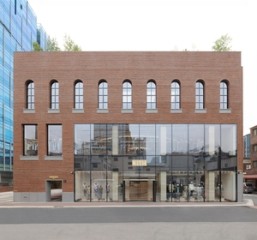
How Handsome's import strategy drove 50% sales growth for foreign fashion brands
Three more brands to launch by first half of next year as company eyes stronger lineup Handsome, a fashion subsidiary of Hyundai Department Store Group, said Thursday that sales of the 12 overseas fashion brands it has introduced to South Korea since 2022 rose 50 percent year-on-year in the January–August period. The company currently carries brands including Our Legacy, Fear of God, RE/DONE and Kith in the domestic market. Handsome attributes much of the growth to what it calls an "antenna shop strategy," using its own import select shops — Mooi and Tom Greyhound — to track consumer response and brand preference before committing to a full rollout. Brands that show clear growth potential are then brought in for dedicated distribution. The two chains together operate 50 select shop locations — 15 under Mooi and 35 under Tom Greyhound — carrying around 200 overseas fashion brands. Pop-up stores at Tom Greyhound Seongsu-dong, The Hyundai Seoul and the Trade Center branch provide additional customer feedback and sales data. Handsome also plans to expand its overseas brand lineup, with three new brands set to launch by the first half of next year, including SKIMS, the brand associated with Kim Kardashian. The number of dedicated stores for overseas brands is also set to grow from the current 60 to 90 by the end of next year. Yoo Tae-young, executive vice president and head of Handsome's overseas fashion division, said the company would "continue to discover brands that can lead global fashion trends."
Sept. 17, 2026
-
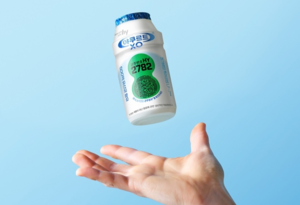
Word-of-mouth hit: Yakult XO zero fermented drink tops 40 million units sold
Hy announced Thursday that Yakult XO, a zero-sugar fermented milk drink it launched last May, has surpassed cumulative sales of 40 million units. Yakult XO is the first zero-sugar fermented milk product hy has released under the Yakult brand. It contains no sugar, sweeteners or fat, and carries 10 kilocalories per 100 milliliters. The drink features five patented bacterial strains and guarantees 50 billion CFU of probiotics. Hy has broadened its consumer reach through collaborations with outside brands. A drink called "Low-Sugar Honey Pear XO Yakult," developed by Mega MGC Coffee using the product and released in April, gained traction on SNS as a popular hangover remedy. "We will continue to expand our lineup of products that balance great taste with health benefits," said Choi Young-taek, head of hy's marketing team.
Sept. 17, 2026
-
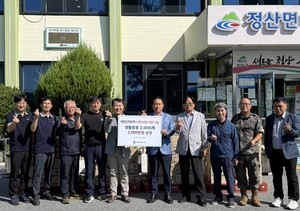
Aekyung Industrial donates household goods worth W30m to South Chungcheong welfare center
Company supports Cheongyang-gun's Jeongsan-myeon ahead of Chuseok Aekyung Industrial said it held a product donation ceremony Wednesday at the Jeongsan-myeon Community Welfare Center in Cheongyang-gun, South Chungcheong Province, distributing goods to every household in the township ahead of the Chuseok holiday. The ceremony was attended by Park Hong-yeol, head of Aekyung Industrial's production division, and Jeongsan-myeon Chief Kim Su-dong, among others. A total of 2,000 units of the company's "Riqu Indoor Dry Ultra" laundry detergent, valued at about 30 million won ($22,200), were distributed to all households in Jeongsan-myeon. The donation was organized by Aekyung Industrial's Cheongyang factory to strengthen trust and ties with local residents. "Going forward, we will continue to communicate openly and carry out a range of cooperative initiatives so that the Cheongyang factory can build trust with residents and grow together as a member of the local community," Park said.
Sept. 17, 2026
-
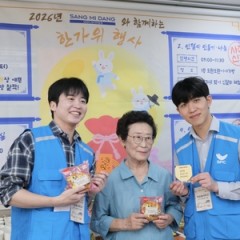
Sangmidang Holdings shares food and care with 29 welfare facilities for chuseok
Sangmidang Holdings said it is conducting product-sharing and volunteer activities at 29 welfare facilities across the country through Wednesday in celebration of chuseok. The Happy Volunteer Corps, made up of employees from Sangmidang Holdings affiliates, held a "Sweet Chuseok" event Wednesday at the Yangjae Senior Welfare Center in Seocho-gu, Seoul. About 200 elderly residents from Seocho-gu joined in injeolmi rice cake making and a chuseok sports day, and were served a special meal. Samlip's Boreumdal bread and cream buns were also distributed. Samlip is donating more than 6,000 products to 14 welfare facilities in Seoul, Gyeonggi Province, the Chungcheong provinces and the Gyeongsang provinces. Paris Croissant is delivering Paris Baguette baked-goods sets, roll cakes and rice to four welfare facilities in Seongnam and Gangwon Province. BR Korea visited the homes of national merit recipients in Eumseong, North Chungcheong Province, delivering Samlip Jeju black pork ham sets. SPC GFS partnered with the Yangjae Community Welfare Center to assemble and distribute holiday food packages containing Samlip Hi-Myeon udon, Boreumdal bread and granola bars. SPL delivered Paris Baguette castella products to childcare facilities in Pyeongtaek. Secta Nine and SPC Pack are each donating bakery products to welfare facilities in Yeoksam-dong, Seoul, and Cheongju, respectively, while also conducting volunteer activities supporting people with disabilities and children. "We will continue to carry out a variety of social contribution activities in which our employees participate directly to share warmth with our neighbors," a Sangmidang Holdings official said.
Sept. 17, 2026
-
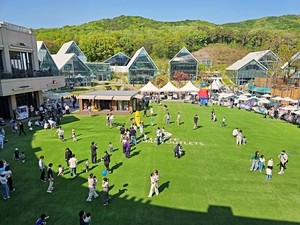
Lotte Outlets, Malls to hold 'Grand Shopping Festa' from Sept. 24 with up to 80% off
Lotte Department Store said it will hold a "Grand Shopping Festa" at Lotte Outlets and Lotte Malls from Sept. 24 through Oct. 11. The event will run across all Lotte Outlet branches and six Lotte Mall locations — Gwangmyeong, Gwangyo, Gunsan, Jinju, Suji and Eunpyeong. From Sept. 24 through Sept. 30, coinciding with the chuseok holiday, popular fashion brands will be offered at up to 80% off. Calvin Klein will provide 20% off all products, with select items discounted by up to 78%. From Oct. 1 through Oct. 11, a fall outing-themed sale will feature carry-over merchandise from brands including The North Face, Titleist, Mark & Lona and ABC Mart. Under Armour stores will offer an additional discount of up to 40%, and select locations will mark down items by as much as 80%. From Sept. 1 through Sept. 8, shoppers can receive additional discounts and free gifts on children's items from New Balance Kids and Nike Kids. An offline pop-up store will be held in collaboration with Mellow TV, a kids' YouTube channel with 940,000 followers. Experiential pop-up stores featuring global educational content properties Numberblocks and Alphablocks are also planned. Lotte Premium Outlets' Giheung branch will feature food trucks from popular food and beverage brands including Gordon Ramsay Burger, Myeongnang Hot Dog and Knotted. The Gimhae branch will host a "Moving Brewery" pop-up store offering craft beers and wines from across the country.
Sept. 17, 2026
-
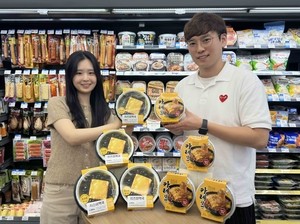
GS25 taps AI trend analysis to launch cheese seaweed soup, curry glass noodles
GS25 will launch two new convenience store products Friday — cheese seaweed soup and curry glass noodles — developed using the chain's in-house AI trend analysis system to turn popular social media recipes into ready-to-eat items. The cheese seaweed soup combines traditional miyeokguk with cheddar cheese and black pepper, drawing attention for its rich, bone-broth-like umami rounded out by a sharp peppery kick. The curry glass noodles swap out rice for dangmyeon, targeting consumers in their teens through 30s. GS25's AI trend analysis system played a central role in developing both products, scanning data from portal sites, social media platforms and online communities to detect early-stage trend signals. From trend detection to launch, the entire development cycle took less than six weeks — roughly half the approximately three months the company typically requires. "We will continue to get ahead of consumption trends and combine that with our product developers' planning capabilities to bring out differentiated products that reflect what consumers want," said Lee Do-hyeon, a manager on GS25's refrigerated and frozen foods team.
Sept. 17, 2026
-
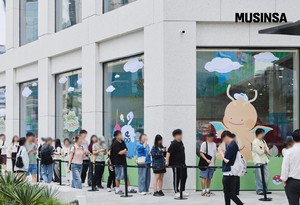
Musinsa's 'Pokémon Pocopea' pop-up draws crowds, boosts foot traffic 15%
Shoppers have been flocking to Seoul's Seongsu neighborhood to catch a glimpse of Pokémon, as Musinsa's "Pokémon Pocopea" concept store draws visitors ranging from teenagers to "kidult" fans in their 20s and 30s. According to Musinsa, foot traffic at its Mega Store Seongsu location over the weekend of Sept. 12 and 13 rose more than 15 percent compared to the same period the previous week. The event marks the first offline space in South Korea themed around the Pokémon Pocopea concept, launched to celebrate the franchise's 30th anniversary. The store features in-game-inspired sculptures and dedicated photo zones. Clothing, accessories and lifestyle items drawing on the Pokémon and Pocopea intellectual property are among the highlights. Standout products include a "Pale Pikachu" flat doll keyring with intricate embroidery detail, an offline-exclusive Pokémon Center tissue case, a reel holder, a die-cut sticker set and a keycap keyring. Customers also receive complimentary gifts with purchase. All buyers get two sticker designs, while additional rewards — including two varieties of sticky-note pads, a glow-in-the-dark Pale Pikachu keyring, and one of three Baku bag designs — are unlocked in tiers based on spending amount. "We expect strong marketing synergy between online and offline channels, as an online promotional event is running simultaneously on Musinsa and 29CM through Sept. 29," a Musinsa official said.
Sept. 17, 2026
MOST READ
- 1KAIST develops high-performance bio-based adhesive using E. coli instead of petroleum
- 2Pope Leo XIV declines French honors and banquet, accepts only private meeting with Macron
- 3Daimler Truck unveils next-generation transport solutions at IAA 2026
- 4What was Rachmaninoff's performance fee? A 1928 price list tells all
- 5Samsung Biologics union's show of force backfires at the bargaining table
- 6APR says hair-loss treatment research published in international journal
-
WORLD

US warns of punishment for anyone enabling Iran's Strait of Hormuz toll scheme
-
INDUSTRY
Toyota union puts productivity first; Hyundai Motor union demands bigger share of profits
-
FINANCE
National Growth Fund to invest $531M in FuriosaAI, which rebuffed Meta's $800M takeover bid
-
INDUSTRY
Korea Shipowners' Association holds amateur baduk tournament for Maritime Day