
- HOME
- CONSUMER
-
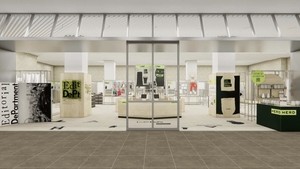
Hyundai Department Store brings K-local pop-up to The Hyundai Seoul
'Neo Local' runs Thursday through Sept. 30, featuring more than 20 brands Hyundai Department Store said it will open a K-local culture pop-up store called "Edit Dept, Neo Local" on the first below-ground floor of The Hyundai Seoul from Thursday through Sept. 30. Spanning 284 square meters, the pop-up will feature more than 20 local brands across fashion, beauty, living and food. Highlights include artist So Dong-ho's "Seoul Street Chairs," a reinterpretation of Seoul's street furniture; Kiim Studio, which draws on traditional quilting techniques from Daegu; and Luft Mansion, a lifestyle select shop from Haeridan-gil in Busan's Haeundae district. At "Park Chan-yong's Small House," run by Park Chan-yong, visitors can browse design goods made in collaboration with local manufacturers — including erasers from Daegu's Hwarang Rubber and nail clippers from Bucheon's Royal Metal Industry. Fermented liquor brand NERD will hold a tasting event, while brewing brand Dutch Lab will serve locally sourced coffee made from beans gathered from across the country. Hyundai Department Store said it planned the pop-up in response to a shift in foreign tourists' travel patterns toward experiencing regional culture across the country. According to the Korea Tourism Organization, 853,905 foreign visitors entered South Korea through regional airports in the first quarter of this year, up 49.7 percent from the same period a year earlier. Over the same period, the length of stay and spending by foreign visitors in regional areas rose 36.2 percent and 17.2 percent, respectively. The company plans to continue the Neo Local pop-up series at major stores nationwide through the end of the year, including Hyundai Outlets Dongdaemun and Connect Hyundai Cheongju. It is also partnering with Kakao Style's global magazine Kitto to promote the pop-up on Japanese and Taiwanese Instagram accounts, and will run a giveaway event with round-trip airfare and hotel stays as prizes. "This 'Neo Local' pop-up store goes beyond a simple shopping space — it is Hyundai Department Store's own differentiated attempt to offer global customers the most distinctly Korean yet sophisticated content," said Yang Myung-sung, executive director of sales strategy at Hyundai Department Store.
Sept. 14, 2026
-

Coupang to hold first offline private-label festival in Seongsu-dong
Visitors can try food, lifestyle, beauty and fashion private-label products in person Coupang Inc's private-label subsidiary CPLB will hold "Coupang Only Festa" in Seongsu-dong, Seongdong-gu, Seoul from Thursday through Sunday. It is the company's first offline event since its founding in 2020. Coupang extended the registration period through Wednesday — the day before the event opens — after advance reservations exceeded 6,300. The pop-up will occupy the first and second floors and outdoor space of Anderson C in Seongsu-dong. More than 120 small and medium-sized manufacturers that produce products under Coupang's private-label brands — including Gomgom, Comet, Tamsa and Zoom — will take part. Visitors can browse a wide range of products spanning fresh food, rice and grains, ready-to-eat meals, detergents, snacks and beverages, kitchen and household goods, fashion and beauty items, stationery and household paper products. In addition to private-label goods, more than 100 products developed under the manufacturers' own brands will also be on display. A variety of hands-on activities will be available. These include a rice and grain tasting experience, a flavor-preference test, a detergent and fabric-softener refill station, and free samples of household items such as wallpaper and draft excluders. A "sensory challenge" — where participants guess the weight of toilet paper, wet wipes and similar items they pack themselves — and a capsule-toy coin event will also be on offer. On Friday and Saturday evenings, a pop-up restaurant called Gomgom Sikdang will serve dishes made with Coupang's food private-label products, including steak, spicy chicken feet, mandu, salad and char-broiled tteokbokki. "We hope customers can taste and experience our diverse Coupang private-label products all in one place, and see the quality and variety for themselves," said Jeon Gyeong-su, chief executive of Coupang CPLB. "We will continue working to grow together with small and medium-sized enterprises."
Sept. 14, 2026
-

Musinsa to advance W130b in settlements ahead of Chuseok
Musinsa announced Monday it will advance settlement payments worth 130 billion won ($96.6 million) to partner brands ahead of the Chuseok holiday to help them manage their cash flow. The early payout covers more than 10,000 small and midsize brands listed on the Musinsa and 29CM online stores. The company said it decided to accelerate the payments to ease the liquidity burden on partners that typically face concentrated short-term funding needs around major holidays. Under its standard policy, Musinsa pays out in a lump sum on the 10th of each month for all purchase confirmations recorded from the first to the last day of the previous month. With this year's Chuseok holiday falling in late September, the company will instead pay out on Sept. 22 — just before the holiday — covering purchase confirmations from Sept. 1 through Sept. 20. "We decided to advance the settlement payments to ease the financial burden on more than 10,000 partner brands that face increased funding needs ahead of the Chuseok holiday," a Musinsa official said.
Sept. 14, 2026
-
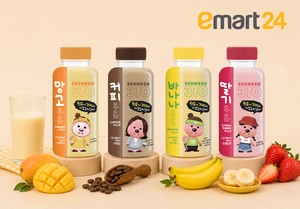
Convenience store desserts shift focus to quality fundamentals
After viral hits, product quality becomes the new battleground E-mart24 aims to move fast on trends while building lasting appeal The convenience store dessert race is shifting from novelty to fundamentals. As viral products such as Dujjonku and butter rice cake flood the market, a growing number of consumers are scrutinizing ingredients and production methods. E-mart24 recently launched the Seongsu310 Milk Sarreu cream bread and four varieties of Seongsu310 processed milk, according to industry sources Monday. Both products focus on elevating the quality of a familiar ingredient: milk. The cream bread uses domestically sourced dairy cream to bring out a richer milk flavor. The filling's viscosity was adjusted for a smoother texture, and the filling equipment was upgraded to distribute cream evenly to the edges of each bun. A sponge-fermentation method was applied to the dough to keep it soft through the product's shelf life. The four processed milk varieties push raw milk content to 70 percent. Most processed milk products on the market contain 30 to 60 percent raw milk, making the Seongsu310 line a notable step up in dairy concentration. Sales results have been strong. The Seongsu310 cream bread posted a 23 percent week-on-week sales increase over the two weeks from Aug. 24 to Sept. 6, and has ranked first in E-mart24's dessert category since its launch. E-mart24 plans to continue a two-track strategy, pairing trend-driven products with ones built on quality fundamentals. The aim is to attract new customers through popular items like Dujjonku and butter rice cake while driving repeat purchases with products that emphasize superior ingredients and production methods. "Convenience store desserts now need to deliver on taste, ingredients and texture — not just novelty," an E-mart24 official said. "We will keep introducing products that reflect trends while also bringing customers back."
Sept. 14, 2026
-
APR says hair-loss treatment research published in international journal
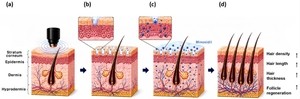
Booster Pro X2 Air Shot technology shown to boost minoxidil absorption, promote hair regrowth Research on active-ingredient delivery platform published in Pharmaceutics APR announced Monday that research conducted through an industry-academia collaboration on scalp health improvement and androgenetic alopecia treatment using radiofrequency microporation technology has been published in Pharmaceutics, an international journal ranked in the top 10 percent (Q1) of the pharmacology category in the Journal Citation Reports. Researchers evaluated the skin-delivery efficiency of minoxidil and its hair-regrowth effects using the radiofrequency microporation technology built into the Air Shot mode of APR's home beauty device, the Medicube Age-R Booster Pro X2. The technology uses precisely controlled radiofrequency energy to create temporary microchannels in the scalp's stratum corneum, allowing active ingredients to be absorbed more efficiently into the skin. The study found that applying radiofrequency microporation alongside minoxidil increased the drug's deposition in the epidermis and dermis by up to 2.40 times compared with topical application alone. Hair coverage, length and thickness also improved in an androgenetic alopecia animal model. Finasteride, an oral hair-loss medication, is contraindicated in women of childbearing age due to the risk of fetal abnormalities in male fetuses, making topical minoxidil the standard recommended treatment for female-pattern hair loss. However, topical agents such as minoxidil must penetrate the scalp's stratum corneum, which has long limited how effectively active ingredients reach the skin and the area around hair follicles. APR said it plans to conduct further clinical research to verify the technology's applicability, efficacy and safety in treating hair loss. "This publication in an international journal demonstrates that APR goes beyond simple product development by continuously validating the scientific principles and efficacy behind its own device technology," a company official said.
Sept. 14, 2026
-
Kyochon Food & Beverage sponsors W30m support program for immigrant-background communities
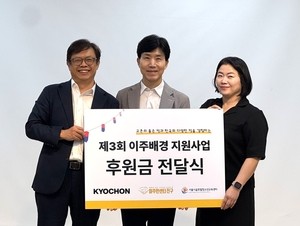
In its third year since 2024, the program expands its reach and offerings Over 40 organizations nationwide to receive Kyochon Chicken parties and cultural experiences Kyochon Food & Beverage announced Monday that it delivered a sponsorship donation to the Immigrant Center Friend association to fund a nationwide Kyochon Chicken sharing initiative, as part of the third edition of its Kyochon Immigrant-Background Support Program. The donation ceremony was held Wednesday at the Seoul Global Youth Education Center in Mullae-dong, Yeongdeungpo-gu, Seoul. Lim Hyeong-uk, head of communications at Kyochon Food & Beverage; Yun Yeong-hwan, head of the Immigrant Center Friend association; and Shin Hye-yeong, director of the Seoul Global Youth Education Center, were among those in attendance. The program runs at a total scale of 30 million won ($22,400), including a 20 million won cash donation. Launched in 2024, the Kyochon Immigrant-Background Support Program aims to help young people and adult learners with immigrant backgrounds adapt to Korean society. This year, it operates under two programs: "Our Good Taste" and "Our Style." "Our Good Taste" supports Kyochon Chicken parties at approximately 40 immigrant-background support organizations across the country. "Our Style" partners with the Seoul Global Youth Education Center, the Suwon Global Youth Dream Center, the Ansan Global Youth Center and the Hwaseong Global Youth Center to offer visits to Kyochon Food & Beverage's headquarters and affiliates, brand experiences, and cultural outings to destinations including the Korean Folk Village, the Icheon Ceramic Art Village and Namsan. "As the immigrant-background population grows, Kyochon has consistently expanded its support from immigrant-background youth to adults as well," a company official said. "We hope Kyochon's social contribution helps many immigrants achieve stable growth and settlement."
Sept. 14, 2026
-
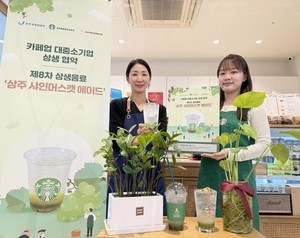
Starbucks to sell Sangju shine muscat drink at 122 small-business cafes nationwide
1 billion won in support for small-business cafes over 5 years Co-prosperity drinks top 500,000 cups; facility maintenance also covered Starbucks Korea announced it will begin selling its eighth co-prosperity drink, the Sangju Shine Muscat Ade — made with shine muscat grapes from Sangju, North Gyeongsang Province — at 122 small-business cafes across the country starting Tuesday, including locations in Seoul, Gyeonggi Province, Busan, Gwangju and Incheon. The Sangju Shine Muscat Ade is a sparkling beverage developed by Starbucks' beverage team using locally grown shine muscat grapes. It combines the sweet, refreshing flavor of the fruit with the texture of aloe vera. Starbucks provided the 122 participating small-business cafes with recipes and raw ingredients free of charge — enough to produce 60,000 cups. The drink will also be available at nine talent-donation cafes supported by Starbucks. In March 2022, Starbucks became the first company in the coffee industry to sign a "cafe industry co-prosperity agreement" with the Commission for Corporate Partnership and the National Cafe Owners Cooperative. Since then, it has supported co-prosperity drink development, helped cafes recover from natural disasters, and funded improvements to aging cafe facilities. Including this eighth edition, the program has supplied about 500,000 cups of co-prosperity drinks since 2022, benefiting a total of 1,120 cafes. Alongside the latest rollout, Starbucks delivered 30 million won ($22,400) in facility maintenance support funds. Total co-prosperity support payments to date have reached 1 billion won. Starbucks Korea CEO Shin Dong-woo said the company would continue its co-prosperity efforts with small-business cafe owners by drawing on its beverage development capabilities and other resources. "We will build a sustainable co-prosperity model in which local farms and small-business cafes can grow together," he said.
Sept. 14, 2026
-
Coupang to launch cosmetics anti-counterfeiting hotline to fight fake K-beauty products
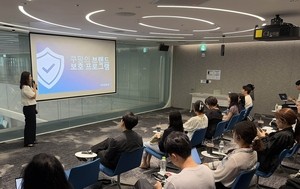
Coupang Inc said it will operate a dedicated hotline for reporting counterfeit cosmetics as part of its efforts to combat fake K-beauty products. The e-commerce company co-hosted a brand protection seminar with the Korea Cosmetic Association on Sept. 10 to strengthen intellectual property protections for Korean cosmetics companies. The event covered Coupang's counterfeit detection processes and countermeasures, and gathered feedback from participants. Jo Hee-kyung, director of Coupang's IP legal team, said the company runs a three-stage process: preemptive measures to block bad-faith sellers from the platform, active detection through AI and monitoring, and post-incident responses that include immediate removal and a one-strike-out policy upon receiving a report. Sven-Erik Battenberg, also a director on Coupang's IP legal team, said the company would pilot a dedicated hotline capable of handling reports from major cosmetics brands on weekends, public holidays and late evenings to ensure swift action. The range of counterfeit products has widened alongside the global spread of K-beauty, and the methods used to produce fakes have grown more sophisticated. According to the Korea Intellectual Property Office, the number of fake K-brand cosmetics blocked on overseas online platforms rose from 16,774 in 2023 to 23,494 in 2024 and 36,116 last year. Coupang also plans to hold regular seminars with major brands to share improvements. Nina Ramesh, head of Coupang's IP legal division, said protecting intellectual property rights requires ongoing communication and cooperation with brand partners. "We will continue to listen to voices from the field and refine our response systems in ways that brands can actually feel," she said.
Sept. 14, 2026
-
Ottogi marks 10th anniversary of founder Ham Tae-ho's passing
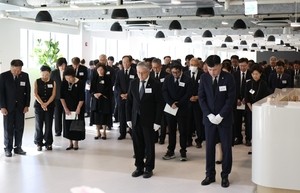
Ceremony honors legacy of pioneer who shaped South Korea's food industry Ottogi said Monday it held a memorial ceremony to mark the 10th anniversary of the death of Honorary Chairman Ham Tae-ho. The ceremony took place Friday at Ham Tae-ho Hall in Anyang, Gyeonggi Province. It was organized to reflect on the life and legacy of Ham, who founded Ottogi and helped drive the development of South Korea's food industry, and to reaffirm his management philosophy. Born in Wonsan, South Hamgyong Province, in 1930, Ham set out to improve the lives of ordinary Koreans through the food industry and in 1969 established Punglim Trading, the predecessor to Ottogi. Starting with Ottogi Curry, the company went on to introduce a wide range of products — soups, ketchup, mayonnaise and vinegar among them — helping to shape and advance Korean food culture. As a business leader, Ham placed quality above all else, insisting that products be made "with the mindset that this is food our own family will eat." He held firm to a philosophy of contributing to national development through better food, and to the belief that "a company must give back to the country." Company traditions such as flying the national flag at factories and singing the national anthem at internal events trace their origins to that conviction. Ham also led a quiet life of giving. In 1992 he began sponsoring children with congenital heart disease through the Korea Heart Foundation, and in 1996 he laid the groundwork for the Ham Tae-ho Foundation, which has since supported scholarships and academic research. Through the heart disease sponsorship program, a total of 6,783 children had received life-saving support as of August this year. Ham's management philosophy lives on as the corporate spirit of Ottogi today. Guided by its founding mission of contributing to the improvement of human dietary life and health, the company continues to pursue better taste and quality while sustaining a range of social contribution activities. This year, Ottogi opened a heritage space called Ham Tae-ho Hall at its Anyang factory, dedicated to the founder's life and philosophy as well as the history of Ottogi and Korean food culture. The space is part of the company's effort to pass the founder's spirit on to future generations. "We will carry forward the founder's vision of 'Punglim' — contributing to the improvement of human dietary life — and work harder to keep moving forward rather than resting on what we have achieved," said Ham Young-joon, chairman of Ottogi.
Sept. 14, 2026
-
SSG.com's data-driven consulting lifts TOPS small-business partners' sales by 68%
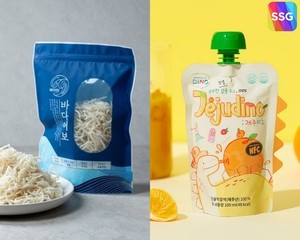
300 first-phase participants post average 68% sales gain SSG.com said Monday that 300 food partner companies that participated in the first phase of the TOPS Program — a small-business brand development initiative supported by the Ministry of SMEs and Startups — posted average sales growth of 68 percent year-on-year during the April–July period. SSG.com analyzed participants' sales data and best practices to propose operational strategies and sales expansion plans, and linked promotional activities and product-trial campaigns to further support sellers. One participating brand, Badaeobo, used the consulting to identify dried squid strips as its flagship product and stepped up brand promotion. After running special discount events for members of its "SSG 7 Club" loyalty program, the brand hit a weekly sales record and saw overall sales rise 106 percent compared with the same period a year earlier. SSG.com's own seller-growth programs are also expanding. The number of new brands joining its "Brand Mark" program rose 24 percent year-on-year, with their combined sales up 28 percent. The number of new businesses receiving AI performance advertising subsidies grew 36 percent. "We will run both the government-backed initiative and our own seller-development programs together to help competitive small businesses grow," an SSG.com official said.
Sept. 14, 2026
-

Lotte Himart takes pre-orders for iPhone 18 Pro with up to 270,000 won off
New care service covers theft and loss Lotte Himart said it is accepting pre-orders for Apple's iPhone 18 Pro series through Thursday. In-store pre-orders began Sunday. Customers who complete both a pre-order and activation of a carrier-bound model will receive 10,000 L.Points. Purchases made with a partner credit card qualify for a discount of up to 270,000 won ($202) and interest-free installments of up to 24 months. Each carrier will also provide premium accessories as gifts. For SIM-free models, customers paying with a participating card can receive up to 10 percent cashback and interest-free installments of up to 24 months. Genuine Apple cases purchased alongside a pre-order are available at 50 percent off. On the online shopping mall, customers buying SIM-free models can earn L.Points and receive a discount when purchasing an AppleCare service plan at the same time. Lotte Himart is also offering trade-in compensation for used phones and budget mobile plan options. Through its "trade-in for cash" service, customers can receive compensation based on the type and condition of the device they return. For an iPhone 16 Pro Max, the payout is expected to reach up to 1 million won. Customers who sign up for the exclusive mobile virtual network operator plan "Himart Plan" can use a 30GB unlimited data plan for 7,900 won per month for one year. Lotte Himart is also introducing a premium care service for Apple devices — billed as the first in South Korea to cover theft and loss — that retains the core benefits of Apple's official warranty while adding one theft or loss claim during the two-year service period. "We have put together a range of purchase benefits exclusive to Lotte Himart for customers who have been waiting for the new iPhone," said Lee Eon-seok, head of Lotte Himart's smart home appliance division.
Sept. 14, 2026
-
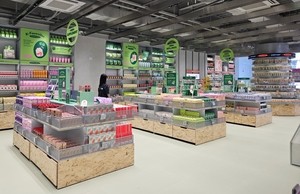
How CJ Olive Young turned Busan into a K-beauty destination
Nampo Town store, third-largest nationwide, opens in building vacant for 6 years Foreign shoppers account for 72% of sales; warehouse-style pharmacy springs up nearby Ice cream, local flair at Millak the Market store in Gwangalli 22 of 78 Busan stores now managed as global tourism outlets Part of 123.8 billion won investment in regions outside Greater Seoul "I come to Busan often, but this is my first time in Nampo-dong. I stopped by because I heard a big new CJ Olive Young had opened." The speaker was Cheon, 42, a resident of Ulsan browsing a towering display of ingestible beauty products on the ground floor of CJ Olive Young Nampo Town in Jung-gu, Busan, on Friday morning. "Unlike a regular CJ Olive Young, there's a lot of food here — it's surprising," she said. "I'd heard foreign tourists were increasing in Busan, and it seems like a great shopping space has come along with them." CJ Olive Young has designated Busan as its new frontline for K-beauty. The company has opened both a flagship-scale megastore — the third-largest in the country — and a locally themed specialty store in the city in quick succession. The moves are part of a 123.8 billion won ($92.5 million) investment plan targeting regions outside Greater Seoul that the company announced this year. The number of foreign tourists visiting Busan reached 2.93 million in 2024 and 3.64 million in 2025, and is forecast to surpass 4 million this year. In the first half of this year, foreign tourist arrivals in Busan rose 43.9 percent year on year. Over the same period, the number of foreign customers visiting CJ Olive Young stores in Busan climbed 74.2 percent, while sales to foreign customers surged 82.3 percent. As of August, CJ Olive Young operates 78 stores in Busan, with strategies tailored to each district — major tourist attractions, cruise port areas and neighborhoods popular with foreign visitors. Twenty-two of those stores are managed as global tourism outlets, covering not only designated tourist zones such as Haeundae-gu, Jung-gu and Dong-gu, but also Busanjin-gu, Suyeong-gu and parts of Gijang-gun, where foreign foot traffic has been growing. From six years vacant to K-beauty megastore: 'One-stop shopping like Myeongdong' CJ Olive Young Nampo Town occupies four floors and about 2,970 square meters in Nampo-dong, one of Busan's three major tourist shopping districts alongside Haeundae and Seomyeon. It is the third-largest CJ Olive Young store nationwide, after CJ Olive Young N Seongsu and Central Myeongdong Town. The new store is an expanded relocation of the Gwangbok Town store — formerly known as the Gwangbok flagship — which opened in 2016 as the company's first flagship outside Greater Seoul. Its primary customers include cruise tourists arriving through Busan Port and Yeongdo Port. From the store's opening on Aug. 28 through Wednesday, foreign shoppers accounted for 72 percent of total sales. The store was designed to make shopping easier for foreign tourists. "Cruise customers need to find and buy popular products quickly," Store Manager Lee Hye-min said. "With that in mind, we introduced a specialized floor called 'K-Favorite' — a first for any CJ Olive Young store nationwide." The section piles products high in a warehouse-club style, spanning beauty, food and health supplements. Cheon, who was browsing the floor, said the setup reminded her of Japan's Don Quijote or Myeongdong — "specialized for one-stop shopping." The store also offers a range of hands-on services. It has six Skin Scan devices in total: three for skin diagnosis, two for color analysis and one for scalp analysis. On the fourth floor, customers can receive personalized beauty recommendations after a "Skin Scan for Face" consultation. Across from it, an "Advanced Derma" zone offers consultations focused on pharmaceutical-brand products. A Japanese tourist named Mao, encountered on the fourth floor, held up an acne product from Dong-A Pharmaceutical. "I picked it out as a gift for my younger sister, who struggles with acne-prone skin," she said. The surrounding neighborhood has also been transformed. The building that now houses Nampo Town sat vacant for six years after the local commercial district declined during the COVID-19 pandemic. Today, a warehouse-style pharmacy has opened next door, street food stalls selling tanghuru and other snacks have multiplied, and the area has taken on a feel reminiscent of Seoul's Myeongdong. A CJ Olive Young official said the company aims to "extend the competitiveness of Central Myeongdong Town to regions outside Greater Seoul and establish Busan as a representative K-beauty megastore destination." 'Only grade-A goods aboard': the 'Olive Young Ship' docked at Millak Port CJ Olive Young Millak the Market, which opened Aug. 30, is a design-themed specialty store found nowhere else. It opened inside a mixed-use cultural complex in Millak-dong with views of Gwangandaegyo Bridge and the open sea. Built around the concept of the "Olive Young Ship" moored at the port, the store is plastered with posters in Busan dialect evoking a fresh-catch seafood market — slogans along the lines of "Spread it on, pick it out, take it home" and "Only grade-A goods come aboard." Product boxes are stacked as if freshly unloaded from a vessel, and fishing nets and parasols serve as decorative props throughout. "Millak-dong is a place where people come to relax in a local, laid-back atmosphere," Store Manager Yun In-hye said. "It's a district where customers tend to come more at night than during the day, and more on weekends than weekdays. When CJ Olive Young opened here, we wanted to make it a place people would visit any time, any day — so we went with a fun concept." Millak-dong has recently emerged as a fast-rising tourist destination. Foreign tourists account for about half of the Millak the Market store's sales. Julie, an Australian tourist encountered in the store, said she had visited a CJ Olive Young in Myeongdong before. "This place has a very different atmosphere," she said. "It has a lot of Korean touches — it's fun." The store is the first CJ Olive Young location nationwide to sell ice cream. Reflecting the neighborhood's character as a late-night leisure destination, the store has also expanded its selection of snack foods and hangover remedies. It is also the only one of three CJ Olive Young stores in the Gwangalli area to carry a Skin Scan color-fit diagnostic device, strengthening its color cosmetics offering. 123.8 billion won outside Greater Seoul: 'Combining local commerce and data' CJ Olive Young announced a large-scale investment plan for regions outside Greater Seoul in April. The plan calls for 43 of the 78 large stores — those with a floor area of at least 330 square meters — that the company opens or renovates this year to be located outside the capital region. Globally themed specialty stores will be built in high-tourism areas such as Busan, Jeju and Gyeongju, while large anchor stores will be established across the Gyeongsang, Jeolla and Chungcheong regions. "We will continue our offline innovation by precisely combining the unique appeal of each local commercial district with customer data — not just in Busan, but across all regions outside Greater Seoul," a CJ Olive Young official said. "We will work to make CJ Olive Young a shopping landmark that represents K-tourism."
Sept. 14, 2026
-
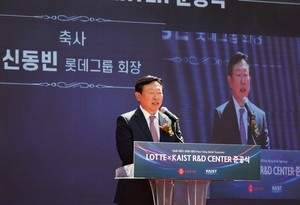
Shin Dong-bin vows to be 'steadfast partner' as Lotte-KAIST R&D center opens
Lotte donates 10 billion won to build center, deepening industry-academia ties since 2012 "Lotte will be a steadfast partner so that faculty and students can research and take on challenges freely, without fear of failure." Lotte Group Chairman Shin Dong-bin reaffirmed his commitment to industry-academia cooperation Friday at the inauguration of the Lotte x KAIST Research and Development Center at KAIST's main campus in Daejeon. "I hope the R&D center will become a hub for industry-academia collaboration that transcends the boundaries between universities and companies, creating greater possibilities," Shin said. The R&D center is designed as a cross-boundary research hub where industry and academia work together to address challenges facing humanity, Lotte said Monday. The building spans six above-ground floors and one below-ground floor, with a total floor area of 4,298 square meters. Research at the center will focus on biotech sustainability, carbon-neutral energy, materials and processes, and advanced food and healthcare — covering fields including systems metabolic engineering, biofuels and plastics, green hydrogen, renewable energy and batteries. Combining KAIST's research capabilities with Lotte's on-the-ground industry experience, the center will carry out work spanning fundamental research, experimentation, prototyping and technology commercialization. AI will be used throughout the research process to accelerate development. Lotte donated 10 billion won ($7.47 million) toward the construction of the R&D center. Shin has long emphasized that innovation capable of changing the world for the better begins with industry-academia collaboration. Lotte's partnership with KAIST dates to 2012, when it began a graduate-level commissioned education program, and has since expanded to include technology transfers and personnel exchanges. In 2022, Lotte Chemical and KAIST established a joint carbon neutrality research center, formalizing their collaborative research. As a result, they completed eight carbon-neutrality projects and secured 15 patents. Lotte and KAIST also plan to jointly pursue strategic technology research by affiliate — covering areas such as semiconductor materials, sustainable energy, and biotech and healthcare — with the technologies developed to be linked to group business operations. KAIST President Bae Choong-sik and faculty from the Department of Biological and Chemical Engineering attended the inauguration ceremony. KAIST presented Shin with a plaque of appreciation in recognition of his support for building research infrastructure and advancing industry-academia cooperation. "We are grateful for Lotte's support and collaboration," Bae said. "By combining KAIST's research capabilities with Lotte's industrial and commercialization strengths, we will bridge the ideas and technologies of the laboratory to real-world value on the factory floor, and together forge new growth engines and sustainable solutions for the future of Korea."
Sept. 14, 2026
-

'Tteok pilgrimage' trend sends interest in Korean rice cakes soaring 5,000%
Pizza-topped rice cakes, pumpkin injeolmi and fruit mochi lead a fusion tteok boom as younger consumers embrace traditional flavors A new trend is sweeping younger Korean consumers: traveling across the country to visit celebrated rice cake shops, a phenomenon now known as "tteok pilgrimage." The term blends the Korean word for rice cake ("tteok") with the word for a religious pilgrimage ("seongjisunrye"), and refers to the practice of hunting down the best traditional and fusion tteok spots — from the viral pizza-topped rice cake to fruit and cream-filled glutinous rice cakes, pumpkin and castella injeolmi, and red-bean-paste rice cakes. The craze has spawned its own vocabulary. "Tteoketing" — a mashup of "tteok" and "ticketing" — describes the scramble to buy from popular shops the moment they open online sales, only to find them sold out instantly. "Yakgwating" applies the same concept to yakgwa, a traditional honey cookie. "Tteok open run" refers to lining up outside a shop before it opens. As of Friday, Google Trends data showed interest in "tteok pilgrimage" had surged more than 5,000 percent compared with a year earlier. Interest in pizza-topped rice cakes jumped more than 1,800 percent from the previous month and more than 5,000 percent year on year. Social media interest has been equally intense. Posts tagged with "tteok restaurant" on Instagram number 136,000. More than 5,000 posts map out must-visit tteok shops around the country, and crowd-sourced maps of top tteok pilgrimage destinations are circulating widely in online communities. The boom traces back to the "halmaenieol" trend — a portmanteau of "grandmother" and "millennial" — in which younger consumers developed a taste for traditional snacks like yakgwa and injeolmi once associated with older generations. The arrival of visually striking fusion rice cakes has amplified the movement, aligning it with a social-media culture that prizes aesthetics and novel experiences. Sales figures bear out the enthusiasm. According to online grocery platform Kurly, transactions in the tteok and hangwa category more than doubled year on year in the three months from June through August, while the number of products on offer grew 80 percent. Sales of hangwa items alone — including yakgwa and yaksik — rose 123 percent over the same period. The biggest sales jump among individual products went to Changeok's pumpkin injeolmi, whose transactions surged more than fourfold — up 336 percent — compared with the same period last year. Pizza-topped rice cakes also broke into the top sellers within two weeks of being listed on the platform in mid-August. Department stores have moved quickly to capitalize on the trend, recruiting popular tteok shops for pop-up events to draw younger shoppers. Lotte Department Store's Dongtan branch ran a pop-up for Mashitteok — a Yongin shop that built its reputation through word of mouth for its pizza-topped rice cakes — from Aug. 28 to Sept. 3. The Busan flagship store is hosting a pop-up for Yeongdobariddeokbang, widely credited as the originator of the pizza rice cake, through Sunday. Yongsan iPark Mall is currently running pop-ups for Gangwon Tteokjip x Ttegureureu Bakery's pizza rice cakes, injeolmi specialist Morakjeolmi, and Jjuakjjuak, a shop that reinterprets the traditional Gaeseong juak fritter in a modern style. News of the events has spread rapidly on social media, triggering daily open runs and sellouts.
Sept. 13, 2026
-

Young Koreans say they're drinking less — but they're still buying 'tasty' alcohol
Younger drinkers seek fruit and sparkling flavors over hard liquor Terra Sparkling sells 2.8 million cans; convenience stores join the trend At around 9 p.m. Thursday, Hayan-jip in Jung-gu, Seoul, was packed with college students in their 20s. The bar is known for serving "bokso saju" — a mix of bokbunja-ju (Korean black raspberry wine), soju and cider. Its refrigerators were stocked floor to ceiling with red bokbunja-ju. Tables were lined with empty bokbunja-ju bottles and pitchers of the blended drink. Sweet, fizzy cocktails had taken the place of the soju and beer typically found at Korean bars. "I prefer sweet, tasty drinks over bitter ones like soju," said a customer in her 20s who gave only her surname, Choi. "Bokso saju is great for chatting with friends." Young consumers are cutting back on alcohol overall, but they are still opening their wallets for drinks that offer flavor and novelty, according to industry sources. As demand grows for "tasty alcohol" to be enjoyed casually rather than purely to get drunk, beverage makers have been rolling out a wave of fruit- and sparkling-based products. Hite Jinro's Terra Sparkling, launched last month, is a prime example. The fruit-infused sparkling drink uses white wine as its base and is designed to deliver a refreshing, crisp taste. It sold 2.8 million cans within a month of its release, quickly carving out a presence in the market. Terra Sparkling comes in three flavors — tomato, lemon and watermelon. The tomato variety, at 4.6 percent alcohol by volume, has been particularly popular. It matches the alcohol content of the original Terra beer but replaces the characteristic bitterness with the sweet, tangy taste of tomato and a sparkling finish, lowering the barrier for consumers who are not accustomed to beer. Convenience stores have also been chasing the trend. CU launched its own bottled bokso saju blend, selling 10,000 bottles within two weeks of release. Seven-Eleven has been targeting the premium alcohol segment since last year with "Wine Ball," a product that combines French wine with highball. Four varieties of its Henri Matisse Wine Ball ranked among the top five domestic highball products by sales last year, and the chain added two new moscato-based products last month. "More and more consumers are choosing drinks based on their personal taste preferences rather than simply going for high alcohol content or large quantities," an industry official said. "The alcohol industry is responding to that demand by introducing a wider range of products featuring fruit and sparkling elements." Meanwhile, total domestic alcohol shipments fell to 2.988 million kiloliters last year, according to the National Tax Service's tax statistics portal. That marked the first time annual shipments had dropped below 3 million kiloliters since 1998, when they stood at 2.922 million kiloliters — a gap of 27 years. Compared with 2015, when shipments reached 3.804 million kiloliters, the figure has declined 21.5 percent.
Sept. 13, 2026
-
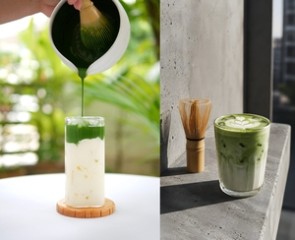
What happens when you swap your morning coffee for matcha?
Matcha's popularity has held steady since 2022 Caffeine + L-theanine deliver a 'calm' alertness Catechins offer antioxidant benefits for skin and inflammation Matcha's popularity has proven far more than a passing trend, sustaining itself over years in a way that few food fads manage. The green tea powder has earned a firm foothold in the alternative beverage market, with analysts crediting its many advantages over coffee. Matcha's staying power becomes clearer when set against other recent food crazes. According to global market research firms, Dubai chocolate and the pistachio boom it sparked dominated world markets for more than a year before losing steam this year. In South Korea, drinks like the pistachio chocolate latte — once a menu staple — have largely disappeared from cafe boards. The ube drink wave that followed generated a flurry of new menu items as well, but never matched the heat of Dubai chocolate or matcha. Matcha first caught attention in 2022 when its vivid green color went viral on TikTok, then exploded in global markets from 2024 onward. Grand View Research projects the global matcha market will grow at a compound annual growth rate of 7.1 percent from 2026 to 2033. The US market is now among the most enthusiastic. Korean cafes using matcha sourced from Boseong and Jeju have drawn attention amid the craze. A Los Angeles cafe called Community Goods became well known as the spot where pop star Justin Bieber drinks a Korean-style matcha latte every morning. In South Korea, new matcha offerings continue to appear alongside established menu items. Twosome Place has introduced new matcha drinks including a yuzu lemon matcha tonic and an apple mango matcha latte. Starbucks recently launched its Iced Pure Matcha. Central to matcha's appeal is its potential as a coffee substitute. Matcha contains more caffeine than regular green tea — enough to deliver the alertness many coffee drinkers seek. What sets matcha apart from coffee is the presence of L-theanine alongside caffeine. L-theanine, an amino acid, promotes mental and physical calm. Two studies published in 2022 in the international academic journals PMC and Cureus found that caffeine stimulates dopamine and choline pathways to produce strong alertness, while L-theanine acts on GABA and glutamate receptors to moderate neural excitation. In matcha, the two pathways work simultaneously — preserving the alertness effect while offsetting the anxiety and jitteriness that caffeine alone can cause. On social media, users have shared experiences that reflect this dynamic. "Since I quit coffee and switched to matcha, the alertness feels calmer than before," wrote one user. Another said, "One week into my morning matcha routine — my focus and energy feel pleasantly steady." A third noted, "It has caffeine, but I feel healthier than I did with coffee." Matcha's deep color, pleasantly bitter taste and antioxidant properties add further to its appeal. Catechin, the antioxidant compound most associated with green tea and matcha, is found in higher concentrations in matcha than in regular green tea. Researchers at the University of Parma in Italy, writing in the international journal Molecules in 2025, said a review of 17 related studies found catechin showed benefits in cognitive function, anti-inflammatory and antioxidant activity, and obesity and metabolic health. Catechin is also widely used in skin care. Through its antioxidant action, it can help brighten skin and soothe inflammation. However, adults sensitive to caffeine and those drinking matcha late in the afternoon should exercise caution. Because caffeine content varies by drink, checking the level beforehand is advisable.
Sept. 13, 2026
-
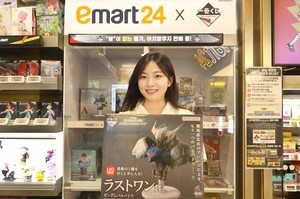
From figures to lottery tickets: convenience stores go all-in on Japanese anime
E-mart24, GS25 bring Ichiban Kuji lottery format to stores Goods-related sales jump as fans shop with purpose Convenience stores are expanding their lineups of products and content tied to Japanese anime intellectual property, as a growing number of consumers visit not for food or household goods but for character merchandise such as figures — turning the neighborhood store into a destination for fans. According to the retail industry Saturday, E-mart24 recently added a dedicated category for anime figures and manga to its mobile app's reservation-and-pickup service. Through the service, the chain sells figures based on popular Japanese anime titles including "Jujutsu Kaisen," "Demon Slayer" and "Chainsaw Man." Spending on "subculture" items — figures, character goods and prize draws — has been rising across the convenience store sector. At E-mart24, average monthly sales of anime and gaming figures and goods from June through August jumped 171 percent year on year. Sales of capsule-box and other prize-draw products in the first half of this year rose 89.5 percent. Physical stores are also bringing in Ichiban Kuji, a Japanese character-goods lottery format. E-mart24 recently introduced a paper-ticket version at its flagship Trend Lab Seongsu store. Known informally as a "no-miss lottery," Ichiban Kuji has customers draw a ticket at random to receive a prize — figures, plush toys or other goods — determined by the ticket's rating. GS25, operated by GS Retail, opened a dedicated Ichiban Kuji store in Busan's Seomyeon district in July. The ground floor operates as a standard convenience store, while the second floor is devoted to Ichiban Kuji and a space where visitors can experience anime and character IP — stocked with limited-edition figures and related goods based on well-known properties. The store also features a gacha kiosk alongside the Ichiban Kuji kiosk. GS25 plans to run the location as a pilot before rolling the format out nationwide. The industry's push into character merchandise reflects a pattern of purpose-driven visits — customers coming specifically to buy IP-related products rather than everyday staples. An analysis of L.Point transaction data by Lotte Members covering last June through this May found that consumers in their 20s showed a clear tendency to visit convenience stores for specific IP products or exclusive new releases. Customers who bought IP products three or more times visited stores more than three times as often as those who bought them only once. The broadening of IP consumption from a niche hobby into a mainstream retail category is also cited as a driver. According to the Korea Creative Content Agency's "2025 Character User Survey," 79.8 percent of respondents said they had purchased character merchandise. Purchase rates were relatively higher among women (84.1 percent), teenagers (90.2 percent) and consumers in their 20s (84.4 percent). The growth in goods-bundled products stands out across the industry. GS25 said sales of products paired with goods rose 122.2 percent year on year in the January–July period, while the number of such products it carried grew 40 percent to 105 items over the same period. Other chains posted similarly sharp gains: CU saw goods-bundled product sales jump 121.4 percent, and Seven-Eleven recorded a 424 percent surge. "IP-related products and content are continuing to expand because they draw in younger customers and increase both time spent in stores and linked purchases," a retail industry official said. "Because so many consumers visit specifically to buy goods, we keep adding to our related product offerings."
Sept. 12, 2026
-

OB Beer donates scholarships to Icheon, bringing cumulative total to W365m
Annual donations since 2009 support underprivileged students OB Beer announced Friday that it has donated about 7 million won ($5,230) in scholarships to Icheon, Gyeonggi Province, home to its Cass beer production factory. The presentation ceremony was held at Icheon City Hall on Thursday. Attendees included OB Beer's Icheon factory head Kim Du-young, Greater Seoul regional head Choi Jeong-wook and Seongnam branch manager Kang Seok-bin, along with Icheon Mayor Seong Su-seok and Im Gi-bae, chairman of the Icheon Citizens' Scholarship Foundation. OB Beer has donated scholarships to Icheon every year since 2009, bringing the cumulative total to about 365 million won. The funds support students from underprivileged backgrounds. "We will continue to engage consistently with the local community and support the development of future talent," an OB Beer official said.
Sept. 11, 2026
-

Duty-free industry uneasy as won's strength narrows profit margins
Duty-free exchange rate hits 23-month low Benchmark rate also falls 50 won in a month 'Every sale brings a currency loss,' industry says The exchange rate applied to duty-free purchases has been falling in line with the recent decline in the won-dollar rate. A falling won-dollar rate typically encourages more Korean shoppers to buy duty-free goods, but the industry is not entirely pleased. The recent roller-coaster swings in the exchange rate could translate directly into weaker profitability. According to the duty-free industry on Friday, the official won-dollar rate applied to duty-free purchases stood at 1,337.9 won that day. That is the lowest level in one year and 11 months, since Oct. 8, 2024, when it stood at 1,333.3 won. Compared with its recent peak of 1,554.4 won on July 3, the rate has plunged 13.9 percent, or 216.5 won, in just two months. Over the most recent month, from Aug. 12 to Friday, the rate fell 5.5 percent. The duty-free exchange rate, which applies to both domestic and imported goods, is reset every midnight based on the previous day's benchmark rate set by the Seoul Money Brokerage Services. The won-denominated payment amount is calculated by multiplying the dollar-based price by the daily exchange rate. As a result, a falling duty-free exchange rate typically encourages more purchases by Korean shoppers. In practice, sales to Korean shoppers fell sharply in July, when the monthly average official rate exceeded 1,500 won, reaching 1,501.1 won. According to the Korea Duty Free Shops Association, the number of Korean buyers and total sales that July came to 1,363,372 people and 241.8 billion won ($181 million). Both figures were down 14.2 percent and 13.5 percent, respectively, from the same month a year earlier. With the rate holding in the 1,300 won range this month, the chances of improved sales to Korean shoppers have grown. Still, duty-free retailers are not entirely upbeat, because a rate that falls between the time products are purchased and the time they are sold can translate into losses. Since the rate hovered in the 1,400 to 1,500 won range over the past year, retailers that bought products at those higher rates now face an unavoidable currency loss. "When we bought imported goods, the rate was in the mid-1,400s to 1,500 won range, and now it has fallen to the 1,300s," an industry official said. "It is a structure where every sale results in a currency loss." Profitability calculations have grown even more complicated as duty-free retailers recently lowered the benchmark rate applied to domestic brand products. Lotte and Hyundai duty-free stores cut their benchmark rate from 1,400 won to 1,350 won per dollar starting Thursday, while Shilla and Shinsegae duty-free stores followed suit starting Friday. The benchmark rate is used to set the dollar-denominated sale price of domestic goods supplied to duty-free stores in won. When the benchmark rate falls, the dollar sale price rises. For example, a domestic product priced at 100,000 won would sell for $71.4 under a benchmark rate of 1,400 won, but for $74.1 under a rate of 1,350 won. That makes it less price-competitive. The bigger problem is uncertainty. As the exchange rate has swung up and down in short succession, it has become harder for retailers to decide when and how much inventory to purchase. The frequent shifts in the benchmark rate itself reflect the industry's struggle. The rate was cut from 1,400 won to 1,350 won in June 2025, then raised back to 1,400 won in November 2025, to 1,450 won in March 2026, and to 1,500 won in July 2026 before this latest cut. That amounts to five adjustments in 15 months. "We have never experienced such steep exchange rate fluctuations," an industry official said. "We can only plan a purchasing strategy when the exchange rate moves predictably within an expected range, but it keeps deviating from expectations, making it difficult to manage profitability."
Sept. 11, 2026
-
!['Hanwoo is too pricey': Shoppers turn to imported pork [Food 360]](https://wimg.heraldcorp.com/news/cms/2026/09/11/rcv.YNA.20260825.PYH2026082511460001300_T1.jpg?type=h&h=240)
'Hanwoo is too pricey': Shoppers turn to imported pork [Food 360]
Domestic beef sales fall 6.6% as shoppers cite high prices Imported pork sales jump 45.6%, with samgyeopsal up 48.9% "These days, I only look at hanwoo -- I don't buy it," a shopper said while heading toward the imported samgyeopsal section at a hypermarket after work. "Of course I want to buy hanwoo, but grocery costs have gone up, so more often I choose samgyeopsal instead," the shopper said. "It's the same when eating out." As prices for hanwoo, Korean beef, continue to soar, more shoppers are turning to relatively cheaper pork. With high inflation weighing on household budgets, value for money appears to be a growing priority in meat shopping as well. According to sales data from Dabom, the livestock distribution information platform run by the Korea Institute for Animal Products Quality Evaluation, domestic beef (hanwoo and other cattle breeds) sales from January to July totaled 13.81 million kilograms. That was down 6.6 percent from the same period last year. Imported beef sales fell 5.4 percent to 9.23 million kilograms over the same period. The data, however, is compiled from sales records of select hypermarkets, chain supermarkets and cooperative marts, and does not represent nationwide consumption. Domestic beef sales have been on a steady decline. Sales for the January-July period stood at 15.21 million kilograms in 2024, falling 2.8 percent to 14.79 million kilograms last year. This year's 6.6 percent drop brings the cumulative decline to 9.2 percent compared with two years ago. Pork sales, by contrast, are rising. Domestic pork sales reached 44.48 million kilograms from January to July this year, up 2.4 percent. Imported pork sales jumped 45.6 percent to 12.66 million kilograms, with imported samgyeopsal surging 48.9 percent. Compared with two years ago, imported pork sales have soared 69.9 percent. An increase in import volumes has also contributed to the rise. According to the Agricultural Outlook Center of the Korea Rural Economic Institute, pork imports from January to July totaled 331,000 tons, up 14.3 percent from a year earlier. Samgyeopsal imports surged 40.2 percent, while imports from the EU jumped 51.9 percent over the same period. Household and restaurant markets show a similar divide. According to the institute, home purchases of hanwoo fell 0.8 percent in July from a year earlier, while the beef sales index per restaurant dropped 8.4 points. Over the same period, however, household purchases of domestic pork rose 13.5 percent and imported pork purchases jumped 53.2 percent, while pork sales per restaurant increased 3.9 percent. Beef prices climbed sharply while pork prices rose only modestly. Domestic first-grade beef tenderloin cost 15,288 won ($11) per 100 grams as of Wednesday, up 19.1 percent from a year earlier, driven by shrinking hanwoo cattle numbers and slaughter volumes. US beef chuck eye roll (chilled) also rose 21.4 percent amid the high exchange rate. Pork belly, meanwhile, edged up just 1.2 percent to 2,972 won per 100 grams, while imported samgyeopsal rose 1.1 percent to 1,529 won. A report by the institute titled "Supply and Demand Trends and Outlook for Beef Cattle, Pigs and Dairy Cows" sheds light on why consumers have shifted their preferences. Among those who cut back on hanwoo consumption last year, 77.7 percent cited high prices as the reason. Among those who turned to imported pork, 40.8 percent said they did so because it was cheaper. By cut, samgyeopsal remained the most preferred. The share of consumers seeking cheaper cuts such as pork shoulder and leg rose 2.0 percentage points from a year earlier to 6.4 percent.
Sept. 11, 2026
MOST READ
- 1KAIST develops high-performance bio-based adhesive using E. coli instead of petroleum
- 2Pope Leo XIV declines French honors and banquet, accepts only private meeting with Macron
- 3Daimler Truck unveils next-generation transport solutions at IAA 2026
- 4What was Rachmaninoff's performance fee? A 1928 price list tells all
- 5Samsung Biologics union's show of force backfires at the bargaining table
- 6APR says hair-loss treatment research published in international journal
-
WORLD

US warns of punishment for anyone enabling Iran's Strait of Hormuz toll scheme
-
INDUSTRY
Toyota union puts productivity first; Hyundai Motor union demands bigger share of profits
-
FINANCE
National Growth Fund to invest $531M in FuriosaAI, which rebuffed Meta's $800M takeover bid
-
INDUSTRY
Korea Shipowners' Association holds amateur baduk tournament for Maritime Day