
- HOME
- CONSUMER
-
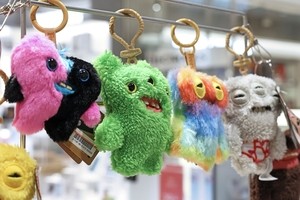
Ugly but cute: Shinsegae Duty Free brings in 'Fuggler' characters
Available at Myeong-dong store, Incheon airport Terminals 1 and 2, and online mall Shinsegae Duty Free announced Wednesday that it is introducing the global character brand Fuggler, marking the first time the brand has entered South Korea's duty-free industry. True to its name -- short for "Funny Ugly Monster" -- Fuggler is known for its comically ugly expressions and human-like teeth. The brand began in 2010 when a British artist came up with the idea of attaching model teeth to stuffed toys. Fuggler products have sold more than 8 million units worldwide. The lineup includes characters such as Rabbit Mix, Long Long Ear, Nugget, Macgoo Mix and Weirdo Mix. A brand pop-up store is also planned to open in Shanghai later this year. Shinsegae Duty Free has simultaneously rolled out Fuggler at its Myeong-dong store and Incheon airport Terminal 1 and Terminal 2 outlets, with plans to launch the brand on its online mall this month. "We will continue to introduce differentiated character and lifestyle products going forward," a Shinsegae Duty Free representative said.
Sept. 9, 2026
-
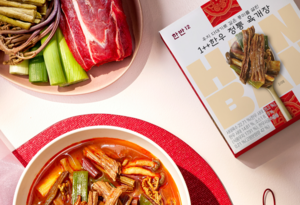
LF Foods raises HMR bar with full rebrand of Hanban12
Completes 12-item lineup split into everyday meals, health-boosting dishes and main courses Combines sourcing, noodle and meat processing, and sauce-making expertise LF Foods said Wednesday it has fully renewed its premium hansik home meal replacement (HMR) brand Hanban12. The company reorganized the lineup to match different eating occasions. It added four new items — Clear Dried Pollock Soup, 1++ Hanwoo Doenjang Jjigae, 1++ Hanwoo Beef Radish Soup and Vegetable-Packed Dak-galbi — bringing the total to 12 products. The lineup is now split into three categories: everyday meals, health-boosting dishes and main courses. Everyday meals include Abalone Seaweed Soup, 1++ Hanwoo Traditional Yukgaejang and Clear Dried Pollock Soup. Health-boosting dishes include Chewy Beef Tendon and Ox Bone Soup and Clear Tripe Gomtang. Main courses include Hanwoo Gopchang Jeongol, Seasoned LA Galbi and Vegetable-Packed Dak-galbi. The products use raw ingredients such as abalone from Wando, pollock naturally dried at a drying facility in Daegwallyeong and 1++ grade hanwoo beef. Other ingredients include domestically sourced vegetables and soybean paste made by a master fermenter. The company formulated broths differently for each menu item. The Clear Dried Pollock Soup is simmered with pollock heads and vegetables, while the 1++ Hanwoo Traditional Yukgaejang uses a broth made by boiling hanwoo beef directly. Soup and stew items come with generous portions of meat and other ingredients. LF Foods designed the health-boosting line so a single pack provides more than half of the Ministry of Food and Drug Safety's recommended daily protein intake. LF Foods resized the everyday meal line so the products can go straight from the freezer into a pot. Starting in September, the company will release three commercial videos in succession. Packaging colors — green, red, orange, yellow and burgundy — distinguish each product's characteristics, and each of the 12 menu items comes with its own story and character. Sales will center on the official Hanban12 Mall, launched in September. LF Foods plans to expand distribution through channels such as KakaoTalk Gift and Market Kurly. In December, the company will expand Hanban12 Mall into an integrated shopping platform covering all of LF Foods' business-to-consumer products. The official mall will also introduce a service called Hanban Dream, which lets recipients enter their own delivery address or choose the products they want. Aimed at chuseok gift demand, the company is also launching two new sets. The Hanban12 Flavor Set combines everyday meals and health-boosting dishes, while the Hanban12 Heart Set adds main courses as well. "This rebranding focused on completely reorganizing everything from raw ingredients and cooking methods to product lineup, packaging and customer experience, with the goal of creating a meal we can confidently give to anyone," an LF Foods official said. "We will strengthen our position in the premium hansik HMR market based on well-crafted products and a differentiated gift experience."
Sept. 9, 2026
-

Bunjangmarket obtains ISO 27001 information security certification
Bunjangmarket said Wednesday it has obtained ISO/IEC 27001 certification, an international standard for information security management systems established by ISO and the International Electrotechnical Commission. The ISO 27001 certification is granted after an assessment covering four areas — information security policy, access control, physical security and incident response — and 93 detailed control items. Bunjangmarket has maintained an Information Security Management System certification from the Ministry of Science and ICT for six consecutive years. With this latest certification, the company has now built a comprehensive information security management system. Since the company also operates Bunjang Global, it has had its security system and operational capabilities verified as meeting international standards. To prevent security incidents, Bunjangmarket has implemented a "Zero-Paper" policy banning paper and writing instruments from consultation zones. It also enforces a weekly "clean desk" system to keep areas around PCs tidy, along with mandatory security stickers over phone cameras. The company also conducts its own internal inspections covering roughly 70 items each quarter. "This certification is the result of our efforts to enhance member data protection and service reliability through an information security management system that meets international standards," said Park Byung-sung, chief technology officer and chief information security officer at Bunjangmarket. "We will continue thorough security management and proactive investment to build a resale environment where customers can trade with confidence."
Sept. 9, 2026
-
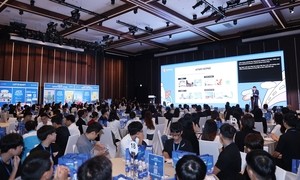
Lotte to host global job fair in Indonesia with 9 affiliates
Lotte said Wednesday it will hold the 2026 Lotte Global Job Fair in Jakarta, Indonesia, with nine of its affiliates operating in the country taking part, including Lotte Chemical, Lotte Department Store, Lotte Mart and Lotte Global Logistics. The event will introduce Lotte Group and its affiliates' businesses to about 600 local job seekers, followed by recruitment consultations and mock interviews. Participating affiliates will also run promotional booths. Lotte held its first global job fair in Hanoi, Vietnam, in August 2025. Indonesia is the second host country. Lotte first entered Indonesia in 2008 with Lotte Mart, and now has 12 affiliates operating there across retail, chemicals, logistics, IT and construction. Sales in Indonesia surpassed 2 trillion won ($1.49 billion) last year. The company currently employs 8,000 local staff and plans to hire 300 more by the end of the year. "The global job fair is a place where local job seekers can explore the businesses and roles of various Lotte affiliates all at once and communicate directly with current employees," a Lotte official said. "We will continue to broaden our engagement with outstanding global talent through diverse recruitment activities."
Sept. 9, 2026
-
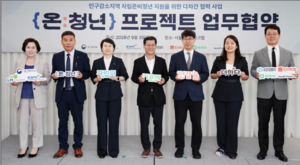
Daiso to support youth aging out of care in depopulating regions
Joins 'On:Youth Project'... distributes Daiso gift cards to 300 youth Asung Daiso said Wednesday that it has joined the "On:Youth Project," an initiative aimed at helping youth aging out of state care in population-declining regions get a start in society. Under the program, Asung Daiso plans to distribute gift cards so that young people can purchase products they need on their own. The support will go to 300 youth who are within five years of leaving state care and who live in one of 107 regions nationwide designated as population-declining or population-decline attention areas. Other participating organizations will each draw on their own expertise and resources to provide additional forms of support. Youth aging out of care refers to young people within five years of leaving a child welfare facility or ending foster care. Over the past five years, from 2021 to 2025, a total of 7,395 youth nationwide exited the child protection system. More than 1,000 began independent life each year after leaving state care. "We hope this will help youth aging out of care build a stable foundation for living as they take their first steps into society," an Asung Daiso official said. "We will continue to use Daiso's resources and capabilities to carry out activities that benefit local communities."
Sept. 9, 2026
-
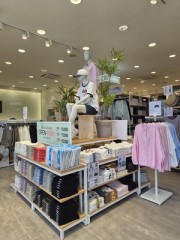
SPA brands bet on supply chains as costs rise and shoppers tighten belts
Rising exchange rates, raw materials and logistics costs squeeze margins Price sensitivity grows as pressure to raise prices mounts 'Product value, not just discounts, will matter more and more' Rising exchange rates, higher raw material costs, and growing logistics and labor expenses are squeezing manufacturing margins across the fashion industry. Against that backdrop, industry watchers say the perceived value consumers place on products will become the defining competitive edge going forward. SPA — or specialty retailer of private-label apparel — brands are particularly exposed to currency swings because they source a large share of their raw materials and finished goods overseas, according to industry officials. While mass production and rapid product turnover have long underpinned their price competitiveness, accumulated cost increases driven by raw material prices are making that model harder to sustain. Moves to raise or review prices on some products are becoming more visible across the industry. Uniqlo is a prominent example: this year it relaunched its "Baggy Curve Jeans" line as "Baggy Barrel Leg Jeans," raising the price from 49,900 won ($37) to 59,900 won. The problem is that consumers are more price-sensitive than ever. As spending on essentials — groceries, dining out and utility bills — rises, the budget left for clothing is shrinking. The Ministry of Statistics' retail sales index for June showed sales of semi-durable goods, including clothing, footwear and bags, fell 1.7 percent from the previous month. The industry is wrestling with pricing strategy caught between rising costs and weakening consumer demand. Passing on higher costs through price increases is necessary to protect profitability, but even modest price hikes risk pushing more shoppers to delay purchases or seek alternatives. The effect is felt most acutely on SPA staples such as T-shirts, innerwear and denim — items consumers buy repeatedly. Unlike trend-driven, one-off purchases, even a small price difference on these basics can influence which brand a shopper chooses. That dynamic is why product value is emerging as a competitive factor. Consumers now weigh quality, functionality and versatility alongside price, and preference is growing for brands that deliver sufficient value at a reasonable cost. The industry has identified improving efficiency across production and supply chains as the key to maintaining price competitiveness. "Rather than immediately passing cost increases on to retail prices, building a system that can sustain both price stability and quality investment will determine who comes out ahead," one industry official said. Shinsung Tongsang's SPA brand TOPTEN10 is holding the line on prices for key products while pressing ahead with merchandise and brand investment. In the second half of this year alone, the company has renovated 27 stores nationwide and expanded its strategic fabric lineup — COOL Air, On-Air and Air Tech. It has also appointed actor Jun Ji-hyun as its new brand ambassador to reinforce its "Good Wear" philosophy. Shinsung Tongsang says the investments are being made possible without price increases by refining production planning and building a directly managed manufacturing system. "Even as cost pressures grow, our goal with the 'Good Wear' strategy is to be a brand customers can keep choosing without hesitation and feel satisfied wearing for years," a company official said. "We will continue to improve production efficiency while sustaining investment in our products and stores to raise the value customers experience."
Sept. 9, 2026
-
Coupang's monthly card spending tops W5tr, hitting record despite data breach
July card spending exceeds 5 trillion won, used by about 35.44 million people August spending nears 5 trillion won as users climb to about 35.95 million Coupang's estimated credit and debit card spending surpassed 5 trillion won in July, hitting a record high and defeating fears that customers would abandon the platform following a massive personal data breach. Mobile Index, a data platform run by AI data tech firm IGAWorks, reported Wednesday that Coupang's estimated card spending in July came to 5.09 trillion won. That was up 5.4 percent from 4.83 trillion won the previous month. That marks the highest monthly figure since the company disclosed the data breach last November. Estimated spending in August came to 4.93 trillion won, nearing the 5-trillion-won mark and up 12.6 percent from 4.38 trillion won in August of last year. Monthly spending had fallen as low as 4.02 trillion won in February before gradually recovering. The number of users also grew. Coupang's app logged about 35.95 million monthly active users in August, up roughly 510,000 from 35.44 million in July. That figure surpassed the 34.38 million monthly active users recorded in October of last year, before the data breach came to light. The figure is about four times that of Naver Plus Store, which had about 9.04 million users. Despite a wave of account deletions and calls to boycott Coupang immediately after the breach was disclosed, the company appears to have suffered no lasting user exodus. Domestic e-commerce platforms, by contrast, struggled. Gmarket's estimated card spending in August came to 247.7 billion won, down 25.9 percent from a year earlier. Eleven Street's spending fell 3.1 percent over the same period to 241.4 billion won. Meanwhile, an AI algorithm estimated the spending figures based on credit and debit card transaction data. Naver Plus Store's own payment data was not included in the comparison.
Sept. 9, 2026
-

Lotte Wellfood CEO calls for stronger fundamentals, global expansion under 'One Lotte'
Lotte Wellfood CEO Seo Jeong-ho said the company will pursue sustainable growth by strengthening its fundamental competitiveness across the business and expanding into global markets. At a town hall meeting held last month, Seo urged employees to focus on two core strategies to achieve solid midterm and long-term growth. These strategies were improving the domestic business through stronger fundamental competitiveness and sustaining high growth in the company's global operations. Lotte Wellfood is currently concentrating on strengthening its fundamental competitiveness. The company is focusing on maximizing operational efficiency across its value chain, including optimizing its production network and overhauling logistics and procurement processes. The company also plans to improve its responsiveness to demand through a data-driven management system. The company is also moving to boost its global competitiveness. Its strategy calls for reinforcing its position in key existing strategic markets such as India and Kazakhstan while growing core brands like Pepero. Lotte Wellfood will also deepen cooperation between its Korean and Japanese food affiliates, centered on a recently launched joint venture in Singapore. Meanwhile, Lotte Wellfood posted 2.18 trillion won ($1.63 billion) in consolidated revenue and 100.5 billion won in operating profit in the first half of this year.
Sept. 9, 2026
-
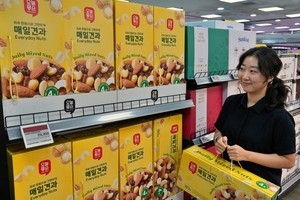
Lotte Mart launches 'Oneul Joeun' PB gift line for chuseok
First product is 80-pack nut gift set priced at 29,900 won Overseas direct sourcing keeps prices competitive Lotte Mart and Lotte Super said Wednesday that they have launched chuseok gift sets under their private brand "Oneul Joeun," which roughly translates to "good today." Oneul Joeun, introduced in 2023, is a private brand spanning both food and non-food categories. Until now, it has focused mainly on everyday grocery items. Starting with this year's chuseok, the brand has expanded into holiday gift sets as well. The first product is the "Oneul Joeun Everyday Nuts 80-Pack Gift Set," priced at 29,900 won. Lotte Mart and Lotte Super secured price competitiveness through overseas direct sourcing, carefully selecting overseas partners and streamlining the import, blending, small-packaging and finished-product processes into a single system. The set's composition also stands out for its appeal to customers. While similar-priced nut sets typically contain 30 percent almonds or less, this one uses 40 percent almonds, along with macadamia nuts and roasted cashews. "As the name 'Oneul Joeun' suggests, we focused on product value and practicality," said Oh Se-woong, head of the private brand and import-export division at Lotte Mart and Lotte Super.
Sept. 9, 2026
-
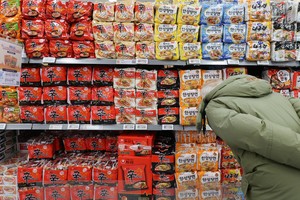
K-food exports to Middle East jump 66% in four years, driven by ramyun
Exports of K-food, including ramyun, to the Middle East continue to grow. South Korean agricultural and food exports to the Gulf Cooperation Council region rose from $248.5 million in 2021 to $411.63 million in 2025, a 65.6 percent increase. The figures come from a briefing book for a strategy seminar on expanding K-food's entry into halal markets, held by the Korea Agro-Fisheries and Food Trade Corporation, or aT, on Wednesday. The UAE stands out as a major export destination. Exports to the UAE rose from $199 million to $335.24 million over the same period, up about 68 percent. By product, ramyun exports rose 22 percent, from $38.9 million in 2024 to $47.46 million last year. Over the same period, exports of sauces increased 31.8 percent, from $3.62 million to $4.77 million. Exports of rice-based food products climbed 42.6 percent, from $4.04 million to $5.76 million. Ice cream exports rose from $2.83 million to $3.75 million, and beverage exports increased from $3.15 million to $4.07 million. Food consumption culture in the Middle East is shifting. Cho Min-su, head of aT's Time Out Dubai office, cited growing demand for home meal replacement products like ramyun and frozen food, and rising interest in health and wellness food. He named these as key recent shifts in the Middle East food market, according to the seminar's briefing materials. However, given the region's strict halal standards, exporters need to review each country's regulations and systems in advance. "Raw materials, manufacturing processes and production facilities all must meet halal standards," Cho said. "Middle Eastern countries require imported food to carry labeling in both English and Arabic, and mandate disclosure of country of origin, ingredients, allergens and expiration dates." "There is also a trend toward tighter regulation on sugar, particularly for sweetened beverages, and stricter nutrition labeling standards for some foods," he added. He said companies should review their product ingredients and labeling requirements in advance. Lee Seul, a researcher at the Korea Food Research Institute, also stressed the importance of obtaining halal certification through agencies recognized by each country. "Companies should also check in advance for the possible presence of ethanol, which can occur or remain during fermentation and processing, and for the potential mixing of pork-derived ingredients," she said.
Sept. 9, 2026
-
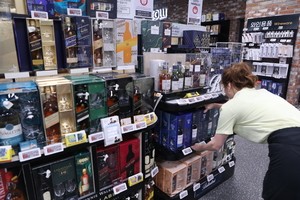
E-mart sees 40% jump in wine, whiskey gift set sales ahead of chuseok
Discount events offer options from premium to budget-friendly E-mart said Wednesday that sales of liquor gift sets are climbing ahead of chuseok. Combined sales of whiskey and wine sets at E-mart grew 14.4 percent during this year's Lunar New Year holiday compared with the same period last year. The growth trend has carried into chuseok as well. Gift sets of wine and whiskey saw preorder sales rise 39.6 percent and 38.6 percent, respectively, from Aug. 6 to Monday, compared with the same preorder period last year's chuseok. The Scotch whisky Royal Salute 21 Years (700 milliliters) is available for 219,800 won ($164) with Shinsegae points applied, while The Glenlivet 18 Years (700 milliliters) can be purchased for 149,800 won with points applied. Wine options are equally varied. Chateau Margaux 2018 (750 milliliters) sells for 1.298 million won, and Catena Zapata Adrianna River Malbec 2021 (750 milliliters) goes for 299,000 won. Budget-friendly wine sets such as the Pujol set (red plus semi-dulce) and the Vina Maite set (tinto plus blanco) are each priced at 29,800 won. "We recommend these holiday-themed products not only as gifts but also for personal collections or gatherings," said Go A-ra, an E-mart liquor buyer.
Sept. 9, 2026
-
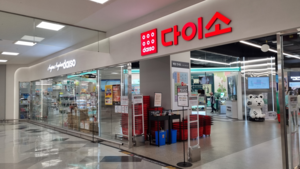
Antitrust regulator inspects Daiso over supplier abuse claims
The Korea Fair Trade Commission has launched an on-site investigation into Asung Daiso, the operator of the discount lifestyle goods chain Daiso, over allegations that it violated the Act on Fair Transactions in Large Retail Business. Industry sources said Wednesday that the commission sent investigators to Asung Daiso's headquarters in Gangnam-gu, Seoul, on Tuesday to carry out the on-site probe. The commission is reportedly looking into whether Asung Daiso returned products it had received from suppliers without justifiable reason. The commission is also said to be examining whether Asung Daiso demanded economic benefits from suppliers and unfairly passed on the costs of promotional events. The commission earlier conducted an on-site investigation into Asung Daiso alongside CJ Olive Young in April over allegations that both companies had violated the same law. The latest probe is an additional on-site investigation aimed at reinforcing that earlier inquiry. According to a survey the commission released in December 2025 on sales commission rates charged by major retail brands, CJ Olive Young's online shopping mall charged an effective commission rate of 23.5 percent, notably higher than other retailers, which charged around 10 percent. The effective commission rate at its specialty stores also reached 27.0 percent. The commission's separate survey on payment practices among major retailers found that Daiso, in direct-purchase transactions, took an average of 59.1 days after receiving goods to pay suppliers, nearly maxing out the legal deadline of 60 days.
Sept. 9, 2026
-

'Do you know Farmer 000?' — E-commerce platforms head to the source
Beyond origin: the producer behind the product becomes the new premium CJ OnStyle's origin- and variety-specific food sales surge 163.2% Consumers who once cared only about where their food came from are now asking who grew it. The farmer's name, cultivation process and personal story have become deciding factors in what people put in their carts. E-commerce companies are racing to secure differentiators — origin stories, chefs, farmers — that tap into that shift in consumer psychology, industry sources said Tuesday. In-season figs are a prime example. Platforms are leading with Yeongam, the country's top fig-growing region, and pairing that with the name and backstory of the individual farmer who grew them. Among CJ OnStyle's top-selling figs is "Producer Kim Mi-gyeong's Yeongam Figs." The product description reads: "Producer Kim Mi-gyeong tends each tree with care even on the hottest summer days, because this is fruit she would feed her own family. The figs' rich color and fragrant aroma are the result of that care." The farmer's photo and name are featured prominently on the product page to build trust and set the listing apart. CJ OnStyle is broadening its lineup through its premium food hall "The Master," spanning domestic origins and producers, regional restaurants, chefs and imported premium ingredients. Offerings range from origin- and variety-forward products — Haenam Beni Haruka sweet potatoes, Uiseong yellow peaches, New Zealand gold kiwis — to imported specialty items such as French organic chicory tea and Japanese Obama-produced sea urchin soy sauce. Consumers, meanwhile, are venturing beyond familiar brands to follow origins, varieties and producers — a trend the industry has dubbed "gourmet roaming." The numbers back it up. CJ OnStyle's order value for origin- and variety-specific foods last month rose 163.2 percent from the same period a year earlier. The share of total food orders carrying an origin or variety in the product name expanded more than fourfold, from 4.1 percent in August last year to 17.0 percent in August this year. Kurly is also expanding a fruit lineup that puts producers front and center. "Producer Oh Seung-min's Jeju Apple Mango" and "Producer Jo Hang-hyeon's Seonghwan Fresh King Pear" are among the popular offerings. Transaction value for producer-named fruit products rose about 75 percent in the January–August period compared with the same stretch last year, and the number of related products nearly doubled year on year. SSG.com is building consumer trust through its "Fresh Artisan" line, and its chef-collaboration products have been growing consistently. Sales of chef-partnership items in the January–August period climbed about 30 percent from a year earlier. Lotte On recently launched "Jibbagsangjeom" (a home-meal marketplace), scouting quality producers and seasonal ingredients from across the country and providing shoppers with information on who made each product and where. "The benchmark for premium food competition is shifting from 'how much does it cost?' to 'where was it made, by whom, and how?'" an industry official said. "As more 'gourmet roamers' place value not just on price but on origin, production process and the story behind a product, competition among retailers to discover and showcase producers will only intensify."
Sept. 8, 2026
-
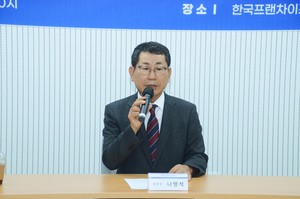
Franchise industry group warns proposed rules will deepen franchisor-franchisee conflict
Korea Franchise Industry Association head calls for full revision of 4 'poison clauses' Group demands 40% membership threshold, limits on third-party participation Association to formally raise concerns at Fair Trade Commission meeting Friday Plans ethics certification program this year to curb gapjil by member brands "We are deeply concerned that the proposed enforcement decree for the revised Franchise Business Act could fuel conflict and disputes between franchisors and franchisees, rather than improving communication." Korea Franchise Industry Association Chairman Na Myeong-seok expressed concerns Tuesday at a press briefing at the association's conference room in Yeongdeungpo-gu, Seoul, over the enforcement decree and public notice drafts the Korea Fair Trade Commission announced ahead of the act's scheduled implementation later this year. Na said the government's proposed decree was likely to undermine the very intent of the law, and called for "full revision to reflect industry feedback on four key items." The association identified four provisions it considers problematic: group registration requirements, the scope of negotiation topics and grounds for exclusion, third-party participation, and restrictions on re-negotiation. Under the government's proposal, a franchisee group may request negotiations with a franchisor if it has enrolled at least 10 percent of all franchisees in a brand and has a minimum of 30 members. That threshold was significantly lowered from the 30 percent figure in the initial draft, and the 30-member floor was newly added. If implemented as proposed, up to 10 registered groups within a single brand could each demand negotiations with the franchisor. For groups with an enrollment rate below 30 percent, the government's plan requires that non-member franchisees be notified of any negotiation request and the group's position, and that a feedback process be conducted with supporting documentation submitted to both the registration authority and the franchisor. The association is calling for a 40 percent enrollment threshold to ensure adequate representation. "The provision only requires that opinions be gathered and communicated — there is no clause requiring that the views of non-member franchisees actually be reflected, making it a purely procedural formality," the association said. "If the 10 percent threshold is retained, franchisee groups should at minimum obtain consent from a proportion that reflects genuine representativeness, or alternatively, the channels for organizing the many groups should be consolidated into one." The association also took issue with the government's proposal to define the scope of negotiations as covering "all legally required items in the franchise agreement." It said sensitive information that amounts to core brand strategy — such as store expansion plans, new products and pricing methods — should be excluded from the negotiation scope. The government's draft does exclude demands that undermine brand consistency or constitute undue interference in management, but the association said specific guidelines are needed that clearly enumerate, item by item, what is and is not subject to negotiation. A further concern involves the requirement that participants in negotiations with registered groups may include not only franchisors and franchisees but also "persons who lawfully represent the parties." The association said this provision in effect opens the door to third parties, and called for the exclusion of any third-party participants other than attorneys whose contractual relationship has been verified. The association also argued that the re-negotiation cooling-off periods — currently 180 days for the same topic and 60 days for separate topics — should be extended to one year and 90 days, respectively. It said same-topic matters such as advertising and promotional agreements are tied to annual business cycles. For separate topics, it warned that if multiple registered groups divide up agenda items and submit requests in turn, the result would in effect be a permanent negotiation regime. The association also proposed extending the separate-topic period to 120 days for smaller brands with fewer than 100 franchisees. The association said the government had not adequately sought input from franchisors in drafting the decree. "The industry had concerns about the government's initial draft in June, but engaged in good-faith discussions out of respect for the intent of the regulation and waited for a balanced proposal to emerge — only to find that the announced draft had actually gotten worse, and that prior consultation and explanation had been insufficient throughout the process," Na said. "If the procedures for hearing industry voices are reduced to formality, public trust in government policy will inevitably be shaken." The association plans to formally present its call for full revision at a meeting with Korea Fair Trade Commission Chairman Ju Byeong-gi scheduled for Friday. In addition, the association said it plans to launch an ethics certification program this year for member companies that demonstrate a commitment to fair and ethical business practices. The move is intended to prevent unfair conduct by a small number of franchise brands from triggering sweeping regulation across the entire industry. "It is heartbreaking to see the gapjil of a handful of brands cast as the defining image of more than 10,000 franchisors," Na said. "We will continue to provide education targeting CEOs of franchisor companies and others." Kim Sang-hoon, the association's secretary general, said the group plans to revoke certifications and take other measures against franchisors found to have engaged in gapjil or disputes with franchisees. "If a franchisor violates the Franchise Business Act or the Fair Trade Act, the answer is to strengthen or firmly enforce the penalties," he said.
Sept. 8, 2026
-
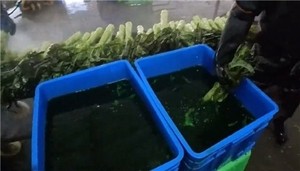
Moms worry as 'dyed lettuce' scandal spreads — are China's 30,000 tons of imports safe?
Chinese stem lettuce dyed with food coloring banned for use on vegetables Suspicions extend to cucumbers, green onions; consumers search for ways to spot Chinese produce Stem lettuce imports nearly doubled in 3 years; 103 import declarations filed in past year Authorities move to calm fears; emergency tests of 8 products show no dye detected Consumer anxiety in South Korea is growing as a "dyed lettuce" scandal out of China follows closely on the heels of an earlier "formaldehyde cabbage" controversy. Concern is running particularly high because stem lettuce — the vegetable at the center of the latest incident — is a staple in many Korean households. According to Chinese media and social media reports, a video has been circulating showing workers at a vegetable processing facility in Yuzhong County, Gansu Province, dipping stem lettuce — known in Korea as gungchae — into a green liquid. The person who filmed the video said the vegetable was being soaked in food coloring to make it look fresh, and that while the dye itself was food-grade, its use at the vegetable processing stage is prohibited. As the controversy grew, local authorities were reported to have filed charges against six vegetable storage and distribution businesses for illegally using the dye. As the video spread to South Korea, consumers grew alarmed. Coming so soon after the formaldehyde cabbage footage, the new incident has deepened distrust of Chinese food products. Posts on parenting forums and other social media platforms have urged people to avoid eating out as much as possible, warning that restaurants often use cheap Chinese ingredients, and to check country-of-origin labels carefully when buying groceries. Beyond food safety concerns, some users have raised allegations that other vegetables — including cucumbers and green onions — are also being dyed in China. Families with young children have been especially rattled. A 40-year-old mother, identified only by her surname Jeon, who is raising a first-grade daughter in Seoul, said she had looked up ways to tell Chinese produce apart from domestic varieties. "I read that if cabbage, lettuce, spinach or broccoli looks too blue-green, you should suspect it might be Chinese," she said. "I try to buy only Korean-grown produce and check carefully, but I have no way of knowing whether I can really trust what I'm buying." A 39-year-old mother of two children, ages 7 and 9, identified only as Park, said there are limits to what individuals can do on their own. "The best solution is for the government to strengthen safety inspections," she said. Imports of Chinese vegetables have been rising consistently. Data from the Korea Customs Service show that imports of Chinese lettuce jumped from 13,978 tons in 2022 to 27,830 tons last year — a near-doubling of 99.1 percent in three years. Chinese lettuce accounted for 88.8 percent of all lettuce imports last year. Chinese cabbage imports surged 384.2 percent over the same period, from 15,763 tons to 76,324 tons. Imports of Chinese onions and garlic rose 53.8 percent, while imports of carrots, turnips and beets climbed 25.4 percent. Stem lettuce, the vegetable featured in the video, has become increasingly common in South Korea in recent years. Its crunchy texture has made it a popular ingredient not only in Chinese restaurants serving dishes such as malatang, but also as a namul banchan side dish at Korean restaurants and a regular item at side-dish shops. According to the Ministry of Food and Drug Safety's imported food information portal, 103 import declarations were filed in the past year alone under names including gungchae, dried gungchae and dried stem lettuce. Authorities have moved to address consumer concerns. The Ministry of Food and Drug Safety said Tuesday it had conducted emergency tests on eight samples of Chinese stem lettuce currently in circulation in South Korea and found no food coloring in any of them. The ministry said it had tightened inspections of Chinese stem lettuce at the customs clearance stage starting Monday, checking for the presence of food dyes. In addition to the eight emergency samples, it is collecting and testing further products already on the domestic market. The ministry is also working through the South Korean Embassy in Beijing to determine whether any stem lettuce treated with food coloring has entered the country. Earlier, the ministry confirmed through the same embassy that formaldehyde-treated cabbage had not been imported into South Korea. "We will respond swiftly to strengthen inspections not only at the import stage but also in domestic distribution, so that the public can eat with confidence," the ministry said.
Sept. 8, 2026
-

Coupang launches chuseok sale with discounts on 80,000 products
Over 70 popular brands join 15-category discount event Coupang Inc said it will hold a large-scale discount event, "Chuseok Festa," for its Wow members through Sept. 27, with more than 70 brands offering around 80,000 products at discounted prices. The event spans 15 categories, including Rocket Fresh produce, food, household goods, home appliances and electronics, home interior, beauty, kitchenware, fashion and accessories, pet supplies, baby and toddler products, sports and leisure, stationery and office supplies, automotive accessories, and toys and hobbies. Coupang has set up dedicated sections for the event: a main deals zone featuring specially priced products, a gift shop targeting chuseok shoppers, a grocery section for holiday meal preparation, and a holiday leisure section. Featured products include the Dr. Rootem Albumin Premium set, a Manuka honey stick gift set and an AHC Renew Age gift set. A gift recommendation section lets shoppers browse by budget — under 50,000 won ($37), 50,000 to 100,000 won, 100,000 to 200,000 won, and 200,000 won and above. Pre-orders are also available for chuseok gift sets of fresh and processed foods. A "Brand Day" event runs through Sept. 23, spotlighting a different brand each day with special one-day discounts on its signature products. Participating brands include Samsung Electronics, LG Electronics, Apple, Dyson, Philips, Lenovo, Nike, Adidas, Cheong Kwan Jang, Korea Eundan and Chong Kun Dang Health. "Chuseok Festa is designed to let customers conveniently shop for everything they need in one place — from holiday preparations and gift buying to leisure shopping during the break," a Coupang official said. "We hope it gives Wow members a chance to get ready for chuseok at reasonable prices."
Sept. 8, 2026
-
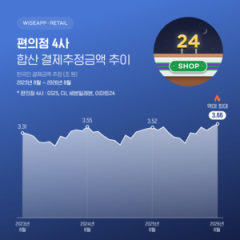
Koreans spent record W3.66tr at convenience stores last month, with men making up 7 in 10 buyers
Combined credit and debit card spending at South Korea's four major convenience store chains — GS25, CU, Seven-Eleven and E-mart24 — reached a record 3.66 trillion won ($2.72 billion) in August, data firm Wise App·Retail said Tuesday. The previous record was 3.55 trillion won, set in August 2024, meaning the latest figure broke that mark after two years. Compared with August 2023, spending rose about 11 percent. GS25 recorded the highest estimated card spending among the four chains last month. Indexing GS25 at 100, CU came in at 96.1, while Seven-Eleven and E-mart24 scored 47.1 and 22.0, respectively. Spending was particularly concentrated at the top two brands, GS25 and CU. The number of unique payers totaled about 39.02 million. The average spend per person was 93,834 won, with an average of 15.2 transactions; the average transaction value was 6,165 won. By gender, men accounted for 71.1 percent of payments and women 28.9 percent. The figures exclude bank transfers, cash transactions, gift card payments and purchases made through partner platforms, and do not reflect the actual sales of individual companies, Wise App·Retail said.
Sept. 8, 2026
-

LG H&H chief technology officer receives industrial merit decoration for cosmetics contributions
LG H&H said Chief Technology Officer Kang Nae-gyu received the Silver Tower Order of Industrial Service Merit for contributions to cosmetics safety management and industry development at a Cosmetics Day ceremony hosted by the Ministry of Food and Drug Safety on Monday. LG H&H has sustained annual R&D investment of about 160 billion won ($119 million). The company used big data from the skin profiles of more than 60,000 Asians to identify seven key genes involved in pigmentation. It recently developed an anti-aging ingredient called NAD Power24TM, which has been applied to products including The History of Whoo Bichaep NAD Power Ampoule. At the first Global Cosmetics Regulatory Authorities Summit (GCORAS), held in Seoul on the same day, LG H&H shared R&D achievements including technology for skin-diagnosis-based skincare product recommendations. The Face Shop, Dominas and Physiogel brand flagship stores also held discount events to mark Cosmetics Day. "LG H&H is a leading K-beauty company that has helped build the domestic cosmetics industry ecosystem and driven its globalization since launching Lucky Cream in 1947," Kang said. "We will focus on AI- and big data-driven bioscience research — the latest R&D frontier — to deliver products with differentiated technology and safety, and contribute to strengthening K-beauty's global competitiveness."
Sept. 8, 2026
-
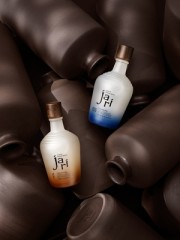
CJ CheilJedang's 'jari' soju brand wins at two global spirits competitions
All three products earn awards at IWSC and ISC, two of the world's top spirits competitions 'Jari Munbaesul 24' takes gold at ISC 2026 CJ CheilJedang announced Tuesday that all three products it submitted under its premium K-distilled spirits brand jari won awards at the 2026 International Wine & Spirit Competition (IWSC) and the International Spirits Challenge (ISC) 2026. At the 2026 IWSC, Jari Munbaesul 24 and Jari Munbaesul 41 each received silver medals, while Jari Gamuci 24 took bronze. Jari Munbaesul 41 scored 94 points and Jari Munbaesul 24 scored 91. At ISC 2026, Jari Munbaesul 24 claimed the gold medal, with Jari Munbaesul 41 and Jari Gamuci 24 each earning silver. Jari is a distilled soju brand made by aging traditional Korean liquor. CJ CheilJedang developed the line in collaboration with Munbaejoo Brewery and Danong Biotech, launching Jari Munbaesul 24 and Jari Gamuci 24 in South Korea in July. The company plans to bring the jari brand to the US market this fall. "We will continue to build on partnerships with domestic breweries to showcase the appeal of Korean distilled spirits and create more opportunities for global consumers to experience Korean food culture through jari," a CJ CheilJedang official said.
Sept. 8, 2026
-

Homeplus pursues corporate split to reduce M&A risk as it seeks new owner
Split structure aims to maximize sale value by shielding core business from rehabilitation liabilities Final rehabilitation plan includes the measure, pending court approval Sale of 19 self-owned stores to raise 1.42 trillion won faces uncertain market Naver, Harim and AliExpress named among potential acquirers Homeplus, which is undergoing corporate rehabilitation, is moving to split its legal entity. The plan calls for a two-track structure: a surviving entity retaining the normally operating business, and a newly established entity dedicated solely to the rehabilitation process. The move is designed to strip away the risks arising from debt repayment in order to facilitate a merger and acquisition — the ultimate goal of the proceedings. Finding a buyer, however, is expected to take considerable time. The final rehabilitation plan Homeplus submitted to the Seoul Bankruptcy Court includes the corporate split, according to reporting compiled Tuesday. The approach differs from the structural-reform rehabilitation plan Homeplus had previously pursued. It follows a "good company and bad company" strategy: the surviving entity is reconstituted around the core business and put up for sale, while the newly split entity takes on the responsibilities required for rehabilitation. The structure is designed to prevent the rehabilitation process from eroding the value of the core business while maximizing the chances of a sale on the open market. The technique has appeared in large-scale restructurings before, including that of General Motors in the United States. "In a corporate restructuring, it is a way to quickly normalize the management of key operations to raise the sale value, while allowing an acquirer to take on less debt," an industry official said. An M&A is the final destination of Homeplus's rehabilitation proceedings, and this is not the first attempt. Homeplus pursued a pre-approval M&A shortly after filing for rehabilitation in March last year. At the time, two parties — an AI platform company and a real estate developer — submitted letters of intent to acquire the company, but neither participated in the final bid, and the process collapsed. Homeplus subsequently put forward a structural-reform rehabilitation plan that included the separate sale of its supermarket division, Homeplus Express, a move widely criticized as tantamount to liquidation. That sale has since been completed. The specific timing of the corporate split has not been disclosed. If the debt repayment process proceeds as planned and a sale becomes more concrete, Homeplus is expected to seek approval from the rehabilitation court before proceeding with the split. Kim Gwang-il, vice chairman of MBK Partners, appeared in court Wednesday in his capacity as rehabilitation administrator and said the first priority was to secure profitability through fixed-cost reductions and the closure of loss-making stores in order to repay creditors. "After the rehabilitation plan is approved, we will sell the self-owned stores and then pursue an M&A of the company itself," he said. Whether this final M&A attempt will proceed smoothly remains uncertain. Homeplus faces an immediate test in completing the sale of 19 self-owned stores it has closed. Of the 19, sales contracts have been signed for the Daejeon Yuseong store at 123 billion won ($91.6 million), the Dong-Gwangju store at 50.5 billion won, and the Busan Seomyeon store at 25.65 billion won. Negotiations with a prospective buyer are also under way for the Gyeonggi Yatap store. Aside from the Seoul Junggye store, the Namyangju Jinjeop store, the Ilsan Kintex store, the Gyeonggi Hanam store and the Goyang Terminal store, most of the remaining locations are in regional cities. Homeplus plans to sell all 19 stores by February 2028 to raise 1.42 trillion won. Finding buyers willing to pay full price in economically sluggish regional markets, however, is expected to be difficult. The outcome of the 19-store sales will have long-term implications for the M&A as well, since the proceeds are earmarked to repay senior trust-secured bonds held by Meritz Financial Group, the largest creditor. Only once that obligation is resolved can Homeplus proceed with additional real estate-backed borrowing and fulfill its debt repayment schedule, which runs through 2037. Naver, Harim and AliExpress are among the names being mentioned as potential acquirers of Homeplus. All three are companies expanding their domestic commerce operations rather than traditional large retail conglomerates. Harim, in particular, is seen as a candidate that could generate synergies with Homeplus Express, which it acquired earlier. The prospective candidates, however, have been cool to the idea. Given Homeplus's current financial condition, there is a view in the industry that "acquiring it is itself a risk" — meaning Homeplus must succeed in restructuring at the same time as it repays its debts. "Hypermarkets are in the most difficult position among all offline retail formats," another industry official said. "Even if Homeplus pulls off a large-scale restructuring, there is no guarantee a buyer will emerge."
Sept. 8, 2026
MOST READ
- 1KAIST develops high-performance bio-based adhesive using E. coli instead of petroleum
- 2Pope Leo XIV declines French honors and banquet, accepts only private meeting with Macron
- 3Daimler Truck unveils next-generation transport solutions at IAA 2026
- 4What was Rachmaninoff's performance fee? A 1928 price list tells all
- 5Samsung Biologics union's show of force backfires at the bargaining table
- 6APR says hair-loss treatment research published in international journal
-
WORLD

US warns of punishment for anyone enabling Iran's Strait of Hormuz toll scheme
-
INDUSTRY
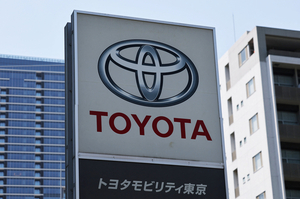
Toyota union puts productivity first; Hyundai Motor union demands bigger share of profits
-
FINANCE
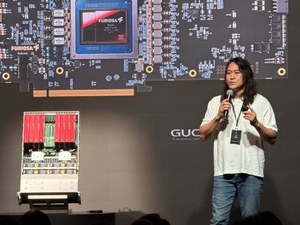
National Growth Fund to invest $531M in FuriosaAI, which rebuffed Meta's $800M takeover bid
-
INDUSTRY
Korea Shipowners' Association holds amateur baduk tournament for Maritime Day