
- HOME
- CONSUMER
-
Do you really need to spend 100,000 won on a Chuseok gift? Here's what's actually selling
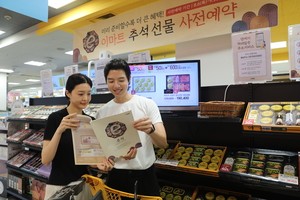
Products under 100,000 won account for more than 90% of sales — value is the new trend Spam sets top the charts at both E-mart and Lotte Mart, driven by bulk corporate orders As persistently high prices weigh on household budgets, value-for-money gift sets are becoming the dominant choice for Chuseok shoppers. Consumers are gravitating toward well-composed sets that offer the most bang for their won. According to E-mart, pre-order sales of Chuseok gift sets from Aug. 6 to Sept. 13 rose 10.3 percent compared with the same period last year. By price tier, products under 50,000 won ($37) accounted for the largest share at 75.5 percent, followed by the 50,000-to-99,999-won range at 16.2 percent and products priced at 100,000 won or more at 8.3 percent. The standout trend was the surge in the mid-price tier. Sales of gift sets in the 50,000-to-99,999-won range jumped 21.9 percent year on year, with their share of total sales expanding by 2.2 percentage points. Sets priced under 50,000 won posted a 3.5 percent sales gain but saw their share shrink by 1.6 percentage points. The over-100,000-won segment edged up just 0.3 percent in sales while its share fell 0.5 percentage points. The shift reflects growing price sensitivity: shoppers are lowering their per-unit spend while paying closer attention to what is actually in the box. Products under 50,000 won still hold the largest share of sales, but the mid-range tier — between 50,000 and 99,999 won — showed the sharpest growth. Top-selling items were also concentrated below the 100,000-won mark. The pre-order window tends to attract large bulk purchases by corporations taking advantage of early-bird discounts, channeling sales toward products with traditionally strong corporate gift demand. Bulk orders of 100 units or more at E-mart during the pre-order period rose 17 percent year on year. E-mart's top-selling gift set was the CJ Spam Composite S, a bundle of canola oil and Spam priced at 39,900 won, well under the 50,000-won threshold. It was followed by a US- and Australia-sourced LA-style galbi set (2 kg, 99,800 won), a Naju pear set (54,800 won), an apple-and-pear VIP set (49,800 won) and an apple VIP set of 11 to 12 pieces (48,860 won). By category, canned-goods gift set sales rose 15.5 percent year on year. Wine and whisky gift sets climbed 19.8 percent and 28.2 percent, respectively. In the meat category, pork gift set sales surged 58.9 percent, underscoring the clear tilt toward value-conscious buying. The picture at Lotte Mart was similar. Value sets priced under 50,000 won — typically combining Spam, canned tuna and canola oil — dominated the pre-order sales rankings. An analysis of pre-order sales from Aug. 6 to Sept. 13 showed that the CJ Spam 12K, priced at 32,450 won, ranked first in both units sold and revenue. By revenue, it was followed by the CJ Spam Composite 100, Dongwon Tuna Richam 77, CJ Spam Composite S and Dongwon Premium 60. Sales of canned and convenience foods rose 28.5 percent, while coffee and tea products gained 13.9 percent and healthcare products jumped 37.3 percent. The Cheong Kwan Jang Hong Sam Jin Go Immune Stick and the Dongseo Maxim Coffee Set No. 20 ranked fourth and fifth, respectively, in units sold. By price tier, products under 50,000 won made up 56 percent of Lotte Mart's pre-order sales, the 50,000-to-99,999-won range accounted for 34 percent and items at 100,000 won or more made up 10 percent. The major hypermarkets are now wrapping up their Chuseok pre-order windows and moving into the main sales period. Both E-mart and Lotte Mart plan to run their main sales from Sept. 17 through Sept. 24, a span of eight days.
Sept. 15, 2026
-
Eland sets up dedicated Hoka division, eyes trillion-won brand status
Building on New Balance success, Eland assembles team across planning, sales and marketing Targets 1 trillion won in Hoka sales, starting with store expansion Eland is making another push in the running shoe market — this time with Hoka, a young brand known for its thick cushioning. According to industry sources Tuesday, Eland World began recruiting experienced staff for a dedicated Hoka division on Wednesday. The hiring drive came just 20 days after the company announced on Aug. 20 that it had been named Hoka's new domestic distributor in South Korea. Positions span the full breadth of the business — product planning, sales, merchandising, marketing, design and production — signaling that Eland intends to build a standalone organization rather than simply reassigning existing staff. Hoka is a running shoe brand founded in France in 2009. It drew attention for its thick outsoles and wide midsoles, and built a devoted following by emphasizing comfort through cushioning that exceeds that of conventional running shoes. The previous domestic distributor was JOYWORKS&Co. Its contract was terminated after JOYWORKS&Co CEO Jo Seong-hwan assaulted a former competitor's employee in December last year, paving the way for Eland World to take over. At the time, Deckers Asia Pacific — the regional arm of Hoka's parent company Deckers — issued an official statement saying it looked forward to continued growth in the Korean market through its partnership with Eland. Industry attention has turned to Eland World's track record. The company previously propelled New Balance into the "1 trillion won club": sales stood at 25 billion won ($18.6 million) when the brand entered the Korean market in 2008, climbed to 500 billion won by 2020, surpassed 1 trillion won in 2024 and reached 1.2 trillion won last year. Among apparel brands, only Nike, Uniqlo and The North Face had crossed the 1 trillion won threshold last year. Puma, which Eland also distributed, followed a similar trajectory — sales of 10 billion won at the time of the 1994 contract grew to 200 billion won by 2007. Hoka's own growth trajectory adds to the optimism. Sales at JOYWORKS&Co, which distributed the brand, rose from 24.9 billion won in 2022 to 43.3 billion won in 2023, 82 billion won in 2024 and 106.5 billion won in 2025. Hoka's offline retail division posted sales of 30.6 billion won and operating profit of 4.7 billion won in 2024, and recorded sales of 18.8 billion won and operating profit of 2.8 billion won in the first half of last year. Average monthly sales per store were estimated at 447 million won. Accounting firm Shin Seung projected in September last year that Hoka's offline sales would reach 42.8 billion won by 2028, with annual operating profit of around 4 billion won. When Eland World secured the distribution rights, it set a goal of growing Hoka into a brand with more than 1 trillion won in sales. Expanding its physical store footprint is the first order of business. Hoka currently operates five stores in Seoul and one each in Incheon, Suwon and Gimpo — a far cry from the roughly 200 New Balance stores Eland runs nationwide, suggesting considerable room to grow. The running shoe market has been on a steady upward trend, and industry voices say products tailored to domestic consumers will be key to sustaining that growth. Eland World's past success with New Balance and Puma was driven in each case by a breakout product that brought the brand to a mass audience — Puma's Speedcat and New Balance's 530, respectively. The 530 in particular was developed using customer data gathered at Eland's own stores, incorporating the foot shape, gait patterns and fashion preferences of Korean consumers. It has sold more than 2 million pairs and become a perennial bestseller. "We are preparing the necessary staff and organization to pursue the Hoka business in a stable and swift manner," an Eland official said. "We are also in the process of reviewing specific business plans, including store operations." The official added that the partnership's deeper significance lay in "creating new customer experiences and a new culture in the domestic sports market — not just operating a single brand."
Sept. 15, 2026
-
bhc opens first Vietnam location, marking 10th overseas market
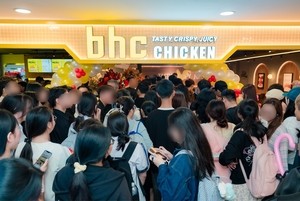
First store opens in Ho Chi Minh City shopping mall Chicken, tteokbokki and other K-food items on the menu bhc, the chicken brand under Dining Brands Group, has opened its first store in Ho Chi Minh City, Vietnam, the company announced Tuesday. Vietnam is the 10th country bhc has entered. The brand signed a master franchise agreement in April with Hao Open Food, a Vietnamese food and beverage company with a local retail distribution base, to prepare for the move. The first store is located inside Vincom Plaza Phan Van Tri, a shopping mall in the Go Vap district of Ho Chi Minh City. The mall sits in a densely populated area in the city's northwest and draws a broad mix of shoppers, including university students and families. The store covers about 162 square meters, with 74 seats across 37 tables. Given the typically short dwell times of mall shoppers, bhc adopted a limited-service restaurant format designed to streamline ordering and improve efficiency. The menu centers on chicken alongside a range of K-food offerings, including tteokbokki, rabokki and kimchi fried rice. Six chicken options are available — Ppuringcle, Hot Ppuringcle, Fried, Seasoned, Matchoking and Red King — and customers can choose their preferred cuts to suit local dining preferences. Steamed white rice is also available for customers who prefer to eat chicken with rice, as is common locally. Ahead of the opening, bhc launched an official TikTok account in Vietnam and said it gained 7,000 followers within the first month. The account also accumulated 40,000 likes, drawing strong interest from local consumers. Nam Hwa-yeon, head of Dining Brands Group's overseas business division, said Vietnam is a country where interest in Korean food runs high alongside enthusiasm for K-content. "We will closely observe local consumers' tastes and responses to showcase bhc's differentiated flavors and experiences, and continue to strengthen our position as a global brand," she said. bhc's overseas network has grown to 51 stores across 10 countries, including Vietnam, Hong Kong, Taiwan, Singapore, Thailand, Malaysia, Indonesia, the Philippines, the United States and Canada. The company plans to expand further in international markets through K-chicken, K-food and locally adapted menus.
Sept. 15, 2026
-

CJ to pay partners W660b early ahead of Chuseok
CJ Group announced Tuesday it will make early payments totaling 660 billion won ($491 million) to small and midsize partner companies ahead of the Chuseok holiday, in a show of support for its supply chain. Six major affiliates are participating — CJ CheilJedang, CJ Olive Young, CJ Logistics, CJ ENM's commerce division, CJ Freshway and CJ Olivenetworks — with payments going to roughly 7,400 small and midsize suppliers. The 660 billion won figure is more than double the amount paid out last year. Payments will begin Friday and continue through the end of the Chuseok holiday period, running two weeks to about a month ahead of the original scheduled dates. "We hope this helps ease the temporary financial burden that falls on our small and midsize partners around the holiday season," a CJ Group official said.
Sept. 15, 2026
-
CJ CheilJedang revamps CJ The Market app with AI curation, personalized recommendations
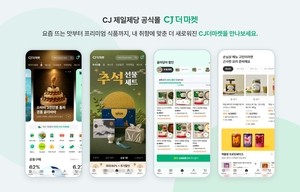
Product curation and personalized recommendations enhanced Purchase flow and user interface also improved CJ CheilJedang announced Tuesday that it has relaunched the mobile app for its direct-sales platform CJ The Market, with a focus on strengthening AI-powered curation and personalized recommendations while optimizing the shopping flow. The main home screen has been redesigned as a space for themed curation tied to seasons and occasions. Drawing on customer behavior data, purchase tendencies and order history, the app offers first-time visitors exclusive welcome deals, while returning customers receive suggestions for their go-to products alongside personalized recommendations. AI has also been integrated into the app's content features. In Lime, the health and wellness specialty section within CJ The Market, AI automatically reviews and categorizes customer-submitted review photos to surface them as content. During major promotional events, the app now links directly to the relevant page upon launch. Frequently used menus have been made more accessible, and redundant information has been consolidated. The user interface and user experience have also been refined. The previous logo, rendered primarily in Latin script, has been replaced with a hangul logo reading "CJ The Market." A design motif inspired by a top-down view of a round plate has been applied to key buttons, tabs and product preview images. "Through continued service enhancements, we aim to develop CJ The Market into a lifestyle platform — one that customers visit more often and stay with longer, going beyond shopping," a CJ CheilJedang official said.
Sept. 15, 2026
-
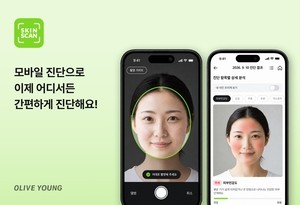
CJ Olive Young brings in-store skin diagnosis to smartphones
Mobile skin analysis service offers product recommendations and personalized skincare routines CJ Olive Young announced Tuesday that it is launching a mobile skin diagnosis service. The company has brought its in-store experiential beauty service, Skin Scan, to the CJ Olive Young app, allowing customers to check their skin condition and receive skincare routine recommendations without visiting a store. CJ Olive Young first introduced Skin Scan at its Starfield Goyang Town location in April 2024, before rolling it out to major stores. Late last year, the service was integrated with the app as an omnichannel offering. The company has since added a mobile skin measurement feature and plans to introduce additional functions before the end of the year, including a skin-change report that tracks how skin evolves over time, product recommendations tailored to a user's regular care routine, and a personal color diagnosis tool. The service is straightforward to use. After completing a digital health questionnaire, users take a photo of their face with their smartphone or upload an existing image, and AI analyzes their skin condition. Results cover skin type, pores, pigmentation, moisture levels, oiliness and wrinkles. The service also explains the causes behind specific skin concerns, provides care tips and recommends products for each concern. It is accessible through the Skin Scan icon on the app's main screen and under the "Olive Young Store" tab at the bottom of the app. Through Sept. 30, customers who complete a mobile skin diagnosis and view their results will receive discounts on skincare products. Those who sign up for re-diagnosis reminders will earn additional Olive Points. Customers who show their mobile skin diagnosis results at participating stores and spend 30,000 won ($22) or more can also receive a sample skincare kit. "We will continue to organically connect the strengths of our online and offline channels to deliver a differentiated omnichannel shopping experience for our customers," a CJ Olive Young official said. Meanwhile, CJ Olive Young recently completed trademark registration for Skin Scan. The company plans to expand its self-diagnosis service lineup into three categories — Skin Scan Face for facial skin, Scalp for scalp care, and Color Fit for personal color analysis — and broaden its beauty consulting services across both online and offline channels.
Sept. 15, 2026
-

Musinsa partners with SM Entertainment to launch K-pop fashion products
Companies to develop and release fashion and IP products for domestic and global markets Musinsa has teamed up with SM Entertainment to offer fans an integrated online and offline experience combining K-fashion with K-pop intellectual property. Musinsa signed an MOU with SM on Monday to build a mutually beneficial partnership. The agreement centers on three areas: generating business synergies between K-pop and K-fashion, providing a 360-degree fan experience through official merchandise retail and linked online and offline marketing, and expanding customer touchpoints through global market cooperation. The two companies also plan to pursue collaborations between brands on the Musinsa Store and SM artists, with the aim of releasing distinctive fashion and IP products. Those products will be distributed through Musinsa's online and offline platforms and tied to major promotional campaigns. Key executives from both sides attended the signing ceremony, including Musinsa Chief Commerce Officer Choi Jae-young and SM Chief Executive Tak Young-jun. "We will bring together the strengths of both companies to deliver differentiated experiences to fans and secure growth momentum across the K-culture industry," Choi said.
Sept. 15, 2026
-

Beanpole launches FW campaign with Kim Seon-ho, Jeon So-young
Beanpole, the classic casual brand under Samsung C&T's fashion division, announced Tuesday the launch of its 2026 fall-winter campaign, "Into Your Essentials." The campaign is rooted in the philosophy of "essentialism" and reinterprets classic style accordingly. Actors Kim Seon-ho and Jeon So-young front the campaign, which captures their relentless pursuit of the essence of their craft. The brand's "Seoul Classic" lineup features Harrington jackets, wool jackets and trench coats alongside Oxford shirts, argyle and Fair Isle knitwear, and denim and chino pants. Beanpole has also expanded its essentials range. Highlight products include the Better Days Cardigan, distinguished by button-slit details at the sleeve hem; the Better Fit Quarter-Zip, featuring a structured silhouette and a mini logo; and the Soft Touch Shirt, crafted from smooth poplin fabric in a relaxed fit. Customers who purchase outfits worn by the two actors on SSF Shop through Sept. 28 will receive a 10 percent discount coupon. The first 100 buyers will also receive a 10,000 won ($7) cashback benefit. Won Eun-kyung, head of Beanpole at Samsung C&T's fashion division, said the brand would "continue to offer classic wear that accompanies customers through their everyday lives and life journeys."
Sept. 15, 2026
-
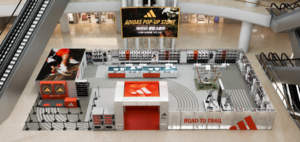
Lotte Department Store to host 'Seoul 100K' pop-up at Lotte World Mall
Pop-up runs Wednesday through Monday at Jamsil's Lotte World Mall Lotte Department Store said it will operate a "2026 Seoul 100K X Adidas" pop-up store at the atrium on the first floor of Lotte World Mall in Jamsil, Songpa-gu, Seoul, from Wednesday through Monday. The pop-up is tied to the Seoul 100K, one of South Korea's premier trail-running races, and offers visitors a chance to experience Adidas running content. The race takes place Saturday and Sunday around Gwanghwamun Square, drawing about 2,700 domestic and international runners across 20-, 50- and 100-kilometer distances. The pop-up is built around Adidas' main concept of "Road to Trail," with running and trail activities at its core. More than 115 Adidas footwear, apparel and accessory items tailored to those disciplines will be on display. Visitors can use a customization printing service to add text or designs to products. Mini games and a vending machine event will give away running essentials such as arm sleeves and bandanas. "We will collaborate with a variety of sports brands to present differentiated content that can only be found at our department store," said Park Ok-woo, head of the sports division at Lotte Department Store.
Sept. 15, 2026
-

Dongsuh Foods to hold 2026 Canu Barista Championship final in Seoul
Dongsuh Foods announced it will hold the final of the 2026 Canu Barista Championship at the Central City Open Stage of Shinsegae Department Store's Gangnam branch in Seoul from Saturday to Sunday. The barista competition, organized by Dongsuh Foods, is in its third year. Applications opened in May, and eight finalists advanced through preliminary rounds held in July. Saturday's competition will feature a brewed coffee round, while Sunday's will have contestants prepare americanos using Canu beans alongside original drinks of their own creation. The winner will receive a total prize of 30 million won ($22,300). Judging will be handled by coffee professionals, including Kim Ga-eun, winner of the 2025 Canu Barista Championship. Dongsuh Foods will also operate a Canu experience zone and pop-up store at the venue, offering a personalized Canu recommendation service and an AI-powered photo card creation program. The event will include tasting sessions led by Code Kunst — who drew attention as a preliminary contestant at last year's competition — and finalists from past championships, as well as performances by invited artists.
Sept. 15, 2026
-
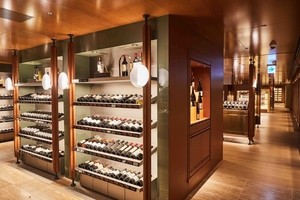
Shinsegae department store unveils 'best-ever' wine collection for chuseok
Shinsegae department store announced Tuesday it will offer an extensive lineup of premium wine gift sets for chuseok. The House of Shinsegae wine cellar has assembled a collection centered on pinot noir, drawing from producers around the world. The cellar carries more than 1,500 pinot noir varieties from over 200 producers, including all nine producers awarded the top "3 Grapes" rating under the "Michelin Grape" system, introduced for the first time this year. The centerpiece is a Burgundy collection featuring bottles such as the Domaine Leroy Clos de Vougeot GC 98 at 21.5 million won ($16,000), the Domaine Armand Rousseau Chambertin GC 00 at 15 million won, and the Domaine de la Romanée-Conti Romanée-Saint-Vivant GC 98 at 14.94 million won. A Montrachet collection highlights the pinnacle of white wine, featuring bottles produced in extremely limited quantities in the Burgundy region. It includes the Domaine Jean Chartron Montrachet Grand Cru 23 at 3.85 million won, the Domaine Jacques Prieur Montrachet Grand Cru 18 at 2.4 million won, and the Domaine Etienne Sauzet Montrachet Grand Cru 17 at 2.125 million won. More accessibly priced options from renowned global producers are also available, including Old World and New World wine sets. These include the Banfi Poggio set at 560,000 won, the Luce set at 500,000 won, and the Antinori USA set at 410,000 won. For serious enthusiasts and collectors, the store will also carry ultra-premium bottles such as Château Latour 90 and Château Cheval Blanc 90. An "Ex-Cellar" collection sourced directly from producers' own cellars rounds out the offering, alongside rare wines seldom available in South Korea — including Liber Pater, Harlan and Sine Qua Non.
Sept. 15, 2026
-
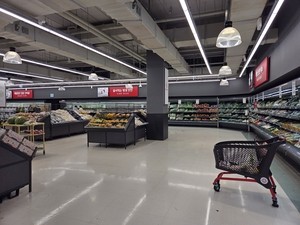
Homeplus unpaid wages hit record W387.1b amid rehabilitation
Homeplus, which is undergoing court-led rehabilitation, has accumulated nearly 400 billion won in unpaid wages, with 66.4 billion won still unresolved. Data obtained by the office of People Power Party lawmaker Kim Wi-sang of the National Assembly's Climate, Energy, Environment and Labor Committee from the Ministry of Employment and Labor on Tuesday showed that Homeplus's cumulative unpaid wages from last December through August this year totaled 387.1 billion won ($288 million) — the largest ever recorded for a single company, surpassing the previous record of 119.7 billion won set by Daewoo Winia Group. Homeplus has paid out 320.7 billion won of the total under guidance from the Employment and Labor Ministry, but 66.4 billion won — 17.2 percent of the total — remains outstanding. The unpaid amount comprises 51.3 billion won in wages for July and August, 12.9 billion won in severance pay for departed employees, and 2.2 billion won in unused annual leave allowances. Homeplus failed to pay wages on time for 9,874 workers totaling 26.3 billion won in July and for 9,016 workers totaling 25 billion won in August. Shortfalls in severance pay reserves have also drawn scrutiny. Homeplus is required to set aside severance funds but has fallen below the legally mandated minimum reserve ratio of 100 percent. The company's required reserves stand at 466.11 billion won under the defined-benefit plan and 228.48 billion won under the defined-contribution plan. Actual contributions, however, were limited to 372.83 billion won for the defined-benefit plan — a funding ratio of 79.9 percent — and 196.35 billion won for the defined-contribution plan, at 85.94 percent. Homeplus, which had teetered on the brink of bankruptcy, has been carrying out its repayment plan after a court approved its rehabilitation proposal on Sept. 2. The retailer resumed operations at 67 stores on Aug. 13 as it seeks to normalize its business. It plans to convert all multi-floor stores to single-floor layouts and reduce the total floor area of each store to around 3,300 square meters.
Sept. 15, 2026
-
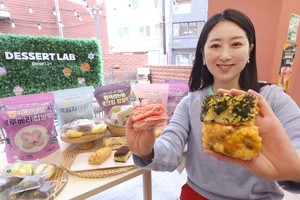
E-mart 24 transforms into a tteok shop, bringing famous rice cake brands to Seongsu
E-mart 24 is turning two of its Seoul locations into pop-up rice cake shops. The convenience store chain said it will sell 11 popular products from Yeongdobari Tteokbang and Iksan Nonghyup Tteok Bangatgan at its Trend Lab Seongsu and Dessert Lab Seoul Forest stores from Thursday through Sunday. Yeongdobari Tteokbang is a second-generation rice cake shop that has operated at Busan's Namhang Market since 1999, known for its pizza-style seolgitteok (a steamed rice cake). The event will feature pepperoni pizza seolgitteok, potato pizza seolgitteok, bulgogi pizza seolgitteok, cream cheese castella seolgitteok and corn cheese seolgitteok. Iksan Nonghyup Tteok Bangatgan is a producer that has been in operation since 2017, gaining a following for its frozen rice cakes, including fresh cream chapssal tteok (glutinous rice cake). The event will showcase six varieties of chapssal tteok, including the fresh cream version. Products will go on sale in limited quantities starting at 11 a.m. each day. "We will continue to introduce events and products so that customers can be the first to get their hands on the most talked-about items," said Choi Myung-su, a merchandise planner on E-mart 24's bakery team.
Sept. 15, 2026
-

An apple a day keeps the doctor away? Here's what the science says
US study finds apple eaters less likely to use prescription drugs Fruit linked to lower risk of cardiovascular disease, cancer and cognitive decline Eating apples whole, skin on, yields the greatest benefit "An apple a day keeps the doctor away." Few proverbs about food have spread as widely around the world. The saying may be a slight exaggeration, but most medical experts agree it is not entirely without scientific basis. What makes the adage particularly interesting is that it has actually been put to a scientific test — and held up, at least in part. A research team at the University of Michigan School of Nursing published findings in JAMA Internal Medicine in 2015, applying rigorous epidemiological methods to verify a piece of folk wisdom. The researchers divided 8,728 adults into two groups — those who ate at least one apple a day and those who ate none — and asked whether they had visited a doctor or taken prescription medication over the previous year. Only whole, fresh apples counted; apple juice and applesauce were excluded. The results showed no statistically significant link between daily apple consumption and doctor visits. However, prescription drug use told a different story: apple eaters were statistically less likely to take prescription medications than non-apple eaters. "Evidence does not support that an apple a day keeps the doctor away," the researchers wrote, "but the small fraction of US adults who eat an apple a day do appear to use fewer prescription medications." Where did the saying come from? It originated in 19th-century Wales and was first recorded in the British journal Notes and Queries in 1866 as a Welsh regional proverb. The original wording was: "Eat an apple on going to bed, and you'll keep the doctor from earning his bread." The version familiar today was fixed in 1913, when British linguist Elizabeth Wright included it in her collection of English dialects and folklore. Apples likely became the fruit of choice partly because they were widely grown and commonly eaten in Wales at the time. But the apple's well-documented health benefits are considered the more fundamental reason. Those benefits have been recognized across cultures for centuries and, in modern times, confirmed through scientific research. Researchers at Ohio State University found that eating one apple a day may help reduce levels of LDL — so-called "bad" cholesterol — in middle-aged adults, according to a study published in the Journal of Functional Foods in 2012. A study by researchers at the University of Oxford estimated that if 70 percent of British adults over 50 ate one apple a day, about 8,500 cardiovascular deaths could be prevented annually. The figure was a theoretical projection combining existing clinical research. A Chinese review published in Food Science & Nutrition in 2023, which synthesized a decade of literature, concluded that apple consumption has a positive effect on preventing cardiovascular disease, cancer and cognitive decline, as well as on skin health. According to Harvard T.H. Chan School of Public Health, the two key compounds behind these benefits are quercetin and pectin — an antioxidant and a dietary fiber, respectively, both found in abundance in apples. Quercetin is a flavonoid with anti-aging and anti-inflammatory properties. Pectin is a soluble fiber that helps prevent constipation and lower LDL cholesterol levels. It is also fermented by beneficial bacteria in the colon, producing compounds that may help protect against certain cancers and intestinal diseases. There is, however, one condition for getting the most out of an apple: eat it whole, skin and all. Most of the fiber and antioxidants are concentrated in the peel. Removing it cuts fiber content by nearly half — 46 percent, according to US Department of Agriculture data. Juicing apples eliminates nearly all the dietary fiber, causes blood sugar to rise more quickly and reduces the feeling of fullness.
Sept. 14, 2026
-
How Namdaemun became Seoul's flower destination for young shoppers
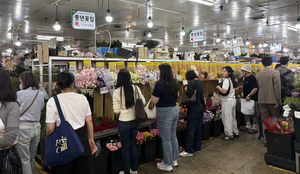
As flower prices climb, bargain hunters head to the wholesale market — and closing time is the new prime hour "At this price, there's nothing left for me. I'm basically giving them away." At 1 p.m. on Saturday, people trickled down the stairs of Building E at Namdaemun Market in Jung-gu, Seoul, each clutching a bouquet wrapped in newspaper. Their destination: the flower market on the third floor. With two hours left before closing, shoppers moved briskly through the stalls, filling the narrow aisles between flower shops. Namdaemun's flower market has bloomed on SNS. Word has spread that it is one of the cheapest places to buy flowers in the city, drawing a younger crowd. Visitors ranged from men shopping alone to couples picking out bouquets to groups of women browsing together. The selection was just as varied. Red, yellow and blue roses sat alongside white baby's breath, each shop arranging its wares in its own way. Most stalls had no price tags, so shoppers constantly called out, "How much is this one?" As closing time approached, some vendors began cutting prices, and hands moved faster. Newspaper-wrapped bundles piled up in shoppers' arms one by one. On Saturday, 100 roses were going for 60,000 won ($45). That is roughly a third of what the same quantity — fully wrapped and arranged — would cost at a regular flower shop, where prices can exceed 200,000 won. The low prices are possible because it is a wholesale market: flowers are sold in bulk, unwrapped and untrimmed. Deeper inside the market, one shop offered to assemble purchased flowers into a finished bouquet. Customers could bring their own blooms and have them arranged to order. The service cost around 25,000 won for 100 stems. At one point a line formed outside the shop, and those waiting passed the time choosing wrapping paper and ribbon colors. Kim Yu-rim, 25, who came from Ilsan, said she had heard that visiting near closing time was the best way to find bargains. "I'm happy — I got a mood boost at a low price," she said. Jo Min-a, 26, waiting for her bouquet to be assembled, said she had stumbled upon the market while looking for a birthday gift for a friend. "I bought 10 roses for 7,000 won," she said. Vendors have noticed the shift. One merchant said the market used to be busy in the mornings when wholesale buyers came in, then quiet in the afternoons — but lately, younger consumers have kept the afternoons lively too. The buzz on SNS has been equally striking: as of Saturday, posts tagged with the Namdaemun flower market hashtag numbered more than 15,000. The influx of young shoppers has not translated directly into higher sales, however. Many come specifically to pick up leftover stock near closing time or to buy small bundles. Even so, vendors have welcomed the trend, given that rising flower prices have broadly dampened demand for cut flowers. Domestic flower consumption has indeed been declining. Data from the Korea Agro-Fisheries and Food Trade Corporation's flower distribution information system show that cut-flower transaction volume at the Yangjae-dong flower auction house through Saturday totaled 470,000 bundles, down 19.72 percent from 590,000 bundles in the same period last year. At the Busan flower auction house, volume through Friday reached 100,000 bundles, a drop of 8.29 percent year on year. The Gwangju Horticulture Agricultural Cooperative recorded 50,000 bundles, down 3.15 percent. Soaring prices are also visible in auction figures. From January through September this year, the total value of cut-flower auctions at the Yangjae-dong house rose 6.68 percent from a year earlier. Over the same period at the Busan house, transaction volume edged down 0.46 percent, yet the total auction value climbed 11.08 percent. Choi Cheol, a professor of consumer economics at Sookmyung Women's University, said rising prices have pushed consumers to actively seek out places where they can buy products more cheaply. "As that information spreads quickly through SNS and other channels, shoppers are gravitating toward sellers with a competitive price advantage," he said.
Sept. 14, 2026
-
No trip to Japan needed: GU, Randorin, Yolu now available in Korea
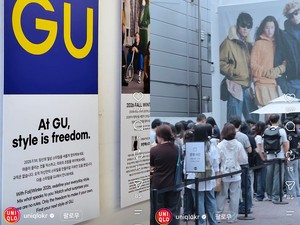
Uniqlo expands GU pop-up, online sales Japan travel staples in beauty, lifestyle follow suit Japanese fashion, beauty and lifestyle brands are making a push into the South Korean market. Uniqlo's sister brand GU held its first domestic pop-up store in six years, while beauty and lifestyle brands popular among Korean travelers to Japan are also arriving one after another. According to industry sources Monday, GU opened a pop-up store in Seongsu-dong, Seongdong-gu, Seoul on Saturday and Sunday to mark the launch of its 2026 fall/winter collection, developed with creative director Francesco Rico. The event focused on product displays and fittings rather than on-site purchases, but drew large crowds and generated considerable buzz, with many visitors waiting in line before being admitted. GU is a fashion brand operated by Fast Retailing, the parent company of Uniqlo. It is not new to South Korea: the brand withdrew its physical stores in 2020 amid anti-Japanese sentiment and the fallout from COVID-19. It currently sells a limited selection of products only through Uniqlo's online and mobile channels in the country. The pop-up drew extra attention precisely because it marked the brand's first offline presence in six years, and has sparked speculation about a possible return of permanent stores. Expectations are high given that GU has recently been expanding its product lineup for the Korean market, including items popular among travelers to Japan such as gathered ballet shoes and barrel-fit jeans. Beyond GU, beauty and lifestyle brands well known as shopping staples for Korean visitors to Japan are also entering the domestic market. A prime example is Randorin, a fabric fragrance brand familiar to Korean consumers in part because BTS member Jungkook uses it. Randorin officially launched in South Korea this year, with its fabric deodorizer and fabric softener products now available at CJ Olive Young and major e-commerce platforms. Yolu, a hair care brand that claims the top spot in Japan's personal care market, also launched in South Korea earlier this year, selling through CJ Olive Young and Naver Plus Store. Yolu shampoo, along with Randorin fabric deodorizer, is widely known as a must-buy item at Don Quijote, the Japanese discount chain, for Korean tourists. Japanese fragrance brand Shiro entered the South Korean market last year and has been expanding its store footprint to include a flagship in Seongsu-dong, outlets at Lotte Department Store's main branch and its Pyeongchon location, and a store at Lotte World Mall in Jamsil. Don Quijote, Japan's leading variety discount chain, has been deepening its partnership with convenience store chain GS25 — following a pop-up at Hyundai Seoul last year, the two have this year co-developed and released products including a "Muku Jumbo Melon Gumi" candy. "As more consumers have accumulated shopping experience and brand familiarity through repeated trips to Japan, the environment has become favorable for Japanese brands to enter the Korean market," an industry official said.
Sept. 14, 2026
-
Hypermarkets fight back with in-store rewards as foot traffic dries up
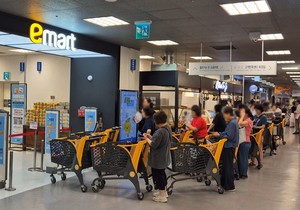
E-mart rolls out app-linked perks exclusive to physical stores Starfield Market expansion to add 2 more locations this year Hypermarket sales fall for 5th straight month as online share hits record E-mart is looking to its physical stores for a way out of the hypermarket slump. As consumer spending continues to shift online, the retailer is doubling down on in-store-only perks to draw customers back through the door. E-mart launched a service called "Welcome Check-in" through its app last month, targeting customers who visit its brick-and-mortar locations, according to industry sources Monday. Shoppers scan a QR code inside the store to access a dedicated page and complete missions, earning "e-money" that can be spent like cash at the store. The missions come in several forms. A "check-in lottery" awards e-money once a day at random; "Walk E-mart" rewards customers for logging a set number of steps inside the store; and a purchase mission gives e-money to shoppers who buy a recommended product. Rather than simple discounts, the program weaves together store visits, in-store activity and actual purchases into a single app-based rewards loop. "We introduced it on Aug. 28 to drive visits to E-mart's physical stores and boost engagement with the E-mart app," a company official said. "It is still in the early stages, and we plan to keep refining it based on customer feedback." E-mart is also expanding the physical footprint of its stores. The centerpiece of that effort is Starfield Market, a hybrid shopping format that combines an E-mart with a range of tenants. The concept launched at the Jukjeon location in 2024, followed by stores in Ilsan, Dongtan and Gyeongsan in 2025. The fifth location — and the first Starfield Market in Seoul — recently opened at Wolgye. The results have been measurable. Sales at the four existing Starfield Market locations rose 28 percent in the first half of this year compared with the same period last year, far outpacing E-mart's overall sales growth of 2.7 percent over the same period. The company plans to convert two more stores to the Starfield Market format by year-end, with another two to three conversions planned for next year, focused on the Greater Seoul area. The push comes against a backdrop of prolonged weakness across the hypermarket sector. Sales at 26 major domestic retailers rose 6.4 percent in July from a year earlier, according to the Ministry of Trade, Industry and Energy. Offline retail grew 3.2 percent and online 8.5 percent, but hypermarkets fell 11.2 percent — their fifth consecutive month of negative growth. The food category, long considered a core strength of hypermarkets, took a particularly hard hit. Online food sales climbed 10.4 percent year on year while hypermarket food sales dropped 12.8 percent. The blow is especially significant given that food accounts for roughly 70 percent of total hypermarket sales. The number of purchases fell 18.0 percent, though the average transaction value rose 8.4 percent — meaning shoppers are spending more per visit, but visiting far less often. Hypermarkets are also losing ground within the broader retail market. Their sales fell 7.3 percent in the first half of this year compared with the same period last year, and their share of total sales among major retailers slipped from 10.3 percent in the first half of last year to 8.5 percent this year. Hypermarket sales have been in negative territory for nine consecutive quarters since the second quarter of 2024. Online retail, meanwhile, expanded its share from 59.0 percent in the first half of last year to 59.6 percent in the first half of this year, reaching a record 60.8 percent in July — while hypermarkets accounted for just 8.1 percent that month. "Getting more customers to visit physical stores in the first place is the biggest challenge for hypermarkets," one industry official said. "Bringing in more tenants serves that same goal, but strengthening the hypermarket's own competitive edge — particularly in fresh food — will be an even more important part of the strategy for drawing customers in."
Sept. 14, 2026
-
Daiso gets a makeover: bigger stores, sharper categories
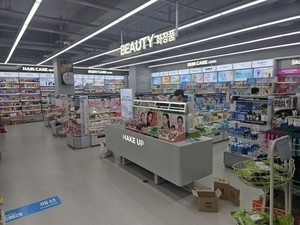
New Seoul stores expand floor space and refine product categories Beauty aisles now feature 'slow aging' and 'expert care' sections 'We vary the visuals and layout with every new opening,' chain says Daiso is reinventing itself. The discount variety chain has been opening larger stores with more finely divided product categories, evolving into a neighborhood-tailored retailer while holding on to its identity as an ultra-low-price lifestyle shop. Large new Daiso locations that have recently opened in Gangnam-gu and other parts of Seoul have overhauled the way products are displayed, according to industry sources Monday. Where items were once grouped broadly under beauty, fashion and health supplements, new fixtures organize them by brand and function. Display units have also been redesigned in silver and white tones, giving the stores a brighter, more polished feel. The Sinsa Garosugil store, which opened in Sinsa-dong, Gangnam-gu, in late July, is the clearest example. Spanning 724 square meters across the basement level and four above-ground floors, the store bills itself as a "beauty and fashion specialty store." The entire basement is devoted to beauty and fashion products. The beauty section is divided into skincare, men's care, body care and hair care, with color cosmetics gathered at a dedicated makeup counter. Bright-lit mirrors, cotton pads and makeup remover are provided so shoppers can try products before purchasing. "There seem to be more product types here than at other stores, and it feels brighter and more organized," said a shopper in her 40s who gave only her surname, Baek. "It's like CJ Olive Young moved into a Daiso." The fashion section has also expanded its classifications to include underwear and homewear, with separate eyewear and accessories counters. The health care corner on the ground floor organizes products by pharmaceutical company — including Chong Kun Dang, Dongkook Pharmaceutical and Dongwha Pharm — while high-demand items such as vitamins and omega-3 supplements are sorted by function, covering areas such as circulatory health, blood sugar management, and rest and sleep. "We vary the interior visuals and the way products are presented with every new store opening," a Daiso spokesperson said. The Cheongdam Dosan Park store, which opened in August at 1,194 square meters, added "slow aging" and "expert care" sections to its beauty corner. Daiso plans to apply the same strategy to upcoming stores in key Greater Seoul commercial districts. The move aligns with trends at its rivals in the so-called "Ol-Da-Mu" trio — CJ Olive Young, Daiso and Musinsa — which have become must-visit stops for foreign tourists. CJ Olive Young has been opening flagship stores in prime locations such as Myeong-dong, while Musinsa recently launched a 1,262-square-meter beauty store in Hongdae. Some observers see Daiso making a serious push into the health-and-beauty platform market dominated by CJ Olive Young, pointing to the Konkuk University-area store that opened in August and dedicated about 80 percent of its roughly 66-square-meter floor space to beauty products. Daiso, however, pushed back on that reading. "It was a 'pick-and-focus' strategy to run a small store efficiently," a spokesperson said. "As a lifestyle goods specialty retailer, we have no plans to open additional stores concentrated solely on beauty products."
Sept. 14, 2026
-

18,000 attend Hite Jinro's Isulive Festival
About 18,000 people attended the 2026 Isulive Festival hosted by Hite Jinro on Saturday. Now in its sixth edition since launching in 2018, the Isulive Festival is South Korea's only soju brand music festival. To deliver a distinct brand experience, the festival offered Chamisul draft soju and Terra draft beer produced within 24 hours — a first for the event. A total of 19 products were on offer, including Terra Sparkling and Terra Slush Draft. Around 10,000 bottles of soju (360ml) — including Chamisul and Jinro — and about 50,000 cans of beer (355ml) — including Terra and Kelly — were sold. The festival moved to Dalbit Festival Park in Songdo, Incheon this year to accommodate a larger crowd. Shuttle bus service expanded to 15 routes to serve visitors traveling from across the country, while alcohol booths grew from six to nine and food booths from 28 to 34. Performers included Dynamic Duo, Touched, Lee Young-ji and Woodz. "We will continue engaging with our audience through distinctive marketing to become a brand that is truly loved," a Hite Jinro official said.
Sept. 14, 2026
-
Coupang's R.LUX launches Chuseok sale with luxury beauty lineup
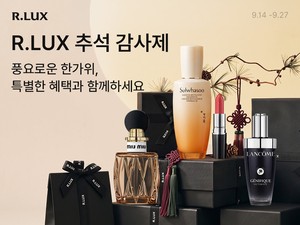
'Signature packaging' option introduced; Wow membership perks available Coupang Inc's luxury beauty and fashion service R.LUX announced Monday it will hold a "Chuseok Thanksgiving Sale" through Sept. 27. The event brings together leading Korean luxury brands — Sulwhasoo, The History of Whoo and Hera — alongside global names including SK-II, Clarins and Estée Lauder. Recently added brands such as NonFiction, Miu Miu and Yeonjak are also part of the lineup, which now spans hair, body, fragrance and broader lifestyle categories. Kulti, a brand set to join the platform soon, will round out the offering. Participating brands will offer gifts matching the full size of purchased products, as well as downloadable coupons. The Wow membership-exclusive "One Day Only" corner will feature a new product each day at special terms for 24 hours. The sale also includes curated gift sets tailored to the recipient. Options for parents include The History of Whoo's Gongjinhyang Firming Duo and Estée Lauder's Advanced Night Repair serum, while picks for partners feature the NARS Afterglow Lip Balm and Dolce & Gabbana Light Blue Eau de Parfum. A paid "signature packaging box" option in black has been introduced for gift wrapping. Products are available for fast delivery through Rocket Delivery, and a "Gift" feature lets shoppers send items using only the recipient's contact information. Wow members can earn 10 percent of their purchase amount back as cash — up to 150,000 won ($111) — and an additional 4 percent, up to 40,000 won per month, when paying with a Wow card.
Sept. 14, 2026
MOST READ
- 1KAIST develops high-performance bio-based adhesive using E. coli instead of petroleum
- 2Pope Leo XIV declines French honors and banquet, accepts only private meeting with Macron
- 3Daimler Truck unveils next-generation transport solutions at IAA 2026
- 4What was Rachmaninoff's performance fee? A 1928 price list tells all
- 5Samsung Biologics union's show of force backfires at the bargaining table
- 6APR says hair-loss treatment research published in international journal
-
WORLD

US warns of punishment for anyone enabling Iran's Strait of Hormuz toll scheme
-
INDUSTRY
Toyota union puts productivity first; Hyundai Motor union demands bigger share of profits
-
FINANCE

National Growth Fund to invest $531M in FuriosaAI, which rebuffed Meta's $800M takeover bid
-
INDUSTRY

Korea Shipowners' Association holds amateur baduk tournament for Maritime Day