
- HOME
- CONSUMER
-
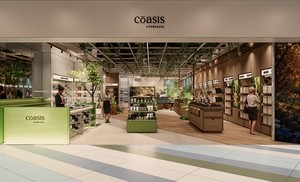
Hyundai Home Shopping opens 5th Coasis beauty store at Hyundai Department Store Mokdong
184-square-meter space on below-ground 2nd floor features new wellness, aesthetic zones Existing stores surpassing sales targets by over 50%, company says Hyundai Home Shopping Network will open the fifth location of its Coasis beauty select shop at Hyundai Department Store's Mokdong branch on Thursday. The four existing Coasis stores — at Hyundai Outlet Space One, Garden Five, Dongdaemun and Hyundai Department Store's Cheonho branch — have each exceeded their sales targets by more than 50 percent. The flagship Space One location draws an average of more than 2,000 visitors a day, more than double the average foot traffic at other Hyundai Outlet beauty stores. The new store occupies 184 square meters on the below-ground second floor of the Mokdong branch, making it the largest Coasis location to date. Designed around a "beauty forest" concept, the interior features wood furnishings and plant landscaping. The number of brands and products carried will each exceed the existing store average by at least 30 percent and 50 percent, respectively. The store also expands into health supplements, home spa and functional hair care categories. New zones include a "Wellness & Inner Beauty" section showcasing health supplements and daily essentials, and an "Aesthetic Zone" bringing together premium aesthetic brands. A dedicated perfume zone will also be set up, offering more than 150 domestic and international fragrance products. "We designed the space to go beyond beauty and encompass an entire lifestyle — wellness, aesthetics and more," a Hyundai Home Shopping Network official said. "We will continue to tailor our store strategy to reflect the characteristics of each retail district." Meanwhile, Hyundai Home Shopping Network recently signed an MOU with Cosmax to co-develop exclusive products. The company plans to expand its Coasis product lineup to 60 items by year-end through increased collaboration with various partners.
Sept. 16, 2026
-

Eland Foundation launches makeover campaign with W9.3m in clothing support
13 creators from Duho Corporation join in 1-to-1 matching initiative The Eland Foundation announced Wednesday that it is teaming up with Duho Corporation to run a makeover campaign offering clothing and styling support to youth aging out of foster care, young caregivers and teenagers from multicultural families. The foundation held a support handover ceremony Tuesday at the Eland Global R&D Center in Magok, Gangseo-gu, Seoul. Eland Foundation Director Lee Yun-jeong, Duho Corporation Support Division Head Sa Gyu-jin, Business Division Head Jang Seo-eun and participating creators attended. Thirteen creators affiliated with Duho Corporation — Kaindkong, Chaedo, Meoksaem, Dana, Eunbangul, Gondudinyeong, Byeongkwon, Pobaek, Yea, Hyejituz, Mallang, Bae Su-in and Dabin — are taking part in the campaign. Each will be matched one-to-one with one of 18 beneficiaries, helping them select clothing at Eland World brand stores and providing styling guidance. The creators raised 4.65 million won ($3,460) in designated donations, and the Eland Foundation matched that amount to assemble a total support fund of 9.3 million won. The funds will go toward supporting the 18 young beneficiaries. The creators will document the makeover process on video and share the content on their individual SNS channels. "We will continue to support marginalized young people so they can become independent, healthy members of society," an Eland Foundation official said. A Duho Corporation official said the company hopes that sharing the process of choosing clothes and finding one's own style as content will inspire more people to show interest and give back.
Sept. 16, 2026
-
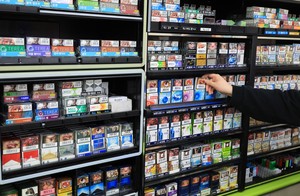
South Korea to release tobacco hazardous ingredient data for first time, as calls grow to revisit 11-year price freeze
Tobacco manufacturers and importers required to submit hazardous ingredient data by product Smoking reduction effect uncertain; experts call for broader policy debate including pricing The government will release the results of hazardous ingredient analyses of tobacco products for the first time in October. Whether the disclosure will meaningfully reduce smoking remains uncertain, and calls are growing for broader policy measures — including a cigarette price hike — to complement the move. According to industry sources Tuesday, the Ministry of Food and Drug Safety plans to publish hazardous ingredient content test results for 44 types of combustible and heated tobacco products and 20 types of liquid e-cigarettes next month. The disclosure follows enforcement of the Act on Management of Tobacco Hazardous Substances, which took effect last November. Under existing laws — the Tobacco Business Act and the National Health Promotion Act — manufacturers were required to print eight carcinogenic substances on cigarette packaging, including tar, nicotine, naphthylamine, nickel and benzene. No separate procedure existed for systematically testing and disclosing hazardous ingredients. Under the new act, tobacco manufacturers and importers must have each product tested for hazardous ingredients at a designated specialist testing institution every two years and submit the results to the minister of food and drug safety. The ministry plans to publish content levels of key carcinogens and hazardous substances — including benzene, formaldehyde and heavy metals — on its website in the second half of this year. Enacted in October 2023, the act is regarded as a turning point that raises the regulatory framework by a notch. It strengthens consumers' right to know and lays the groundwork for science-based hazardous substance management. It also positions the government to respond to the diversification of the tobacco market, which now includes heated and liquid e-cigarettes. However, it remains to be seen whether this non-price regulation — disclosing hazardous ingredient information — will actually reduce smoking. Most adult smokers are already aware of the health risks of tobacco, and providing numerical ingredient data may not be enough to drive behavioral change or encourage cessation. That has prompted calls to examine other smoking-reduction policy tools, including pricing measures. The WHO recommends tobacco tax increases as the single most effective regulatory tool for reducing tobacco consumption, noting that the effect is particularly pronounced among young people and low-income groups, who are more sensitive to price changes. Research published in the Journal of the Korean Society for Research on Nicotine and Tobacco found that cigarette price increases in 2005 and 2015 produced meaningful behavioral changes, including higher rates of transition to non-smoking and lower rates of relapse. Domestic cigarette prices have not been adjusted in 11 years, since they rose from 2,500 won to 4,500 won in 2015. In the meantime, consumer prices and household incomes have consistently risen, meaning the real financial burden on smokers is lower today than in the past. South Korea's current cigarette price — around $3.50 per pack — stands at roughly one-third of the OECD average of about $10. "The enforcement of the act is meaningful in that it provides consumers with more transparent information and establishes a government-level framework for managing tobacco hazards," an industry official said. "To achieve the ultimate goals of tobacco regulation policy, effective measures must be pursued — including bringing the price, frozen for 11 years, in line with reality."
Sept. 16, 2026
-
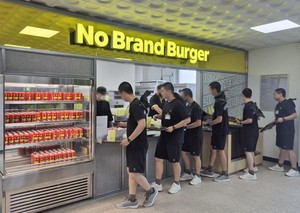
No Brand Burger makes first foray into military bases
Partnership with Pulmuone Foods & Culture expands dining options for troops No Brand Burger has entered a military base for the first time, Shinsegae Food announced Wednesday. The burger chain recently opened a store at the recruit training battalion cafeteria of the 35th Division in Imsil-gun, North Jeolla Province, in partnership with Pulmuone Foods & Culture. Under the arrangement, No Brand Burger operates within a military food-service facility run by Pulmuone Foods & Culture. Soldiers who sign up in advance can order from the menu during dinner hours. The outlet serves up to 250 meals a day. "We partnered with Pulmuone Foods & Culture to launch No Brand Burger at a military base in order to give troops the chance to enjoy a wider variety of dining options and to improve overall satisfaction with their meals," a Shinsegae Food official said.
Sept. 16, 2026
-
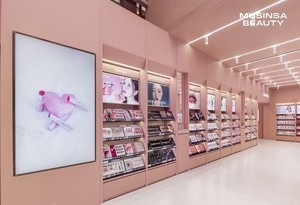
Musinsa Beauty Hongdae hits W250m in sales in 3 days
Sales include figures from below-ground pharmacy; average spend tops 110,000 won per customer Musinsa Beauty Hongdae said Wednesday it surpassed 250 million won ($186,000) in cumulative sales in just three days since opening Friday. The figure includes sales from Beautyonnuri Pharmacy on the below-ground floor. The average spend per customer came to about 110,000 won. Among customers who made purchases during the three-day period, women accounted for 76 percent and shoppers in their 20s and 30s made up more than 80 percent. The share of foreign customers also grew rapidly. Domestic visitors slightly outnumbered foreign ones on Friday and Saturday, but by Sunday foreign customers accounted for nearly 60 percent of traffic. The purchase conversion rate among foreign customers was roughly twice that of Musinsa's other offline stores. By brand, standout performers included labels not typically found in major beauty retail channels. Color-lens curation platform Ponfish ranked among the top-selling brands. Brands popular with foreign customers included Organacell, 2AN, Dr. Melacsyn, Flowernose, Oddtype and Dr. Elcia. Organacell, Dr. Melacsyn and Dr. Elcia are derma and high-performance skincare brands. Domestic customers showed a relatively higher preference for color cosmetics brands. Top sellers among Korean shoppers included Risky, Snidel Beauty, Mued, 2AN, Flowernose and Oddtype. "We will use the Hongdae store to accumulate customer response data and purchase insights, and apply them to brand discovery and curation to build a distinctive offline edge for Musinsa Beauty," a company official said.
Sept. 16, 2026
-
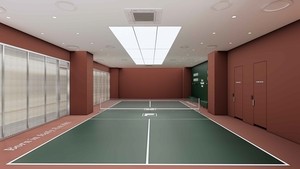
Lotte Department Store opens pickleball specialty store at Lotte World Mall
Lotte Department Store will open a pickleball specialty store featuring a regulation-size court on the third floor of Lotte World Mall in Songpa-gu, Seoul, on Friday. The store, developed in partnership with Fila Korea, spans about 260 square meters and includes a regulation pickleball court measuring 13.4 meters by 6.1 meters. It will carry 292 products, including pickleball-specific paddles, balls and equipment, as well as racket-sport apparel. The store will also offer lesson programs, including one-on-one and two-on-one private coaching, English-language lessons and single-point technical classes. Through Oct. 31, pickleball club members will receive a 50 percent discount on open-play sessions. Customers who purchase a new paddle will receive a complimentary introductory lesson or a one-hour free court booking. "We will continue to offer differentiated sports experiences to customers both at home and abroad," said Park Ok-woo, head of the sports division at Lotte Department Store.
Sept. 16, 2026
-
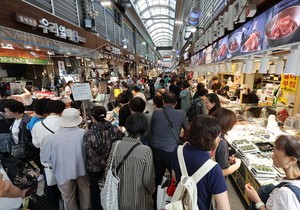
Chuseok table costs hit 300,000 won, with traditional markets cheaper than hypermarkets
The cost of preparing a chuseok ancestral rite table this year has reached around 300,000 won ($223), with traditional markets coming in about 50,000 won cheaper than hypermarkets, according to a new survey. The Korea Price Research Association, a price-monitoring agency, said Wednesday that the cost of a chuseok rite table for a family of four at traditional markets came to 303,750 won — up 4.1 percent from last year. The figure is based on a survey of 28 rite-table items conducted Thursday and Friday at traditional markets across six cities: Seoul, Busan, Incheon, Daegu, Gwangju and Daejeon. Among individual items, pears rose the most sharply, with five costing 27,300 won — a 16 percent increase from last year. The association attributed the rise to an earlier-than-usual chuseok this year, which moved up the harvest schedule. The share of large-grade fruit typically used for rite tables also shrank. Among vegetables, zucchini posted the steepest rise, surging 92.8 percent to 2,410 won. Heavy rains late last month reduced sunlight and hurt crop yields. Radishes were also up 24 percent from last year to 2,530 won, reflecting the impact of summer weather conditions. Eggs rose 8.9 percent to 2,820 won per 10. Beef brisket climbed 10.5 percent to 33,050 won per 600 grams, while round and rump cuts rose 11.9 percent to 29,760 won. Chicken jumped 13.1 percent to 7,230 won per kilogram. The traditional market total of 303,750 won was 57,550 won cheaper than hypermarkets at 361,300 won, and 59,220 won cheaper than online retailers at 362,970 won. Fresh produce — including fruit, meat and vegetables — was cheapest at traditional markets, while some processed goods such as flour and tofu were less expensive at hypermarkets. "Most of the price gap between retail channels came from fresh produce," said Im Sang-min, a team leader at the Korea Price Research Association. "One option is to buy fresh items at traditional markets and pick up processed foods at hypermarkets or online."
Sept. 16, 2026
-
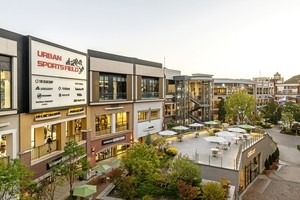
Shinsegae Simon's Paju Premium Outlets unveils major revamp with 64 brand changes
Sports, outdoor, international fashion and dining offerings expanded 39 new tenants include Musinsa, CJ Olive Young Singer Gemi to perform Saturday; events run through Oct. 5 Shinsegae Simon Paju Premium Outlets announced Wednesday a sweeping brand overhaul and facility upgrade to offer shoppers a refreshed retail environment. The revamp covers 64 brands — 39 new tenants, 23 renewals or relocations, and two expansions — accounting for roughly 22 percent of all brands at the outlet. The changes focus on sports, outdoor, international fashion and food-and-beverage offerings, and affect about 10,000 square meters of retail space, or approximately one-fifth of the total floor area. Fashion brands have been concentrated around Central Square. Adidas and Max Mara expanded their stores, while Brunello Cucinelli and Andersson Bell joined as new tenants. Brooks Brothers will also relocate its store. Musinsa Standard and CJ Olive Young have opened, and JAJU will open as a new tenant as well. On the second floor, a 1,500-square-meter sports and outdoor specialty zone called "Urban Sports Field" has been created, housing 10 brands including Helinox and Musinsa Standard Sports. Nine food-and-beverage brands are also making their debut, among them Ashley Queens and Shake Shack. Two panoramic elevators offering views of the shopping center have been installed at Central Square. Additional tables and chairs have been placed in common areas, and a large humpback whale sculpture has been installed. Singer Gemi will perform at 5 p.m. Saturday at the outlet. A grand reopening event called "The Next Paju" runs from Friday through Oct. 5. From Friday through Sept. 27, Samsung fashion brands — including Beanpole, Galaxy and Juun.J — will receive an additional discount of up to 20 percent. Customers who spend 400,000 won ($297) or more will receive a 20,000 won Shinsegae gift voucher, while those spending 600,000 won or more will receive a 30,000 won voucher. "We hope visitors enjoy a special autumn outing at Paju Premium Outlets, which now offers an even richer mix of shopping, dining and cultural experiences," a Shinsegae Simon official said.
Sept. 16, 2026
-
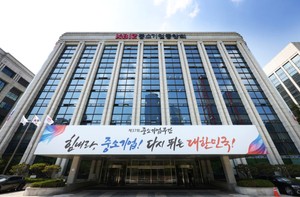
Online shopping association rebuffs Korea Federation of SMEs survey on platform transaction costs
'Platform vendors' transaction costs reach 21% of monthly sales' Association pushes back against Korea Federation of SMEs survey findings 'Negative generalization of platform market cannot serve as basis for legislation' The Korea Online Shopping Association has pushed back against a Korea Federation of SMEs survey finding that transaction costs for vendors on online platforms amount to 21.7 percent of their monthly sales, saying the results "distort the market through exaggerated interpretation." In a statement released Tuesday, the association said it has "deep concerns" about the survey, arguing that it "lumped together costs and transaction types of entirely different natures, and negatively generalized the entire platform market based on subjective responses and some extreme values, rather than accurately reflecting the trading reality of vendors." The Korea Federation of SMEs' "2026 Online Platform Vendor Transaction Survey," released the same day, found that transaction costs borne by platform vendors reached 21.7 percent of their average monthly sales. Broken down by platform type, online food delivery apps accounted for the highest share at 26.2 percent, followed by online shopping malls at 20.6 percent and accommodation apps at 18.3 percent. Coupang Inc had the highest transaction cost burden among individual companies at 45.0 percent. The association said the "total transaction costs" figure includes not only mandatory intermediary commissions but also advertising fees, payment processing fees, delivery charges, data usage fees and various add-on service costs that sellers pay voluntarily to boost sales and expand their business. It called for mandatory and optional costs to be reported separately to prevent misunderstanding, and for the specific calculation formula to be disclosed. The association also took issue with the finding that transaction cost burdens rose across all platforms compared with last year's survey. Without disclosing whether the same vendors were tracked each year in a panel study, or whether the sample composition was consistently controlled, the results cannot demonstrate a market-wide trend, it argued. On the finding that 53.7 percent of online shopping mall vendors generated 100 percent of their sales through their primary platform, the association said this "reflects the characteristics of a sample limited to platform vendors," adding that "cross-sectional surveys of different samples cannot be used to conclude that costs are rising or dependence is deepening." Regarding the finding that transaction cost burdens reach as high as 45 percent for some companies, the association said the survey "did not disclose how many companies produced that figure, which cost items and services those vendors had selected, or whether the data matched actual contract records." It stressed that "a single highest response value should not be highlighted as if it were the general trading condition of the market." The association also said a finding interpreted as vendors feeling that "a considerable amount of time is needed to recover the full settlement amount before the deadline" should not create the false impression of a legal settlement deadline problem. On responses indicating that vendors had experienced unfair trade practices or improper conduct, the association said these represent "the subjective perceptions of respondents" and that "subjective experiences and policy preference responses are not objective evidence of unfair conduct or the need for legislation." The association criticized the approach of mixing cost categories with different transaction types and extrapolating unverified extreme values and subjective responses into market-wide problems. It said "surveys that serve as the basis for regulatory legislation must prioritize accuracy, representativeness and reproducibility," and that such an approach "cannot provide the right solutions even for small and mid-sized merchants." The association urged the Korea Federation of SMEs to transparently release its survey data and issue corrections and supplementary analysis with a more balanced approach, warning that findings presented without adequately disclosing the limitations of the methodology and calculation basis should not be used as grounds for enacting an online platform fairness law.
Sept. 15, 2026
-
'People are drinking cheap coffee instead of soda': Low-cost coffee chains emerge as rivals to carbonated drinks
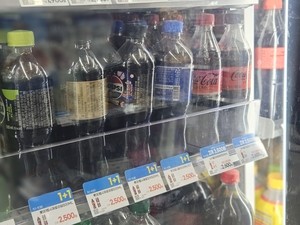
LG H&H, Lotte Chilsung Beverage post weak beverage earnings Carbonated drink sales stall amid low-sugar trend and price hikes Large-format coffee at around 2,000 won fast becoming a substitute "People are drinking cheap coffee instead of carbonated drinks," said an industry official. Budget coffee chains have emerged as direct rivals to cola and other carbonated beverages. Analysts say large-format coffees priced between 1,500 and 2,000 won have become a strong substitute, their appeal amplified by the growing low-sugar trend. According to industry data, budget coffee chains offer a lower price per volume than carbonated drinks. An iced Americano (710 milliliters) at Mega MGC Coffee runs 1,500 to 2,000 won depending on the location. Compose Coffee sells the same menu item in a 591-milliliter size at a similar price. By comparison, a 350-milliliter can of Coca-Cola at a convenience store costs 2,200 won, while a 600-milliliter PET bottle of Pepsi-Cola goes for 2,500 won. "Cumulative price increases on carbonated drinks have put them in roughly the same price bracket as budget coffee," one industry official said. "More consumers are turning to budget coffee — which is just as accessible and similarly priced — rather than buying a soda at a convenience store." The budget coffee market is expanding rapidly. According to the Korea Fair Trade Commission, the number of coffee franchise outlets reached 29,101 at the end of 2024, up 15.8 percent from the previous year, with low-cost brands dominating the top spots: Mega MGC Coffee (3,325 locations), Compose Coffee (2,649), Ediya Coffee (2,562) and Paik's Coffee (1,712). MGC Global, the operator of Mega MGC Coffee, posted sales of 646.9 billion won ($481 million) and operating profit of 111.4 billion won in 2025, up 30.4 percent and 3.5 percent, respectively, from the prior year. Convenience store coffee sales are also climbing. GS25 said sales of pouch beverages such as coffee and ice cups from June through August this year rose 12 percent and 25.1 percent, respectively, from the same period last year. Sales of iced items under its private-label brand CAFE25, priced at around 2,000 won, surged nearly 107 percent. At CU, sales of iced beverages including coffee and ice cups rose 7.9 percent and 14.7 percent, respectively, over the same period. Meanwhile, the earnings of South Korea's major carbonated drink manufacturers have been sliding of late. LG H&H's refreshment beverage division saw sales fall 2.9 percent, from 1.82 trillion won in 2024 to 1.77 trillion won in 2025, while operating profit dropped 15.4 percent, from 168 billion won to 142.2 billion won. In the first half of this year, the division posted sales of 869 billion won and operating profit of 79.9 billion won, down 0.8 percent and 10.7 percent, respectively, from a year earlier. Coca-Cola products account for roughly half of the beverage division's sales. LG H&H's beverage division posted sales of 383.5 billion won and an operating loss of 9.9 billion won in the fourth quarter of last year — its first quarterly loss since acquiring Coca-Cola Korea in 2007. The result prompted its 90-percent-owned subsidiary Coca-Cola Beverages Korea to offer a voluntary retirement program last November. The subsidiary's sales slipped 2.4 percent, from 1.64 trillion won in 2024 to 1.6 trillion won in 2025, while operating profit fell 8.1 percent, from 165.6 billion won to 152.3 billion won. Lotte Chilsung Beverage has fared no better. Sales fell from 1.95 trillion won in 2023 to 1.81 trillion won in 2025, with operating profit collapsing from 162 billion won to 73.9 billion won over the same period. The company launched its first-ever voluntary retirement program at the end of last year, which contributed to an operating loss of 17.9 billion won in the fourth quarter. In 2024, the consolidation of its Philippine Pepsi factory and related restructuring resulted in a fourth-quarter operating loss of 8 billion won. The moves reflect efforts to restore profitability amid sluggish demand. Major players are responding by expanding their low-sugar carbonated drink lineups. LG H&H recently launched Coca-Cola Zero Lemon Lime and also offers zero-sugar versions of its hydration drinks Powerade and Toreta. Lotte Chilsung Beverage introduced Happiz, a prebiotic soda brand that combines a low-sugar, low-calorie formula with five fermented ingredients derived from patented bacterial strains. "The refreshing sensation that carbonation provides is hard to replicate with coffee," another industry official said. "The trend is toward expanding product ranges that cater to health-conscious consumers."
Sept. 15, 2026
-
Mountia sponsors apparel for national sports climbing competition for athletes with developmental disabilities in Daegu
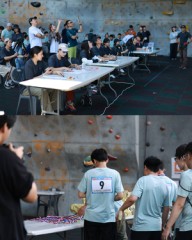
Mountia announced Tuesday that it served as an official sponsor of the 3rd Daegu Metropolitan City National Sports Climbing Competition for Athletes with Developmental Disabilities, providing apparel for the event. Organized by the Daegu Metropolitan City Association of Sports for the Disabled and co-hosted by the Daegu Metropolitan City Disabled Sports Climbing Association and People Love Social Cooperative, the competition was held Sunday. Mountia distributed functional apparel to athletes and staff. The sponsorship is part of an ongoing disability support project run by the Black Yak Kang Tae-sun Sharing Foundation. Since launching its sports climbing team in 2016, Mountia has sponsored multiple competitions — including ice climbing championships — as part of its efforts to broaden the sport's reach. "We plan to continue exploring ways to expand support for diverse sporting activities and realize our value of 'walking every path in the world,'" a Mountia official said.
Sept. 15, 2026
-
Pril relaunches 'Secret of Baking Soda Plus' with double the baking soda
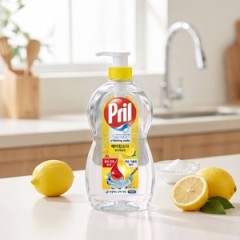
Revamped dish soap promises to cut grease without pre-soaking Henkel Consumer Brands Korea announced Tuesday the relaunch of "Pril Secret of Baking Soda Plus," a revamped version of its eco-friendly Pril dish soap line. The reformulated product contains twice the baking soda of its predecessor, allowing users to remove burnt-on grease from frying pans and pots without pre-rinsing or soaking. It comes in two sizes: a 700-milliliter bottle and a 1-liter refill pouch. "The cleaning power of the relaunched product has been verified through testing by the KATRI Testing and Research Institute, and we expect it to help reduce the hassle of everyday dishwashing," a Pril official said.
Sept. 15, 2026
-

Fila launches first special edition with brand model WOODZ, sells out in an hour
Fila, operated by Misto Korea, announced Tuesday the launch of its first special edition collection with brand model WOODZ, titled "FILA+WOODZ." The edition comprises two products — an apparel piece called the "Airflow Lightweight Down" and a shoe called the "HAREPIN." Both feature a silver colorway with WOODZ's logo applied. The first product, the Airflow Lightweight Down, went on sale Thursday at 11 a.m. on Fila's official online store. The jacket is a new version of an item that sold out during a pre-sale in July, now updated with the WOODZ logo. It sold out again within an hour of launch. The second product, the HAREPIN, will be released exclusively on Fila's official online store Monday at 11 a.m. The shoe features suede material and a Vibram outsole, and will come with a special silver-colored shoe package. Following the special edition, Fila will also release regular products. The standard Airflow Lightweight Down worn by WOODZ will be unveiled Thursday alongside a WOODZ campaign. The regular HAREPIN will go on sale in October. "Starting with this edition, we plan to continuously offer consumers a variety of styles and new product experiences," a Misto Korea official said.
Sept. 15, 2026
-
KT&G launches lil Tonino Lamborghini pop-up in Seongsu-dong, showcasing 3-second heat-up
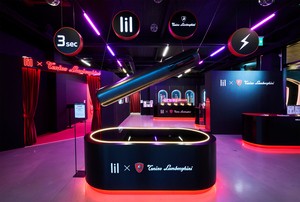
Nine-day event runs through Sept. 23; five NAU stick variants on sale KT&G said it will run a pop-up store for the lil Tonino Lamborghini, officially launched Tuesday in Seoul's Seongsu-dong, through Sept. 23. The pop-up is located at Stage X Seongsu Chabot in Seongsu-dong. Visitors can enter through advance online reservations via Naver Place or on-site registration. The lil Tonino Lamborghini features KT&G's FlashWave heating technology, which the company says delivers the fastest heat-up time among e-cigarettes released in South Korea at just three seconds. Five variants of the dedicated stick brand NAU are also available, priced at 4,800 won per pack. The venue features a product exhibition area and a photo zone inspired by the device's design. Visitors can also receive a discount through a trade-in program.
Sept. 15, 2026
-
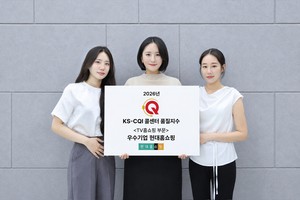
Hyundai Home Shopping Network earns top marks in Korea call center quality index
Hyundai Home Shopping Network announced Tuesday it had been named a top performer in the TV home shopping category of the 2026 Korean Call Center Quality Index, a survey administered by the Korean Standards Association (KSA). The KS-CQI measures the service quality of domestic call centers across seven categories — including reliability and courtesy of consultation services — using a total of 39 evaluation criteria. The Korean Standards Association publishes the index annually. Hyundai Home Shopping Network was recognized for improving service quality through a next-generation customer satisfaction system, including the introduction of a generative AI-powered chatbot exclusively for customer service agents. The company also offers a "slow speech service" that reduces automated voice guidance speed by 10 to 20 percent to help elderly customers communicate more easily. "We are developing a differentiated customer service system to provide the best service from the customer's perspective," said Han Gwang-young, chief executive of Hyundai Home Shopping Network. "We will continue to pursue a management strategy that puts a convenient shopping environment and customer satisfaction first."
Sept. 15, 2026
-
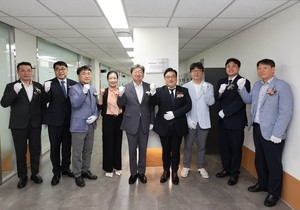
Coupang Fulfillment Services opens industry-academia lab at Jaeneung University
Coupang Fulfillment Services (CFS) has opened a dedicated industry-academia cooperation lab at Jaeneung University, holding a plaque-unveiling ceremony at the facility Monday. The ceremony was attended by Jaeneung University President Lee Nam-sik, Chief Human Resources Officer Park Soo-hyun representing CEO Jeong Jong-cheol, industry-academia cooperation director Lee Ju-mi, student career development office head Ahn Taek-kyun and retail product planning department chair Kang Dong-yun. The lab was established under an industry-academia MOU the two institutions signed in October 2022, with the aim of developing job-ready professionals capable of working directly in logistics operations — not just learning theory. It is equipped with educational PCs, smart logistics training equipment and a forklift simulator. Jaeneung University will launch a "CFS employment-linked program" starting in the second semester of the 2026 academic year, giving priority to students in the retail product planning department and those enrolled in smart logistics courses. Participants will receive classroom instruction on fulfillment center operations and processes, as well as advanced simulator training and on-site visits to CFS facilities. "Using the opening of the CFS lab as a springboard, we will spare no effort in supporting our students as they grow into core talent who will lead the future logistics industry," Jaeneung University President Lee said. CFS CEO Jeong responded, "CFS will continue to invest so that young people can develop and demonstrate their expertise as logistics professionals." Meanwhile, CFS has established industry-academia partnerships with 18 universities nationwide, starting with Jeonju University in 2021 and expanding to include Jaeneung University, Korea Polytechnics and Yeungnam University of Science and Technology, among others.
Sept. 15, 2026
-
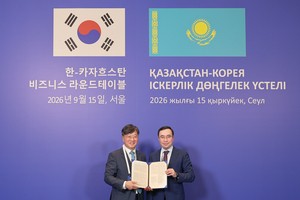
Hyundai Green Food to build K-food production facility in Kazakhstan
Partnership with Alatau City Authority for factory construction Hyundai Green Food announced Tuesday it had signed a "strategic partnership for the construction of a food production factory" with Kazakhstan's Alatau City Authority at the Four Seasons Hotel in Seoul. The Alatau City Authority is a special administrative body of Kazakhstan dedicated to the development, investment attraction and urban management of Alatau City — a new town under construction north of Almaty, Kazakhstan's largest economic hub. The city is being developed as a smart city with four core functions: industry, finance, tourism and education. Hyundai Green Food will build a K-food production facility within the Alatau new town. The company also plans to explore cooperation with the Alatau City Authority in areas including food production and logistics infrastructure and production automation. "Alatau City is a new town being built at a logistics hub connecting China and Central Asia to Europe, making it an ideal location for producing K-food locally and supplying it to neighboring countries," Hyundai Green Food President Park Hong-jin said. "We plan to develop the K-food production facility to be established under this agreement into a long-term export base for K-food across Central Asia." Meanwhile, the signing ceremony was held as part of the Korea-Kazakhstan Business Roundtable, which was also attended by Kazakhstani President Kassym-Jomart Tokayev and Prime Minister Han Seong-sook.
Sept. 15, 2026
-
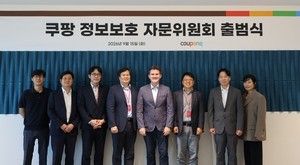
Coupang Inc launches information security advisory committee after data leak
Panel of 7 external experts to provide objective, professional security oversight Coupang Inc said Tuesday it has officially launched an Information Security Advisory Committee composed of external experts, as a follow-up measure to a personal data leak. The company formed the committee to build an objective and reliable information security framework, with plans to independently verify its internal security policies and raise overall security standards. The committee will monitor the latest developments in information security laws and regulations, track emerging security threats, and advise on the company's security issues and policies. Coupang Inc plans to incorporate the committee's recommendations into its internal security policies and operational processes to establish industry-leading security standards. The seven-member panel draws on external expertise in information security, law, management and IT. Co-chairs are Heo Seong-uk, chairman of the CPO Forum and a former director of network policy at the Ministry of Science and ICT and former head of the National IT Industry Promotion Agency, and Brett Mattis, Coupang Inc's chief information security officer. The other members are Kang Yu-min, an advisor at Kim & Chang; Kwak Jin, a professor at Ajou University; Kim Hyeon-gyeong, a professor at Seoul National University of Science and Technology; Ahn Jeong-ho, an attorney at Bae, Kim & Lee; Yang Je-yeol, a professor at Kyung Hee University; and Jang Hang-bae, a professor at Chung-Ang University. The committee held its inaugural meeting Tuesday and agreed to convene regular quarterly sessions going forward. Members reviewed the company's recent activities related to customer data protection. "We will continuously work to improve our security framework by fully drawing on the outstanding experience and knowledge of top experts," a Coupang Inc official said. "We will make efforts that go beyond global standards."
Sept. 15, 2026
-
Hanwha's hansik fine-dining restaurant Asadal fully booked through October
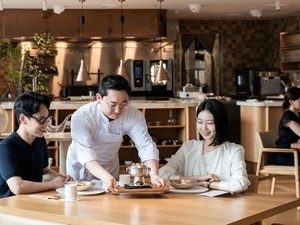
Reservations sold out through late October as monthly visitors surge 20-fold 'Focused on the natural flavor of ingredients, not flashiness' Hanwha Food Tech's hansik fine-dining restaurant, The Plaza Dining Asadal, has sold out reservations for two full months since opening in Gwanghwamun in April, the company announced Tuesday. The Plaza Dining Asadal carries on the legacy of Asadal, the flagship hansik restaurant of Seoul Plaza Hotel since 1986. Chef Kim Jeong-hwan, who honed his craft at Michelin-starred restaurants Kwon Sooksoo (two stars) and Etanic Garden (one star), reinterprets the original Asadal's signature dishes for a contemporary palate. Less than six months after opening, the response has been strong. All lunch and dinner course seatings are fully booked through late October. The number of visitors last month rose more than 20-fold compared with the restaurant's opening month. "I focused on letting the natural flavors and strengths of each ingredient shine rather than chasing flashiness," head chef Kim said, explaining the restaurant's popularity. "I think what left a lasting impression on customers was our effort to create flavors that linger, rather than deliver a momentary jolt." Asadal's menu tells a story with every dish. The signature sinseollo — a royal hot pot — reimagines the original restaurant's showpiece from 40 years ago, drawing on seasonal ingredients such as croaker in summer and hairtail in autumn. The kitchen has also reinterpreted "bokimchi," a Joseon-era royal court dish whose name evokes wrapping up good fortune, pairing octopus, Hanwoo brisket and vegetables to bring out a harmonious depth of flavor. Creative combinations that break from convention are another draw. Sea urchin is served atop jeungpyeon, a fermented rice cake, while yukhoe — Korean beef tartare — is wrapped in crispy onion bugak, a traditional fried garnish. An exceptional wine program rounds out the experience. The restaurant stocks more than 1,000 rare labels, including bottles priced above 20 million won ($14,900). Guests who opt for the "signature pairing" service can sample a curated selection of wines matched to each course. The restaurant also weaves in festive touches: guests choose from chopsticks in five colors — blue, white, yellow, red and black — symbolizing the five blessings, and receive a set of three dasik cookies as a wish for "tomorrow's fortune." Menu cards presented throughout the meal feature illustrations of the ridgeline surrounding Gwanghwamun. Starting Tuesday, the kitchen is rolling out a new autumn menu built around seasonal ingredients including pine mushrooms, hairtail, pine nuts and pomegranate. "We will continue developing a wide range of dishes that draw out the clean, natural flavors of our ingredients while offering customers a fresh taste experience," a Hanwha Food Tech official said. "Through this, we will carry forward and build on the heritage of the original Asadal, which captivated diners 40 years ago."
Sept. 15, 2026
-

Kolon Sport, WAAC to outfit archery and golf national teams at Asian Games
Kolon Industries' outdoor brand Kolon Sport and golf wear brand WAAC announced Tuesday they will supply uniforms and equipment to South Korea's archery and golf national teams for the 2026 Aichi-Nagoya Asian Games. Kolon Sport will provide the archery team with uniforms that concentrate the brand's materials technology to suit local climate conditions. The gear features significantly enhanced water-repellent, quick-dry and cooling functions optimized for high-temperature environments. The tops use a functional fabric containing high-concentration ceramic particles that block heat transfer from sunlight, while the caps are made with an eco-friendly material developed by Kolon Sport that incorporates Solar-flect technology, which reflects and scatters solar infrared radiation. Particularly notable is the debut of the Archer Socks 2, the second-generation model of the world's first archery shoe — the Archer Socks, which accompanied South Korea's gold-medal moments at the 2024 Paris Olympics. The new model was completed after roughly 20 months of meticulous development, drawing on detailed analysis of pressure center and distribution data from athletes' aiming stance through the moment just before release. WAAC will extend its golf national team sponsorship — which began at the 2021 Tokyo Olympics — to the Asian Games as part of a strategy to broaden its global recognition. The brand will supply a full range of competition products to the entire delegation, including sponsored athlete Kim Sung-hyun, other national team players, caddies and coaches. The uniform design incorporates three-dimensional patterning and a comfortable fit optimized for swings and dynamic body movement, developed with input from the athletes. Moisture-wicking and quick-dry functions are built into the fabric to handle the hot and humid local climate, and stretch materials are used throughout. The design features a V pattern symbolizing victory for Korean athletes and straight graphic elements inspired by the South Korean flag. The main color palette — white, red, navy, black and light blue — draws from the Taeguk symbol and the four trigrams of the national flag. "Both archery, where a single millimeter decides the outcome, and golf, which demands precise technique, require extreme concentration," a Kolon FnC official said. "We will spare no effort in providing our best technology and design capabilities."
Sept. 15, 2026
MOST READ
- 1Pope Leo XIV declines French honors and banquet, accepts only private meeting with Macron
- 2KAIST develops high-performance bio-based adhesive using E. coli instead of petroleum
- 3Daimler Truck unveils next-generation transport solutions at IAA 2026
- 4What was Rachmaninoff's performance fee? A 1928 price list tells all
- 5Samsung Biologics union's show of force backfires at the bargaining table
- 6APR says hair-loss treatment research published in international journal
-
WORLD

US warns of punishment for anyone enabling Iran's Strait of Hormuz toll scheme
-
INDUSTRY
Toyota union puts productivity first; Hyundai Motor union demands bigger share of profits
-
FINANCE
National Growth Fund to invest $531M in FuriosaAI, which rebuffed Meta's $800M takeover bid
-
INDUSTRY
Korea Shipowners' Association holds amateur baduk tournament for Maritime Day