
- HOME
- CONSUMER
-
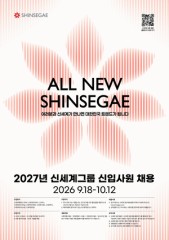
Shinsegae Group opens recruitment drive for 2027 new hires
Applications open Friday Shinsegae Group announced Thursday that it will hold an open recruitment drive for new employees set to join in 2027. Ten affiliates will take part: E-mart, Shinsegae department store, Shinsegae Property, SCK Company (Starbucks), Shinsegae International, Shinsegae DFS (duty-free), Shinsegae Information & Communication, Shinsegae Food, Shinsegae Central and Shinsegae Live Shopping. Applications will be accepted from Friday through Oct. 12, with results announced in late October. Individual affiliate interviews are scheduled for November, followed by final interviews in December. Successful candidates will officially join the company in January next year. Shinsegae Group has scrapped the one-month internship that previously followed the final interview. "Eliminating the internship process allowed us to secure top talent earlier," a Shinsegae Group official said. "We look forward to receiving applications this year from young people who want to build the future alongside us."
Sept. 17, 2026
-
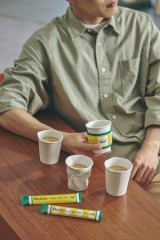
Maxim Mocha Gold sells about 5.3 billion sticks in a year as brand marks 37th anniversary
No. 1 in Korea's coffee-mix market since its 1989 launch 'Golden ratio' blend tailored to Korean tastes drives enduring appeal Brand experience events continue to reach consumers across generations Dongsuh Foods announced Thursday that Maxim Mocha Gold sold about 5.3 billion sticks over the past year, as the product marks its 37th anniversary this year. Launched in 1989, Maxim Mocha Gold has held the top position in South Korea's coffee-mix market ever since. Dongsuh Foods introduced the world's first coffee mix in 1976 and has continued developing new products since. The brand's core competitive edge lies in what it calls a "golden ratio" — a blend of coffee beans calibrated to suit Korean palates. The brand's current advertising campaign, featuring actor Park Bo-young, carries the message "Be happy now, have a cup of happiness now." At the end of the commercial, Park savors a cup of Mocha Gold in a yellow mug as the tagline appears: "This happiness, the soul knows — Korea's soul coffee." Experiential marketing has also been a consistent part of the brand's strategy. Since 2015, Dongsuh Foods has run a series of pop-up projects in major cities across the country, including Busan, Jeonju, Gunsan and Gyeongju. Each edition of the "Mocha Gold Pop-up Cafe" adopts a different theme — past iterations have taken the form of a tearoom, bookshop, photo studio, post office, broadcasting station, alleyway and traditional house. Last year's "Maxim House" in Gyeongju, which ran for about a month, drew attention as an experiential space blending traditional and contemporary sensibilities. "Maxim Mocha Gold has earned consumers' love for more than 30 years thanks to our coffee expertise and the sincerity with which we have tried to share the happiness that a single cup of coffee can bring," a Dongsuh Foods official said. "We plan to continue developing products focused on taste and aroma, while rolling out a variety of marketing activities that allow us to connect with consumers."
Sept. 17, 2026
-
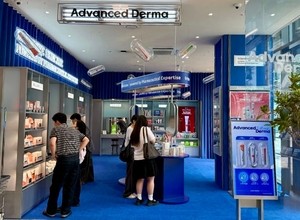
From ugly duckling to K-beauty powerhouse: how derma cosmetics escaped the pharmacy
Pharmacies first appeared in CJ Olive Young's inaugural store in 1999, only to face fierce backlash from the pharmaceutical industry — and a later copycat's retreat. Twenty-seven years on, Musinsa Beauty has welcomed a pharmacy inside its store, and the derma cosmetics category is now a full-blown battleground. K-beauty has ignited a race in high-performance derma cosmetics. CJ Olive Young, one of K-beauty's dominant players, has launched a dedicated shelf section developed in partnership with pharmaceutical companies, while Musinsa Beauty has opened a store that houses an actual pharmacy. The age of derma beauty as a competitive differentiator has arrived. According to industry sources on the 16th, derma beauty refers to high-performance cosmetics grounded in scientific and medical approaches to skin care — a concept rooted in dermatology. The category was once distributed almost exclusively through dermatology clinics and pharmacies, primarily for treating skin conditions or managing post-procedure recovery. Pharmacy-style cosmetics first appeared on a domestic beauty platform in late 1999, when CJ Olive Young opened its first store in Gangnam-gu, Seoul. Of the store's roughly 330 square meters of floor space, about 82 square meters were devoted to a pharmacy, with beauty-related products — cosmetics, shampoos and the like — accounting for more than half of all merchandise. Billed as "Korea's first drugstore," the concept drew wide market attention but also triggered fierce resistance from the pharmaceutical industry. The Korean Pharmaceutical Association protested loudly at the time, calling it a large conglomerate's encroachment on the pharmacy business. CJ CheilJedang, which operated CJ Olive Young, was even sued on charges of violating the Pharmaceutical Affairs Act. Ultimately, CJ Olive Young pivoted around 2008, shifting its focus to health and beauty — the H&B format — targeting women in their 20s and 30s, which is the model it follows today. "Back then, the pharmaceutical association was showing signs of a boycott — it was closer to being an ugly duckling that couldn't coexist with the industry," one industry official said. Kolon WellCare, now known as Tissuegene, also launched a franchise pharmacy chain called W Store in 2004, but the venture never turned a profit and was eventually wound down. Paradoxically, CJ Olive Young's push into H&B ended up nurturing the derma beauty category. As the company sought out emerging small and midsize brands to compete against the large conglomerate-backed beauty road shops of the time, domestic derma labels began landing on its shelves — starting with Dr. G in 2011, followed by CNP and Dr. Jart+. Word of mouth around these high-performance cosmetics spread quickly, and the category carved out a firm place in the domestic beauty market. Derma beauty's growth phase began in earnest as K-beauty expanded onto the global stage. According to CJ Olive Young, sales of derma cosmetics to foreign customers at its offline stores grew roughly 90 percent between 2023 and 2025, and the category doubled year on year on its global online mall. Warehouse-style pharmacy chains — with names such as Doremi Pharmacy and Ready Young Pharmacy — have sprung up in prime commercial districts like Myeong-dong and Seongsu in Seoul. Foreign tourists visiting Korea have been adding these warehouse pharmacies to their itineraries alongside the so-called "Oldamu" trio of CJ Olive Young, Daiso and Musinsa. Major players have now moved into full competitive mode, each building out their derma offerings. CJ Olive Young partnered with pharmaceutical companies and has been running a dedicated "Advanced Derma" section in 650 stores nationwide since late March; sales for that section in August were up 83 percent from April, when it launched. Musinsa Beauty installed Beauty Onnuri Pharmacy on the basement level of its Hongdae store — the first beauty franchise of the nationwide Onnuri Pharmacy chain, with about 90 percent of its roughly 2,000 products being beauty-related. Hyundai Department Store is set to open the first location of its derma concept store "Coord" on Friday, occupying about 165 square meters on the basement level of its Pangyo branch. The pharmaceutical industry's attitude has also shifted. The Musinsa Beauty and Onnuri Pharmacy collaboration drew no backlash — if anything, observers say both sides have gained a powerful ally. Traditional pharmaceutical companies are also strengthening their derma beauty lineups: Dongkook Pharmaceutical's Centellian24 and Daewoong Pharma's Easydew are among the brands expanding their offerings. According to global market research firm Fortune Business Insights, the worldwide derma beauty market is projected to grow from $52.59 billion this year to $117 billion by 2034. "Consumers who once bought beauty products by brand are gradually shifting toward seeking out specific products and specific ingredients from each brand — looking for high-performance solutions tailored to their individual skin concerns," one industry official said. "As each platform competes in the derma space, the market will expand rapidly."
Sept. 16, 2026
-
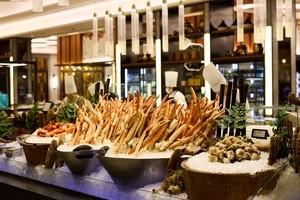
Jeju Dream Tower's Grand Kitchen buffet relaunches with premium K-food menu
Lotte Tour Development announced Wednesday that Grand Kitchen, the buffet restaurant at Grand Hyatt Jeju inside the Jeju Dream Tower integrated resort, has been relaunched with a menu centered on K-food. New signature dishes include Jeju black pork samgyeopsal grilled over straw, premium Korean beef sirloin (grade 1 or higher), fried back ribs, LA galbi in a special sauce and dombe-gogi. The menu also features seafood — grilled Jeju hairtail, snow crab, soy-marinated and spicy marinated crab, abalone sashimi and raw fish rice bowls — alongside assorted Korean pancakes, sundae and fried chicken. Desserts include traditional yakgwa, Jeju Karrot cake and hallabong scones. "Guests can enjoy the most popular hansik dishes and Jeju culinary specialties all in one place," a Lotte Tour Development official said. "Grilled freshwater eel, which is rarely found at buffets, is prepared fresh tableside by a chef at the live kitchen station." Grand Kitchen is led by Executive Chef Kim Young-min, who has more than 20 years of experience, including a stint as head chef at Fontana, the buffet restaurant at Wynn Palace integrated resort in Macau. The restaurant's seven stations — including a Korean hot food station, a grill and a seafood counter — are staffed by about 30 chefs, including Kim. Located on the fourth floor, Grand Kitchen charges 60,000 won ($44) per adult for breakfast, 75,000 won for lunch and 119,000 won for dinner. Children aged 5 and under are admitted free.
Sept. 16, 2026
-

Hyundai Green Food holds job fair for army culinary troops leaving service
On-site hiring for 100-plus positions; practical training program to follow Hyundai Green Food announced it will hold a recruitment fair for army culinary specialists over three days — Wednesday, Thursday and Oct. 16 — in partnership with the Army Personnel Command. The first two sessions will take place at the Hyundai Department Store Group Human Resources Development Institute in Gangdong-gu, Seoul, while the Oct. 16 session will be held at The Hyundai Daegu. About 300 army soldiers with culinary specialties who are preparing to leave service are expected to attend. The sessions will introduce Hyundai Green Food's main business divisions and job functions and walk participants through the hiring process. One-on-one interviews that can lead directly to job offers will also be held. Hyundai Green Food staff will serve as interviewers and select candidates suited for culinary roles, including positions as cooks in institutional catering and restaurant settings. The company plans to hire more than 100 people through the fair. New hires will then go through Green Academy, an onboarding training program offering practical instruction in hygiene and safety management, ingredient preparation, menu cooking and business etiquette. Hyundai Green Food has run employment and recruitment support programs for army culinary troops every year since 2019, now in its eighth consecutive year. The company has hired about 600 culinary soldiers to date and received a commendation plaque from the Ministry of National Defense in 2023 for its contributions to hiring military personnel. The company has also been expanding its hiring pipeline to include students from vocational high schools. Since 2024, it has participated in a work-linked vocational training program run jointly by the Ministry of Education and the Ministry of Employment and Labor, connecting practical instruction with job placement. It was the first company in the institutional catering industry to be designated as a vocational training institution under the program. "We will support soldiers in putting the valuable experience and aptitude they built in the military to use, and in continuing to develop their expertise after joining us," a Hyundai Green Food official said.
Sept. 16, 2026
-
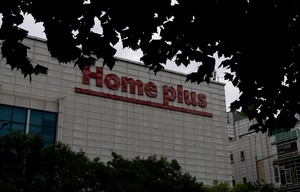
Homeplus restarts sale process, sending teaser letters to potential buyers
Hypermarket unit and real estate assets on the block First sale attempt since court approved rehabilitation plan Homeplus has restarted its sale process as the retailer works through court receivership. It is the first sale attempt since a court approved the company's rehabilitation plan earlier this month. Samil PwC, the lead manager for the Homeplus sale, plans to send teaser letters to domestic and foreign acquisition candidates as early as this week, industry sources said Wednesday. Teaser letters are documents that summarize key financial information about a seller at the early stage of a merger and acquisition process. Large domestic conglomerates and overseas strategic investors are among the prospective buyers, according to the sources. The assets on the block are Homeplus' hypermarket division and real estate holdings. The hypermarket unit, comprising 67 core stores, will be sold through a business transfer agreement. Samil PwC previously assessed the liquidation value of the hypermarket business based on those 67 stores at just over 2 trillion won ($1.48 billion). The real estate portion covers 19 company-owned stores among those already closed. Homeplus has said it plans to sell the 19 properties by February 2028 to raise 1.42 trillion won, which it intends to use to repay senior trust-secured bonds held by its largest creditor, Meritz Financial Group. The company would then follow through on its bond repayment schedule running through 2037 through additional real estate-backed loans and other financing. This is not Homeplus' first attempt at a sale. The company pursued a pre-approval M&A shortly after filing for court receivership in March last year. Two parties — an AI platform company and a real estate developer — submitted letters of intent, but neither participated in the final bidding, and the process fell through. Homeplus ultimately sold its supermarket division, Homeplus Express, to NS Home Shopping, an affiliate of Harim Group, for 120.6 billion won in May this year.
Sept. 16, 2026
-
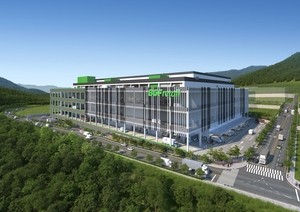
BGF Retail builds South Korea's largest convenience store logistics center in Busan
Largest in the convenience store industry, with 260 billion won investment Streamlines delivery across Busan and Yeongnam region; supports overseas exports and imports BGF Retail has completed the largest logistics center in South Korea's convenience store industry, located in Busan. The facility is set to reshape the delivery network across Busan and the broader Yeongnam region and serve as a central hub for supplying products to CU convenience stores both domestically and overseas. BGF Group Chairman Hong Seok-jo said at the center's completion ceremony Wednesday that the Busan logistics center is "an important stepping stone that elevates CU's logistics competitiveness and further solidifies our standing as a leader in the domestic convenience store industry." He added that it "will strengthen the competitiveness of franchisees through stable product supply and efficient logistics operations, while also serving as a growth engine for CU's expansion beyond the domestic market and into global markets." The ceremony was attended by BGF Retail Vice Chairman Hong Jeong-guk, BGF Retail Strategy and Innovation Division Head Oh Jeong-hu and other BGF Group officials, as well as Busan Mayor Jeon Jae-soo, Gangseo-gu District Mayor Park Sang-jun and Busan-Jinhae Free Economic Zone Authority head Park Seong-ho. The center stands on a 47,187-square-meter site in Gurang-dong, Gangseo-gu, within the Busan International Industry and Logistics City. With a total floor area of 128,073 square meters, it is the largest logistics facility in BGF Retail's infrastructure network. The total investment came to 260 billion won ($192 million). BGF Retail signed an investment agreement with the city of Busan in 2021 and broke ground on the center in 2024. The refrigerated section is already in operation, and the company plans to bring the ambient-temperature section online by the end of this year. The center is equipped with smart logistics systems including a shuttle-based automated storage and retrieval system, auto labelers and a digital picking system, boosting efficiency in product intake, output and sorting while allowing the facility to handle fluctuations in cargo volume by season and day of the week. It has also received a first-grade preliminary certification as a smart logistics center from the Ministry of Land, Infrastructure and Transport. BGF Retail built the center to manage its growing number of stores and product lines. Beyond domestic logistics, the facility will also handle international import and export operations, supporting the expansion of CU's overseas business — including in Mongolia, Malaysia, Kazakhstan and Hawaii — through the Port of Busan. The Busan logistics center is also equipped with solar power generation facilities capable of producing up to 2,700 MWh of electricity annually. BGF Retail said it expects the center's operation to contribute to job creation and economic revitalization in the Busan region.
Sept. 16, 2026
-
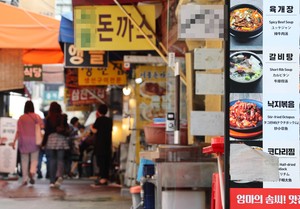
Seoul loses nearly 1,700 franchise eateries in a year
Seoul franchise restaurant count drops 1,680 in second quarter Korean-food franchises shrink 7.6%; coffee and snack chains also contract Rising costs and falling margins push brands to exit the market A, who retired two years ago, opened a chicken franchise store in Eunpyeong-gu that same year, drawn by promises of earning several million won a month. But expenses outpaced income, and by late last year he had let go of his part-time staff. "I thought the barriers to entry were low and saw it as a second chapter in life," he said. "But I've come to realize the reality is far from easy." Nearly 1,700 franchise restaurant locations have vanished from Seoul in a year — a signal that even the franchise model, long regarded as a stable business option, is beginning to crack. According to the Seoul Metropolitan Government's commercial district analysis service, the total number of restaurant establishments in Seoul stood at 153,205 this year, down 3,903, or 2.5 percent, from the same period a year earlier. Among them, non-franchise locations numbered 123,728, a decline of 2,223, or 1.8 percent. Franchise locations fell far faster, dropping 1,680, or 5.4 percent, to 29,477 — a rate roughly 3.1 times that of non-franchise outlets. Franchises account for about 20 percent of all restaurant establishments in Seoul, yet they made up 43 percent of the total decline. By category, hansik franchise locations — covering noodle shops, gomtang restaurants and dak-galbi joints — recorded the steepest drop, falling 550, or 7.6 percent. Hansik franchises represent about 23 percent of all franchise restaurant locations in Seoul. Coffee and beverage franchises, including budget coffee chains, shrank by 318, or 4.4 percent, while snack-food franchises serving kimbap and tteokbokki fell by 206, or 7.1 percent. Chicken franchises declined by 137, or 3.6 percent, and beer-and-snack bars by 121, or 6.6 percent. Profitability data reinforce the trend. A 2025 survey of restaurant business conditions conducted by the Ministry of Agriculture, Food and Rural Affairs and the Korea Rural Economic Institute found that the operating profit margin for the restaurant industry fell from 12.1 percent in 2020 to 8.7 percent in 2024. Franchise restaurants fared worse than their non-franchise counterparts, posting an operating profit margin of 8.5 percent against 8.9 percent. Some 94.3 percent of franchise restaurant operators cited rising ingredient costs as their top business challenge, followed by intensifying competition at 89.1 percent and higher rents at 87.4 percent. A key factor behind the steeper decline among franchises is the cost burden unique to franchisees, particularly differential franchise fees. According to the Korea Fair Trade Commission's 2025 franchise industry report, the average differential franchise fee paid by food-service franchisees in 2024 was 26 million won ($19,200), up 13.0 percent from the previous year. Over the same period, average sales growth for food-service franchisees was limited to 6.1 percent. Rent has added to the strain. Monthly rent per 3.3 square meters in Seoul rose 3.8 percent year on year to 147,067 won, according to the Seoul Metropolitan Government's commercial district analysis service. In Gangnam-gu the figure jumped 12.0 percent to 202,611 won, while in Mapo-gu it rose 16.0 percent to 204,082 won. A growing number of franchise brands are also winding down their operations entirely. A review of the Korea Fair Trade Commission's franchise information disclosure system shows that 1,345 brands had their disclosure registrations canceled between January and August this year, up 3.2 percent from the same period a year earlier. Cancellation of a disclosure registration in effect means the brand has ceased its franchise business. Recent examples include Lotte Wellfood's ice cream brand Natuur and Eland Eats' bakery brand Frangerie, both of which have had their disclosure registrations canceled. Two other Eland Eats brands — Asia Moon and Rimini — have also halted their franchise operations. Notted, a donut brand that once drew lines of customers waiting for stores to open, and Tiger Sugar, a Taiwanese brown-sugar milk tea brand, have likewise exited the franchise business. "Food-service franchises are struggling because high inflation and high interest rates persist, and ordinary people have less money to spend," said Kim Dae-jong, a professor at Sejong University's School of Business Administration. "Competition has also intensified simply because the number of franchise operators — from chicken shops to cafes — has grown far too large."
Sept. 16, 2026
-
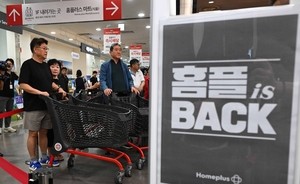
Homeplus to kick off major Chuseok sale Thursday, with samgyeopsal at 990 won per 100g
Homeplus will launch a large-scale discount event Thursday, one week before Chuseok. The retailer announced Wednesday it will hold its second "Homeplus is BACK" campaign, offering discounts on about 3,600 products including samgyeopsal, pork neck, Korean beef, eggs, fish and fruit. The event follows a Chuseok price-stabilization campaign that began Sept. 10. The sale is open to MyHomeplus membership holders. At physical stores, the popular "Bomeokdwae" pork — raised on barley — will be sold at half price from Thursday through Sunday, with samgyeopsal and pork neck priced at 990 won per 100 grams. The 50 percent discount applies to all Bomeokdwae cuts. Korean beef will also be available at up to 50 percent off across all cuts, with grade-1 and grade-1-plus beef brisket for soup priced at 3,300 won and 3,400 won per 100 grams, respectively. A 30-pack of domestically produced fresh eggs will be discounted by 2,000 won when paid with a promotional card. Fhira Norwegian fresh salmon — both grilling and sashimi cuts — will receive a 50 percent members-only discount. A 4-kilogram box of Shine Muscat grapes and a 3-kilogram bunch of Campbell grapes will each be discounted by 5,000 won with a promotional card payment. Nine varieties of tofu, more than 30 types of oyster sauce and soy-based condiments, more than 10 types of yogurt and flavored milk, and more than 20 types of pasta sauce and noodles will be offered on a buy-one-get-one basis, as will 10 Coca-Cola beverage products. From Thursday through Sunday, more than 20 types of ketchup and mayonnaise, all pizza products, and all hot dog and pork cutlet products will also be sold on a buy-one-get-one basis. Foods needed for ancestral rite preparations and a variety of Chuseok gift sets will also be available. "This goes beyond simply discounting popular products — we have completed restocking more than 3,600 essential items," a Homeplus official said. "We have prepared a wide range of products, including key food items and Chuseok ritual goods, at strikingly low prices."
Sept. 16, 2026
-
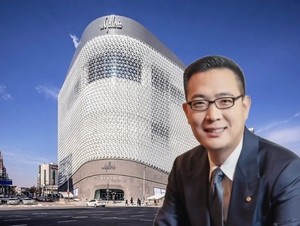
Kim Dong-sun bets on real estate as Hanwha Galleria eyes Daejeon exit, Apgujeong overhaul
Hanwha M&S pushes into property development Galleria Daejeon stake to be sold in full Apgujeong luxury mall, Plaza Hotel set for redevelopment High-end housing project launched in Sinsa-dong Kim Dong-sun, the third son of Hanwha Group Chairman Kim Seung-youn and president of Hanwha Machinery & Services Holdings (Hanwha M&S), is accelerating a sweeping restructuring of the conglomerate's lifestyle businesses — spanning department stores and hotels — with a growing emphasis on real estate development. Industry sources said Wednesday that Hanwha Galleria, the retail arm of Hanwha M&S, is moving to sell its Daejeon Timeworld store by divesting its entire 100 percent stake in Hanwha Galleria Timeworld. The company is in detailed talks with Lotte Shopping, operator of Lotte Department Store, over the terms of a share purchase agreement. Lotte Department Store currently operates its Daejeon location in a leased building about 1.6 kilometers from Galleria Timeworld. Hanwha Galleria recently informed employees of the planned transfer through internal briefings and the labor union. As concerns over job security mounted, the company arranged separate talks with the union to address the issue and is taking steps to ensure a smooth sale process. About 190 employees currently work at the Timeworld store. A union official said the collective bargaining agreement requires management to consult the union at least 60 days before any merger or sale, adding that a share transfer agreement could be signed in November. Hanwha Galleria, however, said "nothing has been decided." Galleria Timeworld posted sales of 603.2 billion won ($446 million) last year, a 3.6 percent decline from the previous year — a contrast to nearby Shinsegae and Lotte department stores, which continued to grow. Across Hanwha Galleria's network, every location outside the flagship Apgujeong luxury mall — which exceeded 1 trillion won in sales last year — posted a decline: Gwanggyo was down 0.1 percent, Cheonan Center City fell 7.0 percent, and Jinju dropped 5.7 percent. The decision to sell Timeworld reflects a "focus and select" strategy of shedding underperforming stores to channel resources into stronger locations and property development. Hanwha Galleria Timeworld's total assets stood at 284.1 billion won at the end of last year, and a full stake sale is expected to bring in hundreds of billions of won. The proceeds would also ease the financial burden of a seven-year renovation of the Apgujeong luxury mall set to begin next year, a project estimated to cost around 900 billion won. Hanwha Galleria established a real estate development subsidiary last month and is pursuing a high-end residential project on a site in Sinsa-dong, Gangnam-gu, Seoul, acquired through a public auction for 236.7 billion won. The company is also reviewing how to use a building and land in Sunhwa-dong, Jung-gu, Seoul, acquired in June for 213.5 billion won. Hanwha Hotels & Resorts, another pillar of Hanwha M&S, will suspend operations at The Plaza hotel on Sept. 30 and begin a three-year renovation. The hotel plans to reopen as a seven-star high-end property, upgrading its rooms and common areas to target global VIP guests and bringing in world-class fine-dining offerings. The renovation is part of a broader integrated redevelopment of Sogong Districts 1, 2 and 3 slated for completion by 2029. The plan calls for a simultaneous overhaul of The Plaza in District 1, Hanwha Building in District 2, and Hanwha Finance Plaza in District 3, transforming the cluster into a mixed-use hub combining hotel, office, cultural and commercial functions. The food and beverage business is also being reshaped. OurHome, acquired last year, expanded its scale by taking over Shinsegae Food's institutional catering operations and is strengthening its restaurant business around the buffet brand Take. Hanwha Galleria's premium ice cream brand Benson, launched last year, is targeting 30 locations this year. Hanwha Galleria is also pursuing the sale of Five Guys — a chain Kim led the acquisition of — aiming to exit at roughly three times the original purchase price. Industry watchers are taking note of Kim's pace of restructuring, coming barely a month after Hanwha M&S was launched as a new holding company combining the tech and lifestyle divisions. The strategy is seen as one of building scale through real estate development while consolidating Hanwha's position in retail and hospitality through a high-end positioning. "Kim has been aggressively pursuing real estate development around the launch of Hanwha M&S, expanding the company's footprint — it looks like he is laying the groundwork for independent management," an industry official said. "But there are still things he needs to prove: how he will generate synergies between real estate development and the existing businesses, and whether he can secure a stable cash-generating base."
Sept. 16, 2026
-

CJ Group launches second-half recruitment drive, expanding hiring by over 40%
CJ Group said Wednesday it has launched its second-half open recruitment drive across 13 affiliates and business units, including CJ CheilJedang, CJ Logistics, CJ Olive Young and CJ ENM. The hiring volume is up more than 40 percent from the same period last year, marking the largest recruitment drive the group has conducted in the past four years. CJ Group has maintained its open recruitment system for 70 consecutive years, rooted in a "people-first" management philosophy passed down from its founding chairman. Young applicants between the ages of 19 and 34 have accounted for more than 70 percent of all hires for four consecutive years since 2022. Applications will be accepted until 5 p.m. on Sept. 30, after which candidates will proceed through document screening, a written test and affiliate-specific evaluations. Final hires will take part in a group orientation program in January. CJ Group will offer immersive content allowing job seekers to get a feel for the company, its roles and work environment. An interactive short drama series co-produced by CJ's in-house venture Studio Shortnaps and CJ ENM will be released on Tving. The group will also hold a two-way recruitment information session using CJ OnStyle's mobile live commerce platform. The group's official YouTube channel, CJ Careers, will feature content including growth stories from high-achieving employees, benefits tips, and successful cover letters and interview experiences shared by new hires. Kim Dong-won, CJ Group's head of human resources, said the company will "drive long-term competitiveness and future innovation centered on self-motivated talent who seek out new opportunities and prove themselves through results."
Sept. 16, 2026
-

Lebeige unveils 2026 fall/winter campaign centered on natural beauty
Samsung C&T's women's fashion brand Lebeige unveiled its 2026 fall/winter season campaign on Wednesday. The brand named the campaign "Bonyeon," a Korean word meaning "natural state" or "intrinsic nature," signaling a focus on essential beauty freed from artificial ornamentation. The collection strips decoration to a minimum, placing the emphasis on fabric and cut. It draws on materials including cashmere and silk, with details such as embroidery, stitching and Jinju pearl accents. Key products include a cashmere-silk handmade coat, a signature cocoon-shaped cashmere coat, and a floral flocking blouse-and-pants set. Choi Hye-jin, head of the Lebeige team at Samsung C&T's fashion division, said the brand plans to "solidify its unrivaled standing as a women's fashion brand that, grounded in a firm brand heritage, brings dignity to customers' lives across generations."
Sept. 16, 2026
-
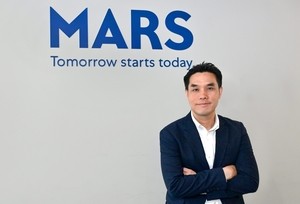
Mars Korea to integrate Nongshim Kellogg operations, adding Pringles and Kellogg's to portfolio
Mars Korea announced Wednesday that it will formally begin integrating the operations of Nongshim Kellogg following global food company Mars' acquisition of Kellanova. The company held its first all-staff town hall meeting Tuesday at its headquarters in Cheongdam-dong, Gangnam-gu, Seoul, sharing details of the integration and its business direction. It was the first official company-wide event since the Korean operations and organization began running under a unified structure. Mars Korea CEO Lee Doo-ho told employees that "this change is an important milestone as Mars moves into a new chapter in Korea." Lee will oversee the company's expanded Korean operations, which now include the Kellogg's and Pringles brands. Mars Korea is the Korean subsidiary of Mars, which entered the South Korean market in 1992. The company sells chocolate brands including Snickers and Twix, gum and mint brands including Eclipse, and pet care brands including Cesar, Whiskas and Greenies. Mars acquired Kellanova, the parent company of Nongshim Kellogg, in December last year. Nongshim Kellogg was established in 1981 as a joint venture between US-based Kellogg and Nongshim. It currently handles domestic production and sales of Kellogg's cereals, as well as imports and sales of Pringles snacks in South Korea. "With Kellogg's and Pringles now added to our brand lineup, our portfolio has expanded significantly," a Mars Korea official said. "We now have a broad business foundation spanning diverse categories — chocolate, gum and mints, cereal, snacks and pet care."
Sept. 16, 2026
-

Kim Do-young takes helm of Jeju Development Corp., vows to strengthen Samdasoo brand
New chief pledges structural reform and sustainable growth, combining private-sector speed with public accountability Jeju Special Self-Governing Province Development Corp. said Wednesday that Kim Do-young officially began his duties as the new president after receiving his letter of appointment from Jeju Governor Wi Seong-gon. In his inaugural remarks, Kim said he would "combine the speed and innovation of the private sector with the responsibility and public mission of a state-owned enterprise, and ensure that the results of strengthening Jeju Samdasoo's competitiveness flow back to Jeju and its residents." He added that he would "find answers on the ground and show results." Kim identified strengthening Jeju Samdasoo's competitiveness as his top priority. With competition in the bottled water market intensifying and conditions shifting rapidly, he said the corporation would focus on consolidating Samdasoo's position as South Korea's No. 1 water brand. Kim also pledged management reforms to put the corporation on a path of sustainable growth. Drawing on his private-sector experience within the framework of a public enterprise's role and responsibilities, he said he would focus on balancing public service and profitability, field-centered management, and an open and transparent organizational culture. Kim hit the ground running on his first day. After receiving his appointment letter Wednesday morning, he paid his respects at Changnyeolsa Shrine at the Jeju Anti-Japanese Independence Memorial Hall, the Jeju National Cemetery and Jeju April 3 Peace Park. He then held his inauguration ceremony at the Samdasoo production site that afternoon. Following the ceremony, he planned to tour key facilities — including the union office, the Samdasoo research and administrative buildings, the Samdasoo factory and the citrus processing plant — and listen to employees. Kim, the 13th president of Jeju Development Corp., is a Jeju native who graduated from Ohyeon High School and the College of Business Administration at Seoul National University. He spent about 27 years at private-sector companies including LG Uplus and GS Engineering & Construction, gaining broad management experience across sales, retail, new business development and corporate management.
Sept. 16, 2026
-
Ice cream chains compete for scoops with size-up deals and brand tie-ups
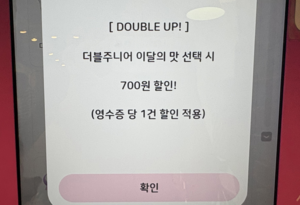
Size upgrades on new flavors draw customers as challengers take on Baskin-Robbins Character collabs, whisky pairings mark brand-by-brand push for differentiation At a Baskin-Robbins store in Seoul on Tuesday, tapping the kiosk screen to place an order brought up a promotion notice: "DOUBLE UP!" The size-upgrade benefit — once reserved as a gift on the 31st of each month — has now been extended to customers buying the flavor of the month. At a Benson store, a promotional poster on the wall caught the eye: order the new lemon cream cheese cake flavor and get an extra scoop. The mint chocolate and cookie flavor was tempting, but the lemon cream cheese cake won out. Competition for customers in the ice cream market has intensified, industry sources said Wednesday, as challengers Benson and Van Leeuwen move in on the long-dominant Baskin-Robbins. Brands are rolling out free extra scoops with new flavors and launching collaboration products to win over customers. Baskin-Robbins is running a promotion this month that lets customers upgrade from a single regular to a double junior for an additional 500 won when they buy the flavor of the month. The offer is separate from the size-upgrade benefit previously available only on the 31st of each month. Benson has also leaned into size upgrades. It launched a size-upgrade promotion alongside its lemon cream cheese cake last month, and this month is offering a free upgrade from single to double size with any single order of its new tiramisu ice cream. Van Leeuwen, which made its Korean debut in July, has been running scoop promotions since opening. Starting Monday, it has been offering a buy-two-get-one deal on pint-size and larger products. Beyond the scoop wars, brands are competing on promotions to draw foot traffic. Collaborations have been a key tool. Baskin-Robbins has continued its run of character tie-ups, partnering this month with Japanese character Monchhichi to offer exclusive cups with ice cream or Americano purchases. Some stores have sold out their allocated stock quickly. Benson has set itself apart through alcohol pairings. Its recently opened Itaewon location offers pairing menus combining ice cream with Won Soju and premium whiskies including Balvenie and Dalmore. The brand has also collaborated with outdoor gear label Helinox to release merchandise. In terms of store count, however, the gap remains wide. Baskin-Robbins, which has operated in Korea since 1985, ran 1,747 locations nationwide as of late 2024. Benson currently operates 23 stores, while Van Leeuwen has three — at Gangnam Station, Shinsegae Gangnam and Sinnonhyeon Station. The challengers are moving quickly to close the gap. Benson grew from eight stores last year to 23 this year and plans to surpass 30 by year's end, with a target of opening its 100th location next year. In terms of revenue, BRL Korea — which operates both Baskin-Robbins and Dunkin' — posted sales of 707.5 billion won ($523 million) last year. Its operating loss narrowed to 5.6 billion won from 9.8 billion won the previous year. Better Scoop Creamery, which operates Benson, recorded sales of 4.3 billion won and an operating loss of 9.5 billion won last year. Despite losses from aggressive expansion, the company expects to reach breakeven at around 100 stores. "As new brands continue to enter the ice cream market, competition to secure consumer touchpoints is likely to intensify further," an industry official said. "We expect brands to keep trying to attract customers through a range of approaches — not just price and portion size, but also collaborations and new products."
Sept. 16, 2026
-
Hite Jinro spreads chuseok cheer to youth, low-income residents
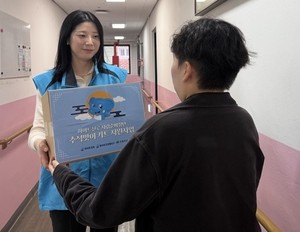
Hite Jinro and Hitejinro announced Wednesday that they carried out community outreach activities for youth aging out of foster care across the country and for residents of low-income neighborhoods in Seoul. The initiative began Saturday at the Hite Jinro office in Seocho-gu, Seoul, with a ceremony to distribute chuseok care packages to youth transitioning out of state care. Each package contained practical everyday items including shampoo, toner and lotion, as well as rice containers and Bluetooth earphones. The total value of the packages came to 30 million won ($22,200), with deliveries planned for 300 recipients in stages. The companies also extended their outreach to residents of low-income neighborhoods in Seoul. On Tuesday, Hite Jinro distributed care packages of premium apples and pears to 500 residents through five community distribution centers in the Seoul Station, Yeongdeungpo, Changsin-dong, Namdaemun and Donuimun areas. Hite Jinro has carried out such community outreach activities for 15 consecutive years since 2012. "We will consistently continue our social contribution activities to provide real, practical support in the daily lives of neighbors in need," a company official said.
Sept. 16, 2026
-

Lotte On brings Japanese select-shop brand Tomorrowland to Korea for first time
Women's labels Ballsey, Macphee among five to debut Lotte On announced Wednesday that it will launch Japanese select-shop brand Tomorrowland in South Korea for the first time. The online shopping platform will begin carrying Tomorrowland's 2026 fall/winter collection on Friday. Founded in Japan in 1978, Tomorrowland has developed its own labels while operating select shops, and as of August runs 121 stores across Japan. Lotte On will initially introduce five of Tomorrowland's women's labels: Ballsey, Macphee, Tomorrowland Collection, Des Prés and Galerie Vie. The platform plans to present the brand's fashion perspective and curation approach in a way tailored to the domestic online shopping environment, giving customers the experience of discovering Japanese fashion — previously accessible mainly through overseas travel — alongside new brands and tastes. "We plan to convey not only Tomorrowland's products but also its fashion perspective and sensibility to customers in Korea," a Lotte On official said. "We will continue to seek out a variety of Japanese fashion brands and select shops to introduce to the domestic market."
Sept. 16, 2026
-
LF's Hazzys enters Hong Kong, targets 6 stores within 3 years
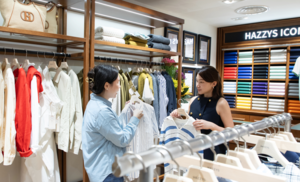
First store opens at Causeway Bay Sogo department store, with product lineup tailored to local climate and lifestyle LF's contemporary casual brand Hazzys has entered Hong Kong, the company announced Wednesday, extending its push into the greater Chinese market after establishing a presence on the mainland. Hazzys opened its first Hong Kong store Monday on the third floor of the Sogo department store in Causeway Bay, occupying roughly 66 square meters. The store carries a wide selection of men's and women's clothing and accessories, featuring key collections including Iconic and Hazzys Blue. The interior concept draws on British heritage. The product lineup has been tailored to local conditions. Given Hong Kong's mild and humid climate, the store places greater emphasis on lightweight items in thin fabrics. Alongside fall/winter 2026 products, select spring/summer 2026 pieces suited to the Hong Kong climate are also available. The brand gauged its prospects in the market through contact with domestic and international customers and buyers. At Space H Seoul — Hazzys' global flagship in Myeong-dong — roughly half of all foreign visitors were from the greater Chinese market. Hong Kong customers have also shown steady engagement through the brand's global online channels. Hong Kong buyers who attended the Hazzys global order fair held in Seoul in January responded positively. Hazzys aims to position itself in Hong Kong as a premium contemporary casual brand, combining British heritage with the refined design and fit of Korean fashion and highlighting its total collection spanning both men's and women's wear as a key differentiator. The company is targeting six stores in Hong Kong within three years. Next year, it plans to enter new markets including Thailand and India. "Building on the brand competitiveness and business experience we have accumulated in China, we have expanded our touchpoints with customers in the greater Chinese market," an LF official said. "We will continue to strengthen the brand's presence and competitiveness in key global markets on the back of our performance in Hong Kong."
Sept. 16, 2026
-

The Born Korea introduces card payment system for franchise supply orders
Partnership with KB Kookmin Card; headquarters to cover 100% of transaction fees The Born Korea announced Wednesday that it has added a card payment function to the order management system franchise owners use to purchase supplies, allowing them to pay for orders with a dedicated payment card. The company said the move aims to ease short-term cash flow pressures that can arise during franchise operations ahead of the chuseok holiday, while giving franchise owners more flexibility in how they pay. The Born Korea built the system in partnership with KB Kookmin Card. Franchise owners can register a dedicated payment card directly within the existing order management system — no separate platform or ordering tool required — and then choose to switch eligible supply payments to card transactions. The headquarters will cover 100 percent of card transaction fees. "Supply costs are an ongoing expense in running a franchise," a company official said. "Ahead of the holiday season, when cash demand rises, this will go a long way toward spreading out the burden of cash outlays for our franchise owners."
Sept. 16, 2026
-

Bungae Jangter, Seoul to host youth flea market at Banpo Hangang Park
Free entry and booth space at Dalbit Square, Sept. 18–19 Secondhand marketplace platform Bungae Jangter announced Wednesday it will co-host a youth flea market with the Seoul Metropolitan Government. The event runs Friday through Saturday at Dalbit Square in Banpo Hangang Park. It is an official program of the city's 2026 Seoul Youth Week and grew out of an MOU between the two organizations. Seoul Youth Week is an annual event the city has held since 2021 to mark Youth Day, observed on the third Saturday of September each year under the Youth Basic Act and the Seoul Metropolitan Government Youth Basic Ordinance. Bungae Jangter chose the theme "Jopal Johal," a Korean shorthand for "sell what you loved to do what you love," with the aim of encouraging participants to reinvest their sales proceeds into new pursuits. Sellers were recruited from Bungae Jangter users between the ages of 19 and 39, and 20 teams were selected from 112 applicants. The submissions fell into four themes: challenge, love, letting go and personal taste. Participants include a performing arts college startup club, a young person raising funds for a student exchange program in Japan, a couple preparing for a month-long trial living arrangement before marriage, and a model looking to clear a wardrobe of nearly 1,000 items. One applicant also submitted a story about donating the proceeds to charity. All 20 selected teams will receive a booth and equipment free of charge, with no participation fee. The top seller will receive a 1 million won ($743) grant, and the first 10 teams to verify a successful sale will each receive 100,000 won. Visitors will be able to vote for their favorite seller on-site. Payments will be processed through the Bungae Jangter app. Users who verify the app will receive a reusable shopping bag, and those who list a product on the app will receive 10 biodegradable delivery pouches. "As secondhand trading among young people has evolved beyond saving money into a form of self-expression and sustainable consumption, we will work with the Seoul Metropolitan Government to expand programs that support youth tastes and ambitions," a Bungae Jangter official said.
Sept. 16, 2026
MOST READ
- 1Pope Leo XIV declines French honors and banquet, accepts only private meeting with Macron
- 2KAIST develops high-performance bio-based adhesive using E. coli instead of petroleum
- 3Daimler Truck unveils next-generation transport solutions at IAA 2026
- 4What was Rachmaninoff's performance fee? A 1928 price list tells all
- 5Samsung Biologics union's show of force backfires at the bargaining table
- 6APR says hair-loss treatment research published in international journal
-
WORLD

US warns of punishment for anyone enabling Iran's Strait of Hormuz toll scheme
-
INDUSTRY
Toyota union puts productivity first; Hyundai Motor union demands bigger share of profits
-
FINANCE
National Growth Fund to invest $531M in FuriosaAI, which rebuffed Meta's $800M takeover bid
-
INDUSTRY
Korea Shipowners' Association holds amateur baduk tournament for Maritime Day