
- HOME
- CONSUMER
-

Hyundai Home Shopping's private-label brand Material Lab sees sales surge 30%
Hyundai Home Shopping said Tuesday that its private-label fashion brand Material Lab has been posting strong sales, driven largely by customers in their 40s and 50s. Cumulative sales of Material Lab, a premium contemporary brand, rose more than 30 percent year-on-year from January through August, the company said. Sales this month are also up more than 50 percent compared with a year ago. Material Lab launched in 2024 as a private-label brand under Hyundai Home Shopping. The company set up a dedicated unit called Fashion Lab that year to develop private-label fashion products and source exclusive licensed brands. It introduced Material Lab in April 2024, followed by the camping-wear brand Urban Around in October. "Material Lab moved away from the bold patterns and vivid colors typical of home shopping fashion, instead leading with minimal designs and understated tones that are easy to pair with anything," a company official said. "By combining sharp trend analysis with strong planning and competitive pricing, the brand has won over its core customer base of shoppers in their 40s and 50s." Meanwhile, Hyundai Home Shopping plans to unveil Material Lab's 2026 fall/winter new arrivals on Wednesday during a special broadcast marking the third anniversary of "Seo A-rang's Shopping Live," the top-rated program in the fashion category.
Sept. 8, 2026
-
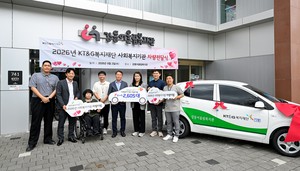
KT&G Welfare Foundation donates 150 compact cars to social welfare agencies
The KT&G Welfare Foundation held a vehicle handover ceremony at Gangdong Eoulim Welfare Center on Wednesday, donating 150 compact cars to social welfare agencies across the country. The foundation has provided compact cars to welfare agencies nationwide since 2004. Including this latest batch, it has donated a cumulative total of 2,605 vehicles. Welfare centers equipped with electric vehicle charging facilities also received 50 electric vehicles. "We will continue to work so that neighbors in need can receive practical benefits and support," a foundation official said. Meanwhile, the KT&G Welfare Foundation is a social welfare corporation established by KT Corp in 2003. Operating through eight welfare centers, it provides community-based welfare services including support for low-income and marginalized groups and vehicle donations to social welfare facilities.
Sept. 8, 2026
-
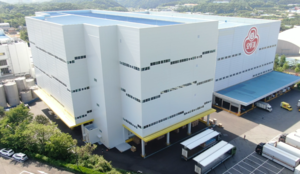
Ottogi to pay W12.9b early to suppliers
Ottogi announced Tuesday it will make an early cash payment of 12.9 billion won ($9.61 million) in subcontracting fees to its suppliers. The payment covers 22 partner companies, including original equipment manufacturers, raw material suppliers and packaging firms. The disbursement will come an average of 50 days ahead of the standard promissory-note payment schedule. "We hope the early payment helps ease the financial burden on our partners," an Ottogi official said.
Sept. 8, 2026
-
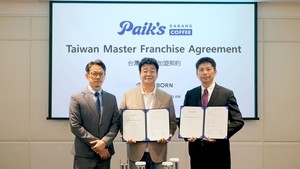
Paik's Coffee targets Taiwan after Japan debut, eyes 150 stores in 5 years
The Born Korea's coffee brand Paik's Coffee announced Tuesday it has signed a master franchise agreement with a local Taiwanese partner to enter the Taiwan market. The Born Korea recently concluded a 10-year master franchise deal in Taiwan, with CEO Baek Jong-won and representatives of the local partner in attendance. The two sides are targeting 10 stores in the first year, scaling up to more than 150 locations by year five. "We are conducting market research to develop a Taiwan-specific operating strategy for Paik's Coffee, with the goal of opening stores in the first half of next year," a company official said. "The schedule and scale of additional store openings will be adjusted flexibly based on local market conditions and operating performance." Meanwhile, Paik's Coffee made its Japan debut last month, opening two company-operated stores in Shinbashi and Kanda in Tokyo in quick succession. The brand is also preparing to enter China, the United States and India next year, with further expansion into Cambodia and Turkey under consideration.
Sept. 8, 2026
-
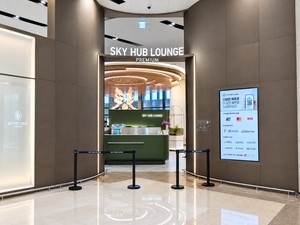
Pulmuone Food & Culture launches premium lounge at Gimpo airport
Solo seats, private meeting rooms — made-to-order dishes and Pulmuone menu items on offer Pulmuone Food & Culture announced Tuesday that it has begun operating Sky Hub Lounge Premium at Gimpo International Airport's international terminal. Sky Hub Lounge Premium is a premium lounge for international travelers at Gimpo airport. It marks the first time the Sky Hub Lounge brand has introduced a premium lounge model there. The lounge is divided into a public zone and a business zone. The business zone features dedicated solo seats and a private dining room for work meetings. The menu includes brunch as well as made-to-order dishes prepared by an on-site chef — seafood ramyun, hamburger steak, bulgogi bibimbap and a seaweed soup set meal. The public zone offers live noodles made with soy milk noodles from Pulmuone's Earth Menu line, along with oven-baked no-edge pizza. For one month, Pulmuone Food & Culture will provide lounge visitors with complimentary Haru Oat and Haru Farro drinks from Pulmuone Saemmul. The company is also giving away, on a first-come, first-served basis, UV umbrellas, passport cases and Pulmuone Healthcare Reset Enzyme supplements to customers who participate in an SNS hashtag verification event. "Winning this new contract for Sky Hub Lounge Premium at Gimpo airport has allowed us to expand our airport lounge capabilities," Chief Executive Lee Dong-hoon said. "We will deliver a comfortable and satisfying lounge experience to airport travelers through differentiated spaces and healthy food and beverage offerings." Meanwhile, Pulmuone Food & Culture now operates a total of eight airport lounges, including Sky Hub Lounge Premium and locations at Incheon and Gimhae airports.
Sept. 8, 2026
-

Convenience store pickup trades on Junggonara to carry fees for first time
Junggonara to impose escrow fees on Seven-Eleven pickup trades Convenience stores increasingly serve as hubs for secondhand platform deliveries Junggonara, a secondhand trading platform, will begin charging escrow fees on its contactless "convenience store pickup" service operated in partnership with Seven-Eleven. According to industry sources Tuesday, Junggonara plans to apply escrow fees to the Seven-Eleven pickup service starting Oct. 7. The service had previously been free of such charges, but sellers will now be charged 2.5 percent and buyers 3.5 percent. Launched in 2023 through a partnership between the two companies, the convenience store pickup service allows buyers and sellers to complete transactions without meeting in person. Sellers drop off items at a designated Seven-Eleven location, and buyers collect them from the same store. Junggonara said the fees were being introduced "to ensure smooth operation of the partnership service and provide stable service." The platform currently applies the same 2.5 percent seller and 3.5 percent buyer escrow fees to standard transactions. A Junggonara official said the pickup service had offered the escrow fee waiver to encourage adoption. "This change does not introduce a new fee," the official said. "It reflects the end of a temporary promotion that had waived escrow fees specifically for convenience store pickup trades." More secondhand platforms are turning to convenience stores as delivery and pickup hubs, driven by growing transaction volumes and the stores' accessibility. Seven-Eleven said parcel deliveries processed through its Junggonara partnership surged 316 percent in the first half of this year compared with the same period last year, while pickup transactions rose 22 percent over the same period. Beyond the pickup service, Junggonara also lets users arrange parcel deliveries through CU, GS25 and Seven-Eleven. Karrot introduced a convenience store parcel booking feature linked to GS25 and CU last year. Bungaejangter also allows users to book parcel deliveries directly through Seven-Eleven, GS25, CU and E-mart24 from within its app. Secondhand platforms have broadly been restructuring their fee policies around profitability. Junggonara introduced a 1 percent seller fee last year and then raised the seller escrow fee from 1 percent to 2.5 percent in late July. Bungaejangter earlier raised its sales commission for general sellers from 3.5 percent to 6 percent and for professional sellers to as much as 10 percent, effective last September. Some in the industry see the push to boost profitability as tied to a planned sale of the company. A consortium comprising Eugene Asset Management, Opus Private Equity, NH Investment PE and Lotte Shopping is expected to launch a sale process for Junggonara as early as the second half of this year. The consortium acquired a 93.9 percent stake in Junggonara in June 2021 for approximately 110 billion won ($81.2 million).
Sept. 8, 2026
-

Musinsa files for Kospi listing review
Musinsa submitted a preliminary listing application to the Korea Exchange for the Kospi market on Monday. The fashion platform was founded in June 2012. As of the application date, CEO Cho Man-ho and 26 other shareholders collectively hold a 54.2 percent stake. The company has been expanding steadily. Its consolidated revenue for the first half of this year reached 821.7 billion won ($606 million), up 22.5 percent from the same period last year. On a separate basis, last year's revenue came to 1.35 trillion won, with operating profit of 145.8 billion won. The company posted a net loss of 10.6 billion won. "This preliminary review is intended to examine the feasibility of a listing, which we are considering as a funding option to support our growth as a global company," Musinsa said. "We plan to verify whether we meet the listing requirements and assess the practical benefits of going public."
Sept. 8, 2026
-
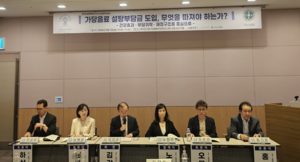
Sugar tax would hit low-income households 8.4 times harder than wealthy, seminar finds
Korean Association of Tax Policy, Korea Taxpayers Association co-host tax policy seminar Sugar intake already falling; experts urge non-price policies first Amid ongoing debate over a so-called "sugar tax," a new analysis warns that a levy on sweetened beverages could place a disproportionately heavy burden on low-income households. The Korean Association of Tax Policy and the Korea Taxpayers Association jointly hosted the 34th Tax Policy Seminar in Yeouido, Seoul, on Monday, under the theme "Introducing a Sugar Levy on Sweetened Beverages: What Must Be Considered." Noh Jeong-ran, a professor at Myongji University who delivered the keynote presentation, shared findings from an empirical analysis of nine years of raw data from the Korea National Health and Nutrition Examination Survey (2016–2024) and a burden-incidence simulation. The analysis found that the levy burden as a share of income would be about 8.4 times higher for the lowest-income quintile than for the highest, indicating a regressive effect. A cross-analysis by age and income showed the burden would fall most heavily on low-income young adults and teenagers. Noh also cited evidence that sugar reduction through market self-adjustment is already under way. Even without a levy, average daily per-capita consumption of sweetened beverages fell 25.6 percent — from 116.9 grams in 2016 to 87.0 grams in 2024 — and sugar's share of total sugar intake has continued to decline. Noh warned that if the sugar levy were structured not as a tax but as a contribution to the National Health Promotion Fund — a quasi-tax — it could create a "fiscal illusion" that bypasses strict National Assembly budget oversight and avoids public resistance to taxation. She also pointed to a structural contradiction: if consumption falls enough to achieve the health goal, fund revenue shrinks; but if revenue holds steady, the health objective has not been met. "Rather than across-the-board price regulation, the priority should be non-price, market-friendly policies — such as health education targeting teenagers and incentives for companies to voluntarily reduce sugar content," Noh said. Kim Gap-soon, a professor at Dongguk University and president of the Korean Association of Tax Policy, echoed those concerns in his opening remarks. "Blanket price regulations such as a sugar levy, beneath their outwardly benevolent appearance, carry structural flaws — including a regressive tax burden that compounds consumption costs for low-income households and young people, and fiscal opacity that circumvents budget controls," he said. He added that because the market is already driving voluntary sugar reduction, "a non-price, market-friendly approach should take precedence over price controls."
Sept. 8, 2026
-
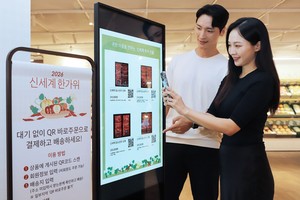
Shinsegae Department Store launches industry-first QR ordering service for Chuseok gifts
Plans to expand to in-store kiosks, elevators and VIP lounges Shinsegae Department Store said Tuesday it has introduced an industry-first "QR instant-order" service that lets customers scan a QR code to complete payment and delivery registration in a single step. The service will be available at all stores selling Chuseok gifts through Sept. 23. Scanning a product's QR code completes the entire process in about 30 seconds. Shinsegae said it expects the service to significantly cut wait times after holiday gift purchases, particularly for customers buying small quantities who would otherwise have to queue at a delivery counter. Orders placed via QR carry the same benefits as standard in-store purchases. Customers who sign up for the Shinbaek Members program during the promotional period and pay with a Shinsegae affiliated card — Citi, Samsung, Shinhan, Hana or BC Baro — can earn back up to 7 percent of their combined food brand spending as Shinbaek Rewards, which can be used like cash at Shinsegae Department Store. Shinsegae said it plans to analyze the Chuseok results and expand the QR instant-order service beyond the holiday event space to in-store kiosks, elevators and VIP lounges. "This service preserves the department store's strength of letting customers see and choose products in person, while making payment and delivery as simple as online shopping," said Lee Seong-geun, head of digital AI at Shinsegae Department Store. "We will continue integrating digital technology to create a more convenient shopping experience."
Sept. 8, 2026
-
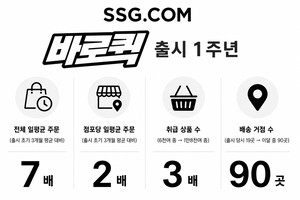
SSG.com's Baro Quick delivery service sees 7-fold order surge in first year
Customers up fivefold since launch month; 51% repurchase rate Product range triples in a year; delivery hubs to expand from 19 to 90 this month SSG.com's Baro Quick, a delivery service that brings E-mart products to nearby customers within about an hour, is marking its first anniversary with strong growth. Daily average orders in August were roughly seven times the average recorded during the service's first three months — September through November last year. Orders per store per day also doubled over the same period. The number of customers placing orders in August surged fivefold compared with the launch month of September last year, and 51 percent of them made a repeat purchase within six months. About 10 percent of all customers placed three or more orders. The product range has tripled, growing from around 6,000 items at launch to roughly 18,000 now. The lineup has expanded beyond fresh and processed foods to include ready-to-eat meals and household goods. The number of delivery hubs is set to grow from 19 at launch to 90 by the end of this month. Baro Quick is strongly oriented toward on-demand grocery shopping. Food items — fresh and processed — accounted for 93 percent of sales from January through August this year. In August, customers bought an average of 6.7 items per order, and fresh produce was included in 76 percent of all orders. SSG.com is running a promotional campaign through Sept. 30. New users will receive a free-delivery coupon and a 20 percent discount coupon, both valid on purchases of 20,000 won ($15) or more. Members of the SSG7 Club qualify for free delivery on purchases of 20,000 won or more, while general customers must spend at least 30,000 won. "Over the past year, we expanded our delivery network and product selection, and growing customer usage has confirmed Baro Quick's potential," said Han Geon-su, head of supply chain management at SSG.com. "We will analyze regional demand and operational efficiency to sharpen our competitiveness in instant delivery."
Sept. 8, 2026
-
Online shopping association conducts dark-pattern compliance review, streamlines membership cancellation
The Korea Online Shopping Association said Monday that 28 member companies participating in its voluntary code on online interface operations — commonly known as the dark-pattern code — completed a self-compliance review for the first half of 2026. The dark-pattern code has been in operation since Dec. 1 last year, following approval by the Korea Fair Trade Commission. The latest review was conducted to examine key interface elements such as membership sign-up and cancellation procedures, and to voluntarily address features that could mislead or deceive consumers. The association said it will simplify membership cancellation procedures so consumers can more easily locate the cancellation function. Twenty-six of the 28 companies have already completed improvements, either through the current review or in response to earlier recommendations from the Korea Consumer Agency. The remaining two are currently upgrading their systems. Beyond checking whether a cancellation button is visible, the association also reviewed the full cancellation process — including whether consumers are clearly informed of key details such as the expiration of coupons and points, and whether they are required to confirm such information before completing the cancellation. The association plans to conduct self-compliance reviews every six months, continuously examining and improving online interfaces that could mislead or deceive consumers. Association President Cho Seong-hyeon said the review "served as an opportunity to revisit membership cancellation procedures to improve user convenience and access to information," adding that the association would "continue working with member companies to help consumers use online services more conveniently and clearly through voluntary improvement efforts."
Sept. 7, 2026
-
!['Give me good luck': Anxious young Koreans are buying fortune [Unboxing]](https://wimg.heraldcorp.com/news/cms/2026/09/07/news-p.v1.20260225.8f88ba3796ee44a8870ed4b919e13c5c_T1.jpg?type=h&h=240)
'Give me good luck': Anxious young Koreans are buying fortune [Unboxing]
Youth seek luck amid high prices, job scarcity From lucky spots to lucky goods, a 'fortune consumption' trend "Here's what you absolutely must do when you visit the spot in Seoul said to have the strongest wealth energy." Posts like this have become a common sight on Instagram. They introduce so-called lucky destinations — such as the Grand Hyatt hotel in Yongsan-gu, Seoul, said to carry powerful fire energy that attracts wealth — and the number of people visiting these spots to verify their luck and share reviews is growing. As social uncertainty persists — driven by high prices, a tough job market and housing instability — more people are seeking good fortune and positive energy. Spending aimed at finding psychological comfort, whether by visiting certain places or buying products said to bring luck, has continued to rise. The youth employment picture remains bleak. According to Statistics Korea, the number of employed people aged 15 to 29 fell by 191,000 in July compared with the same month a year earlier, marking 45 consecutive months of decline. The youth employment rate also dropped to 44.2 percent. Consumer prices have kept climbing as well, rising 3.1 percent in August from a year earlier. Earlier this year, "luck-seeking hikes" emerged as a defining example of the trend. Content spreading on SNS — such as "mountains to visit when life isn't going your way" — drew growing crowds to Gwanaksan and other peaks. The posts kept coming: as of Monday, the Gwanaksan hashtag on Instagram had surpassed 320,000 entries. Related products are enjoying a quiet boom. According to W Concept, transactions for outdoor goods — including hiking shoes, windbreakers and backpacks — surged 90 percent in August from the same period a year earlier. The spike is attributed to a combination of seasonal demand for outdoor activities and the spreading culture of luck-seeking hikes. A similar appetite is showing up in lucky goods. W Concept said transactions for products symbolizing good fortune — including dried pollack used in traditional ward-off rituals, moon jar lamps and four-leaf clover NFC keyrings — jumped 160 percent in the first half of this year compared with the same period last year. Growth has continued this month, up 95 percent year on year. Convenience stores are also tapping into the fortune-consumption trend. GS25 recently launched a "Lucky Coffee" whose packaging features a QR code: scanning it summons "Mumu," a GS Retail character, to deliver the buyer's daily horoscope. "Demand is growing for the psychological comfort and positive energy that fortune consumption provides," an industry official said. "It has taken root less as superstition and more as an everyday mood-lifter and a form of play culture, so the popularity of related products will likely continue for now."
Sept. 7, 2026
-
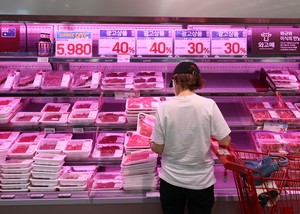
Hanwoo beef prices surge ahead of Chuseok, with sirloin up 34%
Premium grade-1+ sirloin up 33.8%, rising for 5 consecutive quarters Shrinking herd size squeezes supply as holiday demand looms Imported beef also climbing, with US chuck eye roll up 21.6% Beef prices are climbing sharply ahead of Chuseok, driven by a shrinking supply of domestic hanwoo cattle and slaughter volumes, compounded by peak holiday demand. Prices for imported beef — typically a more affordable alternative — are also rising, adding to the strain on household budgets. According to the Korea Institute for Animal Products Quality Evaluation's livestock retail information, the consumer price for grade-1 hanwoo sirloin stood at 11,029 won ($8) per 100 grams as of Saturday, up 21.4 percent from a year earlier and 23.1 percent above the average for normal years. The premium grade-1+ sirloin hit 13,131 won per 100 grams, a 33.8 percent jump from a year ago and 26.8 percent above the normal-year average. Quarterly data show prices have risen for five consecutive quarters — from 10,721 won in the second quarter of last year to 11,192 won in the third quarter, 11,802 won in the fourth quarter, 12,045 won in the first quarter of 2026, 12,573 won in the second quarter and 12,836 won in the current quarter. Other cuts are also more expensive. Grade-1 tenderloin reached 15,382 won per 100 grams as of Saturday, up 20.4 percent from a year earlier, while grade-1+ tenderloin rose 18.4 percent to 17,112 won. Brisket, commonly used in braised dishes, jumped 17.4 percent year-on-year and 21.5 percent above the normal-year average. Wholesale prices are also trending higher. The Korea Rural Economic Institute's Agricultural Outlook Center projected the average wholesale price for hanwoo steers this year at around 22,500 won per kilogram, about 14.5 percent above last year's level. Last month's wholesale price came in at 24,246 won per kilogram, already 17.9 percent above the normal-year average. The main driver is a contraction in supply. The total number of beef cattle stood at about 3.289 million head in June, down 4.9 percent from a year earlier. Of that, the hanwoo herd totaled about 3.154 million head, a 5.2 percent year-on-year decline. The trend is expected to persist through year-end. The hanwoo herd is forecast to fall 3.3 percent year-on-year to about 3.218 million head in September, and a further 2.2 percent to about 3.156 million head by December. Slaughter volumes are also shrinking. Total hanwoo slaughter this year is projected at 864,000 head, down 8.8 percent from last year and 5.0 percent below the normal-year average. Fourth-quarter slaughter is forecast at 178,000 head, a 14.1 percent drop from the same period a year ago. The price pressure is expected to intensify particularly during the Chuseok holiday season, when supply constraints and festive demand converge. The institute projected hanwoo slaughter in the four weeks before Chuseok at around 96,000 head, down about 14.3 percent from a year earlier. The average wholesale price for steers during the Chuseok peak season is forecast at 24,000 to 25,000 won per kilogram, up as much as 19 percent from a year ago. Imported beef offers little relief. US chilled chuck eye roll rose 21.6 percent year-on-year to 4,016 won per 100 grams and was 27.1 percent above the normal-year average. Australian beef was up 12.2 percent from a year earlier and 26.7 percent above the normal-year average. The US Department of Agriculture projects American beef output this year at about 24.97 billion pounds, down roughly 4 percent from last year. The exchange rate is also pushing up import prices. According to Korea Customs Service trade statistics, the import price of boneless chilled beef stood at 23,232 won per kilogram in July, up 29.0 percent from a year earlier. "During holidays, demand rises all at once, so even a modest supply shortfall can send prices sharply higher," said Kim Dae-jong, a professor at Sejong University's School of Business Administration. "What we need to watch out for this Chuseok is not a sudden spike but a prolonged period of elevated prices."
Sept. 7, 2026
-

Lotte Department Store hosts K-dessert pop-up at Jamsil Lotte World Mall through Thursday
Lotte Department Store said it is running a pop-up store called "Dessert Select-Son" on the first below-ground floor of Jamsil Lotte World Mall through Thursday. The pop-up traces the history of K-dessert trends from 2000 to 2026, featuring a rotating cast of iconic sweets: Schneeballen (2012), the hammer-cracked pastry ball; retro favorite Mammoth Bread (2015); Injeolmi Cream Bread (2018); and Six-Clove Garlic Bread (2019). This year's trending "Wakppu Salt Bread" is also on offer. "Dessert Select-Son" is operating as a sequential relay pop-up. After wrapping up at the flagship store, it moved to Jamsil Lotte World Mall, where it is currently running. It will then continue at the Incheon store from Sept. 26 through Oct. 8. "Desserts are more than just food — they are a powerful medium for remembering the trends and everyday moments of their time," said Lim Hyeong-bin, head of Lotte Department Store's food and beverage division. "At World Mall and the Incheon store, we will offer domestic and international customers a distinctive K-gastronomy experience and joyful memories."
Sept. 7, 2026
-

Amorepacific chairman calls for 'New Beauty' vision to drive global growth
Company marks 81st founding anniversary on Friday Amorepacific Group Chairman Suh Kyung-bae called on the company to "become a company that sets new standards of beauty for customers around the world," reaffirming his commitment to global growth through the group's "New Beauty" vision. Amorepacific Group held its 81st founding anniversary ceremony Friday, where the commemorative address was accompanied by a celebration honoring 655 long-serving employees. "The force that has driven Amorepacific's 81-year history is a customer-first mindset and a pioneering spirit," Suh said. "Reading the changes in our customers before anyone else, opening up new frontiers, and creating beauty cultures that have never existed before — that is the path of 'New Beauty' we pursue." Since its founding in 1945, Amorepacific Group has led the growth and transformation of K-beauty by breaking new ground across research and development, products, retail and customer experience. Suh said the retail landscape has been reshaped around digital platforms and competition has intensified alongside surging global interest in K-culture, adding that the pace of change has accelerated. "We must swiftly execute the tasks that the times demand and lead the way in new products, routines and cultures that transform customers' everyday lives," he said. Last year, marking its 80th anniversary, the group unveiled its "Create New Beauty" vision and established five strategic priorities: concentrating on key global markets (Everyone Global), strengthening integrated beauty solutions (Holistic), developing biotech-based anti-aging capabilities (Ageless), driving agile organizational innovation (AMORE Spark), and transforming work through AI (AI First). This year, building on those five priorities, the group is pursuing three core initiatives to realize the "New Beauty" vision: accelerating its push into global markets, creating beauty that encompasses both inner and outer well-being, and innovating the way it works. Under its "Holistic Longevity" technology vision, the group plans to expand beyond skincare into hair care and overall wellness, while building a proprietary biotech beauty edge to deliver differentiated solutions. Suh closed by urging employees to "read the changes in our customers faster than anyone, execute quickly, and follow through with tenacity." He added: "With the customer-first mindset and pioneering spirit that have carried us through 81 years, let us forge our own 'New Beauty' and advance toward the world."
Sept. 7, 2026
-
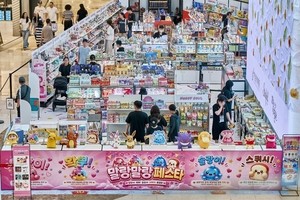
Starfield Hanam marks 10th anniversary with 'High Tension Festival'
Ten days of musicals, magic and circus acts — something for kids and kidults alike Starfield Hanam announced Monday that it will hold a "High Tension Festival" to mark the shopping complex's 10th anniversary. The festivities open with the "K-Pet Fair in Starfield," running through Sunday at the South Atrium. Fifteen brands are taking part — 10 top pet brands and five popular K-Pet Fair names — showcasing everything from pet food and treats to harnesses, pet robots, dog massage services and photo shoots. On Friday, the complex will host "Petbly Town in Starfield Hanam," a walk through the Starfield Hanam grounds and the metasequoia-lined path for 500 pre-registered dog-owner teams. The day also features "Petbly Talk" with veterinarian Seol Chae-hyeon and a pet sports day built around "stay" and "treat relay" challenges. Through Saturday, Molly's Atrium will stage a relay of performances spanning musicals, classical music, a cappella, popera, magic, circus and mime. Musical actors Lee Geon-myeong, Lee Ji-hun and Hong Ji-min, soprano Lee Sang-eun, a cappella group Meatree, and harmonica player Jeon Je-deok are among the performers. On Wednesday — the actual 10th anniversary — a giant balloon performance and a show by magician Choi Hyeon-u will take center stage. A "Bloky × Hobby Soul Character Figure Pop-up Store" runs through Sept. 15, offering more than 900 character products spanning Sanrio, Pokémon, Marvel, Transformers and Crayon Shin-chan. A Spider-Man photo zone, an exhibition and experience zone, and a photo-certification event will also be on offer. Customers who spend 50,000 won ($37) or more will receive a "Starfield AmbassaDOG eco bag," created in collaboration with Clote, on a first-come, first-served basis. Brand day events and lucky box promotions are also planned. Shinsegae Department Store's Starfield Hanam branch has prepared a virtual photo event and purchase-tier gift promotions as well. Other Starfield locations are joining in. Starfield Anseong runs a dinosaur exhibition called "Dino Adventure" from Monday through Sept. 20, with Starfield Suwon hosting the same event Sept. 21 through Oct. 7. Starfield Suwon will also run a "Mission KARI One-Day Researcher" pop-up with the Korea Aerospace Research Institute from Friday through Sept. 20, marking the planned fifth launch of the Nuri rocket in October. "To celebrate Starfield Hanam's 10th anniversary, we have prepared a wide range of content and events to deliver 10 times the fun," a Shinsegae Property official said. "We will continue to offer differentiated experiences and new entertainment to further strengthen our standing as the country's leading mixed-use shopping complex."
Sept. 7, 2026
-

Growing pains or real threat? Counterfeit products cast shadow over K-beauty
Singapore health authority detects Sudan Red in Medicube product APR says item was not sold through official export or retail channels Share price swings despite rebuttal as counterfeit problem persists for years 'Money meant for overseas investment is being spent chasing fakes' A fresh counterfeit alert has hit the K-beauty market after a harmful substance was detected in an APR skincare product sold abroad through unofficial channels. APR moved quickly to push back against the findings, but its share price still swung sharply. Industry observers say counterfeits — once seen as a badge of a brand's popularity — have become a genuine threat to K-beauty at a critical stage of its global growth. According to industry sources Monday, the controversy erupted after Singapore's Health Sciences Authority (HSA) ordered a recall of Medicube's PDRN Pink Collagen Capsule Cream. The HSA tested samples of the product distributed through a local retailer called Venus Beauty and found trace amounts of Sudan IV, a prohibited ingredient. Sudan IV belongs to the Sudan Red family of synthetic dyes used to produce red pigmentation; it is banned in South Korea and numerous other countries because exposure can cause cancer. However, when APR traced the batch number of the sample the HSA had tested, it found no record of that product ever being officially exported to Singapore. Venus Beauty, the retailer that sold the sample, also turned out to be a company APR had never supplied. "Venus Beauty is not a company to which APR directly supplied or exported products," the company said, adding that it was not part of APR's official Singapore retail network. APR also confirmed there was no official export record for the product bearing that batch number. Formal products that APR's Singapore subsidiary provided directly to the HSA tested negative for Sudan Red. The HSA lifted its sales and supply suspension order on Aug. 26. An additional test APR commissioned from an accredited testing agency on Aug. 31 also returned no detection of Sudan Red. APR released the test results publicly, but its share price still fell — from an intraday high of 475,000 won ($351) on Saturday to 392,000 won Monday. Whether the product tested by the HSA was actually a counterfeit has not been confirmed. The industry, however, leans toward that explanation, given that APR — which generates most of its sales overseas — has been battling counterfeit problems for years. In July alone, fake APR products were seized in Guangzhou, China, and Romania: more than 6,000 suspected Medicube imitations were confiscated in Guangzhou, and about 100 suspicious items were identified in Romania. The problem has become so widespread that tips on how to spot genuine products — "check the QR code," "compare the font on the packaging" — are now circulating on global social media platforms including YouTube and TikTok. Korean cosmetics brands Sulwhasoo and The History of Whoo once suffered badly from counterfeits in the Chinese market — a problem that was at the time dismissed as a sign of popularity or merely growing pains. The situation has changed. As K-beauty has expanded onto a global stage, the counterfeit market has grown with it. The number of overseas online listings for counterfeit Korean cosmetics brands that were blocked jumped nearly 54 percent last year to 36,116 cases, according to the Korea Intellectual Property Office. The industry now views the counterfeit problem as a long-term threat to K-beauty's growth. Tracking fakes, coordinating crackdowns, securing seizures and requesting sales suspensions all fall largely on the brands themselves. The Medicube counterfeits seized in China and Romania were uncovered through cooperation between APR and local customs authorities. For smaller indie brands, such measures are simply out of reach. "Money that should be going into overseas market investment is being spent chasing counterfeit products," one industry official said. Experts are paying close attention to this latest case because harmful substances were detected. Kim Ju-deok, a chair professor in the beauty industry department at Seoul Cyber University, said counterfeit products once produced mainly in China are now appearing in large numbers across Southeast Asia as well. "Because harmful substances were detected — not just a simple fake — this is an issue that could damage trust in K-beauty," he said. He added that counterfeit problems are likely to keep arising and that swift action is needed not only at the corporate level but also through government-to-government cooperation.
Sept. 7, 2026
-

Bill to shorten retailer payment deadlines raises fears of harm to small suppliers
Industry warns amended retail law could trigger another Homeplus-style crisis Industry concern is mounting over a bill to amend the Large-Scale Retail Business Act that would sharply cut the payment deadline for direct-purchase transactions by large retailers from 60 days to 35 days, as the legislation heads toward a full plenary vote. According to the National Assembly and industry sources, the Political Affairs Committee voted Thursday to scrap 18 pending amendment bills to the Large-Scale Retail Business Act and incorporate their provisions into a single committee substitute. The substitute bill is set to go before the Legislation and Judiciary Committee before being submitted to the full Assembly for a vote. The bill's core provisions would cut the payment deadline for direct-purchase transactions from 60 days after the date of receipt to 35 days, and reduce the deadline for consignment, commission-based and store-lease transactions from 40 days to 20 days after the monthly sales cutoff. The terms are less stringent than the Korea Fair Trade Commission's original proposal of a 30-day deadline for direct purchases. The Fair Trade Commission had been pushing to shorten payment deadlines under the act after the large-scale settlement failure involving Tmon and WeMakePrice in 2024. Industry groups warn the amendment could deal a serious blow to small and midsize retailers. The Korea Online Shopping Association issued a statement Thursday opposing the bill, saying that "uniformly moving up payment deadlines could cause sudden shocks to retailers' working capital and settlement systems." The association also argued the bill could, contrary to its stated intent, shrink market access for small and midsize suppliers. If working capital tightens, retailers would have no choice but to prioritize popular products from large conglomerates or low-cost imports, it said — a paradox that would reduce order volumes and trading opportunities for smaller suppliers and erode the capacity for mutual growth. The group warned the bill "could trigger a second Homeplus crisis." Small business owners share the same concern. The Korea Platform Merchant Association said the bill, while framed as a measure to protect suppliers, "could in practice increase the financial burden on retailers, leading to fewer orders and lower sales — threatening the survival of small and midsize suppliers and self-employed merchants." It added that shorter payment deadlines would push retailers to favor transactions with large companies, further narrowing market access for smaller suppliers. The Korea Small and Medium Business Association said in a statement that the bill "overlooks the complex interlocking gears of the real economy" and expressed serious concern about "a chain collapse across the small and midsize retail sector." It warned that liquidity at small retailers and platforms could seize up, raising a high risk of repeated settlement failures caused by cash shortfalls. The group also noted that major Chinese platforms such as AliExpress and Temu would likely be able to sidestep the law's binding requirements. Korea Startup Forum said the shorter payment deadlines "would have the positive effect of improving suppliers' liquidity, but at the same time could affect the working capital burden and purchasing capacity of direct-purchase retailers." It called for "careful policy design to ensure that market entry opportunities are not reduced for emerging brands and startup products that have yet to build a sufficient sales track record."
Sept. 7, 2026
-
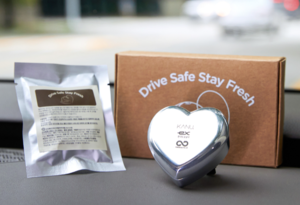
Dongsuh Foods upcycles Kanu capsules into car air fresheners, switches to paper handles
Used Kanu capsules upcycled into car air fresheners Paper handles expected to cut about 1.8 tons of plastic waste annually Dongsuh Foods announced Monday that it is expanding its resource-recycling efforts by upcycling used Kanu capsules into car air fresheners and replacing the plastic handles on Kanu gift sets with paper ones. The company collected used Kanu capsules and upcycled them into the air fresheners in collaboration with the North Chungcheong Province branch of Korea Expressway Corporation. The fresheners will be distributed to consumers free of charge through a promotional event. About 27 tons of Kanu capsules have been collected since November 2023 through August this year. Recycling that volume is estimated to reduce greenhouse gas emissions by roughly 54 tons of CO2 equivalent — the same effect as taking 17.8 passenger vehicles off the road for a year. Dongsuh Foods also replaced the plastic handles on Kanu gift sets entirely with paper ones, extending a switch it first made with Maxim coffee-mix gift sets in 2023. The change is expected to cut about 1.8 tons of plastic waste per year. "We are continuing eco-friendly activities that consumers can practice in their everyday lives," a company official said. "We will keep expanding our efforts for resource recycling and environmental protection."
Sept. 7, 2026
-

CJ OnStyle extends same-day delivery cutoff to 3 p.m. with new Incheon fulfillment center
CJ OnStyle announced Monday it has opened a new fulfillment center in Incheon and will extend the order cutoff for its "Today Delivery" service from noon to 3 p.m. The company relocated and expanded its logistics hub from Gunpo to Incheon to handle growing product volumes and rising delivery demand in the Greater Seoul area. Throughput at the center rose 13 percent in the first half of this year compared with the same period last year. The Incheon fulfillment center is twice the size of the Gunpo facility and can store about 1 million products. The number of items eligible for the Today Delivery service has also increased by roughly 67 percent compared with the Gunpo center. Products arriving through Incheon Port can be stocked at the center more quickly, which the company expects will improve overall operational efficiency. CJ OnStyle plans to operate dual logistics hubs — the existing Gwangju hub and the new Incheon fulfillment center — and build a distribution system optimized for each product category. "We will continue to advance our logistics capabilities to innovate the overall shopping experience for customers, going beyond delivery speed," a company official said.
Sept. 7, 2026
MOST READ
- 1KAIST develops high-performance bio-based adhesive using E. coli instead of petroleum
- 2Pope Leo XIV declines French honors and banquet, accepts only private meeting with Macron
- 3Daimler Truck unveils next-generation transport solutions at IAA 2026
- 4What was Rachmaninoff's performance fee? A 1928 price list tells all
- 5Samsung Biologics union's show of force backfires at the bargaining table
- 6APR says hair-loss treatment research published in international journal
-
WORLD

US warns of punishment for anyone enabling Iran's Strait of Hormuz toll scheme
-
INDUSTRY
Toyota union puts productivity first; Hyundai Motor union demands bigger share of profits
-
FINANCE
National Growth Fund to invest $531M in FuriosaAI, which rebuffed Meta's $800M takeover bid
-
INDUSTRY
Korea Shipowners' Association holds amateur baduk tournament for Maritime Day