Over 1,000 Swiss citizens buried cotton underwear and dug it up two months later to measure soil health. Garden soil decomposed the underwear fastest; lawns came in last. The research team won this year's Ig Nobel Prize in soil science.
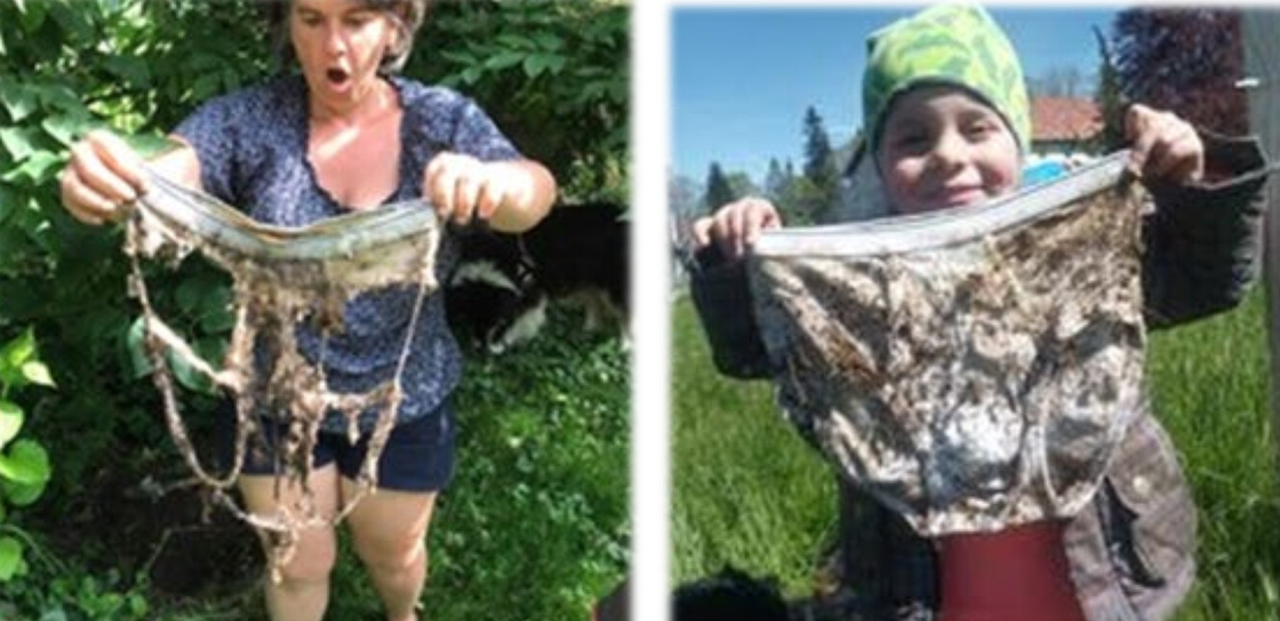
More than 1,000 Swiss citizens signed up for what looked like a prank: bury a brand-new pair of cotton underwear in the backyard, wait two months, then dig it up.
The experiment was part of a citizen-science project called "Beweisstück Unterhose" (Proof Piece Underpants), launched in 2021 by the University of Zurich and Agroscope, the Swiss federal agricultural research institute. Volunteers buried identical pairs of cotton underwear — more than 2,000 in total — at over 1,000 sites across Switzerland, including private gardens, farmland, meadows and lawns. Two months later, they dug the underwear up, photographed it and mailed it to the lab along with a handful of soil.
The quirky experiment won this year's Ig Nobel Prize, the award popularly known as the "Nobel Prize for weird science." According to the University of Zurich, Marcel van der Heijden, a professor at the university, and Franz Bender, a researcher at Agroscope, along with two colleagues, received the Ig Nobel Prize in soil science at the 36th Ig Nobel Prize ceremony held in Zurich on Sept. 3 (local time).
To soil microbes, cotton is a steak
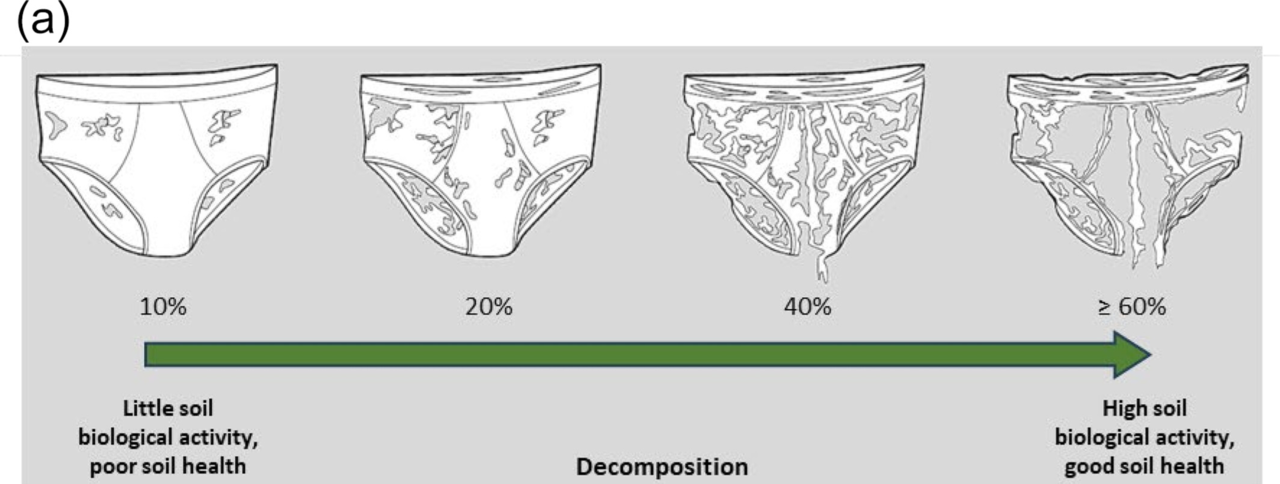
There is a scientific reason the researchers chose underwear specifically. Cotton is a plant-derived fiber, which makes it an appealing food source for the bacteria, fungi and tiny organisms living in soil.
The more active and abundant the soil life, the faster it consumes the cotton. The more tattered the underwear looks when dug up two months later, the more alive the soil beneath it.
The elastic waistband serves as a kind of marker in the experiment. Rubber resists decomposition, so even after the cotton fabric has been entirely consumed, the waistband remains. This makes it easy to relocate the burial site and to compare how much of the cotton was eaten.
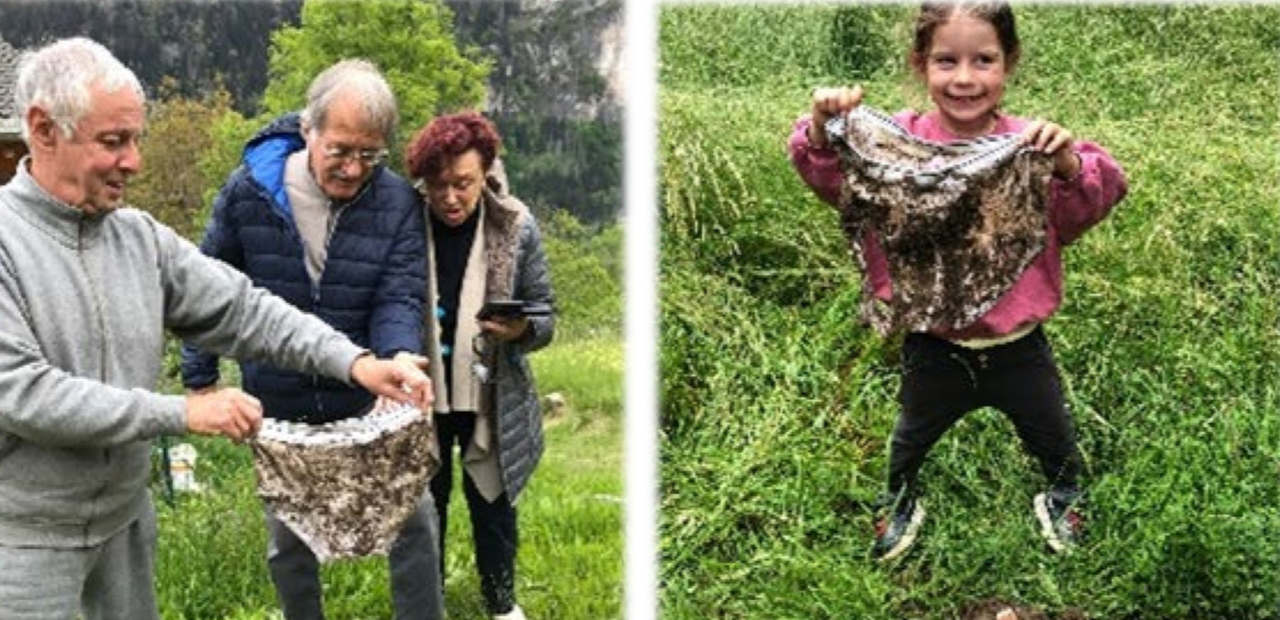
A similar experiment had already caught on among Canadian farmers. The Soil Conservation Council of Canada ran a campaign called "Soil Your Undies" starting in 2017.
According to Canadian public broadcaster CBC, the council's eastern director, Kier Miller, said cotton is organic matter, so to the organisms in the soil it is like a steak.
Capturing public attention was also a goal of the Swiss research team. Van der Heijden said, "People don't realize that 50 percent of all living species live in the soil," adding, "That's why we deliberately chose a somewhat provocative and humorous approach."
Gardens top the rankings; lawns finish last
The results were published in August in the international journal Plants, People, Planet. Gardens decomposed the underwear fastest, while lawn-buried pairs came back in the best condition. Farmland fell somewhere in between.
The research team found that land use mattered more than soil composition in determining the outcome. Garden soil was rich in humus — the dark, nutrient-dense material formed from decomposed organic matter such as fallen leaves and food scraps.
An interim analysis released in 2022 showed that farmland soil contained 23 percent less humus than garden soil. Bender explained that "the more organic matter in the soil, the more nutrients are available for millions of soil organisms," adding that "soil with more humus also retains more water." Researchers identified more than 18,900 species of bacteria and over 6,500 species of fungi in the soil samples.
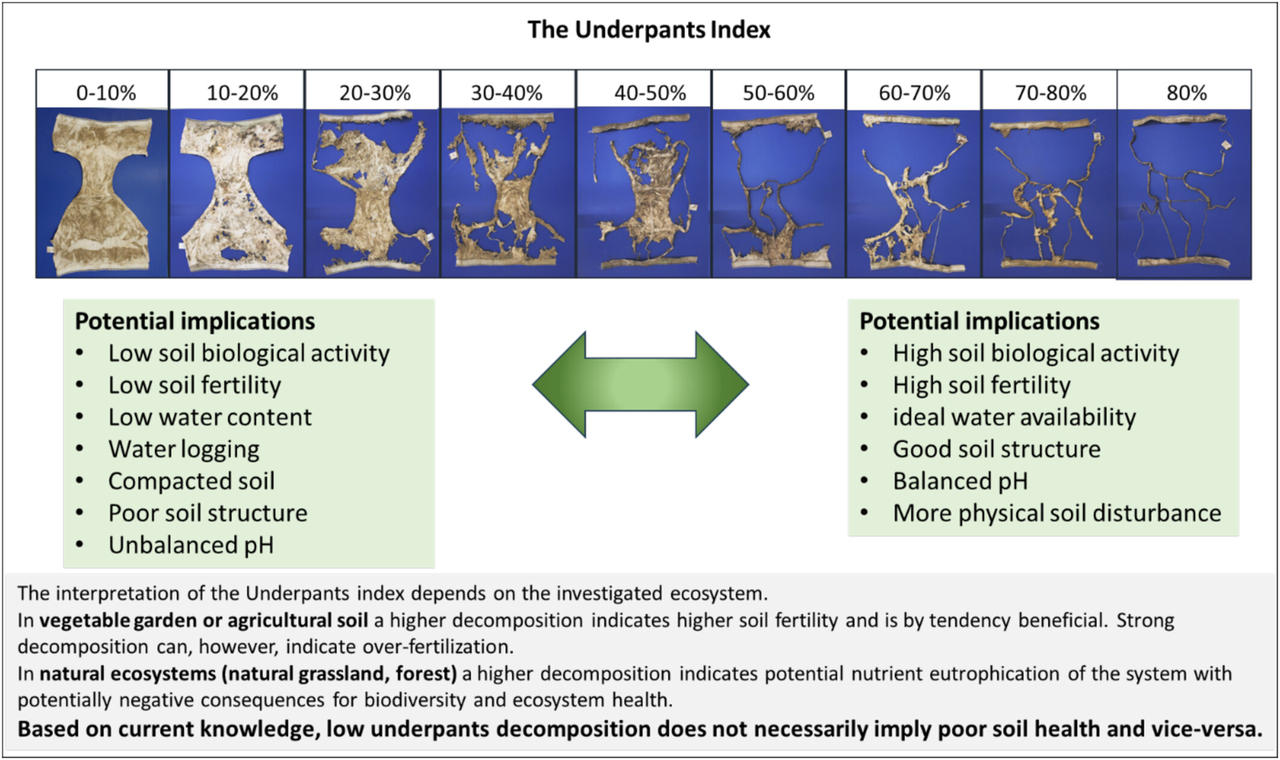
Faster decomposition did not automatically mean better soil, however. Bender said, "It is not desirable for decomposition to be maximized in every ecosystem."
In naturally preserved environments such as forests, an excess of nutrients can signal that the ecosystem's balance has been disrupted. Unusually rapid decomposition in a garden may also indicate over-fertilization.
Weather was another variable. When soil was too cold or too dry, the organisms living in it became nearly dormant.
The research team recommended several practices for improving soil health: keeping the ground covered with plants or crops rather than leaving it bare, adding compost, rotating crops, and reducing the use of chemical fertilizers and pesticides. The team also proposed creating an "underpants index" so that anyone could easily assess the condition of their soil.
About 240 of the citizens who took part in the experiment were listed as co-authors on the published paper.

The prize: 10 trillion Zimbabwean dollars
The Ig Nobel Prize has been awarded since 1991 by the American humor science magazine Annals of Improbable Research, honoring research that "first makes people laugh, then makes them think." True to its name — a play on "ignoble" and "Nobel" — the ceremony is as unconventional as the science it celebrates.
According to US public broadcaster NPR, this year's winners received a banknote worth 10 trillion Zimbabwean dollars as their prize. The Zimbabwean currency collapsed in value long ago and is in effect worthless.
This year's Ig Nobel theme was "fungi." The trophy featured a model of a foot with a mushroom growing out of a wedge of blue cheese. Paper airplanes flew from the audience, as is tradition.
This year's ceremony was held outside the United States for the first time. According to the Associated Press, organizers moved the venue to Zurich, citing concerns over US visa issues that they said made it impossible to guarantee the safety of winners and guests.
In a press release issued at the time of the paper's publication, van der Heijden emphasized that "healthy living organisms in the soil are essential for fertile land and the proper cycling of nutrients," adding that "many other benefits that soil provides to people depend on this."
Reference
DOI: 10.1002/ppp3.70259
Bender SF, Bürge D, Bragazza L, et al. Soil health assessment using buried cotton underpants with the help of 1000 citizen scientists. Plants People Planet. Published online August 26, 2026.
dbsdn1110@heraldcorp.com