
- HOME
- INDUSTRY
-
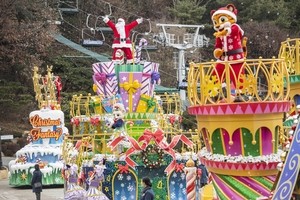
Everland to launch 'Christmas Wish' event with giant tree, special parade
Event runs Saturday through Dec. 31 Caribbean Bay to reopen as spa on Dec. 3 Everland, operated by Samsung C&T's resort division, announced Monday that it will hold a "Christmas Wish" special event from Saturday through Dec. 31. The event will feature a giant Christmas tree photo zone, a Santa parade performance, a multimedia fireworks show and snow activities. On Saturday, a "Giant Wish Tree" will be installed at the Global Fair area near Everland's main entrance — an approximately 10-meter-tall Christmas tree set alongside sculptures of twin pandas Rui Bao and Hui Bao, who are scheduled to move to China next month. Starting Nov. 27, a special Christmas parade and multimedia fireworks show will run through the end of the year. Dozens of character performers dressed as Santa Claus, Rudolph and snowmen will join Christmas-themed parade vehicles for a dance performance. After dark, the winter multimedia fireworks show "Magic in the Sky" will light up the park. Also opening in December, on a rolling basis, will be "Snow Buster," a sledding attraction, and "Winter Spa Cabi," an outdoor bath experience. Everland's water park Caribbean Bay will transform into Winter Spa Cabi for the winter season starting Dec. 3. Winter Spa Cabi will keep all pools — including the lazy river and aquatic center — heated, and will also offer a variety of spa facilities such as a cypress wood outdoor bath and a Finnish-style sauna.
Nov. 16, 2026
-
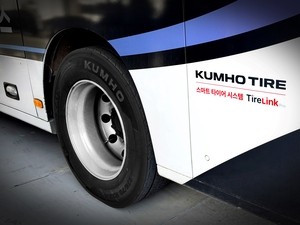
Kumho Tire partners with SUM to expand smart tire system on autonomous buses
Smart tire technology to be deployed on the Seoul Metropolitan Government's Saebyeok Donghaeng autonomous bus service and Dongjak-gu's autonomous village bus, monitoring air pressure, temperature, wear and dynamic load in real time Kumho Tire announced Monday that it is partnering with autonomous driving specialist SUM to deploy a smart tire system on operational autonomous buses and validate data-driven vehicle management technology based on tire condition data. The two companies plan to use the collaboration as a springboard for a phased rollout of the smart tire system across autonomous bus projects nationwide. The initial targets are the Seoul Metropolitan Government's Saebyeok Donghaeng autonomous bus service and Dongjak-gu's autonomous village bus. Kumho Tire plans to fit its commercial vehicle OE tires — the KXA15 and KRS03 — with the smart tire system and validate the technology on the designated vehicles. SUM will provide the real-world autonomous bus operating environment and help verify how tire sensor data collected during service can be put to practical use. The two companies intend to combine their respective tire technology and autonomous driving operational capabilities to develop concrete data-based management solutions. Kumho Tire's smart tire system uses sensor modules installed inside the tires and an in-vehicle wireless communication unit to measure and manage key tire condition data — including air pressure, temperature, wear and dynamic load — in real time while the vehicle is in motion. The technology improves both vehicle safety and tire management efficiency based on that condition data. Building on the results of the initial Seoul deployment, the two companies plan to pursue a broader rollout of the smart tire system across autonomous driving projects nationwide. The Seoul Metropolitan Government is also pressing ahead with plans to introduce 500 autonomous city buses by 2030, a sign that commercialization of autonomous public transit is gaining strong momentum. Kumho Tire aims to use its collaboration with SUM to lay the groundwork for commercializing the smart tire system for real-world vehicle operating environments, and to expand supply of related products in step with the wider adoption of autonomous buses across the country. "The value of a smart tire grows when you can accurately assess tire condition in actual operating environments and apply that information to vehicle management," said Kim Young-jin, executive vice president of Kumho Tire's research and development division. "Through this validation, we will verify the effectiveness of data-driven management technology on autonomous buses in central Seoul, and on that basis we will expand the scope of application to the nationwide autonomous bus market while continuing to develop technology that can be integrated with autonomous driving systems." Meanwhile, Kumho Tire is strengthening its partnerships with global automakers — most recently supplying original equipment tires for the Leon, the compact hatchback from SEAT, a Spanish automotive brand under the Volkswagen Group.
Nov. 16, 2026
-
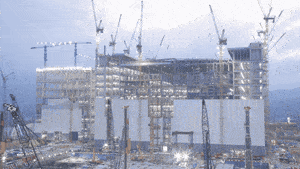
'1.4 times the size of Yeouido': SK hynix races to build mega chip cluster in Yongin
A visit to SK hynix's Yongin semiconductor complex First fab takes shape, heralding birth of a mega cluster Vast adjacent site reserved for fabs 2 through 4 Completion date pulled forward by a decade as construction accelerates About an hour and a half's drive from central Seoul, the general industrial complex of the Yongin semiconductor cluster comes into view — and with it, the first fab SK hynix is building there. The facility is set to become the country's next-generation memory chip production base. On Tuesday, the site buzzed with thousands of heavy dump trucks and pieces of construction equipment moving in and out without pause. Work pressed on even as temperatures dipped below freezing for the first time this autumn. After breaking for lunch, workers strapped their hard hats back on and returned to their stations for the afternoon shift. Dozens of massive cranes swung overhead, hoisting materials into place. Billed as the largest semiconductor investment project in South Korean history, the Yongin cluster's general industrial complex spans 4.15 million square meters — roughly 1.4 times the area of Yeouido. About 20,000 workers are deployed across the site each day, each assigned to a specific zone. The influx of skilled laborers from across the country has driven up rents for nearby studio apartments, with monthly rent climbing from around 700,000 to 800,000 won ($530 to $600) to as high as 2 million won. New on-site canteens are also being built to feed the growing workforce. SK hynix plans to invest a total of 600 trillion won ($455 billion) in the Yongin cluster to build four fabs. The company originally planned to complete them sequentially by 2044, but has pulled that deadline forward by a decade to 2034. The decision to accelerate reflects a deepening global memory chip shortage amid an unprecedented semiconductor boom. The first fab, known as Y1, sits at the northernmost end of the Yongin cluster. Groundbreaking took place in February last year, and 21 months on, the structure stands alone on what was once open land — a harbinger of the mega cluster to come. In the first-phase zone, where the structural framework is complete, workers were busy attaching exterior panels to the outer walls. The first fab will house six clean rooms in total. SK hynix has moved up the opening of the first clean room by three months, from May 2027 to February 2027. Construction on the second phase of the first fab, which began in April this year, is scheduled to run through June 2028. Alongside the fab, workers are also building a central utility building to supply heat, a wastewater treatment facility, a structure providing gas and steam, and an underground water reservoir. To the south of the first fab stretches a vast expanse of open land where fabs 2, 3 and 4 will eventually rise. Excavators were already at work scooping out earth, with dump trucks ferrying the soil away as foundation work got underway. SK hynix expects demand for memory chips to continue outpacing supply for the foreseeable future. As the AI era matures and demand for advanced semiconductors grows rapidly, the company sees stable production capacity as the decisive competitive edge. Once all four fabs are complete, the Yongin semiconductor cluster is expected to serve as a strategic hub for South Korea's chip industry, producing AI memory including high-bandwidth memory and high-performance DRAM.
Nov. 16, 2026
-
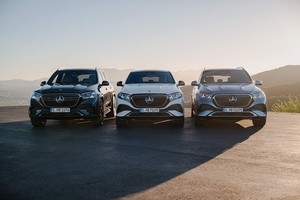
Mercedes-Benz Korea launches updated GLE, GLE Coupe and GLS SUVs
Two GLE and GLE Coupe trims, four GLS trims released as facelifts Fourth-generation MBUX infotainment system based on MB.OS M256M EVO engine paired with 9G-TRONIC transmission Airmatic suspension standard across lineup Mercedes-Benz Korea announced Monday the official launch of facelifted versions of its premium SUV models — the new Mercedes-Benz GLE, the new Mercedes-Benz GLE Coupe and the new Mercedes-Benz GLS flagship SUV. The company said the updated models feature a modernized reinterpretation of the brand's SUV design philosophy, with enhancements spanning exterior and interior styling, refined driving performance and improved convenience features. On the outside, a redesigned radiator grille incorporating new digital lights and lighting elements gives each vehicle a sharper, more contemporary look. The new front-end design accentuates the presence distinctive to Mercedes-Benz SUVs — highlighting the dynamic character of the GLE and GLE Coupe while projecting the premium, commanding image of the flagship GLS. Inside, the vehicles adopt the fourth-generation MBUX infotainment system built on Mercedes-Benz's new vehicle operating system, MB.OS (Mercedes-Benz Operating System), delivering a more advanced digital experience. MB.OS integrates infotainment with a wide range of vehicle functions and supports over-the-air software updates. The latest MBUX built on this platform offers more intuitive controls and a personalized user experience. In addition, the vehicles feature the MBUX Superscreen, which integrates three 12.3-inch displays under a single glass panel. The seamless design runs from the driver's instrument cluster through the central display to the front passenger display, creating a fully digital cockpit. Driving performance and ride comfort have also been upgraded. The Korean-market models are equipped with an inline six-cylinder M256M EVO gasoline engine and a 9G-TRONIC automatic transmission, delivering powerful yet smooth performance. Airmatic suspension — combining air suspension with an adaptive damping system — provides stable handling and a comfortable ride across a variety of driving conditions. The new GLE and GLE Coupe broaden customer choice through distinct designs and different approaches to space. The GLE emphasizes the rugged design and practicality typical of an SUV, while the GLE Coupe highlights a flowing roofline and a more dynamic silhouette. Both models come with the AMG Line package for a sportier feel; the GLE adds power rear seats while the GLE Coupe includes the AMG Line sports seat package, tailoring comfort and product value to each model's character. The new GLS, as the flagship of the Mercedes-Benz SUV lineup, delivers a differentiated luxury experience through generous space, a refined interior and rear-seat comfort. It offers six- and seven-seat configurations to suit customer needs, along with multicontour seats and the MBUX rear-seat entertainment system, ensuring a comfortable journey for both driver and passengers. The Korean-market lineup comprises six trims: the GLE 450 4MATIC AMG Line, the GLE 450 4MATIC Coupe, the GLS 450 4MATIC, the GLS 450 4MATIC 6-seat, the GLS 450 4MATIC AMG Line and the GLS 450 4MATIC AMG Line 6-seat. Prices start at 136.7 million won ($103,000) for the GLE and GLE Coupe, rising to 140.8 million won, while the GLS ranges from 152 million won to 161.2 million won. All prices include VAT and are based on an individual consumption tax rate of 5 percent. Meanwhile, Mercedes-Benz Korea has been actively expanding its new-vehicle lineup to widen customer choice, most recently launching the new Mercedes-Benz V-Class, a premium seven-seat multipurpose vehicle, in the Korean market.
Nov. 16, 2026
-
SK hynix opens world's first shared fab for materials and equipment firms
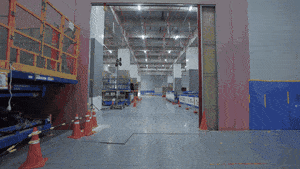
Trinity FAB at Yongin cluster gets first media tour World's first open-access test facility for materials, parts and equipment firms 51 advanced machines, 15 R&D rooms offered rent-free Mass production timeline for semiconductor equipment expected to shrink by one year A lifeline for innovative small firms unable to verify their technology Construction 89% complete; opening set for May, full service in Q4 next year Chey Tae-won urges partners to pursue bold R&D, even if they fail "There is no example anywhere in the world of a fab sharing its infrastructure like this. Production lines are already stretched thin, and allocating 3,300 square meters to partners is something you simply cannot put a price on." Lee Jae-ho, vice chairman of TES, a supplier of semiconductor deposition equipment to SK hynix, made the remarks while touring the Trinity FAB — a facility set to open inside the Yongin semiconductor cluster — and made no effort to conceal his enthusiasm. Trinity FAB is the world's first open-access test facility built by a chipmaker for its materials, parts and equipment partners. Small and midsize suppliers that move in will be able to focus entirely on developing their own materials, components and equipment. Small and medium-sized enterprises that have developed innovative semiconductor materials and equipment but could not afford to verify their mass-production viability now see the facility as a rare opportunity to rapidly bring their technology to completion in an environment identical to an actual SK hynix factory. 3,300-square-meter 'mini fab' offered rent-free to materials and equipment firms SK hynix gave the media its first look at the first fab (Y1) inside the general industrial complex of the Yongin semiconductor cluster in Wonsam-myeon, Cheoin-gu, Yongin on Tuesday. With construction still under way, reporters rode an oversized elevator up to the third floor of Y1's first clean room (Phase 1), where the 3,300-square-meter space designated for Trinity FAB came into view. Construction is 89% complete. The central area, spanning 2,640 square meters, will eventually house 51 pieces of equipment in total — 26 machines covering the five core semiconductor processes (lithography, etching, diffusion, deposition, and cleaning and polishing), 11 metrology and inspection tools, and 14 auxiliary units. Along the perimeter, 15 R&D rooms of 45 square meters each will be made available for lease to materials, parts and equipment firms. For those suppliers, the space functions as a test base and a kind of mini fab, giving them the chance to verify the mass-production viability of their products in a 12-inch (300-millimeter) wafer environment — the current industry standard. "Metrology equipment typically costs anywhere from 1 billion to 5 billion won, so purchasing it has been out of reach," Lee said. "Having access to it at Trinity FAB will be an enormous help for equipment and component makers." 874.6 billion won from government and local authorities; opening set for May Domestic materials, parts and equipment firms have long developed innovative technologies only to hit a wall at commercialization, because no verification facility matching actual mass-production conditions existed. Building such an environment independently was prohibitively expensive for small companies, making in-house validation all but impossible. SK hynix resolved a long-standing wish of the industry by agreeing to open part of its first fab at the Yongin semiconductor cluster to partners. The total project cost is approximately 874.6 billion won. The central government is contributing 373.6 billion won, Gyeonggi Province and Yongin City are putting in 57.7 billion won, and SK hynix is committing 443.2 billion won. The name "Trinity FAB" reflects the three parties coming together as one. Yang Ji-dong, head of SK hynix's Yongin planning team, said Trinity FAB is "not simply a place to rent equipment — it runs alongside partners in the final stretch of their technology development marathon so they can cross the finish line." After Trinity FAB opens in May next year, equipment installation will begin and full commercial service is expected to launch in the fourth quarter. A management committee under the Trinity FAB foundation will select tenant companies and provide space rent-free. Veteran SK hynix engineers will also offer hands-on technical consulting. Interest from the materials, parts and equipment sector is so high that some firms have said they would move in the moment the doors open. Yoo Won-yang, chief executive of TEMC, a maker of specialty gases for semiconductors, said Tuesday that material verification "can take anywhere from six months to two years, but Trinity FAB should cut that time significantly." Lee also said that while developing semiconductor manufacturing equipment and bringing it to mass production currently takes nearly five years, "Trinity FAB should shave close to a year off that." Chey backs R&D funding for partners — with compensation even for failure To the north of the first fab, another large plot of land sat graded and ready, awaiting the start of full-scale construction. The site, covering 451,000 square meters across 55 lots, will become a materials, parts and equipment partner complex, with around 50 leading domestic suppliers in the sector expected to move in. The complex sits just a two-minute walk from Trinity FAB, and once partners are in place, the proximity is expected to generate significant synergies in technical collaboration. SK hynix has also introduced an "R&D Challenge Reward" program to fund research and development costs for its partners. The process of selecting final research projects is currently under way. Half of the R&D costs will be paid upfront, and if development succeeds, the remaining costs will be covered with a purchase review to follow. If development fails, or succeeds but does not lead to a purchase, partners will receive differentiated compensation based on results and their contribution to the supply chain — a deliberate signal that failed attempts will still be rewarded. Lee Hyun-cheol, SK hynix's executive vice president for purchasing strategy, said Chairman Chey Tae-won "has emphasized the need to create an environment where partners can boldly take on technology development challenges," adding that the program "operates on the premise that SK hynix absorbs the costs when development fails."
Nov. 16, 2026
-
Toyota Korea wraps up 'Barun Dog Festival' at Everland
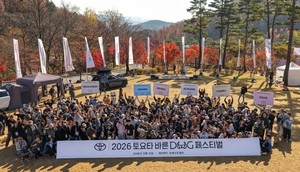
Event held Sunday at Everland Forest Camp in Yongin, Gyeonggi Province 101 teams of Toyota owners and general customers participated nationwide Festival evolves into owner-centered community gathering Programs included autumn forest trekking and a dog sports day Toyota Korea said Monday it successfully held the 2026 Toyota Barun Dog Festival on Sunday at Everland Forest Camp in Yongin, Gyeonggi Province, bringing together Toyota owners and customers with their dogs from across the country. A total of 101 teams — 252 participants and 115 dogs — took part, recruited through Toyota's nationwide authorized dealers. The Toyota Barun Dog Campaign, launched in 2023 to promote responsible pet ownership, has expanded this year into a "Best in Town" initiative centered on authorized dealer showrooms nationwide, engaging customers and local communities together. Toyota Korea has continued to communicate with customers through a range of programs held at dealer showrooms and local pet facilities, covering dog training, health and care, and in-vehicle riding education. This year's festival was designed as an owner-centered community gathering rather than a repeat of last year's agility competition open to the general public. Customers who had participated in Barun Dog programs at showrooms across the country came together to connect, deepening bonds around their shared interest in dogs and pet lifestyles and extending relationships that began at local showrooms into a nationwide community. The festival offered a variety of programs for dogs and their owners to enjoy the autumn setting together. The autumn forest trekking session, led by a dog expert along a woodland trail, included a one-point class on proper walking techniques. Experience booths provided practical support for healthy and safe daily life with dogs, featuring one-on-one consultations with specialists and a dog emergency CPR class. At the Barun Dog Picnic, participants from around the country shared lunch and relaxed together, taking time to mingle. All attendees received a welcome package containing an assortment of pet care products and commemorative goods. The festival's signature event, the Barun Dog Autumn Sports Day, featured a range of team activities for dogs and owners, including a "stay and come" competition and a team sprint. Teams organized by Toyota's authorized dealers from across the country competed and cheered each other on, fostering camaraderie among customers. A Barun Dog Awards ceremony followed the sports day. A vehicle display zone showcasing the all-new RAV4 and Sienna was also set up at the venue, highlighting an outdoor lifestyle with dogs. Executive Vice President Kang Dae-hwan of Toyota Korea said the event was especially meaningful because customers who had first connected through their dogs at Toyota showrooms around the country were able to gather in one place to enjoy themselves and interact. "Going forward, Toyota Korea will continue to draw closer to local communities and customers through our Best in Town activities, and we will work to contribute to spreading a mature pet culture in which people and animals can coexist happily," Kang said. Meanwhile, Toyota Korea has been broadening its customer touchpoints through a range of marketing activities, including a recent owner-participation motorsport program — the TGR Racing Class with Super Race — held for GR86, RAV4 GR Sport and Lexus owners at Everland Speedway in Yongin, Gyeonggi Province.
Nov. 16, 2026
-

Hanwha Power wins turnkey contract to convert LNG carrier into FSRU
Contract signed with LNG infrastructure firm Energos Infrastructure Includes option to convert one additional vessel Covers full project scope from design to commissioning Second such award following first contract last year FSRUs gaining traction as fast-track LNG import solution Hanwha Power announced Monday that it has signed a turnkey contract with Energos Infrastructure, a global LNG infrastructure company, to convert an existing LNG carrier into a floating storage and regasification unit, or FSRU. The deal marks Hanwha Power's second FSRU conversion contract, following its first such award in September last year. The agreement also includes an option to convert one additional LNG carrier into an FSRU. The converted vessel will be deployed at an LNG import terminal, where it will store LNG and regasify it into natural gas for supply onshore. As the turnkey contractor, Hanwha Power will oversee the entire project, including conversion design, equipment procurement, installation and commissioning. Interest in FSRUs has been growing amid efforts to diversify energy supply chains. Converting existing LNG carriers into FSRUs is drawing particular attention as an alternative for rapidly building LNG import infrastructure, since it requires less investment and a shorter project timeline than constructing a new vessel. In line with this market trend, Hanwha Power plans to expand its FSRU and floating storage unit (FSU) conversion business. The company also intends to broaden its scope into eco-friendly fuel propulsion systems and vessel energy efficiency improvements to strengthen its position in the global marine solutions market. Kim Hun-min, executive vice president overseeing Hanwha Power's Ship Solutions Division, said it was meaningful to expand the business with a second contract following last year's first FSRU conversion award. "We will successfully execute this project to further solidify trust with our customers and continue to demonstrate differentiated project capabilities in the global LNG infrastructure market," Kim said.
Nov. 16, 2026
-

Hanjin volunteers at stray dog shelter in Nonsan as part of ESG campaign
Activity held at Beagle Rescue Network's Nonsan center Staff walked dogs, cleaned kennels and provided treats Donation drawn from project sales also presented to the organization Hanjin announced Monday that it visited the Beagle Rescue Network's Nonsan center on Nov. 5 to carry out stray dog care volunteer work as part of its social contribution program, the Love Connect Campaign. The activity was conducted in partnership with the Beagle Rescue Network, an animal rescue organization Hanjin has sponsored continuously since 2022. Fifteen Hanjin employees took part at the Nonsan center, located in Beolgok-myeon, Nonsan, South Chungcheong Province. Employees helped improve the emotional well-being and reduce the stress of stray and laboratory-rescued dogs through a walking program, nutritional treat feeding and bonding activities. They also cleaned the interior and exterior of the kennels to promote animal welfare and a hygienic living environment. Hanjin also presented a donation to the Beagle Rescue Network — drawn from a portion of project sales — to provide practical support for the treatment and care of rescued dogs. The company said the initiative reflects its commitment to a sustainable ESG (environmental, social and governance) model that returns business revenue to society while promoting animal welfare and environmental responsibility. "Through this year's meaningful care activity with the Beagle Rescue Network, a partner we have worked with since 2022, we were able to reflect on the values of respect for life and animal welfare," a Hanjin official said. "We will continue to expand the Love Connect Campaign — which aims to bring warmth to those in need across society, including children who go without meals, mothers in crisis and those with limited access to reading — and put genuine ESG management into practice." Hanjin has run the Love Connect Campaign since November 2021, focusing on environmental cleanup and support for vulnerable groups as part of its corporate social responsibility efforts. This year's activities have included a first round of support for children who go without meals in partnership with World Vision, a second round of sponsorship and policy promotion support for mothers in crisis, a third round of memorial and patriotic activities at Seoul National Cemetery, and a fourth round in which employees donated their voices to record children's audiobooks for underserved readers in partnership with ChildFund Korea. Hanjin is also expanding its global customer reach through a range of marketing activities, including converting "Fandom Ticket" — a service on its global consumer-to-consumer cross-border shopping platform Hoottown, targeting overseas buyers of K-pop artist merchandise and character goods — into a permanent service.
Nov. 16, 2026
-
Taekwang Industrial to invest W150b in modacrylic expansion, targeting global top 2
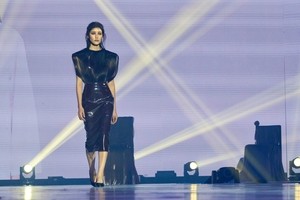
Production capacity to more than double Commercial output to begin in June 2028 Global market share target of 33% by 2030 K-beauty push to be led alongside Aekyung Industrial and Dongsung Pharmaceutical Taekwang Industrial, the fiber and petrochemical arm of Taekwang Group, plans to more than double its modacrylic production capacity as it sets its sights on becoming one of the top two global suppliers of K-beauty source materials. The company said Monday it will invest 150 billion won ($113 million) to expand its modacrylic production facilities at its Ulsan factory to meet rising demand for high-end beauty materials. Once the expansion is complete, annual production capacity will increase from 12,000 tons to 26,000 tons. The new facilities are expected to begin full commercial production in June 2028 following test runs. Taekwang Industrial aims to lift its global market share from the current 19 percent to 33 percent by 2030. Modacrylic is a polyacrylate-based specialty fiber used as a key raw material in premium wigs and synthetic fur. Taekwang Industrial became the second company in the world to commercialize the fiber, after Japan, and launched its fashion materials brand Modabon in 2011. The company showcased products incorporating its modacrylic at a large hair show hosted by major franchise Juno Hair last month. Taekwang Industrial plans to establish itself as a global leader in K-beauty source materials by expanding modacrylic supply alongside Aekyung Industrial and Dongsung Pharmaceutical, which lead the finished cosmetics and hair care product markets. "Modacrylic is a high-end market where global demand is growing steadily but the number of suppliers with stable production capacity is very limited," a Taekwang Industrial official said. "We will maximize the synergy between Modabon's outstanding processability — demonstrated at the successful Juno Hair Collection — and this large-scale expansion to become the No. 1 K-beauty materials company that customers around the world turn to first."
Nov. 16, 2026
-
Posco Future M wins four awards at digital communications ceremony
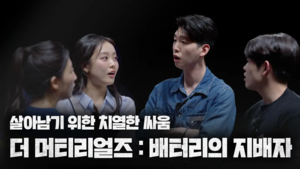
Four top prizes at Korea Communications Awards Grand prize on YouTube for second consecutive year 'The Materials' series hits 1.13 million views AI short-form, workplace safety content on the rise Posco Future M swept four categories at a digital communications awards ceremony, led by a YouTube series that turns battery material science into a brain-survival game show. The company earned high marks for making specialized industrial technology accessible through entertainment-style videos and short-form content, and for producing safety-themed material based on real workplace activities. Posco Future M announced Monday that it took top prizes in four categories at the 2026 Korea Communications Awards, held Friday at the Korea Press Center in Seoul. The four awards were the grand prize for YouTube communication — the ceremony's top honor — along with first place in the electrical and electronics category for both internet communication and social media, and the top prize in the video content category of the digital content division. The company won three categories last year and added a fourth this year. It claimed the grand prize for the second consecutive year. Posco Future M also took the top prize in the petrochemical category at the 16th Korea SNS Awards held last month. The Korea Communications Awards is an annual ceremony organized by the Korea Internet Communication Association since 2008; this year marked its 19th edition. Winners are selected based on the performance of corporate and public institution online channels, content competitiveness, and the level of engagement with users. Posco Future M has been producing videos that make specialized industrial information — including battery cathode and anode materials — accessible to a general audience. Its flagship content is the YouTube brain-survival game show "The Materials: Master of Batteries," which delivers knowledge about battery materials through a competition format and has accumulated 1.13 million views. Eight Posco Future M employees participated directly in the show. Contestants solve problems related to the battery industry and compete against one another, with the process used to explain the characteristics and technology behind battery materials. Rather than relying on the technical explanations and expert interviews typical of corporate promotional videos, Posco Future M adopted an entertainment program format to convey specialized content in a more approachable way. A collaboration with the economics and business commentary channel "Sobi the Money" also drew 340,000 views, introducing general consumers to the role of materials in the battery industry and the importance of related technologies. The company is also expanding its short-form output. Posco Future M introduced an "AI press release Shorts" format and has been producing a variety of brief videos, including street interview segments. Content topics extend beyond the company's core battery business. In line with the expansion of the AI industry, the company has been covering humanoid robots, urban air mobility, self-driving cars and ESS — sectors where demand for battery materials is expected to grow. The videos explain the battery performance and material technology required in each of those industries while also conveying Posco Future M's strategy to expand its cathode and anode material product lineup. The company has recently strengthened content highlighting its workplace safety activities as well. Its three core safety initiatives — "Maju Iyagi" (face-to-face safety dialogue), the right to stop work, and improvement of work standards — have been adapted into videos and webtoons based on real on-site cases. Maju Iyagi is a safety activity in which frontline workers directly discuss potential hazards that may arise during their tasks. Related content has accumulated 510,000 views. The company also uses safety-themed webtoons and a "safety song" to convey the importance of workers following safety rules and maintaining open communication on the job. "Our efforts to communicate the company's competitiveness — from portfolio expansion to safety culture — in an accessible and genuine way led to these awards," a Posco Future M official said. "We will continue engaging with the public through content that keeps pace with the latest media trends."
Nov. 16, 2026
-
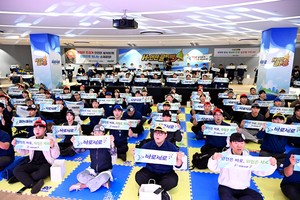
Hyundai Motor holds second 'Safety Culture Week' of 2026
Companywide campaign ran from Nov. 9 to 13 CSO Chief Executive Choi Young-il attends H-Safety Golden Bell event Hyundai Motor held its second "Safety Culture Week" of the year — a companywide safety campaign — from Nov. 9 to 13, the automaker announced Monday. Organized by the company's Chief Safety Officer division, which oversees occupational health and safety across the entire organization, the campaign followed an earlier edition held in the first half of this year. All domestic worksites participated, including production plants in Ulsan, Jeonju and Asan, as well as research centers, the domestic business division and headquarters. Safety Culture Week is Hyundai Motor's companywide safety campaign aimed at raising employees' safety awareness and embedding a culture of safety throughout the organization. Its goal is to spread a workplace culture in which employees take ownership of safety and practice it in their daily routines. The campaign was carried out through four formats: companywide safety messaging, leadership activities by senior management, the H-Safety Golden Bell competition and site-specific tailored activities. Under the companywide safety messaging initiative, the company ran a daily safety campaign distributing topic-specific card news to employees — covering subjects such as entrapment hazards, slips and falls, and health management. Safety-themed cartoons conveying the values of "Baro Zero," Hyundai Motor's safety brand, were also broadcast on internal channels. For the management leadership activities, division heads at each worksite conducted on-site safety inspections in person, identifying and eliminating real hazards on the ground and driving improvements to working conditions. The companywide participatory program, the 2026 H-Safety Golden Bell, was held in both online and in-person formats. Following online preliminary rounds, the final event took place Wednesday, with CSO Chief Executive Choi Young-il attending in person to underscore the importance of building a strong safety culture on the shop floor. "Safety Culture Week is a platform where all employees become agents of safety, participating and practicing together to spread a culture of safety," a Hyundai Motor official said. "Through participatory programs such as H-Safety Golden Bell, we will work to help employees internalize safety naturally and foster a corporate culture in which safety is practiced every day." Meanwhile, Hyundai Motor has continued its corporate social responsibility efforts through various initiatives, including a recent donation ceremony for the Hyundai Hope on Wheels Matching Grant program, held at UX Studio Seoul at its Gangnam-daero office in Seoul. The Hyundai Hope on Wheels Matching Grant links the company's global CSR program, Hyundai Hope on Wheels, with its domestic fundraising initiative, the Sales Champion Matching Grant. Under the matching grant model, the company adds its own contribution on top of amounts donated voluntarily by participants. Hyundai Motor combines donations from current and former car masters with corporate funds to support children with pediatric cancer.
Nov. 16, 2026
-
Aston Martin joins Star Wars 50th anniversary celebrations with Disney, Lucasfilm
Year-long commemorative events to run from January 2027 British ultra-luxury performance brand Aston Martin announced Monday it will join Disney and Lucasfilm in a year-long global celebration marking the 50th anniversary of Star Wars, one of the most enduring film franchises in cinema history. Star Wars first opened in 1977 before being retitled Star Wars: A New Hope, and has since expanded the boundaries of modern storytelling while inspiring generations of audiences around the world. The collaboration brings together two iconic brands that have each built their reputations on delivering extraordinary experiences. Over the course of the anniversary year, a series of events and joint projects will highlight the craftsmanship of British ultra-luxury and the artistic legacy of cinematic storytelling. "Star Wars has inspired generations of fans around the world over the past 50 years through the remarkable power of design and storytelling," said Finbar McFall, Aston Martin's global head of marketing and SVO. "Aston Martin is equally committed to creating products and experiences with a distinctive character that leave a lasting impression, so a collaboration between two brands that share the same values feels both natural and exciting." The announcement comes as Lucasfilm prepares a wide-ranging anniversary program that includes a theatrical re-release of the original 1977 film alongside events tracing the franchise's history and future. Further details on Aston Martin's Star Wars 50th anniversary program are expected in early 2027. Meanwhile, Aston Martin has been expanding its global customer touchpoints through a range of marketing initiatives, including the recent opening of a new flagship showroom in Mayfair, London's upscale commercial district.
Nov. 16, 2026
-
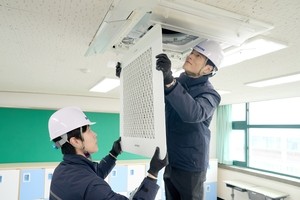
Samsung Electronics deploys emergency air-conditioning teams for college entrance exam
Samsung Electronics Service sets up dedicated service team Samsung Electronics Logitech conducts pre-exam inspections Samsung Electronics said Monday it will operate an emergency service for system air conditioners at venues for the 2027 College Scholastic Ability Test. Samsung Electronics Service has established a dedicated service team to respond to any system air-conditioner failures on exam day. The team will be stationed near test venues, ready to dispatch technicians in emergencies and provide guidance on temporary workarounds. The company will also run an AI-powered remote home appliance diagnosis service. The system uses AI to analyze the status and usage history of air conditioners connected to SmartThings, allowing service consultants to remotely adjust product settings or advise on corrective measures. Samsung Electronics Logitech, meanwhile, is carrying out maintenance checks on system air conditioners at exam venues. HVAC engineers will inspect the operating condition of indoor and outdoor unit fans and verify that units are maintaining proper temperatures. The checks aim to identify potential irregularities in advance and ensure heating systems run normally on exam day. "We will do our utmost — from pre-exam inspections to emergency response on the day of the test — so that students can focus on the exam in a comfortable and stable environment," a Samsung Electronics Service official said.
Nov. 16, 2026
-
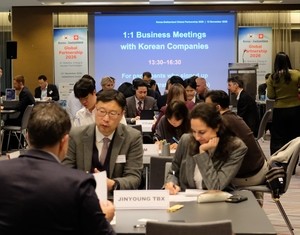
65 Swiss firms eye Korean nuclear, AI technology as $23m in deals sealed
KOTRA holds Korea-Switzerland partnership event in Zurich 65 Swiss, 24 Korean firms take part 110 consultations held across industrial automation, nuclear sectors 10 export contracts and MOUs signed Swiss companies have shown strong interest in Korean nuclear power plant components, power equipment and AI-driven industrial automation technology, deepening cooperation between businesses from the two countries. A business consultation event held in Switzerland produced 110 partnership consultations and resulted in export contracts and MOUs worth a combined $23 million. The Korea Trade-Investment Promotion Agency (KOTRA) announced Monday that it held the Korea-Switzerland Global Partnership 2026 at the Sheraton Hotel in Zurich on Thursday (local time). The event brought together 65 Swiss companies and 24 Korean firms, including major European players such as Siemens alongside Korean materials, components and equipment manufacturers. Participants discussed potential cooperation in product supply, joint technology development and pilot projects. A total of 110 consultations took place on site, with 10 export contracts and MOUs signed for a combined value of $23 million. KOTRA said both the scale of participation and the results were the largest for any single project since the Zurich trade office opened in 1972. The event departed from the conventional format of Korean companies presenting their technologies one-sidedly. Instead, overseas firms first identified the products and technologies they needed, and KOTRA matched them with suitable Korean companies. Key areas of cooperation included AI-powered industrial automation, precision machining, energy equipment and nuclear power plant components. Discussions went beyond simple parts supply to explore long-term partnerships through joint research and development and technology verification. At a cooperation forum held before the business consultations, Swiss companies laid out in concrete terms the technologies and partnership conditions they required for actual projects. The main demands presented included nuclear power plant components and transformer supply, exports of robots and equipment for data centers in Korea and Europe, joint development of specialty advanced materials, and AI-based video analysis and manufacturing solutions. The Swiss side announced six cooperation needs, while Korean companies proposed five innovative technologies and discussed their commercialization potential. Discussions were particularly active in the power and nuclear sectors, reflecting demand from local companies seeking to improve the efficiency of energy facilities or secure components applicable to existing power generation infrastructure. A representative of Swiss engineering firm A, who attended the consultations, said it was "innovative" that Korean companies had rapidly integrated next-generation technologies such as digital transformation into advanced precision machining products, adding that "cooperation with Korean companies will play a key role in advancing Switzerland's precision manufacturing industry." A representative of Swiss power company B said Korean high-efficiency power equipment and nuclear technology — backed by globally proven construction and operating experience — made Korea "the top-priority collaboration partner for European energy companies," adding that the company planned to continue supply chain cooperation with firms from the consultations that held technologies immediately applicable to ongoing projects. In the nuclear sector, the two countries also established a framework for cooperation between their respective industry associations. The Korea Nuclear Association signed an MOU with the Swiss Nuclear Forum. The two sides agreed to share information on the nuclear industry and inter-company cooperation opportunities, and to support Korean nuclear component manufacturers in entering the Swiss market. Beyond company-to-company cooperation, the foundation for technology development linking university researchers with Korean firms is also expanding. The Korean government earlier opened the Global Industry Technology Cooperation Center, a joint Korea-Switzerland research and development hub, at ETH Zurich on Nov. 4. The center helps Korean companies pursue joint R&D with Swiss research institutions and translate developed technologies into actual products and commercial ventures. Jang Tae-gwang, the center director who spoke at the cooperation forum, said the center would "connect Korean companies with innovative technologies in advanced industries to ETH Zurich researchers, supporting the commercialization of Korea-Switzerland technology cooperation outcomes." Switzerland has ranked first in the Global Innovation Index published by the World Intellectual Property Organization for 16 consecutive years, from 2011 through this year. Korea ranked fourth globally this year, behind the United States. As Swiss companies with strong R&D capabilities and precision manufacturing expertise move to build supply chain partnerships with Korean firms, analysts say Korean materials, components and equipment makers could gain broader access to the European market. KOTRA said it plans to follow up with additional consultations and technology cooperation support based on the partnership needs identified at the event. Kim Yeon-jae, head of KOTRA's Europe regional headquarters, said Switzerland was "the optimal technology cooperation beachhead for Korean companies entering the European market in terms of innovation and purchasing power," pledging to "make every effort to connect the cooperation needs of Swiss companies — which hold world-class technology and industrial networks in future strategic industries such as industrial automation and nuclear power — to tangible business opportunities for Korean firms."
Nov. 16, 2026
-
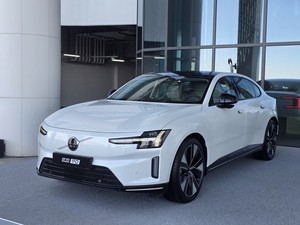
Same brand, different character: Volvo's flagship sedans ES90 and S90 reviewed
120 km through Sokcho and Gangneung in Gangwon Province ES90: an EV that pairs silence with Bowers & Wilkins audio S90: a mild hybrid built for rear-seat comfort Both deliver effortless high-speed performance Volvo's flagship sedans, the ES90 and the S90, occupy the same top tier of the lineup but point in clearly different directions. The ES90 is a fully electric vehicle that leads with software and technology, while the S90 B5 mild hybrid leans into a stately character and a generous rear cabin. Together they give buyers within a single brand two distinct paths depending on their lifestyle. On Tuesday, both cars were driven in alternating turns across roughly 120 kilometers of roads around Sokcho and Gangneung in Gangwon Province. The test vehicles were the ES90 Single Motor Extended Range Ultra and the S90 B5 Ultra. The differences between the two — in exterior and interior design, use of space and driving feel — were unmistakable. ES90 for cargo, S90 for rear-seat space Both cars share Volvo's signature Thor's Hammer headlamps, yet each interprets the exterior differently. The ES90 adds rectangular detailing to the headlamps for a clean, minimalist look, while the S90 uses slim headlamps and a front grille to project a more traditional sense of luxury. Their silhouettes and approaches to interior space also diverge. The ES90 adopts a fastback profile, with the roofline sloping gently toward the rear. Volvo says the body and ground clearance sit higher than comparable models, and the drag coefficient of 0.25 is the lowest of any vehicle in the Volvo lineup. The trunk opens as a liftback — the rear glass lifts with the tailgate — making it easy to load bulky items. Base cargo capacity is 409 liters, expanding to 1,445 liters with the rear seats folded. The 3,102-millimeter wheelbase leaves adequate knee room, but the fastback roofline means the rear cabin feels less spacious in practice than the S90's. The S90 is defined by its long, low body — 5,090 millimeters in length and 1,445 millimeters in height — with a 3,060-millimeter wheelbase devoted generously to rear-seat occupants. Both legroom and headroom in the back are ample. The Ultra trim adds a rear luxury armrest, power side sun blinds and a rear-window sun curtain, making it a credible chauffeur-driven vehicle. Buyers who prioritize rear passengers should lean toward the S90; those who carry a lot of cargo will find the ES90 the better fit. Displays in the ES90, physical buttons in the S90 — Swedish luxury throughout The most striking aspect of the ES90's interior is the near-total absence of physical buttons. Adjusting the cabin temperature, repositioning the steering wheel and opening the glove box all require navigating the 14.5-inch center display. To keep the button count down, Volvo even moved the rear window controls off the driver's door. The Ultra trim's electrochromic glass roof changes the transparency of the overhead glass at the touch of a single button. The cabin feels distinctly futuristic, though growing comfortable with the interface takes time. The S90 takes the opposite approach, embracing familiarity. The gear knob crafted from Orrefors Swedish crystal is retained, and most functions are operated through physical buttons. The 11.2-inch center display has noticeably thick bezels that give it a slightly dated look, and Android Auto requires a USB cable connection — a limitation that felt out of step with the car's price point. That said, being able to reach any function directly through a button made everyday use straightforward. The roof features a power panoramic sunroof with a shade that can block out light entirely. Interior fit and finish is premium in both cars. Volvo's stated concept is "a Scandinavian living room." The ES90 wraps the cabin in wide wood trim and embeds backlit lighting in the dashboard, door panels and front seatbacks, so that when the light fades, soft patterns emerge across the decorative panels. The S90 pairs wood trim with integrated lighting on the dashboard alongside upholstery made from 100 percent recycled polyester textile. Both cars come with Nappa leather seats in the Ultra trim. Big cars, effortless pace — but ES90's software needs work Neither car wants for power. The ES90 Single Motor rear-wheel-drive model, equipped with a 92-kilowatt-hour battery, produces 333 horsepower and 49.0 kgf·m of torque. Even without the top-tier powertrain, acceleration on the highway felt unhurried and confident. The rated range on a single charge is 462 kilometers under combined-cycle conditions at normal temperatures. The inherent quietness of an electric vehicle is amplified by Volvo's audio system. The Ultra trim includes a Bowers & Wilkins sound system with 25 speakers rated at 1,610 watts. Speakers are also built into the front headrests to enhance the sense of acoustic space. The S90 B5 pairs a 2.0-liter turbocharged gasoline engine with a 48-volt mild hybrid system for a combined output of 250 horsepower. Despite the car's substantial size, there was no sense of strain at highway speeds. Combined fuel economy is 11.5 kilometers per liter. The trade-off for carrying an engine is that cabin refinement falls short of the ES90's. Audio is also a strength of the S90. Its Bowers & Wilkins system comprises 19 speakers rated at 1,410 watts. Unlike the ES90, there are no headrest speakers, but a tweeter center speaker at the top of the dashboard and roof-mounted speakers combine to deliver a listening experience that more than satisfies. The ES90's software-centric design did leave some frustrations. Immediately after setting off, the media audio, navigation prompts, turn signal sounds and even the hazard warning tones all fell silent. A long press of the volume button below the center display reset the system and resolved the issue, but diagnosing the problem was unsettling. Given that turn signal sounds are directly tied to safety, the software will need to be more reliable. Rear visibility is another area that needs attention. The fastback design results in a small rear window that makes checking behind the car through the rearview mirror awkward. A digital rearview mirror displaying a camera feed would go a long way toward solving the problem. The ES90 Single Motor Extended Range Ultra is priced at 80.55 million won ($60,500), rising to 83.41 million won with the air suspension option. The S90 B5 Ultra starts at 73.9 million won.
Nov. 16, 2026
-
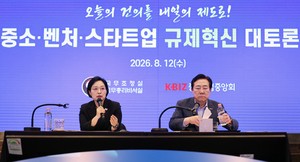
Incentives needed for large firms investing in regional startups, report says
Korea Enterprises Federation report on open innovation Large firm-startup cooperation remains at early stage Startups call for follow-on investment, market access support Government urged to help open initial sales channels through public demand Amid growing calls that cooperation between large South Korean companies and startups remains stuck at an early stage — largely confined to research and development — a new report is urging the government to help startups break into initial markets through public procurement and to strengthen incentives for large firms that invest in startups outside the Greater Seoul area. The Korea Enterprises Federation released the findings Monday through a report commissioned from Cho Won-kyung, a professor in the economics department at Sejong University, titled "Measures to Promote Open Innovation for a Large Firm-Startup Coexistence Ecosystem and Regional Innovation." Cho said that while open innovation partnerships between large companies and startups are spreading, they remain concentrated at the early stage. A survey of 58 startups with open innovation experience — allowing multiple responses — found that 56.9 percent had engaged in proof-of-concept collaboration and 43.1 percent in R&D, both early-stage activities. By contrast, far fewer had experience at later stages: 25.9 percent had worked on commercialization and just 10.3 percent on scaling up. A separate survey of 159 newly founded startups found that their most desired areas of collaboration were investment attraction (31.7 percent), securing customers (28.5 percent), joint R&D (27.6 percent), commercialization (26.8 percent) and proof of concept (16.3 percent). When asked about policy support, an overwhelming 59.1 percent said they most needed help with follow-on investment, commercialization funding and market access after open innovation partnerships. The report said the ecosystem must move beyond simply expanding the volume of open innovation and build a virtuous cycle in which collaborative results carry through to later stages. To that end, it proposed three key reforms: opening initial sales channels through public demand, reorganizing regional collaboration hubs and strengthening open innovation incentives. First, the report proposed that the government introduce a process in which it solicits challenges and startups submit solutions, helping them secure public procurement as a sales channel beyond the proof-of-concept stage. The idea is to launch pilot projects quickly by drawing on existing R&D and procurement budgets across government ministries. The report also advised designating consortiums of local governments, anchor companies, innovation centers and technoparks as "regionally led open innovation special zones," with central government matching funds channeled into them. In addition, it proposed replacing blanket deregulation of external investment and overseas investment limits for corporate venture capital arms operated by large conglomerates with a "region-linked incentive" system tied to the share of investment directed at companies outside the Greater Seoul area. Under the arrangement, large firms would receive tax benefits while startups and their regions would gain access to growth capital. Jung Chul, the Korea Enterprises Federation's chief research officer and head of its entrepreneurship center, said the focus must shift from expanding the quantity of open innovation to improving the sustainability of collaboration. "We need to build a solid institutional foundation that allows large companies and startups to grow together while also embracing the innovation capacity of regions," he said.
Nov. 16, 2026
-
Trade minister calls oil price cap extension 'unavoidable' to ease public burden
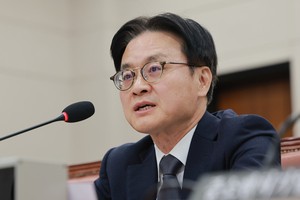
Kim Jung-kwan explains rationale for four-week extension Cites unresolved Strait of Hormuz tensions, shipping costs The government decided Friday to extend its oil price cap by four more weeks, and Trade, Industry and Resources Minister Kim Jung-kwan, whose ministry oversees the measure, said the extension was "an unavoidable choice." Kim posted on his Facebook page Sunday acknowledging that concerns have grown over fiscal costs and market distortions as the price cap, introduced in March, enters its ninth month — but said the extension was unavoidable under current conditions. The primary reason Kim cited was continued instability in the Middle East. While international oil prices have edged down recently, they remain elevated, and he said it was too early to feel reassured given unresolved tensions in the Strait of Hormuz and the ongoing burden of crude oil shipping costs. Kim also expressed concern about the economic blow to ordinary people if the measure were lifted. "What worries me is the burden the public would have to bear if we end the price cap now," he said. "Rising fuel prices do not stop at the gas station. As they feed through to logistics and production costs and spread across everyday consumer prices, they could become yet another burden for ordinary citizens, small business owners and companies alike." Kim also reiterated the price cap's effect in holding down inflation. "According to a recent analysis by the Korea Development Institute, the price cap is estimated to have lowered the consumer price inflation rate by an average of about 0.6 percentage points per month from March through October," he said. He added, however, that a policy's effectiveness does not automatically justify keeping it in place. "Just because a policy works does not mean maintaining it indefinitely is the right answer. It is desirable to minimize government intervention in the market," he said. "But when the burden on the public is large and clear, I judged that relieving it was the most important thing to do."
Nov. 15, 2026
-
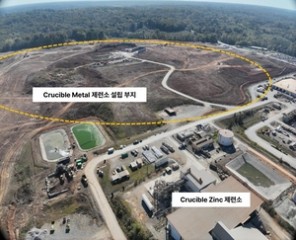
Korea Zinc's Tennessee smelter project gains momentum with TVA power approval
Contract capacity set at 230 MW; power supply to begin in 2029 TVA board approval secures energy infrastructure for Project Crucible Korea Zinc's Project Crucible — a roughly $7.4 billion integrated critical-minerals smelting complex planned for Tennessee in partnership with the US government — has secured large-scale power approval from the local electricity provider, giving the initiative fresh momentum. The project had already been placed on the federal fast-track permitting regime FAST-41 and cleared a final environmental assessment; securing the power supply infrastructure needed to operate the integrated smelter marks another significant milestone. Korea Zinc said Sunday that the Tennessee Valley Authority board held a meeting Tuesday (local time) and approved a power-use request from its subsidiary Crucible Zinc. The approved request covers large-scale electricity consumption exceeding 100 MW. Project Crucible's contracted power capacity stands at 230 MW, with TVA set to begin supply in 2029. TVA is a federal public corporation responsible for power generation, supply and transmission-grid operations across the southeastern United States, serving more than 10 million residents across seven states and ranking as the country's largest public power provider. It draws on a mix of nuclear, hydroelectric and natural gas sources, and its industrial electricity rates are lower than those paid by more than 90 percent of customers among the top 100 US power companies. Korea Zinc has worked closely with TVA to keep Project Crucible on track. In May, Korea Zinc Chairman Choi Yun-beom met with TVA board chair Mitch Graves to stress the importance of securing early-stage power demand and building a stable power supply network for the smelter, and to request TVA's active cooperation. Project Crucible has drawn broad support from the US federal government, state authorities and related agencies. In April, the Federal Permitting Improvement Steering Council designated the project for inclusion under FAST-41, the federal expedited permitting regime — the first such designation after Tennessee and the council signed an MOU. In September, the project also cleared the US government's Final Environmental Assessment. The US Department of Defense, acting under the National Environmental Policy Act, conducted a comprehensive review covering air quality, greenhouse gas emissions, water resources, biological and cultural resources, waste, hazardous materials, transportation, and socioeconomic impacts, before issuing a Finding of No Significant Impact. The final assessment serves as a reference document for TVA in evaluating power infrastructure support and for federal and state authorities in reviewing subsequent permits. Project Crucible aims to build and directly operate a large-scale integrated smelter in Tennessee, drawing on more than 50 years of smelting expertise and operational know-how that Korea Zinc has accumulated at its Onsan smelter in Ulsan. The facility is planned to produce 12 non-ferrous metals — including 11 critical minerals designated by the US government — as well as semiconductor-grade sulfuric acid. Korea Zinc plans to break ground in 2027 and begin commercial production of some products in 2029, with the project expected to create more than 400 new jobs in Tennessee. "With TVA's approval of Crucible Zinc's power request, the conditions for stable operation of the Tennessee integrated smelter have been put in place," a Korea Zinc official said. "We will accelerate preparations for the smelter's ground-breaking and work closely with the US government and local agencies to bring Project Crucible to a successful completion." Meanwhile, Korea Zinc prevailed in a legal dispute over a 527.2 billion won ($396 million) rights offering it had pursued as part of a strategic partnership with Hyundai Motor Group. A court recognized the legality of the new share issuance on business grounds, overturning a first-instance ruling that had sided with Youngpoong. The Seoul High Court's Civil Division 18-3, presided over by judges Jin Hyeon-min, Wang Jeong-uk and Park Seon-jun, dismissed the appeal Friday in a lawsuit filed by Youngpoong seeking to nullify the share issuance, reversing the lower court's ruling in favor of the plaintiff. The court found that the share issuance was carried out within the scope necessary to achieve the company's business objectives and was permissible under its articles of incorporation, and therefore could not be deemed invalid.
Nov. 15, 2026
-
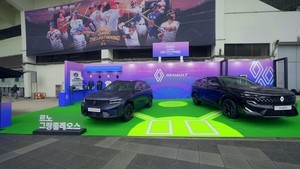
Renault Korea wraps 'Jamsil The Last Inning by Renault' event, pledges expanded customer engagement
Renault Korea serves as title sponsor of farewell baseball event Plaza pop-up booth features Filante vehicle display Uniform, helmet and stadium branding reinforce on-site brand experience Renault Korea announced Sunday that it successfully concluded the "Jamsil The Last Inning by Renault" event, held Saturday at Jamsil Baseball Stadium in Seoul, where the automaker served as title sponsor. The company said the event was organized to celebrate the history and memories of Jamsil Baseball Stadium alongside baseball fans, as the venue prepares for a new chapter after the 2026 season. "We were honored to serve as title sponsor of this event, sharing a special moment where legendary professional baseball players and fans gathered together, and broadening the touchpoints between our brand and customers through the medium of sport," a Renault Korea official said. The event, hosted by Ilguwhoe — an association of former professional baseball players and coaches — brought together 58 legendary players. Divided into East and West teams, the players competed in a seven-inning game, while a fan autograph session, a ground tour and a closing ceremony rounded out the program. The occasion gave fans a chance to share memories of professional baseball and Jamsil Baseball Stadium. Ahead of the event, Renault Korea ran a ticket giveaway for customers who completed a QR-code test drive at any of its showrooms nationwide, offering them access to the special baseball event. The initiative linked the vehicle test-drive experience with a sports and cultural event, expanding opportunities to engage with both existing and prospective customers. Throughout the venue, Renault Korea presented a range of on-site programs and branding activities to give attendees a direct brand experience. The Renault brand was featured on players' uniforms and helmets and at key locations inside the stadium. A pop-up booth in the stadium plaza displayed the flagship crossover Filante for visitors to explore up close. In addition, a section of the outfield seats was designated the "Renault Zone" to honor the memories fans have built at Jamsil Baseball Stadium over the years. Tickets for the zone were priced at 3,000 won, recreating the admission price from the stadium's opening era, offering fans a special viewing experience while staying true to the spirit of the event. Before the first pitch, directors Kim Eung-yong and Kim Seong-geun threw out the ceremonial first pitches, while Renault Korea President Nicolas Paris and Sales Division Head Jo Won-sang served as batters. The participants entered the field aboard the Renault Filante flagship crossover and the Grand Koleos midsize SUV, showcasing the brand's key models to baseball fans in attendance. The West team won the game 5-2. Lee Byeong-gyu, who drove in the decisive run to secure the victory, was named Most Valuable Player and received the "Renault MVP Award," modeled after the brand's diamond-shaped logo, the losange. "It is deeply meaningful to have participated as title sponsor of an event commemorating the history Jamsil Baseball Stadium has built over the years and the memories fans hold dear," a Renault Korea official said. "We will continue to engage with customers through a wide range of cultural and sports activities, and expand touchpoints so that more people can experience the Renault brand in their everyday lives." Meanwhile, Renault Korea has been pursuing a variety of marketing activities to broaden its customer reach, including the recent limited release of 1,000 units of the "Noir Edition" — a black-concept variant of the top-trim Esprit Alpine of its flagship crossover Filante.
Nov. 15, 2026
-
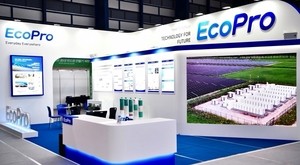
Ecopro showcases next-generation battery materials at Pohang expo
Pohang-based secondary battery materials ecosystem on display Regional economic contributions and community partnerships highlighted Ecopro announced Sunday that it is participating in the International Battery Expo 2026 Pohang, held at Manindan Gymnasium in Pohang from Friday through Dec. 3. At the expo, Ecopro is presenting the secondary battery materials ecosystem it has built in Pohang, its community partnership achievements, its global value chain, and its next-generation battery materials technology. Now in its second year, the International Battery Expo 2026 Pohang is a specialized secondary battery trade fair showcasing technology and future vision across the entire battery industry lifecycle — from materials and components to end-of-life battery recycling. Ecopro's exhibition booth is organized around seven themes: community co-growth with the Pohang region, its global value chain, strengths in ternary cathode materials, cathode material technology, a closed-loop system, a product roadmap, and its lithium business. Since 2017, the Ecopro Group has invested approximately 3.3 trillion won ($2.48 billion) in Pohang, building one of South Korea's leading secondary battery materials ecosystems linking precursor production, cathode materials and recycling. The company also highlighted its track record of growing alongside the local community. Ecopro has carried out a range of social contribution activities, including providing mother boxes for vulnerable families with newborns, distributing children's traffic-safety umbrellas, and developing community improvement projects. These efforts have earned the company recognition as a "community contribution enterprise" for seven consecutive years. In addition, Ecopro unveiled its global value chain, which runs from raw material procurement through production to recycling, spanning the BNSI nickel smelter in Indonesia, a cathode material factory in Debrecen, Hungary, and its domestic production bases. Ecopro also put a particular spotlight on its high-nickel ternary cathode materials, which have demonstrated competitiveness in global markets. "High-nickel cathode materials, with their high energy density, are expected to expand their application beyond electric vehicles into future industries such as humanoid robots, urban air mobility and aerospace," a company official said. The company also laid out its product development roadmap for capturing future markets. Building on the technological expertise accumulated in high-nickel materials, Ecopro introduced a product portfolio targeting the mid- to low-cost segment — including mid-nickel cathode materials, sodium-ion batteries and cathode materials for LFP batteries. The company also presented its solid-state electrolyte technology, a key material for all-solid-state batteries, as part of its strategy for next-generation battery readiness. Ecopro also took part in a conference running alongside the expo. Kwon Oh-seok, executive director of the investment management division at Ecopro Partners, delivered a presentation Friday on the role of corporate venture capital and open innovation, outlining strategies for fostering an innovation ecosystem in the battery industry and collaborating with startups. "As a company that grew up in Pohang, Ecopro feels a sense of mission to contribute to strengthening South Korea's battery industry competitiveness together with the local community," Choi Sang-woon, chief executive of Ecopro, said. "We will continue to enhance our global competitiveness through sustained investment and technological innovation, and do our utmost to revitalize the regional economy and create quality jobs." Meanwhile, Ecopro founder Lee Dong-chae, speaking at a ceremony marking the company's 28th anniversary held recently at its North Gyeongsang Province campus in Pohang, said the company must press ahead with technology development and cost competitiveness even amid a downturn in the battery market. Lee also expressed confidence in the growth potential of the ternary cathode materials market, forecasting rising demand for high-energy-density batteries from new industries including robotics and AI, in addition to electric vehicles. At the anniversary event, the company looked back on its growth journey and shared plans for securing technological competitiveness in response to shifts in the battery materials industry.
Nov. 15, 2026
MOST READ
- 1Malaysia's BE International brings 1,500-strong incentive tour to Korea, bypassing Turkey
- 2AI singer tops Melon chart for first time with 'Did You Become the Adult You Dreamed Of?'
- 3Jensen Huang's daughter took the photo of him embracing his alleged mistress
- 4Man beat live-in girlfriend 514 times over 3 hours, killing her; forensic expert says footage was too disturbing to watch
- 5Crosswalk at Cheonggyecheon 6-ga intersection opens after 20 years of resident demands
- 6'A concert is a ritual for the soul': Currentzis makes long-awaited Korea debut after six years
-
WORLD
US warns of punishment for anyone enabling Iran's Strait of Hormuz toll scheme
-
INDUSTRY
Toyota union puts productivity first; Hyundai Motor union demands bigger share of profits
-
FINANCE
National Growth Fund to invest $531M in FuriosaAI, which rebuffed Meta's $800M takeover bid
-
INDUSTRY
Korea Shipowners' Association holds amateur baduk tournament for Maritime Day