
- HOME
- INDUSTRY
-

Truck drivers seek access-route tips most as chuseok freight surge builds
Atlan Truck loading-tip database tops 98,000 entries This year's 53,149 registrations already exceed three-year cumulative total Access routes lead at 41.3%; waiting times follow As freight volumes surge ahead of the chuseok holiday, the most widely shared on-site information among truck drivers navigating logistics centers and factories is access routes and entry paths. Narrow driveways, whether reverse entry is required, and gate locations — details that maps alone cannot convey — have an outsized effect on actual driving efficiency. Mappers, a digital-map software company, said Thursday that an analysis of roughly 98,000 loading-and-unloading tips accumulated in its truck-dedicated navigation app Atlan Truck found that access-route and entry-path information accounted for the largest share of entries, at 41.3 percent of the total. The loading-and-unloading tip feature lets freight drivers register and share on-site details about a destination — including access routes, entrances, waiting times, and the exact loading or unloading spot. It is designed to let drivers check conditions at logistics centers, factories, and warehouses they have never visited before, cutting unnecessary detours and idle time. The active tip database currently holds about 98,000 entries covering more than 55,000 logistics centers, factories, warehouses, and retail facilities nationwide. Registration has accelerated sharply this year: the 53,149 tips logged from January through early September already exceed the 44,930 entries accumulated over the three full years from 2023 through 2025. After access routes and entry paths, the next most frequently shared categories were waiting and turnaround times, loading and unloading locations and methods, and parking and staging areas. Drivers most commonly looked up driveway width and gradient, whether reverse entry was needed, and the locations of main and rear gates. Information that directly affects efficiency after arrival — including how long loading and unloading takes, queue conditions, the exact work location, and parking availability — also accounted for a significant share of tips. Tip activity picks up further in the days before major holidays. In the week of weekdays immediately before last year's chuseok, daily average tip registrations ran 16 percent higher than on ordinary weekdays. Tip views are concentrated in the morning hours when freight work gets underway in earnest. Views between 7 a.m. and 10 a.m. accounted for 29 percent of the day's total, with 9 a.m. recording the single busiest hour. Tuesday through Thursday were the most active days of the week. By region, Gyeonggi Province — home to large clusters of logistics facilities and industrial complexes — generated the most tip registrations. In Hwaseong, access-route and parking information was shared most often; in Icheon, location corrections and navigation-guidance fixes dominated. Pyeongtaek and Changwon saw a higher proportion of tips on receiving hours and documentation procedures. The type of information sought also varied by vehicle size. Drivers of large trucks checked access, turning, and parking tips more frequently, while drivers of smaller trucks tended to look up on-site details for apartment complexes, retail stores, and small businesses. With deliveries of gift sets, fresh food, and everyday goods set to intensify ahead of chuseok, demand for on-site tips among drivers making multiple stops is expected to rise further. "The roughly 98,000 data points confirm that on-site details like access routes and waiting times — things a map simply cannot tell you — matter enormously to freight drivers," said Kim Myung-jun, chief executive of Mappers. "The more field experience accumulates, the fewer wrong turns drivers make even at a destination they have never visited. We will keep refining the loading-and-unloading tip feature accordingly."
Sept. 17, 2026
-
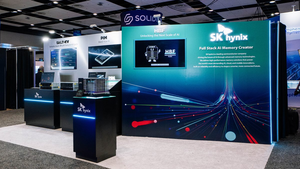
SK hynix unveils 'beyond HBM' technologies at US AI infrastructure summit
Participation in AI Infra Summit 2026 Limits of existing GPU-HBM architecture Expanding workload-specific memory solutions 'Proactive response to diverse AI-era demands' SK hynix unveiled a wave of next-generation technologies set to go beyond high-bandwidth memory at the AI Infra Summit 2026, citing growing limitations of the conventional GPU-HBM architecture as AI capabilities continue to advance. The chipmaker participated in the AI Infra Summit 2026, held Tuesday through Thursday in Santa Clara, California, presenting future AI memory technologies under the theme "New Spectrum." This year's event drew about 6,000 attendees — roughly double last year's turnout — and SK hynix doubled the size of its booth from the previous year. To address the expanding AI inference market, SK hynix pushed next-generation memory solutions including high-bandwidth flash (HBF), processing-in-memory (PIM) and SALT-KV, signaling a strategy to broaden its business beyond HBM into memory and storage solutions optimized for specific AI workloads. As the AI market rapidly shifts from large-scale training toward real-time inference and AI agents, competition in the memory industry is widening beyond simple bandwidth gains to encompass capacity, power efficiency and overall data-processing approaches. SK hynix placed particular emphasis on HBF, a solution built by stacking layers of NAND flash. As AI's paradigm shifts from training to inference, demand is growing for a new memory tier sitting between the high bandwidth of HBM and the large storage capacity of solid-state drives. HBF applies through-silicon via (TSV) technology — the same approach used in HBM — to deliver both the large capacity of conventional SSDs and high bandwidth at the same time. It is drawing attention as a key next-generation NAND solution poised to define the era of inference-driven agentic AI. SK hynix also demonstrated its PIM technology, displaying the "AiM" chip — a memory device with built-in processing capability — alongside the "AiMX" accelerator card, which houses multiple AiM chips, and a server equipped with AiMX cards. PIM embeds computing functions inside the memory itself to reduce data movement between the processor and memory, easing the bottleneck known as the memory wall while improving both computational performance and power efficiency. The company also introduced SALT-KV, a technology designed to tackle the surging KV cache storage demands that arise during AI inference. It segments KV cache by context unit, evaluates each segment's reuse value and storage cost, and distributes the data across HBM, DRAM and SSDs accordingly. The goal is to use limited high-performance memory more efficiently, cutting the overall cost and improving the performance of AI systems. SK hynix demonstrated SALT-KV in operation through a server equipped with an enterprise SSD. Im Eui-cheol, head of SK hynix's Solution AT division, shared the company's research and development progress in next-generation technologies in a presentation titled "Beyond One-Size-Fits-All: PIM, HBF and More for the New Spectrum of AI Serving." "As AI workloads diversify, the existing GPU-HBM architecture alone is becoming insufficient to meet new requirements," Im said. "We are preparing PIM, HBF and SALT-KV as new solutions spanning both hardware and software to match the evolving workload landscape." He added that HBF, combining high bandwidth and large capacity, can boost the efficiency of AI services that must handle long contexts, while PIM — which improves performance and efficiency for fast-decoding workloads in premium services — offers a strong alternative that can overcome existing limitations. "SALT-KV, which enhances processing efficiency by accounting for the characteristics and reusability of KV cache, also holds strong potential to drive the evolution of AI systems," he said. SK hynix said it would "continue strengthening its technological competitiveness to stay one step ahead in responding to the diverse demands of the AI era."
Sept. 17, 2026
-

HD Hyundai Electric ships Korea's first transformer, reactor to European offshore wind farm
Offshore substation departs Vung Tau for the Baltic Sea Transformer, reactor bound for Baltica 2 project Maritime gear held to higher reliability standards than land-based equipment Delivery milestone demonstrates global project execution capability "An offshore substation bound for the Baltic Sea — a new departure toward the European offshore wind market." HD Hyundai Electric has become the first South Korean power equipment maker to ship a large offshore substation to a European offshore wind farm. According to HD Hyundai Electric's official LinkedIn account, an offshore substation equipped with the company's 275kV-class transformer and shunt reactor left the PTSC M&C yard in Vung Tau, Vietnam, and is now en route to a site in Poland's Baltic Sea. It marks the first time a Korean power equipment company has delivered a transformer and shunt reactor aboard an offshore substation destined for a European offshore wind complex. Having entered the European offshore wind market, HD Hyundai Electric has now demonstrated its ability to manufacture and deliver core power equipment on a global project. According to the LinkedIn post, a sail-away ceremony was held Saturday at the PTSC yard in Vung Tau, Vietnam, attended by key representatives from Danish energy company Orsted, Semco Maritime and HD Hyundai Electric. The 275kV-class transformer and shunt reactor aboard the substation will be used in the Baltica 2 project, located roughly 40 kilometers off the Polish coast. Baltica 2 is a large-scale offshore wind development being jointly developed by Orsted and Polish state-owned power company PGE. An offshore substation is a critical facility that collects electricity generated by offshore wind turbines and transmits it to the onshore grid. It steps up the voltage to levels suitable for long-distance transmission and sends the power ashore via subsea cables. The transformer supplied for this project boosts wind-generated electricity to high voltage for long-distance transmission, while the shunt reactor reduces unwanted voltage fluctuations to ensure stable power delivery. As large-scale offshore wind farms multiply, the importance of power equipment capable of reliably feeding electricity into onshore grids continues to grow. Offshore wind power equipment must operate for extended periods in harsh marine environments — enduring salt, humidity, vibration and temperature swings. Once installed, access for maintenance is limited, making such equipment subject to higher reliability and quality standards than comparable land-based installations. HD Hyundai Electric said delivering its 275kV-class transformer and shunt reactor — capable of withstanding those operating conditions — further demonstrates its technological and product competitiveness in the offshore wind sector. As the first Korean power equipment company to reach the on-site delivery stage of a European offshore wind project, the company is expected to accelerate its push into global markets. "The Baltica 2 project is an important showcase of HD Hyundai Electric's technological capability and product competitiveness in the European offshore wind market, where high reliability is paramount," a company official said. "We will continue to strengthen our technological edge in offshore wind and clean energy."
Sept. 17, 2026
-

Telluride reclaims large SUV crown in US, surpassing Toyota and Honda
98,111 units sold Jan.–Aug., up 16.7% year on year Leads Toyota by 1,194 units; Honda trails by more than 10,000 Ford Explorer, GM Traverse next in line Palisade posts back-to-back monthly wins in July and August Hyundai Motor Group's US market share hits record 12.9% New hybrid and competitive pricing bolster sales The Kia Telluride has reasserted itself in the US large three-row SUV segment, overtaking its top Japanese rivals after falling behind both Toyota and Honda last year. The turnaround has sharpened a broader trend: Hyundai Motor and Kia are no longer just competing with Japanese brands — they are now trading blows with Detroit stalwarts Ford and Chevrolet for the segment lead. The Telluride sold 98,111 units in the United States from January through August, up 16.7 percent from the same period last year, according to industry data released Thursday. The Toyota Grand Highlander moved 96,917 units over the same stretch — an 8.5 percent year-on-year gain — but still trailed the Telluride by 1,194 vehicles. The Honda Pilot slipped 2.8 percent to 83,486 units, leaving it more than 10,000 units behind the Telluride. The three models have swapped positions repeatedly in recent years. The Telluride led in 2023, the Honda Pilot claimed the top spot in 2024, and last year the Toyota Grand Highlander finished first with 136,800 units sold. The Telluride's lead was not always assured this year. Through the first half, it had sold 73,602 units — 1,919 fewer than the Grand Highlander's 75,521. The Grand Highlander still held a narrow edge as late as the end of July, with 86,926 cumulative units, but August sales flipped the rankings in the Telluride's favor. Past Japanese rivals, Telluride eyes American heavyweights With its Japanese competition now behind it, the Telluride faces a stiffer challenge from American brands. The tallest hurdle is the Ford Explorer, which sold 165,630 units from January through August — up 14.7 percent year on year — to hold the top spot among individual models in the segment. The Chevrolet Traverse, sold under General Motors, is another rival the Telluride must overcome. The Traverse sold 81,417 units in the first half, outpacing the Telluride's 73,602 over the same period, with sales up 25.7 percent year on year. The Hyundai Palisade has also turned heads. It sold 88,355 units through August, up 2.7 percent from a year earlier. While it trails on a cumulative basis, the Palisade outsold the Telluride, the Honda Pilot and the Toyota Grand Highlander in both July and August — posting two consecutive months at the top of the major three-row SUV rankings. Buoyed by the strong performances of the Telluride and Palisade, Hyundai Motor Group's combined US market share reached a record 12.9 percent in August, up 0.7 percentage points from a year earlier. The group's share rose even as overall US auto sales fell 5.9 percent year on year that month. New Telluride earns strong reviews as hybrid joins the lineup Behind the Telluride's popularity is the second-generation, fully redesigned model that entered the US market earlier this year, drawing praise for its product competitiveness. Its most celebrated strength is interior quality. Car and Driver rated the Telluride's cabin materials and design as holding their own against luxury-brand three-row SUVs, while characterizing the Grand Highlander's interior as comparatively ordinary in both materials and design. The Telluride's exterior styling was also judged to be bolder and more distinctive. The model has also won praise for second- and third-row passenger space — a critical factor in family SUVs. While the two models were rated similarly for second-row room, reviewers found the Telluride's third row more comfortable for adults. Higher trims add heated third-row seats, a feature seen as targeting American consumers who frequently take long road trips. The Telluride also stands out for its advanced convenience features. Reviewers highlighted a built-in dashcam function, Netflix, YouTube and Disney+ streaming, and smart garage-door integration, while noting that the infotainment system remains relatively intuitive despite the breadth of features. Upper trims add a 29.6-inch panoramic display, a 14-speaker Meridian audio system and a digital key. The newly introduced hybrid variant has further lifted the model's profile. The new Telluride hybrid pairs a 2.5-liter turbocharged engine with an electric motor for a combined system output of 329 horsepower. Green Car Reports, a US publication focused on eco-friendly vehicles, said the Telluride hybrid "strikes a good middle ground — delivering fuel economy close to Toyota's conventional hybrid while offering performance and driving feel closer to a high-output trim." Price competitiveness adds to the appeal. The Telluride is priced roughly $3,000 below comparable trims from rivals. It is also assembled at a factory in Georgia, shielding it from the tariff burden that weighs on imported vehicles.
Sept. 17, 2026
-
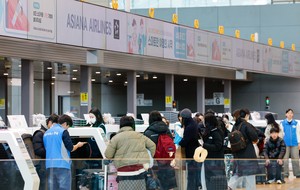
China routes reopen after 7 years, with Parata Air and Eastar Jet securing key slots
China passengers up 23% through August Shanghai, Beijing, Hangzhou slots draw fierce competition First traffic rights expansion in 7 years to strengthen LCC networks With this year's international aviation traffic rights distribution now complete, Parata Air and Eastar Jet have secured a large share of China route slots, accelerating their expansion of international networks. As tourism between South Korea and China surges on top of existing business demand, China routes have emerged as highly profitable, raising expectations that both carriers will see meaningful improvements to their bottom lines. According to the aviation industry, the most hotly contested route in the Ministry of Land, Infrastructure and Transport's traffic rights distribution held Wednesday was the Incheon–Shanghai route. More airlines applied for that slot than any other, with Incheon–Beijing and Incheon–Hangzhou following close behind. Southeast Asia fades as China rises — first traffic rights expansion in 7 years The rush to secure China's key routes reflects a sharp rise in passenger demand. According to Ministry of Land, Infrastructure and Transport aviation statistics, international passenger traffic reached 68.43 million from January through August this year, up 9.8 percent from the same period last year. China routes accounted for 13.61 million of those passengers — a 23 percent increase and the highest growth rate among all major country routes. Demand on China routes is expanding rapidly, driven not only by existing business travel but also by surging tourism between the two countries. Chinese demand for travel to South Korea has grown partly due to tensions between China and Japan, and transit traffic through South Korea is also on the rise. By contrast, Southeast Asian routes — long the bread-and-butter market for South Korean low-cost carriers — have been underperforming. Passenger numbers on Vietnam routes fell 5.1 percent year-on-year in the January–August period, while the Philippines and Thailand saw declines of 13.7 percent and 13.0 percent, respectively. The slowdown in Southeast Asia is one reason low-cost carriers are increasingly turning their attention to China. This round of traffic rights distribution was designed to expand supply on South Korea–China routes in line with the recent surge in demand. The two countries had earlier agreed through bilateral aviation talks to increase traffic rights for the first time in seven years, since before the COVID-19 pandemic in 2019. As a result, the Incheon–Shanghai route was expanded from 56 to 63 weekly frequencies, Incheon–Beijing from 38 to 52, and Incheon–Hangzhou from 10 to 14, opening the door to additional capacity on major China routes. Industry officials expect the distribution to reshape competition on China routes, as traffic rights restrictions had previously made it difficult for new carriers to break into the market. The Ministry of Land, Infrastructure and Transport said it allowed new airlines to enter major China routes in this round to promote competition and expand consumer choice. Parata secures 5 Incheon routes, Eastar 4 — 'profitability improvement expected' The standout carriers in this year's China route traffic rights competition were Parata Air and Eastar Jet. Parata Air led all airlines with five Incheon-origin China routes secured this year, followed by Eastar Jet with four. Parata Air had already obtained rights to fly from Incheon to Shenzhen, Chengdu and Chongqing in the April distribution, and this month added Shanghai and Hangzhou. The airline will be permitted to operate both the Shanghai and Hangzhou routes four times a week. It plans to launch its first China service with the Incheon–Shenzhen route in November. Parata Air said it plans to aggressively expand its China route strategy on the back of the newly secured rights. Shanghai is China's largest commercial city, offering strong demand from both business and leisure travelers. Hangzhou is a hub for the IT and e-commerce industries and home to tourist attractions including West Lake. The city's high-speed rail connections to the Yangtze River Delta — one of China's leading economic regions — are also seen as a key advantage. Eastar Jet also significantly expanded its China network. After securing rights to Xiamen and Hohhot in April, the airline this month added Beijing and Nanjing. By obtaining rights to fly to Beijing seven times a week on top of its existing Shanghai service, Eastar Jet now has routes connecting both of China's two largest cities. Eastar Jet currently operates five Greater China routes from Incheon — Shanghai, Zhengzhou, Yantai, Hohhot and Hong Kong. Foreign passengers on its Greater China routes surged 204 percent year-on-year, contributing to the airline's efforts to attract Chinese tourists to South Korea. The airline is also moving to expand its sales network in China. Eastar Jet has partnered with Fliggy, the travel platform of China's Alibaba Group, to drive demand from Chinese visitors to South Korea and boost regional tourism. Fliggy is a major Chinese online travel platform with about 500 million members. The two companies agreed to cooperate on expanding ticket sales from China to South Korea, running joint regional tourism promotions, and marketing Eastar Jet and South Korean travel content. Jeju Air received rights to fly Incheon–Beijing seven times a week, Incheon–Changsha four times a week, and Muan–Shanghai three times a week. Air Premia secured rights to operate the Incheon–Shanghai route three times a week. "Competition among airlines was fierce as a large number of key China routes were up for distribution," an aviation industry official said. "With low-cost carriers having posted widespread losses in the first half of the year due to high fuel costs and a weak won, they are expected to use China routes as a foundation for improving profitability."
Sept. 17, 2026
-

Samsung Electronics union feud turns legal as bonus dispute fuels 'union vs. union' war
Allegations over union dues and father-in-law vendor contracts swirl around chief Choi Seung-ho DS and DX unions near parity in membership, intensifying battle for bargaining dominance 'Non-union blacklist' case could cost Choi his job if convicted DX-centered Donghaeng union launches petition drive for harsh punishment Internal tensions within Samsung Electronics' largest labor union — the Samsung Group cross-company union's Samsung Electronics branch — have escalated beyond mudslinging into outright legal confrontation. A dispute over performance bonuses between the semiconductor (DS) and consumer electronics (DX) divisions has deepened, and a separate "union vs. union" conflict is now intensifying between the DS-centered cross-company union and the DX-centered Donghaeng union. Lee Song-i, the vice chairwoman who oversees accounting for the cross-company union, recently disclosed financial records and receipts related to Chairman Choi Seung-ho's use of union dues and said she plans to ask investigators to verify the facts, according to industry sources Thursday. Lee alleged that mileage and reward points accumulated through approximately 425.96 million won ($311,000) in card payments made by the union may have been credited to Choi personally rather than to the union. She said the first installment of 235.2 million won for two Risom Resort memberships was split across a corporate card and a Korean Air co-branded personal card, but that no records could be found showing the associated benefits were returned to the union. She also said receipts totaling 112.29 million won for union supplies purchased at Lotte department stores showed L.POINT reward credits accrued under the name "Choi *ho." Lee said she plans to file a formal complaint with investigators based on the documents she has made public. Earlier, Choi had already been embroiled in a conflict-of-interest controversy after it emerged that he had contracted with a company run by his father-in-law for roughly 370 million won worth of goods — including rally vests — during joint labor-action activities. Choi acknowledged the transactions but said the vendor was selected after comparing prices and delivery timelines from multiple suppliers, and denied that he or any relative received kickbacks, commissions or any other improper financial benefit. A civic group has since filed a police complaint against Choi on charges including breach of fiduciary duty and obstruction of business. Analysts say the controversy is also rooted in a power struggle within the cross-company union itself. The union's leadership suspects that Vice Chairwoman Lee and Gwangju chapter head Lee Won-il leaked details of the father-in-law contract to outside parties, and has decided to hold a no-confidence vote against both. Chairman Choi belongs to the DS division, while Vice Chairwoman Lee and chapter head Lee Won-il are from the DX side. The union leadership contends that the two sought to oust Choi in order to block a restructuring that would shift the organization's focus toward DS. The conflict has now spilled beyond the cross-company union's internal affairs into a broader inter-union dispute. The cross-company union has announced plans to restructure this month to limit membership to DS division employees. The union said the rift with the DX-centered Donghaeng union widened after Donghaeng broke away from the joint bargaining committee during this year's wage and collective agreement negotiations, demanding that performance bonuses be pooled and redistributed using company-wide resources. The cross-company union declared it would conduct separate wage negotiations with Donghaeng starting with the 2027 bargaining round. The Donghaeng union, which centers on DX division workers and now counts 30,916 members, has grown close in size to the cross-company union's 53,077 members, turning the rivalry into a contest for bargaining dominance as well. The emotional divide between the DS and DX unions is deepening. After inflammatory language targeting Choi and others appeared in a Donghaeng union chat channel, the cross-company union sent a formal letter demanding an official response and measures to prevent a recurrence. The Donghaeng union has also launched a campaign to collect petitions calling for harsh punishment of Choi, after prosecutors referred him to trial without detention on Sept. 4 on charges of compiling a "union blacklist" — a membership roster containing personal data on roughly 100,000 Samsung Electronics employees. Meanwhile, if Choi is convicted in the blacklist case, disciplinary dismissal is being discussed as a possible outcome. Samsung's compliance committee has also been closely monitoring the escalating inter-union conflict within Samsung Electronics. Committee Chairman Lee Chan-hee said Tuesday that "labor rights are an important principle that must be upheld not only in labor-management relations but also in relations between unions." Inside Samsung Electronics, there are growing concerns that if the inter-union conflict drags on ahead of next year's wage and collective bargaining negotiations, reaching an agreement could become significantly harder.
Sept. 17, 2026
-
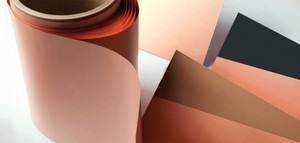
Doosan makes record W970b investment to expand CCL lines at home and in China
CCL, a key PCB material New production lines in South Korea and China Sequential operation from second half of 2028 First major investment since Thailand announcement in April Trillion-won-scale push to get ahead of AI data center demand President Yoo Seung-woo: 'Accelerate mid- to long-term growth' Doosan Corp. announced Thursday it will invest about 970 billion won ($709 million) to expand its copper-clad laminate (CCL) production facilities in South Korea and China — the largest such investment in the company's history, coming roughly five months after it announced a separate investment in Thailand in April. CCL is a core material used in printed circuit boards (PCBs) and is widely used in AI accelerators, network switches and optical modules installed in AI data centers. Doosan will spend about 420 billion won domestically to add a CCL production line for optical modules, and about 550 billion won to build a new factory in China for CCL used in AI accelerators and network switches. The investment will be deployed in stages over three years through 2028, with the new lines coming online sequentially in the second half of that year. The choice of production locations reflects the nature of each product and the urgency of demand. The domestic line will focus on optical-module CCL, where quality control and protection of core technology are paramount, drawing on specialized personnel. China was chosen for its concentration of global PCB manufacturers, which enables faster customer response and allows factories to be built quickly to meet rapidly shifting demand. The aggressive investment push is driven by surging CCL demand as global spending on AI data centers accelerates. Major technology companies have been announcing large-scale expansion plans in quick succession, pushing CCL order volumes into the trillion-won range — a scale previously unseen. Doosan's domestic production lines are already running above 100 percent capacity, and the company determined that expansion is necessary to keep pace with the flood of incoming orders. Through this investment, Doosan aims to cement its position as a supplier with both the technology and the production capacity to meet global demand. Its technical credentials are already established: high-end CCL for AI accelerators must meet stringent signal-loss specifications that only a handful of companies can satisfy, and Doosan has become a key supplier to leading global AI chipmakers in this segment. The company also supplies high-end CCL for optical modules, which convert electrical signals between servers and network equipment into optical signals. That technological edge is showing up in earnings. Doosan's Electronics Business Group, which oversees the CCL business, crossed the 1 trillion won sales threshold for the first time in 2024, then reached about 1.9 trillion won last year — an 86 percent increase from the prior year. "Global customers recognize the technological capabilities and supply capacity that Doosan has built up over many years," Doosan Corp. President Yoo Seung-woo said. "As the AI data center market grows and customer orders become larger in scale, we will stay one step ahead with proactive investment, deliver the volumes our customers need on time, live up to their trust, and accelerate our mid- to long-term growth."
Sept. 17, 2026
-

Korean refiners brace for supply disruption as Middle East crisis drags on
Crude secured for September–October; short-term supply stable Prolonged disruption could hit Middle East supply from December Shift to non-Middle East crude raises freight and procurement costs Domestic supply priority may squeeze export volumes Fixed refining margins point to improved third-quarter earnings South Korea's refining industry is on alert over potential crude supply disruptions stemming from the Middle East, with uncertainty growing after Saudi Arabia's East-West pipeline was shut down. While refiners say domestic petroleum product supplies face no immediate threat, a prolonged disruption could put export volumes and profitability at risk. Domestic refiners have secured a substantial portion of their crude import volumes through next month, industry officials said Thursday. The Ministry of Trade, Industry and Energy said at an industry review meeting Monday that crude secured for September and October stood at more than 90 percent of the same period last year. Because contracted and loaded cargoes are arriving in sequence, the near-term impact on supply is expected to be limited. The concern begins this winter. Since crude purchases are typically decided months in advance, refiners say they can manage supply through November with existing volumes — but the outlook beyond that depends on whether alternative crude can be secured. "About 80 to 90 percent of import volumes through November have been locked in, but if the situation drags on, serious concerns could emerge from December," an industry official said. Prolonged disruption would drive up freight and procurement costs The impact on individual refiners will vary depending on their reliance on Middle Eastern crude. Some companies source more than half their crude from non-Middle East suppliers — one refiner already procures over 50 percent of its crude outside the region, and another does not import Saudi crude on a monthly basis, limiting their direct exposure to the pipeline outage. However, a prolonged disruption would raise freight and procurement costs as refiners shift to alternatives such as North American crude. Crude from North America takes about 40 days to reach South Korea — roughly twice the transit time for Middle Eastern shipments, which typically ranges from 20 to 25 days. The industry believes domestic supply can be managed through a combination of alternative crude procurement and the government's strategic reserve swap program. The government resumed its reserve swap scheme on Aug. 24, under which refiners can borrow from state stockpiles in advance and repay the volumes once their actual crude shipments arrive. One official described the mechanism as "a safety valve that can help close supply gaps." However, if crude supplies tighten, refiners would need to prioritize domestic gasoline and diesel supply, potentially leaving less crude available for export. Given the different pricing structures for domestic and export sales, a reduction in crude availability could affect not only production but also export earnings and overall profitability. 'Maintaining export volumes and margins is the key challenge' Domestic petroleum product prices are subject to a price ceiling, making it difficult for refiners to fully pass on rising international crude costs to consumers. Export products, by contrast, are priced on international markets. With refining margins — the spread between crude prices and refined product prices — currently elevated, refiners can capture relatively higher margins through exports. A drop in crude supply that reduces output would therefore shrink those profit opportunities. If the disruption proves short-lived, refiners can sustain domestic supply through reserve swaps and alternative procurement. But a prolonged crisis would change the calculus. "The challenge is how to keep domestic supply stable while at the same time maintaining export volumes and profitability," one industry official said. Meanwhile, strong refining margins and rising oil prices are expected to lift third-quarter earnings above second-quarter levels, as higher crude prices boost the value of existing inventories and generate inventory-related gains. According to data compiled by Korea National Oil Corp.'s Petronet, the average price of Brent crude in September stood at $100.4 per barrel, while West Texas Intermediate averaged $96.3. Wednesday's closing futures prices for both Brent and WTI reached their highest levels in about four months, since May 19. However, this is largely an accounting effect that could reverse into inventory valuation losses if oil prices fall again. The fourth quarter carries significant uncertainty: a price decline could trigger such losses, and a shift from Middle Eastern to non-Middle Eastern crude — at higher purchase prices and freight costs — could weigh on profitability.
Sept. 17, 2026
-
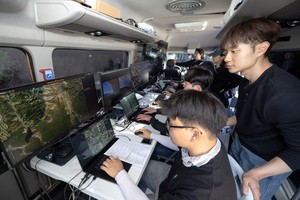
Korean Air completes swarm flight, strike demo with homegrown AI drones
AI-narrated briefing guides live demonstration 'Integrated battlefield management system proves its worth' Korean Air said Thursday it had successfully completed a demonstration of AI-based unmanned aerial vehicle swarm flight technology developed entirely in-house. The airline took part in the 2026 Defense Drone Technology Exhibition, hosted by the Ministry of National Defense on Wednesday at Seungjin Training Ground in Pocheon, Gyeonggi Province. The demonstration featured swarm flight and swarm strike capabilities using autonomous swarm-control technology, with 22 drones flying simultaneously without collision while completing their assigned missions. Korean Air was the only company at the event to successfully demonstrate AI drone technology developed independently in South Korea. Two lead drones carried out reconnaissance missions, using AI-based real-time automatic target recognition technology to detect threats and identify targets. Ten other drones performed high-maneuverability swarm flight to disrupt and deceive enemy air defenses. The remaining 10 drones demonstrated simultaneous swarm strike capability, diving vertically onto targets identified by the advance unit and striking with precision. A distinctive feature of the demonstration was an AI system that delivered live mission briefings in real time. Narrated updates such as "Position confirmed. Switching to target identification phase" and "Precision strike mission completed successfully" were broadcast in an AI voice, drawing a strong response from the audience. The AI briefing ran on an AI-based integrated monitoring system developed by Korean Air. Rather than playing back pre-scripted audio, the system tracks mission status in real time and relays it as it unfolds. It was designed as a field-optimized solution capable of gathering drone status and weather data in response to user queries. The autonomous swarm control, simultaneous swarm strike, and AI-based integrated monitoring capabilities on display are all operated through an integrated battlefield management system developed independently by Korean Air. AI-driven drone technology is also expected to improve the efficiency of military personnel deployment. The demonstration showed that where one operator once controlled a single drone, AI now enables one person to manage multiple unmanned vehicles simultaneously. "This is a successful case of drones completing missions autonomously by combining AI with unmanned vehicle development and flight-control technology we have built up over decades," a Korean Air official said. "We will contribute to strengthening South Korea's drone technology capabilities with our independently developed technology and lead the domestic drone industry." Meanwhile, Korean Air has been pursuing aggressive investment to expand its fleet and sharpen its passenger service and aviation competitiveness, most recently finalizing a large-scale purchase agreement for 103 aircraft from Boeing. Including engine purchases and long-term maintenance contracts, the total deal is valued at $44.8 billion.
Sept. 17, 2026
-

KG Steel wins KS D 3034 certification for all color steel sheet lines at Dangjin, Incheon factories
From base material to finished coated product Quality management system now KS-certified Supply reliability and credibility strengthened KG Steel announced Thursday that it obtained the national standard certification KS D 3034 on Friday for "paint-coated hot-dip zinc-aluminum-magnesium alloy-plated steel sheets and strips" produced at its Dangjin and Incheon factories. With the certification, the company has established a KS-based quality management system covering not only the ternary alloy-plated base material but also the finished color steel sheet products coated from it. KS D 3034 is a national standard governing the quality of color steel sheets that use a ternary alloy-plated steel sheet — composed of zinc (Zn), aluminum (Al) and magnesium (Mg) — as the base material and have a paint coating applied to the surface. Previously, a certification standard (KS D 3030) existed for the ternary alloy-plated base material, but no separate standard covered the finished color steel sheet products made from it. The absence of such a standard made objective quality comparisons between products difficult, raising concerns that low-cost imports of insufficiently verified quality could reach construction sites through retail channels. A revision to KS D 3034 made in June added country of origin to product labeling requirements, tightening product identification and retail management standards. The revision also specified that testing for hexavalent chromium — a hazardous substance in paint coatings — must be conducted on the actual finished product, enhancing the practical effectiveness of quality control. KG Steel obtained KS certification for all color steel sheet production lines at both the Dangjin and Incheon factories. Because certified products can be manufactured at either facility, the company has built a dual-production system that ensures stable supply even when equipment maintenance or production schedule changes occur at one factory. In addition, drawing on an integrated production system spanning from the ternary alloy-plated base material through to the finished coated color steel sheet, the company plans to manage the plating quality of the base material and the surface quality of the finished product in tandem. It also plans to respond swiftly to product development tailored to customers' usage environments and performance requirements. KG Steel has steadily strengthened its product competitiveness in the architectural interior and exterior materials segment. The company applied its premium color steel sheet brand X-TONE to the exterior of Ganjeolru, a visitor center at Ganjeolgot in Ulsan, and developed a three-coating pre-coated metal non-combustible color steel sheet for use as interior material in public facilities — such as subway stations — that must meet stringent non-combustibility standards. "This certification has officially and objectively validated our quality and management capabilities in ternary color steel sheets," a company official said. "We will continue to build customer trust and lead the high-value-added color steel sheet market, backed by our integrated production system from base material to finished product and the supply capabilities of our Dangjin and Incheon factories." Meanwhile, KG Steel posted consolidated revenue of 896.4 billion won ($655 million) and operating profit of 43.1 billion won in the second quarter of this year, up 11.34 percent and 16.86 percent, respectively, from the same period a year earlier.
Sept. 17, 2026
-
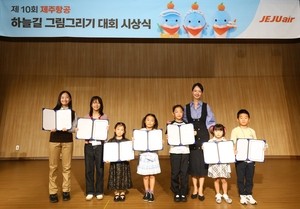
Jejuair holds 10th 'Sky Road Drawing' contest awards ceremony
Kim Ye-ju wins gold with 'Dream Above the Clouds' Winners receive airline tickets and other prizes Jejuair held the awards ceremony for its 10th Sky Road Drawing Contest on Wednesday at the National Aviation Museum in Gangseo-gu, Seoul, the airline announced Thursday. The contest ran from Aug. 1 to Aug. 15. Now in its 10th year, the Sky Road Drawing Contest is one of Jejuair's flagship customer engagement programs. This year's gold prize went to Kim Ye-ju for her work "Dream Above the Clouds." This year's theme was "My Dearest Friend Drawn Together with Jejuair." The contest was held aboard domestic routes connecting Gimpo, Busan, Gwangju, Cheongju, Daegu and Incheon to Jeju; international routes from Incheon to Macau, Da Nang, Nha Trang, Phu Quoc, Bohol, Cebu and Saipan; and the Busan–Bohol international route. A total of 1,743 entries were submitted during the contest period. Jejuair cabin crew members judged the works, selecting 29 winners in all — one gold, three silver, five bronze and 20 honorable mentions. Gold winner Kim received a certificate along with four round-trip international airline tickets and merchandise including a pencil case and keyring featuring her artwork. The three silver winners each received two round-trip international tickets and merchandise, while the five bronze winners each received two round-trip domestic tickets and merchandise. Children who received honorable mentions were given Jejuair x Sanrio Characters model airplanes. The gold, silver and bronze winning works will be featured in Jejuair's fourth-quarter in-flight cafe booklet. The gold-winning piece will also be applied to the exterior design of Jejuair's ramp buses operating at Jeju International Airport, where it will be on display for passengers through Nov. 30. The Sky Road Drawing Contest has been held consistently since 2017 for passengers between the ages of 5 and 13, with the aim of creating special aviation travel memories for families. "Through Jejuair's own in-flight specialty services that customers can directly participate in and experience, we are offering a unique travel experience," a Jejuair official said. "We will continue to introduce a variety of services to add more enjoyment to our customers' travels." Meanwhile, Jejuair plans to relocate to its own standalone headquarters in Gangseo-gu, Seoul, in the first half of next year. Since its founding in 2005, Jejuair has operated its Seoul office out of a facility belonging to Korea Airports Corporation at Gimpo International Airport. The move will mark the first time since the airline's founding that it will have a building of its own.
Sept. 17, 2026
-
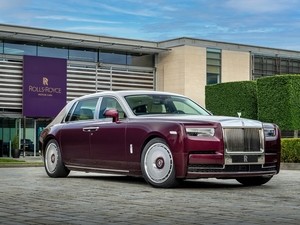
Rolls-Royce unveils bespoke Phantom Hummingbird with first-ever abalone shell marquetry
One-of-a-kind commission inspired by the hummingbird Abalone shell captures the iridescent sheen of the bird's plumage Rolls-Royce Motor Cars unveiled the Phantom Hummingbird — a one-of-a-kind bespoke commission inspired by the delicate beauty of the natural world — on Tuesday (local time), the company announced Thursday. The Phantom Hummingbird was commissioned by a customer as a tribute to his wife. Based on the Rolls-Royce Phantom Extended, it was conceived and created through the brand's Private Office in Dubai. The hummingbird — a symbol of joy, resilience and the ability to find beauty in every moment — served as the creative muse. To capture the bird's intricate natural beauty, the marque applied abalone shell marquetry for the first time in its history. Abalone shell is prized for its iridescent luster, with the nacre on the inner surface interacting with light to produce a distinctive teal-tinged radiance. Rolls-Royce combined this quality with mother-of-pearl to faithfully recreate the prismatic shimmer of hummingbird feathers — a microstructure that disperses and reflects light like a prism, shifting color depending on the viewing angle. The marquetry adorns several surfaces throughout the interior. The rear picnic tables feature a design depicting a hummingbird in flight, each bird composed of 53 individual pieces of abalone shell and mother-of-pearl — 18 of them in the wings alone. The waterfall panel between the rear seats carries a botanical motif rendered in the same materials, assembled from 84 individual pieces. Because abalone shell is thin and fragile, working with it demands exceptional precision. Taking into account the material's unique properties, Rolls-Royce bespoke designers, engineers and craftspeople spent more than nine months developing a technique to cut, finish and seat each piece accurately onto the veneer, refining the process through six rounds of trials and revisions. In the final production stage, each piece of mother-of-pearl and abalone shell was cut 0.06 millimeters larger than its target size to account for tolerances introduced during laser cutting, then hand-finished by artisans along the edges so that the seams between adjoining pieces are invisible. The hummingbird wings — where multiple pieces interlock with particular intricacy — were crafted entirely by hand by skilled artisans. Completing the three panels, comprising two picnic tables and the waterfall panel, required a total of 45 hours. The interior materials and colors were carefully chosen to complement the abalone shell marquetry. All three marquetry panels use ash burr veneer as a background, while the picnic table motifs incorporate silver birch — a species distinguished by its silvery bark — to add a layer of delicate detail. On the exterior, the lower body is finished in Wildberry and the upper in White Sands, creating a refined two-tone contrast. A White Sands coachline, hand-painted by an artisan along the boundary between the two colors, traces the car's elegant flanks, and a hummingbird motif in flight runs above it — extending the interior's design theme seamlessly to the outside. "Nature has long been a rich source of inspiration for Rolls-Royce Bespoke, and our customers continually inspire us to interpret it in new and unexpected ways," said Phil Fabre de la Grange, head of Rolls-Royce Motor Cars Bespoke. "The Phantom Hummingbird presented our designers and craftspeople with a creative and technical challenge through the introduction of abalone shell as a new material, and the result is a work that elegantly captures the captivating beauty unique to the hummingbird," he added. Meanwhile, Rolls-Royce Motor Cars is also pressing ahead with electrification. In June, the brand unveiled the Spectre Series II and the Black Badge Spectre Series II — evolved versions of its first-ever all-electric super coupe. The Spectre Series II employs redesigned battery cell technology to extend its WLTP-rated range by up to 18 percent over its predecessor, reaching 628 kilometers on a single charge, while charging time has been cut by up to 14 percent. The drivetrain has also been recalibrated for sharper responsiveness and control. The high-performance Black Badge Spectre Series II delivers a maximum output of 500 kilowatts in Infinity mode and a peak torque of 1,100 Newton-meters in Spirited mode.
Sept. 17, 2026
-
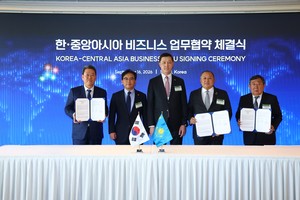
Hyundai Motor Group signs deal to pursue business opportunities in Kazakhstan's Alatau City new town project
Kazakhstan's largest new town project Cooperation to span smart city, mobility and energy Hyundai Motor Group announced Thursday that it will partner with local companies to identify business opportunities in Alatau City, Kazakhstan's largest new town development project. The group signed agreements with Kazakh private investment firm Caspian Group and financial and investment company United Group Alatau on Wednesday at the inaugural Korea-Central Asia Business Summit to advance the Alatau City project. The signing ceremony was attended by Seo Gang-hyeon, president of Hyundai Motor Group's planning and coordination division; Choi Yu-ri, chairman of Caspian Group; and Vyacheslav Kim, chairman of United Group Alatau, who also serves as board chairman of financial firms Alatau City Bank and Kaspi Group. The Alatau City project is Kazakhstan's largest new town development, covering 880 square kilometers north of Almaty, the country's largest city. It has been designated a special economic zone and declared a national project by presidential decree. Caspian Group is leading urban development and local execution for the project, which is being carried out in combination with United Group Alatau's financial and digital ecosystem. Through the agreement, Hyundai Motor Group aims to establish Kazakhstan as a hub for physical AI-based future city projects in Central Asia, and will work with local partners to explore smart city business opportunities in Alatau City and verify their commercial viability. The group plans to first examine business opportunities tied to urban development and operations in Alatau City's gateway zone — a key area linking Alatau City and Almaty. It will also conduct a comprehensive review of potential cooperation in mobility and energy and digital sectors, with feasibility studies to gradually define the specific scope and terms of participation. "Kazakhstan is an important market where Hyundai Motor Group has built a long-standing business foundation, and through this partnership we will seek new business opportunities grounded in the actual needs of customers and the city," a Hyundai Motor Group official said. "We will work to make Alatau City a model for demonstrating future urban services and new mobility business models, after thorough verification of commercial viability." Hyundai Motor also provided official protocol vehicles for delegations attending the Korea-Central Asia Summit, held Wednesday. The inaugural Korea-Central Asia Summit was the only multilateral summit held in South Korea this year, bringing together the leaders of South Korea and five Central Asian nations to discuss cooperation across a range of areas including the economy, diplomacy and trade.
Sept. 17, 2026
-
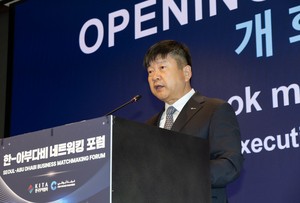
KITA hosts Korea-Abu Dhabi networking forum to explore cooperation in key sectors
Abu Dhabi Chamber of Commerce business delegation visits Korea About 90 representatives from companies and institutions on both sides gather The Korea International Trade Association (KITA) co-hosted the Korea-Abu Dhabi Networking Forum with the Abu Dhabi Chamber of Commerce on Thursday at Trade Tower in Samsung-dong, Gangnam-gu, Seoul. The forum was organized on the occasion of an Abu Dhabi Chamber of Commerce business delegation's visit to Korea, with the aim of providing Korean exporters with information on entering the local market and creating networking opportunities with Abu Dhabi-based companies. About 90 people attended, including KITA Executive Vice President Jang Seok-min and Ali Al Marzouqi, secretary-general of the Abu Dhabi Chamber of Commerce, along with representatives from companies and related institutions on both sides. In his opening remarks, Jang said that with the Korea-UAE Comprehensive Economic Partnership Agreement having taken effect last May, the institutional groundwork for new cooperation is now in place. "It is time to build on that foundation and accumulate concrete results one by one," he said. "I hope the connections formed between companies at this forum will translate into real business outcomes — export contracts, investment and more — and ultimately stand as a new success story in economic cooperation between our two sides." Al Marzouqi, in his welcoming address, described Korea as "an important cooperation partner with strong competitiveness in advanced technology and manufacturing, including AI, defense, mobility, and biotech and healthcare." He added that Abu Dhabi is a market open to Korean companies across a wide range of sectors, and expressed hope that the forum would help broaden the scope of bilateral cooperation. A highlight of the opening ceremony was the signing of an MOU between Jaseng Medical Academy and the Emirates International Hospital Group (EIHG) to establish a strategic partnership aimed at globalizing Korean traditional medicine. Jaseng Medical Academy Director Yoon Young-seok and EIHG CEO Linus Patrick Obed said they would use the agreement as a springboard to identify specific joint projects, including improving clinical outcomes and optimizing medical costs. An expert presentation session on promising areas of Korea-Abu Dhabi economic cooperation followed. Bing Hyeon-ji, a researcher at the Korea Institute for Industrial Economics and Trade, said that rising geopolitical risks are making it necessary to shift the focus of bilateral cooperation away from large-scale projects such as nuclear power plants and toward strengthening supply chain and industrial resilience. She added that in manufacturing particularly, the two countries should develop long-term industrial partnerships centered on areas where Korea's competitiveness aligns with UAE demand. After the forum, B2B consultations were held to facilitate concrete business discussions among participating companies. Nine Abu Dhabi firms and 31 Korean companies held a total of 57 one-on-one meetings in promising sectors — energy, robotics, healthcare and consumer goods — exploring specific avenues for cooperation, including market entry and investment possibilities. Meanwhile, KITA held the first KITA Innovation Forum — themed "Industry-by-Industry Innovation Trends from Global Companies" — on Wednesday at COEX Startup Branch. The event was designed to help Korea's trade industry gain insight into innovation trends across major sectors and develop business strategies amid a rapidly changing global industrial environment. About 150 representatives from export companies attended.
Sept. 17, 2026
-
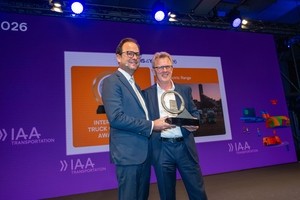
Volvo Trucks' electric lineup named '2027 International Truck of the Year'
Volvo Trucks wins the award for the 8th time Electric lineup praised for wide-ranging performance improvements Volvo Trucks announced Thursday that its electric truck lineup has been named the 2027 International Truck of the Year (IToY). The International Truck of the Year award was established in 1977 by a jury of 24 commercial vehicle journalists from major truck publications across Europe, and selects a winning model each year. This year's award covers the Volvo FH, FM and FMX Electric and the FH Aero Electric, which offer a range of up to 700 kilometers. The models extend range and payload capacity while cutting charging times compared with their predecessors, making them suitable for demanding regional and long-haul transport as well as urban logistics, construction and specialized operations. The IToY jury praised Volvo Trucks for advancing its electric truck portfolio broadly rather than focusing on a single model or application. Particular recognition went to the expanded range, diverse cab and chassis configurations, and the ability to combine multiple solutions to meet the needs of a wide variety of transport tasks. IToY Jury Chairman Florian Engel said the award "reflects the significant progress Volvo Trucks has made in battery-electric heavy-duty trucks," adding that the new electric lineup shows "how battery-electric heavy transport is rapidly evolving from individual use cases into a comprehensive transport solution." Volvo Trucks President Roger Alm said he was pleased to see the company's electric solutions recognized again. "This award demonstrates that Volvo Trucks is a trusted industry leader in electrification, and our new electric truck lineup means more transport operators can now choose emissions-free transport," he said. Meanwhile, some 7,000 Volvo electric trucks operating worldwide since 2019 have logged a cumulative 500 million kilometers. More than 2,000 customers in over 50 countries currently use Volvo electric trucks in their day-to-day transport operations. Volvo Trucks also offers a broad lineup of eight electric truck models designed to handle a wide range of transport tasks.
Sept. 17, 2026
-

Volvo Korea tops European brand CSI rankings for 7th consecutive year
'2026 Automotive Planning Survey' after-sales service satisfaction Score rises 5 points from 853 to 858 year on year Volvo Car Korea has topped the European brand rankings in the after-sales customer satisfaction index for seven consecutive years in the "2026 Automotive Planning Survey" conducted by research firm Consumer Insight, the company announced Thursday. In this year's survey, Volvo Car Korea scored 858 points in the after-sales service satisfaction category, up 5 points from 853 the previous year. The score significantly outpaced the import vehicle average of 816 points and the industry average of 808 points. The result extends the automaker's streak as the top-ranked European brand in the category every year since 2020. The company attributed the achievement to its "human-centered" philosophy and sustained investment in expanding customer touchpoints and strengthening its service network. Volvo Car Korea said it has pursued a broad range of efforts — including expanding service centers, training specialist staff and tightening service quality controls — to deliver a premium Swedish ownership experience to its customers. "Topping the European brand service satisfaction rankings for seven consecutive years in the fiercely competitive import vehicle market is a result of every employee and dealer network partner listening closely to our customers and working together to provide genuinely attentive service," said Lee Yun-mo, president of Volvo Car Korea. He added, "We will continue to invest and spare no effort in improving service quality so that customers feel consistent satisfaction and pride throughout every journey they take with Volvo." Meanwhile, Volvo Car Korea recently held its "2026 Paint Skills Competition" at a paint training center in Eumseong-gun, North Chungcheong Province, selecting three finalists as certified paint specialists — one of several ongoing initiatives aimed at improving customer service quality.
Sept. 17, 2026
-
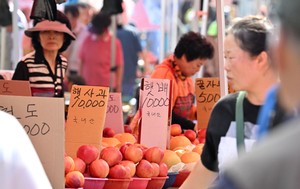
8 in 10 firms to take 4-day Chuseok break as bonus payments dip
KEF survey of 601 firms: 14.2% to take 5 or more days off 45.2% say Chuseok business conditions worse than last year, but an improvement from 2025 About 8 in 10 companies taking time off for this year's Chuseok holiday will give employees four days off, while the share of firms paying Chuseok bonuses has edged down from last year and nearly half say business conditions have worsened, according to a survey by the Korea Enterprises Federation. The Korea Enterprises Federation released the results of its "2026 Chuseok Holiday Survey" Thursday, covering 601 companies nationwide with five or more employees. According to the survey, 97.0 percent of respondents said they would observe a Chuseok holiday break this year, with 76.5 percent of those planning four days off. This year's Chuseok public holidays run from Sept. 24 through Sept. 26, with the following Sept. 27, extending the block to a four-day consecutive break. Among companies observing a Chuseok break, 14.2 percent said they would take five or more days off — 9.1 percent for five days and 5.1 percent for six or more. By contrast, 9.3 percent said they would take three days or fewer. Among companies taking three days or fewer, the most common reason — cited by 46.0 percent — was that workloads were not particularly heavy but work was unavoidable due to delivery deadlines. Another 14.0 percent said they had too much work to take more time off. For companies taking five or more days, the leading reason was mandatory leave under collective agreements or employment rules, cited by 41.7 percent. That was followed by providing employee convenience at 19.4 percent, reducing costs such as annual leave allowances at 16.7 percent, and adjusting output due to slack demand at 8.3 percent. Some 61.0 percent of companies said they planned to pay a Chuseok bonus this year, down 2.0 percentage points from 63.0 percent last year. By company size, 66.7 percent of firms with 300 or more employees said they would pay a Chuseok bonus, compared with 60.3 percent of firms with fewer than 300 employees. However, the share paying bonuses fell from the previous year in both groups — from 68.1 percent to 66.7 percent among larger firms, and from 62.3 percent to 60.3 percent among smaller ones. Among companies paying bonuses, 65.3 percent said they would do so through regular scheduled bonuses only, while 30.8 percent said they would pay a separate one-time bonus only, and 3.9 percent said they would pay both. The share paying through regular scheduled bonuses was higher among firms with 300 or more employees at 95.7 percent, compared with 65.3 percent for smaller firms. Conversely, the share paying a separate one-time bonus was higher among smaller firms at 37.9 percent, versus 13.0 percent for larger firms. Among companies paying a separate Chuseok bonus, 85.4 percent said the amount would be similar to last year. Some 10.6 percent said they would pay more than last year, while 4.1 percent said they would pay less. Business sentiment around Chuseok remains subdued. Some 45.2 percent of companies said conditions this Chuseok were worse than last year, roughly on par with the 45.7 percent who said conditions were similar. Only 9.1 percent said conditions had improved. Smaller firms were more pessimistic: 47.2 percent of companies with fewer than 300 employees said conditions had worsened, compared with 29.4 percent of larger firms. Still, the share of companies reporting deteriorating conditions fell from last year, when 56.9 percent said Chuseok business conditions had worsened — 11.7 percentage points higher than this year's 45.2 percent. The improvement was particularly pronounced among larger firms, where the share reporting worsening conditions dropped 19.9 percentage points, from 49.3 percent last year to 29.4 percent this year. Smaller firms also saw a decline, from 57.9 percent to 47.2 percent over the same period. The Korea Enterprises Federation attributed the improved sentiment in part to a higher economic growth rate outlook for this year compared with last year.
Sept. 17, 2026
-

Samsung Electronics to supply AI home appliances, B2B building management solutions to Philippine mixed-use complex
MOU signed with DH Plus Samsung joins premium complex development project in Cebu AI appliances and SmartThings to power customized AI homes Connected, integrated control platform to cover retail, hotel and school facilities Samsung Electronics will supply AI home appliances and integrated B2B building management solutions to a mixed-use complex development project in Cebu, the Philippines. The company signed an MOU Thursday with DH Plus, a real estate developer specializing in high-end residential, hotel and resort projects in South Korea and abroad. Under the agreement, Samsung Electronics will provide AI home appliances along with SmartThings Pro and b.IoT — its B2B integrated building management solutions — for the Grantz Forest Park development project in Cebu. Grantz Forest Park is a premium mixed-use complex built around advanced AI of Things (AIoT) technology. The project, slated for completion by 2030, will develop three residential towers, one hotel building and private villas across a site of about 66,000 square meters. The complex will also include commercial facilities offering K-beauty and K-food experiences, a membership-based Grantz Club and an international school. Samsung Electronics plans to build customized AI homes in the complex's residential units by linking AI appliances with SmartThings, and to support overall complex operations by deploying SmartThings Pro, its B2B connected and integrated control platform. The residences and hotel will be equipped with a range of Samsung AI appliances, including TVs, air conditioners, refrigerators and washing machines. Residents and hotel guests can access the full AI home experience with a single SmartThings login. Facility managers will be able to check equipment status remotely through SmartThings Pro, enabling fast and efficient operations while minimizing on-site visits when problems arise. Samsung Electronics will also deploy b.IoT, its integrated building solution, to manage shared spaces such as community facilities and swimming pools, as well as complex infrastructure including hot water and boiler systems. b.IoT integrates control and management of HVAC, lighting and power systems, and uses energy algorithms to improve building energy efficiency. Linked with SmartThings Pro, it supports systematic complex operations by analyzing per-unit power consumption and utility costs. The solution will also be applied to the commercial facilities, hotel and international school to improve operational and management efficiency. Digital twin technology that renders actual buildings in 3D will enable monitoring of key equipment status and predictive maintenance scheduling, while an AI agent will provide integrated control of HVAC, lighting, power and security systems. "This collaboration is a meaningful case of introducing AIoT-based customized integrated management solutions that span both residential and commercial spaces," said Hwang Tae-hwan, executive vice president and head of Samsung Electronics' B2B Integrated Offering Center. "We will use this as a springboard to actively pursue mixed-use complex development projects using B2B integrated management solutions in the Southeast Asian market."
Sept. 17, 2026
-

Auto Inside wins used-car platform customer satisfaction award for 2nd consecutive year
Top in used-car platform category for 2 consecutive years 205-point inspection for accident-free vehicles under 8 years old and 100,000 km 6-month or 10,000 km free warranty after purchase Online buyers get home delivery and 7-day refund policy Auto Inside, the company-owned certified used-car platform of AutoHands, has been named No. 1 in the used-car platform category of the 2026 Korea Customer Satisfaction Index for the second consecutive year, touting its vehicle inspection, after-sale warranty and online purchase refund services. Auto Inside announced Thursday that it had won the used-car platform category of the Korea Customer Satisfaction Index, which evaluates brand preference, satisfaction and expertise based on consumer surveys. This year's assessment covered brand strategy, customer satisfaction scores and customer loyalty. Unlike platforms that broker vehicles from third-party sellers, Auto Inside purchases used cars directly, inspects them and sells them through a company-owned model. Its certified used-car lineup covers accident-free vehicles no more than eight years old and with fewer than 100,000 kilometers on the odometer. Each vehicle undergoes a 205-point inspection, and only those that pass are listed for sale — with full service history and inspection records provided to buyers. Starting this year, the company has also strengthened interior upkeep alongside mechanical checks. Since April, it has applied Cesco's vehicle care service during the reconditioning process, carrying out interior sterilization and odor removal on every vehicle. A warranty program is also in place to ease repair costs that may arise after purchase. Buyers of certified used cars receive a free warranty covering six months or 10,000 kilometers from the date of purchase, whichever comes first. Online purchases are available as well. Through its home delivery service, Auto Inside ships a vehicle directly to a customer's preferred location without requiring a showroom visit. Customers who use the service are eligible for a seven-day refund, giving them time to drive the car before committing to the purchase. The company also maintains a structure in which vehicles at its nationwide company-owned stores are inspected and managed on-site before going on sale, with consumables such as batteries and tires checked as part of the reconditioning process. "This award carries special meaning because it reflects a direct evaluation by our customers," AutoHands Chief Executive Kim Sung-jun said. "We will continue to raise vehicle quality and service competitiveness to live up to that trust, and to deliver a differentiated used-car buying experience." Meanwhile, parent company AutoHands is also pursuing a capital market listing as it expands its business. It applied to the Korea Exchange for a Kosdaq preliminary listing review in May. AutoHands posted consolidated sales of 259.07 billion won ($189 million) and operating profit of 7.73 billion won last year. Auto Inside is also running a chuseok promotion for used-car buyers through Oct. 1. The campaign includes a sweepstakes for an Avante (CN7) used car, discounts on select vehicles and a consultation event for showroom visitors.
Sept. 17, 2026
-
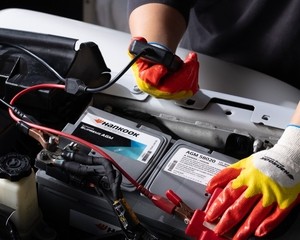
Hankook & Co. warns holiday traffic jams can drain your car battery
Long-distance driving and congestion increase strain on electrical systems Sluggish starts and flickering headlights are warning signs Battery specs vary by model year and ISG system Hankook & Co. expands high-value AGM product lineup With the Chuseok holiday driving season approaching, motorists should check not only tire pressure and engine oil but also their car battery before hitting the road. The longer traffic jams stretch on the way to and from hometowns, the more time air conditioners, navigation systems and other electrical devices stay on — putting added strain on the battery. According to Hankook & Co., drivers can get a fairly quick read on battery health simply by starting the engine. If the car takes longer than usual to start, or the starter motor sounds weak, the battery may be losing capacity. Headlights are another indicator. If they appear dimmer or less steady than before, it is worth having not just the battery but the vehicle's entire electrical system inspected. Battery life is not determined by age alone. The rate of performance decline varies depending on mileage, driving conditions and how heavily electrical components are used. Drivers should check when the battery was installed or last replaced; if it has been in use for a long time or shows warning signs, a service center can test its charge level and cranking performance. Managing the vehicle's power after parking also matters. Running interior lights or other electrical devices for extended periods with the engine off can drain the battery, making it impossible to start the car on the next trip. "Checking the battery's cranking performance and the condition of electrical components before departure can help reduce the risk of a dead battery or a failed start on the road," a Hankook & Co. official said. Drivers replacing a battery should also confirm they are using the right specifications for their vehicle. Even within the same model line, the required battery can differ depending on the model year, trim level and whether the car is equipped with an ISG (idle stop-and-go) system. It is advisable to check both the specifications of the existing battery and the automaker's recommended specs. Hankook & Co. allows drivers to look up the right battery for their vehicle by entering a license plate number on the Hankook Battery website and at Tstation.com. The product lineup includes AGM and MF batteries. AGM batteries use electrolyte absorbed into a fiberglass mat and are commonly used in vehicles with heavy electrical loads or ISG systems. The Supreme AGM delivers cold-cranking performance 30 percent higher than standard MF batteries and charges up to 50 percent faster. Hankook & Co. has been working to increase the share of higher-value products such as AGM batteries in its lineup. However, its battery business posted weaker earnings in the second quarter of this year compared with the same period last year, hurt by US tariff policy, geopolitical uncertainty and rising raw material costs. Hankook & Co. operates factories in Daejeon and Jeonju as well as a production facility in the United States. The company has recently participated in a series of automotive parts trade shows in Europe and Latin America as it pushes to expand supply of AGM, EFB and MF vehicle batteries in overseas aftermarkets. It also took part in Automechanika Frankfurt 2026, held in Germany this month, to broaden its European retail and sales network.
Sept. 17, 2026
MOST READ
- 1What was Rachmaninoff's performance fee? A 1928 price list tells all
- 2Korea Expressway Corporation uses AI to crack down on toll evaders
- 3Pope Leo XIV declines French honors and banquet, accepts only private meeting with Macron
- 4Samsung Biologics union's show of force backfires at the bargaining table
- 5APR says hair-loss treatment research published in international journal
- 6Xi Jinping health rumors resurface after BRICS dinner no-show
-
WORLD
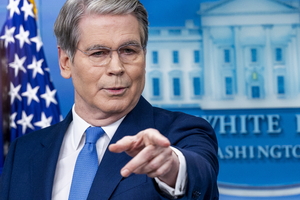
US warns of punishment for anyone enabling Iran's Strait of Hormuz toll scheme
-
INDUSTRY
Toyota union puts productivity first; Hyundai Motor union demands bigger share of profits
-
FINANCE
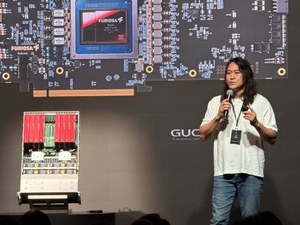
National Growth Fund to invest $531M in FuriosaAI, which rebuffed Meta's $800M takeover bid
-
INDUSTRY
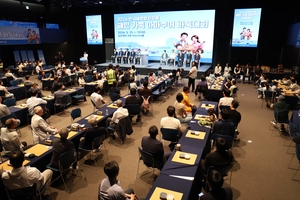
Korea Shipowners' Association holds amateur baduk tournament for Maritime Day