
- HOME
- INDUSTRY
-
Samsung compliance chief says labor rights must be upheld even between unions
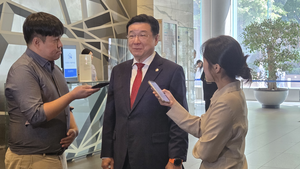
Remarks made before regular compliance committee meeting Mutual recriminations grow between Samsung's two main unions Rivalry over bargaining rights continues Lee Chan-hee says committee will closely monitor inter-union conflict Samsung's Compliance Committee said Tuesday it would closely monitor a deepening conflict between two of Samsung Electronics' major unions, as a war of words between the company's largest union and a rival labor group continues to escalate. Lee Chan-hee, chairman of the Compliance Committee, met with reporters before the committee's regular meeting at Samsung Life Insurance's Seocho Tower in Seocho-gu, Seoul, on Tuesday. "Labor rights have been the first of three priority tasks the committee has pursued through its second, third and fourth terms," he said. "They are an important principle that must be upheld not only in labor-management relations but also in relations between unions." Tensions between the two unions have been simmering inside Samsung Electronics. The dispute came to a head after it emerged that Choi Seung-ho, chairman of the Samsung Electronics branch of the cross-enterprise union — the company's largest — had signed a contract to purchase rally vests and other demonstration supplies from a company run by his father-in-law. Choi acknowledged the contract but denied any personal gain, saying the vendor was selected after comparing multiple suppliers and was found to offer the lowest unit price and reliable delivery. He said the deal was carried out with the consent of the joint struggle committee. He also alleged that Donghaeng, a union centered on employees in the finished-product, or DX, division, had played a role in spreading the allegations against him. The cross-enterprise union further accused Donghaeng of allowing violent and derogatory language targeting executives and Choi himself in the union's internal messaging channel, and called for a formal apology. The union said the matter went "beyond differences of opinion on compensation systems or bargaining outcomes" and constituted a serious issue capable of causing anxiety and humiliation to those involved and their colleagues. Donghaeng has been pressing the company to take a public stance on a separate case in which Choi was referred to prosecutors on charges of unlawfully accessing the personal information of some 100,000 Samsung Electronics employees and compiling and maintaining a so-called blacklist recording their union membership status. "We have collected more than 15,000 petitions calling for severe punishment in connection with this case," Donghaeng said. "This is not something that can be brushed aside in silence." At the root of the conflict is a dispute over bargaining rights. Donghaeng proposed joint bargaining, but the cross-enterprise union rejected the offer, fueling an ongoing rivalry over which union holds the status of exclusive bargaining representative. Meanwhile, the Compliance Committee convened its labor rights subcommittee in late August to hear expert opinions on a bonus system that ties payouts to a set percentage of operating profit. The discussions covered concerns about the system's potential impact on the company's long-term competitiveness and its broader social implications for the industry. Lee said the committee had discussed "bonuses, human rights in labor relations and related matters broadly," and added that "if labor-management issues become a major concern within Samsung, the labor subcommittee is likely to become more active." Asked about the alleged improper collection of monthly rent support payments in Samsung Electronics' semiconductor, or DS, division, and the controversy over Choi's supply contract with his father-in-law's company, Lee was guarded. "We have not pinned down the exact facts within the committee, but if any problems are found in the process, Samsung will handle them according to the law and established principles," he said.
Sept. 15, 2026
-
LG Electronics tops call center quality index for 3rd consecutive year
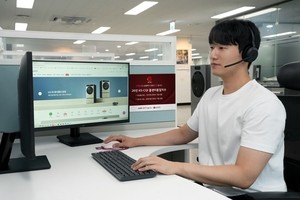
Named top performer in home appliances and appliance subscription categories; company accelerates AI contact center transformation LG Electronics said Tuesday it ranked first overall in the Korean Standards Association's Call Center Quality Index, known as KS-CQI, for the third consecutive year. The KS-CQI is compiled annually based on online user satisfaction surveys and telephone monitoring assessments of domestic corporate and institutional call centers. It recognizes the top 10 companies in the overall ranking as well as outstanding performers in individual categories. This year's survey, conducted from May through July and covering 242 companies across 54 categories, found that LG Electronics retained its position as the top-rated company in the home appliances category for the seventh straight year. The company was also named the best performer in the newly created appliance subscription category — the first in the industry to receive that distinction. LG Electronics operates its AI Contact Center, known as AICC, with tools that include an AI counseling assistant that quickly and accurately surfaces relevant information for consultants during customer interactions, and ARGUS, a system that remotely diagnoses the condition of products linked to LG ThinQ and enables proactive care before customers report a problem. The company is also preparing to introduce an AI-powered automatic quality assurance feature that lets consultants independently review and improve their own service quality. An AI education platform called AI EduOn, which allows consultants to study their own field and other areas daily, is already in use to raise overall counseling standards and minimize quality gaps among staff. LG Electronics is also working to enhance its automated consultation processes to eliminate service gaps and deliver a more complete customer experience. "The synergy between our advanced AI technology and highly skilled consultants has earned us the top overall ranking for three consecutive years, the best rating in the home appliances category for seven straight years, and the industry's first top rating in the appliance subscription category," said Jeong Jae-woong, executive vice president and head of the customer value innovation division at LG Electronics. "We will redouble our efforts to strengthen the capabilities of our AX Global Contact Center to meet the increasingly diverse range of products and customer needs."
Sept. 15, 2026
-
SK Innovation aims for W100b in annual productivity gains with 'Dual Brain' AI system
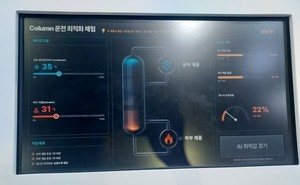
Dual Brain combines AI with engineer expertise 'AI predicts outcomes as variables change' Five Dual Brain projects underway at SK Innovation's Ulsan CLX AI also deployed for equipment anomaly detection and site patrols Robot dogs and drones to be introduced to advance Dual Brain SK Innovation's Ulsan CLX (Complex) expects to achieve annual productivity gains of around 100 billion won ($74.3 million) starting in 2030 through its "Dual Brain" system. At the SK Group booth inside the Ulsan World Future Industry Expo 2026 (WAVE), held Thursday at the Ulsan Exhibition and Convention Center in Ulju-gun, the production-optimization AI experience zone drew the most attention. When a visitor entered the cooling energy temperature for an upper refinery product and the heating energy temperature for a lower product into a display terminal, the system automatically calculated the optimal temperature values for managing both products, drawing on big data accumulated by SK Innovation. The AI technology is not merely for exhibition purposes. The same system is already in use at the heavy oil upgrading (HOU) control room of SK Innovation's Ulsan CLX, the country's largest crude oil processing facility. The control room operates around the clock on rotating shifts, monitoring process conditions and adjusting operating parameters. Workers there use simple inputs and AI to calculate optimal process values — meaning the production-optimization AI, one of SK Innovation's Dual Brain projects, is already deployed on the ground. "In the past, workers on the floor had to manually fine-tune a wide range of variables — temperatures, feed volumes and more — to refine crude oil," said Jung Chang-hoon, head of SK Innovation's manufacturing AI promotion team. "But with the AI system, they can predict outcomes as variables change and receive guidance on the optimal variable settings needed to achieve the desired result." The Dual Brain system SK Innovation is developing integrates Brain AI — an AI that participates directly in human decision-making — with the accumulated engineering expertise of Ulsan CLX's workforce. "Equipment management requires workers' experience to be embedded in the process, so AI cannot fully replace that," Jung said. "Dual Brain is ultimately about humans and AI coexisting." SK Innovation is pursuing Dual Brain to maximize production efficiency. Ulsan CLX spans 8.25 million square meters — roughly three times the size of Yeouido — making it impractical for workers to inspect every piece of production equipment individually. Compounding the challenge, the average age of CLX facilities has reached 33.6 years, aging infrastructure is a serious concern, and about 50 percent of veteran baby boomer employees are set to retire by 2030. "It is difficult for workers to monitor and analyze every piece of equipment and anticipate problems," Jung said. "We are using AI to overcome the constraints of time and physical reach." SK Innovation is running five Dual Brain-related projects to drive the AI transformation of CLX. In addition to the production-optimization AI already mentioned, the projects include a utility-optimization AI, an equipment anomaly prediction AI, a maintenance planning AI and SHIELD. The utility-optimization AI adjusts consumption of electricity, water and other resources needed for process operations in real time. SKADI, the flagship application of the equipment anomaly prediction AI, is a rotating-equipment monitoring platform that reads vibration and temperature changes in real time to identify abnormal signs and their causes. The maintenance planning AI uses information from the equipment anomaly prediction AI to recommend the optimal timing for repairs. SHIELD advances human-led site patrols into an AI-based, around-the-clock facility monitoring system. SK Innovation plans to fully embed the Dual Brain operating system across all 98 processes at CLX by 2030 at the earliest. The company intends to make active use of robot dogs and drones to sharpen the system's capabilities, maximizing the volume of operational data collected from the factory floor. Ulsan CLX currently operates one robot dog and plans to expand the fleet to as many as 10. "Until now, we lacked a platform capable of operating robots," Jung said. "But we have recently built a platform that can control them, which has made it possible to expand the deployment of robot dogs." On the use of drones, he added, "We will focus our efforts on using AI to conduct precise analysis of field data gathered by drones, with the goal of advancing the maintenance system itself." Jung also said the company aims to transform Ulsan CLX — which started 60 years ago as South Korea's first oil refinery — into a factory operated 60 years from now by a Dual Brain system in which humans and AI work together.
Sept. 15, 2026
-
HD Hyundai wins US classification society's approval for floating power plant
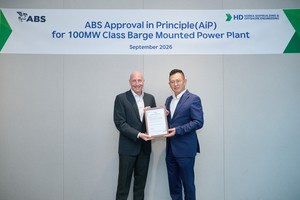
ABS grants AIP for 100 MW BMPP Vessel can generate power at sea and supply it to onshore data centers HD Hyundai has successfully developed technology for a floating power barge — a vessel capable of functioning as a power plant at sea. HD Korea Shipbuilding & Offshore Engineering, the intermediate holding company for HD Hyundai's shipbuilding operations, said Tuesday it had received approval in principle (AIP) from the American Bureau of Shipping (ABS) for a 100 MW floating barge-mounted power plant (BMPP). The certification covers core technologies including the vessel's basic concept design, single-line electrical diagrams and stability analysis. A BMPP uses power-generation engines to produce electricity at sea and supply it to data centers, industrial complexes and other facilities where building onshore power infrastructure is difficult or where large-scale electricity demand has emerged. HD Korea Shipbuilding & Offshore Engineering's in-house BMPP design is built around its mid-sized HiMSEN engine and can deliver up to 100 MW of power — equivalent to the annual electricity consumption of an AI-specialized data center. The company plans to complete detailed engineering and subsequent certification procedures before making a full-scale entry into the BMPP market. "Stable and flexible power generation and supply capability is a core competitive advantage in the AI era," a company official said. "We will continue to advance our floating power plant technology and lead the global power infrastructure market."
Sept. 15, 2026
-
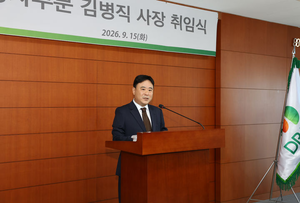
DB Inc. names Kim Byung-jik president of trading division, eyes 'niche specialist' growth
Kim to also oversee management support division at DB Group manufacturing and services affiliate DB Inc. held an inauguration ceremony Tuesday for Kim Byung-jik as president of its trading division. Kim will also serve concurrently as head of the management support division. The company said it appointed Kim to lead the division "to drive full-scale expansion of the trading business, which encompasses trade, electronics and investment operations." Kim graduated from Kyung Hee University with a degree in accounting and earned an MBA from the University of Michigan. After joining DB Group in 2021, he served as head of customer asset management at DB Securities and later as head of business strategy and chief financial officer at DB Inc. In his inaugural address, Kim said the trading division's goal is "not simply to grow in scale," but "to become a unique, niche specialist trading company that enhances value for customers and industries, backed by a solid commercial network and investment foundation." In its trading business, DB Inc. plans to build a stable operational base by expanding domestic and overseas commercial networks and identifying new distribution-based business models. The company also intends to develop an investment-backed supply chain management model targeting promising companies and projects in the steel and chemical sectors to secure a sustainable competitive edge. For its electronics business, the company plans to broaden its IT solution partner base to expand into higher-value-added products and markets, while upgrading its semiconductor equipment distribution and refurbishment operations. It will also build a dedicated semiconductor platform and gradually extend its reach from consumables supply to equipment parts and services. On the investment side, DB Inc. said it will strategically invest in high-tech sectors — including semiconductors, AI and robotics — that can generate synergies with DB Group's three core technology businesses: IT, semiconductor design and foundry. DB Inc. is a key affiliate within DB Group's manufacturing and services arm, having grown on the strength of its IT, trade and brand businesses. A 2023 merger with DB Metal expanded its portfolio to include ferroalloys and construction.
Sept. 15, 2026
-
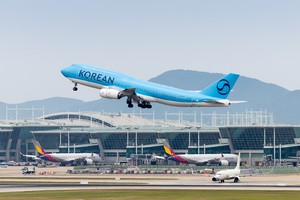
Korean Air seals mileage integration plan, clearing path to December merger
Mileage integration plan finalized after 15 months of Fair Trade Commission talks Dedicated guidance website opens Tuesday Asiana reservations and tickets to migrate to Korean Air systems in November 'Unified Korean Air' set to launch Dec. 17 Korean Air has resolved one of the last major hurdles before its merger with Asiana Airlines, securing final approval for a plan to integrate the two carriers' frequent-flyer programs. The approval, coming after roughly 15 months of negotiations with the Korea Fair Trade Commission, clears the way for the launch of a unified Korean Air in December. Korean Air said Tuesday it had received final approval from the Fair Trade Commission for its mileage integration plan with Asiana Airlines. The carrier first submitted a proposal on June 12, 2025, and after rounds of revisions reached a conclusion 15 months later. The commission approved the final plan on Monday. Mileage programs have been among the most closely watched issues for customers ahead of the merger. Even after Korean Air brought Asiana Airlines under its umbrella as a subsidiary, the two carriers continued to operate their loyalty programs separately, and Fair Trade Commission approval was required before any integration could proceed. There had been concern that if approval came after the merger date, the two programs might have to be maintained separately for some time. With the approval now in hand, Korean Air can launch the integrated mileage system as planned from the moment the merger takes effect. Korean Air will begin informing customers immediately. Starting Tuesday, the airline is opening a dedicated mileage integration guidance website covering how Asiana miles can be retained or converted, the conversion ratio, and details of the frequent-flyer tier system. A tool allowing existing Asiana members to preview their projected mileage balance and expected loyalty tier under the new system will also be available from the time of integration. Under the plan, existing Asiana miles will be maintained separately from Korean Air's SkyPass program for 10 years after the merger. Customers may convert to SkyPass at any time during that period. Those who wish to keep their Asiana miles do not need to submit any request. The conversion ratio is one-to-one for miles earned through flights. For miles accumulated through credit cards, hotels and other partners, one Asiana mile converts to 0.82 Korean Air miles. Conversion applies to a customer's entire mileage balance and will be processed within five business days of the request. Customers who keep their Asiana miles will be able to use them for award tickets and seat upgrades under the existing Asiana redemption standards. The range of eligible flights will expand from Asiana's current 69 routes to cover all Korean Air routes as well, adding 59 Korean Air-only routes and increasing the total number of redeemable routes by 85 percent. Korean Air will also map Asiana's frequent-flyer tiers onto its own system. Asiana's Platinum tier will be matched to Korean Air's "Million Miler" status, while lifetime Diamond Plus members will be matched to "Morning Calm Premium." A new tier called "Morning Calm Select" — carrying SkyTeam Elite Plus benefits — will be created for term-based Diamond Plus and Diamond members. The threshold for redeeming miles will also be lowered. The combined payment option, which allows customers to pay with a mix of cash and miles, will be expanded from a current minimum of 500 miles covering up to 30 percent of the fare to a minimum of 100 miles covering up to 40 percent after integration. Mileage plan settled, merger preparations enter final stretch With the mileage issue resolved, Korean Air's integration preparations have moved into a more concrete execution phase. Korean Air and Asiana Airlines each held board meetings in May to approve the merger agreement, and Asiana Airlines passed the merger approval resolution at an extraordinary general meeting last month with a 99.33 percent vote in favor. The legal merger is now within reach, nearly six years after Korean Air first announced its bid to acquire Asiana Airlines in November 2020. Customer-facing integration work is already underway. From Nov. 2 through Dec. 3, Korean Air will migrate existing Asiana Airlines reservations and tickets for flights departing after the unified carrier's launch date into its own systems. Asiana flight numbers will be converted to Korean Air flight numbers in stages during this process. Customers whose flight numbers change will be notified individually via messaging apps, text messages and email with their updated reservation and ticket information. The airline is also preparing a merger-related FAQ section on its website and mobile app, with a focus on minimizing customer confusion during the actual merger process. Work to consolidate internal systems covering flight operations, cabin services and maintenance is also proceeding in parallel. Job training for Asiana Airlines passenger and cargo staff and drills for flight operations and cabin crew are ongoing, while facilities including the operations control center and cabin training center are being upgraded to handle the expanded fleet and route network. The Ministry of Land, Infrastructure and Transport granted conditional approval for the merger in June, and the merger securities registration statement took effect in July. The two carriers will complete the remaining procedures, including creditor protection, before the merger date of Dec. 16, with the unified Korean Air set to begin operations the following day, Dec. 17. However, challenges remain after the legal merger. Labor and management have yet to agree on how to combine the seniority rankings and promotion systems of pilots from both carriers, and the work of aligning organizational structures, human resources policies and service standards on the ground still lies ahead. In approving the mileage integration plan, the Fair Trade Commission required Korean Air to maintain award seat utilization and mileage redemption volumes above a certain level for the next 10 years. For major long-haul routes to the Americas, Europe and Oceania, the airline must sustain award seat utilization at or above the highest level recorded in the past decade. The commission said it will monitor compliance through a dedicated oversight committee.
Sept. 15, 2026
-
LG Electronics installs heat pumps in first occupied apartment complex in Korea
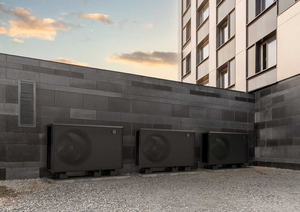
Korean-style multi-unit housing heat pump model debuts on Jeju Island Electrification pilot expands from single-family homes to cooling, heating and hot water LG tops Jeju heat pump distribution rankings this year 'Leading decarbonization and electrification transition' LG Electronics will install heat pumps in an occupied apartment complex for the first time in South Korea, launching a pilot project to demonstrate electrified cooling, heating and hot water supply in a Korean-style multi-unit residential setting. The move marks the company's push into the multi-unit housing market after establishing a foothold in single-family homes, replacing conventional boilers and gas piping with heat pump systems. LG Electronics signed a memorandum of understanding Tuesday with Jeju Special Self-Governing Province, Jeju Development Corp. and the Korea Institute of Industrial Technology at the Jeju International Convention Center to advance a "multi-unit housing cooling and heating electrification and Power-to-Heat (P2H) pilot project." The pilot site is Sinhyo Apartments in Hyodon-dong, Seogwipo, Jeju Island — a seven-story building with one below-ground floor currently home to 12 households. LG Electronics plans to complete system design and break ground by October, finish construction in December and then begin full operational testing. LG Electronics will handle overall heat pump system design, supply of high-efficiency products, commissioning, maintenance and performance evaluation based on operational data. Jeju Island will lead regulatory improvements and policy coordination, while Jeju Development Corp. will provide the pilot building and manage system operations. The Korea Institute of Industrial Technology will oversee P2H system design and data analysis. LG Electronics intends to use the pilot as a springboard to expand heat pump adoption from single-family homes to apartments and multi-unit housing more broadly. Operational data gathered at Sinhyo Apartments will inform the development of a "Korean-style multi-unit housing electrification standard model" adaptable to public rental housing, existing building renovations and new residential complexes. The company is proposing a "boiler-free apartment" model in which heat pumps handle cooling, heating and hot water supply in place of conventional boilers and gas piping. Heat pumps draw thermal energy from outdoor air for heating and cooling, and are widely regarded as an eco-friendly alternative to gas boilers. Each unit will receive a heat pump connected to a single outdoor unit capable of providing both air conditioning and underfloor heating, maximizing space efficiency while allowing residents to set their own temperature preferences. Rather than placing large hot water tanks in individual units, the system will use a centralized hot water facility in the building's common area to supply all units. Surplus electricity from renewable sources such as solar panels will power the heat pumps to store thermal energy for hot water supply, reducing strain on the power grid and cutting energy costs. LG Electronics has operated a global heat pump business since 2008 and in 2018 became the first company in South Korea to supply a residential all-in-one heat pump boiler. This year, the company secured the largest number of households across both halves of Jeju Island's "2026 Jeju Lifestyle Heat Pump Distribution Project," earning the top-ranked supplier designation. The company is also accelerating development of next-generation heat pump technology, operating cold-climate research centers in South Korea, Alaska, Oslo and Harbin, China to develop heat pump systems capable of high performance in extreme weather conditions. "This pilot, conducted in an apartment where residents are actually living, is highly significant in that it validates an electrified heating, cooling and hot water model optimized for multi-unit housing," said Oh Se-gi, executive vice president and head of LG Electronics' ES Research Lab. "We will leverage our globally proven heat pump technology to lead the decarbonization and electrification transition in Korea's residential sector."
Sept. 15, 2026
-
Shipyard labor disputes set to drag past Chuseok, with joint strike looming
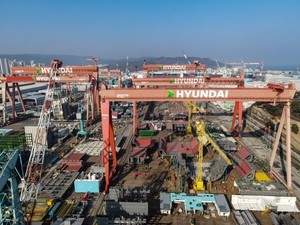
HD Hyundai Heavy Industries, Hanwha Ocean unions continue partial strikes Samsung Heavy workers' council stages Seoul protest Industry-wide joint action possible if no deal reached With major shipbuilders all failing to reach agreement in this year's wage and collective bargaining talks, labor unrest is expected to continue well past the Chuseok holiday. Signs are emerging of a broader, industry-wide united front, and some observers warn that a joint strike — if it materializes — could disrupt production at a time when the shipbuilding sector is riding a historic boom cycle. According to industry sources, HD Hyundai Heavy Industries and its union entered intensive negotiations Friday. Talks continued Monday but the two sides failed to narrow differences on key issues including base salary and housing loans. Earlier, at the 20th round of main bargaining held Thursday, the company tabled its third proposal, which included a base pay increase of 110,000 won ($82) — covering a seniority increment of 47,000 won — an incentive bonus of 10 million won plus 200 percent plus 500,000 won in gift vouchers, a relaxed age threshold for spousal comprehensive health checkups (lowered from 40 to 35), and the establishment of a social contribution fund. The union — the Korean Metal Workers' Union's Hyundai Heavy Industries branch — rejected the offer, and the two sides remain at an impasse. Management has emphasized that its third proposal represents roughly a 33 percent increase in total compensation compared with last year, while the union is calling for additional base pay hikes and improvements to the housing loan program, and says it wants to reach a settlement before Chuseok. The union plans to extend strike hours to seven per day Wednesday through Friday. If the two sides fail to make meaningful progress this week, a pre-holiday settlement is widely seen as effectively out of reach. The Korean Metal Workers' Union's Hanwha Ocean branch has also been staging strikes every weekday since Aug. 31. The Hanwha Ocean dispute centers on disagreements over the size of base pay increases, bonus expansion and improvements to the performance pay system. Management recently put forward a proposal, which the union rejected. Participation that began with only some union members has since expanded to all members this month, and a full eight-hour strike was held Wednesday. At one point, some crane and transporter operations were halted, though the stoppages are not believed to have affected vessel delivery schedules. At Samsung Heavy Industries, part of the workers' council recently escalated its campaign by staging a protest in Seoul. The council boycotted a scheduled round of bargaining Thursday and held a demonstration outside Samsung Electronics' headquarters in Seocho-gu, Seoul. The council's leadership, believing that a wage proposal prepared by the company has been delayed during a group-level review process, delivered a letter of protest directly to the conglomerate. Under rules agreed upon by labor and management, the workers' council enjoys labor rights comparable to those of a formal union, and can launch a strike after filing a labor dispute notice and observing a seven-day cooling-off period. The council has secured the right to strike but has not yet taken that step. Moves toward an industry-wide joint strike are also gaining momentum. The Shipbuilding Industry Labor Union Solidarity said Friday that six worksites — HD Hyundai Heavy Industries (including HD Hyundai Mipo), Hanwha Ocean, Samsung Heavy Industries, HSG Sungdong Shipbuilding and K Shipbuilding — had each completed the legal procedures for industrial action, with a combined vote showing 94.45 percent in favor. The alliance warned that if management at those companies does not submit acceptable proposals before Wednesday, it will launch a full-scale campaign after Chuseok, including a joint strike across the alliance. "This year, record earnings and bonus disputes driven by the shipbuilding boom mean wage negotiations across the industry will not go smoothly," one industry official said. "With both sides continuing to dig in, a pre-Chuseok settlement — the stated goal of both labor and management — looks effectively out of reach."
Sept. 15, 2026
-
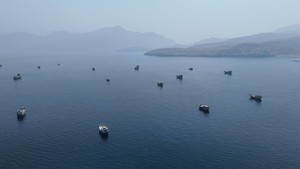
Refiners to keep riding Middle East windfall in H2, but petrochemical firms face reversal
Petroleum product shortage to sustain refiner gains through Q3; S-Oil up 360%, SK Innovation up 139% Chemical firms see special conditions fade; LG Chem profit down 71%, Lotte Chemical to stay in red South Korean refiners and petrochemical companies that benefited from the Middle East war earlier this year are expected to see their fortunes diverge in the second half. After a first half in which profits surged on raw materials bought cheaply before the conflict, petroleum product shortages continue to support refiners heading into the second half — while chemical makers face a market with little sign of meaningful demand recovery. Refiners seen posting strong results in Q3 According to third-quarter earnings forecasts compiled by financial data provider FnGuide, S-Oil is expected to post operating profit of 1.06 trillion won ($786 million) for the quarter, a 360 percent jump from a year earlier. SK Innovation is forecast to report 1.37 trillion won in operating profit, up 139.4 percent year on year. The gains reflect continued instability in global crude supply stemming from the US-Iran conflict in the Middle East. The Strait of Hormuz — the world's busiest crude oil shipping lane — remains blocked, and a Saudi Arabian pipeline that had served as an alternative route was recently knocked out of operation by a drone strike. As the supply crunch deepens, international oil prices have rebounded above $100 a barrel after falling to $70 in July. Oil tops $100, but diesel commands an even steeper premium Rising crude prices would normally squeeze refinery margins, but conditions now are different. The shortage of refined petroleum products has grown even more acute than the rise in feedstock costs. Diesel — the top export product for South Korean refiners — has for the first time surpassed $6 per gallon at US retail. Base oil, long dominated by Middle Eastern exporters, has also shifted toward Korean refiners as much of the region's refining infrastructure has been destroyed, opening a new revenue stream. Refiners are thus expected to follow first-half "lagging" gains with a supply-shortage tailwind in the second half. The lagging effect refers to the profit earned by selling products made from cheaply purchased feedstock at elevated prices. Combined operating profit at the four major refiners — SK Innovation, S-Oil, HD Hyundai Oilbank and GS Caltex — swung from a combined loss of 1.2 trillion won in the second quarter of last year to more than 8 trillion won in the second quarter of this year. Petrochemical firms seen swinging to loss in Q3 Chemical companies, by contrast, are losing the tailwind from Middle East-related conditions as the third quarter begins, putting them on a diverging path from refiners. The four major petrochemical firms — LG Chem, Lotte Chemical, Hanwha Solutions and Kumho Petrochemical — posted combined operating profit of 1.86 trillion won in the second quarter, up 114.0 percent from a year earlier, as raw material prices surged. In the third quarter, however, the dynamic is expected to reverse. With companies now processing feedstock bought at elevated prices, a so-called "reverse lagging" effect is anticipated. FnGuide's compiled forecasts show LG Chem's third-quarter operating profit falling 71.9 percent year on year to 190.6 billion won, while Lotte Chemical is expected to post an operating loss of 142.5 billion won, extending its streak in the red. Chemical buyers hold off, saying there's no rush to restock Differences in downstream industry structure also play a major role. Jeon Yu-jin, a researcher at iM Securities, said petrochemicals' key end markets — automobiles, home appliances and IT products — are relatively price-sensitive in terms of demand, whereas diesel and jet fuel serve industrial, heating and transportation uses that make demand far less elastic. "Asian buyers have said they are not confident enough in demand to increase purchases right away, and will not rush to replenish low inventories," she said. Manufacturers of chemical-based products such as automotive interior components can adjust output flexibly in response to price changes. Petroleum products, by contrast, are tied to fixed global shipping contracts, meaning buyers must continue purchasing them regardless of price. "A structural price recovery for chemical products absolutely requires a rebound in purchasing demand," Jeon said.
Sept. 15, 2026
-
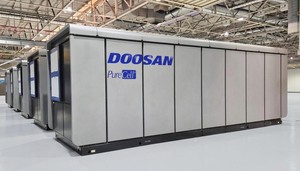
Doosan Fuel Cell to supply additional fuel cells worth W322.2b to US market
Cumulative contract with Hyaxxium reaches 823.6 billion won Total orders this year hit about 1.11 trillion won Doosan Fuel Cell said Tuesday it has signed a phosphoric acid fuel cell (PAFC) supply contract worth 322.2 billion won ($240 million) with Hyaxxium, a US subsidiary of Doosan. The deal comes just two weeks after a 501.4 billion won contract signed earlier this month, bringing the cumulative value of agreements between the two companies to 823.6 billion won. The fuel cells ordered under the new contract will be delivered to North America through Hyaxxium on a rolling basis starting in 2028. Hyaxxium will provide engineering, commissioning, long-term service and maintenance (LTSA) support for the products. Fuel cells are attracting growing attention for their short installation timelines and modular design, which allows for phased scale-up. They are particularly well suited to on-site power generation, which places dedicated power facilities near data centers and is gaining traction. Including an August contract with Germany's Liberion for solid oxide fuel cell (SOFC) stack supply worth 108.7 billion won, Doosan Fuel Cell has secured about 930 billion won in overseas orders over the past month. Combined with domestic equipment supply contracts, the company's cumulative orders this year stand at about 1.11 trillion won.
Sept. 15, 2026
-

Jin Air completes joint emergency evacuation drill ahead of airline merger
Cabin crews from 3 airlines fly mixed teams B737, A321 aircraft used in cross-fleet drill to verify integrated operations Jin Air introduces A321CEO for the first time Jin Air said Tuesday it had successfully completed a joint emergency evacuation demonstration conducted with Air Busan and Air Seoul ahead of the planned launch of a unified "integrated Jin Air." The drill, held Monday in Gangseo-gu, Seoul, was organized under the supervision of the Ministry of Land, Infrastructure and Transport to verify that cabin crew members from all three airlines meet the same high standard of safety performance. About 150 people attended, including ministry officials and executives from the three carriers. Sixteen cabin crew members drawn from Jin Air, Air Busan and Air Seoul flew in mixed teams, joined by eight Jin Air flight crew members. Notably, the drill deployed both the B737-800 — a type not operated by Air Busan or Air Seoul — and Jin Air's newly introduced A321CEO simultaneously, putting crews' ability to handle different aircraft types to the test. The demonstration was divided into two parts to assess real-world emergency response in detail. The first part focused on verifying crews' knowledge of emergency equipment through an oral examination and a water-ditching demonstration. Under the supervision of ministry inspectors, crew members answered questions on essential emergency equipment before boarding a life raft in a simulated water-evacuation scenario and demonstrating their ability to use onboard survival gear. The second part moved to full emergency evacuation drills tailored to each aircraft type. Crew members aboard the B737-800 carried out an evacuation simulating a rejected takeoff caused by an engine fire during the takeoff roll, completing inflation of the evacuation slide within 15 seconds. Crew members aboard the A321CEO then performed a water-ditching drill, simulating an emergency ditching decision triggered by an engine fire during cruise. They completed cabin preparations within six minutes and inflated the slide within 15 seconds before finishing the full evacuation sequence. With the drill complete, Jin Air will undergo a ministry-led "comprehensive check flight" on Thursday and Sept. 22. Eight cabin crew members from the three airlines, flying in mixed teams aboard both the B737-800 and the A321CEO, will be put through abnormal-situation scenarios that can arise during actual operations — a diversion due to weather or maintenance issues, aircraft performance problems before departure or in flight, an onboard emergency, and an in-flight security threat — to give the integrated operating system a final verification of its readiness. "This was a process that objectively confirmed the safety capabilities of our integrated operating environment through the joint response of crew members from all three airlines, transcending aircraft-type boundaries," a Jin Air official said. "Even after the integrated Jin Air launches next year, we will continue to place safety as our top priority and maintain systematic training to firmly build customer trust." Meanwhile, in line with the coming integrated Jin Air structure, Jin Air introduced the Airbus A321CEO for the first time on Friday. The move is intended to proactively strengthen safety and operational systems in preparation for the fleet diversification that will follow the unified carrier's launch. To that end, Jin Air has already established a mutual maintenance support framework with Air Busan. The newly acquired A321CEO will enter full service from Oct. 1 after completing about three weeks of airworthiness inspections and 50 hours of test flights. With the addition, Jin Air's fleet stands at 33 aircraft as of this month. The airline also plans to introduce next-generation aircraft — the A321NEO and the B737-8 — before the end of the year. At the same time, Jin Air will phase out older aircraft in stages to further advance fleet modernization and operational efficiency. The integrated Jin Air is expected to launch in March.
Sept. 15, 2026
-
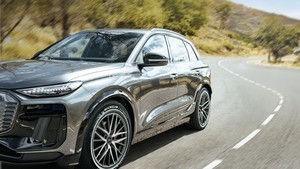
Michelin launches two new tires to end the performance-vs-efficiency debate
Both models earn top EU ratings for wet braking, energy efficiency and noise Compatible with combustion, hybrid and electric vehicles On sale Tuesday at TireMore outlets and official dealerships Michelin is bringing two new tires to the South Korean market that aim to improve driving performance, tire longevity and energy efficiency all at once — a response to growing consumer demand for low rolling resistance, long tread life and quiet rides as electric and hybrid vehicles become more common. Michelin Korea announced Tuesday that it will begin selling the Michelin Primacy 5 Energy and the Michelin Pilot Sport 5 Energy domestically. Both products are designed to work across all powertrain types — combustion engines, hybrids and electric vehicles. Michelin said the development focus was on improving grip, durability and rolling resistance simultaneously, properties typically seen as trade-offs against one another. Competition in the tire industry has intensified around high-efficiency, large-diameter products as electrification spreads and larger wheel sizes become more prevalent. The Primacy 5 Energy is a summer tire built around ride comfort, efficiency and long tread life. It is the first tire in the Michelin Group lineup to earn an A rating in all three categories on the EU tire label — wet braking, energy efficiency and external noise. Noise reduction was also a priority. The tire uses third-generation "Silent Rib" and "Piano Acoustic Tuning" technologies to suppress road noise not only when new but also after the tread has worn down to a certain level. "MaxTouch" technology distributes contact force evenly across the tire's footprint, reducing concentrated wear during acceleration, braking and cornering to extend tread life. The tire is also engineered to retain wet-braking performance as it wears. Technologies aimed at cutting fuel and energy consumption include a slimmer belt structure that uses less raw material while maintaining rigidity, along with an "Energy Passive 2.0" EMC. The goal is to reduce rolling resistance — lowering fuel consumption in combustion-engine vehicles and extending driving range in electric vehicles. The Pilot Sport 5 Energy, launching alongside it, adds efficiency to a sport tire built around driving performance. It is the first Michelin sport tire to earn A ratings in both wet grip and rolling resistance under EU tire label standards. Development centered on maintaining sharp responsiveness and grip while reducing energy loss. The tire features "Dynamic Response" technology, which transmits steering inputs to the road quickly. Like the Primacy 5 Energy, it also incorporates Piano Acoustic and MaxTouch technologies to reduce road noise and tread wear. "Bi-Compound" technology applies different materials to different parts of the tire. The center tread uses a "Grip Adaptive" EMC to enhance traction on both dry and wet surfaces, while the outer section uses an "Energy Passive" EMC to minimize energy loss. Both new tires feature "Premium Touch" technology across the full sidewall, giving the surface a velvet-like texture. The Primacy 5 Energy and Pilot Sport 5 Energy go on sale Tuesday at TireMore outlets and official Michelin dealerships nationwide. Available sizes for the Pilot Sport 5 Energy will be expanded gradually. "The two new products combine energy efficiency, driving performance, safety and long tread life," a Michelin Korea official said. "Our goal is to deliver balanced performance regardless of vehicle type or driving environment."
Sept. 15, 2026
-
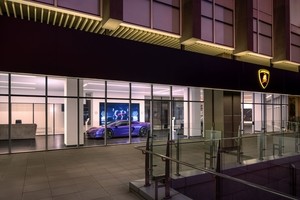
Lamborghini opens third certified pre-owned showroom in Suwon
Third certified pre-owned outlet follows Bundang and Busan 482-square-meter space at Deutsche Auto World can display up to five vehicles Global 'Selezione Lamborghini' standards applied to all stock Lamborghini has opened a certified pre-owned showroom in Suwon, Gyeonggi Province, extending its reach to used-car customers in the greater Seoul area. Italia Automobili, the brand's official dealer in South Korea, announced Tuesday that it had opened the Lamborghini Suwon Certified Pre-Owned Showroom at Deutsche Auto World in Suwon. It is the third such outlet the company operates, following locations in Bundang and Busan. The Suwon showroom has an exclusive use area of 482 square meters within a total leased space of 865 square meters. It can display up to five vehicles at a time and includes a dedicated consultation area. All vehicles on sale will be certified under Selezione Lamborghini, Automobili Lamborghini's global certified pre-owned (CPO) program. To qualify for certification, a vehicle must meet Lamborghini's standards for model year and mileage, among other criteria. Trained technicians then carry out a 150-point inspection covering mechanical and electrical systems as well as exterior condition before the car goes on sale — a process that distinguishes CPO vehicles from ordinary used cars by verifying their condition against manufacturer-set benchmarks. Italia Automobili said it plans to expand its certified pre-owned business in South Korea on the back of the Suwon opening. The strategy aims to deepen customer engagement across the full ownership cycle, from new-car sales through used-vehicle trade-ins and after-sales care. Lamborghini has also been pushing changes to its new-car lineup. Last month, at Monterey Car Week in the United States, it unveiled the Revuelto SV — a high-performance model — in its world premiere, accelerating the brand's push into electrification-based performance vehicles. Italia Automobili said it plans to use the Suwon showroom as a base for events and tailored programs aimed at existing customers. Kwon Hyeok-min, vice chairman of Deutsche Automobil Group, said the opening marks "another important milestone in strengthening our certified pre-owned business in South Korea." He added that the company would "continue to expand customer touchpoints through a variety of programs and services that reflect the Lamborghini brand, while providing customers with a trustworthy ownership experience."
Sept. 15, 2026
-
Global chip sales hit record high as memory tops 50% of market for first time
Q2 global semiconductor sales top $425 billion, an all-time high Memory chip share surges from 45% to 54%, crossing 50% threshold for first time Semiconductor demand seen holding firm despite AI slowdown debate Samsung Electronics, SK hynix combined operating profit forecast to rise sevenfold this year Calls for slowing the pace of AI development have been growing among the heads of major AI companies, but the semiconductor industry — the backbone and biggest beneficiary of the AI boom — continues to post record-breaking growth. Memory chips, the core component of AI hardware including HBM, have surged so sharply that their share of total global semiconductor sales has crossed 50% for the first time. Analysts say that while concerns about AI may temporarily slow development and investment, they are unlikely to alter the broader upward trajectory of the semiconductor market. Global semiconductor sales exceeded $425 billion (572 trillion won) in the second quarter, hitting an all-time high, according to market research firm Omdia. The quarter-on-quarter growth rate of 31.4% was the highest since Omdia began tracking the data. Cumulative semiconductor sales for the first half of this year reached $752 billion (about 1,013 trillion won). Memory chips drove the market's revenue growth in the second quarter, with their share of total global semiconductor sales crossing 50% for the first time. Memory chip sales jumped from $146.3 billion in the first quarter — 45% of the total — to $229.5 billion in the second quarter, pushing the segment's share up to 54%. Analysts attribute the surge to memory makers prioritizing high-value products such as HBM and server DRAM to meet soaring AI demand. A shift in production portfolios also left supply unable to keep pace with demand, pushing up average selling prices and further boosting revenue. "DRAM, NAND and NOR flash memory all posted their highest second-quarter growth rates on record and achieved all-time quarterly revenue highs," Omdia said. The AI-driven semiconductor boom is also extending beyond memory chips. The non-memory segment grew more than 10 percent quarter-on-quarter in the second quarter, overcoming typical seasonal headwinds. Historical data from 2002 to 2025 shows that non-memory chips averaged just over 3 percent growth in the second quarter, making this year's performance exceptionally strong by comparison. The microprocessor market, a key component of AI infrastructure, also expanded rapidly. MPU sales rose 16 percent quarter-on-quarter in the second quarter, far outpacing the typical seasonal growth rate of around 1 percent. AI data center investment is now lifting demand not only for HBM and DRAM but also for processors and other non-memory chips. Amid the record growth, voices within the global AI industry have been calling for a slowdown, warning that humanity could lose control of AI systems and face existential risks. The debate has raised concerns about potential fallout for the domestic semiconductor sector. Anthropic CEO Dario Amodei has led a chorus of warnings from top AI executives, joined by OpenAI CEO Sam Altman, xAI CEO Elon Musk and Google DeepMind CEO Demis Hassabis, all of whom have cautioned about the dangers of rapid AI advancement and called for slowing the pace of development. Financial strain from massive AI investment is also adding weight to the slowdown argument. Capital expenditure by major technology companies has swelled to levels approaching their own cash generation capacity as competition to build AI data centers intensifies, and more firms are turning to corporate bond issuances and equity raises to fund additional investment. UBS forecast that capital expenditure growth among major hyperscalers will slow from 76 percent this year to around 6 percent by 2028. The projection does not imply an absolute decline in investment, but rather that the explosive pace of growth seen recently cannot be sustained indefinitely. Still, analysts expect the industry's upward trajectory to continue, even if the tempo slows temporarily, given that the AI development race is intertwined with the broader US-China technology rivalry. President Donald Trump dismissed the AI slowdown argument, calling concerns about AI dangers "a hoax" and criticizing moves to slow AI development as politically motivated or driven by Chinese interests. Nvidia CEO Jensen Huang also said the United States can maintain its lead while developing AI safely at the same time. Omdia's analysis shows that real demand in the semiconductor market remains on a steep growth curve. Of the 97 quarters Omdia has tracked since the first quarter of 2002, only 10 have seen quarter-on-quarter revenue growth exceed 10 percent. The four most recent consecutive quarters — from the third quarter of last year through the second quarter of this year — all posted double-digit quarter-on-quarter growth. Omdia expects the trend to continue into the third quarter, projecting global semiconductor sales will surpass $500 billion (about 673 trillion won) and set yet another all-time record. That would represent growth of at least 17 percent from the $425 billion recorded in the second quarter. Cumulative global semiconductor sales for the first three quarters of this year are forecast to exceed $1.25 trillion (about 1,683 trillion won) — roughly 50 percent more than total semiconductor sales for all of last year. Omdia said record quarterly revenues and a strong market environment are expected to persist for now. Market consensus estimates put Samsung Electronics' operating profit for this year at around 392 trillion won and SK hynix's at 265 trillion won. Last year, Samsung Electronics posted operating profit of about 43.6 trillion won and SK hynix 47.21 trillion won, for a combined total of just over 90 trillion won. If the forecasts hold, the two companies' combined operating profit would reach 657 trillion won this year — more than seven times last year's figure.
Sept. 15, 2026
-
Hankook Tire to supply Kinergy XP tires for new Avante, deepening Hyundai Motor partnership
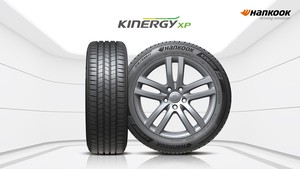
Kinergy XP in 17- and 18-inch sizes for domestic models All-season design optimized for year-round driving Supply to expand to North American and European models Hankook Tire & Technology said Tuesday it will supply its Kinergy XP all-season grand touring tire as original equipment for Hyundai Motor's eighth-generation fully redesigned model, the All New Avante. The company will provide the Kinergy XP in 17- and 18-inch sizes for the All New Avante sold in the domestic market. The tire is a grand touring product that brings together Hankook Tire's all-season technology, delivering stable performance and a comfortable ride across a wide range of climates and driving conditions. It fits a broad variety of vehicle types, including sedans and SUVs, and is noted for its strong mileage performance. The tire features an all-season-optimized EMC and profile design that ensures stable braking and handling on wet and snowy roads while maintaining even tread wear. Sipes and specially designed shoulder grooves enhance snow driving performance, and knurling technology combined with multi-pitch sequencing reduces road noise. Having supplied original equipment tires for the seventh-generation Avante, Hankook Tire will continue its long-term partnership with Hyundai Motor by extending that supply to the eighth-generation All New Avante. Starting with the domestic market, the company plans to expand supply sequentially to standard models in North America and hybrid models in Europe, offering a product portfolio optimized for each region's driving environment and powertrain characteristics. Hankook Tire also supplies original equipment tires for a range of Hyundai Motor Group sedans and SUVs, including the Ioniq 6 electric sedan, the Ioniq 9 flagship electric SUV, the Kia EV3 and EV9 electric SUVs, and the All New Nexo hydrogen fuel cell vehicle. Meanwhile, Hankook Tire recently renewed its FIA 3-Star Environmental Certification — the highest rating under the Fédération Internationale de l'Automobile's environmental accreditation program — demonstrating its environmental management and sustainability capabilities in motorsport and mobility.
Sept. 15, 2026
-
Kolon Motors reopens BMW Busan Gwangalli service center with 24-hour vehicle drop-off
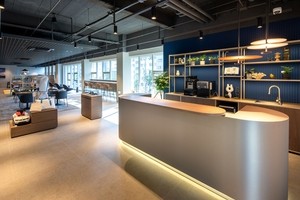
BMW Group's 'Retail.NEXT' concept applied to redesigned facility Center equipped with 37 work bays and specialist technicians Pickup and delivery service among new customer offerings Kolon Motors, an official dealer of BMW Group Korea, announced Tuesday that it has reopened the BMW Busan Gwangalli Service Center following a full renovation. Located in Gwangalli-dong, Suyeong-gu, Busan, the center spans 4,664 square meters across four above-ground floors. The renovation introduced BMW Group's latest showroom concept, "Retail.NEXT," creating a more comfortable and welcoming service environment. The facility is equipped with 37 work bays — including state-of-the-art sheet metal and paint facilities — along with BMW-certified technicians and the latest diagnostic equipment, enabling it to handle everything from major repairs to accident restoration. In addition, the center has strengthened customer convenience through a fast-lane service that completes minor maintenance and consumable replacements within two hours, a 24-hour vehicle drop-off service, and a pickup and delivery service for customers who cannot visit in person. The center sits adjacent to Suyeong-ro, a major artery connecting key areas of Busan, offering easy vehicle access. It is also within a 10-minute walk of Gwangalli Station on Busan Metro Line 2, making it readily accessible by public transit. Meanwhile, Kolon Motors continues to upgrade its customer touchpoints through showroom renovations and various marketing initiatives, including a recent redesign of its BMW Bundang showroom in Bundang-dong, Bundang-gu, Seongnam, Gyeonggi Province.
Sept. 15, 2026
-
Hyosung Heavy Industries wins $287m ultra-high-voltage transformer deal with 2 US tech giants
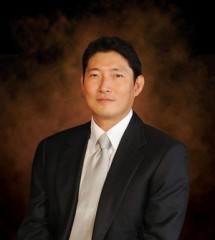
220 billion won 765kV order, 166.5 billion won 345kV order Transformers to power AI data centers in southern and northern US Cho Hyun-joon's US local production push begins to pay off Company set to hold largest ultra-high-voltage transformer capacity in the US Cho: '60-year supercycle' underway; top-3 global ranking targeted within 5 years Hyosung Heavy Industries announced Tuesday it has signed contracts worth a combined 386.5 billion won ($287 million) to supply ultra-high-voltage transformers to two major US technology companies. The transformers will be installed at newly built AI data centers in the southern and northern United States. The order comprises a 220 billion won contract for 765-kilovolt (kV) ultra-high-voltage transformers and a 166.5 billion won contract for 345kV units. The company said the deals reflect its standing as a key partner in the US power infrastructure market — a position built on the product reliability it has established with big tech firms and other local clients. Hyosung Heavy Industries credited the result to a strategic bet by Hyosung Group Chairman Cho Hyun-joon, who had been preparing the company for the power market shifts driven by AI. "The AI era has triggered an explosion in power infrastructure demand, ushering in a supercycle not seen in 60 years," Cho said. "We will lift Hyosung Heavy Industries into the global top three within five years, drawing on our total-solution competitiveness — spanning not only transformers and circuit breakers but also power stabilization systems including HVDC, STATCOM and ESS." Cho has been building up the company's data center and power infrastructure businesses in anticipation of the AI era, paying particular attention to the fact that global data center operators — including big tech firms — are seeking partners who can guarantee stable power supply and rapid deployment. "No matter how many data centers you build, they are useless without power," he has said. "We must develop Hyosung's AI data center business, where all of our capabilities converge, into the group's future growth engine." The United States is the world's largest power market, with AI data center investment surging — led by big tech companies. The ultra-high-voltage transformer factory in Tennessee that Hyosung Heavy Industries acquired in 2020 has become a key hub in the local supply chain. Once a planned expansion at the Memphis plant is complete, it will hold the largest ultra-high-voltage transformer production capacity in the United States. In July, the company established a joint venture with Quanta, a leading North American energy infrastructure solutions firm, to manufacture high-voltage circuit breakers locally — completing the hardware foundation for the total-solution strategy Cho has championed, with local production now covering both transformers and circuit breakers. In early September, Hyosung Heavy Industries created a dedicated Data Center Business Team, bringing together engineers for power equipment such as transformers and circuit breakers alongside specialists in stabilization solutions including ESS, microgrids and STATCOM. Hyosung Heavy Industries has held the No. 1 market share in the US 765kV ultra-high-voltage transformer segment since the early 2010s, supplying roughly half of all 765kV ultra-high-voltage transformers installed on the US transmission grid. Its product lineup also extends to high-voltage circuit breakers ranging from 72.5kV to 800kV. New orders through August reached approximately 9.3 trillion won, already surpassing last year's full-year total, and the company raised its annual order target from 8.4 trillion won to 12 trillion won.
Sept. 15, 2026
-
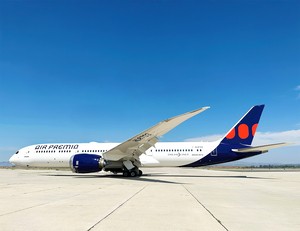
Air Premia launches self bag drop service for international passengers at Incheon airport
Passengers can check baggage without waiting at staffed counters Service available after mobile or kiosk check-in Air Premia announced Tuesday that it has launched a self bag drop service for international passengers at Incheon International Airport. The self bag drop service allows passengers who have completed check-in to deposit their luggage without staff assistance. Air Premia has linked the new service to its existing mobile and kiosk check-in options, enabling travelers to handle part of the departure process on their own. Passengers wishing to use the service must first complete check-in — either through the Air Premia website or mobile app before arriving at the airport, or at a self check-in kiosk at Incheon airport. They can then drop off their baggage at the dedicated self bag drop counter in Counter C zone on the third floor of Terminal 1, located in the same area as Air Premia's existing staffed check-in counters. Passengers traveling with infants, making connections or bringing pets — as well as those checking special baggage — will still need to use a staffed counter. Passengers on routes to the Americas must complete a separate identity verification process after using the self bag drop and before boarding. Air Premia said it expects the new service to reduce the inconvenience of waiting at staffed counters to check baggage and allow passengers to move through departure procedures more smoothly. "We introduced the self bag drop service to keep pace with the growing number of passengers using self check-in, so they can now handle baggage check-in on their own as well," an Air Premia official said. "We will continue to improve convenience so that passengers can complete departure procedures at the airport more comfortably and efficiently." Meanwhile, Air Premia is expanding its travel options with a new route between Incheon and Sapporo. Starting Dec. 2, the airline will operate the Incheon-Sapporo route four times a week, making it the carrier's second Japanese destination after the Incheon-Narita route.
Sept. 15, 2026
-
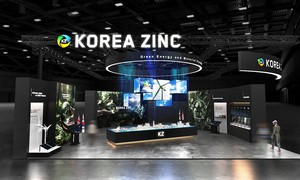
Korea Zinc to unveil global 'green metal vision' at climate industry expo
4 consecutive years at expo, showcasing eco-friendly value chain Promoting project synergies linking Korea, Australia and US Booth to feature large LED displays, dioramas and kiosks Korea Zinc announced Tuesday it will participate in the 2026 World Climate Industry Expo (WCE) to showcase a business value chain linking Korea, Australia and the United States. Attending the expo for the fourth consecutive year, the company aims to present its "green metal" vision — a connected arc spanning renewable energy and green hydrogen, resource recycling, and critical mineral production. The WCE is the country's largest climate and energy industry exhibition, co-hosted by the Ministry of Climate, Environment and Energy, the International Energy Agency, the World Bank, IRENA and the city of Busan, with the Korea Energy Agency serving as organizer. The event runs Wednesday through Friday at BEXCO in Busan. At this year's WCE, Korea Zinc will present a value chain that organically connects its renewable energy and green hydrogen operations, resource recycling business, and smelting and critical mineral production activities. The company said it placed particular emphasis on presenting its Australia-centered renewable energy and green hydrogen projects, its US-based resource recycling operations, and its Korean smelting business as a single, integrated flow. Monument LED and crystal LED displays will be installed on the ceiling of the booth's central area to draw visitors' attention. The monument LED will loop a variety of videos evoking renewable energy, resource recycling and critical minerals across five split screens. The crystal LED, paired with a central diorama, will feature color-changing effects to add dynamism and a three-dimensional quality to the exhibition space. Also at the center of the booth, a diorama will depict the integrated value chain connecting Korea Zinc's core businesses and critical mineral production. It is designed to let visitors take in the company's renewable energy operations in Australia, its resource recycling business in the United States, and its smelting operations in Korea at a glance. Three large screens will be placed at the center, left and right sides of the booth. Each screen will cycle through concept videos and business introduction footage presenting Korea Zinc's operations and vision. The screens are designed so their content flows seamlessly from one to the next, enhancing the sense of immersion and scale across the entire booth and effectively conveying the achievements and future vision of the company's Troika Drive strategy. Troika Drive is Korea Zinc's new business strategy aimed at securing future growth engines beyond its existing non-ferrous metal smelting operations. Since formally adopting it as an official growth strategy in late 2021, the company has expanded along three pillars: renewable energy and green hydrogen, secondary battery materials, and resource recycling. Visitors will also be able to view physical models of critical minerals including antimony, indium, bismuth, tellurium, germanium and gallium. Kiosks placed in each zone will allow visitors to access detailed explanations of the company's businesses and technologies. On top of the intuitive information delivered through the large displays and diorama, the kiosks will provide in-depth content for those seeking more detail. "It is meaningful to participate in the World Climate Industry Expo for the fourth consecutive year and showcase the connections between Korea Zinc's renewable energy and green hydrogen, resource recycling, and smelting businesses," a company official said. "We will continue to strengthen our business foundation for green metal production on the basis of our critical mineral supply chain competitiveness, and actively communicate our achievements and vision for a sustainable future." Meanwhile, Korea Zinc has been carrying out a range of corporate social responsibility activities, including a recent employee volunteer program to produce augmentative and alternative communication (AAC) boards — educational tools used in the rehabilitation of children with speech and language disorders.
Sept. 15, 2026
-
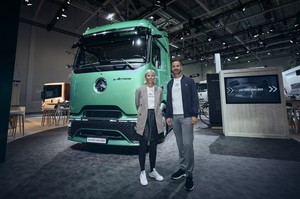
Daimler Truck unveils next-generation transport solutions at IAA 2026
Battery-electric and hydrogen powertrains headline showcase New eActros Lowliner makes public debut Hydrogen-powered NextGenH2 Truck revealed Next-generation diesel powertrain 'Powerliner' introduced Star Truck Korea, the official importer of Mercedes-Benz trucks in South Korea, announced Tuesday that Daimler Truck is presenting next-generation transport solutions at IAA Transportation 2026 in Hanover, Germany, marking the 130th anniversary of the truck's invention. The showcase spans battery-electric and hydrogen powertrains, high-efficiency diesel technology, advanced safety systems and digital services. Daimler Truck has driven commercial vehicle innovation for 130 years since Gottlieb Daimler invented the world's first truck in 1896. At this year's IAA, the company is presenting a broad range of technologies — from solutions that improve efficiency and safety in today's transport operations to next-generation platforms for carbon-neutral freight — to outline its vision for the future of the industry. "Since Gottlieb Daimler invented the truck 130 years ago, we have advanced the transport industry through relentless innovation and an unwavering focus on our customers," Daimler Truck CEO Karin Rådström said. "At IAA Transportation, we will show how we are putting our ambition to be the leading truck and bus company into action — through innovative products, technologies and services that support our customers' success." The Mercedes-Benz eActros 600, a heavy-duty long-haul electric truck, has logged more than 160 million kilometers in real-world customer operations across Europe since its market launch in late 2024. In the first half of 2026, Mercedes-Benz Trucks held approximately 38 percent of the European mid- and heavy-duty local zero-emission truck market. The new eActros Lowliner, designed for high-volume long-haul logistics, is making its public debut at this year's IAA. It is built on the electric drive axle, lithium iron phosphate (LFP) battery technology and 800-volt electrical architecture proven in the eActros 600. The eActros 600 Lowliner offers a range of approximately 500 kilometers under full load, and the new model will be available to order in EU30 and select international markets from the third quarter of 2026. Mass production is set to begin in the second quarter of 2027 at the Mercedes-Benz plant in Wörth. Also making its public debut is the next-generation hydrogen fuel-cell truck, the Mercedes-Benz NextGenH2 Truck. Running on liquid hydrogen and fuel cells, it offers a range of more than 1,000 kilometers on a single fill. Daimler Truck plans to deploy an initial production run of around 100 vehicles in real customer operations starting in late 2026. The existing GenH2 Truck has already covered approximately 600,000 kilometers through customer testing. Also on display is the next-generation diesel powertrain Powerliner, which integrates the engine, transmission and axle into a single unified system to improve fuel efficiency, output, torque and driving performance. Through new combustion technology, an optimized turbocharger, a next-generation transmission and a low-rpm powertrain strategy, the Powerliner delivers fuel savings of up to 4 percent. Daimler Truck is also introducing next-generation safety assistance systems aimed at protecting drivers and other road users. The new Active Cross Traffic Assist supports drivers when a collision risk with crossing vehicles or two-wheelers is detected, while Active Sideguard Assist 3 monitors hazards during turning maneuvers on both sides of the vehicle and can apply automatic braking when necessary. The company is also expanding its digital services to improve overall fleet efficiency. A new Fleetboard product suite will provide vehicle and fleet status monitoring, data analytics, charging management and vehicle diagnostics, while the My TruckPoint Store will allow customers to access and manage a range of digital services online. "This year's IAA Transportation, marking the 130th anniversary of the truck, is a stage where Mercedes-Benz Trucks demonstrates both the history of technological innovation it has built over 130 years and its vision for the future of transport," said Star Truck Korea CEO Dong Geun-tae. "Star Truck Korea will continue to bring the global technological capabilities and product competitiveness of Mercedes-Benz Trucks to the domestic market, grounded in the efficiency, safety and reliability that our customers value most." Meanwhile, Star Truck Korea has been broadening its customer outreach through a range of marketing activities, including a recent two-day test-drive event called "New Arocs Dump 1 Night 2 Days," which gave customers the chance to drive the new dump truck on both on- and off-road terrain.
Sept. 15, 2026
MOST READ
- 1What was Rachmaninoff's performance fee? A 1928 price list tells all
- 2Korea Expressway Corporation uses AI to crack down on toll evaders
- 3Pope Leo XIV declines French honors and banquet, accepts only private meeting with Macron
- 4Samsung Biologics union's show of force backfires at the bargaining table
- 5APR says hair-loss treatment research published in international journal
- 6Xi Jinping health rumors resurface after BRICS dinner no-show
-
WORLD

US warns of punishment for anyone enabling Iran's Strait of Hormuz toll scheme
-
INDUSTRY
Toyota union puts productivity first; Hyundai Motor union demands bigger share of profits
-
FINANCE
National Growth Fund to invest $531M in FuriosaAI, which rebuffed Meta's $800M takeover bid
-
INDUSTRY
Korea Shipowners' Association holds amateur baduk tournament for Maritime Day