
- HOME
- INDUSTRY
-
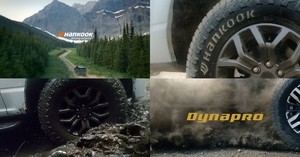
Hankook Tire launches new brand film for Dynapro SUV tire line in US
New brand film 'Rough Terrain' unveiled Film highlights on- and off-road driving technology Hankook Tire & Technology said Wednesday it unveiled a new brand film titled "Rough Terrain" for its SUV tire brand Dynapro in the United States on Tuesday. The film is the first the company has released in the US market since 2024. Moving away from a conventional off-road-focused narrative, it was designed to convey Dynapro's versatility and driving performance across a range of on- and off-road environments and everyday moments, while emphasizing the brand's value of bridging adventure and daily life. The film uses the metaphor of "rough terrain" to represent the unpredictable situations drivers encounter in their daily lives. It opens with an SUV fitted with the Dynapro AT2 Extreme — Hankook Tire's all-terrain tire for both on- and off-road use — powering through muddy tracks and gravel roads, then cuts to realistic everyday scenes such as a hypermarket parking lot, a coffee spill and a carpool. The Dynapro lineup is designed to match drivers' lifestyles, from off-road adventures to everyday urban commutes. For drivers who enjoy off-road and outdoor activities, the range includes the Dynapro MT2 extreme terrain tire, the Dynapro XT rugged terrain tire and the Dynapro AT2 Extreme. The on-road lineup rounds out the offering with the Dynapro evo AS, an all-season performance tire for SUVs; the Dynapro HPX, a premium comfort tire; and the Dynapro HT2, an all-season tire for SUVs and pickup trucks — covering customer needs across a wide range of driving conditions. Meanwhile, Hankook Tire & Technology has been strengthening its partnerships with automakers at home and abroad. Most recently, it supplied its Kinergy XP grand touring all-season tire — part of the Kinergy comfort tire brand — as original equipment for Hyundai Motor Company's eighth-generation fully redesigned The All New Avante.
Sept. 16, 2026
-
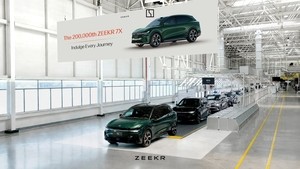
Zeekr 7X surpasses 200,000 units produced, tops 1,500 pre-orders in South Korea
200,000 units produced roughly two years after 2024 launch On sale in more than 50 countries across Europe, Oceania and beyond Pre-orders in South Korea exceed 1,500; deliveries set for October Sales and service network to expand nationwide Zeekr, the electric vehicle brand of China's Geely Automobile Group, has surpassed 200,000 cumulative units produced of its mid-size electric SUV, the 7X — roughly two years after the model entered the market in the second half of 2024. In South Korea, pre-orders have topped 1,500 units, with customer deliveries set to begin on a rolling basis in October. Zeekr said Wednesday that the 200,000th 7X rolled off the line at the Zeekr Intelligent Factory in Ningbo, Zhejiang Province. The 7X is a mid-size battery-electric SUV developed for the global market. Since its launch in the second half of 2024, the model has expanded beyond China into Europe, Oceania, Southeast Asia, and the Middle East and North Africa. Early sales momentum was strong. The model surpassed 10,000 cumulative deliveries within 25 days of launch, and in the roughly 15 months since entering the European market in May last year, it has expanded its reach to more than 50 countries and regions. In the first half of this year, the 7X ranked first in mid-size battery-electric SUV sales in Hong Kong, Australia, Malaysia, Mexico and Egypt. Global monthly sales held above 10,000 units in both July and August. Production is handled at the Zeekr Intelligent Factory in Ningbo, which applies 5G connectivity, AI and industrial big data throughout the manufacturing process. Some stages use a "dark factory" approach, minimizing human intervention and relying on automated equipment. The 7X is built on Geely Group's dedicated electric vehicle SEA platform. It has received five-star ratings — the highest available — from both Euro NCAP in Europe and ANCAP in Australia and New Zealand. Zeekr is also stepping up its push into the South Korean market. Zeekr Korea opened domestic pre-orders for the 7X on June 5 and said reservations have since surpassed 1,500 units. The 7X is the first model Zeekr has introduced in South Korea. Three trims are available — Pro, Max and Ultra — with starting prices of 52.99 million won ($39,200), 59.99 million won and 69.99 million won, respectively. The Pro is equipped with a 75 kWh lithium iron phosphate (LFP) battery, while the Max and Ultra use a 100 kWh nickel-cobalt-manganese (NCM) battery. Certified driving ranges on a single charge are 375 kilometers, 483 kilometers and 440 kilometers, respectively. Domestic pre-orders crossed 1,000 units within about a month of sales opening, with reservations concentrated in the higher trims. Zeekr is also building out service centers, including in Suwon. The brand has been expanding its touchpoints with South Korean consumers. A 7X pop-up store held at Starfield Hanam last month drew about 11,000 visitors over five days. Zeekr plans to extend both its sales network and service infrastructure on a nationwide basis. Zeekr Korea has recently opened additional showrooms in Gangdong and Dongdaemun in Seoul and plans to begin rolling out domestic deliveries of the 7X from October. "Reaching 200,000 units produced is certainly an important milestone, but Zeekr's journey does not end here," a Zeekr official said. "We will continue to manufacture every Zeekr vehicle to the strictest global standards and repay the trust that customers around the world have shown us." Zeekr's parent, Geely Automobile Group, is also rapidly expanding its electrification sales. Geely sold about 3.02 million vehicles worldwide last year, of which about 1.69 million were new-energy vehicles — a 90 percent increase from the previous year. Total sales in the first half of this year reached about 1.42 million units.
Sept. 16, 2026
-
Korean Air raises fuel surcharge for second straight month; New York one-way hits 362,600 won
October surcharge set at tier 23 MOPS average price at $158.57 per barrel, up 6% Easing won-dollar rate offers airlines some relief International fuel surcharges on Korean Air flights have risen for two consecutive months as renewed volatility in global oil prices pushed up the linked levy, the airline said Wednesday. Korean Air said the fuel surcharge for international flights departing South Korea and ticketed from Oct. 1 through Oct. 31 has been set at tier 23. As a result, passengers on the longest routes — including New York, Dallas and Boston — will pay a one-way surcharge of 362,600 won ($268). That marks a modest increase from September's tier 21 level, which carried a surcharge of 354,000 won. The October surcharge was calculated based on the average price of Singapore jet fuel (MOPS) from Aug. 16 to Sept. 15, which came in at $158.57 per barrel — up 6.22 percent from the previous period's $149.29. The rise in MOPS prices prompted the Ministry of Land, Infrastructure and Transport to move the applicable surcharge tier higher. The international fuel surcharge system allows airlines to pass on a portion of rising fuel costs through ticket prices. Surcharges are divided into 33 tiers. The level hit a peak of tier 33 in May in the wake of the Iran war, before easing to tier 27 in June and tier 19 in July, then falling further to tier 14 in August. A renewed climb in oil prices would add to the financial burden on carriers. Fuel costs account for roughly 30 percent of an airline's total operating expenses, making them the single largest cost item. According to Korean Air's business report, the carrier's estimated annual fuel consumption for this year, based on first-quarter projections, stands at approximately 30.5 million barrels. That means every $1-per-barrel change in the MOPS price translates to a $30.5 million swing in profit or loss. Airlines can offset some of the increase by raising fuel surcharges, but there is a lag between a rise in jet fuel prices and its reflection in the surcharge, and carriers cannot pass the full cost on to passengers. The surge in global oil prices reflects overlapping supply disruptions around the Strait of Hormuz and the Bab el-Mandeb Strait. Major oil producers in the Persian Gulf have already been struggling to move crude through the Strait of Hormuz amid the fallout from the US-Iran war. Concerns about shipping disruptions widened Thursday, when Houthi forces seized Mocha, tightening their grip on the Bab el-Mandeb Strait — the southern gateway to the Red Sea. However, the won-dollar exchange rate falling back into the 1,300-won range has offered airlines some relief from the double burden of high oil prices and a weak currency. Airlines pay for fuel and aircraft leases in dollars, so a stronger dollar raises their costs. According to Korean Air's business report, a 10-won shift in the exchange rate produces roughly 56 billion won in foreign-currency valuation gains or losses and about 16 billion won in cash flow changes.
Sept. 16, 2026
-

LG affiliates gather at AI DevCon 2026 to share development achievements
Nvidia, Microsoft showcase latest AI technology KAIST professor delivers keynote on physical AI trends LG Electronics hosted LG AI DevCon 2026, a developer conference dedicated to sharing know-how and achievements in AI-based software development. Organized by the LG Software Council, the event ran Tuesday and Wednesday at LG Science Park in Magok, Gangseo-gu, Seoul, drawing more than 1,500 developers from LG affiliates — including LG Electronics, LG CNS and LG Uplus — both in person and online. Exhibition spaces were set up where attendees could experience the latest AI technologies from Nvidia, Microsoft, Google Cloud, Amazon Web Services and LG AI Research. The keynote addresses were delivered by Jeong Ji-hoon, an adjunct professor at Daegu Gyeongbuk Institute of Science and Technology and founding partner of Silicon Valley-based investment firm A2G Capital, and Shim Hyun-chul, a KAIST professor widely recognized as a first-generation drone researcher in South Korea. Jeong spoke on how AI-based software development practices have evolved, while Shim outlined the latest trends in physical AI technology and the direction of its future development. LG Electronics shared the know-how and results it has accumulated by applying AI to software development for its proprietary smart TV platform, webOS. LG CNS presented its achievements in modernizing legacy systems using AI, and LG Uplus showcased results from using conversational AI agents in content production. LG Electronics launched the LG Software Developer Conference in 2022 and has since rebranded it as LG AI DevCon to reflect the shift toward AI-based software development environments. "We will actively share AI utilization experiences and innovation cases accumulated on the development front to accelerate AI-driven development innovation, and connect that to new value and services that customers can tangibly experience," said Kim Dong-wook, executive vice president and head of LG Electronics' Software Center.
Sept. 16, 2026
-
Micron offers record compensation, but Taiwan union rejects it — threatens strike unless 15% of operating profit shared
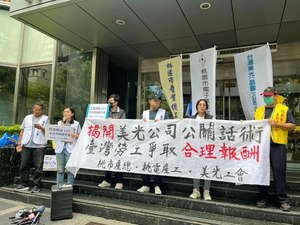
Micron proposes special bonuses and RSUs in largest-ever pay package Union demands profit-linked bonus system, not one-time payouts Samsung Electronics, SK hynix cited as models for performance pay Strike vote looms if mediation talks this week and next fail Micron Technology, the American memory chipmaker, has unveiled what it calls the most generous compensation package in its history — but its Taiwan union is pushing back, demanding that performance bonuses be tied to operating profit the way they are at Samsung Electronics and SK hynix. The union is calling for a permanent profit-sharing system funded by 15 percent of operating profit, and has signaled it could call a strike if the company does not change course. Micron announced its fiscal year 2026 performance compensation plan on Friday to roughly 60,000 employees worldwide. Taiwan employees who joined the company before Aug. 29, 2025 will receive a special cash appreciation bonus of NT$1 million (about 42.4 million won), with those hired after that date receiving a prorated amount based on their tenure. The package also includes annual performance bonuses and restricted stock units (RSUs) that vest over time. According to the company, total fiscal year 2026 compensation for Taiwan production workers will equal 35 to 68 months of base salary. Entry-level engineers stand to receive an average of NT$2.9 million (about 123 million won) in cash, or NT$3.4 million (about 144 million won) when RSUs are included. The union held a press conference at the American Chamber of Commerce on Tuesday, rejecting the offer. "We do not want a one-time bonus," the union said, criticizing the company's proposal. It argued that Micron's total payout amounts to only about 4.4 percent of operating profit, and called on the company to restructure its compensation along the lines of what it called "Samsunix" — a portmanteau of Samsung Electronics and SK hynix — by fixing performance pay at 15 percent of operating profit under a formal profit-sharing system. The union also pushed back on the company's framing of the package as worth "up to 68 months" of pay, arguing the figure was inflated. It said the calculation was based on lower-wage workers earning just over NT$30,000 (about 1.29 million won) a month and lumped together base salary, cash bonuses and RSUs — making the actual benefit appear far larger than it is. The union warned that if the company fails to provide a concrete response at mediation sessions scheduled for Friday and Monday, it will declare negotiations broken down and begin the process of holding a strike authorization vote. With more than 80 percent of workers at Micron's Taoyuan and Taichung facilities reported to be union members, a strike could meaningfully disrupt production. Taiwan's authorities are closely monitoring the dispute. The island's Ministry of Labor said it is tracking the situation and is in close contact with the Taoyuan and Taichung city governments and the Central Taiwan Science Park Administration. The park administration said earlier that while it respects the union's right to pursue its demands, a strike "would not only affect employees' livelihoods and company operations, but could also impact the supply chain of Taiwan's semiconductor industry and the broader economy," urging both sides to find common ground through dialogue. The administration said it will maintain contact with both labor and management and is prepared to facilitate negotiations or mediation proceedings if needed.
Sept. 16, 2026
-

Lexus Korea to host 2026 Lexus Masters from Oct. 29
Tournament runs Oct. 29–Nov. 1 at Club72 in Incheon Purse set at 1 billion won; winner to take home 200 million won Top KPGA players, including Team Lexus' Park Sang-hyun, to compete Lexus Korea announced Wednesday that it will hold the 2026 Lexus Masters at Club72 on Yeongjongdo in Incheon over four days from Oct. 29 to Nov. 1 to promote golf culture in South Korea. Now in its third edition, the Lexus Masters is an official Korea Professional Golf Association Tour event hosted by Lexus Korea and organized by the KPGA. The tournament is played in a four-round, 72-hole stroke-play format with a total purse of 1 billion won ($739,000), including a winner's prize of 200 million won. Since launching the Lexus Masters in 2024 under the theme "passion and cheers," Lexus Korea has sought to build a distinctive golf culture in which players and spectators share the experience together. The first two editions were particularly memorable for producing first-time winners who had persevered through long careers before breaking through. At the inaugural tournament, Lee Seung-taek claimed his first KPGA Tour victory — 10 years after his 2015 debut — to become the event's first champion. Last year, Kim Jae-ho won in his 210th KPGA Tour start since his 2008 debut, setting a record as the oldest first-time winner in KPGA Tour history. This year's field will feature defending champion Kim along with Team Lexus members Park Sang-hyun and Ham Jeong-woo, among the top 102 players on the KPGA Tour. The tournament will be held on the Ocean Course at Club72 in Incheon, a venue that has hosted numerous major domestic golf events. Organizers plan to set up spectator amenities and entertainment areas at key holes to enhance the gallery experience alongside course conditions designed to bring out the best in the competitors. Lexus Korea will continue its "passion and cheers" theme this year. A highlight will be the Masters Lounge at the signature ninth hole, a popular feature from previous editions where spectators can watch play up close and relax to upbeat music. A high-five zone where players and fans can interact directly will also be set up nearby. In addition, the gallery plaza inside the tournament grounds will showcase a range of Lexus electrification models, including the all-new ES battery electric vehicle, which is scheduled to go on sale Oct. 13. "Over the past two years, the Lexus Masters has been a tournament that has grown alongside new champions claiming their first victories," said Kang Dae-hwan, executive vice president of Lexus Korea. "This year, we will again support players in delivering their best performance for the advancement of Korean men's golf, while creating a tournament that embodies Lexus' distinctive golf culture — one where spectators can enjoy the competition in comfort and feel close to the players." Meanwhile, Lexus Korea has been expanding its customer touchpoints, recently opening a new showroom and service center in Dongtan, Hwaseong, Gyeonggi Province, to improve accessibility and service convenience for customers in the southern Gyeonggi region.
Sept. 16, 2026
-
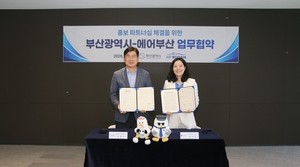
Air Busan, Busan team up to promote new routes and local tourism
MOU signed at Air Busan headquarters Tuesday SNS, in-flight magazine to spotlight Busan tourism and policy City's digital boards to carry new route and flight information Air Busan and the city of Busan will share their respective promotional channels to jointly publicize local tourism and flight route information. Air Busan announced Wednesday that it signed an MOU with the city of Busan on Tuesday at its headquarters in Gangseo-gu, Busan. Sales Division Head Song Myeong-ik and Busan city spokesperson Oh Mi-gyeong attended the signing ceremony along with other officials from both sides. At the heart of the agreement is a mutual exchange of online and offline promotional resources. Local festival and tourism information will be shared with Air Busan passengers, while the airline's new routes and flight schedules will be communicated to Busan residents. Air Busan plans to promote Busan festivals, tourism content and key city policy information through its official YouTube channel, Instagram and other social media platforms, as well as its in-flight magazine. The city of Busan will use outdoor digital billboards at City Hall and major intersections, as well as digital advertising boards at Busan Station and bus terminals. Those displays will carry information on Air Busan's new destinations, route details and flight services. "We have forged a meaningful partnership with the city of Busan that allows both organizations to share their infrastructure through public-private cooperation," Song said. "We will use a diverse range of promotional channels to deliver useful information to residents and customers, and continue to expand our mutual synergies." Meanwhile, Air Busan is also in the process of merging with Jin Air and Air Seoul. The three carriers approved a merger agreement at their respective board meetings last month, and Air Busan is set to be absorbed into Jin Air in March next year, pending shareholder approval and regulatory clearance. Once the merger is complete, Air Busan will cease to exist as a legal entity, but Jin Air will take over its existing routes, aircraft and staff. How the Busan-based international route network will be maintained and expanded after the integration remains a key concern for the regional aviation industry. Jin Air has said it plans to strengthen route competitiveness centered on Incheon and Busan, and develop new international routes departing from Busan as part of the merger process.
Sept. 16, 2026
-

Paraguay delegation visits KGM's Pyeongtaek factory; automaker to supply 20 Musso EVs
Paraguay's vice minister of industry visits Pyeongtaek factory Delegation reviews eco-friendly vehicle technology, production lines KGM to join government ODA electric vehicle pilot program KG Mobility (KGM) said Wednesday that a Paraguayan delegation — including the country's vice minister of industry and representatives from government agencies and institutions — visited its Pyeongtaek factory as part of a training program hosted by South Korea's Ministry of Trade, Industry and Energy. The meeting, held Tuesday at KGM's Pyeongtaek headquarters, brought together KGM CEO Hwang Ki-young, head of development and production Kwon Yong-il, Paraguayan Vice Minister of Industry Javier Viveros, and Yang Jeong-jik of the Korea Automotive Technology Institute. Participants reviewed KGM's latest technology trends, including electric vehicles, and discussed potential areas of cooperation. Following the meeting, the delegation toured the production line and visited the design center, where they observed the development process for the SE-10 — slated for release in early 2027 — as well as concept cars and full-scale clay models. The group also test-drove the Musso and Actyon Hybrid at the company's proving ground. South Korea's Ministry of Trade, Industry and Energy is pursuing the establishment of an automotive parts TASK Center in Paraguay as part of its official development assistance program. The Korea Automotive Technology Institute, the project's lead agency, will support the center's construction and operation, along with a pilot rollout of electric vehicles — including electric buses and small electric trucks — as well as the installation of charging stations and the creation of after-sales service centers. KGM will supply 20 Musso EVs for the pilot program. Paraguay plans to distribute the electric vehicles supplied through the project to government agencies for use in passenger transport and cargo operations on a trial basis, with the aim of building and expanding an electric vehicle ecosystem in the country. Latin American countries, including Paraguay, are channeling significant policy support into the adoption of eco-friendly vehicles and the transition of public infrastructure such as mass transit, backed by the region's abundant natural resources. Paraguay in particular stands out as a high-potential growth market for electric vehicles, given its vast electricity supply — anchored by the Itaipu hydroelectric dam, one of the largest in the world. "The Paraguayan delegation was able to directly verify KGM's eco-friendly vehicle technology and quality management capabilities during this visit," a KGM official said. "KGM products have earned recognition not only from general customers but also from the public sector in overseas markets, and we will continue to expand export volumes by securing sales channels through supply chain diversification — beyond government ODA projects — and growing our market presence." Meanwhile, KGM last month launched its brand in Myanmar, introducing an electric vehicle lineup that includes the Torres EVX and Musso EV as it moves to tap that market in earnest. The company plans to accelerate its global push by sequentially expanding knockdown assembly operations in Saudi Arabia and Vietnam, starting from its Myanmar entry.
Sept. 16, 2026
-
G car targets holiday travelers with up to 65% off rentals
50,000-won vouchers hidden in 500 vehicles nationwide from Monday Total prize pool worth 25 million won; valid through year-end Up to 65% off rental fees during Chuseok, National Foundation Day holidays Lotte Rental's G car will hide 50,000-won ($37) vouchers in 500 of its car-sharing vehicles nationwide ahead of the Chuseok and National Foundation Day holidays, while also offering rental and insurance discounts targeting travelers during the holiday periods. Lotte Rental subsidiary Greencar announced Wednesday it will run a promotion called "Chuseok Golden Holiday, Golden Coupons Appear" through Oct. 5. The campaign combines an in-car voucher hunt with early-booking discount coupons for customers who reserve ahead of the holidays. The "Find the Golden Coupon in G car" event runs from Monday through Oct. 5. Five hundred vehicles operating across the country will each have a 50,000-won voucher placed inside at random, bringing the total prize pool to 25 million won. Customers who find a voucher in their rented vehicle and register it through the G car app will receive the 50,000-won credit, which can be used through Dec. 31. Early-bird discounts tied to the Chuseok holiday will be offered in three separate rounds. The first round of Chuseok early-bird coupons is available for download through Wednesday and can be used from Sept. 24 to Sept. 27. Rentals of 30 hours or more receive a 60 percent discount on the rental fee and 20 percent off insurance, while rentals of 48 hours or more qualify for a 65 percent rental discount and 20 percent off insurance. The second round of coupons is available for download from Thursday through Monday. The rental duration requirements and rental-fee discount rates are the same as the first round, but the insurance discount is reduced to 10 percent. The structure is designed to reward customers who lock in their holiday plans earliest with a larger insurance discount. Coupons for the National Foundation Day holiday will be available from Tuesday through Sept. 30 and apply to vehicle use from Oct. 3 to Oct. 11. Rentals of 24 hours or more receive a 60 percent rental discount and 15 percent off insurance, while rentals of 36 hours or more qualify for a 65 percent rental discount and 15 percent off insurance. "Because reservations tend to concentrate in specific time slots during holidays, we designed the coupons to give greater benefits to customers who plan early," a Greencar official said. "We also wanted to add an element of fun to the rental experience itself, through events like the golden coupon hunt." Meanwhile, G car has been revamping its services, including integrating AI into the booking process. Earlier this month, the company launched a conversational "G car AI Booking" service that lets users find available vehicles by entering their desired location, time and vehicle type by voice or text. Greencar launched its car-sharing service in 2011 and rebranded to Lotte Rental's G car in September 2024. The service has accumulated about 5.34 million registered members as of this year and operates roughly 7,400 vehicles and more than 2,500 rental locations nationwide.
Sept. 16, 2026
-
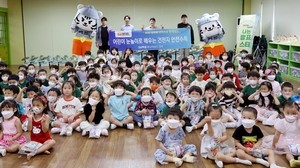
SM Vexcel holds battery safety education program for children
Program held Tuesday at kindergarten in Gumi, North Gyeongsang Province SM Vexcel's battery business division, a manufacturing affiliate of SM Group, held a hands-on battery safety education program for children at a kindergarten in Gumi, North Gyeongsang Province, on Tuesday, the company announced Wednesday. The outreach program — which covers proper battery use and safety practices — is planned, developed and run entirely by the company's "junior board," a group led by MZ generation employees. Now in its seventh session since launching last year, the program combines fresh ideas from younger staff with the company's expertise as a battery specialist to prevent battery-related accidents and promote safe usage habits. Employees tailored the session to young children, using age-appropriate visuals and hands-on activities to help them learn battery safety rules naturally and easily. Mascot characters "Baekcheolie" (a white tiger-battery hybrid) and "Baekserie" (a white tiger-Seri hybrid) also appeared at the event to keep children engaged and entertained. The curriculum covered how to replace and store batteries, how to prevent leakage and accidental ingestion, and how to properly sort used batteries for recycling. "As a battery and cell specialist, producing and selling quality products is important — but helping consumers use those products safely and correctly is an equally vital responsibility," said Chief Executive Choi Se-hwan of SM Vexcel's battery business division. "Battery safety education for children is a meaningful practice that brings the values of safety and environmental awareness into everyday life, and we will develop it into a model case for community-rooted ESG management." Meanwhile, SM Vexcel's battery business division has been actively working to strengthen its technological competitiveness. The division is collaborating with a US-based global automaker on a project to develop design, manufacturing and evaluation technology for cylindrical secondary batteries using lithium-manganese-rich (LMR) cathode materials — a next-generation cathode — and to build a systematic framework for verifying the performance of new materials.
Sept. 16, 2026
-
KOTRA hosts green tech export forum alongside World Climate Expo
Buyers from 10 countries visit for 200-plus consultations 77 Korean firms meet 30 overseas buyers, project owners Vietnam ESS, Serbia water treatment needs identified As the Russia-Ukraine war and conflicts in the Middle East have heightened the importance of global energy security, South Korean green technology companies are moving to capture overseas markets for renewable energy, energy storage systems (ESS), power grids and carbon reduction projects. The Ministry of Trade, Industry and Energy and the Korea Trade-Investment Promotion Agency (KOTRA) announced Wednesday they will hold a "Climate, Energy and Environmental Industry Export Consultation" event in conjunction with the World Climate Expo (WCE) in Busan. KOTRA organized the forum in partnership with the Korea Energy Agency, BEXCO and the Korea Meteorological Industry Promotion Agency to help domestic green tech companies expand into overseas markets. The recent energy crisis stemming from the Middle East and the reshaping of global supply chains have highlighted the risks of dependence on specific imported fuels and supply routes, prompting major countries to accelerate efforts to diversify their power generation mix. According to the International Energy Agency (IEA), renewable energy and nuclear power are expected to account for more than 70 percent of global power generation projects in 2026. Meanwhile, investment in fossil fuels has declined for three consecutive years. The push to diversify power sources is also driving greater investment in related infrastructure such as power grids and storage systems. The IEA projects global grid investment in 2026 will reach $550 billion to ensure stable electricity supply. As investment in renewable energy, ESS and energy efficiency grows, domestic companies with competitive strengths in power generation, transmission and distribution are expected to find expanding opportunities abroad. Major countries' efforts to reduce dependence on specific nations and products for energy security reasons are also seen as an opportunity for Korean firms. Last year, South Korea's exports of power equipment reached $16.5 billion, up 6 percent from the previous year. For the forum, KOTRA invited 30 promising buyers and project owners from 10 countries across Europe and Asia, including Vietnam and Serbia. The agency plans to arrange more than 200 one-on-one business consultations between the overseas delegations and 77 domestic green tech companies, and will support the signing of two MOUs in the field of ion exchange resins used for water quality management at nuclear power plants. Company T, a Vietnamese renewable energy developer and operator, visited South Korea to find ESS and energy efficiency technologies for a 1.5-gigawatt renewable energy project. A company official said they had signed a non-disclosure agreement with a Korean firm met at last year's WCE for the introduction of ESS products, and that the company plans to identify additional partners through this forum. An official from the Hanoi Department of Industry and Trade also attended the forum to identify and engage Korean companies that can contribute to national priorities including energy efficiency, grid stabilization and environmental industry development. The event also provided an opportunity to discuss ways to boost industrial exchanges between Busan and Hanoi. A seven-member delegation from Serbia, including representatives from state-owned shipping company J, visited South Korea. Company J expressed interest in adopting new technologies in waste treatment, water treatment and renewable energy to support clean river and port operations. Company G, a state-owned Algerian cement manufacturer, also visited to find technologies that can reduce carbon emissions from cement production and improve energy efficiency. KOTRA President Kang Kyung-sung said demand for energy-driven green transformation among major countries has grown in the wake of the Russia-Ukraine war and the US-Iran conflict. "K-power and green tech companies are already delivering results in the United States and Europe," he said. "We will follow up on the leads identified at this export forum to help them achieve greater success overseas."
Sept. 16, 2026
-
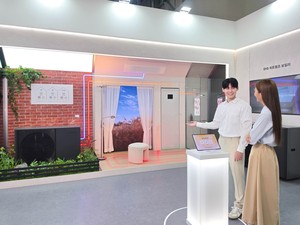
Samsung Electronics unveils Fläkt Group HVAC lineup at climate industry expo
Expo runs Wednesday through Friday at Busan's Bexco AI data center, industrial HVAC equipment on display 'EHS All-in-One' offers combined heating, cooling and hot water Top-rated energy-efficient appliances highlight power savings Samsung Electronics is showcasing a broad range of energy-saving solutions combining AI technology and high-efficiency appliances at the 2026 World Climate Industry Expo, which runs Wednesday through Friday at Bexco in Busan. The company set up a standalone exhibition hall spanning about 270 square meters, presenting energy-saving solutions ranging from home appliances to cooling systems for AI data centers and air-conditioning equipment for large commercial facilities. Front and center is the EHS All-in-One, the company's high-efficiency heat pump solution. The residential heat pump integrates cooling, heating and hot water supply through a single outdoor unit, offering better space efficiency and easier installation than conventional setups that require separate air conditioners and boilers. Also on display is the EHS All-in-One as a high-efficiency heating solution that uses ambient air and electricity to provide indoor heating and hot water. Samsung has been expanding the product's domestic rollout in connection with the government's initiative to promote electrification of residential heating. Samsung Electronics also unveiled the HVAC lineup portfolio of Fläkt Group, which it acquired last year. The display includes cooling solutions for AI data centers — where heat management has emerged as a critical challenge — as well as central air-conditioning systems for advanced industrial complexes and large buildings. The company also set up a SmartThings Pro space optimized for business-to-business environments, where visitors can see technology that monitors and controls real-time power consumption across multi-unit commercial facilities and smart buildings to maximize energy efficiency. In a lifestyle zone designed to resemble a real residential space, Samsung showcased top-rated energy-efficient appliances alongside an AI Energy Saving Mode powered by SmartThings. Other features introduced include AI-based remote diagnostics that analyze the condition of a customer's appliances, and software update support for up to seven years for Wi-Fi-enabled products. "This expo is an opportunity to demonstrate Samsung Electronics' comprehensive energy-saving capabilities, from high-efficiency home appliances to HVAC solutions for AI data centers and smart buildings," said Lim Sung-taek, executive vice president of Samsung Electronics' DA Division. "We will lead innovation in energy efficiency by combining our AI-based high-efficiency product technology with differentiated services that customers can rely on with confidence."
Sept. 16, 2026
-
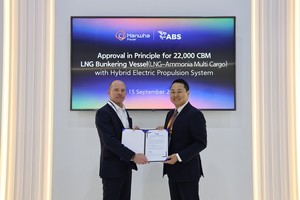
Hanwha Power wins approval for concept design of 22,000-cubic-meter LNG bunkering vessel
Approval granted by American Bureau of Shipping Vessel capable of carrying ammonia as well Hanwha Power said Wednesday it received approval in principle from the American Bureau of Shipping for the concept design of a 22,000-cubic-meter LNG bunkering vessel at Gastech 2026, the world's largest gas and energy exhibition, held in Bangkok, Thailand. With the approval, Hanwha Power has completed a full lineup of mid- to large-scale LNG bunkering vessels ranging from 7,500 cubic meters to 22,000 cubic meters. A key feature of the design is its dual-cargo capability, allowing the vessel to carry not only LNG but also ammonia — a next-generation eco-friendly fuel drawing growing attention in the industry. The design incorporates high-manganese steel cargo tank technology, enabling the vessel to adapt to future clean-fuel transitions with minimal design modifications. Taking into account the coastal operating patterns typical of bunkering vessels, the design introduces a hybrid electric propulsion system linking an onshore power supply with an energy storage system, minimizing harmful emissions during berthing and coastal navigation. The vessel also integrates core group technologies including dual-fuel generators, an energy storage system, an electric power and system integration unit, an integrated automation system and a cargo handling system. "This approval again demonstrates Hanwha Power's technical credibility and commercial viability in the global eco-friendly vessel market," said Kim Hun-min, head of Hanwha Power's ship solutions division. "We will continue to provide global shipowners with optimal integrated green solutions, drawing on the differentiated eco-friendly technology capabilities within our group." Hanwha Power established its ship solutions division in 2023 and has since been actively pursuing vessel conversion, eco-friendly fuel propulsion and energy efficiency projects.
Sept. 16, 2026
-
Hyundai Motor launches global safety council spanning 12 countries
Global One Safety Council debuts with first conference Over 40 safety officers from 12 countries gather Wednesday through Friday Three sessions held at Mabook, Yangjae and Ulsan Best practices to be shared, workplace safety standards to be unified Hyundai Motor has launched a global safety council to align workplace safety standards across its operations in South Korea, the United States, Europe, India, China and beyond. The initiative aims to create a system for sharing safety management practices accumulated separately in each country and applying them across other production and business sites. The company said it has established the Global One Safety Council, or GOSC, and will hold its inaugural conference in South Korea Wednesday through Friday. It is the first time Hyundai Motor has brought together safety officers from all of its global regions in one place. More than 40 safety personnel from 12 countries — covering the Americas, Europe, India, Asia-Pacific and China — will attend, along with Executive Vice President Choi Young-il, the company's chief safety officer. GOSC was created to share safety issues arising at individual sites and countries and to narrow gaps in safety management standards. The core idea is to allow accident-prevention methods and safety practices that have proven effective at one site to be adopted at operations in other countries. At the conference, Hyundai Motor will share best safety practices from each region and discuss ways to spread them across its global operations. The company will also examine how to establish common safety management standards applicable across all sites, while accounting for differences in national regulations and production environments. The three-day event is structured around a different theme each day — strategy, brand and production sites. On Wednesday, a "Global Safety Session" will be held at the Hyundai Motor Group Human Resources Development Institute's Mabook Campus in Yongin, Gyeonggi Province. Participants will share the company's overall safety strategy and discuss how to apply it at sites in each region. Thursday's "Brand Session" will take place at the Yangjae headquarters in Seoul and at Hyundai Motorstudio Seoul. The session will examine accident prevention not only as an internal production-floor concern but also through the lens of corporate trust and brand value. On the final day, Friday, the group will move to Hyundai Motor's Ulsan factory. Attendees will tour the production facility to observe the safety management systems and related technology in operation on the floor. Hyundai Motor's push to unify its global safety management framework reflects the growing importance of consistency across sites as its overseas production footprint expands. With a rising share of output coming from the United States, India and Europe, and as manufacturing processes and equipment grow more sophisticated, the need to share safety know-how accumulated at individual sites with other regions has also grown. "This conference is an opportunity to share the company's safety philosophy and strategy with our global safety leaders," Executive Vice President Choi said. "I hope it serves as a reminder that the safety of our employees is the top priority for Hyundai Motor to maintain its competitiveness as a global top-tier brand."
Sept. 16, 2026
-
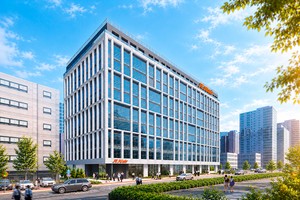
Jejuair to move into its first standalone headquarters next year
15,793-square-meter building near Gimpo airport 'Efficient work environment' cited Jejuair announced Wednesday that it will relocate to a standalone headquarters building in Gangseo-gu, Seoul, in the first half of next year. Since its founding in 2005, Jejuair has operated its Seoul office out of facilities belonging to Korea Airports Corporation at Gimpo International Airport. The move will mark the first time the airline has occupied its own dedicated building. The new headquarters is located near Gimpo airport, allowing the company to maintain convenient access to the airport while providing a larger and more efficient work environment. The building spans 10 above-ground floors and four below-ground floors, with a total floor area of approximately 15,793 square meters, and is expected to house around 500 employees handling administrative and support functions. However, the maintenance division, crew lounge and some field support departments that require close coordination with on-site operations will remain at their current Gimpo airport workplaces to ensure continuity and stability. Jejuair said it will proceed with interior space planning and facility setup before finalizing a detailed relocation schedule. Meanwhile, Jejuair is also strengthening its compliance management framework to prevent risks that could arise in transactions and contracts with affiliates and business partners. This month, the airline invited a legal expert from Kim & Chang to conduct a practical training session for staff on preventing fair-trade risks in dealings and contracts with affiliates and business partners.
Sept. 16, 2026
-
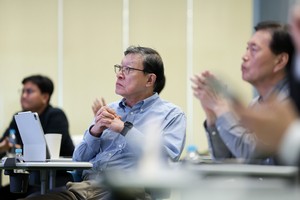
GS Group chief vows to build AI data center tech ecosystem with startups
Heo Tae-soo attends 2026 GS Ventures Tech Day This year's event centered on AI data centers 'Startup technology can be the key to unlocking AI data center bottlenecks,' he says GS Group Chairman Heo Tae-soo said the company will expand its engagement with startups to jointly build a domestic AI data center technology ecosystem. Speaking at the 2026 GS Ventures Tech Day held Tuesday at GS Tower in Gangnam-gu, Seoul, Heo said "startup innovation can be the key to unlocking the technical bottlenecks facing AI data centers." This year's event was organized around the theme of AI data centers. Seven startups — including six portfolio companies backed by GS Ventures — presented their technologies and explored opportunities for collaboration with GS Group affiliates. The participating companies showcased a range of technologies spanning power stabilization to GPU cloud operations. In the power sector, Synergy introduced a solution designed to improve the stability of power supply and energy efficiency for AI data centers. Vincen unveiled a hydrogen fuel cell solution for data centers built on technology developed in the maritime and shipping industry. In the memory chip sector, Axina presented an intelligent memory chip based on CXL (Compute Express Link) technology to ease data processing bottlenecks. On the cooling side, Coolmicro introduced a direct-to-chip liquid cooling solution that removes heat by placing a cold plate in direct contact with semiconductors, while SDT presented an immersion cooling system that dissipates heat by submerging servers in insulating coolant. In the operations segment, Elice Group presented a modular AI data center, and Vessel AI showcased GPU cloud technology optimized for AI computing workloads. Following the individual presentations, GS affiliate business managers and the startups held a networking session. Do Hyun-su, chief executive of GS AI Infrastructure — the dedicated subsidiary for AI data center projects — and his team also took part. GS said it plans to review technical validation and business applicability through follow-up discussions. GS is pursuing AI data center projects to meet rapidly growing demand for AI infrastructure. The company aims to begin completing data centers in phases from 2028 in Donghae, Gangwon Province, starting at 1.2 GW and later adding another 1.2 GW to reach a total capacity of 2.4 GW. GS Ventures, established in 2022, is GS Group's corporate venture capital arm. Through it, GS scouts startups across sectors including power and energy, semiconductors and memory chips, cooling, and cloud computing.
Sept. 16, 2026
-
Posco faces years of lean earnings as union demands pile pressure on steelmaker
Per-employee operating profit falls 44% in a year to 27 million won — less than half average pay Average salary: 57 million won Operating profit margin: 4.8% → 2.7% Global excess capacity forecast to reach 745 million tons by 2028 Domestic capital investment backlog exceeds 4.1 trillion won Union demands: 7.1% base pay rise, 600% bonus Posco is deepening its struggle with union risk. With the steelmaker's lean period expected to last at least four years amid global oversupply and sluggish demand, management and labor remain far apart on the scale of any wage increase. According to industry sources, Posco had 18,013 employees as of end-June, up 1.4 percent from a year earlier. Yet operating profit per employee in the first half of this year plunged to about 27 million won ($20,100) — a 44 percent drop in a single year. Sales rose, but profits fell sharply, dragging the operating profit margin down from 4.8 percent to 2.7 percent. Over the same period, average pay per employee edged up from 55 million won to 57 million won. The profit each worker generated amounted to less than half their average salary. The annual trend tells the same story of eroding profitability. In 2023, per-employee operating profit stood at about 115.8 million won, comfortably above the average salary of 109 million won. By 2024 it had slipped to 82.2 million won, falling short of the 114 million won average salary. Last year, per-employee operating profit came in at about 100.9 million won, again trailing the average salary of 118 million won. This year, the gap has widened further. Raw material costs have also climbed. The average price of coking coal Posco purchased in the first half of this year rose 32.5 percent to 355,000 won per ton, up from 268,000 won a year earlier. Nickel prices rose 23.5 percent, iron scrap 15.5 percent and iron ore 8.3 percent. Over the same period, average selling prices moved only modestly — hot-rolled products edged up from 869,000 won to 895,000 won per ton, while cold-rolled products rose from 1.07 million won to 1.08 million won per ton. OECD warns of deepening steel crisis as global glut set to grow through 2028 The trouble does not end this year. In its recently published Steel Outlook 2026, the OECD declared outright that "the steel crisis is deepening." According to the OECD, global steel excess capacity reached 640 million tons last year. Between 2026 and 2028, world steel demand is projected to grow by only 34 million tons, while new production capacity could increase by as much as 139 million tons. The global supply glut is expected to swell to 745 million tons by 2028 as a result. Global capacity utilization is also forecast to fall from 76 percent last year to below 74 percent by 2028. Demand recovery is also slow. The OECD projects world steel demand will grow just 0.4 percent this year after contracting 2.6 percent last year, with average annual growth through 2030 holding at only 0.9 percent. Combined steel demand from South Korea and Japan is expected to shrink from 100.98 million tons last year to 99.07 million tons by 2030, an average annual decline of 0.4 percent. The production outlook is bleaker still. Combined crude steel output from South Korea and Japan is forecast to fall from 141.9 million tons last year to 132.8 million tons by 2030, an average annual decline of 1.3 percent. Even if the global market grows modestly, South Korea's steel industry is unlikely to fully share in that recovery. For Posco, this means enduring structural pressure on its business for at least four years, through at least 2030. China ships 131 million tons of steel abroad, claiming 41% of global exports China poses the greatest threat. Chinese steelmakers exported a record 131 million tons of steel last year — a 153 percent surge from 2020. China's share of global steel exports soared from 19 percent in 2019 to 41 percent last year, even as total world steel exports fell 6.2 percent. China's own exports rose 13.8 percent over the same period. The Global Forum on Steel Excess Capacity also noted in a June report that China's share of global steel excess capacity climbed to 56.6 percent in the fourth quarter of last year. In the first quarter of this year, China's finished-product exports fell 9 percent year on year, but semi-finished product exports rose 28.8 percent — a sign that oversupply pressure has not eased. Protectionist barriers are rising around the world as well. According to the OECD, roughly 400 anti-dumping and countervailing duty measures on steel have been in force since 2016, with 75 new investigations launched last year alone. As measures targeting Chinese steel tighten, a spillover effect is emerging — volumes blocked from one market are flowing into others. Earnings shrink, but trillion-won investments loom: 'Hard to keep raising fixed costs' Posco is closing low-efficiency facilities and shifting its product portfolio toward high-grade steel, while building a 2.5-million-ton-per-year electric arc furnace in Gwangyang and pursuing a hydrogen reduction steelmaking demonstration plant, known as HyREX, in Pohang. Introducing AI-driven steelmaking and securing production bases in high-margin overseas markets are central to its survival strategy. The remaining capital expenditure on major domestic investment projects already under way exceeds 4.1 trillion won ($3.05 billion). Posco is also participating in a fully integrated electric arc furnace steelworks project in Louisiana, committing $582 million to the venture. Against this backdrop, the union is demanding a 7.1 percent base pay increase, a 600 percent bonus, 50 shares of employee stock, five years' worth of seniority-based pay increments and a 200 percent holiday bonus. If all demands were met, the company estimates the total cost would reach about 1.4 trillion won. Management has countered with a 2.0 percent base pay rise, a performance bonus of 3.5 million won and 500,000 won in local gift certificates. The company's position is that, with oversupply and the low-carbon transition set to weigh on the industry for years, it cannot afford to keep expanding fixed labor costs year after year. "Steel is a capital-intensive industry that constantly requires large-scale facility investment, and fixed costs, once raised, are hard to cut even when conditions deteriorate," an industry official said. "Both labor and management need to consider not just immediate compensation but also the structural changes the industry will face over the next several years." A Posco spokesperson said the company is maintaining normal production and shipments through available personnel and emergency response systems. "We are strengthening on-site management to prevent any impact on domestic demand industries, and we will do our utmost to reach a swift settlement that keeps the strike from spreading and allows labor and management to move forward together," the spokesperson said.
Sept. 16, 2026
-

HD Korea Shipbuilding & Offshore Engineering to supply propulsion system for South Korea's first commercial electric car ferry
Contract signed with Jeju Glass Bottom Boat Vessels to carry self-developed 4.4 MWh battery system To enter service on Seongsanhang–Udo route from 2027 Largest privately operated car ferry built domestically 'Opening of commercial coastal passenger vessel electrification market' HD Korea Shipbuilding & Offshore Engineering is moving to commercialize a fully electric car ferry — a vessel designed to carry both passengers and vehicles. The company, which serves as the intermediate holding company for HD Hyundai's shipbuilding operations, announced Wednesday that it recently signed a contract with maritime tourism operator Jeju Glass Bottom Boat to supply an electric propulsion system for two electric car ferries. The two vessels to be built under the contract will each measure 60 meters in length and 13 meters in width, displacing 450 tons, and will be capable of carrying 400 passengers and 20 vehicles simultaneously. HD Korea Shipbuilding & Offshore Engineering will handle the project on a turnkey basis, covering the supply of core electric propulsion components — including power conversion devices, electric thrusters and a power and energy management system — as well as system integration and sea trials. The vessels will be equipped with BADA-100, a marine battery system developed in-house by HD Korea Shipbuilding & Offshore Engineering. BADA-100 is a high-output, high-efficiency marine ESS with a total installed capacity of 4.4 MWh per vessel. Car ferries are considered well-suited to electric propulsion because they dock and depart frequently and often operate at low speeds near ports. Electric motors allow for fast, smooth power adjustment, enabling precise maneuvering. The reduced noise and vibration also make them advantageous on island routes with heavy tourist and resident traffic. The vessels will be built at a domestic shipyard and are scheduled to enter service sequentially from 2027 on the Jeju Island route between Seongsanhang and Udo. They will be the largest car ferries built domestically and operated by a private company, and the first to use a fully electric propulsion system. "This project marks the opening of the commercial coastal passenger vessel electrification market in South Korea, and builds on our track record of applying a DC-Grid system to the Taehwa, a whale-watching tourism vessel in Ulsan," an HD Korea Shipbuilding & Offshore Engineering official said. "We will continue to expand our eco-friendly propulsion solution business on the strength of our advanced technology and integrated capabilities in electric propulsion systems."
Sept. 16, 2026
-
Korean Air confirms $44.8b Boeing order for 103 aircraft
Firm contract signed for $36.2 billion aircraft purchase 103 Boeing jets to join fleet 21 spare engines, 15-year maintenance deal included Fleet modernization accelerates ahead of December merger Korean Air has finalized a massive purchase agreement to acquire 103 Boeing aircraft, with the total value reaching $44.8 billion when engine purchases and a long-term maintenance contract are included. The deal converts into a binding contract an investment and procurement plan the airline announced in Washington, D.C., last year, roughly a year after that announcement. Korean Air said Wednesday it had concluded a $36.2 billion agreement with Boeing covering 103 aircraft. The airline also signed separate deals with GE Aerospace and CFM International worth approximately $8.6 billion for spare engine purchases and engine maintenance services. The new aircraft span a wide range of categories, from long-haul widebodies to short-haul narrowbodies and freighters. The order covers 20 777-9s, 25 787-10s, 50 737-10s and eight 777-8F freighters. The 777-9 and 787-10 are large widebody jets suited for long-haul international routes, while the 737-10 is a narrowbody designed for medium- and short-haul operations. The 777-8F is Boeing's next-generation freighter, which Korean Air plans to use as it replaces its aging cargo fleet. Alongside the aircraft order, Korean Air will add 21 spare engines from GE Aerospace and CFM. The airline also signed a 15-year maintenance service agreement with GE Aerospace covering engines installed on 28 of the aircraft. Korean Air held a signing ceremony Tuesday afternoon at Conrad Seoul hotel in Yeongdeungpo-gu, Seoul. Hanjin Group Chairman Cho Won-tae attended alongside Stephanie Pope, president and CEO of Boeing Commercial Airplanes, and Gael Meheust, president and CEO of CFM. Industry Minister Kim Jung-kwan, US Ambassador to South Korea Michelle Steel, James Kim, chairman and CEO of the American Chamber of Commerce in Korea, and Hwang Ki-yeon, president of the Export-Import Bank of Korea, also attended. "It is deeply meaningful to see the commitment made in Washington last year come to fruition as a final contract," Cho said. "This agreement goes beyond a simple business transaction — it is a milestone of trust that further strengthens the solid economic and technological alliance between South Korea and the United States." He added that "if Boeing is the wings of Korean Air, GE Aerospace has served as the heart of our fleet," and pledged that the airline would "continue to provide the highest levels of safety and service and serve as a bridge connecting the two countries' exchanges and economic development, building on our longstanding partnerships with Boeing, GE Aerospace and CFM." Fleet overhaul gathers pace ahead of December merger The large-scale order is closely tied to Korean Air's fleet strategy following its merger with Asiana Airlines, which is set to officially launch as a combined carrier on Dec. 17. With the two airlines' aircraft and routes coming under a single operating structure, the merged entity will need to simplify its fleet types over the long term and replace older jets with newer models. Korean Air is also pressing ahead with merger preparations on other fronts. On Tuesday, the Korea Fair Trade Commission gave final approval to the plan for integrating the two airlines' mileage programs. Starting in November, Asiana Airlines reservation and ticketing information for flights departing after Dec. 17 will be migrated in stages to Korean Air's systems. The intensifying competition for aircraft also factored into the timing of the deal. Travel demand has rebounded sharply since the COVID-19 pandemic, but production disruptions at major manufacturers including Boeing and Airbus have stretched delivery lead times. Korean Air decided to place orders well in advance to reduce the risk of supply delays. The new aircraft also offer lower fuel consumption and carbon emissions compared with existing jets. Korean Air plans to introduce the 777-9, 787-10 and other next-generation models in stages to improve operating efficiency on long-haul routes while gradually retiring older aircraft. The government and state-backed financial institutions played a role in the deal. The Export-Import Bank of Korea and other institutions have been reviewing and coordinating financing support for the large-scale purchase. Individual aircraft can cost hundreds of billions of won apiece, and deliveries are spread over multiple years, making long-term funding arrangements critical. The agreement also deepens Korean Air's ties with Boeing, a relationship spanning decades during which the airline has operated Boeing passenger jets and freighters and relied on GE Aerospace and CFM engines across its main fleet. "The fact that the MOU signed in Washington last year has led to a final contract was made possible by the unwavering trust and cooperation of the governments, financial institutions and partners of both South Korea and the United States," a Korean Air official said. "Korean Air will continue to strengthen its future competitiveness through the introduction of next-generation aircraft and collaboration with global partners, and will contribute to promoting exchanges and economic cooperation between the two countries."
Sept. 16, 2026
-
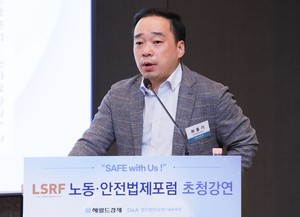
'Bosses can be victims too' — workplace harassment must be treated as corporate risk, expert says
Herald Business-Daeryuk Aju labor and safety law forum Choi Hong-gi, Korea Employment and Labor Education Institute professor Harassment-linked illness or death can qualify as serious industrial accident Subordinates can be perpetrators if they exploit relational advantage Workplace harassment should be treated not as a simple interpersonal conflict but as a legal and organizational risk that companies must manage proactively, an expert said Wednesday. With cases of subordinates using collective or relational leverage to harass their superiors on the rise, companies need to build prevention and management systems covering the entire organization regardless of rank, he said. Choi Hong-gi, a professor at the Korea Employment and Labor Education Institute, made the remarks at an invited lecture during the "Labor and Safety Law Forum on Serious Accident Prevention," co-hosted by The Herald Business and law firm Daeryuk Aju at The Plaza hotel in Jung-gu, Seoul. "Workplace harassment is a hazardous risk factor that arises within the workplace," Choi said. "Rather than responding after an incident occurs, it is important to build a system that diagnoses, prevents and manages the risk in advance." Choi, who lectured on "Key Issues and Practical Responses to Workplace Harassment Through Recent Cases," previously served as a visiting researcher at the Presidential Future Planning Committee and as an expert member of the Economic, Social and Labor Council. He currently sits on the specialized harassment judgment committees at the Busan and Daejeon Employment and Labor Offices and serves as a public-interest member on the Gangwon Province Regional Labor Relations Commission. Choi urged companies to treat workplace harassment as an occupational safety risk. "If the perpetrator is a manager or officeholder within the company, the company itself could be held jointly liable for failing to actively prevent and manage the behavior," he said. "Not only the individual but also the company can be held liable for damages, which is why risk must be managed as a matter of prevention." He also said workplace harassment can go beyond organizational conflict to constitute a serious industrial accident risk. "If a worker dies or develops a causally linked illness as a result of harassment, it can be recognized as a serious industrial accident," Choi said. "That makes workplace-level prevention and hazard management essential." Cases that break from the traditional pattern of superiors harassing subordinates are also becoming more common. "The typical pattern is a superior harassing a subordinate, but cases of subordinates harassing superiors are increasing," Choi said. "Because subordinates are often a group or a majority while the superior or officeholder is an individual, a relational advantage stemming from numbers can be established." Court rulings have also shown a growing tendency to interpret "relational advantage" broadly, looking beyond formal rank. Choi cited cases in which subordinates were found to have committed harassment by demeaning or insulting a superior's title, spreading discord, or pressuring the superior to join a union. He also noted that using a superior's internal reputation or workplace standing against them — in effect exerting influence over that person — can constitute harassment when the severity and repetitiveness of the conduct are taken together. However, Choi stressed that not every unpleasant experience or conflict at work qualifies as harassment. "Distress is not harassment," he said. "Harassment is a new category of unlawful conduct regulated by law, and there must be substantial grounds to conclude that labor rights or personal rights have been violated." He added that simply feeling displeased or dissatisfied does not establish harassment, and that the legal threshold recognized by the courts is considerably higher. He also said that when assessing whether harassment has occurred, individual acts should not be evaluated in isolation but in their full context. Private errands or instructions with no legitimate business purpose can be recognized as harassment, and even work-related conduct can become problematic if carried out through verbal abuse, insults or other means that fall outside accepted social norms. By contrast, a superior returning a document for approval or ordering corrections to fix a work error — where legitimate business necessity and proportionality are present — would generally not be considered harassment. Choi also called on companies to establish clear principles around the misuse or abuse of the right to file harassment complaints. "The law broadly protects the right to file complaints, but it does not recognize complaints that are not legitimate," he said. "There are cases in which disciplinary dismissal has been upheld where an employee pressured a company by threatening to file a harassment complaint in order to receive unemployment benefits, or where an employee filed a false complaint and fabricated evidence to avoid disciplinary action." He said companies should make clear the CEO's commitment to eradicating harassment, update their employment rules and internal regulations, and conduct advance checks on organizational culture, work practices, and departments, job categories or age groups where incidents recur. "Workplace harassment training should move beyond explaining concepts and instead provide specific guidance on the company's own rules, prohibited conduct, and the reporting, investigation and response process," Choi said. "Workplace harassment is not simply a matter between individuals — it is an organizational issue," he said. "Examining whether the organization's communication style, leadership, division of duties, and allocation of authority and responsibility are functioning properly, and diagnosing and improving organizational culture, is the fundamental purpose the system is designed to serve."
Sept. 16, 2026
MOST READ
- 1What was Rachmaninoff's performance fee? A 1928 price list tells all
- 2Korea Expressway Corporation uses AI to crack down on toll evaders
- 3Pope Leo XIV declines French honors and banquet, accepts only private meeting with Macron
- 4Samsung Biologics union's show of force backfires at the bargaining table
- 5APR says hair-loss treatment research published in international journal
- 6Xi Jinping health rumors resurface after BRICS dinner no-show
-
WORLD
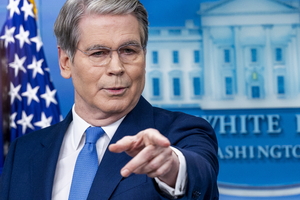
US warns of punishment for anyone enabling Iran's Strait of Hormuz toll scheme
-
INDUSTRY
Toyota union puts productivity first; Hyundai Motor union demands bigger share of profits
-
FINANCE
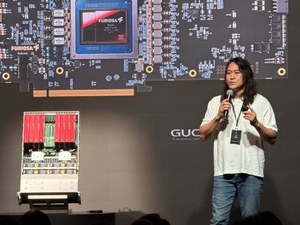
National Growth Fund to invest $531M in FuriosaAI, which rebuffed Meta's $800M takeover bid
-
INDUSTRY
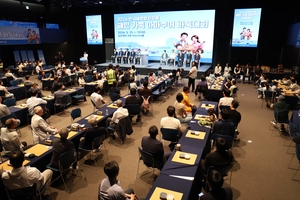
Korea Shipowners' Association holds amateur baduk tournament for Maritime Day