
- HOME
- INDUSTRY
-
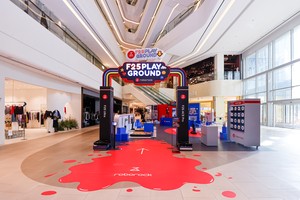
Innocean-S expands customer experience business with Roborock, Hillstate pop-ups
Social marketing subsidiary of Innocean Designs immersive brand experiences beyond simple exhibitions Innocean-S, the social marketing subsidiary of Innocean, has staged back-to-back pop-up stores for Roborock and Hyundai Engineering & Construction's Hillstate brand, showcasing its growing customer experience (CX) capabilities across both online and offline channels. From Sept. 3 to 13, Innocean-S planned and operated the "F25 Playground" pop-up store at Starfield Suwon, featuring Roborock's new F25 series. Built around the concept of "cleaning as play for everyone," the pop-up was designed as a space where visitors of all ages could discover the joy of cleaning, free from the burden of household chores. Rather than listing product specifications, the store let customers experience the F25's performance firsthand through water gun games and arcade mini-games. At the 29CM HOME Seongsu flagship store in Seongsu-dong, Seoul, Innocean-S unveiled the "Find My Hillstate" pop-up marking the 20th anniversary of Hyundai E&C's Hillstate brand. The event was designed to help the MZ generation engage with the refreshed Hillstate through play and embrace it as their own brand. Visitors explored Hillstate's brand values, wrote personal lifestyle manifestos and stamped them as their own — an interactive experience tied to a social media verification event, designed to turn offline engagement into viral online reach. Building on these projects, Innocean-S plans to continue rolling out a differentiated "omnichannel CX solution" that connects pre-event audience building, immersive on-site experiences and post-event social amplification into a single seamless offering. The company also intends to expand its service scope beyond pop-up stores to cover every touchpoint where customers and brands meet, including brand collaborations and spatial branding. Launched in January 2024, Innocean-S positions itself as an "innovative solutionist" — tackling the full range of challenges brands face from A to Z — and has been broadening its reach from social media into offline spaces and brand experiences. "Social media is the touchpoint where you can discover customer reactions and preferences most quickly," said Lee Yun-kyung, chief executive of Innocean-S. "We will expand the consumer insights and content capabilities we have built through social into offline spaces and experiences, providing an integrated CX solution that organically connects every moment where brands and customers meet."
Sept. 17, 2026
-
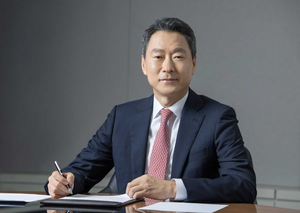
Samsung Electronics Service wins CEO customer satisfaction award for 2nd consecutive year
Vice President Kim Young-ho honored again following last year's win Award built on 'customer-first' management philosophy Reservation system rolled out across all service centers AI-based remote services continue to expand Samsung Electronics Service has won the customer satisfaction award in the CEO category at the 2026 Korea Management Grand Prix for the second consecutive year. The company said Thursday that Executive Vice President Kim Young-ho was named the award recipient in the customer satisfaction category this year, following his win last year. The Korea Management Grand Prix is a program organized by IPS and sponsored by the Ministry of Trade, Industry and Energy and the Ministry of SMEs and Startups, among others. It recognizes companies and CEOs that have contributed to national industrial and economic development. Kim was recognized for raising the convenience and accessibility of service offerings and driving AI-based service innovation, grounded in a "customer-first" management philosophy. Samsung Electronics Service introduced a reservation system across all of its service centers nationwide starting in April. The system allows customers to book appointments in advance to reduce wait times. The company said customer satisfaction scores and the share of advance reservations have both risen steadily since the system's introduction. For remote islands and mountainous areas where visiting a service center is difficult, the company regularly operates mobile service center vehicles equipped with mobile phone diagnostic tools. On-site home appliance repair services are also available. The company also runs a home appliance remote diagnosis service linked to SmartThings. The service remotely assesses product conditions, allowing some issues to be resolved without an engineer visit. Samsung Electronics Service has also continued disaster relief activities. When floods or wildfires occur, the company dispatches a special disaster recovery service team to clean, inspect and repair home appliances free of charge. When heavy rains caused damage in South Gyeongsang Province in August, the company sent a special service team to inspect and repair flood-damaged appliances. "Winning the Korea Management Grand Prix customer satisfaction award for two consecutive years is the result of every employee putting our 'customer-first' philosophy into practice," Kim said. "We will continue to do our best to provide services that satisfy our customers." Samsung Electronics Service also ranked first in all categories — home appliances, mobile phones and computers — in this year's Korean Standard-Service Quality Index (KS-SQI), extending its record to 25 consecutive years at the top, the first in the consumer electronics after-sales service industry to achieve the feat.
Sept. 17, 2026
-
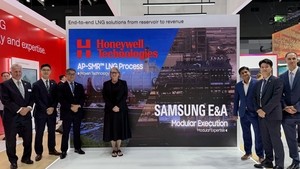
Samsung E&A unveils LNG module package at Gastech 2026
Samsung E&A makes formal push into LNG plant market Package combines Honeywell process technology with Samsung E&A's modular expertise Covers full project cycle from early development through EPC Can cut overall project schedule by about 20% Samsung E&A on Thursday announced it had unveiled an "LNG Module Package" for the construction of LNG liquefaction plants at Gastech 2026, held Wednesday in Bangkok, Thailand. Gastech is the world's largest exhibition covering natural gas, LNG, low-carbon solutions and energy AI. Samsung E&A's LNG Module Package modularizes the key processes of an LNG liquefaction plant and delivers them as an integrated package. It is particularly optimized for small and mid-scale LNG liquefaction plants. The package combines Samsung E&A's modular technology with the single mixed refrigerant (AP-SMR™) liquefaction technology of Honeywell Technologies, a globally recognized LNG technology licensor. The package pre-engineers and modularizes key processes as an integrated solution, shortening the timeline across the entire project cycle — from early-stage development through engineering, procurement and construction (EPC) — and cutting the overall project schedule by about 20%. The modular construction method prefabricates major equipment at a factory or in yards before assembling it on-site, minimizing field work and offering advantages in quality assurance and schedule management. LNG emits less carbon than conventional fossil fuels, and demand for LNG production facilities is expected to expand as consumption rises amid a recent surge in power demand. A key strength of the pre-engineered package is its ability to provide clients with rapid, detailed technical and project information from the earliest stages of development. Meanwhile, Samsung E&A plans to use the package to get ahead of growing demand for modularization, centered on small and mid-scale LNG liquefaction plants, and to expand its LNG business. Earlier this year, the company restructured its business portfolio into three segments — petrochemicals, advanced industries and new energy — designating LNG as a key growth pillar within new energy.
Sept. 17, 2026
-
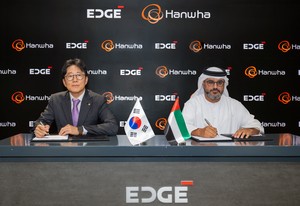
Hanwha Systems teams up with UAE defense giant to build integrated air defense network
Signs term sheet with Edge Group Hanwha Systems said Thursday it signed a term sheet with UAE defense conglomerate Edge Group in Abu Dhabi on Wednesday (local time) to cooperate on building an integrated air defense network in the UAE. The agreement sets out the direction for introducing weapons systems and lays out a phased review process for the joint air defense network project. Hanwha and Edge Group plan to flesh out detailed project plans in stages, in line with the two governments' defense cooperation framework. The companies will work through the necessary government approvals and consultations before exploring the establishment of a local joint venture, as well as production and operational arrangements. Localization efforts to strengthen defense manufacturing and maintenance capabilities within the UAE will also proceed in phases. Hanwha has previously supplied components for the Cheongung-II medium-range surface-to-air missile system to the Middle East market, including its multifunction radar, launchers, launch tubes and munitions. Through the strategic partnership with Edge Group, the company aims to expand its role beyond supplying individual weapons systems to participating in the broader integrated air defense network project. The two sides also plan to link long- and medium-range surface-to-air missile systems with counter-drone systems and short-range air defense capabilities, with the goal of building an integrated air defense network that can lead the global air defense market alongside the UAE. Hanwha intends to develop the UAE into a strategic hub for expanding into the Middle East and third-country markets, and will continue to identify joint business opportunities in global markets from that base. "This term sheet signing marks a turning point as Hanwha and Edge evolve beyond a one-off weapons supply relationship into a strategic partnership that shares integrated air defense technology and industry," Hanwha Systems CEO Yang Ki-won said. "We will expand technological cooperation and localization step by step to contribute to strengthening the UAE's defense industrial base." Edge Group CEO Hamad Al Marar said the cooperation goes beyond procuring individual weapons systems and is focused on expanding the UAE's self-reliant defense capabilities and local industrial base. "Edge Group will work with Hanwha to build a sustainable foundation for industrial cooperation," he added. This is not the first time Hanwha and Edge Group have joined forces. Last year, Hanwha Aerospace signed a memorandum of understanding with Edge Group centered on the joint development of a smart radar AI platform.
Sept. 17, 2026
-
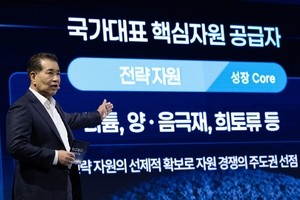
'Speed is the key to survival': Posco Group chair rallies executives behind Triple Core strategy
'2026 Posco Forum' held Thursday and Friday in Incheon Triple Core execution plan unveiled in July now being refined Steel localization, lithium, rare earths and energy growth strategies on agenda Physical AI-based autonomous manufacturing also reviewed Posco Group Chairman Jang In-hwa gathered all of the group's executives to press for faster execution of the "Triple Core" strategy spanning steel, lithium and energy. Having laid out the blueprint in July, the focus this time shifted to finding concrete answers: where to invest and which markets to target first. Posco Group held the "2026 Posco Forum" Thursday and Friday at the Posco Global R&D Center in Songdo, Incheon, under the theme "Seize future value on a new competitive playing field." The Posco Forum is a gathering where group executives discuss the medium- to long-term business environment and growth strategies. This year's discussions centered on strengthening the execution of Triple Core — a unified growth strategy linking steel as an industrial resource, lithium, cathode materials, anode materials and rare earths as strategic resources, and LNG and renewable energy as energy resources. Underlying the push is a recognition that relying on steel alone will not sustain long-term growth. At the CEO Investor Day in July, Posco Group unveiled plans to restructure its business portfolio by maintaining steel competitiveness while expanding the profit contribution from resources and energy. The targets are ambitious. The group aims to grow combined sales from 116 trillion won ($85.7 billion) last year to 187 trillion won by 2035, and to lift operating profit from 2.2 trillion won to 13.1 trillion won over the same period. To achieve this, the group plans to invest a total of 29.1 trillion won between 2026 and 2028. "In a period of great transformation — where geopolitical realignment and technological paradigm shifts are redrawing the competitive landscape — speed of execution is the key to survival," Jang said. "To complete the Triple Core strategy and successfully expand into a resource-centered business, we must read the direction of change ahead of others and find clear answers to what we need to prepare and how quickly we can adapt." He added: "Let us open a new path to growth through bold goals and decisive action." The key priorities Jang set out at the forum were localizing the steel business, securing early positions in key markets for lithium and rare earths, and strengthening the energy business as a buffer. Given that market conditions and growth stages differ across each business, he called for differentiated growth strategies tailored to each area rather than a single formula applied across the board. The Triple Core initiative is already moving into the investment and financing phase. Posco Holdings this month raised 2.5 trillion won by disposing of some of its stakes in POSCO International and Posco DX, retaining only enough to maintain management control and monetizing the excess holdings. The proceeds are earmarked for investment in future strategic resources such as lithium. The forum was organized around three sessions: how the competitive landscape is changing, where and how to compete and grow, and how to see the transition through to completion. External expert lectures, conversations and panel discussions examined shifts in the global industrial order and cases of corporate portfolio restructuring. The keynote address was delivered by Dominic Barton, board chairman of global mining company Rio Tinto. He examined how geopolitical and technological changes affect corporate value and presented cases of global companies that achieved growth by restructuring their business portfolios or concentrating investment in core operations. Physical AI — connecting artificial intelligence directly to manufacturing equipment — was also a major agenda item. Posco Group reviewed how to apply autonomous manufacturing technology, in which production facilities make independent judgments and adjustments based on data, across business sites including steel operations, with plans to identify medium-term implementation tasks going forward. Based on the discussions at the forum, Posco Group said it will set priorities for each Triple Core business and draw up specific execution plans.
Sept. 17, 2026
-
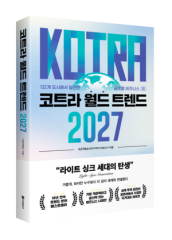
'Own less, date AI': KOTRA names 10 trends to watch in 2027
132 overseas offices in 86 countries map out shifts 10 keywords include 'low-power mode generation' Forum set for Saturday at Kyobo Book Centre in Seoul Choosing ultra-cheap products over expensive ones, seeking temporary companions only when needed, and forming emotional bonds — even romantic ones — with AI rather than other people: these are no longer the stuff of science fiction. The Korea Trade-Investment Promotion Agency announced Thursday that it published "KOTRA World Trend 2027" on Wednesday, identifying the "light-and-flexible generation" and the rise of "AI companions" as the defining forces set to shape global markets next year. Now in its 16th year of publication, "KOTRA World Trend" is a revamped edition of the agency's earlier "World Trends Korea Will Love" series. The report draws on emerging technology and business cases gathered on the ground by 132 overseas trade offices in 86 countries to forecast shifts in global markets. KOTRA identified 10 keywords for 2027: the low-power mode generation, the slimming economy, infinite travel, Mitenomics, AI personalization, AI safety systems, AI catching AI, the redefinition of humans and labor, the circular and regenerative economy, and the custom life. The report pays particular attention to consumers worn out by rapid growth and competition who are gravitating toward lighter, lower-pressure lifestyles. As GLP-1 weight-loss drugs go mainstream and reshape how people manage their bodies, a parallel drive to minimize burdens in consumption and personal relationships is also taking hold. Rather than buying expensive goods and holding on to them, people are opting for cheaper products to reduce the weight of ownership, and choosing temporary relationships — companions for specific activities such as movies, travel or exercise — over deeper commitments. The report cites the example of Generation Z checking into care facilities to recover from burnout as one manifestation of this shift. As AI embeds itself deeper into daily life, the relationship between humans and technology is also changing. Beyond serving as a simple work tool, AI is now emerging as a "companion" that reads users' tastes and emotions, reshaping the dynamics between people and between people and machines. The report covers a range of overseas cases — from people who pursue romantic relationships with AI rather than other humans, to AI systems that detect deepfakes, to medical AI platforms that help route emergency patients to hospitals and reduce the problem of ambulances being turned away. The concept of "AI catching AI" — using artificial intelligence to solve problems created by artificial intelligence — is also highlighted as a major market trend. To mark the publication, KOTRA will co-host the "2027 Global Business Trend Forum" with Kyobo Book Centre at the Kyobo Building in Gwanghwamun, Seoul, on Saturday. The event, themed "2027 Business Solutions Through the Lens of Macroeconomics, AI and Lifestyle," will feature KOTRA trade and investment information director Jeon Woo-hyeong, Knowledge Economy Research Institute director Park Jong-hun, KAIST professor Kim Dae-sik, and choreographer Kim Hye-yeon, who works with AI art. The speakers will examine shifts in global markets and the business opportunities they present for Korean companies. KOTRA President Kang Gyeong-seong said the agency hopes "to help our companies and readers get ahead of global trends and be first to step into new markets in this era of AI transformation that has quietly become part of everyday life."
Sept. 17, 2026
-

KGM accelerates global push through electrification and overseas partnerships
Beyond stabilization: KGM bets on future mobility Chery partnership expands from platform sharing to capital ties Torres, Actyon HEV pave way for next-generation SUV Myanmar KD entry drives exports to 12-year high KG Mobility (KGM) is stepping up technology and capital partnerships with global companies as it pushes to establish itself as a full-fledged global automaker. Having moved past the phase of focusing on operational stabilization, the company is now building a new growth foundation centered on new model development, future mobility technology and overseas market expansion. The shift comes as the global auto industry rapidly reorganizes around electrification, software-defined vehicles (SDV) and autonomous driving. KGM is pursuing international partnerships to sharpen its competitive edge in each of these areas. $75 million investment deal with Chery broadens future mobility cooperation According to industry sources Thursday, KGM signed a $75 million strategic investment agreement with Chery Automobile in August to strengthen future technology cooperation and partnership. The two companies' collaboration began with a platform license agreement in 2024, expanded into a joint development accord for mid- and large-size SUVs last year, and has now grown to include a capital investment this year. The two sides are combining their respective expertise to accelerate new model development. The arrangement pairs KGM's product planning, design and vehicle development know-how with Chery's eco-friendly powertrain and global platform technology. The goal is to shorten development timelines, reduce costs and respond more nimbly to shifts in global markets. The scope of cooperation extends well beyond joint vehicle development. The two companies are also pursuing collaboration in autonomous driving, SDV-based electrical and electronic architecture, robotics and semiconductors. A follow-on project targeting global markets is in preparation alongside the current joint development work, and the two sides have agreed to discuss co-investment in overseas production and business hubs. They plan to share each other's global production facilities, supply chains, and sales and service networks, and will examine specific investment structures in strategic markets where commercial viability has been confirmed. Torres and Actyon HEV lead the way to SE10 as KGM widens its electrification lineup Expanding its electrification portfolio is another pillar of KGM's growth strategy. The company has been rolling out hybrid models alongside its existing electric vehicles, broadening eco-friendly options across its core SUV lineup. The first model was the Torres Hybrid, launched in March last year. KGM's debut hybrid, it features a parallel-series dual-motor "Dual Tech Hybrid System" and a hybrid-dedicated dual-motor transmission, the e-DHT. The vehicle is designed to switch between EV, HEV and engine-drive modes depending on driving conditions, and can run in EV mode for up to 94 percent of city driving. The Actyon Hybrid followed in July of the same year, equipped with the same Dual Tech Hybrid System. It also offers up to 652 liters of luggage space, enhancing the practicality expected of an SUV. With the Actyon joining the Torres, KGM's hybrid SUV lineup has taken on meaningful scale. Next-generation model development is also underway. KGM is preparing the SE10, a mid- to large-size SUV being jointly developed with Chery Automobile, along with other new models aimed at global markets. On the electric vehicle side, the company already operates the Torres EVX and the Musso EV, South Korea's first electric pickup. By extending its EV range from SUVs into pickups, KGM is deepening electrification across the vehicle segments where it has built its competitive strength. Myanmar KD entry, Europe and Latin America push — and four straight years of profit KGM's expanded product lineup is feeding directly into its overseas business. Beyond finished-vehicle exports, the company is pursuing locally partnered production and sales arrangements and staging new model launches and test-drive events tailored to the characteristics of each regional market. Most recently, KGM entered Myanmar. In August, the company held a brand launch event in Yangon with local automotive firm Super Seven Stars (SSS) Group, unveiling its electric vehicle lineup including the Torres EVX and Musso EV. SSS Group will handle local production and sales of those models going forward. Building on the SSS Group partnership, KGM plans to supply a total of 1,000 vehicles to the Myanmar market this year. Starting with Myanmar, the company intends to roll out knockdown (KD) assembly operations sequentially in Saudi Arabia and Vietnam this year as well. The approach goes beyond finished-vehicle exports, establishing local production and sales infrastructure with regional partners to open new markets. In established export markets, KGM is driving sales growth through new model launches, with the Musso at the center of a series of launch and test-drive events across Europe and Latin America. At the Musso global launch and test-drive event held in Turkey — KGM's largest export market — in April, more than 170 dealers, journalists and influencers from 31 countries across Europe, Latin America, Asia and the Middle East attended. In June, KGM staged a Musso launch and test-drive event in Chile, a key pickup market in Latin America, and held a new model launch and test-drive event in Germany, where its European sales subsidiary is based. The company is simultaneously targeting the European market with its electrified models. At the German event, held alongside a global dealer conference, KGM showcased the Actyon Hybrid, Torres Hybrid and Musso EV to local journalists and influencers. The overseas expansion and rising new model sales are showing up in the financial results. In the first half of this year, KGM sold 56,759 vehicles and posted, on a separate financial statement basis, sales of 2.32 trillion won ($1.71 billion), operating profit of 30.5 billion won and net profit for the period of 55.1 billion won. The company has now recorded a profit for four consecutive first-half periods since 2023. Export growth was particularly striking. First-half exports reached 34,953 units, the highest first-half figure since 41,000 units in the first half of 2014 — a 12-year record. In June alone, KGM exported 8,345 vehicles, setting a new all-time monthly export record. Cumulative exports through August reached 40,454 units, surpassing the same period last year.
Sept. 17, 2026
-
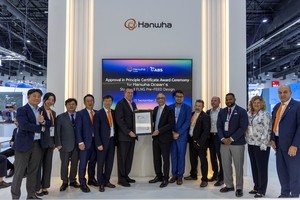
Hanwha Ocean wins string of global classification approvals at Gastech 2026
Approvals cover FLNG design and gas carrier cargo systems Shipbuilder also unveils next-generation LNG fuel tank development results Hanwha Ocean announced Thursday that it has received a series of approvals from major global classification societies at Gastech 2026, being held in Bangkok, Thailand. The shipbuilder first secured approval-in-principle (AIP) from American Bureau of Shipping (ABS) and Norwegian classification society DNV for its standardized floating LNG production unit (FLNG) design. Hanwha Ocean had previously developed a standardized basic design for floating production, storage and offloading (FPSO) units to improve engineering, procurement and construction efficiency and obtained classification approval for it. The latest certifications extend that standardization strategy to FLNG design. Approvals on the gas carrier side followed in quick succession. Hanwha Ocean obtained AIP from British classification society Lloyd's Register (LR) for its high-manganese steel-based cargo containment system, MCTIB, designed for very large ethane carriers (VLEC) of 100,000 cubic meters. Cargo tanks fitted with MCTIB offer superior structural safety. Hanwha Ocean also presented research and development results, including progress on a next-generation fuel tank for container ships. A highlight was a joint development project (JDP) launched with DNV in May to advance next-generation high-pressure LNG fuel tank technology. Through the JDP, Hanwha Ocean said it has secured technology capable of storing boil-off gas for longer periods than before. The company also signed agreements to develop new technologies. Hanwha Ocean signed an MOU with LR to launch a JDP aimed at extending the internal inspection interval for LNG carrier cargo tanks. The two parties plan to jointly develop condition-based monitoring technology and a risk-based safety assessment framework for cargo tanks, with the goal of extending the current five-year internal inspection cycle to as long as 7.5 years. Hanwha Ocean also signed an MOU with Korean Register (KR) for the joint development of an 18,000-cubic-meter LNG bunkering vessel. The two companies plan to develop two LNG bunkering vessel concepts — one applying MCTIB and the other a Type-C independent tank. "Hanwha Ocean is continuously expanding its technology portfolio to meet diverse market demands," a company official said. "We will deliver optimal future maritime solutions based on our differentiated research and development and engineering capabilities." Meanwhile, Hanwha Ocean also unveiled a 60 MW floating data center (FDC) at this year's Gastech. The FDC is designed to address the limitations of land-based data centers: it can generate power independently at sea and improve energy efficiency through a seawater-based cooling system.
Sept. 17, 2026
-
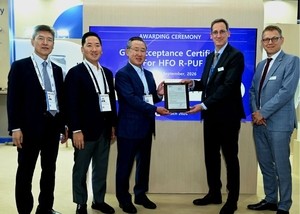
Dongsung Finetec unveils new LNG insulation product at Gastech 2026
French cargo containment firm GTT grants product approval Dongsung Finetec, the insulation subsidiary of Dongsung Chemical, has unveiled a new cryogenic insulation product for LNG carriers. The company introduced the product, called HFO R-PUF, at Gastech 2026 — a global energy industry exhibition and conference held in Bangkok, Thailand — on Tuesday. The new product replaces conventional HFC-based blowing agents with HFO-based alternatives that carry a lower global warming potential, while also improving cryogenic insulation performance. DNV carbon footprint verification confirmed that the product generates 33 percent fewer greenhouse gas emissions than its predecessor. Thermal conductivity in cryogenic operating ranges has also improved by up to 6 percent compared with the existing product. Also on Tuesday, Dongsung Finetec held a product approval ceremony with GTT, a French LNG cargo containment technology company. The company plans to pursue onboard application of the new product on vessels under construction in 2027, and intends to expand discussions on product adoption centered on global LNG carrier projects. "This new product will serve as an important milestone in expanding Dongsung Finetec's low-carbon, high-efficiency technology into global projects," said Park Ji-il, head of the company's business division. "We will continue to introduce differentiated products and technology under the ECOTECO brand and create new growth opportunities in the global eco-friendly marine equipment market."
Sept. 17, 2026
-
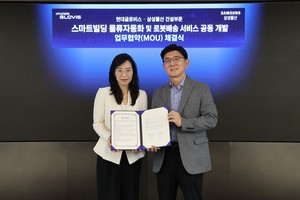
Hyundai Glovis, Samsung C&T to develop robot mail carriers for office buildings
MOU signed for smart-building logistics automation AMRs to handle unattended mail and package delivery Full automation from receiving and sorting to desk-side delivery Proof-of-concept trials planned for next year Hyundai Glovis and Samsung C&T are joining forces to automate in-building mail and package delivery using robots that receive, sort and carry items directly to employees' desks. The two companies plan to select a real building for a proof-of-concept trial next year to assess the technology's commercial viability. Hyundai Glovis announced Thursday that it signed a memorandum of understanding with Samsung C&T's construction division at its headquarters in Seongdong-gu, Seoul, on Wednesday for the joint development of smart-building logistics automation and robot delivery services. Han Kyu-heon, head of Hyundai Glovis's Future Innovation Technology Center, and Jo Hye-jeong, head of Samsung C&T's DxP division, attended the signing ceremony along with other officials from both companies. The core of the initiative is replacing the human labor involved in moving mail and packages inside a building with autonomous mobile robots, or AMRs. Under the envisioned system, when items arrive at a below-ground mail room or parcel locker, the system logs, stores and sorts them. Robots then load the items, ride elevators to the appropriate floor and deliver them to the relevant employee's workspace. The goal goes beyond simply moving robots around a building. The two companies aim to connect the entire internal logistics chain — from receiving and storage through sorting, transport and final delivery — into a single integrated system. They also plan to develop AI- and robotics-based tools to manage delivery volumes and optimize routing. The two companies will divide responsibilities. Hyundai Glovis will develop the logistics automation solution covering item collection, storage and transport, while Samsung C&T will analyze the structural and facility characteristics of target buildings and design the operating environment and services needed for robots to function in real-world settings. Next year, the companies will select a site for a proof-of-concept trial. Based on the results, they will refine how robots, elevators and logistics management systems communicate with one another, and develop concrete operating and commercialization models. "Smart buildings in the AI era are expected to evolve toward providing user-facing services that incorporate fast-advancing robot technology," Jo said. "We will accelerate the commercialization of differentiated robot services that enhance the value of building spaces in the coming physical AI era by combining Hyundai Glovis's logistics automation technology with Samsung C&T's robot operating solutions." Han said Hyundai Glovis would "develop innovative services optimized for smart-building environments, drawing on our logistics automation technology and operational expertise," adding that the partnership with Samsung C&T would "set a new standard for logistics services in the future office market." Hyundai Glovis has been expanding beyond its traditional transportation-focused business into logistics automation solutions. The company acquired logistics automation specialist Altiol in 2023 and showcased an integrated logistics system linking automated equipment, robots and data at the Smart Factory and Automation World 2026 exhibition held this year.
Sept. 17, 2026
-
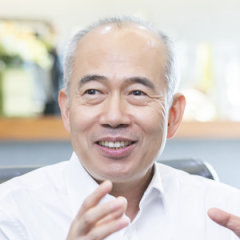
'Korea must move beyond imitation economy to lead': Jusung Engineering chairman
Interview with Jusung Engineering Chairman Hwang Chul-joo Set to speak at Herald Business Forum 2026 'Need infrastructure that recognizes the 1% of true innovation' 'We must now be the ones who set the standard' A first-generation venture entrepreneur who achieved equipment localization Has walked the path of innovation guided by the spirit of self-reliance "The goal of being No. 1 and the goal of being No. 2 are fundamentally different. Korea has now reached the point where it must aim for first place. We have to travel a road no one has taken before. The path of an innovation economy and the path of an imitation economy are 180 degrees apart." Jusung Engineering Chairman Hwang Chul-joo doubled down on the distinction between innovation and imitation in an interview Thursday. "Unlike imitation or incremental improvement, innovation cannot be planned," he said. "Innovation creates new markets, and it can only bear fruit when the demands of the era, the environment, the market and technological goals all converge at once." He said Korea's semiconductor industry stands at exactly such an inflection point. Where the core competitive edge once lay in raising production efficiency and cutting costs, the ability to create products that command greater value in the market — even at higher cost — has become what matters most. "Until now, someone else had already gone ahead and set the standard, and all we had to do was follow it," Hwang said. "But now there are fields where no one is out in front. We have to be the ones who set the standard." He identified "the ability to create new standards" as the central challenge Korean industry must solve going forward. Korea grew by following the technologies and markets that advanced countries and leading companies had already built — but in the fields where Korea has now taken the lead, those existing standards to follow have disappeared. He cited HBM as the prime example. "When you are No. 2, you just chase No. 1, so you do not need to take on great risk," he said. "But when you are No. 1, there is no one to chase. You ultimately have to forge a new path yourself and overcome the risks that arise along the way." He said Korea's industrial environment must also shift to suit innovation rather than imitation, and he placed particular emphasis on what he called "incubating time" — the period a company must endure before the fruits of innovation appear. "Korea lacks the capital-market support, financial firepower and economic environment needed to sustain that incubating time," Hwang said. "Because of that, there are many heartbreaking cases where innovation never reaches fruition and simply disappears." He went on to say that infrastructure must be built to ensure that the 1 percent of genuine innovation receives proper recognition in the market, backed by a system that protects and nurtures it. "The state must be capable of correctly identifying and cultivating innovative companies," he said. "Investors, too, must look beyond immediate sales and profit and ask what kind of markets and value a company can create in the future." He said innovative products in particular require institutional mechanisms that open the door to market entry. "Innovation is not something to be managed — it is something to be nurtured," Hwang said. "If you block the market, innovation dies." He added that the government's own perspective must change for Korea to become a technology powerhouse. "You cannot cross over into an innovation economy simply by working a little harder or doing a little better within the imitation-economy framework," he said. Hwang, regarded as a first-generation venture entrepreneur, founded Jusung Engineering in 1993 with the dream of achieving technological independence for Korea. After witnessing a domestic industry that could not even produce a single screw for semiconductor manufacturing equipment, he threw himself into entrepreneurship driven solely by a passion for homegrown technology. More than 30 years on, Jusung Engineering has grown into a front-end process equipment maker serving the semiconductor, display and solar cell industries. Having succeeded in localizing key semiconductor front-end process equipment, the company is now leading the globalization of Korean semiconductor equipment, with atomic layer deposition equipment among its flagship products. A framed inscription reading "jagangbulsik" — meaning "strengthen yourself ceaselessly, never rest" — hangs in Hwang's office, a reflection of his management philosophy: never settle for existing methods, but innovate and challenge without pause. Hwang is scheduled to deliver a lecture titled "New Standards Create New Growth!" at the Herald Business Forum 2026, to be held at the Shilla Hotel in Jung-gu, Seoul, on Sept. 29.
Sept. 17, 2026
-
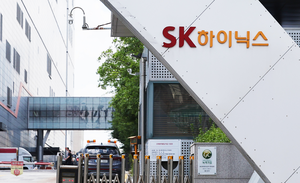
SK hynix, Intel in talks to produce memory chips in US
Leasing part of Intel's Ohio factory seen as leading option Joint venture with cloud firms also under consideration SK hynix is in talks with Intel to produce memory chips on US soil for the first time, with discussions centering on leasing part of Intel's Ohio factory or establishing a joint venture that could include major cloud companies. Reuters, citing multiple sources, reported Wednesday (local time) that SK hynix and Intel are in negotiations over domestic US memory chip production. One leading option would have SK hynix lease a portion of the semiconductor facility Intel is building in Ohio. A separate arrangement — a joint venture involving Intel, SK hynix and major cloud companies seeking to secure a stable memory supply — is also being discussed, according to the sources. The talks remain at an early stage and no decisions have been made, Reuters said. The report added that SK hynix may also be weighing other deal structures. If an agreement is reached, it would mark the first time SK hynix has produced memory chips directly in the United States. It remains unclear what type of memory chips would be manufactured in the US. Should advanced products such as HBM or DRAM be produced there, the South Korean government would likely raise concerns over technology sensitivity. South Korea's Ministry of Trade, Industry and Energy said decisions on overseas production are ultimately up to individual companies, but added that cases involving nationally designated core technologies could be subject to review under the Industrial Technology Protection Act. Manufacturing semiconductors in the United States would also carry higher labor and construction costs than in South Korea, and the concentration of key supply chains in Asia could add further financial pressure. Even so, industry observers say SK hynix has considerable incentive to pursue US production, given mounting pressure from the US government on chipmakers to expand their domestic manufacturing footprint. US Commerce Secretary Howard Lutnick has warned that South Korean and Taiwanese chipmakers could face tariffs of up to 100 percent if they do not increase production in the United States. SK Group Chairman Chey Tae-won also said in July that customers and governments were increasingly pressing for expanded semiconductor supply, and raised the need to build a factory in the US. For Intel, a partnership with SK hynix could help ease the financial burden of its Ohio project. Intel announced in 2022 that it would invest up to $100 billion to build a large semiconductor complex in Ohio, but completion of two planned factories has since been pushed back to 2030 and 2031, respectively. In a statement to Reuters, SK hynix said it "is reviewing various options, including establishing additional production bases, to strengthen the competitiveness of its memory chip business," but added that "no decisions have been made at this stage."
Sept. 16, 2026
-
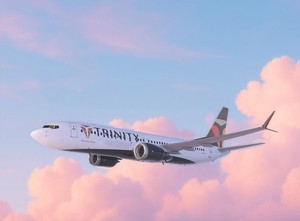
Trinity Airways opens bookings for Incheon-Kobe route, launching Dec. 18
One daily round trip planned 'Continuously expanding travel options for Japan passengers' Trinity Airways announced Wednesday that it has opened schedules and begun ticket sales for its new Incheon-Kobe route, set to launch Dec. 18. The route will operate one round trip daily. The outbound flight departs Incheon International Airport at 2:10 p.m. and arrives at Kobe Airport at 3:55 p.m., while the return flight leaves Kobe at 4:55 p.m. and lands at Incheon at 6:55 p.m. Kobe is a port city representing Japan's Kansai region, offering a wide range of tourism attractions including scenic streets, night views and cuisine. Notable destinations include Kobe Harborland, known for its spectacular nightscape; Kitano Ijinkan Street, where historic Western-style buildings are clustered; and the Nunobiki Herb Garden, which offers sweeping views of both the city and surrounding nature. Arima Onsen hot springs and Kobe beef also give visitors distinctive local experiences that blend relaxation with sightseeing. The city is also well positioned as a base for travel to major Kansai destinations such as Osaka and Kyoto, making it an appealing new option for travelers. Trinity Airways said the new Kobe service is part of its broader effort to expand travel choices for customers heading to the Kansai region and strengthen its competitiveness. "By launching the Kobe route, we are now able to offer customers visiting the Kansai region a wider range of travel options," a Trinity Airways official said. "We will continue to expand our Japan route network and provide safe, convenient travel experiences." Meanwhile, Trinity Airways is participating for the fourth consecutive year in the 2026 Mirae Naeil Work Experience Program, which gives young job seekers hands-on experience in the aviation industry. Administered by the Ministry of Employment and Labor, the program gives young job seekers direct exposure to various work environments to help them explore career paths and build employment skills.
Sept. 16, 2026
-
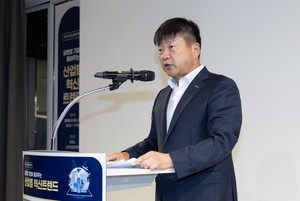
KITA holds inaugural innovation forum on industry trends
Forum spotlights innovation trends in AI, robotics and other key industries Large companies and startups share expertise with trade sector The Korea International Trade Association (KITA) held the first KITA Innovation Forum — "Industry Innovation Trends from Global Companies" — at COEX Startup Branch on Wednesday. The event was organized to help South Korea's trade industry understand innovation trends across major sectors and develop business strategies amid a rapidly changing global industrial environment. About 150 representatives from export companies attended. The forum opened with a keynote address titled "A Bird's-Eye View of Industrial Innovation Trends and the Future," followed by presentation sessions from global company experts covering five fields: AI home appliances and consumer electronics, robotics, mobility, energy infrastructure and manufacturing innovation, and environment and construction. Speakers shared real-world examples of technological change and corporate responses, and outlined key takeaways for Korean companies looking to identify new business opportunities. Park Hyung-gon, a partner at Deloitte, said in the keynote that "AI is moving beyond simple technology adoption and entering a phase where it is reshaping how companies operate and how industries are structured," adding that "the focus of competition will now center on how quickly AI can be applied to business and production settings and translated into real results." Choi Ho-young, a team leader at LG Electronics who led the AI home appliances and consumer electronics session, said "AI is evolving beyond enhancing product functions to organically connecting services in line with users' lifestyle patterns and living spaces." He added that "competition is expanding from individual device-centered rivalry to a race for dominance over ecosystems that encompass entire living spaces, which will bring significant changes to the customer experience." Jeong Seong-hun, a manager at LS Electric, said that "as AI-driven industries grow, the importance of stable power supply and energy efficiency is rising in tandem," and that "demand will grow rapidly in related fields such as power distribution, power management and smart energy solutions." Jang Seok-min, executive vice president of KITA, said the forum was created "to spread the innovation capabilities and know-how accumulated by large companies and startups across the broader trade industry," and pledged to "continue holding topic-specific innovation forums to help Korean companies proactively respond to industrial change and create new business opportunities." Meanwhile, KITA held separate business community events in Seoul with Kazakhstan and Turkmenistan on Tuesday, on the sidelines of the first Korea-Central Asia Summit. The presidents of both countries attended in person and expressed their commitment to expanding cooperation with Korean companies.
Sept. 16, 2026
-
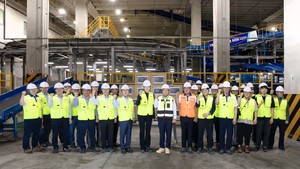
Hanjin executives inspect chuseok delivery operations, vow to strengthen workplace safety
Executives visit Dong Seoul Hub terminal control room and work floor Over 100 terminals to run at full capacity during chuseok holiday Hanjin launched a series of inspections ahead of the chuseok holiday to ensure stable freight operations and strengthen workplace safety. The company said Wednesday that President and CEO Roh Sam-seok and President Cho Hyun-min visited the Dong Seoul Hub terminal on Tuesday to review operations during the chuseok peak season and encourage workers on site. The two executives received a briefing at the terminal's control room on peak-season operations before touring cargo intake, dispatch and transport routes. They then moved to the loading and unloading areas to check the safe operation of sorting equipment and identify potential hazards on the work floor. Management also inspected working conditions and employee amenities before handing out burgers, beverages and other gifts to workers on site. They urged staff to follow safety protocols and take adequate rest. During this year's chuseok peak season, Hanjin plans to run more than 100 major terminals and all available transport vehicles at full capacity nationwide, while bringing in additional sorting staff and temporary vehicles to ensure safe working conditions and uninterrupted delivery. "During the chuseok peak season, we are focused on securing safety throughout every stage of freight movement and creating an environment where workers can do their jobs with peace of mind," a Hanjin official said. Meanwhile, Hanjin recently introduced an "AI Safety Guardian" system to improve operational efficiency. The system analyzes footage from terminal security cameras in real time using AI technology, detecting potential hazards and helping prevent accidents.
Sept. 16, 2026
-
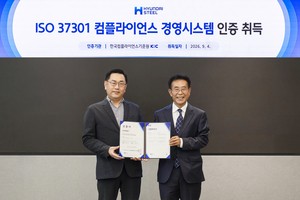
Hyundai Steel obtains ISO 37301 certification, strengthening compliance management
Certification bolsters company-wide compliance risk management Aims to build trust with global customers and stakeholders Hyundai Steel announced Wednesday that it has obtained ISO 37301 certification, the international standard for compliance management systems, earning global recognition for its compliance framework. The company held a certification ceremony at its Pangyo office in Seongnam, Gyeonggi Province, with Executive Vice President Seo Sang-won, head of the management support division, and Korea Fair Competition Federation President Park Jae-gyu in attendance. At the ceremony, both sides shared progress made during the certification process and key outcomes, and discussed how to continue improving the effectiveness of the compliance management system. ISO 37301 is an international standard established by ISO that comprehensively evaluates whether a company has a management framework in place to comply with laws and internal standards related to its business operations and to prevent and manage compliance risks. During the certification assessment, Hyundai Steel closely analyzed its business environment and stakeholder requirements, evaluated compliance risks that could arise in key operational processes, and developed management measures and improvement tasks. In addition, the company reinforced its company-wide management framework so that compliance becomes embedded in employees' day-to-day work — including by building a system in which staff in operational departments directly identify and address potential compliance risks in their own areas. Going forward, Hyundai Steel plans to advance its management framework through a cycle of compliance risk assessment, internal audits, management review and improvement activities, all grounded in ISO 37301. The company said it will actively respond to growing external demands — including ESG (environmental, social and governance) evaluations and supply chain assessments by global customers — and work to strengthen corporate trust. "This certification is significant in that it has advanced our compliance management activities to the next level in line with international standards," a Hyundai Steel official said. "We will continue to strengthen our management framework so that compliance takes deep root in the work and decision-making of all employees." Hyundai Steel has also received an AA rating for two consecutive years in the fair-trade voluntary compliance program rating assessment, earning external recognition for the program's performance and effectiveness. Meanwhile, Hyundai Steel held a ground-breaking ceremony for HPLS in Donaldsonville, Louisiana, on Sept. 4 (local time). HPLS, which will receive a total investment of $5.8 billion, will be the first electric arc furnace-based steel mill in the United States dedicated to automotive steel sheet. Spanning 7.36 million square meters, the facility is set to break ground in the fourth quarter of this year and begin producing 2.7 million tons of hot-rolled, cold-rolled and coated steel sheet annually from the first quarter of 2029.
Sept. 16, 2026
-
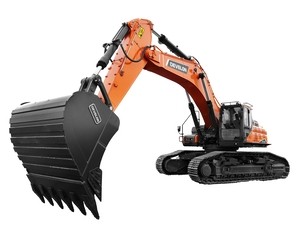
HD Construction Equipment wins order for 45 mid-to-large excavators in Hong Kong
75 units sold in Hong Kong this year Company plans to sell more than 100 units annually by 2029 HD Construction Equipment said Wednesday it will supply 45 excavators to the Hong Kong MTR Tung Chung Line extension project, including seven Develon 53-ton large excavators and 38 mid-to-large models ranging from 14 to 36 tons. The equipment will be deployed in the construction of new stations and about 1.2 kilometers of track extension. Because the site sits on reclaimed coastal land with weak ground conditions, demand for specialized machinery is high, and the company also expects to supply additional ultra-large units in the 80- and 100-ton class. The order is notable for beating out Chinese equipment makers that competed on price. HD Construction Equipment said the win allowed it to overcome the limitations of a Hong Kong market previously confined largely to small and some mid-size products, achieving both a large-volume order and a broader mix of machine types at the same time. Including this latest delivery, HD Construction Equipment has sold a total of 75 units in Hong Kong this year — its highest supply volume in the local market over the past five years. The company plans to sell more than 100 units annually in Hong Kong by 2029. According to the Hong Kong government, the city has been investing about 90 billion Hong Kong dollars ($11.5 billion) annually in public infrastructure, including expanding its public transit network and developing new towns. That figure is set to grow to an average of 120 billion Hong Kong dollars per year as major projects such as the Northern Metropolis — a development linking Hong Kong to mainland China — move into full swing. Construction equipment demand in the market is expected to remain consistently strong as a result. "We are rebuilding our position in a market where we once held a high share, and securing a large-volume order in that context carries significant meaning," an HD Construction Equipment official said. "Building on this result, we will continue to expand our local sales channels and further strengthen our brand presence." Meanwhile, HD Construction Equipment has been securing orders in emerging markets with steady construction equipment demand beyond Hong Kong. In June, the company supplied 63 units of mining construction equipment to an open-pit mine in Mongolia.
Sept. 16, 2026
-
20 Korean conglomerates to pay W9.6tr early to suppliers ahead of Chuseok
Twenty major South Korean conglomerates will pay a combined 9.6 trillion won ($7.09 billion) early to their suppliers ahead of the Chuseok holiday. The Korea Enterprises Federation and its Small and Medium Enterprise Cooperation Center announced Wednesday the findings of their survey on early payment of subcontracting and supply fees before Chuseok 2026. The 20 groups that responded to the survey include Samsung, SK Group, Hyundai Motor Company, LG Group, Hanwha, Lotte, Posco, HD Hyundai, GS, Shinsegae, Hanjin, KT Corp, LS, CJ Group, Kakao, Doosan, Naver, Hyundai Department Store, Hyosung and Harim. The groups moved up their payment schedules in recognition of the increased cash demand suppliers face around the Chuseok holiday. Some groups are paying as many as 23 days ahead of schedule. The early payments are expected to help suppliers cover wages and raw materials costs, with the benefits expected to ripple through to second- and third-tier partner companies as well. The major conglomerates are also running tailored support programs to bolster the financial stability of their suppliers and the welfare of their employees. SK Group, LG Group, Lotte, Posco, HD Hyundai, GS, KT Corp, Doosan and Hyundai Department Store are using shared-growth payment systems, co-prosperity funds and partnership financing to ease suppliers' financial costs and strengthen their liquidity. SK Group, Hanwha, Lotte, GS, Shinsegae, Doosan, Naver and Harim are providing suppliers' employees and franchise owners with Onnuri gift vouchers, holiday gift sets and merchandise coupons. Some groups are also offering bonuses and homecoming allowances to boost morale among supplier employees during the holiday season. "This year, support has evolved beyond simple goods distribution into a more comprehensive form that encompasses low-interest financial assistance, welfare benefits, expanded sales channels and digital capacity building," said Chu Kwang-ho, head of the federation's Small and Medium Enterprise Cooperation Center. "We hope these multifaceted efforts will spread beyond second- and third-tier suppliers to the broader community, serving as a catalyst that brings warmth to a sluggish everyday economy."
Sept. 16, 2026
-
Samsung opens Yokohama R&D hub as Lee Jae-yong holds surprise lunch with Japanese Senate delegation
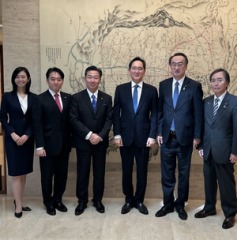
Lee meets visiting Japanese Senate delegation on Monday Discussions cover semiconductors, AI and Korea-Japan cooperation Samsung Electronics has launched operations at a new advanced semiconductor packaging research and development center in Yokohama, Japan, while Chairman Lee Jae-yong separately held an unscheduled lunch with a visiting Japanese Senate delegation — moves that underscore the company's push to deepen technology ties with Japan's materials, components and equipment ecosystem. According to business and diplomatic sources, Lee met the Japanese Senate delegation at an undisclosed location in Seoul on Monday. The meeting was not on his original schedule, but Lee made a surprise appearance and exchanged views on semiconductors, AI and avenues for Korea-Japan cooperation. The lunch was attended by Hiraki Daisaku, chairman of Komeito's parliamentary affairs committee and a member of the House of Councillors; Fukuyama Tetsuro, vice president of the House of Councillors; Kawai Takanori, secretary-general of the Democratic Party for the People's House of Councillors caucus; Umemura Mizuho, deputy secretary-general of the Sanseito party's House of Councillors caucus; and Mizushima Koichi, Japan's ambassador to South Korea. On the Samsung Electronics side, Kim Won-kyung, president of the company's Global Public Affairs office, also attended. Kim is a diplomacy and trade specialist who previously served as chief negotiator for the Korea-US free trade agreement at the Ministry of Foreign Affairs and Trade, and currently oversees Samsung Electronics' global external affairs. Following the lunch, Hiraki said he asked Lee about "the outlook for the semiconductor business, which is booming on the back of AI, the company's overall future strategy, areas of collaboration with Japan, and talent development and recruitment," adding that Lee "responded sincerely and earnestly." The meeting has drawn attention as it aligns with Samsung Electronics' broader effort to position Japan as a key hub for advanced semiconductor technology cooperation. Since 2024, Samsung Electronics has committed 40 billion yen ($258 million) over five years to developing next-generation packaging technology in Japan, with a total investment of 350 billion won. As part of that effort, the company opened its Advanced Package Lab (APL), an advanced semiconductor back-end process research center, in Minato Mirai, Yokohama, on Sept. 8. The facility is intended to generate synergies with Japanese companies that have strengths in semiconductor materials, components and equipment. The APL currently employs 95 Korean and Japanese researchers working on back-end process materials evaluation and mass production technology. Samsung Electronics plans to expand the research staff to more than 100 by 2027, with the APL serving as a hub for joint research with Japanese materials, components and equipment firms and research institutions as the company works to sharpen its competitiveness in next-generation packaging technology. Samsung's R&D ties with Japan stretch back more than 30 years. The company established a research office in Japan in 1992 and set up its own research building in Yokohama in 1997. In 2023, it launched Samsung DS R&D Japan (DSRJ) to strengthen the research capabilities of its Device Solutions semiconductor division, further expanding its semiconductor research footprint in the country. Meanwhile, the Japanese Senate delegation also visited SK Group's headquarters during their stay in South Korea. According to Hiraki, the two sides exchanged views on the outlook for semiconductor businesses including DRAM, NAND flash and HBM, as well as the opportunities and risks that AI technology presents.
Sept. 16, 2026
-

Bentley Motors showcases century of heritage at Italian 'Tutto Bene' hillclimb
Super Sports FULL SEND and Pikes Peak Bentayga tackle 6-kilometer Mottarone hillclimb Special displays include glow-in-the-dark Flying Spur livery Bentley Motors announced Wednesday that it participated in the "Tutto Bene" hillclimb, an automotive culture event held at Lake Maggiore in Italy, showcasing more than a century of heritage spanning performance, car culture and design across a range of models. The event marked the second collaboration between Bentley and Tutto Bene, following "Stazione Remota," held in Carmel Valley during Monterey Car Week in August. Against the backdrop of Mottarone overlooking Lake Maggiore, Bentley brought together a diverse lineup of vehicles — from an original 1926 Super Sports to performance models and special concept cars — sharing a passion for automotive culture with thousands of visitors. The highlight was the 6-kilometer Mottarone hillclimb. The Super Sports FULL SEND, which appeared in a dynamic brand film shot at Bentley's headquarters in January, and the Pikes Peak Bentayga, which competed in the 2018 Pikes Peak hillclimb, both ran the course overlooking Lake Maggiore and Stresa. Rather than a timed speed competition, the driving event focused on the style of each participating vehicle and the joy of driving. In addition, a selection of special Bentley models was on display at Bar Stazione, the event's central gathering space. A Flying Spur featuring a distinctive glow-in-the-dark livery — created by Welsh artist David Guider under the name "Deathspray" — drew considerable attention. Also on display were the Bentayga X Concept, an off-road concept car unveiled at the FAT Ice Race in January, and the Speed 8, which won the 24 Hours of Le Mans in 2003. "Smokey," an original 1926 Super Sports symbolizing Bentley's long performance history, also drew attention. Ben Wattam, Bentley Motors' marketing director, said Tutto Bene is "a special event where great cars and great people come together to enjoy themselves," adding that it was "a meaningful occasion bringing together a diverse range of Bentleys from different eras and with different personalities — from the 1926 Super Sports to the Pikes Peak record-setting car and the Flying Spur that glows in the dark." Tutto Bene is an automotive culture event organized jointly by Boromeodesilva, a design studio based in Milan, Italy, and Race Service, an automotive creative agency based in Los Angeles. The event launched in 2024 and this year held its third edition. Meanwhile, Bentley Motors recently appointed T. John Mayer as its new head of exterior design and design operations. Mayer played a key role in shaping the user experience design vision for the "Torcall," which is set to make its world premiere in September.
Sept. 16, 2026
MOST READ
- 1What was Rachmaninoff's performance fee? A 1928 price list tells all
- 2Korea Expressway Corporation uses AI to crack down on toll evaders
- 3Pope Leo XIV declines French honors and banquet, accepts only private meeting with Macron
- 4Samsung Biologics union's show of force backfires at the bargaining table
- 5APR says hair-loss treatment research published in international journal
- 6Xi Jinping health rumors resurface after BRICS dinner no-show
-
WORLD

US warns of punishment for anyone enabling Iran's Strait of Hormuz toll scheme
-
INDUSTRY
Toyota union puts productivity first; Hyundai Motor union demands bigger share of profits
-
FINANCE
National Growth Fund to invest $531M in FuriosaAI, which rebuffed Meta's $800M takeover bid
-
INDUSTRY
Korea Shipowners' Association holds amateur baduk tournament for Maritime Day