
- HOME
- INDUSTRY
-
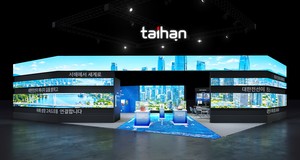
Taihan Cable & Solution highlights HVDC capabilities at Korea's largest climate energy expo
Participating in the 2026 Climate Industry International Expo Submarine cable turnkey solutions also on display Taihan Cable & Solution announced Tuesday that it will participate in the 2026 Climate Industry International Expo, to be held at Bexco in Busan from Wednesday through Friday. The Climate Industry International Expo is Korea's largest climate and energy event, bringing together the latest technologies and industry trends in the climate sector. This year's event is co-hosted by the Ministry of Climate, Environment and Energy alongside the International Energy Agency, the World Bank, the International Renewable Energy Agency and the city of Busan. Under the theme "From the West Sea to the World — Taihan Cable & Solution Connects New Energy Pathways," the company will showcase a range of core power infrastructure technologies at the expo. Across a 270-square-meter exhibition space, it will present its business competitiveness centered on submarine cable turnkey solutions, HVDC solutions and busduct solutions. A large-format video display at the front of the booth will highlight the company's commitment and vision for the West Coast energy highway project. In an underwater-themed area, scale models of the Scandi Connector and Pallos will be on display to demonstrate the company's installation capabilities. Making its public debut at this expo, the 11,000-ton Scandi Connector model is Korea's largest cable-laying vessel, capable of handling offshore wind internal and external grid connections, long-distance grid interconnection, and HVDC submarine cable installation. The booth will also feature information on the company's currently operating submarine cable Factory 1 and Factory 2, which is under construction with a target to begin operation next year. Factory 2 is being built as a dedicated production hub capable of manufacturing 640-kilovolt HVDC and 400-kilovolt high-voltage alternating current submarine cables. Vice Chairman Song Jong-min plans to attend the opening ceremony before visiting the exhibition floor, where he will discuss business cooperation with customers and key stakeholders alongside Executive Vice President Lee Chun-won, head of the submarine business division, and Executive Vice President Baek Seung-ho of the industry division. "This expo is an opportunity to gauge the rapidly shifting power infrastructure market driven by the spread of renewable energy and AI," a company official said. "Taihan Cable & Solution will contribute to stabilizing Korea's power supply chain through continued investment and technological advancement, while strengthening our competitiveness in submarine cable, HVDC and busduct businesses to actively meet global power demand." Meanwhile, Taihan Cable & Solution has also been actively promoting its HVDC capabilities in global markets. Last month, the company participated in CIGRE 2026, held in Paris, France. CIGRE is an international organization founded in 1921 to share the latest technologies and research in power transmission and distribution, holding academic conferences and exhibitions every two years.
Sept. 15, 2026
-
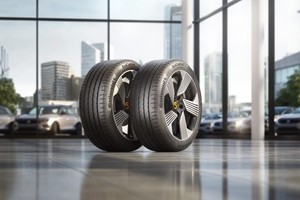
Continental Tire to supply EcoContact 7 as OE tire for Volkswagen's new ID. Polo electric vehicle
Standard fitment for ID. Polo Supports driving efficiency and ride quietness Domestic availability expected this month Continental Tire announced Tuesday that it will supply its EcoContact 7 as the original equipment (OE) tire for Volkswagen's new compact electric vehicle, the ID. Polo. The EcoContact 7 in 17- and 18-inch sizes has received OE approval as the summer tire for the ID. Polo and will be fitted as standard on the vehicle. The EcoContact 7 is a premium summer tire featuring low rolling resistance, extended tread life and low-noise performance. Both the 17- and 18-inch sizes fitted to the ID. Polo have earned the top A rating for energy efficiency and wet braking on the EU tire label, combining reduced energy consumption with stable braking performance on wet surfaces. In addition, the EcoContact 7 uses a special compound blend to reduce internal friction and rolling resistance. Its sidewall incorporates an "AeroDimple" structure inspired by the surface of a golf ball, which cuts aerodynamic drag at the rear of the tire during driving. A "Silent Pattern" tread design, tuned to the noise frequencies most common in urban driving, further reduces road noise. The EcoContact 7 is expected to go on sale in South Korea this month, giving domestic electric vehicle drivers the chance to experience its low rolling resistance and quiet ride in sizes suited to their vehicles. Niko Kyriazopoulos, head of the replacement tire division at Continental Tire Korea, said driving efficiency and ride quietness are especially important in electric vehicles, making it essential to choose a tire that also delivers reliable braking performance. "The adoption of the EcoContact 7 as the OE tire for the Volkswagen ID. Polo is a testament to those product strengths," he said. "We will continue to introduce products suited to domestic customers in line with the evolving electric vehicle market." Meanwhile, Continental Tire has been expanding its customer touchpoints through a range of marketing activities, including a recent industry-academia collaboration with EMOC, a hands-on marketing society at Ewha Womans University, aimed at strengthening the company's brand awareness and developing a long-term branding strategy.
Sept. 15, 2026
-
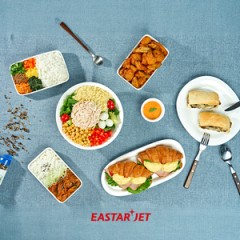
Eastar Jet revamps in-flight menu with jeyuk rice bowls, chicken and poke
Snoopy aircraft puzzle among new logo products added to in-flight shop Eastar Jet announced Tuesday it is overhauling its in-flight services, adding five new menu items and expanding the product lineup of its paid in-flight retail service. The new pre-order in-flight meals are jeyuk (spicy pork) rice bowls, fried chicken, chicken breast poke bowls and bulgogi ciabatta sandwiches. The lineup spans hansik options, chicken dishes popular with both Korean and foreign customers, and lighter fare such as poke bowls and ciabatta for passengers who prefer a smaller meal. A jajangbap (rice with black bean sauce) dish has also been added as a walk-up purchase requiring no pre-order. It is served in a natural pulp container that biodegrades within 90 days, reducing the environmental burden from disposal. Pre-order meals can be purchased up to 72 hours before departure through the Eastar Jet website, while jajangbap is available for on-board purchase on select international routes. Alongside the new food options, Eastar Jet is expanding the product range of its in-flight retail service. A 3D aircraft puzzle has been added to the airline's Eastar Jet x Peanuts collaboration "Snoopy goods" line, which has proven popular on board. The collaboration now covers nine products in total, including ballpoint pens and keyrings. "We have put together a fresh pre-order menu centered on familiar, well-liked dishes so that customers at home and abroad can choose from a wider variety of in-flight meals to suit their tastes," an Eastar Jet official said. "We will continue to roll out diverse in-flight products and services that reflect customer preferences and convenience." Meanwhile, Eastar Jet has been rolling out a range of passenger-convenience improvements this month, including a baggage-inspection notification service. The service sends a KakaoTalk message to passengers when a checked bag triggers a security check for suspected restricted items, directing them to visit the inspection area. It operates on domestic routes at Gimpo, Jeju, Cheongju, Gimhae and Daegu airports.
Sept. 15, 2026
-
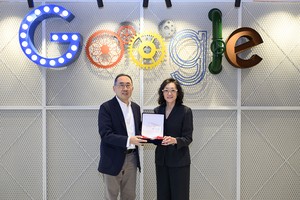
SK Rent-a-Car adopts Google Workspace companywide, embracing AI-driven work environment
Shift to AI-powered cloud collaboration platform 5.62 million files, 18TB of data migrated over five months Generative AI now available for everyday tasks SK Rent-a-Car has shifted its work environment from a virtual desktop infrastructure-centered setup to a cloud-based platform integrated with generative AI. The company announced Tuesday that it has rolled out Google Workspace — Google Cloud's collaboration and productivity platform — across its entire organization. The transition goes beyond a simple modernization of work systems. The goal is to boost productivity and make better use of the data and operational experience the company has built up over the years. Under the previous virtual desktop infrastructure setup, employees worked within a fixed set of systems and tools. The new Google Workspace environment lets staff use cloud-based collaboration tools and generative AI to handle the full range of work tasks — from information searches and data analysis to document drafting, meetings and team collaboration — more efficiently. SK Rent-a-Car began the migration in late April and carried out a phased rollout by department over roughly five months. The platform was applied to about 1,500 accounts, covering all employees and contract staff. Some 5.62 million items — including emails and documents — totaling approximately 18 terabytes of data were transferred from the old environment to the new one. With the transition complete, all SK Rent-a-Car employees now have constant access to Gemini, Google's generative AI model, across their daily work. The AI assists with recurring tasks such as drafting report outlines and searching, summarizing and analyzing materials. In video meetings, conversations are automatically transcribed with real-time captions and summarized, reducing the need for separate note-taking after the fact. The company plans to expand its use of AI to cover content and video production, in addition to research and analysis. The shift from a virtual desktop infrastructure to a local-based environment has also improved connection speeds and processing performance, while cloud-based security policies ensure both convenience and a higher level of data protection. The company also integrated its internal data systems with the new work environment to cut the time employees spend retrieving and compiling data needed for sales activities. SK Rent-a-Car is focusing on "utilization" rather than mere "adoption" to maximize the real-world impact of the new environment. Before the rollout, the company held three rounds of training — both online and in person — to help employees and contract staff adapt quickly. It plans to continue supporting staff through additional training and the sharing of practical use cases so that AI becomes a natural part of actual work processes. "The starting point for this transition was figuring out how to make faster and more effective use of the experience and data we have accumulated over 38 years since we launched our vehicle rental business in 1988," an SK Rent-a-Car official said. "Building on an environment where AI supports employees in their everyday tasks, we will reduce repetitive work and free up more time to focus on customers and our core business." Google Cloud Korea President Ruth Sun said SK Rent-a-Car's companywide adoption of Google Workspace is "a prime example of how AI can fundamentally transform the way we work today." She added that employees would be able to use Gemini across all aspects of their work, moving away from repetitive tasks to focus on higher-value activities such as data-driven decision-making and improving customer service. Meanwhile, SK Rent-a-Car has been expanding a consulting service in which it visits corporate clients directly, analyzes their fleet size, driving patterns and fleet management needs, and proposes tailored service packages — part of a broader range of marketing initiatives aimed at improving customer convenience.
Sept. 15, 2026
-

Hyundai Motor, Toyota Korea wrap up joint gymkhana event
Event aims to maintain and strengthen cooperation between Hyundai N and Toyota GR 40 owner-drivers from both brands take part in gymkhana challenge Mixed four-person team competition highlights spirit of camaraderie Hyundai Motor and Toyota Korea announced Tuesday that they held the "Hyundai N x Toyota GR Gymkhana Day" at Inje Speedium in Inje-gun, Gangwon Province on Friday. Toyota GR stands for GAZOO Racing, Toyota's high-performance brand. The event came roughly two years after the two companies co-hosted the "Hyundai N x Toyota GR Festival" at Everland Speedway in Yongin, Gyeonggi Province in October 2024. About 80 people attended in total, including 20 owner-drivers each from Hyundai N and Toyota GR — 40 in all — who share a passion for high-performance cars. The 40 owner-drivers took to the Inje Speedium circuit to compete in gymkhana races. Gymkhana is a motorsport discipline in which drivers use acceleration, braking and cornering techniques to navigate cone-marked obstacles and complete a set course in the shortest possible time. The morning session featured individual time trials, while the afternoon session brought drivers together in mixed four-person teams — two Hyundai N drivers and two Toyota GR drivers per team — formed based on morning results. The focus was less on individual competition and more on drivers from both brands teaming up to enjoy motorsport together. A cross-brand test-drive program was also on offer, with Hyundai N owner-drivers getting behind the wheel of Toyota GR vehicles and Toyota GR owner-drivers sampling Hyundai N models to experience the handling characteristics of each other's cars. Vehicles used in the program included the Hyundai Ioniq 5 N, the Ioniq 6 N, the Toyota GR86 and the GR Supra. A taxi-driving experience also allowed participants to ride along with professional instructors performing gymkhana runs, giving those who did not drive themselves a feel for the dynamic performance of high-performance cars and the excitement of motorsport. After the event, awards were presented to top finishers in the team competition and others, in a ceremony marking friendship and unity between the two brands. Toyota Korea Executive Vice President Lee Byung-jin said the gymkhana day was designed to let Hyundai N and Toyota GR owners share their common passion for cars and motorsport beyond brand boundaries. "We will continue to expand opportunities for customers to drive, connect and experience the joy of motorsport, and keep working together to broaden the grassroots motorsport culture in Korea," he said. Park Jun-woo, head of Hyundai Motor's N Management Division, said he was pleased to create a space where Hyundai N and Toyota GR could go beyond rivalry and come together through a shared passion. "We will continue to build platforms where both brands and their customers can communicate and enjoy themselves together," he said.
Sept. 15, 2026
-
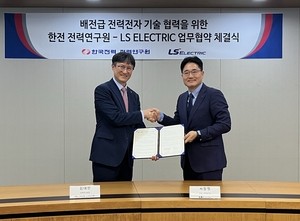
LS Electric, KEPCO join hands to develop grid-forming technology for distribution networks
MOU signed Monday at LS Tower in Anyang, Gyeonggi Province Grid-forming technology autonomously generates voltage and frequency in power networks Aims to reduce distribution grid volatility and support stable system operation Technology still in early commercialization stage worldwide Domestic demonstration to precede joint export push 'Securing optimized technology for distributed energy environment' LS Electric announced Tuesday that it signed a memorandum of understanding with Korea Electric Power Corp. for cooperation on distribution-level power electronics technology at LS Tower in Anyang, Gyeonggi Province, on Monday. The agreement aims to jointly develop "grid-forming" technology for distribution networks — an increasingly critical capability as the expansion of renewable energy raises new challenges for grid stability. The signing ceremony was attended by Seo Jang-cheol, chief technology officer of LS Electric's power division, and Kim Dae-han, president of KEPCO's Power Research Institute. Under the MOU, the two companies will pursue joint research, development and demonstration across distribution-level power electronics technology. Their first priority is a joint research effort on grid-forming technology for distribution network support — a field still in the early stages of commercialization worldwide. The companies plan to conduct domestic demonstration before pursuing joint commercialization for overseas exports. Grid-forming technology enables a power network to autonomously generate its own voltage and frequency. Unlike conventional grid-following systems — in which inverter-based distributed power sources such as ESS simply track the voltage and frequency of the existing grid — grid-forming technology can reduce distribution grid volatility and support more stable system operation. The two companies will also conduct parallel research on next-generation intelligent transformers, or smart transformers, which combine digital communications to monitor and control grid conditions in real time. They will also work on "black start" microgrid technology that rapidly restores the grid using its own emergency power supply in the event of a large-scale outage. "By combining LS Electric's power equipment and power conversion solutions with KEPCO's Power Research Institute expertise in distribution system research, we will secure distribution grid technology optimized for a distributed energy environment and gain a first-mover advantage in the global market to strengthen our competitiveness in power technology exports," an LS Electric official said.
Sept. 15, 2026
-
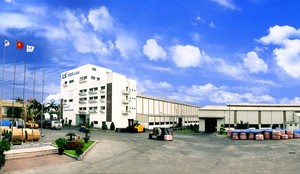
LS Eco Energy to supply cables to US solar complex, accelerating North America push
MV-grade underground cables Vietnam unit's North America sales seen rising over 20% from a year earlier LS Eco Energy announced Tuesday it will supply medium-voltage underground cables to a solar power complex in the United States. Under the arrangement, LSCUS — a US subsidiary of Gaon Cable — signed the contract with a local customer, while LS-VINA, LS Eco Energy's Vietnam production subsidiary, will manufacture the cables. The cables will carry electricity generated at the solar complex to substation equipment. "Demand for MV cables in the United States has surged, and LSCUS is more than doubling its local production capacity," an LS Eco Energy official said. "We are also drawing on LS-VINA's production capacity to keep pace with the rapidly growing demand." LS Eco Energy plans to steadily expand its supply of distribution cables in the US power infrastructure market — including solar complexes — through its partnership with Gaon Cable. The company expects LS-VINA's MV cable exports to the United States to grow more than 20 percent this year compared with a year earlier. "Gaon Cable is strengthening its order-fulfillment capability by linking its US local production with affiliate manufacturing bases, while LS Eco Energy is expanding exports to North America," said Lee Sang-ho, chief executive of LS Eco Energy. "We will intensify our push into the North American market by leveraging synergies across our affiliates."
Sept. 15, 2026
-
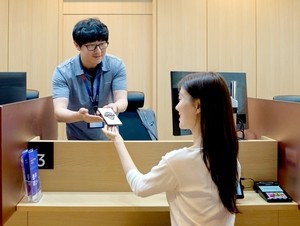
Samsung Electronics Service first in industry to earn top privacy certification
ISMS-P certification obtained Information security education, service center audits to be regularized Samsung Electronics Service announced Tuesday that it has become the first company in the consumer electronics service industry to obtain ISMS-P (Information Security Management System — Personal) certification. ISMS-P is South Korea's highest-authority integrated certification for information security and personal data protection, administered jointly by the Ministry of Science and ICT and the Personal Information Protection Commission. Accredited auditing bodies review a company's overall security management system and certification infrastructure, with the Korea Internet & Security Agency and the Financial Security Institute conducting the final review before granting certification. Companies must pass a compliance assessment covering all 101 items, including the establishment and operation of an information security management system, system security management, and protective measures at each stage of personal data processing. Samsung Electronics Service earned the certification in recognition of its sustained efforts to strengthen its information security management system so that customers can use its services with confidence. The company first obtained ISMS (Information Security Management System) certification in 2021, covering six systems including its website and chatbot, then expanded the scope in 2024 to include sign-language consultation and recruitment platforms. This year, it upgraded to ISMS-P certification, which carries significantly stronger personal data protection requirements. Samsung Electronics Service is focused on delivering services that customers can entrust their devices to with peace of mind, backed by a reinforced information security management system. The company conducts information security education for all employees and runs ongoing programs including simulated phishing drills and security inspections at service centers. "Obtaining ISMS-P certification is meaningful because it extends our certified scope to cover personal data protection," a Samsung Electronics Service official said. "We will continue working to ensure that customers can use Samsung Electronics products with confidence."
Sept. 15, 2026
-
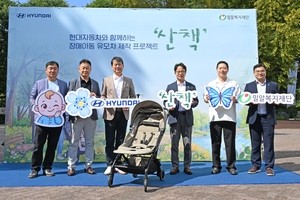
Hyundai Motor to donate 500 special strollers to families of children with severe disabilities
Strollers feature 50×110 cm seats and support loads of up to 30 kg 'We will continue expanding mobility-focused social contribution activities' Hyundai Motor will donate custom-built special strollers to families of children with severe disabilities in South Korea, aiming to improve their mobility and access to daily life. The company announced Tuesday that it held a "stroll" event Monday at Seoul Children's Grand Park, inviting children with severe disabilities and their families, and that it will provide 500 specially designed strollers to families of severely disabled children across the country. The event drew about 100 attendees, including Hyundai Motor Domestic Business Headquarters Head Yun Hyo-jun, Senior Managing Directors Kim Eun-hee and Kim Kyung-jo, Miral Welfare Foundation's Hwang Dae-byeok and Jo Seong-gyeol, WHY-UP CEO Do Hong-gu, and 40 families of children with severe disabilities. The "stroll" event was part of Hyundai Motor's special stroller support project, which was designed to improve the mobility of severely disabled children who, due to their physical conditions, cannot use standard strollers or wheelchairs and require space for medical equipment. Standard strollers have limitations in seat size, load capacity and space for medical devices, making it difficult for children who must travel in a reclined position or use medical equipment to attend hospital appointments or go on everyday outings. Existing assistive devices such as stroller-type wheelchairs have also placed a heavy burden on families because of their high cost and limited portability. Recognizing these challenges, Hyundai Motor partnered with domestic stroller manufacturer WHY-UP and the Miral Welfare Foundation to launch the special stroller support project. Hyundai Motor will cover the full cost of manufacturing and production for all 500 strollers. The Miral Welfare Foundation will handle beneficiary recruitment, selection and program management, while WHY-UP will be responsible for design, development and production. The strollers were built with the physical conditions and medical needs of severely disabled children in mind. Compared with standard strollers, the seat area has been expanded by about 50 percent to 50×110 cm, and the frame has been reinforced to support loads of up to 30 kg. The strollers also feature a reclining seat adjustable up to 175 degrees, an IV drip holder module and a 50-liter storage compartment, enhancing mobility for children who use respiratory and other medical devices. A one-touch folding mechanism reduces the burden on caregivers when loading the stroller into a vehicle or storing it. "We hope this special stroller support will provide real, practical help to children with severe disabilities and their families as they travel to hospitals and go about their daily lives," a Hyundai Motor official said. "As a mobility company, we will continue to pursue social contribution activities that improve everyday access for those with limited mobility." Meanwhile, Hyundai Motor has been carrying out social contribution activities across a range of areas as part of its corporate social responsibility efforts, including recently hosting "Forest Run 2026," an eco-friendly social contribution campaign. Forest Run launched in 2016 with the aim of raising awareness about fine dust pollution and promoting cleaner skies. The campaign turns participants' running into actual tree donations and plantings. This year, the UN World Food Programme — the world's largest humanitarian aid organization — was selected as the official donation recipient. Funds raised through participants' purchase of Forest Run entry tickets will go toward donating 100,000 trees.
Sept. 15, 2026
-
Posco Group pays suppliers W436.8b early ahead of Chuseok
Posco, E&C, Future M, DX and Flow join early payment drive Group moves up cash settlements to ease holiday cash-flow strain Traditional market visits, community service also planned in Pohang, Gwangyang Posco Group will pay 436.8 billion won ($324 million) in trade payments to its suppliers up to 13 days ahead of schedule ahead of the Chuseok holiday, as companies typically face heightened demand for cash around the holiday period to cover wages and raw materials costs. Several major affiliates are taking part in the early payment drive, including Posco, Posco E&C, Posco Future M, Posco DX and Posco Flow, the group said Tuesday. Posco and Posco Flow will pay a combined 366 billion won in trade payments originally due between Wednesday and Sept. 23 ahead of schedule. Posco E&C will consolidate 44.8 billion won in payments originally spread across Sept. 18 through Sept. 30 and disburse the full amount in cash on Thursday. Posco Future M and Posco DX will each pay about 13 billion won in trade payments in cash early, on Monday. Posco Group has made a practice of moving up payment dates ahead of the Lunar New Year and Chuseok holidays to ease temporary cash-flow pressure on suppliers. Beyond simply shifting payment timing, the group has also consistently expanded the scope of cash settlements. Posco has settled all payments to small and medium-sized enterprise suppliers entirely in cash since December 2004, and extended the same policy to mid-sized companies in November 2017. The aim is to ensure that cash paid to first-tier suppliers flows through to second- and third-tier partners as well. Affiliates operate under similar policies. Posco Flow, the group's logistics arm, has paid all trade amounts to smaller suppliers entirely in cash since its launch in 2022. Posco E&C has done the same for small and medium-sized suppliers since 2010, relatively early by construction-industry standards. Ahead of Chuseok, the group also plans community service activities in Pohang, Gwangyang and other areas where its major worksites are located. Pohang Steelworks will send teams from each department to shop at local traditional markets. On Monday, plant managers are scheduled to visit Songdo Nanum House to serve meals to residents. Gwangyang Steelworks plans to patronize local traditional markets as well, and will deliver daily-necessity kits to people with disabilities and carry out a marine ecosystem cleanup in Gwangyang Bay. Posco E&C employees will hand-make mandu and deliver them to 200 food-insecure households in Incheon. Posco Future M will run activities at its worksites in Pohang, Gwangyang, Sejong and Seoul, including ocean litter collection, free meal service at soup kitchens, and cleanup work at residential facilities for people with disabilities.
Sept. 15, 2026
-
SK hynix labor, management agree to full cash payout when bonuses fall below 1,000% of base salary
Union to hold general vote on renegotiated bonus deal Tuesday and Wednesday 'Add-back' mechanism introduced to protect future bonus pool Calls grow for greater transparency on how 10% operating profit pool is calculated Final agreement text to be released only after member vote SK hynix and its union have agreed to increase the cash portion of the company's profit-sharing bonus, known as PS, while also strengthening safeguards to ensure employees are not disadvantaged by stock and deferred payment arrangements, according to industry sources. However, some employees are raising concerns that the deal — set to run through 2034 — lacks sufficient transparency around how the PS pool, defined as 10 percent of operating profit, is actually calculated. Calls are also growing for the union to release the final agreement text before, rather than after, the ratification vote. The union held information sessions for members over the weekend ahead of a general vote on the renegotiated bonus deal scheduled for Tuesday and Wednesday, industry sources said Monday. SK hynix and its union had earlier reached a tentative agreement to pay out PS as 60 percent stock and 40 percent cash, funded by 10 percent of operating profit. That deal was rejected by a margin of 25 votes in a membership ballot, prompting the two sides to return to the negotiating table. The renegotiated proposal raises the cash component significantly. The previous structure of 40 percent cash, 40 percent stock and 20 percent deferred payment has been revised to 50 percent cash, 30 percent stock and 20 percent deferred. Assuming the total PS payout remains the same, employees would receive 25 percent more in immediate cash than under the original plan. Of the 50 percent cash portion, employees may convert some into stock in 10 percentage-point increments if they choose, giving individuals some flexibility to adjust the balance between cash and stock. The renegotiated deal also includes additional protections responding to employees' demands for more cash. According to the union, in any year where the PS payout falls below 1,000 percent of base salary — equivalent to roughly 50 percent of annual compensation — the entire amount will be paid in cash, with no stock or deferred components. In years when the PS pool is relatively small, the plan prioritizes immediate cash over long-term deferred payments and stock. The agreement also guarantees that previously accrued deferred payments will be honored even if the company posts a loss. A separate mechanism has been put in place to prevent bonus payouts from reducing future PS pools. Under a so-called "add-back" arrangement, any costs from paying employee and executive bonuses that reduce operating profit will be added back to the operating profit figure used to calculate the following year's PS pool. The measure is designed to stop the cost of one year's PS payout from shrinking the resource base for the next. For example, if bonus payments generate 1 trillion won ($743 million) in costs, that amount would be added back to the operating profit figure, and 10 percent of the resulting total would be set aside as the PS pool for the following year. The union told members the agreement, including these provisions, is expected to remain in effect through 2034. Last September, labor and management agreed to a 10-year arrangement under which 10 percent of annual operating profit would fund PS payouts and the previous cap of 1,000 percent of base salary would be abolished. The current renegotiation is framed not as a reversal of that agreement but as an adjustment of the specific payout terms within the same framework. Even so, some employees say the detailed calculation method behind the "10 percent of operating profit" formula has not been adequately explained, despite the system being set to govern compensation for years to come. At the information sessions, the union explained that while 10 percent of operating profit forms the PS pool, not all of that pool goes directly to rank-and-file employees as PS. The pool also covers executive compensation and other costs, sources said. Employees are calling for a clearer breakdown of exactly which items are included in the 10 percent pool, how much is allocated to each, and how much ultimately reaches workers as PS. Questions are also being raised about when the final agreement text will be made public. The union has said it will release the document only after the ratification vote concludes. Internally, some members argue that because the compensation system could remain in place through 2034, they should be able to review the precise wording of the final agreement — including the definition of the PS pool, the calculation criteria and the applicable period for each payout method — before casting their votes.
Sept. 15, 2026
-
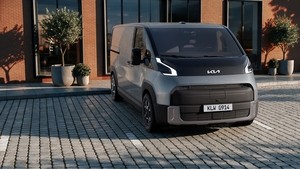
Kia unveils PV7, its second dedicated PBV, with plans for 23 derivative models
Second dedicated PBV after PV5 Body length 5,350mm, range exceeding 460km Fast charge 10–80% in mid-20 minutes Cargo capacity up to 8.0 cubic meters, fits 3 pallets Passenger variant seats up to 11 Launch in South Korea and Europe in second half of next year Kia has pulled the wraps off the PV7, its second dedicated purpose-built vehicle. Larger than the PV5 in both body size and usable space, the electric PBV handles everything from freight transport to passenger service for up to 11 people on a single platform. Kia plans to launch it in South Korea and Europe in the second half of next year before expanding the lineup to 23 derivative models in total. Kia made the global debut of the large electric PBV, dubbed "The Kia PV7," at IAA Transportation 2026, the world's largest commercial vehicle show, held Monday (local time) in Hanover, Germany. The PV7 is built on E-GMP.S, Kia's dedicated electric platform for PBVs. The two variants unveiled first — the PV7 Passenger Long and the PV7 Cargo Long — share a body measuring 5,350mm in length, 1,995mm in width, 1,990mm in height and 3,500mm in wheelbase. Kia said it will use a "Flexible Body System" going forward to vary the wheelbase, overall dimensions and interior layout, enabling a wide range of body configurations. The PV7 uses nickel-cobalt-manganese (NCM) batteries in 71.5 kWh and 96.2 kWh capacities. The long-range Cargo Long variant achieves a range of more than 460km on a single charge under the European WLTP cycle, based on Kia's own measurements. The vehicle supports an 800V charging system and ultra-fast charging at up to 350 kW, bringing the battery from 10 to 80 percent in the mid-20-minute range. In a first for Kia, both fast and slow charging ports are located at the front of the vehicle, with an additional slow-charging port on the rear side, reducing charging inconvenience depending on parking orientation. The standard powertrain is a front-wheel-drive motor producing 200 kW of peak power and 420 Nm of torque, with an all-wheel-drive variant to follow. Vehicle-to-load (V2L) functionality allows the battery to serve as an external power source for tools and work equipment. Fits 3 pallets, doubling down on commercial utility The Cargo variant is designed around real-world logistics and delivery operations. The load floor sits just 550mm above the ground, easing the physical strain of repeated loading and unloading. Cargo capacity stands at 6.1 cubic meters for the Long model under the European VDA standard, rising to 8.0 cubic meters for the high-roof variant to be added later. The load bay accommodates up to three Euro pallets measuring 1,200 by 800mm — one more than the PV5 Cargo, which fits two. Payload capacity is approximately 1,165kg for the Long model and 1,200kg for the Compact model under European standards. A "heavy-load driving mode" adjusts powertrain performance when the vehicle is carrying a full load. The Cargo is offered in two-seat, three-seat and multi-row configurations. The three-seat model features a "load-through" structure that allows long cargo to extend beneath the front passenger seat. The rear door comes in either the full-open twin-swing style or a lift-up tailgate. Minimizing vehicle downtime was also a design priority. Components prone to damage in minor collisions — including both ends of the bumper, wheel arches and door cladding — are designed for straightforward, part-by-part replacement. Seven, nine or 11 seats — and seats that come out for cargo The Passenger variant is available in seven-, nine- and 11-seat configurations. The nine-seat version offers two different seating layouts depending on whether a fourth row is included. The seven-seat Compact model features a "Long Rail Easy Remove Seat System" that lets rear seats slide along a rail or be detached entirely, allowing the vehicle to switch between passenger and cargo duties as needed. The interior accommodates a display of up to 14.6 inches. Frequently used functions such as climate control are retained as physical buttons. In the three-seat Cargo model, the center seat back folds flat to serve as a work tray when the seat is not in use. Software is a key element of the PBV proposition. The PV7 runs "Pleos Connect," built on the Android Automotive OS (AAOS), and supports an app marketplace and a generative AI agent called "Gleo AI." Fleet operators managing multiple vehicles are served by "Pleos Fleet," a vehicle management system that monitors vehicle condition and operational data and can integrate with a company's own business systems. An "uptime" management service proactively detects anomalies to reduce vehicle downtime. Safety equipment includes seven airbags in total, among them a roof-mounted front-passenger airbag. The vehicle also features pedal misapplication safety assist and acceleration limiting assist to reduce accident risk when the driver presses the wrong pedal. Highway driving assist 2 and remote smart parking assist are available depending on the model. South Korea and Europe launch next year, expanding to 23 models The PV7 will go on sale first in South Korea and Europe in the second half of next year. Kia will start with the Passenger Long and Cargo Long before adding the Cargo Compact, Cargo High Roof, Passenger Compact and a chassis cab for special-purpose vehicle development, in that order. Kia envisions 23 derivative and conversion models for the PV7 globally. Rather than selling a single variant in high volume in the conventional commercial vehicle model, the strategy tailors body style and interior configuration to specific use cases — logistics, passenger transport and service operations. The move reflects Kia's rapid push to broaden its PBV business. Led by the PV5, the company has been expanding PBV demand beyond logistics into passenger and special-purpose segments, with a medium- to long-term plan to grow the lineup to include the PV7 and PV9. Kia's cumulative domestic electric vehicle sales have also recently surpassed 200,000 units, extending its electrification reach from passenger cars into commercial and enterprise mobility. A total of 10 PBVs are on display at this year's IAA — three PV7s and seven PV5s. The PV5 lineup on show includes the Cargo Compact, Cargo High Roof, Passenger, wheelchair-accessible vehicle (WAV), chassis cab, crew van and food truck variants. During the show, Kia will also host 31 domestic and international special-purpose vehicle manufacturers to discuss collaboration on vehicle conversion and derivative model development. "The PV7 represents the next step in our journey toward personalized mobility," Kia President Song Ho-sung said. "Kia will deliver a comprehensive business solution that enhances customer productivity, flexibility and long-term ownership value, backed by vehicles that adapt flexibly to diverse business needs, best-in-class electric vehicle performance and PBV-dedicated services."
Sept. 14, 2026
-
Posco labor and management return to table 12 days after last talks, one day before strike
Wage talks resume Tuesday, 12 days after last session Union threatens 120-hour second partial strike from Wednesday Hot-rolling lines in Pohang, Gwangyang added to strike targets Further expansion possible from Friday if talks fail Posco's management and union, locked in the steelmaker's first-ever strike, will return to the negotiating table Tuesday — 12 days after their last formal session. The talks come just one day before the union is set to launch a 120-hour second partial strike targeting hot-rolling mills, the backbone of steel production, making the outcome a pivotal test of whether the labor dispute will escalate further. According to the steel industry, the two sides will resume wage and collective bargaining agreement negotiations at Posco's headquarters in Pohang, North Gyeongsang Province, at 2 p.m. Tuesday. It will be their first formal meeting since Sept. 3. The talks come just one day before the union's second partial strike is set to begin. The dispute committee of the Posco labor union, affiliated with the Federation of Korean Trade Unions' metal workers' federation, issued "Dispute Committee Directive No. 9" Monday, announcing a 120-hour second partial strike running from 7 a.m. Wednesday to 7 a.m. Sept. 21. Notably, the strike's scope has been expanded to cover major hot-rolling production lines. Workers in operations and maintenance at the No. 2 hot-rolling mill at Pohang steelworks and the No. 4 hot-rolling mill at Gwangyang steelworks, along with union members assigned there, will walk off the job. Heating furnace operators and maintenance staff, however, are excluded from the action. The move marks a significant escalation from the first partial strike, which ran for 48 hours beginning Wednesday. That action targeted the No. 3 ZRM line at Pohang's No. 2 electrical steel sheet plant and the pickling plant at Gwangyang steelworks. The strike duration has also grown 2.5 times, from 48 hours to 120 hours. Hot rolling sits at the heart of the steelmaking process. It involves heating slabs produced through steelmaking and continuous casting, then rolling them thin to create hot-rolled coils. The resulting hot-rolled material is sold as a finished product but also serves as feedstock for downstream processes such as cold rolling and plating. A prolonged strike that disrupts hot-rolling output could ripple through those subsequent stages as well. The union has also left open the possibility of broadening the strike further depending on how negotiations unfold. The dispute committee stated in its directive that it may expand the list of workplaces covered by the second partial strike from Friday, based on the company's response and the progress of talks. Wages and compensation remain the central sticking points. The union is demanding a 7.1 percent base pay increase, a 600 percent incentive bonus, 50 shares of employee stock, and a 200 percent holiday bonus. Management, by contrast, has offered a 2.0 percent base pay raise along with a lump-sum package worth a total of 4 million won ($2,970) — comprising a 3.5 million won performance incentive and 500,000 won in local gift certificates. The company's latest proposal also includes expanded bonuses for long-serving employees and improved criteria for housing loan support. The two sides failed to narrow their differences at the Sept. 3 bargaining session. The union subsequently launched a 48-hour partial strike on Wednesday morning — the first in the company's history to target actual production lines. Management said the first strike caused minimal disruption to actual output, as it deployed available personnel and kept core processes covered under essential work agreements running normally. The second strike, however, will last five days and extend to major hot-rolling lines, meaning the outcome of Tuesday's talks could significantly alter the tension on the production floor.
Sept. 14, 2026
-
Korean exporters reroute Middle East shipments by land and sea as Strait of Hormuz stays shut
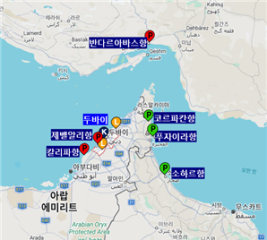
KOTRA checks conditions at trade offices across 13 Middle East nations Air freight available to all 13 countries; alternative sea routes in use Shared logistics center support cap raised 1.5 times for affected firms Six months of conflict between the United States and Iran have reshaped the logistics landscape for South Korean exports to the Middle East. With access to the Strait of Hormuz severely restricted, exporters have turned to alternative ports and overland routes — but the workarounds have stretched delivery times to as long as several months and sent freight costs sharply higher. As of early September, only 9 of the 24 major ports across the six Gulf Cooperation Council member states were operating normally, according to the Korea Trade-Investment Promotion Agency. The remaining 15 are either located inside the Strait of Hormuz or have had operations restricted or suspended, making them effectively inaccessible. Ports still running normally include Khor Fakkan and Fujairah in the UAE; Sohar, Salalah and Duqm in Oman; and Jeddah Islamic, King Abdullah, Yanbu and Jazan in Saudi Arabia. By contrast, Jebel Ali and Khalifa Port in the UAE — long the central hubs of Middle East logistics — along with Dammam and Jubail in Saudi Arabia, Hamad Port in Qatar and Shuwaikh Port in Kuwait are no longer accessible under normal conditions. In response, companies have been routing cargo through outer ports that bypass the Strait of Hormuz and then trucking goods to their final destinations across GCC countries. One common route runs from Khor Fakkan Port through Sharjah to Dubai and Abu Dhabi; another moves cargo overland from Oman's Sohar Port through the UAE and onward to other GCC states. Oman's Salalah Port, located 1,200 kilometers from the strait, is relatively safe but imposes heavy costs due to the long overland haul. Saudi Arabia's Jeddah and King Abdullah ports on the Red Sea coast are accessible via the Red Sea, though Houthi militant attacks remain a risk. The shift to rerouted shipping has significantly extended delivery times. Shipments to the UAE via outer ports such as Khor Fakkan and Fujairah now take roughly 45 to 60 days, while cargo bound for Saudi Arabia via the Cape of Good Hope requires eight to 10 weeks. Deliveries to Oman through outer strait ports take around 30 to 45 days. Shipments to Algeria can take up to four and a half months. Growing instability in the Red Sea has further narrowed viable alternatives. The route had been considered a fallback to the Strait of Hormuz, but clashes between Saudi forces and Houthi militants in the Bab el-Mandeb Strait intensified this month, pushing more Saudi-bound cargo onto the Cape of Good Hope route. The surge in traffic has created bottlenecks at alternative ports including Khor Fakkan, Sohar, Salalah and Jeddah. Air freight has fared comparatively better. A survey KOTRA conducted through its trade offices in 13 Middle Eastern countries found that air delivery is currently possible within two weeks in all 13 markets. However, the high cost of air freight means it is largely reserved for urgent shipments or small samples. Some local buyers have been paying out of pocket to shift their regular sea freight volumes onto air cargo. Rising logistics costs from the prolonged conflict are adding to the strain on South Korean companies. The Shanghai Containerized Freight Index stood at 3,409.6 in August, nearly 2.5 times its level from late February when the US-Iran conflict began. War-risk surcharges, fuel surcharges and port congestion fees are piling on top of base freight rates. Against that backdrop, South Korea's exports to the Middle East totaled $1.19 billion last month, down 15 percent from a year earlier. KOTRA said it will expand support for exporters in anticipation of a prolonged disruption to Middle East logistics. The agency will raise the support ceiling for its overseas shared logistics centers — available to companies affected by the Middle East situation — by 1.5 times. The new limits are 36 million won ($26,700) per trade office for the United States and Japan, 30 million won for Europe and Canada, and 24 million won for China, Southeast Asia, the Middle East and other regions. KOTRA also plans to help exporters find alternative markets to reduce their dependence on the Middle East. Working with Shopee, the agency will subsidize local logistics costs in Southeast Asian markets including Vietnam, Thailand, the Philippines, Malaysia and Singapore, with plans to extend the program to Brazil, the United States and Japan. "The prolonged Middle East war has passed its peak, but companies continue to face difficulties and their burden is growing," KOTRA President Kang Gyeong-seong said. "We will do our utmost not only to restore access to the Middle East market but also to help exporters use this situation as an opportunity to diversify into new markets."
Sept. 14, 2026
-
Posco union targets hot-rolling mills in 120-hour second partial strike
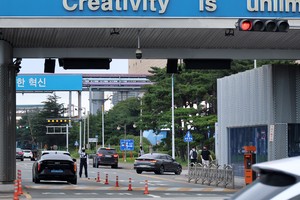
Second partial strike runs five days from Wednesday morning Pohang No. 2 and Gwangyang No. 4 hot-rolling mills targeted; reheating furnaces excluded Scope expands from first strike's electrical steel sheet and pickling lines Further expansion possible from Friday Posco's union has turned its sights on the steelmaker's hot-rolling mills for a second partial strike, shifting from the limited scope of its first action to target one of the most critical stages in the production process. The duration has also grown — from 48 hours to 120 hours — signaling that the labor-management standoff is cutting deeper into the factory floor. According to the steel industry, the dispute committee of the Posco labor union, affiliated with the Federation of Korean Trade Unions' metal workers' federation, issued "Dispute Committee Directive No. 9" to its members Monday, announcing a 120-hour second partial strike beginning at 7 a.m. Wednesday. The strike targets the No. 2 hot-rolling mill at Posco's Pohang steelworks and the No. 4 hot-rolling mill at its Gwangyang steelworks. Operations and maintenance workers at those facilities and all affiliated union members are to halt work entirely and join the strike. Reheating furnace operators and maintenance staff, however, are exempt. Reheating furnaces are high-temperature, gas-fed installations that require separate operational management even when a production line is shut down. The second strike carries greater weight in production terms than the first, which ran from Wednesday through Friday last week and targeted the No. 2 electrical steel sheet mill's 3ZRM line at the Pohang steelworks and the pickling plant at the Gwangyang steelworks. Hot rolling occupies the backbone of a steelworks' production chain. The process takes molten iron from the blast furnace through steelmaking and continuous casting to produce slabs, which are then reheated and rolled thin into hot-rolled coils. The resulting hot-rolled material is sold directly but also feeds downstream processes such as cold rolling and plating. A prolonged disruption to hot-rolling operations can therefore ripple through to finished product output as well. The union has also left the door open to widening the strike depending on how negotiations unfold. The dispute committee stated in the directive that it would expand the number of sites covered by the second partial strike from Friday "depending on the progress of negotiations and the company's response." The union has also tightened controls on strike participation. Members subject to the strike must check in at the union office in person every day during the walkout. Those who fail to appear will be denied strike compensation of 300,000 won ($223), while members who check in but then report to work or perform duties will be disqualified from compensation and referred to a disciplinary committee. Substitute work and operational support at struck facilities are also prohibited. Members who receive requests from the company to provide support or perform substitute duties at those sites are required to report immediately to the dispute committee. The union has directed members to work normal shifts through the night shift Tuesday. If the company decides to halt the line without deploying replacement workers, members are to follow dispute committee guidelines — carrying out the standard safety shutdown procedure from 6 a.m. Wednesday before leaving. The second partial strike is set to end at 7 a.m. Sept. 21, after which affected members will return to normal work schedules. The decision puts into action an escalation the union had previously signaled. Union Chairman Kim Sung-ho had warned ahead of the first strike that "if the company continues to ignore workers' voices after the first strike, we will immediately and dramatically expand the scale and scope of the strike to deal a decisive blow to management."
Sept. 14, 2026
-
Korea business lobby, National Assembly to tackle tourism regulations
Seminar on tourism law and policy reform set for Sept. 22 at National Assembly The Korea Federation of Enterprises and the National Assembly Tourism Industry Forum will jointly host a seminar on tourism law and policy reform at the National Assembly Library on Sept. 22 at 10 a.m., the federation announced Monday. The seminar aims to chart a future vision for the tourism industry — widely regarded as a key engine of regional economic growth — and to explore ways to invigorate local tourism ecosystems by leveraging Korea's homegrown K-content. The federation has previously pushed for policy changes in this area: last year, it submitted 33 policy proposals to the government calling for a broader definition of the tourism industry, expanded transportation networks to regional tourist destinations, and deregulation of home-sharing services. Representatives from the National Assembly, the government, local governments and the private sector will gather to examine regulatory hurdles on the ground and discuss legislative amendments and policy support measures related to tourism. In the main presentations, Shin Hak-seung, a professor at Hanyang University, will speak on strategies for revitalizing regional tourism in Korea based on Japan's experience. Chae Ji-young, a senior research fellow at the Korea Culture and Tourism Institute, will then present on "K-Culture and the Regional Economy: Strategies and Challenges," outlining ways to link the regional tourism industry with K-culture. The panel discussion will be moderated by Lee Hoon, a professor at Hanyang University. Participants will include Yoon Hong-min, an official from the Ministry of Culture, Sports and Tourism's international tourism policy division; Choi Dong-seok, head of the tourism industry division at the South Chungcheong Culture and Tourism Foundation; Kwon Du-hyeon, a board member of the Yeongju Culture and Tourism Foundation; and Lee Jae-su, head of the federation's livelihood economy team. The panel will discuss policy support and regulatory reform needed to promote regional K-culture content. The opening ceremony will feature remarks from Democratic Party of Korea lawmaker Min Byeong-deok, People Power Party lawmaker Kim Seok-gi, Korea Federation of Enterprises Vice Chairman Kim Chang-beom, and Lee Hoon, dean of Hanyang University's College of Social Sciences. Kang Jeong-won, a senior official at the Ministry of Culture, Sports and Tourism, will deliver a congratulatory address.
Sept. 14, 2026
-
Volkswagen Group Korea moves to cultivate next-generation automotive software talent
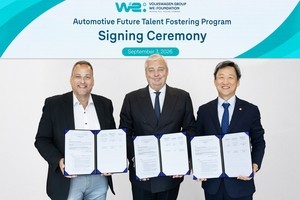
Germany's TU Braunschweig automotive research institute joins industry-academia consortium with four Korean universities Selected students to be dispatched to IAE from 2027 for three years Program offers hands-on participation in R&D projects including Level 4 autonomous driving Volkswagen Group Korea announced Monday that it had signed an agreement through its nonprofit Volkswagen Group Woori Foundation with the Institute of Automotive Engineering (IAE) — an affiliate of the Niedersachsen Research Centre for Vehicle Technology (NFF) at Technische Universität Braunschweig in Germany — and the Korean University Consortium (KUC). The three organizations plan to build a global cooperation framework for cultivating next-generation automotive software talent through what they are calling an "Automotive Future Talent Development Program." The partnership focuses on helping Korean students gain hands-on experience and technical competitiveness at leading global research institutions, amid rapid change in the automotive industry driven by software-defined vehicles (SDVs), AI and autonomous driving. Under Volkswagen Group Korea's support, the Volkswagen Group Woori Foundation will oversee the program's overall operations, while the IAE will lead local research and development activities on behalf of the NFF. The IAE is a specialized automotive research institute at TU Braunschweig and an affiliate of the NFF — a multidisciplinary mobility convergence research center — where it heads the "Autonomous and Connected Driving" research division. The KUC, comprising Kookmin University, Ajou University, Inha University and Chungbuk National University, will handle student selection, domestic curriculum development and program outreach. Running from 2027 through 2029, the three-year program is built around two core pillars: IAE research projects and a Korea-based curriculum. The Germany dispatch program will select up to 10 outstanding undergraduate students from KUC member universities each year. Selected students will participate in IAE research activities for 12 months, carrying out advanced research projects under one-on-one mentoring from local researchers. Students will have the opportunity to take part directly in projects using a broad range of research infrastructure — including development of the control stack for "Lion," a Level 4 autonomous driving shuttle, and its real-road validation; the "Luna" multimodal sensor fusion research vehicle project; a driving simulator (DVRS); and a real-road testbed (Ci2Ci). They will also share project results with researchers from various fields through regular colloquia, gaining valuable global collaboration experience. On the domestic side, the program will focus on developing and disseminating a curriculum that reflects the latest technology trends in the automotive industry. The four-university consortium plans to support micro-degree and credit completion by linking four core modules — automotive embedded systems (AES), autonomous driving systems (ADS), automotive AI (AAI) and automotive cybersecurity (ACS) — with existing courses such as capstone design. Till Scheer, president and CEO of Volkswagen Group Korea and chairman of the Volkswagen Group Woori Foundation, said the partnership carries special significance as major industry-academia institutions from Korea and Germany have come together to build a solid cooperation framework for developing core talent in automotive software. "Building on the strong synergy between our German partner institution and Korean universities, we will continue to serve as a firm bridge so that talented Korean students can grow into automotive software professionals who make their mark on the global stage," he said. Meanwhile, Volkswagen Group Korea has been actively engaged in fostering future mobility talent through the Volkswagen Group Woori Foundation, including hosting the "2026 C:ME Hackathon," an automotive software development competition held recently.
Sept. 14, 2026
-
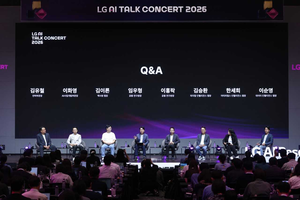
LG touts factory-ready AI, says it would supply tech to Samsung if asked
EXAONE Tabular cuts model update time by 85% at LG Innotek LG affiliates accelerating AI transformation with EXAONE Physical AI development underway, combining robotics with foundation models "In the AI era, what matters is how we combine national industrial competitiveness with AI to build an even stronger edge. If Samsung wants it, we are willing to provide EXAONE." — Lee Hwa-young, head of AI business development at LG AI Research LG AI Research held the "LG AI Talk Concert 2026" at LG Science Park's Convergence Hall in Magok, Gangseo-gu, Seoul, on Monday, unveiling expert AI applications it has developed for manufacturing, finance and science. The event emphasized AI that can be deployed directly on factory floors — not AI still confined to the research stage. LG AI Research is running proof-of-concept projects to apply AI to manufacturing processes across LG's production affiliates, including LG Innotek, LG Display, LG Electronics and LG Energy Solution, all using its EXAONE model. "In the past, manufacturing sites would analyze the cause of a problem after it occurred and then respond," said Lim Woo-hyung, co-director of LG AI Research. "Going forward, AI will predict problems before they arise and proactively take the necessary steps." The flagship technology, EXAONE Tabular, analyzes numerical data generated on factory floors — including temperature, pressure, process conditions and quality inspection results — to forecast changes in quality and production. Its key advantage is that it can be applied quickly with minimal data, without needing to rebuild a model from scratch or collect large new datasets each time a process changes. LG Innotek is currently rolling out EXAONE Tabular across its manufacturing processes. The company aims to build an autonomous factory in which AI analyzes data in real time across its entire production lines — covering camera modules and semiconductor substrates — to predict process anomalies and automatically adjust production conditions. "Under the previous approach, when process conditions changed, we needed at least 14 days and more than about 300 hours of production data to retrain the model," said Yoo Jeong-seon, who leads AI transformation at LG Innotek. "By using EXAONE Tabular, we have cut the time needed to reflect changed conditions to around 50 hours." That represents roughly an 85 percent reduction in model update time. LG AI Research is also applying AI to visual inspection — using cameras on the factory floor to detect product defects. Previously, whenever a product or production line changed, engineers had to collect new data and develop a new model, a process that could take anywhere from several weeks to several months before deployment. EXAONE Omni-Inspect, developed by LG AI Research, reduces the need for separate retraining even when the inspection target or process changes, enabling faster deployment. Built on a vision-language model, it can continuously refine inspection models, making it suitable for environments with frequent line changes such as high-mix, low-volume production. LG AI Research plans to deploy it in actual inspection processes this year. LG AI Research is also pursuing commercialization with external clients. Lee, the head of AI business development, said demand for EXAONE Tabular from outside the group has been "extremely high," with inquiries coming from global customers, pharmaceutical companies, hospitals and energy firms. Beyond manufacturing AI, LG Group is developing physical AI — combining robotics with AI — as its next major growth pillar. The group is building a "robot foundation model" to serve as the brain of its robots, integrating hardware capabilities from its affiliates — robots and finished products from LG Electronics, sensors from LG Innotek and batteries from LG Energy Solution — with the platform expertise of LG CNS and the AI technology of LG AI Research. "LG Group holds a vast trove of real-world data accumulated across its global production sites," said Kim Seung-hwan, head of the Physical Intelligence Lab at LG AI Research. "The data we have secured from our home appliance business can also be applied to robotics — that is our strength." The vision is to extend EXAONE's foundation model capabilities into robotics, ultimately realizing autonomous factories in which AI makes decisions and robots act on them directly. Manufacturing AI adoption, however, remains in its early stages. An analysis of Statistics Korea's corporate activity survey by the Korea Institute for Industrial Economics and Trade found that only 3.9 percent of manufacturing companies were using AI as of 2023. A key obstacle is that products, processes and data environments differ from factory to factory, making it difficult to scale AI developed at one site to another. LG AI Research sees general-purpose industrial AI — capable of getting started quickly with minimal data and scaling across multiple processes — as the key to spreading AI transformation throughout manufacturing. "Even when we worked with LG affiliates to build a good model and deploy it on-site, we found that scaling it further was difficult," Lim said. "We will make AI more accessible and usable through foundation models that can adapt quickly to a wide range of situations."
Sept. 14, 2026
-
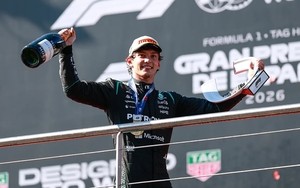
Mercedes-AMG Petronas F1 Team claims 10th win of season at Spanish Grand Prix
Kimi Antonelli records 8th win of season Mercedes-AMG Petronas F1 Team leads constructor standings The Mercedes-AMG Petronas F1 Team topped the podium again at the 14th round of the 2026 F1 World Championship — the Spanish Grand Prix — on Sunday (local time), the team announced Monday. The race, held in Madrid, made Kimi Antonelli the first winner at the newly built Madring Circuit. Antonelli started from second on the grid after posting a qualifying time of 1 minute 31.835 seconds on Sunday, then crossed the finish line first with a race time of 1 hour 34 minutes 23.754 seconds. The victory gave him his eighth win of the season, extending his lead in the Drivers' World Championship to 292 points. Teammate George Russell held on to second place in the standings. "I'm delighted to have kept up our strong season results with a well-paced race today," Antonelli said. "The team is in a great position in the championship, and I'll be ready to carry that momentum through the remaining rounds of the 2026 season." Mercedes-AMG Petronas has now won 10 of the 14 rounds held this season, leading the Constructors' Championship with 503 points — 145 points clear of the second-place team. The team's next outing is the Azerbaijan Grand Prix, beginning Sept. 24. Meanwhile, Mercedes-Benz Korea launched the Mercedes-AMG GT 43 in July, an entry-level addition to the AMG GT high-performance sports car lineup featuring an electronically motorized exhaust turbocharger developed from Mercedes-AMG Petronas F1 Team technology.
Sept. 14, 2026
-
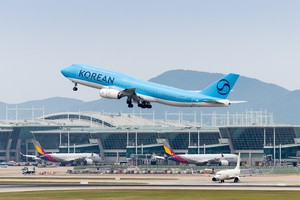
Korean Air to recode Asiana Airlines flights ahead of Dec. 17 merger launch
Flight code changes to roll out from Nov. 2 to Dec. 3 Applies to customers departing from Dec. 17 onward Advance notifications and reservation transfers to ensure seamless service Korean Air will transfer Asiana Airlines customer reservation data in advance as it prepares to launch a unified carrier with Asiana on Dec. 17. Korean Air announced Monday that it will carry out a flight code reassignment — known as a REAC process — converting Asiana Airlines flight codes to Korean Air codes between Nov. 2 and Dec. 3. The change applies to customers who hold existing Asiana Airlines reservations or tickets for flights departing on or after Dec. 17, the planned launch date of the merged airline. The measure is designed to minimize confusion among passengers as Asiana-operated flights transition to Korean Air operations, and to ensure stable, uninterrupted service following the integration. Korean Air plans to migrate Asiana Airlines reservation and ticketing data ahead of the changeover so that customers can travel without disruption using their updated booking information. The airline will transfer affected reservations in stages, taking into account system stability and customer convenience. Passengers whose flight codes are being changed will receive individual notifications via KakaoTalk alerts, text messages and email, giving them ample time to review their new reservation and ticket details before departure. In addition, Korean Air will post a frequently asked questions section on its website and mobile app covering key changes related to the Asiana integration, allowing customers to familiarize themselves with the updates in advance. "The most important thing for us throughout the integration with Asiana Airlines is minimizing inconvenience for our customers and providing stable service," a Korean Air official said. "We will pursue the integration smoothly while doing our utmost to protect customer convenience through thorough advance communication and a phased flight code transition." Meanwhile, Korean Air and Asiana Airlines have begun offering free in-flight Wi-Fi on select routes this month using Starlink's low-earth orbit satellite constellation, part of a broader push to enhance passenger experience ahead of the unified carrier's launch.
Sept. 14, 2026
MOST READ
- 1What was Rachmaninoff's performance fee? A 1928 price list tells all
- 2Korea Expressway Corporation uses AI to crack down on toll evaders
- 3Pope Leo XIV declines French honors and banquet, accepts only private meeting with Macron
- 4Samsung Biologics union's show of force backfires at the bargaining table
- 5APR says hair-loss treatment research published in international journal
- 6Xi Jinping health rumors resurface after BRICS dinner no-show
-
WORLD
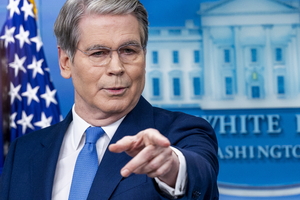
US warns of punishment for anyone enabling Iran's Strait of Hormuz toll scheme
-
INDUSTRY
Toyota union puts productivity first; Hyundai Motor union demands bigger share of profits
-
FINANCE
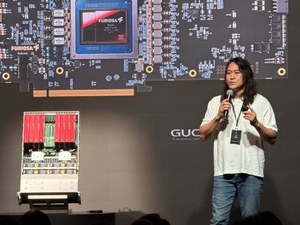
National Growth Fund to invest $531M in FuriosaAI, which rebuffed Meta's $800M takeover bid
-
INDUSTRY
Korea Shipowners' Association holds amateur baduk tournament for Maritime Day