
- HOME
- INDUSTRY
-
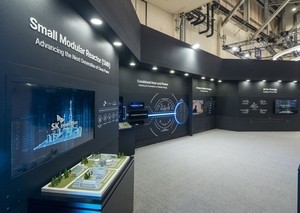
SK Innovation unveils integrated energy solutions for AI era at climate expo
World Climate Industry Expo runs Wednesday through Friday at BEXCO in Busan SK Innovation to showcase renewable energy expansion plans BESS, small modular reactors and LNG among energy sources on display Company aims to offer tailored, integrated energy packages for customers SK Innovation said it is participating in the 2026 World Climate Industry Expo, held Wednesday through Friday at BEXCO in Haeundae-gu, Busan. This year's event is themed "The Great Transformation by Climate Tech: A Leap Toward a Decarbonized World." SK Innovation will use the exhibition to present integrated solutions designed to address the surge in electricity demand driven by AI. SK Group Chairman Chey Tae-won has emphasized the importance of an "integrated energy solution" that combines multiple energy sources, saying SK Innovation can play a role in AI-powered energy solutions and in the "electrification" that underpins AI data centers. In line with that vision, SK Innovation will introduce its renewable energy business status and expansion plans. As of the end of May, the company has secured a global renewable energy pipeline of approximately 5.3 GW and is expanding solar and wind projects across Southeast Asia, including Vietnam. The company will also display battery energy storage systems, or BESS, which offset the intermittent nature of renewable energy. Combining renewables with BESS enables more stable power supply to large-scale consumers such as AI data centers. SK Innovation will also present its small modular reactor business. SK Group is working with TerraPower to build a next-generation SMR ecosystem. TerraPower's Natrium SMR, under construction in Wyoming, became the first advanced commercial-scale nuclear plant to receive a construction permit from the US Nuclear Regulatory Commission in March. LNG combined heat and power generation offers a practical energy source for meeting rapidly growing electricity demand. SK Innovation has high-efficiency generation capacity that supplies both electricity and heat, and is expanding its distributed power business targeting large-scale consumers such as data centers. Beyond showcasing individual energy sources, the exhibition will also present them as packaged combinations tailored to customers' power needs. "We plan to provide customized integrated energy solutions for each customer by drawing on renewable energy, BESS, SMR, LNG cogeneration and other energy sources," a company official said. The exhibition will also feature AI-related technologies from across SK Group — including an AI-based Intelligent Power Plant platform that efficiently integrates and manages diverse energy sources, SK Telecom's AI Factory and SK hynix's high-bandwidth memory HBM chips.
Sept. 16, 2026
-
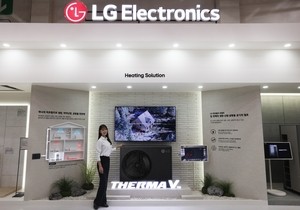
LG Electronics showcases AI-powered HVAC, home appliances at climate industry expo
Expo runs Wednesday through Friday at Busan's Bexco Heat pump boiler, ventilation solutions, modular home on display LG StanbyME 2 Max draws attention for drastically reduced standby power Battery recycling and other resource-circulation initiatives also featured LG Electronics is showcasing AI-powered high-efficiency residential solutions at the 2026 Climate Industry International Expo, held Wednesday through Friday at Bexco in Busan. The expo, co-hosted by the Ministry of Climate, Environment and Energy, the International Energy Agency and the World Bank, serves as a forum for discussing advanced technologies and policy solutions to address the climate crisis and achieve carbon neutrality. In the heating, ventilation and air conditioning zone, LG Electronics is displaying products designed to reduce home energy consumption, including the recently launched high-efficiency all-in-one LG Therma V heat pump boiler, the LG Whisen AI Objet Collection Tower I air conditioner, the LG MULTI V i, the LG Whisen AI system air conditioner and the LG Premium Ventilation Plus — the last four of which received the Energy Winner Grand Prize and the Ministry of Climate, Environment and Energy minister's award this year. The home appliance zone features the LG Trom AI Objet Collection WashCombo, which uses dual inverter heat pump technology to cut energy use during washing and drying, along with the LG Styler Objet Collection, the LG PuriCare Objet Collection water purifier, the LG DIOS induction cooktop and the LG DIOS Objet Collection dishwasher. The media and display zone highlights the LG ePaper Display, which cuts power consumption by more than 99 percent compared with conventional digital signage, and the LG StanbyME 2 Max, which reduces standby power to 0.5 watts or less. LG Electronics will also introduce its resource-circulation and carbon-reduction efforts, including an OLED TV that uses about 40 percent less plastic than LCD TVs and its "Battery Turn" initiative, which recovers rare metals from used vacuum cleaner batteries for reuse. The company will also present the LG Smart Cottage, a modular home that integrates AI home appliances and HVAC technology. "We will continue to offer differentiated energy-efficiency technology and carbon-reducing products so that customers can experience a sustainable lifestyle in their everyday lives," said Kim Young-rak, president and head of LG Electronics' Korea sales division.
Sept. 16, 2026
-
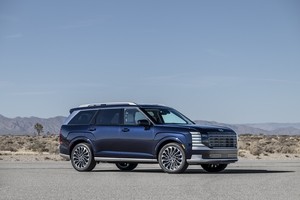
Hyundai Motor, Kia and Genesis earn top marks from major US auto outlet
CarBuzz praises Hyundai Motor Group's product quality, saying it is rapidly closing the gap with established luxury brands; the Palisade hybrid draws comparisons to SUVs costing more than $100,000; strong hybrid lineup drives record US sales Hyundai Motor, Kia and Genesis are drawing praise from a prominent US automotive publication, which says the brands are rapidly closing the product-quality gap with established luxury rivals. CarBuzz recently reported that Hyundai Motor, Kia and Genesis are "shaking up the existing order of the auto market" by quickly narrowing the product-quality gap with traditional luxury brands, including those from Germany. CarBuzz is one of the major US automotive outlets, reaching more than 6 million monthly readers and about 7.5 million social media followers, and provides vehicle reviews for consumers considering a purchase. CarBuzz shared its experience test-driving the Hyundai Motor Palisade hybrid, saying it was "hard to find any difference" between the SUV's smooth ride and cabin quietness and those of the many luxury SUVs priced above $100,000 that it has tested. Citing J.D. Power's Automotive Performance, Execution and Layout (APEAL) study, CarBuzz said savvy consumers have for years been watching Hyundai Motor, Kia and Genesis consistently improve across a range of metrics, including sales volume, customer satisfaction and durability. The outlet attributed the group's rapid rise to its ability to deliver interior quality, user interfaces and cabin refinement — features once reserved for flagship models from established luxury brands — at more accessible price points. Looking at individual brands, Genesis recorded scores ranging from 869 to 886 points across the past five years of data. CarBuzz noted that Genesis has outscored Mercedes-Benz, Lexus, Audi, Volvo, Acura and Infiniti across multiple years, concluding that Genesis "is no longer a challenger — it is a brand firmly established at the very top of the luxury market." Hyundai Motor and Kia have also consistently maintained high scores of around 850 points, significantly narrowing the gap with major premium brands. In 2026, Hyundai Motor scored 858 points — 12 points behind Lexus and 18 behind Mercedes-Benz — while Kia scored 857, just 6 points behind Volvo. CarBuzz also highlighted the group's manufacturing competitiveness, noting that Hyundai Motor Group is expanding investment in AI-based robotics and next-generation production automation technology, and pursuing a strategy with Boston Dynamics to improve manufacturing efficiency and production flexibility. The outlet said these investments could serve as a long-term foundation for lowering production costs and delivering even higher product quality at competitive prices. Meanwhile, in a separate report headlined "Hyundai, Kia set new US sales record — BMW cuts 8,000 jobs," CarBuzz said Hyundai Motor and Kia sold 920,383 vehicles in the US in the first half of this year, up 3 percent from the same period a year earlier. CarBuzz noted that hybrid sales by Hyundai Motor and Kia surged 65.5 percent year-on-year to 225,321 units in the first half of 2026, calling the broad hybrid lineup "one of the key factors driving overall sales growth." Hyundai Motor's hybrid exports to the United States from January through July this year jumped 70.1 percent year-on-year to 121,027 units — the highest growth rate among all regional export markets. As a result, the US share of Hyundai Motor's total hybrid exports rose sharply, from 40.2 percent last year to 49.4 percent. CarBuzz praised Hyundai Motor Group for flexibly responding to shifting market demand through a diverse product portfolio spanning hybrids, electric vehicles and internal combustion engine vehicles — a contrast, it said, to some global automakers that had pursued EV-centric strategies and are now struggling with slowing electric vehicle demand.
Sept. 16, 2026
-

SK hynix wage-and-labor deal passes union revote
SK hynix's wage-and-labor agreement was approved in a union revote.
Sept. 16, 2026
-
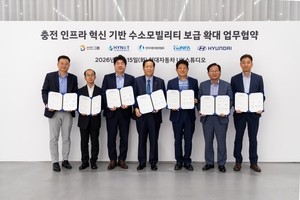
Hyundai Motor signs multilateral MOU to accelerate hydrogen bus rollout
Multilateral MOU signed Tuesday with Seonjin Group, automotive environment association and others Partnership secured with three major bus operators in Greater Seoul Automaker pledges support across entire process, from site identification to contractor matching Hyundai Motor signed a multilateral memorandum of understanding Tuesday with Seonjin Group, HyNet, the Korea Automobile Environment Association and the Korea Natural Gas and Hydrogen Charging Association to expand hydrogen mobility through improvements in charging infrastructure. The signing ceremony was held at UX Studio Seoul in Hyundai Motor's Gangnam-daero office building. Senior Managing Director Park Seung-won of Hyundai Motor's Business Innovation Division, Seonjin Group Chairman Shin Jae-ho, Vice Chairman Park Hong-je, HyNet CEO Song Seong-ho, Korea Automobile Environment Association Chairman Hwang Gye-young and Korea Natural Gas and Hydrogen Charging Association Chairman Kang Jeong-gu attended the ceremony. The agreement aims to introduce hydrogen buses on Seonjin Group's major bus routes in the Greater Seoul area and to build out the charging infrastructure needed to support them. Seonjin Group operates about 1,700 buses through 17 transport subsidiaries across the Greater Seoul and Honam regions. Under the partnership, the group plans to convert existing compressed natural gas stations at its depots in Gimpo and Paju into hydrogen charging stations and to introduce a total of 480 hydrogen buses in phases by 2032. HyNet will build and operate large-capacity hydrogen charging stations at designated depot sites. The Korea Automobile Environment Association will support the construction and activation of hydrogen charging infrastructure, while the Korea Natural Gas and Hydrogen Charging Association will work to spread an innovative charging infrastructure model. Hyundai Motor will supply hydrogen buses to Seonjin Group on schedule and provide specialized maintenance training to help ensure stable operations. The automaker had previously signed hydrogen bus transition agreements with major operators KD Transport Group and K1 Mobility. The latest deal with Seonjin Group reinforces its push to lead the shift to hydrogen mobility in Greater Seoul's public transportation network. "Hyundai Motor is leading the expansion of charging infrastructure by supporting the entire process — from identifying optimal sites to matching specialized construction firms — for transport companies and local governments that need hydrogen charging stations," a company official said. "We will continue to drive the spread of the hydrogen mobility ecosystem through effective multilateral cooperation models." Meanwhile, Hyundai Motor participated in the 2026 Green Hydrogen Global Forum with Distributed Energy Forum, a three-day event that opened Monday at the Jeju International Convention Center, where it shared its vision for an energy transition linking renewable energy and hydrogen, as well as the role of hydrogen mobility.
Sept. 16, 2026
-
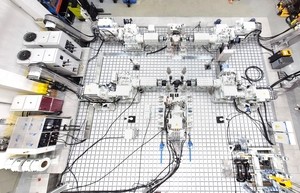
Korea Automotive Technology Institute completes nation's only eco-friendly commercial vehicle testing infrastructure
Five core evaluation systems to be operational in October at Changwon National Industrial Complex expansion zone; integrated testing to cover components through full vehicles The Korea Automotive Technology Institute will complete construction of the country's only and largest dedicated testing infrastructure for eco-friendly commercial vehicles at the Changwon National Industrial Complex expansion zone in October, aimed at helping domestic parts companies achieve technological independence and commercialization. The institute announced Wednesday that it has established an integrated performance evaluation platform at the expansion zone in Seongsan-gu, Changwon, South Gyeongsang Province, through a project to build a comprehensive testing foundation for electric drive systems in large electric and hydrogen commercial vehicles — the only such integrated facility in the country, designed to support the development of high-power, high-speed and high-durability electric drive systems. The project, totaling 19.9 billion won ($14.8 million), has been carried out since 2022 with support and close cooperation from the Ministry of Trade, Industry and Energy, the Korea Institute for Advancement of Technology, South Gyeongsang Province and the city of Changwon. Its goals are to help companies secure electric drive system technology for eco-friendly commercial vehicles and to strengthen the competitiveness of the future mobility industry. The institute pursued the project with the aim of consolidating previously scattered evaluation infrastructure for large electric and hydrogen commercial vehicle drive systems into a unified support framework covering individual components, subsystems and powertrain units. To build an integrated evaluation platform tailored to large commercial vehicles, the institute completed five core evaluation systems: a multi-axis power generation and transmission integrated electric drive system performance evaluator; a high-power and high-torque electric drive component performance evaluator; a high-power and high-speed electric drive component performance evaluator; a real-road driving simulation multi-hardware-in-the-loop system; and a temperature-humidity environmental chamber for assessing electric drive system environmental durability. Using the newly built infrastructure, the institute plans to provide integrated support to companies across the full development cycle of electric drive systems for eco-friendly commercial vehicles — from big data-based benchmarking and specification review at the planning stage through reliability verification at the mass production stage. The institute expects domestic parts companies that have struggled with the absence of in-house evaluation platforms and heavy cost burdens during system development to use the new infrastructure to accelerate technological independence and commercialization. The institute also expects the facility to help companies significantly cut development time and costs and strengthen their competitiveness in global markets by securing a development and verification environment that allows them to proactively meet the requirements of vehicle manufacturers in Europe, the United States and other overseas markets. "This infrastructure goes beyond simply introducing equipment — its significance lies in providing domestic parts companies with a development environment that allows them to proactively respond to global markets," said Kim Deok-jin, head of the institute's Power and Control Research Division. "As the country's only infrastructure capable of integrated evaluation from components to full vehicles, we will contribute to achieving carbon neutrality in the large mobility sector and to revitalizing the regional industrial ecosystem." Meanwhile, the institute has been carrying out a range of activities at home and abroad to advance the mobility industry, including signing a memorandum of understanding on future mobility research cooperation with Chalmers University of Technology in Gothenburg, Sweden, on Sept. 6.
Sept. 16, 2026
-
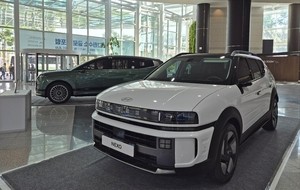
Hyundai Motor Group shares hydrogen mobility vision at Jeju green hydrogen forum
Forum held Monday through Wednesday at Jeju International Convention Center 106 institutions from 9 countries participate Executive stresses need for efficient energy utilization systems alongside renewable expansion Hyundai Motor Group said Wednesday it participated in the 2026 Green Hydrogen Global Forum with Distributed Energy Forum, held over three days from Monday at the Jeju International Convention Center, sharing its vision for energy transition through renewable energy and hydrogen, as well as the role of hydrogen mobility. The forum is co-hosted by the Ministry of Climate, Environment and Energy and the Jeju Special Self-Governing Province and organized by the Green Hydrogen Glocal Research Center. Participants included the International Energy Agency, the Global Green Growth Institute, embassies of major countries, and 106 institutions, companies and universities from nine nations. Under the theme "Jeju, Climate Economy Capital: Setting a New Standard for Global Energy Transition," the forum addressed energy transition challenges including the production and use of green hydrogen based on renewable energy and the expansion of clean hydrogen demand. Hyundai Motor Group Executive Vice President Shin Seung-gyu, who attended the opening ceremony held Tuesday, said in a congratulatory address that "as the spread of renewable energy expands, it becomes increasingly important to ensure both a stable energy supply and an efficient system for utilizing that energy." Shin added that "storing hydrogen produced from renewable energy and deploying it when needed can contribute to greater flexibility in the energy system," and that "Jeju can play an important role in demonstrating and spreading this kind of energy transition model." Jeju Special Self-Governing Province is pursuing a "climate economy capital" vision in which clean energy production translates into tangible benefits for the local economy and residents' lives. Jeju has been building its clean hydrogen production and utilization base since launching a 250-kilowatt water electrolysis demonstration project in 2017. A 3.3-megawatt electrolysis complex in Haengwon, Gujwa-eup, Jeju, has been producing about 200 kilograms of hydrogen per day since September 2024, supplying hydrogen buses and passenger vehicles on the island. Jeju is also actively expanding its hydrogen mobility fleet, with plans to introduce a cumulative total of about 370 vehicles by 2027 — 290 passenger cars, 76 buses and three trucks. Hyundai Motor Group has been cooperating with Jeju Special Self-Governing Province since 2021, when the two sides began working together to build an eco-friendly vehicle ecosystem, and has since extended that collaboration to hydrogen and vehicle-to-grid areas. Shin said "the combination of renewable energy and hydrogen is a critical foundation for turning the new possibilities of energy transition into reality," adding that "Hyundai Motor Group will work closely with Jeju to build the future of South Korea's hydrogen economy together." Hyundai Motor Group also participated Tuesday in a session titled "Strategy for Expanding the Clean Hydrogen Demand Market: From Low-Carbon Power to Industry and Mobility," presenting on the topic of "FCEV-Based Urban Mobility Resilience Strategy." In the presentation, Hyundai Motor Group said fuel cell electric vehicles and battery electric vehicles are not competing technologies but complementary mobility solutions, each suited to different use cases. The group said FCEVs offer particular value in long-distance, heavy-load transport requiring fast refueling, long range and high operational availability, as well as in essential mobility sectors such as buses, taxis and logistics trucks. "Hydrogen mobility is an alternative that can complement power-based mobility in areas requiring reliable operation, such as long-distance transport and disaster response," a Hyundai Motor Group official said. "We will explore the diverse potential applications of combining renewable energy and hydrogen, and work with partners to help expand the clean hydrogen demand ecosystem." Hyundai Motor Group also displayed the hydrogen fuel cell vehicle "The All New Nexo" and the electric vehicle "Ioniq 9" at the forum's exhibition space, introducing its hydrogen mobility and electrification technologies and highlighting the wide-ranging possibilities of eco-friendly mobility. Meanwhile, Hyundai Motor Group recently signed a letter of intent with the African Development Bank at its headquarters in Yangjae, Seocho-gu, Seoul, covering cooperation on industrialization, transport infrastructure and clean energy transition in Africa, as part of its broader efforts at home and abroad to foster a clean energy ecosystem that includes hydrogen.
Sept. 16, 2026
-
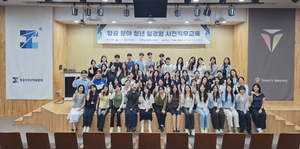
Trinity Airways joins youth work-experience program for 4th consecutive year
Offering hands-on aviation industry experience to young job seekers 168 participants expected this year across three rounds Program features pre-placement job training and on-site mentoring Trinity Airways announced Wednesday that it will participate for the fourth consecutive year in the 2026 Mirae Naeil Work Experience program, which provides young job seekers with hands-on experience in the aviation industry. Administered by the Ministry of Employment and Labor, the program helps young job seekers explore career paths and build employment skills by placing them directly in workplace settings. Trinity was the first domestic carrier to join the program, doing so in 2023, and has since offered participants on-site experience at airports and in aviation operations. This year's program runs from April through November in three rounds, with 168 participants expected. They will be assigned to airport branches at Incheon, Gimpo, Jeju, Cheongju and Gimhae to gain hands-on experience. Gimhae Airport is a new addition this year, expanding access for young people outside the Greater Seoul area. The program is open to all applicants regardless of academic major, allowing anyone with an interest in aviation to explore various roles and chart their career direction. The program begins with roughly one week of pre-placement job training, followed by on-site practice and mentoring sessions with current employees on job roles and career development. In-house subject-matter instructors as well as active flight crew and cabin crew members take part in the training. Participants then gain practical experience at their assigned airport branches, where they identify areas for improvement and develop and present field-based ideas through a "mission project." A completion ceremony recognizes top-performing teams to boost motivation. The ideas generated through the projects are shared with airport staff, giving the company fresh perspectives on improvement while participants gain real-world experience and professional growth. "Over four consecutive years in the program, we have continued to refine it so that young people can experience real aviation work firsthand and explore their career paths in concrete terms," a Trinity Airways official said. "We will keep working to provide young people with ever more meaningful work experience opportunities." Meanwhile, Trinity launched its first flights under the Trinity Airways brand on Thursday, opening domestic service with the 6:10 a.m. Daegu–Jeju flight TW801 and international service with the 6:55 a.m. Incheon–Narita flight TW237.
Sept. 16, 2026
-

Eastar Jet upgrades in-flight 'Airplane Mode' service with entertainment features
Expansion adds remaining flight time, landmark previews and interactive games Service moves beyond information to in-flight entertainment Eastar Jet announced Wednesday that it has renewed its "Airplane Mode" service to improve in-flight customer satisfaction. The Airplane Mode service allows passengers to access flight information and content through the Eastar Jet mobile app without an internet connection. The airline first introduced it in March 2024. The original service focused on basic information such as in-flight meal menus and customs declaration form guides by country. The renewed version adds real-time flight data and entertainment features, giving passengers a wider range of content to enjoy during flights. One new feature displays images of major landmarks along the flight route, showing passengers notable attractions in the regions the aircraft is passing over — even when the view outside the window is limited. A remaining flight time display has also been added, presenting the time left to the destination through an aircraft-shaped graphic designed to be intuitive and visually engaging. Interactive content is part of the update as well. Passengers can play simple games — including true-or-false quizzes and sudoku — without an internet connection. The service's information offerings have also been expanded, with the addition of a frequently asked questions section and an in-flight service schedule, making it easier for passengers to find what they need. "This renewal expands the service so passengers can more easily access the information they need and enjoy their time in the air," an Eastar Jet official said. "We will continue to strengthen our range of services and content in line with our brand slogan, 'Easy Flight,' so that every step of our customers' travel becomes easier and more enjoyable." Meanwhile, Eastar Jet has been actively working to improve its passenger services, recently adding five new in-flight meal options and expanding the product lineup of "Byeolbyeol Cafe," its paid in-flight retail service.
Sept. 16, 2026
-
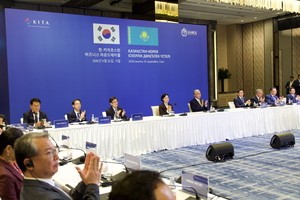
Korean firms expand into Central Asia with AI, shipbuilding and space
230 from Kazakhstan, 180 from Turkmenistan gather with Korean business leaders From AI and space to shipbuilding and plant construction Central Asia cooperation moves beyond resources into advanced industries Korean companies are expanding their economic cooperation with Central Asia beyond the traditional focus on resources, energy and plant construction into future industries such as AI, space and satellite technology, smart cities and shipbuilding. As global supply chain realignment intensifies the need to secure critical minerals and diversify overseas infrastructure markets, Central Asia is drawing attention as a new strategic market. The Korea International Trade Association held separate business events in Seoul on Tuesday with Kazakhstan and Turkmenistan, timed to coincide with the first Korea-Central Asia Summit. The presidents of both countries attended in person, signaling their commitment to deepening cooperation with Korean firms. The first event, a Korea-Kazakhstan Business Roundtable co-hosted by KITA and Kazakhstan's sovereign wealth fund Samruk-Kazyna, was held Tuesday afternoon at the Four Seasons Hotel in Jongno-gu, Seoul. Kazakhstani President Kassym-Jomart Tokayev, Prime Minister Han Seong-sook, KITA Chairman Yoon Jin-sik and Samruk-Kazyna Chairman Nurlan Zhakyupov attended, along with about 230 government and business representatives from both countries. The areas of focus went well beyond conventional resource development. Before the main event, President Tokayev and Prime Minister Han discussed ways to expand economic cooperation and received a briefing on Kazakhstan's Alatau Smart City project. The cooperation agenda covered smart cities, urban air mobility, critical minerals, finance, science and technology, and AI talent development. The underlying vision is to combine Kazakhstan's natural resources with Korean companies' technological and industrial competitiveness to extend economic cooperation into advanced industries. In the corporate session that followed, Shinhan Financial, Samsung Electronics, the Korea Institute of Geoscience and Mineral Resources and space company Contec presented concrete proposals for cooperation in financial infrastructure, AI capacity building, critical minerals, and space and satellite technology. Analysts noted that expanding ties with resource-rich Kazakhstan could help stabilize domestic supply chains, particularly as demand for critical minerals grows amid the rise of advanced industries such as batteries and semiconductors. A Korea-Turkmenistan Business Forum held at Lotte Hotel in Jung-gu, Seoul, drew about 180 government and business representatives from both countries, including Turkmenistani President Serdar Berdimuhamedov, Prime Minister Han and KITA Chairman Yoon. The economic partnership with Turkmenistan centers on the country's abundant natural gas reserves. The two sides discussed expanding Korean companies' involvement in plant projects that would convert natural gas into higher-value products such as fertilizers and petrochemicals, rather than simply exporting the raw resource. Daewoo Engineering & Construction, Hyundai Corporation and Goryeo Shipbuilding Industrial Technology introduced their major projects and future business plans. The parties also agreed to explore new opportunities in shipbuilding and transportation, in line with Turkmenistan's plans to expand its transport and logistics infrastructure. Daewoo Engineering & Construction last year won a $682 million contract from Turkmenistan's state chemical company to build a fertilizer plant. Whether the company can leverage that experience to secure follow-on projects is being closely watched. Institutional ties between the two governments are also deepening. On the sidelines of Tuesday's summit, South Korea and Turkmenistan signed 13 agreements and MOUs covering investment protection, the chemical industry and plant construction, infrastructure, railways and smart cities. The investment protection agreement was concluded after 16 years of negotiations. The scope of cooperation is expanding from energy and plant construction into railway modernization, shipbuilding, new town development, water resources, forestry, and AI and science and technology. There is also growing potential to integrate Korean railway and shipbuilding expertise with Turkmenistan's plans to build a Caspian Sea-linked logistics network. "Korea and Central Asia are important economic partners that must grow together on the basis of mutual trust," KITA Chairman Yoon said. "We will actively support business-to-business cooperation and ongoing projects so they can continue without disruption, regardless of changes in the external environment." KITA has steadily expanded its private-sector economic cooperation channels with Central Asian countries. It launched the Korea-Turkmenistan Business Council in 2019 and established the Korea-Kazakhstan Economic Cooperation Committee with Samruk-Kazyna in 2021. The association plans to use the summit as a springboard to broaden cooperation beyond resources and plant construction into advanced industries and infrastructure, helping Korean companies identify new business opportunities.
Sept. 15, 2026
-
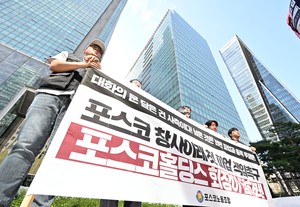
Posco wage talks collapse again as second partial strike looms
Negotiations resume after 12-day gap but differences remain unbridged Union holds firm on 7.1% base pay hike, 600% incentive bonus Five-day partial strike to target hot-rolling mills in Pohang, Gwangyang Posco and its union resumed wage negotiations on the eve of a second partial strike but failed to bridge their differences, leaving the union set to walk out Wednesday at 7 a.m. for 120 hours as planned. The two sides held an additional bargaining session Tuesday afternoon at Posco's headquarters in Pohang, North Gyeongsang Province, but suspended talks without reaching an agreement. It was their first time back at the negotiating table in 12 days since Sept. 3, yet the core sticking points remained unresolved. Neither side put forward any position more flexible than its existing demands. The union maintained its call for a 7.1 percent base pay increase, a 600 percent incentive bonus, 50 shares of employee stock, and a 200 percent holiday bonus. Management has said it cannot accept the union's demands as presented, given a sharp deterioration in profitability in the first half of this year. Posco's standalone operating profit for the first half came to 487.3 billion won ($362 million), a 43.3 percent drop from the same period last year. The company estimates that meeting all of the union's demands would cost about 1.4 trillion won — roughly equal to Posco's full-year standalone operating profit of 1.47 trillion won in 2024, and equivalent to about 80 percent of last year's annual operating profit of 1.78 trillion won. With the latest round of talks having broken down, the union is set to begin its second partial strike Wednesday at 7 a.m., running through Monday at 7 a.m. — a total of 120 hours. The strike will target the No. 2 hot-rolling mill at the Pohang steelworks and the No. 4 hot-rolling mill at the Gwangyang steelworks. Workers operating and maintaining the reheating furnaces will be exempt. Earlier, the union staged the company's first-ever partial strike on a production line in its 58-year history — a 48-hour action from Wednesday through Friday last week targeting the No. 2 electrical steel sheet mill at the Pohang works and the pickling plant at the Gwangyang works. This time, the union extended the duration from 48 hours to 120 hours — two and a half times longer — and expanded the scope to include major hot-rolling facilities. Hot rolling is a process in which slabs produced through steelmaking and continuous casting are reheated and rolled thin into hot-rolled coils. The resulting material is sold directly but also serves as feedstock for downstream processes such as cold rolling and plating, making hot-rolling mills the backbone of a steelworks' production chain. The union has left open the possibility of escalating its action further if negotiations fail to progress after the current strike. The union's strike committee had already instructed members that, depending on how talks proceed and how management responds, it could expand the list of targeted facilities from Saturday onward.
Sept. 15, 2026
-
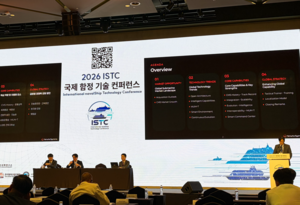
Submarine combat systems need open, evolutionary architecture to compete globally, expert says
2026 International Naval Technology Conference Hanwha Systems team leader Jo Gyu-seong presents 'Submarine combat systems are the pinnacle of systems integration' 'Open architecture essential to meet export customers' requirements' 'Interoperability, education and training must be part of the package' South Korea's submarine combat systems must adopt an open, evolutionary architecture built on more than four decades of accumulated systems-integration expertise to compete in the global market, an industry expert said Tuesday. The combat system market — the brain of any submarine — is expected to grow steadily as worldwide demand for submarines rises. Jo Gyu-seong, a team leader at Hanwha Systems, made the remarks while presenting on strategies to strengthen the global competitiveness of submarine combat systems at the 2026 International Naval Technology Conference, held at Dragon City Hotel in Seoul on Tuesday. "The strategic value of submarines continues to grow," Jo said. "Even countries operating conventional submarines are expanding demand to replace aging vessels." Jo said the submarine combat system market would grow in tandem. Citing projections from Janes Market Forecast, he said the market is expected to more than double from around $1 billion in 2025 over the next decade. 'Open, evolutionary architecture needed to apply latest technology quickly' Jo pointed to the growing adoption of open architecture in combat systems abroad. The US Navy, for instance, previously struggled to integrate equipment developed by different vendors but has since moved to a standardized open architecture applicable across submarine classes and onboard systems regardless of manufacturer. "A submarine combat system is not simply a collection of equipment — it is the pinnacle of systems-integration technology, fusing vast amounts of data in real time and organically linking countless systems from detection through engagement," Jo said. "The trial and error, integration experience and know-how accumulated over more than 40 years of developing combat systems in Korea are the core of that technology." He said open architecture and scalability are essential for responding flexibly to the requirements of export customers. "By applying internationally standardized open architecture and modularizing the system, we can swap out sensors or weapons to meet a customer's needs as quickly and flexibly as swapping out Lego bricks," Jo said. He also called for an evolutionary development approach to ensure the latest technology can be incorporated into submarines, which take many years to build. "In long-duration programs, technology can already be obsolete by the time the equipment enters service," he said. "Systems must be able to evolve continuously throughout their life cycle, and applying this to submarines allows the latest technology to be integrated more quickly while minimizing structural changes." 'Goal is an AI staff officer — a tool to support decision-making' Jo also identified AI integration as a key challenge in making combat systems more intelligent. The French Navy's underwater acoustics test center has seen productivity improve by roughly 40 to 50 percent through AI adoption, he noted, while the US Navy is developing and validating AI-based decision-support capabilities. "The ultimate goal, I believe, will be building an AI staff officer that enhances crew efficiency and supports decision-making," Jo said. "Final authority rests with humans, and AI must serve as a tool that supports that final decision." Jo also identified unmanned underwater vehicles and manned-unmanned teaming as future directions for submarine combat systems. Hanwha Systems is developing docking-type and multipurpose modular unmanned underwater vehicles to build the relevant technology. "Going forward, we plan to develop combined-operation technology linking submarine combat systems with unmanned systems, and to expand into the submarine manned-unmanned teaming domain," he said. Interoperability, education and training key to export competitiveness Jo said interoperability, education and training, and localization capabilities are also critical to boosting export competitiveness. "Our combat systems have verified their interoperability through participation in multinational exercises such as RIMPAC," he said. He added that tactical training equipment and education and training programs should be offered as part of an export package, warning that a submarine becomes useless if the purchasing country cannot operate it properly. Jo also proposed a localization model to support the long-term technological self-reliance of purchasing countries. "Systematic education and technical support are needed to ensure smooth assembly, production and systems integration through local partners," he said. "Proposing a localization model — including technology transfer — that raises the technological self-sufficiency of the recipient country is a way to strengthen competitiveness."
Sept. 15, 2026
-
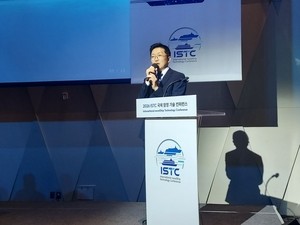
HD Hyundai to unveil AI vessel autonomy technology in US next month
Kim Hyung-taek, head of HD Hyundai Heavy Industries' Naval Research Institute, made the announcement at the 2026 International Ship Technology Conference. The AI software autonomously handles engine operations and safety tasks aboard unmanned surface vessels. HD Hyundai Heavy Industries will also hold a launching ceremony next month for a USV co-developed with Anduril. HD Hyundai will publicly unveil its AI vessel autonomy technology for the first time in the United States on Oct. 14. Kim Hyung-taek, head of HD Hyundai Heavy Industries' Naval Research Institute, made the announcement Tuesday at the 2026 International Ship Technology Conference held at Dragon City in Yongsan-gu, Seoul. It will mark the first time HD Hyundai Heavy Industries has showcased the technology in the US. "We are applying unmanned technology — developed together with HD Hyundai Heavy Industries and the Republic of Korea Navy — to a test vessel in the United States for the first time," Kim said. The AI vessel autonomy technology, designed for unmanned surface vessels (USVs), is software that autonomously handles engine operations and safety tasks aboard a ship alongside navigation. "Autonomous operation is generally understood as the automation of navigation, but on medium- and large-sized vessels, automating navigation alone cannot replace the crew's duties," Kim said. "On medium- and large-sized USVs, not only navigation but also mechanical systems and hazardous tasks must be operated automatically," he added. HD Hyundai Heavy Industries will also hold a launching ceremony in Ulsan late next month for a USV jointly developed with US defense AI company Anduril. The unmanned surface vessel market is expanding as the trend toward unmanned systems on the battlefield accelerates. "Unmanned systems, including surface vessels, have proven their effectiveness on the battlefield," Kim said. "Declining military manpower due to demographic shifts is further hastening the arrival of the unmanned systems market." "The market outlook is also very promising," he added. "Unmanned systems will generate significant added value not just in defense but in economic terms as well." South Korean defense companies are racing to develop unmanned surface vessels to capitalize on the growing market. LIG Defence and Aerospace conducted sea trials of its small USV, the Haegeom-S, in June. Hanwha Systems successfully launched its own 30-ton-class unmanned surface vessel around the same time and began full-scale maritime trials. Not to be left behind, HD Hyundai Heavy Industries has partnered with Anduril to develop its own USV. "With the changing battlefield environment and shrinking crew sizes, USV development has become a matter of survival," Kim said. Kim said Anduril chose HD Hyundai Heavy Industries as its USV collaboration partner because of the company's extensive shipbuilding experience. "HD Hyundai Heavy Industries has designed, built and delivered a total of 5,000 vessels — commercial ships and naval vessels combined — including the destroyer King Jeongjo the Great," he said. "In software-based technologies as well, HD Hyundai Heavy Industries and other domestic shipbuilders are leading the way."
Sept. 15, 2026
-
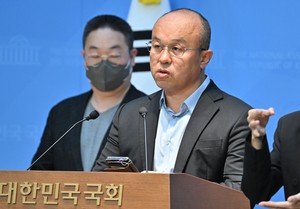
Shareholders group files breach-of-trust complaints against SK hynix board, union over bonuses
Group expands complaints beyond CEOs of Samsung Electronics, SK hynix 'Profit distribution is a matter for shareholder vote' 'Not subject to voluntary labor-management bargaining — breach of trust' A shareholders advocacy group has filed a series of breach-of-trust complaints targeting the boards and unions of Samsung Electronics and SK hynix, extending earlier complaints against the two companies' chief executives over what it calls excessive performance bonuses. The Korea Shareholders Movement Headquarters said Tuesday it filed a complaint with the Korean National Police Agency's National Investigation Headquarters against all members of SK hynix's board of directors and the union's executive leadership on breach-of-trust charges. The group said it filed the additional complaint because SK hynix's management and union "have repeatedly carried out an unlawful agreement despite the Ministry of Employment and Labor's implementation guidelines issued on Sept. 3." The Ministry of Employment and Labor had previously stated that a demand for a fixed percentage of operating profit as a performance bonus does not constitute a mandatory subject of bargaining or a legitimate basis for mediation or industrial action — though voluntary negotiations between labor and management remain permissible. The group, however, has maintained that tying performance bonuses to a predetermined share of pre-tax operating profit and distributing them accordingly is unlawful. Its position is that the distribution of company profits is a matter requiring a shareholder vote and therefore cannot be subject to voluntary labor-management bargaining. Earlier, the group submitted complaints to the National Investigation Headquarters in August against Samsung Electronics co-CEOs Jeon Young-hyun and Roh Tae-moon and SK hynix CEO Kwak Noh-jung, alleging they had failed to adequately review labor-management agreements on performance bonuses. That case was assigned to the Gyeonggi Province Southern Police Agency. At a press conference at the time, Korea Shareholders Movement Headquarters head Min Kyung-kwon said that "paying a fixed percentage of operating profit as a performance bonus without a shareholder vote constitutes a drain on company assets with no legal basis." Min argued that "performance bonuses tied to a company's profit and loss are not wages in return for labor but a retrospective distribution of business results," adding that "the disposition of profits must go through a shareholder vote within the limits of distributable earnings under the Commercial Act." Earlier this month, the group also filed complaints against all members of Samsung Electronics' board of directors and the executive leadership of the Samsung Electronics chapter of the Samsung Group's cross-company labor union. The group argued that board members — both inside and outside directors — acted unlawfully by approving a profit-distribution matter that should have been put to a shareholder vote. Regarding the union leadership, the group alleged that it "actively participated in the CEO's breach of duty by designing an agreement structured around a fixed percentage of operating profit with no cap, and by pushing through performance bonuses — which are not a legitimate subject of industrial action — via an unjustified strike." The group also filed a complaint in July against Employment and Labor Minister Kim Young-hoon with the Corruption Investigation Office for High-ranking Officials on charges of abuse of authority and coercion. The group contends that despite performance bonuses not being a subject of collective bargaining, Kim failed to restrain Samsung Electronics' threatened strike in May and instead steered the parties toward a tentative labor-management agreement.
Sept. 15, 2026
-
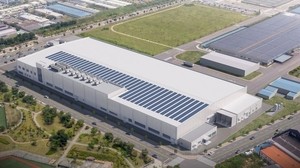
Samsung Electronics' HVAC unit Flakt Group kicks off Korea hiring ahead of Monday groundbreaking
Finance, logistics and procurement roles open for Gwangju facility New production line to manufacture cooling equipment for AI data centers Plant set for 2028 launch as Samsung's new HVAC business hub Flakt Group Korea, the HVAC subsidiary of Samsung Electronics, is set to hold a groundbreaking ceremony for its new production line in Gwangju, South Jeolla Province, on Monday, and has begun recruiting local staff to support the operation. According to industry sources, Flakt Group Korea has launched its first hiring drive since establishing its Korean subsidiary, seeking experienced candidates to handle finance, logistics and procurement for the new facility. The positions are based at a knowledge industry center inside the Cheomdan Science and Industry Complex in Buk-gu, Gwangju — a roughly 10-minute walk from the third campus of Samsung Electronics' Gwangju plant, where the new production line will be built. Key responsibilities will span accounting and finance, import logistics, and purchasing and order management. Given that the business is in its early stages, hires are expected to work closely with accounting and logistics partners as well as government agencies to support overall operations. Samsung Electronics acquired Germany-based Flakt Group in November last year, bringing it in as a subsidiary as part of a push into the central air-conditioning market targeting AI data centers. Flakt Group develops and supplies HVAC equipment and solutions for AI data centers, covering both air cooling and liquid cooling, in collaboration with data center operators. The company established its Korean subsidiary in May and opened an office in Suwon's Yeongtong-gu — where Samsung Electronics is headquartered — last month, before announcing a 240 billion won ($178 million) investment to build an HVAC production line in Gwangju. The facility will be Flakt Group's 15th global production site and marks Samsung Electronics' largest production investment in the Gwangju area in 37 years, since it first established its Gwangju plant in 1989. The new production line will be located at the third campus of Samsung Electronics' Gwangju plant in Buk-gu, on a site spanning 21,780 square meters — roughly the size of three soccer fields. Flakt Group Korea will hold its groundbreaking ceremony Monday, officially launching construction. Once complete, the line is expected to begin full operation in early 2028, producing core cooling products including coolant distribution units. The plant will also manufacture fan wall units for data center air cooling, computer room air handlers and air handling units for large buildings, positioning it as a key production hub targeting the global AI data center market. Samsung Electronics plans to use the new production line to integrate Flakt Group's technology and manufacturing capabilities into its domestic operations, accelerating its global HVAC business as a new growth engine. Local hiring is expected to grow in step with Flakt Group Korea's expansion.
Sept. 15, 2026
-
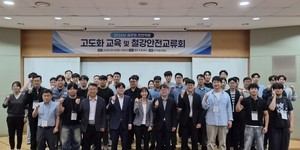
Korea Iron & Steel Association holds safety training with AI translation, risk assessment tools
Second-half steel safety forum held alongside training Serious Accidents Punishment Act ruling trends shared The Korea Iron & Steel Association announced Tuesday that it held the "2026 Steel Industry Safety Capacity Building Training and Second-Half Steel Safety Forum" to strengthen the industry's occupational safety capabilities and upgrade on-site safety management systems. The event, held at the Gyeongju Teachers' Dream Center, drew about 50 participants from 14 organizations, including major steelmakers such as Posco, Dongkuk Steel Mill, SeAH Besteel, SeAH Changwon Specialty Steel, SeAH Steel, TCC Steel and Nexteel, as well as ICT companies and research institutions. Discussions covered the full range of steel industry safety management — from policy and ruling trends related to serious industrial accidents, to on-site accident investigation, risk assessment and AI-assisted safety training for foreign workers. Lee Dong-kyung, a professor at Woosong University and president of the Korean Society of Serious Accidents, presented methods for preventing accident recurrence, including witness interview techniques. Lee said investigators' expertise and conduct during the investigation process are critical to accurately identifying the causes of accidents and preventing similar incidents. Kim Kyung-geun, an attorney at law firm Daeryuk Aju, analyzed major rulings under the Serious Accidents Punishment Act and broke down the types of compliance violations companies should watch for. He also introduced the potential uses of the safety and health disclosure system and the Serious Accidents Punishment Act compliance certification regime. On-site risk assessment and ways to improve safety management systems were also discussed. Park Ji-hwan, a senior official at the Industrial Safety Mutual Growth Foundation, explained recent amendments to the Occupational Safety and Health Act related to risk assessment and shared steel industry-specific cases from the foundation's mutual growth support activities, which include on-site safety management consulting. Participants also explored how AI technology can help prevent safety accidents involving foreign workers. Park Il-woo, a team leader at HiLocal, presented development and pilot cases of an AI-based real-time interpretation and translation solution for foreign worker safety training, and shared plans and expected benefits for applying it at steel production sites. At the second-half steel safety forum that followed, SeAH Besteel, SeAH Changwon Specialty Steel and YK Steel shared cases of safety culture initiatives they had carried out at their facilities. Participating companies also discussed ways to spread best safety practices more broadly and explored measures to further upgrade safety management systems, including the production of steel industry safety training videos. The event was designed to spread individual workplaces' safety management experience across the industry and to integrate legal and regulatory changes and new technologies into on-site safety systems. The association said it plans to continue strengthening the steel industry's capacity to prevent serious accidents by facilitating the sharing of safety management know-how and best practices among member companies. Meanwhile, the Korea Iron & Steel Association has been pursuing a range of activities to advance the steel industry, including recently signing an MOU with the Korea Expressway Corporation and the Korea Ascon Industry Cooperative Federation to introduce eco-friendly asphalt pavement using steelmaking slag.
Sept. 15, 2026
-
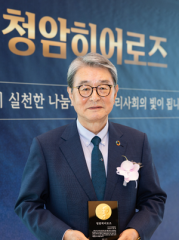
Posco Cheongam Foundation names Heo Won-bae second 'Cheongam Heroes' honoree
Over four decades of community service spanning welfare, education and the environment "A model case for resolving local agendas" The Posco Cheongam Foundation announced Tuesday that it has selected Heo Won-bae, chairman of the Bucheon Council for Sustainable Development, as the second recipient of its Cheongam Heroes award, presenting the honor at a ceremony at Posco Center in Seoul. The Cheongam Heroes program recognizes unsung contributors who have quietly practiced sharing and spread positive influence throughout their communities. Recipients receive a prize of 30 million won ($22,300) and a commemorative plaque. Heo has spent more than four decades advancing his conviction of "standing alongside the socially vulnerable" across agriculture, welfare, education and the environment, contributing to the building of healthy communities. In 1982, when he was in his 20s, Heo organized a group of young farmers in a rural village in Asan, South Chungcheong Province, to practice pesticide-free natural farming. That group later grew into Pureundeul Agricultural Cooperative, providing an economic foundation for more than 400 producers to trade directly with urban consumers. Heo subsequently expanded his work to championing the rights of the socially vulnerable. From 1985, over nearly 40 years, he served in a wide range of roles — committee member, director, center head and board chairman — at various public-interest organizations, consistently working for his community and leading efforts to resolve neighborhood conflicts and restore social cohesion. In education, he served as a university professor and board chairman, nurturing the next generation and promoting a transparent and healthy academic environment. He also worked through a civic group focused on accessibility facilities for people with disabilities, pushing to secure mobility rights and improve welfare systems for the disabled. For the past decade or so, he has focused on environmental and community initiatives. As chairman of the Bucheon Council for Sustainable Development, Heo has led efforts on climate change response and ecological conservation, building a public-private-academic governance framework through educational networks that bring together civic society, local universities, youth and students from elementary through high school. Those efforts have been recognized as a model case for resolving local agendas, earning him the grand prize — a ministerial award — at the 2025 Sustainable Development Competition. "We will continue to discover and encourage heroes who add value to the world with warmth from the front lines of life," a foundation official said. Meanwhile, the Posco Cheongam Foundation has been carrying out a range of social contribution activities. It recently selected 40 recipients of its 2026 Posco Vision Scholarships and held a certificate presentation ceremony at Stay 1538, an in-house resort facility in Pyeongchang, Gangwon Province. Since introducing the Posco Vision Scholarship program in 2006, the foundation has provided 8.4 billion won in scholarships to a total of 682 university students over 21 years through this year.
Sept. 15, 2026
-
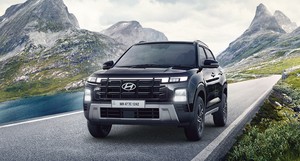
Hyundai Motor, Kia post double-digit growth in Latin America amid Chinese competition
Hyundai Motor leads all regions in Latin America sales growth Kia outpaces India, Africa with sharp gains in the region Chinese brands intensify localization push Hyundai Motor and Kia posted sharp growth in Latin America in the first half of this year, with the region emerging as a new engine of expansion for both automakers. Hyundai Motor recorded its highest sales growth rate in Latin America among all major global regions it tracks, while Kia also grew fastest there, outpacing India and Africa. Hyundai Motor's retail sales in Latin America reached 162,000 units in the first half of this year, up 11 percent from the same period last year — the highest growth rate among the company's major global regions. India, where vehicle demand is also rising rapidly, posted 10 percent growth over the same period but still trailed Latin America. Kia's Latin America sales came in at about 84,000 units in the first half, up 21 percent year on year — also the company's fastest-growing region. India and Africa followed with gains of 19 percent and 10 percent, respectively. Latin America becomes Hyundai Motor's fourth-largest market as Middle East slows Latin America's standing as a strategic market has risen sharply. In the first half of last year, Hyundai Motor's Africa and Middle East sales exceeded Latin America by about 9,000 units, but the rankings reversed this year. Africa and Middle East retail sales reached only 123,000 units in the first half of this year, while Latin America climbed to 162,000 units. Latin America has now become Hyundai Motor's fourth-largest sales region, behind North America, India and Europe. Kia has followed a similar trajectory. Rapid growth in Latin America has pushed the region past the Middle East into Kia's top five sales regions. As growth in established markets such as the United States and Europe has slowed, Latin America is emerging as a new axis of expansion for both brands. The sales surge is largely attributed to the automakers' ability to deploy locally produced models tailored to regional demand. Hyundai Motor uses Brazil as its core production base for Latin America. The Brazilian factory produces about 200,000 vehicles a year in a mixed-model line that includes the HB20, Creta and i20 — all local strategic models. The i20, launched in Brazil in June, is a key model targeting the B-segment market alongside the flagship HB20. It features a flex-fuel powertrain capable of running on both gasoline and ethanol, reflecting the characteristics of the Brazilian market. Despite being a subcompact, the i20 was designed to offer SUV-level interior space and comfort, along with advanced convenience and safety features. Kia uses Mexico as a major production and export hub serving both Latin America and North America, manufacturing the K3 and K4 there for supply to neighboring markets. The company plans to strengthen the role of its Mexican factory and expand its global flexible production system to meet growing demand for both internal combustion engine vehicles and hybrids in emerging markets. BYD climbs from 7th to 4th in Brazil as Chinese brands intensify push As Latin America's auto market grows rapidly, competition with Chinese automakers is intensifying. According to Brazil's National Federation of Automotive Vehicle Distribution (Fenabrave), Hyundai Motor ranked fourth in Brazil's annual new passenger car registrations last year with 200,583 units, while BYD ranked seventh with 111,683 units. The rankings have since reversed. In the January–August period this year, BYD rose to fourth place with 146,475 units, while Hyundai Motor slipped to fifth with 126,917 units. BYD has already surpassed its full-year 2025 registration total in just eight months. BYD is not alone. Other Chinese brands — including CAOA Chery, a Chery affiliate, and GWM — are also climbing quickly in Brazil. CAOA Chery ranked 11th and GWM 12th in annual passenger car registrations last year. This year, Geely, GAC and Leapmotor have also entered the top 20, broadening the Chinese brands' footprint rapidly. Hyundai Motor Group plans to respond by linking local production in Brazil with its global manufacturing bases in South Korea, India and elsewhere to expand product supply and strengthen market-specific lineups. The group also intends to increase the rollout of locally tailored eco-friendly vehicles in line with the Brazilian government's green vehicle policies, while building longer-term competitiveness in hydrogen mobility and energy. "As competition in China — the world's largest electric vehicle market — grows ever fiercer, Chinese automakers are rapidly expanding exports and local production in emerging markets including Latin America," an industry official said. "With both imports and local output from Chinese brands rising simultaneously in Latin America, having the right vehicle and powertrain strategy tailored to local consumer preferences will matter just as much as price competitiveness."
Sept. 15, 2026
-
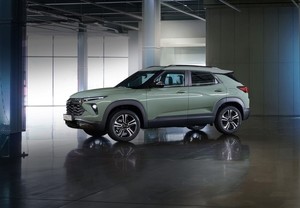
Exclusive: GM Korea halts Trailblazer engine production over parts defect
1.35-liter turbo engine assembly line down Disruption expected through Sept. 21; finished-vehicle output also affected General Motors' Korean operations have halted the engine production line for the Trailblazer, a compact SUV sold under the Chevrolet brand, due to a parts defect. The stoppage is expected to disrupt exports of the Trailblazer, which has been posting strong global sales. GM Korea suspended operation of the 1.35-liter turbocharged engine assembly line at its Bupyeong factory starting Monday. The cause has been identified as a defective cam cover insert bush. The cam cover is a component that sits atop the engine to protect the camshaft and valve assembly inside. A defect in the insert bush — a reinforcing piece used to secure the cam cover with screws — caused nuts to come loose, forcing the assembly line to shut down. The disruption is expected to last until Sept. 21, when replacement parts are scheduled to arrive. In the meantime, GM Korea plans to switch the line to assembling 1.2-liter turbo engines used in the Trax Crossover and other models once existing 1.35-liter engine inventory runs out, avoiding a full stoppage of the engine assembly line itself. However, the supply of 1.35-liter turbo engines for the Trailblazer will be cut off during this period, making production disruptions for that model unavoidable until normal parts deliveries resume. As of Tuesday, the engine assembly line had gone idle, though the finished-vehicle assembly line was continuing to operate by drawing on existing engine inventory. The Trailblazer is a compact SUV produced at GM Korea's Bupyeong factory for both the domestic market and export destinations including the United States. It is one of the company's core models — alongside the Trax Crossover — driving overall sales, and ranked first among South Korean automakers' vehicle exports in 2023. GM Korea handles the Trax Crossover and Trailblazer from conception and design through engineering and production. According to GM Korea, the Trailblazer recorded cumulative overseas sales of 116,821 units in the January–August period this year, up 22.6 percent from the same period a year earlier. GM Korea's total sales over the same period rose 12.6 percent year-on-year to 340,684 units.
Sept. 15, 2026
-
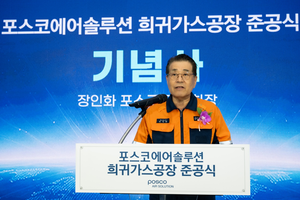
Posco eyes rare gases as next strategic resource, targets W200b in annual sales by 2030
Semiconductor supply to begin in earnest in 2028 Production of rare gases launched in Gwangyang in May Capacity built to meet roughly half of domestic demand Supply talks underway with major European and US satellite firms Neon surged 27-fold, xenon tripled after Russia-Ukraine war Rare gas joins lithium as part of strategic resource push Posco Group is moving to develop rare gases as its next strategic resource business, following lithium and rare earths. Posco Air Solution began producing xenon, krypton, neon and helium in Gwangyang this year and plans to supply the semiconductor industry in earnest from 2028, with a target of 200 billion won ($149 million) in annual sales by 2030. Kim Dae-yeon, chief executive of Posco Air Solution, recently laid out this business roadmap through an investor relations channel, according to industry sources Tuesday. "It takes about a year for semiconductor customers to verify gas quality and suitability for their processes," Kim said. "We plan to complete quality verification next year and begin full-scale supply of rare gases for semiconductors from 2028." Kim set the 2030 annual sales target at 200 billion won but added the caveat that the figure is based on current prices, leaving open the possibility that revenue could exceed the target if prices rise due to growing demand or renewed supply chain disruptions from geopolitical factors. Rare gas prices have in fact surged several times over — and in some cases dozens of times — when supply chain shocks occur. According to Korea Customs Service trade statistics, the average import price of neon entering South Korea jumped 27.4-fold, from $58.7 per kilogram in 2021 — just before the Russia-Ukraine war — to $1,612.4 in 2022. Over the same period, xenon rose 3.1-fold, from $2,925 to $9,136 per kilogram. Posco Air Solution completed its production factory in Gwangyang, South Jeolla Province, in May and began mass production of four rare gases: xenon, krypton, neon and helium. The company is a joint venture in which Posco Holdings holds a 75.1 percent stake and China's Zhongtai holds the remaining 24.9 percent. Rare gases exist in only trace amounts in the atmosphere but are indispensable materials for advanced industries. Neon is used in laser gases for semiconductor lithography processes, while helium is used for cooling and thermal control in semiconductor equipment. Xenon and krypton are also used in semiconductor etching processes. Xenon and krypton are also used as fuel for electric propulsion systems in satellites. The gases are ionized and then rapidly expelled using an electric field to generate thrust. Xenon offers the advantage of high propulsion efficiency, while krypton is gaining wider use for its cost-effectiveness. Posco Air Solution has been moving quickly to target the aerospace market since the factory opened. The company had been in discussions with the Korea Aerospace Research Institute even before the facility was completed, and supplied prototype xenon and krypton produced at opening for performance tests conducted in June. The gases were subsequently certified in July as suitable fuel for satellite electric propulsion systems. On July 21, the company also became the first in Asia to obtain AS9100 certification, the aerospace quality management system standard. Discussions on entering overseas markets have also begun. "We have supplied samples to most domestic satellite companies," Kim said. "We are also in early-stage talks with major satellite companies in Europe and the United States on product supply terms and conditions." Posco's steelmaking operations underpin its ability to enter the rare gas business. Steel production requires large volumes of oxygen to raise the temperature of molten iron and remove impurities, and nitrogen to evenly mix components and protect equipment — meaning steelworks are already equipped with large-scale oxygen production facilities. Posco Group envisions a value chain in which raw materials secured from Posco are separated and refined to produce rare gases such as xenon, krypton and neon, which are then supplied to the semiconductor and aerospace industries. This is part of the "lithium-plus" strategy championed by Posco Group Chairman Cho Hyun-joon, which aims to expand the group's strategic resource businesses from lithium — including cathode and anode materials, recycling and rare earths — to rare and specialty gases. The company also aims to contribute to supply chain stability for South Korea's advanced industries by localizing rare gas production. The country has until now relied almost entirely on imports for rare gases. During the Russia-Ukraine war in 2022, Russia restricted rare gas exports to unfriendly nations, making price spikes and supply instability a reality. After Ukrainian supplies were cut off, dependence on China again increased. The government has designated rare gases as a supply chain stabilization item and has been pursuing domestic R&D, production capacity expansion, recycling and stockpiling, and diversification of import sources. Posco Group's strategy aligns with this broader push for supply chain self-reliance. "Rare gases are absolutely essential for semiconductors and satellites, but the number of countries that can supply them is limited," Kim said. "If supply is disrupted, it is not just a matter of price — it could have a significant impact on South Korea's advanced industries and semiconductor sector." Posco Air Solution's current production capacity is sized to meet roughly half of domestic demand based on 2024 figures. Posco Group plans to review further capacity expansion depending on future market demand and profitability. "Posco's 'resource patriotism' strategy, which started in steel, is expanding beyond secondary battery materials into core resources for semiconductors and aerospace," an industry official said. "Localizing rare gas production carries significance both as a new business and as a means of stabilizing the advanced industry supply chain."
Sept. 15, 2026
MOST READ
- 1What was Rachmaninoff's performance fee? A 1928 price list tells all
- 2Korea Expressway Corporation uses AI to crack down on toll evaders
- 3Pope Leo XIV declines French honors and banquet, accepts only private meeting with Macron
- 4Samsung Biologics union's show of force backfires at the bargaining table
- 5APR says hair-loss treatment research published in international journal
- 6Xi Jinping health rumors resurface after BRICS dinner no-show
-
WORLD

US warns of punishment for anyone enabling Iran's Strait of Hormuz toll scheme
-
INDUSTRY
Toyota union puts productivity first; Hyundai Motor union demands bigger share of profits
-
FINANCE
National Growth Fund to invest $531M in FuriosaAI, which rebuffed Meta's $800M takeover bid
-
INDUSTRY
Korea Shipowners' Association holds amateur baduk tournament for Maritime Day