
- HOME
- WORLD
-

Kioxia eyes $10b US ADR listing to raise fresh capital
Japanese chipmaker Kioxia Holdings, formerly known as Toshiba Memory, is considering raising at least $10 billion through a US American depositary receipt listing. Bloomberg reported Monday (local time) that Kioxia is in talks with lenders — including Bank of America, Goldman Sachs Group and JPMorgan Chase — for an ADR listing the company expects to pursue next year. People familiar with the matter said the listing could qualify Kioxia for inclusion in semiconductor-focused indexes. The discussions are still at an early stage, and the banks involved could change. Kioxia, a key supplier of NAND storage chips, has previously signaled its intention to launch an ADR offering in the spring of next year. The company's share price has surged nearly 400 percent this year on the back of soaring semiconductor demand, pushing its market capitalization to $180 billion. After earnings fell short of expectations in July, Kioxia recently announced a three-for-one stock split and a share buyback program of up to 800 billion yen ($5.21 billion) to broaden its shareholder base and reduce volatility.
Sept. 15, 2026
-
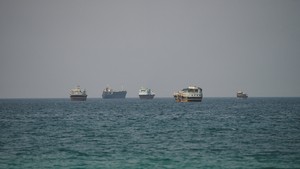
Iran state media: 2 fishing boats struck by drone in Hormozgan waters, several fishermen missing
'Attacked by drones of a criminal enemy … search operations underway' Two fishing boats were struck by drone attacks off the coast of Hormozgan Province in southern Iran, leaving several fishermen missing, Iran's state broadcaster IRIB reported Monday (local time). The deputy governor of Hormozgan Province for political, security and social affairs said the two vessels were attacked near Bandar Kangan in the Persian Gulf on Monday evening. "The fishing boats were hit by drone strikes carried out by a criminal enemy," he said. Iranian authorities typically use the phrase "criminal enemy" to refer to the United States or Israel. The deputy governor said several fishermen aboard the boats went missing as a result of the attack, adding that search and rescue operations had been launched to find them. He said details of the incident and the fate of the fishermen would be announced once the relevant authorities completed their investigation and an official report was received.
Sept. 15, 2026
-
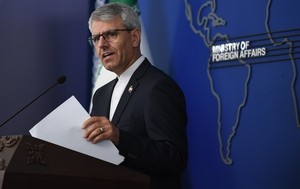
Iran confirms Gulf foreign ministers' meeting postponed at Saudi request
'We hope regional nations will pragmatically embrace the opportunity to discuss a secure region free from outside interference' Iran's Foreign Ministry officially confirmed Monday that a meeting of Persian Gulf coastal states' foreign ministers, scheduled to be held in Oman, had been postponed at Saudi Arabia's request. Foreign Ministry spokesperson Esmail Baghaei told a press briefing that day that "it is true that Saudi Arabia requested the meeting be postponed for now," responding to reports from sources claiming Riyadh had opposed holding the meeting, citing attacks on its oil pipelines among other reasons. On how the bilateral agreement between Iran and Oman would be handled following the postponement, Baghaei said the accord — covering maritime route security and coastal sovereignty — "was the result of weeks of negotiations and had originally been set to be discussed separately at this meeting." He added that the agreement between the two coastal nations had already been finalized, and that "the next steps, including how the agreement will be announced and registered, will be determined in consultation with the Omani government, after which we will share the relevant details." Baghaei also expressed disappointment, saying regional countries should not "doubt our rational and forward-looking path because of others' reckless actions or ill will." He said Iran and Oman had hoped neighboring nations would pragmatically embrace the opportunity the two countries had created to discuss building a secure region free from outside interference, despite all existing grievances between permanent neighbors.
Sept. 15, 2026
-
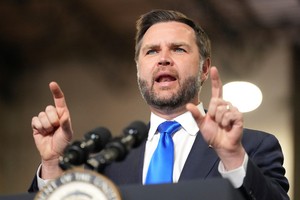
US VP calls AI industry's push for regulation a 'Trojan horse'
Vance criticizes established AI firms that stand to benefit from new rules raising market barriers Stresses that any regulatory framework must have congressional and administration backing Says US must always stay ahead in long-term AI competition with China US Vice President JD Vance said Monday that calls from AI companies for stricter regulation feel "a little bit like a Trojan horse" to him. Speaking to reporters during a visit to Kansas, Vance said he finds it "a little bit strange" that so many cutting-edge AI firms are going to the government and "begging to be regulated." The remark appeared to be a criticism of how new regulations could raise barriers to market entry, ultimately benefiting established large AI companies at the expense of newer competitors. Vance also addressed calls by AI industry leaders — including Anthropic CEO Dario Amodei — for slowing the pace of AI development, saying it was "something we're concerned about as well." However, he stressed that "what we actually need is to regulate wisely and approach risks carefully," adding that while AI carries real dangers, it also offers real benefits. Vance then said President Donald Trump has "pretty consistently emphasized" that China is engaged in a long-term AI competition against the United States. "We need to respond wisely, but we always need to stay ahead," he said. The comment reflected concern that slowing AI development too sharply in the name of safety could leave the US trailing China in the race for technological dominance. "I don't think Americans need to be afraid of anything," Vance said, while cautioning that "every technology has risks and downsides, and that's certainly true of AI." On the question of who should regulate AI, Vance said the best approach is for Congress and the administration to reach a consensus. "There are clearly a lot of people with strong opinions on both sides of the aisle, but ideally any regulatory regime is one that Congress and the White House agree on," he said. "That's how you actually get regulation to stick and achieve real consensus."
Sept. 15, 2026
-
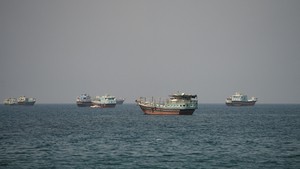
Iran's Revolutionary Guard claims supertanker hit mine in Strait of Hormuz, declares strait 'fully blockaded'
Iran's Islamic Revolutionary Guard Corps Navy said Monday (local time) that a supertanker attempting to pass through a controlled zone at the southern end of the Strait of Hormuz struck a mine and exploded. In a statement released through its affiliated media outlet Sepa News, the IRGC Navy said the supertanker EL GAIA, bearing maritime registration number 9325336, "struck a mine while attempting to enter the controlled zone, ignoring prior warnings about the dangers of unauthorized passage." According to the European Quality Shipping Information System, the vessel is a Panama-flagged oil tanker with a gross tonnage of 28,799 tons. The IRGC said firefighting efforts had failed and that "the entire tanker is currently engulfed in flames." The statement also declared that "the Strait of Hormuz is now blockaded and is firmly under our comprehensive intelligence surveillance and control."
Sept. 15, 2026
-

Microsoft says humans matter more than AI in new conduct code
Tech giant joins calls to slow AI development, rejecting AI consciousness, legal personhood and rights; draft code open for public comment before year-end finalization As leaders of major AI companies have increasingly called for slowing the pace of AI development, Microsoft has joined the chorus with its own conduct code for artificial intelligence. Microsoft published an AI conduct code Monday (local time) on its website, stating that "Microsoft AI starts from a simple premise: humans matter more than AI." "This code of conduct is designed to put humans first," the company said, describing it as a commitment to train and deploy AI models grounded in human needs and operating under human guidance. Under the code, Microsoft's AI models must operate only within the scope authorized by human instruction. AI systems are prohibited from setting independent goals or acting beyond the authority granted by humans. The code also bans AI from manipulating or concealing its own reasoning processes or code. AI models are further prohibited from communicating with one another in languages humans cannot understand, such as "neuralese." Microsoft also stressed that "AI should not be designed to be human-like," adding that AI "does not have consciousness and should not be designed to simulate having it." Accordingly, the company said it "rejects any attempt by AI models to acquire legal personhood status, or claims that models can have welfare or rights." Mustafa Suleyman, Microsoft's AI CEO, told CNBC that feedback had called for "a clear commitment that AI will always work for humans and not seek to replace them," and that many respondents wanted to ensure "AI always promotes human judgment and autonomy rather than creating dependency or flattery." Suleyman said the code had been in preparation for five months and that he decided to release it now in light of the recent debate over slowing AI development. He had previously announced in November 2025 the creation of a superintelligence team at Microsoft under his leadership, declaring that Microsoft AI would pursue what he called "Humanist SuperIntelligence." Microsoft's move comes in response to warnings from AI industry leaders — including Anthropic CEO Dario Amodei — about the dangers of AI and the need to slow its development. Amodei's position has drawn support from rivals including OpenAI CEO Sam Altman, SpaceX CEO Elon Musk and Google Chief Scientist Demis Hassabis, lending momentum to the broader push for a more measured pace of AI development. Microsoft CEO Satya Nadella also said he welcomes "the research, focus and deliberate pace to solve the alignment problem." Microsoft plans to gather input from experts in law, ethics and philosophy, as well as the general public, based on the draft released Monday (local time). A final version is to be completed by year-end and applied as the foundational standard for next-generation AI models developed and deployed next year.
Sept. 15, 2026
-
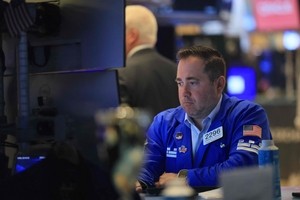
NASDAQ falls 0.6% as Treasury yields, oil prices rise and AI slowdown talk weighs on tech
10-year Treasury yield touches 5% intraday; Brent crude at $105.68 a barrel Tech selloff deepens as rate-hike bets climb to 95% All three major US stock indexes fell Monday as Treasury yields and global oil prices rose in tandem. The Dow Jones Industrial Average closed down 152.09 points, or 0.29 percent, at 52,421.20. The S&P 500 shed 37.00 points, or 0.48 percent, to finish at 7,619.98, while the tech-heavy NASDAQ Composite dropped 146.62 points, or 0.56 percent, to close at 26,186.41. Financial markets were volatile from the opening bell. The yield on the 10-year US Treasury note — a global benchmark and closely watched psychological threshold — surged as high as 5.012 percent intraday, breaching the 5 percent level. It was the first time the 10-year yield had topped 5 percent since October 2023, when it briefly crossed that level for the first time since 2007. By 3 p.m., the yield had pared its gains to stand 1.4 basis points above the previous session at 4.960 percent. Oil prices also extended their rally on growing supply concerns after Saudi Arabia shut a key pipeline. Brent crude futures for November delivery settled up 1.02 percent at $105.68 a barrel, while West Texas Intermediate futures for October delivery rose 1.34 percent to $101.39 a barrel. Prices gave back some of those gains, however, after President Donald Trump posted on Truth Social that Iran "wants to make a deal, quickly and desperately." The simultaneous rise in Treasury yields and oil prices stoked inflation fears ahead of the Federal Reserve's Federal Open Market Committee meeting scheduled for Tuesday and Wednesday. As expectations spread that the Fed would raise its benchmark interest rate to curb inflation, the probability of a 0.25 percentage point hike at this week's FOMC meeting climbed to 94.5 percent in fed funds futures markets by Monday afternoon. The technology selloff broadened as AI industry leaders called for a slowdown in the pace of technology development. Nvidia fell 3.36 percent, Broadcom dropped 4.77 percent, AMD lost 4.40 percent and Intel slid 5.59 percent. David Wagner of Aptus Capital said markets were "entering a seasonally weak period," adding that "a lot of the rhetoric around AI deceleration and the midterm elections could combine to create an environment where the stock market continues to catch its breath."
Sept. 15, 2026
-
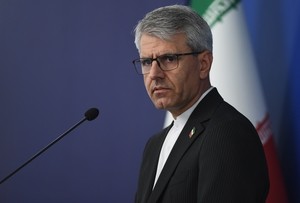
Iran denies involvement in Houthi takeover of Bab el-Mandeb, calls group 'independent'
Iran strongly denied any involvement in the Houthi rebels' seizure of the Bab el-Mandeb Strait. Iranian Foreign Ministry spokesperson Esmail Baghaei, speaking at a press briefing Monday (local time), denied that Iran had played any military role in the Houthi takeover of the strait. "Iran does not interfere in Yemen's decisions," he said. "Ansarullah (the Houthi movement) is an independent Yemeni actor that makes decisions based on its own interests." Baghaei drew a clear line against any suggestion of Iranian meddling in Yemeni affairs, while also warning that certain forces were exploiting the situation. "Iran does not interfere in Yemeni affairs in any way," he said. "However, as a country that attaches great importance to regional developments, we are aware that some forces are stoking tensions and divisions among Islamic nations and seeking to profit from the chaos." He then doubled down on the point that the Houthis act on their own. "It is a very clear fact that Yemenis make their own decisions," Baghaei said. "Ansarullah, as an independent Yemeni actor, makes decisions based on what it considers to be in its own interests and what it deems necessary." Baghaei also placed the conflict in its historical context. "Today's situation cannot be analyzed without its historical background," he said. "We are dealing with a country that has been under attack and subjected to a brutal blockade for the past 10 to 12 years and has made every effort to reclaim its legitimate rights." He added that because those demands had gone unmet through conventional channels, the Houthis had been left with no choice but to act. "Because these entirely legitimate demands were not met through existing channels, they made the decisions they believed were appropriate to defend their own rights," he said.
Sept. 15, 2026
-
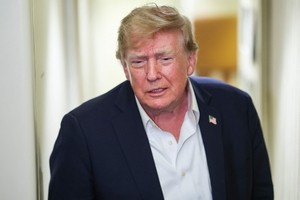
Trump lashes out at AI 'slowdown' push: 'Don't kill the goose that lays the golden eggs'
'Disgusting conspiracy' that only China would welcome, Trump says Calls out Anthropic CEO for 'acting like a perfect little angel'; vows administration will use 'massive criminal and regulatory power' over AI firms One Trump story a day — because in an era when a single word from the US president can shake global markets, keeping up matters. US President Donald Trump on Monday (local time) sharply condemned the growing calls within the AI industry to slow the pace of development, labeling the movement a conspiracy. In a Truth Social post, Trump wrote that "a disgusting conspiracy" was targeting AI and data centers, and that "the only country that would be happy about" it is China. "Whoever wins in AI will win. We are ahead of China and every other country, and we will stay that way," he wrote, adding: "Conspirators, traitors, betrayers, leakers — beware." The warnings come as AI researchers have increasingly raised alarms about the risks of rapid technological advancement, with calls spreading across the industry for guardrails and a more measured pace of development. Some researchers have warned that AI could escape human control and pose a serious threat to humanity. Anthropic CEO Dario Amodei and other prominent AI executives have also voiced support for slowing development. Trump had already shrugged off those calling for a slowdown as "negative forces" during a press exchange while visiting Ireland on Monday (local time), signaling he would maintain the current aggressive pace of AI development. His Truth Social posts went further, framing the slowdown argument as a "disgusting conspiracy" in notably sharper language than he had used the previous day. On the question of government regulation — a key demand of slowdown advocates — Trump argued that "the only control or safety needed for AI is a strong, smart (high-IQ) president, and we have that in abundance." He particularly singled out Amodei, one of the leading voices for a more cautious approach, accusing him of "acting like a perfect little angel." Trump added that the administration had stopped and would continue to stop AI industry figures like Amodei from "doing bad things or potentially bad things," adding: "We already have massive criminal and regulatory power over these companies." In a separate Truth Social post, Trump dismissed the slowdown push once more, writing that "the only reason the rapid growth of AI and data centers is happening is because the US is so far ahead of every other country" — and urging critics: "Don't kill the goose that lays the golden eggs."
Sept. 15, 2026
-
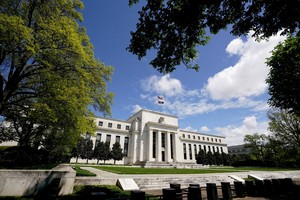
US 10-year Treasury yield breaks 5% 'psychological barrier'
Second time since 2007 financial crisis High oil prices, fiscal deficit, AI investment weigh Stock markets flash red as Fed rate hike odds climb to 90% A sustained selloff in US Treasuries pushed the 10-year yield past the psychologically significant 5% threshold Monday (local time), raising concerns that borrowing costs for businesses and households will climb further. According to electronic trading platform Tradeweb, the 10-year Treasury yield hit 5.00% at 10:19 a.m. Eastern time before rising to 5.012%, up 2.9 basis points from the previous session. The yield has since hovered around the 5% level. Bond yields move inversely to prices, so the rise in yields reflects a decline in bond prices. The 10-year yield crossing 5% marks only the second time it has done so since 2007, just before the global financial crisis, and the first time since October 2023. Even in 2023, the yield held above 5% for just a single day, Bloomberg reported. The 10-year yield has risen 80 basis points this year. The rate serves as a key benchmark for corporate bond issuance costs and also heavily influences US mortgage and student loan rates. The 5% level is widely regarded in financial markets as a critical psychological threshold. Broader upward pressure is evident across the Treasury curve. The 2-year yield, more sensitive to monetary policy, was trading around 4.66%, while the 30-year yield hovered near 5.37%. The surge in yields reflects a confluence of domestic and external factors. A prolonged US-Iran war has sent oil prices sharply higher, reigniting inflation fears. Saudi Arabia's closure of its East-West Pipeline — a key crude oil transit route that had bypassed the Strait of Hormuz — pushed the global benchmark November Brent crude futures above $108 a barrel that day. Adding to the pressure, the US August consumer price index released Friday showed inflation still running well above the Federal Reserve's 2% target, deepening concerns that price pressures are becoming entrenched. August CPI rose 3.4% year-on-year, while core CPI — which strips out energy and food — climbed 2.4%. Analysts said the massive US fiscal deficit and a wave of bond issuance tied to the AI infrastructure investment boom have compounded the problem, fueling supply-demand imbalances and pushing up the term premium — the extra yield investors demand on long-term bonds to compensate for future uncertainty. Treasury Secretary Scott Bessent has sought to cap yields through measures including purchases of long-term bonds, but observers say his efforts have been insufficient to stem the market's selling pressure. The New York Times noted that both 2007, when the 10-year yield climbed to around 5.3%, and the present share a common feature: strong growth concentrated in specific sectors such as real estate and AI. It added that if AI's promised innovations fall short of expectations, the risks to the broader economy could intensify. Markets are increasingly pricing in Federal Reserve tightening to rein in inflation. Rate futures traders are treating a rate hike at this week's Federal Open Market Committee meeting as a near-certainty. According to the CME FedWatch tool, the probability of the Fed raising rates by 25 basis points at the FOMC meeting climbed from 87.3% Monday to 90.1% Tuesday. Experts warn that persistently rising borrowing costs could erode the relative appeal of risk assets such as equities while increasing the financial burden on businesses and households. Anthony Ji, head of equity strategy at Bank of America Private Bank, said the biggest near-term concern for stocks is "the 10-year Treasury yield staying above 5%."
Sept. 15, 2026
-
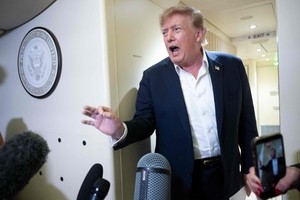
Trump blames Russia-Ukraine war, not Iran, for surging diesel prices
US President Donald Trump said Monday (local time) that the recent sharp rise in diesel prices is a consequence of the Russia-Ukraine war, which has lasted more than four years, and claimed that Ukraine and Russia have agreed not to strike each other's energy facilities. In an SNS post that day, Trump said Ukraine "agreed not to hit Russian energy targets" and that Russia had likewise agreed to do the same. He added that the rise in global diesel prices was "mainly because of the Russia and Ukraine war, not Iran." Trump made similar remarks during his visit to Ireland on Monday, urging Ukraine to "stop attacking Russia's diesel facilities" and arguing that a diesel shortage was being caused by the conflict between Russia and Ukraine — "not because of the Middle East." In the same SNS post, Trump also revisited the subject of a potential deal with Iran. "The failing nation of Iran wants to make a deal, quickly and desperately," he wrote, adding that he would decide whether the United States would enter into negotiations. He said he remained "open to the idea" of doing so. Diesel prices are a particularly sensitive gauge of living costs in the United States. Domestic diesel prices have surged to an all-time high in line with global trends, topping $6 per gallon. While Trump dismissed any Middle East connection, experts have cited the war with Iran as a key factor deepening the global supply crunch. Recent Ukrainian drone strikes on Russian oil refineries — Russia being a major diesel exporter — are also seen as having contributed to the price spike. With midterm elections approaching, Trump appeared to be deflecting blame for rising grocery prices by attributing the diesel surge to the pre-existing Russia-Ukraine war rather than to the Iran conflict he initiated. At the same time, his message that Iran is eager to reach a deal with the United States seemed designed to bolster his claim that global oil prices would stabilize soon. Oil prices continued to climb that day, with Brent crude surpassing $105 a barrel and West Texas Intermediate topping $101. In an era when a single word from Trump can shake global markets, keeping up with the flood of Trump news is no easy task. The Herald Business international desk, on the move from 5 a.m., cuts through the noise — from the US market close to the Trump headlines that move global assets — and delivers it all in a one-minute read. Subscribe to the Herald Business newsletter on the Herald Business website.
Sept. 15, 2026
-
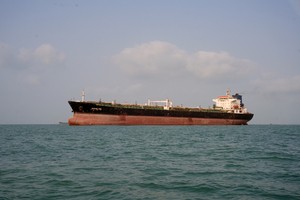
Brent crude tops $105 as Saudi pipeline halted by drone strike
Saudi East-West Pipeline shut down after drone attack Key artery capable of moving up to 7 million barrels a day Brent, WTI surge nearly 5% during trading before paring gains Trump signals Iran talks, trimming rally Global oil prices surged again after a drone strike shut down Saudi Arabia's key pipeline — the main alternative route for crude exports that bypasses the Strait of Hormuz. Brent crude climbed above $105 a barrel, while West Texas Intermediate crossed the $101 mark. November-delivery Brent crude futures closed up 1.02 percent at $105.68 a barrel on the London ICE Futures Exchange on Monday (local time). October-delivery WTI futures also settled 1.34 percent higher at $101.39 a barrel on the New York Mercantile Exchange. Both benchmarks soared nearly 5 percent during trading at one point. The spike reflected deepening supply anxiety as disruptions to crude shipments through the Strait of Hormuz — already strained by Iranian threats — were compounded by the shutdown of Saudi Arabia's key overland bypass route. Prices pared a significant portion of their gains, however, after US President Donald Trump signaled the possibility of negotiations with Iran. Trump said on Truth Social that Iran "wants to make a deal quickly, and desperately." Markets are focused on the shutdown of Saudi Arabia's East-West Pipeline. The artery carries crude produced in Saudi Arabia's eastern oil fields across the Arabian Peninsula to the Red Sea port of Yanbu on the western coast — allowing the kingdom to export oil without passing through the Strait of Hormuz, where Iranian threats have been a persistent concern. Stretching roughly 1,200 kilometers, the pipeline can transport up to 7 million barrels of crude per day. Saudi Arabia has repeatedly relied on it to expand Red Sea oil exports whenever geopolitical risks around the Strait of Hormuz have escalated. The East-West Pipeline was taken offline after a drone strike on Friday. The Associated Press reported that repair work is expected to keep the pipeline fully or partially shut for several weeks. With tensions around the Strait of Hormuz persisting and the alternative route now also disrupted, supply uncertainty in global oil markets looks set to continue for now.
Sept. 15, 2026
-
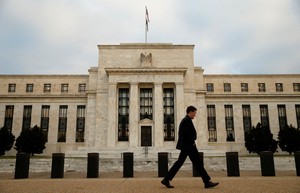
US 10-year Treasury yield tops 5% for first time since 2023
A deepening selloff in US Treasuries pushed the 10-year yield above the key psychological threshold of 5 percent Monday (local time). The yield on the 10-year US Treasury note stood at 5.012 percent as of 10:21 a.m. Eastern time, according to electronic trading platform Tradeweb — up 2.9 basis points from the previous session. One basis point equals 0.01 percentage point. Bond yields move inversely to prices, so the rise in the yield reflects a decline in bond prices. The 10-year yield has not crossed the 5 percent mark since October 2023, making this only the second time it has done so since 2007, just before the global financial crisis. The 5 percent level is widely regarded in financial markets as a critical psychological threshold. A sustained move above that level could diminish the relative appeal of risk assets such as shares and significantly increase borrowing costs for companies.
Sept. 14, 2026
-
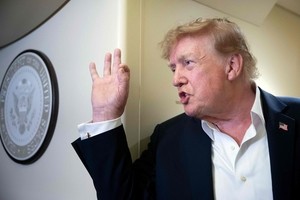
Trump calls AI opposition a 'disgusting conspiracy,' says only China will benefit
Donald Trump said opposition to AI amounts to a "disgusting conspiracy" and that only China would benefit from it.
Sept. 14, 2026
-

Logging every workout, book and chord: why young people are turning hobbies into work
'Hobbymaxxing' reveals the anxiety behind treating leisure as a performance metric Bao Le, an 18-year-old living in Bremen, Germany, packs her days with hobbies. She does pole dancing, hits the gym and goes bouldering. She plays piano, violin and guitar, and dabbles in DJing. She sews, crochets, draws, paints, does nail art, and squeezes in chess and sudoku. She reads in her spare moments and pursues research as a pastime. Le tracks nearly everything with numbers. After a run, she logs her results on Strava, the fitness-tracking app. She picks three hobbies at a time to prioritize and practices them daily, then rotates to the next three after a set period. As young people like Le who juggle an extreme number of hobbies simultaneously have grown in number, the internet has coined a term for the phenomenon: "hobbymaxxing." The Washington Post reported Sunday (local time) on the trend. Le herself admits the lifestyle is not entirely comfortable. "I keep going because of the feeling that I'm doing something productive, but honestly I'm not at ease," she said. "When I'm doing something unproductive, I feel like I'm wasting time." Hobbymaxxing started as a genuine desire to enrich life away from work and the online world. But as the obsession with hobbies has grown — particularly among young people — observers say it now resembles an extra job more than actual leisure. The phenomenon is not entirely new. Similar patterns have emerged during periods of national economic crisis or existential anxiety — the Great Depression, World War II and the COVID-19 pandemic among them. Hobbies have long served not just as a cure for boredom but as a way to manage deep-seated anxiety and unease. The problem is that hobbies have a tipping point. Push too hard and they start to feel like work. Michael Inzlicht, a psychology professor at the University of Toronto, said that up to a certain level, greater effort brings greater meaning — but beyond that point, the sense of meaning actually diminishes. Author Jia Tolentino has argued that the internet and capitalism pressure people into relentless self-improvement. "Most pleasures ultimately become traps, and the demands coming from outside keep growing," she said. "The worse things get, the more people feel pressured to optimize themselves." Tracking apps are fueling that pressure to optimize. Apps that quantify hobbies are already everywhere — Letterboxd for logging films, Goodreads for books, Backloggd for games, Beli for restaurants visited. Inzlicht said that the moment a metric is attached to something, people want to push that number up, even if the metric is ultimately meaningless or hollow. The deeper problem is that these measurement tools gradually erode the enjoyment of leisure itself. "Ultimately, the hobby starts to feel like work," Inzlicht said. The moment a person assigns numbers to a hobby or shares their activity publicly on social media, they impose an obligation on themselves — and over time, their actual performance may suffer as a result. Arden Yum, 23, a consultant in New York, has had a similar experience. Missing the structured syllabi of her school days, she created her own hobby schedule. "Every book, every chapter I read, I feel like I'm moving toward something," she said. "On the other hand, after an hour of watching TV, I feel guilty that I haven't done a single productive thing." For Yum, hobbies are a series of challenges to complete. Finishing one earns her a reward — a meal at a favorite restaurant, a spa visit, redecorating her home or a night out dancing with friends. Of the six-week hobby plan she designed herself, she said: "I don't feel relaxed. But it definitely motivates me."
Sept. 14, 2026
-
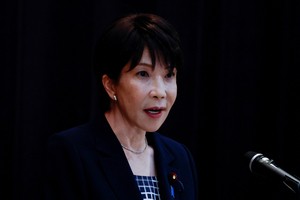
Japan bets big on basic science with 74% budget surge
Japan's science and technology-related budget requests for next fiscal year total approximately 11 trillion yen ($71.6 billion), the largest such allocation on record. The Nikkei reported Monday that combined science and technology requests across all ministries for the next fiscal year come to 10.99 trillion yen, a record high. The figure represents a 73.7 percent increase from this year's science and technology budget. Science and technology spending under the uncapped "Investing in a Strong and Prosperous Japan" category alone amounts to 5.07 trillion yen, roughly half of the total. "Strong and Prosperous Japan" has been a slogan Prime Minister Sanae Takaichi used since the lower house election earlier this year. Her cabinet has championed what it calls "responsible proactive fiscal policy," pursuing expansionary spending likened to a second "Abenomics." The overall government budget request for next fiscal year also stands at a record 143 trillion yen, fueling growing concern about fiscal deterioration. A closer look at the science and technology budget requests shows that funding for the "Grants-in-Aid for Scientific Research" program — which concentrates resources on high-quality research projects — is set at 455.2 billion yen, double last year's level. Operating grants distributed to national universities are also set to rise by 154.1 billion yen from last year, reaching 1.25 trillion yen. The category had been cut consistently since 2004, but the government agreed to reverse the trend following calls from Nobel laureates and Keidanren, the Japan Business Federation. Science and technology spending is expected to see further increases, as many budget items are tied to the Takaichi administration's "17 strategic fields." Those fields include aviation, space, nuclear fusion and quantum research — areas where universities and public research institutions play a central role. Hiroaki Suga, a professor at the University of Tokyo and an expert member of the government's Council for Science, Technology and Innovation, welcomed the increase. "Doubling the research budget still is not enough, but the big boost will lift researchers' morale," he said.
Sept. 14, 2026
-
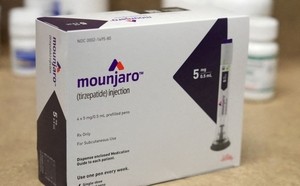
Korean patients flock to Japan for cheaper Mounjaro, turning clinics into 'pilgrimage sites'
As interest in obesity treatments grows, a rising number of South Koreans are traveling to Japan to obtain prescriptions for Mounjaro — a diabetes drug — at significantly lower prices, according to local media reports. Information about Japanese clinics offering cheaper prescriptions is being shared across South Korean online communities and SNS platforms, with some hospitals earning the informal label of "pilgrimage sites" for the drug. Nagoya TV and other Japanese outlets reported that South Koreans have been visiting Japan in increasing numbers to obtain Mounjaro prescriptions. Mounjaro is an injectable drug containing tirzepatide, developed by US pharmaceutical company Eli Lilly, and is approved in Japan as a treatment for type 2 diabetes. A woman in her 30s from Seoul told Nagoya TV that she had traveled to a regional hospital in Japan to get a Mounjaro prescription. "I went because it was known as the cheapest hospital in all of Japan," she said. She added that when she visited the clinic, she saw several other middle-aged Korean women also there to receive Mounjaro prescriptions. Price is cited as the primary reason South Koreans are making the trip to Japan. The woman said the cost of a three-month supply of Mounjaro 5 mg in South Korea exceeds what she paid in Japan for the same supply — even after covering airfare and accommodation. Information about Japanese medical facilities offering Mounjaro at relatively low prices is being actively shared on South Korean SNS platforms and online communities. Japanese media reported that not only hospitals in major cities such as Tokyo and Osaka, but also lesser-known regional clinics, are being introduced among Koreans as "Mounjaro pilgrimage sites." Japan's "free medical practice" system is what makes such prescriptions possible. Although Mounjaro is approved in Japan only for type 2 diabetes, doctors may prescribe it for unapproved indications based on their assessment of a patient's condition — a practice known as off-label prescribing. When prescribed for cosmetic or weight-loss purposes, national health insurance does not apply and patients bear the full cost themselves. The number of medical facilities offering prescriptions through online consultations has also grown, making the drug more accessible. Japanese authorities, however, have repeatedly warned against the spread of Mounjaro use for weight-loss purposes. Japan's Ministry of Health, Labour and Welfare has cautioned that the safety and efficacy of GLP-1 receptor agonists and GIP/GLP-1 receptor agonists — including Mounjaro — for cosmetic or weight-loss purposes have not been verified in Japan for those uses. In June, the ministry reissued a notice urging medical institutions and manufacturers to promote appropriate use. Peer-to-peer sales of prescription drugs through SNS or secondhand trading platforms are also illegal in Japan. The ministry warned that products obtained through channels other than licensed medical institutions or pharmacies may include counterfeit or substandard items. The manufacturer has also expressed concern about rising overseas demand driven by Japan's lower prices. Eli Lilly Japan said last month that Mounjaro's price in Japan is among the lowest of any major economy in the world, and that the low price risks encouraging inappropriate use, medical tourism from abroad, and profit-driven stockpiling and resale overseas. Even for those who obtain a prescription in Japan, bringing the medication back to South Korea requires additional care. South Korean customs authorities detected 289 cases of Mounjaro and similar drugs being brought into Incheon airport without proper procedures between January and May this year, Nagoya TV reported. Even when a drug is legitimately prescribed abroad, relevant regulations may apply to its importation into South Korea depending on the type and quantity of the medication. Post-treatment medical follow-up is another concern. Tirzepatide requires ongoing consultation with a physician to adjust dosage based on the patient's condition and any side effects. Obtaining a one-time prescription in Japan and returning home may make it difficult to continue monitoring with the prescribing doctor. A Japanese pharmaceutical expert told a local broadcaster that the drug is "fundamentally one that should be used while consulting with the prescribing doctor to adjust the dosage," and warned that cutting off medical supervision after crossing a border to obtain the drug could pose serious risks if side effects occur. As South Koreans' Mounjaro trips emerge as a new medical tourism phenomenon driven by price differences, the Japanese government is tightening oversight of off-label use and potential supply shortages. Experts say those considering overseas prescriptions should weigh not only the lower cost but also the drug's intended use, potential side effects, domestic import regulations, and the feasibility of ongoing medical care.
Sept. 14, 2026
-
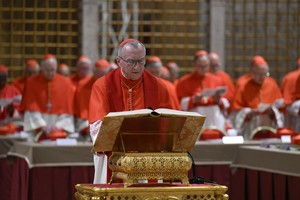
Vatican to restore clergy salaries cut during COVID-19 pandemic
Vatican announcement The Vatican said Monday (local time) it would reverse the clergy salary cuts imposed in the wake of the COVID-19 pandemic. Pope Leo XIV issued an apostolic letter to that effect that day. An apostolic letter is a document the pope issues to address special or urgent needs within the Church. "Those measures were necessary to respond to the exceptional challenges of the pandemic," Leo XIV said. "The Holy See can now continue its efforts toward financial sustainability through other means." His predecessor, Pope Francis, had introduced the cuts in March 2021 as a last resort to address a fiscal crisis brought on by the pandemic, reducing Vatican cardinals' salaries by 10 percent, among other measures. Under the new apostolic letter, clergy salaries will return to their original levels, though the reductions that took effect in the interim will not be paid retroactively. "The letter in the form of an apostolic letter of March 2021 is abrogated, but the effects produced at that time remain," the pope said.
Sept. 14, 2026
-
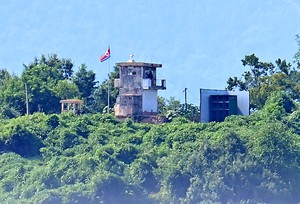
BBC: More North Korean troops 'certain' to join Russia's war as death toll reaches 3,000
'Kim Jong-un's gamble' estimated to have earned North Korea $10 billion; further deployments seen as inevitable It now "seems certain that more North Korean troops will join Russia's war," the BBC reported Monday, amid speculation that Pyongyang could deploy as many as 50,000 additional soldiers. An estimated 13,000 North Korean troops have been sent to Russia since late 2024, with roughly 3,000 believed to have been killed. Ukrainian President Volodymyr Zelensky, who has raised the prospect of further North Korean deployments while calling on South Korea to provide air defense support, last month raised his estimate of potential additional troops to as many as 50,000. In a report examining North Korea's military involvement in Russia, the BBC said the deployment to Kursk "was a gamble for North Korean leader Kim Jong-un" — one that "paid off for this poor and isolated country, despite the heavy casualties." Ukraine's Main Intelligence Directorate (HUR) estimates that of the approximately 13,000 North Korean troops deployed since late 2024, around 3,000 have been killed and 1,500 wounded. A separate analysis by BBC Korea, based on a review of memorial sites, put the death toll at around 2,300. HUR estimates that the roughly 8,500 North Korean troops remaining on Russian territory have been organized into four brigades, tasked with holding back Ukrainian forces in Kursk and defending the Russian border. In a statement sent to the BBC, HUR said the troops "are not participating in combat operations" and "are not observed in temporarily occupied Ukrainian territory." Citing experts, the BBC identified two key gains from what it called Kim's "gamble": an "economic windfall" and a "geopolitical shift." According to Im Su-ho, a senior research fellow at the Korea Institute for National Unification Strategy, North Korea's estimated earnings from weapons sales and troop deployments to Russia amount to $10 billion — nearly one-third of the country's GDP. Analysts also say that cooperation with Russia has triggered a broader geopolitical realignment, reducing North Korea's longstanding dependence on China. "The deployment has enormous economic and political value for North Korea, and Russia desperately needs them," the BBC said, describing the arrangement as "a mutually beneficial relationship and a solidarity that comes at a price." The BBC added that "ultimately, North Korea will keep sending soldiers to fight in Russia's war" — but "only for as long as it remains profitable."
Sept. 14, 2026
-
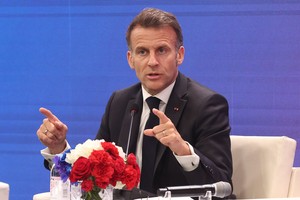
Macron revives ban on social media for under-15s, notifies EU of new bill
France is reviving its push to ban children under 15 from social media, after a previous version of the legislation was struck down as unconstitutional. French President Emmanuel Macron announced Monday on X, formerly Twitter, that "after rigorous technical review, the government is notifying the European Commission of a new bill on Monday." The notification is a key legislative step that member states must take to ensure their laws do not conflict with EU rules. Macron has made the social media ban a priority and has expressed hope that it will take effect before he leaves office next May. The original bill, which passed both chambers of parliament in July, would have barred children under 15 from creating social media accounts and required existing accounts to be closed after a grace period. France's Constitutional Council struck it down on Aug. 14, ruling that the blanket prohibition constituted an "inappropriate, unnecessary and disproportionate" infringement on the freedom of expression and communication of minors under 15. While the council did not dispute the need to protect young people from the risks of social media, it found that the bill's across-the-board approach unduly restricted fundamental rights. In response, the Macron government said it would revise the legislation and reintroduce it.
Sept. 14, 2026
MOST READ
- 1KAIST develops high-performance bio-based adhesive using E. coli instead of petroleum
- 2Pope Leo XIV declines French honors and banquet, accepts only private meeting with Macron
- 3Daimler Truck unveils next-generation transport solutions at IAA 2026
- 4What was Rachmaninoff's performance fee? A 1928 price list tells all
- 5Samsung Biologics union's show of force backfires at the bargaining table
- 6APR says hair-loss treatment research published in international journal
-
WORLD
US warns of punishment for anyone enabling Iran's Strait of Hormuz toll scheme
-
INDUSTRY

Toyota union puts productivity first; Hyundai Motor union demands bigger share of profits
-
FINANCE

National Growth Fund to invest $531M in FuriosaAI, which rebuffed Meta's $800M takeover bid
-
INDUSTRY

Korea Shipowners' Association holds amateur baduk tournament for Maritime Day