
- HOME
- WORLD
-

Amazon says AI models should launch only when ready and safe
Amazon has stated that AI models should be released only after rigorous testing confirms they are safe. Amazon spokesperson Tom Pannell said in an emailed statement Thursday (local time), according to Bloomberg and other outlets, that the company does not view the issue as a choice between progress and safety. "Models should be released when they are ready to use and deemed safe, and that is achieved through rigorous testing and robust safeguards," he said. Pannell added that risks could arise if the entire industry fails to uphold those standards. "We believe the industry, working with governments, will put the right protections in place," he said. The remarks represent Amazon's response to the debate over slowing AI development that Anthropic has sparked, and signal a different stance from Anthropic's proposal to dial back the pace of development. Amazon, the world's largest cloud company, has developed its own AI model line called Nova, though the Nova models have yet to reach the competitive tier occupied by advanced models from Anthropic and OpenAI. Amazon Web Services, Amazon's cloud division, is both a partner and investor in AI companies including Anthropic and OpenAI.
Sept. 18, 2026
-
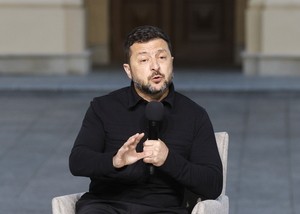
Zelensky calls North Korean troop deployment to Russia 'major problem' for Pacific security
In NHK interview, Ukrainian president says he wants military technology cooperation with Japan Ukrainian President Volodymyr Zelensky said Thursday (local time) that North Korea's deployment of troops to Russia poses "a very serious problem for Pacific regional security," and expressed hope for military technology cooperation between Ukraine and Japan in an interview with Japanese broadcaster NHK. Zelensky shared the interview on his X account after it aired, again underscoring his remarks. "North Korea has sent 30,000 to 50,000 troops to Russia," Zelensky said in the interview, calling the deployment "a very serious problem, particularly in terms of Pacific regional security." He said the North Korean troops deployed to Russia had not suffered major losses except when they fought directly against Ukrainian forces during the Kursk operation. "For North Korea, this is a chance to deploy troops, learn from the war and return home — at little cost," he said. North Korean troops are believed to have helped Russian forces retake the Kursk region, which Ukrainian forces had briefly seized. Zelensky said the North Korean troops subsequently decided not to enter Ukrainian territory and were instead training alongside drones and drone operators. He also said Ukraine had seen actual missiles made by North Korea. "We have not seen Chinese-made missiles in Ukraine," Zelensky said, adding that he was aware Chinese technology was flowing into Russia. "Equipment used by Russia is coming from China, and probably personnel and technology as well," he said. He went on to say that China had the means to pressure Russian President Vladimir Putin into entering negotiations but was choosing not to do so. "If powerful leaders, including China, stepped in, this war could stop immediately," he said. "China is a little closer to the Russian side," he added. "The fact that China is not standing in the middle is a problem." On Japan, Zelensky said he "very much" wanted to build military technology cooperation at both the government and corporate levels. He cited maritime surveillance, intelligence, mine-clearing drones, air defense, cybersecurity and food security as areas of focus, adding that concentrating on the defense industrial base could expand the volume of trade between the two countries. Zelensky said he had wanted to conclude a drone agreement with Japan, calling it "a decision for Japan to make."
Sept. 18, 2026
-
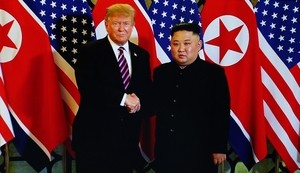
Ex-US official: China won't block North Korea-US talks, but won't help much either
Former East Asia-Pacific assistant secretary says China will stay on the sidelines even if diplomacy resumes Skeptical that US-China summit will yield meaningful agreement on North Korea Chinese President Xi Jinping will not stand in the way of Donald Trump's hopes to resume dialogue with North Korean leader Kim Jong-un — but he is unlikely to offer meaningful help either, a former senior US official said. Daniel Kritenbrink, former assistant secretary of state for East Asian and Pacific affairs, said Thursday (local time) that he does not expect China to block diplomacy between Washington and Pyongyang. "I would not anticipate China obstructing North Korea-US diplomacy," he said in response to a question from Yonhap. He added that China could take limited steps to support a resumption of North Korea-US talks, but said Beijing would ultimately stay on the sidelines. "China will be skeptical of any significant improvement in relations between Washington and Pyongyang, so even if talks resume, I would not expect China to position itself at the center of that diplomacy," he said. The assessment suggests that even if Trump asks Xi for help restarting talks with Kim at their White House summit on Sept. 24, China is unlikely to take any proactive steps. "President Trump may ask China for general support, but I don't think he believes he needs Xi's help to resume dialogue with Chairman Kim," Kritenbrink said. Kritenbrink oversaw China and North Korea policy under the Joe Biden administration and resigned shortly after the Trump administration took office for its second term. He is now a partner at The Asia Group, a Washington-based consulting firm founded by former Deputy Secretary of State Kurt Campbell. He said he expects North Korea to come up at the US-China summit but expressed doubt about the outcome. "I am skeptical that any meaningful agreement will be reached," he said. On Trump's recent overtures toward Kim, Kritenbrink said the president "appears to hope to pursue diplomacy with North Korea and Chairman Kim in his second term, just as he did in his first." He added, however, that he was "somewhat skeptical" about whether North Korea would be interested, citing Kim's experience with the first Trump administration and the level of support Pyongyang currently receives from Russia and China. "China could welcome such diplomacy to the extent that it helps promote stability on the Korean Peninsula," he said, "but China will be skeptical of improved relations between Washington and Pyongyang, so I would expect Xi to maintain a cautious posture on this issue." Asked whether the two leaders would reaffirm their commitment to North Korea's denuclearization at the summit, Kritenbrink said neither side would change its longstanding position on the matter. He noted, however, that "just as in Beijing in May, the two sides may differ in how they publicly characterize their positions." After the US-China summit in Beijing in mid-May, the White House said in a fact sheet that the two leaders had "affirmed their shared goal of denuclearizing North Korea." China, however, made no explicit mention of denuclearization, saying only that its Korean Peninsula policy remained consistent.
Sept. 18, 2026
-
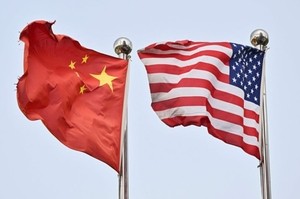
China's US Treasury holdings hit lowest since 2008, half of 2013 peak
Selloff accelerated after Russia's overseas assets were frozen China's holdings of US government bonds have fallen to their lowest level since August 2008. According to US Treasury data released Thursday (local time), Chinese investors held $618 billion in US Treasuries recorded at American banks and custodians as of July — less than half the record high of $1.3 trillion reached in November 2013. The Financial Times said the trend reflects both a shift in how Chinese authorities manage their foreign exchange reserves and deepening tensions between the world's two largest economies. The paper also noted that it signals an intensifying economic and geopolitical decoupling between the United States and China. The United States is grappling with a large fiscal deficit and inflation, while China is posting record trade surpluses even as it faces slowing economic growth and deflationary pressure. Wei Li, head of multi-asset investment at BNP Paribas Securities' China unit, said the decline in China's Treasury holdings is "part of a global trend toward diversifying into other assets — gold, agency bonds, and particularly shares linked to the AI boom." Experts note that China also holds significant amounts of US Treasuries through third-party custodians such as Euroclear in Belgium and Clearstream in Luxembourg, meaning its actual holdings are likely larger than official figures suggest. The selloff accelerated after the United States froze Russia's overseas assets following Russia's full-scale invasion of Ukraine in 2022, driven by concerns that China could face a similar situation in the future. A broader shift among foreign investors toward US shares over US government bonds also appears to be a factor. According to Deutsche Bank, overseas capital flowing into US shares in the year through June equaled 2.8 percent of GDP — surpassing the 2 percent inflow into US Treasuries for the first time this century, outside the periods immediately following the COVID-19 pandemic and the global financial crisis. Alicia Garcia Herrero, chief economist for Asia-Pacific at investment bank Natixis, said China's intent is "mainly to show the US that it can sell large amounts of Treasuries."
Sept. 18, 2026
-

Saudi Arabia proposes 2-week truce to Houthi rebels via Oman
Lebanon-based pro-Hezbollah outlet cites senior source Saudi Arabia has proposed a two-week truce to Yemen's Iran-backed Houthi rebels, Lebanon's pro-Hezbollah outlet Al Mayadeen reported Thursday (local time). A senior source familiar with the matter said Saudi Arabia conveyed the proposal through the Omani government to discuss ways to address humanitarian issues in Yemen. "Saudi Arabia confirmed that an agreement on humanitarian matters would be officially announced within the proposed truce period," the source said. In this regard, Abdullah Al-Farra, Al Mayadeen's Yemen bureau chief, said the move showed that Saudi Arabia had ultimately pivoted to the truce option after failing to build a coalition against Sanaa, the Houthi-controlled capital. The report comes amid an intensifying armed conflict, as the Houthis have seized key positions near the Bab el-Mandeb strait at the southern entrance to the Red Sea, threatening oil export routes and clashing with Saudi forces and the Saudi-backed Yemeni government military. The Houthis have been pressing Yemeni government forces across multiple provinces while also stepping up attacks targeting major cities inside Saudi Arabia. Earlier, the Houthis had declared a hardline stance against the Saudi-led coalition's years-long military intervention and blockade of Yemen, vowing to respond to the blockade with a blockade and to any escalation with further escalation.
Sept. 18, 2026
-
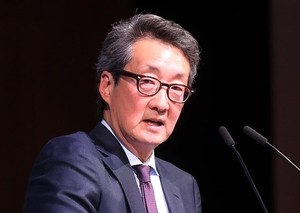
Victor Cha says Korea-US foreign ministers' meeting likely to trigger first US investment announcement
South Korea's first project under its US investment package — whose announcement has been delayed — could be unveiled at the upcoming South Korea-US foreign ministers' meeting, a prominent analyst said. Victor Cha, the Korea Chair at the Center for Strategic and International Studies, said Thursday (local time) at a CSIS-hosted seminar that he had expected an announcement on the investment deal itself to come Friday but no longer believed that would happen. "Foreign Minister Cho Hyun is on his way to Washington, D.C. right now. He is expected to arrive here on Friday," Cha said. "Perhaps we will see some form of announcement on this matter there." Cha acknowledged that some had suggested the issue could slip to next week, but said Foreign Minister Cho's visit would serve as an "action-forcing event." "I am quite certain that if no announcement comes while Minister Cho is here, that would be a very bad sign," he said. South Korea's Ministry of Trade, Industry and Energy had planned to sign a memorandum of understanding for the first project under the country's $200 billion US investment package and announce the project as early as Friday, following a National Assembly briefing. However, the ministry asked Thursday to postpone the Assembly briefing, suggesting the project's finalization and announcement would likely be pushed to next week. Foreign Minister Cho arrived in the United States Thursday morning for talks with US Secretary of State Marco Rubio. The two ministers are scheduled to meet Friday morning. "I think we will probably see some form of announcement on this issue at that point," Cha said, referring to the foreign ministers' meeting. "By the time Minister Cho arrives and departs, both sides need to reach some form of agreement." Some observers cautioned that it remained unclear whether the ministers' meeting would clinch an investment deal, noting there were no reports that the two sides had fully bridged their differences. Cha suggested that President Donald Trump's stance on what he called "commercial disputes" — including issues involving Coupang Inc. and amendments to South Korea's Network Act — could be used as a lever to force an agreement. "My understanding is that Rubio plans to raise some of these commercial disputes directly with Minister Cho during this visit," Cha said. "The most important point is that there is a difference between Rubio raising the issue and Rubio saying, 'The president is very unhappy about this.'" "These commercial disputes don't necessarily have to be resolved through legal means — there are political solutions," he said. "To create space for such solutions, the Korean side needs to understand that the US president is very unhappy about these issues." Cha also argued that resolving some of the bigger issues — such as the investment deal — "could help create political space to handle other matters, like the commercial disputes, quietly behind the scenes." Cha noted that Cho's US visit comes ahead of the UN General Assembly, where a South Korea-US summit is possible amid discussions about South Korea's potential deployment to the Strait of Hormuz and a possible North Korea-US summit. Beyond a trade deal, the two countries have also been in talks on shipbuilding cooperation in the defense sector, South Korea's acquisition of nuclear-powered submarines, and the enrichment and reprocessing of spent nuclear material — issues that could be raised as part of a broader package tied to the investment announcement. "If these kinds of linkages are made across different issues, the situation becomes very unpredictable — because there is only one person who can make those decisions," Cha said, referring to President Trump. He added that progress on even one of those fronts could "open space to resolve other thorny and complicated issues quietly below the surface."
Sept. 18, 2026
-
GM enters defense industry with Patriot missile parts production
Lockheed Martin says GM delivered first batch of PAC-3 components General Motors has entered the defense industry by beginning production of missile components, as the US military turns to automakers to replenish munitions stocks depleted by the wars in Ukraine and the Middle East. US defense contractor Lockheed Martin said Thursday (local time) that GM delivered the first batch of missile housing components for its PAC-3 MSE Patriot interceptor missile on Aug. 28. The two companies signed a formal contract on Aug. 6. Lockheed Martin said GM completed production of the Patriot missile parts in 22 days — a process that typically takes several months. The specific size of the order and the scope of any future contracts were not disclosed. The partnership stems from a Pentagon push to expand production. The Defense Department has asked Lockheed Martin to more than triple annual Patriot missile output to at least 2,000 units by the end of 2030. Scaling up supply quickly has proved difficult, however, as existing suppliers are near capacity, many key components are made by hand, and production depends heavily on sole-source vendors such as Boeing. With Ukraine facing prolonged Russian air strikes and US missile stockpiles seriously depleted by the US-Iran war, the Defense Department has been pushing to bring automakers and their suppliers into the weapons production chain. GM has also been working to expand its defense business. CEO Mary Barra mentioned the defense segment at a recent earnings call, saying the company expects $700 million in sales and a double-digit operating profit margin from the division this year. As the global auto market struggles with a slowdown and intensifying competition, GM's openness to defense work is seen as part of a broader effort by automakers to find new revenue streams.
Sept. 18, 2026
-
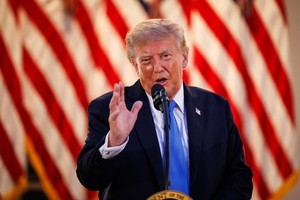
Trump says 'tremendous progress' made on US Army base in Poland
Poland seen as eastern flank deterrent as concerns grow over Russian provocations against NATO members In an era when a single word from Trump can shake global markets, The Herald Business delivers a daily digest of his most market-moving statements — from Wall Street's closing bell to the latest developments in global asset markets. Subscribe to the newsletter at The Herald Business website. US President Donald Trump said Thursday (local time) that significant progress has been made toward building a US military base in Poland. Trump wrote on Truth Social that "tremendous news" had emerged thanks to the "bold leadership" of his "friend," Polish President Karol Nawrocki, saying significant progress had been made on constructing a US Army base in the country. "If completed, the location will be announced very shortly and will be a historic move for the great US-Poland alliance," he added. Nawrocki also posted on X, formerly Twitter, expressing gratitude and saying Poland "remains ready to continue working toward strengthening defense cooperation" with the United States. About 10,000 US troops are currently stationed in Poland. The United States has rotated forces through Poland since 2017 and operates two permanent military facilities there, according to Politico. However, those facilities are designed to support small-scale troop deployments, and only six countries in Europe host permanent US military bases — Germany, Italy, the United Kingdom, Spain, Belgium and Turkey — Politico added. Trump's post also appeared aimed at Russia. With growing concern that Moscow could test NATO by taking provocative action against member states, the construction of a permanent US Army base in Poland could serve as a deterrent. Poland, which shares a border with Ukraine, has sought to increase the US military presence on its soil as it plays a role on NATO's eastern flank against Russia. While other NATO allies have drawn Trump's frustration over their lack of cooperation on Iran, Poland has been working to deepen its ties with Washington. Nawrocki is a right-wing politician known for his pro-Trump leanings. The Defense Ministry canceled the deployment of 4,000 troops to Poland in May, but Trump shortly afterward promised to send 5,000 US troops to the country.
Sept. 18, 2026
-
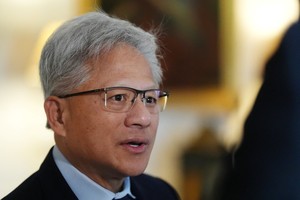
Nvidia expects to sell twice as many chips next year, Jensen Huang says
'AI investment demand confirmed worldwide' Nvidia CEO Jensen Huang said Thursday (local time) that the company expects to sell twice as many chips next year as it does this year. Speaking to reporters ahead of a Scotland AI summit hosted by Britain's King Charles III, Huang said Nvidia anticipates selling twice as many chips next year as this year, according to CNBC. "The reason is that AI contributes enormously to many industries and many economies, and in almost every country we operate in, we can see that people want to invest in AI," he said. Nvidia had already raised market expectations on Aug. 26, when it released its second-quarter (May–July) earnings and projected that fiscal year 2028 (ending January 2028) sales would reach approximately $673 billion — a 70 percent increase from the prior year. Huang's remarks refer to unit volume rather than revenue, meaning the chip sales growth rate could differ from revenue growth once price differences across products are taken into account. Nvidia does not disclose its total chip shipment figures. Beyond data center GPUs, the company produces central processing units, chips for switches and optical networking, laptop chips, and Jetson chips for robotics and automotive applications. Huang had previously said Nvidia shipped about 6 million Blackwell GPUs over four quarters last year. Thursday's gathering also included Google DeepMind CEO Demis Hassabis and focused on AI safety. Huang said those building AI systems have a responsibility to test them rigorously. "When it's not safe enough, we should hold it back," he said.
Sept. 18, 2026
-
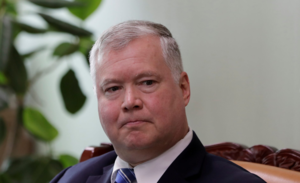
Ex-US envoy Biegun says Trump visit to Pyongyang possible, urges central role for Seoul
Biegun, who led working-level North Korea talks under the first Trump administration, says Pyongyang will watch US midterm results; cites experts in calling for realistic approach with denuclearization as long-term goal Trump's every word moves global markets and economies. If keeping up with the flood of Trump news feels overwhelming, this column has you covered. The Herald Business international desk — on the move from 5 a.m. — delivers a curated daily digest, from the latest Wall Street close to the Trump developments most likely to shake global asset markets, all in a one-minute read. Whether you're commuting, eating alone, or winding down for the night — just one minute a day. Subscribe to the newsletter on The Herald Business website. Stephen Biegun, the former US Special Representative for North Korea, said a scenario in which President Donald Trump visits Pyongyang is possible, and said South Korea must play a central role in any resumption of US-North Korea dialogue. Biegun made the remarks Thursday (local time) in a keynote address at a conference in Incheon organized by the Korea Risk Group, which operates NK News, according to NK News. Biegun said Trump has been sending public signals to North Korean leader Kim Jong-un and that Kim has not closed the door, adding that Pyongyang will likely wait to see the outcome of the US midterm elections in early November. He said the midterm results would serve as a gauge of Trump's political standing — and, from North Korea's perspective, an indicator of whether it can extract what it wants from the president. Biegun said Trump may be considering a meeting with Kim after the Asia-Pacific Economic Cooperation summit in Shenzhen, China, on Nov. 28-29, and predicted that "it would not be surprising" if Trump proposed holding such a meeting in Pyongyang. He said South Korea must play a central and indispensable role in achieving lasting peace on the Korean Peninsula. Biegun said that during US-North Korea talks under the first Trump administration, he consistently worked to ensure South Korea was included at both the working and summit levels. "Ultimately, what we are talking about is the Korean Peninsula. Whatever happens and whatever is agreed, the safety and welfare of the Korean people is the primary concern," he said. "No one has a greater stake in the outcome. South Korea must play a central role in future diplomacy," he added. The remarks were widely interpreted as a warning against the possibility that Trump, in pursuing top-down diplomacy with Kim, could bypass coordination with South Korea, a key US ally. "Through clear prioritization and coordination with Northeast Asian allies to the extent possible, the United States could use renewed dialogue with North Korea as an opportunity to slow or freeze the North's nuclear buildup, enhance security and stability on the Korean Peninsula, and improve inter-Korean relations," Biegun said. "Showy summits won't help much, but quiet and sustained diplomacy that seeks a combination of incentives and mutual concessions could be meaningful," he added. Drawing on the views of multiple Korean Peninsula experts, he said denuclearization should remain the ultimate goal but that including it in any early agreement between Washington and Pyongyang would not be realistic. The position is notable given that Biegun spent much of the first Trump administration negotiating intensively with North Korea over an exchange of denuclearization steps for corresponding measures. His willingness to cite expert opinion in favor of deferring denuclearization and taking a more pragmatic approach marks a significant shift in his public stance. However, Biegun cautioned that such an approach to North Korea could fuel calls for South Korea and Japan to develop their own nuclear weapons, and said the United States must reinforce its defense commitments to its allies to prevent the nonproliferation regime from unraveling. Biegun also said North Korea should weigh the possibility of Russia losing the war in Ukraine. The deeper Pyongyang becomes entangled in the conflict by supporting Moscow, he warned, the more hostile an international environment it will face after a Russian defeat. Biegun was a central figure in working-level negotiations surrounding the US-North Korea summits during the first Trump administration and maintained close communication with the South Korean government throughout. He also served as the chief US representative at the last round of working-level talks between Washington and Pyongyang, held in Stockholm, Sweden, in October 2019, and later served as Deputy Secretary of State.
Sept. 18, 2026
-
SEC eases rules on tokenized stocks, opening door to 24-hour trading
Trading platforms granted 5-year regulatory exemption; only tokens carrying full shareholder rights qualify; companies retain veto power The US Securities and Exchange Commission has sharply eased regulations on "tokenized stocks" — existing shares traded as digital tokens on a blockchain — in a move expected to accelerate the expansion of that market and pave the way for round-the-clock stock trading. The SEC announced Thursday (local time) that it would grant a five-year exemption from certain securities-exchange regulations to tokenized-stock trading platforms that meet specified conditions, according to the Wall Street Journal. The measure takes effect immediately. Tokenized stocks are digital token representations of existing shares that allow them to be traded on a blockchain. Under the new rules, any tokenized stock covered by the exemption must carry the same shareholder rights as the underlying share, including dividends and voting rights. If Apple shares were tokenized, for example, the resulting token would need to confer the dividend and voting rights attached to actual Apple stock — not merely track the share price. Synthetic stock tokens that follow price movements without granting real shareholder rights are excluded from the exemption. Previously, blockchain-based platforms that brokered tokenized-stock trades could be classified as exchanges under securities law and subjected to the full range of related regulations. Under the new framework, platforms that satisfy SEC-set conditions — including trading transparency and record-keeping requirements — may enter the market free from some of those rules. The decision came two days after the Senate failed to advance the "Clarity Act," a bill aimed at establishing a clear regulatory framework for the US cryptocurrency market. The SEC is now using its existing authority to put tokenized securities regulation on firmer footing. SEC Chair Paul Atkins said in a statement that the agency had made "an important step toward leading US capital markets into the digital age by facilitating on-chain trading of some tokenized stocks through the 'innovation exemption' — authority granted by law." The prospect of tokenized stock trading draws attention because it could enable 24-hour trading unconstrained by conventional market hours, as well as faster settlement. Concerns have also been raised, however, that if tokenized stocks trade on a separate market from traditional exchanges, liquidity could become fragmented and investor protections weakened. The SEC factored in those concerns by attaching conditions to the exemption, including volume caps, transparency requirements and record-keeping obligations. Companies also retain the right to block the tokenization of their own shares. Any third party seeking to tokenize a specific company's stock must notify that company 30 days in advance, and the company may veto the transaction.
Sept. 18, 2026
-

US mortgage rates near 7%, highest since Trump took office
30-year fixed rate rises for 4 consecutive weeks, posting largest weekly gain in 16 months US mortgage rates rose for a fourth consecutive week, reaching their highest level since President Donald Trump began his second term in office. The average rate on a 30-year fixed mortgage climbed to 6.95% this week, up 0.19 percentage points from the previous week, according to Freddie Mac, the government-sponsored mortgage company. The weekly gain was the largest in 16 months. Approaching the 7% threshold, the rate is now the highest since January last year, shortly after Trump began his second term. Mortgage rates had been falling earlier this year, briefly dipping below 6% in February for the first time in three years. Since then, however, they have climbed sharply as rising global oil prices tied to the outbreak of war with Iran, growing inflationary pressure and concerns over US government fiscal spending have converged. The yield on the 10-year US Treasury note — widely used as a benchmark for mortgage rates — broke through the psychologically significant 5% level this week. As a result, a homebuyer taking out a 30-year mortgage at the current rate rather than the roughly 6% rate available earlier this year could end up paying tens of thousands of dollars more over the life of the loan. The Federal Reserve's decision Thursday to raise its benchmark interest rate by 0.25 percentage points to combat inflation could add further near-term pressure on borrowing costs for homebuyers. However, analysts say that if the rate increase succeeds in bringing inflation under control, it could help push mortgage rates lower over the longer term. "Today's higher benchmark rate is the medicine needed for tomorrow's housing market recovery," said Misha Fischer, chief economist at real estate data firm Zillow. "The more market confidence grows that inflation is being brought under control, the more likely mortgage rates are to fall and the housing market recovery is to get back on track."
Sept. 18, 2026
-
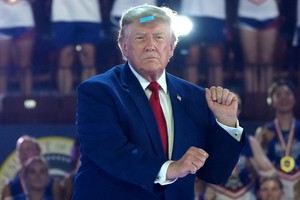
Trump to personally greet Xi at airport ahead of summit
Lavish welcome ceremony planned at Joint Base Andrews near Washington First time Trump has greeted foreign leader at airport in second term In an era when a single word from Trump can shake global markets, the Daily Trump newsletter cuts through the noise. The Herald Business international desk — on the move from 5 a.m. — delivers a one-minute briefing covering US market closes and the Trump news most likely to move global assets. Subscribe at the Herald Business website. US President Donald Trump plans to personally greet Chinese President Xi Jinping at the airport when Xi arrives in the United States on Wednesday (local time) for a bilateral summit, AFP and other outlets reported Thursday. AFP said a US official confirmed that Trump would extend a rare honor to Xi upon his arrival in Washington for the state visit next week. The official told the news agency that Xi is expected to arrive at Joint Base Andrews near Washington around 4 p.m. Eastern time on Wednesday, and that Trump will attend a welcome ceremony at the base. Politico said it would be the first time in Trump's second term that he has gone to an airport to personally receive a foreign leader, describing the gesture as part of "a courting effort to extract some policy wins from Xi." One government official told Politico the move would carry significant weight for Beijing. "Xi really wants to be seen as an equal to Trump, so this will be very important to the Chinese side," the official said. The Hill reported that the welcome ceremony at Joint Base Andrews is expected to be "opulent," and said Trump's personal reception was a reciprocal gesture following Xi's red-carpet welcome during Trump's state visit to Beijing last May. When Trump arrived at Beijing Capital International Airport for his state visit on the night of May 13, the Chinese side was represented by Vice President Han Zheng. Xi greeted Trump with a red-carpet ceremony the following day at the Great Hall of the People in Beijing, where the two leaders held their summit. Trump and Xi are scheduled to hold a summit at the White House on Thursday, followed by a state dinner that evening. Xi is expected to conclude his two-night, three-day state visit and depart the United States on Friday. Meanwhile, Xi will not attend the UN General Assembly at UN headquarters in New York next week, The Hill reported.
Sept. 18, 2026
-
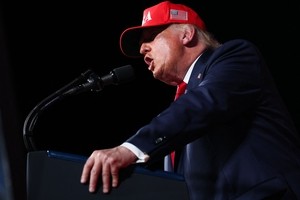
Trump says he faces 'critical decision' on whether to resume all-out attack on Iran
'Anything can happen with me,' Trump says; full-scale war could resume if no deal before midterms A daily briefing on the Trump news that moves global markets and economies. President Donald Trump said Thursday (local time) that he has reached a critical crossroads over whether to resume large-scale attacks in the war against Iran. Speaking in an interview with Axios, Trump said a major decision was approaching. "Do we attack them and annihilate them, or do we not? This is a critical decision," he said. "Anything can happen with me." Trump also said Iran was in direct contact with the United States and still wanted to reach a deal. According to Axios, Trump is set to meet with leaders of six Middle Eastern nations — Saudi Arabia, the UAE, Qatar, Bahrain, Kuwait and Oman — in New York on Tuesday. Trump said he wanted to hear their views on the next phase of the Iran war firsthand. "I want to know where they stand, what the situation is," he said. "We have protected them very much." However, Trump declined to say whether he would make a major decision on the Iran war before or after the November midterm elections, Axios said. Trump has said publicly in recent weeks that the Iran war would end soon, but the conflict — which began in late February — has stalled. Amid the deadlock, Trump has maintained a naval blockade against Iran while stepping up economic pressure on the country. US forces are supporting global energy shipments through the Strait of Hormuz, but volumes remain below prewar levels and oil prices are still elevated. With no breakthrough in sight, some officials in the Trump administration believe Trump could resume large-scale combat operations if he fails to reach a ceasefire agreement with Iran before the midterm elections. Axios said Trump and Defense Secretary Pete Hegseth have ordered the military to maintain the current size of US forces deployed in the Middle East through the end of this year in preparation for a potential resumption of large-scale combat operations. One official cautioned, however, that sustaining the current standby posture for an extended period would be difficult. "At some point, we have to decide what the ultimate goal is," the official said.
Sept. 18, 2026
-

Oil prices edge lower as Saudi supply concerns ease; WTI settles above $101
Oil prices fell for a second straight day Thursday (local time) as concerns over disruptions to Saudi Arabia's crude supply eased somewhat. Brent crude futures for November delivery settled down 0.95 percent at $104.82 a barrel on the London ICE Futures Exchange. West Texas Intermediate futures for October delivery closed 0.51 percent lower at $101.91 a barrel on the New York Mercantile Exchange. Prices came under downward pressure after reports emerged that Saudi Arabia had arranged to supply additional crude cargoes to Asian refiners through ship-to-ship transfers near Sohar Port in Oman. The move is expected to partially offset export disruptions caused by the shutdown of the East-West Pipeline following a recent drone strike. Adding to the calmer mood, Saudi Arabia moved quickly to repair the damaged pipeline and could restore some of its capacity within days, helping ease market anxiety. However, further declines were limited by persistent geopolitical risks in the Middle East, including continued clashes between Saudi Arabia and Yemen's Houthi rebels and a drop in vessel traffic through the Strait of Hormuz.
Sept. 18, 2026
-
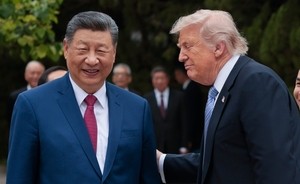
Trump holds back 7.5% tariff report ahead of Xi summit
The Trump administration is expected to delay the release of a probe into overproduction by major trading partners until after the US-China summit scheduled for Sept. 24. Bloomberg reported Thursday (local time), citing sources, that the administration had planned to release the overproduction report before the summit but is now expected to push back the timing. The report, to be issued by the US Trade Representative, is expected to include a proposal to impose an additional 7.5% tariff on Chinese goods. Bloomberg said the reason for the delay was not clear. Observers suggest the administration is holding off to assess the summit's outcome before deciding on the tariff level, given that trade is expected to be on the agenda. Bloomberg also noted that it remains uncertain whether the actual tariff rate will differ from the 7.5% figure. The overproduction tariffs are based on Section 301 of the US Trade Act, which allows the United States to impose tariffs and other countermeasures against trading partners that pursue policies deemed significantly unfair to American interests. The USTR launched investigations in March into overproduction and forced labor practices across 16 economies, including China, South Korea, the EU, Japan and India. In July, it imposed "forced labor tariffs" of 10 to 12.5 percent on 60 countries based on the extent to which they prohibit imports of goods made with forced labor. The USTR said at the time that overproduction tariffs would follow shortly. South Korea was hit with a 12.5 percent tariff under the forced labor investigation. If additional overproduction tariffs are imposed, the combined rate on South Korean goods could exceed the 15 percent level the two countries had previously agreed on. Meanwhile, Trump and Chinese President Xi Jinping are set to hold a summit at the White House on Sept. 24. The two sides are expected to discuss a range of issues, including the war with Iran, trade and AI.
Sept. 18, 2026
-
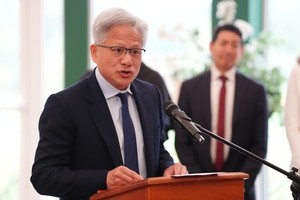
Jensen Huang, Zuckerberg, Musk lobbied Trump to kill AI oversight body
Concerns raised over OpenAI, Anthropic, Google consolidating power White House, administration divided on AI regulation 트럼프의 한마디에 세계 경제와 금융시장이 출렁이는 시대. 쏟아지는 트럼프 뉴스를 일일이 찾아보기 벅차다면 [1일1트]가 딱입니다. 새벽 5시부터 움직이는 헤럴드경제 국제부가 미국 증시 마감 시황부터 글로벌 자산시장에 영향을 미칠 트럼프의 핵심 뉴스까지 빠르게 골라, 1분 만에 ‘쓱’ 볼 수 있도록 배달합니다. 출근길에도, 혼밥할 때도, 잠들기 전에도 딱 1분. 구독자의 ‘성공시계’가 빨라집니다! 헤럴드경제 홈페이지에서 [1일1트] 뉴스레터를 구독할 수 있습니다. The CEOs of Nvidia, Meta and SpaceX successfully lobbied President Donald Trump to block the creation of an AI regulatory body, as debate over whether to slow the pace of AI development has emerged as a major policy flashpoint. The Wall Street Journal reported Thursday (local time), citing multiple sources, that Nvidia CEO Jensen Huang, Meta CEO Mark Zuckerberg and Elon Musk of SpaceX each separately conveyed their concerns to Trump in recent weeks, ultimately derailing plans for the oversight body. The three executives argued that a privately led AI regulatory and standards body — an idea that had been circulating in the industry following a proposal by Google Chief Scientist Demis Hassabis — risked concentrating power in the hands of the three dominant AI companies: OpenAI, Anthropic and Google. The executives also raised concerns about who would be selected to lead and staff the proposed body, sources said. In their individual conversations with Trump over recent weeks, all three said they preferred the administration's current light-touch approach to regulation. The issue has also divided opinion within the White House and across the administration. White House Chief of Staff Susie Wiles, Treasury Secretary Scott Bessent and National Cyber Director Sean Cairncross have pushed for stronger AI oversight and clearer guidelines, while White House AI and Crypto Czar David Sacks has repeatedly urged Trump to stick with a minimal-regulation approach, the Journal reported. Trump has since thrown his weight behind accelerating AI development, posting on Truth Social that there is a "sick and demented conspiracy against AI and data centers" and that "the only one that benefits is China." The US AI industry remains sharply divided on the question of development speed since Anthropic CEO Dario Amodei published a piece arguing for a slowdown. OpenAI CEO Sam Altman and Google's Hassabis have expressed sympathy with that view, while Huang and Zuckerberg have pushed back. Speaking at a recent Salesforce event, Huang said safety is "the top priority, but it is also an engineering problem," adding that speed and safety can be achieved simultaneously. Zuckerberg has also argued against an external regulatory body, saying individual companies have both the responsibility and the ability to set and maintain appropriate development paces on their own. Musk, by contrast, responded to Amodei's argument by saying "Dario is right," though his AI company xAI has not put forward any concrete plans regarding its own development pace. Hassabis had previously proposed establishing a privately led AI regulatory and standards body modeled on the Financial Industry Regulatory Authority.
Sept. 18, 2026
-

US sanctions Iranian crypto firm used to funnel Strait of Hormuz transit fees to Tehran
Iranian crypto firm Bitbank sanctioned Funds from transit fees routed to Iranian regime Hundreds of millions of dollars traced to Revolutionary Guard Cuba nickel, military-linked firms and officials also targeted The Trump administration has sanctioned a cryptocurrency firm used to channel funds collected from ships transiting the Strait of Hormuz to the Iranian regime, tightening its economic pressure campaign by cutting off yet another revenue stream Tehran had secured through the waterway. The Treasury Department's Office of Foreign Assets Control designated Bitbank, a crypto firm led by already-sanctioned Iranian financier Babak Zanjani, on Thursday (local time). The Treasury said Bitbank had played a central role in Iran's sanctions-evasion infrastructure through digital assets and had transferred hundreds of millions of dollars to the Islamic Revolutionary Guard Corps. Bitbank was particularly found to have routed funds to the Iranian regime from the "Hormuz Safe Maritime Services Authority," an entity Iran established to collect payments from ships in exchange for insurance and security services as they passed through the Strait of Hormuz. The United States had previously sanctioned the Hormuz Safe Maritime Services Authority itself. The latest action extends the sanctions net to the cryptocurrency firm that handled the financial flows connected to that entity. Also designated were Pishtaz Simorgh Electronic Trading Company, the developer of Bitbank, along with three associates of Zanjani. The move is part of what the Trump administration has described as an "economic isolation" campaign aimed at cutting Iran off from international financial, commercial and logistics networks. The action specifically targets cryptocurrency transactions that bypass conventional financial channels, focusing on closing off Iran's sanctions-evasion routes. The Trump administration also announced additional sanctions Thursday against companies and military officials involved in Cuba's mineral resources and military modernization. Secretary of State Marco Rubio said the designations cover 11 entities and individuals in total — four state-owned enterprises involved in generating revenue from Cuba's nickel resources, four military-linked firms engaged in research and development of weapons systems and battlefield simulation, and three military officials. "We will not stand by while Cuban elites enrich themselves through resource extraction and stockpile resources for their repressive security apparatus while the Cuban people suffer in poverty," Rubio said.
Sept. 18, 2026
-
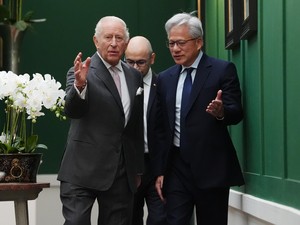
King Charles warns of AI dangers as Jensen Huang pushes back on social media-style regulation
British king hosts AI industry leaders at Scottish estate; Hassabis says he trusts human ingenuity to address misuse concerns King Charles III warned the AI industry Thursday of existential risks to humanity posed by the rapid advance of artificial intelligence and urged that human control be preserved. According to Reuters and the BBC, Charles hosted the gathering at Dumfries House in Scotland, welcoming Nvidia CEO Jensen Huang, Google Chief Scientist and DeepMind co-founder Demis Hassabis, and OpenAI Chief Financial Officer Sarah Friar, among others. In his opening remarks, Charles said the pace and nature of AI's development were "as exciting as they are deeply concerning," adding that "our humanity must remain sacred" and that the public needed assurance "that we will not lose control of our destiny, our soul." He noted that developers were increasingly warning of AI's darker potential — including the possibility of taking lives — and said there was "an urgency to examine the existential risk that such technology, in the wrong hands, could be used in ways that are deeply destructive." "Of course, we must have sufficient controls in place before it is too late," Charles said. "The decisions made in this formative period will determine the world that future generations inherit." He urged those present that their task was "not merely to advance technology, but to ensure that it firmly serves humanity, our communities and the natural world." The meeting came amid a growing chorus of calls within the industry for a slowdown in AI development. Anthropic CEO Dario Amodei and OpenAI CEO Sam Altman have both raised or endorsed arguments for moderating the pace of development. The debate has spilled into politics, with President Donald Trump criticizing the slowdown argument, while some have questioned whether the leading players are advocating deceleration primarily to protect their own competitive advantage. Huang, who attended the summit, struck a notably different tone from Amodei and others. A consistent opponent of AI development regulation, he argued at the meeting for what he called "responsible optimism" — the idea that developers themselves should bear accountability. "Those of us building AI must rigorously test our systems," he said. "When they are not safe enough, we should hold them back." Huang also told reporters that "AI is very different from social media," according to Politico Europe. "Social media is a product, but AI is the technology behind every product, every technology — so regulate the product, not the AI technology," he said. He said regulators should monitor AI products for failures and add new laws to existing frameworks where needed, stressing that "we must properly and rigorously test products before they are released to the public." Hassabis told the summit that his primary concern was the misuse of autonomous AI systems by "bad actors" causing those systems to behave wrongly, Bloomberg reported. He said, however, that he "firmly believes in human ingenuity" and was confident the industry would resolve such concerns. The summit produced no formal agreement. Reuters reported that Paolo Benanti, a papal adviser who has called for a slowdown in AI development, also attended. Charles has long championed the climate change agenda but is not known as a technology expert. The gathering is widely seen as an effort by a leading Western figure to drive global discussion on one of the most pressing issues of the day.
Sept. 18, 2026
-
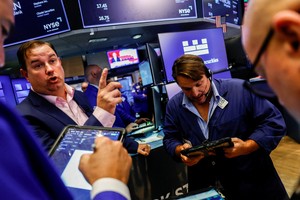
Wall Street rallies after Fed rate hike; NASDAQ up 1.7%
US stocks rose across the board Thursday (local time) as markets digested the Federal Reserve's benchmark interest rate hike from the previous day. The Dow Jones Industrial Average closed up 316.28 points, or 0.61 percent, at 51,778.18. The S&P 500 gained 85.19 points, or 1.14 percent, to finish at 7,637.73, while the tech-heavy NASDAQ Composite rose 439.87 points, or 1.69 percent, to close at 26,418.30.
Sept. 18, 2026
MOST READ
- 1KAIST develops high-performance bio-based adhesive using E. coli instead of petroleum
- 2Pope Leo XIV declines French honors and banquet, accepts only private meeting with Macron
- 3Daimler Truck unveils next-generation transport solutions at IAA 2026
- 4What was Rachmaninoff's performance fee? A 1928 price list tells all
- 5Samsung Biologics union's show of force backfires at the bargaining table
- 6APR says hair-loss treatment research published in international journal
-
WORLD
US warns of punishment for anyone enabling Iran's Strait of Hormuz toll scheme
-
INDUSTRY
Toyota union puts productivity first; Hyundai Motor union demands bigger share of profits
-
FINANCE
National Growth Fund to invest $531M in FuriosaAI, which rebuffed Meta's $800M takeover bid
-
INDUSTRY

Korea Shipowners' Association holds amateur baduk tournament for Maritime Day