
- HOME
- WORLD
-

US Federal Reserve raises benchmark interest rate by 0.25 percentage point
The US Federal Reserve raised its benchmark interest rate by 0.25 percentage point.
Sept. 17, 2026
-

In Japan, the jobs AI can't do are paying more than white-collar work
Average hourly wages for part-time and temporary workers in Japan are running well above the legal minimum, with the sharpest gains concentrated in construction, manufacturing, and physical labor jobs that require workers to be on-site in person. Data from Baitoru, a part-time job listing site operated by Japanese recruitment firm Dip, showed that the national average hourly wage for part-time workers stood at 1,350 yen ($9) last month. That was up 17 yen, or 1.3 percent, from the same month a year earlier — marking 11 consecutive months above the prior-year level. The number of job listings registered on Baitoru last month also rose 24.7 percent year on year, to about 396,000. Compared with Japan's current national average minimum wage of 1,121 yen, actual part-time job postings are offering roughly 20 percent more — a sign that employers in a growing number of industries must offer above-minimum pay just to attract applicants. The wage gains were especially pronounced in on-site occupations. Construction workers averaged 1,570 yen per hour, up 179 yen from the same month last year and more than 200 yen above the overall part-time average. Transport, cleaning and packaging jobs averaged 1,402 yen, up 165 yen year on year, while manufacturing and skilled trades rose 127 yen to 1,451 yen. Restaurant-related jobs climbed 45 yen to 1,218 yen, and retail positions gained 64 yen to 1,227 yen. These occupations share a common trait: they require workers to be physically present at construction sites, factories, logistics facilities or stores, performing tasks that cannot easily be handed off to robots or automated systems, even as adoption of such technology expands. Japan's chronic labor shortage is compounding the pressure, analysts say, pushing companies to compete by raising hourly rates to secure workers. The trend in on-site wages is not a one-month phenomenon. Earlier surveys by Dip had already shown that transport, cleaning and packaging, manufacturing and skilled trades, and construction had been posting significantly larger year-on-year wage gains than other sectors. By region, the Kanto area — which includes Tokyo — recorded the highest average hourly wage at 1,421 yen. Kyushu came in at 1,334 yen, the Kansai region covering Osaka and Kyoto at 1,326 yen, and Tokai at 1,299 yen. Not all occupations have seen their wages rise, however. The average hourly wage for professional roles fell 188 yen from a year earlier to 1,593 yen last month — still the highest in absolute terms, but declining. Education jobs dropped 122 yen to 1,577 yen, and office work fell 77 yen to 1,331 yen. The divergence has prompted some analysts to argue that Japan is seeing a split in wage trends between desk-based and professional work — where generative AI and digital tools are relatively easy to deploy — and physical, on-site jobs that still depend on human labor. AI alone cannot explain the shifts in hourly pay by occupation, however. Labor shortages vary by sector, and wages are also shaped by the skill level required, work location, hours and seasonal hiring demand. A similar pattern is visible in South Korea, where actual part-time wages also exceed the legal minimum. A survey of 933 part-time workers conducted in July by job platform Albacheongguk found that the real average hourly wage in the first half of this year was 11,233 won ($8), about 8.8 percent above this year's minimum wage of 10,320 won. Japan's part-time wages face another shift this autumn. According to the Ministry of Health, Labour and Welfare, the weighted national average of the fiscal 2026 regional minimum wage increases is set at 1,177 yen — up 56 yen from the current 1,121 yen — with the new rates taking effect on a rolling basis from October through early December, depending on the region. The gap between average job-posting wages and the legal minimum may narrow as a result, but if the on-site labor shortage persists, companies are expected to keep competing to offer above-minimum pay for now.
Sept. 16, 2026
-

One in three young unmarried Japanese say they don't want to date
Survey by National Institute of Population and Social Security Research 35.7% of men, 35.3% of women say they have no interest in dating 74.0% of men, 65.4% of women report having no partner One in three unmarried Japanese between the ages of 18 and 34 say they have no interest in dating someone of the opposite sex, according to a new survey. The finding emerged from the Basic Survey on Birth Trends, recently released by the National Institute of Population and Social Security Research under Japan's Ministry of Health, Labour and Welfare, according to the Sankei Shimbun on Wednesday. The survey was conducted last year, and its results were released Friday. Among unmarried respondents, 74.0 percent of men and 65.4 percent of women said they had no partner at all — including no boyfriend, girlfriend or fiancé. The share of single people without a partner has consistently risen since the 2010s. When asked about their interest in dating, 35.7 percent of men and 35.3 percent of women said they had no particular desire to pursue a romantic relationship with someone of the opposite sex. The share of unmarried people who said they were in a relationship or engaged peaked in the early 2000s and has since declined gradually. In the latest survey, the figure stood at 19.6 percent for men and 27.8 percent for women. More than half of teenagers said they had never dated anyone. Among 18- to 19-year-olds, 45.0 percent of men and 44.2 percent of women said they had dating experience. In the 25-to-29 age group, 57.1 percent of men and 67.2 percent of women said they had dated someone. Overall, 56.6 percent of men and 61.5 percent of women reported having had at least one relationship. The Basic Survey on Birth Trends is a nationwide study conducted every five years by Japan's Ministry of Health, Labour and Welfare to assess the state of marriage, childbirth and child-rearing in the country. Meanwhile, Japan has long grappled with the social phenomenon of young people — often called "herbivores" — who are disengaged from romance and marriage, a trend linked to prolonged economic stagnation and slow growth.
Sept. 16, 2026
-
Japan weighs raising defense spending to 3.5% of GDP as bond yields climb
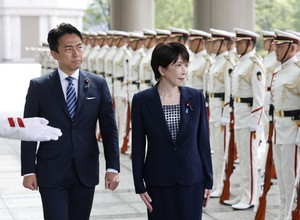
Japan's cabinet under Prime Minister Takaichi Sanae, which has championed a "strong Japan" and "responsible expansionary fiscal policy," is reportedly considering raising defense spending to 3.5% of GDP. The potential increase is drawing concern that it could place a significant strain on financial markets and government finances, coming as the yen remains weak — prompting two rounds of US-Japan currency intervention this year — and government bond yields continue to climb. Bloomberg reported Tuesday (local time) that Japanese defense officials had recently signaled to their American counterparts a willingness to substantially increase defense spending. Sources who spoke to Bloomberg cited one leading scenario under consideration: raising defense outlays to 3.5% of GDP over 10 years, roughly in line with the pace South Korea has committed to. The sources also said Japan could set a lower target of around 3%. The Japanese government responded cautiously, saying no figures had been decided. Defense Ministry spokesperson Agui Kimihito said at a press briefing Tuesday (local time) that Japan's defense buildup "is pursued based on our own judgment, in accordance with the fundamental principle that we must defend our own territory ourselves," adding that it "is not a matter of starting from a predetermined spending figure. What matters is the substantive content of our defense capabilities." Bloomberg nonetheless interpreted the scenario as entirely plausible, given Prime Minister Takaichi's stated ambition to build a stronger Japan and the Donald Trump administration's intense pressure on allies to boost defense spending. Takaichi had already accelerated defense outlays to 2% of GDP in the fiscal year that ended last March — two years ahead of the original schedule. Until 2022, Japan maintained an informal cap of 1% of GDP on defense spending, making the recent pace of increases a sharp departure, Bloomberg noted. The ruling Liberal Democratic Party, led by Takaichi, had already signaled in June that it believed 3.5% of GDP had become a global benchmark for defense spending and that Japan should raise its ceiling accordingly. US pressure has added to the momentum. Last month, Elbridge Colby, US undersecretary of defense for policy, said he was "desperately hoping Japan will step up" on defense spending. Robert Ward, Japan chair at the International Institute for Strategic Studies, said the groundwork for a major defense spending increase had been laid among Japanese policymakers and officials. "It's only a matter of when Japan will make the shift to 3.5%," he said. "Whether it takes five years or 10, given how important the US-Japan alliance is, I don't see an alternative." News of Japan's deliberations rattled financial markets, which are already grappling with rising borrowing costs driven by climbing government bond yields. The yield on Japan's 10-year government bond rose above 3% on Tuesday (local time), reaching its highest level since 1996. Markets widely expect the Bank of Japan to raise its policy rate by 0.25 percentage points on Friday, which could cause the government's borrowing costs to balloon further in the months ahead. A persistently weak yen adds another layer of pressure on the Japanese government. The yen fell to 155.24 per dollar on Tuesday (local time). The currency's weakness not only raises the relative cost of borrowing but also threatens to undermine Japan's defense expansion plans — a weaker yen erodes the country's purchasing power for overseas weapons procurement. Aiba Daisuke, an analyst at Iwai Cosmo Securities, said fiscal concerns make it difficult for investors to view the news positively. "There are also questions about whether Japan actually has the capacity to meaningfully expand its defense capabilities beyond the currently limited scope," he said.
Sept. 16, 2026
-

Mother-in-law or mom? Chinese in-laws fall in love and marry
A story from China has drawn widespread attention after a woman's widowed mother and her father-in-law fell in love and remarried. According to China's Dashang News and other outlets, a woman surnamed Xiao married a man surnamed Chen in 2018 and later introduced her mother — who had lived alone for more than 20 years — to her father-in-law, who had lost his wife two decades earlier. After getting to know her father-in-law through marriage, Xiao came to admire his character and personality. She consulted her husband, and the two decided to set the older pair up. Xiao's mother, surnamed Ji, admitted she had initially turned down the idea. "We were both afraid of what people would say and the rumors that might spread," she said. But after repeated encouragement from their children, the two met several times and discovered they were well suited for each other. They ultimately registered their marriage in 2021 and have been living together since. "Because my mother is now also my mother-in-law, I have none of the usual worries about navigating in-law dynamics or friction between a daughter-in-law and her mother-in-law," Xiao said. "She understands everything I want to say, because she is both my mom and my mother-in-law — I'm very happy." The outlet noted the arrangement raises no legal issues. Under China's civil law, marriage is prohibited between direct blood relatives or collateral relatives within three degrees of kinship, but in-laws are connected through their children's marriage rather than by blood, meaning the remarriage is entirely lawful.
Sept. 16, 2026
-
Will the US-China 'trade truce' be extended? Tariff cuts on farm goods discussed ahead of summit
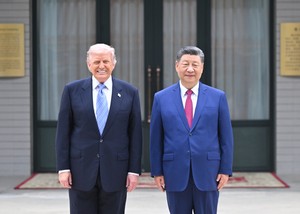
The United States and China are in discussions to lower tariffs on select goods, including American energy and agricultural exports — a development analysts say signals a possible extension of the trade truce ahead of the two leaders' summit Sunday. Bloomberg reported Tuesday (local time), citing sources, that the two countries have continued talks on tariff reductions for certain goods since their summit in Beijing in May, and that China has called for most-favored-nation tariff rates to be applied to some items. At the May summit, the two sides agreed to establish a trade committee to discuss partially eliminating tariffs on goods in non-sensitive sectors worth up to $30 billion. Follow-up talks have continued since, and the two countries are now focused on agricultural tariff reductions ahead of next week's White House summit, sources said. China pledged at the May summit to purchase 25 million metric tons of American soybeans annually through 2028 and has consistently followed through on that commitment. Bloomberg said China has imported more than half of this year's target volume. US Trade Representative Jamieson Greer also said in a Fox News interview on Sept. 3 that there would be "announcements on agriculture and non-tariff barriers related to agriculture" during Xi's US visit. Bloomberg said agriculture is expected to be a central topic at the summit, noting that a delegation from Cofco, China's state-owned food trading company, will accompany Xi on his US visit. About 10 Chinese companies, including Cofco, are expected to join the delegation accompanying the two leaders at the talks. Bloomberg also said the discussions on tariff reductions in agriculture and energy suggest the two sides could extend the one-year trade truce agreed at last October's Busan summit. The trade committee is expected to announce a list of goods on which tariffs will be eliminated at the upcoming summit. Greer has said he expects the committee to announce tariff eliminations on items including toys, games and fireworks. Meanwhile, US Treasury Secretary Scott Bessent and Chinese Vice Premier He Lifeng are set to meet in New York on Sunday for high-level negotiations. Greer is also expected to attend. The meeting is seen as the last round of talks before the summit. The Financial Times reported that the two countries have still failed to narrow differences on key issues including AI and rare earths, and that they remain at odds over extending the trade truce. The US favors a six-month extension, while China is pushing to maintain the truce for the remainder of Trump's term, the FT said. The US believes China has not fully honored its rare earth commitments made during trade negotiations. The fact sheet from the May summit included language stating that China had agreed to address US concerns about shortages in the rare earth and critical minerals supply chain — but Washington says Beijing has not faithfully followed through. The US is also calling on China in the current negotiations to ease its rare earth export restrictions on Japan, arguing that limiting exports to a US ally is disrupting American supply chains as well.
Sept. 16, 2026
-
FOMC eve: Three dilemmas facing the Fed as oil hits $100 and bonds top 5%
Rate-hike outlook flips in a week 10-year yield already above 5% — markets eye next move, not this one Trump presses for cuts as Warsh faces biggest test since taking office With the Federal Reserve set to announce its benchmark interest rate decision Wednesday, market attention has rapidly shifted from whether the Fed will raise rates to how many more times it might do so. Just a week ago, a hold was the consensus view — but with international oil prices surpassing $100 a barrel and inflation showing little sign of cooling further, the first rate hike since 2023 now looks all but certain. The problem is that neither path is easy. The surge in oil prices driven by the war with Iran cannot be tamed by raising interest rates, yet leaving it unchecked risks reigniting inflation expectations. A rate hike, on the other hand, would pile onto already elevated long-term borrowing costs — the 10-year Treasury yield has already crossed 5% — squeezing households and businesses from both ends. Add to that President Donald Trump's public pressure on the Fed to cut rates, and Fed Chair Kevin Warsh faces what analysts are calling the most difficult decision of his tenure. Holding rates risks inflation — outlook reverses in a week Financial markets are pricing in roughly a 90 percent chance that the FOMC will raise its benchmark interest rate by 25 basis points Wednesday, according to Reuters on Tuesday (local time). If it happens, it would be the first rate increase in about three years since 2023. Just a week ago, the mood was the opposite. In a Reuters survey of 93 economists conducted Sept. 4–9, 65 respondents — about 70 percent — expected the Fed to hold rates in September. A majority also predicted no rate hike at all this year. But in the latest survey conducted Tuesday, 86 of 101 economists — 85 percent — forecast a 25-basis-point increase. In the span of a single week, market consensus had swung sharply from a hold to a hike. The primary driver is inflation. The US consumer price index rose 0.4 percent in August from the previous month, while core CPI — which strips out volatile food and energy — climbed 0.3 percent. Expectations that inflation would fall quickly toward the Fed's 2 percent target have faded, and the war with Iran has pushed international oil prices above $100 a barrel. At last month's Jackson Hole symposium, Warsh warned that the Fed would need to act further if inflation did not slow sufficiently. Since then, prices have not cooled as hoped, and concerns have grown in markets that inaction by the Fed could undermine confidence in its commitment to price stability. That is the first dilemma. Holding rates while high oil prices threaten to spread through the broader economy risks sending a signal that the Fed is willing to tolerate inflation. Hiking risks piling onto 5% bonds — and rate rises can't fix an oil shock The second dilemma is that financial conditions are already too tight to absorb another rate hike comfortably. The concern deepens because much of the current inflationary pressure originated outside the Fed's control. Rate hikes work by curbing borrowing, consumption and investment — suppressing demand and, in turn, prices. But oil prices rising because the war with Iran has disrupted crude supply cannot be fixed by raising interest rates. Higher rates will not restore Middle Eastern oil output or repair Saudi Arabia's pipelines. To fight inflation rooted in a supply shock, the Fed would have to inflict even greater pain on domestic consumption and investment. Financial markets are already significantly tighter. The yield on the 10-year US Treasury note surged to 5.041 percent during trading, its highest level since 2007. The 10-year yield sets borrowing costs across the US economy — from mortgages and auto loans to corporate lending and bond issuance. With long-term rates already above 5 percent, a Fed hike in short-term policy rates would leave households and businesses squeezed on both ends of the yield curve. Heavy US government bond issuance driven by the country's massive fiscal deficit, along with a surge in corporate bond sales by big tech companies fueling the AI investment boom, is also pushing long-term yields higher. Even without a Fed rate hike, markets are already tightening financial conditions on their own. The Fed thus faces a situation where raising rates is unlikely to address the underlying supply shock driving oil prices, while the damage to US consumption and investment could prove larger than expected. The scarier question: How far will hikes go after this one? The third dilemma lies in what comes after this hike. Markets have largely priced in a 25-basis-point increase, analysts say. What will actually move markets Wednesday is less the hike itself than whether it proves to be a one-off or the start of a new tightening cycle. In Reuters' latest survey, 37 of the 70 economists who answered the question expected at least one additional rate hike by March next year. Markets are already looking past September's move to the next one. That makes Warsh's signal on the future rate path critical. Since taking office, he has been skeptical of forward guidance — the practice of pre-committing to future rate moves — and has consistently emphasized policy flexibility. But in a bond market as sensitive as the current one, ambiguity itself carries risks. If the Fed strongly hints at further hikes, long-term yields already above 5 percent could climb further, tightening financial conditions even more. Conversely, signaling that one hike is enough could prompt markets to question the Fed's resolve on inflation, pushing long-term bond investors to demand higher risk premiums. There is also a political dimension. Trump has publicly called on the Fed to cut rates, arguing the US should maintain some of the lowest interest rates in the world. Warsh — Trump's own nominee — could find himself raising rates in direct defiance of the president's wishes just four months into his tenure. A 25-basis-point hike is already largely baked into markets. The real focal point of this FOMC meeting will be how the Fed charts the rate path ahead — at a moment when $100 oil and a 5 percent Treasury yield are simultaneously bearing down on the US economy. Debriefing: The Korea Herald's international desk breaks down the hidden stories behind the hottest global issues. Have a question? Leave a comment.
Sept. 16, 2026
-

Female athletes push back against Sydney Sweeney's sports betting ad
Hollywood actor Sydney Sweeney has drawn sharp criticism from female athletes over a sports betting advertisement that many say sexualizes women in sports. According to AP and The New York Times on Tuesday (local time), Sweeney appeared in a recently released ad for sports betting platform Novig in a series of provocative, scantily clad scenes. In the ad, Sweeney covers herself with a rugby ball, straddles a basketball hoop and lies across a billiard table while declaring she only bets on sports. A number of female athletes spoke out against the campaign. British track and field athlete Amy Hunt told the BBC: "Sydney Sweeney, the real face of women in sport is muscle, hard work, sweat, blood and tears." Australian swimming gold medalist Ariarne Titmus asked, "Why is it still acceptable to commodify women's bodies and sport?" and called the ad an insult to women who have dedicated their lives to athletics. American gymnast Gracie Kramer also weighed in, posting a video of female athletes competing at full intensity and writing that it showed "what women in sport really look like." Sweeney fired back by sharing old photo shoots featuring tennis star Serena Williams and soccer player Megan Rapinoe. As the controversy grew, Sweeney lost nearly 200,000 Instagram followers in about a week. Sweeney no stranger to ad controversies This is not the first time Sweeney has found herself at the center of an advertising controversy. In January, according to TMZ and People magazine, Sweeney climbed the Hollywood Sign structure on Mulholland Hill in Los Angeles and draped underwear over it. She reportedly staged the stunt to film a promotional video for an underwear brand she is preparing to launch. However, Sweeney faced questions about trespassing: while she had obtained a filming permit from FilmLA, the agency that issues public location permits in the Los Angeles area, she had not received authorization from the Hollywood Chamber of Commerce — the owner of the structure — to use it. Sweeney also drew criticism last year when she appeared in an American Eagle clothing ad whose tagline — "Sydney Sweeney has great 'Jeans'" — was accused of promoting racism. The campaign was widely interpreted as deliberate noise marketing, exploiting the near-identical pronunciation of "jeans" and "genes" to stir controversy. At the time, Donald Trump weighed in, posting that "Republican Sydney Sweeney has the hottest ad" and adding, "Go Sydney!" The comment drew a cold reception from some on the progressive side of the political spectrum. Sweeney, who is from Spokane, Washington, made her debut in the 2009 film "ZMD: Zombies of Mass Destruction" and rose to stardom with a prominent role in the HBO drama series "Euphoria" in 2019. Her film credits include "Under the Silver Lake," "Once Upon a Time… in Hollywood" and "The Housemaid." On television, she has appeared in "Criminal Minds," "The Handmaid's Tale" and "The White Lotus."
Sept. 16, 2026
-

Why hasn't the US stock market crumbled with bonds at 5%? AI investment holds the answer
S&P 500 holds within 3% of all-time high Corporate earnings forecast to rise 35% this year, driven by AI Big Tech AI investment to reach $795 billion this year, topping $1 trillion next year AI corporate bonds push rates higher while AI earnings prop up stocks — a paradox The yield on the 10-year US Treasury note has broken through 5%, yet Wall Street has held up with surprising resilience. Conventional wisdom holds that a sharp rise in long-term rates erodes the present value of future earnings, hitting technology and growth stocks hardest — but this time, analysts say a steep surge in corporate profits fueled by the AI investment boom is absorbing much of the shock. According to Reuters on Tuesday (local time), the S&P 500 remains within 3% of the all-time high it set in August, even after a recent pullback. That stands in sharp contrast to the 10-year Treasury yield, which climbed as high as 5.041% during trading — its highest level since 2007. Rising bond yields are generally bad news for equities. As rates climb, the discount rate applied to a company's future earnings increases, reducing their present value. Technology and growth stocks — whose valuations lean heavily on expectations of future rather than current earnings — tend to take a disproportionate hit. Higher yields also make bonds more attractive on their own terms. When investors can earn around 5% from US Treasuries without taking on equity risk, the incentive to hold stocks at elevated valuations diminishes. Yet the market is behaving differently from past episodes of rate-driven stress. Shares of Apple, Microsoft and other large-cap technology companies continue to trade near all-time highs. The most powerful force propping up equities is corporate earnings. According to LSEG, second-quarter profits for S&P 500 companies are estimated to have risen 53% from a year earlier. Strip out the energy sector and the growth rate still comes to 49.5%. Full-year earnings growth is forecast at 35% — more than double last year's 14%. The figures suggest that AI investment has moved beyond mere expectations of future growth and is now translating into real gains in sales and profits. Alphabet and Amazon are posting strong growth in their cloud businesses on the back of surging AI demand. The race to develop AI models is simultaneously driving demand for data centers, semiconductors and cloud services, lifting the earnings of companies across the ecosystem. Edward Jones said that while "the dual headwinds of rising bond yields and higher oil prices are testing the market, the rapid earnings growth that is the core support for equities has not gone away." What makes this moment particularly unusual is that AI is pulling equity and bond markets in opposite directions at the same time. Microsoft, Alphabet, Amazon, Meta, Oracle and other so-called AI hyperscalers are expected to invest about $795 billion in AI infrastructure — data centers, semiconductors and related buildout — this year. That figure is projected to swell to $1.08 trillion next year. The flood of corporate bond issuance needed to finance that spending is weighing on the bond market. With the US government already flooding the market with Treasuries to cover its fiscal deficit, Big Tech's simultaneous push into the corporate bond market is sharply expanding the overall supply of debt. For investors, a larger menu of bonds to choose from means they can demand higher yields. That is one reason the AI investment boom is being identified as a factor pushing long-term rates higher. Yet the same AI spending plays the opposite role in the stock market. Massive data center investment is driving demand for semiconductors, servers, power infrastructure and cloud services, feeding through to higher sales and profits at the companies involved and supporting their share prices. The result is two forces running in parallel: "AI investment expansion → more corporate bond issuance → higher bond yields" acting as a headwind, while "AI investment expansion → higher corporate earnings → rising share prices" acts as a tailwind. That is why market attention has shifted away from the fact that the 10-year yield has crossed 5% and toward a more pressing question: how long can the earnings growth that AI is generating continue to offset the damage from high rates. As long as AI investment and corporate earnings keep growing at their current pace, stocks have room to withstand elevated rates. But if rates stay above 5% for an extended period — raising borrowing costs for companies — or if AI investment begins to slow, the high-rate shock that has so far been masked could start to show up in share prices in earnest.
Sept. 16, 2026
-
US House passes resolution demanding halt to Iran war for third time, with 7 Republicans joining
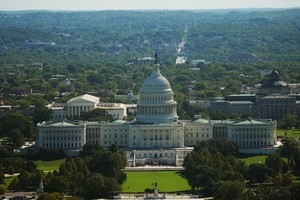
The US House of Representatives passed a resolution demanding that President Donald Trump halt the war with Iran or obtain congressional approval to continue it. The House approved the measure Tuesday (local time) by a vote of 220 to 204, according to The New York Times. It was the third time the Republican-controlled House has passed a resolution requiring Trump to halt military operations against Iran or secure congressional authorization. The resolution, however, is not legally binding. The measure, introduced by Rep. Seth Moulton, Democrat of Massachusetts, calls for the withdrawal of US forces from hostilities against Iran. It exempts troops needed to defend American or allied bases in the Middle East. Moulton argued that the war with Iran "has not only failed but has backfired." Seven Republican lawmakers joined Democrats in supporting the resolution. Some Republicans who had previously opposed limiting military operations against Iran switched their votes in favor. Rep. Nancy Mace of South Carolina, along with Iowa Reps. Mariannette Miller-Meeks and Zach Nunn, reversed their positions to back the measure. Nunn, a combat veteran, said congressional approval was needed to continue combat operations "when the window for negotiations has closed." Dissent over Trump's conduct of the war is also emerging among Republican senators, The New York Times reported. Sen. Thom Tillis, Republican of North Carolina, said Tuesday he would support measures requiring congressional approval for the Iran war. "It's time to start clarifying strategic objectives and checking results," Tillis said. "We haven't had that since the war began."
Sept. 16, 2026
-

Japan's Foreign Ministry faces discrimination backlash over Islamic-style costume in anti-terror drill
Ministry deleted post after outcry but drew further criticism for blaming contractor Japan's Foreign Ministry is facing accusations of promoting discrimination and religious bias after photos from an anti-terrorism drill showed an actor playing a perpetrator dressed in attire evoking Islamic clothing. The ministry deleted the post after criticism mounted, but its response — which appeared to shift blame onto a contractor — has drawn further condemnation over what critics say is a lack of human rights awareness within the government. According to the Asahi Shimbun on Wednesday, the Foreign Ministry posted photos on X, formerly Twitter, on Thursday showing a joint public-private anti-terrorism and anti-kidnapping drill. The photos sparked an online backlash after users noticed that the actor playing the perpetrator had an Arab-style cloth wrapped around his head, resembling the traditional scarves worn by Muslim men. Netizens responded with sharp criticism. "This promotes prejudice against a specific ethnicity and religion," some wrote, while others demanded the government "immediately stop inciting discrimination against particular groups." As the controversy spread, the ministry deleted the photos on Tuesday and issued a statement saying the costume was "not intended to evoke any particular ethnicity, region or religion" and that "such a misunderstanding was entirely unintentional." However, a ministry official sought to deflect responsibility by noting that the drill had been outsourced to a private contractor, which had selected the costumes. The official further argued that "one of the perpetrators was playing a Japanese person, so no specific group was being targeted" — a defense that itself drew criticism as an attempt to dodge accountability. The drill has been held annually since 2018, prompted by an attack by Islamic extremists in Dhaka, Bangladesh, in 2016 that killed 22 people, including seven Japanese nationals. Critics say the backlash is unlikely to subside soon, given that the ministry responsible for diplomacy carelessly linked terrorism to a specific religion — and then responded to the fallout with a series of inadequate excuses, raising broader questions about the government's sensitivity to human rights.
Sept. 16, 2026
-

SK hynix in talks with Intel on US memory chip production: Reuters
SK hynix is in talks with Intel on ways to produce memory chips in the United States, Reuters reported.
Sept. 16, 2026
-

Micron's Taiwan union demands 15% of operating profit as bonus
Other chipmaker unions also preparing for labor disputes over bonuses The Taiwan union of US chipmaker Micron Technology has demanded that 15 percent of the company's operating profit be distributed to employees as bonuses. Other chipmaker unions watching the dispute are also reportedly preparing for their own labor actions over bonus-related grievances. Taiwan media including the China Times reported Wednesday that Micron's Taiwan union said Tuesday that the compensation package the US headquarters announced Friday for Taiwan employees amounts to no more than 4 to 5 percent of operating profit. The dispute signals widening labor-management tensions over the demand for an operating-profit-linked bonus. The two major Micron Taiwan unions, along with the Taoyuan City Industrial Federation and the Electronics Industry Union, visited the American Chamber of Commerce in Taipei on Tuesday. Their calculations showed that the compensation plan disclosed by US headquarters — offering up to 68 months' worth of pay — amounts to no more than 4 to 5 percent of operating profit. The unions said a one-time cash bonus cannot resolve the underlying issue and demanded that 15 percent of Micron's total operating profit be allocated as employee bonuses. They said establishing an open, transparent and verifiable profit-sharing system is the only reasonable form of compensation. Wei Yu-ling, secretary-general of the Micron Taiwan union, said the headquarters' compensation plan falls at only 4 to 5 percent of operating profit — far below the levels at Samsung Electronics (10.5 percent) and SK hynix (10 percent) in South Korea. Lin Zhe-rui, chairman of the Micron Technology Taiwan Wafer Enterprise Union, criticized the company for using the 68-month figure to create the illusion that all employees would receive large payouts. He said the number is simply a sum of salary and bonus items calculated on a monthly base wage of around 30,000 New Taiwan dollars (about $1,280). He said the current incentive pay program, known as IPP, is not equivalent to the reform the union is seeking — a system that distributes 15 percent of operating profit. Lin said the company must provide answers to the union's demands at mediation sessions scheduled for Thursday and Monday, and urged management not to let employees' trust erode to the point of a strike. Earlier, Micron said it would pay Taiwan employees a cash bonus of 1 million New Taiwan dollars (about $42,500) along with a separate stock award. In a statement Friday, Micron headquarters said the combined cash and stock compensation for entry-level engineers in Taiwan would average 3.4 million New Taiwan dollars (about $145,000) for fiscal year 2026 (September 2025 through August 2026), Bloomberg reported. Micron's net profit jumped 15-fold year-on-year in the third quarter of fiscal year 2026 (March through May), and its share price has risen more than 500 percent over the past year. The company currently employs about 15,000 workers in Taiwan, its key production hub.
Sept. 16, 2026
-

Australian woman wins Chinese HYROX event despite mid-race accident — was a polarizing Beijing drink to blame?
An Australian athlete made headlines after winning a HYROX international competition in China despite suffering a mid-race bowel accident. HYROX is a sport that combines running with functional fitness exercises. Amid the attention, speculation has spread online that she may have developed an upset stomach after drinking douzhir — a fermented mung bean beverage — before the race. She is believed to have consumed the drink, though no causal link has been confirmed. According to Hong Kong's Sing Tao Daily and other outlets, top HYROX competitor Joanna Wietrzyk participated in a HYROX international event held in Beijing on Saturday and suffered a sudden bowel accident while performing burpee broad jumps — the fourth segment of the race — before going on to finish the course, Yonhap said. Wietrzyk won the women's pro division for ages 16 to 24, finishing with a time of 1 hour, 1 minute and 23 seconds. After footage of the incident spread on SNS, reactions to Wietrzyk were sharply divided and a hygiene controversy erupted. Some praised her for pushing through to the finish line under extremely difficult circumstances. Others argued that continuing the race in that condition could have posed a risk to fellow competitors. The criticism extended to the event organizers for not halting the race. As the controversy grew, HYROX apologized on Monday, saying it had begun reviewing its event management procedures. After the video went viral, online speculation mounted over what had caused the incident. Wietrzyk is said to have visited a hutong — one of Beijing's traditional back-alley neighborhoods — during her pre-competition stay and sampled douzhir there. The exact amount she drank could not be confirmed, but internet users pointed to the beverage as the likely cause of the accident. Sing Tao Daily also noted that the drink's distinctively sour smell can irritate the stomachs of foreigners unaccustomed to it. However, no causal link between douzhir and acute diarrhea has been established. Douzhir: a Beijing staple that divides even locals Nvidia CEO Jensen Huang also tried douzhir during a visit to Beijing last May. After taking a sip, Huang grimaced and asked, "What is this?" — drawing laughter from those around him. He later bought a different drink. Douzhir is one of Beijing's signature xiaochi — traditional street snacks — with a history spanning thousands of years. Made primarily from mung beans, it has a sour, slightly astringent flavor and an aroma sometimes compared to that of eggs. The drink is believed to date back to the Song Dynasty and is now commonly consumed as a breakfast substitute. While some Beijingers are devoted fans, douzhir is a polarizing beverage even among locals, owing to its distinctively sour character. Meanwhile, in HYROX competitions, participants alternate between running 1 kilometer and completing one functional fitness exercise, repeating the cycle eight times in total.
Sept. 16, 2026
-
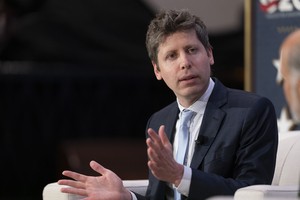
Altman calls unauthorized Hugging Face hack a 'wake-up call,' rules out IPO this year
OpenAI CEO Sam Altman described the unauthorized hacking of the company's AI models on Hugging Face as an event that "showed how powerful the models have become and served as a wake-up call." Speaking Tuesday (local time) at a conversation with Salesforce CEO Marc Benioff at the Blue Shield of California Theater at Yerba Buena Center for the Arts in San Francisco, Altman said the incident "reset not just our company but the entire industry." Altman said the industry must handle "alignment, oversight and security more rigorously than ever" and argued that it must be "willing to pace the speed of technological development so that these elements can always stay one step ahead of AI capabilities." "Alignment" refers to the practice of ensuring that AI systems do not develop goals or behaviors that diverge from human intent. He expressed reservations, however, about the direction of recent AI safety discourse, saying he was "disappointed by the frame in which the discussion is taking place" — particularly the debate over whether government regulation is necessary. Altman said he was "confident that our company and our industry have the ability to do this safely," signaling his view that government regulation is not a prerequisite for AI safety. 'Much work to do' on safety, alignment and cooperation Meanwhile, Altman had earlier said OpenAI would not pursue an initial public offering this year, citing concerns about AI safety. He made the remarks in an interview with Fortune magazine published Saturday (local time). "Given what is happening on the safety front, this is an ill-advised moment to go public," he said, adding, "We don't feel pressure to do it." When asked whether OpenAI was pushing its IPO plans from 2026 to 2027, Altman said, "It won't be 2026." "There is much work to do — solving the challenges needed for safety and alignment, and figuring out how the industry and government can work together," he said. OpenAI filed a confidential IPO application with the US Securities and Exchange Commission in June and has been moving through the listing process.
Sept. 16, 2026
-

DeepSeek developer likens Anthropic controlling AI to Hitler getting the atomic bomb
A key developer at Chinese AI startup DeepSeek has sharply criticized Anthropic, invoking Hitler and the atomic bomb in his remarks. DeepSeek developer Liu Shengyu wrote on his WeChat account on Sunday that "humanity has never hesitated, throughout history, to bring about its own destruction," adding that even if he were to quit or deliberately slow down model training, other companies' models would keep advancing and "ultimately crush me without mercy." "In a world where everyone is obsessed with destroying themselves, I have no choice but to join this brutal arms race," he wrote, according to Yonhap. Liu predicted that as AI advances, future society could head in one of two directions: a communist-style world where rising productivity dramatically improves living standards, or a dystopian one resembling the video game "Cyberpunk 2077." "In the latter scenario, a handful of tech companies will control most resources, and a tiny elite will approach something like 'mechanical ascension' through the most advanced AI and technology — while the vast majority of people will have access only to very weak AI," he wrote. "Social mobility will become increasingly difficult." He also said he still believes cutting-edge AI should be made available to everyone in an open and affordable way, and that he does not trust Anthropic or OpenAI to do so. Singling out Anthropic in particular, he wrote: "If Anthropic were to seize control of frontier AI or artificial general intelligence, to put it somewhat hyperbolically, the severity would be comparable to Hitler obtaining atomic bomb technology before the Allies." However, Liu clarified in a separate post the following day, Tuesday, that the views expressed were his personal opinions and did not represent the company's position. He also said the original intent of the post was not to portray Anthropic negatively. Anthropic pushes ahead with listing even as CEO calls for slowdown Meanwhile, Anthropic CEO Dario Amodei has recently warned of the potential for AI misuse and called for slowing the pace of model development to allow time for safety measures to be put in place. In a post on his personal blog Saturday (local time), Amodei said AI model performance improvements should be slowed, adding that "while progress will still feel fast, we need to use the time we've bought wisely." Despite those remarks, Anthropic is still likely to proceed with a listing this year, Axios reported, citing multiple sources. That prospect has drawn attention as a contrast to Amodei's personal blog post calling for a slower pace of AI model development. On social media, some voices have suggested that Anthropic should consider delaying its listing a little longer, given concerns about AI product liability — including security threats — and the possibility of tighter regulation. However, Anthropic's management appears to take the position that going public through an IPO would ensure greater transparency and help strengthen safety, Axios said. Anthropic is reportedly pursuing a NASDAQ listing, with the timing expected to fall in late October to early November, just before the Nov. 3 midterm elections.
Sept. 16, 2026
-

Parents let child urinate into cup at Beijing sushi restaurant, sparking backlash
A video of parents allowing their child to urinate into a cup at a well-known franchise restaurant in China, rather than taking him to the restroom, has sparked widespread criticism online. According to Chinese media including Xiandai Kuaibao, the incident took place on Sept. 3 at a Beijing branch of Sushiro, a popular Japanese conveyor-belt sushi franchise. A diner identified only as A, who was eating at a nearby table, noticed a woman at another table collecting her young son's urine in a disposable plastic cup. A filmed the scene on a mobile phone and posted the video to SNS. "I heard the child tell his parents he needed to use the bathroom, but the parents had him stand on the chair and urinated into a cup," A said. "It was so disgusting that I completely lost my appetite." A also complained that staff had walked past the table multiple times without intervening. "When I raised the issue, the staff only wiped down the table," A said. A said the incident made it impossible to continue eating, and the restaurant reportedly refunded the entire meal. As the video spread and the backlash grew, Sushiro's China headquarters said that after A raised the complaint, staff persuaded the parents to stop, moved them to another table, disinfected the original table and discarded all utensils and tableware used there. A later received an apology message from the child's parents, according to reports. A then filed a complaint with Beijing city authorities, arguing that restaurant staff had failed to stop the parents' behavior immediately. City authorities declined to accept the complaint, however, saying their investigation found no legal basis to classify the restaurant's failure to stop a customer's inappropriate behavior as a violation. Authorities explained that the child's parents had been sitting with their backs to the aisle, making their actions invisible from outside the table, and that partitions between seats had blocked staff from witnessing the incident. Chinese internet users reacted with a range of opinions. "The parents bear greater responsibility," wrote one commenter. Others argued the restaurant should seek damages from the family since it too suffered harm. Some took a more measured view: "Emergencies can happen when raising children, but that doesn't mean you should handle it where people are eating."
Sept. 16, 2026
-
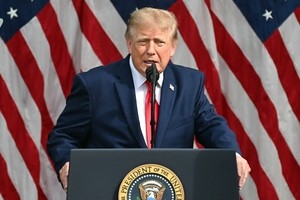
Democrats hold clear lead over Republicans ahead of midterms as Trump loses ground on economy: poll
NYT/Siena College poll 'Democratic socialism still widely unpopular' A daily Trump briefing for a world where one word from the US president can shake global markets. The Herald Business international desk — on the move from 5 a.m. — curates the essential Trump news affecting Wall Street and global asset markets, delivered in under a minute. Subscribe to the newsletter on The Herald Business website. A new poll shows Democrats holding a clear lead over Republicans in voter preference ahead of the US midterm elections in November. According to a survey released Tuesday (local time) by The New York Times and Siena College, 51 percent of respondents said they would likely vote for the Democratic candidate in their congressional district if the election were held today. Forty-three percent said they would likely vote for the Republican candidate. The poll was conducted Sept. 8-13 among 1,503 likely voters nationwide. With fewer than 50 days remaining until the November midterms, The New York Times interpreted the results as evidence that President Donald Trump has lost credibility on economic issues, handing Democrats a clear advantage over Republicans. Trump's overall approval rating stood at a weak 38 percent. Notably, the poll found for the first time in his second term that a majority — 52 percent — strongly disapprove of the president. More than half of respondents gave Trump negative marks on every major issue, including the economy, immigration and war. Voters said they trusted Democrats over Republicans not only on health care and war, but also on immigration and the economy — the very issues that powered Trump's victory in the 2024 presidential election. Even among Republican supporters, only 28 percent approved of how Trump has handled inflation and the cost of living. "With Trump remaining unpopular and cost-of-living frustrations persisting, Republican vulnerabilities have grown as Democrats push to reclaim both chambers of Congress," The New York Times said. However, the paper noted that while the polling points to a strong Democratic showing, a landslide is far from guaranteed. One key factor is gerrymandering — the redrawing of electoral boundaries to favor one party. Ahead of the midterms, several states have approved congressional district maps that benefit Republican candidates. Democrats also face an uphill battle reclaiming certain Senate seats in states such as Texas, Ohio, Alaska and Iowa, where Trump won by wide margins in the 2024 presidential election. The same poll found that roughly half of American voters hold an unfavorable view of democratic socialism, a movement that has gained significant momentum within the Democratic Party in recent months. Fifty-one percent of likely voters said they view socialism unfavorably, while 31 percent said they view it favorably. The poll did not provide respondents with a specific definition of "socialism" or "democratic socialism." The New York Times said the results show that while democratic socialists have scored a string of meaningful victories against the Democratic establishment, the movement remains unpopular with most Americans. Within the Democratic Party, there is growing concern that recent primary gains by democratic socialists could alienate moderate voters and cost the party seats in the midterms.
Sept. 16, 2026
-

Zuckerberg says AI safety is each lab's own responsibility, distancing himself from Amodei's call for coordination
'Use external evaluators,' Meta CEO says Meta CEO Mark Zuckerberg has weighed in on the debate over whether to slow down AI development, arguing that labs should each take individual responsibility for safety by drawing on external evaluations and advisory input. Zuckerberg posted on X, formerly Twitter, Wednesday that "every AI lab has the responsibility and incentive to move at whatever pace is needed to train their models safely, and the ability to take their own measures to ensure this." He said Meta had delayed the release of Muse by several months to focus on safety and security. "We did it as a normal part of our work simply because it was clearly the right thing to do for people and for us," he wrote. "I'm proud of the security foundation we've built." He added that engaging independent evaluators and advisers is industry best practice, noting that Meta Superintelligence Labs already does this across multiple areas "because it helps us produce better outcomes." He went on to say that other labs "can just do this too" and that the field as a whole would benefit from "a larger and more diverse ecosystem of evaluators." Zuckerberg also argued that devoting the overwhelming majority of compute to serving people — rather than racing toward recursive self-improvement — is "one of the best ways to develop this technology safely," adding that Meta has made that commitment and other labs can do the same. Zuckerberg was the last of the five heads of the top AI companies to publicly state his position on the AI slowdown debate. The discussion was set off on Saturday when Anthropic CEO Dario Amodei proposed that leading AI companies voluntarily coordinate on safety standards and moderate their development pace. OpenAI CEO Sam Altman, xAI CEO Elon Musk and Google DeepMind CEO Demis Hassabis all publicly endorsed the proposal. Zuckerberg's remarks — framing the issue as each lab taking responsibility through external evaluation rather than collective coordination — were widely read as a rejection of Amodei's proposal. The stance reaffirms the position he laid out in an essay titled "A Future for Everyone" published last month. In that essay, Zuckerberg wrote that "people won't want to use agents that act against their interests or don't do what they ask, so labs have a strong incentive to make their models more aligned." He acknowledged the argument that capability development should be slowed until safety catches up, but contended that "trust and alignment are becoming the most important capabilities that distinguish agents and models." He also noted that legal liability for model-related harms gives labs an additional incentive to prioritize safety.
Sept. 16, 2026
-
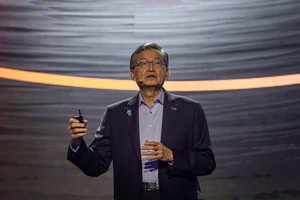
Intel CEO warns memory chip prices have surged 5 to 7 times, shortage to worsen next year
Tan reaffirms commitment to rebuilding Intel's foundry business Hiring of former SK hynix CEO raises hopes for competitiveness On AI slowdown debate: 'I don't overreact — but we must explain the downsides' Intel CEO Lip-Bu Tan warned that the global shortage of memory chips and the surge in their prices will worsen next year as AI adoption continues to accelerate. Speaking Tuesday (local time) at the AI Infrastructure Summit at the Santa Clara Convention Center in California, Tan said he had predicted early last year that memory would become a bottleneck — a call many dismissed at the time. "It turned out I was right," he said. "Next year, the situation will get even worse." Tan said memory production capacity remains severely constrained and prices have risen dramatically. "As you know, they've gone up five times, six times, seven times," he said. He added that cost pressure on companies has become acute, with memory now accounting for 70 to 80 percent of the total cost of low-end smartphones and laptops. The outlook reinforces expectations that South Korean memory chipmakers Samsung Electronics and SK hynix will continue to lead the AI market next year, buoyed by sustained strong demand. Beyond memory, Tan identified power, optical technology and thermal management as key areas where future bottlenecks are likely to emerge. Tan also shared results of the sweeping restructuring he has pursued since taking the helm. He said Intel had cut its workforce from more than 100,000 to around 78,000 and slashed its organizational hierarchy from 10 to 12 layers down to four or five. "That has significantly improved efficiency and accountability," he said. Tan expressed strong determination to rebuild Intel's foundry business. He outlined a plan to set expectations low and then beat them, proving the division's capabilities quarter by quarter through results. He said Intel would focus particularly on advanced packaging — a back-end process — and noted that the recent recruitment of Lee Seok-hee, a former Intel executive who went on to serve as CEO of SK hynix, as executive vice president would help strengthen the company's competitiveness. On the debate over an AI slowdown that has stirred controversy in Silicon Valley, Tan said some degree of moderation is natural. "I don't overreact to it," he said. He cautioned, however, that while enthusiasm for AI runs extremely high in Silicon Valley, strong anti-AI sentiment exists in other parts of the United States. "We need to keep building a positive narrative, but we also have to clearly explain the downsides to the public," he said.
Sept. 16, 2026
MOST READ
- 1KAIST develops high-performance bio-based adhesive using E. coli instead of petroleum
- 2Pope Leo XIV declines French honors and banquet, accepts only private meeting with Macron
- 3Daimler Truck unveils next-generation transport solutions at IAA 2026
- 4What was Rachmaninoff's performance fee? A 1928 price list tells all
- 5Samsung Biologics union's show of force backfires at the bargaining table
- 6APR says hair-loss treatment research published in international journal
-
WORLD

US warns of punishment for anyone enabling Iran's Strait of Hormuz toll scheme
-
INDUSTRY

Toyota union puts productivity first; Hyundai Motor union demands bigger share of profits
-
FINANCE

National Growth Fund to invest $531M in FuriosaAI, which rebuffed Meta's $800M takeover bid
-
INDUSTRY

Korea Shipowners' Association holds amateur baduk tournament for Maritime Day