Trump floats China venue for North Korea-US summit as logistics loom large
APEC host city Shenzhen is 60 hours away by private train; Beijing takes 20; border towns reachable same day
Beijing offers summit experience but would require Trump to travel from Shenzhen
No unusual activity detected yet at border crossings
In an era when a single word from Trump can shake global markets, keeping up with the flood of Trump news is no easy task. The Herald Business international desk, on the move from 5 a.m., curates everything from US market closing updates to the Trump headlines most likely to move global asset markets — delivered in a one-minute read. Subscribe at https://1day1trump.stibee.com/
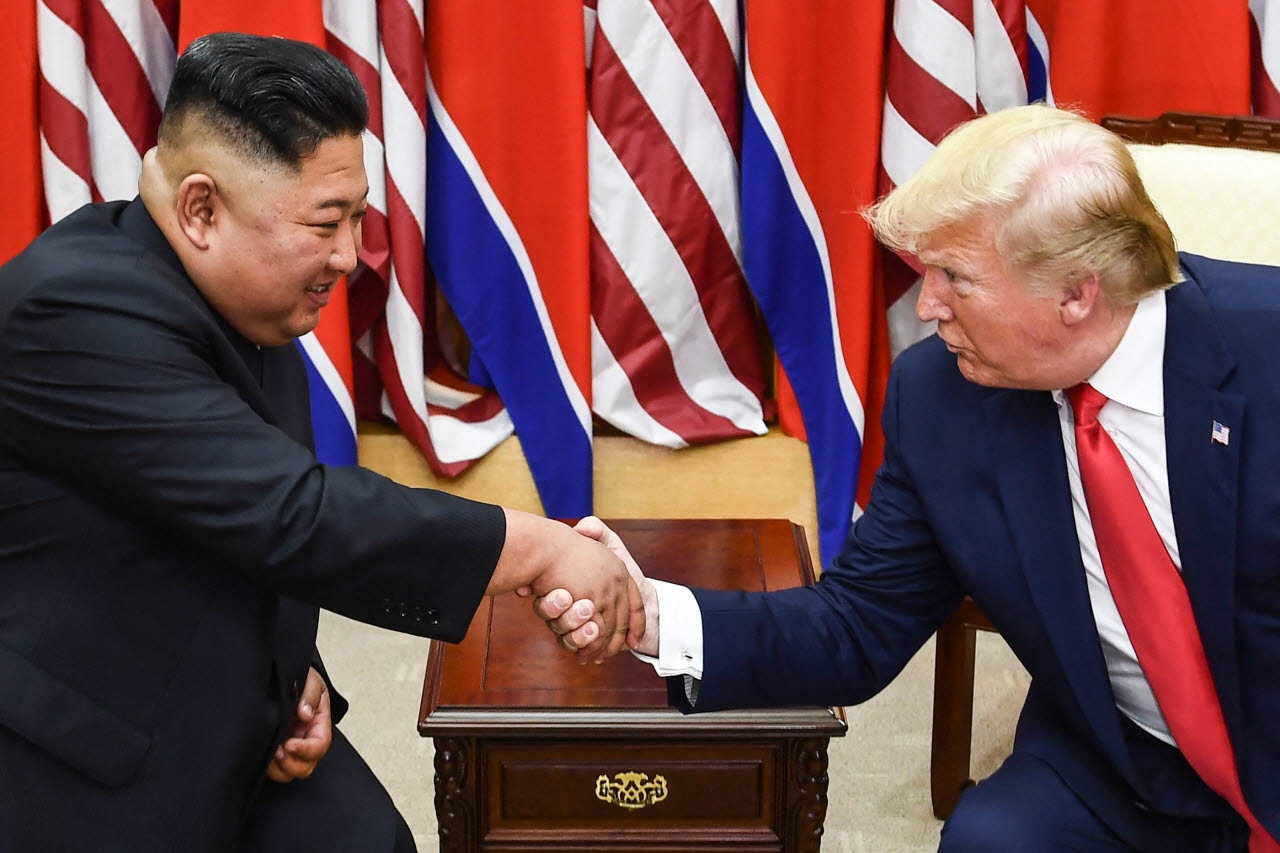
US President Donald Trump's surprise announcement that he is open to meeting North Korean leader Kim Jong-un in China has focused attention on where such a summit could take place. Three locations are in the running: Shenzhen, the southern Chinese city hosting the Asia-Pacific Economic Cooperation summit; the capital Beijing; and border cities in China's northeastern Liaoning Province near North Korea. However, Kim's longstanding preference for traveling by private train on long journeys has made the tight schedule and logistics a central variable in whether any meeting can happen at all.
Diplomatic sources said Tuesday that if a North Korea-US summit were to take place in China, the most-discussed venues are Shenzhen in Guangdong Province — where the APEC leaders' meeting runs Wednesday through Thursday — along with Beijing and the Liaoning cities of Dalian and Dandong.
Trump said Monday (local time) he would be willing to meet Kim in China. He is scheduled to arrive in Shenzhen on Wednesday for the APEC summit and separate meetings with Chinese and Russian leaders before returning to Washington on Thursday.
If Kim accepts the proposal, Shenzhen would be the most immediately attractive option, given that it is already drawing world leaders for APEC and is set to host a trilateral summit among the United States, China and Russia.
Analysts note that facilitating a North Korea-US summit would also serve China's interests, allowing Beijing to showcase its diplomatic influence as a mediator in international disputes — a factor that could prompt China to offer Kim extensive logistical support for a visit.
The biggest obstacle to a Shenzhen meeting, however, is travel time.
The distance from the border city of Dandong to Shenzhen stretches more than 3,300 kilometers. If Kim travels by his customary private train, the journey through China alone would take roughly 60 hours.
Kim made a comparable trip in February 2019, when he traveled by private train from Pyongyang to Dong Dang, Vietnam, for his summit with Trump in Hanoi — a journey of about 3,800 kilometers that took 66 hours, with roughly 3,500 kilometers of that crossing mainland China.
A repeat of that approach would make it nearly impossible to align Kim's arrival with Trump's brief stay in China.
Alternatives include China's high-speed rail network or air travel. If Kim took his private train to Sinuiju and then switched to a Chinese high-speed train at Dandong, the trip to Shenzhen could be cut to roughly 11 to 12 hours.
China set a precedent for such an arrangement in April, when it chartered a "Fuxing" high-speed train to carry Vietnamese Communist Party General Secretary To Lam about 2,400 kilometers from Beijing to Nanning — a journey that took 10 hours and 15 minutes.
Flying would cut the travel time further. The straight-line distance from Pyongyang to Shenzhen is about 2,100 kilometers, putting the flight time at roughly five hours. Routing through Beijing would add about 600 kilometers.
Kim could use his personal jet, known as Chamae 1, or China could provide an aircraft. Beijing did exactly that ahead of the 2018 Singapore summit, lending Kim an Air China Boeing 747.
Beijing is also a strong candidate. Kim has visited the capital multiple times, and both leaders have been there before.
Since taking power in 2012, Kim has visited China six times through this year — four of those trips to Beijing and two to the northeastern region.
He traveled by private train for his first visit to China in March 2018 and again for a January 2019 Beijing trip, but flew aboard Chamae 1 in June 2018.
The distance from Pyongyang to Beijing is about 1,300 kilometers — more than 20 hours by private train but only about two hours by air.
Beijing is seen as well-suited for a high-stakes summit, given Kim's familiarity with the city and China's established capacity to manage security and crowd control there. The drawback is that it would require Trump to travel from Shenzhen to Beijing alongside Chinese President Xi Jinping.
Northeastern border areas closer to North Korea cannot be ruled out either.
Dalian in Liaoning Province carries historical weight for the Kim family: Kim's grandfather, Kim Il-sung, and his father, Kim Jong-il, both visited the city. Kim himself spent a day at Bangchuidao in Dalian during his second trip to China in 2018.
Dandong sits directly across the border from the North Korean city of Sinuiju. Kim is believed to have made a day trip to Dandong last month, reportedly crossing the border by car after traveling to Sinuiju by private train.
Given the abruptness of Trump's proposal, some observers suggest Kim may prefer a border-area venue precisely because it minimizes travel demands.
North Korea has not yet issued any official response. No unusual activity has been detected in Dandong or other border areas that Kim would likely pass through if traveling overland.
"The border areas including Dandong are currently operating normally, but China has been through the procedures for Kim's visits multiple times and can move quickly to impose controls whenever needed," a source familiar with North Korea affairs said.
South Korean diplomatic authorities are also closely monitoring the possibility of a summit. Seoul conveyed its position to Beijing — through a South Korea-China foreign ministers' meeting held Friday through Saturday in Beijing, among other channels — that any outcome recognizing North Korea as a nuclear state or undermining efforts to build a peace regime on the Korean Peninsula would be unacceptable.
"Since Trump mentioned the possibility of a North Korea-US meeting, we have been closely watching land and air route movements in various locations," a diplomatic source said.
With North Korea yet to respond, whether a summit actually materializes will depend on Kim's decision to travel to China, the level of support Beijing is willing to provide, and whether Trump's schedule can be adjusted accordingly.
sjy@heraldcorp.com