KITA holds seminar for over 70 export-stage startups
Unauthorized trademark registration grows in China, ASEAN
Event covers FTA origin rules, overseas certification and R&D support
Korean exporters face a growing threat of having their brand names registered by third parties in China, ASEAN and other overseas markets before they can establish a local presence. Startups preparing to go global are being urged to secure trademark rights in target countries before launching sales, and to review free trade agreement requirements and certification procedures in advance.
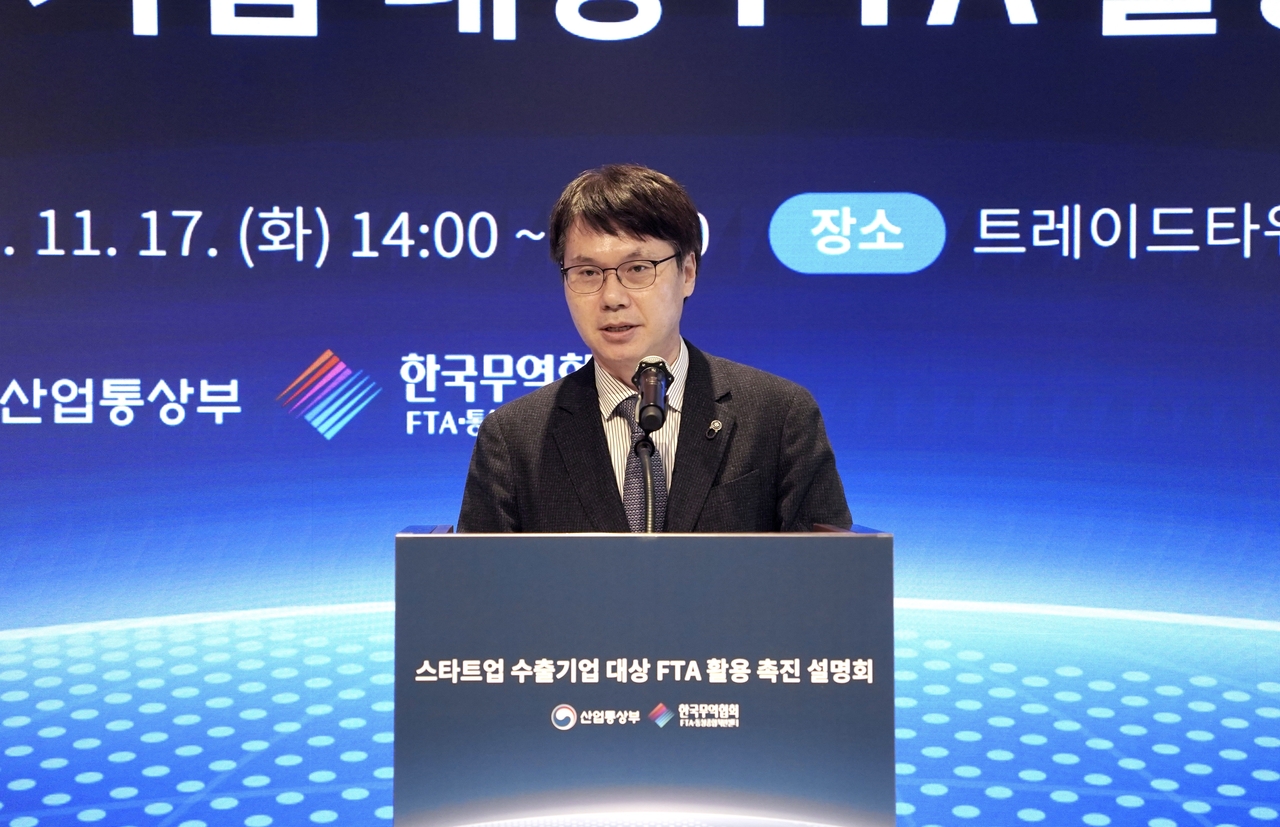
The Korea International Trade Association (KITA) held a seminar Tuesday at Trade Tower in Samseong-dong, Gangnam-gu, Seoul, drawing more than 70 representatives from startups that are preparing to export or have recently begun overseas sales.
The event was designed to help companies with limited international experience avoid common pitfalls in exporting, including tariff disputes, intellectual property issues and product certification requirements.
Organizers particularly highlighted how rising global recognition of Korean products has made trademark disputes an increasingly serious burden for exporters.
Lee Byeong-hui, a principal patent attorney at Dawool Patent & Law Firm who presented on intellectual property at the seminar, advised companies to check the trademark registration status in each target country and secure relevant rights before entering those markets.
"Unauthorized trademark squatting targeting K-brands is on the rise in China, ASEAN and elsewhere, so it is important to secure rights in export markets before going in," Lee said. "When you receive a warning letter or a demand for a settlement, do not respond hastily — first examine whether the other party's rights are valid and whether there has been any actual infringement."
When a third party registers a domestic company's brand as a trademark overseas, disputes can arise during local sales or retail operations. Registering a trademark in South Korea does not automatically confer the same rights in other countries, making country-by-country review essential before exporting.
Reducing tariff burdens through FTAs was another major topic at the seminar.
When exporting to countries that have signed FTAs with South Korea, companies can qualify for preferential tariff rates lower than standard duties by meeting certain rules of origin. However, they must confirm the correct product classification code and maintain the required origin documentation.
"Accurate HS code classification and meeting rules-of-origin criteria are the starting point for receiving FTA preferential tariffs," said Jang Seong-hun, a customs officer at KITA's FTA and Trade Support Center. "Origin certificates and supporting documents must be managed systematically on an ongoing basis to withstand post-shipment verification."
HS codes are internationally used numbers for classifying goods. Even for the same product, an incorrect classification can result in a different applicable tariff rate or origin standard, making accurate verification essential.
The seminar also stressed the need to navigate product certification regimes that vary by country, since applicable safety and technical standards can differ depending on a product's intended use and function.
"Even for the same product, the applicable regulations can differ depending on its intended use and function, so companies should first confirm their product classification and then prepare in advance according to each country's certification procedures and requirements," said Lee Sang-un, a senior researcher at Korea Testing Certification (KTC).
The seminar also covered government programs supporting technology development for startups.
Ham Jeong-u, a division head at the Korea Technology and Information Promotion Agency for SMEs (TIPA), said companies should actively take advantage of support programs suited to their stage of growth, given a significant increase in the small and medium-sized enterprise research and development budget this year.
"This year's SME R&D budget stands at 2.2 trillion won ($1.64 billion), up 45 percent from the previous year and the largest ever," Ham said. "Next year as well, please make active use of support programs tailored to your growth stage, such as export-oriented technology development and the Global TIPS program."
The seminar also introduced export support programs for startups and updates to certification regimes in major markets. After the presentations, one-on-one consultations were offered in the areas of FTAs, intellectual property and overseas certification so that participating companies could get answers to specific questions.
KITA said it plans to continue providing education and consulting to help early-stage exporters reduce the practical difficulties they encounter when entering overseas markets.
"This seminar is a meaningful occasion to help startups bring their innovative products to wider overseas markets at a time when we are on the verge of achieving $1 trillion in exports," said Choi Jeong-sik, head of KITA's FTA and Trade Support Center. "We will continue to provide practical information on everything from FTA utilization to intellectual property and overseas certification, and actively support startups in their push into global markets."
kwater@heraldcorp.com