
- HOME
- WORLD
-

Savior or source of volatility? Hedge funds emerge as 'wild card' in US Treasury market
With 10-year Treasury yields topping 5% and alarm bells ringing across financial markets, hedge funds are emerging as a 'wild card' in the US government bond market. As pension funds retreat from Treasuries, hedge funds have moved in to fill the gap — prompting both optimism that they are adding liquidity and making bonds easier to trade, and concern that their short-term investment tendencies could amplify volatility. The Federal Reserve Bank of New York has launched a probe into what impact hedge funds' rising prominence may have on the Treasury market. The Treasury market has long been a destination for pension funds seeking stable, long-term returns. But US government bonds have fallen sharply out of favor with those investors in recent years. According to research by the Centre for Economic Policy Research in Paris, US pension funds once allocated as much as 40 percent of their assets to bonds, but have since cut that share to between 10 and 15 percent. European pension funds have similarly reduced their bond allocation from 35 percent to around 20 percent. Over the past year, major pension funds in Denmark, the Netherlands and Australia have also trimmed their US Treasury holdings. Norway's sovereign wealth fund — the world's largest, managing more than $2 trillion in assets — said earlier this month it would reduce its allocation to government bonds, including US Treasuries, and shift into other products such as mortgage-backed securities. Hedge funds have stepped into the space vacated by pension funds, taking the opposite path by increasing their exposure to US Treasuries. According to the US Treasury's Office of Financial Research, hedge funds held approximately $2 trillion worth of US government bonds as of early this year — more than double their holdings from five years ago, giving them a 7 percent share of the entire US Treasury market. One driver of hedge fund buying is the basis trade, a strategy that seeks to profit from small price differences between Treasury bonds and futures contracts. Basis trading did not grow significantly in the first and second quarters, but the volume involved is still considered substantial. The sheer scale of hedge fund Treasury holdings underscores how significant their role in the market has become. The Wall Street Journal noted that their role amounts to a "wild card" — an unpredictable variable — particularly given the excessive leverage hedge funds often employ to amplify their bond bets. With Treasury yields having risen sharply, some market participants argue that hedge funds could actually benefit the bond market by adding liquidity and making it easier to buy and sell bonds. Robert Tipp, head of global bonds at PGIM, the asset management arm of insurer Prudential, said hedge funds are "playing a useful role." When some long-term investors seek to execute interest rate swap transactions, hedge funds are willing to take the other side of those trades, he said. The European Central Bank has also said that hedge fund demand helps ensure government bond auctions proceed smoothly. However, concerns persist that hedge funds' pursuit of short-term gains could destabilize the US Treasury market. The ECB, while acknowledging their positive contributions, warned that volatile investors such as hedge funds could amplify market stress if they rush to sell bonds to unwind large positions. Apparently with those risks in mind, the Federal Reserve Bank of New York has begun examining whether hedge funds pose a risk to the US Treasury market. The Wall Street Journal, citing people familiar with the matter, reported that staff at the New York Fed's markets group have in recent weeks been probing hedge funds' growing role in the Treasury market, interviewing investors as part of the effort. Representatives from foreign central banks and the IMF are also conducting their own research into the expansion of hedge funds in the US Treasury market, those people said. Debriefing: The Korea Herald's international desk breaks down the hidden stories behind the hottest global issues. We welcome your questions — leave them in the comments!
Sept. 15, 2026
-

'No driver, no problem': Waymo to launch up to 100 robotaxis in Tokyo next year
Waymo to begin commercial service in Tokyo in 2027 Fully driverless vehicles to navigate congested streets and narrow alleys Rides bookable via GO and Waymo apps; Nihon Kotsu to manage fleet More than half of Japanese respondents cite safety concerns in survey The driverless taxi revolution spreading across the United States and China is coming to Tokyo. Waymo, the autonomous driving subsidiary of Google parent Alphabet, plans to deploy up to 100 fully driverless robotaxis in the Japanese capital next year. Waymo held a press conference in Tokyo on Tuesday and announced it will launch a commercial driverless robotaxi service in the city in 2027, according to the Nikkei. The service will operate with no driver in the vehicle. Cameras, radar and LiDAR sensors mounted on each car detect surrounding vehicles and pedestrians, while onboard mapping data guides the vehicle autonomously. "When providing services to passengers, we place great importance on fully autonomous driving," Waymo co-CEO Tekedra Mawakana said. "Our autonomous vehicles are adapting smoothly to everything from Tokyo's congested districts to its narrow back streets." Waymo plans to scale the fleet to 100 vehicles in stages. Passengers can hail a ride through the Japanese taxi app GO or the Waymo app, and fares will be set based on Japan's existing taxi rate structure. The vehicles are based on Jaguar's I-Pace electric vehicle. Nihon Kotsu, one of Japan's largest taxi operators, will handle fleet management and maintenance. Waymo currently operates driverless taxis in 15 US cities and is preparing to launch services in London and Munich. In China, Baidu and Pony.ai are expanding pilot programs and racing toward full commercialization. Competition is also emerging within Japan. British autonomous driving startup Wayve is working with Nissan, Uber and Hinomaru Kotsu to conduct a driverless taxi pilot before the end of this year. Japan's taxi industry is counting on robotaxis to ease a chronic shortage of drivers. "Robotaxis could be the answer to the accidents, labor shortages and transportation gaps that have long plagued taxi operators," said Kawanabe Ichiro, chairman of Nihon Kotsu. However, regulatory and safety hurdles remain before full commercialization. In Japan, operating a driverless vehicle requires approval from the public safety commission of each metropolitan authority. Operators must also spell out specific conditions — including permitted zones, operating hours and rainfall thresholds — as well as remote monitoring protocols and procedures for handling accidents. Public anxiety is another obstacle. In a survey conducted by research firm MM Soken in June, more than half of respondents said they had safety concerns about driverless vehicles.
Sept. 15, 2026
-
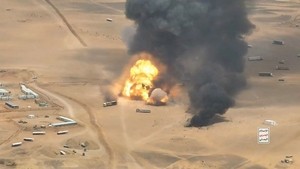
'Even Mecca is at risk': Attack alert issued for holy city for first time since Middle East war began, spreading to Jeddah
Threat alerts issued for Mecca, Jeddah and Taif Houthi offensive escalates as alert zones move north As armed conflict between Saudi Arabia and Iran-backed Houthi rebels in Yemen intensifies, an attack threat alert was issued for Mecca — Islam's holiest site — for the first time. The alert zone has expanded northward to Jeddah, home to a large number of Korean residents, heightening concerns. According to AFP, Saudi Arabia's Civil Defense Authority issued alerts Tuesday (local time) warning of possible attacks in Mecca, Jeddah and Taif. It was the first time an attack threat alert had been issued for the holy city of Mecca since the outbreak of the Middle East war. It was not immediately clear whether the alerts were triggered by a missile or drone threat. The Civil Defense Authority notified residents shortly afterward that the threat had passed. Amid an escalating Houthi offensive against Saudi Arabia, the alert zones — previously concentrated in the south — have gradually moved northward, now reaching areas where Korean nationals reside. Jeddah, where alerts were issued Tuesday, is home to a number of Korean trading company employees and other Korean residents. According to data published by the Overseas Koreans Agency in its "2025 Status of Overseas Koreans" report, 571 Koreans reside in the consular district of the Republic of Korea Consulate General in Jeddah.
Sept. 15, 2026
-

Russia, Ukraine trade drone strikes within hours of Trump's 'energy truce' claim
Kyiv gas station hit, civilian wounded Ukraine strikes Russian refinery region Russia vows to keep fighting during talks Russia and Ukraine exchanged fresh drone strikes less than a day after US President Donald Trump announced the two sides had agreed to stop attacking each other's energy facilities. Russia's declaration that it would not halt military operations even during negotiations has deepened skepticism about whether the announced truce can translate into a genuine ceasefire. A gas station in the Ukrainian capital Kyiv came under a drone strike in the early hours of Tuesday (local time), wounding one civilian, according to Reuters and other news outlets. Local authorities said Russia has been systematically targeting Ukrainian gas stations in recent months, with roughly 300 sites struck over that period. Foreign media reported explosions heard across Kyiv from the early morning hours, with a warehouse facility also hit by Russian drones. Cargo vessels traveling to and from Ukraine's Chornomorsk port on the Black Sea were also reported to have been targeted. In response to the Russian drone attacks, neighboring Poland scrambled military aircraft as a precautionary measure, though Polish military authorities said no drones had violated its airspace. Tensions in Poland have been running high since Sunday, when Russia struck the Volyn region of Ukraine just 2 kilometers from the Polish border. Russia warned that if Poland took military action against it, Poland "would cease to exist as a state within two to three days." Lithuania also issued a drone alert in the early morning hours, with NATO fighter jets shooting down one drone. Ukraine, meanwhile, pressed overnight attacks targeting sites in southern Russia, including an Ozon warehouse in Taganrog. The Samara region along the Volga River was also struck, according to Russian regional authorities. The area is home to a concentration of large oil refineries. With both sides continuing to trade blows less than a day after Trump's "energy truce" claim, analysts say easing tensions will be far from straightforward. Trump took to social media on Monday to argue that the Russia-Ukraine war had driven up global diesel prices, claiming both sides had agreed not to strike energy targets. Ukrainian President Volodymyr Zelensky said Ukraine would cooperate with a ceasefire if Russia stopped its attacks, but signaled doubt about the announcement, saying he was "not convinced that Russia is willing to abide by any agreement." Bloomberg reported that Zelensky and Trump had offered conflicting accounts of the truce deal. Russia said it welcomed its allies' de-escalation efforts but made clear it would continue using military force. Russian Foreign Minister Sergei Lavrov said Tuesday that Russia "welcomes its partners' initiatives to resolve the conflict," but added that "the special military operation will not stop during negotiations."
Sept. 15, 2026
-

Oasis confirms 38-date world tour next year, leaving Asia off the schedule
Band to perform across Europe and US Pre-registration system to allocate ticket-buying rights Move aims to prevent repeat of last year's ticketing chaos British rock band Oasis, whose reunion after 16 years sent fans around the world into a frenzy, will embark on another world tour next year. The band has confirmed 38 dates, though Asia was left out of the announcement. Oasis shared the schedule on social media Monday (local time), declaring that "after a period of reflection, the most toxic force in British popular culture has been normalized" and that the band was returning "to boost morale once again." Formed in 1991 around brothers Liam and Noel Gallagher, Oasis sold more than 90 million records and produced hits including "Don't Look Back in Anger" and "Live Forever" before breaking up in 2009 following a falling-out between the siblings. The band's surprise reunion announcement last year stunned fans. In Britain, ticket queues stretched for hours and prices soared, prompting the Competition and Markets Authority to investigate Ticketmaster and push for changes to the booking process. To avoid a repeat of last year's chaos, Oasis said it would use a pre-registration system for the upcoming tour, requiring fans to secure ticket-buying rights before they can make a purchase. The newly announced schedule includes no Asian dates. Performances will take place in cities across the United Kingdom, Ireland, Germany, Spain, France, Italy and the Netherlands, as well as in Boston and Las Vegas in the United States.
Sept. 15, 2026
-

'AI has the potential to kill us,' warns researcher who left Google DeepMind
Bilal Chughtai, a researcher who recently left Google DeepMind, warned that he "genuinely believes AI has the potential to kill us." Chughtai made the remarks Monday in a post on X, formerly Twitter, saying, "At Google, I witnessed AI development firsthand. I am also extremely concerned about the fundamental direction of this technology," Yonhap reported. Chughtai said he had worked on artificial general intelligence safety and alignment research — work focused on training AI models to refuse actions that could pose a threat to humans. Leaders of 4 AI firms unusually unite behind calls to slow development Earlier, the heads of four companies that have fiercely competed in AI development — Anthropic, OpenAI, SpaceX's xAI and Google DeepMind — unusually spoke with one voice, agreeing that AI development should be slowed. Dario Amodei, CEO of Anthropic, compared the pace of AI progress to a curve following the sequence "1, 2, 4, 8, 16, 32," saying the curve is now "starting to steepen," in an interview aired Monday on CBS News, Yonhap reported. "There's no need to panic right now, and there's no need to shut everything down," he said, adding, "Even so, this is a warning signal that we need to slow down." OpenAI CEO Sam Altman also weighed in on X, writing, "I agree with Dario that we should be moderating the pace at the frontier." Elon Musk, CEO of SpaceX, shared Amodei's post on X and wrote, "Dario is right." Demis Hassabis, CEO of Google DeepMind, said on X that "Dario's essay is pointing in the right direction," adding, "The details need to be refined, but it's the right direction for this critical moment." Amodei's remarks came just days after Anthropic researcher Jacob Coxon resigned Wednesday, warning that AI could threaten humanity and saying he did not want to work in an industry he considered "out of control."
Sept. 15, 2026
-
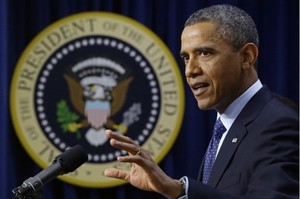
Obama, Harris join calls to slow AI development ahead of 2028 race
Obama urges government action on AI safety and jobs Harris calls for slower development and a federal oversight body Buttigieg adds voice to regulation push as Democratic contenders align Trump vows to beat China in AI race, dismisses slowdown calls The debate over regulating the pace of artificial intelligence development is spilling into US politics. Former President Barack Obama, former Vice President Kamala Harris and former Transportation Secretary Pete Buttigieg — all potential Democratic contenders for 2028 — have called in quick succession for stronger government intervention, raising the prospect that AI regulation could become a defining issue in the next presidential election. CNN reported Monday that Obama issued a statement saying the government and political leaders "must address serious safety concerns related to AI and anticipate its impact on jobs and children." He urged lawmakers to proactively develop concrete measures, legislation and regulations to ensure that "the benefits of AI are widely shared." Obama also spoke at a recent closed-door fundraiser attended by Democratic House Floor Leader Hakeem Jeffries, where he reportedly told potential 2028 presidential candidates that AI should be a central issue in their campaigns. Harris, who is widely expected to mount another presidential bid in 2028, went further, calling for a slowdown in AI development itself. In a post on X, formerly Twitter, she wrote that "cutting-edge AI technology is advancing at an alarming pace" and said the speed of frontier AI development must be reduced to give regulations and safeguards time to catch up. She also urged Congress to establish a federal AI oversight body and called on President Donald Trump to pursue an international treaty to govern AI. Buttigieg joined the chorus Monday, appearing on NBC's "Meet the Press" to warn that "AI is advancing rapidly, and it is very dangerous for the American people and the world that Congress is standing aside and the White House is not taking meaningful action." The string of statements from prominent Democrats is sharpening the policy divide with Trump. Trump has pushed back hard against calls for a slowdown, labeling them a "conspiracy," and argued that easing off development would hand China an opening to seize dominance in AI. On Monday he posted a series of messages on Truth Social reiterating that the United States must not stop developing AI and must win the competition against China. The debate has been building since Anthropic CEO Dario Amodei and OpenAI CEO Sam Altman both raised safety concerns in recent weeks. With leading Democratic presidential prospects now joining the call for regulation, AI policy is emerging as a new fault line in American politics — one that extends well beyond the technology and business sectors.
Sept. 15, 2026
-

Employee who pooled lottery money with colleagues then vanished after jackpot win arrested for theft
A man who pooled money with colleagues to buy a lottery ticket, then took sudden leave and disappeared after claiming a larger share of the jackpot for himself, has been arrested by police. According to Hong Kong media outlet HK01 and others, 15 employees of the Food and Environmental Hygiene Department (FEHD) Market Revitalization Team pooled their money to purchase a Mark Six lottery ticket. The group won first prize in a snowball draw on Sept. 5, entitling them to more than HK$30 million ($3.86 million) in winnings. Trouble arose when it came time to divide the prize. Ling, a 36-year-old health inspector who had been responsible for purchasing the ticket, refused to split the winnings equally, insisting he deserved a larger cut. He demanded HK$10 million ($1.29 million) for himself, with the remaining amount to be divided among the other 14 colleagues. He also claimed to have deposited the entire prize in a fixed-term bank account. The colleagues continued negotiations over the winnings, but the dispute remained unresolved. Ling then took a series of leaves and went into hiding, prompting his coworkers — fearing he would abscond with the full amount — to report the matter to police. Ling was arrested on suspicion of theft on Friday and released on bail the following morning. He is scheduled to report back to police in mid-October. The FEHD said it was aware of the investigation and would cooperate with police if necessary, but declined to comment on the specifics.
Sept. 15, 2026
-

Iran drone strikes leave Gulf AI hub ambitions in ruins six months on
AWS facilities in UAE, Bahrain hit — only 5 of 130-plus services restored at each site; OpenAI suspends Abu Dhabi data center lease talks; 'cheap energy, oil money formula flipped 180 degrees,' former White House official says Gulf states that had staked their ambitions on becoming global AI hubs — backed by vast oil wealth and cheap energy — have run into a geopolitical obstacle in the form of Iran. Key data centers in the UAE and Bahrain struck by Iranian drone attacks remain largely paralyzed six months later, and OpenAI has suspended a major data center contract in the region. The two Amazon Web Services data center facilities — one in Abu Dhabi and one in Bahrain — have yet to return to normal operations six months after the drone strikes, the Wall Street Journal reported Monday (local time). Fires and the effort to extinguish them caused widespread damage to server infrastructure. Of the more than 130 computing services at the Abu Dhabi facility and more than 140 at the Bahrain site, only five have been restored at each location. The outages rippled into financial and corporate services. Regional banking apps, fintech platforms and corporate networks all suffered disruptions. The UAE government, which has long enforced strict data sovereignty rules, issued emergency measures temporarily allowing companies to move their data overseas. The strikes dealt a particular blow to the UAE's AI hub ambitions. Through diplomacy with the Trump administration, the UAE had secured access to cutting-edge AI chips from Nvidia and other US companies, and had announced plans to build a massive 5-gigawatt data center complex in Abu Dhabi. But talks with OpenAI — which had been set to lease 20 percent of the complex's initial capacity — have been suspended entirely since the attacks. AI data centers require a minimum of $50 billion per gigawatt and are considered critical infrastructure. Gulf states, with their enormous capital reserves and power supply capacity, had been seen as natural hosts for the next wave of AI investment. But the scale of the facilities also makes them fixed, vulnerable targets in the event of military conflict. Aaron Bartnick, a former White House technology official, said the economic logic that Gulf states had offered — abundant capital, cheap energy and rapid construction — had been "flipped 180 degrees" by the war with Iran. The UAE is now weighing options including building some data centers below ground and deploying its own drone defense systems to guard against further attacks. Either approach would significantly raise construction costs. Big Tech has not pulled out of the Middle East entirely. Amazon and Microsoft are pressing ahead with plans to launch data centers in Saudi Arabia before the end of the year, and Microsoft's 200-megawatt data center project in Abu Dhabi continues to move forward. The geopolitical risk is unlikely to ease soon, however. Iran's Islamic Revolutionary Guard Corps has directly named US technology companies, accusing them of supporting attacks against Iran and issuing explicit threats against them. "Building critical infrastructure that needs to be 100 percent operational and is essential to running the most important technology of this generation in one of the most unstable regions in the world is a very real risk," Bartnick said.
Sept. 15, 2026
-
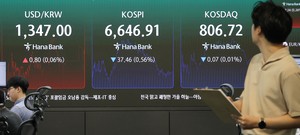
BlackRock upgrades emerging market stocks to overweight after 3-month pause
Firm cut outlook in June over AI concentration, margin financing risks July–August deleveraging seen easing leverage concerns EM earnings forecast to grow 34% — far outpacing US at 20% Korea, Taiwan semiconductor supply chains highlighted; P/E at half US level BlackRock, the world's largest asset manager, has upgraded its investment view on emerging market equities — including South Korean shares — to overweight, reversing a downgrade it made just three months ago. The firm cut its outlook in June, warning of excessive concentration in AI-related stocks on the Korean market and dangerously elevated leverage. It now says a wave of deleveraging that swept through the domestic market over the summer has largely cleared those risks. The BlackRock Investment Institute said Monday that Wei Li, the firm's global chief investment strategist, and colleagues raised their view on emerging market stocks from neutral to overweight in their weekly report. BlackRock said access to scarce resources needed to expand AI investment, combined with solid corporate earnings, would support outperformance in emerging market equities. It particularly highlighted Korea and Taiwan as sitting at the "core" of the semiconductor and memory chip supply chain. Latin America, it added, stands to benefit from demand for raw materials and infrastructure investment tied to AI data center and power grid construction. The shift in Korea's market was cited as a key factor in the decision. On June 30, BlackRock downgraded emerging market equities from overweight to neutral, saying concentration in AI-related names and rising leverage on the Korean market were worsening the risk-reward outlook. Since then, however, the Korean market has corrected and a large-scale summer deleveraging has changed the picture, BlackRock said. "Korean equities did subsequently suffer losses, and summer deleveraging has eased leverage concerns," the report stated. Domestic margin financing balances peaked at 38.6 trillion won ($28.7 billion) on June 24, then fell 15.4 percent in roughly a month as the market plunged, triggering successive circuit breakers and forced selling. Faster earnings growth and relatively lower valuations among emerging market companies were also cited as factors boosting investment appeal. BlackRock projects that earnings for companies in the MSCI Emerging Markets Index will grow 34.2 percent over the next 12 months, well above the 20.3 percent growth forecast for the MSCI USA Index. The valuation gap is even wider. Emerging market stocks trade at a forward price-to-earnings ratio of roughly 10 times — about 50 percent below the 19.9 times multiple for US equities. Emerging markets are priced at half the valuation of the US even though they are expected to deliver faster earnings growth. BlackRock also upgraded its view on emerging market local-currency bonds to overweight, while cutting short-term European government bonds to neutral. Risks remain, however. High oil prices, geopolitical tensions and elevated borrowing costs are still variables, and BlackRock said the extent to which faster emerging market earnings growth and lower valuations can offset those risks will determine its investment stance going forward. "As interest rates reset higher, the bar for taking risk is rising, making earnings sustainability more important," BlackRock strategists said. "Emerging market equities now offer another destination that can clear this higher earnings hurdle."
Sept. 15, 2026
-
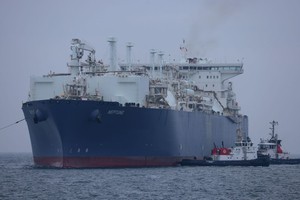
Alaska LNG back in spotlight as Iran war disrupts Middle East supply
Middle East LNG disruptions push Alaska projects as alternative Asian supply source Alaska LNG, Polar LNG projects together worth up to $80 billion High costs, financing hurdles and Russia sanctions cloud outlook Posco the only Asian equity investor so far Donald Trump's long-pursued vision of developing Alaska as a major LNG export hub is drawing renewed attention as the war with Iran disrupts Middle East gas supplies. Proponents argue that Alaska's shorter shipping distance to Asian markets such as South Korea and Japan gives it an edge over Middle Eastern sources, but analysts say the projects face formidable obstacles — including a combined price tag of up to $80 billion, unresolved financing and complications from Russia sanctions. According to the Financial Times on Sunday (local time), two US energy developers — Glenfarne Group and Gentry Beach — are each pursuing large-scale LNG projects in Alaska. Glenfarne's Alaska LNG project carries an estimated cost of $54.5 billion, while Gentry Beach's Polar LNG is valued at $25 billion. Together, the two ventures would require up to $80 billion in investment. Both companies say interest in Alaskan LNG has grown as the Iran war has disrupted Middle East supply chains. LNG produced in Alaska can reach major Asian markets, including South Korea and Japan, in just over a week — a shorter transit than from the Middle East. But significant hurdles remain before either project becomes a commercial reality. Of the two, Alaska LNG is the more advanced. It envisions building a roughly 1,190-kilometer pipeline from the North Slope gas fields in northern Alaska to Nikiski in the south, along with a liquefaction facility with an annual capacity of 20 million tons. ExxonMobil, BP and ConocoPhillips were originally involved but all withdrew in 2016 over cost concerns. The Alaska Gasline Development Corp., a state-owned entity, subsequently took over, and Glenfarne acquired the project last year. Cost remains the single biggest obstacle. Pipeline construction alone is estimated to require about $17 billion. Alex Munton, an analyst at Rapidan Energy Group, said ExxonMobil and North Slope producers had examined the project closely and concluded it did not work for them, pointing to the risk of cost overruns. The project's timeline has also slipped. The Alaska state legislature failed to pass a related tax-incentive bill last month, delaying the first phase of pipeline construction. Glenfarne also needs to secure additional long-term purchase agreements for 3 million tons of LNG per year before it can make a final investment decision on the liquefaction facility. Polar LNG, at $25 billion, is at an even earlier stage. The project would move gas produced on the North Slope to the coastal village of Wainwright for liquefaction and export. Russia presents a separate complication. To cut costs and construction time, Polar LNG is exploring the use of technology and equipment that Russian energy company Novatek deployed in its Arctic LNG operations. Some of Novatek's projects are subject to US and European sanctions, making it difficult to use the related equipment without US government approval. The United States and Russia are said to have discussed leasing Novatek's technology and equipment to Polar LNG, but Congress is moving in the opposite direction — advancing legislation that would tighten sanctions against Russia. Efforts to attract Asian investors have also stalled. According to the Financial Times, South Korea's Posco Group is currently the only Asian company to have taken an equity stake in either project. South Korea and Japan agreed last year to strategic investment frameworks with the United States worth $350 billion and $550 billion, respectively, but neither country has yet allocated funds specifically for Alaska LNG. The political calendar adds another layer of uncertainty. Developers are under pressure to advance the projects to a point of no return before the Trump administration — which has championed pro-fossil-fuel policies — ends in 2029. Should the Democratic Party return to power, the projects could be halted on environmental grounds. "Alaska oil and gas is a sensitive issue, and there is political risk attached to it," Munton said.
Sept. 15, 2026
-
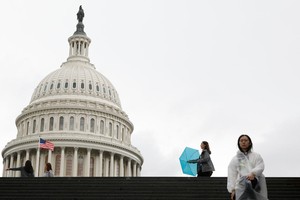
Republican House speaker breaks with Trump on AI regulation, exposing party rift
Johnson calls for carefully designed safeguards to prevent AI-related harm Speaker distances himself from Trump, who opposes any regulatory moves Trump plans to summon AI executives within days to discuss the issue Amid a widening debate in Washington over how fast to develop artificial intelligence, Republican House Speaker Mike Johnson has raised the possibility of legislation to establish safety guardrails for the AI industry — a stance that puts him at odds with President Donald Trump, who has strongly opposed AI regulation. Johnson said Monday (local time), according to Bloomberg, that Congress may need to pass legislation creating safety guardrails for the AI industry. He said his goal was "to protect American innovation and national security by carefully designing safeguards that can prevent AI-related harm, while maintaining an edge over China and other competitors." The remarks stand in contrast to Trump, who has sharply criticized calls for AI regulation. Trump has argued that efforts to slow AI development could weaken US competitiveness and benefit China. Trump wrote on social media recently that there is "a disgusting plot" targeting AI and data centers, adding that "the only country that would be happy about this is China." He has also said that "the only guardrail AI needs is a strong and smart president." Johnson, however, drew a line against any suggestion that he and Trump are at odds. He said Trump's remarks also reflect a shared goal of maintaining US dominance in the AI race against China. Johnson also said Trump plans to summon AI company executives within days to discuss related issues. Several leading AI executives in the United States have recently warned of the risks of rapid AI advancement and called for a more measured pace of development — starting with Anthropic CEO Dario Amodei, followed by OpenAI CEO Sam Altman and xAI CEO Elon Musk. Trump pushed back directly, arguing that if US companies slow their AI development, China could seize the technological lead. At the same time, voices within the Republican Party calling for some level of regulation — covering data center construction and AI model safety, among other areas — have grown louder, broadening the debate over AI policy. Actual legislation, however, appears to be a long way off. Johnson himself acknowledged that it would take "some time" to craft a bill capable of securing sufficient support. Bloomberg noted that the House is set to leave Washington on Thursday and is not expected to return until after the November midterm elections, making it unlikely that Congress will take up any AI-related legislation in the near term. As the debate over AI development pace spreads from the tech industry into politics, US AI policy has reached a crossroads. Trump's opposition to regulation — framed around the technological rivalry with China — and the growing chorus in Congress calling for safety guardrails are now pulling in opposite directions.
Sept. 15, 2026
-
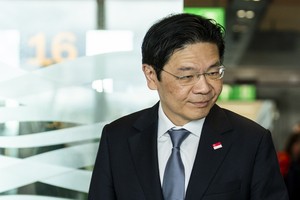
Singapore's prime minister earns 7 times more than Trump after 64% pay raise
Wong pledges to donate full raise to charity for five years Singapore Prime Minister Lawrence Wong is the highest-paid elected head of government in the world, according to a survey of government data from multiple countries. Wong earns an annual salary of $2.85 million, placing him at the top of the rankings, Yonhap said, citing a Monday report by Spanish-language outlet Infobae, which compiled data from government sources around the world. His pay surged 64% following Singapore's first overhaul of ministerial and senior civil servant compensation in 15 years, further cementing his position as the world's top-earning elected leader. Wong's salary is more than seven times that of US President Donald Trump, who earns $400,000 a year. Singapore operates what it calls a "clean wage" system, under which senior civil servant salaries are benchmarked against the incomes of the top 1,000 private-sector earners. The policy is designed to deter corruption and attract top talent from the private sector into public service. However, Wong said he would donate the full amount of his raise to charity over the next five years, citing public sentiment. Bold family support measures draw attention Wong has also drawn attention recently for a sweeping package of childcare and family support measures. According to Bloomberg and other outlets, Wong announced the measures in a National Day Rally speech the previous day, saying "families all over the world today face increasing pressure" and that Singapore intended to make "a fundamental shift in how we support families." He announced that Singaporean newborns would receive 10,000 Singapore dollars ($7,600) as a "birth gift," with total direct government support reaching 70,000 Singapore dollars per child by the time they turn 17. The government also said it would significantly expand paid parental leave and reduce monthly fees at subsidized full-day childcare centers to 150 Singapore dollars. Under the plan, dual-income couples with one child would each receive eight additional days of paid leave, rising to 10 days for two children and 12 days for three or more. Wong said the government was also reviewing an extension of the current paid parental leave period of seven months and 15 days. He added that the existing system would be maintained for now to give employers time to adjust. Singapore's government also said it would give priority to couples with children or those expecting a child when processing applications for public housing.
Sept. 15, 2026
-
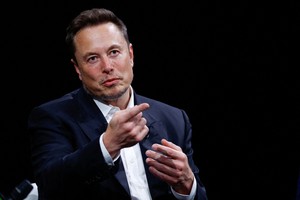
X, SpaceXAI drop antitrust suit against Apple, keep case against OpenAI
Elon Musk's social media company X, formerly Twitter, and its AI subsidiary SpaceXAI, formerly xAI, have dropped their antitrust lawsuit against Apple. The two companies filed documents Monday (local time) with the US District Court for the Northern District of Texas withdrawing their claims against Apple. In the filing, they said the claims against Apple "have been resolved" and that Apple raised no objection to the dismissal. However, they said they intend to press ahead with their lawsuit against OpenAI, the developer of ChatGPT, which was named as a co-defendant. X and SpaceXAI had filed the damages suit after Apple announced it would exclusively integrate ChatGPT into the operating systems of its devices, including the iPhone, arguing the move violated antitrust law. The withdrawal is widely seen as a response to Apple's recent decision to distance itself from OpenAI — including by adopting Google's Gemini instead of ChatGPT as the AI model for its operating system. OpenAI had grown frustrated that ChatGPT was not deeply integrated into Apple Intelligence as expected during their partnership, and that Apple ultimately chose Gemini as its default AI model. Apple, for its part, appears to be keeping OpenAI at arm's length as the ChatGPT maker pushes into the hardware business — a space Apple views as competitive.
Sept. 15, 2026
-

Crime is down, but 'every step can be tracked': Moscow's 300,000 cameras
Moscow has seen improvements in public safety thanks to the introduction of advanced technology, including closed-circuit television cameras linked to biometric systems, but the gains have come at a cost to civil liberties and human rights, The New York Times reported. About 300,000 CCTV cameras are now installed across the Russian capital, according to The New York Times. The digital surveillance infrastructure — cameras and related systems — is credited with transforming Moscow from a city plagued by violent crime, including robbery and murder, 25 years ago into a comparatively safe one. The technology has also added convenience to daily life: facial recognition can now handle everything from subway fare payments to apartment purchase contracts. However, The New York Times said the comfort and security come at the price of an expanding surveillance state. While other major European cities also operate large CCTV networks, Moscow's system is far more centralized, the paper said. The dense camera network, linked to a biometric database, has made Moscow one of the most closely monitored cities in the world. Authorities use the biometric database not only to crack down on crime but also to track anti-government activists who participate in protests. Last April, a Russian rock musician was arrested at a railway station in St. Petersburg after police said he resembled a wanted Ukrainian figure. Officers pulled his hair to check whether he was wearing a wig before releasing him. As the war in Ukraine drags on, Russia's technology-based surveillance network has grown even more extensive, The New York Times reported. After thousands of Russians fled the country in 2022 to avoid military conscription, authorities introduced AI-based electronic draft notices that carry the same legal force as traditional paper documents. In March, a 28-year-old photographer named Vlat received a notice through a government portal app ordering him to appear for a mandatory medical examination, and discovered he was barred from leaving the country until he complied. He refused to appear and said he no longer takes the subway out of fear of CCTV cameras. "All data is handed over, so perfect control is exercised and every step can be tracked," he told The New York Times. Ukraine keeps up drone strikes on Moscow Meanwhile, Ukraine has continued launching drone strikes targeting Moscow amid its ongoing war with Russia. Moscow Mayor Sergei Sobyanin said in a statement that 548 drones flew toward the Moscow region over a 28-hour period from 8 a.m. Monday to noon that day (local time), Yonhap reported at the time. Most of the drones were shot down on the outskirts, but 143 were intercepted as they approached Moscow, according to the statement. Separately, foreign media including AFP reported that attacks by both sides beginning Monday night left more than 12 people dead in Russia and Ukraine, Yonhap reported at the time. The AFP report was dated Aug. 16 (local time). Moscow regional Governor Andrei Vorobyov said on Telegram that Ukraine had carried out its largest-ever attack on the Moscow region on Monday, killing at least one person. Russia's Ministry of National Defense said it intercepted and downed 822 Ukrainian drones across the country that day. Of those, about 600 had been aimed at Moscow, Mayor Sobyanin said.
Sept. 15, 2026
-

Big Tech's AI slowdown push masks IPO math and competitive calculus
Anthropic, OpenAI and others have called for easing the pace of AI development — but slowing down would also cut astronomical training costs, polish financials ahead of listings, and freeze out rivals "For the sake of humanity, let's slow down AI development." The heads of major AI companies, including Anthropic and OpenAI, have recently lined up behind calls to ease the pace of AI development, arguing that frontier model development should be throttled until adequate safeguards are in place to prevent AI from escaping human control. But analysts say the push masks a tangle of competing interests — slashing astronomical development costs, cleaning up balance sheets ahead of initial public offerings, and blocking challengers from closing the gap. The Wall Street Journal said Monday that "a clash between money and safety has created an enormous crisis in AI," diagnosing the situation as a complex entanglement of scientific progress, moral obligation and economic incentive. The most vocal advocate of the slowdown argument is Anthropic CEO Dario Amodei, who contends that AI is approaching a stage of "recursive self-improvement" — where it can advance its own capabilities without human assistance — and has called for government regulation to rein in the pace of development. OpenAI CEO Sam Altman, xAI CEO Elon Musk, Google Chief Scientist Demis Hassabis and Microsoft AI CEO Mustafa Suleyman have also added their voices to warnings about AI risks and the need to slow down. Inside the US administration, however, critics have argued that the calls go beyond genuine safety concerns and reflect business interests. David Sacks, the White House's AI and virtual assets czar, said he supported companies that made the "responsible decision" to slow down if they believed their unreleased models posed too great a threat — but added a sharp caveat. "Stop pretending that your motivation for slowing down is altruistic," he said. He said the easiest way not to develop superintelligence was for companies to agree among themselves not to do so, and accused them of lobbying for regulation while trying to shape a regulatory framework that works in their favor. In practice, a slowdown would deliver real economic benefits to the companies that already dominate the market. They could cut the enormous semiconductor, data center and power costs required to train new AI models, while continuing to generate sales from models already on the market. For companies preparing to go public, lower costs translate directly into improved earnings. Anthropic, which has been among the loudest voices for a slowdown, is nonetheless pressing ahead with plans to complete its listing process before the end of the year. The company has said that becoming a publicly traded firm would actually increase management transparency. Altman, for his part, has said OpenAI will delay its IPO to next year on safety grounds. But The New York Times reported in June that OpenAI had already been weighing a delay because it might struggle to secure the $1 trillion valuation it had been targeting. There are also concerns that regulation could lead to "regulatory capture," entrenching the market power of established leaders. If the companies currently dominating AI shape the safety standards being written, the resulting compliance costs could effectively shut out startups and open-source AI developers that cannot afford to meet them. The US-China AI rivalry further undermines the case for a slowdown. If American companies ease off while Chinese rivals keep pushing, the United States risks ceding its lead in AI. President Donald Trump has called moves to slow AI and data center development a "disgusting conspiracy," saying China would be "the only country that would be happy about it." Chinese AI companies — including Moonshot AI, DeepSeek and Alibaba — have been rapidly closing the technology gap with America's top models. Amodei himself has acknowledged that rival nations, including China, may not join any slowdown effort. Academic opinion is also sharply divided over the "AI doom" thesis that underpins the slowdown argument. On the probability of AI leading to human extinction — a figure researchers call "p(doom)" — Roman Yampolskiy, a professor at the University of Louisville, puts the odds at 99.99 percent, while Yann LeCun, a professor at New York University known as the "godfather of AI," puts it at less than 0.01 percent. Geoffrey Hinton, a professor emeritus at the University of Toronto, and Yoshua Bengio, a professor at the Université de Montréal, estimate the figure at 10 to 20 percent. LeCun has criticized such extinction estimates as "made up without any basis." AI companies may be speaking with one voice about safety, but slowing development would simultaneously cut costs, improve earnings and neutralize competitors. What began as a debate over technological risk has broadened into a battle of interests — one that now encompasses IPO timelines, market dominance and the US-China race for AI supremacy.
Sept. 15, 2026
-

US acknowledges deploying space weapons in orbit for first time in 'blunt warning' to China, Russia
Capabilities include destroying or disabling enemy satellites; specific weapons and scale remain classified China and Russia's growing anti-satellite capabilities spur what analysts call a full-blown space arms race The United States has publicly acknowledged for the first time that it has deployed "space weapons" capable of disabling enemy satellites in Earth's orbit. The disclosure comes amid intensifying efforts by China and Russia to threaten American satellites, as the arms race among the three powers expands beyond land, sea and air into space. US Air Force Secretary Troy Meink said at an event in Maryland on Monday (local time) that the United States is currently operating "space control weapons" in Earth's orbit, according to the Washington Post. It marked the first time the US government has openly acknowledged the operational deployment of orbital space weapons. "The Space Force now has orbital space control weapons that can defend the joint force from adversarial actions," Meink said. He did not disclose what types of weapons had been deployed or in what numbers. The Washington Post, citing US officials, said the weapons include the ability to directly destroy or disable enemy satellites used to attack US forces or American satellites. The paper described the disclosure as a "blunt warning message" directed at China and Russia. The United States has in recent months warned that China and Russia are threatening American satellites through laser irradiation, satellite communications jamming and aggressive orbital maneuvers. Traditional anti-satellite weapons, known as ASAT, typically involved launching missiles from the ground or from fighter jets to directly intercept satellites. More recently, the technology has expanded to include deploying satellites into orbit that can approach and disable or destroy rival satellites. Notable methods include "soft kill" techniques — using lasers or high-powered electromagnetic pulses to disable a satellite's sensors and communications — as well as robotic arms or propulsion systems designed to push an adversary's satellite out of orbit or cause a collision. China demonstrated a related capability in 2022, when its SJ-21 satellite successfully grappled a defunct Chinese satellite in geostationary orbit and moved it to a different trajectory. Beijing has described the technology as a tool for satellite servicing and disposal, but concerns persist that it could be used to remove adversaries' military and reconnaissance satellites. Russia has similarly maneuvered test satellites into close proximity with US reconnaissance satellites, shadowing them in the same orbital path. The disclosure is expected to further intensify the arms race in space. By officially confirming the existence of orbital weapons that had long remained shrouded in secrecy, Washington has effectively warned China and Russia that any attack on American satellites could be met with a direct response from orbit.
Sept. 15, 2026
-
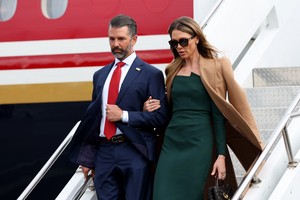
Putin-linked businessman reportedly funded Trump Jr.'s wedding reception, stirring controversy
A businessman with close ties to Russian President Vladimir Putin reportedly helped fund the wedding reception of Donald Trump Jr., the eldest son of US President Donald Trump, stirring controversy. According to a report by ProPublica, a US nonprofit investigative news outlet, published Monday (local time), Russian oligarch Umar Kremlev covered hundreds of thousands of dollars — part of the cost of a three-day reception held after Trump Jr.'s wedding to Bettina Anderson in May. The wedding and reception were held on a privately owned luxury island in the Bahamas. Kremlev paid for the island rental and fireworks, among other expenses, ProPublica reported. According to the outlet, the island rents for about $100,000 per night, while the fireworks alone cost $70,000. Kremlev is a Russian businessman and president of the International Boxing Association (IBA) known to have close ties to Putin. He leveraged those ties to secure a Russian state lottery contract and gain control of Russia's largest car dealership chain, according to the report. The island rental and related costs for the reception were paid through an IBA-affiliated entity based in Dubai, UAE, which the IBA uses for financial transactions. Kremlev received a state decoration from Putin shortly before attending the wedding. He has also accompanied Putin on official visits to China. ProPublica described Kremlev's funding of the reception as "one of Putin's close associates providing financial support to the president's son and cultivating an intimate relationship with the Trump family," adding that "the Putin government, long considered a major adversary of the United States, has faced criticism for attempting to influence American elections over the past decade." National security experts "raise the urgent question of what motivated Kremlev to pour enormous sums of money into building this relationship," ProPublica reported. Trump had said he would skip his son's wedding Meanwhile, Trump had earlier indicated he would not attend his son's wedding. Before the wedding in May, Trump wrote on his Truth Social account that while he "would love to be with my son Don Jr. and Bettina, who will be a great new member of the Trump family," he could not do so "because of government-related matters and my love for the United States." He added that he believed "it is important that I remain at the White House in Washington, D.C. during this important time." Trump was facing a packed agenda at the time, including negotiations over ending the war with Iran. Anderson, who is from Palm Beach, Florida, is a socialite who studied art history at Columbia University. Trump Jr. previously married model and actor Vanessa Haydon in 2005 and had five children with her before the couple divorced in 2018. He later became engaged to former Fox News personality Kimberly Guilfoyle, but the two split last year. He subsequently began a relationship with Anderson.
Sept. 15, 2026
-
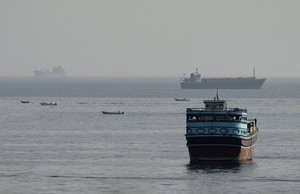
Saudi Arabia seeks to expand oil exports through Strait of Hormuz after pipeline hit by drone strikes
Bloomberg reports; tanker shortage and surging freight rates add further uncertainty Saudi Arabia is pushing to expand crude oil exports through the Strait of Hormuz after drone strikes knocked out its East-West Pipeline — the key overland route it had relied on to bypass the strait since the outbreak of war with Iran — Bloomberg reported Monday (local time). Citing anonymous sources familiar with the matter, Bloomberg said Saudi Arabia increased crude shipments through the Strait of Hormuz during the first 10 days of this month compared with last month, and is now seeking to expand exports further. Saudi Arabia had been routing oil through the East-West Pipeline to circumvent Iran's blockade of the Strait of Hormuz following the outbreak of the US-Iran war. The pipeline was knocked out of operation after at least two sections were hit by drone strikes on Friday (local time). The Associated Press, citing regional officials, said it could take weeks before the pipeline resumes operation. With its overland bypass route out of commission, Saudi Arabia has little choice but to route exports through the Strait of Hormuz for now. Based on tanker-tracking data, Bloomberg said total Saudi crude shipments last month averaged about 3 million barrels per day — the lowest level in at least nine years. According to Bloomberg, Saudi state oil company Aramco had raised total crude exports to around 4 million barrels per day earlier this month, with about 1 million barrels routed through the Strait of Hormuz and the remainder shipped through Yanbu, the Red Sea port at the western terminus of the East-West Pipeline. Bloomberg said more than 12 Saudi oil tankers have begun waiting outside the Strait of Hormuz in recent weeks, and that the number of tankers loading crude at Saudi Arabia's main Persian Gulf export terminals has also increased in recent days. However, Bloomberg added that it remains unclear how much and how quickly Saudi Arabia can ramp up exports through the strait. With Iran's blockade of the Strait of Hormuz continuing, a shortage of tankers passing through the strait and the resulting surge in freight rates add further uncertainty. Bloomberg said the cost of shipping crude from a Saudi port in the Persian Gulf to China nearly hit $1 million per day on Friday (local time) for the first time in history. The East-West Pipeline stretches 1,200 kilometers across the Arabian Peninsula to the Red Sea and can carry up to 7 million barrels of crude per day.
Sept. 15, 2026
-
US court blocks Trump administration's new visa stay limits for students, foreign journalists
Judge halts rules capping F and J visa stays at 4 years, journalist visas at 240 days, one day before they were set to take effect A US federal court on Monday (local time) blocked the Trump administration's new immigration rules that would have restricted how long international students and foreign journalists can remain in the United States. Judge Denise Casper of the federal court in Boston, Massachusetts, sided with plaintiffs — a coalition of labor unions and education and immigration advocacy groups — and halted the Department of Homeland Security rules, according to Reuters. The decision came one day before the rules were set to take effect. The blocked rules would have abolished the so-called Duration of Status system, which currently applies to holders of F visas (students), J visas (exchange visitors and trainees) and I visas (foreign journalists), and replaced it with fixed caps on the permitted length of stay for each visa category. Under the existing system, visa holders may remain in the United States without separately applying for an extension, as long as they continue the activities for which their visa was issued — such as study, research or newsgathering. Under the new rules, F and J visa holders would have been limited to a maximum stay of four years, while I visa holders would have faced a cap of 240 days. Anyone wishing to remain beyond those limits would have been required to apply to US Citizenship and Immigration Services for an extension and obtain approval. Plaintiffs argued that the rules would destabilize the academic and research activities of international students and scholars, and could burden US universities and research institutions in their efforts to attract foreign talent. Concerns were also raised that imposing a uniform stay limit on foreign journalists and requiring them to undergo extension reviews could chill newsgathering and undermine press independence.
Sept. 15, 2026
MOST READ
- 1KAIST develops high-performance bio-based adhesive using E. coli instead of petroleum
- 2Pope Leo XIV declines French honors and banquet, accepts only private meeting with Macron
- 3Daimler Truck unveils next-generation transport solutions at IAA 2026
- 4What was Rachmaninoff's performance fee? A 1928 price list tells all
- 5Samsung Biologics union's show of force backfires at the bargaining table
- 6APR says hair-loss treatment research published in international journal
-
WORLD

US warns of punishment for anyone enabling Iran's Strait of Hormuz toll scheme
-
INDUSTRY

Toyota union puts productivity first; Hyundai Motor union demands bigger share of profits
-
FINANCE

National Growth Fund to invest $531M in FuriosaAI, which rebuffed Meta's $800M takeover bid
-
INDUSTRY

Korea Shipowners' Association holds amateur baduk tournament for Maritime Day