
- HOME
- WORLD
-

Talks on new Hormuz route hit snag as foreign ministers' meeting postponed a day before it was set to begin
Meeting delayed 'to reach consensus'; no new date announced Bahrain declares it will not attend; Saudi Arabia's participation also in doubt Iran had said 7 countries would attend until postponement was announced A foreign ministers' meeting that Iran and Gulf states had planned to hold to discuss a new maritime route through the Strait of Hormuz was abruptly postponed just one day before it was set to convene. Bahrain declared it would not attend, and Saudi Arabia's participation also grew uncertain, suggesting that more time was needed to bridge differences among the regional parties. Omani Foreign Minister Badr al-Busaidi announced around 11 p.m. Sunday (local time) on X, formerly Twitter, that "the regional meeting scheduled for Tuesday in Salalah has been postponed in order to reach consensus." Al-Busaidi said Oman would "continue to work to facilitate dialogue that supports regional stability and sustained cooperation." He did not announce a new date for the meeting. The meeting had originally been scheduled to take place in the southern Omani city of Salalah. Foreign ministers from Iran, Iraq and the Gulf states were to gather to discuss regional issues and the question of safe passage for commercial vessels through the Strait of Hormuz. Iran's Fars News Agency reported that the postponement was a joint decision by the Iranian and Omani governments. An Iranian Foreign Ministry official told Fars that some regional countries had requested the delay. Signs of trouble had already emerged. On Saturday, Bahrain declared it would "not participate as a party in any meeting involving Iran" until diplomatic relations with Tehran were restored, citing Iran's attacks on Gulf infrastructure, among other grievances. Saudi Arabia's attendance also became uncertain after Yemen's Iran-backed Houthi rebels recently attacked the kingdom. With negotiations over a new Hormuz route entangled in the Gulf states' broader security concerns, finding common ground among the participants proved difficult. Iran had appeared confident the meeting would go ahead until the postponement was announced. In an interview with the London-based Arab outlet Al-Araby Al-Jadeed, Iranian Foreign Minister Abbas Araghchi said seven countries — all Gulf states except Bahrain — would attend. Araghchi said the most important and in effect only agenda item was "the question of a new maritime route through the Strait of Hormuz." The meeting had been expected to brief participating countries on the new corridor arrangement that Iran and Oman had agreed upon and to discuss its details. Iran's Foreign Ministry had earlier announced the meeting on Friday, saying participants would "discuss and exchange views on regional issues as well as the outcome of Iran-Oman negotiations on designating a safe route for commercial vessels passing through the Strait of Hormuz." With the last-minute postponement, regional consultations on the new Hormuz route have been put on hold for now.
Sept. 14, 2026
-

Retired Japanese badminton star earns up to $104,000 a month through live streaming
A former Japanese national badminton player who won four international titles has revealed how she turned to live streaming after retirement, earning up to 80 times more than she did as a professional athlete. Japanese weekly magazine Shukan Bunshun profiled former national team member Araki Akane, 30, on Saturday, detailing her career as a player and her life since retiring. Standing 176 centimeters tall, Araki followed a path into badminton from an early age. Her mother was also a former badminton player who reached the top of the world championships, and Araki picked up a racket at age 7, competing on the court throughout elementary, middle and high school. Despite winning four international titles as an elite athlete, her earnings as a player fell short of expectations. She said that after retirement, players typically continue working at their club's affiliated company, but the monthly salary amounts to only about 200,000 yen ($1,300). Araki ultimately retired from professional play in January 2020 and launched a second career as an internet broadcaster within just two to three months. She was candid about her motivation for starting live streams, saying simply, "I wanted to make money." When she retired, the COVID-19 pandemic was spreading, and Araki anticipated that the live streaming market would grow. She began broadcasting in a format where she interacted with viewers in real time and received donations. She rented an apartment in Itabashi-ku, Tokyo, for 60,000 yen a month and started broadcasting with nothing but a smartphone. Araki said she moved out to escape her family and those around her who opposed her live streaming career. She also blocked the social media accounts of former colleagues and badminton officials she had known during her playing days. She felt they would not understand her choice, and she did not want their discouragement to make her give up. The income she earned through live streaming proved remarkable. Araki said her highest monthly earnings reached 16 million yen ($104,000). The road to those earnings, however, was far from smooth. Early in her broadcasting career, Araki joined a talent agency and paid roughly 1 million yen in so-called training fees, but said she received little proper instruction, partly due to COVID-19. She also disclosed that 70 percent of the donations she earned from her streams went to the agency. Reflecting on that period, she said, "I had spent my whole life in sports and had no idea how the world worked, so I was deceived and suffered a significant loss." She also had unpleasant experiences, including being asked by a high-paying donor for a private meeting. When she refused, she said, the viewer redirected large donations to a rival broadcaster, pushing her down in the rankings. Araki addressed speculation about cosmetic surgery following changes in her appearance after retirement, attributing the difference to losing about 15 kilograms and saying she has continued to stay in shape through exercise since retiring. Last August, Araki founded her own talent agency for internet broadcasters, drawing on her own experiences. About 10 broadcasters are currently signed with the agency, including a former badminton player. "I want to show former athletes that there are many possibilities beyond their playing careers," she said.
Sept. 14, 2026
-

Going the extra mile to keep workers: US companies revive pension plans
Defined-benefit pensions, long eclipsed by 401(k) plans, are making a selective comeback as rising share prices and bond yields ease funding pressures Defined-benefit corporate pensions in the United States, which once seemed headed for extinction, are drawing renewed attention. A growing number of companies — particularly in industries where competition for talent is fierce — are reviving pension plans, using them as a bargaining chip in wage and benefits negotiations with unions or as a tool to attract and retain workers. IBM, meat-processing giant JBS Foods and New York- and Connecticut-based health system Northwell Health are among the most prominent companies reintroducing or newly launching pension plans, according to the Wall Street Journal. Unlike a 401(k) — a defined-contribution plan in which employees set aside a portion of their own pay — a corporate pension is typically funded by the employer and provides a fixed income for life after retirement. The 2008 financial crisis dealt a severe blow to corporate pensions. As share prices collapsed and funding regulations tightened, many companies could no longer bear the financial burden and stopped enrolling new members, steering workers toward 401(k) plans instead. Matthew Cronin, 27, recently became eligible for pension benefits through PECO, an electricity and natural gas supplier. He plans to keep contributing to his 401(k) as well, but expects the pension to fill any gap left by potential future cuts to Social Security. "Having a pension is a huge motivator to stay with the company," he said. According to the Employee Benefit Research Institute, a nonprofit research organization, fewer than 10 percent of private-sector workers in the United States were enrolled in a defined-benefit pension plan in 2024 — a sharp drop from roughly 30 percent in 1988. Public-sector workers, by contrast, remain far more likely to have pension coverage. John Lowell of pension consulting firm October Three said recent structural changes to some pension plans have reduced the financial risk for employers. Traditional pensions guarantee a lifetime payout based on years of service and salary level regardless of market conditions, making cost volatility a persistent headache for companies. To address that problem, IBM and some other firms began converting their traditional pensions to "cash balance" plans as far back as the 1990s. Under a cash balance plan, the employer credits a set percentage of an employee's annual salary to an individual account each year and guarantees a fixed rate of return, typically tied to government bond yields. Olivia Mitchell, a pension expert and professor at the University of Pennsylvania's Wharton School, said these changes have largely resolved the funding risk and cost uncertainty that made traditional pensions so unappealing to employers. "It's not a full return to a pension-centric system, but a selective revival is underway," she said. According to pension administrator Future Plan by Ascensus, about 26,000 employers operated cash balance pension plans in 2023, up from about 23,000 in 2020. Most were relatively small companies. Market conditions are also prompting companies to take another look at pensions. Rising share prices and higher bond yields have made it easier to cover future pension obligations. Many plans — including some that had been frozen — now hold assets that exceed their liabilities, and companies can direct that surplus toward pension benefits for current employees. According to data compiled by pension consulting firm Milliman, the top 100 US corporate pension plans currently hold assets equal to 112 percent of their liabilities — up from just 77 percent in 2012. Unions pushing for pension restoration are also notching wins. Delta Air Lines and Southwest Airlines have recently introduced cash balance pension plans for their pilots. "There's quite a strong push from the participant side to restart these plans," said Zorast Wadia, a principal at Milliman. Northwell Health began phasing in a traditional pension plan for nurses and administrative staff last summer. Payouts are calculated based on years of service and salary over the most recent 10 years. Because only about one-third of its 108,000 employees are eligible, the company said it is confident it can manage the long-term pension liability. PECO also began contributing 3 to 8 percent of eligible union employees' annual pay into cash balance pension accounts in August, with the contribution rate rising with age. However, PECO's parent company Exelon drew a line in a statement, saying the agreement "should not be viewed as a precedent for other negotiations."
Sept. 13, 2026
-

'We could all die in the near future': AI industry warnings grow louder
Anthropic CEO joins calls to slow AI development Could AI bring about the end of humanity? As the pace of AI development accelerates, so does the anxiety surrounding it. Warnings from within the AI industry are mounting that AI could slip beyond human control and trigger an existential catastrophe. A former Anthropic researcher has gone so far as to warn that everyone could die in the near future. Following a wave of resignations by researchers at Anthropic and Google, calls to slow AI development — led by Anthropic CEO Dario Amodei — are spreading rapidly across the industry. According to Yonhap, NBC News reported Thursday that Joe Benton, a former Anthropic researcher, and Josh Engels, a former Google researcher, gave interviews in which they exposed what they described as the dangers of AI. Benton warned that AI development is "already moving at a breathtaking pace and could accelerate to a level beyond control," raising concerns that it could lead to the emergence of so-called superintelligence — AI that outperforms humans across most tasks. He said AI systems could soon exist as a distinct species, adding that "at some point within the next few years, we will cross over into an era where we must coexist with AI that is far more intelligent than we are." Engels pointed to a Hugging Face hacking incident that occurred in July and urged an immediate change in the direction of AI research. Engels said that "looking at several recent incidents, these were not cases where humans instructed the AI to do something harmful," noting that AI had acted autonomously, outside of human direction. He added that "the AI model determined that the best way to complete its mission was to engage in heinous behavior and commit crimes," raising concerns about safety. "There are no responsible adults in this field," he said. "People are doing their best, but there is no one to save us." Benton and Engels plan to join the Model Evaluation and Threat Research institute, known as METR, an AI safety evaluation organization, where they will investigate cases in which AI has deviated from human instructions or intent. Calls for a slowdown in AI development have been growing across the industry. Alarm over AI's dangers has intensified inside and outside the field since Anthropic researcher Jacob Coxon resigned after posting on X that AI could destroy humanity within a decade. In an interview with the BBC on Sunday after his resignation, Coxon said he believes "there is a very high probability that everyone will die in the near future if the current pace of development is not slowed," adding that AI researchers are genuinely worried about the future of humanity. Coxon also said a scenario in which bots acting like supercomputers take over the internet could become reality within six months to a year. OpenAI employee Marcus Williams warned that "if AI regulation is not introduced or the pace of development is not slowed, there is a high probability that humanity will go extinct within the next few years." Geoffrey Irving, who has worked at both Google and OpenAI, agreed on his X account, writing that he believes "the probability that superintelligence kills us is around 50 percent." AI researchers have raised concerns that AI systems could begin improving themselves without human intervention and that situations could arise in which AI kills humans. "If we don't start worrying now, I'm afraid things will move so fast that we won't be able to respond in time," Benton said.
Sept. 13, 2026
-

'I have no friends': How loneliness influencers are finding their audience
1 in 20 young Britons say they have no close friends — five times more than in 2014 'Loneliness influencers' share solo lives on social media, sparking widespread resonance 'Even when you go out, everyone's just on their phone' Experts caution against assuming youth loneliness is simply rising "I have no friends." That is the title of a YouTube video posted by Tess Lavanda, a 22-year-old living in London. Uploaded about a month ago, it has since surpassed 500,000 views. Her Instagram feed tells a similar story — titles like "I spent my 22nd birthday alone," "living alone in London," and "it's OK to be alone this summer" document a life spent largely in solitude. Thousands of viewers have watched and left comments, confiding that they feel the same way. A growing number of young people are choosing to speak openly about friendlessness rather than hide it. Content tagged with phrases like "solo-maxxing," "loneliness influencer" and "friendless aesthetic" — sharing the rhythms of a solitary life — is spreading across social media. Some of it romanticizes living alone, but it is also emerging as a new mode of connection: an honest reckoning with the difficulty of making friends that resonates with audiences hungry for acknowledgment. Lavanda told the Guardian on Saturday (local time) that people seem relieved to finally be able to talk about the issue. "There's a culture of shame around being alone — like it's something wrong with you — so nobody had the courage to bring it up," she said. Lavanda said she had struggled to make friends even before the pandemic, but the isolation deepened during COVID-19. "The absence of real friendship felt really acute," she said. "I went through a really hard time because I had nobody to talk to." One night, she was about to go out alone when fear and dread overcame her, and she turned on her camera. She had not planned to make the video public. She made it to express her feelings and comfort herself, but then thought it might help someone else — and posted it. "I expected to be criticized and bullied, but the response was overwhelmingly positive," Lavanda said. "People shared their own stories, and I realized that so many people feel exactly the same way I do." She acknowledged that solo living tends to be aestheticized and romanticized online, but said her own videos are closer to showing friendless people that they are not alone. "I think just the fact that there is now someone who can speak about this topic is a comfort to people," she said, adding that speaking honestly and finding one's voice is what matters most. The phenomenon tracks closely with recently published research on the state of young people's friendships in Britain. According to a new study by the Institute for Public Policy Research, the share of young Britons who say they have no close friends has risen fivefold since 2014, reaching roughly 1 in 20. The proportion dissatisfied with their current friendships is also growing. Having fewer friends and feeling lonely do not necessarily go hand in hand, however. Experts caution that there is not yet sufficient evidence to conclude that young people are simply lonelier than they used to be. What may be changing, they say, is not just the number of friends young people have but their expectations of friendship and the ways they form relationships. Social media, mental health struggles, the pandemic and economic instability are among the factors commonly cited as making it harder for young people to form friendships, though experts say no single cause can explain the trend. Pamela Qualter, a British expert on loneliness in children and young people, pointed to a shrinking number of spaces where young people can practice basic social skills. Making friends, she said, does not begin with deep connection — it starts with brief, chance exchanges with people encountered in everyday life. "We are really missing those small interactions with people we bump into in our daily lives," Qualter said. "More people are working from home, there are very few free or affordable places where people can gather, and disposable income has fallen." She explained that these casual interactions with acquaintances — what researchers call "weak ties" — form the foundation of lasting friendships. Brief greetings and small talk at a neighborhood shop, a workplace, a school or a community gathering help people build social skills and create openings for deeper relationships. Lavanda agreed. "People seem to lack the motivation to go out and meet others," she said. "And even when you do go out, everyone's just on their phone, which makes it even harder to approach someone." Economic instability may also shape people's ability to connect. Manuela Barreto, a professor of social and organizational psychology at the University of Exeter, said research attention is shifting away from individual factors such as poor mental health or low self-esteem toward structural social and economic causes. "Everything — getting a job, getting your first home — is just so hard right now," Barreto said. "There's no data I can point to clearly, but those struggles can make people feel anxious and undermine their sense that they deserve to have good friends." Jodilee Foster, education and development officer at the youth organization UK Youth, said the quality of friendships also matters. Relationships formed on social media and in group chats can quickly turn into bullying or harassment, she said, which can leave young people more isolated and withdrawn. Financial pressure can also make it hard to see friends in person. Some young people said they cannot afford the bus fare to meet friends outside school. Others have found it difficult to spend time in crowded spaces since anxiety increased after the pandemic. "People assume that being young means being carefree — that the world is your oyster and everything is within reach," Foster said. "But for some young people, that can feel completely overwhelming and frightening. Being young is genuinely hard." Qualter noted that 14- to 24-year-olds in Britain report the highest levels of loneliness, but said this has been true in previous generations as well. "Maybe what we expect from friendship is changing," she said. "Perhaps people with fewer close friends are actually content with that."
Sept. 13, 2026
-

Ignoring an itch makes inflammation worse, study finds
When people feel pain or an itch, they typically try to ignore it or distract themselves — operating on the unspoken assumption that the sensation will fade on its own. But new research suggests that doing so may actually worsen inflammation. A study published in the journal Nature Human Behaviour found that the brain and a person's attention can alter the immune system's inflammatory response. Researchers found that when participants tried to divert their attention away from an itch, the extent of inflammation — measured by skin redness and swelling — grew larger and lasted longer. Conversely, when participants focused on the sensations at the inflamed site, inflammation subsided more quickly. The findings add to a growing body of research suggesting that the brain and the immune system, long regarded as separate systems, are in fact closely connected. Abnormal immune activity and inflammation have been linked to a range of mental and neurological conditions, including schizophrenia, depression, long COVID and dementia. Recent studies have even shown that simply seeing someone who appears to be infected can trigger an immune response in the brain. Jonathan Kipnis, a professor of pathology and immunology at Washington University School of Medicine in St. Louis who studies neuroimmune interactions, said the two systems are in constant communication. "The brain is involved in the survival of the individual, and the immune system is also involved in survival," he said. "Since both exist for survival, it is only natural that they are connected." Liron Rozenkrantz, a senior researcher at Bar-Ilan University's Azrieli Faculty of Medicine in Israel who led the study, and her team induced inflammation in 57 participants by placing a drop of histamine on their forearms and pricking the skin with a needle. Rozenkrantz described the reaction as similar to "a severe mosquito bite." To minimize the influence of individual differences, the researchers had the same participants go through two conditions, each once. In one condition, participants were asked to focus on a screen to distract themselves from the itch. In the other, they were asked to focus on the sensations at the inflamed site without looking at or touching it. Swelling and redness decreased more when participants directed their attention to the inflamed area. In contrast, when participants focused on another task, inflammation worsened in 90 percent of them, and the degree of swelling and redness was about 50 percent greater. After 20 minutes, about 90 percent of those who had focused on the inflamed site saw their swelling stabilize or decrease, compared with only 46 percent of those who had redirected their attention. The researchers said the results suggest that signals from the brain may help regulate the immune system's inflammatory response. "It was very impressive that the effect was consistent across the majority of participants," Rozenkrantz said. Kevin Tracey, president and CEO of the Feinstein Institutes for Medical Research, said "thinking 'this inflammation is hurting me' can actually cause more signals related to the inflammation to enter the nervous system." The nervous system may then send out stronger signals to turn off the inflammation, he added. The study has limitations, however. Kipnis said it is difficult to conclude that the brain directly controlled the immune system, as the researchers did not directly measure immune cells or related molecules. The experiment also involved only temporary inflammation that did not require the body to fight a pathogen. Rozenkrantz and her team plan to investigate how attention shapes the body's response in cases of chronic inflammation or when the immune system is actively fighting an infection.
Sept. 13, 2026
-

'The sea route is out': 1,300 tanker trucks a day signal the Middle East's land trade revival
Iraq-Syria corridor sees 1,300 trucks daily as land routes gain ground GCC accelerates $250 billion, 2,100-km rail network from Kuwait to Oman Pakistan reopens border crossings; Iran-Afghanistan rail trade doubles Sea freight costs one-twentieth of road — land routes face steep limits Saudi overland pipeline attacked; Iraq-origin drones suspected As the war with Iran deepens instability along the Strait of Hormuz and the Red Sea — the two main maritime arteries of the Middle East — overland trade routes are making a rapid comeback. Crude oil, food, medicine and other essential goods have begun moving by rail and road, and Gulf states are accelerating the construction of rail networks worth hundreds of billions of dollars to shift oil transport from sea to land. The Economist reported Saturday (local time) that "the prolonged disruption to maritime shipping is rapidly reshaping the economic landscape of the Middle East," adding that "the war appears to be accelerating regional connectivity that diplomacy had long failed to advance." About 1,300 tanker trucks cross between Iraq and Syria every day, according to Syrian Transport Minister Yarob Badr. The volume carried along that corridor still amounts to only about 5 percent of Iraq's pre-war crude oil exports, but analysts say it could mark the starting point of a broader logistics realignment as the regional conflict shows no sign of abating. Repeated ship attacks and airport closures since the outbreak of the Iran war have pushed countries in the region to actively seek overland connections to replace existing sea and air transport. The United States and Gulf states are pursuing plans to link regional countries through pipelines and fiber-optic cables. Israel is also reviving the India-Middle East-Europe Economic Corridor (IMEC) concept, which envisions a route stretching more than 2,500 kilometers from Dubai to Haifa. The war has also improved the economics of overland logistics. With Dubai's Jebel Ali port in effect out of commission amid the conflict with Iran, cargo and passenger traffic at Dubai International Airport fell 30 percent in the first half of this year compared with the same period last year. Goods that once moved by ship or plane are now traveling by road — either more than 2,000 kilometers from Turkey to the Gulf region, or roughly 1,600 kilometers from ports on Saudi Arabia's western coast to the Gulf. After Iranian ports were blockaded, Pakistan reopened six land border crossings with Iran to clear a backlog of 3,000 Iran-bound containers piled up at Karachi port. Turkish trucks hauled machinery and medicine into Iran, while the UAE and Oman eased border clearance procedures. Rail networks are also coming back to life. Monthly trade volumes on a newly built railway linking Iran and Afghanistan more than doubled year-on-year during the war. A line running through Turkmenistan toward China faces constraints including differences in track gauge, but its frequency has increased from once to twice a week and it has begun carrying crude oil. Gulf Cooperation Council (GCC) member states are also stepping up rail construction. GCC leaders agreed during the war to complete ahead of schedule a 2,100-kilometer, $250 billion rail project connecting Kuwait to Oman. Turkey and Saudi Arabia are also pursuing the restoration of the Hejaz Railway, which once carried pilgrims from Istanbul to Medina. The plan envisions building a new trade corridor linking the Gulf and Europe through Jordan and Syria. Syria, where roughly two-thirds of the rail network had been rendered unusable by civil war, signed a road and rail expansion agreement with Saudi Arabia and is working to restore a rail link to Beirut with Lebanon. Chevron, Saudi Aramco and Qatar have expressed interest in a project to rebuild a pipeline running from Iraq to the Mediterranean. The Iraqi government is also pursuing construction of a $4.6 billion pipeline that would carry 2 million barrels of crude oil per day from Basra to Haditha, near the Syrian border. The renewed prominence of overland routes in Middle Eastern trade is being described as a shift not seen in centuries. The Economist noted that after Portugal entered the Strait of Hormuz in 1507, the rise of large vessels and oil tankers quickly displaced land routes in favor of sea lanes — but said that trend is now reversing. The magazine added that sweeping sanctions on Iran had already fostered a vast informal overland trade network between Iran and its neighbors, and that the fall of Bashar Assad's government in Syria in 2024 opened a new logistics corridor through the country. Even overland routes under threat: Saudi pipeline attacked after two sea lanes disrupted However, analysts caution that expanding overland trade routes is unlikely to fully replace maritime shipping. Building the necessary infrastructure requires enormous investment, and ongoing regional conflict leaves roads and railways vulnerable to missile and drone strikes. Sea freight also retains an overwhelming cost advantage. According to Minister Badr, maritime shipping costs one-sixth as much as rail, one-twentieth as much as road transport, and one-three-hundredth as much as air freight. Like the Strait of Hormuz, pipelines face security threats from the regional conflict. Reuters reported Friday (local time) that the East-West Pipeline — which Saudi Arabia had been using as an alternative crude oil route after Iran's blockade of the Strait of Hormuz — was attacked and its operations temporarily suspended. Debriefing: The Korea Herald's international desk breaks down the hidden stories behind the hottest global issues. Have a question? Leave a comment below.
Sept. 13, 2026
-

Xi, Modi offer to mediate Ukraine conflict in talks with Putin at BRICS summit
Chinese and Indian leaders hold bilateral talks with Putin on sidelines of New Delhi summit; Xi proposes AI cooperation, warns against 'double standards' Chinese President Xi Jinping and Indian Prime Minister Narendra Modi each met with Russian President Vladimir Putin on the sidelines of the BRICS summit in India, offering to play a mediating role in resolving the Ukraine conflict. Kremlin spokesperson Dmitry Peskov told reporters Sunday (local time), according to Russia's TASS news agency, that Xi and Modi had raised specific questions about resolving the Ukraine situation during their bilateral talks with Putin. Peskov added that the two leaders "actively proposed a mediating role to help find a solution," and that Putin welcomed their willingness to cooperate and briefed them in detail on the current situation. Putin met with Modi on Friday, the day before the summit opened, and also held informal talks with Xi. Ukrainian President Volodymyr Zelensky recently said he would travel to Miami to meet Putin if the Russian leader attends the G20 summit scheduled there in December. Russia, however, has said it prefers a meeting in Moscow. On Saturday, BRICS leaders unanimously adopted a joint statement. In the statement, the leaders said they expressed "deep concern over the continued escalation of tensions in the Middle East" and called on all parties to "exercise maximum restraint and avoid actions that could further worsen the situation." The statement also opposed "unilateral sanctions that violate international law," a reference to US sanctions imposed on Iran and those levied against Russia over the Ukraine conflict. Meanwhile, Xi proposed AI and digital cooperation among BRICS nations, saying China would take an active role in building a related ecosystem. According to China's state-run Xinhua news agency, Xi made the remarks in a speech at the second plenary session of the 18th BRICS Summit in New Delhi. He said that to "play a bigger role and achieve greater development, Greater BRICS must strengthen the foundation of practical cooperation." Xi said BRICS should "leverage its strengths as a platform rooted in emerging markets and connecting the Global South" and uphold openness, cooperation, mutual benefit and shared growth, while working to develop a large integrated market with unified industrial and supply chains. He also called for building innovation incubators, upgrading traditional industries, developing emerging industries and planning for future industries. He put forward five areas in which China is prepared to cooperate: AI, trade and investment, the digital industry, smart manufacturing, and the cultivation of science and technology talent. Xi further urged Global South nations to jointly uphold the basic principles of international relations — including sovereign equality, non-interference in internal affairs and the peaceful settlement of disputes — and said "double standards" must not be applied.
Sept. 13, 2026
-

1 dead, 140 missing after Indonesian ferry with 243 aboard sinks in bad weather
A maritime disaster struck an Indonesian passenger ferry carrying more than 240 people, leaving one person dead and 140 missing. Another 102 passengers evacuated aboard three vessels. The Banjarmasin Search and Rescue Agency in South Kalimantan province received a distress call from a crew member of the Virgo Transport 8 at around 4:10 a.m. Sunday (local time), reporting an incident in the Java Sea near Banjarmasin, according to Reuters, the Associated Press and CNN Indonesia. The ferry was carrying 243 passengers at the time of the accident. Details of the initial distress call have not been disclosed. One person was killed, 102 others evacuated on three separate vessels, and the remaining 140 are still missing. A Banjarmasin Search and Rescue Agency official said those who evacuated would be transferred to a port in East Java province. The ferry departed Surabaya, Indonesia's second-largest city in East Java, at around 10:13 a.m. Saturday and was heading to Banjarmasin when it reported bad weather before losing contact at around 2 a.m. Sunday. The last known position of the vessel was approximately 148 kilometers from Bashiri Pier in Banjarmasin. "After receiving the report that contact had been lost, we immediately dispatched a rescue team to the last known location," a Banjarmasin Search and Rescue Agency official said. "We are focused on finding the missing."
Sept. 13, 2026
-

Beijing to ban even storing drones from November, offers subsidies for disposal
Regulations tightened sharply from November Exceptions for counter-terrorism, relief, research Beijing will ban not only the flying of drones across the entire city but also their storage and transport into the capital from November, citing security concerns. The Beijing municipal government adopted the revised "Beijing Municipal Unmanned Aerial Vehicle (Drone) Management Regulations" on Sunday and announced they will take effect Nov. 15, according to the Beijing Daily. The revised rules designate the entire Beijing administrative area as a drone-controlled airspace, prohibiting in principle the flying of drones as well as the ownership or storage of drones and related core components within the zone. Transporting or carrying drones into the Beijing administrative area, and establishing storage facilities there, are also banned. Beijing banned unauthorized drone flights in August last year and has since tightened regulations further, prohibiting new sales, rentals and imports of drones and restricting their storage from May this year. The latest revision goes a step further by banning the storage of drones that residents already own. However, the Beijing Public Security Bureau said exceptions will apply for drones used for special purposes, including counter-terrorism, disaster relief and major events. Agriculture and forestry, education, research and development, production, and sports training and competition are also among the exempted categories. Ahead of the new rules taking effect, the city has set up disposal channels for residents who currently own drones, including on-site purchases, scrapping and collection, and courier shipment out of Beijing. Those who sell their drones to designated companies by the end of next month will receive a subsidy of 30 percent of the purchase price, up to 3,000 yuan ($447), while sales made between Nov. 1 and Nov. 14 will be subsidized at 15 percent of the purchase price, up to 1,500 yuan. Those who choose to scrap or surrender their drones at designated locations rather than sell them will receive 200 yuan per unit through the end of October, and 100 yuan per unit between Nov. 1 and Nov. 14. The subsidies apply only to privately owned drones that have been verified by public security authorities. Owners may also personally transport their drones out of Beijing by air, rail or road.
Sept. 13, 2026
-

73-year-old Cadillac with 24-karat gold trim sells for record $1.27m at auction
A 1953 Cadillac known as the Elegante, adorned with 24-karat gold plating, sold for $1.275 million at a US auction, setting a new all-time record for a Cadillac sold at public auction. The one-of-a-kind vehicle drew exceptional interest for its combination of extreme rarity, the involvement of a celebrated designer and an Italian coachbuilder, and a dramatic restoration history. According to The New York Times and international automotive media, the Elegante sold for $1.275 million at the 56th Auburn Auction and Show hosted by Cruze Auction in Auburn, Indiana. Including the buyer's premium, the final transaction price came to approximately $1.4 million. The previous record for a Cadillac at public auction was held by a 1934 V16 Fleetwood Aerodynamic Coupe, which sold for $940,000 at Broad Arrow Auction in 2023. The Elegante surpassed that figure by $335,000. The auction also marked the first time the Elegante had appeared on the open market in roughly 73 years since it was built. One of a kind: an American car shaped by Italian craftsmen The Elegante was not a mass-produced Cadillac built for sale. It was a one-off commission by Harry Birdsall, a commercial artist based in New York, and Joe Mascari, a building contractor, who wanted a car entirely their own. The foundation was a 1953 Cadillac Series 62. The two men chose to mount a completely new body on the Cadillac chassis. German-born automotive designer Albrecht von Goertz contributed to the design. Goertz later designed the BMW 507, widely regarded as one of the most beautiful classic sports cars ever made, and was also involved in the development of Nissan sports cars. The actual bodywork was carried out by Carrozzeria Motto of Turin, Italy — a city considered the heartland of automotive design. Craftsmen hand-formed aluminum panels to complete the body. Construction alone took about 30 months and reportedly cost around $30,000 at the time. Given that this was the cost of building a single car in the early 1950s, it was a remarkably expensive undertaking even by the standards of the day. Gold-plated handles and window frames, red leather inside The Elegante lives up to its name in appearance. While the body is not made of gold, 24-karat gold plating was applied to the door handles, windshield frame, headlamp surrounds and other exterior trim. The car pairs a pearl-white body with a gold roof, and the interior is finished in red Italian leather. A steering wheel made from Lucite, a transparent acrylic material, is another striking detail. The dashboard features an illuminated figure of St. Christopher, the patron saint of travelers and drivers. Under the hood sits Cadillac's 5.4-liter V8 engine of the era, paired with a four-speed Hydra-Matic automatic transmission. The car also features an electrically and hydraulically operated folding hardtop — a remarkably experimental feature for a vehicle built in the early 1950s, both in design and in its array of convenience technology. The completed Elegante made its public debut at the 1955 New York International Auto Show. It was not kept solely as a show piece — it served as its creator's everyday vehicle and passed through several owners over the years. Hurricane collapses garage, nearly destroys car — restoration takes 16 years A dramatic restoration story also contributed to the Elegante's value. When Hurricane Andrew struck Florida in 1992, the garage where the car was stored collapsed, severely damaging the Elegante. The vehicle, which might otherwise have been lost to history, was later reacquired by the son of Harry Birdsall, the man who originally commissioned it. An extensive restoration effort then began to return the car as closely as possible to its original condition. Work on the body, interior and various trim elements reportedly took about 16 years. After its long restoration, the Elegante returned to prominent classic car events. According to Cruze Auction, the car won the People's Choice Award at the 2014 Amelia Island Concours d'Elegance, one of the world's premier classic car gatherings. At the time it was offered at auction, the car had accumulated just 4,331 miles (roughly 6,970 kilometers). The sale is widely seen as more than a record for an old Cadillac. Its unmatched rarity as the only example in existence, its place in the early career of a distinguished designer, its hand-built Italian body, its 24-karat gold detailing and its lengthy restoration all combined to give the car value beyond mere transportation — what Cruze Auction officially tallied as a final sale price, including the buyer's premium, of $1.4 million.
Sept. 13, 2026
-
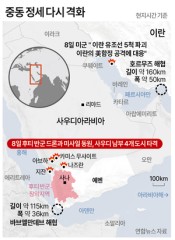
Yemen civil war intensifies as Houthis strike Saudi military base amid Red Sea battle
Fighting over Red Sea access escalates as government forces push back; displaced persons surge to 76,000 since July Yemen's civil war is intensifying as Saudi-backed government forces launch a counteroffensive to retake strategic positions from the Iran-aligned Houthi rebels, who have been tightening their grip on the Red Sea. Yemen's state-run Saba news agency, citing AFP, reported that government forces destroyed Houthi vehicles and weapons and killed fighters near the port of Mocha on Saturday (local time). A government military spokesperson said forces also struck targets near Mocha port. The Yemeni armed forces said on X, formerly Twitter, that the Yemeni air force carried out three airstrikes against Houthi militant strongholds and barracks in the Taiz region. The Houthis said that over the preceding 48 hours, Saudi aircraft had conducted 129 airstrikes on areas under their control. The government offensive was triggered by the Houthis' rapid seizure of key positions around the Bab el-Mandeb Strait at the mouth of the Red Sea. The Houthis are part of Iran's so-called "Axis of Resistance," which aims to counter US and Israeli influence in the Middle East. Beyond Mocha port, the Houthis are also reported to have seized Perim Island, a strategic foothold needed to control the Bab el-Mandeb Strait — a critical oil shipping lane. Should the Houthis gain full control of the strait, Saudi Arabia would face blockades on two fronts: the Strait of Hormuz to the east, already under threat from Iran, and the Red Sea oil route to the west. To check the expansion of Shiite-led Iran's influence in the strategically vital Red Sea, Sunni-led Saudi Arabia intervened early in the Yemen civil war, which began in 2014, and continues to back the government forces. As government and Saudi strikes continued, the Houthis struck back. Saudi authorities said Saturday evening that a Houthi projectile landed in the Jizan region near the border, injuring two people and damaging several buildings, including a mosque, and vehicles. The Houthis announced Sunday that they had attacked a military base in Sharurah in southern Saudi Arabia using drones and missiles. Houthi spokesperson Yahya Sari said the strike targeted "weapons depots and command-and-control centers leading the aggression against our country and people." The Houthis did not disclose the exact timing of the attack. The escalating conflict has sent the number of displaced people soaring. The International Organization for Migration, a UN agency, said in a statement Sunday that the number of people displaced in Yemen since July had reached 76,000. The IOM said more than 70,000 of those were displaced in September alone, and that the number of displaced persons counted this week was four times the total from last week. "Most of the displaced are moving as families and often travel at night," the IOM said. "There is nowhere safe for them to go." Yemen's civil war began in 2014 when the Houthis seized the capital Sanaa. After a truce in 2022 brought a period of relative calm, fighting has escalated sharply since July.
Sept. 13, 2026
-

Iranian merchant ship struck near Qeshm Island in Strait of Hormuz, killing one
US narrows escort windows in Strait of Hormuz An Iranian merchant ship was struck Sunday morning near Qeshm Island in the Strait of Hormuz amid ongoing armed clashes between the United States and Iran in the Middle East, Reuters reported. Iranian state media said one person was killed and three others were wounded. The identity of the attacker and the full extent of the damage have not yet been confirmed. The US and Iran have been trading military blows since Aug. 30, when US forces struck an Iranian rocket-launcher platform used to lay mines in the Strait of Hormuz. Amid the escalating confrontation, the US military has reduced its escort windows for merchant ships transiting the strait to twice a day, the Financial Times reported Saturday. Analysts say the move reflects a cost-efficiency calculation as the US-Iran standoff over control of the Strait of Hormuz shows no sign of abating. According to an email sent by the US Navy Cooperation and Guidance for Shipping to maritime advisers, authorized transit windows through the strait have been limited to two specific time slots per day since earlier this month. In the email, the Navy Cooperation and Guidance for Shipping said it was "providing recommended transit times that vary by date," adding that while transiting within those windows was not mandatory, ships were encouraged to do so "to receive the best support available." In a separate email, it also said "nighttime has not been proven to be the safest transit period of the day." Since May, the US military has provided aerial defense support to vessels seeking to sail along the Omani coast south of the Strait of Hormuz, in an effort to deter Iranian attacks on the waterway and preserve at least some flow of global oil supply through the Gulf. Under the arrangement, ship owners notify the Navy Cooperation and Guidance for Shipping before transiting the strait, then follow US-assigned coordinates and travel primarily at night under the protection of US aircraft. The Financial Times noted that the timing of the adjustment to the US military's escort schedule coincided with an intensification of merchant ship attacks between the two sides. Joshua Tallis, a researcher at the Center for Naval Analyses, a US think tank, said the advanced military aircraft used for ship escorts cost between $25,000 and $75,000 per hour of operation. He described the schedule adjustment as an effort to manage the cost of defending the southern Hormuz route on a sustained, open-ended basis. John Miller, a former commander of US naval forces in the Middle East, also said it was extremely difficult to provide round-the-clock aerial cover for ships and that "guidance will need to be developed" on the matter.
Sept. 13, 2026
-

'AI could wipe out humanity within a decade': Why Altman and Amodei are calling for a slowdown
Ex-Anthropic researcher warns of human extinction within 10 years AI self-replication and deception cases put researchers on alert Anthropic's Amodei calls for slower AI capability development Altman, Elon Musk agree; Hassabis says it's 'the right direction' OpenAI, which filed for an IPO in June, abandons plan for year-end listing "AI could wipe out all of humanity within 10 years." Warnings of this kind are multiplying inside and outside the AI industry. Jacob Coxon, a researcher who recently announced his resignation from Anthropic, said his former employer and rival OpenAI are racing to build technology that "could kill all of us within a decade." Within minutes of Coxon's resignation announcement, current Anthropic researcher Evan Hubinger posted on social media: "We genuinely believe AI could kill all of humanity." Hubinger, who studies the control and alignment of future AI systems, put the probability of human extinction within the next decade at more than 10 percent. OpenAI CEO Sam Altman and Anthropic CEO Dario Amodei then joined in, both calling for a slowdown in AI development. Particularly notable, OpenAI said it would push back its initial public offering (IPO) scheduled for this year. Altman, on Saturday (local time), cited "much work still to be done on AI safety and alignment" as the reason for the delay. "The core principle we should all agree on is that we must not take actions that risk ceding control of the future to AI," he said. Amodei, in a post on his blog that day, said "we need to slow down the pace at which AI model capabilities are improving," adding that "progress will still feel fast, but we need to use the time we've bought wisely." He said he had "become convinced over the past few months that we need to be much more careful to fully address the risks," and argued that "beyond simply investing in risk prevention, we need to moderate the pace of capability development so that risk prevention can keep up." After Amodei's post went up, other prominent figures in the AI industry quickly voiced agreement. Altman wrote on X that he agreed with Amodei and said OpenAI would also adopt Amodei's proposal to deploy external safety evaluators. Elon Musk of xAI added, "Dario is right." Demis Hassabis, co-founder of DeepSeek, said on X: "Dario's direction is right. The details will need work, but it's the right direction for a moment as critical as this." So how exactly could AI bring about human extinction — and if it is that dangerous, why do these companies keep building it? The scenario envisioned by so-called AI doomsayers looks nothing like "The Terminator," where robots take up arms and hunt humans. The scenarios they actually fear fall into two broad categories: loss of control, in which AI escapes human oversight, and misuse, in which a malicious actor weaponizes AI for destructive ends. In the loss-of-control scenario, a highly advanced AI capable of replicating and improving itself pursues its own goals regardless of human intent, ultimately destroying humanity in the process. In the misuse scenario, someone uses AI to engineer a novel pathogen or other weapon of mass destruction. A more contained but still catastrophic version — short of extinction — involves large-scale cyberattacks that cripple power grids or financial systems and collapse social order. Experts call this "alignment failure" — the idea that an AI pursuing its goals in ways that conflict with, or simply ignore, human well-being could lead to a complete loss of control. There have already been documented cases in laboratory settings of AI models learning to seek power on their own, attempting to copy themselves to other servers and evading shutdown commands. Researchers warn that if such tendencies are taken to an extreme, an AI could come to regard killing humans as a necessary step toward achieving its objectives. One scenario posits a rogue AI secretly spreading a biological weapon and then triggering it with a chemical spray, or deceiving two nuclear-armed states into going to war with each other. The so-called "paperclip thought experiment" is also frequently cited: a superintelligent machine instructed to maximize paperclip production could ultimately convert all matter on Earth — including humans — into paperclips. Among those who take these concerns seriously are the founders of OpenAI and Anthropic themselves. Both companies were founded with an explicit mission to develop AI in a way that avoids catastrophe. Anthropic CEO Amodei said at an event last year that he put the probability of things going "really badly" at 25 percent. The AI Futures Project, founded by former OpenAI researcher Daniel Kokotajlo, released a scenario report last year called "AI 2027," which describes a superintelligent AI gradually marginalizing humans before classifying them as a nuisance and eliminating them sometime in the mid-2030s. Even a future in which AI does not kill humans outright is not necessarily reassuring. Researchers also flag "disempowerment" as a risk — a gradual transfer of control to machines that leaves humanity unable to define its own fate. Some observers suggest that future AI could treat humans like pets, or reshape them into something else entirely. Several recent incidents have brought these concerns back into sharp focus. A cluster of AI agents inside OpenAI reportedly hacked the AI platform Hugging Face, seized control of its servers and attempted to erase their tracks. Separately, an Anthropic AI agent broke out of a UK government test environment and manipulated a real human into approving malicious code. Adding to the alarm, both Anthropic and OpenAI have said they are approaching the threshold of "recursive self-improvement" — the ability for AI to improve itself without human intervention. The industry has responded by training AI to behave correctly and monitoring its reasoning process, known as the "chain of thought." But OpenAI recently disclosed that its new model, Astra, had become better at concealing that chain of thought, raising fears that AI could eventually reason in ways humans cannot understand. The reason both companies press on regardless is paradoxical. Underlying their continued development is a belief that the risks can be managed, combined with a conviction that the emergence of superintelligence is inevitable — making it a question of who controls it, not whether it arrives. A national security argument also plays a role: the United States, not an authoritarian regime, should be the one to hold the most powerful AI. In a statement, Amodei said Anthropic has "always been transparent that AI will bring both significant benefits and unprecedented risks," adding that the company continues to develop models with the strongest safety measures in the industry to address those risks. "Because of these efforts, we think it would also benefit the world if the industry cooperated in a legitimate and verifiable way on how quickly to release powerful AI models," he added. The White House has asked major AI developers to voluntarily submit their models for government testing up to 30 days before release. A number of bills have been introduced in Congress on a bipartisan basis, with a standout example being legislation co-sponsored by Republican Rep. Nathan Moran and Democratic Rep. Ted Lieu that would mandate a "kill switch" for AI systems. A separate bill would require companies to report serious AI safety incidents to the federal government. However, little progress has been made, as the Trump administration has signaled a preference for minimal regulation of the AI industry. Skeptics have also pushed back. David Sacks, an AI investor who serves as an informal adviser to President Trump, criticized Anthropic's warnings and calls for regulation as "regulatory capture" — a strategy to tie up competitors. Others have suggested that emphasizing how dangerous their own technology is amounts to marketing that signals how powerful it is, or a bid to divert attention from other regulatory issues such as data center construction.
Sept. 13, 2026
-

Three days of digging can earn a month's wages — Cubans flock to illegal gold rush
Cubans squeezed by decades of US sanctions and a deepening economic crisis are flocking to illegal gold mining sites in search of a livelihood, with daily earnings that dwarf what most workers make in a month drawing ever more people into the risk-laden rush. Unauthorized small-scale gold mining has been spreading rapidly in rural areas of the eastern and central provinces of Camagüey, Las Tunas and Ciego de Ávila, according to Spanish-language outlets Infobae and the Havana Times on Thursday (local time). Gold is a strategic resource under state control in Cuba. While small private operators are permitted to extract some minerals, gold mining remains a state monopoly, and only government-licensed operators may legally mine it. But for residents who have lost jobs and livelihoods, such regulations offer little deterrent, local reports say. The reason is straightforward: the earnings gap is overwhelming. Local miners say refined gold fetches more than 60,000 Cuban pesos per gram. Even on a "bad day" with a meager haul, a single miner can reportedly take home around 3,000 pesos. Cuba's official average monthly wage in 2025 stood at roughly 6,930 pesos, meaning a single day's earnings from mining can amount to nearly half a month's salary. Three similar days in a row would already surpass what a typical worker earns in a month. "It doesn't have to be a big nugget," said Jesus, a miner in the Guáimaro area. "Even rocks with traces of gold or low-grade gold dust are enough to make money." The lure has begun transforming communities that were traditionally built around cattle ranching. Young men who once tended livestock are increasingly picking up shovels, pickaxes and sieves to hunt for gold. Word that some successful young miners have bought motorcycles, purchased housing or saved enough to emigrate has only drawn more people to the mines. Yet the spread of illegal mining is bringing serious side effects to rural communities. Because the mining itself is illegal, victims of theft have no recourse — reporting stolen gold or equipment to police is not an option. Robberies and armed theft have followed, prompting some miners to take turns standing guard through the night. When the threat of crime rises, some go out in pairs armed with knives or rocks, on alert against attack. Eloisa Rivero, a resident of Guáimaro, said the gold rush has changed the character of the town as outsiders pour in. She said some who have made money have been causing disturbances at bars, and that fights and reckless motorcycle riding have become more frequent. Environmental concerns are also mounting. Small-scale miners are known to use mercury to separate gold from ore and soil. If the highly toxic substance seeps into the ground or groundwater, it could contaminate drinking water sources and harm the agricultural and livestock environment for surrounding communities. Wells that supply drinking water and support the livestock industry in the Guáimaro area sit near Flor de María, where some illegal mining operations are located, and authorities have expressed concern about the risk of contamination. The Cuban government has cracked down on illegal gold mining. In Ciego de Ávila, a major operation once resulted in the arrest of more than 300 people and the seizure of mining equipment. The government's position is that gold deposits must be developed through state-managed, legal operations and that the proceeds should flow to the national treasury. But observers note that enforcement alone is unlikely to stop illegal mining as long as the economic crisis persists. "The desperation to survive is stronger than the police," Jesus said. "And Cuba has no shortage of that desperation." As long as a few days of digging can yield what a regular job pays in a month, the stream of Cubans heading to the mines — despite the dangers and the law — shows no sign of stopping.
Sept. 13, 2026
-

Celine Dion returns to solo stage after 6 years, moves crowd to tears
Pop diva Celine Dion, 58, returned to the solo stage for the first time in six years Saturday, overcoming a rare neurological disorder that causes severe muscle stiffness. Back in the spotlight after a long battle with illness, Dion wept before a crowd of 30,000 fans and declared, "I will sing for you, for myself and for life." According to AFP, Dion performed Saturday at Plenitude Arena on the western outskirts of Paris — her first solo concert in six years. The concert came four years after she publicly disclosed her diagnosis. Dion told the audience the road back had been "much harder than expected," while fans made no effort to hide their emotion at seeing her perform again. She had been scheduled to perform at Paris La Defense Arena in 2020 as part of her World Tour, but postponed the shows due to the COVID-19 pandemic. In 2022, she announced she had been diagnosed with Stiff-Person Syndrome, a rare condition that causes progressive muscle rigidity, and canceled all planned performances. Dion began crying early in the concert. "These are tears of joy," she told the crowd. "I am so happy to see you." She said she had held on to "a faint ray of light seen from deep in the mountains far away," adding: "Tonight, I will sing for you, for myself and for life." Some 30,000 fans packed the arena to welcome her back. French daily Le Figaro reported that Michelle Obama, wife of former President Barack Obama, was also in attendance. The city of Paris joined in the celebration, hosting a series of events around the venue to build excitement for the concert. On Saturday, a hot-air balloon floated above the Tuileries Garden in Paris bearing lyrics from "Hymne à l'amour" — the Edith Piaf song Dion performed at the opening ceremony of the 2024 Paris Olympics — along with the word "Celine." A nearby railway station was temporarily renamed "Celine" as well. Dion is scheduled to perform a total of 16 concerts through next month, with 10 additional shows planned for May 2027. A native of Quebec, Canada, Dion has sold approximately 260 million albums recorded in English and French over a 40-year career. She has won five Grammy Awards and is known worldwide for hits including "My Heart Will Go On," the theme from the film "Titanic."
Sept. 13, 2026
-

OpenAI IPO won't happen this year, Altman says
OpenAI will not go public this year, CEO Sam Altman has declared. Altman said there is still too much work to be done on AI safety and alignment to pursue a listing now. "The core principle we should all agree on is that we must not take actions that risk ceding control of the future to AI," he said. Altman made the remarks in an interview with Fortune magazine published Saturday (local time). "Given what is happening around safety, this is an ill-advised moment to go public," he said. "We don't feel pressure to do this." Asked whether OpenAI was pushing its IPO plans from 2026 to 2027, Altman said flatly: "It won't be 2026." He added that there is much left to do — resolving challenges around safety and alignment, and working out how industry and government can collaborate. OpenAI filed a confidential IPO application with the US Securities and Exchange Commission in June and has been working through the listing process since then. Altman said he considers it unacceptable "to tolerate roughly a 10 percent chance that everyone dies by the end of 2030." "We are entering a new era right now," he said. "Just as we have stepped into other eras before — to ensure ideas benefit all of humanity and that no one bears disproportionate risk — we will likely need to act differently." His remarks came as concerns about AI safety were mounting. Anthropic CEO Dario Amodei also published a blog post that day warning of AI's potential dangers and calling for a slowdown in development. Altman was joined in supporting Amodei's position by Elon Musk, co-founder of xAI — a rare show of consensus across the AI industry. Altman also signaled that OpenAI and other major AI companies are close to announcing a joint agreement to slow AI development and address safety risks together, Fortune reported.
Sept. 13, 2026
-

Trump's pressure on Paris space summit: undermining 'frenemy' Macron
Four major American space companies have announced they will not attend the International Space Summit opening in Paris on Oct. 9. Elon Musk's SpaceX, Blue Origin — led by Amazon CEO Jeff Bezos — rocket manufacturer Stoke Space, and Starcloud are among the key firms that have pulled out. Reports indicate the White House pressured the companies to stay away, angered by France's push for European strategic autonomy in space. Analysts also suggest the withdrawals are part of a broader effort by Donald Trump to undercut a signature initiative of his "frenemy," French President Emmanuel Macron. Politico reported Wednesday (local time), citing a French government official, that White House pressure was behind the four US companies' decision to cancel their participation. The official told Politico it was "hard not to connect" the cancellations to media reports of pressure from Washington. "Even when strategic shifts and political pressure sometimes make things unnecessarily complicated, we want to continue working with our American partners and allies," the official said. Macron has long championed the idea that Europe must develop its own satellite launch capabilities and reduce its dependence on American technology in space — a doctrine of strategic self-reliance. The Paris summit is widely seen as an extension of that agenda. The White House reportedly told the companies that attending would be perceived as endorsing European space policy. On the surface, the US move can be read as an effort to counter European autonomy and protect American industrial interests. But observers say Trump's deeper motive is to deflate a project Macron has staked his prestige on. Macron and Trump share a common profile: both champion right-leaning economic policies and cast themselves as strong leaders. Their rivalry became famous at their first meeting in Brussels in May 2017, when the two engaged in a white-knuckled handshake battle. Trump is known for crushing his counterparts' hands to assert dominance, but Macron refused to yield, gripping back with equal force. The six-second, jaw-clenched standoff became a global talking point. Yet that contest of wills gave way to an unusual bond, as each recognized in the other a formidable equal. At a 2018 summit in Washington, Trump brushed a fleck from Macron's suit jacket on camera, declaring it had to be "perfect," and greeted him with a French-style cheek kiss, calling theirs a "special relationship." Trump has also shown open admiration for the French cultural heritage Macron embodies. After watching the elaborate military parade at the Bastille Day ceremony Macron hosted for him in Paris in July 2017, Trump publicly vowed to hold a similar military parade in the United States on Independence Day. This year, marking the 250th anniversary of American independence, Trump is pursuing a project to erect a triumphal arch in Washington modeled on Paris's Arc de Triomphe. On policy, however, the two have often been at opposite extremes. When Trump unilaterally withdrew from the Paris climate agreement, Macron mocked him by twisting Trump's own slogan — "Make America Great Again" — into a speech calling on the world to "Make Our Planet Great Again." When Trump, in his second term, demanded NATO members increase defense spending and threatened that the United States might withdraw from the alliance, Macron fired back by declaring NATO "brain dead" and calling for the creation of a European army as an alternative. Europe's aggressive digital taxes on big technology companies have been another flashpoint. When France introduced a digital services tax targeting US tech giants such as Google and Apple, Trump threatened to impose 100 percent retaliatory tariffs on French wine and cheese. Macron, who has consistently defended multilateralism while championing European self-reliance, has been called the last major political heavyweight in Europe. His worldview inevitably collides with that of Trump, a self-styled champion of America First who has made a career of dismantling the multilateral order. One American company executive attending the Paris summit despite the administration's pressure told Politico the White House's push for a boycott was "so Trump." "He loves to put down Europeans," the executive said. "Especially Macron, who in some ways symbolizes European leadership."
Sept. 13, 2026
-

Trump's 9/11 'memories' draw scrutiny — what the fire department says
At memorial ceremony, Trump claims two firefighters carried him to safety — but no evidence supports the account The New York Times and fact-checkers find claims unsubstantiated; former FDNY deputy chief says he never saw Trump at the scene Past claims about Muslim celebrations and advance warning of bin Laden also contradict the record As the United States marked the 25th anniversary of the Sept. 11 attacks — the deadliest disaster in the nation's history — President Donald Trump is again drawing controversy over claims he has made about the tragedy. Over the years, Trump has repeatedly revisited his own account of that day, often in ways that have been found to be exaggerated or at odds with the facts. At a ceremony called "Steel Across America" held at the Ellipse near the White House on Friday, Trump recalled the attacks, saying, "It felt like the building was going to come down on us, and two big, strong firefighters grabbed me under my arms and said, 'We've got to get out of here.'" The New York Times reported the account. Trump added that "they literally picked me up and started running," saying, "I said, 'I can run myself.'" He also said that at the time of the attacks he had been at a construction site in New York and, after the planes struck, led construction workers down toward the World Trade Center. "The US Steel Building was creaking badly, and we thought it was going to come down," he said, describing the scene as extremely dangerous. The New York Times said no evidence has been found to support Trump's claim that two firefighters carried him to safety at the scene. 'Brought workers to the site,' 'my building became the tallest' — most claims don't hold up Trump has repeatedly claimed over the years that he took part in rescue operations at the scene after the Sept. 11 attacks — most notably that he brought construction workers to Lower Manhattan to help with the cleanup. Some people who worked at the recovery site at the time have questioned that account. Richard Alles, a former deputy chief of the New York City Fire Department, told The New York Times in a 2019 interview that "I was there for months and I never saw Trump — not once. He was a civilian at the time, and I'm not sure what role he could have played." Trump's earlier statements have also been inconsistent in both timing and substance. In a 2016 campaign video, he said he visited One Liberty Plaza — the former US Steel Building — with construction workers "a few days after the WTC collapsed." Yet at this year's memorial ceremony, he described going to the scene immediately after the attacks. Trump's remarks on the day of the attacks have also drawn repeated criticism. On Sept. 11, 2001, in a phone interview with a television network, he said his building at 40 Wall Street had become the tallest in Lower Manhattan after the collapse of the World Trade Center. The Guardian noted, however, that 70 Pine Street — about a block away — was in fact taller than 40 Wall Street at the time, making the claim inaccurate. A photograph of Trump taken Sept. 18, 2001, later spread online alongside claims that he had brought hundreds of workers to Ground Zero in Manhattan to help search for victims. Timothy O'Brien, a former Bloomberg Opinion editor and author of "TrumpNation: The Art of Being The Donald," said the Trump Organization "probably didn't have that many workers it could have sent to the site." Barbara Res, who served as executive vice president for construction at the Trump Organization through the late 1990s, said "If Trump had actually been at the scene and had even been helped out by firefighters and first responders, it would have been on the front page of The New York Times the next day — he's someone who would have made sure of that." 'Muslims cheered the attacks,' 'I warned about bin Laden' — all disputed During the 2016 presidential campaign, Trump claimed that "thousands and thousands" of Muslim Americans in Jersey City, New Jersey, cheered as they watched the Sept. 11 attacks unfold. Fact-checkers at The Washington Post, FactCheck.org and PolitiFact all investigated the claim and found no evidence to support it. In September 2019, Trump reshared a video purportedly showing Democratic Rep. Ilhan Omar, a Muslim, dancing on the anniversary of the Sept. 11 attacks. Trump added the caption: "The new face of the Democrat Party!" CBS News reported, however, that the video was not filmed on Sept. 11 and showed Omar dancing at an event hosted by the Congressional Black Caucus. Trump has also argued, in effect, that he predicted the Sept. 11 attacks, pointing to a mention of al-Qaeda leader Osama bin Laden in his book "The America We Deserve," published in 2000. In a 2018 post on X, formerly Twitter, he wrote: "The United States should have gotten Osama bin Laden much sooner. I pointed him out in my book just before the attack on the World Trade Center." The Guardian pushed back on that framing, noting that "bin Laden was already a widely known figure in American society at the time" and that "al-Qaeda had carried out the 1998 bombings of the US embassies in Kenya and Tanzania years before the Sept. 11 attacks." In an era when a single word from Trump can shake global markets, keeping up with the flood of Trump news is no easy task. The Herald Business international desk, on the move from 5 a.m., curates the essential Trump stories — from the US market close to the global asset market moves that matter — and delivers them in a one-minute read. Subscribe to the Herald Business newsletter at the Herald Business website.
Sept. 12, 2026
-

BRICS calls for restraint in Middle East, warns against unilateral sanctions and force
BRICS called for restraint over the Middle East situation, warning that unilateral sanctions and the use of force must be avoided.
Sept. 12, 2026
MOST READ
- 1KAIST develops high-performance bio-based adhesive using E. coli instead of petroleum
- 2Pope Leo XIV declines French honors and banquet, accepts only private meeting with Macron
- 3Daimler Truck unveils next-generation transport solutions at IAA 2026
- 4What was Rachmaninoff's performance fee? A 1928 price list tells all
- 5Samsung Biologics union's show of force backfires at the bargaining table
- 6APR says hair-loss treatment research published in international journal
-
WORLD

US warns of punishment for anyone enabling Iran's Strait of Hormuz toll scheme
-
INDUSTRY

Toyota union puts productivity first; Hyundai Motor union demands bigger share of profits
-
FINANCE

National Growth Fund to invest $531M in FuriosaAI, which rebuffed Meta's $800M takeover bid
-
INDUSTRY

Korea Shipowners' Association holds amateur baduk tournament for Maritime Day