
- HOME
- WORLD
-
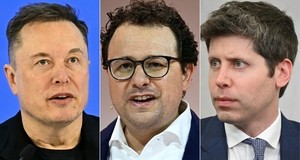
'Kicking away the ladder': AI startups rage against Big Tech's push for regulation
White House warns of 'regulatory capture,' 'cartel' Startups slam moves as barriers to entry for latecomers OpenAI, Anthropic, Google already forming coalition AI startups are pushing back hard against calls by industry leaders Anthropic and OpenAI to slow the pace of AI development, accusing the dominant players of trying to craft regulations that suit their own interests while blocking smaller rivals from catching up. Bloomberg reported Tuesday (local time) that executives at AI-related startups fear the "AI slowdown" proposals and "safety standards" championed by the top companies will function as regulatory barriers that shut out smaller, later-stage competitors. Faraj Alaei, CEO of Cogni Chip, which is developing models to improve semiconductor design efficiency, said regulatory barriers "always favor incumbents" and amount to "building a wall after you've already passed through." Naveen Rao, CEO of AI computing startup Unconventional AI, warned that the greatest risk is limiting the diversity of effort within the industry, saying he does not want "a monoculture where Anthropic in effect runs every application." Aidan Gomez, CEO of Canadian AI startup Cohere, wrote in a blog post that leading AI companies risk forming a kind of "cartel," arguing that "these oligopolists are now asking to be allowed to distort the rules of competition and set the terms for everyone else." The criticism echoes remarks by David Sacks, the White House science and technology adviser, who said AI companies are "volunteering to be regulated" while seeking "their preferred regulatory framework in return" — a dynamic he described as "regulatory capture," in which the leading firms among those subject to oversight effectively choose the rules that govern them. Startups worry that if the Big Tech companies driving the debate also shape the regulatory response, the resulting rules will favor incumbents and disadvantage challengers. Earlier, Anthropic CEO Dario Amodei on Saturday proposed that AI model developers "voluntarily cooperate to set standards" and slow the pace of technological advancement to reduce the risk of catastrophic harm — while also calling for regulations that would cover even companies that refuse to cooperate. Amodei proposed that the US government provide a "narrow waiver" allowing companies to coordinate on safety standards without antitrust scrutiny, a position that OpenAI and SpaceX AI immediately endorsed. Federal Trade Commission Chair Andrew Ferguson pushed back at an event Tuesday, saying that when companies simultaneously demand sweeping regulations and antitrust exemptions, "alarm bells go off," and accusing AI companies of seeking "entry barriers" to block competitors. Sacks also said the coordinated push by leading AI firms to shape regulatory design "looks like a cartel." Gil Luria, head of technology research at D.A. Davidson, said Silicon Valley has run this play before. "They use regulatory ambiguity to grow their businesses, and once they're big enough, they kick away the ladder and embrace regulations large enough only they can handle and control," he said. The concern is that rules formed after the industry has already matured will fall disproportionately on startups — the very companies that could one day challenge the incumbents. Even as the criticism mounts, coordination among the leading AI companies is becoming more organized. Chris Lehane, OpenAI's chief global affairs officer, said Tuesday that an antitrust exemption is unnecessary, adding that OpenAI has already been working with Anthropic and Google on AI safety cooperation. Anthropic, OpenAI and Google are separately reported to be in discussions about establishing a joint body to set common AI safety standards. SV Angel, a venture firm that has backed both Anthropic and OpenAI, has hired Jay Carney — who served as White House spokesperson under the Barack Obama administration — to launch "Project Blueprint," an initiative to jointly design AI policy including governance frameworks for frontier models. Apparently aware of the concerns, Carney said he is "not working for the agenda of any particular company" and that "every part of the AI world should have a voice." Both Anthropic and OpenAI have expressed support for Project Blueprint.
Sept. 16, 2026
-

Japanese lawmakers dined for W1.8m each on taxpayer money, then said they didn't know the cost
Members of the Fukuoka Prefectural Assembly are facing criticism over wasteful spending after it emerged that they attended a lavish dinner in France costing 1.8 million won ($1,330) per person — with the entire bill covered by local government funds. According to NHK, five prefectural assembly members who visited Paris in November last year attended a dinner costing 200,000 yen ($1,290) per person, Yonhap reported Wednesday. The total meal bill of 1 million yen was drawn entirely from the prefectural budget — public funds. The delegation comprised 25 people including Fukuoka Governor Hattori Seitaro, civil servants and assembly members, and spent five days in Paris under the stated purpose of promoting local specialty products. Total expenses for the trip came to 50.31 million yen. Despite the official justification of promoting regional products, the trip has drawn sharp criticism as a thinly veiled overseas junket. When the controversy broke, some of the assembly members who attended the dinner told reporters they had not known the cost in advance. Governor Hattori, who attended the dinner as an invited guest and paid nothing, said it was "an effective event where more than 500 stakeholders gathered and built networks." As public backlash mounted, he said he would have the appropriateness of the expenses verified by a third-party committee. Costly overseas trips have drawn scrutiny before Kyodo News and other outlets reported in July that Governor Hattori had already been under fire over allegations that his frequent overseas trips amounted to expensive junkets at public expense. At a news conference, Hattori said he would establish a third-party committee of outside experts to objectively assess the purpose, cost-effectiveness and appropriateness of his overseas travel to date. According to documents released by Fukuoka Prefecture, Hattori visited 14 countries and regions on 17 trips over roughly three and a half years from November 2022 through last May, at a total cost of 337.32 million yen. A trip to Hawaii in April 2023 alone cost 49.29 million yen. Hattori said he believed his overseas activities had produced tangible results, but acknowledged that continuing to pursue foreign trips before the third-party committee issued its objective assessment "would be difficult for the people of the prefecture to accept." He indicated he would refrain from overseas travel for one year. Beyond reviewing the overseas trips, the third-party committee also plans to investigate allegations that a gathering of senior prefectural officials illegally funneled political funds to the speaker of the prefectural assembly and others.
Sept. 16, 2026
-
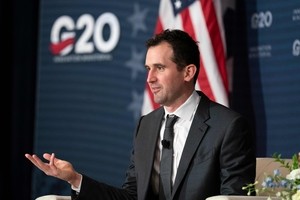
US commerce secretary, Pentagon CTO meet with Anthropic executive on AI safety
Tom Brown has taken the lead on Anthropic's Washington outreach; Lutnick says Anthropic is 'back on the right side' US Commerce Secretary Howard Lutnick and Pentagon Chief Technology Officer Emil Michael met with a senior Anthropic executive to discuss AI safety, according to Bloomberg. Lutnick and Michael held a video call with Anthropic Chief Compute Officer Tom Brown on Tuesday (local time) to exchange views on AI safety risks. Anthropic did not respond to Bloomberg's request for comment, and the White House also declined to offer a statement. Brown is one of Anthropic's co-founders. The company's website describes him as leading "the technical organization responsible for securing, scaling, and efficiently using compute resources." He has recently taken over as the public face of Anthropic's Washington engagement in place of CEO Dario Amodei, and is credited with improving the company's relationship with Trump administration officials and easing tensions between the firm and the government. Brown played a central role in persuading the White House and the Commerce Department in June to lift export controls on Anthropic's latest frontier AI models, "Fable 5" and "Mythos 5." Business Insider ran a profile of him in early July under the headline "The engineer who became Anthropic's secret political weapon." In early September, Brown appeared alongside Lutnick at a public discussion at the G20 Innovation Ministerial Meeting held in North Carolina, where he spoke warmly of President Donald Trump's support for data centers. In a Bloomberg TV interview on the sidelines of that event, Lutnick said Anthropic had changed its position and repaired its relationship with the government. In a separate Axios interview, he said, "We trust Anthropic." However, Brown had also negotiated with the Pentagon over the military's use of Anthropic's technology, and those talks broke down after the Pentagon determined that Anthropic's conditions amounted to an infringement on military authority. The Pentagon subsequently placed Anthropic on a "supply chain risk" list, and the two sides have been engaged in legal proceedings since. The details of Brown's conversation with Lutnick and Michael have not been disclosed, but the meeting is believed to have been aimed at narrowing differences between Anthropic and the administration and reducing tensions at a time when Trump has shown little receptiveness to AI safety concerns. Tensions between major AI companies, including Anthropic, and the Trump administration have been building since Saturday, when Amodei published a 3,800-word essay calling for checks on AI development. Amodei argued that guardrails are needed for AI safety and that the pace of advanced AI model development should be slowed. OpenAI CEO Sam Altman and Elon Musk, founder of SpaceX and xAI, quickly voiced support for his position. Trump pushed back sharply against Amodei's views, dismissing concerns about AI risks as a "hoax" and opposing the introduction of new regulations. In a post on his Truth Social account on Monday, Trump argued that having a "smart" person like himself in the presidency was sufficient as a safeguard for AI, and warned that slowing AI development would only benefit rivals such as China.
Sept. 16, 2026
-

Japan's 10-year bond yield hits 30-year high amid BOJ rate hike expectations
Surging oil prices and Takaichi government's food tax cut fuel long-term rate spike Japan's 10-year government bond yield climbed to its highest level in three decades amid growing expectations that the Bank of Japan will raise its benchmark interest rate. The yield on the 10-year Japanese government bond rose to 3.035 percent in Tokyo bond markets on Tuesday, its highest since August 1996, according to the Nikkei and the Yomiuri Shimbun. The surge was attributed to a sharp rise in crude oil futures prices driven by deteriorating conditions in the Middle East, which stoked inflation concerns and reinforced expectations that the BOJ would accelerate rate hikes. However, the Nikkei noted that two competing views exist: one holds that faster BOJ rate hikes would ultimately stabilize long-term rates, while the other argues that the market's upward revision of the BOJ's expected terminal rate is itself pushing long-term yields higher. Within the BOJ, some officials believe that rate hikes will contain inflation risks and thereby stabilize long-term rates. Markets, however, see the BOJ's accelerating rate hikes as adding further upward pressure on long-term yields. The Takaichi government's decision to cut the consumption tax on food is also seen as a factor fueling long-term rate increases by raising fiscal concerns. On Tuesday, the Japanese government formally decided at a Cabinet meeting to lower the consumption tax rate on food to 1 percent for two years starting next April. The Nikkei noted that if long-term rates continue to rise, anxiety over the economy and public finances could deepen, and the Takaichi administration may move to restrain the BOJ from raising rates further. The rise in long-term yields is not limited to Japan. The US 10-year Treasury yield climbed to 5.041 percent on Tuesday (local time), its highest since July 2007. Germany's long-term rate also surpassed 3.5 percent, a 17-year high, while the United Kingdom's reached the 5.4 percent range, a 19-year high.
Sept. 16, 2026
-

Two Koreans extradited to Japan, arrested over 2018 attempted robbery
Suspects fled to South Korea after the incident and were handed over under extradition treaty Two South Korean nationals who fled to South Korea after attempting to rob a Chinese man of a large sum of cash on a Tokyo street eight years ago have been extradited to Japan and arrested under a bilateral extradition treaty. According to Kyodo News and other outlets, the Tokyo Metropolitan Police Department arrested the two South Korean men, both in their 20s and 30s, on charges of attempted robbery after they tried to steal cash from a Chinese man in his 30s on a street in Taito Ward, Tokyo, in November 2018. The two are accused of spraying tear gas at a Chinese man connected to a precious-metals purchasing company on a road in Matsugaya, Taito Ward, on the afternoon of Nov. 12, 2018, in an attempt to steal approximately 47 million yen ($303,000), or 420 million won. The victim resisted strongly, and the suspects fled without taking the cash. They left for South Korea immediately after the incident, but Interpol issued a red notice at Japan's request. South Korean authorities handed them over Tuesday under the Japan-South Korea extradition treaty. Police said a total of five South Korean men, including the two suspects, were present at the scene at the time of the crime. Two other accomplices have already been arrested and convicted on charges including attempted robbery, while the remaining suspect remains the subject of an international wanted notice as police continue to track his whereabouts. During police questioning, the two men either exercised their right to remain silent or denied the charges, saying they "did not commit any robbery," according to investigators.
Sept. 16, 2026
-
BlackRock CEO warns AI could become 'domain of large firms' if buildout lags
'The faster we build more capacity, the more we can democratize it' Amid intensifying debate over whether to slow the pace of AI development, BlackRock CEO Larry Fink warned Tuesday (local time) that AI risks becoming "the domain of large firms" if infrastructure is not built out quickly enough. Speaking at a panel discussion at the Canada Investment Summit in Toronto, Fink said, "The faster we can build more capacity, the more we can democratize this and make it available to everyone." The remarks came as major US AI companies — including Anthropic, OpenAI and xAI — have proposed slowing the advancement of cutting-edge models to allow safety measures to be developed through "voluntary cooperation." Data center construction in the United States has increasingly faced opposition from local residents and has become a significant political issue ahead of the November midterm elections. Jon Gray, president of Blackstone, who appeared on the same panel, called Canada "an economically sleeping giant," saying the country could achieve far higher economic growth than most people expect if its tax and regulatory policies were reformed. Dilhan Pillay, CEO of Temasek Holdings, another panelist, said his firm began investing in Canadian AI companies in 2016. "The problem with these companies is that if we don't have the capital to scale them up, they move to the United States," he said. "That is the biggest challenge we face." Canadian Prime Minister Mark Carney organized the event to reduce his country's economic dependence on the United States and to attract business investment that has long lagged.
Sept. 16, 2026
-
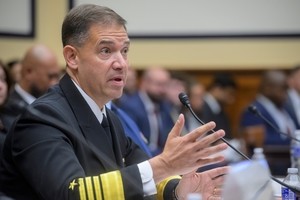
US holds secret meeting with Israel, 8 Arab nations on Iran war
CENTCOM commander convened last week's gathering in Germany; Saudi Arabia, UAE, Qatar among attendees US reaffirms commitment to keeping troops in region; outlines plan to expand Strait of Hormuz ship traffic Military chiefs from the United States, Israel and several Arab nations held a secret meeting in Germany last week to discuss the war with Iran and the broader security situation across the Middle East, according to reports. CENTCOM Commander Brad Cooper, who oversees US military operations in the Middle East, convened the gathering, according to Axios, which reported the meeting Tuesday (local time). The chiefs of staff or most senior military commanders from Israel and eight Arab countries — Saudi Arabia, the UAE, Bahrain, Kuwait, Qatar, Jordan and Egypt — attended the talks. Similar meetings have been held in the past, Axios said, but this was the first time the military chiefs of those nations had gathered in one place since the war with Iran began in February. Cooper reaffirmed to attendees that the United States would not withdraw its forces from the region, even as Iran continues to attack US military bases in the Middle East, according to the report. He also outlined US plans to expand vessel traffic through the Strait of Hormuz. Washington has recently stepped up its military and diplomatic efforts to restore normal maritime traffic through the strait. Israeli Defense Forces Chief of Staff Eyal Zamir briefed participants on ongoing IDF operations across multiple fronts, an Israeli official told Axios. None of the participating countries officially announced the meeting. CENTCOM said only that it had "invited senior military leaders from eight nations to a scheduled meeting in Germany" and that "the leaders discussed ways to strengthen security cooperation in the Middle East region." Axios described the gathering as a rare opportunity for military commanders from some Arab countries that do not have formal diplomatic relations with Israel to meet and exchange views directly with the Israeli side. Israel has expanded security cooperation with other Arab nations in the region since normalizing ties with the UAE and Bahrain through the Abraham Accords, brokered by the United States in September 2020. Israel's security cooperation with Arab states has deepened particularly since it was transferred from the jurisdiction of US European Command to CENTCOM. That shift allowed Israel to participate in regional security frameworks, including in the areas of air and missile defense. In practice, Israel has been working with the UAE during the war with Iran. Israeli officials said their country deployed Iron Dome air defense batteries to the UAE, sent operating personnel and provided real-time support in intelligence, surveillance and reconnaissance. Intelligence sharing between Israel and Arab nations in the region has also increased as the war has continued, according to reports.
Sept. 16, 2026
-
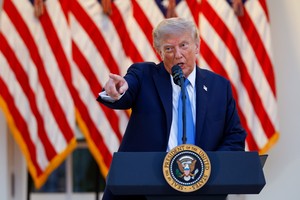
Trump claims 'Biden's FBI' concealed information on assassination attempt, calls it Democratic 'conspiracy'
Donald Trump said Tuesday (local time) that most information related to the 2024 assassination attempt against him had been hidden or destroyed by the time he took office, reviving allegations against the FBI under the previous administration. "New information has just been found," Trump wrote on his Truth Social account, adding that when he was inaugurated on Jan. 20 last year, "most of the information was missing, manipulated, compromised or gone." Trump also said "everyone knows that Crooked Joe Biden's FBI did not do what they were supposed to do with respect to the person who shot me in Butler, Pennsylvania." He did not specify what the "new information" was. Trump said former FBI Director Christopher Wray "must pay a price for the way he handled this assassination attempt and for the statements he made." He questioned why the information "wasn't found long ago," and said the entire matter was "a Democrat conspiracy to get me out of the election — but it failed." Attorney General Todd Blanche, speaking at a White House briefing, said only that the "new information" concerned "the shooter and his background and history — facts that were not previously known." Trump has faced three shooting threats in two years Trump was shot at on July 13, 2024, while campaigning as the Republican presidential candidate at a rally in Butler, Pennsylvania. The gunman, Thomas Matthew Crooks, fired about eight rounds from a rooftop 200 to 300 yards (about 183 to 274 meters) from the stage, striking Trump in the upper right ear. Images of Trump — blood on his ear and face — raising a clenched fist as Secret Service agents rushed him off the stage were broadcast around the world. Just two months later, on Sept. 15, 2024, another assassination attempt was foiled at a golf course in West Palm Beach, Florida. A man pointed a firearm at Trump while he was playing golf at his own course. The suspect, Ryan Wesley Routh, was shot by Secret Service agents and fled before being arrested. He was later found to have been hiding near the golf course for about 12 hours. A shooting at the White House Correspondents' Dinner venue in April was also suspected to have been an assassination attempt targeting Trump, who attended the event. In all, Trump has faced direct shooting threats on three separate occasions over the past two years.
Sept. 16, 2026
-
US spent $38b in 5 months on Iran war, CBO finds
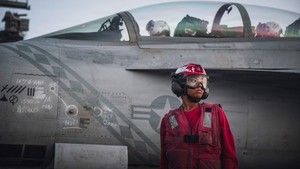
Congressional Budget Office report warns of up to $3 billion in additional monthly costs; missile defense stockpiles may take 5 years to replenish; energy-driven inflation projected to push PCE higher The United States spent approximately $38 billion over five months on the war with Iran, averaging about $246 million a day, according to a new report by the Congressional Budget Office. The CBO also warned that if the conflict continues, costs could climb by as much as $3 billion per month, and that it could take at least five years to replenish depleted missile defense stockpiles. The CBO, Congress's nonpartisan budget analysis office, estimated in a report released Tuesday (local time) that the Defense Department had spent roughly $38 billion on the armed conflict with Iran as of Aug. 1. The figure covers the cost of replacing ammunition expended and equipment lost in combat, increased flight hours, other operational expenses and fuel costs. It excludes costs already built into the federal budget — such as baseline operating expenses for deployed units — as well as costs borne by other agencies, including higher fuel bills at the US Postal Service stemming from rising energy prices. The CBO's estimate is broadly in line with the $37.5 billion in Iran war-related costs that Defense Secretary Pete Hegseth cited in July. A separate report — the Senior Inspector General's Report to Congress on Operation Epic Fury, submitted by the Trump administration on Monday and covering military and diplomatic facility losses — estimated that $33.4 billion in costs had been incurred through June 29 of this year. That report is the first official comprehensive analysis of the economic toll the war has taken on the US military. The CBO projected that Defense Department spending will continue to rise as the Iran conflict drags on. If fighting persists at the low intensity seen in May and June, costs would increase by $2 billion per month; if it escalates to the level seen in July, the monthly addition would reach $3 billion. Should the conflict intensify further, monthly costs could climb even higher, the CBO said. The office cautioned, however, that its estimates carry significant uncertainty because the Defense Department did not respond to requests for data. The CBO projected that US missile defense interceptor stockpiles, heavily drawn down by military operations against Iran, will remain depleted for years. The Defense Department has not disclosed the size of its ammunition reserves. Based on interceptor spending records and procurement volumes to date, the United States is estimated to have consumed between half and as much as two-thirds of its related stockpiles since June of last year. A large share of that drawdown is attributed to supporting Israel's defense against Iranian attacks. The CBO said it would take the Defense Department at least five years to replenish its interceptor missile stocks, warning that "this shortage could become particularly serious in the event of a conflict with an adversary possessing large numbers of ballistic and cruise missiles." The office added that China holds exactly such missile capabilities, and that those weapons could play a significant role in any military conflict over Taiwan. The CBO also found that rising energy prices stemming from the Iran conflict have placed considerable pressure on US inflation. Reduced oil and natural gas shipments through the Strait of Hormuz have pushed energy prices higher, driving up the cost of gasoline, diesel and jet fuel, and indirectly raising prices for other products and services through higher transportation costs. As a result, the CBO projected that the personal consumption expenditures price index in the first quarter of next year will run 0.5 percentage points higher than it forecast in February. Core PCE inflation, which strips out food and energy, is expected to come in 0.3 percentage points above the earlier projection. Rep. Brendan Boyle of Pennsylvania, who leads the Democratic Party's side on the House Budget Committee and requested the report, criticized the findings. "President Trump and Republicans have said for years that we can't afford to support American families, but apparently we can spend tens of billions — maybe far more — on a reckless war that is making Americans pay the price," he said.
Sept. 16, 2026
-

Crypto market tumbles as US Senate blocks digital asset regulation bill
The Digital Asset Market Clarity Act, known as the Clarity Act, has failed in the US Senate. The bill, which aimed to establish a comprehensive regulatory framework for the cryptocurrency market, collapsed after Democrats raised conflict-of-interest concerns over the vast cryptocurrency profits Donald Trump and his family have accumulated. Bloomberg reported Tuesday (local time) that the Senate held a procedural vote that day to advance the Clarity Act to debate, but the measure fell short of the votes needed to proceed, failing 49-50. Republicans hold 53 seats in the Senate — a majority — but advancing the bill required at least 60 votes, making Democratic support essential. Every Democratic senator voted against the measure. Two Republicans also broke ranks: Susan Collins of Maine and Josh Hawley of Missouri. The central obstacle was Trump's and his family's cryptocurrency business interests, which critics said made the legislation appear designed to serve the president's private financial gain. Sen. Elizabeth Warren of Massachusetts, who leads the Democrats' side on the Senate Banking Committee, said in a floor speech before the vote: "Let's be clear — we should not pass a crypto bill that allows President Trump to keep raking in billions of dollars in crypto profits while working families across the country are struggling with rising prices." Sen. Mark Warner, Democrat of Virginia, also said: "We cannot pass a law for this industry while allowing the president of the United States to personally profit from it." Republican leaders responded by unveiling an amendment that would restrict cryptocurrency issuance by Trump and other senior officials and grant state attorneys general enforcement powers. Democrats, however, demanded stricter mechanisms — including a requirement that the president divest cryptocurrency holdings once they reached a certain threshold — and the two sides failed to reach an agreement. With the bill's collapse fueling a sense of heightened political uncertainty, bitcoin and other cryptocurrencies along with related stocks tumbled. According to US cryptocurrency exchange Coinbase, bitcoin fell more than 5 percent after news of the Senate vote broke at 3 p.m. Eastern time, dropping to $74,911. Ether, the second-largest cryptocurrency by market capitalization, fell about 7 percent in the same period, sliding to $2,357. Coinbase shares also declined, closing down more than 10 percent from the previous session at $172.11. Strategy, a company that holds 845,000 bitcoin, saw its share price fall more than 5 percent to close at $129.60. Although the Clarity Act is a regulatory measure, it was widely seen as beneficial to the cryptocurrency industry because it would have clarified jurisdictional authority over digital assets whose legal status had long been ambiguous. With Congress set to enter recess ahead of the November midterm elections, the bill's defeat Tuesday is expected to make passage before year's end unlikely.
Sept. 16, 2026
-
US 10-year yield briefly tops 5% ahead of FOMC, hitting highest since 2007
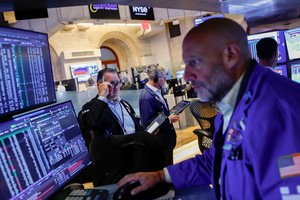
30-year yield also touches 5.401%, a 19-year high; markets price in 93% chance of Fed rate hike The yield on the 10-year US Treasury note — a global benchmark for interest rates — surged past 5.04% during trading Tuesday (local time), reaching its highest level in 19 years. According to electronic trading platform Tradeweb, the 10-year yield climbed to 5.041% at around 4 a.m. Eastern time Tuesday. That marks the highest level since July 2007, just before the global financial crisis took hold. As of 9:54 a.m., the 10-year yield was hovering around 5%. The yield had also briefly crossed 5% during trading on Tuesday before pulling back. Within a single day, however, it pushed to a new high, extending the bond market's unsettled run. Ultra-long yields also rose. The 30-year Treasury yield was up about 5 basis points — one basis point equals 0.01 percentage point — from the previous session, trading at 5.377%. The 30-year yield touched an intraday high of 5.401%, its highest since June 2007. The 2-year Treasury yield, which is more sensitive to monetary policy, rose about 2 basis points from the previous session to 4.656%. Rising Treasury yields reflect falling bond prices. A surge in global oil prices has stoked inflation concerns, and with markets now treating a Federal Reserve rate hike as near-certain, selling pressure in the Treasury market has continued. The Fed opened a two-day Federal Open Market Committee meeting Wednesday to decide on its benchmark interest rate. According to the CME FedWatch tool, federal funds rate futures markets priced in a 92.7% probability that the Fed will raise its benchmark interest rate by 0.25 percentage point in September.
Sept. 16, 2026
-
Libya's state oil company warns of force majeure as armed group shuts 3 oilfields
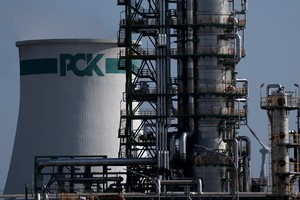
Petroleum Facilities Guard locks pipeline valves, demands transfer of oversight to NOC An armed group guarding oil facilities in Libya locked valves on a crude pipeline, halting production at several oilfields. The National Oil Corporation warned it could declare force majeure if the situation persists. According to Reuters, the NOC said Tuesday (local time) that members of the Petroleum Facilities Guard locked valves on a crude loading pipeline connecting Hamada and Zawiya, shutting down production at the Hamada, Tahara and NC5 oilfields. The NOC said it could declare force majeure if the valves remain closed or if similar forced shutdowns occur at other oilfields. A force majeure declaration is a formal notice to counterparties that relieves a party of contractual obligations when circumstances beyond its control — such as war or natural disaster — make fulfillment impossible. The PFG, currently under the Ministry of National Defense, is demanding that it be transferred — administratively and financially — under the NOC, and launched the action to press that demand. The group has called on the prime minister's office and the NOC to swiftly complete the administrative and fiscal procedures required for the transfer and to provide a clear implementation timeline. The PFG also said it would impose partial production cuts at several oilfields — including Wafa, Al Khamsa and El Feel — for one week starting that day, and warned of a full shutdown if its demands are not met. Oil production is Libya's primary source of revenue, accounting for roughly 90 percent of the country's economy. Production has been disrupted multiple times due to political instability and other factors since Muammar Gaddafi was ousted in 2011. "Closing oilfields and halting production at such a critical time, when crude prices are rising globally, is a devastating blow to the national economy," the NOC said in a statement.
Sept. 16, 2026
-
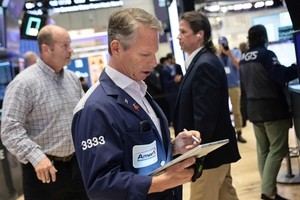
Wall Street falls as rising Treasury yields, oil prices deliver double blow
Wall Street closed broadly lower Tuesday (local time) as rising US Treasury yields and surging global oil prices weighed on investor sentiment. The Dow Jones Industrial Average fell 328.09 points, or 0.63 percent, to close at 52,093.11. The S&P 500 dropped 34.25 points, or 0.45 percent, to finish at 7,585.73. The tech-heavy Nasdaq Composite shed 204.84 points, or 0.78 percent, to end at 25,981.57. Selling pressure in the US Treasury market intensified Tuesday, pushing yields to fresh highs. The 10-year Treasury yield climbed as high as 5.041 percent in the morning — its highest level since July 2007 — before paring some gains. As of 3 p.m. local time, it stood at 4.995 percent, up 3.5 basis points from the previous session. The 2-year yield rose 2.8 basis points to 4.661 percent, while the 30-year yield gained 3.6 basis points to 5.362 percent. Oil prices surged on fears that supply disruptions in the Middle East could prove prolonged. Brent crude futures for November delivery settled up 2.90 percent at $108.75 a barrel, while West Texas Intermediate for October delivery rose 4.38 percent to $105.83. The sharp rally in crude was driven by expectations that supply outages from Saudi Arabia would persist. The kingdom halted oil loading operations at its Yanbu terminal on the Red Sea after Houthi rebels — a pro-Iran militia from Yemen — struck its east-west pipeline, forcing its closure. Adding to the upward pressure, three oil fields in Libya also went offline. Concerns that high interest rates and elevated oil prices would erode consumer spending hammered shares of restaurant and retail companies and dampened appetite for riskier assets. Cryptocurrency-related stocks also took a hit after the US Senate failed to advance the Digital Asset Market Clarity Act — commonly known as the Clarity Act — a comprehensive regulatory framework for virtual assets, deepening political uncertainty around the sector. Coinbase fell more than 10 percent and Robinhood dropped 3.4 percent. Bitcoin also slid 5.3 percent, falling below $75,000. AI-related stocks, which had tumbled the previous day on concerns about a slowdown in AI development, recovered much of their losses as bargain hunters stepped in. Nvidia recouped its previous-day decline to close up 0.6 percent, while AMD rose 2.2 percent. Meanwhile, the CME FedWatch tool put the probability of the Federal Reserve raising its benchmark interest rate by 25 basis points at its Wednesday (local time) FOMC meeting at 94.5 percent.
Sept. 16, 2026
-
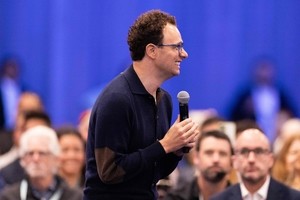
Anthropic CEO calls for auto-industry-style safety standards for AI
Dario Amodei outlines three-step approach: internal review, industry standards, international cooperation 'AI is advancing far faster than expected — but slowing down doesn't mean stopping' Dario Amodei, the CEO of Anthropic who has called for a more measured pace of AI development, said AI safety should be approached the same way automakers manage vehicle safety. Speaking at Dreamforce, Salesforce's annual conference at the Moscone Center in San Francisco on Tuesday (local time), Amodei took the stage alongside Salesforce CEO Marc Benioff and outlined a three-step framework for AI safety: internal review, the establishment of industry-wide standards, and international cooperation. "Imagine a car company discovers a safety problem — a brake issue or a manufacturing defect," he said. "The first responsible step is to look at your own record." Companies should first audit their own practices, improve existing procedures, reaffirm transparency and increase investment in safety, he said. "After that, the whole industry needs to come together and discuss safety standards that apply to everyone," he said. "And finally, there needs to be international cooperation." Amodei said the safety plan he has proposed for AI follows exactly that model. He noted that while he had previously predicted AI would grow more capable as computing resources expanded — the so-called scaling law — even he had not anticipated how fast that progress would come. "I'm surprised that this kind of speed is possible in the business world," he said. He added that even if AI development were frozen at its current state, the value society is actually capturing represents only 5 to 10 percent of what AI is capable of delivering. "There are still endless areas where it can be deployed more broadly to provide social benefits," he said. Amodei was careful to clarify that calls for a slower pace do not mean halting progress. "Talking about slowing down AI doesn't mean freezing the technology," he said. "AI will continue to advance." Benioff echoed the sentiment. "What has happened over the past 10 years has been truly remarkable — no one could have predicted this scenario," he said. "We need to keep a close eye on the pace of AI development." Amodei sparked widespread debate Saturday when he published a post on his personal blog arguing that AI development should be slowed in the interest of safety. OpenAI CEO Sam Altman, Google Chief Scientist Demis Hassabis and SpaceX AI CEO Elon Musk have expressed support for the position, but President Donald Trump has dismissed such AI safety concerns as a "scam" and strongly opposed calls for AI regulation.
Sept. 16, 2026
-
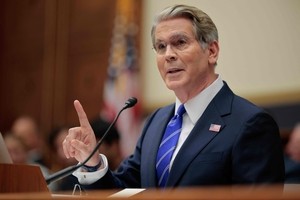
US 10-year yield tops 5.04%, highest in 19 years; Bessent cites 'global issues'
Treasury secretary to meet Chinese Vice Premier He Lifeng this weekend ahead of US-China summit Washington expected to press Beijing on Iran financial sanctions US Treasury Secretary Scott Bessent attributed the recent surge in US government bond yields to "global issues" on Tuesday (local time). Speaking to reporters before a House Financial Services Committee hearing, Bessent said the rise in yields reflected global factors, according to Reuters and Bloomberg. He did not elaborate on the specific drivers behind the increase. However, he said the US government bond market was performing better than any other in the world, stressing its overall health. The yield on the 10-year US Treasury note — a global benchmark for interest rates — briefly surpassed 5.04% during trading that day, its highest level in 19 years. Bessent also said he plans to meet Chinese Vice Premier He Lifeng this weekend to coordinate the agenda for an upcoming US-China summit. President Donald Trump has invited Chinese President Xi Jinping and his wife on a state visit to the United States. The US-China summit is scheduled to take place in Washington, D.C., on Sept. 24-25. At the hearing, Bessent said he intends to raise US financial sanctions on Iran as a key topic in his meeting with He. "We have sanctioned three of their banks," he said. "We have had very good private discussions with China, and I look forward to those discussions continuing when I meet my Chinese counterpart, Vice Premier He, this weekend."
Sept. 16, 2026
-
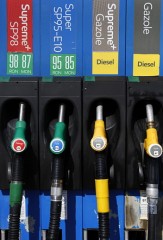
Oil prices hit 4-month high as Saudi, Libya supply fears mount
Oil prices climbed to their highest level in about four months on Tuesday (local time) as supply disruption fears spread from Saudi Arabia to Libya. Brent crude futures for November delivery settled up 2.90 percent at $108.75 a barrel on the London ICE Futures Exchange, while West Texas Intermediate futures for October delivery rose 4.38 percent to close at $105.83 a barrel on the New York Mercantile Exchange. Both benchmarks hit their highest levels since May 19. The surge reflected compounding supply concerns. In Saudi Arabia, Iran-backed Houthi rebels struck the kingdom's east-west pipeline, forcing its closure and halting crude loading operations at the port of Yanbu. Riyadh had been routing oil through that pipeline to Yanbu and exporting it via the Red Sea after Iran blocked the Strait of Hormuz — a workaround that has now also been disrupted. With that alternative route cut off, Saudi authorities notified some European customers that crude shipments scheduled for delivery later this month would be canceled. The cancellations drove WTI futures higher than Brent, as analysts expect European refiners to seek alternative supplies, including US crude, to replace the lost Saudi volumes. Supply concerns deepened further after Libya's state-owned National Oil Corp. announced that three oil fields had been shut down. Members of the Petroleum Facilities Guard, which protects oil infrastructure in Libya, closed valves on some crude export pipelines to press their demand that the force be transferred from the Defense Ministry's authority to the National Oil Corp. Goldman Sachs said in a report that attacks on oil infrastructure had significantly escalated the level of conflict, and warned that Brent crude could exceed $120 a barrel if Gulf region output remains 4 million barrels per day below pre-war levels through 2027.
Sept. 16, 2026
-
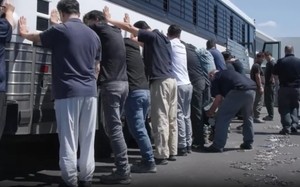
About 300 Korean workers file claims against Trump administration over Georgia detention
Legal action comes nearly a year after arrests at Hyundai Motor-LG Energy Solution battery factory Nine federal agencies named, including DHS, ICE and FBI 'Detained for 7 days without explanation … lasting psychological trauma' Claims could lead to federal lawsuit if rejected About 300 Korean workers arrested and detained last year at a battery factory construction site in Georgia — a joint venture between Hyundai Motor Group and LG Energy Solution — have begun legal proceedings to seek damages from the Donald Trump administration. According to CNN on Tuesday (local time), the workers have started filing administrative claims against nine federal agencies, including the Department of Homeland Security, Immigration and Customs Enforcement, Customs and Border Protection, the Federal Bureau of Investigation and the Justice Department. An administrative claim is a required step before filing a lawsuit against the federal government in the United States. Under the Federal Tort Claims Act, victims must specify a damages amount and attempt to reach a settlement with the government; if the claim is denied, they may then file suit in federal court. A Korean-American attorney in Georgia representing the workers said the firm plans to complete filings for all roughly 300 claimants by the end of the year. The first claimant, identified only by the surname Kim, is seeking compensation for confiscated belongings, lost wages and emotional distress, citing unlawful detention, abuse of process and intentional infliction of emotional distress. Kim said he was subjected to "humiliating living conditions" during seven days of detention at an ICE facility and said the raid and detention have left him with "lasting psychological trauma." Other workers who spoke with CNN said they were handcuffed and shackled at the time of their arrest without adequate explanation or interpretation, and were pressured to sign documents they could not understand. Some also said they were held in overcrowded cells. Four workers who asked not to be identified said they had been working on valid visas and were never told why they were being taken into custody at the time of their arrest. "Even after we were fully detained, we did not know why we had been taken or what crime we had committed," one worker said. "We didn't know anyone. Everyone was just confused." Kim also said: "This happened to us without any proper explanation. If someone had at least told us what was going on while the process was unfolding, we might have been able to understand a little." The attorney representing the workers said the goal of the legal action is "to make the US government recognize the enormous and unjust mistake it made, acknowledge it and apologize for it." The US government maintains that the raid was justified. DHS told CNN that ICE had "executed judicial search warrants as part of an ongoing investigation into illegal employment practices and other serious federal crimes." CBP also maintained its earlier position that those arrested had been found to have worked illegally in violation of their visa or immigration status conditions. US immigration authorities raided the Hyundai Motor Group-LG Energy Solution joint battery factory construction site in Ellabell, Georgia, on Sept. 4 last year, detaining 475 workers. More than 300 of them were Korean nationals. Footage showing heavily armed agents handcuffing and shackling Korean workers before leading them away sparked controversy in both South Korea and the United States over what many called excessive enforcement. With Korean workers now initiating collective damages proceedings nearly a year after the detentions, questions over the legality of the raid and potential human rights violations during the detention process are expected to resurface.
Sept. 16, 2026
-
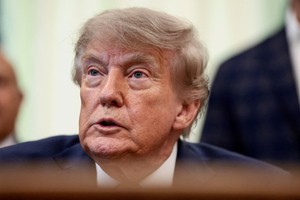
Trump says countries that didn't help US in Iran war will owe reparations
Post-war 'Iran bill' threat Trump says nations that benefited from oil flowing through the Strait of Hormuz but offered no help 'will and must' pay the US A single Trump statement can shake global markets and economies. If keeping up with the daily flood of Trump news feels overwhelming, our Trump briefing has you covered. The Herald Business international desk — on the move from 5 a.m. — curates everything from the latest Wall Street close to the Trump headlines most likely to move global asset markets, all in a one-minute read. Whether you're commuting, eating alone, or winding down for the night — just one minute a day. Subscribe to the Trump briefing newsletter at the Herald Business website. US President Donald Trump said countries that did not help the United States during the Iran war will be made to pay reparations once the conflict is over. In a Truth Social post on Monday (local time), Trump wrote that "oil is flowing through the Strait of Hormuz" and that "the countries of the World that gave us no help whatsoever, will and must pay reparations when this whole fraudulent War is over." He added, "We are doing this much more for other countries than we are for our own, and we have been doing so for many generations." The remarks appear to reflect Trump's view that nations benefiting from the free passage of oil tankers through the Strait of Hormuz — secured by the US military presence there — should compensate Washington for its financial and military burden. With the Iran war, launched by the United States and Israel, dragging on and driving up global oil prices and domestic fuel costs, Trump appeared to be threatening to send a war bill to countries that have refused to join the fight. Since the outbreak of the Iran war, Trump has pressed allies including South Korea and Japan to dispatch warships to the Strait of Hormuz. On Aug. 16, he publicly announced a unilateral decision to sharply scale back the annual joint US-South Korea military exercises, while highlighting South Korea's lack of cooperation in the Iran war.
Sept. 16, 2026
-

Trump administration fires back at Democrats' AI push, calling it midterm politics
Attorney General Blanche: Democratic senators 'suddenly rushing to microphones' after months of silence on AI 'We cannot lose AI race to China … we will not regulate AI' Trump administration pushes back as Obama, Harris and others call for oversight The debate over AI regulation in the United States is rapidly spilling into the political arena ahead of November's midterm elections. After prominent Democratic figures including former President Barack Obama and former Vice President Kamala Harris called for AI oversight, the Trump administration fired back, calling the push "an attempt to influence the midterm elections." Attorney General Todd Blanche said at a White House briefing Tuesday (local time) that the recent controversy surrounding AI was, "needless to say, nothing more than an attempt to influence the midterm elections." "Democratic senators who have been oddly silent for months are suddenly rushing to microphones to talk about AI," Blanche said. "This should not be driving the decisions we make around AI." He added, "We cannot lose the AI race against China." Calls to slow the pace of AI development and require the government to put safety guardrails in place have been growing in the United States. Obama urged lawmakers and the government to get ahead of AI's potential impact on jobs and children, calling for legislation and regulation. Harris, whose name has been floated as a possible 2028 presidential candidate, went further, arguing that the development of cutting-edge AI should be slowed and calling for the creation of a federal AI oversight body. Former Transportation Secretary Pete Buttigieg also added his voice to the regulatory camp, saying the government must actively address the risks posed by AI. The Trump administration has opposed such moves, arguing they could hobble the United States in its race for AI dominance against China. Blanche drew a line, saying, "We are prosecutors, not regulators — so we will not regulate AI." He added that "AI is enormously beneficial to our society" and that there is "a lot of great work that AI does," expressing full agreement with President Donald Trump's push to accelerate AI development. However, Blanche said the Justice Department would aggressively pursue AI-enabled crimes. "Anyone who violates criminal law in connection with AI, we will investigate," he said, adding that prosecutors have already brought charges against individuals in a significant number of AI-related cases. He also raised the issue of China stealing American AI technology. Asked whether the topic should be on the agenda at the US-China summit between Trump and Chinese President Xi Jinping scheduled for Sept. 24, Blanche said he did not think it was fair to blame China as a country, but added: "There are clearly malicious actors in China, and we will absolutely pursue them." With Democrats pressing for active government intervention in the name of AI safety and the Trump administration insisting that development must not be slowed in the technology competition with China, AI regulation is emerging as a new flashpoint in American politics ahead of the November midterms.
Sept. 16, 2026
-
OpenAI says it's already working with Anthropic, Google on AI safety — no antitrust exemption needed
Companies push to establish AI safety standards body; US competition regulator calls move 'highly suspicious' Legislation faces long odds with midterms approaching and Congress focused elsewhere OpenAI has been collaborating with rivals Anthropic and Google on AI safety, even as calls grow across the industry to slow the pace of AI development. Chris Lehane, OpenAI's chief global affairs officer, said at a briefing in Washington that the company had been working with the two competitors on AI safety for several weeks, Bloomberg reported Tuesday (local time). "It makes sense to work together with safety as the top priority," he said. Lehane said the three companies do not believe an antitrust exemption is necessary for them to cooperate on AI safety. Federal Trade Commission Chair Andrew Ferguson pushed back on calls for such an exemption, saying Tuesday he was "highly suspicious" of the request and characterizing it as an attempt to build a moat that would block other competitors from entering the market. Lehane pointed to the aviation industry as a precedent for safety cooperation among competitors, saying "there are many examples of companies trying to help each other solve safety problems." His argument was that measures aimed at ensuring passenger or technological safety — separate from market competition — fall outside the scope of antitrust law. The three companies are working through the collaboration to establish an AI standards body, AFP reported Tuesday. The proposed body is modeled after the Financial Industry Regulatory Authority, which oversees financial firms in the United States. Google Chief Scientist Demis Hassabis had championed the idea. Lehane plans to meet with members of Congress in Washington to support bipartisan legislation addressing risks posed by AI. "We will support whatever bill can get passed," he said, referring to AI regulatory measures currently advancing in both chambers. He specifically cited a House bill sponsored by Reps. Jay Obernolte (R-California) and Lori Trahan (D-Massachusetts) on a federal AI governance framework, as well as a Senate bill led by Senate Republican Floor Leader John Thune (R-South Dakota) alongside Sens. Ted Cruz (R-Texas) and Amy Klobuchar (D-Minnesota). Bloomberg noted that the prospects for passing AI legislation this year appear slim, given that the House is not expected to reconvene until after the midterm elections in early November and that the post-election session is likely to focus on issues such as increasing the defense budget. President Donald Trump has also been a vocal opponent of AI regulation, dismissing concerns about AI safety as a "scam." The industry-wide push for safety cooperation gained momentum after Anthropic CEO Dario Amodei called on Saturday for slowing AI development in a personal blog post, with OpenAI CEO Sam Altman and Elon Musk, CEO of SpaceX's AI division, subsequently voicing support for the idea. Anthropic and Google DeepMind did not respond to requests for comment.
Sept. 16, 2026
MOST READ
- 1KAIST develops high-performance bio-based adhesive using E. coli instead of petroleum
- 2Pope Leo XIV declines French honors and banquet, accepts only private meeting with Macron
- 3Daimler Truck unveils next-generation transport solutions at IAA 2026
- 4What was Rachmaninoff's performance fee? A 1928 price list tells all
- 5Samsung Biologics union's show of force backfires at the bargaining table
- 6APR says hair-loss treatment research published in international journal
-
WORLD
US warns of punishment for anyone enabling Iran's Strait of Hormuz toll scheme
-
INDUSTRY
Toyota union puts productivity first; Hyundai Motor union demands bigger share of profits
-
FINANCE

National Growth Fund to invest $531M in FuriosaAI, which rebuffed Meta's $800M takeover bid
-
INDUSTRY

Korea Shipowners' Association holds amateur baduk tournament for Maritime Day