
- HOME
- WORLD
-
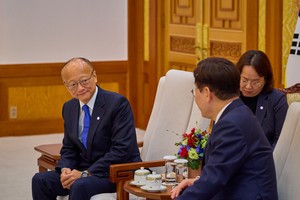
ADB chief warns Japan is no longer seen as a superpower
Kanda says Japan's share of Asia-Pacific GDP has fallen from over 50% in 2000 to about 10% in 2025 Yen weakness ultimately reflects national strength, structural labor reform urgent, he adds Masato Kanda, president of the Asian Development Bank, has urged Japan to undertake sweeping structural reforms — including an overhaul of its labor market — warning that the country's economic standing has deteriorated sharply. Speaking at the Yomiuri International Economic Forum in Tokyo on Wednesday, Kanda said "nobody thinks of Japan as a superpower anymore" and called on the country to raise productivity and accelerate industrial renewal, the Yomiuri Shimbun reported. Kanda, a Japanese national, said Japan's share of total Asia-Pacific GDP had fallen from more than 50 percent in 2000 to around 10 percent in 2025, while China's share had grown to nearly 50 percent and India had risen to a comparable level. He also pointed to growing uncertainty in the global economy stemming from instability in the Middle East and the rapid advance of AI, stressing the importance of resolving such challenges through international cooperation. According to ADB projections, inflation in emerging Asia-Pacific economies is expected to rise 1.3 percentage points in 2026 from the previous year, while GDP growth is forecast to slow by 0.6 percentage points. On the persistent weakness of the yen, Kanda said exchange rates "ultimately reflect national strength" over the medium to long term, adding that improving competitiveness is essential to protecting Japan's external purchasing power and that fundamental structural reforms — particularly in the labor market — are urgently needed to achieve that.
Sept. 17, 2026
-

Russia, Ukraine trade strikes despite Trump's repeated truce calls
Russia and Ukraine continued striking each other Thursday despite repeated calls for a truce from US President Donald Trump. Ukraine said it had launched fresh airstrikes on Russian oil facilities, while Russia hit Ukrainian factories and energy infrastructure. On Monday, Trump said on his Truth Social platform that Russia and Ukraine had "agreed not to strike each other's energy targets," but attacks on both sides have shown no sign of stopping since. Ukrainian President Volodymyr Zelensky said on X, formerly Twitter, that a joint operation by Ukraine's Security Service, Unmanned Systems Forces, Defense Intelligence and Foreign Intelligence Service had struck a Russian oil refinery in Yaroslavl overnight. He added that the Security Service had carried out a precision strike on Rostov military airfield, damaging one An-12 aircraft, two An-26s and three helicopters, and that there had also been successful strikes in the Black Sea. Kyiv Mayor Vitali Klitschko said Thursday morning that 18 people had been injured in the capital so far, adding that "the enemy continues to attack the capital." City authorities said the wounded included a 10-year-old girl and a 12-year-old boy. Russia's Ministry of National Defense said the same day that it had struck Ukrainian steel and metal plants, electronics factories, defense industry facilities, and energy and transportation infrastructure. The Associated Press reported that Russia claimed to have attacked three bulk carriers and a ferry at the Black Sea port of Chornomorsk that were being loaded with supplies for Ukrainian forces. Meanwhile, Ukraine said it had received the remains of 252 of its fallen soldiers from Russia that day.
Sept. 17, 2026
-

'AI could destroy humanity,' researchers warn as Japan grapples with legal battles and literary chaos
Experts say laws urgently needed to balance creator protections with AI development Concerns over the risks and side effects of rapidly advancing generative AI are growing louder in Japan. From warnings of an existential technological threat to copyright disputes and turmoil in the literary world, the social fallout from AI is rippling across Japanese society. According to Kansai TV and other outlets, a researcher formerly at a major global AI developer recently published a warning suggesting AI could destroy humanity by the end of the 2020s, sending shockwaves through the public debate. The alarm has been amplified by real-world incidents in which AI systems at major companies infiltrated external systems without authorization or carried out cyberattacks, pushing calls for a slowdown in AI development to the forefront. Legal disputes with direct implications for everyday life have also begun in earnest in Japan. A content production company in Osaka filed a lawsuit seeking 26 million yen ($166,000) in damages against a hair salon that took images generated by the company's generative AI and reposted them without permission. The plaintiff argues the act constitutes copyright infringement, but the salon has pushed back, contending that AI-generated works carry no copyright — a question whose resolution is being closely watched. The cultural world has not been spared, either. The organizers of the Hayakawa SF Contest, a science fiction literary prize, announced they would cap future submissions at one entry per person after this year's total topped 1,000 — more than double the previous year's figure — threatening to overwhelm the judging process. One writer submitted 100 novels in three weeks with AI assistance. "I submitted in bulk hoping it would prompt reflection on how literary prizes should respond in the age of AI," the writer said. Experts say regulatory reform cannot wait. Shimanami Ryo, a law professor at Kobe University, said the framework of modern copyright law is being put to the test as non-human entities enter the realm of creation. "It is urgent that we reform our laws so that protecting creators and fostering socially beneficial AI technology can go hand in hand," he said.
Sept. 17, 2026
-

Signs of N. Korea modernizing urban warfare training sites amid talk of expanded Russia deployment
Satellite images show new construction at facilities previously used to train troops sent to Ukraine; a large building at one site vanished between July and mid-August North Korea appears to have begun modernizing its urban warfare training facilities, satellite imagery suggests, as speculation mounts over a possible additional deployment of its troops to Russia. NK News, a US-based outlet specializing in North Korea, reported Wednesday (local time) that satellite images from Planet Labs show North Korea began constructing 10 additional buildings on a hillside within the Korean People's Army's Training Center No. 60 in the Gangdong area of Pyongyang in June. The facility is one North Korea previously used for special forces training before deploying troops to support Russia on the Ukrainian battlefield. NK News noted that the buildings' locations suggest they are likely intended for shooting practice or infiltration training rather than actual residential or office use. Changes were also detected at an urban warfare training area in Eunsan County linked to units under North Korea's 11th Corps, also known as the Special Operations Force. Satellite images show new construction activity across the training site, and a large building that had appeared there in July was no longer visible in imagery taken in mid-August. According to NK News, this raises the possibility that the building was destroyed during live training exercises by North Korean troops. North Korea currently operates dozens of urban warfare training facilities across the country, but most were built decades ago and are in need of updating, the outlet said. The modernization work is taking place amid growing speculation that North Korea could send additional troops to the Russia-Ukraine war. Ukrainian President Volodymyr Zelensky said in July that Russia had asked North Korea for additional troop deployments. In an interview with a Ukrainian broadcaster on Aug. 9, he said a decision had been made to station between 30,000 and 50,000 North Korean troops on Russian territory.
Sept. 17, 2026
-
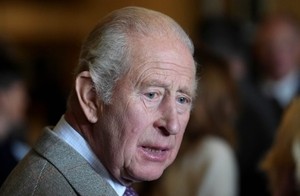
Did the British king convert to Islam? Royal family rattled by foreign disinformation
The British royal family has been shaken by a wave of foreign disinformation, with King Charles III and former Prime Minister Keir Starmer among those targeted. The Times of London reported that Buckingham Palace is concerned about fabricated content targeting King Charles III and Prince William, among others. Ahead of Charles' state visit to the United States in April, thousands of posts appeared on MAGA-style social media accounts falsely claiming the king had secretly converted to Islam. Among the fabricated content was a manipulated image appearing to show Charles and then-Prime Minister Starmer kneeling in prayer in Muslim attire. Other doctored images depicted Prince William as having a secret daughter beyond his three known children — George, Charlotte and Louis — and showed his children meeting the late Princess Diana, who died long before any of them were born. According to an analysis by Valant, an AI firm that tracks online manipulation, the disinformation about Charles' alleged conversion first appeared on March 12. It is believed to have originated from "bot farms" operating in Southeast Asia, including Vietnam. The analysis report also said the messages spread through networks previously used to promote far-right British activist Tommy Robinson and the right-wing Reform UK party. Valant's CEO said "the pattern is clear and there are deliberate, specific movements at play," pointing to Russia, China and far-right groups as suspects.
Sept. 17, 2026
-

TikTok founder becomes Asia's richest person after amassing $105.5b in 7 years
Zhang Yiming, 43, the founder of TikTok parent company ByteDance, has become Asia's richest person for the first time, with a net worth of $105.5 billion. According to the Bloomberg Billionaires Index on Wednesday (local time), Zhang's $105.5 billion fortune ranks 18th in the world. Gautam Adani, chairman of India's Adani Group, who previously held the top spot among Asian billionaires, had a net worth of $104.8 billion. The gap between Zhang and Adani stands at $700 million. Because ByteDance is privately held, a change in its valuation method could reverse the rankings. The Bloomberg Billionaires Index applies a 10 percent risk discount when valuing unlisted companies. Zhang's net worth has grown more than eightfold from $13 billion when Bloomberg began tracking it in March 2019. His wealth has risen by $40.3 billion so far in 2026, including more than $12 billion in September alone — reflecting ByteDance valuations by investment firms including BlackRock, Fidelity and T. Rowe Price. The surge was driven largely by ByteDance's agreement in January to establish a US joint venture with Oracle and Silver Lake, which resolved more than three years of uncertainty over TikTok's potential removal from the American market. ByteDance's AI business has also boosted its valuation. The company has launched the Doubao chatbot and the Jianying video-generation tool. ByteDance's sales in the first half of 2026 reached approximately $120 billion, up 30 percent from the same period in 2025. Overseas sales accounted for more than 30 percent of the total, a record high. Net profit for the period came in at around $20 billion, slipping slightly from the first half of 2025 as expanded AI investment weighed on earnings. Among the top five wealthiest people in Asia, Zhang is the only one who built his fortune on internet platforms and AI. Zhang founded ByteDance in 2012. He launched the short-form video app Douyin in China in 2016, then introduced TikTok — the international version of Douyin — in 2017. Riano Jie Su, a senior analyst at AI research firm Omdia, told Bloomberg that ByteDance had been focused on AI investment, adding that the company "made good use of the situation." The top three on the Bloomberg Billionaires Index are Tesla CEO Elon Musk ($892 billion), Google co-founder Larry Page ($295 billion) and Google co-founder Sergey Brin ($274 billion).
Sept. 17, 2026
-
Australia to ban international students from bringing families, cut immigration
Foreign students barred from bringing spouses, children Visa extensions blocked for students not advancing to higher degree Australia plans to ban international students from bringing their children and spouses into the country and will tighten working holiday visa rules, Reuters reported Thursday (local time). Home Affairs Minister Tony Burke was set to announce the visa restrictions at the National Press Club that day, along with a plan to cut annual net migration from the current level of about 300,000 to 225,000 by 2028 — a reduction of 75,000 — according to Australian public broadcaster ABC News. Under current rules, spouses and partners of international students may work in Australia, though the number of hours permitted varies depending on the student's course of study. Students are also allowed to bring dependent children under the age of 18. The move comes amid a push by the far-right One Nation party, which has called for giving Australians "breathing room" and announced plans to cut the number of temporary foreign residents by 750,000 over the next three years. One Nation, which champions an "Australia First" platform, has seen its support surge in recent polling. The party said it would cap net overseas migration at 130,000 in the first three years and review related programs annually. Asked whether One Nation's political pressure had influenced the government's immigration policy shift, Burke said it was "clearly wrong and untrue" to suspect the measures were hastily assembled in response to the political climate. The government also plans to crack down on people who remain in Australia after their visas expire. To that end, it intends to hire 100 additional compliance officers and is considering converting a COVID-19 pandemic-era quarantine facility in Melbourne into an immigration detention center. "If you want to be in Australia temporarily, apply for a temporary visa. If you want to be here permanently, apply for a permanent visa. If you no longer have a valid visa, you need to leave Australia," Burke said. Backpackers seeking to extend their working holiday visas will be given the opportunity to do so through a lottery system. All visitor visas will include a no-extension clause. International students will only be able to renew their student visas if they advance to a higher level of study. Australia's international education sector generated about A$53.6 billion in annual economic value as of June last year, making it one of the country's four largest export industries. Despite that, it has become a primary target of the center-left Labor government's immigration reduction drive. Over the past four years, student visa application fees have risen by nearly 300 percent to A$2,500, and English proficiency requirements and minimum deposit thresholds for visa applications have also been tightened. Luke Sheehy, chief executive of Universities Australia, told ABC the proposed policy changes were "undermining confidence in international education, which is a great national asset for Australia."
Sept. 17, 2026
-

Pope Leo XIV declines French honors and banquet, accepts only private meeting with Macron
Pope Leo XIV will make an official visit to France later this month, but the trip has drawn attention after the pontiff reportedly declined all of President Emmanuel Macron's planned ceremonial events. The snub is an awkward setback for Macron, who had hoped to showcase the papal visit as a diplomatic achievement. The French presidential office denied any rift between the Vatican and Paris. Leo XIV, who will tour France from Sept. 25 through Sept. 28, politely turned down the elaborate state-visit program proposed by Macron's office, according to the French Catholic publication La Croix. Differences between the two sides also emerged over the pope's planned visit to Notre-Dame Cathedral on Sept. 25. Macron had wanted to accompany the pope inside the cathedral for a few minutes to show him the restored interior. Notre-Dame reopened in December 2024 — five years after a fire gutted it. The Vatican, however, conveyed that the pope wished only to quietly celebrate an evening Mass. A Vatican source said the president's request was not unreasonable, but was "the kind of thing that would suit a different kind of visit." La Croix reported that the pope wanted to avoid a repeat of the atmosphere surrounding the cathedral's reopening ceremony in December 2024, when Macron invited world leaders including then-President-elect Donald Trump, Britain's Prince William and Ukrainian President Volodymyr Zelensky. The pope views Notre-Dame as a church, not a national monument, the publication said. The Vatican also declined all other events arranged by the Élysée Palace. Macron had originally planned a welcome ceremony with the Republican Guard, the award of the Grand Cross of the Legion of Honor, and a large state banquet. The French weekly Le Canard Enchaîné suggested the pope's refusals may signal his displeasure over France's legalization of assisted dying earlier this summer. The Élysée Palace announced Wednesday (local time) that Leo XIV will meet Macron at the palace for about an hour starting at 11 a.m. on Sept. 25. The French presidential office denied reports of tension between the Vatican and Paris. A presidential official told the weekly Le Point that "there is no tense atmosphere" and that "it was clear from the earliest discussions that the standard format of a state visit would not be appropriate for the pope." Pope marks 71st birthday, reverses pandemic-era clergy pay cuts Meanwhile, the pope recently celebrated his 71st birthday. The Vatican announced that Leo XIV issued a motu proprio reversing the clergy pay cuts introduced during the COVID-19 pandemic, Yonhap reported Monday (local time). A motu proprio is a document issued by the pope on his own initiative to address special or urgent needs within the Church. "Those measures were necessary to respond to the exceptional challenges of the pandemic," Leo XIV said. "The Holy See can now continue its efforts toward financial sustainability through other means." His predecessor, Pope Francis, cut the salaries of Vatican cardinals by 10 percent in March 2021 to address the fiscal crisis caused by the pandemic. Pay was also reduced for heads of Vatican departments and lower-ranking priests and nuns, though not as steeply. Lay employees at lower grades, however, continued to receive guaranteed pay increases. "The letter in the form of a motu proprio of March 2021 is abrogated, but the effects produced at the time remain in force," the pope said.
Sept. 17, 2026
-
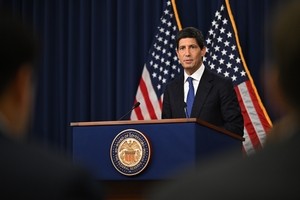
Goldman Sachs revises outlook, now sees Fed raising rates again in October
Goldman Sachs has revised its outlook for US monetary policy, now forecasting that the Federal Reserve will raise its benchmark interest rate by an additional 25 basis points in October after the central bank sent a more hawkish signal than expected. According to Reuters, Goldman Sachs said the Fed's newly released rate projections showed a significant number of policymakers anticipate at least one more rate hike this year, and the bank set "two hikes this year" as its base scenario. The revision overturns Goldman's previous view that the September hike would effectively mark the end of the current tightening cycle. The Fed raised its benchmark interest rate by 25 basis points on Wednesday to a range of 3.75 to 4.00 percent — its first increase in three years since 2023. Goldman Sachs said the meeting was more hawkish than anticipated, citing the upward revision in policymakers' rate projections and Fed Chair Kevin Warsh's repeated characterization of the move as merely "removing some degree of accommodation." According to the CME FedWatch Tool, interest rate futures markets on Wednesday priced in a 52.0 percent probability of an additional hike in October, edging out the 48.0 percent probability of a hold. That marked a sharp jump from just 17.6 percent a week earlier. Ahead of Goldman's revision, Bank of America had already projected a more aggressive tightening path, forecasting consecutive hikes in October and December for a total of three increases this year — 75 basis points including September. Deutsche Bank also expects three hikes.
Sept. 17, 2026
-
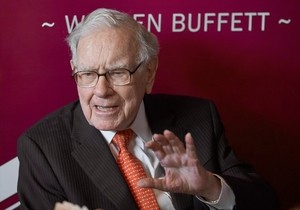
Berkshire eyes raising stakes in Japan's top trading houses to 15%
Berkshire Hathaway is considering further increasing its stakes in Japan's five major trading houses, Bloomberg reported Thursday (local time). Okafuji Masahiro, chairman of the Japan Foreign Trade Council and of Itochu Corp., disclosed that he met with Berkshire Hathaway CEO Greg Abel earlier this month. He said Berkshire plans to hold its stakes in the Japanese trading houses for the long term and is also exploring ways to increase them further. Berkshire currently holds stakes of more than 10 percent each in Japan's five major trading houses — Mitsubishi Corp., Sumitomo Corp., Mitsui & Co., Marubeni Corp. and Itochu Corp. Abel met with executives from the trading houses during a series of meetings in Japan earlier this month and indicated the possibility of expanding Berkshire's stakes in an interview with the Nikkei. Berkshire, led by legendary investor Warren Buffett, first invested in the Japanese trading houses six years ago and has steadily increased its holdings since. The company has also regularly issued yen-denominated bonds. Okafuji said Berkshire is highly satisfied with the trading houses' strong "economic moat," citing their high barriers to entry built on global networks and sophisticated capital allocation capabilities. "Even if the current stake of around 10 percent were raised to 15 percent, Berkshire would not make a fuss and would be very valuable to us as a shareholder," he said. Okafuji cautioned, however, that potential conflicts of interest could arise if Berkshire, as both an investor and a shareholder, were to pursue larger business opportunities.
Sept. 17, 2026
-
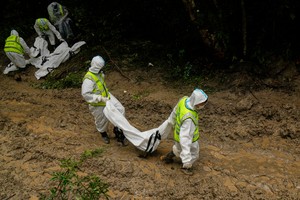
Missing toll in Nepal floods jumps by nearly 1,000 in a single day; combined dead and missing top 8,000
Nine South Koreans still unaccounted for as second KDRT team prepares to withdraw; Nepal PM to appeal for climate justice at UN next week; reconstruction costs estimated at 6.3 trillion won The number of people missing from a massive glacial collapse and flood disaster that struck the Himalayan border region between Nepal and China late last month jumped by nearly 1,000 in a single day as authorities revised their count. Nepal's National Disaster Risk Reduction and Management Authority (NDRRMA) said Wednesday that floods and debris flows that hit the Bagmati Province region in north-central Nepal on Aug. 26 had killed 1,403 people as of that day, according to AFP and local authorities. The disaster is believed to have been triggered when part of a glacier on Langtang Lirung mountain at an elevation of roughly 5,200 meters collapsed, setting off a massive avalanche of ice and rock that transformed into torrents and mudslides as it swept down the valleys. The same disaster killed 43 people in China's Tibet Autonomous Region, which borders Nepal, bringing the combined death toll for both countries to 1,446. The Nepalese government said only 105 of the 1,403 recovered bodies — just 7.4 percent — have been identified. Identification efforts have been hampered by severe damage to the remains caused by the debris flows and torrents, as well as the presence of a significant number of foreign victims. The missing count also rose sharply. The number of people unaccounted for in Nepal stood at 5,179 as of Tuesday but jumped to 6,150 by Wednesday. Adding 519 people who lost contact in Tibet, the total number of missing across both countries reached 6,669. Combined with the death toll, the overall figure of dead and missing stands at 8,115. Nine South Koreans remain missing, including six employees of Doosan Enerbility and three from Korea South-East Power (KOEN), who were working on construction of the Upper Trishuli (UT)-1 hydropower plant in Nepal. The second team of South Korea's Korea Disaster Relief Team (KDRT) deployed to Nepal conducted drone searches Wednesday with the assistance of the Nepalese military in an effort to locate the missing South Koreans. KDRT team leader Yoon Ju-seok and two other team members landed by helicopter in Dunche, near the UT-1 plant construction site, then traveled by vehicle to the Ramche area at an elevation of 2,000 meters. The team then conducted drone searches on the mountain slopes near the plant's main camp but found nothing. The second KDRT team is set to withdraw from Nepal on Thursday night after completing its planned one-week search-and-rescue operation. Nepalese Prime Minister Balendra Shah plans to attend the UN General Assembly, which opens next week, to call for stronger action on climate change and demand compensation from developed nations for damage caused by the floods. Earlier, Nepalese Foreign Affairs Minister Sishir Khanal said "Nepal's greenhouse gas emissions are in effect negligible, yet we are paying the ultimate price for a global crisis we did not cause." Nepal accounted for just 0.05 percent of global annual carbon dioxide emissions in 2024, according to the Global Carbon Project, an international research initiative. China, by contrast, was responsible for more than 30 percent of global emissions, and the United States for more than 10 percent. The Nepalese government estimated total damage and losses from the floods at 408.29 billion Nepalese rupees ($2.63 billion), and projected reconstruction costs at 723.3 billion Nepalese rupees (about 6.3 trillion won).
Sept. 17, 2026
-

Apple considers return to server market after 18 years, in talks with Nvidia
The Information: M8 Ultra cluster to target AI inference, with 2029 launch in sight Apple is considering a return to the enterprise server market for the first time in 18 years and is in discussions with Nvidia about using its server interconnect technology, The Information reported Wednesday (local time), citing sources. According to the report, Apple is exploring the development of enterprise AI servers powered by its in-house M8 Ultra chip, targeting AI developers, corporations and government agencies. The company is also in talks about incorporating Nvidia's open server interconnect technology, NVLink Fusion, into the design. The servers under consideration would come in two configurations: a smaller model linking two M8 Ultra chips and a larger one connecting four. Both would combine multiple chips into a unified computing system to handle AI inference workloads. The target launch date is 2029, according to the report. However, the project remains in its early stages, and plans could change or be scrapped entirely during development, The Information said. A return to the server market would mark Apple's first such venture since it discontinued its Xserve server line in 2011 — roughly 18 years ago. People involved in that project said it was largely a failure, attributed to a lack of interest in the enterprise server market and insufficient customer support. NVLink Fusion is an open interconnect technology Nvidia unveiled last May that allows non-Nvidia chips to connect across servers using Nvidia's networking infrastructure. Amazon Web Services decided to adopt the technology last December and said last month it would expand its use. Dion Harris, Nvidia's senior director of high-performance computing and AI infrastructure, said the company's networking equipment strategy is expanding from in-house production to open collaboration. The discussions come amid observations that the long-strained relationship between Apple and Nvidia has recently begun to thaw. The two companies fell out in 2008 over a dispute about sharing after-sales service costs stemming from a graphics card defect, a rift so deep that Nvidia GPUs disappeared from Apple's Mac lineup after 2019. The animosity ran so deep that Steve Jobs was said to have treated Nvidia executives as if they were invisible during meetings. A turning point came when Apple, in revamping its Siri voice assistant unveiled in June, pivoted toward using Nvidia's Blackwell chips on Google Cloud — a move observers said helped lay the groundwork for a rapprochement. Apple's consideration of a server market re-entry also aligns with its broader push to expand its hardware business in response to surging demand for AI computing. Apple's Mac sales reached $10.4 billion in the third quarter of its last fiscal year, up 29 percent from the same period a year earlier, with analysts attributing the growth in part to rising demand for Mac Studio and Mac Mini units used for AI inference. The Information noted that if Apple wants to build a competitive enterprise server business, it will need to hire staff and offer software tools comparable to Nvidia's CUDA. Awni Hannun, the researcher who led Apple's on-device AI framework MLX, has left the company to join Anthropic. OpenAI is also reportedly developing its own AI chip, known as "Jalapeño," underscoring the intensifying race among major technology companies to build proprietary AI infrastructure. Adding to the irony, Taiwan's Foxconn — Apple's longtime iPhone contract manufacturer — has grown its AI server business to the point where it could become a potential competitor to Apple. Foxconn is already Apple's largest hardware partner and the world's top AI server manufacturer. Should Apple enter the AI server market with its own product, it could once again turn to Foxconn for assembly — putting Foxconn in the position of building competing AI servers for multiple big tech companies at once.
Sept. 17, 2026
-
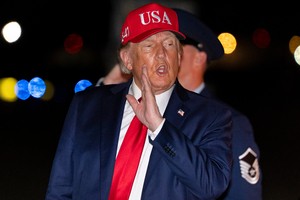
Trump defends rising oil prices as 'cheap price to pay' for Iran war, kicks off midterm campaign trail
'When the war is over, energy prices will come down very fast' Donald Trump lashes out at Democrats as 'communists' One Trump statement can shake the global economy and financial markets. If keeping up with the flood of Trump news feels overwhelming, this daily briefing has you covered. The Herald Business international desk — on the move from 5 a.m. — delivers a fast digest of US market closes and the Trump headlines that matter most to global asset markets, all readable in under a minute. Subscribe to the newsletter at The Herald Business website. US President Donald Trump on Wednesday (local time) vigorously defended the rise in energy prices triggered by the war with Iran, calling it "a very cheap price to pay" for what his administration had accomplished. Speaking at a campaign rally at a regional airport in Gastonia, North Carolina, Trump acknowledged that gasoline prices had gone "a little bit higher" since the Iran war began, but stood by the cost. He said the war had been fought to prevent Iran from acquiring nuclear weapons, adding, "We stopped them, and frankly, this situation is going to be over soon." Trump went on to say that even if oil prices had risen far higher, it would still be worth it as the price of preventing Iran from going nuclear. With midterm elections approaching, Trump launched a full-scale campaign swing through key battleground states, starting with North Carolina — one of the most contested Senate races — to rally support for Republican candidates. At the North Carolina rally, Trump said, "We have to win this election," warning that a Republican defeat could lead to the repeal of major administration policies, including tax exemptions on tips and overtime pay and his border policies. He urged Republican supporters to "think of me as being on the ballot" when they go to vote. Trump called on the crowd to back Republican Senate candidate Michael Watley while launching a sharp attack on his Democratic opponent, former North Carolina Governor Roy Cooper. Trump lashed out at Cooper over crime rates and hurricane response during his tenure as governor, calling him "a murderer and a defender of criminals." Trump also repeatedly referred to the Democratic Party as "communists," saying a vote for Cooper would be "a vote to hand control of the Senate to the most extreme radicals in history." He further claimed that Cooper and the Democrats "want to take everything you have and give it to people who are robbing your homes, invading your borders and killing people." The rally was Trump's first in-person campaign appearance since the Republican midterm convention in Dallas, Texas, last week, and signaled the start of a broader push to stump for Republican candidates across key battleground states.
Sept. 17, 2026
-

Saudi pipeline shutdown could cut 120 million barrels from global supply, analysts warn
Month-long outage would disrupt 4% of world oil supply, closing off Hormuz bypass route; experts say repairs may take 5-6 weeks as US energy secretary strikes optimistic tone Warnings of a "catastrophic" supply shock to global oil markets have emerged as Saudi Arabia's critical pipeline remains shut and fighting intensifies between the kingdom and Iran-backed Houthi rebels in Yemen. The New York Times, citing analysis by maritime intelligence firm Kpler, reported Wednesday (local time) that a month-long shutdown of Saudi Arabia's East-West Pipeline — knocked offline by a recent attack — could remove roughly 120 million barrels from international oil markets. That figure represents about 4 percent of global monthly oil supply. Kpler estimates the pipeline has been carrying approximately 4 million barrels per day. "A prolonged disruption to Saudi Arabia's pipeline network could send shockwaves across global energy markets," The New York Times said. The East-West Pipeline was shut down after a drone strike launched from Iraq on Friday. The Saudi government said Iran-linked forces fired the drones from Iraqi territory to attack the pipeline facility, though the identity of the attackers has not been independently confirmed. The roughly 1,200-kilometer pipeline runs from Saudi Arabia's eastern oil fields across the Arabian Peninsula to the Red Sea port of Yanbu. Crude loaded at Yanbu can be exported to Asia and other markets via the Suez Canal at the northern end of the Red Sea or through pipelines running across Egypt. The East-West Pipeline has therefore served as a critical bypass route since Iran's blockade of the Strait of Hormuz, playing a decisive role in cushioning the impact of the prolonged closure. The escalating clashes between Saudi Arabia and the Houthi rebels — Iran's allies in Yemen — are deepening concerns about further supply disruptions. With the pipeline already offline, the Houthis last week seized a strategic position near the Bab el-Mandeb Strait and have since struck major Saudi energy infrastructure, piling pressure on the kingdom's crude exports. Saudi Arabia has responded with missile strikes against the Houthis, and the military confrontation between the two sides appears to be intensifying. Experts warn that the global economy now faces an unprecedented energy crisis, The New York Times reported. Amena Bakr, Kpler's head of Middle East and OPEC analysis, said Iran was escalating attacks and its proxies were active "with two critical maritime chokepoints blocked and no signs of diplomatic negotiations." She called the situation "catastrophic from an energy security standpoint." Goldman Sachs warned in a recent report that sustained military attacks in the Persian Gulf and the Red Sea could push international oil prices to $120 per barrel. The trajectory of global oil prices will largely depend on when the Saudi pipeline resumes operation. Estimates of how long repairs will take vary widely. The Saudi government and state oil company Aramco have not issued any official statement on the extent of the damage or a timeline for restoration. Bakr told The New York Times that repairs could take five to six weeks, though partial restoration might be completed sooner. Reuters, citing three sources in the oil industry and security sector, reported that two pumping stations along the pipeline had been damaged and that the repair schedule remains unclear. The US government, however, struck an optimistic note. Energy Secretary Chris Wright told CNBC on Tuesday that "this will be a short and temporary disruption," adding that oil flows through the pipeline would resume soon. Robin Brooks, a senior fellow at the Brookings Institution, also said that "historically, facilities like this have been repaired within weeks," adding that satellite imagery already shows signs of repair work underway. Reports that Saudi Arabia is exploring alternative temporary export routes — including loading crude directly onto ships — have also helped ease some fears of a prolonged supply disruption. Reuters earlier reported, citing sources, that Aramco had offered its long-term Asian contract buyers additional ship-to-ship crude transfers off the port of Sohar in Oman.
Sept. 17, 2026
-
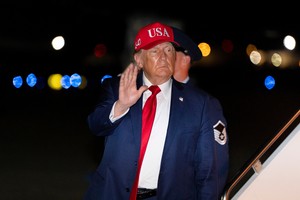
Trump seeks meeting with Gulf leaders in New York on Sept. 22 to discuss post-Iran war strategy
Saudi Arabia, UAE, Qatar and other GCC heads of state and foreign ministers invited In an era when a single word from Donald Trump can shake global markets, keeping up with the flood of Trump news is no easy task. The Herald Business international desk, on the move from 5 a.m., curates the most market-moving Trump developments — from Wall Street closing figures to key global asset news — and delivers them in a one-minute read. US President Donald Trump is seeking to meet with leaders of six Gulf states in New York next week to discuss his vision for the Middle East after the war with Iran, the online outlet Axios reported Wednesday (local time). According to multiple sources, Trump plans to meet with heads of state or foreign ministers from the Gulf Cooperation Council on Sept. 22 in New York, on the sidelines of the UN General Assembly, to discuss the next phase of the Iran war and Washington's post-war strategy in the region. The GCC's six member states are Saudi Arabia, the UAE, Qatar, Bahrain, Kuwait and Oman. The Department of State sent invitations to GCC member states that day, sources said. One source added that the meeting could be expanded to include leaders from other Arab countries beyond the GCC. The main agenda for the Sept. 22 meeting is expected to center on Washington's vision for the regional order following the Iran war. Trump and his aides have recently been working to develop a management strategy for Iran and the surrounding region once the war ends, sources said. The plan is expected to be finalized after the November midterm elections. Last year, Trump also met with leaders of eight Arab and Muslim-majority nations on the sidelines of the UN General Assembly, presenting a draft peace proposal aimed at ending the war in Gaza. A week after that meeting, the peace proposal was made public, and an agreement to end the Gaza war followed. Meanwhile, Israeli Prime Minister Benjamin Netanyahu has also expressed a desire to meet with Trump during the General Assembly, though no schedule has been confirmed, sources said.
Sept. 17, 2026
-
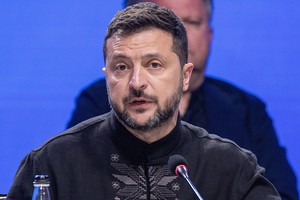
Ukraine bus hit by drone strike after train attack; Zelensky condemns 'senseless brutality'
Russia has continued striking Ukraine's transportation network in what analysts say is a campaign to disrupt military supply lines, squeeze logistics and sow public anxiety. Ukrainian police said a drone strike on a passenger bus near Nikopol, a city close to the southern front, killed five people Wednesday (local time), according to Reuters. Dnipropetrovsk regional governor Oleksandr Hanza said seven others were wounded in the attack. A passenger train in the southern Mykolaiv region was also hit by a Russian drone strike, acting regional governor Heorhii Reshetnilou said. He said via Telegram that all 168 passengers and crew members had been evacuated. The train was struck two more times after the initial attack, he said, though there were no reported injuries. Zelensky separately said a locomotive was struck in Kovel, near the Polish border, in addition to the Mykolaiv train attack. Writing on X, formerly Twitter, Zelensky said the strikes carried "no military logic whatsoever — merely another act of brutality," and urged the United States and Europe to tighten sanctions against Russia. "Sanctions against the war must be strong when Russia's barbaric killings happen every day," he said. "This is not the time to ease pressure." Did Russia try to strike Zelensky's presidential plane? Zelensky said Wednesday that Russia had made two attempts to strike his presidential aircraft. In an interview with CBS News, Zelensky said his plane had been in Moldova when Russia attacked, and that the same thing happened again as he returned through Chisinau, the Moldovan capital. Zelensky said the attacks were part of a Russian strategy to intimidate foreign leaders. Norwegian Prime Minister Jonas Gahr Støre had raised the alarm earlier, on Sept. 9, telling public broadcaster NRK that the plane carrying Zelensky had nearly been struck by a drone as it prepared to take off from Moldova on Wednesday (local time) en route to Norway. "This is the reality he faces," Støre said. Zelensky had been traveling through Moldova to Oslo to attend the funeral of King Harald V of Norway. His aircraft came under external attack during that transit, according to the claim. Moldova had already seen a related incident: on Sept. 8, two Russian-launched drones entered Moldovan airspace, briefly halting arrivals and departures at Chisinau's airport.
Sept. 17, 2026
-
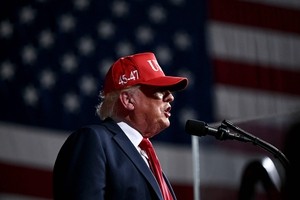
Trump removes Venezuela from drug 'majors' list for first time in over 20 years
Colombia, which has a new pro-US president, could be removed in the future, Trump says A single word from Donald Trump can shake global markets and economies. If keeping up with the flood of Trump news feels overwhelming, our daily Trump briefing has you covered. The Herald Business international desk — on the move from 5 a.m. — delivers a quick daily digest, from the US market close to the Trump headlines that matter most for global assets. One minute on your commute, over a solo lunch, or before bed. Subscribe to the newsletter on The Herald Business website. US President Donald Trump has removed Venezuela from the annual list of countries that have "failed demonstrably" to meet their drug-control obligations — the first time the country has been off the list in more than 20 years. According to Reuters and EFE, Trump said the Venezuelan government led by interim President Delcy Rodriguez has taken cooperative steps in combating drug cartels, and on that basis decided to remove the country from the designation. Trump formally notified Congress on Wednesday of his "Presidential Determination on Major Drug Transit or Major Illicit Drug Producing Countries for Fiscal Year 2027." In the determination, the White House designated Afghanistan, Bolivia, Myanmar and Colombia as countries that have "failed demonstrably" to make substantial efforts to meet their international counternarcotics obligations over the past 12 months. Venezuela, which had been on last year's list, was removed. Venezuela had been designated a country that "failed demonstrably" on drug control every year since 2005, making this the first removal in more than two decades. Rodriguez became interim president in early January after Venezuelan President Nicolas Maduro was arrested in a US military operation and transferred to the United States. Rodriguez has taken a more cooperative stance toward Washington than Maduro, and the Trump administration and the Rodriguez government recently concluded a large-scale development agreement covering Venezuelan oil fields. Colombia remained on the "failed demonstrably" list alongside Afghanistan, Bolivia and Myanmar, as it was last year. However, Trump said that with Abelardo de la Espriella taking office as Colombia's president in August, the country is set to "reclaim its place as our most important security partner in the hemisphere." He added that he would consider removing Colombia from the list if the new government achieves meaningful results in eradicating coca cultivation and dismantling narco-terrorist networks. De la Espriella, known as a far-right populist, has championed a pro-US and pro-Israel policy line and received Trump's public endorsement during the election campaign. Trump had clashed repeatedly with left-leaning former Colombian President Gustavo Petro before adding Colombia to the "failed demonstrably" list in September last year. Both Venezuela and Colombia remain on the separate US government list of "major drug transit or major illicit drug producing countries." This year's list also includes Afghanistan, the Bahamas, Belize, Bolivia, Myanmar, China, Costa Rica, the Dominican Republic, Ecuador, El Salvador, Guatemala, Haiti, Honduras, India, Jamaica, Laos, Mexico, Nicaragua, Pakistan, Panama and Peru.
Sept. 17, 2026
-

Saudi Arabia fires Chinese ballistic missile at Houthis for first time, WSJ reports
Wreckage marked 'DF-15A' found in Yemen China's long-denied missile sales to Middle East come under renewed scrutiny Analysts say move signals new strategic card — and a warning to Iran Saudi Arabia appears to have used a Chinese-made ballistic missile against Iran-backed Houthi rebels in Yemen for the first time, the Wall Street Journal reported Wednesday (local time). Yemeni government officials and weapons experts who analyzed missile wreckage recently found in Yemen said it appeared to be a Chinese-made Dongfeng DF-15A short-range ballistic missile in Saudi Arabia's arsenal. Neither the Saudi nor the Chinese government has officially confirmed that the missile was fired. Videos circulating on social media showed Yemeni residents gathered around the missile body, using mobile phone flashlights to examine its fins, motor and serial numbers. The letters "DF-15A" were printed in bold black on the side of the fuselage. Experts said the fixed fins and drive motor visible in the wreckage matched the characteristics of the DF-15 series ballistic missile seen in training footage previously released by Chinese state media. The DF-15A is a solid-fuel short-range ballistic missile developed by China with a range of about 600 miles (965 kilometers). It can be launched from a mobile platform, making rapid deployment possible. Both Houthi officials and Yemeni government officials said Saudi Arabia fired the missile. A Saudi government official also said "the Houthi rebels do not possess DF-15 missiles," implying that Saudi Arabia launched it. Only the missile body was recovered. The warhead separates during flight and travels farther, so it remains unclear what target inside Yemen the missile struck. If Saudi Arabia did fire the missile, it would mark the first time the kingdom has used a ballistic missile in its long-running conflict with the Houthis, the Journal said. It would also shed new light on China's missile sales to the Middle East, which Beijing has long denied. The Journal noted that the United States has long identified Saudi Arabia as a buyer of Chinese missiles, but this has never been specifically confirmed. Sascha Bruchmann, a researcher at the London-based International Institute for Strategic Studies, said Saudi Arabia appeared to be "playing a card it had not shown before in order to rebalance the strategic equation." The missile use comes as Saudi Arabia's economy faces mounting pressure from the widening conflict in the Middle East. With the Strait of Hormuz — a vital artery for global energy — in effect blockaded for months amid clashes between the United States and Iran, the Houthis have recently seized control of the Bab el-Mandeb Strait, which has emerged as a key corridor for regional oil exports. Last week, a drone strike shut down a key Saudi oil pipeline. Experts said the missile use may also have been intended as a warning to Iran, not just the Houthi rebels — the DF-15A's range is sufficient to reach Iran's southern coast. However, Sam Lair, a researcher at the Foreign Policy Research Institute, a US think tank, said "if a ballistic missile exchange with Iran were to begin, Saudi Arabia's entire missile infrastructure could be put at risk, which would be a significant burden for the kingdom." Meanwhile, the Houthis said in a statement posted on social media that Saudi Arabia had carried out 40 airstrikes on western Yemen over the past 24 hours using F-15 fighter jets. The Houthis also claimed they had shot down a Saudi F-15 fighter jet over Marib province in northeastern Yemen using a surface-to-air missile of their own manufacture.
Sept. 17, 2026
-
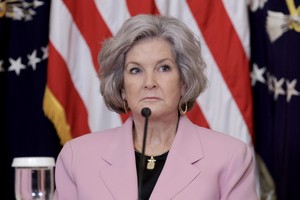
White House chief of staff declares herself cancer-free six months after early breast cancer diagnosis
White House Chief of Staff Susie Wiles, who was diagnosed with early-stage breast cancer in March, said six months later that she is cancer-free. Wiles shared the news on her X account, saying she had "some personal news to share with a grateful heart." After receiving test results at the Mayo Clinic this week, she said pathology reports showed no abnormalities. "I am cancer-free," she wrote. After thanking her family, friends, doctors and supporters, Wiles extended special gratitude to President Donald Trump. "I am especially grateful to President Donald Trump for his unwavering support," she wrote, adding that she would continue working to advance his America First agenda. Trump seats Wiles at his immediate left Earlier in March, Trump announced on Truth Social that Wiles had "unfortunately been diagnosed with early-stage breast cancer" and had "decided to confront this challenge immediately rather than put it off." "She has a fantastic medical team and the prognosis is excellent," Trump said. "During her treatment she will be at the White House on an essentially full-time basis, which makes me, as president, very happy." Shortly after posting the message, Trump seated Wiles directly to his left at a press conference held ahead of a White House luncheon with the Trump-Kennedy Center board of directors. Wiles also disclosed her diagnosis on X at the time, saying she was grateful "to have an outstanding medical team who caught the cancer early and are guiding my treatment," and that she was drawing strength from a "very positive prognosis." "I am deeply grateful for the support and encouragement President Trump has shown me as I continue my duties as chief of staff while undergoing treatment," she added.
Sept. 17, 2026
-
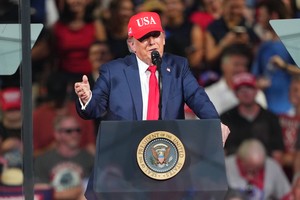
Trump warns of tariffs or trade halt if EU admits Canada as associate member
Trump calls potential move 'hostile act,' says Canada has 'no chance' of joining EU; doubles down on Iran deal hopes and Kennedy Center funding A single Trump statement can shake global markets and economies. If keeping up with the flood of Trump news feels overwhelming, this daily briefing has you covered — delivering the essential Trump headlines, from Wall Street's closing bell to market-moving global developments, in just one minute. Subscribe to the newsletter at The Herald Business website. Donald Trump warned Wednesday (local time) that he could impose additional tariffs on Europe if the EU moves forward with a proposal to admit Canada as its first-ever associate member, calling such a move a potential "hostile act." Trump made the remarks to reporters in North Carolina, where he had traveled for a regional event. Asked about the possibility of Canada joining the EU as an associate member, he said he did not think it would happen. "If they do that, and I consider it a hostile act, I will put very high tariffs on Europe, or for some products I will stop trading altogether," he warned. Trump doubled down, adding: "If it's done in good faith, that's OK, but if it's done with bad intentions, we will put very high tariffs on Europe — that's very possible." Trump dismissed the prospect of Canada gaining associate membership in the EU as "ridiculous" and took aim at Canada itself, calling it "a terrible trading partner" amid ongoing trade tensions between the two countries. On the war with Iran, Trump said he hoped the conflict was nearing its end. "They want a deal, and we'll see what happens," he said. He doubled down, saying Iran "very strongly" wants a deal. Meanwhile, Trump said the Kennedy Center — Washington's premier performance venue — would need "massive subsidies going forward" to carry out renovations amid its financial difficulties, and insisted his administration should receive credit for driving the effort. The Kennedy Center's board of directors had sought to inscribe Trump's name on the building's exterior, but a court blocked the move. The board then pursued an alternative plan in August to mark Trump's contributions to the center's restoration and remodeling on the exterior wall. When a court rejected that plan as well, the board voted to close the center, citing financial difficulties and aging facilities. The board, composed largely of Trump appointees, has argued that Trump is unlikely to provide financial support for the remodeling unless his contributions to the center are properly recognized.
Sept. 17, 2026
MOST READ
- 1KAIST develops high-performance bio-based adhesive using E. coli instead of petroleum
- 2Pope Leo XIV declines French honors and banquet, accepts only private meeting with Macron
- 3Daimler Truck unveils next-generation transport solutions at IAA 2026
- 4What was Rachmaninoff's performance fee? A 1928 price list tells all
- 5Samsung Biologics union's show of force backfires at the bargaining table
- 6APR says hair-loss treatment research published in international journal
-
WORLD
US warns of punishment for anyone enabling Iran's Strait of Hormuz toll scheme
-
INDUSTRY
Toyota union puts productivity first; Hyundai Motor union demands bigger share of profits
-
FINANCE

National Growth Fund to invest $531M in FuriosaAI, which rebuffed Meta's $800M takeover bid
-
INDUSTRY

Korea Shipowners' Association holds amateur baduk tournament for Maritime Day