Repeated design changes add 3.8 billion won in construction and service costs
Construction delays drive indirect costs above 1 billion won
Calls grow for accountability over poor pre-project review and project management
Lawmaker Choi Byung-eun urges probe into waste of taxpayer money
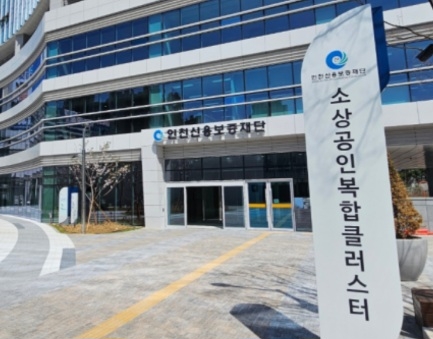
A small-business complex cluster project under construction in Incheon's Ruwon City has been engulfed in controversy over poor project management, as costs have ballooned well beyond initial estimates amid repeated design changes and construction delays that have generated additional expenses.
Despite multiple rounds of design review and building permit procedures, design changes continued after construction began, with billions of won in extra budget poured in as a result.
Delays in the main construction work have also pushed back timelines for other trades, causing indirect costs to snowball — prompting calls for a full accounting of responsibility across the project.
The issues were raised Monday during the 2026 administrative audit of the Incheon Credit Guarantee Foundation by Choi Byung-eun, a lawmaker on the Incheon City Council's Industry and Economy Committee, who pressed the foundation on cost overruns and design changes in the small-business complex cluster project.
According to Choi, the project was originally budgeted at 34 billion won ($25.5 million) but costs have since risen to 59.4 billion won.
That represents an increase of 25.4 billion won — a roughly 75 percent rise from the original plan. The total projected outlay has been put at 65 billion won.
The problem, Choi said, is that the cost increases cannot be attributed simply to inflation or unavoidable changes in project conditions.
Repeated design changes during construction added about 2.25 billion won in interior work costs, about 470 million won in construction management service fees and about 400 million won in electrical work costs.
When telecommunications and fire department work are included, the total increase in construction and service costs from design changes alone comes to about 3.8 billion won.
Choi said it was hard to accept that tens of billions of won in design changes had occurred during construction — citing client requests as the reason — when the project had already gone through multiple pre-construction review stages since the development plan was approved in 2019, including conceptual design, interim design, design adequacy review and building permit procedures.
Choi suggested there may have been gaps in the initial cost estimation and design verification process, given that items that should have been reflected in the original design were apparently not properly reviewed before construction proceeded.
In one case, a discrepancy between design documents and actual on-site quantities led to a contract reduction of about 72 million won — raising further questions about whether basic drawing reviews and site condition checks had been carried out properly.
The additional costs stemming from construction delays were also found to be significant.
Delays in the main building construction pushed back schedules for follow-on trades — telecommunications, fire protection and electrical work — generating indirect costs of about 268 million won for telecommunications, about 152 million won for fire protection and about 116 million won for electrical work, for a combined total of 536 million won.
Including increases in construction management service fees, the total additional burden from the construction delay was said to exceed 1 billion won.
Calls have grown for an investigation into the cause of the building construction delays and whether the contractor, supervision team and other project parties fulfilled their contractual obligations.
"We need to examine whether it is appropriate for the foundation, as the project owner, to bear all the indirect costs incurred in other trades due to the building construction delay," Choi said. "Those responsible for the delay — including the contractor — must be held strictly accountable, up to and including clawback measures."
Choi also urged a thorough review of whether the construction management team performed its duties during the design changes and schedule extensions, including its work performance evaluations and records of review opinions submitted.
"The core of any public-sector construction project is the accuracy of the initial plan and the transparency of its execution," Choi said. "Given that enormous amounts of taxpayer money have been additionally poured into a key public facility for small-business owners, the causes of the cost overruns and construction delays must be clearly identified and explained to the public in a transparent manner."
gilbert@heraldcorp.com