Ministry of Employment and Labor requests 11.6 billion won on top of National Assembly's 6.6 billion won proposal
7,200 radio-wave detectors to be deployed; dedicated monitors to be stationed in every exam room
Budget subcommittee review expected Wednesday
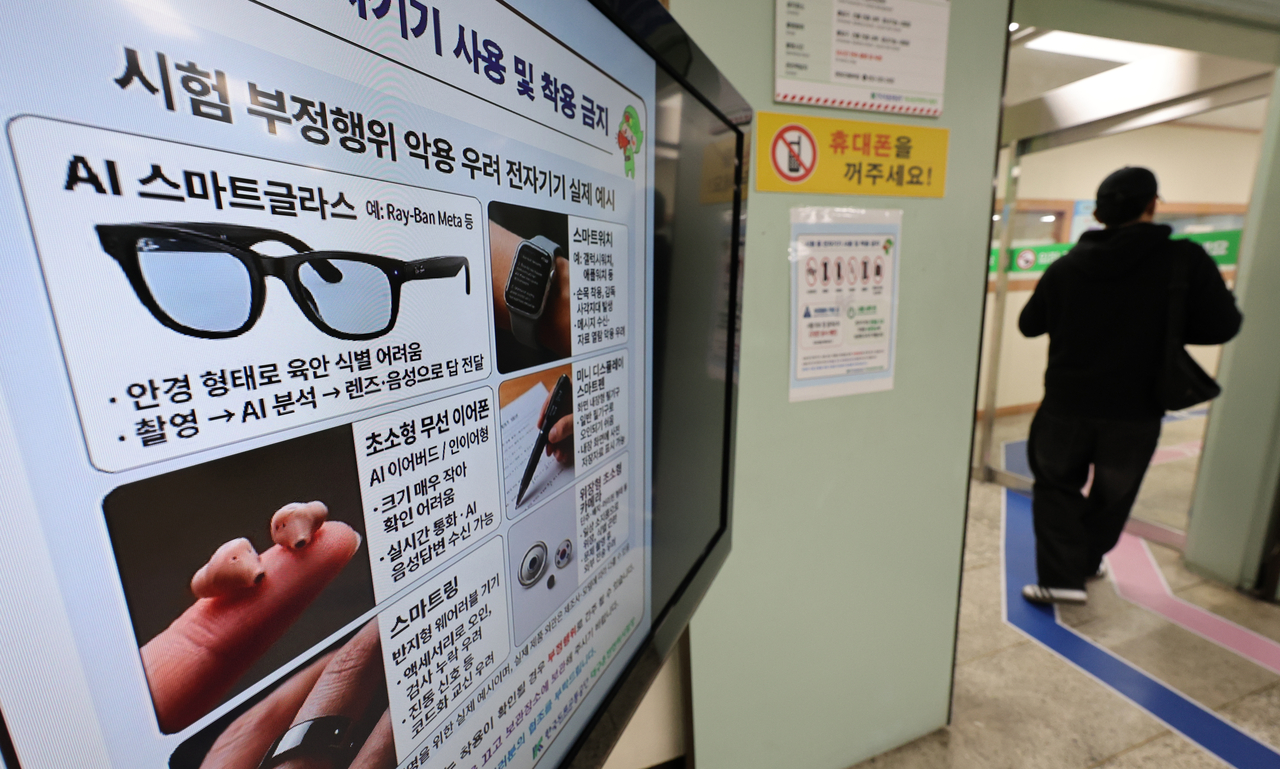
The government and the National Assembly are pushing to increase next year's budget for preventing cheating on national qualification exams by 18.2 billion won ($13.6 million), after the top scorer on this year's tax accountant exam was found to have cheated using AI.
The funds would cover the purchase of 7,200 radio-wave detectors to counter cheating with high-tech devices such as miniature cameras and smart glasses, as well as the cost of stationing dedicated surveillance personnel in every exam room.
According to the National Assembly and related ministries, the Ministry of Employment and Labor told a budget subcommittee of the National Assembly's Climate, Energy, Environment and Labor Committee on Tuesday that the anti-cheating budget for the Human Resources Development Service of Korea's qualification examination project should be raised by an additional 11.6 billion won beyond the increase already proposed.
That figure, combined with a 6.6 billion won increase drafted by the office of People Power Party lawmaker Kim Wi-sang based on high-tech cheating issues raised during the national audit, brings the total to 18.2 billion won. No separate budget had been allocated for this purpose this year.
Of the additional 11.6 billion won requested by the ministry, 8 billion won would go toward expanding surveillance personnel and 3.6 billion won toward higher unit costs for the detectors.
The ministry plans to expand the deployment of specialists monitoring the use of devices such as smart glasses from the exam-site level to the individual exam-room level. Under that plan, the number of personnel would grow from 23,560 to 87,350, with a total budget of 11 billion won required for staffing.
For radio-wave detectors, the ministry is pursuing high-spec equipment developed by the Korea Communications Agency, with the unit price rising from 500,000 won to 1 million won and 7.2 billion won budgeted to purchase 7,200 units. The proposed budget increase is expected to be reviewed by the committee's budget subcommittee and plenary session Wednesday.
Twelve cases of cheating using smart glasses were detected in national qualification exams administered by the agency this year.
The agency has referred or plans to refer nine of those cases to investigative authorities. The suspect who scored first on the tax accountant exam confessed to cheating using a miniature camera, a smartphone and AI, and appeared before police Tuesday as a suspect.
The government has decided to conduct a comprehensive review of all 528 categories of national qualification exams administered by the agency this year. Officials plan to flag suspected AI cheating by examining scores significantly above the three-year average, large gaps between rankings, and pass rates that deviate from previous years.
fact0514@heraldcorp.com