
Seocho jeonse listings surge 94% in six months
Raemian Trinione, DH Bangbae move-ins drive supply
Large units fall; small units scarce
School-zone, upgrade demand erases move-in effect

In real estate, the impatient always lose. Demand for smaller units is so strong that prices won't come down — the move-in market effect is only showing up for the large units.
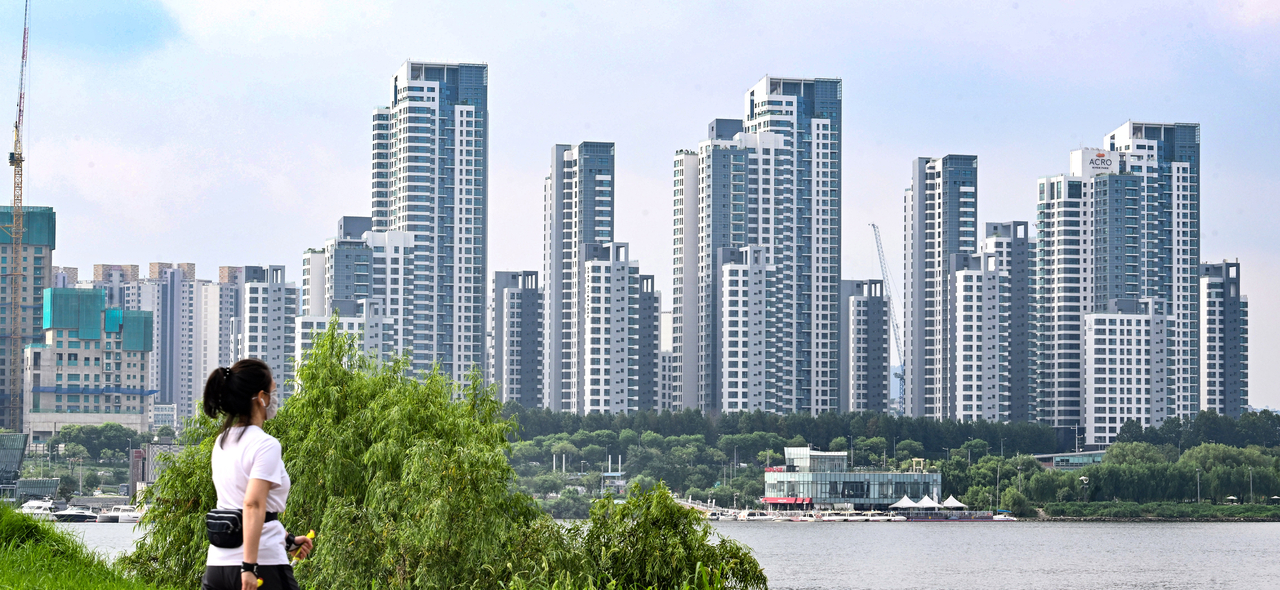
More than 5,000 units in newly built apartment complexes have begun move-ins in Seoul's Seocho-gu this year, yet the expected "move-in market effect" has been slow to appear. Typically, when large complexes open for occupancy, landlords put jeonse listings on the market to cover balance payments, pushing rental prices down. In the Banpo-dong and Bangbae-dong areas, however, steady rental demand — particularly for small- and mid-sized units — has kept prices from falling.
According to real estate big data firm Asil, jeonse listings for apartments in Seocho-gu stood at 6,908 on Monday, up 94.3 percent from 3,555 six months earlier on March 7. The increase reflects a wave of move-ins at large complexes in the second half of this year, including Raemian Trinione (2,091 units) in Banpo-dong and DH Bangbae (3,064 units) in Bangbae-dong.
Listings in Banpo-dong repeatedly rose by more than 100 in a single day in June, surpassing 3,500 at the end of May. Jeonse listings in Bangbae-dong also climbed to 2,074 as of Monday.
The listing figures alone would suggest jeonse prices should be falling, but conditions on the ground tell a different story. Local agents say there is a significant gap between the number of listings aggregated online and the volume actually available for lease. The head of Agency A in Banpo-dong said listings on apps should not be taken at face value. "Landlords post the same unit across multiple platforms for advertising purposes, so two actual listings can look like 200," the agent said. Another agency noted that a client searching for a monthly-rent unit about 10 days ago had found what appeared to be a viable option, only to discover it was a phantom listing that could not actually be contracted.
Analysts also point out that the large supply of new units has not been enough to outpace demand. An official at Agency B in Banpo-dong said that while prices normally fall during a move-in period, Raemian Trinione is a different case. "Many of the union members are people in their 50s and 60s who want to live there themselves," the official said. "Because it is not a complex driven by investment demand, jeonse listings were structurally unlikely to come to market." The official added that the complex's location in a sought-after school zone — home to Sehwa High School — has also drawn tenants eager to secure a place before school assignment deadlines.
The head of nearby Agency C echoed the point, noting that in Seocho-gu it is common for prospective tenants to reserve units six months to a year in advance. "Demand from people looking to upgrade into units in the 66-to-99-square-meter range is so strong that even when move-in supply comes onto the market, there is never enough," the agent said. An official at Agency D agreed, saying that standard-sized jeonse units "can't be sold because there simply aren't any."
According to the Korea Real Estate Board, the average jeonse price for apartments in Seocho-gu rose consistently from about 1.12 billion won ($838,000) in January to about 1.16 billion won in July. The jeonse price index climbed from 96.74 in January to 100.34 in July. Prices edged down slightly in August, but the cumulative gain for the year still reached 5.02 percent.
With rental demand concentrated in small- and mid-sized units of 59 to 84 square meters in exclusive use area, an unusual divergence has emerged: jeonse prices for large units are falling sharply even as landlords cut asking prices, with no takers in sight. The head of Agency A said a 182-square-meter unit at Raemian Trinione is currently listed at 3.5 billion won with no contract in sight. "That is a floor plan where asking prices had reached 4.2 to 4.3 billion won," the agent said.
Meanwhile, the market is bracing for a standoff among landlords ahead of the implementation of the Aug. 3 tax reform package targeting high-value properties and non-resident single homeowners. Many landlords who had originally planned to put their units up for jeonse are now weighing whether to move in themselves. An official at Agency B said some owners are torn over whether to take up residence because of real estate policy, while others have opted for short-term rentals to wait out the situation until policy is finalized next year.
Experts say the move-in market effect will be difficult to count on in Seoul for the foreseeable future. Yoon Ji-hae, head of the research lab at Real Estate 114, said tighter owner-occupancy requirements under the land transaction permit zone designation have eliminated speculative rental supply — buyers who subscribed to apartments intending to lease them out rather than live there. The government's Oct. 15 measures last year placed all of Seoul and parts of Gyeonggi Province under land transaction permit zone restrictions, imposing a two-year owner-occupancy requirement.
"No matter how much supply comes onto the market, it will be hard to see a move-in effect the way we used to," Yoon said. "It might occasionally appear in areas with weak jeonse and monthly-rent demand, but Seocho-gu has always had abundant rental demand."

shy@heraldcorp.com
hss@heraldcorp.com




