Early-stage projects face hurdles in securing consent for association formation
Ongoing projects also face variables in general meetings, management and disposal plans, and relocations
Outer northern Seoul districts may revisit project viability amid rising additional contributions

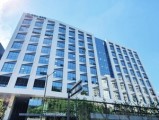
Attention is turning to Seoul's housing supply pipeline as a reconstruction levy on the Banpo Centrevill Asterium complex in Seocho-gu — formerly Banpo Hyundai — draws closer. With construction and financing costs already elevated, the prospect of reconstruction levies becoming a concrete financial burden on association members could make it harder for early-stage projects to gather the consent needed to form associations, while projects already underway may push back management and disposal plans or relocation schedules. Industry officials warn that such delays, compounding across multiple sites, could ultimately affect the timing of groundbreaking and move-in dates for new apartments in central Seoul.
According to the redevelopment industry, the Ministry of Land, Infrastructure and Transport issued a legal interpretation Thursday saying the deadline for imposing reconstruction levies cannot be extended. The industry expects that once the levy on Banpo Centrevill Asterium is finalized, association members at other reconstruction projects will begin calculating their own projected levies and enter into discussions about the pace of their projects.
From association formation to management plans — variables at every stage
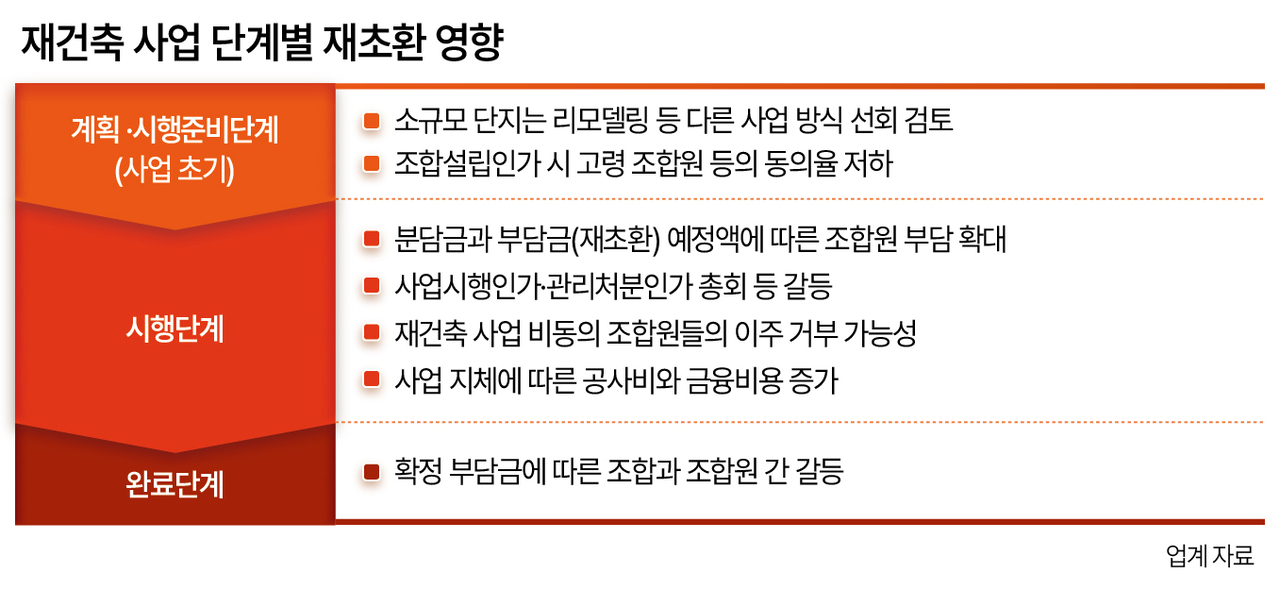
At the early stages of a project, securing the owner consent required to establish a reconstruction association is the critical hurdle. When members must factor in reconstruction levies on top of project costs and individual contribution estimates that are already difficult to pin down, decision-making can slow considerably. If some owners hold off on giving consent until they have a clearer picture of expected costs, association formation itself could be delayed. Smaller complexes with weaker project economics may also begin weighing a switch to remodeling, further complicating discussions about how to proceed.
Park Hap-su, an adjunct professor at Konkuk University's Graduate School of Real Estate, said the reconstruction levy is "a future invoice" for early-stage projects, but one that can weigh heavily on individual members psychologically and financially. "The interests of single-home owners who want levy reductions for long-term holding and multi-home owners can diverge, and conflicts among association members could intensify," Park said.
There are already precedents in the Gangnam area where levy concerns derailed project momentum. The Daechi KGM 1 complex in Gangnam-gu received project implementation approval in October 2018, but progress stalled for an extended period the following year amid disagreements over the levy and a change in association leadership. At the Daechi KGM 2 complex, growing member anxiety over the levy that same year also put the brakes on the project.
For projects already in progress, the general meeting that votes on the management and disposal plan is the pivotal moment. If reconstruction levies are anticipated on top of already-rising additional member contributions driven by higher construction costs, members may raise objections to project budgets or cost-sharing arrangements. Delays in general meeting votes or regulatory approvals would then push back relocation, demolition and groundbreaking schedules in sequence.
"Once levies are finalized for certain complexes, associations will start calculating their own projected amounts, and a mood of 'let's slow down' or 'let's wait for the law to change before pushing ahead' could spread among owners," an industry official said. "Particularly for reconstruction associations in the three Gangnam districts and Yongsan-gu, where pre-sale price caps limit how much they can earn from general pre-sales, the calculations will become even more complicated."
Delays compound financing costs; outer northern Seoul faces viability pressure
Project delays can themselves feed back into higher costs. A longer project timeline means greater financing expenses, and renegotiating construction costs along the way can push individual member contributions even higher. Ham Young-jin, head of Woori Bank's Real Estate Research Lab, said that "with construction costs, financing expenses and member contributions already piling up, having to factor in reconstruction levies on top of that could dampen the drive to push projects forward."
Industry observers note that complexes with thin project economics in outer northern Seoul districts could be particularly exposed. Song Seung-hyun, chief executive of Urban and Economy, said that even where reconstruction levies are relatively modest outside Gangnam, weak project fundamentals and additional contribution issues mean the industry as a whole will feel the impact. "This has provided a catalyst for a fundamental shift in the expectation that reconstruction will push up home prices," Song said. The implication is that the more a project relies on revenue from general pre-sales to cover costs, the more the additional burden on association members becomes the deciding factor in whether to proceed.
Kim Hyo-seon, a senior real estate specialist at KB Kookmin Bank, added that "reconstruction purchases proceed on the belief that a safety margin above the purchase price will be secured, but if existing owners are frightened by the levy and refuse to move forward, it will ultimately translate into a supply delay."
Delays in association formation at early-stage projects could affect medium- to long-term supply schedules, while setbacks in management and disposal plans or relocations at projects already underway could push back planned groundbreaking and move-in dates.
Analysts also expect home price trends within reconstruction complexes to diverge depending on whether a levy applies and how large it is. Kim Je-gyeong, director of Tumi Real Estate Consulting, said that "major reconstruction complexes facing large contributions and levies will see transaction activity cool, slowing turnover and sapping overall momentum." Kim added that because reconstruction associations — or project operators — are the primary levy obligors, with association members as secondary obligors, "the conflict between associations and their members will be no small matter."
Ham said that "since the reconstruction levy is a critical cost that determines a project's profitability, a gap in investment appeal is inevitable between complexes where the levy risk has disappeared and those where it still remains," adding that "price differentiation between complexes will become increasingly pronounced as a result."
hope@heraldcorp.com