National association to hold press conference in front of Cheong Wa Dae on Dec. 16
Associations plan to file cancellation suits immediately upon levy imposition, up to Supreme Court
Disputes over per-member profit allocation expected even after total levy is confirmed
Most associations in the Seocho-gu area had already been preparing lawsuits — from older completed complexes to newly built ones. If the reconstruction excess profit recapture cases go to court, they could drag on for up to 10 years, and the thinking is that policy direction could change in the meantime, so the mood is to hold out.
With the Ministry of Land, Infrastructure and Transport ruling out any extension of the levy imposition deadline, reconstruction associations in the Gangnam area are mounting a collective response as the reconstruction excess profit recapture regime moves toward actual enforcement. The associations argue that on top of soaring construction costs that have already inflated their individual contribution burdens, adding a reconstruction levy amounts to double taxation. They plan to contest the legality of the levy through prolonged litigation, factoring in the possibility of a policy shift down the road.
According to industry sources Friday, 25 association heads affiliated with the National Reconstruction and Redevelopment Project Association Solidarity — an umbrella body representing 82 reconstruction associations nationwide — met Thursday in Seocho-gu to discuss their response to the reconstruction excess profit recapture regime. They plan to hold a press conference in front of Cheong Wa Dae on Dec. 16 to demand abolition of the system and submit a petition calling for its repeal.
Legal action is also being prepared. Major reconstruction associations in the Gangnam area have been holding a series of meetings with large law firms. Because lawsuits can only be filed after an administrative disposition is issued, the associations say they will move immediately once levies are imposed. "We discussed proceeding with a cancellation suit against the levy disposition after filing an objection once the levy is confirmed," a spokesperson for the association said, adding that the process would take considerable time since a final ruling requires going all the way to the Supreme Court. Administrative suits to cancel a levy disposition must pass through the administrative court and the high court before the Supreme Court issues a final ruling on the levy's legality.
The government had earlier eased some of the burden when it revised the law in March 2024, raising the exemption threshold from 30 million won ($22,500) to 80 million won in excess profit. But associations continue to demand abolition of the system, arguing that it taxes unrealized gains on homes that have not been sold, and that contribution burdens have ballooned due to surging construction costs. The Ministry of Land, Infrastructure and Transport has identified 58 complexes nationwide expected to be subject to the levy. With the imposition deadline now settled, levy procedures are expected to proceed complex by complex in quick succession, and legal battles over the reconstruction excess profit recapture regime are set to intensify.
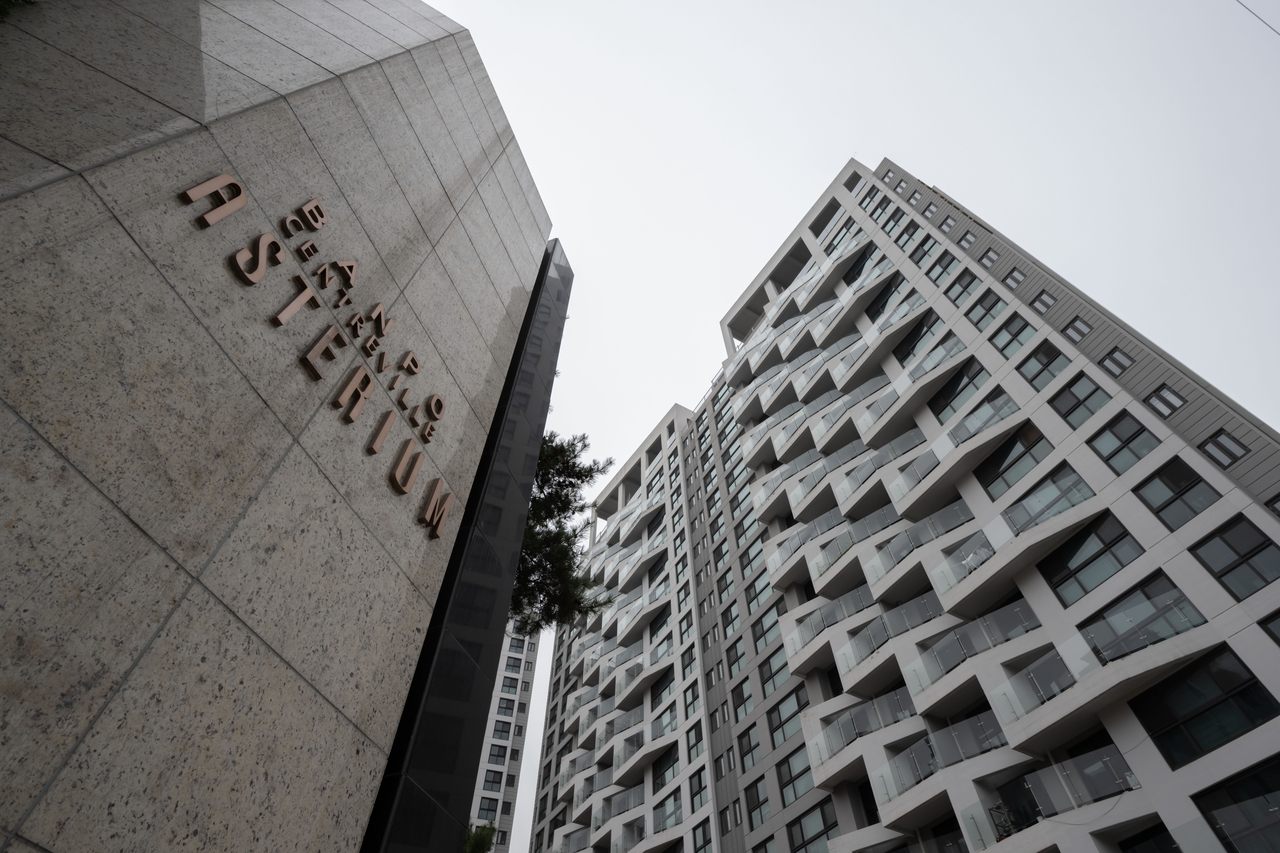
The Banpo Hyundai complex — now known as Banpo Centrevill Asterium — is the most likely candidate to be the first to go to court. The ministry ruled Thursday that Seocho-gu's interpretation of the levy imposition exclusion period — five years starting five months after the date of completion approval — was valid, and notified local governments accordingly. It rejected the interpretation that the 2024 revised law's supplementary provisions could extend the imposition deadline to 2029. As a result, Banpo Hyundai, which received completion approval in July 2021, must be levied by Dec. 30 of this year. Seocho-gu had pre-notified the Banpo Hyundai association on Nov. 9 of a projected total levy of 17.9 billion won, averaging about 220 million won per member. The final levy is expected to be imposed around the end of next month after a 50-day period for submitting opinions.
The associations' preference for prolonged litigation reflects a calculation that policy direction could shift with a change in administration while the legal clock runs.
Legal battles over the reconstruction excess profit recapture regime have in fact stretched close to a decade in past cases. The Hannam Yeonlib complex in Yongsan-gu, Seoul, was levied in 2012 and spent roughly seven years fighting through administrative litigation and a constitutional complaint before the Constitutional Court upheld the system's constitutionality in December 2019. The Doosan Yeonlib complex in Cheongdam-dong, Gangnam-gu — now known as Cheongdam e-Pyeonhansesang 4cha — was levied 431.17 million won in December 2014, prompting the association to file a cancellation suit. After nearly a decade of litigation, the levy was reduced by half to 208.27 million won in December 2024.
Some observers expect the litigation to extend beyond the association level to individual members. Kim Hyo-seon, a senior real estate advisor at NH NongHyup Bank, said the ministry's ruling had settled the question of the levy imposition deadline, but that disputes over how the levy is calculated would be protracted. "In the case of the Banpo Hyundai association, there are plans to challenge the calculation of the standard housing price increase, which affects the total levy amount, and within the association, the calculation of individual net profit could become another point of contention," Kim said.
Kim added that because the enforcement decree requires the levy to be divided among members according to each member's net profit ratio but does not specify the detailed formula for calculating net profit, disputes over per-member allocation could drag on even after the total levy imposed on the association is confirmed. "The items to be considered — such as the housing price at the start of the project, the estimated housing price at the end, and the settlement amount under the management and disposal plan — are defined, but the detailed formula for converting these into individual net profit figures is not spelled out, and that part needs to be clarified," Kim said.
hwshin@heraldcorp.com