
- HOME
- ECONOMY
-
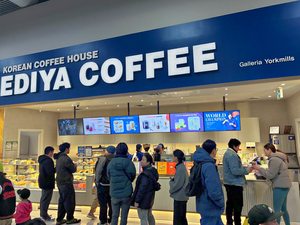
Ediya Coffee opens second Canadian store, accelerates North America push
Ediya Coffee announced Tuesday it has opened its second store in Canada, stepping up its expansion in the North American market. The new location opened Friday (local time) at Galleria Supermarket York Mills in North York, Toronto, Ontario — seven months after the brand launched its first Canadian store in April. The store operates as a shop-in-shop alongside local bakery brand Gateau Bakery, offering Ediya Coffee's range of coffee and beverages in a shared space. The menu blends Korean-inspired items — including amangchu, dalgona latte and saleoleum sikhye — with locally adapted offerings. A dedicated merchandise section stocks Ediya Coffee-branded tumblers, keyrings and coffee mix. The company said the space is designed to broaden customer exposure to Korean cafe culture and lifestyle, while also strengthening ties with local retail channels. Ediya Coffee said it plans to build on the second store's opening to deepen its foothold in the Canadian market. The company intends to refine its operating model to suit local conditions and aims to open a fourth Canadian location by the first half of next year. Over the longer term, the company plans to sharpen its competitiveness in North America by expanding its customer touchpoints and leveraging its differentiated products and Korean cafe culture to grow its brand presence across the region. "The second Canadian store is a meaningful location that broadens our reach to local customers and expands the possibilities for Ediya Coffee in the North American market," a company official said. "We will continue to raise the brand's value in North America."
Nov. 17, 2026
-
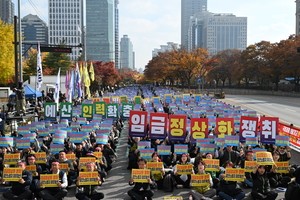
Nine days before general strike, Korea Workers' Compensation unions rally outside National Assembly over 18-year, W98.5b payroll gap
Seven unions at Korea Workers' Compensation and Welfare Service plan rally Tuesday with 2,500 members; 71 positions approved in 2008 never included in total payroll base; unions demand 6.43 billion won in next year's budget; joint strike of 8,000 set for Nov. 26 Seven unions at the Korea Workers' Compensation and Welfare Service are holding their second major rally outside the National Assembly in Yeouido, Seoul, on Tuesday — nine days before a planned general strike. The unions plan to demand that the government include in the agency's total payroll base the labor costs for 71 positions the government approved in 2008, and that 6.43 billion won ($4.82 million) for those positions be reflected in next year's budget. The unions argue that the agency has been covering those salaries out of existing funds for 18 years, accumulating a burden of 98.5 billion won that it can no longer absorb. According to the Korea Workers' Compensation and Welfare Service unions' joint struggle committee, Tuesday's rally will draw members from the agency's headquarters and from Busan, Gwangju, Daegu and Daejeon. The first rally, held at the same location Thursday, brought together 2,500 members from Seoul, the Gyeonggi-Incheon area and Gangwon Province. Combined attendance across both rallies is expected to reach 5,000. Headcount grew by 71 in 2008, but payroll base stayed the same The joint struggle committee said it will press the government and the National Assembly to correct the payroll calculation standard and secure additional field staff and operating funds while the Assembly reviews the 2027 budget. The problem traces back to July 2008. Under amendments to the Industrial Accident Compensation Insurance Act, the agency established an occupational disease adjudication committee and an industrial accident review committee, creating a need for dedicated staff to assess occupational diseases and handle accident reviews. The government responded by approving an expansion of 71 positions at the agency. However, the 4.02 billion won in labor costs required for those new positions was never included in the base figure used to calculate the agency's total payroll. The agency has been covering their salaries out of existing payroll funds, the unions said. The unions said the burden compounded because the amount omitted at the outset was never added back in subsequent years. Each year, the government-set payroll increase rate was applied to a base figure that still excluded the 71 positions. The unions estimate the annual shortfall grew from 4.02 billion won in 2008 to about 6.43 billion won this year. Over the same period, the cumulative labor costs the agency covered from existing funds reached 98.5 billion won, by the unions' estimate. The 6.43 billion won the unions are asking to be reflected in next year's budget represents the 2027 labor costs for the 71 already-approved positions. The unions also called on budget authorities to reform the system so that those positions are permanently incorporated into the agency's total payroll base going forward. Wage gap driving staff departures; first joint strike set for Nov. 26 The joint struggle committee said the prolonged payroll shortfall has made it harder to close the wage gap with other social insurance agencies. Based on 2025 figures from Alio, the government's public institution management disclosure system, the average pay per employee at the agency — excluding physicians — is about 13.77 million won lower than at the National Pension Service. The unions said the pay disparity is driving staff turnover, which could strain the agency's capacity to handle occupational disease adjudications and industrial accident reviews — work that requires experienced personnel. The committee also called for additional field staff and operating funds to support the shift to an income-based employment insurance system and to ensure prompt treatment and rehabilitation for workers injured on the job. "Expanding national policy tasks without the staffing or budget to support them will increase the burden on frontline workers and cause inconvenience for the public," the committee said. Labor and management held their first main bargaining session on June 25 and conducted 18 working-level sessions, but failed to reach an agreement at the third main session on Sept. 9. The unions filed for labor dispute mediation with the National Labor Relations Commission on Sept. 15; the commission held two mediation sessions before suspending the process on Sept. 28. A strike authorization vote held Oct. 27-28 passed with 94.93 percent in favor. The joint struggle committee, comprising seven unions and about 9,000 members across the agency, has held a series of rallies since kicking off with a demonstration outside the Ministry of Employment and Labor on Nov. 4. On Nov. 26, about 8,000 members are set to take part in a first joint strike and a nationwide general assembly. The Korea Workers' Compensation and Welfare Service is a public institution under the Ministry of Employment and Labor that addresses risks workers may face throughout their working lives, including job loss, workplace injury, unpaid wages and retirement. The agency reviews whether injuries or illnesses sustained at work qualify as occupational accidents and pays insurance benefits accordingly. It also operates industrial accident hospitals and rehabilitation facilities to help injured workers recover and return to work. When an employer is unable to pay wages, the agency handles advance wage payments made by the state on the employer's behalf under certain conditions. It additionally administers retirement pension programs for workers at small and medium-sized enterprises, including the SME retirement pension fund known as "Pureun Siat" (Blue Seed).
Nov. 17, 2026
-
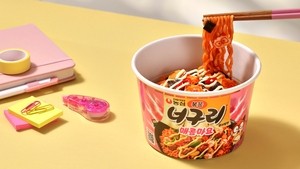
Nongshim to officially relaunch Bokkeum Neoguri, adding new 'spicy mayo' variety
Full production to begin in December as Neoguri brand expands into stir-fry noodle category Nongshim's Bokkeum Neoguri stir-fry noodles will return to store shelves next year, three years after the product was discontinued in 2024. Nongshim announced Tuesday that it will begin full-scale production in December ahead of an official relaunch next year, citing strong consumer response since a limited run of 1.5 million servings went on sale Oct. 27. The company had expected the limited stock to last through year-end, but the product is on track to sell out within a month of its return. Nongshim also confirmed it will release the first new product under the Bokkeum Neoguri line — the Spicy Mayo Bokkeum Neoguri Big Bowl — on Nov. 25, expanding the Neoguri brand into the stir-fry noodle market. The product draws on a cooking trend popular among consumers in their teens and 20s, who often add mayonnaise or cheese to spicy dishes for a richer flavor. "Encouraged by the strong support consumers have shown for the limited-edition Bokkeum Neoguri, we have confirmed an official relaunch and plan to extend the Neoguri brand into the stir-fry noodle category," a Nongshim official said. "Starting with the Spicy Mayo Bokkeum Neoguri, which targets younger palates, we will introduce a variety of stir-fry noodle products to expand the Neoguri lineup." Bokkeum Neoguri was originally launched in 2017 before being discontinued in 2024. Consumer interest grew after it was pulled from shelves, with calls for a relaunch mounting steadily. Ahead of the Oct. 27 return, a presale of 3,000 units through Nongshim's own online store sold out in about two hours.
Nov. 17, 2026
-
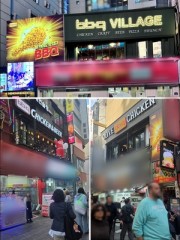
BBQ posts 40% sales growth in Hongdae, Myeong-dong amid tourist surge
BBQ announced Tuesday that its stores in the Hongdae and Myeong-dong commercial districts — popular destinations for foreign tourists — have posted sales growth rates in the 40% range. Cumulative sales at BBQ stores in those two districts climbed 43% and 43.7%, respectively, in the first three quarters of this year compared with the same period last year. The chain attributed the gains to a steady stream of foreign visitors heading to the two districts to try K-chicken, as the number of foreign tourists to South Korea surpassed 20 million for the first time in history this year. The top three menu items among foreign customers are the Golden Olive Chicken, yangnyeom chicken and Phil Crunch. On the side-dish front, tteokbokki, cheese balls and Ppumchicking fries proved most popular. "Our strategy of expanding large-format stores in key commercial districts frequented by foreign tourists has translated into sales growth, riding strong attention to K-chicken," a BBQ official said. "We will continue to strengthen our menu and store competitiveness so that global customers can enjoy a wide variety of chicken and K-food."
Nov. 17, 2026
-
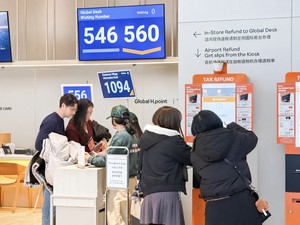
Hyundai Department Store launches VIP membership for foreign shoppers, with airport pickup
Hyundai Department Store is introducing a VIP membership program exclusively for foreign customers, offering airport pickup and dedicated personal shopping assistance. The retailer announced Tuesday that it will launch the "Global VIP Membership" program for members of its foreigner-only integrated membership, H Point Global, starting in February next year. Currently, foreign customers must obtain a Hyundai Department Store card to receive the same VIP benefits as domestic customers. Under the new system, enrollment in H Point Global alone will be sufficient. The Global VIP Membership will operate across all Hyundai Department Store locations nationwide, with two tiers — Platinum and Gold — determined by annual H Point Global purchase totals. Platinum members will receive a vehicle escort service to three stores: the Apgujeong Main Store, the Trade Center Store and The Hyundai Seoul. Customers who book the service before arriving in Korea will be met at the airport by a dedicated vehicle and transported directly to any of the three locations. Hyundai Department Store said it is the first department store to offer airport-to-store vehicle escort service for foreign VIP customers. Platinum members will also receive passes to the Young VIP lounge at The Hyundai Seoul and invitations to private events. Both Platinum and Gold members can use a one-on-one concierge service, with a dedicated "Global VIP Manager" handling pre-visit shopping consultations, service reservations and post-purchase follow-up. The program also includes discount and rewards benefits. Members can earn up to 7 percent of their cumulative quarterly purchases back as H Points. Platinum members will receive eight 5-percent discount coupons per month — each valid for up to 50,000 won ($37) off — while Gold members will receive four. Hyundai Department Store plans to use the Global VIP Membership as a foundation for broader efforts to strengthen service for foreign customers. To that end, it recently established a dedicated Global Marketing Team within its sales strategy division to handle marketing strategy, service development and operation of the membership program. A dedicated Global VIP lounge will also open at The Hyundai Seoul in January next year. "We designed the Global VIP Membership so that foreign customers can experience Hyundai Department Store's differentiated service even before they arrive in Korea," said Park Geun-ho, executive director of sales strategy at Hyundai Department Store. "We will continue to introduce services tailored to our customers' expectations and solidify our position as a global retail platform." Meanwhile, the number of foreign customers who spent 1 million won or more at Hyundai Department Store between January and October this year rose more than 75 percent compared with the same period last year, according to the company. Over the same period, the number of foreign visitors who came three or more times increased 51 percent year-on-year, while those who visited 10 or more times grew 36 percent.
Nov. 17, 2026
-

Public Procurement Service moves to expand joint stockpiling program to counter supply chain risks
Government and private sector hold forum Tuesday to broaden industry participation and discuss financial support through supply chain stabilization fund South Korea's Public Procurement Service is moving to broaden private-sector participation in its joint stockpiling program and introduce new financial support measures as part of efforts to respond early to global supply chain disruptions. The agency held an industry forum Tuesday at the Seoul Regional Office of the Public Procurement Service to discuss ways to revitalize the public-private joint stockpiling program and expand corporate participation. Launched in 2010, the program allows private companies to store raw materials purchased with their own capital at Public Procurement Service storage facilities. The arrangement lets the government boost its ability to respond to supply shortages by expanding stockpile volumes, while participating companies cut inventory management costs. The program currently focuses on copper, a material in high industrial demand from private asset managers and data center operators. The forum was organized to revitalize the joint stockpiling regime by widening private-sector participation to include non-ferrous metal smelters and trading companies, and by diversifying the range of covered commodities — steps aimed at building a more permanent capacity to respond to supply chain crises. Participants were briefed on a plan under which the Export-Import Bank of Korea would provide preferential interest rates of up to 2.4 percentage points through its supply chain stabilization fund for companies enrolled in the Public Procurement Service's joint stockpiling program. The agency said it expects the measure to ease the financial burden on participating firms, offer a tangible incentive for joining and ultimately draw in more private-sector players. Jang Eui-sun, director general of the Public Procurement Service's public materials bureau, said activating the public-private joint stockpiling program through government-industry cooperation is essential to securing the stability of raw material supply chains. "We will continue to listen closely to voices from the field, develop support measures that companies can actually feel, and use them to strengthen the nation's overall stockpiling capacity," Jang said.
Nov. 17, 2026
-
'Like a kitchen knife': Why e-commerce platforms can't fully block tiny cameras and earphones used in exam cheating
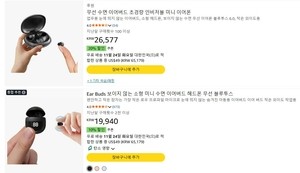
Naver Shopping sends sellers caution notice over exam-cheating concerns Coupang, Gmarket also step up monitoring Experts say a complete ban is impossible: 'Ultimately a human problem' South Korea's e-commerce industry is watching closely as fallout grows from a cheating scandal involving AI-powered devices at a national tax accountant licensing exam. Platforms have long banned items that could be used for illegal purposes such as privacy violations, but concerns are mounting that the latest high-tech gadgets will be exploited in new ways — and that such cases will only increase. The industry is expected to tighten its surveillance, though many in the sector acknowledge that a complete block is out of reach. Naver Shopping sent a notice to its sellers Monday urging caution over listed products, according to industry sources. "Cheating using micro cameras, AI glasses and micro earphones at national licensing exams and language tests has come to light repeatedly and become a serious social problem," the platform said in the notice. It added that exam cheating "is a grave act that can lead to criminal punishment, including invalidation of results, restrictions on eligibility to sit future exams, and referral for investigation and prosecution." Naver Shopping said it "restricts the handling of products that could be exploited for criminal purposes and monitors products that could be used to cheat on exams," and asked sellers for "special caution and cooperation." Through the notice, Naver Shopping banned product names, descriptions and images that evoke exam cheating — including terms such as "for exams," "crib sheet," "college entrance exam" and "certification exam." Promotional phrases such as "won't get caught by the proctor" and "won't show" were also prohibited. Marketing micro earphones small enough to hide inside the ear for exam use or covert purposes is likewise restricted. Also banned are cameras disguised as glasses, ballpoint pens, watches or buttons, as well as stickers and covers designed to conceal the recording indicator on AI glasses. The measures follow Naver Shopping's own product-handling standards, which restrict the sale of items that raise criminal concerns or could violate privacy. The platform holds a large share of South Korea's open-market segment, where individual sellers list their own products. Naver Shopping said that "if such products are found, sales may be suspended and sanctions imposed without prior warning." Gmarket, one of South Korea's first-generation open marketplaces, has also begun internal discussions on the issue. The platform has already banned the sale of cameras too small to tell whether they are recording or that are disguised as other objects. Coupang Inc also restricts the sale of privacy-violating devices and wiretapping or eavesdropping equipment, blocking listings through monitoring even when sellers attempt to post such products in violation of its policies. AliExpress said it "identifies problematic products in advance through seller and product verification, AI-based monitoring and additional review by staff, and suspends sales of any product found to violate policy." The platforms are acting because e-commerce has been identified as a primary distribution channel for the devices used in the cheating cases. Searching for micro cameras, earphones and AI glasses on various e-commerce platforms returns thousands of listings. Prices are low: searching "invisible earbuds" on Amazon yields products priced from around 10,000 to 30,000 won. Some platforms are also reported to sell micro cameras, wireless earphones and communications equipment as bundled sets. The top scorer on the tax accountant exam at the center of the controversy has admitted to using such devices to cheat. Despite the industry's self-policing efforts, many observers say a complete block will remain elusive. "A kitchen knife sold online can become a weapon or not, depending on who buys it, for what purpose and how they use it," one industry official said. "It's impossible to block everything, so all we can do is strengthen monitoring." Another official echoed the point: "AI glasses themselves are not illegal items. The problem lies with the people who use them for illegal purposes." The scandal could also prompt broader policy discussions. Lee Eun-hee, a professor of consumer studies at Inha University, said e-commerce platforms need to strengthen both pre- and post-sale self-regulation. "Full prior regulation is difficult, but platforms are required to take a proactive approach — constantly reviewing potentially problematic products and setting clear standards through internal review committees or similar evaluation bodies," Lee said.
Nov. 17, 2026
-
Lotte World Tower to flash golden Morse code for NASA's Voyager milestone campaign
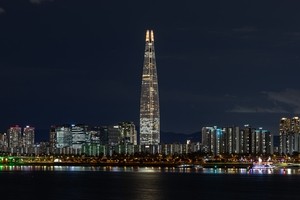
Only South Korean participant — Empire State Building, Space Needle also join Media facade to display V·G·R Morse sequence in 2,700K golden light Lotte World Tower announced Tuesday it will join NASA's "Voyager's Light-Day" campaign, lighting its facade in golden Morse code sequences that evening. It is the only landmark in South Korea participating in the campaign. The campaign marks the moment Voyager 1 reaches a point one light-day from Earth — a distance of about 25.9 billion kilometers, or how far light travels in a single day. Launched in September 1977, the spacecraft will have taken roughly 49 years to cover that distance, making it the farthest any human-made object has ever traveled. NASA has set the arrival time as Wednesday at 7:16 p.m. (local time). New York's Empire State Building and Seattle's Space Needle are among the other landmarks joining the campaign. Lotte World Tower will flash the Morse code abbreviation for Voyager — "V-G-R" — for about one minute every 30 minutes from 7 p.m. to 10 p.m. Tuesday. The lighting follows NASA guidelines, using a warm golden tone of 2,700K. Each dot stays on for 0.5 seconds and off for 0.5 seconds, while each dash remains lit for 1.5 seconds. The sequence is produced by switching the lights on and off along the tower's top lantern section and two notch bands running across the center of its exterior walls. Lee Mi-hyeon, marketing team leader at Lotte Asset Development, said the company was honored to take part in a global campaign celebrating one of humanity's greatest journeys. "We hope that through Lotte World Tower's golden facade lighting, visible from anywhere in Seoul, many people will be able to share in this historic moment," Lee said. Standing 555 meters tall, Lotte World Tower has more than 27,000 LED lights installed on its exterior and has previously participated in campaigns including Earth Hour and the Pink Ribbon Campaign.
Nov. 17, 2026
-

Korea Customs Service strengthens customs cooperation with EU
Korea Customs Service Commissioner Lee Jong-wook meets EU ambassador to Korea, agreeing to work together on smooth implementation of the Korea-EU FTA and joint responses to transnational crimes including drug smuggling and intellectual property violations The Korea Customs Service is moving to strengthen joint efforts with the EU on the smooth implementation of their free trade agreement and on combating transnational crimes such as drug smuggling and intellectual property violations. Commissioner Lee Jong-wook met EU Ambassador to Korea Ugo Astuto at Seoul Customs House on Monday to discuss ways to facilitate trade and deepen customs cooperation between the two sides. At the meeting, Lee said close cooperation between customs authorities was essential to ensuring smooth bilateral trade, and asked the ambassador to take an active interest in improving the customs environment and supporting the stable implementation of the Korea-EU Free Trade Agreement. Lee also called for expanding information sharing and enforcement cooperation between the two countries' customs agencies to jointly counter transnational crimes, including drug trafficking and intellectual property infringement. "The EU is one of Korea's major trading partners and a very important customs cooperation partner," Lee said. "I look forward to both sides continuing to communicate closely and work together to facilitate trade and create a safe trading environment."
Nov. 17, 2026
-
Is it safe to eat glutinous rice cake on the day before the college entrance exam? A doctor weighs in
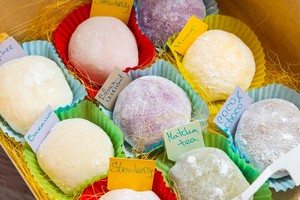
A nervous stomach may struggle to digest rice cake — go easy if you usually do Cream- and cheese-filled varieties are higher in fat and harder to digest Skip caffeine for a good night's sleep; stick to familiar foods in moderate amounts the previous day Gifting glutinous rice cake, or chapssaltteok, to college entrance exam takers is a long-standing tradition — the sticky treat is meant to symbolize "sticking" to success. But students sitting for the College Scholastic Ability Test should think twice before eating too much of it the previous day. Pre-exam nerves can make the stomach more sensitive than usual, slowing digestion. According to a health information site run by Harvard Medical School, stress and anxiety can affect the movement and contractions of the gastrointestinal tract. Because the brain and digestive system are closely connected, tension can trigger symptoms such as nausea and stomach pain. A 10-year follow-up study of 703 Swedish adults, published in Gastroenterology in 2015, also found a link between anxiety and functional dyspepsia. Students who have experienced indigestion after eating rice-based snacks such as injeolmi should skip the chapssaltteok the previous day and save it for after the exam. Medical experts advise that because trigger foods vary from person to person, individuals should use their own past reactions as a guide. For those choosing from the trendy varieties now popular, it is worth checking the fat content of the filling. Products such as fresh-cream chapssaltteok, cream-cheese chapssaltteok and fruit chapssaltteok replace the traditional red-bean paste with fresh cream or cream cheese. "Glutinous rice and fatty foods tend to stay in the stomach longer than other foods," said Park Kyung-hee, a professor of family medicine at Hallym University Sacred Heart Hospital. "People with acid reflux or weakened digestion should be careful about how much they eat." What about chocolate, another popular gift for exam takers? Park cautioned that adequate sleep is essential for staying in top condition, and that students sensitive to caffeine should be wary. "Chocolate with a high cacao content, or caffeinated drinks, can have a stimulating effect that disrupts sleep," Park said. According to data from the US Department of Agriculture and the Ministry of Food and Drug Safety, a standard 30-gram serving of regular chocolate contains about 16 milligrams of caffeine, while dark chocolate with 70 to 85 percent cacao content contains about 24 milligrams. A 200-milliliter serving of coffee-flavored milk contains roughly 47 milligrams. Overeating can also burden digestion and interfere with sleep. On the previous day, students are advised to eat familiar, well-cooked foods in moderate portions. "It is safer to avoid raw foods or anything whose freshness is hard to verify, as well as overly spicy or greasy foods," Park said.
Nov. 17, 2026
-
Sponsor door-to-door sales revenue falls below W1tr; 6 in 10 sellers earn nothing
Number of sellers drops 10.6% to 1,015; top 4 firms hold 75.7% of market; online shopping share rises to 7.3% Revenue from sponsor door-to-door sales companies fell nearly 17% last year, dropping below 1 trillion won ($750 million) for the first time in recent years. The number of companies, registered sellers and bonus payouts all declined amid the broader slump, and only 4 in 10 registered sellers actually received any compensation. The Korea Fair Trade Commission released the findings Tuesday in its "2026 Disclosure of Key Information on Sponsor Door-to-Door Sales Businesses." The probe covered companies that had recorded sales activity last year and were still operating as of the end of September this year. Sponsor door-to-door sales is a hybrid model that meets the requirements of both direct door-to-door selling and multi-level marketing, but differs in that a seller's purchasing and sales performance affects the bonus of only one immediate superior. Total sales by sponsor door-to-door companies came to 946.9 billion won last year, down 16.9% from 1.14 trillion won the previous year. Sales have declined continuously over the past five years. The number of registered sponsor door-to-door companies fell 10.6% to 1,015 from 1,135 the year before. The number of registered sales representatives also dropped 8.6%, from 343,078 in 2024 to 313,629 last year. Total bonus payouts fell 19.0% to 251.8 billion won from 310.8 billion won the prior year. The number of sales representatives who actually received bonuses dropped 23.1% year-on-year to 127,129. The share of registered sellers who received any bonus payment fell 7.6 percentage points, from 48.1% in 2024 to 40.5% last year. Amorepacific ranked first by sales, posting 470 billion won in revenue. LG H&H came second at 130 billion won, followed by Univera at 59 billion won and Tupperware Brands Korea at 57.6 billion won. Combined sales of the top four companies totaled 716.6 billion won, down 18.1% from the previous year. Their collective share of the overall market slipped 1.1 percentage points to 75.7% from 76.8%. Among individual companies, LG H&H posted the steepest decline, with sales falling 55.1% from the prior year. Amorepacific and Univera each saw modest drops of 0.6% and 0.4%, respectively, while Tupperware Brands Korea bucked the trend with a 6.9% increase. Online sales through companies' own shopping platforms reached 69.1 billion won, accounting for 7.3% of total revenue — up 2.8 percentage points from 4.5% the year before. Sales through traditional in-person channels stood at 877.8 billion won, or 92.7% of the total. The main product categories remained largely unchanged from the previous year, including cosmetics, health supplements, general lifestyle goods and funeral service products. The Fair Trade Commission advised consumers considering purchases from sponsor door-to-door companies — or those thinking about becoming sales representatives — to verify in advance whether the company operates in compliance with the Door-to-Door Sales Act and to check the level of bonus payouts it offers.
Nov. 17, 2026
-
Korean grape exports top $100m for first time, reversing decade of import dominance
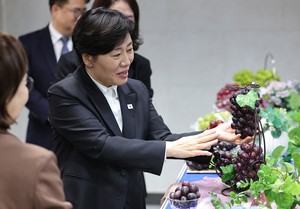
First fresh produce item to cross $100m export threshold Exports surpass imports for first time this year, a decade after imports were 28 times larger Taiwan, US drive surge as full-year target set at $112.5m South Korean grape exports have topped $100 million for the first time this year — a turnaround for an industry that, just a decade ago, was being overwhelmed by imports worth 28 times as much. The milestone, the first for any single fresh produce item, reflects years of variety innovation, quality upgrades and overseas market development that have transformed domestic grape farming into an export industry. Exports also outpaced imports for the first time in the January–October period, swinging the trade balance into surplus. According to the Ministry of Agriculture, Food and Rural Affairs, grape exports reached $90.65 million by the end of October before crossing the $100 million mark in the second week of November. That already surpassed last year's full-year total of $85.38 million and set a new all-time high. The target was reached within a month of producers, exporters and government officials gathering in Sangju, North Gyeongsang Province, on Oct. 15 to pledge to hit the $100 million goal. The achievement marks a striking reversal for a sector that long struggled against imported grapes. After the South Korea-Chile free trade agreement took effect in 2004, a surge in Chilean grape imports made the industry a symbol of the costs of market liberalization. In 2016, grape imports stood at $145.01 million — 28.3 times the $5.12 million earned from exports. This year, however, grape exports in the January–October period reached $90.65 million, surpassing fresh grape imports of $64.13 million over the same period. The trade balance swung to a surplus of $26.52 million, compared with a deficit of $139.89 million in 2016. The pace of growth has been steep. Grape exports in the first 10 months of this year jumped 85.2 percent from the same period last year. In October, the peak harvest month, exports reached $34.77 million — up 171.6 percent year on year, or roughly 2.7 times the figure recorded in the same month last year. Taiwan and the United States led the expansion. Exports to Taiwan in the January–October period reached $51.3 million, up 114.5 percent from a year earlier, accounting for about 56.6 percent of total exports and making it the largest market. Exports to the US jumped 177.6 percent to $16.44 million, driven by the start of full-scale supply to major retailers including Costco. Hong Kong was up 24.4 percent, Vietnam 17.4 percent and Canada 5.6 percent. The export surge has also helped ease domestic oversupply. Export volume in the January–October period reached 11,817 metric tons, up 135 percent from 5,030 metric tons in the same period last year. The ministry said diverting some supply overseas during the peak harvest season helped relieve pressure on the domestic market. To support the export push, the ministry worked with an integrated organization of producers and exporters to secure supply, and conducted export quarantine inspections on weekends and public holidays during the peak season. It also expanded cold-chain logistics support and freight subsidies to maintain the quality of fresh produce. The government said it also plans to focus on building a fairer pricing structure for farmers, not just expanding export volumes. It intends to use a mutual-benefit standard trade contract introduced last month to improve transaction practices between producers and exporters. The Ministry of Agriculture, Food and Rural Affairs, North Gyeongsang Province and the Korea Agro-Fisheries and Food Trade Corporation held a shipment ceremony Monday at the Sangju APC of Daekyung Apple and Horticulture Agricultural Cooperative in Sangju to mark the $100 million milestone. The event included an export progress report, the presentation of a commemorative plaque and the issuance of quarantine certificates. Shine Muscat grapes loaded that day for export to the US are scheduled to depart from Busan port on Wednesday. The ministry plans to push exports to $112.5 million by year-end by targeting key markets including the US and Taiwan. In the US, it will ramp up sales from December through January next year, a window when South American grapes are largely absent from the market. In Taiwan, it will focus on gift-set demand, while in Southeast Asian markets it will pursue localized marketing strategies including anti-counterfeiting packaging. Agriculture Minister Song Mi-ryeong called the milestone "a history written together by all the people who made it happen — the farmers who grew the grapes, the exporters and integrated organizations, the sorting-house workers who hand-picked each bunch, the cold-chain drivers who kept them fresh, and the quarantine inspectors who worked through weekends." Song added that the ministry would work to ease the burden on domestic supply during the peak harvest season and build a structure that ensures farmers receive fair prices. "We will spread the success formula of grapes to other horticultural produce and provide unwavering support through to the end of the year," Song said.
Nov. 17, 2026
-

Companies rush to join K-brand government certification program
81 firms sign up in just over a month; IP office holds first roundtable with participating companies South Korea's government is joining forces with domestic companies to combat counterfeit "fake K-brand" products sold overseas. The Korea Intellectual Property Office said Tuesday it is holding the first roundtable with companies participating in the K-Brand Government Certification program at Ambassador Seoul Pullman Hotel in Jung-gu, Seoul, to discuss strategies for tackling fake K-brands abroad and strengthening export competitiveness. Under the program, the government secures rights to a national certification trademark in 73 countries, and companies that apply the trademark to their products allow consumers to verify authenticity using a smartphone — no app download required. If the national certification trademark is counterfeited, the government, acting as the trademark rights holder, can directly request enforcement action and customs holds from local authorities. Just over a month after the program launched on Oct. 7, 81 companies have applied to join — including leading names such as Samyang Foods, LG H&H, Amorepacific, CJ CheilJedang, Korea Ginseng Corp., Handsome and JYP, as well as promising small and mid-sized enterprises and startups. About 40 of the participating companies are attending Tuesday's roundtable. The office will present certificates to the first cohort of participants and hear from companies about difficulties they have encountered applying the national certification trademark to their products, as well as what government support they need. Starting in December, the office plans to ramp up overseas promotion using K-pop stars and global platforms such as YouTube and TikTok. It will also support market access abroad by operating dedicated storefronts for participating companies on online export platforms used by overseas buyers. Beginning next year, the office plans to extend the national certification trademark to products sold domestically. It also intends to work with foreign governments to request enforcement and customs holds when counterfeit K-brands are detected overseas, and to strengthen international cooperation with Interpol. "Until now, our companies had to bear alone the burden of tracking down and reporting counterfeit goods abroad," Korea Intellectual Property Office Commissioner Kim Yong-seon said. "Going forward, the government will stand alongside our companies as the rights holder of the national certification trademark to protect K-brands." Kim added that the office aims to make the national certification trademark "a symbol of Korea premium that builds trust in our products in global markets, and a solid stepping stone for small, youth and startup companies seeking to expand overseas." Meanwhile, the office will accept additional applications to the K-Brand Government Certification program from Wednesday through Dec. 7. Small and mid-sized enterprises are eligible for subsidies covering up to 50 percent of the cost of introducing product-authentication technology, up to a maximum of 200 million won ($150,000) per company per year. Interested companies can find details on the program's official application website.
Nov. 17, 2026
-
Kenyan water officials learn irrigation, groundwater management in South Korea
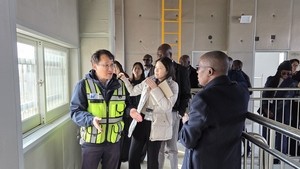
Korea Rural Community Corporation hosts 10 Kenyan officials Participants visit reservoir, pumping station to study water supply Field training covers groundwater dam, digital monitoring technology Kenyan water management officials struggling with water scarcity caused by climate change visited South Korea to learn about agricultural water supply and groundwater management technology. They toured agricultural water supply facilities including reservoirs and pumping stations, and received training on using groundwater monitoring data to respond to drought. The Korea Rural Community Corporation said Tuesday it participated in the "Kenya Water Security Capacity-Building Invitation Training" organized by the UNESCO International Centre for Water Security and Sustainable Management, conducting education on agricultural water and groundwater management. The corporation ran the training program Wednesday and Thursday for 10 officials from Kenya's Ministry of Water, Sanitation and Irrigation and the Regional Centre for Groundwater Resources Education and Training. Kenya has been focusing on improving agricultural water use efficiency and sustainable groundwater management as climate change makes water resource security increasingly difficult. The training was organized to share South Korea's water resource management experience and technology. On the first day, participants visited Wangsong Reservoir, the Hwawong district pumping station and water quality improvement facilities. They examined methods for securing and storing agricultural water, operating irrigation infrastructure and carrying out large-scale agricultural development projects. The second day focused on groundwater development and digital management technology. The corporation introduced its groundwater network expansion and groundwater dam projects, and demonstrated its public well management system and disaster prevention monitoring system. Officials also shared methods for assessing regional drought vulnerability using groundwater monitoring data. An official from Kenya's Ministry of Water, Sanitation and Irrigation who attended the training said participants were able to see firsthand South Korea's systematic agricultural water and groundwater management systems and advanced technology, adding they would work to apply the lessons learned to strengthen Kenya's capacity for stable water resource management. Lee Young-hoon, president of the Korea Rural Community Corporation's Human Resources Development Institute, said the training was an opportunity to share the corporation's accumulated experience in agricultural water and groundwater management with Kenyan water officials. "We will continue to strengthen climate change response capacity and expand international cooperation in water management through education and technology exchange tailored to the needs of partner countries," Lee said.
Nov. 17, 2026
-
Korean food firms log $14.3m in export consultations at Kazakhstan fair
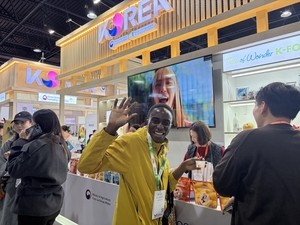
20 Korean food companies join Almaty expo, hold over 180 buyer meetings Ramyun, ginseng and fresh fruit showcased to Central Asian buyers Fair comes as Korean-style convenience stores spread across Kazakhstan South Korean agri-food companies generated $14.3 million in export consultations at a major trade fair in Kazakhstan, holding more than 180 meetings with local buyers as they push to expand their foothold in Central Asia with products ranging from ramyun and ginseng to fresh fruit. The Ministry of Agriculture, Food and Rural Affairs and the Korea Agro-Fisheries & Food Trade Corporation (aT) announced Tuesday that they achieved the results at the 2026 Almaty International Food Expo (FoodExpo Qazaqstan 2026), held from Wednesday to Friday at the Atakent Expo Center in Almaty, Kazakhstan. The Almaty International Food Expo is one of Central Asia's leading food trade shows, drawing buyers from the Commonwealth of Independent States, including Russia, as well as the Middle East. Kazakhstan ranks as a major economy in the CIS region, second only to Russia. Almaty in particular has drawn attention as a growing export market for Korean agri-food products, with Korean-style convenience stores and other K-food retail channels expanding rapidly across the city. aT organized a unified Korea Pavilion with 20 domestic agri-food export companies, showcasing noodle products including ramyun, teas, snacks, beverages, rice-based processed foods and ginseng products in a bid to cultivate new business partners. A dedicated ginseng section was set up to boost the product's entry into the Central Asian market. Tasting and promotional events for Korean fresh fruit were also held to introduce products to major local retailers and buyers. Olga, a local retail buyer, said K-food distribution channels such as ramyun cafes are spreading quickly across Kazakhstan. "K-food products are outstanding in taste and quality, and many of them are easy to enjoy, so I expect demand to keep growing steadily," Olga said. aT noted that demand for K-food in Central Asia is broadening beyond conventional processed foods to include frozen products and ingredients for the restaurant, hotel and institutional catering sectors. Jeon Gi-chan, aT's director of export food affairs, said Central Asia, including Kazakhstan, is a high-potential market for K-food. "The range of export items has been diversifying into frozen foods and ingredients for the restaurant, hotel and catering industries," Jeon said. "We will continue to provide tailored support that reflects local market conditions to drive further expansion of K-food exports in Central Asia."
Nov. 17, 2026
-
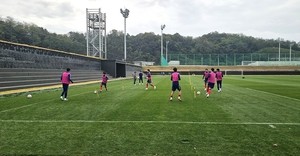
CJ CheilJedang introduces PHA-based artificial turf infill at national football training ground
First application at a domestic sports facility; product co-developed with European firm BIQ after deployments across European football pitches last year CJ CheilJedang is moving to build eco-friendly infrastructure using PHA, a biodegradable biotech material. The company announced Tuesday that it has installed PHA-based artificial turf infill at Korea Football Park (KFP) Stadium in Cheonan, South Chungcheong Province, home to the national team's training facilities. It marks the first time PHA turf infill has been used at a domestic sports facility. Artificial turf infill supports the grass blades on football pitches and absorbs impact to reduce the risk of player injury. Most infill currently in use is made from petroleum-based synthetic rubber, which generates microplastics as it wears down or disperses, raising concerns about harm to the environment and ecosystems. The EU has classified such infill as a major source of microplastic pollution and plans to ban its use from 2031. In response to the tightening regulatory environment, CJ CheilJedang developed the PHA-based biodegradable infill together with BIQ, a European biotech materials compounding specialist. Last year the product was applied to artificial pitches at multiple football clubs in Sweden, Norway and Finland, and the same product has now been supplied domestically. In July, the company signed an agreement with the Korea Football Association to expand the use of eco-friendly materials. PHA is drawing attention as a next-generation material to replace petroleum-based plastics. It is a polymer that microorganisms produce naturally inside their cells by consuming plant-derived nutrients, and it breaks down in both soil and marine environments. A key characteristic is that it leaves no microplastics as it fully degrades within a year. CJ CheilJedang launched PHACT, a dedicated biodegradable materials brand, in 2022, and has since incorporated PHA into a range of products including Hetbahn Cup-ban packaging and biodegradable straws. Starting with KFP Stadium, the company plans to expand the use of PHA biodegradable turf infill to local governments, schools and public sports facilities. "We plan to continue expanding biodegradable material solutions that balance ease of use with reduced environmental impact across a wide range of sectors, building on close collaboration with domestic and international partners," a CJ CheilJedang official said.
Nov. 17, 2026
-
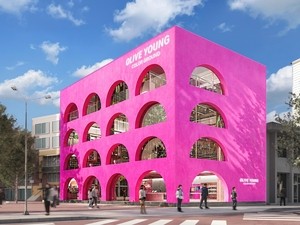
CJ Olive Young opens color-cosmetics specialty store in Hongdae
'Color Ground Hongdae' opens Friday in Seogyo-dong Young MDs targeting Generation Z and Generation Alpha led the concept Four floors, 575 square meters — 26% of brands are new to Olive Young CJ Olive Young will open a color-cosmetics specialty store called Color Ground Hongdae in Seogyo-dong, Mapo-gu, Seoul on Friday — its first specialty store built around a single product category. Olive Young has identified color cosmetics as the next engine of growth for K-beauty. According to the Ministry of Food and Drug Safety, exports of domestic color cosmetics reached $1.11 billion in the first nine months of this year, roughly one-eighth the $8.72 billion recorded by skincare products over the same period. The global color-cosmetics market, by contrast, is estimated at about $105.2 billion. Olive Young's own color-cosmetics sales have grown at an average annual rate of 36 percent over the past five years. "We plan to target both domestic trendsetters and foreign tourists visiting Korea at the same time, leveraging the potential of color cosmetics," a company official said. "The strategy is to build enthusiasm among domestic fans while using word of mouth from tourists to carry trends overseas." The store spans four floors with 575 square meters of retail space. The concept was led by junior-level "Young MDs" — merchandise planners at the assistant manager level. They noted that Generation Z and Generation Alpha consumers choose color cosmetics based on personal preference and intended use rather than brand recognition, and introduced what the company calls "segment display" — arranging products by type, formula and function rather than by brand. The Hongdae location is itself a draw. In the first 10 months of this year, customers in their teens and 20s accounted for more than half of sales at Olive Young stores in the Hongdae area, while foreign customers made up 84 percent of sales. Olive Young is deliberately targeting both domestic trendsetters and international visitors. Of the color-cosmetics brands carried in the store, 26 percent are making their Olive Young debut. A dedicated "Rookie Zone" on the third floor brings these newcomers together. Olive Young said it plans to continue scouting promising brands and helping them establish themselves in the market, as well as supporting domestic small and midsize brands in expanding overseas. In-store services include "Quick Touch-Up Mood," which helps customers complete a makeup look by facial zone, and "Skin Scan Color Fit," a personal color diagnosis service. Throughout the store, video content called "Beautycation" offers easy category-by-category application tips. Over the medium to long term, Olive Young plans to build out functional color-cosmetics categories — including lip conditioning, lash care and setting products — to broaden its reach with overseas customers, and said it will continue opening category-specific stores. "We will work alongside promising domestic brands to help K-beauty establish itself as a mainstream force in the global beauty market," a company official said.
Nov. 17, 2026
-
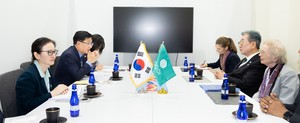
S. Korea's climate ministry, GGGI expand green growth cooperation to cover energy transition
MOU revised on sidelines of COP31 to broaden cooperation into energy transition, circular economy and international carbon markets South Korea's Ministry of Climate, Environment and Energy announced Monday (local time) that it had revised and signed a memorandum of understanding on green growth cooperation with the Global Green Growth Institute on the sidelines of the 31st Conference of the Parties to the UN Framework Convention on Climate Change, being held in Antalya, Turkey. The MOU was first signed at COP26 in Glasgow, United Kingdom, in November 2021. The ministry said the revision reflects the expanded mandate of the Climate Ministry following a government reorganization that consolidated energy policy functions, and is intended to broaden the scope of cooperation and build a more strategic partnership between the two organizations. The Global Green Growth Institute was established in 2012 under South Korean leadership as an international organization headquartered in Seoul. It supports developing countries in formulating green growth strategies, identifying green investment projects, mobilizing financing and building capacity. Under the revised MOU, the two sides will expand their cooperation beyond the existing areas of green growth and climate adaptation project development, greenhouse gas reduction and capacity building to include energy transition, the circular economy, sustainable water resource management and international carbon markets. Particular emphasis will be placed on strengthening capabilities to engage with international carbon markets, including support for implementing Article 6.2 of the Paris Agreement. The two organizations will also work together to help developing countries formulate green growth plans and scale up public and private investment in the green sector. Cooperation will take a variety of forms, including technical assistance and technology transfer, policy advisory services, knowledge sharing, and the exchange and secondment of personnel. The two sides also plan to deepen collaboration in Official Development Assistance projects. The ministry is already pursuing ODA-funded projects through GGGI, including a roughly 9.2 billion won ($6.9 million) pilot program to build electric vehicle and charging infrastructure in Indonesia (2023–2027) and a roughly 13.8 billion won project to develop a smart irrigation and water management system for climate change adaptation in Uzbekistan and Kyrgyzstan in Central Asia (2024–2027). The partnership is expected to let South Korea draw on its green technology and policy experience to provide meaningful support for developing countries' energy transitions and carbon neutrality efforts. "The Global Green Growth Institute is a leading international organization in the climate and green growth field, one that Korea spearheaded and that is headquartered in Seoul," Climate Minister Kim Sung-hwan said. "We will actively cooperate to broaden the scope of our partnership to include energy transition and to translate this MOU revision into tangible project outcomes that help developing countries achieve carbon neutrality." GGGI Director-General Kim Sang-hyup said the updated cooperation framework "reflects the shared commitment of both sides to scaling up global climate action and green growth," adding that the institute would "do its utmost to build on the success of our ongoing joint initiatives and create even greater impact together."
Nov. 17, 2026
-
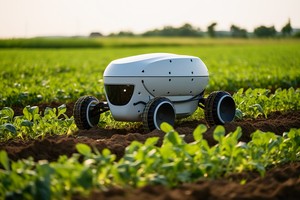
Gov't plans to deploy AI robots on farms, but connectivity and data gaps remain unaddressed
20.81 billion won ($15.6 million) allocated for agricultural physical AI project next year GPS reception problems in mountainous farmland lack concrete fixes National Assembly budget office urges ministry to flesh out data-use plan The government plans to spend more than 20.8 billion won ($15.6 million) next year to roll out AI-powered farm machinery and autonomous robots in rural areas, but concrete measures to address the connectivity and GPS reception problems those machines depend on remain largely absent, a budget watchdog has found. The government has also yet to adequately map out how agricultural data generated by the equipment will be collected and used to sharpen AI performance. According to the National Assembly Budget Office's committee-by-committee analysis of the 2027 budget proposal, the Ministry of Agriculture, Food and Rural Affairs has allocated 20.81 billion won in new funding for next year's "Agricultural Physical AI Demonstration Project." Physical AI refers to technology that combines artificial intelligence with physical equipment such as farm machinery and robots to carry out tasks in the field. The government envisions deploying it across farming operations, disease prevention and food manufacturing to offset labor shortages and raise productivity. The project runs from 2027 to 2030, with a total budget of 556.2 billion won — comprising 329.55 billion won in national funds, 205.3 billion won from local governments and 21.35 billion won in private contributions. The largest share of next year's allocation — 9.76 billion won — goes toward expanding the on-site deployment of AI agricultural robots, supporting partnerships between robotics companies and farms and distributing robots to joint farming cooperatives. Another 2.25 billion won has been set aside for an AI farm machinery sharing program. The ministry plans to open 15 sharing centers nationwide next year, scaling up to 100 centers by 2030. Some 7.8 billion won has been earmarked for an integrated farm and regional biosecurity package, covering autonomous disinfection robots, access-control systems and the construction of regional disinfection facilities. An additional 1 billion won will go toward building a physical AI testing environment at the National Food Cluster. The central concern is rural connectivity. Autonomous farm machinery requires stable access to location data and communications networks to function properly. Yet fields and orchards on hillsides and in mountainous terrain can suffer from weak GPS signals due to topography and tree cover. The budget office said the Ministry of Agriculture, Food and Rural Affairs had not done enough, at the project site-selection stage, to identify areas with poor connectivity and GPS coverage or to draw up specific plans to address those shortcomings. Similar agricultural robot demonstration projects have flagged communication and GPS reception failures over multiple years, the office said, underscoring the need to verify on-the-ground operating conditions before distributing equipment. Data utilization for AI training was also flagged as an unresolved issue. Farm machinery and robots generate a range of data during operations — including travel routes and working conditions — and accumulating and analyzing that data is essential to improving AI performance and adaptability in the field. Yet according to plans submitted by the ministry, the data collection and utilization framework for the AI farm machinery sharing program is to be reviewed later as needed. Field data from agricultural robots will be collected by participating companies for their own technology development, while a plan for linking that data to public databases is to be worked out at a future date. The budget office concluded that such arrangements would make it difficult to systematically accumulate and leverage the data produced through the project. The ministry has separately drawn up an AI transformation data strategy for agriculture and rural areas, which aims to build a foundation for the automatic accumulation of operational data from farm machinery and facility equipment by 2029. The budget office recommended that "the AI farm machinery distribution project should be linked to that strategy, with measures developed to automatically collect and standardize data, and concrete remedies put in place for areas with inadequate communications infrastructure."
Nov. 17, 2026
-
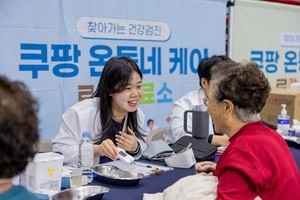
Coupang Inc provides free health screenings to 600 residents in Geumsan-gun, topping 3,100 cumulative participants
Coupang Inc said Tuesday it provided free health screenings to about 600 residents at the Geumsan-gun General Gymnasium in South Chungcheong Province on Monday, the seventh event of its mobile health checkup program, Coupang Ondongne Care. Since the program launched in April, cumulative participants have surpassed 3,100. About 400 adults received internal medicine, dental and traditional Korean medicine consultations, along with blood tests, bone density scans, and dementia and depression screenings. The group included 20 households that had relocated to Gunbuk-myeon to take up farming or rural living. About 200 children had their growth and development assessed through an AI-based screening system. More than 40 medical staff and volunteers from the Korean Central Medical Service Corps took part. At the venue, residents could take part in hands-on activities using local farm produce and regional specialties, including making herb potpourri sachets and barley doenjang paste. A mobile photo studio was also on hand to take and print commemorative portraits for attendees. Ondongne Care is a corporate social responsibility program that provides free health screenings in depopulated areas with limited access to medical services. Since its launch in North Jeolla Province's Jangsu-gun in April, the program has held events in seven locations: Jangsu-gun, North Chungcheong Province's Danyang-gun, North Gyeongsang Province's Yeongdeok-gun, South Jeolla Province's Haenam-gun, Gangwon Province's Hwacheon-gun, Gyeonggi Province's Yeoncheon-gun and now Geumsan-gun. The eighth event is scheduled for Dec. 4 at the Sancheong National Sports Center in South Gyeongsang Province's Sancheong-gun.
Nov. 17, 2026
MOST READ
- 1Malaysia's BE International brings 1,500-strong incentive tour to Korea, bypassing Turkey
- 2AI singer tops Melon chart for first time with 'Did You Become the Adult You Dreamed Of?'
- 3Jensen Huang's daughter took the photo of him embracing his alleged mistress
- 4Man beat live-in girlfriend 514 times over 3 hours, killing her; forensic expert says footage was too disturbing to watch
- 5Madison Huang acted as de facto chief of staff at Nvidia, shouted at vice president: report
- 6'A concert is a ritual for the soul': Currentzis makes long-awaited Korea debut after six years
-
WORLD

US warns of punishment for anyone enabling Iran's Strait of Hormuz toll scheme
-
INDUSTRY
Toyota union puts productivity first; Hyundai Motor union demands bigger share of profits
-
FINANCE
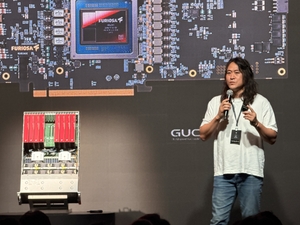
National Growth Fund to invest $531M in FuriosaAI, which rebuffed Meta's $800M takeover bid
-
INDUSTRY
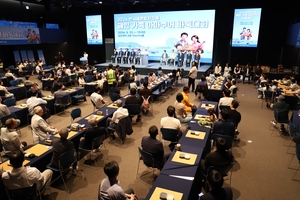
Korea Shipowners' Association holds amateur baduk tournament for Maritime Day