First fresh produce item to cross $100m export threshold
Exports surpass imports for first time this year, a decade after imports were 28 times larger
Taiwan, US drive surge as full-year target set at $112.5m
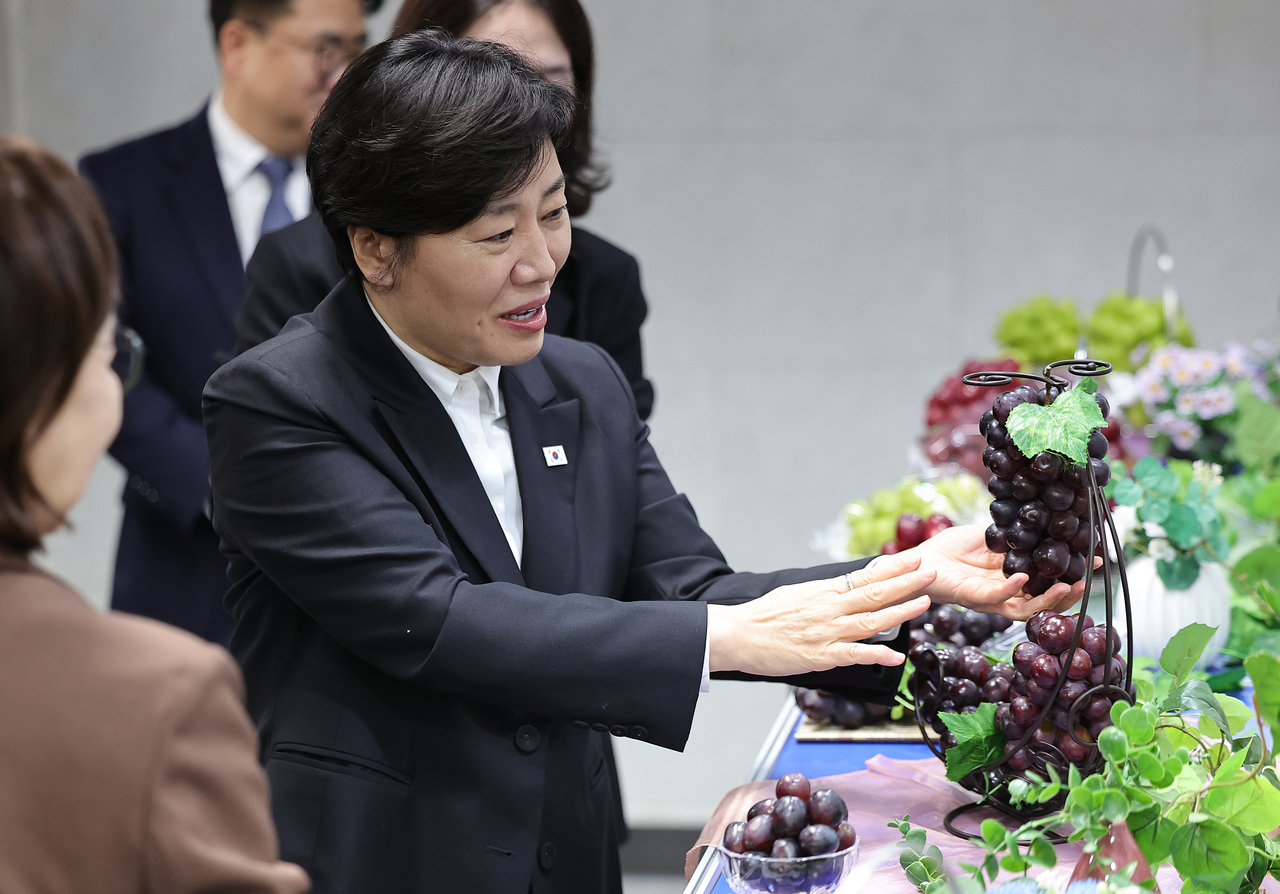
South Korean grape exports have topped $100 million for the first time this year — a turnaround for an industry that, just a decade ago, was being overwhelmed by imports worth 28 times as much. The milestone, the first for any single fresh produce item, reflects years of variety innovation, quality upgrades and overseas market development that have transformed domestic grape farming into an export industry. Exports also outpaced imports for the first time in the January–October period, swinging the trade balance into surplus.
According to the Ministry of Agriculture, Food and Rural Affairs, grape exports reached $90.65 million by the end of October before crossing the $100 million mark in the second week of November. That already surpassed last year's full-year total of $85.38 million and set a new all-time high.
The target was reached within a month of producers, exporters and government officials gathering in Sangju, North Gyeongsang Province, on Oct. 15 to pledge to hit the $100 million goal.
The achievement marks a striking reversal for a sector that long struggled against imported grapes. After the South Korea-Chile free trade agreement took effect in 2004, a surge in Chilean grape imports made the industry a symbol of the costs of market liberalization.
In 2016, grape imports stood at $145.01 million — 28.3 times the $5.12 million earned from exports.
This year, however, grape exports in the January–October period reached $90.65 million, surpassing fresh grape imports of $64.13 million over the same period. The trade balance swung to a surplus of $26.52 million, compared with a deficit of $139.89 million in 2016.
The pace of growth has been steep. Grape exports in the first 10 months of this year jumped 85.2 percent from the same period last year. In October, the peak harvest month, exports reached $34.77 million — up 171.6 percent year on year, or roughly 2.7 times the figure recorded in the same month last year.
Taiwan and the United States led the expansion. Exports to Taiwan in the January–October period reached $51.3 million, up 114.5 percent from a year earlier, accounting for about 56.6 percent of total exports and making it the largest market.
Exports to the US jumped 177.6 percent to $16.44 million, driven by the start of full-scale supply to major retailers including Costco. Hong Kong was up 24.4 percent, Vietnam 17.4 percent and Canada 5.6 percent.
The export surge has also helped ease domestic oversupply. Export volume in the January–October period reached 11,817 metric tons, up 135 percent from 5,030 metric tons in the same period last year. The ministry said diverting some supply overseas during the peak harvest season helped relieve pressure on the domestic market.
To support the export push, the ministry worked with an integrated organization of producers and exporters to secure supply, and conducted export quarantine inspections on weekends and public holidays during the peak season. It also expanded cold-chain logistics support and freight subsidies to maintain the quality of fresh produce.
The government said it also plans to focus on building a fairer pricing structure for farmers, not just expanding export volumes. It intends to use a mutual-benefit standard trade contract introduced last month to improve transaction practices between producers and exporters.
The Ministry of Agriculture, Food and Rural Affairs, North Gyeongsang Province and the Korea Agro-Fisheries and Food Trade Corporation held a shipment ceremony Monday at the Sangju APC of Daekyung Apple and Horticulture Agricultural Cooperative in Sangju to mark the $100 million milestone.
The event included an export progress report, the presentation of a commemorative plaque and the issuance of quarantine certificates. Shine Muscat grapes loaded that day for export to the US are scheduled to depart from Busan port on Wednesday.
The ministry plans to push exports to $112.5 million by year-end by targeting key markets including the US and Taiwan. In the US, it will ramp up sales from December through January next year, a window when South American grapes are largely absent from the market. In Taiwan, it will focus on gift-set demand, while in Southeast Asian markets it will pursue localized marketing strategies including anti-counterfeiting packaging.
Agriculture Minister Song Mi-ryeong called the milestone "a history written together by all the people who made it happen — the farmers who grew the grapes, the exporters and integrated organizations, the sorting-house workers who hand-picked each bunch, the cold-chain drivers who kept them fresh, and the quarantine inspectors who worked through weekends." Song added that the ministry would work to ease the burden on domestic supply during the peak harvest season and build a structure that ensures farmers receive fair prices.
"We will spread the success formula of grapes to other horticultural produce and provide unwavering support through to the end of the year," Song said.
adastra@heraldcorp.com