
- HOME
- ECONOMY
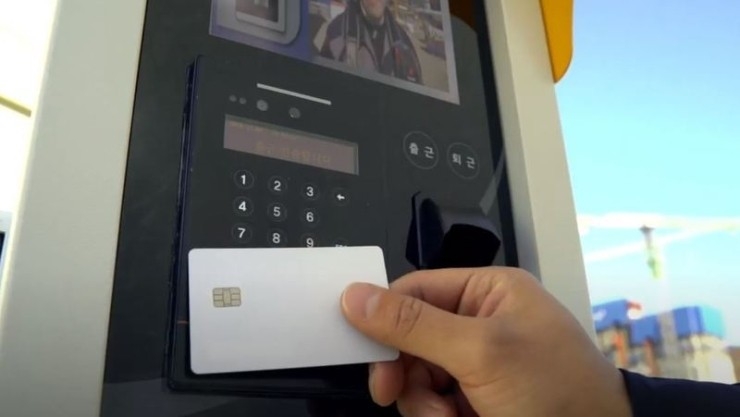
Construction Workers' Mutual Aid Association inspects electronic card system at SK Yongin semiconductor site
Officials check terminal and app usage at site employing about 20,000 workers daily Workers and employers share difficulties with retirement mutual aid system The Construction Workers' Mutual Aid Association visited the SK Yongin semiconductor cluster construction site, where about 20,000 workers are employed daily, to inspect the operation of its electronic card system. Officials also met with construction workers and employers to hear about difficulties they face in using the electronic cards and running the retirement mutual aid system. The association said Wednesday that Chairman Jang Geon visited the SK Yongin semiconductor cluster construction site. More than 150 subcontractors are participating at the site, the association said. Jang arrived at the site at 6:30 a.m., as construction workers were beginning their shifts, and checked the operating status of electronic card terminals installed at the commuter assembly points. Jang also observed workers tagging their cards on the terminals and using the mobile app. Commute records stored on the electronic cards are used to report the number of working days for retirement mutual aid purposes. Jang received a briefing on construction progress from executives at SK Ecoplant and discussed ways to cooperate in ensuring the retirement mutual aid system runs smoothly on site. At a subsequent joint forum with workers and employers, Jang gathered suggestions for improving the electronic card and retirement mutual aid operations, and discussed the association's welfare projects and measures to strengthen employment stability for construction workers. "I am deeply grateful for the hard work of the construction workers who pour their sweat on site from the early hours of the morning," Jang said. "We will make every effort to protect the rights and interests of construction workers and improve their employment conditions."
Kim Yong-hun Nov. 18, 2026
-
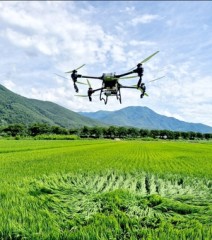
Gangwon Province draws up strategy to attract, retain young farmers
Province to complement national youth farming policy with locally tailored programs covering succession planning, agribusiness employment, new rural jobs and cooperative work Gangwon Special Self-Governing Province has unveiled a strategy to help young people enter, work in and settle permanently in its farming communities, with phased implementation set to begin in 2027. The province said it will build on the national government's existing youth-farmer support programs while filling gaps those programs cannot adequately address — specifically in succession planning, employment at agricultural corporations, rural industry jobs and cooperative youth activities — through its own Gangwon-tailored initiatives. The strategy expands the policy focus beyond simply recruiting young farmers and supporting independent farming startups, extending support to the full arc of a young person's rural life: entering the sector, building a livelihood, settling down and growing professionally. Gangwon Province said it aims to build a virtuous cycle linking youth inflow to employment, housing, daily life, settlement and long-term growth — advancing both a generational transition in agriculture and a revival of vitality in rural communities. Provincial statistics released Wednesday show that as of 2025, people in their 60s or older account for 76.9 percent of Gangwon's farming population, while those in their 40s or younger make up just 2.3 percent. Over the past three years, the province's population of residents aged 18 to 39 fell 4.3 percent, and the number of young farmers in the same age group dropped 7.2 percent. The figures underscore how difficult a stable generational handover has become in agriculture — a sector central to food security. The province said the worsening demographic picture made it necessary to move beyond policies focused solely on independent young farmers and to open up diverse pathways for young people to enter agriculture and rural life, prompting the development of the Gangwon-style settlement strategy. The province will establish three main settlement pathways tailored to young people's circumstances and how they enter farming: farm succession, startup and employment farming, and rural industry youth. For farm succession, the province will shift from after-the-fact transfers to planned, advance succession. It will identify young people expected to inherit a farm while their parents are still actively farming, then support joint management between parents and the next generation along with a phased handover of operations. The plan links land and facility transfers with tax, legal and management consulting to help aging farmers pass on their operations smoothly and help young successors settle in early. For the startup and employment pathway, the province will expand routes that let young people learn on the job before launching their own operations or committing to long-term employment. Young people who are not ready to farm independently from the outset will be able to join agricultural corporations to gain hands-on experience in production technology, farm management, accounting, and retail and marketing — then move on to independent startups, long-term employment or participation in corporate management. Working from the premise that farming is not the only path to rural settlement, the province will also extend its policy reach to rural industries. It plans to connect young people with jobs in agri-food manufacturing, processing and retail companies, rural tourism, experiential and service businesses, and local startups — broadening the routes through which urban youth can enter rural life. Examples of this approach are already emerging across the province. In Wassup Town, a youth village in Seokmyeon, Hongcheon-gun, urban young people are experiencing rural life through extended-stay programs such as "Nangmanchon Kangsu," building relationships with local residents through community activities and local startups before eventually settling in the area. In Goseong-gun, Airbnb's "We Live Together. Here, in Goseong" campaign has recently highlighted young settlers who run local accommodation and restaurant businesses while building ties with the community. Gangwon Province said it plans to spread a range of rural settlement models that allow young people to visit, stay, work and start businesses in rural areas and transition naturally into permanent residents. To support stable long-term settlement, the province will strengthen not only employment opportunities but also housing, daily-life infrastructure and local community support. Youth rural housing communities will be established in four cities and counties — Samcheok, Jeongseon, Inje and Hwacheon — combining public rental housing with leisure, cultural and childcare facilities to reduce the housing burden on young people and lay the groundwork for long-term settlement. The province will also cultivate youth networks and cooperative farming and work organizations by region and crop type. Through youth cooperative work teams, drone pest-control units, and shared seedling, harvesting and sorting operations, it aims to strengthen the community foundations that allow young people to work and grow together within their regions. In addition, the province will operate youth agriculture and rural affairs councils at both the city-county and provincial levels, and through policy forums and on-the-ground proposals will elevate young people from passive recipients of support to active participants in shaping local agricultural policy. To fill gaps left by national programs, the province plans to introduce four new Gangwon-tailored initiatives starting in 2027. The new initiatives will be developed in consultation with the provincial assembly and will go through required procedures — including a review by the Ministry of Health and Welfare on establishing new social security programs — before launching in 2027. The four new initiatives are: support for planned farm succession and joint management by young farmers; youth employment and incubation at agricultural corporations; a joint-growth employment support program linking young people with rural businesses; and city-county youth cooperative work teams for farm labor support. The succession planning initiative will support the drafting of succession plans, specialist consulting, and joint management between parents and young successors. The agricultural corporation employment initiative will help young people build practical and management experience in the field, with a path toward long-term employment or independent startups. The rural business employment initiative will connect youth hiring and job-skills development at agri-food and rural industry companies with local settlement. The youth cooperative work team initiative will aim to reduce the labor burden on elderly and small-scale farmers while providing young people with work opportunities and income. "We will continue building on the foundation of the national government's youth-farmer policy, while using Gangwon-tailored initiatives to fill the areas it has not been able to adequately support," Jeon Jae-seop, director general of agricultural policy at Gangwon Special Self-Governing Province, said. "Going forward, we want the measure of our policy's success to be not how many young farmers we recruited or how much money we handed out, but whether young people are actually coming to rural areas, working, living, settling down and growing." "We want rural areas to be not just a place where young people farm, but a space of opportunity where they can start businesses, build a life with their families and shape their own futures," Jeon added.
Nov. 18, 2026
-

Fair Trade Commission recommends charges against Coupang Inc, chairman Kim Bom-seok over false filings
Designated person changed from corporation to individual in April Final referral decision to follow commission review The Korea Fair Trade Commission has submitted to its committee a review report recommending criminal referral of Coupang Inc and its board chairman Kim Bom-seok on charges of submitting false documents in connection with the designation of a "tongsuin," or conglomerate head. The Fair Trade Commission secretariat recently sent the review report — which contains the referral recommendation — to Coupang and Kim, and formally submitted the case to the committee to begin deliberations, according to industry sources Tuesday. A review report is a document in which Fair Trade Commission examiners summarize their investigation findings and proposed measures. The case arose during the process of changing Coupang's designated person from the corporation itself to Kim personally. In April, the Fair Trade Commission changed the designated person from the Coupang corporate entity to Kim — five years after first designating Coupang as a public disclosure-subject conglomerate. The commission determined that Kim's younger brother, Kim Yu-seok, had been substantively involved in management, concluding that the conditions required to recognize a corporation as the designated person had not been met. Earlier, the Fair Trade Commission amended the Monopoly Regulation and Fair Trade Act's enforcement decree in 2024 to allow a corporation to be designated as the conglomerate head if certain conditions were all met — including that relatives of the natural person controlling the business group did not participate in the management of domestic affiliates. Coupang had argued that Kim Yu-seok was not involved in domestic operations, and on that basis the commission designated the Coupang corporate entity as the conglomerate head in both 2024 and last year. However, through an on-site inspection of Coupang in January, the commission confirmed evidence suggesting that Kim Yu-seok had exercised substantive influence over key business operations. The commission subsequently determined that the original explanations differed from the facts and has been investigating whether the designation documents were falsified. The final decision on whether to refer the case for criminal prosecution will be made after hearing arguments from Coupang and Kim and completing the committee's deliberation process.
Nov. 17, 2026
-
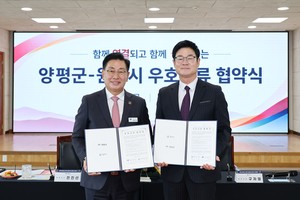
Wonju, Yangpyeong-gun forge wide-ranging partnership across provincial lines
"Though we belong to different provinces, we are warm neighbors." Wonju in Gangwon Province and Yangpyeong-gun in Gyeonggi Province have joined hands for wide-ranging cooperation. Wonju signed a friendship exchange agreement with Yangpyeong-gun at the Yangpyeong-gun county office on Tuesday, pledging to expand exchanges and cooperation across transportation, culture, tourism and the economy. The agreement aims to broaden the scope of exchange by leveraging each region's distinct characteristics and resources, and to pursue mutually beneficial cooperation projects that improve residents' quality of life and invigorate local economies. The key provisions cover four areas: laying the groundwork for an integrated living and economic zone linking the Greater Seoul area and Gangwon Province; supporting the promotion and linkage of cultural and tourism resources; supporting the purchase, promotion and expanded distribution of locally produced goods, including agricultural and specialty products; and cooperating on other areas of shared interest. Both sides view the planned extension of the Gyeongui-Jungang Line to Wonju as a key driver for improving metropolitan access and boosting inter-regional exchange. They plan to coordinate efforts to have the project included in the national railway network construction plan. After the signing ceremony, delegations from both sides visited Yangpyeong Station — currently served by the Gyeongui-Jungang Line — to assess on-site conditions and share views on expanding the wider transportation network. "I find it deeply meaningful that this agreement allows us to broaden our cooperative relationship with Yangpyeong-gun," Wonju Mayor Ku Ja-yeol said. "Wonju will work closely on shared priorities, including the Gyeongui-Jungang Line extension, and do its utmost to ensure that the exchanges that follow bring real benefits to both regions." Yangpyeong-gun County Chief Jeon Jin-seon said he was pleased that the agreement would allow the two sides to build an even stronger partnership. "The Jipyeong-Wonju extension of the Gyeongui-Jungang Line is a core task for improving transportation convenience and driving development in both regions," Jeon said. "We will continue to work actively with Wonju to deliver concrete results across culture, tourism, the economy and beyond."
Nov. 17, 2026
-
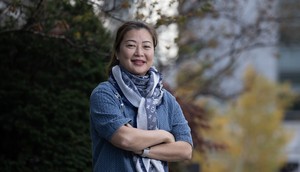
'America needs Korea too': N.J. lawmaker Ellen Park urges Korean firms to set up US headquarters in her state
New Jersey Assembly Deputy Speaker speaks to The Herald Business 'Build factories in Texas, but put your US headquarters in New Jersey' 'Key to US success is flexibility — localize your HR' 'Midterms sent a message; visa rules will ease' "Korea needs America's defense, but America also needs Korea's financial backing. The benefits of this relationship are not one-sided — they are mutual." Ellen Park (Korean name Park Jeong-ju), deputy speaker of the New Jersey General Assembly (Democrat, 37th District), offered that answer when asked what she hopes to achieve for the US-Korea relationship. "My goal is to make America better understand just how powerful a country Korea is," she said. "New Jersey has started down that path, but I want to extend it to all 50 states." Park, who led a New Jersey economic delegation to Seoul, sat down for an interview at a hotel in Gangnam-gu on Monday to discuss Korean companies' entry into the US market, economic cooperation between the two countries, and her reflections as a Korean American politician. Born in Seoul in 1972, Park immigrated to the United States at age six. She studied political science at New York University and earned her law degree from Hofstra University School of Law, working as an attorney before entering politics as a council member in Englewood Cliffs in 2016. She won a seat in the New Jersey General Assembly in 2021 and has since been reelected to three consecutive terms. On the visit itself, Park said Seoul feels like "the New York of Korea," adding with a laugh that she now navigates the subway with ease. She traveled to Busan on Tuesday — her second visit to the city after a trip two years ago that included stops at the Korea Maritime Institute and the Busan Port Authority. "Last time I went for work because New Jersey has so many ports," she said. "Next time I want to set aside time to explore other parts of Korea beyond Seoul and get to know the country better." The theme Park pressed hardest during the delegation's visit was Korean brands embedded in everyday American life. "Turn on the TV and it's a Samsung. The washer and dryer are LG," she said. "The world is excited about K-pop, the popular cosmetics industry and Korean food, but there are far more sectors — biotech, pharmaceuticals, cosmetics — that people use every day without knowing they're Korean. That was the focus of this trip." She noted that many state legislators and companies had expressed interest in joining the delegation but held back because election outcomes were uncertain. "Still, those who came were amazed after meeting with major conglomerates — they kept saying they had no idea Korea was this powerful," she said. "Korea is far smaller than the United States, but what it produces is far larger than its size. The message of this year's delegation is that you have to come and experience it for yourself." Park also shared a story about an American friend visiting Korea for the first time. "We walked through Hongdae, Seongsu and Myeong-dong, and my friend was amazed that every neighborhood had its own distinct architecture," she said. "Then they asked, 'Where are all the homeless people?' Americans don't even know what to expect from Korea." She went on to praise Korean companies' contributions to New Jersey. "Korean firms contribute to New Jersey's economy, its workforce and its communities — and they always give back," she said. "The jobs Korean companies have created across the United States number in the tens of thousands." She added that Korean companies donate goods or sponsorship funds at every Korean American community event. "That means a great deal." Park also recounted an experience at a Korea Society gala she attended last month. "Jensen Huang, the CEO of Nvidia, was a speaker, and I learned for the first time that he has been working with Korean companies like SK Group for more than 30 years, going back to the 1990s," she said. "We need to build on relationships like that." The delegation held meetings with Daewoo Engineering & Construction, LG Group, Doosan and Hanwha during the visit. "I understand there are about 82 Korean companies operating in New Jersey," Park said. "We met particularly with large companies based in my district to discuss not just staying in New Jersey but expanding their business across the United States." She also pointed to the need for federal-level cooperation. "My role is to help at the state level, but there is still work to be done federally," she said. "Fortunately, New Jersey has Andy Kim, the only Korean American in the US Senate, and he is well aware of this visit. I want to work with him — as a federal and state legislator — to find ways to support Korean companies together." Park's ambition was clear: she wants Korean companies to plant their US headquarters in New Jersey. "Even if you build your factory in Texas or Georgia where there is plenty of land, your US headquarters should be in New Jersey," she said. "New Jersey has the infrastructure, the food, the language — everything is there, and employees will love it." She also outlined plans to focus on mid-sized companies and small and medium-sized enterprises on her next visit. "There are many mid-sized companies that want to enter the US market but have no idea where to go," she said, noting that her own district is home to a large number of startups, mid-sized firms and franchise stores. She added, however, that next year may be difficult to visit because it is an election year with primaries to contend with. Park identified corporate culture as the biggest obstacle Korean companies face when first entering the US market. "Korea has a collective corporate culture, but the United States is strongly individualistic — most people work a nine-to-five and leave at 5 p.m.," she said. She acknowledged that Korea has also moved away from long working hours since the pandemic, but noted a key difference: "In the US, working less and being content with your current position is a perfectly valid personal choice. Accepting that individualism is what successful companies have in common." Her advice on human resources was specific. "HR must be handled by someone who truly understands American culture. If you bring over an HR manager from Korea, you just end up replicating the same culture," she said. "What successful large companies do is have employees who came from Korea teach local staff about Korean culture, while also learning American culture in return. That exchange is the secret to success." In a shifting investment environment, she urged flexibility. "Some companies that have no foothold in the US simply refuse to enter if the conditions are not exactly what they want — and they miss the opportunity," she said. "Companies that already have a base here are learning to adapt by expanding factories and operations across multiple states." She added that regulations, laws, politicians and the party in power all differ from state to state. "You have to learn how to find your way in America." On the visa concerns weighing on Korean companies, she was optimistic. "Nothing lasts forever — laws are always amended and changed," she said. "The US is short on workers right now, so I expect visa restrictions for Korea and other countries to ease." She interpreted this month's US midterm election results in the same light. "The midterms showed the government that the current immigration policy is not the answer," Park said. "The original promise was to deport only criminals, but that is not what happened — and that was one of the reasons the Republicans lost." Asked whether the US-Korea alliance is shifting under pressure from the Donald Trump administration over defense cost-sharing, Park agreed that "there have been changes in relations not just with Korea but with the world as a whole," but said she is optimistic that things will change again now that elections have been held. "Korean Americans need to raise their voices in the United States, and that power comes from voting," she said. She identified visibility as a key ingredient for strengthening the bilateral relationship. "There are many Korean Americans in New Jersey, but they are concentrated in Bergen County, so the rest of the state does not know much about Korean Americans or Korean culture," she said. "New York is running out of space, so within the next 10 years the Korean American population in New Jersey will surpass that of New York. Korean Americans need to actively tell their neighbors why Korea matters." Park sees the next decade as a major turning point. "Everyone expected the Assembly to flip in this election, but no one was sure the Senate would too," she said. "The newly elected senators serve six-year terms, so we are going to see major changes ahead." She added that sweeping shifts are coming in technology, biotech, pharmaceuticals and AI, and that the people leading those changes will be young politicians who understand technology. "If more Korean American politicians are part of that wave, the US-Korea relationship will be far better for it."
Nov. 17, 2026
-
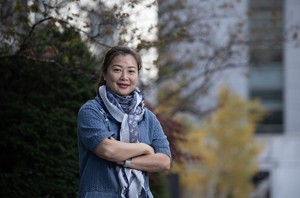
From immigrant girl cooking ramyun to lawmaker: Ellen Park on Korean American political power
'I was the only East Asian among 120 lawmakers' 'If you can't vote, support candidates financially' 'K-pop pride must now extend to history' "I stood there for two full days and only two people signed up. Immigrants were afraid that registering to vote might somehow hurt them." Ellen Park, deputy speaker of the New Jersey State Assembly, recalled her law school years when asked what drove her into politics. In the mid-to-late 1990s, she had been leading a voter registration drive in Flushing, New York, as vice president of an Asian Pacific American law students' association. "Even now, many Korean Americans register but never actually vote," she said. Park, who was visiting Seoul to lead a New Jersey economic delegation, sat down for an interview at a hotel in Gangnam-gu on Monday. Park arrived in the United States at age 6 without a word of English and grew up with an extended family in a small apartment in Queens, New York. "It was really hard, but all our neighbors were Korean," she said. "Our parents' friends ran shops, and after school the kids would all get together, cook ramyun and play while we waited for our parents to come home." She added that despite the discrimination they faced, stepping into their neighborhood felt like a genuine comfort. "Being together — that was something I was truly grateful for," she said. On Korean American political influence, Park said change is underway. "Korean Americans follow Korean politics closely but often don't know how American politics actually works," she said. "Still, compared with Chinese Americans and Japanese Americans, Korean Americans are the most politically active in the United States. I'm proud to see more young politicians emerging — including Korean American women in their 30s and 40s running for governor." She noted that while the Chinese American community is far larger in numbers, it rarely produces leaders at the top tier of politics. Park is the only East Asian member of the 120-seat New Jersey State Legislature. "It's hard being the only one, but that's also what makes me proud," she said. "To go further, we need to stand together." As chair of the nine-member Asian American and Pacific Islander caucus, she said financial support can be just as powerful as a ballot. "People who can't vote can still contribute — and with Indian American lawmakers alongside us, we can push our agenda forward," she said. Park also stressed the importance of history education. She named Liberation Day as the Korean occasion that means the most to her. "I know well about the Japanese colonial period and the comfort women issue," she said. "We have to teach the younger generation so that history does not repeat itself." She added that her own children have visited Korea five times yet struggle to grasp how poor the country once was. "We need to teach the second and third generations what Koreans endured to get where they are today — the 1988 Olympics, the Asian financial crisis, all of it," she said. Park closed by noting that young Korean Americans take pride in their heritage through K-pop and the popular cosmetics industry. "It is our responsibility to channel that interest from popular culture into history," she said.
Nov. 17, 2026
-
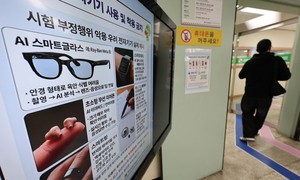
Gov't seeks W18.2b boost to exam surveillance after AI cheating scandal
Ministry of Employment and Labor requests 11.6 billion won on top of National Assembly's 6.6 billion won proposal 7,200 radio-wave detectors to be deployed; dedicated monitors to be stationed in every exam room Budget subcommittee review expected Wednesday The government and the National Assembly are pushing to increase next year's budget for preventing cheating on national qualification exams by 18.2 billion won ($13.6 million), after the top scorer on this year's tax accountant exam was found to have cheated using AI. The funds would cover the purchase of 7,200 radio-wave detectors to counter cheating with high-tech devices such as miniature cameras and smart glasses, as well as the cost of stationing dedicated surveillance personnel in every exam room. According to the National Assembly and related ministries, the Ministry of Employment and Labor told a budget subcommittee of the National Assembly's Climate, Energy, Environment and Labor Committee on Tuesday that the anti-cheating budget for the Human Resources Development Service of Korea's qualification examination project should be raised by an additional 11.6 billion won beyond the increase already proposed. That figure, combined with a 6.6 billion won increase drafted by the office of People Power Party lawmaker Kim Wi-sang based on high-tech cheating issues raised during the national audit, brings the total to 18.2 billion won. No separate budget had been allocated for this purpose this year. Of the additional 11.6 billion won requested by the ministry, 8 billion won would go toward expanding surveillance personnel and 3.6 billion won toward higher unit costs for the detectors. The ministry plans to expand the deployment of specialists monitoring the use of devices such as smart glasses from the exam-site level to the individual exam-room level. Under that plan, the number of personnel would grow from 23,560 to 87,350, with a total budget of 11 billion won required for staffing. For radio-wave detectors, the ministry is pursuing high-spec equipment developed by the Korea Communications Agency, with the unit price rising from 500,000 won to 1 million won and 7.2 billion won budgeted to purchase 7,200 units. The proposed budget increase is expected to be reviewed by the committee's budget subcommittee and plenary session Wednesday. Twelve cases of cheating using smart glasses were detected in national qualification exams administered by the agency this year. The agency has referred or plans to refer nine of those cases to investigative authorities. The suspect who scored first on the tax accountant exam confessed to cheating using a miniature camera, a smartphone and AI, and appeared before police Tuesday as a suspect. The government has decided to conduct a comprehensive review of all 528 categories of national qualification exams administered by the agency this year. Officials plan to flag suspected AI cheating by examining scores significantly above the three-year average, large gaps between rankings, and pass rates that deviate from previous years.
Nov. 17, 2026
-
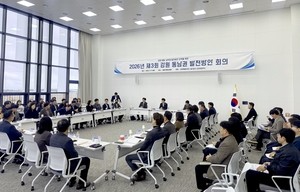
Gangwon's second provincial office convenes 10 municipalities to tackle hydrogen city, coastal tourism brand
The Global Headquarters of Gangwon Special Self-Governing Province's Second Provincial Office held a meeting Tuesday at the Gangneung Convention Center to discuss development strategies for the southeastern Gangwon region, with about 100 officials from 10 Yeongdong and southern municipalities and provincial agencies in attendance. The meeting was organized to conduct a comprehensive review of regional issues and cooperative projects jointly identified by the province and municipalities since 2025, share progress made to date, and chart the path forward. While previous meetings focused on identifying municipal issues and gathering proposals, the third session shifted its emphasis to reviewing the implementation status of identified projects and finding concrete solutions. A total of 39 cooperative projects have been identified so far. Key initiatives in the future industries sector include the Samcheok hydrogen city development project and a joint effort to activate the Gangwon hydrogen special complex. Tourism priorities include the creation of a coastal trail on Goseong's Daeseum (Jukdo) island and the establishment of a shared tourism brand for the East Sea coastal zone. In the fisheries sector, a key task is amending the Fishing Vessel Act to allow the release of fish stock for marine resource replenishment. Notable achievements from provincial-municipal cooperation include joint promotion of the 2026 Gangneung World Masters Table Tennis Championships and the ITS World Congress, as well as the creation of a regional tourism calendar linking festivals across the southeastern zone. At the meeting, departments under the Global Headquarters' three bureaus presented progress and future plans for projects in their respective areas, while representatives from the 10 municipalities raised key issues encountered during implementation and identified areas requiring further cooperation, prompting an in-depth exchange of views. Gangwon Special Self-Governing Province said it plans to continue monitoring ongoing projects to strengthen implementation and work with relevant agencies to develop solutions for longer-term tasks, tailoring follow-up measures to the conditions of each project. The Second Provincial Office has held regular meetings on southeastern Gangwon development strategies since last year, strengthening communication and cooperation with the 10 Yeongdong and southern municipalities. In January, it convened a session in Samcheok for six Yeongdong municipalities, and in February held another in Jeongseon for four southern municipalities to discuss regional issues. The overall progress of projects identified through those sessions was reviewed at Tuesday's meeting. Son Chang-hwan, head of the Global Headquarters at the Second Provincial Office, said resolving regional issues requires not just identifying tasks but also continuous monitoring and close cooperation between the province and municipalities. "Going forward, we will carefully track the progress of each project alongside the municipalities and ensure that the voices of local communities translate into tangible policy outcomes — with the Second Provincial Office playing an active role in making that happen," Son said.
Nov. 17, 2026
-
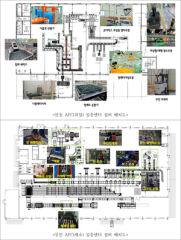
AI and robots to keep produce distribution centers running year-round
Annual operation rate to rise from 36% to 47% with multi-crop processing Seven crops piloted at facilities in Andong and Muan Apple-sorting productivity up 150% as automation cuts labor needs Agricultural produce APCs that once ran only during harvest seasons are being transformed into year-round facilities capable of handling multiple crops, using AI and robotics. By reconfiguring sorting and packaging equipment to handle different produce types, the project aims to raise the annual operation rate from 36% to 47%. Automation applied to apple sorting, packaging and transport has already boosted work productivity by 150%. The Korea Institute of Planning and Evaluation for Technology in Food, Agriculture and Forestry announced Tuesday that it is developing core smart fulfillment APC technology powered by AI and robots — under the Ministry of Agriculture, Food and Rural Affairs' high-value food technology development project — and conducting field pilots in Andong, North Gyeongsang Province, and Muan, South Jeolla Province. Conventional APCs have typically operated in sync with the harvest season of a specific crop, such as apples or onions. Once the harvest period ends, facility utilization drops sharply, and much of the sorting, packaging and transport work has had to rely on manual labor. To address this, the Korea Institute of Robot and Convergence has been pursuing a project since 2022 to build fresh-produce fulfillment APCs and develop the underlying core technologies. The key concept is a system that combines and reconfigures equipment within a single facility to handle multiple crop types, rather than operating separate facilities for each. By processing crops with different harvest seasons at the same facility, equipment can remain in use even during off-peak periods. The research team plans to use this approach to raise the annual APC operation rate by 11 percentage points — from roughly 36% to 47% — representing an increase of about 30.6% over the current rate. The team has established two smart fulfillment APC pilot centers, one in Andong and one in Muan. The Andong center is testing automation technology on four fruit varieties — apples, pears, peaches and oriental melons — while the Muan center covers three vegetable crops: onions, sweet potatoes and mini kabocha squash. The sorting, packaging and transport processes employ an AI produce-sorting system, robotic grippers, automatic packaging machines and autonomous transport robots. The robotic grippers, which pick up and move produce, were developed to handle the distinct physical characteristics of each crop type. For apples, work productivity under 24-hour automated operation has improved by 150% compared with the previous method. The research team is refining the technology with the goal of reducing the staffing needed for sorting, packaging and transport from 12 workers to just one through automation — though that workforce reduction remains a development target, not yet an achieved result. An integrated control system that manages all robots and equipment simultaneously has also been built. Using a private 5G network, the team cut communication latency to under 10 milliseconds, and the facility has secured the capacity to process about 70 metric tons of produce per day based on 20 hours of automated operation. The technology is also being supplied to other APCs. Partner research institutions supplied equipment including a robot- and QR-linked automatic sorting system, generating 750 million won ($562,000) in sales last year. The team plans to expand distribution to more APCs across the country. By the end of this year, the research team will improve the performance of technology that automatically identifies spoiled produce and a robotic palletizing system that stacks packaged produce boxes onto transport pallets. The pilot centers will also verify the stability of running multiple automated systems simultaneously. After the research project concludes, the Muan pilot center will be taken over and operated directly by the Jeonnam Southwestern Vegetable Agricultural Cooperative. The handover is intended to ensure that the technology developed during the research phase continues to be used in actual produce distribution operations. Park Hong-jae, president of the Korea Institute of Planning and Evaluation for Technology in Food, Agriculture and Forestry, said the project represents a meaningful achievement in using AI and robotics to improve the efficiency of produce distribution at the source. "We will actively support the development of advanced technologies and the spread of research outcomes into the field, so as to reduce the labor burden on farms and strengthen the competitiveness of agricultural distribution," Park said.
Nov. 17, 2026
-
Korea District Heating obtains ISO 37301 compliance management certification
Korea District Heating said Tuesday it received ISO 37301 certification for its compliance management system from the Korea Compliance Accreditation Institute. ISO 37301 is a standard developed by ISO, which counts 162 countries as members. The certification requires organizations to proactively identify, control and manage risks of regulatory violations based on applicable laws. In preparing for the certification, Korea District Heating identified compliance risks and established prevention and control measures for each. The company placed particular emphasis on having employees across all departments directly review risks related to their own duties and participate in the certification audit process, with the goal of deepening compliance awareness throughout the workforce and embedding lawful management practices across the organization. The certification drive was led by Executive Vice President Kim Sung-ki, who took office this year. Kim has held roles spanning new business, finance and internal audit at Korea District Heating. His experience as head of risk management and chief of the audit office gave him a deep understanding of compliance and internal controls, which he drew on to lead the certification effort. "ISO 37301 certification is essential for spreading a culture of compliance, strengthening corporate competitiveness and credibility, and achieving sustainable management," Kim said.
Nov. 17, 2026
-
Middle-aged job seekers find new paths as forest guides, wellness instructors
Korea Labor Foundation, Korea Forest Welfare Institute sign MOU Support to begin in Daejeon, expand nationwide The Korea Labor Foundation and the Korea Forest Welfare Institute will support middle-aged job seekers looking to enter the forest welfare sector — including roles as forest guides and forest healing instructors — starting in Daejeon, with plans to expand the initiative nationwide. The two organizations signed an MOU at the Korea Forest Welfare Institute's main building Tuesday to support career transitions and lifelong career planning for middle-aged workers in the forest welfare field. According to data from the Korea Forest Service and the Korea Forest Welfare Institute, people in their 50s and older account for 60 to 70 percent of those who hold qualifications or work professionally in forest welfare roles such as forest guide, early childhood forest instructor and forest healing instructor. Building on their existing experience in job exploration and field placement programs, the two organizations plan to expand employment support tailored to the needs of middle-aged job seekers. Under the agreement, the two organizations will provide forest welfare job listings and offer customized career planning and vocational training. They will also identify workforce demand within the industry, develop job opportunities and connect job seekers with employers. The partners will work together to improve working conditions and workplace practices for forest welfare workers, and will coordinate with regional employment agencies to promote related policies and projects. "By bringing together the foundation's accumulated expertise in middle-aged employment support and the Korea Forest Welfare Institute's specialized infrastructure, we aim to offer a new life milestone for middle-aged workers and open the door to safe and meaningful 'green zone' jobs for those approaching retirement," said Park Jong-pil, secretary general of the Korea Labor Foundation.
Nov. 17, 2026
-
PM Han announces 10-year exam ban, expulsion for college entrance test cheaters
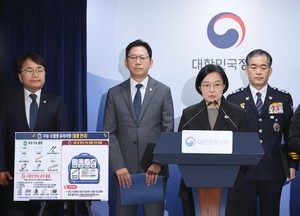
Emergency alerts to catch undisclosed phones before exam starts All electronic devices banned from test sites Over 8,400 additional proctors to be deployed The government will ban all electronic devices from College Scholastic Ability Test sites on Thursday and conduct comprehensive inspections for smart glasses and micro-cameras. It also announced plans to deploy 8,400 additional proctors and impose strict penalties on cheaters — including a 10-year bar on retaking the exam, criminal charges for obstruction of official duties, and university admission cancellations or expulsions. Prime Minister Han Seong-sook announced the measures Tuesday in a public address at Government Complex Seoul. Under the plan, all electronic devices will be prohibited from test sites and all personal belongings will be subject to enhanced screening. Emergency alert messages will be sent to examinees before the test begins to detect any undisclosed mobile phones. All examinees will undergo mandatory checks for smart glasses, and stickers will be placed over every button on their clothing to prevent concealment of micro-cameras. Proctors will also check rolled-up sleeves, collars and buttons. A full re-inspection of all personal belongings will be conducted during the identity verification period before the third session begins after the lunch break. The government asked examinees to refrain, as much as possible, from wearing accessories such as necklaces, rings and hats, or clothing with buttons on exam day, to avoid unnecessary confusion and ensure smooth proctoring. Han said the government had agreed to cooperate fully with global big-tech companies in post-exam investigations and referrals to law enforcement in cases where legal violations are suspected — including instances where exam questions may have been captured as images and answers verified using AI. On top of the roughly 75,000 proctors already assigned to 1,312 test sites nationwide, the government will deploy an additional 8,400-plus personnel — about 1,800 dedicated smart-device inspectors and some 6,600 corridor supervisors. They will be responsible for checking smart glasses and other smart devices, conducting surprise inspections for undisclosed mobile phones, and monitoring for unusual wireless signals inside test venues. Penalties for cheating will also be toughened. The ban on retaking the exam will be extended sharply from one year to 10 years. For serious violations involving smart devices, the government will void exam results and bar the examinee from future sittings, and will also file criminal complaints or refer cases to investigators on charges of obstruction of official duties through deception under the Criminal Act — an offense punishable by up to five years in prison. "We will not stop investigating and holding people accountable for cheating even after the exam is over," Han said. "If specific suspicious circumstances or irregularities are found, we will conduct a thorough investigation, including post-exam analysis of CSAT scores, and will obtain from telecommunications carriers the communication records — including AI service access logs, connection locations and times — for numbers under suspicion, and take strict action based on the findings." Examinees who gain university admission through cheating will have their admissions canceled under relevant law, and those currently enrolled as students retaking the exam will be expelled. Both groups will be barred from university admission for 10 years. The government also said it plans to swiftly review whether to investigate vendors and buyers of micro-cameras and other smart devices used in cheating.
Nov. 17, 2026
-

Burger King unveils 'Chocolate Whopper' with brownie patty, chocolate pickles
Burger King announced Tuesday it is launching the "Chocolate Whopper," a new take on its signature burger reimagined entirely with chocolate and dessert ingredients. The Chocolate Whopper will debut Thursday at Flame Ground, Burger King's first global flagship store, located in Seongsu-dong, Seoul. It will be available exclusively at that location. The burger resembles a Whopper in shape, but every component has been replaced with a dessert counterpart. A brownie patty sits between chocolate buns, while the tomato and onion of a standard Whopper are swapped out for tomato jelly and onion jelly. Chocolate lettuce, chocolate pickles, Nutella, cream cheese mousse and raspberry sauce round out the creation. Each order is assembled by hand on the spot. Starting Thursday, a limited daily quantity will go on sale each morning at 11, with sales ending once stock runs out. The price is 9,800 won per item. Flame Ground is Burger King's first global flagship store. In addition to the Chocolate Whopper, it offers three signature burgers unavailable at regular Burger King locations — the K-Cube Galbi Burger, the Memphis BBQ Burger and the Philly Cheesesteak — as well as "The Gastro," a reservation-only dining experience that reinterprets the Whopper as a multi-course meal. "The Chocolate Whopper is a menu item that brings to life a fictional product we created as an April Fools' Day concept eight years ago," a Burger King official said. "Flame Ground is a space where we experiment with new possibilities for Burger King while staying true to the essence of flame-grilled burgers, and we will continue to offer unique experiences that can only be found here."
Nov. 17, 2026
-
KIEP forecasts 3.2% global growth next year, warns of AI investment risks
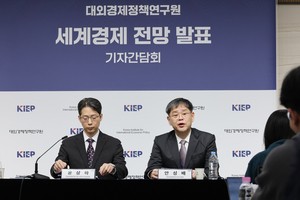
AI-driven trade seen supporting expansion Fiscal strains, financial instability pose risks Korea's semiconductor reliance flagged as vulnerability The global economy is expected to grow 3.2% next year, buoyed by AI investment and related trade expansion, the Korea Institute for International Economic Policy said Tuesday. However, the institute cautioned that high interest rates and fiscal pressures in major economies could constrain growth as markets begin to scrutinize the returns on AI investment more closely. It also flagged South Korea's heavy reliance on AI-related industries such as semiconductors as a particular vulnerability, warning that a downturn in the global AI investment cycle could send shockwaves through the broader economy. The Korea Institute for International Economic Policy (KIEP) projected global economic growth of 3.2% next year in its "2027 Global Economic Outlook" released Tuesday — 0.1 percentage point higher than its May forecast. KIEP also revised up its growth estimate for this year by 0.1 percentage point to 3.1%. The institute's projection for next year falls below the IMF's 3.4% forecast but exceeds the OECD's 3.0%. KIEP summarized the key theme of this outlook as "growth engines under test, costs that persist." While AI-centered investment and trade are sustaining momentum, the institute said whether returns will justify the massive outlays — and whether financing conditions hold — will determine the trajectory of the global economy going forward. "In extreme terms, you could call it an 'AI one-trick' situation — AI-related trade is having a substantial effect in lifting global growth," said Yoon Sang-ha, head of KIEP's International Macroeconomics and Finance Department. "If you were to exclude that, global growth would have been meaningfully lower." At the same time, KIEP noted that the expansion of AI investment could amplify downside risks even as it supports global growth. The institute identified "an AI investment correction and a sharp drop in asset prices" as the top downside risk to the global economy. If AI investment returns fall short of market expectations and technology stock prices decline, it said, data center orders could dry up, slowing global capital expenditure and trade and ultimately dampening household consumption. Deteriorating fiscal health in major economies and financial market instability were also cited as threats to growth. KIEP warned that mounting fiscal deficits could destabilize government bond supply and demand, pushing up interest rates and tightening credit — squeezing both government spending capacity and private-sector financing conditions. The institute also listed a renewed escalation of trade friction through tariff hikes and export controls, as well as potential disruptions to key supply chains, among its risk factors. By country, the United States is forecast to grow 2.1% next year — below this year's projected 2.5%, but still relatively strong among major advanced economies, supported by AI investment and consumer spending. China, by contrast, is expected to slow from 4.5% this year to 4.2% next year, weighed down by a prolonged slump in its real estate market. KIEP projected next year's growth at 1.2% for the euro area, 0.7% for Japan, 7.0% for India and 5.1% for the five ASEAN nations covered in the report. KIEP said South Korea is simultaneously positioned to benefit from and be exposed to the risks of expanding AI investment. While rising global AI demand should boost exports of semiconductors and other key products, the institute cautioned that the gains may not translate sufficiently into production, employment and household income across other industries. Yoon identified South Korea's deep ties to the AI sector as a source of vulnerability. "With uncertainty around AI-related investment rising, any problems that emerge will inevitably hurt not only global growth but South Korea's growth rate as well," Yoon said. Yoon also expressed concern that overseas assets accumulated by Korean investors — which should act as a buffer through dividend and interest income when the domestic economy falters — are themselves heavily concentrated in big tech, making them susceptible to the same AI cycle. KIEP added that even if international oil prices fall, the relief on fuel and transportation costs is likely to be limited. With long-term interest rates in major economies having little room to fall further, the institute said improvements in corporate profitability, household purchasing power and domestic financing conditions could all be slow in coming.
Nov. 17, 2026
-
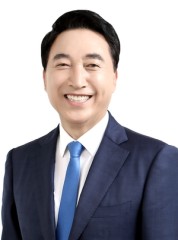
South Chungcheong Province eyes role as South Korea's aerospace hub
Governor Park Soo-hyun attends Hyundai Rotem's hypersonic propulsion test facility inauguration, pledging to accelerate the province's future aerospace industry ecosystem South Chungcheong Province is positioning itself as the center of South Korea's aerospace industry. Governor Park Soo-hyun attended the inauguration of the Second Test Building at Hyundai Rotem's aerospace propulsion test site in Seongnyeon-myeon, Seosan, on Tuesday, celebrating the facility's completion and reaffirming the province's commitment to advancing the future aerospace industry. The ceremony drew about 50 officials and industry leaders, including Hyundai Rotem CEO Lee Yong-bae, Seosan Mayor Lee Wan-seop, and representatives from the Defense Acquisition Program Administration (DAPA), the Korea Aerospace Research Institute, the Agency for Defense Development and the Defense Technology Promotion Research Institute. The newly completed Second Test Building expands on the original First Test Building, established in 1998, and was built to strengthen test and evaluation capabilities for aerospace propulsion systems. The facility serves as core infrastructure for the research, development and performance testing of next-generation propulsion systems, including hypersonic engines and launch vehicle engines. It is equipped with propulsion test stands for stable combustion testing and laboratories for evaluating individual components. Enhanced safety management systems were also installed to create a research environment suited for high-performance propulsion testing. The facility will support research, development and performance evaluations on a range of next-generation engines — including propulsion systems for hypersonic vehicles, methane engines for reusable launch vehicles, and upper-stage launch vehicle engines. A test demonstration of a 10-ton-class methane combustor was also held during the ceremony. Hypersonic propulsion systems, which power vehicles traveling at more than five times the speed of sound, are growing in strategic importance for future defense and aerospace applications. The province said it expects the expanded test facility to raise research and development capabilities in the field and lay the groundwork for achieving domestic technological self-reliance in propulsion systems. "I am proud that Hyundai Rotem has been developing technologies in Seosan that are directly tied to national security, including liquid rocket engines and ramjet engines," Park said. "The new facility completed today will serve as a critical foundation supporting the development of hypersonic propulsion systems capable of flying five to six times faster than the speed of sound." Park added that Hyundai Rotem, which has spent the past half-century building railways and supporting national defense, should now open pathways to the skies and space in the next half-century. "South Chungcheong Province will be a steadfast partner in Hyundai Rotem's endeavors," Park said. Meanwhile, the province is working to build a future aerospace industry ecosystem by linking aerospace and defense infrastructure around the Cheonsu Bay area, attracting related research institutions and companies, and developing specialized talent. The Seosan Green Urban Air Mobility (UAM) Core Component Test and Evaluation Center is also under development, with a total investment of 32.1 billion won ($24.1 million) and a target completion date of March 2027. "We will accelerate efforts to foster South Chungcheong Province as a hub for the future aerospace industry by maximizing synergies among aerospace test and evaluation infrastructure," Park said.
Nov. 17, 2026
-
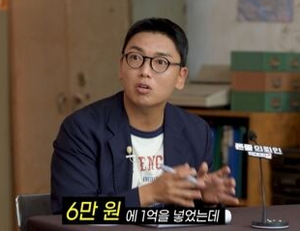
Comedian who says he's never lost a penny in stocks reveals his rules for investing
Comedian Kwak Beom said he has never lost a single won in the stock market, expressing full confidence in his approach to personal finance. His secret, he said, lies in closely analyzing share price trends and charts over three-month to one-year windows to time his buys and sells — and his iron rule is to sell without hesitation once a share hits his target profit range. Kwak made the remarks on "Donzzul Cheonmunhoe," a web entertainment show on Kiwoom Securities' YouTube channel "Channel KK," where he shared stories about money and his life. On the topic of personal finance, Kwak said confidently, "There are very few people in South Korea who have never lost even a single won in stocks — and I'm one of them." "Back in the day, I made a bit of money on S Company — Samsung Electronics," Kwak said. "I put 100 million won ($74,900) in when the share price was around 60,000 won, and I remember getting out around 63,000 won." He added that what matters most to him is that he never lost money in stocks. Samsung Electronics shares are currently trading in the 190,000 won range. After selling, the share price climbed further into the 200,000 won range and then the 250,000 won range, but Kwak said he felt no regret. "I thought of those gains as completely not my money," Kwak said, adding that he manages his mindset by letting go of any upside that comes after exiting a position. Kwak said his trading strategy is built around setting modest short- and medium-term targets. He analyzes chart trends over three-month or one-year periods to establish upper and lower price boundaries in advance. "I look at the chart a little over three months or a year, and if it looks like it's going down, I tell myself it'll go this far — and if it's going up, I don't aim too high, I just set a ceiling in my head," he said. He said he mentally sets a floor he can tolerate if the price falls and a target exit point if it rises, and invests without chasing excessive gains. Kwak also shared his broader approach to asset management, spending habits and financial philosophy. He said he consistently contributes to an individual retirement pension account to prepare for old age, and that while he has a strong interest in fashion and accessories, he buys most items secondhand or vintage. When it comes to spending on his family, however, he said he holds nothing back. "The reason I work hard is to eat well and live well with my family," Kwak said. "I spend freely on whatever my wife and children need."
Nov. 17, 2026
-
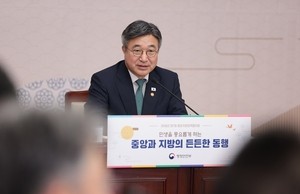
Interior Ministry moves to boost hometown donation fund spending, expand local tax collection units
Ministry of Interior and Safety holds central-local policy council meeting to discuss national audit follow-up measures Winter disaster preparedness, hate banner crackdown also reviewed The Ministry of Interior and Safety held the eighth Central-Local Policy Council meeting of 2026 at Government Complex Seoul on Tuesday, discussing cooperation between the central and local governments on key issues including national audit follow-up actions and winter disaster preparedness. The meeting was attended by officials from the Ministry of Interior and Safety, the Ministry of Employment and Labor, the Ministry of Planning and Budget and other relevant ministries, as well as deputy heads of metropolitan and provincial governments. The government said it would draw up operational guidelines by next month covering spending criteria, implementation schedules and performance management to address the low execution rate of hometown love donation funds — an issue flagged during the national audit. Local governments were asked to identify projects suited to their regional conditions and incorporate them into their fund management plans. The meeting also discussed ways to improve the collection performance of local tax delinquency management units and strengthen their links to welfare services. The ministry said it would support local governments' staffing and fiscal needs through standard personnel cost allocations and special local allocation tax grants, and asked local governments to include delinquency unit personnel costs in their budgets for next year to expand hiring. Participants also agreed to raise the national fund execution rates for the local extinction response fund and regional love gift certificate projects, and to pursue better treatment for civil servants handling disaster safety, high-workload and unpopular public complaint duties, including preferential personnel treatment. The meeting reviewed preparedness measures for heavy snowfall and cold snaps expected during the winter season. Plans call for pre-applying snow-removal agents, inspecting facilities at risk of weather-related damage, operating cold-weather shelters and strengthening protection for vulnerable groups including residents of low-income lodging houses and the homeless. The council also discussed ways to tighten controls on political party banners containing hate speech or defamatory content, which have drawn public controversy in recent months. Authorities said they would step up corrective orders and removal actions against modified banners that infringe on others' reputation and human rights, and impose fines without exception when legal violations are confirmed. Legislative amendments to strengthen the management of political party banners will also be pursued, and local governments were asked to conduct intensive inspections and actively promote related awareness campaigns. The Ministry of Employment and Labor separately asked local governments to reflect fair allowances and appropriate wages — as outlined in the public-sector non-regular worker treatment improvement measures announced in April — in their budgets. The Ministry of Planning and Budget urged local governments to return or arrange installment repayments of unspent national subsidies that have not been returned to the national treasury after the conclusion of projects. Minister of Interior and Safety Yun Ho-jung said local governments should incorporate valid criticisms raised during the national audit into their policies, with particular attention to matters directly affecting people's livelihoods. "I hope that the issues discussed today — cracking down on illegal banners, proactively responding to winter disasters and improving treatment for public-sector non-regular workers — will translate into changes that people can feel on the ground in their communities," Yun said.
Nov. 17, 2026
-
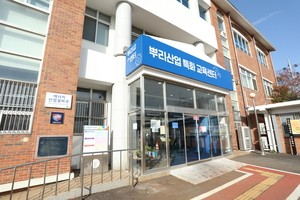
Korea Polytechnics opens fourth root industry training center in Jinju
About 3 billion won invested in hands-on training facility covering four fields including aerospace and shipbuilding Three existing centers have trained more than 500 people with a 94% completion rate Korea Polytechnics has established its fourth training hub for the root industry sector in Jinju, South Gyeongsang Province. The center aims to support the reemployment of middle-aged and older workers through technical education tailored to local industrial demand, while helping companies address labor shortages. Korea Polytechnics held an opening ceremony Tuesday for the Root Industry Specialized Education Center at its Jinju campus. It is the fourth such center, following the South Incheon, Suncheon and Pohang centers that opened in November last year. The root industry — encompassing foundational manufacturing processes such as casting, welding and surface treatment — faces a serious risk of generational skill gaps. According to the National Root Industry Promotion Center's 2025 Root Industry Survey, workers in their 50s and older account for 36.7% of the roughly 740,000 people employed in the sector, while those in their 20s account for just 10.3%. Root industry companies cite greater use of middle-aged and older workers, after wage and welfare improvements, as their preferred solution to labor shortages. The Jinju center will train experienced middle-aged and older workers into skilled professionals ready for immediate deployment on the factory floor, with its curriculum reflecting the needs of local industrial complexes. About 3 billion won ($2.25 million) was invested in the second education building of the Jinju campus to build an integrated practice room, a comprehensive electrical practice room, an air-conditioning room and a lounge for middle-aged learners called the "Middle-Aged Vision Hall." The facility is equipped with smart factory training devices, hybrid welding machines and hydraulic and pneumatic control equipment to replicate real industrial working conditions. The curriculum, developed based on a demand survey of the western South Gyeongsang Province industrial belt, covers four fields. The aerospace field focuses on composite material processing, three-dimensional measurement and precision parts inspection, while the mechanical automation field covers intelligent control and equipment maintenance. The shipbuilding and plant field emphasizes specialized welding and quality inspection, and the energy and smart manufacturing field centers on electrical installations and switchboard maintenance. Rather than year-long programs, the center will offer short- and medium-term intensive courses by field. The courses are linked to process-based national technical qualifications — including industrial engineer certificates in precision measurement, welding and equipment maintenance, as well as an electrical technician license — so that completing a course leads directly to certification and reemployment support. At the South Incheon, Suncheon and Pohang centers that opened earlier, more than 500 people had received training as of October through middle-aged specialist courses in areas such as specialized welding, nondestructive testing, electrical installations and surface treatment. The completion rate stands at 94%. "Intensive education tailored to industrial complex demand is becoming a solution that simultaneously addresses reemployment for middle-aged workers and labor shortages for companies," said Jeong Gyeong-hun, planning director at Korea Polytechnics. "Through the Jinju center, we will supply skilled workers to the core industries of western South Gyeongsang Province — including aviation, machinery and shipbuilding — and develop it into a hub that supports the second chapter of middle-aged workers' lives."
Nov. 17, 2026
-

Seven Changwon defense firms seek help with overseas market access, logistics costs
Ministry of Economy and Finance export support team holds meeting at Changwon defense industry center Logistics vouchers, trade insurance and overseas intellectual property filing support among programs introduced Defense firms in Changwon, South Gyeongsang Province, have asked the government for help finding overseas buyers and reducing export logistics costs. Government officials and export support agencies outlined available programs, including participation in overseas exhibitions, local branch establishment services, export logistics vouchers and trade insurance. The Ministry of Economy and Finance's Export Plus Support Team held an export consultation meeting Tuesday afternoon at the Gyeongnam Changwon Defense Industry Promotion Center, targeting defense industry partner companies in the components, materials and equipment sectors affiliated with the Gyeongnam Defense Venture Center. Seven companies attended: Youngpoong Electronics, Kencoa Aerospace, Sungho Electronics, Suoptics, Woori HQ, ETL and IQubas. Export support agencies including the Defense Agency for Technology and Quality, KOTRA, the Export-Import Bank of Korea and Korea Trade Insurance Corporation also participated. The participating companies called for support in opening overseas markets, identifying new business partners and reducing logistics costs, as well as access to export financing, credit guarantees and overseas intellectual property protection. Several firms also raised concerns about a shortage of specialists to handle defense export operations. The support team and related agencies introduced a range of programs, including overseas exhibitions and local branch establishment services, export logistics vouchers to ease shipping costs, export financing programs and trade insurance. They also outlined support for overseas intellectual property filing and registration, defense export mentoring and specialist workforce development. Bae Jeong-hun, deputy head of the Export Plus Support Team, said that even as the global defense market continues to expand, uncertainty in export conditions persists due to the spread of protectionism, making swift and effective support tailored to the needs of exporters on the ground essential.
Nov. 17, 2026
-

AI saves workers 3.7 hours a week — but is productivity actually rising?
Bank of Korea report on AI adoption and productivity effects Two in three workers say they use AI on the job Managers, professionals and office workers see biggest time savings 'Link to quality improvement remains limited' Two in three employed Koreans now use generative AI at work, according to a new survey, with the share of workers using AI on the job rising 14.7 percentage points in a year and the rate of working-hour savings growing 2.4 times over the same period. The findings come from a Bank of Korea issue note on AI adoption and productivity effects, released Tuesday by Oh Sam-il, head of the bank's employment research team, and colleagues. The team surveyed 16,342 employed Koreans between the ages of 18 and 64 nationwide from August to September this year, finding that 66.5 percent reported using generative AI at work — up from 51.8 percent last year. The share of workers who use AI regularly also rose, from 17.1 percent to 30.6 percent. South Korea's workplace AI adoption rate far exceeded those of the United States (43 percent) and the average of six European countries (33.7 percent). Among those who use AI at work, average weekly usage climbed from 5.9 hours to 8 hours. The rate of working-hour savings expanded from 3.8 percent to 9.2 percent over the year — roughly a 2.4-fold increase. For a worker on a standard 40-hour week, that translates to time savings growing from 1.5 hours to 3.7 hours per week. "By next year, I would expect the average to come down by about a full day," Oh said. "The way people work looks set to change considerably." Individual savings rates varied, however, depending on circumstances. Users who bore no personal cost for AI tools saved an average of 8.3 percent of their working hours, while those paying out of pocket saved 11.4 percent and those whose employers covered the cost saved 11.6 percent. By occupation, managers (11 percent), professionals (10.9 percent) and office workers (11 percent) posted the most notable reductions in working hours. Service workers (5.2 percent), sales workers (8.5 percent) and manual laborers (5.3 percent) saw comparatively smaller gains — a pattern the report attributes to AI being more readily applicable to cognitive tasks. When asked how they used the time freed up by AI, the largest share of respondents — 33.8 percent — said they focused more on core tasks, while 29.3 percent said they took on additional work. In all, 63.1 percent said they redirected the saved time back into their jobs. Even so, the link between time savings and actual productivity gains remained unclear. "What matters is how meaningfully people used the time they got back, but the effect on output or quality improvement is still limited," Oh said. The correlation coefficient between working-hour savings and increases in workload — where a value closer to zero indicates a weaker relationship — edged up from 0.00 last year to 0.08 this year, but remains low. The correlation between time savings and improvements in work quality also stood at just 0.09. The report called for policy attention to be directed at improving the quality of AI use rather than simply its spread, recommending that workers' ability to apply AI effectively be strengthened and that companies reform their work processes and organizational practices. It added that rather than targeting higher adoption rates or longer usage hours, what matters is verifying whether actual work outcomes improve. The report also urged policymakers to consider benefits that are difficult to capture through short-term output metrics, such as quality improvements, the accumulation of skills and worker well-being.
Nov. 17, 2026
MOST READ
- 1Malaysia's BE International brings 1,500-strong incentive tour to Korea, bypassing Turkey
- 2AI singer tops Melon chart for first time with 'Did You Become the Adult You Dreamed Of?'
- 3Jensen Huang's daughter took the photo of him embracing his alleged mistress
- 4Man beat live-in girlfriend 514 times over 3 hours, killing her; forensic expert says footage was too disturbing to watch
- 5Madison Huang acted as de facto chief of staff at Nvidia, shouted at vice president: report
- 6'A concert is a ritual for the soul': Currentzis makes long-awaited Korea debut after six years
-
WORLD

US warns of punishment for anyone enabling Iran's Strait of Hormuz toll scheme
-
INDUSTRY

Toyota union puts productivity first; Hyundai Motor union demands bigger share of profits
-
FINANCE

National Growth Fund to invest $531M in FuriosaAI, which rebuffed Meta's $800M takeover bid
-
INDUSTRY
Korea Shipowners' Association holds amateur baduk tournament for Maritime Day