
- HOME
- ECONOMY
-
Foreign equity inflows return after 8 months on strong US tech earnings
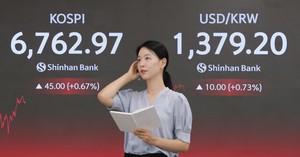
Securities investment funds see net outflow of $4.5 billion Foreign capital returned to a net inflow in South Korea's stock market last month for the first time in eight months, driven by strong earnings from US technology companies. According to the Bank of Korea's "International Finance and Foreign Exchange Market Trends" report released Thursday, foreign investment in Korean securities — both shares and bonds — recorded a net outflow of about $4.5 billion in August. A net outflow means more foreign capital left the Korean market than entered it. Foreign funds have been in net outflow territory since February. The outflow was, however, significantly smaller than in July, when it reached $21.65 billion. Breaking down by asset type, bond funds recorded a net outflow of $4.53 billion last month. Bonds had posted net inflows for three consecutive months from April before swinging back to net outflows in July. The Bank of Korea said the outflow expanded due to a deepening reversal of short-term arbitrage incentives and rising market interest rates. Equity funds, meanwhile, posted a net inflow of $35 million — the first since January, ending an eight-month streak of outflows. The central bank said the shift came despite dampened investor sentiment from geopolitical tensions in the Middle East and rising long-term global interest rates, with strong US technology company earnings providing enough of a boost to tip flows into positive territory. The credit default swap premium on South Korean government bonds — based on the five-year foreign exchange stabilization bond — averaged 22 basis points in August, slightly below the previous month's 23 basis points. One basis point equals 0.01 percentage point. The won-dollar exchange rate's daily fluctuation range and rate of change narrowed in August to 4.4 won and 0.31 percent, respectively, compared with 8 won and 0.53 percent in July.
Sept. 17, 2026
-
Korea Employment Information Service donates goods to Cheongju mother-child shelter ahead of Chuseok
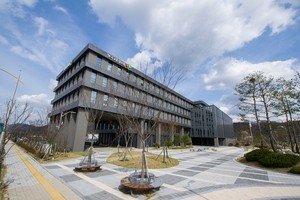
Donation worth 1 million won delivered to Cheongju Haeoruem Village Agency pledges continued social contribution including career and employment support The Korea Employment Information Service said Thursday it visited Cheongju Haeoruem Village, a mother-child protection facility in Cheongju, North Chungcheong Province, and delivered donated goods worth 1 million won ($731) ahead of the chuseok holiday. The event was organized to provide practical assistance to single-parent families and promote a culture of sharing within the local community. The handover ceremony was attended by Korea Employment Information Service President Lee Chang-su, labor union chairman Lee Dong-hwan and staff from Cheongju Haeoruem Village. Earlier this year, the agency held two sessions at the facility offering career counseling, employment support and job-stress consultations for residents. It has also run a youth employment support program at Chungnam National University and a local study-room support project. The agency plans to hold a parenting lecture concert in the innovation city Oct. 21-22. "I hope this brings a small measure of comfort and encouragement to the mothers raising children on their own, and to their children," President Lee said. "We will continue to grow alongside the local community through sustained social contribution activities."
Sept. 17, 2026
-

Hansol Paper, partner firms boost welfare benefits from 400,000 won to W1m
Hansol Paper's Cheonan factory builds mutual-growth council with three contractors Youth hiring, retirement age extension pursued; local health support also provided Dong-A Pharmaceutical links shop-floor feedback directly to collective bargaining Hansol Paper's Cheonan factory and its in-house contractors are working to raise welfare benefits for subcontractor workers from 400,000 won ($292) to 1 million won through a joint labor welfare fund — a 2.5-fold increase. The initiative is part of a broader co-prosperity model in which the primary contractor, subcontractors, local government and universities work together to address labor shortages and an aging workforce. The Korea Labor Foundation said Thursday it held the sixth workplace innovation case-sharing forum of 2026 at the O&City Hotel in Cheonan, South Chungcheong Province, under the theme of strengthening workplace innovation capacity through primary-subcontractor co-prosperity partnerships and regional social dialogue. The forum featured workplace innovation consulting cases from Hansol Paper's Cheonan factory and Dong-A Pharmaceutical's Cheonan factory. Hansol Paper's Cheonan factory joined the consulting program as part of a consortium with three in-house contractors — Gaon ST, Daol-on and Huiwon Tech. While the paper industry is characterized by tight operational links between primary contractors and subcontractors, it faces mounting challenges including an aging workforce, difficulty recruiting young workers and growing reliance on foreign labor. High turnover among new hires due to high-heat and shift-work conditions, and the resulting loss of skilled workers, were also identified as shared problems. Hansol Paper and its contractors expanded their existing safety-and-health-focused consultation structure into a broader "primary-subcontractor co-prosperity council" that also addresses grievance handling, subcontractor worker welfare and environmental, social and governance issues. Regional labor-management-civic bodies and related institutions also joined the effort. One contractor hired a young graduate from a local university's contract-based department and is preparing to file regulatory amendments for a continued employment system for older workers, including an extended retirement age. Another contractor received support for special health screenings and follow-up care for its workers through a local health center. The parties also designed an operational plan to use the joint labor welfare fund to raise subcontractor worker benefits 2.5 times, from 400,000 won to 1 million won. Dong-A Pharmaceutical's Cheonan factory has maintained cooperative labor-management relations without a single labor dispute in the more than 50 years since its union was established. Through this round of consulting, the factory built a communication system linking a permanent feedback channel, monthly shop-floor meetings with union delegates and an annual member survey. Procedures were also established to channel grievances and suggestions collected on the shop floor through a grievance committee, a labor-management council and collective bargaining. Rewards for outstanding proposals were strengthened, and the suggestion system was tied to the organization's key performance indicators so that worker input translates into tangible improvements on the factory floor. Labor and management formed an ESG activities task force and extended their cooperation into the wider community, donating 5,000 bottles of Bacchus to South Chungcheong Province's mobile worker support center in April. On the strength of these results, Dong-A Pharmaceutical's Cheonan factory was named an outstanding labor-management culture company this year. Korea Labor Foundation Secretary-General Park Jong-pil said the foundation would work to spread a workplace innovation model in which labor, management, primary contractors, subcontractors and local communities join forces to solve the challenges companies face.
Sept. 17, 2026
-
Patent and trademark filings hit record highs on surge in individual, first-time applicants
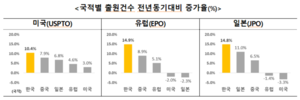
Patents up 29.2%, trademarks up 18.6% in first half of this year; individual filings soar 134% Domestic patent and trademark filings broke all-time records in the first half of this year, driven by a sharp rise in applications from individuals and first-time filers. The surge was not limited to the domestic market — Korean applicants also posted significant increases in patent filings at major intellectual property offices abroad. Patent and trademark filings reach record highs amid expansion in computer-related applications According to industrial property filing trends released by the Korean Intellectual Property Office on Thursday, domestic patent filings totaled 141,259 cases in the first half of 2026, while trademark filings reached 180,787 cases — both all-time highs. Compared with the same period last year (109,322 and 152,419 cases, respectively), patent filings rose 29.2 percent and trademark filings rose 18.6 percent. By sector, strong performance in advanced industries such as semiconductors and AI translated into broader filings in the computer, software and information service fields. In patents, the share held by "computer programming, systems integration and management" — the top category with 20,503 filings — expanded from 10.5 percent in the first half of last year to 16.0 percent in the first half of this year. In trademarks, filings under "computer and science and technology services" (Class 42) reached 9,635 cases, up 64.2 percent from 5,867 cases in the same period last year. Individual and first-time filers drive patent growth Individual patent filings reached 33,819 cases in the first half of this year, up 134.0 percent from 14,454 cases in the same period last year, and individuals' share of total patent filings rose from 13.2 percent to 23.9 percent. Particularly notable was the jump in direct filings — those submitted without an agent — among individual applicants: 22,559 cases, with the share of direct filings among individual applications climbing sharply from 28.8 percent in the first half of 2023 to 66.7 percent in the first half of 2026. The office attributed the trend in part to the growing use of generative AI, which has lowered barriers to filing directly. First-time filers — those submitting a patent application for the first time — also posted strong growth, with 25,726 cases, up 74.2 percent from 14,769 cases in the same period last year, far outpacing the overall patent filing growth rate of 29.2 percent. First-time filers' share of all applicants rose 4.7 percentage points to 36.9 percent from 32.2 percent. In trademarks, first-time filer applications reached 69,134 cases, up 31.8 percent from 52,446 cases a year earlier. Korean applicants also post sharp increases at major overseas patent offices Patents filed by Korean nationals at the five major intellectual property offices — collectively known as the IP5 — totaled 165,567 cases, up 30.1 percent from 127,247 cases in the same period last year. Filings rose across all major jurisdictions compared with a year earlier: up 10.4 percent in the United States, 14.9 percent in Europe, 14.8 percent in Japan and 1.8 percent in China. Growth at the US Patent and Trademark Office, the European Patent Office and the Japan Patent Office was particularly pronounced, outpacing increases by applicants of other nationalities. The office said the trend reflects the continued expansion of Korean companies into overseas markets. Jung Jae-hwan, director general of the intellectual property information bureau at the Korean Intellectual Property Office, said the first half of 2026 saw a significant increase in patent and trademark filings, with the applicant base broadening, particularly among individuals and first-time filers. "We will closely monitor filing trends and work to ensure that the increase in applications translates into the securing of high-quality intellectual property rights," he said.
Sept. 17, 2026
-

Public Procurement Service promotes regional innovators at ENTECH 2026
Agency engages 16 innovative firms through one-on-one consultations, procurement guidance programs South Korea's Public Procurement Service is strengthening its field-based support system for regional innovators, building a pipeline that runs from identifying promising local firms to linking them with public demand, facilitating purchase consultations and ultimately securing market access. The agency visited the innovative procurement pavilion at the 2026 International Environment and Energy Industry Exhibition, known as ENTECH 2026, at Busan's BEXCO on Wednesday to inspect its on-site efforts to help innovative products reach public-sector buyers. The visit aimed to hear directly from regional companies about their challenges and explore ways to help their technologies and products improve public services — and to use public procurement as a springboard for entering new markets. ENTECH 2026 marks its 20th edition this year and is one of South Korea's leading trade fairs for the environment and energy sectors. The exhibition runs from Wednesday through Friday at BEXCO in Busan, featuring 200 companies from seven countries across 450 booths. Business programs on offer include export consultations and public procurement meetings designed to help environment and energy firms expand both domestically and abroad. The Public Procurement Service is operating an innovative products pavilion at the exhibition under the supervision of its Busan regional office, showcasing outstanding regional innovations to public institutions and visitors through a promotional area and booths for 16 participating companies. The pavilion is hosting one-on-one purchase consultations between innovative firms and procurement officers from public institutions, alongside a public procurement guidance program to help companies navigate the procurement market and make use of available systems. The agency expects the initiative to give regional innovators a direct window into public demand and a broader path to market. Deputy Commissioner Kang Seong-min of the Public Procurement Service toured the pavilion on Wednesday, examining the products and technologies on display and listening to the concerns and suggestions of company representatives. "There are many innovative companies in the regions with excellent technology, but a good product needs the bridge of public procurement before it can actually be used in the market," Kang said. "We will strengthen tailored market-access support that reflects the voices from the field, so that regional innovative companies can find their first market through public procurement and continue to grow."
Sept. 17, 2026
-

Warning issued over counterfeit weight-loss drugs smuggled into South Korea
Korea Customs Service steps up screening of harmful obesity drugs; seizures through August reach 5,030 cases — 4.2 times last year's full-year total Consumers are being urged to exercise extra caution as the domestic influx of counterfeit versions of well-known weight-loss drugs — including Mounjaro and Wegovy — has risen sharply in recent months. The Korea Customs Service announced Thursday that it has tightened customs inspections across major entry channels — including traveler baggage, express courier shipments and international mail — to block the import of harmful counterfeit obesity drugs and prevent illegal smuggling. Customs seizures of weight-loss drugs surged from 4 cases in 2024 to 1,189 in 2025, and have already reached 5,030 cases through August this year — 4.2 times last year's full-year total. Over the past three years, customs authorities have seized a combined 6,223 cases of weight-loss drugs. By entry channel, international mail accounted for 4,961 cases, traveler baggage for 1,232 and express courier for 30. Seizures of illegal pharmaceuticals brought in from abroad extend well beyond weight-loss drugs. The Korea Customs Service has intercepted about 60,000 cases of illegal medicines over the past three years, including roughly 21,000 cases through August this year. The Korea Customs Service works with the Ministry of Food and Drug Safety to manage customs clearance for pharmaceuticals entering the country from abroad, in order to protect public health. Under current rules, harmful drugs that the Ministry of Food and Drug Safety has flagged to the Korea Customs Service may only clear customs if they meet designated import requirements, such as holding an exemption recommendation for import-requirement verification. Mounjaro and Wegovy imported from overseas also fall under the category of harmful drugs flagged by the ministry. Customs officers screen such items through X-ray scanning and physical inspection; products that fail to meet the required import conditions are held from clearance and then returned or destroyed. When violations go beyond a simple failure to meet import requirements — such as confirmed smuggling — the agency pursues investigation and punishment in accordance with relevant laws. The Korea Customs Service operates a border-level interception system that links on-site customs inspections with scientific analysis conducted by the Central Customs Laboratory, responding to the growing variety of narcotics and other public-safety hazards entering the country. The Central Customs Laboratory scientifically analyzes the composition and characteristics of items seized or held by customs, supporting clearance decisions, enforcement operations and criminal investigations. As part of that analytical work, the Central Customs Laboratory teamed up with researchers at Chung-Ang University's College of Pharmacy to analyze Mounjaro products originating from India that had been intercepted at the border — examining active-ingredient content, impurities and other product characteristics. The laboratory used an analytical method established by the Ministry of Food and Drug Safety's National Institute of Food and Drug Safety Evaluation to measure the content of tirzepatide, Mounjaro's active ingredient. A Chung-Ang University research team — Kim Su-hyeon, Choi Jong-woo and Byeon Su-bin — focused on impurities, a critical aspect of pharmaceutical quality control, and conducted a detailed analysis. Inconsistent active-ingredient levels, unidentified impurities detected; rights holder confirms products are counterfeit The analysis found wide variation in active-ingredient content across products, and multiple unidentified impurities were detected in some. Taken together, the findings indicate that the Mounjaro products examined cannot be considered to reliably meet pharmaceutical quality and safety standards. The products were also found to have been transported without a cold-chain distribution system — the refrigerated logistics required to maintain drug quality during distribution. Mounjaro must in principle be refrigerated at 2 to 8 degrees Celsius, making proper quality management essential not only during manufacturing but also throughout transport and storage. Na Dong-hee, a professor at Chung-Ang University's College of Pharmacy, said the analysis found inconsistent active-ingredient levels across products as well as unidentified impurities. "Injectable drugs in particular require strict manufacturing and quality controls — not only for active ingredients and impurities but also for sterility assurance," Na said. "Purchasing and using products of unverified origin and quality on one's own can be dangerous." Lee Jin-hee, director general of the Korea Customs Service's Customs Clearance Bureau, said the agency would strengthen inspections across all entry channels — traveler baggage, international mail and express courier — as illegal import attempts involving weight-loss drugs and other pharmaceuticals continue to increase, and would respond firmly to smuggling and other illegal activities. "We will also work more closely to link on-site customs inspections with the specialized analysis of the Central Customs Laboratory, so that narcotics, illegal pharmaceuticals and other items that threaten public health and safety are thoroughly blocked at the border before they can enter the country," Lee said.
Sept. 17, 2026
-
As cafe coffee hits 5,000 won a cup, consumers turn to cold brew at home
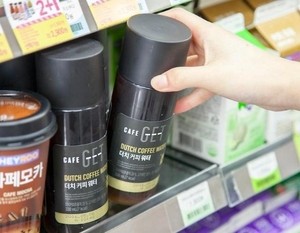
Just mix the concentrate with water — cold brew sales surge as home cafe trend grows Kurly cold brew sales up 60%; Momos Coffee transactions jump tenfold "Cafe coffee costs 5,000 won — it just makes more sense to buy the concentrate and mix it yourself at home." Yoon, a worker in her 30s, fills a tumbler with coffee before heading to the office each morning. Her drink of choice is cold brew. "The price of coffee started to feel like a real burden, so I began making it at home," she said. "All you do is pour water into the cold brew concentrate — it couldn't be simpler." Cold brew, which requires no separate brewing process and simply needs to be mixed with water, is drawing growing consumer interest. The trend reflects a broader effort to cut costs as coffee prices have risen consistently. According to the Korean Statistical Information Service (KOSIS) consumer price index, the coffee price index stood at 146.06 (base year 2020 = 100) in August, up 2.0 percent from the same month a year earlier. Cold brew is made by steeping coffee grounds in cold water for an extended period. Products that dilute the extracted concentrate with water or milk have also appeared on the market. Ready-to-drink (RTD) cold brew products require no dilution and can be consumed straight from the bottle. For consumers who already enjoy cold brew, home-use concentrate products offer a way to ease the financial strain. At cafes, cold brew typically costs 500 to 1,000 won more than a regular Americano, owing to the time and effort involved in brewing and storing it. The price difference is stark. A 300-milliliter cold brew concentrate sold by Paul Bassett yields up to 15 cups, working out to roughly 1,300 won per serving. Given that a single cup of cold brew at a cafe runs around 5,000 won, the savings are considerable. Cold brew product sales on Kurly rose 60 percent in August compared with the same period a year earlier, and the number of products available on the platform grew 35 percent over the same period. Transactions for Momos Coffee's key cold brew products jumped more than tenfold during the same stretch. On SSG.com, sales in the Dutch coffee category climbed 45 percent in the second quarter of this year. Beyond cold brew, sales of other easy-to-make coffee drinks for home use are also climbing. Lotte Mart's overall coffee beverage sales rose 25.1 percent from June through Sept. 15 compared with the same period last year, while sales of its private-label coffee drinks surged 52.8 percent. Over the same period, coffee sales at E-mart's No Brand stores grew 9.5 percent, with non-liquid products — including whole beans, tea bags and instant mixes — up 16.9 percent. "As more people want to easily prepare drinks they enjoy at home or in the office, we are seeing growing demand for products that are easy to store and convenient to consume," an industry official said.
Sept. 17, 2026
-

Spousal miscarriage leave, expanded birth leave take effect Friday
Ministry of Employment and Labor rolls out 'three-part spousal support package' First 3 days of miscarriage and stillbirth leave paid Parental leave also allowed for partners facing high-risk pregnancies Workers whose spouses suffer a miscarriage or stillbirth will be entitled to up to five days of leave, and paternity leave will be available starting 50 days before the expected due date under new rules taking effect Friday. The Ministry of Employment and Labor announced Thursday that it will begin enforcing the "three-part spousal support package" on Friday, filling a gap in support for male workers that had been concentrated largely on the period after childbirth. Under the new rules, workers whose spouses experience a miscarriage or stillbirth may take between one and five days of leave, provided they apply within 20 days of the event. The first three days are paid. Workers at small and medium-sized enterprises designated as priority support targets will receive full reimbursement of their ordinary wages for those three days from the government, up to 84,210 won ($62) per day and 252,630 won for three days combined. The leave must in principle be taken consecutively, though employers may allow it to be split. The window for taking paternity leave is also being widened. Previously, workers could only use paternity leave within 120 days of their spouse giving birth. Going forward, they may take it from 50 days before the expected due date through 120 days after delivery. Paternity leave totals 20 paid days and may be split into up to three separate periods. Workers may use all 20 days before the birth, all after, or a combination. Those at priority-support small and medium-sized enterprises will receive 100 percent of their ordinary wages, up to 1.68 million won. Male workers will also be permitted to take parental leave before a child is born if their pregnant spouse faces a risk of miscarriage or premature birth. Applications must be submitted at least seven days before the intended start date. The period used counts against the worker's total parental leave entitlement but does not count toward the limit on how many times parental leave may be split. According to the ministry, about 269,000 people received work-family balance benefits — including parental and maternity leave — from January through August this year, a 16.7 percent increase from the same period last year. The number receiving paternity leave benefits rose 45.1 percent to about 22,000. "Male caregiving participation will be significantly broadened across the entire journey from pregnancy to childbirth," said Cho Jeong-suk, the ministry's director general for employment support policy. "We will continue developing measures to ease the burden on working parents — including employees at small and medium-sized enterprises and those in special-employment and freelance arrangements — as they balance work and child-rearing."
Sept. 17, 2026
-
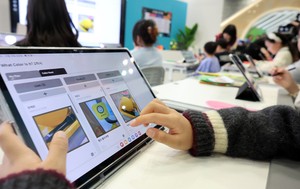
Four tablet makers face antitrust scrutiny over alleged bid-rigging in school supply contracts
Fair Trade Commission opens formal review of four manufacturers and distributors Officials recommend criminal referral of companies and current, former executives Conduct deemed 'extremely serious violation'; fines expected Four tablet computer makers are set to face formal antitrust scrutiny after the Korea Fair Trade Commission found evidence they colluded on bids to supply devices to schools for digital textbook instruction. The affected bids totaled about 65 billion won ($48 million), with more than 200,000 tablets supplied through the rigged contracts. The Fair Trade Commission's secretariat said Thursday it had submitted an examination report to the commission regarding alleged bid-rigging by four tablet computer manufacturers and distributors — Ibridge.com, Atec Computer, Uniwide and ForU Digital — in procurement tenders for digital textbook devices. The report will be sent to the four companies Friday, formally launching the review process to determine whether they violated the Fair Trade Act. The examination report is a document prepared by FTC examiners that sets out the alleged conduct, its legal basis and recommended sanctions — the equivalent of a prosecutor's indictment. However, the findings in the report do not represent the commission's final conclusion. A final determination on whether the law was violated and the level of any sanctions will be made after an independent panel review. Tablets for digital textbooks are devices that elementary, middle and high school students use in class to access digital textbooks and online learning software. Their widespread adoption began in 2020 as remote learning became common during the COVID-19 pandemic. Unlike consumer tablets, these devices are procured in bulk by public institutions such as education offices and schools, which then lend them to students. Suppliers are selected through open bidding, with a single contract sometimes covering thousands to tens of thousands of units. Depending on the project, contracts may also include initial setup, software installation, peripheral equipment and ongoing maintenance. FTC examiners concluded that the four companies systematically colluded on bids issued by education offices and other agencies for digital textbook tablets. The affected bids totaled about 65 billion won, with more than 200,000 tablets supplied through those contracts. Examiners classified the conduct as bid-rigging constituting an "extremely serious violation." They recommended corrective measures including a cease-and-desist order, the imposition of fines, and criminal referral of the companies and their current and former executives. The relevant sales figure used to calculate fines will be based on the approximately 65 billion won in affected bids, plus the sales attributed to companies that participated as sham bidders. Applying the maximum surcharge rate of 15 percent — the ceiling for "extremely serious violations" at the time of the investigation — to the 65 billion won in affected bids alone would yield a base fine of up to 9.75 billion won, approaching 10 billion won. When the sales of sham bidders are factored in, some observers say the total fine could exceed 10 billion won. The actual fine, however, will be set by the commission after it confirms the relevant sales figure and applies any aggravating or mitigating factors. The final determination on whether the law was violated and the specific level of sanctions will also be made through the commission's review process. The four companies have six weeks from the date they receive the examination report to submit written responses and may also request access to and copies of evidence. The FTC plans to convene a commission hearing to issue its final ruling as soon as the due-process procedures are complete.
Sept. 17, 2026
-
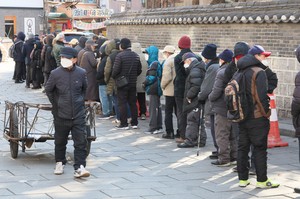
Elderly lifecycle deficit surpasses children's for first time
Labor income exceeds consumption from age 28 Surplus years last 33, ending at 61 Elderly spending up 8.1% amid rapid aging The lifecycle deficit of South Koreans aged 65 and older has for the first time surpassed that of children aged 14 and under, driven by rapid aging and rising elderly consumption. On a per-person basis, the surplus years — when labor income exceeds consumption — span only 33 years, from age 28 to 60. According to the 2024 National Transfer Accounts released by the Ministry of Statistics on Thursday, the elderly lifecycle deficit reached 188.9 trillion won ($138 billion), up 9.6 trillion won, or 5.3 percent, from the previous year. That figure exceeds the children's deficit of 186.2 trillion won by about 2.7 trillion won. The lifecycle deficit is calculated by subtracting labor income from consumption for each age group. It is the first time since the Ministry of Statistics began compiling the National Transfer Accounts in 2010 that the elderly deficit has exceeded the children's deficit. The elderly deficit has grown 2.3 times over the past decade, rising from 83.3 trillion won in 2014. Over the same period, the children's deficit increased 38.5 percent, from 134.5 trillion won to 186.2 trillion won. Analysts attribute the divergence to a shrinking child population due to the low birth rate and a rapidly expanding elderly population. Elderly consumption in 2024 reached 263.7 trillion won, up 8.1 percent from the previous year. Public consumption rose 8.9 percent and private consumption 7.6 percent. Elderly labor income also grew 15.7 percent to 74.8 trillion won but failed to keep pace with spending. By contrast, the working-age population between 15 and 64 recorded a labor income surplus over consumption of 155 trillion won, an expansion of 18.7 trillion won from the prior year. Children, who have no labor income, consumed 186.2 trillion won, generating a deficit of the same amount. The overall lifecycle deficit across all age groups fell 7.3 trillion won, or 3.2 percent, to 220.1 trillion won. Total consumption grew 3.4 percent to 1,509.8 trillion won, while labor income rose 4.6 percent to 1,289.7 trillion won — a faster pace than consumption growth. On a per-person basis, individuals run a lifecycle deficit from birth through age 27, then turn a surplus starting at 28. The surplus continues through age 60, after which the deficit resumes at 61. The surplus period now spans 33 years in total. In 2010, the surplus began at age 27 and ended at 56, lasting 29 years. As people remain in the labor market longer, the age at which the deficit resumes has been pushed back by five years over the past 14 years. Per-capita consumption peaks at age 16 at 46.04 million won, concentrated in education spending, when labor income is nearly zero and the lifecycle deficit is at its widest. Labor income peaks at age 45 at 46.51 million won; after subtracting per-capita consumption of 27.19 million won at that age, the surplus of 19.32 million won is the largest recorded at any age. Looking at intergenerational transfers, a net outflow of 344.9 trillion won from the working-age population was redistributed to children and the elderly — 185.9 trillion won and 148.3 trillion won, respectively. Children received 92.6 trillion won mainly through private transfers such as family support, while the elderly saw net public transfer inflows of 123 trillion won through pensions, healthcare and other programs. The National Transfer Accounts track the flow of economic resources across generations by analyzing consumption, labor income, and public and private transfers by age group. The figures include the effects of inflation.
Sept. 17, 2026
-
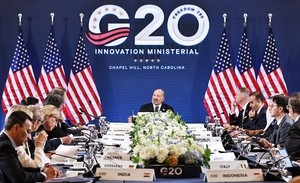
US demand for upfront cash transfer derails Korea investment MOU signing
This month's planned $2.2 billion transfer falls short of US demands Half of annual $20 billion limit sought by year-end; funding scramble under way US midterm elections seen as factor behind sudden push The United States has demanded that South Korea wire roughly half of its annual investment commitment to the US in cash before the end of this year, a last-minute condition that derailed the signing and announcement of the first investment memorandum of understanding, sources said. Washington pressed Seoul to transfer more than 13 trillion won ($9.5 billion) upfront this year, even though specific investment destinations and project-level allocations have yet to be finalized. According to political and government sources Thursday, the US recently told South Korea to remit close to half of the annual investment amount by year-end. The two countries had been discussing a framework under which South Korea would deploy $200 billion over 10 years at a pace of $20 billion annually, but the US side's separate demand for a sizable cash transfer within this calendar year has stalled a final agreement. Seoul had originally considered sending $2.2 billion or more to the US this month as an initial payment, then proceeding with investments of up to $20 billion a year starting next year. The US demand that a substantial portion of the annual investment ceiling be wired in cash before year-end has widened the gap between the two sides, sources said. The announcement of the investment MOU, which had been scheduled for Friday, was consequently postponed. The government had planned to brief the National Assembly on Thursday and release the MOU on Friday, but both the Assembly briefing and all follow-up steps were pushed back with just one day to go, sources said. A source familiar with the negotiations said the Ministry of Trade, Industry and Energy asked the National Assembly on Wednesday to cancel Thursday's scheduled briefing after the US made an unreasonable demand for a cash transfer by year-end, even though the selection of investment projects had been largely wrapped up. "All related schedules, including the MOU signing, have been pushed back as a result," the source said. The source added that receiving such a demand from the US side at the last minute, after a final National Assembly briefing date had already been set, "is evidence of how much we are being dragged along by the United States," and warned it "could also have a negative impact on trust in the negotiating authorities." Last October, South Korea and the United States agreed to cut the reciprocal tariff rate Washington imposes on Seoul from 25 percent to 15 percent in exchange for large-scale Korean investment. Under that deal, South Korea pledged a total of $350 billion in US-bound investment, comprising $150 billion in shipbuilding cooperation and $200 billion in strategic cash investment. The cash portion was agreed to be disbursed in installments within an annual ceiling of $20 billion over 10 years. The investment funds were to be drawn from foreign-exchange assets held by the Bank of Korea and the foreign exchange stabilization fund, with any shortfall to be covered through government-guaranteed bond issuances and borrowings from overseas financial institutions. The US demand to transfer roughly half the annual investment amount in cash before year-end has set off an emergency scramble to secure funding. Because investment financing falls under the Ministry of Economy and Finance rather than the Ministry of Trade, Industry and Energy — which sits at the negotiating table — the process requires inter-agency coordination, adding further delays. The Korea-US Investment Corp., or KUIC, a Ministry of Economy and Finance affiliate dedicated to managing and executing US-bound investments, has already sent requests for proposals to major domestic and international investment banks to issue up to $2 billion in bonds. Proposals are due next week, and after a document screening, competing securities firms will make presentations, with a lead manager expected to be selected by the end of this month. The issuance would be KUIC's first foreign-currency bond since the corporation launched on June 18 this year, and is primarily intended to support the government's fundraising for US-bound investment. The government guarantee means the bonds will carry a credit rating equivalent to the sovereign level — a positive factor — but the deal is unprecedented, and KUIC will need to walk overseas investors through the rationale and expected returns one by one. After lengthy negotiations over project selection, the two countries are understood to have agreed to pursue the construction of a gas-fired combined-cycle power plant in Encinal, Texas, and a large nuclear power plant, though sticking points remain. Talks over an equity stake in nuclear firm Westinghouse are also continuing. South Korea had earlier floated acquiring a stake of 15 percent or more in Westinghouse, but the US side is now said to be offering a lower figure in the 5 to 10 percent range. Meanwhile, the government has decided to correct a discrepancy between two key documents. The MOU on strategic investment signed last year stipulated that investment funds must be paid no earlier than "at least 45 business days" after notification of project selection, but the operating agreement for the investment special purpose company — which governs the actual mechanics of investment — is to be revised to set the deadline at "within 45 days." The investment MOU signed Nov. 14 last year defines the payment timing as "a date not shorter than 45 business days" after notification of the selected investment destination. This means funds cannot be transferred until at least 45 business days after a project is designated, but it does not set a final deadline by which payment must be completed — a structure different from the payment deadlines typically written into contracts to prevent delays. The MOU alone therefore leaves unclear when funds must actually arrive after a project is selected. The two governments are understood to have agreed to correct this by setting a "within 45 days" payment deadline in the SPC operating agreement that will govern actual investment plans and execution procedures. Some observers suggest the US side's sudden demand for an upfront cash transfer is tied to domestic political conditions, including the US midterm elections scheduled for Nov. 3. The US administration may want to lock in a visible, tangible result from the investment agreement ahead of the midterms. If a large sum of cash is wired before specific investment destinations and project-level amounts are finalized, South Korea could face not only a fiscal and foreign-exchange burden but also growing controversy over the recoverability of the funds and the viability of the projects.
Sept. 17, 2026
-
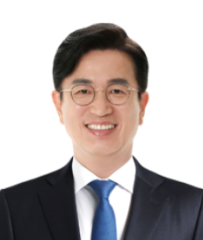
Daejeon unveils 'Our Daejeon' vision under newly elected mayor
Mayor Heo Tae-jeong presents 3 core values and 10 strategies to guide city administration Daejeon held a ceremony Thursday to share and reaffirm its new governing vision — "Our Daejeon, Completely Happy Citizens" — with residents as part of a drive to realize happiness for all. Daejeon Mayor Heo Tae-jeong hosted the ninth-term popular election vision proclamation ceremony at the city hall auditorium, with about 500 people in attendance, including citizens, city council members and public officials. Heo personally presented the administration's direction and vision for the term, outlining three core values — future growth, livelihood recovery and civic sovereignty — along with 10 governing strategies. ▶ Future growth: The city said it would develop science and technology and innovation capacity as new growth engines, building a city where businesses and talent grow together around AI and future strategic industries. ▶ Livelihood recovery: The city pledged to more firmly support residents' daily lives and work toward livelihood recovery on the basis of a mutually beneficial and inclusive economy. ▶ Civic sovereignty: The city vowed to ensure that every resident can realize their potential through equal opportunity and participation, and to practice governance decided and shaped together with citizens. The 10 governing strategies presented were: completing future strategic industries through an AI-driven transformation; building a hub for advanced technology commercialization and startups; realizing a carbon-neutral city in response to the climate crisis; establishing a robust and wide-ranging livelihood economy; creating convenient living conditions for all; building a culturally rich city through arts in everyday life; strengthening demand-tailored sports infrastructure; building a civic sovereignty city through participation and respect; guaranteeing the right to pursue happiness across all life stages; and innovating safe and convenient citizen-centered administration. A citizen representative and Mayor Heo then read the vision proclamation together, followed by a performance embodying the three core values. Attendees took commemorative photos and pledged to work together to realize the governing vision for the term. Daejeon plans to pursue 77 campaign pledges and more than 20 key tasks grounded in the three core values and 10 strategies, providing a solid foundation for the administration's vision. "Even amid difficult fiscal conditions, we will maintain unwavering investment in livelihoods and the future to firmly support the lives of our citizens," Heo said. "We will not stop at a mere declaration of vision, but will swiftly deliver effective governance that citizens can feel in their daily lives."
Sept. 17, 2026
-
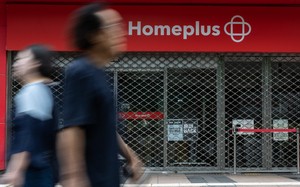
Homeplus launches sale of 67 hypermarket stores amid restructuring
Homeplus, which is undergoing court receivership, has formally launched the sale of its 67 hypermarket stores in accordance with its rehabilitation plan. The company said Thursday it is proceeding with the sale of all 67 hypermarket locations, including its headquarters and online business division. It is also putting up 19 company-owned real estate properties among the 37 stores slated for closure. Homeplus plans to sell the remaining hypermarket operations and online business unit — along with the headquarters and individually owned real estate at closed stores — after completing the earlier sale of Homeplus Express. Samil PwC, the lead sale manager, is set to send investment information packages to potential acquirers this week. Homeplus had previously outlined three core pillars of its rehabilitation plan: improving its financial structure through the sale of 19 company-owned stores among those being closed, strengthening business viability by normalizing operations and cutting fixed costs, and pursuing a merger and acquisition of the remaining business units. The sale of the hypermarket business — including the headquarters and online division — will proceed as a business transfer. Real estate at closed stores will be sold individually. Once sale agreements are signed, Homeplus must draft a revised rehabilitation plan incorporating the proceeds and submit it to the court. The company said the timeline for creditor repayments could be moved up from the original schedule as a result. "We are channeling all available funds into product procurement and working to normalize operations at the 67 core stores that have reopened," Homeplus said, adding that it has achieved tangible results by cutting roughly 500 billion won ($365 million) in fixed costs — primarily rent and labor — through the receivership process. The company added that "ultimately, for Homeplus to successfully complete its rehabilitation, it is essential not only to improve the financial structure through store sales, but also to complete the sale of the hypermarket business, including the headquarters and online division."
Sept. 17, 2026
-

Hite Jinro's Terra beer earns 5th consecutive NON-GMO certification, a first for domestic brews
Hite Jinro announced Thursday that its flagship beer brand Terra has received NON-GMO certification from the Non-GMO Project for five consecutive years, making it the first domestic beer to earn the distinction. The NON-GMO certification system verifies that a product uses ingredients grown and harvested from seeds that have not been genetically modified. Certification requires verification of raw materials and the supply chain, and certified products must undergo annual renewal assessments. Terra has verified that all its raw materials and secondary ingredients are free from genetic modification. However, under Ministry of Food and Drug Safety regulations, ingredients eligible for NON-GMO labeling in South Korea are limited to soybeans, corn, sugar beets, canola, cotton and alfalfa. Among Terra's raw materials, corn starch falls under this category.
Sept. 17, 2026
-
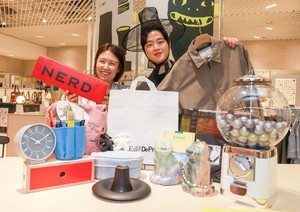
Hyundai Department Store hosts K-local pop-up at The Hyundai Seoul
Hyundai Department Store is running the "Edit Dept, Neo Local" pop-up store on the first below-ground floor of The Hyundai Seoul through Sept. 30, showcasing locally rooted brands from across the country. More than 20 brands are taking part, spanning fashion, beauty, living and food. Among them are artist So Dong-ho's "Seoul Street Chairs," a reinterpretation of street seating found around Seoul; Kiim Studio, which draws on traditional quilting techniques from Daegu; and Gotae, which reimagines the curved lines of the traditional Korean "gat" hat as tableware. The pop-up also features a documentary with interviews of writers and illustrators who contributed to regional magazines in Daegu, Busan, Cheongju and other cities since 2022, alongside video content documenting Park Chan-yong's collaborations with local artisans to develop products. The AI shopping assistant "heydi" offers audio guides in Korean and English on each brand's story through a digital passport.
Sept. 17, 2026
-
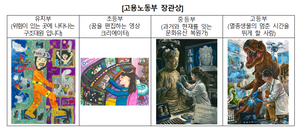
AI firefighters, space sanitation workers: children imagine future careers
Korea Polytechnics holds exhibition of winning entries from future-career drawing contest 12,579 submissions received; 292 winners named, including 16 grand-prize recipients Show opens at Gwanghwamun, then travels to Korea JobWorld and Osong Station From firefighters working alongside AI to sanitation workers clearing space debris and marine doctors saving ocean life, the future careers imagined by children and teenagers across South Korea are coming together in one place. Korea Polytechnics announced it will hold an exhibition of top entries from the 18th Future Career Drawing Contest at the 172G Gallery in Seoul's Gwanghwamun Station from Thursday through Tuesday. Jointly organized by the Ministry of Employment and Labor and Korea Polytechnics since 2009 to mark Vocational Skills Month, the nationwide contest invites children and teenagers to explore their futures and career aspirations through drawing. This year's theme — "My Future Self, My Choice" — drew 12,579 submissions, up 3,270 entries, or 35.1 percent, from last year. Since the contest launched, cumulative submissions have reached 218,599. A total of 292 winners were selected this year: 16 grand-prize recipients, 16 excellence awards, 30 merit awards, 130 encouragement awards and 100 honorable mentions. Of those, 192 works — including all grand-prize entries — will be on display. Many of the winning pieces depicted familiar professions reimagined with cutting-edge technology. Entries included "Future Firefighter Working with AI," "Tomorrow's Farm Transformed by AI Engineers," "Hair Designer Working Alongside AI Robots" and "Future Painter with AI." Works envisioning space as a new workplace also drew attention. Students portrayed space not merely as a frontier for exploration but as a place where environmental stewardship, life and career possibilities converge — through figures such as sanitation workers collecting space debris and zookeepers at orbital animal parks. Among middle and high school entries, careers tied to solving social problems featured prominently, including cultural heritage restorers, marine debris collection managers, future marine doctors and specialists in reviving extinct species. Lee Chae-won, a student at Daemyeong High School whose entry "Director of a Digital Historical Verification Institute" won the high school grand prize, said she envisioned a future institution that uses digital technology to authenticate historical records. "I want to be someone who correctly promotes and preserves Korean culture and history," she said. At the awards ceremony Thursday, the 16 grand-prize winners — including Shim Tae-min, a kindergarten-division winner whose entry was titled "I Am a Rescue Worker Who Appears Wherever There Is Danger" — will receive ministerial citations from the Ministry of Employment and Labor, the Ministry of Education and the Ministry of Gender Equality and Family, as well as a Seoul mayor's citation and a cash prize of 500,000 won ($365) each. After the Gwanghwamun run, the exhibition moves to Korea JobWorld from Tuesday through Oct. 7, followed by a showing at KTX Osong Station from Oct. 8 through Nov. 9. Lee Cheol-su, chairman of Korea Polytechnics, said the children's drawings capture the creative imagination needed to navigate a changing society, as well as the process of discovering what one loves and does well. "I hope this becomes an opportunity for children and teenagers to reflect on the value of work and carry their potential into the future," he said.
Sept. 17, 2026
-
Spigen Korea, Opennote, MET named top human resources development companies
95 firms receive Best HRD certification this year, including 60 new entrants; top honorees earn minister's commendation and three-year exemption from routine labor inspections Spigen Korea, Opennote and MET have been named this year's top human resources development companies in their respective categories. The Ministry of Employment and Labor and the Human Resources Development Service of Korea announced Wednesday that they will hold the "2026 Best HRD Certification Award Ceremony" at the Fairmont Ambassador Hotel in Seoul on Thursday. A total of 95 companies received the "Best Human Resources Development Institution (Best HRD)" certification this year — 19 large enterprises, 56 small and medium-sized enterprises and 20 work-first, study-later companies. Of those, 60 are newly certified and 35 are recertified. The top-scoring companies in each category were Spigen Korea in the large enterprise division, Opennote in the small and medium-sized enterprise division, and MET in the work-first, study-later division. All three will receive a commendation from the Minister of Employment and Labor. Spigen Korea was recognized for building a talent development system that links individual performance evaluations with personal development plans, creating a virtuous cycle between HR management and training. The company also operates an in-house chatbot trained on more than 60 HR regulations and has strengthened employees' AI capabilities through tiered AI education programs. Opennote structured its training curriculum around the job competencies needed for core future businesses, including AI, cloud and energy information and communications technology. The company was cited as a best-practice example for connecting training outcomes to on-the-job application, performance reviews, promotions, compensation and career development. MET runs hands-on new-employee training programs focused on automation equipment and robotics, and provides allowances to employees who obtain relevant certifications. The company also earned high marks for offering youth a work-first, study-later pathway through partnerships with specialized and meister high schools and through P-TECH, a high-skill work-study program. The Best HRD certification comprehensively evaluates a company's talent development system, covering everything from recruitment, performance assessment and compensation to training and career development. This year's review incorporated participation in AI training programs, online training outcomes and human resources investment records at work-first, study-later companies. Certified companies are exempt from routine labor inspections for three years and receive preferential points when applying for government support projects and subsidies. Since the program was introduced in 2006, a total of 2,661 companies have applied for certification and 1,319 have received it. Pyeon Do-in, director general of the ministry's vocational competency development bureau, said systematic talent development is essential for companies to keep pace with rapidly changing industrial conditions driven by AI and digital transformation. "We will continue to push forward a range of training and education policies so that workers can build the competencies needed in this era of change," he said.
Sept. 17, 2026
-
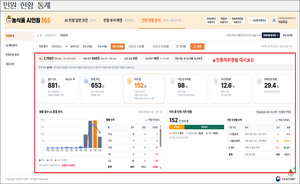
AI system to read and draft responses to 17,000 annual agriculture ministry complaints
System trained on 500,000 past cases, laws and rulings; 'Nongsikpum AI Minjeon 365' now fully operational AI recommends responsible department and provides supporting legal references Expected to cut roughly 3,000 annual response extensions; tracks farmland complaint trends An AI system will now read the roughly 17,000 public complaints filed with the Ministry of Agriculture, Food and Rural Affairs each year in real time, identify the responsible department and draft an initial response. The system was trained on approximately 500,000 data points — including past complaint responses, laws and court rulings — to cut processing time and improve the accuracy of replies. The ministry announced Thursday that it had built the generative AI-based complaint-handling support system, called Nongsikpum AI Minjeon 365, and launched it for full operation this month after a pilot run. Under current rules, complaints submitted through the government's public petition portal must be processed within seven to 14 days of filing, depending on their type. In practice, however, additional fact-checking often pushes processing beyond that window, resulting in roughly 3,000 response extensions at the ministry each year. To reduce that backlog, the ministry built Nongsikpum AI Minjeon 365 using about 500,000 records, including past complaint responses, laws, court rulings and project implementation guidelines. Once a complaint is received, the AI analyzes its content in real time, recommends the most appropriate department to handle it and explains its reasoning. The system is designed to support staff who would otherwise have to review each complaint individually to determine which unit is responsible. The assigned department then receives an AI-drafted response along with references — past cases with similar content and relevant laws and rulings — so that the staff member writing the final reply can directly verify what the AI has suggested. The system also feeds complaint data into policy work. The AI analyzes farmland-related complaints in real time and displays trends and recurring issues on a dashboard. Key terms frequently raised by complainants and monthly complaint volumes are also visualized. The ministry said it expects the system to ease the workload of staff drafting responses while at the same time improving reply quality and shortening processing times. "We will continue to accumulate and refine data to improve response accuracy, and listen to the public's voice within complaint data to deliver better agricultural policy benefits and systems," said Hong In-gi, the ministry's policy planning officer.
Sept. 17, 2026
-
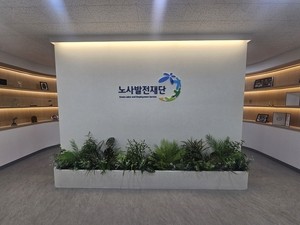
Korea Labor Foundation helps Korean firms navigate Cambodia's labor laws
Korea Labor Foundation joins Phnom Penh seminar Employment contracts, seniority pay, workplace safety rules covered AI-based overseas labor information service to launch in December A seminar was held to brief Korean companies operating in Cambodia on changes to local labor laws and industrial safety and environmental regulations. The Korea Labor Foundation said Thursday it participated in a seminar on "Trends in Cambodian Labor Law and the Labor Environment," hosted by the South Korean Embassy in Cambodia in Phnom Penh. The event was organized to help Korean businesses reduce the risk of legal violations and labor disputes by keeping them up to date on changes to Cambodia's labor, industrial safety and environmental regimes and workplace inspection standards. Attendees included Heng Sour, Cambodia's minister of labor and vocational training, officials from the Ministry of Environment, and representatives and HR managers from Korean companies based in the country. The seminar covered key issues under Cambodian labor law, including employment contracts, contract renewals and seniority pay, as well as recent workplace inspection findings and compliance requirements. Discussions also addressed workplace safety and environmental regulations, violations uncovered during actual inspections, and the impact of global supply chain shifts on corporate labor management. The foundation introduced its support services for Korean companies operating abroad, including country-specific labor law and labor management information, HR and labor consulting, and local seminars. Starting in December, it also plans to launch an AI-powered overseas labor information service that will allow companies to easily access labor law and labor management information by country. The foundation signed an MOU with the Korean Chamber of Commerce in Cambodia (KOCHAM) on Wednesday. The agreement aims to combine the foundation's expertise in labor affairs with KOCHAM's local business network to support labor management and dispute prevention. The foundation also held a roundtable with local business representatives to hear about the difficulties they face in managing HR and labor matters. On Thursday, the foundation held a separate meeting with Cambodia's Ministry of Labor and Vocational Training to discuss follow-up cooperation measures aimed at helping Korean companies comply with local labor laws and maintain stable labor management. Park Jong-pil, secretary-general of the Korea Labor Foundation, said the foundation would "provide timely labor information that companies need by leveraging its network of cooperation with local governments, the embassy and business associations, and strengthen on-the-ground support."
Sept. 17, 2026
-

Government accelerates W16.6tr in chuseok relief spending
Vulnerable-household support at 83.8% execution rate Disaster and safety projects target 97.5% by year-end Field management tightened ahead of typhoon, wildfire season The government is stepping up fiscal spending on livelihood support, vulnerable-household assistance, and disaster and safety programs ahead of the chuseok holiday. Spending on livelihood and vulnerable-household support programs reached 16.58 trillion won ($12.1 billion) by the end of August, and the government plans to accelerate disbursements for holiday price-relief measures — including discounts on agricultural and livestock products — to coincide with peak chuseok demand. Vice Minister of Planning and Budget Jo Yong-beom convened the 14th Joint Ministerial Fiscal Execution Review Meeting at Government Complex Sejong on Thursday to assess progress, the Ministry of Planning and Budget said. The government is pursuing measures across four areas — stabilizing prices of essential goods, easing household financial burdens, boosting domestic demand, and ensuring public safety — under its "Chuseok Livelihood Stabilization Plan" announced Sept. 1. Livelihood stabilization and vulnerable-household support programs total 21.29 trillion won, of which 16.58 trillion won, or 77.9 percent, had been spent by the end of August. By subcategory, spending on basic living support for vulnerable households reached 7.56 trillion won (83.8 percent), support for small businesses and traditional markets 4.67 trillion won (80.4 percent), and regional economic revitalization 2.57 trillion won (76.7 percent). In the holiday price-relief category, 1.77 trillion won, or 57.0 percent, of the 3.11 trillion won budget had been disbursed. That figure includes spending on agricultural and livestock product discounts (46.6 percent) and agri-food vouchers (91.1 percent). The government plans to roll out the agricultural and livestock discount program in full as peak chuseok shopping demand arrives. Within the small business and traditional market support category, execution rates stood at 74.9 percent for small-business loans and 80.7 percent for Onuri gift certificates. In the vulnerable-household living support category, single-parent family child-rearing allowances reached 85.1 percent and energy vouchers 88.2 percent. For regional economic revitalization, local love gift certificates and public transit fare rebates were disbursed at rates of 92.6 percent and 64.8 percent, respectively. Disaster and safety support programs total 8.48 trillion won, with 6.06 trillion won, or 71.4 percent, spent by the end of August. The government aims to reach a 97.5 percent execution rate by year-end. By subcategory, natural disaster programs reached 3.85 trillion won (78.2 percent) and social disaster and safety programs 2.21 trillion won (62.0 percent). Execution rates for key projects included 71.1 percent for national river maintenance, 55.5 percent for coastal improvement, 85.7 percent for high-speed rail safety and facility upgrades, and 75.1 percent for forest helicopter procurement and operations. The government also reviewed field management plans for major disaster and safety projects to prepare for autumn typhoons and wildfires and to ensure traffic and public safety during the holiday travel period, when large-scale population movement is expected. The government plans to clear execution bottlenecks and monitor spending progress and on-site response systems around the chuseok period, focusing on safety projects closely tied to daily life — including national river maintenance, port and coastal improvements, and railway upkeep. "Chuseok is a period when peak seasonal demand and mass population movement converge, making careful management essential so that people can actually feel the impact of fiscal programs in their daily lives," Jo said. "We ask each ministry to diligently monitor execution progress and address on-the-ground obstacles to the end — ensuring that support for vulnerable groups and household burden-relief programs reach those who truly need them on time, and that disaster and safety programs leave no gaps in public safety during the holiday."
Sept. 17, 2026
MOST READ
- 1KAIST develops high-performance bio-based adhesive using E. coli instead of petroleum
- 2Pope Leo XIV declines French honors and banquet, accepts only private meeting with Macron
- 3Daimler Truck unveils next-generation transport solutions at IAA 2026
- 4What was Rachmaninoff's performance fee? A 1928 price list tells all
- 5Samsung Biologics union's show of force backfires at the bargaining table
- 6APR says hair-loss treatment research published in international journal
-
WORLD

US warns of punishment for anyone enabling Iran's Strait of Hormuz toll scheme
-
INDUSTRY
Toyota union puts productivity first; Hyundai Motor union demands bigger share of profits
-
FINANCE
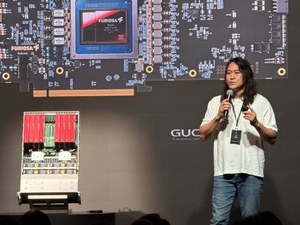
National Growth Fund to invest $531M in FuriosaAI, which rebuffed Meta's $800M takeover bid
-
INDUSTRY
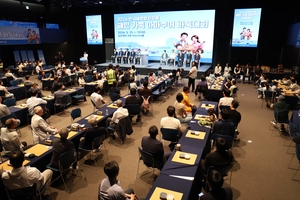
Korea Shipowners' Association holds amateur baduk tournament for Maritime Day