
- HOME
- ECONOMY
-
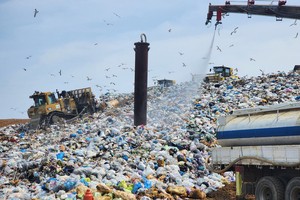
Greater Seoul's household waste travels as far as Gyeongju as out-of-region dumping spreads
Greater Seoul waste flows concentrated in Chungcheong region, spreading to North Gyeongsang, North Jeolla and Gangwon provinces Rep. Park Ji-hye calls for fundamental waste reduction and local processing infrastructure A ban on direct landfilling of household waste from the Greater Seoul area that took effect this year has triggered a serious wave of out-of-region waste transfers, with trash generated in the capital area being shipped to provinces across the country for disposal. Data on the handling of Greater Seoul household waste in the first half of 2026, obtained by Democratic Party of Korea lawmaker Park Ji-hye of the National Assembly's climate, energy, environment and labor committee from the Ministry of Climate, Environment and Energy, show that of the 1.487 million tons of household waste generated in Seoul, Gyeonggi Province and Incheon between Jan. 1 and June 30, about 57,000 tons — roughly 4 percent — were shipped out of the Greater Seoul area for disposal elsewhere. North Chungcheong Province received the largest share, taking in 27,600 tons, or 48.4 percent of the total transferred. South Chungcheong Province followed with 11,200 tons, or 19.6 percent, meaning the Chungcheong region absorbed about 68 percent of all out-of-region waste. Daejeon received 6,400 tons (11.2 percent), followed by North Gyeongsang Province at 5,800 tons (10.2 percent), North Jeolla Province at 2,800 tons (5 percent), Sejong at 2,100 tons (3.7 percent) and Gangwon Province at 1,100 tons (1.9 percent). The transfers are spreading well beyond the neighboring Chungcheong region. In one example, 1,800 tons of household waste from Siheung, Gyeonggi Province, were transported all the way to Gyeongju in North Gyeongsang Province for processing — illustrating a pattern of long-distance waste shipments reaching across the country. "The direct-landfill ban was introduced to encourage waste reduction and the expansion of local processing infrastructure, but in practice it has produced a balloon effect — costs and regulations are being sidestepped by offloading trash onto private operators in the provinces," Park said. Park added that if the principle of processing waste where it is generated is undermined, residents outside the Greater Seoul area will bear a double burden — both environmental and social. She said she would use the upcoming national audit to examine the progress of expanding in-region waste processing facilities in Greater Seoul and press for effective measures to prevent inter-municipal long-distance waste transfers.
Sept. 17, 2026
-
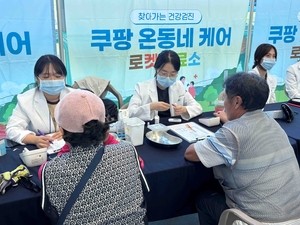
Coupang brings free health screenings to Hwacheon-gun community
Coupang Inc said it ran its mobile health screening program, "Coupang Ondongnae Care," a community outreach health service, at the gymnasium of the Second Hana Center in Hwacheon-gun, Gangwon Province, on Wednesday. The Second Hana Center, Hwacheon-gun and the Korean Central Medical Volunteer Association co-hosted the event. The Second Hana Center supports North Korean defectors who have settled in the local community, as well as area residents. The event was organized ahead of the center's planned opening to the broader community, with the aim of expanding exchanges between defectors and local residents. About 600 people took part — roughly 550 local residents, including about 200 children and teenagers, and about 50 North Korean defectors. A team of 40 medical professionals affiliated with the Korean Central Medical Volunteer Association — including physicians, traditional Korean medicine doctors, dentists and pharmacists — provided services ranging from general medical care, such as blood tests and intravenous drips, to dental and traditional medicine consultations. A mobile portrait studio was also on hand, offering commemorative photos as gifts to attendees. The opening ceremony was attended by Jang Young-chul, executive vice president of Coupang Inc's corporate social responsibility division; Kim Nam-jung, vice minister of the Ministry of Unification; Kim Young-il, director of the Second Hana Center; Kim Se-hun, Hwacheon-gun county chief; Jo Ung-hee, speaker of the Hwacheon County Council; Park Dae-hyun, a Gangwon Province lawmaker; Song Jong-seop, director of the Gangwon Northern Hana Center; and Lee Eun-woo, president of the Korean Central Medical Volunteer Association. National Assembly member Han Ki-ho delivered congratulatory remarks via video message. "The purpose of Ondongnae Care is to go directly to areas with limited access to medical services and provide residents with the healthcare they need," a Coupang Inc corporate social responsibility official said. "We will continue to work closely with local communities and carry out social contribution activities that make a real difference in the everyday health of residents."
Sept. 17, 2026
-

Shinsegae Duty Free launches 'Shinmyeonseil' mega-sale ahead of golden holiday stretch
Shinsegae Duty Free announced Thursday the launch of a new regular mega-sale event called "Shinmyeonseil," which it plans to hold four times a year timed to peak holiday travel periods. The inaugural event runs from Thursday through Oct. 11, both online and at its brick-and-mortar store. The sale offers expanded discounts on popular products ahead of the golden holiday stretch spanning Chuseok, National Foundation Day and Hangul Day. On its online mall, 277 brands and more than 3,800 products will be discounted by up to 70 percent. Cosmetics and fragrances account for 173 brands and more than 2,200 products, with discounts of up to 60 percent — participating labels include YSL Beauty, Lancôme, Kiehl's and Prada fragrances. More than 160 exclusive brand and event products have also been lined up. At the Myeong-dong store, 290 products from 85 brands — including Sulwhasoo, The History of Whoo, Anua and Biotherm — will be discounted by up to 40 percent. The online and in-store lineups have been deliberately kept separate. A special "Captain Ttager PICK" event, featuring Glenfiddich, Balvenie and other selections curated by travel influencer Captain Ttager, will also run alongside the sale. The event is divided into two phases: the first runs through Sept. 30 and the second from Oct. 1 through Oct. 11, with featured products and offers changing between phases. "We plan to hold this regularly around major holidays and national breaks, and build it into the signature shopping event of Shinsegae Duty Free," a company official said.
Sept. 17, 2026
-
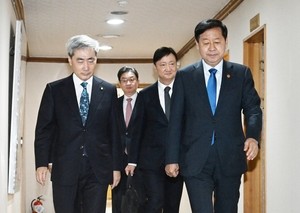
Gov't says Fed rate hike impact 'limited,' vows action if bond market stress deepens
Authorities to shore up support for vulnerable borrowers if repayment burden grows Officials to closely monitor oil prices and global capital flows Current-account surplus effects on market liquidity also under review South Korea's economic and financial authorities said Thursday they would assess the impact of the US Federal Reserve's policy rate hike on domestic financial markets and stand ready to intervene if excessive stress emerges in the government bond market or repayment burdens on vulnerable borrowers worsen. Deputy Prime Minister and Minister of Economy and Finance Koo Yun-cheol convened an expanded macroeconomic and financial meeting, known as the F4, at Government Complex Seoul on Thursday with Bank of Korea Governor Shin Hyun-song, Financial Services Commission Chairman Lee Eok-won and Financial Supervisory Service Director General Lee Chan-jin. The meeting reviewed financial market developments following the Federal Open Market Committee's rate hike and assessed the impact of the Middle East war on financial and foreign exchange markets. The authorities assessed that the Fed raised its policy rate amid persistently strong economic and employment conditions, elevated inflation and, more recently, rising international oil prices and growing geopolitical uncertainty. They said the rate increase had already been priced into markets and that overall financial market conditions remained stable, limiting the expected domestic impact. Authorities said they would keep close watch on the Fed's reinforced commitment to price stability and the possibility of additional rate hikes before year-end. They also plan to monitor monetary policy decisions by the Bank of Japan and the Bank of England scheduled for this week, alongside international oil prices and global capital flows, coordinating with relevant agencies to assess spillover effects on domestic financial and foreign exchange markets. Authorities also said they would address heightened volatility in the government bond market, driven by the US rate hike and other domestic and external developments. Expecting uncertainty to persist, they said they would closely track market conditions and implement stabilization measures if one-sided positioning becomes excessive. The repayment burden on vulnerable borrowers from rising lending rates will also be monitored. Officials said they would remain alert to the risk of worsening debt-service pressures, push ahead with previously announced support measures for vulnerable borrowers and prepare supplementary steps if needed. In addition, authorities said they would examine how changes in domestic and external economic conditions — including a current-account surplus — affect liquidity in the broader financial system. They plan to closely monitor related capital flows and liquidity conditions and continue assessing the impact on financial and asset markets. Thursday's meeting was the last official F4 session Koo will attend as a member. He expressed gratitude to the heads and staff of the Bank of Korea, the Financial Services Commission, the Financial Supervisory Service and other relevant agencies for their joint efforts to maintain stability in financial and foreign exchange markets. He also urged the economic and financial team to continue responding swiftly and in a coordinated manner, building on the cooperative framework they have established.
Sept. 17, 2026
-
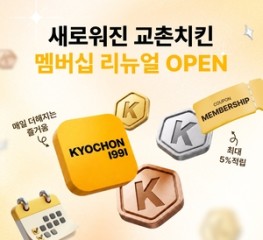
Kyochon Chicken app overhauls membership system, more than doubles reward rates
Reward rates more than double across tiers; standing benefits introduced Kyochon Food & Beverage is overhauling the membership system on its Kyochon Chicken app, raising reward rates and introducing new standing benefits. The company announced Thursday that it is renaming its three membership tiers to Single (for new customers), Combo and Signature. Reward rates will more than double across all tiers, rising from 0.5%, 1% and 2% to 1%, 3% and 5%. Under the new system, a Signature-tier customer spending 30,000 won ($22) will earn 1,500 points — more than double the previous 600. Accumulated points can be used like cash or spent at a newly introduced "coupon store." At the coupon store, members can use points to purchase discounted coupons for menu items of their choice. The revamp also introduces an "attendance check" benefit that grows rewards with each visit. New members will receive a free wedge potato coupon immediately upon signing up. "We focused on making the benefits more tangible the more frequently customers use the app," a company official said, describing the overhaul as a strategy to build customer loyalty following an app redesign in July that enhanced convenience features.
Sept. 17, 2026
-
Amorepacific pays W64.9b to suppliers early ahead of Chuseok
Payment made up to 10 days ahead of schedule Amorepacific Group announced Thursday that it has made early payments to its suppliers ahead of the Chuseok holiday. The payments cover about 600 suppliers that provide raw materials, packaging and products to nine Amorepacific Group affiliates. The group began disbursing 64.9 billion won ($47.4 million) in trade payments Thursday — funds originally scheduled for release by Sept. 27. Amorepacific Group has made early supplier payments before holiday seasons since the mid-2000s. "This is a payment made up to 10 days ahead of the scheduled date," said Lee Sang-mok, chief executive of Amorepacific Holdings. "We will continue activities aimed at mutual growth with our suppliers."
Sept. 17, 2026
-
How Handsome's import strategy drove 50% sales growth for foreign fashion brands
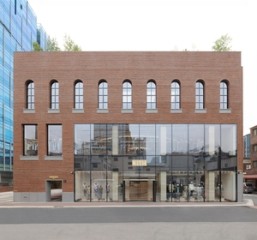
Three more brands to launch by first half of next year as company eyes stronger lineup Handsome, a fashion subsidiary of Hyundai Department Store Group, said Thursday that sales of the 12 overseas fashion brands it has introduced to South Korea since 2022 rose 50 percent year-on-year in the January–August period. The company currently carries brands including Our Legacy, Fear of God, RE/DONE and Kith in the domestic market. Handsome attributes much of the growth to what it calls an "antenna shop strategy," using its own import select shops — Mooi and Tom Greyhound — to track consumer response and brand preference before committing to a full rollout. Brands that show clear growth potential are then brought in for dedicated distribution. The two chains together operate 50 select shop locations — 15 under Mooi and 35 under Tom Greyhound — carrying around 200 overseas fashion brands. Pop-up stores at Tom Greyhound Seongsu-dong, The Hyundai Seoul and the Trade Center branch provide additional customer feedback and sales data. Handsome also plans to expand its overseas brand lineup, with three new brands set to launch by the first half of next year, including SKIMS, the brand associated with Kim Kardashian. The number of dedicated stores for overseas brands is also set to grow from the current 60 to 90 by the end of next year. Yoo Tae-young, executive vice president and head of Handsome's overseas fashion division, said the company would "continue to discover brands that can lead global fashion trends."
Sept. 17, 2026
-

Word-of-mouth hit: Yakult XO zero fermented drink tops 40 million units sold
Hy announced Thursday that Yakult XO, a zero-sugar fermented milk drink it launched last May, has surpassed cumulative sales of 40 million units. Yakult XO is the first zero-sugar fermented milk product hy has released under the Yakult brand. It contains no sugar, sweeteners or fat, and carries 10 kilocalories per 100 milliliters. The drink features five patented bacterial strains and guarantees 50 billion CFU of probiotics. Hy has broadened its consumer reach through collaborations with outside brands. A drink called "Low-Sugar Honey Pear XO Yakult," developed by Mega MGC Coffee using the product and released in April, gained traction on SNS as a popular hangover remedy. "We will continue to expand our lineup of products that balance great taste with health benefits," said Choi Young-taek, head of hy's marketing team.
Sept. 17, 2026
-
'Tell me my national pension history' — KakaoTalk to offer pension lookup, voluntary enrollment
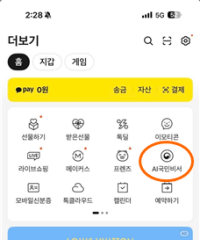
Part of a government push to expand AI-based digital public services; other private apps to follow with additional pension features A woman who left the workforce to raise a family wanted to know how much she had paid into the national pension during her working years. Using Kakao's "AI National Secretary," she looked up her contribution period and total payments — and discovered she had not yet met the minimum 10-year enrollment requirement needed to receive a pension. With the AI assistant's help, she applied for voluntary enrollment so she could eventually qualify for benefits. The Ministry of Interior and Safety announced Thursday that citizens can now access national pension services — including contribution history lookups and voluntary enrollment applications — quickly and easily through Kakao's AI National Secretary. The ministry and the National Pension Service are opening four digital services through the platform: contribution history lookup, voluntary enrollment application, regional subscriber payment resumption reporting, and premium support application for low-income regional subscribers. Voluntary enrollment allows people who are not required to join the national pension system to sign up of their own accord. Through the AI National Secretary, users can check their eligibility, look up premium amounts, and submit an enrollment application. On KakaoTalk's AI National Secretary, the contribution history lookup service is available starting Thursday, with the voluntary enrollment application service to follow by the end of this month. The remaining two services — regional subscriber payment resumption reporting and premium support applications for low-income regional subscribers — will roll out starting in December through Woori Bank and other private apps. Users can access the services by opening the AI National Secretary on KakaoTalk and typing requests in everyday language, such as "Look up my national pension enrollment history" or "I want to apply for voluntary national pension enrollment." For the contribution history service, users can view their total premium payments and the number of months they have contributed after completing identity verification. "By offering public services as closely tied to people's lives as the national pension through Kakao's AI National Secretary, we have made it easier for citizens to access them," Interior and Safety Minister Yun Ho-jung said. "We will continue to focus all our efforts on expanding AI-based public services that make a real difference in people's lives, so that Korea can stand tall as the world's best 'AI democratic government.'"
Sept. 17, 2026
-
Abortion pill set for introduction — but questions on price, minors remain
Ministry of Health and Welfare weighing public price comparisons as out-of-pocket costs likely at launch; WHO guidance on 12-week limit expected to fuel debate over Korea's 9-week cap; parental consent for minors and hospitalization requirements among key issues still to be resolved With the government having confirmed it will introduce the oral abortion drug mifepristone for women up to nine weeks pregnant starting in the first quarter of next year, attention is turning to questions of cost, national health insurance coverage, prescription procedures and consent standards for minors — all of which remain unresolved. The Ministry of Health and Welfare said it will review drug pricing and insurance eligibility once a pharmaceutical company completes product approval from the Ministry of Food and Drug Safety and applies for coverage. The drug is widely expected to be offered on a non-covered, out-of-pocket basis when it first becomes available. If dispensed without insurance coverage, patients would bear the full cost of not only the medication but also consultations and diagnostic tests. The process goes beyond simply taking a pill: before administration, clinicians must confirm gestational age and rule out ectopic pregnancy, and follow-up visits are required afterward to verify that the termination is complete. The debate over national health insurance coverage is therefore expected to extend well beyond whether the drug itself should be reimbursed. What range of services qualifies — pre-administration tests such as ultrasounds, post-administration confirmation visits, and treatment for complications such as bleeding or infection — will all be contested. Out-of-pocket costs also present a variable. Without insurance coverage, prices could vary by clinic, and if the market initially sets fees high, access for lower-income patients could suffer. The government is considering publishing price comparisons across medical institutions through the Health Insurance Review and Assessment Service to reduce such disparities. Debate over the permitted gestational limit is also expected to continue after the drug's introduction. The government capped eligibility at nine weeks on the grounds that the pharmaceutical company conducted clinical trials on patients within that window to establish safety. Yet WHO and other international health bodies describe medication abortion under medical supervision as "safe and effective" through 12 weeks of pregnancy. Major countries including the United Kingdom and the United States allow medication abortion up to 10 to 12 weeks under their respective guidelines. Women's groups and parts of the medical community are expected to keep pressing for the domestic limit to be raised in line with global standards after the drug's introduction. Opponents counter, however, that the risk of incomplete abortion and heavy bleeding rises with gestational age, and argue that the nine-week limit should be strictly maintained. Clinical guidelines that the medical community will develop are expected to include a parental — or legal guardian — consent requirement for minors, a provision likely to ignite fresh controversy over how effectively it protects adolescents. The current Mother and Child Health Act defines consent for abortion procedures as resting solely with the patient and her spouse, leaving a fundamental gap in protecting the reproductive rights and health of underage adolescents. If parental consent is made mandatory, teenagers who cannot obtain it — due to family conflict, neglect or abuse — may avoid medical facilities altogether and instead seek counterfeit or illegally copied drugs through unofficial channels, with potentially serious consequences. To bring such individuals safely within the formal healthcare system, discussions are needed on detailed safeguards such as designating counseling agencies that could substitute for parental consent, or establishing exemption clauses from the legal guardian requirement. Whether patients must be hospitalized during administration, and the specific protocol for taking the medication, are also central issues for the medical community's guidelines. The regimen typically involves two drugs — mifepristone and misoprostol — taken in sequence with a gap of one to two days. Uterine contractions begin shortly after the second drug is taken and can cause severe abdominal pain, vomiting and heavy bleeding, requiring close medical monitoring. Authorities will need to establish whether patients must remain in hospital or on-site after taking the medication, or whether at-home waiting — as is common abroad — will be permitted. The medical community is calling for concrete guidelines, such as mandatory on-site waiting or short-term hospitalization, to ensure patient safety, while also seeking legal protections for physicians — including liability exemptions or legislative safeguards — in the event of medical complications.
Sept. 17, 2026
-
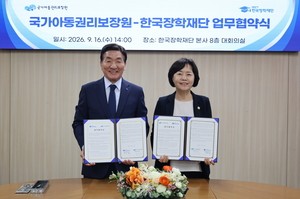
Strengthening tuition support so financial hardship does not end young people's education
National Child Rights Commission and Korea Scholarship Foundation sign MOU to promote tuition support system and identify eligible youth The National Child Rights Commission signed an MOU with the Korea Scholarship Foundation on Wednesday at the foundation's main conference room in Dong-gu, Daegu, to help care-leavers more easily access tuition support and continue their studies. The agreement links the resources and networks of both organizations to identify care-leavers in need of financial aid and support them in staying enrolled after entering higher education. Under the MOU, the National Child Rights Commission will promote national scholarship programs and tuition support through dedicated self-reliance support agencies nationwide and through its integrated self-reliance information platform, Jarip Jeongbo ON. The Korea Scholarship Foundation will use its network of universities and other educational institutions, along with tuition data, to identify care-leavers at risk of dropping out and strengthen support available to them. Through this collaboration, both organizations aim to ensure that care-leavers who need financial assistance can more easily learn about available programs and be connected to support before they leave school. "We will do our utmost to inform care-leavers about tuition support programs — working with dedicated self-reliance support agencies and other relevant bodies — so that financial hardship does not force them to abandon their studies and they can fully enjoy educational opportunities," National Child Rights Commission President Kim Yu-im said. "We will continue to work closely with the Korea Scholarship Foundation to help care-leavers achieve stable independence and a brighter future."
Sept. 17, 2026
-
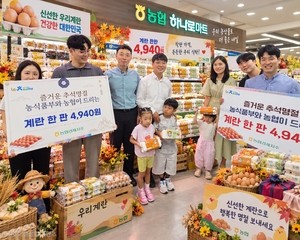
Eggs under 5,000 won a tray as NH Agri Business Holdings runs pre-Chuseok livestock discount
Hanaro Mart discount event runs Thursday through Sept. 24, combining government support and NH's own funds Grade-A eggs, 30-count tray priced at 4,940 won — more than 30% below Tuesday's consumer price Korean beef brisket at 3,390 won per 100g, pork shoulder at 1,090 won, whole chicken at 4,000 won Ahead of Chuseok, NH Agri Business Holdings is putting eggs on sale for under 5,000 won a tray. A 30-count tray of grade-A eggs will be priced at 4,940 won — more than 30 percent below the consumer price recorded Tuesday. Korean beef, pork and chicken will also be discounted to ease the burden on holiday shoppers. NH Agri Business Holdings' livestock division said Thursday it will hold a "Chuseok Livestock Discount Event" at Hanaro Mart locations operated by NH Hanaro Distribution and NH Distribution from Thursday through Sept. 24, an eight-day run. During the event, a 30-count tray of NH grade-A eggs will sell for 4,940 won — 2,215 won less than the 7,155-won consumer price for 30 eggs recorded Tuesday by the Korea Institute for Animal Products Quality Evaluation. The discount of more than 30 percent was made possible by combining government support with NH's own funds. Korean beef, pork and chicken are also on offer. Grade-1 Korean beef brisket will be sold at 3,390 won per 100 grams, and the round cut at 2,940 won per 100 grams. Pork shoulder will go for 1,090 won per 100 grams, and a size-12 whole chicken for 4,000 won. "Ahead of Chuseok, we want to supply domestically produced eggs and other livestock products at reasonable prices to ease the burden on consumers," said Ahn Byung-woo, chief executive of NH Agri Business Holdings' livestock division. "NH will continue to work alongside the government to stabilize prices for the public and improve the livelihoods of livestock farmers."
Sept. 17, 2026
-

'Farming together' gains ground as aging shrinks rural workforce
Sangju's Nanuri cooperative draws 470 households; Hongseong youth farm shares everything from crop selection to profit KREI urges policy recognition of collaborative farming amid aging crisis As an aging rural population shrinks the farm labor pool, a model of collaborative agriculture — where households share machinery, labor, production and sales — is emerging as a viable alternative. In Sangju, North Gyeongsang Province, a cooperative that started on 32 hectares has grown to cover 574 hectares and 470 member households. In Hongseong, South Chungcheong Province, young farmers run a cooperative where members jointly decide what to grow and how to divide the proceeds. A report by the Korea Rural Economic Institute titled "Shifting Rural Policy in Response to Low Birth Rates and Super-Aging" finds that labor supply instability in agriculture is intensifying as the countryside ages rapidly, raising the urgency of farmer-to-farmer collaboration and reorganized production units. With family labor shrinking and outside workers increasingly necessary, the institute argues that sharing farm work and resources among farmers can serve as an alternative alongside foreign workers and employment services. The Nanuri Agricultural Cooperative in Sangju is a leading example. When it was designated an outstanding field management body in 2016, its cultivated area was 32 hectares; last year it expanded roughly 18-fold to 574 hectares. Participating households have grown to 470. Six regional directors divide responsibility across Sangju, overseeing contracted farm work and quality control. Rather than requiring each household to acquire its own machinery and expertise, the cooperative distributes seeds and shares water management technology. It also performs farm work using its own equipment. A standardized double-cropping system of soybeans and wheat is in place, with sowing and pest control available to households on request. The cooperative handles harvesting, sorting and sales. Output in 2024 reached 1,500 tonnes, with 1,600 tonnes purchased. Nanuri Agricultural Cooperative — collaborative farming at a glance Source: Korea Rural Economic Institute Item | Scale Cultivated area (2016) | 32 ha Cultivated area (2025) | 574 ha Participating households (2025) | 470 Regional directors | 6 Output (2024) | 1,500 t Purchases (2024) | 1,600 t The collaboration has extended beyond production into processing. In 2019, the cooperative established a separate entity, Damkkotse Agricultural Cooperative, to handle processing — producing soybean products and employing local residents. The Korea Rural Economic Institute cited the case as an example of how jointly using farmland and machinery, combined with double-cropping and processing, can raise household income and improve management stability. Collaborative farming has also helped young farmers put down roots. The Young Collaborative Farm in Hongseong, South Chungcheong Province, is a cooperative where five or six members jointly manage every stage — from choosing crops to production, labor, ownership of agricultural output and profit sharing. Founded in 2012 around teachers and graduates of Poolmu School, the farm jointly cultivates 3,300 square meters of greenhouse facilities and 13,200 square meters of paddy fields. It has 16 registered members, and a total of 43 people have participated, including those who have passed through the farm. Machinery, facilities, equipment and farming techniques are all shared. More than 90 percent of the leafy vegetables produced are sold through Hongseong Organic. The model allows young people new to farming to work on the farm, learn agricultural skills and engage in community activities before growing into independent farmers. The Korea Rural Economic Institute described it as a case where shared farming and cooperative labor experience leads to the settlement of returning rural residents. Similar experiments are under way elsewhere. The Heuksarang Agricultural Cooperative in Gamul-myeon, Goesan, North Chungcheong Province, counts 70 member households. It began in 2001 as a producer community of environmentally friendly rice farmers and was incorporated as an agricultural cooperative in 2003. Today, eight successor farming households and 30 returning-farmer households participate in running a joint farm and in inter-household learning and collaboration. The Hangkkune Cooperative in Gokseong, South Jeolla Province, jointly cultivates 4,290 square meters of paddy and 3,300 square meters of fields among its 53 full members and 26 associate members. Members share farming materials and machinery, and operate cooperative labor exchanges and jointly farmed plots. The cooperative also runs residential and living spaces for young returning farmers, a village cafe and a small library. Overseas, shared use of farm machinery is more firmly established. France's CUMA — a national network of agricultural machinery cooperatives — operates roughly 11,500 groups across the country. About 40 percent of French farmers belong to one, with an average of 20 farmers per cooperative jointly owning and using equipment. Of those, 1,560 cooperatives employ approximately 4,600 people, including operators and mechanics. The Korea Rural Economic Institute said that while examples of joint farm work, machinery sharing and cooperative management are emerging domestically, the institutional framework to formally recognize and consistently support them remains inadequate. It recommended that policy move beyond a focus on farmland consolidation and scaling, and instead recognize a range of collaborative models — shared labor, equipment and joint production and management among small-scale households — as legitimate policy targets. The institute also called for support to help young farmers participate in existing cooperative farming structures in their communities. "Rural policy in an era of low birth rates and super-aging should focus not simply on increasing the population, but on ensuring that residents can access the care and lifestyle services they need even as the population declines — and that agriculture and rural communities remain sustainable," said Kim Jeong-seop, a senior research fellow at the institute. "A policy shift tailored to rural realities is urgent, including formally recognizing township- and village-level resident organizations as policy partners and providing them with stable support."
Sept. 17, 2026
-
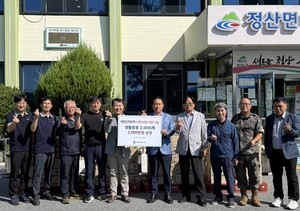
Aekyung Industrial donates household goods worth W30m to South Chungcheong welfare center
Company supports Cheongyang-gun's Jeongsan-myeon ahead of Chuseok Aekyung Industrial said it held a product donation ceremony Wednesday at the Jeongsan-myeon Community Welfare Center in Cheongyang-gun, South Chungcheong Province, distributing goods to every household in the township ahead of the Chuseok holiday. The ceremony was attended by Park Hong-yeol, head of Aekyung Industrial's production division, and Jeongsan-myeon Chief Kim Su-dong, among others. A total of 2,000 units of the company's "Riqu Indoor Dry Ultra" laundry detergent, valued at about 30 million won ($22,200), were distributed to all households in Jeongsan-myeon. The donation was organized by Aekyung Industrial's Cheongyang factory to strengthen trust and ties with local residents. "Going forward, we will continue to communicate openly and carry out a range of cooperative initiatives so that the Cheongyang factory can build trust with residents and grow together as a member of the local community," Park said.
Sept. 17, 2026
-
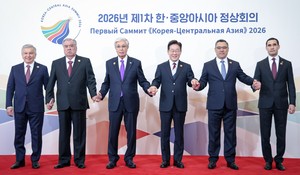
South Korea, Central Asian nations hold first joint industry ministerial meeting, sign supply chain MOU
Nine government cooperation agreements, 116 private-sector MOUs signed on sidelines of Korea-Central Asia summit South Korea and the five Central Asian nations gathered their industry ministries together for the first time in 34 years of diplomatic relations, agreeing to strengthen cooperation on industry and critical mineral supply chains. Both sides committed to institutionalizing a supply chain cooperation framework and expanding collaboration across industrial sectors, including critical minerals. The Ministry of Trade, Industry and Energy said Thursday it signed nine cooperation agreements with the governments of the five Central Asian countries — Kazakhstan, Kyrgyzstan, Tajikistan, Turkmenistan and Uzbekistan — on the sidelines of the first Korea-Central Asia Summit, held in Seoul from Monday through Wednesday. On the private-sector side, a total of 116 MOUs were signed, laying out concrete plans for South Korean companies to enter Central Asian markets. During the same period, the ministry hosted a series of business events, including the first Korea-Central Asia Industry Ministers' Meeting, a Korea-Kazakhstan business roundtable, a Korea-Uzbekistan business forum, a Korea-Turkmenistan business forum and the first Korea-Central Asia Business Summit. While South Korea has maintained bilateral consultation channels with each Central Asian country individually, this marked the first time in 34 years of diplomatic ties that it discussed industrial and critical mineral supply chain cooperation with all five nations together. At the industry ministers' meeting held Monday, South Korea and the five Central Asian nations signed an MOU on industrial and supply chain cooperation. In addition, the ministry signed eight bilateral cooperation documents tailored to the industrial conditions and economic needs of each country, on the sidelines of bilateral summits. With Kazakhstan, the two sides signed a basic crude oil cooperation agreement to strengthen collaboration across the oil value chain, including oilfield development and petrochemicals. They also signed an MOU on nuclear energy cooperation to build a foundation for full-cycle nuclear power plant collaboration. With Kyrgyzstan, the two sides revised an existing trade and investment cooperation MOU to expand the scope of cooperation into new areas such as critical minerals, halal industries and digital transformation, and agreed to establish a regular director-general-level consultation channel. With Tajikistan, the two countries signed their first-ever industrial cooperation MOU since establishing diplomatic relations, covering everything from mining and critical minerals to AI and emerging technologies. With Turkmenistan, they signed an MOU on chemical industry and plant cooperation. With Uzbekistan, the ministry signed an MOU to establish a full-cycle critical mineral cooperation platform centered on a rare metals center for processing and exploration, along with MOUs on manufacturing AI transformation and export capacity-building. At the bilateral business events held Tuesday, companies and institutions signed a string of MOUs. The Korea-Kazakhstan event produced 78 agreements covering areas such as gas processing plant construction and petrochemical factory scale-up, while the Korea-Uzbekistan and Korea-Turkmenistan forums yielded five and 14 MOUs, respectively. An additional 19 MOUs were signed at the Business Summit on Wednesday. The ministry said it would take all necessary follow-up measures to ensure that both the government cooperation documents and private-sector MOUs translate into actual contracts and investment outcomes. Plans call for regularizing the newly established industry ministers' meeting and using working-level consultative bodies to periodically review the progress of key projects. The ministry also intends to work with South Korean diplomatic missions in Central Asia and KOTRA trade offices to resolve difficulties faced by South Korean companies in the region.
Sept. 17, 2026
-
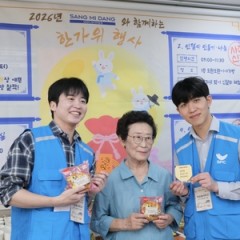
Sangmidang Holdings shares food and care with 29 welfare facilities for chuseok
Sangmidang Holdings said it is conducting product-sharing and volunteer activities at 29 welfare facilities across the country through Wednesday in celebration of chuseok. The Happy Volunteer Corps, made up of employees from Sangmidang Holdings affiliates, held a "Sweet Chuseok" event Wednesday at the Yangjae Senior Welfare Center in Seocho-gu, Seoul. About 200 elderly residents from Seocho-gu joined in injeolmi rice cake making and a chuseok sports day, and were served a special meal. Samlip's Boreumdal bread and cream buns were also distributed. Samlip is donating more than 6,000 products to 14 welfare facilities in Seoul, Gyeonggi Province, the Chungcheong provinces and the Gyeongsang provinces. Paris Croissant is delivering Paris Baguette baked-goods sets, roll cakes and rice to four welfare facilities in Seongnam and Gangwon Province. BR Korea visited the homes of national merit recipients in Eumseong, North Chungcheong Province, delivering Samlip Jeju black pork ham sets. SPC GFS partnered with the Yangjae Community Welfare Center to assemble and distribute holiday food packages containing Samlip Hi-Myeon udon, Boreumdal bread and granola bars. SPL delivered Paris Baguette castella products to childcare facilities in Pyeongtaek. Secta Nine and SPC Pack are each donating bakery products to welfare facilities in Yeoksam-dong, Seoul, and Cheongju, respectively, while also conducting volunteer activities supporting people with disabilities and children. "We will continue to carry out a variety of social contribution activities in which our employees participate directly to share warmth with our neighbors," a Sangmidang Holdings official said.
Sept. 17, 2026
-
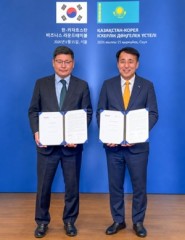
K-SURE extends W75b to Kazakhstan's development bank to back Korean SMEs
First use of on-lending mechanism through overseas financial institution Framework with Kazakhstan Development Bank covers up to 200 million euros The Korea Trade Insurance Corporation will channel 75 billion won ($55.4 million) to a Kazakhstani state-run bank to help South Korean small and midsize companies secure financing for local projects. K-SURE announced Thursday that it had extended 48 million euros in financing to the Development Bank of Kazakhstan, or DBK. The arrangement marks the first time K-SURE has used an "on-lending" structure, in which it provides funds to an overseas financial institution that then lends directly to Korean companies operating in that market. Under the on-lending model, a policy finance institution supplies funds to an intermediary — in this case DBK — which in turn lends to the end borrowers. DBK will use K-SURE's backing to raise low-interest funds from global banks and deploy them as loans for projects in Kazakhstan that involve Korean companies. The arrangement allows DBK to lower its funding costs while giving Korean firms on the ground easier access to project financing. K-SURE also signed an MOU with DBK on Tuesday on the sidelines of the Korea-Kazakhstan Business Round Table, held to coincide with a visit to South Korea by the Kazakhstani president. Under the MOU, the two sides will jointly identify projects in Kazakhstan with Korean participation and work to ensure additional financing can be mobilized quickly, underpinned by a financial cooperation framework of up to 200 million euros. "This support carries great significance in that it is the first application of the on-lending model, laying the groundwork for Korean companies to enter the Central Asian market," K-SURE President Jang Young-jin said. "We will continue to expand cooperation with overseas financial institutions so that Korean companies can secure new contract opportunities in emerging markets."
Sept. 17, 2026
-
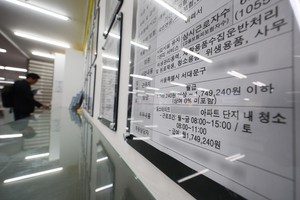
'I thought it was full-time, but it was contract': 323 false job ads reported in first half of year
Cases where advertised wages differed from contract wages referred to prosecutors Referrals in six months reach 86.2% of last year's full-year total 287,772 job ads screened; 3,000 flagged as suspicious A company that advertised a "full-time position with a three-month probationary period" but offered only a one-month fixed-term contract during the actual hiring process has been caught by authorities. Another employer, whose advertised wages differed from those in the actual employment contract, was referred for investigation and subsequently sent to prosecutors. Reports of false job advertisements — listings that lure job seekers with misleading working conditions — reached 323 in the first half of this year alone, equivalent to 77.6 percent of last year's full-year total. The number of cases referred for criminal investigation also reached 86.2 percent of last year's annual figure in just six months. According to data submitted to the National Assembly by the Ministry of Employment and Labor and obtained by Democratic Party of Korea lawmaker Park Hae-chul of the Assembly's Climate, Energy, Environment and Labor Committee, the number of false job ad reports has risen every year — from 334 in 2022 to 365 in 2023, 404 in 2024 and 416 last year. Last year's figure was the highest since records began. The upward trend has continued this year. The 323 reports filed through June amounted to 77.6 percent of last year's total. If the current pace holds, this year's tally could far exceed last year's record. Cases escalating to criminal proceedings have also increased. Investigation referrals fell from 20 in 2022 to 18 in 2023 and 14 in 2024, before rebounding to 29 last year. This year, 25 cases were referred in the first half alone — already 86.2 percent of last year's annual total. Even in cases that did not rise to the level of criminal punishment, employers whose ads could mislead job seekers received administrative guidance. The Seoul Eastern District Office directed one company — which had listed a monthly salary of "up to 3.5 million won ($2,590) or more" without specifying actual pay — to clearly state wage conditions and the basis for calculating pay. The Ansan District Office ordered a company that had advertised manufacturing work but assigned employees to product packaging duties to accurately describe the actual job responsibilities. Another employer that advertised a five-day workweek but disclosed alternating Saturday shifts only during interviews was directed to specify working hours and the basis for wage calculation. The number of administrative guidance cases grew from 14 in 2022 to 54 in 2023 and 75 in 2024. Last year the figure stood at 17, while 23 cases were recorded in the first half of this year. The Ministry of Employment and Labor this year established an integrated job advertisement monitoring system. The system conducts comprehensive checks on newly posted listings across recruitment platforms and focuses on suspicious keywords such as "high income" and "Telegram" on major portals and SNS. A review of 287,772 job advertisements conducted from April 1 through Aug. 31 identified 3,000 suspicious listings. Of those, 2,855 were confirmed to have been deleted, revised or reported. The remaining 145 operators were notified but either did not respond or failed to take action. On major job platforms including Jobkorea and Saramin, 227,335 job ads were screened and 566 suspicious listings were found. Of those, 375 were deleted and 191 were revised or kept after a review of the facts. All 1,128 suspicious ads found on major portals including Naver and Daum were processed as reports. "There have even been cases where job ads are exploited as a tool for crime — such as luring people into criminal organizations through major job portals and SNS with promises of high-paying overseas work," Park said. "We need to strengthen effective responses, including swift deletions and more active investigation referrals."
Sept. 17, 2026
-

Daejeon to introduce flexible speed limits in school zones along major roads
46 segments targeted by 2028; daytime limit stays at 30 km/h, nighttime limit raised to up to 50 km/h Speed limits in school zones along major roads in Daejeon will shift to a flexible, time-based system, replacing the blanket 30 km/h restriction that has applied around the clock. The city announced Thursday it will introduce time-variable speed limits in school zones along roads with six or more lanes, allowing nighttime speeds to exceed the current 30 km/h cap. The city conducted a comprehensive survey of road and traffic conditions across all school zone segments subject to the 30 km/h limit and carried out joint inspections with the Daejeon Metropolitan Police Agency to develop the time-based speed management plan. Under the new system, the 30 km/h limit will remain in effect during daytime hours when children are most active, while nighttime limits may be raised to as high as 50 km/h based on road and traffic conditions. Daejeon plans to roll out the project in phases across 46 segments from this year through 2028 — starting with four segments this year, adding 15 in 2027 and 27 more in 2028. The total project cost is 6.928 billion won ($5.12 million). Taking into account on-site conditions and the effectiveness of signage, the city will install fixed signs on roads with four or fewer lanes this year. From 2027, variable signs will be placed on major roads with six or more lanes to clearly display the applicable speed limit to drivers at each time of day. Before implementation, the city plans to gather input from parents and other stakeholders and obtain approval from the Daejeon Metropolitan Police Agency's traffic safety review committee before finalizing the target segments and detailed operating guidelines. Meanwhile, Daejeon has been running a time-based speed system near Daeduk Elementary School in Yuseong-gu since July 2023. That segment uses variable signs to enforce a 30 km/h limit during the day and 50 km/h at night. "Child safety comes first, but applying a uniform speed limit even during nighttime hours is not always rational — we need to factor in road and traffic conditions," said Park Seung-won, the city's director of transportation. "We will pursue this project with both safety and practicality in mind, so that we protect children while also improving traffic convenience for residents."
Sept. 17, 2026
-
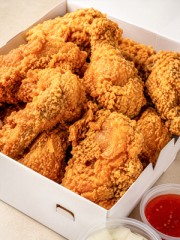
Chicken prices drop 38%, but fried chicken chains stay quiet on cuts
Chicken meat prices have fallen more than 37 percent over the past six months, yet South Korea's fried chicken chains have shown no sign of passing the savings on to customers — even as prices inch closer to the 30,000-won ($22) mark per order. Consumer frustration is mounting at chains that raised prices citing higher raw material costs, only to remain silent as those costs fall sharply. According to the Korea Broiler Association, the wholesale price of grade-9 to grade-10 broiler chicken stood at 3,308 won per kilogram on Tuesday — a 37.7 percent drop from March. The decline reflects a recovery in chicken supply that had been disrupted earlier this year by a highly pathogenic avian influenza outbreak. Chains that raised prices significantly say adjusting them back down is not feasible, citing accumulated cost burdens. They maintain that current prices reflect a "normalized" level. As repeated price hikes drew consumer backlash, some chains turned to shrinkflation — keeping menu prices fixed while quietly reducing portion sizes. Goobne Chicken cut the pre-cooked weight of its boneless chicken thigh menu from 800 grams to 700 grams — a reduction of 100 grams, or 12.5 percent — in June. It also trimmed its wing portions from 930 grams to 850 grams and its whole-leg portions from 905 grams to 820 grams. Kyochon Chicken last September kept the price of some boneless chicken menus unchanged while cutting their weight from 700 grams to 500 grams, only to reverse the reduction after a consumer backlash.
Sept. 17, 2026
MOST READ
- 1KAIST develops high-performance bio-based adhesive using E. coli instead of petroleum
- 2Pope Leo XIV declines French honors and banquet, accepts only private meeting with Macron
- 3Daimler Truck unveils next-generation transport solutions at IAA 2026
- 4What was Rachmaninoff's performance fee? A 1928 price list tells all
- 5Samsung Biologics union's show of force backfires at the bargaining table
- 6APR says hair-loss treatment research published in international journal
-
WORLD

US warns of punishment for anyone enabling Iran's Strait of Hormuz toll scheme
-
INDUSTRY
Toyota union puts productivity first; Hyundai Motor union demands bigger share of profits
-
FINANCE
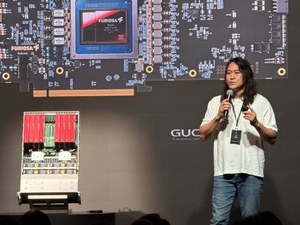
National Growth Fund to invest $531M in FuriosaAI, which rebuffed Meta's $800M takeover bid
-
INDUSTRY
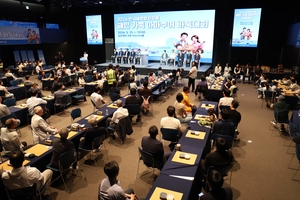
Korea Shipowners' Association holds amateur baduk tournament for Maritime Day