
- HOME
- ECONOMY
-
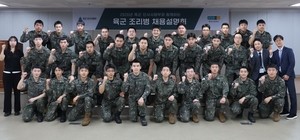
Hyundai Green Food holds job fair for army culinary troops leaving service
On-site hiring for 100-plus positions; practical training program to follow Hyundai Green Food announced it will hold a recruitment fair for army culinary specialists over three days — Wednesday, Thursday and Oct. 16 — in partnership with the Army Personnel Command. The first two sessions will take place at the Hyundai Department Store Group Human Resources Development Institute in Gangdong-gu, Seoul, while the Oct. 16 session will be held at The Hyundai Daegu. About 300 army soldiers with culinary specialties who are preparing to leave service are expected to attend. The sessions will introduce Hyundai Green Food's main business divisions and job functions and walk participants through the hiring process. One-on-one interviews that can lead directly to job offers will also be held. Hyundai Green Food staff will serve as interviewers and select candidates suited for culinary roles, including positions as cooks in institutional catering and restaurant settings. The company plans to hire more than 100 people through the fair. New hires will then go through Green Academy, an onboarding training program offering practical instruction in hygiene and safety management, ingredient preparation, menu cooking and business etiquette. Hyundai Green Food has run employment and recruitment support programs for army culinary troops every year since 2019, now in its eighth consecutive year. The company has hired about 600 culinary soldiers to date and received a commendation plaque from the Ministry of National Defense in 2023 for its contributions to hiring military personnel. The company has also been expanding its hiring pipeline to include students from vocational high schools. Since 2024, it has participated in a work-linked vocational training program run jointly by the Ministry of Education and the Ministry of Employment and Labor, connecting practical instruction with job placement. It was the first company in the institutional catering industry to be designated as a vocational training institution under the program. "We will support soldiers in putting the valuable experience and aptitude they built in the military to use, and in continuing to develop their expertise after joining us," a Hyundai Green Food official said.
Sept. 16, 2026
-
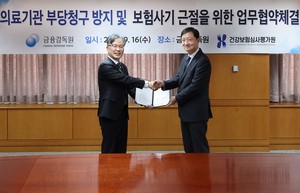
Health insurance reviewer, FSS sign MOU to combat insurance fraud and improper billing
Agreement aims to plug fiscal leaks in public and private insurance, easing the premium burden on the public The Health Insurance Review and Assessment Service and the Financial Supervisory Service signed an MOU on Wednesday at the FSS headquarters in Yeouido, Seoul, to strengthen their capacity to respond to insurance fraud and improper billing by medical institutions and to prevent fiscal leaks in both public and private insurance. The agreement aims to link the two agencies' data and expertise to enable faster and more effective responses to insurance fraud and improper billing, while supporting the sound operation of public and private insurance schemes. Under the MOU, the two agencies plan to cooperate on sharing information to detect medical institutions suspected of insurance fraud and improper billing, coordinating efforts to prevent fiscal leaks in public and private insurance, and exchanging expertise to improve operational efficiency and raise public awareness. In line with the agreement, the two agencies will expand information sharing on medical institutions suspected of fraud or improper billing. They plan to make faster use of relevant data, cooperate on analyzing billing records in connection with fraud investigations, and improve the overall effectiveness of probes and inspections. The agencies will also use data related to indemnity insurance to build a close coordination framework for detecting and responding promptly to irregularities in insurance claims and medical service use, with the goal of preventing fiscal leaks across public and private insurance. Alongside this, the two agencies plan to strengthen the stability of auto insurance reviews and prevent insurance payment leakage, while expanding personnel exchanges and public outreach to improve operational expertise and efficiency. "Insurance fraud and improper billing are directly linked to the premium burden borne by the public, which is why information sharing and close cooperation between our two agencies are so important," HIRA President Hong Seung-kwon said. "Through this agreement, we will work to create a medical and insurance service environment where the public can feel secure."
Sept. 16, 2026
-
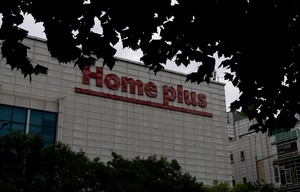
Homeplus restarts sale process, sending teaser letters to potential buyers
Hypermarket unit and real estate assets on the block First sale attempt since court approved rehabilitation plan Homeplus has restarted its sale process as the retailer works through court receivership. It is the first sale attempt since a court approved the company's rehabilitation plan earlier this month. Samil PwC, the lead manager for the Homeplus sale, plans to send teaser letters to domestic and foreign acquisition candidates as early as this week, industry sources said Wednesday. Teaser letters are documents that summarize key financial information about a seller at the early stage of a merger and acquisition process. Large domestic conglomerates and overseas strategic investors are among the prospective buyers, according to the sources. The assets on the block are Homeplus' hypermarket division and real estate holdings. The hypermarket unit, comprising 67 core stores, will be sold through a business transfer agreement. Samil PwC previously assessed the liquidation value of the hypermarket business based on those 67 stores at just over 2 trillion won ($1.48 billion). The real estate portion covers 19 company-owned stores among those already closed. Homeplus has said it plans to sell the 19 properties by February 2028 to raise 1.42 trillion won, which it intends to use to repay senior trust-secured bonds held by its largest creditor, Meritz Financial Group. The company would then follow through on its bond repayment schedule running through 2037 through additional real estate-backed loans and other financing. This is not Homeplus' first attempt at a sale. The company pursued a pre-approval M&A shortly after filing for court receivership in March last year. Two parties — an AI platform company and a real estate developer — submitted letters of intent, but neither participated in the final bidding, and the process fell through. Homeplus ultimately sold its supermarket division, Homeplus Express, to NS Home Shopping, an affiliate of Harim Group, for 120.6 billion won in May this year.
Sept. 16, 2026
-
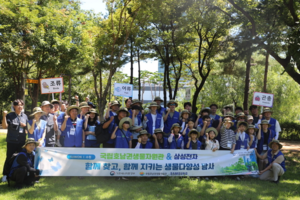
National Honam Institute of Biological Resources teams up with Samsung Electronics for biodiversity survey
Public institution-corporate partnership aims to broaden participation in biodiversity conservation The National Honam Institute of Biological Resources, an agency under the Ministry of Climate, Environment and Energy, announced Wednesday that it is conducting biodiversity survey activities with Samsung Electronics employees. The initiative was designed to promote environmental conservation awareness through field-based education, bringing together a corporate partner and a public research institution to share the importance of biodiversity protection while allowing participants to directly observe and document living organisms. The institute carried out the surveys with Samsung Electronics employees over two days beginning Sept. 5 at Meonae Ecological Park in Suwon and along the Gamcheon Bridge area in Gumi, both near Samsung Electronics facilities. About 90 employees and their family members joined institute experts to observe and record species across four taxonomic groups — birds, insects, plants and fish. A follow-up survey is scheduled for Thursday at Samsung Electronics' Gwangju facility, with about 40 employees from that site expected to take part. Park Jin-young, director of the National Honam Institute of Biological Resources, said biodiversity is "the most important asset for a sustainable future in an era of climate crisis," adding that protecting it requires the attention and participation of both the public and the private sector. "We will continue to expand biodiversity education and survey activities in partnership with businesses and local communities, and actively pursue cooperative projects for the conservation and sustainable use of Korea's biological resources," Park said.
Sept. 16, 2026
-
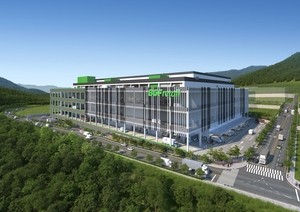
BGF Retail builds South Korea's largest convenience store logistics center in Busan
Largest in the convenience store industry, with 260 billion won investment Streamlines delivery across Busan and Yeongnam region; supports overseas exports and imports BGF Retail has completed the largest logistics center in South Korea's convenience store industry, located in Busan. The facility is set to reshape the delivery network across Busan and the broader Yeongnam region and serve as a central hub for supplying products to CU convenience stores both domestically and overseas. BGF Group Chairman Hong Seok-jo said at the center's completion ceremony Wednesday that the Busan logistics center is "an important stepping stone that elevates CU's logistics competitiveness and further solidifies our standing as a leader in the domestic convenience store industry." He added that it "will strengthen the competitiveness of franchisees through stable product supply and efficient logistics operations, while also serving as a growth engine for CU's expansion beyond the domestic market and into global markets." The ceremony was attended by BGF Retail Vice Chairman Hong Jeong-guk, BGF Retail Strategy and Innovation Division Head Oh Jeong-hu and other BGF Group officials, as well as Busan Mayor Jeon Jae-soo, Gangseo-gu District Mayor Park Sang-jun and Busan-Jinhae Free Economic Zone Authority head Park Seong-ho. The center stands on a 47,187-square-meter site in Gurang-dong, Gangseo-gu, within the Busan International Industry and Logistics City. With a total floor area of 128,073 square meters, it is the largest logistics facility in BGF Retail's infrastructure network. The total investment came to 260 billion won ($192 million). BGF Retail signed an investment agreement with the city of Busan in 2021 and broke ground on the center in 2024. The refrigerated section is already in operation, and the company plans to bring the ambient-temperature section online by the end of this year. The center is equipped with smart logistics systems including a shuttle-based automated storage and retrieval system, auto labelers and a digital picking system, boosting efficiency in product intake, output and sorting while allowing the facility to handle fluctuations in cargo volume by season and day of the week. It has also received a first-grade preliminary certification as a smart logistics center from the Ministry of Land, Infrastructure and Transport. BGF Retail built the center to manage its growing number of stores and product lines. Beyond domestic logistics, the facility will also handle international import and export operations, supporting the expansion of CU's overseas business — including in Mongolia, Malaysia, Kazakhstan and Hawaii — through the Port of Busan. The Busan logistics center is also equipped with solar power generation facilities capable of producing up to 2,700 MWh of electricity annually. BGF Retail said it expects the center's operation to contribute to job creation and economic revitalization in the Busan region.
Sept. 16, 2026
-

Public Procurement Service backs SME growth through regulatory reform
Agency shares key public procurement agenda — including procurement autonomy and AI industry support — at Korea Federation of SMEs forum A forum was held to hear the difficulties small and medium-sized enterprises face on the ground and to discuss ways to remove unreasonable regulations that hinder their entry into the public procurement market and expansion of sales channels. The Public Procurement Service held a meeting Wednesday at the Korea Federation of SMEs office in Seoul, with Korea Federation of SMEs Chairman Kim Ki-moon and 22 SME representatives in attendance. Ahead of the discussion, the agency outlined its key policy achievements for the first half of this year — including the decentralization of local government procurement, measures to block shell companies and firms responsible for serious workplace accidents from winning public contracts, and preemptive responses to supply chain disruptions caused by the war in the Middle East. It said it would accelerate efforts in the second half to open the public procurement market to AI products and expand preferential treatment for companies based outside the Greater Seoul area. The SME representatives said public procurement support is essential for small businesses to weather difficult economic conditions, and submitted 23 on-the-ground grievances. On a request to extend the single-item price adjustment system — currently applied to construction contracts — to goods contracts as well, the agency said it plans to analyze the results of this year's pilot program for single-item price adjustments in goods manufacturing contracts and establish appropriate conditions for such adjustments in the goods sector in the second half of this year. On a request to systematize information on the progress of multiple-supplier contracts, which companies said has been opaque, the agency said it will improve the Narajangteo shopping mall system so that procurement firms can check relevant details there, with the update available from October. On a request to extend the "price fluctuation and two-stage competition exception guidelines" issued as part of the response to the war in the Middle East, the agency said it will extend the currently effective guidelines from the end of September through the end of this year, citing continued instability in the region. The agency said it plans to accommodate other submitted requests where possible, explore alternatives where it cannot, and provide thorough feedback on review outcomes and follow-up measures. "We will remove as many unnecessary regulations as possible so that small and medium-sized enterprises can participate more easily in the procurement market and focus on innovation and growth," Public Procurement Service Commissioner Baek Seung-bo said. He added that he hoped the Korea Federation of SMEs would serve as a communication channel for SMEs and a strong policy partner alongside the agency.
Sept. 16, 2026
-
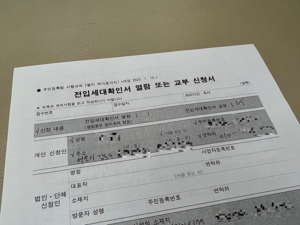
Toss Bank to access household registration data online from Thursday
Ministry of Interior and Safety expands online linkage of move-in household data Loan review times to shorten, real estate fraud prevention to strengthen The Ministry of Interior and Safety announced Wednesday that it will begin providing move-in household registration data online to Toss Bank starting Thursday — the first time an internet-only bank has been connected to the system. Once the linkage is in place, Toss Bank customers who apply for jeonse and monthly rent deposit loans will have their applications processed through a direct connection between Toss Bank's loan management system and the ministry's resident registration information system, allowing the bank to verify the necessary move-in household data during the review process. The ministry signed MOUs with five major commercial banks in July 2024 to spare customers the inconvenience of obtaining and submitting documents in person and to allow financial institutions to verify move-in household data quickly during loan reviews. Online data linkage has been expanded continuously since October of that year. The new connection is expected to cut loan review times by at least one day, enabling applicants to receive decisions more quickly. Banks will also be able to confirm in real time who has registered a move-in at a given property and when, improving review efficiency and helping prevent real estate loan fraud. Jin Myeong-gi, director general of the ministry's Autonomous Innovation Bureau, said the ministry would extend the move-in household data online linkage service to first- and second-tier financial institutions, including regional banks, to support safer loan reviews. "We will continue to make active use of administrative data held by the government in ways that enhance public convenience and safety, and keep expanding services that people can feel the benefit of," Jin said.
Sept. 16, 2026
-
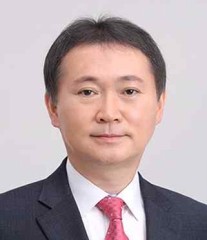
Kim Myeong-jung named budget director to oversee W821tr national spending plan
A career official with broad experience in budget and fiscal affairs The Ministry of Planning and Budget said Wednesday it has appointed Kim Myeong-jung, 59, director of the Budget Bureau, the official responsible for overseeing the government's budget planning operations. Kim will lead the ministry's response to the National Assembly's review of next year's 820.9 trillion won ($607 billion) budget proposal, while also heading efforts to establish a new future-response fund worth at least 162.3 trillion won. A native of Gwangju, Kim graduated from Gwangju Seoseok High School and Seoul National University with a degree in business administration before entering public service through the 40th civil service examination. He is the first official from the Honam region to hold the budget director post since An Do-geol — now a Democratic Party lawmaker — took the role in 2020. Kim has held a wide range of senior positions in budget and fiscal affairs. At the Ministry of Economy and Finance, he served as director of the State Property Policy Division and as public affairs officer, before going on to lead the Legal and Judicial Budget Division, the Budget Coordination Division and the Budget Policy Division. He later served as deputy governor for economic affairs in Gangwon Province before returning to the ministry as director of fiscal performance review. After the launch of the Lee Jae Myung administration, Kim was seconded to the state affairs planning committee, where he helped design the new government's budget and fiscal policy framework. Colleagues describe him as a budget specialist with strong communication skills. In 2019, junior staff named him to a list of "bosses worth emulating." His earlier experience as public affairs officer has also made him an effective communicator with the press.
Sept. 16, 2026
-
![[Breaking] National Assembly briefing on US investment delayed from Thursday to Tuesday; announcement likely Sept. 23](https://wimg.heraldcorp.com/news/cms/2026/09/16/news-p.v1.20260911.8a50d6b30b944b60a02924df4e157099_T1.jpg?type=h&h=240)
[Breaking] National Assembly briefing on US investment delayed from Thursday to Tuesday; announcement likely Sept. 23
A National Assembly briefing on investment in the United States has been pushed back from Thursday to Tuesday, with a formal announcement expected Sept. 23.
Sept. 16, 2026
-
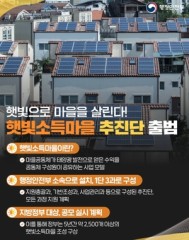
Ministry of Interior and Safety launches third round of solar village program applications
Applications open Thursday through Oct. 30; final selections expected by end of December The Ministry of Interior and Safety said it will accept applications for the third round of its 2026 "Sunshine Income Village" program from Thursday through Oct. 30. The first round, which closed in May, drew 129 applicants, with 87 villages selected. Interest surged in the second round, which ran through late July, attracting 608 applicants — more than four times the first-round total. The ministry said the third round is aimed at giving additional opportunities to villages that wanted to participate but missed earlier deadlines, as well as those advised to reapply in a subsequent round. Final selections are planned for the end of December. Nam Ho-seong, head of the ministry's Sunshine Income Village Task Force, said community interest in the program has been growing rapidly and that many villages are expected to apply in the third round as well. "We will work with relevant ministries and local governments to help as many villages as possible apply and be selected," he said. Meanwhile, the task force is working toward identifying 700 Sunshine Income Villages this year. Results for second-round applicants are expected to be announced by the end of September, following review by an evaluation committee.
Sept. 16, 2026
-
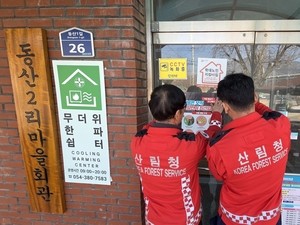
Korea Forest Service puts wildfire defenses on alert for Chuseok holiday
Agency braces for surge in hikers visiting graves, deploys round-the-clock emergency response South Korea's forestry authority has activated a round-the-clock wildfire prevention emergency system ahead of the Chuseok holiday, when a surge in visitors heading to mountains for grave tending and ancestral rites is expected to coincide with dry, clear weather. The Korea Forest Service said Wednesday it will carry out its "2026 Chuseok Holiday Wildfire Prevention Plan" from Sept. 19 through Sept. 27. The agency will concentrate fire-watch personnel around major public cemeteries and hiking trails to strengthen guidance and enforcement against wildfire-risk behavior such as illegal burning and the handling of open flames. Firefighting facilities and suppression equipment will also be inspected in advance to ensure they are fully operational. Aerial firefighting helicopters and ground suppression crews will be placed on standby for rapid deployment, with nearby resources to be mobilized immediately should a wildfire break out. A 24-hour emergency response link will be maintained between the Central Forest Disaster Operations Center and regional wildfire situation rooms. The agency also plans to promote reporting of wildfires through the center or the "Smart Forest Disaster" mobile app, and will use emergency alert texts and disaster caption broadcasts to spread wildfire prevention guidelines. Under the Forest Disaster Prevention Act, anyone who lights a fire or carries a flame into a forest or adjacent area faces a fine of up to 2 million won ($1,480); smoking or discarding cigarette butts carries a fine of up to 700,000 won; and possessing fire sources or flammable materials is subject to a fine of up to 300,000 won. "Clear and dry conditions are expected throughout the Chuseok holiday, meaning even a small spark can trigger a wildfire — extra caution is essential," said Geum Si-hun, head of the Korea Forest Service's wildfire prevention division. "We urge everyone visiting the mountains for ancestral rites or grave tending to take special care not to light fires or carry any fire sources or flammable materials."
Sept. 16, 2026
-
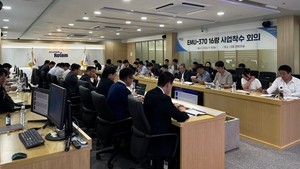
Korail accelerates push for Korea's fastest high-speed rail
EMU-370 to hit 370 km/h in commercial service, with enhanced safety and ride comfort The EMU-370 project to introduce Korea's fastest high-speed train has gotten off the ground. Korea Railroad Corporation, known as Korail, said it held a project kickoff meeting for the next-generation high-speed train at Hyundai Rotem's Changwon factory Tuesday afternoon. About 40 officials from Korail and train manufacturer Hyundai Rotem attended the meeting. Participants discussed the vehicle production schedule and manufacturing facility status, the project management structure, and design direction and quality assurance measures. The project aims to fulfill the government's state agenda of introducing a next-generation high-speed rail capable of 400 km/h, and to secure future competitiveness in high-speed rail operations and maintenance technology. The EMU-370 is a next-generation high-speed train consisting of 16 cars per set, with a maximum commercial operating speed of 370 km/h and a design top speed of 400 km/h. The train will be the first to adopt an Intelligent Energy-Efficient Operation System, an automated train control system designed to improve operational efficiency and reduce energy consumption. The train will also incorporate enhanced ride comfort standards, operating conditions for extreme weather, and condition-based maintenance devices. Customer convenience will be further improved through a dedicated first-class car, expanded luggage storage, aerodynamically designed exteriors, and updated interior design. "This is an important project to prepare for the era of Korea's fastest high-speed rail," said Cha Jae-hwan, head of Korail's rolling stock division. "We will manage the manufacturing process thoroughly from the start to ensure the safe and convenient high-speed train is introduced on schedule."
Sept. 16, 2026
-
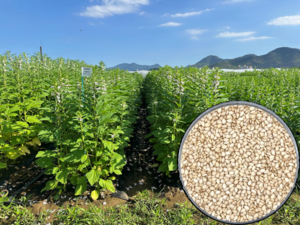
New sesame varieties pack triple the antioxidants, targeting premium oil market
Sesame varieties 'Seulgi' and 'Roum' contain 13–14 mg/g of lignan — about three times that of ordinary varieties Perilla variety 'Jian' raises omega-3 content to 66 percent, with higher yields and oil extraction rates Premium sesame oil and omega-3 capsule products planned for the second half of this year South Korea is pushing into the premium sesame oil market with a domestically developed sesame variety that contains roughly three times more lignan — an antioxidant compound — than imported or conventional varieties. A new perilla variety with plant-based omega-3 content raised to 66 percent is also being commercialized. The strategy is to differentiate Korean products from cheap foreign imports by boosting functional properties while also improving yields and processing efficiency. The Rural Development Administration announced Wednesday that it has developed two new high-lignan sesame varieties, Seulgi and Roum, and a high-omega-3 perilla variety, Jian, and is moving to distribute and commercialize them in earnest. Seulgi and Roum contain 13 to 14 mg of lignan per gram — about three times the 4 to 5 mg found in imported and conventional sesame. Lignan is sesame's signature antioxidant compound. Earlier RDA research confirmed that lignan can improve long-term memory and protect and regenerate nerve cells. Because it dissolves in oil, it remains in the extracted oil after pressing. The new varieties also yield more. Seulgi and Roum produce 130 to 150 kilograms per 10 ares, 6 to 8 percent more than Geonbaek, the most widely grown domestic variety. Roum in particular has pods that resist splitting at harvest, allowing combine harvesting. The perilla variety Jian contains about 66 percent alpha-linolenic acid, a plant-based omega-3 fatty acid — higher than the 62 to 64 percent found in existing varieties Dayu and Deulsaem. Alpha-linolenic acid is an essential fatty acid the body cannot synthesize and must obtain through food. Previous RDA research found it can protect damaged brain cells and improve learning and memory. Jian also delivers higher productivity and processing efficiency. It yields 142 kilograms per 10 ares — 8 percent more than Dayu — and its oil extraction rate is 33.3 percent, 3.4 percentage points higher. The RDA is translating new variety development into actual production. This year it established pilot cultivation complexes covering 14 hectares of sesame and 13 hectares of perilla in Andong in North Gyeongsang Province, Jinju in South Gyeongsang Province, and Gochang in North Jeolla Province. In July, it signed an MOU with the city of Andong and a major edible-oil processor. Later this year, a premium sesame oil made from Seulgi is set to launch. The RDA is also working with a processor to bring a plant-based omega-3 capsule product using Jian to market. Seed distribution will also expand. Roum, which supports machine harvesting, will be supplied to farms through the Korea Agency of Education, Promotion and Information Service in Agriculture, Food and Rural Affairs starting in 2027. The RDA plans to produce about 1 metric ton of seed next year — enough to cover roughly 330 hectares. Seulgi and Jian will each have 50 kilograms of seed secured this year, with distribution beginning next year focused on processors' demand and major growing regions. Overseas demand for Korean sesame and perilla oil is also growing. Sesame oil exports rose 28 percent last year compared with the previous year. In the first half of this year, exports reached $8.43 million, a record high for the same period. "By commercializing the new sesame and perilla varieties, we have laid the groundwork to sharpen the distinction from cheap foreign imports and raise the value of our traditional oils," said Kim Byeong-seok, director of the RDA's National Institute of Crop Science. "Through seed distribution, expansion of production complexes and industry partnerships, we will increase farm income and strengthen the global competitiveness of Korean oils."
Sept. 16, 2026
-
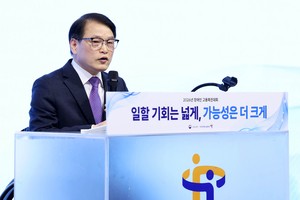
Busan needs tailored policies to boost employment of people with disabilities, forum hears
Korea Employment Agency for Persons with Disabilities holds 64th EDI policy forum Participants discuss stable employment conditions and cooperation among regional stakeholders Policies tailored to local industrial structure and labor market conditions are needed to expand employment opportunities for people with disabilities in Busan, experts said Wednesday. The Employment Development Institute of the Korea Employment Agency for Persons with Disabilities held its 64th EDI Policy Forum at the Haeundae Centum Hotel in Busan on Wednesday, focusing on ways to promote disability employment in the region. Held as a side event to the 43rd National Skills Competition for Persons with Disabilities, the forum drew officials and researchers from public institutions, research organizations and businesses involved in disability employment. Lee Su-yong, a research fellow at the institute, delivered the keynote presentation, assessing the state of disability employment in Busan and outlining policy directions suited to the city's characteristics. A panel discussion followed, moderated by Roh Beop-rae, a professor in the Department of Social Welfare at Pukyong National University, and featuring Kim Dae-gyu, head of the agency's Busan regional office; Kim Du-rye, a senior research fellow at the Busan Research Institute; Cho Jeong-ho, chief executive of NCsoft Service; and Son Jeong-won, head of Chajeum at the Center for Social Rights Research. Participants discussed ways to expand job opportunities for people with disabilities in line with Busan's industrial structure and labor market conditions, as well as measures to create a stable employment environment and strengthen cooperation among regional stakeholders — including public institutions, businesses and research organizations. Lee Dong-yeong, director of the Employment Development Institute, said the forum's on-the-ground perspectives would be actively incorporated into future research. "We will continue to identify policy alternatives suited to local conditions and contribute to expanding stable employment and improving the working environment for people with disabilities," he said.
Sept. 16, 2026
-

Korea Polytechnics holds inaugural chairman's cup soccer tournament across 40 campuses
120 student representatives from 8 regional teams compete nationwide About 300 students, faculty and alumni take part Broadcasting and media students handle live streaming and drone footage Korea Polytechnics held the inaugural Chairman's Cup soccer tournament Wednesday at its Asan campus in South Chungcheong Province, drawing about 300 students, faculty and alumni. It marked the first time members from all 40-plus campuses across the country had gathered on a single field. The tournament featured 120 student representatives selected through regional qualifying rounds from eight zones — Seoul Jeongsu, Incheon, Chuncheon, Daejeon, Gwangju, Daegu, Changwon and Biotech. Players wore regional uniforms regardless of their home campus or field of study, while campus deans, faculty and student council officers joined in to cheer and mingle. Korea Polytechnics this year declared a shift in its educational philosophy — from training in technical skills to cultivating well-rounded technical professionals — and has been strengthening liberal arts education that includes general workplace competencies. The tournament reflected that spirit, placing greater emphasis on communication, teamwork and community than on winning or losing. Students from the Asan campus's broadcasting and media department produced all video coverage for the event. They planned and executed a YouTube live stream and drone aerial footage, handling everything from filming to broadcast transmission and applying classroom skills in a real-world setting. Park Geun-jong, president of the Korea Polytechnics alumni association, said the event was "a meaningful occasion for sunbae who have worked hard on the factory floor to cheer on their juniors," adding that the association would expand exchanges "to serve as a genuine bridge between the university and its alumni." Lee Cheol-su, chairman of Korea Polytechnics, said that "as technology advances, the value of empathy, collaboration and responsibility — things only humans can offer — grows ever greater," and that "the experience of running together and understanding one another will be the starting point for growing into technical professionals who know both people and the workplace."
Sept. 16, 2026
-
STEP vocational training platform tops 1.35 million users; North Gyeongsang Mechanical High School wins top prize
Korea Tech University selects five outstanding LMS users North Gyeongsang Mechanical High School boosts certifications from 690 to 779 Platform applied to overseas worker training, shift-nurse education and more The learning management system of Korea University of Technology and Education's smart vocational training platform STEP has surpassed 1.35 million cumulative users. The platform's reach is expanding — from helping vocational high school students earn certifications to training workers at overseas sites and nurses on rotating shifts. Korea University of Technology and Education's Online Lifelong Education Institute, jointly with the Ministry of Employment and Labor, held a "STEP LMS Best Practice Sharing and Field Forum" at Dragon City Seoul on Wednesday. About 100 people attended, including representatives from award-winning institutions and other STEP users. Since its launch in October 2019, the STEP LMS has been distributed to 1,333 institutions. It now offers 31,667 courses and has logged more than 1.35 million cumulative users. The Online Lifelong Education Institute ran a competition among 662 institutions using the STEP LMS and selected five outstanding users. North Gyeongsang Mechanical High School took the top prize — the Minister of Employment and Labor Award. The school integrated STEP with the Daegu Metropolitan Office of Education's "Naeil Chaeum Point" project and "Meister Competency Certification" program, and ran a grade-by-grade major and certification learning roadmap. The number of students using STEP grew from 1,047 last year to 1,540 in July this year. Certifications earned rose from 690 in 2024 to 779 last year, while the dropout rate fell from 1.96 percent to 0.86 percent over the same period. Hana Micron, which received an excellence award, partnered with Korea University of Technology and Education to develop 20 vocational training content modules in Vietnamese tailored to local demand in Vietnam. About 2,300 local workers took part in the training, achieving a completion rate of 86 percent. The Korea Youth Counseling and Welfare Institute, Suncheon Heavy Equipment Hagwon and Jeonbuk National University Hospital each received an encouragement award. The Korea Youth Counseling and Welfare Institute consolidated its fragmented training systems into STEP, reorganizing 212 courses and producing 4,762 graduates. The course completion rate rose 11.2 percentage points, from 83.7 percent to 94.9 percent. Suncheon Heavy Equipment Hagwon produced 62 sessions of original content in the construction machinery field, combining online pre-study with on-site practical training. The training period was cut from 28 days to 19 days, and this year the institution recorded a written exam pass rate of 100 percent, a certification acquisition rate of 92.2 percent and a completion rate of 99.3 percent. Jeonbuk National University Hospital ran 32 STEP-based courses to support shift nurses' participation in training. Satisfaction scores reached 90.7 points among trainees and 93.1 points among program administrators. The Online Lifelong Education Institute plans to release a casebook and video showcasing the best practices in December. STEP currently offers more than 4,500 free online vocational training content items, covering AI, digital emerging technologies and advanced industries. Han Yeon-hui, director of the Online Lifelong Education Institute, said the platform had "supported digital transformation and learner growth by tailoring STEP to the characteristics and needs of each workplace," adding that the institute would "continue to spread outstanding performance models."
Sept. 16, 2026
-
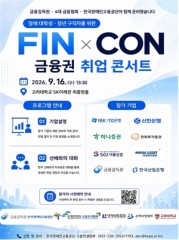
Seven financial firms join effort to help young people with disabilities break into finance
Finance career fair targets college students and job seekers with disabilities Companies outline roles and hiring processes; current employees with disabilities share their experiences Top job ideas to be linked with consulting and tailored training The Financial Supervisory Service, the Korea Employment Agency for Persons with Disabilities and several financial institutions have joined forces to help college students and young job seekers with disabilities enter the finance industry, sharing hiring information and firsthand workplace experiences. The FSS, the employment agency, financial industry associations and Korea University co-hosted a finance career fair — titled "FIN x CON" — at Korea University on Wednesday. The event is a follow-up to an MOU on expanding the hiring of people with disabilities in the financial sector, signed in March by the Ministry of Employment and Labor, the FSS, the employment agency and financial industry associations. It was organized to give young job seekers with disabilities concrete hiring information and guidance on preparing for careers in finance. Seven financial institutions took part alongside the FSS: Industrial Bank of Korea, Shinhan Bank, Hana Securities, Hanwha Investment & Securities, Seoul Guarantee Insurance, Mirae Asset Life Insurance and Korea Development Bank. Participating companies introduced key job functions, hiring processes and what applicants should prepare. They also fielded questions about day-to-day work responsibilities and how to prepare for each stage of the selection process — details that are often difficult to glean from job postings alone. In a segment called "Conversation with a Sunbae," employees with disabilities currently working in the financial sector shared their experiences preparing for employment, adjusting to their roles after joining and developing their careers. FSS Deputy Governor Kwak Beom-jun said the event would give financial institutions a chance to meet talented candidates in person and expand their hiring of people with disabilities, while giving job seekers with disabilities a clearer picture of hiring information and career pathways at individual firms. Ryu Jeong-jin, the employment agency's director of employment promotion, said connecting strong candidates with the right roles was essential to broadening opportunities for young people with disabilities in the financial sector. "We will support not only job seekers in their preparation, but also financial firms in developing job functions and designing their recruitment processes," he said. A working group on expanding the hiring of people with disabilities in finance — formed under the MOU — plans to hold a "Finance Disability Employment Idea Challenge" open to financial sector employees, with the aim of identifying new job functions. Standout ideas will be linked to job development consulting and tailored training programs, and the group will also work to improve hiring conditions for people with disabilities at financial firms.
Sept. 16, 2026
-
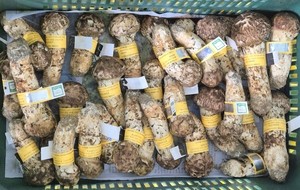
Yangyang pine mushrooms, Yanggu apples among Gangwon's finest heading to market ahead of Chuseok
Premium local specialties from Gangwon Province — including pine mushrooms that grow alongside the gold pines of the Baekdudaegan mountain range and apples from the pristine Punchbowl region of Yanggu-gun — are heading to market ahead of the Chuseok holiday. Yangyang pine mushrooms, the finest in the country and the first forest product to be registered under the national geographical indication system, will hold their first auction of the season Thursday. Yangyang pine mushrooms are prized nationwide for their low moisture content, firm flesh, and deep, rich aroma. In 2006, they became the No. 1 registered forest product under the Korea Forest Service's geographical indication system, setting them apart from pine mushrooms produced elsewhere. While some local governments around the country have passed off Russian-imported mushrooms as domestic produce — or abandoned pine mushroom events altogether after local harvests dried up — Yangyang's are state-certified. Yangyang Songyi Agricultural Cooperative and Yangyang-Sokcho Forestry Cooperative said they will begin purchasing freshly harvested mushrooms at the below-ground auction hall of the Yangyang-Sokcho Forestry Cooperative from 9 a.m. Thursday, with the first bidding round starting at 4:30 p.m. In addition to pine mushrooms, other forest products that have seen growing demand — including hawk's wing mushrooms and rubber mushrooms — will also go up for bid at the auction hall. Mushrooms brought in on the day are sorted into five grades — first through fourth, plus an ungraded category — based on size, shape and quality. Each grade is marked with a colored band in gold, silver, bronze or orange before going to open competitive bidding, with supply going to the highest bidder. At last year's opening auction on Sept. 27, a total of 29.8 kilograms of pine mushrooms were purchased. Of that, 1.56 kilograms were top-grade first-class mushrooms, which sold at 1.14 million won ($841) per kilogram. The highest price reached 1.61 million won per kilogram, while the lowest was 487,700 won. The 2026 Yangyang Pine Mushroom Festival, one of the country's signature autumn events, is scheduled to run for three days from Oct. 16 to Oct. 18 along the Namdaecheon riverside and multipurpose plaza in Yangyang. High mountains and deep valleys tend to concentrate sweetness in fruit — and it is no exaggeration to say that description fits the apples of Yanggu-gun, a clean border county nestled in remote highland terrain. Yanggu apples, the county's signature autumn crop and a popular Chuseok gift, are now being shipped in earnest. Some 215 farming households currently cultivate apples across 330 hectares in Yanggu-gun. The county expects to produce about 6,000 tons this year, generating 27 billion won in farm income. The main varieties are Fuji at 55 percent, Hongro at 23 percent, Gold at 10 percent and others at 12 percent. About half of the mid-season Hongro crop is expected to ship before Chuseok, while Fuji and Shinano Gold varieties are forecast to begin full-scale shipments from late October. Yanggu apples are grown under favorable conditions — a wide daily temperature range, low rainfall and abundant sunlight — that produce firm flesh and excellent storage quality. Their taste and quality have earned them a loyal following among consumers. Yanggu-gun has the largest apple-growing area in Gangwon Province, with Haean-myeon accounting for more than 80 percent of the total cultivation area. As climate change pushes suitable apple-growing zones further north, the county's cultivation area and output are expected to keep rising. Production is forecast to exceed 8,000 tons by 2027. "Yanggu apples are the county's flagship agricultural product, known for their outstanding taste and quality," said Kim Byeong-ae, head of the agricultural support division. "We will continue working to support stable production by local farmers, strengthen competitiveness and ultimately raise farm household income."
Sept. 16, 2026
-
Fair Trade Commission, construction industry launch joint council to monitor mutual-growth pledges
Supply prices raised by 107.7 billion won, reaching 80% of year-end target 15 firms expand indexed contracts with 52 subcontractors 14 companies operating dispute bodies, resolving 14 cases The Korea Fair Trade Commission has launched a public-private consultative body with the construction industry to regularly monitor compliance with a mutual-growth agreement, as supply prices have risen by about 73.7 billion won ($54.5 million) since the pact was signed in May and additional indexed subcontracting agreements have been concluded. The Fair Trade Commission said it held the inaugural "Construction Industry Mutual-Growth Agreement Public-Private Council Meeting" on Wednesday at the Specialized Construction Hall in Dongjak-gu, Seoul, with representatives from both general and specialty construction sectors in attendance. The meeting was a follow-up to the "Construction Industry Mutual-Growth and Fair Trade Agreement" signed with 19 major construction companies on May 28. At the time, the Fair Trade Commission and the construction industry concluded the agreement to prevent the recurrence of unfair practices that had persisted in general and subcontracting transactions and to protect the rights of subcontractors. The agreement covers cash payment of subcontracting fees within 60 days, abolition of retainage practices, adjustment of subcontracting fees in line with cost changes, expansion of indexed contracts, elimination of unfair special clauses, and operation of dispute resolution bodies. As a follow-up measure, the Fair Trade Commission and the general and specialty construction industries agreed to form the public-private council in the second half of this year, sharing updates on agreement compliance, subcontracting law enforcement trends and best practices in mutual cooperation — and discussing proposals — at least once a year. At Wednesday's inaugural meeting, key compliance results were shared. The 19 general construction companies had pledged to raise supply prices by a total of 134.3 billion won for subcontractors struggling amid the war in the Middle East and other difficulties. Of that amount, 34 billion won had been raised before the agreement was signed, with an additional 73.7 billion won added afterward, bringing the cumulative increase to 107.7 billion won — about 80 percent of the year-end target. The number of indexed subcontracting agreements also grew. Fifteen of the 19 general construction companies concluded additional indexed contracts with 52 subcontractors. Some construction companies also provided education on indexed payment systems to their partner firms. Fourteen of the 19 companies were found to be operating subcontracting dispute resolution bodies. A total of 14 disputes have been resolved through those bodies since the agreement was signed. Best practices in mutual cooperation were also shared. Gyeryong Construction Industrial added a clause to its site briefing documents stating that the general contractor would bear the full cost of waste disposal, and conducted bidding for subcontractors on that basis. Posco E&C covered the labor costs of safety officers employed by subcontractors, while Jeil Construction shortened its payment cycle from 60 days to 30 days. Recent subcontracting law enforcement trends in the construction sector were also discussed as part of efforts to prevent legal violations. The Fair Trade Commission said it would "work to ensure the mutual-growth agreement is properly implemented through the public-private council" and pledged to "continue communicating to bring about changes that can be felt on the ground." Meanwhile, a public-private council meeting with 30 mid-sized construction companies that signed a separate mutual-growth agreement on July 24 is scheduled for November.
Sept. 16, 2026
-
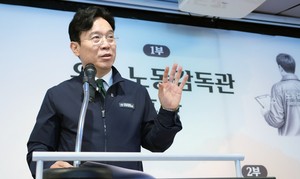
Labor inspectors to gain independent investigative powers Oct. 2
Investigation review committee to be established; 'Labor Case Investigation Rules' to be enacted Regional briefings planned for all 49 local offices nationwide Specialized training institute for inspectors targeted to open next year The Ministry of Employment and Labor will establish its own investigative command structure ahead of the Oct. 2 independence of labor inspectors' investigative authority. The ministry plans to set up an investigation review committee and enact separate rules governing labor case investigations. The ministry announced Wednesday that it will hold regional briefings for all 49 local employment and labor offices nationwide from Thursday through Monday to review preparations for the transfer of investigative authority. The briefings will be attended by department and team heads from the ministry's headquarters and the labor standards supervision units at local offices. The sessions will share headquarters' preparations and gather field-level feedback on the new investigative framework. The ministry plans to establish independent investigative command structures at each regional and district office, along with an investigation review committee to ensure fairness and objectivity. It is also working to draft an investigation manual and enact what it is tentatively calling the "Labor Case Investigation Rules." To strengthen the expertise of labor inspectors, the ministry will expand rank-specific, case-based training. A dedicated professional training institute for inspectors is targeted to open next year. The regional briefings will begin Thursday with the Seoul, central and Gyeonggi Province areas, followed by the Daegu and Busan areas on Friday, and the Daejeon and Gwangju areas on Monday. Choi Gwan-byeong, head of the ministry's labor inspection policy division, called the independence of investigative authority for special judicial police officers "a historic turning point that grants labor inspectors greater power and responsibility," adding that the ministry would "create safe workplaces where basic rights are upheld through fair and rigorous investigations."
Sept. 16, 2026
MOST READ
- 1KAIST develops high-performance bio-based adhesive using E. coli instead of petroleum
- 2Pope Leo XIV declines French honors and banquet, accepts only private meeting with Macron
- 3Daimler Truck unveils next-generation transport solutions at IAA 2026
- 4What was Rachmaninoff's performance fee? A 1928 price list tells all
- 5Samsung Biologics union's show of force backfires at the bargaining table
- 6APR says hair-loss treatment research published in international journal
-
WORLD

US warns of punishment for anyone enabling Iran's Strait of Hormuz toll scheme
-
INDUSTRY
Toyota union puts productivity first; Hyundai Motor union demands bigger share of profits
-
FINANCE
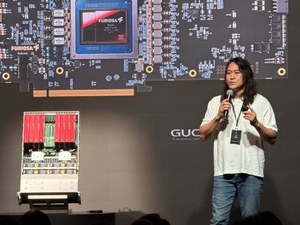
National Growth Fund to invest $531M in FuriosaAI, which rebuffed Meta's $800M takeover bid
-
INDUSTRY
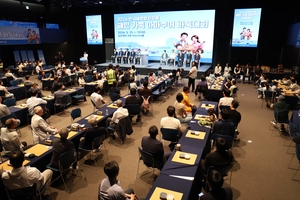
Korea Shipowners' Association holds amateur baduk tournament for Maritime Day